• Ethics
• Managerial ethics
• Types of Managerial ethics
• Improving ethical behavior
• Ethical leadership
• Factor shaping ethics in
organizations
• Ethical decision making
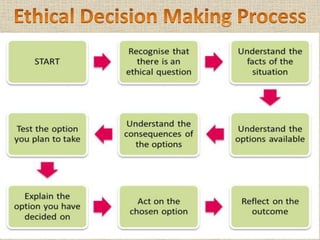
• Ethical decision making process
• An area of study that deals with ideas about what
is good and bad behavior and with moral duty and
obligation
• The rules and principles that define right and
wrong conduct
• It refers to well-founded standards of right and
wrong that prescribe what humans ought to do.
• Management ethics is the ethical treatment of
employees, stockholders, owners and the public by
a company.
• It is the study of standards of business behavior
which promote human welfare and the good
• Ethics in the workplaces helps ensure that when
leaders and managers are struggling in times of
crises and confusion, they retain a strong moral
compass.
• Managerial ethics is a set of principles and rules
dictated by upper management that define what
is right and what is wrong in an organization.
• It is the guideline that helps direct a lower
manager's decisions in the scope of his or her job
when a conflict of values is presented.
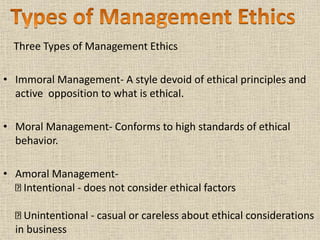
Three Types of Management Ethics
• Immoral Management- A style devoid of ethical principles and
active opposition to what is ethical.
• Moral Management- Conforms to high standards of ethical
behavior.
• Amoral Management-
Intentional - does not consider ethical factors
Unintentional - casual or careless about ethical considerations
in business
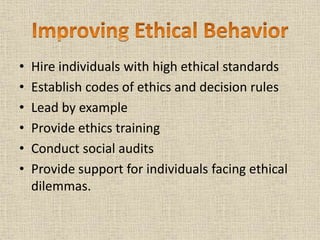
• Hire individuals with high ethical standards
• Establish codes of ethics and decision rules
• Lead by example
• Provide ethics training
• Conduct social audits
• Provide support for individuals facing ethical
dilemmas.
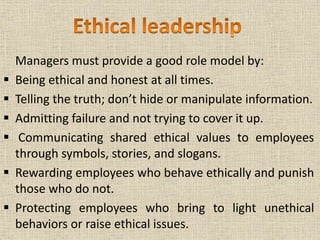
Managers must provide a good role model by:
 Being ethical and honest at all times.
 Telling the truth; don’t hide or manipulate information.
 Admitting failure and not trying to cover it up.
 Communicating shared ethical values to employees
through symbols, stories, and slogans.
 Rewarding employees who behave ethically and punish
those who do not.
 Protecting employees who bring to light unethical
behaviors or raise ethical issues.
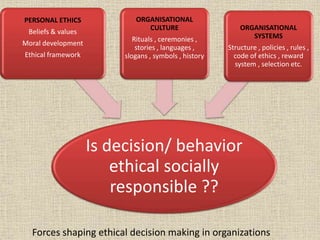
Is decision/ behavior
ethical socially
responsible ??
PERSONAL ETHICS
Beliefs & values
Moral development
Ethical framework
ORGANISATIONAL
CULTURE
Rituals , ceremonies ,
stories , languages ,
slogans , symbols , history
ORGANISATIONAL
SYSTEMS
Structure , policies , rules ,
code of ethics , reward
system , selection etc.
Forces shaping ethical decision making in organizations
• Ethical decision-making refers to the process of
evaluating and choosing among alternatives in a
manner consistent with ethical principles.
• In making ethical decisions, it is necessary to
perceive and eliminate unethical options and select
the best ethical alternative.
• Honesty
• Loyalty
• Integrity
• Keeping your promises
• Fair
• Caring
• Respect
• Obeying the law
• Excellence
• Being a leader
• Morale
• Accountable
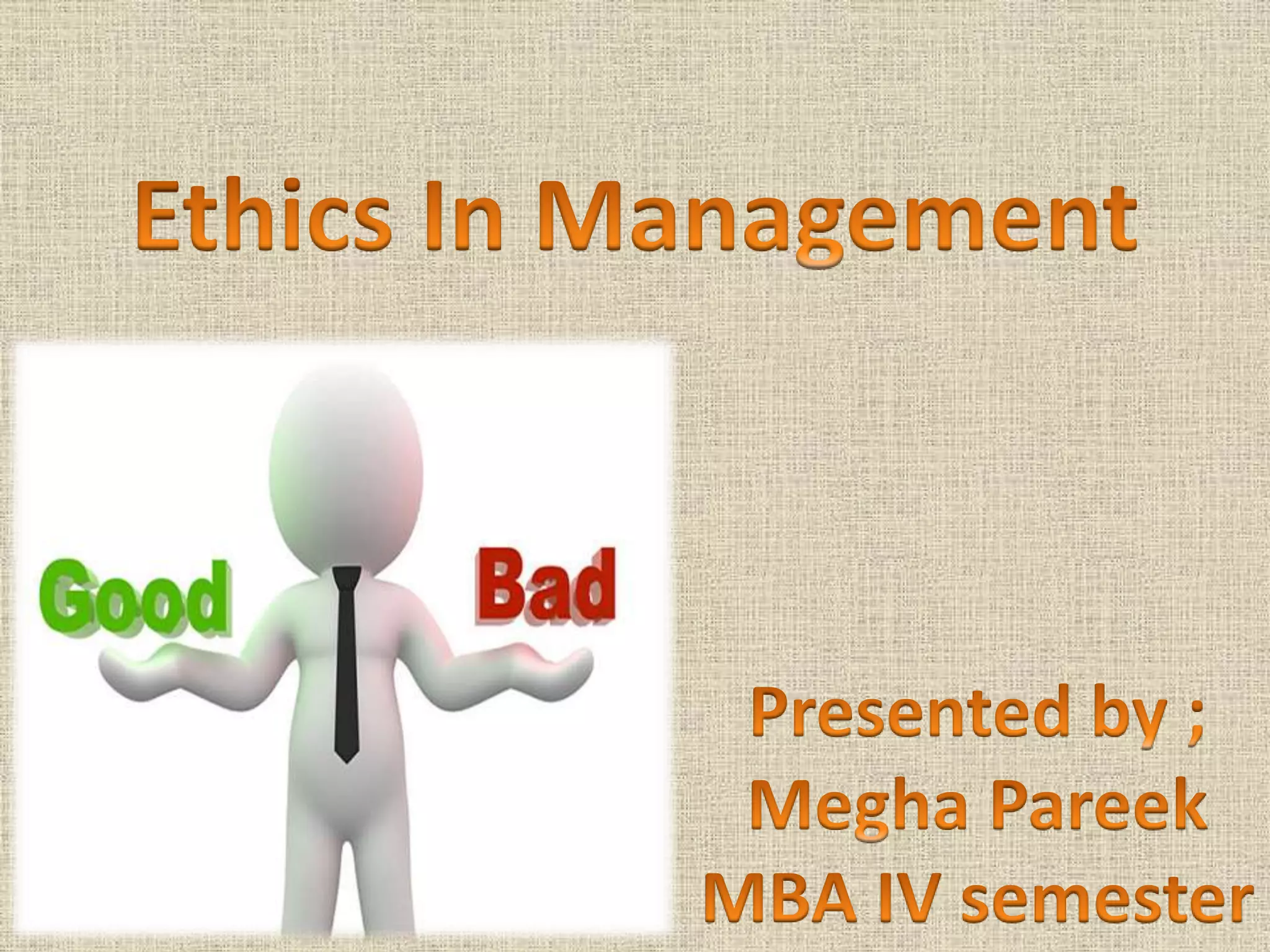
Ethics in management

Ethics in management

  • 2.
    • Ethics • Managerialethics • Types of Managerial ethics • Improving ethical behavior • Ethical leadership • Factor shaping ethics in organizations • Ethical decision making • Ethical decision making process
  • 3.
    • An areaof study that deals with ideas about what is good and bad behavior and with moral duty and obligation • The rules and principles that define right and wrong conduct • It refers to well-founded standards of right and wrong that prescribe what humans ought to do.
  • 4.
    • Management ethicsis the ethical treatment of employees, stockholders, owners and the public by a company. • It is the study of standards of business behavior which promote human welfare and the good • Ethics in the workplaces helps ensure that when leaders and managers are struggling in times of crises and confusion, they retain a strong moral compass.
  • 5.
    • Managerial ethicsis a set of principles and rules dictated by upper management that define what is right and what is wrong in an organization. • It is the guideline that helps direct a lower manager's decisions in the scope of his or her job when a conflict of values is presented.
  • 6.
    Three Types ofManagement Ethics • Immoral Management- A style devoid of ethical principles and active opposition to what is ethical. • Moral Management- Conforms to high standards of ethical behavior. • Amoral Management- Intentional - does not consider ethical factors Unintentional - casual or careless about ethical considerations in business
  • 8.
    • Hire individualswith high ethical standards • Establish codes of ethics and decision rules • Lead by example • Provide ethics training • Conduct social audits • Provide support for individuals facing ethical dilemmas.
  • 9.
    Managers must providea good role model by:  Being ethical and honest at all times.  Telling the truth; don’t hide or manipulate information.  Admitting failure and not trying to cover it up.  Communicating shared ethical values to employees through symbols, stories, and slogans.  Rewarding employees who behave ethically and punish those who do not.  Protecting employees who bring to light unethical behaviors or raise ethical issues.
  • 10.
    Is decision/ behavior ethicalsocially responsible ?? PERSONAL ETHICS Beliefs & values Moral development Ethical framework ORGANISATIONAL CULTURE Rituals , ceremonies , stories , languages , slogans , symbols , history ORGANISATIONAL SYSTEMS Structure , policies , rules , code of ethics , reward system , selection etc. Forces shaping ethical decision making in organizations
  • 11.
    • Ethical decision-makingrefers to the process of evaluating and choosing among alternatives in a manner consistent with ethical principles. • In making ethical decisions, it is necessary to perceive and eliminate unethical options and select the best ethical alternative.
  • 13.
    • Honesty • Loyalty •Integrity • Keeping your promises • Fair • Caring • Respect • Obeying the law • Excellence • Being a leader • Morale • Accountable