By –
k.manikanth
Contents-
 Introduction
 Significance
 Value Education Program
 Multinational school-based value education
 What are values?
 Projects on value education
 Value education from around the world
Introduction
 Value education is the process by which people give moral values to others.
 It can take place at home.as well as in schools,colleges,universities,jails and voluntary
youth organisations.
 Two main approaches-
1. Inculcating or Transmitting a set of values(social,religious,cultural ethics)
2. Type of socratic dialogue which is people’s self realizations of good behaviours.
Significance-
 Promotes humanity
 Teaches the difference between right and wrong
 Makes living harmonious
 Inculcates real education
 Brings unity in diversity
 Gives us a while,to take rest from busy schedules and think
 Prevents us from being mechanical,power hungry bottomfeeders.
Multinational school-based value education
 Human Values Foundation
 Established in 1995
 For children of 4-12 years of age
 Includes story telling,quotations,group singing to make them learn
Character Education
 Teaching of children in a manner that’ll help them develop as
personal and social beings.
 Social,emotional learning
 Moral reasoning/cognitive development
 Life skills education
 Health education
 Violence prevention
 Critical thinking,ethical reasoning
 Conflict resolution and meditation
What are values?
 Environmental values
 Valuing Nature
 Valuing Cultures
 Social Justice
 Human Heritage
 Equitable use of resources
 Common property resources
 Ecological Degradation
 Environmental Values-It is learnt through an understanding and appreciation of nature’s
oneness and its conservation.
 Valuing cultures-An opportunity to achieve a better economic status without disrupting
their culture and way of life.
 Social Justice-To protect the rights of the poor who do not have the means for their rights.
 Human Heritage-The undisturbed wilderness,rural landscape,traditional village and
historical monuments.
 Equitable use of resources-an unfair distribution of wealth and resources between the poor
and the rich must be prevented.
 Common property resources-Environment’s major components that do not belong to
individuals.
 Ecological Degradation-Valuable ecological assets are turned into serious environmental
problems.
Projects on value education
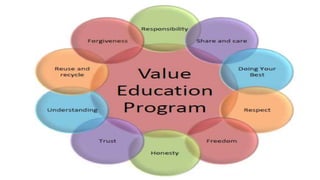
 Living Values Education Programme (LVEP)-
It incorporates 12 values that are
unity,peace,happiness,hope,humility,simplicity,trust,freedom,cooperation, honesty,
courage and love.
The NVEP website lists 54 countries where value education projects are undertaken.
It is inspired by the Brahmakumaris World Spiritual University.
Family Values Scheme
 Created in 2009 by Gill Ellis and Nicola S. Morgan
 Based on set of 22 values to encourage families to participate in a series of fun tasks and
challenges.
 Designed to enhance the effectiveness of key relationships between and among family
members.
 Good and caring relationships are the key ingredients within the family unit.
Value education from around the world-
Australia-
 Its government funds values education in its schools ,with its own publications and
funding.
 Conference on moral education and Australian values was held in 2007 at Monash
University.
India-
 Ministry of HRD introduced values among schools and teacher training centres.
 New Golden Education Trust(NGET)Values based education is progressing throughout the
country.
Value education

Value education

  • 1.
  • 2.
    Contents-  Introduction  Significance Value Education Program  Multinational school-based value education  What are values?  Projects on value education  Value education from around the world
  • 3.
    Introduction  Value educationis the process by which people give moral values to others.  It can take place at home.as well as in schools,colleges,universities,jails and voluntary youth organisations.  Two main approaches- 1. Inculcating or Transmitting a set of values(social,religious,cultural ethics) 2. Type of socratic dialogue which is people’s self realizations of good behaviours.
  • 4.
    Significance-  Promotes humanity Teaches the difference between right and wrong  Makes living harmonious  Inculcates real education  Brings unity in diversity  Gives us a while,to take rest from busy schedules and think  Prevents us from being mechanical,power hungry bottomfeeders.
  • 6.
    Multinational school-based valueeducation  Human Values Foundation  Established in 1995  For children of 4-12 years of age  Includes story telling,quotations,group singing to make them learn
  • 7.
    Character Education  Teachingof children in a manner that’ll help them develop as personal and social beings.  Social,emotional learning  Moral reasoning/cognitive development  Life skills education  Health education  Violence prevention  Critical thinking,ethical reasoning  Conflict resolution and meditation
  • 8.
    What are values? Environmental values  Valuing Nature  Valuing Cultures  Social Justice  Human Heritage  Equitable use of resources  Common property resources  Ecological Degradation
  • 9.
     Environmental Values-Itis learnt through an understanding and appreciation of nature’s oneness and its conservation.  Valuing cultures-An opportunity to achieve a better economic status without disrupting their culture and way of life.  Social Justice-To protect the rights of the poor who do not have the means for their rights.  Human Heritage-The undisturbed wilderness,rural landscape,traditional village and historical monuments.
  • 10.
     Equitable useof resources-an unfair distribution of wealth and resources between the poor and the rich must be prevented.  Common property resources-Environment’s major components that do not belong to individuals.  Ecological Degradation-Valuable ecological assets are turned into serious environmental problems.
  • 11.
    Projects on valueeducation  Living Values Education Programme (LVEP)- It incorporates 12 values that are unity,peace,happiness,hope,humility,simplicity,trust,freedom,cooperation, honesty, courage and love. The NVEP website lists 54 countries where value education projects are undertaken. It is inspired by the Brahmakumaris World Spiritual University.
  • 12.
    Family Values Scheme Created in 2009 by Gill Ellis and Nicola S. Morgan  Based on set of 22 values to encourage families to participate in a series of fun tasks and challenges.  Designed to enhance the effectiveness of key relationships between and among family members.  Good and caring relationships are the key ingredients within the family unit.
  • 13.
    Value education fromaround the world- Australia-  Its government funds values education in its schools ,with its own publications and funding.  Conference on moral education and Australian values was held in 2007 at Monash University. India-  Ministry of HRD introduced values among schools and teacher training centres.  New Golden Education Trust(NGET)Values based education is progressing throughout the country.