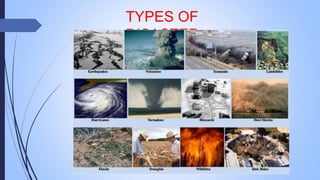
TYPES OF
DISASTER
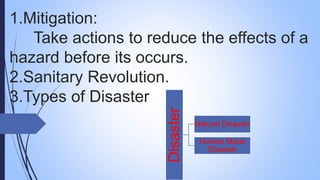
1.Mitigation:
Take actions to reduce the effects of a
hazard before its occurs.
2.Sanitary Revolution.
3.Types of Disaster
Disaster
Natural Disaster
Human Made
Disaster
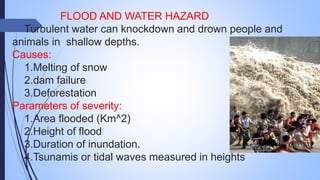
FLOOD AND WATER HAZARD
Turbulent water can knockdown and drown people and
animals in shallow depths.
Causes:
1.Melting of snow
2.dam failure
3.Deforestation
Parameters of severity:
1.Area flooded (Km^2)
2.Height of flood
3.Duration of inundation.
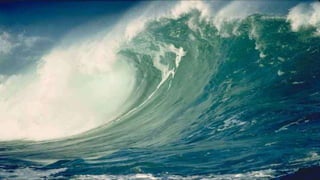
4.Tsunamis or tidal waves measured in heights
Hazard assessment and Mapping Technique:
1.Historical Records
2.TopograicMap and height around river system.
3.Precipitation and snow-melt record.
Onset and Warning:
1.High tides with high winds-coastal flood-some hours before.
2.tsunamisarrives hrs/mts after earthquake.
Elements most at risk:
1.Undergfround buildings
2.Sewage,power,water supply, electronics and agriculture etc..
3.fishing boats and maritime industries.
Main mitigation strategy:
1.land use control
2.Seepage-Resistance Infrastructure
EARTHQUAKE
Vibrational energy transmitted through the earth’s
surface from depth.
Causes:
1.tectonic process
2.Volcanic activity
3.Local geomorphology shift
Parameters:
1.Magnotude scale (seismograph)
2.Intensity scale (like7.1)
Onset warning:
Sudden and not currently possible to predict short term
earth quake occurrence.
Elements most at risk:
1.Buildings with heavy roof.
2.Industrial and chemical plant
3.Buildings on loose soil
4.tall buildings.(twin tower)
Mitigation strategy:
1.Construction of building with quality.(Chennai)
2.Insurance
3.Location planning
4.Seismic zonation
5.seismic building codes
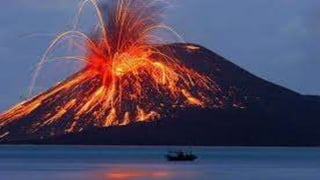
VOLCANIC ERUPTION
Gradual or explosive eruption, ejecting hot ashes,
gases and dust.
Causes:
1.Ejection of magma
2.Tectonic process
Parameters:
1.Depth of ash deposit
2.Volume of material ejected
3.Explosiveness and duration of eruption
Hazard assessment and mapping technique:
1.Historical records
2.Identification of active volcanoes
Onset and warning:
1.Eruption may be gradual or explosive
2.Evacuvation of population away from volcano
Elements at risk:
1.Water supply –dust fall
2.Weak buildings, crops and livestock
Main mitigation strategy:
1. Location planning
2.Promotion of fire-resistant structures
LAND INSTABILITIES
Causes:
1.High water content make the soil heavier
2.Liquefaction of soil
3.Heavy rainfall and Gravitational force on soil
Parameters:
1.Area buried
2.Volume of material dislodged
Hazard assessment and mapping technique:
1.identification of previous land slide
2.Rock-fall protection barriers
Onset and warning:
1.Debris flow
2.Sudden failure
3.Rock fall
Elements at risk:
1.Roads
2.Building with weak foundations
3.Softer soils
Mitigation strategy:
1.Location planning
2.Engineering of structure
3.Relocation of building
DROUGHT AND DESERTIFICATION
Lack of water affects health of crops, trees, livestock and humans
Causes:
1.Rainfall level
2.Climatic change
3.Loss of vegetation
4.Overgrazing
Parameters:
1.Rainfall level/deficit
2.Period of drought
3. Extent of desert climatic zone
Elements at risk:
1.Crops,forests,human and animal health
2.Entire human settlement
Onset and warning:
1.Warnings by rainfall level, river, well and reservoir leve
2.Death of livestock and migration
Mitigation strategy:
1.Population control
2.Construction of dams
3.Reducing firewood cutting
4.introduction of flexible farming and cropping pattern
(drop –Farming)
TECHNOLOGICAL HAZARD
1.Explosions
2.Transportation accident
3.Industrial fire
4.hazardous substances release
Causes:
1.Fire
2.Accident
3.Arson and sabotage
Parameters:
1.Quantity of hazardous substances released
2.Temperature of fire
3.Area of contamination of air, ground water and sea
Elements at risk:
1.Industrial plant
2.Adjacent building
3.Livestock/crops in the vicinity of the plant
4.Fauna and Flora
Mitigation strategy:
1.Improve safety standard
2.Legislation
3.Improving detectors and warning system
4.Limit or reduce storage capacity of flammable
chemicals

Types of disaster

  • 1.
  • 2.
    1.Mitigation: Take actions toreduce the effects of a hazard before its occurs. 2.Sanitary Revolution. 3.Types of Disaster Disaster Natural Disaster Human Made Disaster
  • 4.
    FLOOD AND WATERHAZARD Turbulent water can knockdown and drown people and animals in shallow depths. Causes: 1.Melting of snow 2.dam failure 3.Deforestation Parameters of severity: 1.Area flooded (Km^2) 2.Height of flood 3.Duration of inundation. 4.Tsunamis or tidal waves measured in heights
  • 5.
    Hazard assessment andMapping Technique: 1.Historical Records 2.TopograicMap and height around river system. 3.Precipitation and snow-melt record. Onset and Warning: 1.High tides with high winds-coastal flood-some hours before. 2.tsunamisarrives hrs/mts after earthquake. Elements most at risk: 1.Undergfround buildings 2.Sewage,power,water supply, electronics and agriculture etc.. 3.fishing boats and maritime industries. Main mitigation strategy: 1.land use control 2.Seepage-Resistance Infrastructure
  • 7.
    EARTHQUAKE Vibrational energy transmittedthrough the earth’s surface from depth. Causes: 1.tectonic process 2.Volcanic activity 3.Local geomorphology shift Parameters: 1.Magnotude scale (seismograph) 2.Intensity scale (like7.1) Onset warning: Sudden and not currently possible to predict short term earth quake occurrence.
  • 8.
    Elements most atrisk: 1.Buildings with heavy roof. 2.Industrial and chemical plant 3.Buildings on loose soil 4.tall buildings.(twin tower) Mitigation strategy: 1.Construction of building with quality.(Chennai) 2.Insurance 3.Location planning 4.Seismic zonation 5.seismic building codes
  • 10.
    VOLCANIC ERUPTION Gradual orexplosive eruption, ejecting hot ashes, gases and dust. Causes: 1.Ejection of magma 2.Tectonic process Parameters: 1.Depth of ash deposit 2.Volume of material ejected 3.Explosiveness and duration of eruption
  • 11.
    Hazard assessment andmapping technique: 1.Historical records 2.Identification of active volcanoes Onset and warning: 1.Eruption may be gradual or explosive 2.Evacuvation of population away from volcano Elements at risk: 1.Water supply –dust fall 2.Weak buildings, crops and livestock Main mitigation strategy: 1. Location planning 2.Promotion of fire-resistant structures
  • 12.
    LAND INSTABILITIES Causes: 1.High watercontent make the soil heavier 2.Liquefaction of soil 3.Heavy rainfall and Gravitational force on soil Parameters: 1.Area buried 2.Volume of material dislodged Hazard assessment and mapping technique: 1.identification of previous land slide 2.Rock-fall protection barriers Onset and warning: 1.Debris flow 2.Sudden failure 3.Rock fall
  • 13.
    Elements at risk: 1.Roads 2.Buildingwith weak foundations 3.Softer soils Mitigation strategy: 1.Location planning 2.Engineering of structure 3.Relocation of building
  • 14.
    DROUGHT AND DESERTIFICATION Lackof water affects health of crops, trees, livestock and humans Causes: 1.Rainfall level 2.Climatic change 3.Loss of vegetation 4.Overgrazing Parameters: 1.Rainfall level/deficit 2.Period of drought 3. Extent of desert climatic zone Elements at risk: 1.Crops,forests,human and animal health 2.Entire human settlement
  • 15.
    Onset and warning: 1.Warningsby rainfall level, river, well and reservoir leve 2.Death of livestock and migration Mitigation strategy: 1.Population control 2.Construction of dams 3.Reducing firewood cutting 4.introduction of flexible farming and cropping pattern (drop –Farming)
  • 16.
    TECHNOLOGICAL HAZARD 1.Explosions 2.Transportation accident 3.Industrialfire 4.hazardous substances release Causes: 1.Fire 2.Accident 3.Arson and sabotage Parameters: 1.Quantity of hazardous substances released 2.Temperature of fire 3.Area of contamination of air, ground water and sea
  • 17.
    Elements at risk: 1.Industrialplant 2.Adjacent building 3.Livestock/crops in the vicinity of the plant 4.Fauna and Flora Mitigation strategy: 1.Improve safety standard 2.Legislation 3.Improving detectors and warning system 4.Limit or reduce storage capacity of flammable chemicals