Semiotics 
To understand semiotics and how to 
apply this to media texts
Write down the 
purpose of as many 
of these apps as 
you can.
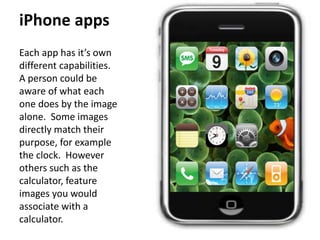
iPhone apps 
Each app has it’s own 
different capabilities. 
A person could be 
aware of what each 
one does by the image 
alone. Some images 
directly match their 
purpose, for example 
the clock. However 
others such as the 
calculator, feature 
images you would 
associate with a 
calculator.
Semiotics 
• The study of signs. 
• Also of anything which stands for 'something 
else'.
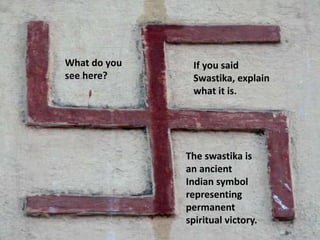
What do you 
see here? 
If you said 
Swastika, explain 
what it is. 
The swastika is 
an ancient 
Indian symbol 
representing 
permanent 
spiritual victory.
Official team jersey of the Native American Basketball Team [1909] proudly 
displaying a very large swastika. 
Before the 1930s, members of the 45th Infantry Division of the United States 
Army proudly wore on their left shoulders an ancient "good luck" symbol, the 
swastika, in yellow on a square red background.
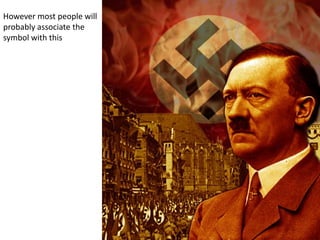
However most people will 
probably associate the 
symbol with this
Semiotics 
We read images and pictures in an attempt to 
decode them and make sense of what they 
mean to us. 
• Denotation – What we see when we look at 
an image (what it is) 
• Connotation – What we understand from this 
image (what other meanings it has)
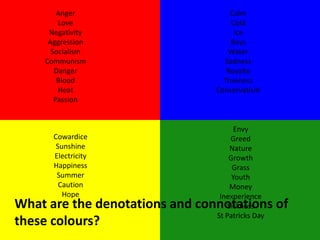
Anger 
Love 
Negativity 
Aggression 
Socialism 
Communism 
Danger 
Blood 
Heat 
Passion 
Calm 
Cold 
Ice 
Boys 
Water 
Sadness 
Royalty 
Trueness 
Conservatism 
Envy 
Greed 
Nature 
Growth 
Grass 
Youth 
Money 
Inexperience 
Sickness 
St Patricks Day 
Cowardice 
Sunshine 
Electricity 
Happiness 
Summer 
Caution 
Hope 
What are the denotations and connotations of 
these colours?
Now try it with the following images
Ok.... So what’s all this 
signs jiggery pokery got to 
do with media studies 
I want you guys to 
analyse the following 
image and come up 
with as many 
denotations and 
connotations as you 
can.
Denotations 
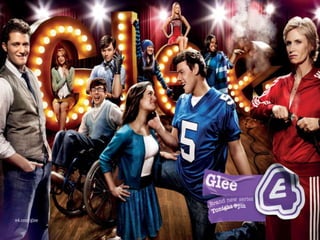
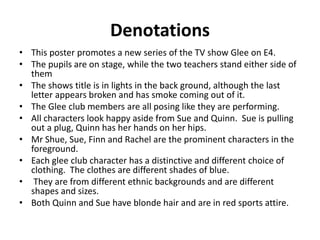
• This poster promotes a new series of the TV show Glee on E4. 
• The pupils are on stage, while the two teachers stand either side of 
them 
• The shows title is in lights in the back ground, although the last 
letter appears broken and has smoke coming out of it. 
• The Glee club members are all posing like they are performing. 
• All characters look happy aside from Sue and Quinn. Sue is pulling 
out a plug, Quinn has her hands on her hips. 
• Mr Shue, Sue, Finn and Rachel are the prominent characters in the 
foreground. 
• Each glee club character has a distinctive and different choice of 
clothing. The clothes are different shades of blue. 
• They are from different ethnic backgrounds and are different 
shapes and sizes. 
• Both Quinn and Sue have blonde hair and are in red sports attire.
Connotations 
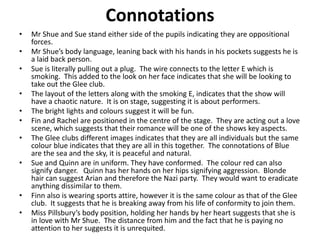
• Mr Shue and Sue stand either side of the pupils indicating they are oppositional 
forces. 
• Mr Shue’s body language, leaning back with his hands in his pockets suggests he is 
a laid back person. 
• Sue is literally pulling out a plug. The wire connects to the letter E which is 
smoking. This added to the look on her face indicates that she will be looking to 
take out the Glee club. 
• The layout of the letters along with the smoking E, indicates that the show will 
have a chaotic nature. It is on stage, suggesting it is about performers. 
• The bright lights and colours suggest it will be fun. 
• Fin and Rachel are positioned in the centre of the stage. They are acting out a love 
scene, which suggests that their romance will be one of the shows key aspects. 
• The Glee clubs different images indicates that they are all individuals but the same 
colour blue indicates that they are all in this together. The connotations of Blue 
are the sea and the sky, it is peaceful and natural. 
• Sue and Quinn are in uniform. They have conformed. The colour red can also 
signify danger. Quinn has her hands on her hips signifying aggression. Blonde 
hair can suggest Arian and therefore the Nazi party. They would want to eradicate 
anything dissimilar to them. 
• Finn also is wearing sports attire, however it is the same colour as that of the Glee 
club. It suggests that he is breaking away from his life of conformity to join them. 
• Miss Pillsbury’s body position, holding her hands by her heart suggests that she is 
in love with Mr Shue. The distance from him and the fact that he is paying no 
attention to her suggests it is unrequited.
How audiences read a text
Stuart Hall 
Cultural theorist Stuart Hall developed a 
theory (rather imaginatively called Hall’s 
theory). According to this, audiences can have 
different reactions to a media text, whether it 
be a film, documentary, newspaper or even an 
image.
Preferred and Oppositional Readings 
• Preferred Reading: How the creator wants 
the audience to view the media text. 
• Oppositional Reading: Where the intended 
meaning of the text is totally opposed by the 
reader.
1950’s Kenwood Advert 
Preferred Reading 
• A woman’s purpose is to 
serve her husband. She is 
smiling, so she is perfectly 
happy to do this. She 
knows her place . The man 
is the breadwinner. He will 
give her the product. 
Oppositional Reading 
• This is a sexist view. A 
woman’s place is not in the 
kitchen. They are equal to 
men. If she wants one of 
these products she will go 
out and get it for herself. 
Her husband can use it to 
cook for her as well.
Example Images
Semiotics
Semiotics
Semiotics
Semiotics

Semiotics

  • 1.
    Semiotics To understandsemiotics and how to apply this to media texts
  • 2.
    Write down the purpose of as many of these apps as you can.
  • 3.
    iPhone apps Eachapp has it’s own different capabilities. A person could be aware of what each one does by the image alone. Some images directly match their purpose, for example the clock. However others such as the calculator, feature images you would associate with a calculator.
  • 4.
    Semiotics • Thestudy of signs. • Also of anything which stands for 'something else'.
  • 5.
    What do you see here? If you said Swastika, explain what it is. The swastika is an ancient Indian symbol representing permanent spiritual victory.
  • 6.
    Official team jerseyof the Native American Basketball Team [1909] proudly displaying a very large swastika. Before the 1930s, members of the 45th Infantry Division of the United States Army proudly wore on their left shoulders an ancient "good luck" symbol, the swastika, in yellow on a square red background.
  • 7.
    However most peoplewill probably associate the symbol with this
  • 8.
    Semiotics We readimages and pictures in an attempt to decode them and make sense of what they mean to us. • Denotation – What we see when we look at an image (what it is) • Connotation – What we understand from this image (what other meanings it has)
  • 9.
    Anger Love Negativity Aggression Socialism Communism Danger Blood Heat Passion Calm Cold Ice Boys Water Sadness Royalty Trueness Conservatism Envy Greed Nature Growth Grass Youth Money Inexperience Sickness St Patricks Day Cowardice Sunshine Electricity Happiness Summer Caution Hope What are the denotations and connotations of these colours?
  • 10.
    Now try itwith the following images
  • 12.
    Ok.... So what’sall this signs jiggery pokery got to do with media studies I want you guys to analyse the following image and come up with as many denotations and connotations as you can.
  • 14.
    Denotations • Thisposter promotes a new series of the TV show Glee on E4. • The pupils are on stage, while the two teachers stand either side of them • The shows title is in lights in the back ground, although the last letter appears broken and has smoke coming out of it. • The Glee club members are all posing like they are performing. • All characters look happy aside from Sue and Quinn. Sue is pulling out a plug, Quinn has her hands on her hips. • Mr Shue, Sue, Finn and Rachel are the prominent characters in the foreground. • Each glee club character has a distinctive and different choice of clothing. The clothes are different shades of blue. • They are from different ethnic backgrounds and are different shapes and sizes. • Both Quinn and Sue have blonde hair and are in red sports attire.
  • 15.
    Connotations • MrShue and Sue stand either side of the pupils indicating they are oppositional forces. • Mr Shue’s body language, leaning back with his hands in his pockets suggests he is a laid back person. • Sue is literally pulling out a plug. The wire connects to the letter E which is smoking. This added to the look on her face indicates that she will be looking to take out the Glee club. • The layout of the letters along with the smoking E, indicates that the show will have a chaotic nature. It is on stage, suggesting it is about performers. • The bright lights and colours suggest it will be fun. • Fin and Rachel are positioned in the centre of the stage. They are acting out a love scene, which suggests that their romance will be one of the shows key aspects. • The Glee clubs different images indicates that they are all individuals but the same colour blue indicates that they are all in this together. The connotations of Blue are the sea and the sky, it is peaceful and natural. • Sue and Quinn are in uniform. They have conformed. The colour red can also signify danger. Quinn has her hands on her hips signifying aggression. Blonde hair can suggest Arian and therefore the Nazi party. They would want to eradicate anything dissimilar to them. • Finn also is wearing sports attire, however it is the same colour as that of the Glee club. It suggests that he is breaking away from his life of conformity to join them. • Miss Pillsbury’s body position, holding her hands by her heart suggests that she is in love with Mr Shue. The distance from him and the fact that he is paying no attention to her suggests it is unrequited.
  • 16.
  • 17.
    Stuart Hall Culturaltheorist Stuart Hall developed a theory (rather imaginatively called Hall’s theory). According to this, audiences can have different reactions to a media text, whether it be a film, documentary, newspaper or even an image.
  • 18.
    Preferred and OppositionalReadings • Preferred Reading: How the creator wants the audience to view the media text. • Oppositional Reading: Where the intended meaning of the text is totally opposed by the reader.
  • 20.
    1950’s Kenwood Advert Preferred Reading • A woman’s purpose is to serve her husband. She is smiling, so she is perfectly happy to do this. She knows her place . The man is the breadwinner. He will give her the product. Oppositional Reading • This is a sexist view. A woman’s place is not in the kitchen. They are equal to men. If she wants one of these products she will go out and get it for herself. Her husband can use it to cook for her as well.
  • 21.

Editor's Notes

  • #10 Hope – Women wore yellow ribbons waiting for their men to come home from war