COPD
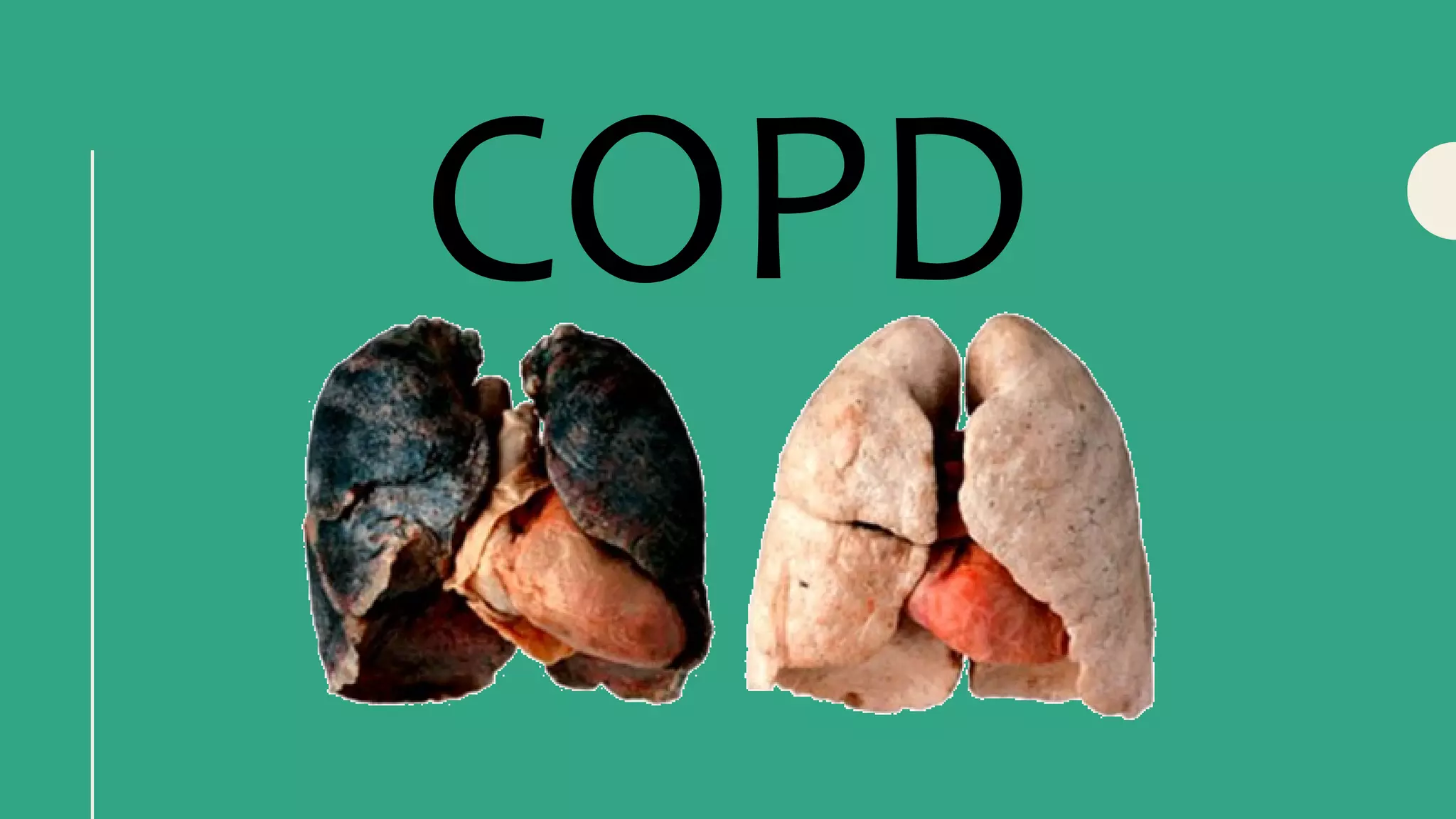
COPD
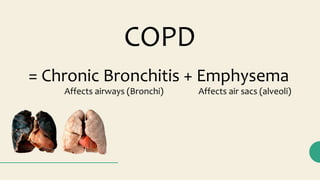
= Chronic Bronchitis + Emphysema
Affects airways (Bronchi) Affects air sacs (alveoli)
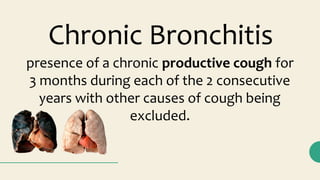
Chronic Bronchitis
presence of a chronic productive cough for
3 months during each of the 2 consecutive
years with other causes of cough being
excluded.
Emphysema
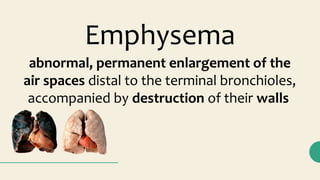
abnormal, permanent enlargement of the
air spaces distal to the terminal bronchioles,
accompanied by destruction of their walls
Signs + Symptoms
• Productive cough
• Yellow sputum
• Shortness of breath,
especially on exertion
• Wheezing
• Hyper-inflated or ‘Barreled-
chest’
• Higher than normal BP and
PR
• Weight loss
• Tiredness
• Fatigue
• Chest tightness
• Depression
• Swollen ankles
• Cyanosis
• Using accessory muscle for
breathing
• ± Chest pain
• ± Haemoptysis
Risk Factors
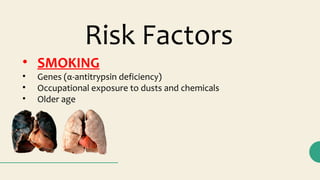
• SMOKING
• Genes (α-antitrypsin deficiency)
• Occupational exposure to dusts and chemicals
• Older age
Assessing Patients
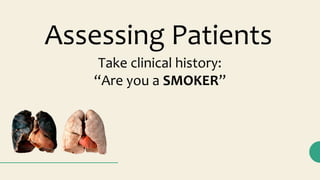
Take clinical history:
“Are you a SMOKER”
Assessing Patients
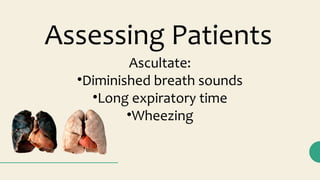
Ascultate:
•Diminished breath sounds
•Long expiratory time
•Wheezing
Assessing Patients
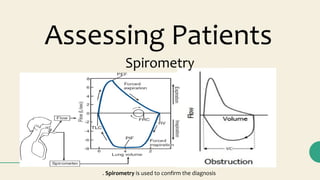
Spirometry
. Spirometry is used to confirm the diagnosis
Other tests
Refer patient to specialist for other tests:
•Chest X-rays
•Blood test
•ECG
•Echocardiogram
•Peak flow test
•Blood oxygen level
•Blood test for α-1-antitrypsin
•CT test
Referrals
•Diagnostic uncertainty
•Suspected severe COPD
•Individual requests 2nd
opinion
•Onset of cor pulmonale
•Assessment for oxygen therapy, long-
term nebuliser therapy or oral
corticosteroid therapy
•Symptoms disproportionate to lung
function deficit
•Frequent infections
•Haemoptysis
•Rapid decline in FEV1
•Assessment for pulmonary
rehabilitation
•Assessment for lung volume reduction
surgery or lung transplantation
•Dysfunctional breathing
•Onset of symptoms at age under 40
years or with a family history of α-1-
antitrypsin deficiency
Differential Diagnosis
• Congestive heart failure
• Pneumonia
• Pleural effusion
• Pneumothorax
• Pulmonary embolism
• Cardiac ischaemia
• Cardiac arrhythmia
• Upper airway obstruction
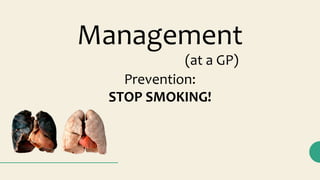
Management
(at a GP)
Prevention:
STOP SMOKING!
Medications:
•Short-acting bronchodilator inhalers
1. β2-agonist inhalers, such as salbutamol and terbutaline
2. Antimuscarinic inhalers, such as ipratropium
•Long-acting bronchodilator inhalers
1. β2-agonist inhalers, such as salbutamol and terbutaline
2. Antimuscarinic inhalers, such as tiotropium, glycopyronium
and aclidinium
Management
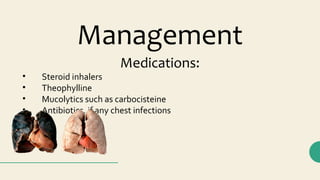
Medications:
• Steroid inhalers
• Theophylline
• Mucolytics such as carbocisteine
• Antibiotics, if any chest infections
Management
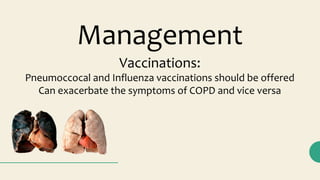
Vaccinations:
Pneumoccocal and Influenza vaccinations should be offered
Can exacerbate the symptoms of COPD and vice versa
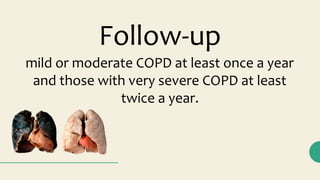
Management
mild or moderate COPD at least once a year
and those with very severe COPD at least
twice a year.
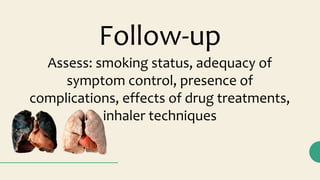
Follow-up
Assess: smoking status, adequacy of
symptom control, presence of
complications, effects of drug treatments,
inhaler techniques
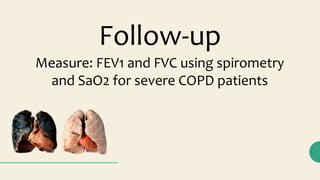
Follow-up
Measure: FEV1 and FVC using spirometry
and SaO2 for severe COPD patients
Follow-up
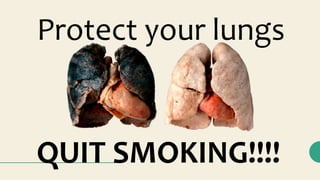
Protect your lungs
QUIT SMOKING!!!!

COPD; In a GP