DYSPNEA AND PULMONARY EDEMA Harrison’s 17 th  edition Chapter 33
Dyspnea
DYSPNEA American Thoracic Society dyspnea  as a “subjective experience of breathing discomfort that consists of qualitatively distinct sensations that vary in intensity experience derives from interactions among multiple physiological, psychological, social, and environmental factors, and may induce secondary physiological and behavioral responses.”
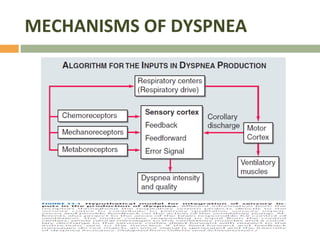
MECHANISMS OF DYSPNEA
Motor Efferents Disorders of the ventilatory pump associated with increased work of breathing or a sense of an increased effort to breathe The increased neural output from the motor cortex is thought to be sensed due to a corollary discharge that is sent to the sensory cortex at the same time that signals are sent to the ventilatory muscles.
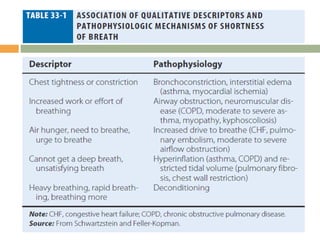
Sensory Efferents Chemoreceptors in the  carotid bodies and medulla activated by hypoxemia, acute hypercapnia, and acidemia; leads to an increase in ventilation, produce a sensation of air hunger Mechanoreceptors in the  lungs stimulated by bronchospasm; lead to a sensation of chest tightness J-receptors , sensitive to interstitial edema, and pulmonary vascular receptors activated by acute changes in pulmonary artery pressure, appear to contribute to air hunger
Sensory Efferents Hyperinflation  associated with the sensation of an inability to get a deep breath or of an unsatisfying breath Metaboreceptors, located in  skeletal muscle activated by changes in the local biochemical milieu of the tissue active during exercise when stimulated, contribute to the breathing discomfort
Anxiety Acute anxiety may increase the severity of dyspnea altering the interpretation of sensory data leading to patterns of breathing that heighten physiologic abnormalities in the respiratory system
ASSESSING DYSPNEA Quality of Sensation  determination of the quality of the discomfort Sensory Intensity  modified Borg scale or visual analogue scale can be utilized to measure dyspnea at rest, immediately following exercise, or on recall of a reproducible physical task.  alternative approach is to inquire about the activities a patient can do. The Baseline Dyspnea Index and the Chronic Respiratory Disease Questionnaire are commonly used tools for this purpose. Affective Dimension for a sensation to be reported as a symptom, it must be perceived as unpleasant and interpreted as abnormal.
 
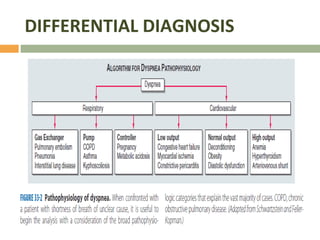
DIFFERENTIAL DIAGNOSIS
Respiratory System Dyspnea Controller Stimulated by acute hypoxemia and hypercapnia Stimulation of pulmonary receptors: acute bronchospasm, interstitial edema, and PE High altitude, high progesterone states (pregnancy), aspirin
Respiratory System Dyspnea Ventilatory Pump Disorders of the airways (asthma, emphysema, chronic bronchitis, bronchiectasis) lead to increased airway resistance and work of breathing Hyperinflation    inability to get a deep breath Conditions that stiffen the chest wall (kyphoscoliosis) and that weaken ventilatory muscles (MG and GBS) associated with increased effort to breath Large pleural effusions increases the work of breathing and stimulates pulmonary receptors if there is associated atelectasis.
Respiratory System Dyspnea Gas Exchanger interfere with gas exchange: pneumonia, pulmonary edema, and aspiration direct stimulation of pulmonary receptors: pulmonary vascular and interstitial lung disease and pulmonary vascular congestion relief of hypoxemia - small impact on dyspnea
Cardiovascular System Dyspnea High Cardiac Output Mild to moderate anemia: breathing discomfort during exercise Left-to-right intracardiac shunts: may be complicated by the development of pulmonary hypertension Breathlessness associated with obesity: due to multiple mechanisms, including high cardiac output and impaired ventilatory pump function
Cardiovascular System Dyspnea Normal Cardiac Output Cardiovascular deconditioning: early development of anaerobic metabolism and stimulation of chemo- and metaboreceptors Diastolic dysfunction: due to HPN, AS, or hypertrophic cardiomyopathy Pericardial disease: constrictive pericarditis
Cardiovascular System Dyspnea Low Cardiac Output Coronary artery disease and nonischemic cardiomyopathies: pulmonary receptors are stimulated
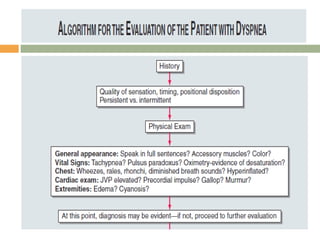
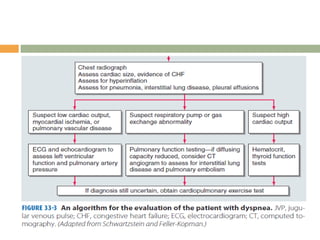
Approach to the Patient Clinical Indicators in the history  Orthopnea:  CHF, mechanical impairment of the diaphragm in obesity, or asthma triggered by esophageal reflux Nocturnal dyspnea:  CHF or asthma Acute, intermittent episodes:  MI, bronchospasm, PE Chronic persistent:  COPD and interstitial lung disease Platypnea:  left atrial myxoma or hepatopulmonary syndrome
Approach to the Patient Physical Examination Inability of the patient to speak in full sentences: problem with the controller ventilatory pump Increased work of breathing (supraclavicular retractions, use of accessory muscles, and the tripod position): ventilatory pump problem increased airway resistance or stiff lungs and chest wall
Approach to the Patient Physical Examination vital signs, respiratory rate  examination for a pulsus paradoxus >10 mmHg: COPD signs of anemia (pale conjunctivae), cyanosis, and cirrhosis (spider angiomata, gynecomastia)
Approach to the Patient Physical Examination Paradoxical movement of the abdomen (inward motion during inspiration): diaphragmatic weakness Clubbing of the digits: interstitial pulmonary fibrosis Joint swelling or deformation, change consistent with Raynaud’s disease: collagen-vascular process associated with pulmonary disease
Approach to the Patient Physical Examination of the  Chest  Symmetry of movement Percussion (dullness indicative of pleural effusion, hyper-resonance a sign of emphysema) Auscultation(wheezes, rales, rhonchi, prolonged expiratory phase, diminished breath sounds)
Approach to the Patient Physical Examination of the  Heart signs of elevated right heart pressures (jugular venous distention, edema, accentuated pulmonic component to the second heart sound) left ventricular dysfunction (S3 and S4 gallops) valvular disease (murmurs)
Approach to the Patient Diagnostic Exams CXR Lung volumes hyperinflation: obstructive lung disease low lung volumes: interstitial edema or fibrosis, diaphragmatic dysfunction, or impaired chest wall motion Pulmonary parenchyma - interstitial disease and emphysema
Approach to the Patient Diagnostic Exams CXR Prominent pulmonary vasculature in the upper zones: pulmonary venous hypertension enlarged central pulmonary arteries: pulmonary artery hypertension enlarged cardiac silhouette: dilated cardiomyopathy or valvular disease
Approach to the Patient Diagnostic Exams CXR Bilateral pleural effusions: CHF and collagen vascular disease Unilateral effusions: CA and PE
Approach to the Patient Diagnostic Exams CT scan of the chest reserved for further evaluation of the lung parenchyma (interstitial lung disease) and possible PE  ECG Look for evidence of ventricular hypertrophy and prior myocardial infarction
Approach to the Patient Distinguishing Cardiovascular from Respiratory System Dyspnea CARDIOPULMONARY EXERCISE TEST determine which system is responsible for the exercise limitation
Approach to the Patient Distinguishing Cardiovascular from Respiratory System Dyspnea CARDIOPULMONARY EXERCISE TEST PULMONARY IF AT PEAK EXERCISE:  achieves predicted maximal ventilation demonstrates an increase in dead space or hypoxemia (oxygen saturation below 90%) develops bronchospasm
Approach to the Patient Distinguishing Cardiovascular from Respiratory System Dyspnea CARDIOPULMONARY EXERCISE TEST CARDIAC IF AT PEAK EXERCISE:  heart rate is >85% of the predicted maximum if anaerobic threshold occurs early if the BP  becomes excessively high or drops if the O2 pulse (O2 consumption/heart rate, an indicator of stroke volume) falls if there are ischemic changes on the ECG
 
 
Treatment First goal: correct the underlying problem responsible for the symptom Administration of supplemental O 2 COPD patients: pulmonary rehabilitation programs have demonstrated positive effects on dyspnea, exercise capacity, and rates of hospitalization
Pulmonary Edema
MECHANISMS OF FLUID ACCUMULATION balance of hydrostatic and oncotic forces within the pulmonary capillaries Hydrostatic pressure favors movement of fluid from the capillary into the interstitium Oncotic pressure favors movement of fluid into the vessel
MECHANISMS OF FLUID ACCUMULATION Maintenance tight junctions of the capillary endothelium are impermeable to proteins lymphatics in the tissue carry away the small amounts of protein that may leak out Pathology disruption of the endothelial barrier: allows protein to escape the capillary bed and enhances the movement of fluid into the tissue of the lung
Cardiogenic Pulmonary Edema Hydrostatic pressure is increased and fluid exits the capillary at an increased rate Early signs of pulmonary edema: exertional dyspnea and orthopnea CXR: peribronchial thickening, prominent vascular markings in the upper lung zones, and Kerley B lines
Noncardiogenic Pulmonary Edema Hydrostatic pressures are normal  Leakage of proteins and other macromolecules into the tissue Associated with dysfunction of the surfactant lining the alveoli, increased surface forces, and a propensity for the alveoli to collapse at low lung volumes
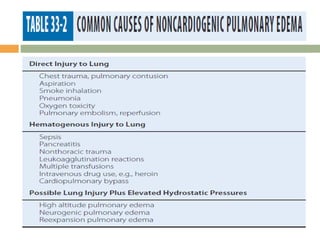
Noncardiogenic Pulmonary Edema Characterized by intrapulmonary shunt with hypoxemia and decreased pulmonary compliance Causes Direct Injury to Lung Hematogenous Injury to Lung Possible Lung Injury Plus Elevated Hydrostatic Pressures
 
Cardiogenic vs Noncardiogenic CARDIOGENIC PULMONARY EDEMA  Physical Examination:  increased intracardiac pressures (S3 gallop, elevated jugular venous pulse, peripheral edema) rales and/or wheezes on auscultation of the chest CXR: enlarged cardiac silhouette vascular redistribution interstitial thickening perihilar alveolar infiltrates pleural effusions
Cardiogenic vs Noncardiogenic NONCARDIOGENIC PULMONARY EDEMA Physical Examination:  Findings may be relatively normal in the early stages CXR: Heart size is normal Uniform alveolar infiltrates  Pleural effusions are uncommon
Hypoxemia CARDIOGENIC due to ventilation-perfusion mismatch responds to the administration of supplemental oxygen NONCARDIOGENIC  due to intrapulmonary shunting  persists despite high concentrations of inhaled O 2
 

Dyspnea and Pulmonary Edema

  • 1.
    DYSPNEA AND PULMONARYEDEMA Harrison’s 17 th edition Chapter 33
  • 2.
  • 3.
    DYSPNEA American ThoracicSociety dyspnea as a “subjective experience of breathing discomfort that consists of qualitatively distinct sensations that vary in intensity experience derives from interactions among multiple physiological, psychological, social, and environmental factors, and may induce secondary physiological and behavioral responses.”
  • 4.
  • 5.
    Motor Efferents Disordersof the ventilatory pump associated with increased work of breathing or a sense of an increased effort to breathe The increased neural output from the motor cortex is thought to be sensed due to a corollary discharge that is sent to the sensory cortex at the same time that signals are sent to the ventilatory muscles.
  • 6.
    Sensory Efferents Chemoreceptorsin the carotid bodies and medulla activated by hypoxemia, acute hypercapnia, and acidemia; leads to an increase in ventilation, produce a sensation of air hunger Mechanoreceptors in the lungs stimulated by bronchospasm; lead to a sensation of chest tightness J-receptors , sensitive to interstitial edema, and pulmonary vascular receptors activated by acute changes in pulmonary artery pressure, appear to contribute to air hunger
  • 7.
    Sensory Efferents Hyperinflation associated with the sensation of an inability to get a deep breath or of an unsatisfying breath Metaboreceptors, located in skeletal muscle activated by changes in the local biochemical milieu of the tissue active during exercise when stimulated, contribute to the breathing discomfort
  • 8.
    Anxiety Acute anxietymay increase the severity of dyspnea altering the interpretation of sensory data leading to patterns of breathing that heighten physiologic abnormalities in the respiratory system
  • 9.
    ASSESSING DYSPNEA Qualityof Sensation determination of the quality of the discomfort Sensory Intensity modified Borg scale or visual analogue scale can be utilized to measure dyspnea at rest, immediately following exercise, or on recall of a reproducible physical task. alternative approach is to inquire about the activities a patient can do. The Baseline Dyspnea Index and the Chronic Respiratory Disease Questionnaire are commonly used tools for this purpose. Affective Dimension for a sensation to be reported as a symptom, it must be perceived as unpleasant and interpreted as abnormal.
  • 10.
  • 11.
  • 12.
    Respiratory System DyspneaController Stimulated by acute hypoxemia and hypercapnia Stimulation of pulmonary receptors: acute bronchospasm, interstitial edema, and PE High altitude, high progesterone states (pregnancy), aspirin
  • 13.
    Respiratory System DyspneaVentilatory Pump Disorders of the airways (asthma, emphysema, chronic bronchitis, bronchiectasis) lead to increased airway resistance and work of breathing Hyperinflation  inability to get a deep breath Conditions that stiffen the chest wall (kyphoscoliosis) and that weaken ventilatory muscles (MG and GBS) associated with increased effort to breath Large pleural effusions increases the work of breathing and stimulates pulmonary receptors if there is associated atelectasis.
  • 14.
    Respiratory System DyspneaGas Exchanger interfere with gas exchange: pneumonia, pulmonary edema, and aspiration direct stimulation of pulmonary receptors: pulmonary vascular and interstitial lung disease and pulmonary vascular congestion relief of hypoxemia - small impact on dyspnea
  • 15.
    Cardiovascular System DyspneaHigh Cardiac Output Mild to moderate anemia: breathing discomfort during exercise Left-to-right intracardiac shunts: may be complicated by the development of pulmonary hypertension Breathlessness associated with obesity: due to multiple mechanisms, including high cardiac output and impaired ventilatory pump function
  • 16.
    Cardiovascular System DyspneaNormal Cardiac Output Cardiovascular deconditioning: early development of anaerobic metabolism and stimulation of chemo- and metaboreceptors Diastolic dysfunction: due to HPN, AS, or hypertrophic cardiomyopathy Pericardial disease: constrictive pericarditis
  • 17.
    Cardiovascular System DyspneaLow Cardiac Output Coronary artery disease and nonischemic cardiomyopathies: pulmonary receptors are stimulated
  • 18.
    Approach to thePatient Clinical Indicators in the history Orthopnea: CHF, mechanical impairment of the diaphragm in obesity, or asthma triggered by esophageal reflux Nocturnal dyspnea: CHF or asthma Acute, intermittent episodes: MI, bronchospasm, PE Chronic persistent: COPD and interstitial lung disease Platypnea: left atrial myxoma or hepatopulmonary syndrome
  • 19.
    Approach to thePatient Physical Examination Inability of the patient to speak in full sentences: problem with the controller ventilatory pump Increased work of breathing (supraclavicular retractions, use of accessory muscles, and the tripod position): ventilatory pump problem increased airway resistance or stiff lungs and chest wall
  • 20.
    Approach to thePatient Physical Examination vital signs, respiratory rate examination for a pulsus paradoxus >10 mmHg: COPD signs of anemia (pale conjunctivae), cyanosis, and cirrhosis (spider angiomata, gynecomastia)
  • 21.
    Approach to thePatient Physical Examination Paradoxical movement of the abdomen (inward motion during inspiration): diaphragmatic weakness Clubbing of the digits: interstitial pulmonary fibrosis Joint swelling or deformation, change consistent with Raynaud’s disease: collagen-vascular process associated with pulmonary disease
  • 22.
    Approach to thePatient Physical Examination of the Chest Symmetry of movement Percussion (dullness indicative of pleural effusion, hyper-resonance a sign of emphysema) Auscultation(wheezes, rales, rhonchi, prolonged expiratory phase, diminished breath sounds)
  • 23.
    Approach to thePatient Physical Examination of the Heart signs of elevated right heart pressures (jugular venous distention, edema, accentuated pulmonic component to the second heart sound) left ventricular dysfunction (S3 and S4 gallops) valvular disease (murmurs)
  • 24.
    Approach to thePatient Diagnostic Exams CXR Lung volumes hyperinflation: obstructive lung disease low lung volumes: interstitial edema or fibrosis, diaphragmatic dysfunction, or impaired chest wall motion Pulmonary parenchyma - interstitial disease and emphysema
  • 25.
    Approach to thePatient Diagnostic Exams CXR Prominent pulmonary vasculature in the upper zones: pulmonary venous hypertension enlarged central pulmonary arteries: pulmonary artery hypertension enlarged cardiac silhouette: dilated cardiomyopathy or valvular disease
  • 26.
    Approach to thePatient Diagnostic Exams CXR Bilateral pleural effusions: CHF and collagen vascular disease Unilateral effusions: CA and PE
  • 27.
    Approach to thePatient Diagnostic Exams CT scan of the chest reserved for further evaluation of the lung parenchyma (interstitial lung disease) and possible PE ECG Look for evidence of ventricular hypertrophy and prior myocardial infarction
  • 28.
    Approach to thePatient Distinguishing Cardiovascular from Respiratory System Dyspnea CARDIOPULMONARY EXERCISE TEST determine which system is responsible for the exercise limitation
  • 29.
    Approach to thePatient Distinguishing Cardiovascular from Respiratory System Dyspnea CARDIOPULMONARY EXERCISE TEST PULMONARY IF AT PEAK EXERCISE: achieves predicted maximal ventilation demonstrates an increase in dead space or hypoxemia (oxygen saturation below 90%) develops bronchospasm
  • 30.
    Approach to thePatient Distinguishing Cardiovascular from Respiratory System Dyspnea CARDIOPULMONARY EXERCISE TEST CARDIAC IF AT PEAK EXERCISE: heart rate is >85% of the predicted maximum if anaerobic threshold occurs early if the BP becomes excessively high or drops if the O2 pulse (O2 consumption/heart rate, an indicator of stroke volume) falls if there are ischemic changes on the ECG
  • 31.
  • 32.
  • 33.
    Treatment First goal:correct the underlying problem responsible for the symptom Administration of supplemental O 2 COPD patients: pulmonary rehabilitation programs have demonstrated positive effects on dyspnea, exercise capacity, and rates of hospitalization
  • 34.
  • 35.
    MECHANISMS OF FLUIDACCUMULATION balance of hydrostatic and oncotic forces within the pulmonary capillaries Hydrostatic pressure favors movement of fluid from the capillary into the interstitium Oncotic pressure favors movement of fluid into the vessel
  • 36.
    MECHANISMS OF FLUIDACCUMULATION Maintenance tight junctions of the capillary endothelium are impermeable to proteins lymphatics in the tissue carry away the small amounts of protein that may leak out Pathology disruption of the endothelial barrier: allows protein to escape the capillary bed and enhances the movement of fluid into the tissue of the lung
  • 37.
    Cardiogenic Pulmonary EdemaHydrostatic pressure is increased and fluid exits the capillary at an increased rate Early signs of pulmonary edema: exertional dyspnea and orthopnea CXR: peribronchial thickening, prominent vascular markings in the upper lung zones, and Kerley B lines
  • 38.
    Noncardiogenic Pulmonary EdemaHydrostatic pressures are normal Leakage of proteins and other macromolecules into the tissue Associated with dysfunction of the surfactant lining the alveoli, increased surface forces, and a propensity for the alveoli to collapse at low lung volumes
  • 39.
    Noncardiogenic Pulmonary EdemaCharacterized by intrapulmonary shunt with hypoxemia and decreased pulmonary compliance Causes Direct Injury to Lung Hematogenous Injury to Lung Possible Lung Injury Plus Elevated Hydrostatic Pressures
  • 40.
  • 41.
    Cardiogenic vs NoncardiogenicCARDIOGENIC PULMONARY EDEMA Physical Examination: increased intracardiac pressures (S3 gallop, elevated jugular venous pulse, peripheral edema) rales and/or wheezes on auscultation of the chest CXR: enlarged cardiac silhouette vascular redistribution interstitial thickening perihilar alveolar infiltrates pleural effusions
  • 42.
    Cardiogenic vs NoncardiogenicNONCARDIOGENIC PULMONARY EDEMA Physical Examination: Findings may be relatively normal in the early stages CXR: Heart size is normal Uniform alveolar infiltrates Pleural effusions are uncommon
  • 43.
    Hypoxemia CARDIOGENIC dueto ventilation-perfusion mismatch responds to the administration of supplemental oxygen NONCARDIOGENIC due to intrapulmonary shunting persists despite high concentrations of inhaled O 2
  • 44.