AFFECTIVE
DOMAINS
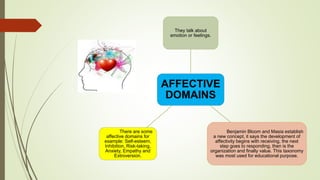
They talk about
emotion or feelings.
Benjamin Bloom and Masia establish
a new concept, it says the development of
affectivity begins with receiving, the next
step goes to responding, then is the
organization and finally value. This taxonomy
was most used for educational purpose.
There are some
affective domains for
example: Self-esteem,
Inhibition, Risk-taking,
Anxiety, Empathy and
Extroversion.
It is how we
evaluate ourselves,
how we recognize
and believe in our
capabilities and how
valuable we think we
are to others.
SELF-
ESTEEM
INHIBITION
It is an innate disposition that
encourage a person to
behave in a specific way and
toward to an objective.
RISKTAKING
• It is very important for a successful language
learners.
• It is the desire to try out hunches about the
language and take the risk of being wrong.
• It is closely associate with self-esteem.
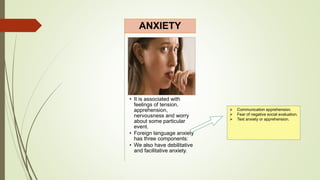
• It is associated with
feelings of tension,
apprehension,
nervousness and worry
about some particular
event.
• Foreign language anxiety
has three components:
• We also have debilitative
and facilitative anxiety.
ANXIETY
 Communication apprehension.
 Fear of negative social evaluation.
 Text anxiety or apprehension.
It is to be aware how people feel to understand them
better putting into their shoes.
Empathy is important in the communication to be able to
comprehend the other person’s affective and cognitive
states.
EMPATHY
EXTROVERSION
It is also important in the acquisition of a
second language.
It is the extent to which a person has
a deep-seated need to obtain
gratification from other people
instead of the self.
It is not the same as introversion.

Affective domain

  • 1.
    AFFECTIVE DOMAINS They talk about emotionor feelings. Benjamin Bloom and Masia establish a new concept, it says the development of affectivity begins with receiving, the next step goes to responding, then is the organization and finally value. This taxonomy was most used for educational purpose. There are some affective domains for example: Self-esteem, Inhibition, Risk-taking, Anxiety, Empathy and Extroversion.
  • 2.
    It is howwe evaluate ourselves, how we recognize and believe in our capabilities and how valuable we think we are to others. SELF- ESTEEM
  • 3.
    INHIBITION It is aninnate disposition that encourage a person to behave in a specific way and toward to an objective.
  • 4.
    RISKTAKING • It isvery important for a successful language learners. • It is the desire to try out hunches about the language and take the risk of being wrong. • It is closely associate with self-esteem.
  • 5.
    • It isassociated with feelings of tension, apprehension, nervousness and worry about some particular event. • Foreign language anxiety has three components: • We also have debilitative and facilitative anxiety. ANXIETY  Communication apprehension.  Fear of negative social evaluation.  Text anxiety or apprehension.
  • 6.
    It is tobe aware how people feel to understand them better putting into their shoes. Empathy is important in the communication to be able to comprehend the other person’s affective and cognitive states. EMPATHY
  • 7.
    EXTROVERSION It is alsoimportant in the acquisition of a second language. It is the extent to which a person has a deep-seated need to obtain gratification from other people instead of the self. It is not the same as introversion.