KIN 191A Advanced Assessment of Lower Extremity Injuries THE PELVIS AND THIGH INJURIES
INTRODUCTION MUSCLE STRAINS BURSITIS DEGENRATIVE HIP CHA N GES PIRIFORMIS SYNDROME ILLIAC CREST CONTUSION QUADRICEPS CONTUSION HIP DISLOCATION FEMUR FRACTURES/STRESS FRACTURES
SI JOINT DYSFUNCTION OSTEITIS PUBIS AVULSION FRACTURES (ASIS, AIIS, pubis, ischial tuberosity)
MUSCLE STRAINS Typically associated with dynamic overload to  eccentric contractions Pain usually felt at musculotendinous junction and/or at insertion site Most involved include quadriceps, hamstrings, hip flexors, adductors
BURSITIS Trochanteric Either from direct trauma or repetitive friction from IT band during knee flexion/extension Often referred to as “snapping hip syndrome” Ischial Either from direct trauma or movement in sitting position (rowing, biking, etc.) Iliopsoas Anterior hip pain, difficult to differentiate from hip flexor strain
DEGENERATIVE HIP CHANGES  Develop secondary to repetitive trauma, age, acute injury Arthritis OCD Avascular necrosis
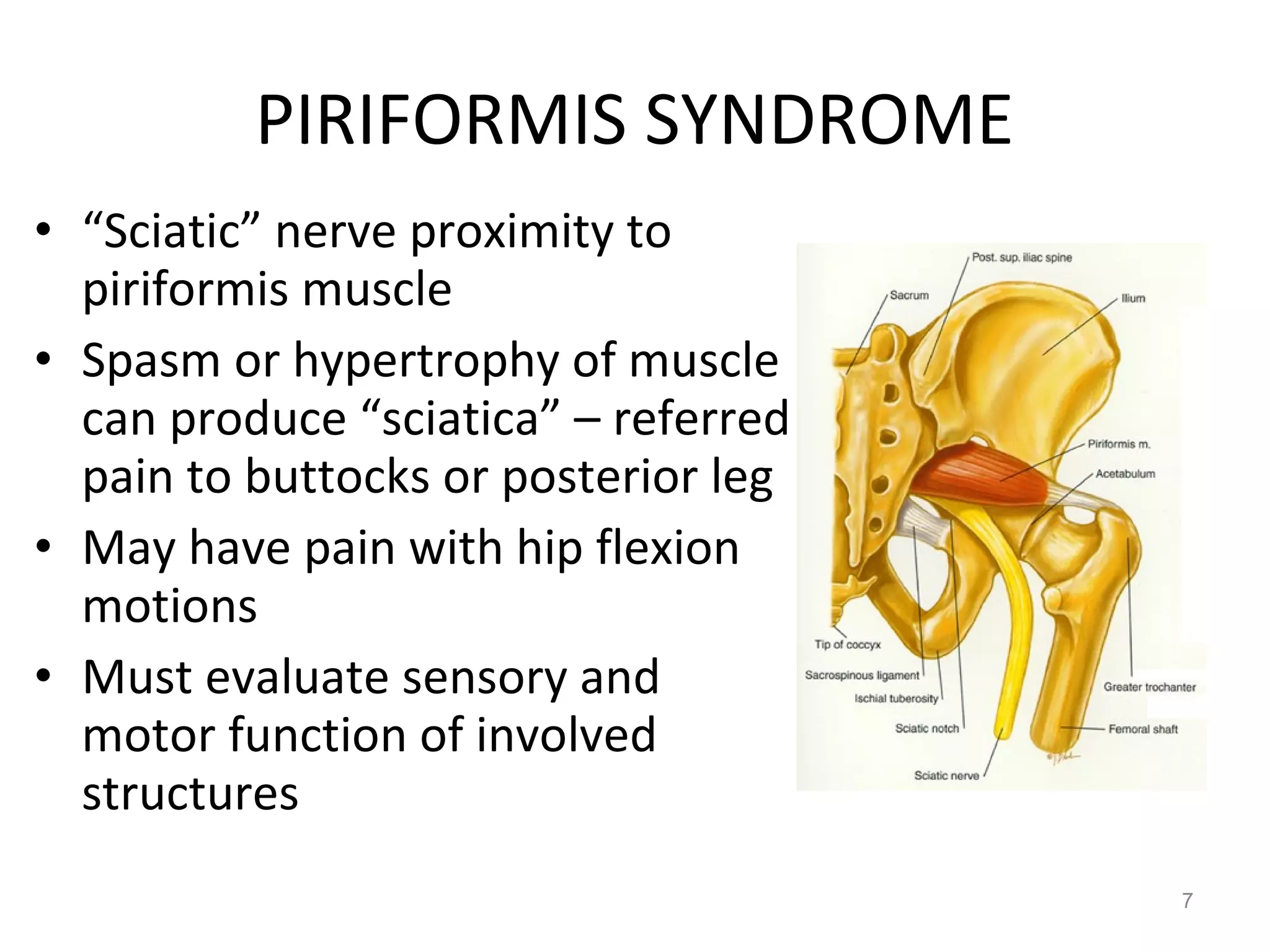
PIRIFORMIS SYNDROME “ Sciatic” nerve proximity to piriformis muscle Spasm or hypertrophy of muscle can produce “sciatica” – referred pain to buttocks or posterior leg May have pain with hip flexion motions Must evaluate sensory and motor function of involved structures
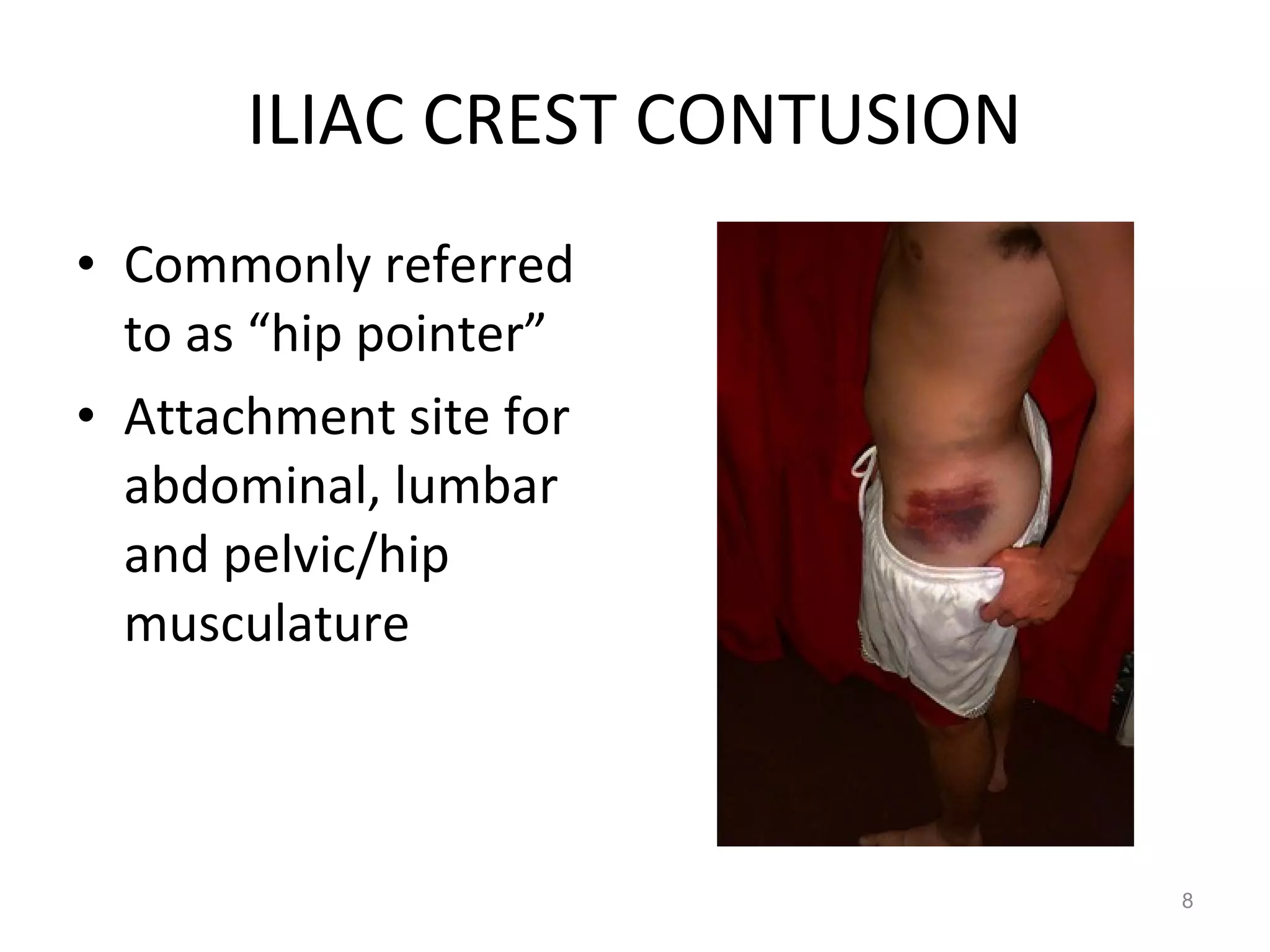
ILIAC CREST CONTUSION Commonly referred to as “hip pointer” Attachment site for abdominal, lumbar and pelvic/hip musculature
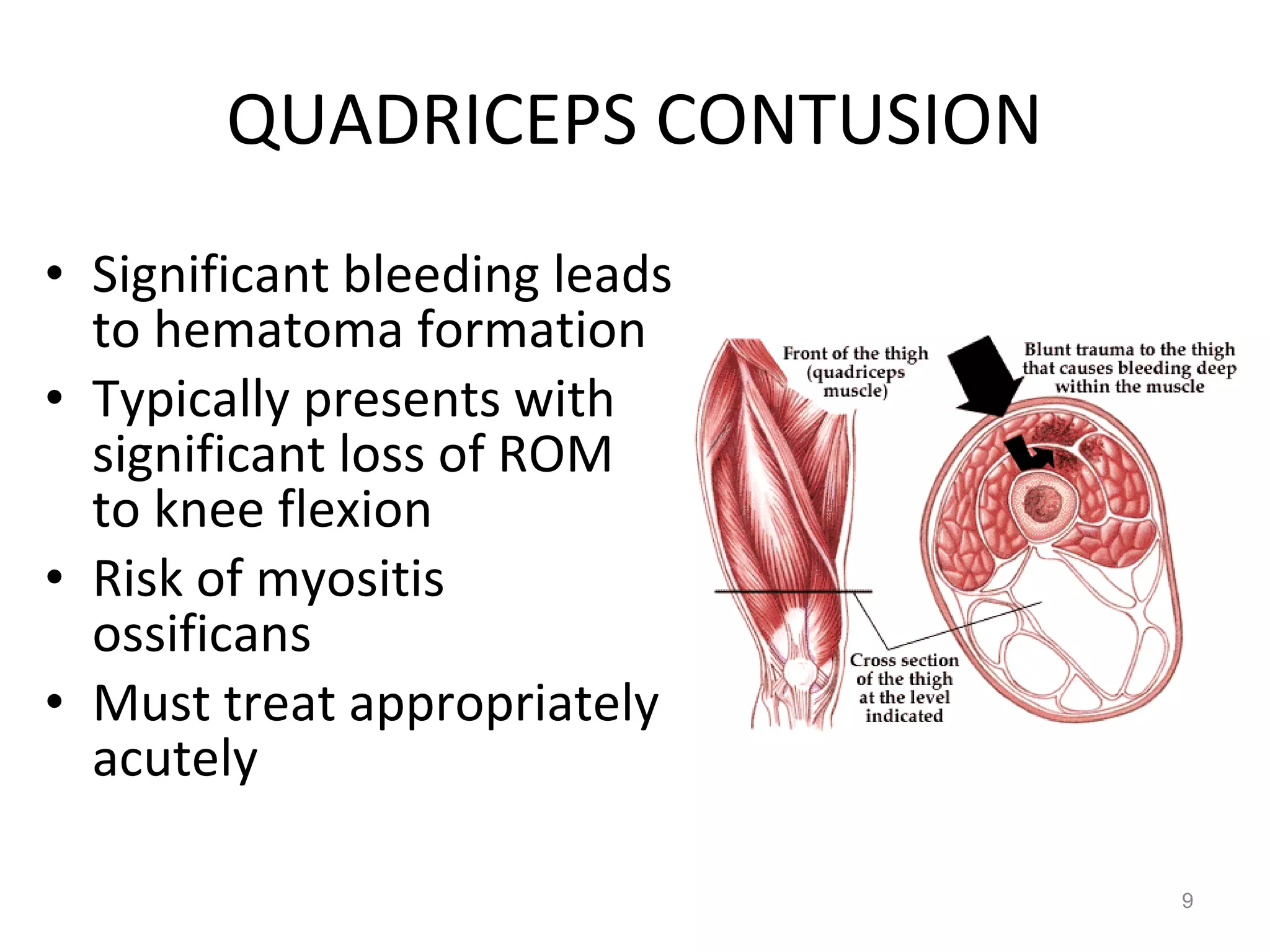
QUADRICEPS CONTUSION Significant bleeding leads to hematoma formation Typically presents with significant loss of ROM to knee flexion Risk of myositis ossificans Must treat appropriately acutely
HIP DISLOCATION Posterior more common than anterior Often associated with femoral neck and/or acetabular fractures Classic presentation is adduction and internal rotation Neurovascular considerations
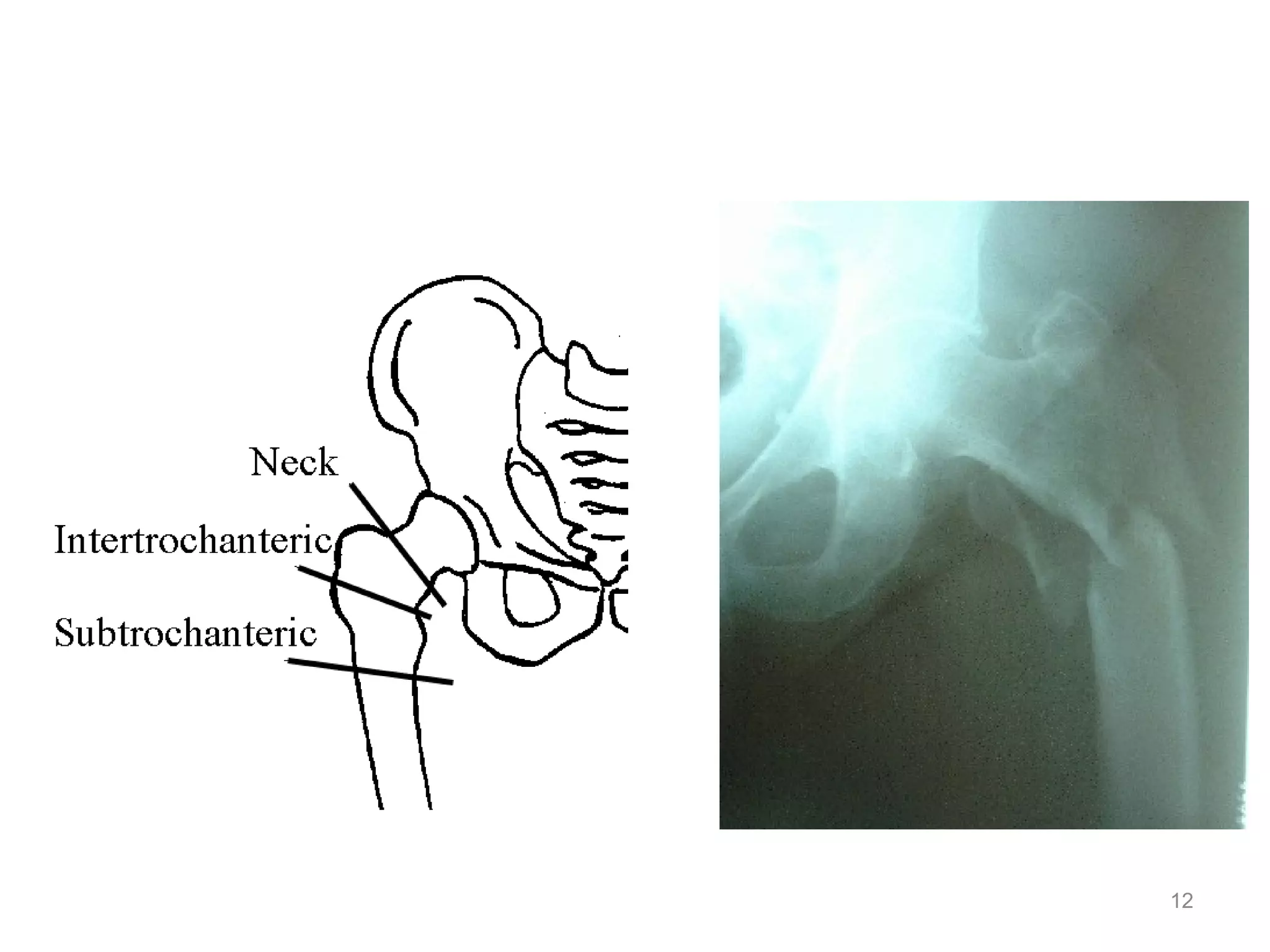
FEMUR FRACTURES Involve significant trauma – atypical in athletics Present with immediate loss of function, pain and deformity
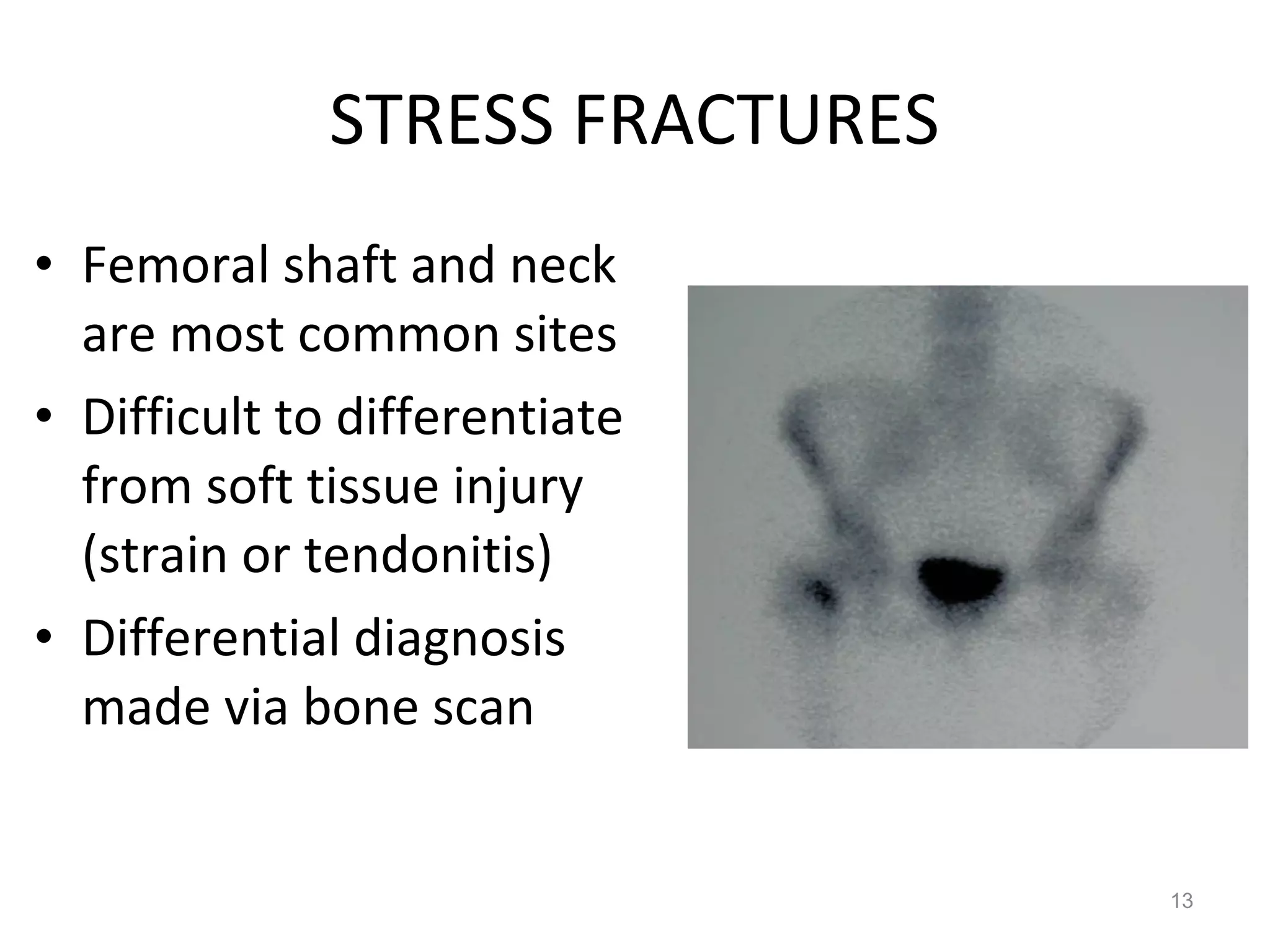
STRESS FRACTURES Femoral shaft and neck are most common sites Difficult to differentiate from soft tissue injury (strain or tendonitis) Differential diagnosis made via bone scan
SI JOINT DYSFUNCTION Collective term for multiple non-specific pathologies If accentuated motions occur at SI joint due to trauma or repetitive stress typically presents with rotation of ilium on sacrum May present as abnormal position due to muscle tightness/weakness or imbalances Must conduct comprehensive neurological evaluation since symptoms often replicate nerve root injury
OSTEITIS PUBIS Chronic inflammatory condition at symphysis pubis from repetitive stress to area primarily from running May present with groin pain, pubic symphysis pain and discomfort with abdominal/hip adduction exercises due to muscular attachments Difficult to treat – may need injection
AVULSION FRACTURES ASIS – Sartorius AIIS – Rectus femoris Pubis – Adductors Ischial tuberosity – Hamstrings

Kin191 A.Ch.8. Pelvis. Thigh. Injuries

  • 1.
    KIN 191A AdvancedAssessment of Lower Extremity Injuries THE PELVIS AND THIGH INJURIES
  • 2.
    INTRODUCTION MUSCLE STRAINSBURSITIS DEGENRATIVE HIP CHA N GES PIRIFORMIS SYNDROME ILLIAC CREST CONTUSION QUADRICEPS CONTUSION HIP DISLOCATION FEMUR FRACTURES/STRESS FRACTURES
  • 3.
    SI JOINT DYSFUNCTIONOSTEITIS PUBIS AVULSION FRACTURES (ASIS, AIIS, pubis, ischial tuberosity)
  • 4.
    MUSCLE STRAINS Typicallyassociated with dynamic overload to eccentric contractions Pain usually felt at musculotendinous junction and/or at insertion site Most involved include quadriceps, hamstrings, hip flexors, adductors
  • 5.
    BURSITIS Trochanteric Eitherfrom direct trauma or repetitive friction from IT band during knee flexion/extension Often referred to as “snapping hip syndrome” Ischial Either from direct trauma or movement in sitting position (rowing, biking, etc.) Iliopsoas Anterior hip pain, difficult to differentiate from hip flexor strain
  • 6.
    DEGENERATIVE HIP CHANGES Develop secondary to repetitive trauma, age, acute injury Arthritis OCD Avascular necrosis
  • 7.
    PIRIFORMIS SYNDROME “Sciatic” nerve proximity to piriformis muscle Spasm or hypertrophy of muscle can produce “sciatica” – referred pain to buttocks or posterior leg May have pain with hip flexion motions Must evaluate sensory and motor function of involved structures
  • 8.
    ILIAC CREST CONTUSIONCommonly referred to as “hip pointer” Attachment site for abdominal, lumbar and pelvic/hip musculature
  • 9.
    QUADRICEPS CONTUSION Significantbleeding leads to hematoma formation Typically presents with significant loss of ROM to knee flexion Risk of myositis ossificans Must treat appropriately acutely
  • 10.
    HIP DISLOCATION Posteriormore common than anterior Often associated with femoral neck and/or acetabular fractures Classic presentation is adduction and internal rotation Neurovascular considerations
  • 11.
    FEMUR FRACTURES Involvesignificant trauma – atypical in athletics Present with immediate loss of function, pain and deformity
  • 13.
    STRESS FRACTURES Femoralshaft and neck are most common sites Difficult to differentiate from soft tissue injury (strain or tendonitis) Differential diagnosis made via bone scan
  • 14.
    SI JOINT DYSFUNCTIONCollective term for multiple non-specific pathologies If accentuated motions occur at SI joint due to trauma or repetitive stress typically presents with rotation of ilium on sacrum May present as abnormal position due to muscle tightness/weakness or imbalances Must conduct comprehensive neurological evaluation since symptoms often replicate nerve root injury
  • 15.
    OSTEITIS PUBIS Chronicinflammatory condition at symphysis pubis from repetitive stress to area primarily from running May present with groin pain, pubic symphysis pain and discomfort with abdominal/hip adduction exercises due to muscular attachments Difficult to treat – may need injection
  • 16.
    AVULSION FRACTURES ASIS– Sartorius AIIS – Rectus femoris Pubis – Adductors Ischial tuberosity – Hamstrings