DEVON CLARK
P R E P R E T E N T I O N A N D A D H E R E N C E C O O R D I N A T O R
P H I L A D E L P H I A F I G H T C O M M U N I T Y H E A L T H C E N T E R S
HIV Pre Exposure Prophylaxis
OFFICE OF HIV PLANNING
12 SEPTEMBER 2016
What is PrEP?
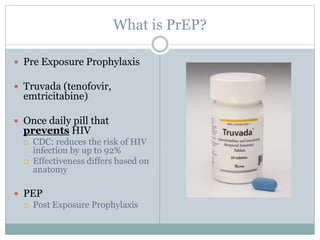
 Pre Exposure Prophylaxis
 Truvada (tenofovir,
emtricitabine)
 Once daily pill that
prevents HIV
 CDC: reduces the risk of HIV
infection by up to 92%
 Effectiveness differs based on
anatomy
 PEP
 Post Exposure Prophylaxis
Who is PrEP for?
 Has partner(s) known to be HIV-1 infected, or
 Engages in sexual activity within a high prevalence
area or social network and one or more of the
following:
 Inconsistent or no condom use
 Diagnosis of sexually transmitted infections
 Exchange of sex for commodities (such as money, shelter,
food, or drugs)
 Use of drugs, alcohol dependence
 History of Incarceration
 Partner(s) of unknown HIV-1 status with any of the factors
listed above
How to Pay for PrEP?
 Gilead Advancing Access Program
 No Insurance
 Copay Assistance
 Patient Access Network
 Patient Advocate Foundation
 Covered 100% by PA Medicaid
 Biggest struggle: Young individuals who are covered by their
parents but do not what to disclose that they are receiving
care or taking PrEP
Gilead Sponsored PrEP Study
 50 young MSM of color and transwomen
 Adherence Counseling
 TFV Urine Assay
 Behavioral Change
 STD Rates
 Surveys
Study Demographics
 Age Range: 18-29
 African American: 64%
 Hispanic: 18%
 Transgender (MTF): 10%
 Annual Income <10,000: 66%
 Exchange sex for commodities: 18%
 Reports 4+ partners in the last 6 months: 30%
 History of Incarceration: 22%
 Inconsistent Condom Use: 80%
0
5
10
15
20
25
30
35
40
Week 4 Week 12 Week 24
Fully
Protected
Somewhat
Protected
Not Protected
n = 43 n = 34n = 46
Urine TFV Concentrations
Week 4:
Fully Protected: 80%
Somewhat Protected: 15%
Not Protected: 4%
Week 12:
Fully Protected: 74%
Somewhat Protected: 11%
Not Protected: 14%
Week 24:
Fully Protected: 82%
Somewhat Protected: 12%
Not Protected: 5%
12 6 9 64 4 2 84 1 4 2
0
2
4
6
8
10
12
14
Chlamydia
(weeks 0-
24)
Gonorrhea
(weeks 0-
24)
Chlamydia
(weeks 26-
48)
Gonorrhea
(weeks 26-
48)
Rectal
Pharyngeal
Urethral
• 2 diagnoses of Syphilis in weeks 0-24, 2 additional diagnosed in weeks
26-48
• 1 diagnosis of genital Herpes at screening
• 0 cases of trichomonas or Hepatitis C diagnosed in 48 weeks
Diagnosed STIs
Number of STI screens
performed = 231
8
22
1
3
23
20
5
10
1 0
11
16
22
9
37
10 9 89
3 2
6
1 00 0
5
25
0 0
0
5
10
15
20
25
30
35
40
Significant Increase
Slight Increase
No Change
Slight Decrease
Significant Decrease
n=44
Risk and Attitude Change After 24 Weeks of PrEP
Philadelphia FIGHT PrEP Programs
 Where to go?
 YHEP Health Center
 Primary Care: 13-24 years old
 PrEP Care: up to age 30
 John Bell Health Center
 All care for 25 years and older
• Number of Active PrEP Patients
• YHEP Health Center: 115
• John Bell Health Center: 72
Philadelphia FIGHT’s PrEP Program
 Initial Visit
 Meet with a Medical Provider
 Safety Blood Work and HIV/STI Testing
 Adherence and Retention Coordinator
 Gilead Advancing Access Program
 Benefits Coordinator
 Behavioral Health Consultant
 Patient Navigation Referral
Philadelphia FIGHT’s PrEP Program
 Monthly Check Ups
 Opt out HIV Rapid Testing
 Medication Pick Up
 Adherence Counseling
 Risk Reduction Counseling
 Quarterly Check Ups
 Safety Blood Work and HIV/STI Testing
 Check in with a Medical Provider
 Ability to dispense PrEP weekly or biweekly
 YHEP PrEP Night
Outreach strategies
• Community Events
• CTR Team
• Positive Test: Linked to Care
• Negative Test: Discuss PrEP!
• Partners of people living with HIV
• PrEP Outreach Group
D E V O N C L A R K
Y H E P P R E P R E T E N T I O N A N D A D H E R E N C E
C O O R D I N A T O R
D C L A R K @ F I G H T . O R G
2 1 5 - 3 4 4 - 1 6 3 2
Questions?

HIV Pre Exposure Prophylaxis

  • 1.
    DEVON CLARK P RE P R E T E N T I O N A N D A D H E R E N C E C O O R D I N A T O R P H I L A D E L P H I A F I G H T C O M M U N I T Y H E A L T H C E N T E R S HIV Pre Exposure Prophylaxis OFFICE OF HIV PLANNING 12 SEPTEMBER 2016
  • 2.
    What is PrEP? Pre Exposure Prophylaxis  Truvada (tenofovir, emtricitabine)  Once daily pill that prevents HIV  CDC: reduces the risk of HIV infection by up to 92%  Effectiveness differs based on anatomy  PEP  Post Exposure Prophylaxis
  • 3.
    Who is PrEPfor?  Has partner(s) known to be HIV-1 infected, or  Engages in sexual activity within a high prevalence area or social network and one or more of the following:  Inconsistent or no condom use  Diagnosis of sexually transmitted infections  Exchange of sex for commodities (such as money, shelter, food, or drugs)  Use of drugs, alcohol dependence  History of Incarceration  Partner(s) of unknown HIV-1 status with any of the factors listed above
  • 4.
    How to Payfor PrEP?  Gilead Advancing Access Program  No Insurance  Copay Assistance  Patient Access Network  Patient Advocate Foundation  Covered 100% by PA Medicaid  Biggest struggle: Young individuals who are covered by their parents but do not what to disclose that they are receiving care or taking PrEP
  • 5.
    Gilead Sponsored PrEPStudy  50 young MSM of color and transwomen  Adherence Counseling  TFV Urine Assay  Behavioral Change  STD Rates  Surveys
  • 6.
    Study Demographics  AgeRange: 18-29  African American: 64%  Hispanic: 18%  Transgender (MTF): 10%  Annual Income <10,000: 66%  Exchange sex for commodities: 18%  Reports 4+ partners in the last 6 months: 30%  History of Incarceration: 22%  Inconsistent Condom Use: 80%
  • 7.
    0 5 10 15 20 25 30 35 40 Week 4 Week12 Week 24 Fully Protected Somewhat Protected Not Protected n = 43 n = 34n = 46 Urine TFV Concentrations Week 4: Fully Protected: 80% Somewhat Protected: 15% Not Protected: 4% Week 12: Fully Protected: 74% Somewhat Protected: 11% Not Protected: 14% Week 24: Fully Protected: 82% Somewhat Protected: 12% Not Protected: 5%
  • 8.
    12 6 964 4 2 84 1 4 2 0 2 4 6 8 10 12 14 Chlamydia (weeks 0- 24) Gonorrhea (weeks 0- 24) Chlamydia (weeks 26- 48) Gonorrhea (weeks 26- 48) Rectal Pharyngeal Urethral • 2 diagnoses of Syphilis in weeks 0-24, 2 additional diagnosed in weeks 26-48 • 1 diagnosis of genital Herpes at screening • 0 cases of trichomonas or Hepatitis C diagnosed in 48 weeks Diagnosed STIs Number of STI screens performed = 231
  • 9.
    8 22 1 3 23 20 5 10 1 0 11 16 22 9 37 10 989 3 2 6 1 00 0 5 25 0 0 0 5 10 15 20 25 30 35 40 Significant Increase Slight Increase No Change Slight Decrease Significant Decrease n=44 Risk and Attitude Change After 24 Weeks of PrEP
  • 10.
    Philadelphia FIGHT PrEPPrograms  Where to go?  YHEP Health Center  Primary Care: 13-24 years old  PrEP Care: up to age 30  John Bell Health Center  All care for 25 years and older • Number of Active PrEP Patients • YHEP Health Center: 115 • John Bell Health Center: 72
  • 11.
    Philadelphia FIGHT’s PrEPProgram  Initial Visit  Meet with a Medical Provider  Safety Blood Work and HIV/STI Testing  Adherence and Retention Coordinator  Gilead Advancing Access Program  Benefits Coordinator  Behavioral Health Consultant  Patient Navigation Referral
  • 12.
    Philadelphia FIGHT’s PrEPProgram  Monthly Check Ups  Opt out HIV Rapid Testing  Medication Pick Up  Adherence Counseling  Risk Reduction Counseling  Quarterly Check Ups  Safety Blood Work and HIV/STI Testing  Check in with a Medical Provider  Ability to dispense PrEP weekly or biweekly  YHEP PrEP Night
  • 13.
    Outreach strategies • CommunityEvents • CTR Team • Positive Test: Linked to Care • Negative Test: Discuss PrEP! • Partners of people living with HIV • PrEP Outreach Group
  • 14.
    D E VO N C L A R K Y H E P P R E P R E T E N T I O N A N D A D H E R E N C E C O O R D I N A T O R D C L A R K @ F I G H T . O R G 2 1 5 - 3 4 4 - 1 6 3 2 Questions?

Editor's Notes

  • #8 Week 4: Protected 80% Partially Protected: 15% Not Protected: 4% Week 12: Protected: 74% Partially Protected: 11% Not Protected: 14 % Week 24: Protected: 82% Partially Protected: 12% Not Protected: 5%
  • #9 PrEP Stigma
  • #10 Because there was a six month enrollment period, some participants had already completed study and their RABs for both week 24 and week 48 are included in the data above.
  • #11 Study…began a research assistant, but as the number of patients within our program increased we recognized the great need for my position