Winging It
A Musculoskeletal System Lab
• How are the muscles and skeleton held together?
• How do the muscles and bones work together to
provide motion?
Why do we dissect?
Most “higher animals” have body plans
very much like that of humans–four
limbs, a head on top with two eyes and
two ears, a torso with chest and belly,
etc. We can expect that the more an
animal is like us on the outside, the more
it will be like us on the inside, too, and by
dissecting another mammal or even a
bird, we can gain an idea of what we
ourselves are like on the inside.
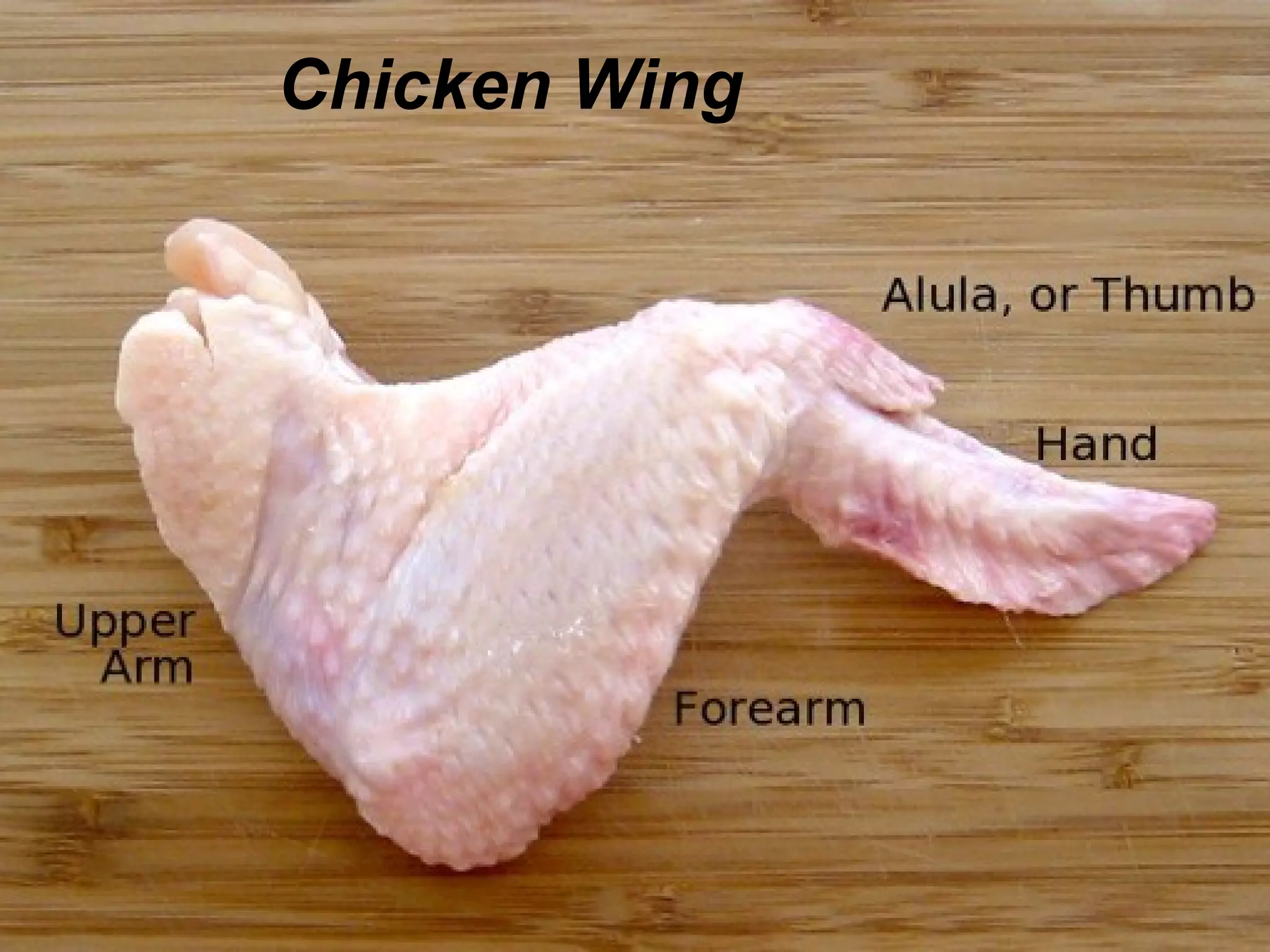
Chicken Wing
Safety
• Raw chicken can carry salmonella.
During the lab do not touch your face.
• At the end of the lab you MUST wash
your hands!
• You will wear aprons.
Clean- up
• At the end of the lab, your group is
responsible for cleaning up your table.
• You must throw your plate and your
dissection paper away.
• I will give you Clorox wipes for your
tools and table.
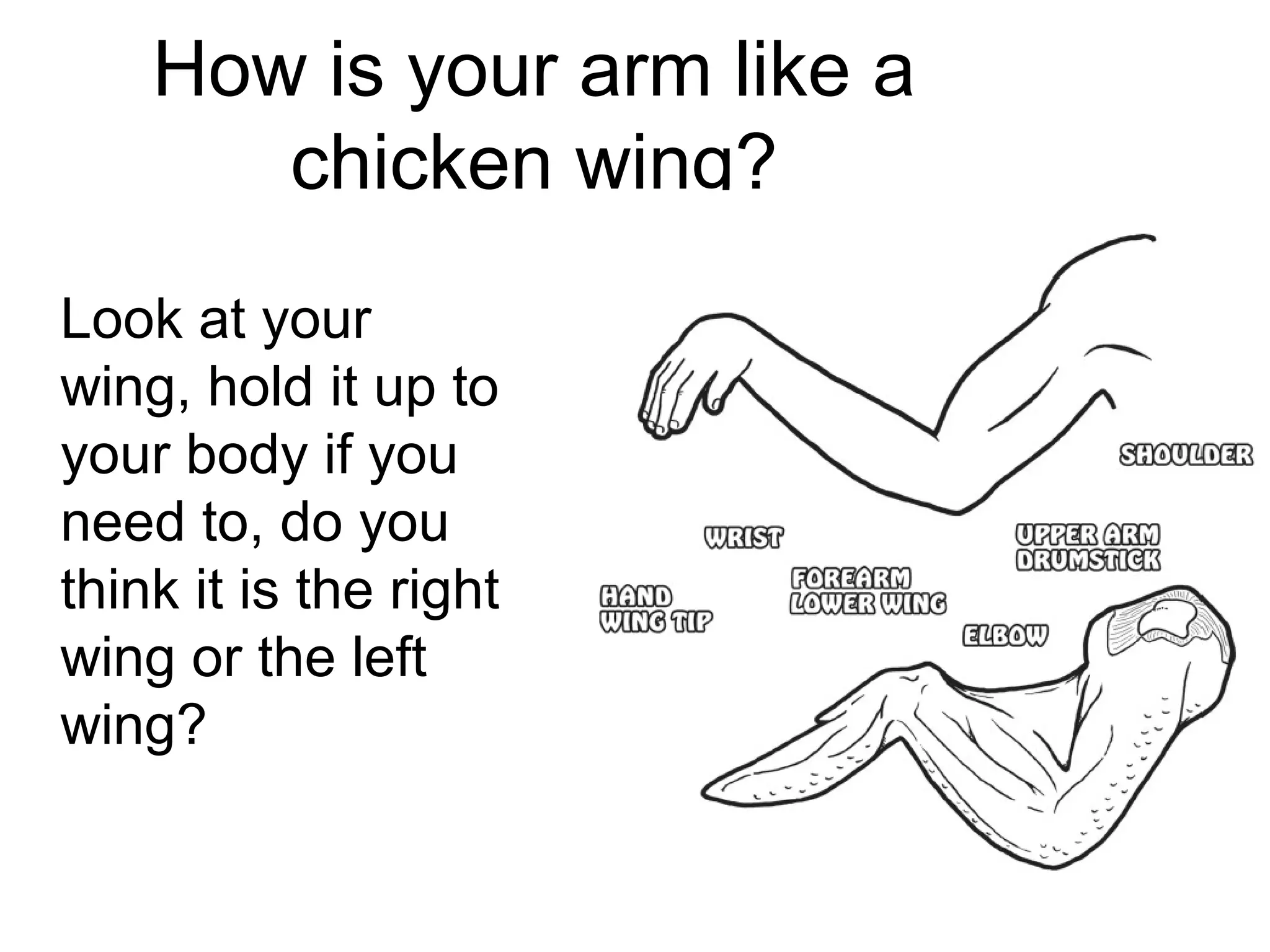
How is your arm like a
chicken wing?
Look at your
wing, hold it up to
your body if you
need to, do you
think it is the right
wing or the left
wing?
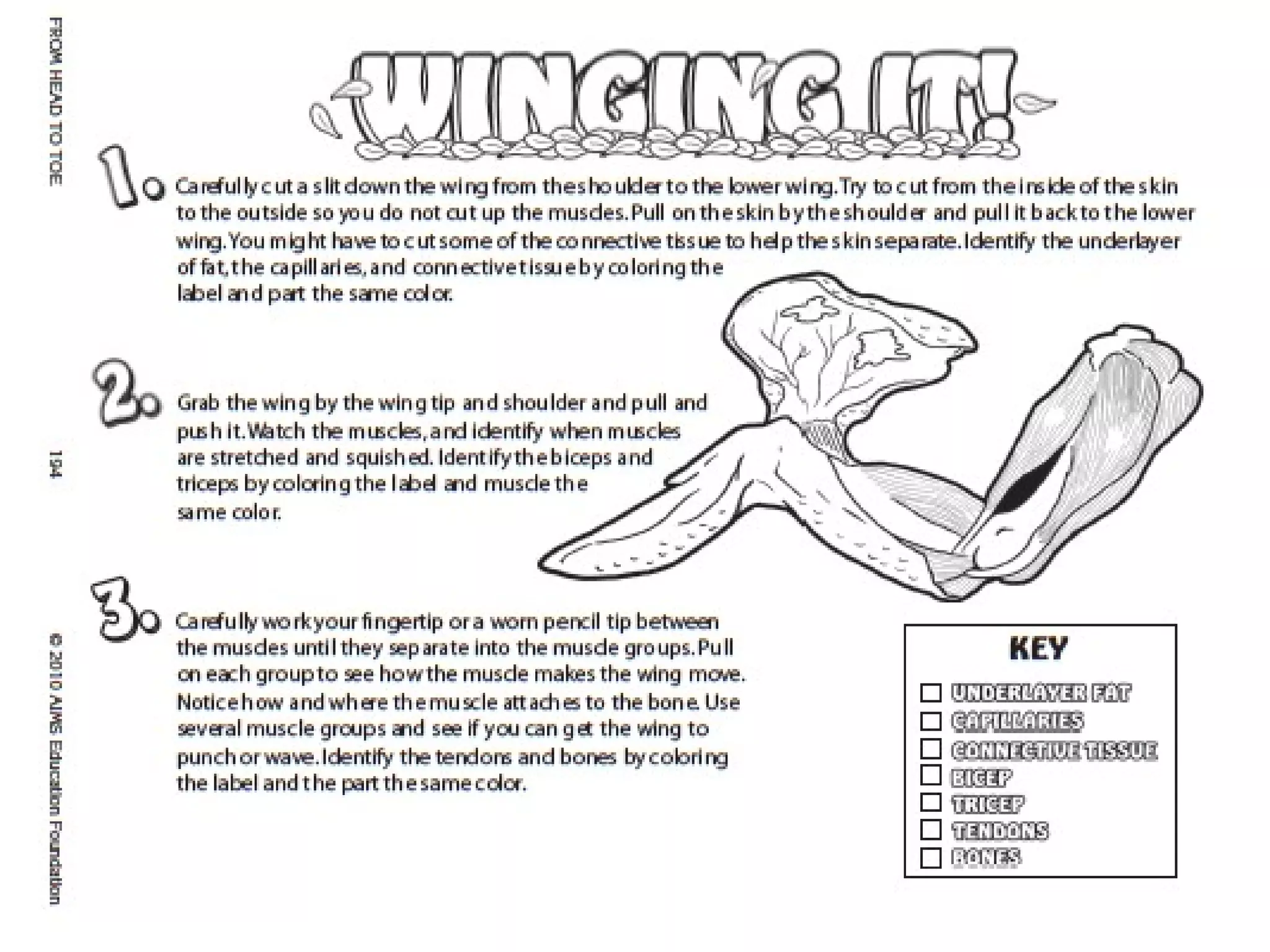
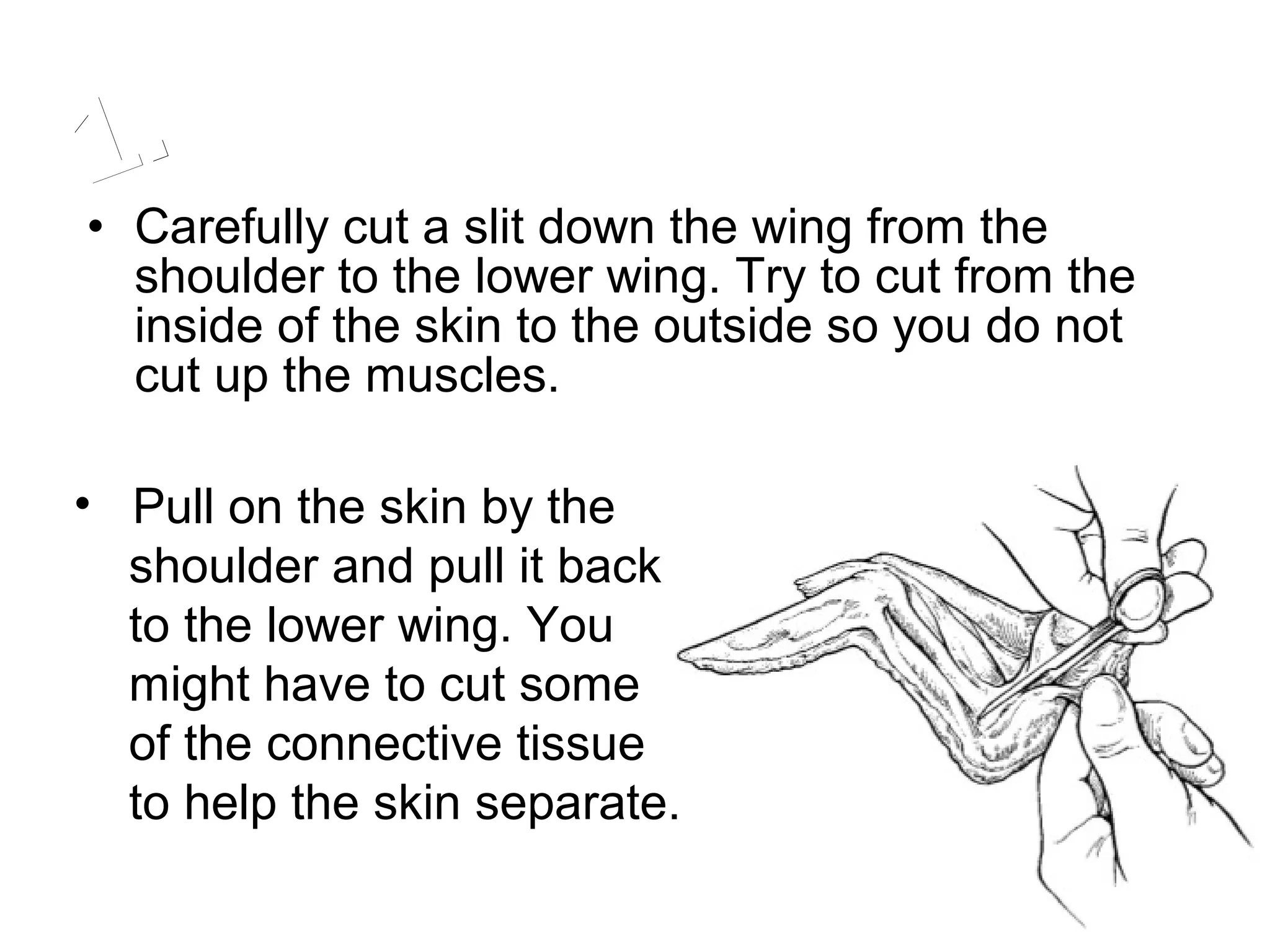
• Carefully cut a slit down the wing from the
shoulder to the lower wing. Try to cut from the
inside of the skin to the outside so you do not
cut up the muscles.
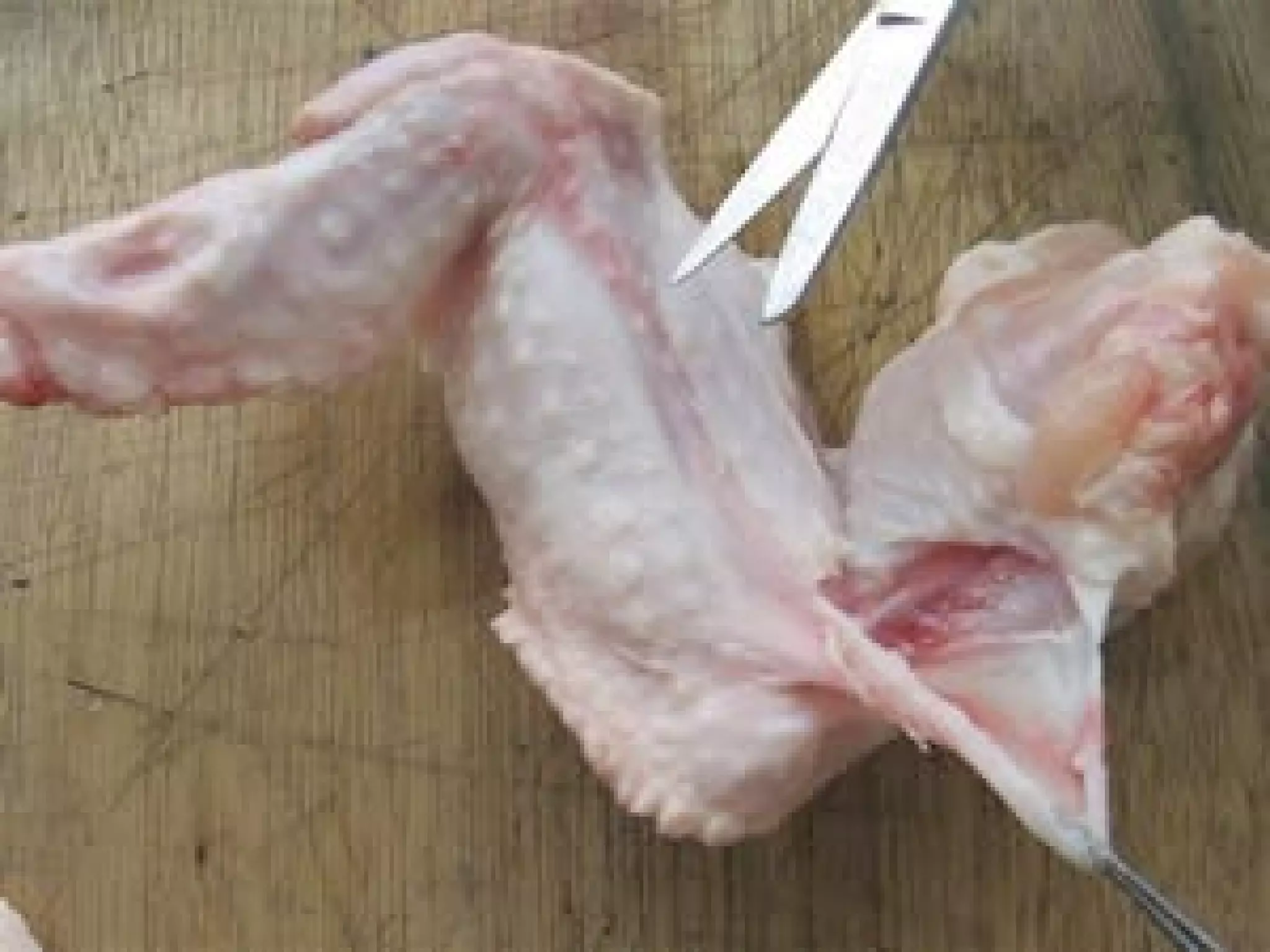
• Pull on the skin by the
shoulder and pull it back
to the lower wing. You
might have to cut some
of the connective tissue
to help the skin separate.
1.1.
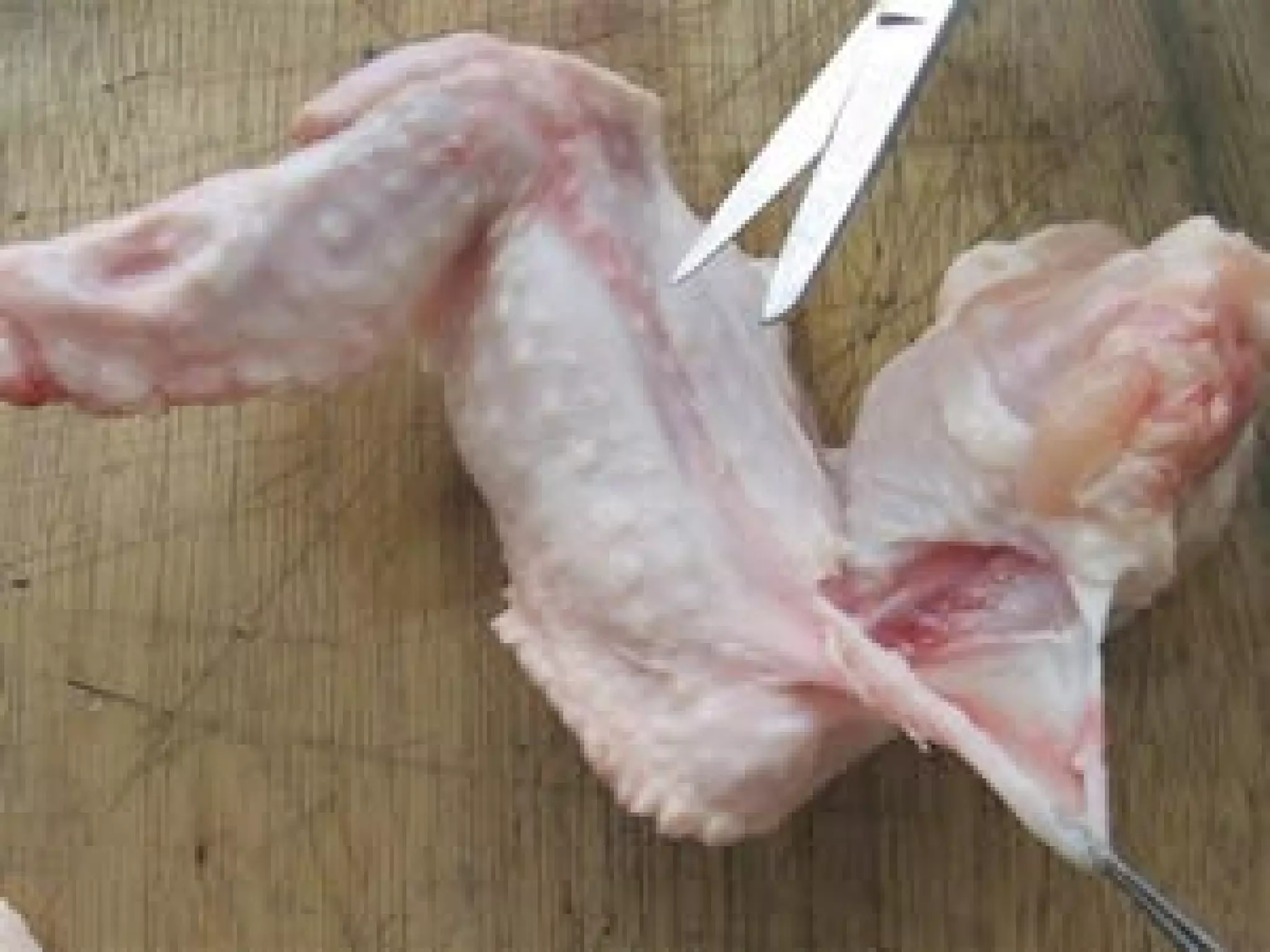
Use closed scissors to “tease” the skin from the
muscle.
Stick the scissor tip between the muscle and skin,
pointing toward the skin and away from the muscle.
Open the scissors to tear the skin from the muscle.
You will see clear connective tissue. Pull the skin
back gently. Use the scissors and forceps, to cut
the skin and peel it away from the muscle below.
• Identify the underlayer of fat, the capillaries,
and connective tissue by coloring the label
and part the same color.
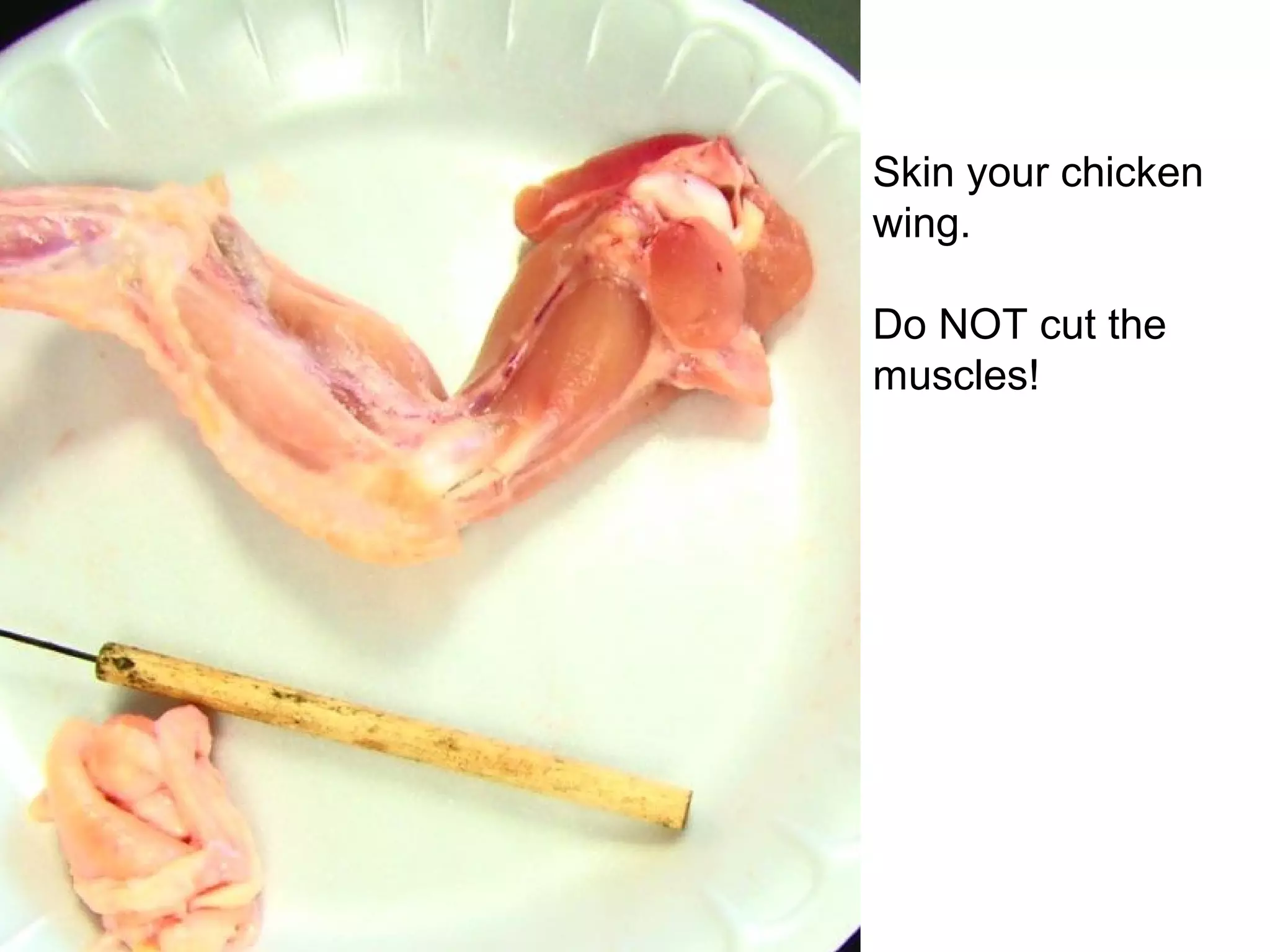
Skin your chicken
wing.
Do NOT cut the
muscles!
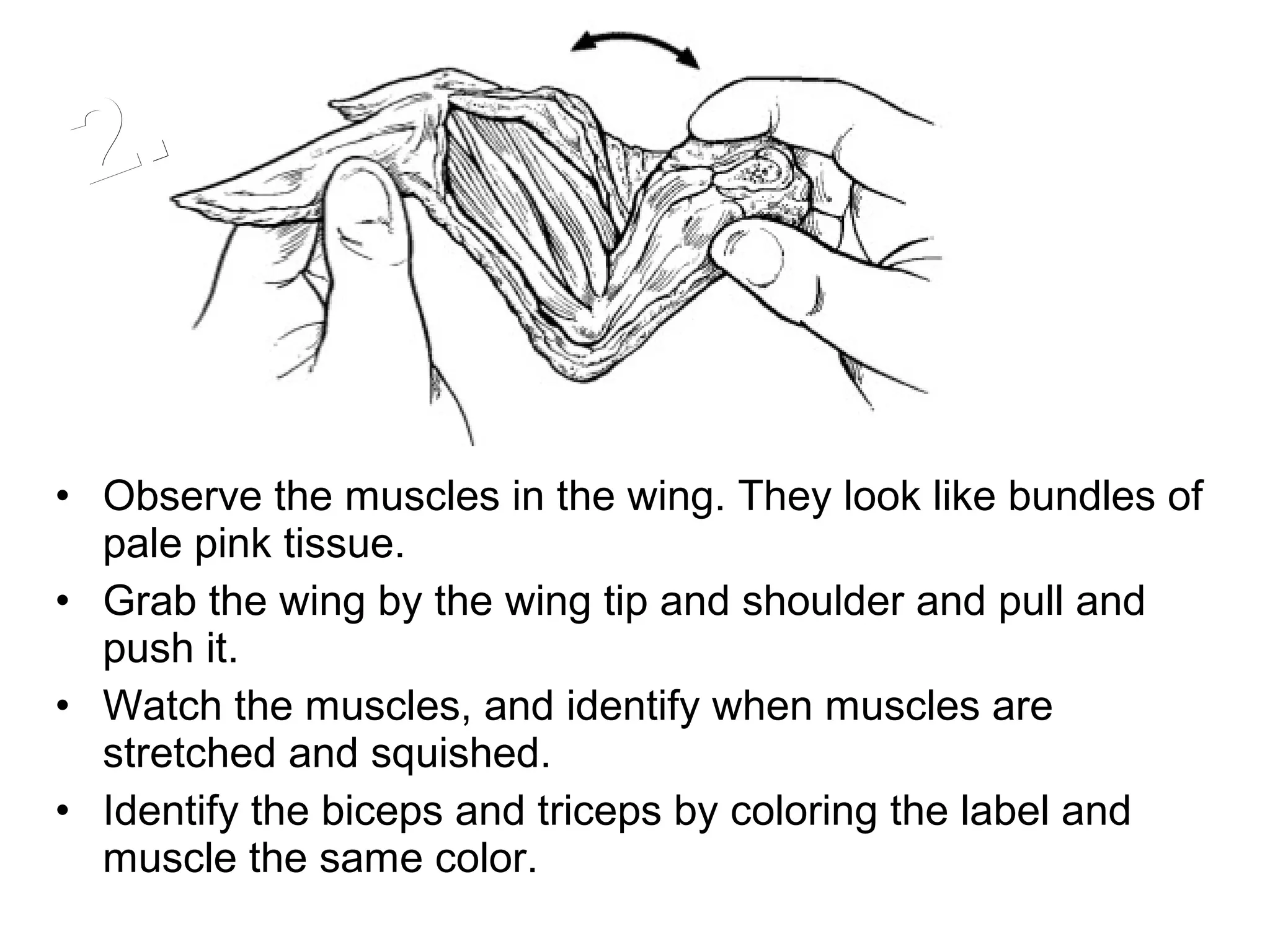
• Observe the muscles in the wing. They look like bundles of
pale pink tissue.
• Grab the wing by the wing tip and shoulder and pull and
push it.
• Watch the muscles, and identify when muscles are
stretched and squished.
• Identify the biceps and triceps by coloring the label and
muscle the same color.
2.2.
What happened to each
muscle as you raised
and lowered it?
Which bones in the arm
moved?
Which bones in the arm
didn’t move?
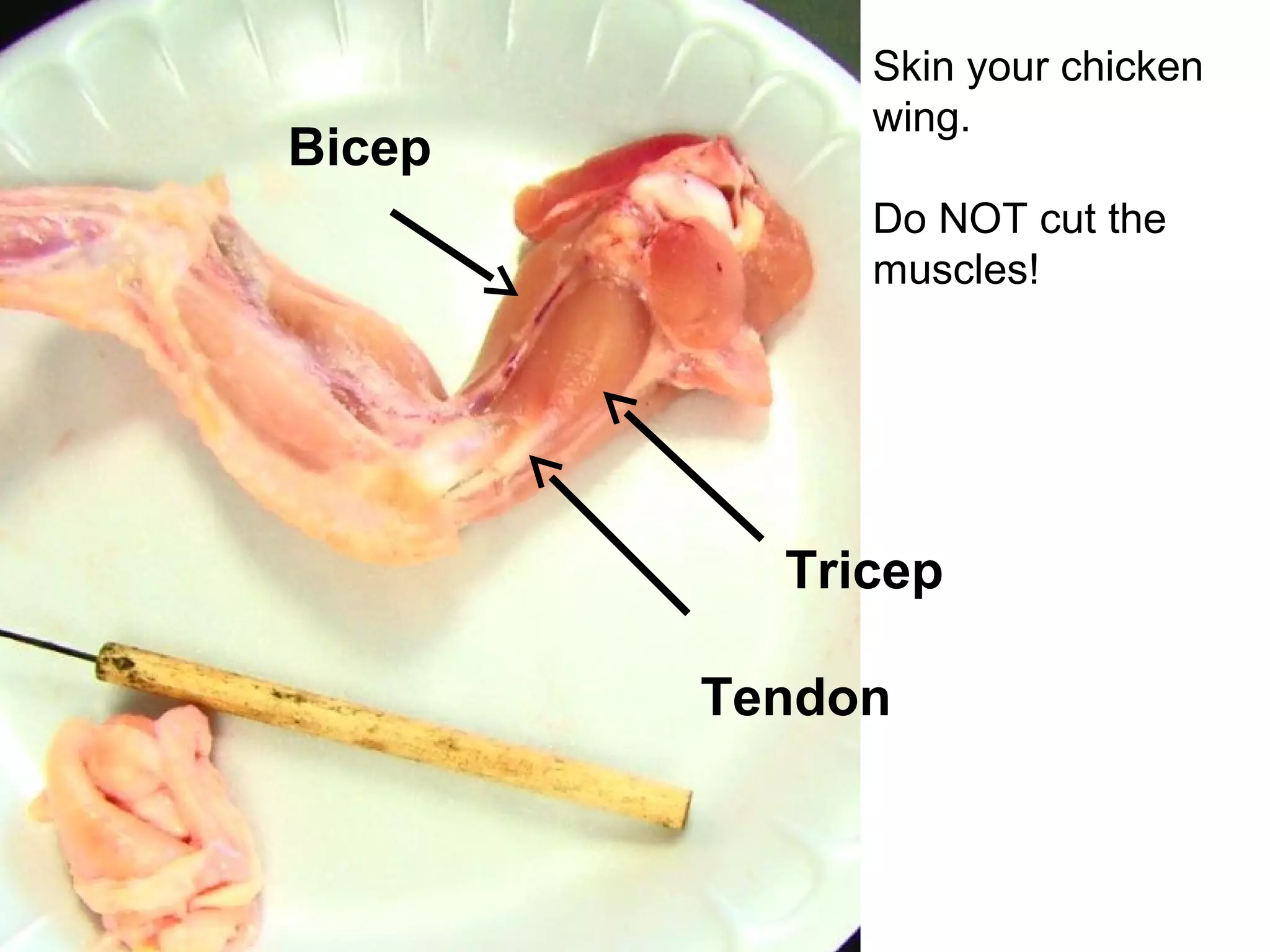
The biceps and the
triceps are the
muscles that work to
lift and lower your arm.
Your biceps are on the
upper front portion of
the arm, and your
triceps are on the
upper back portion, as
shown below.
Skin your chicken
wing.
Do NOT cut the
muscles!
Bicep
Tricep
Tendon
3.3.
• Carefully work your fingertip or a probe between the
muscles until they separate into the muscle groups.
• Pull on each group to see how the muscle makes the wing
move.
• Notice how and where the muscle attaches to the bone.
• Use several muscle groups and see if you can get the wing
to punch or wave.
• Identify the tendons and bones by coloring the label and
muscle the same color.
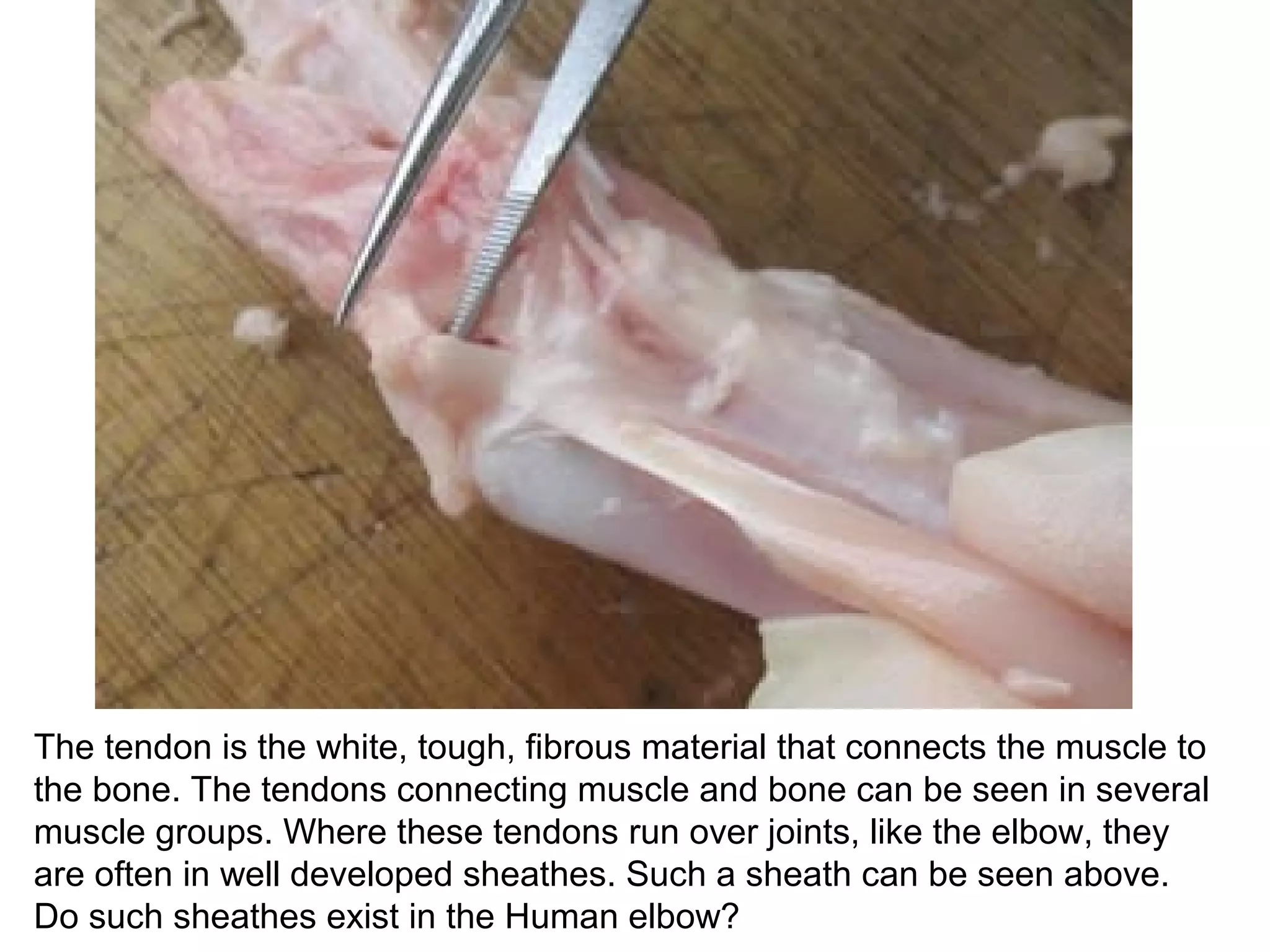
The tendon is the white, tough, fibrous material that connects the muscle to
the bone. The tendons connecting muscle and bone can be seen in several
muscle groups. Where these tendons run over joints, like the elbow, they
are often in well developed sheathes. Such a sheath can be seen above.
Do such sheathes exist in the Human elbow?
4.4.
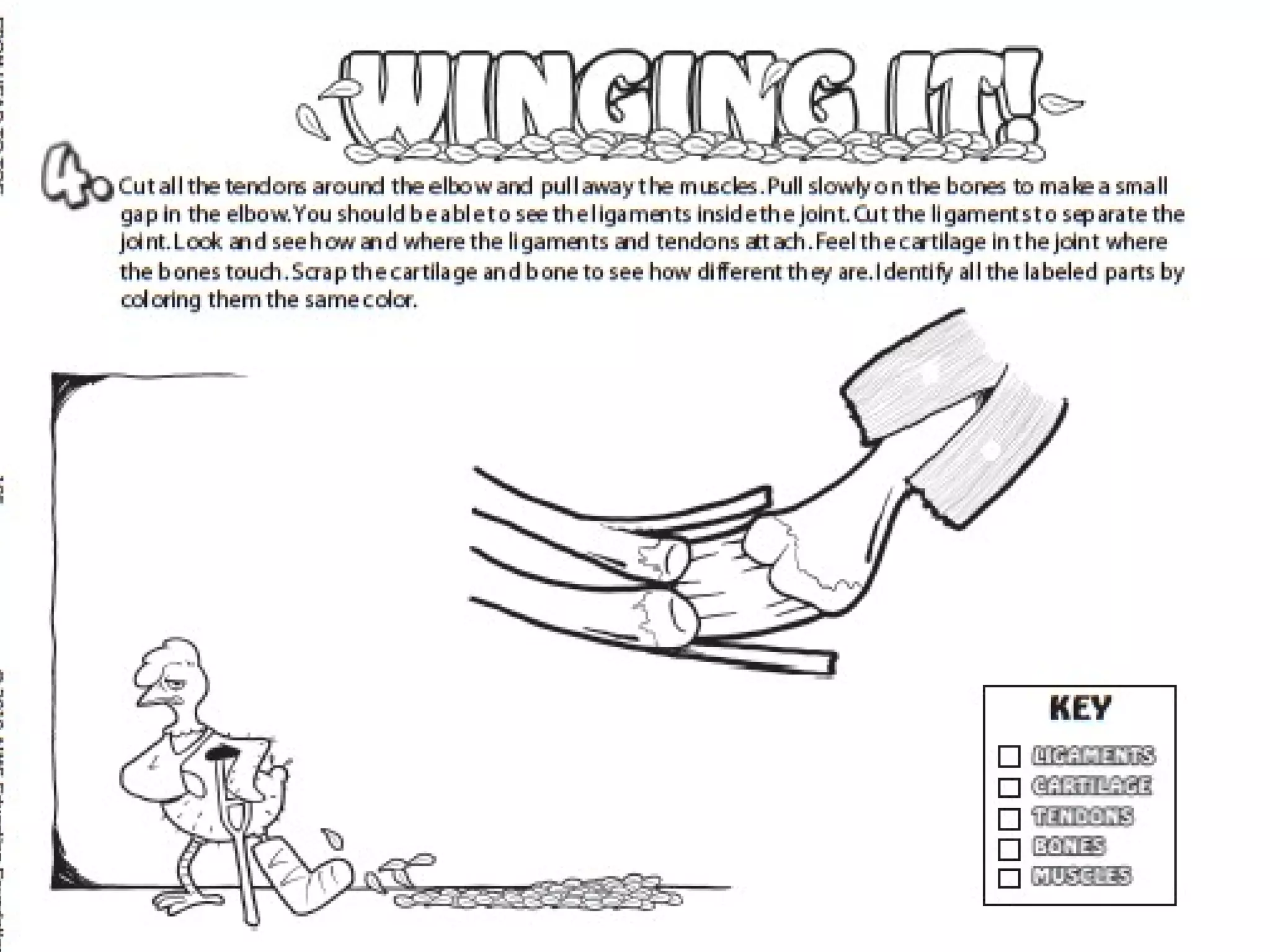
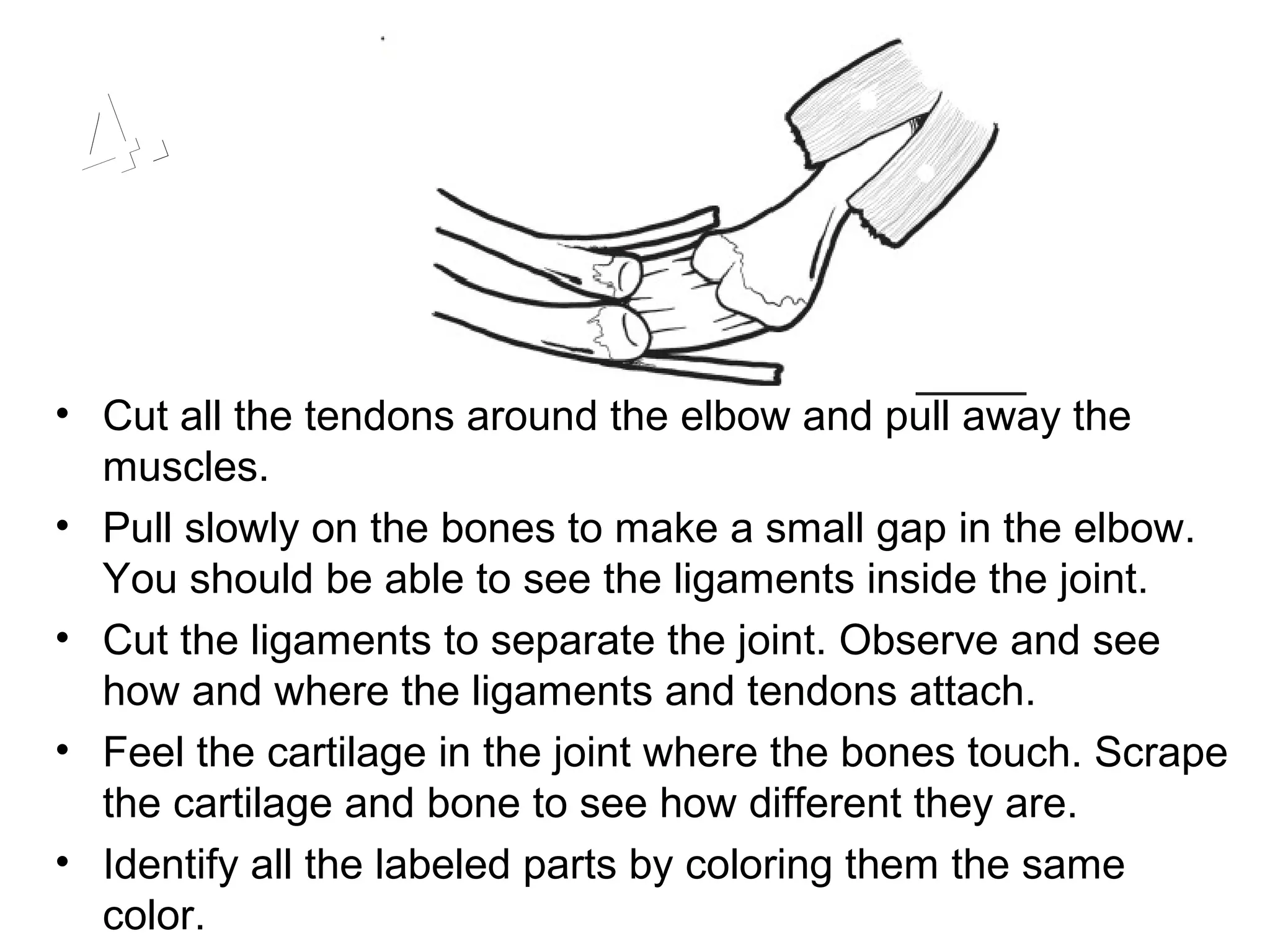
• Cut all the tendons around the elbow and pull away the
muscles.
• Pull slowly on the bones to make a small gap in the elbow.
You should be able to see the ligaments inside the joint.
• Cut the ligaments to separate the joint. Observe and see
how and where the ligaments and tendons attach.
• Feel the cartilage in the joint where the bones touch. Scrape
the cartilage and bone to see how different they are.
• Identify all the labeled parts by coloring them the same
color.
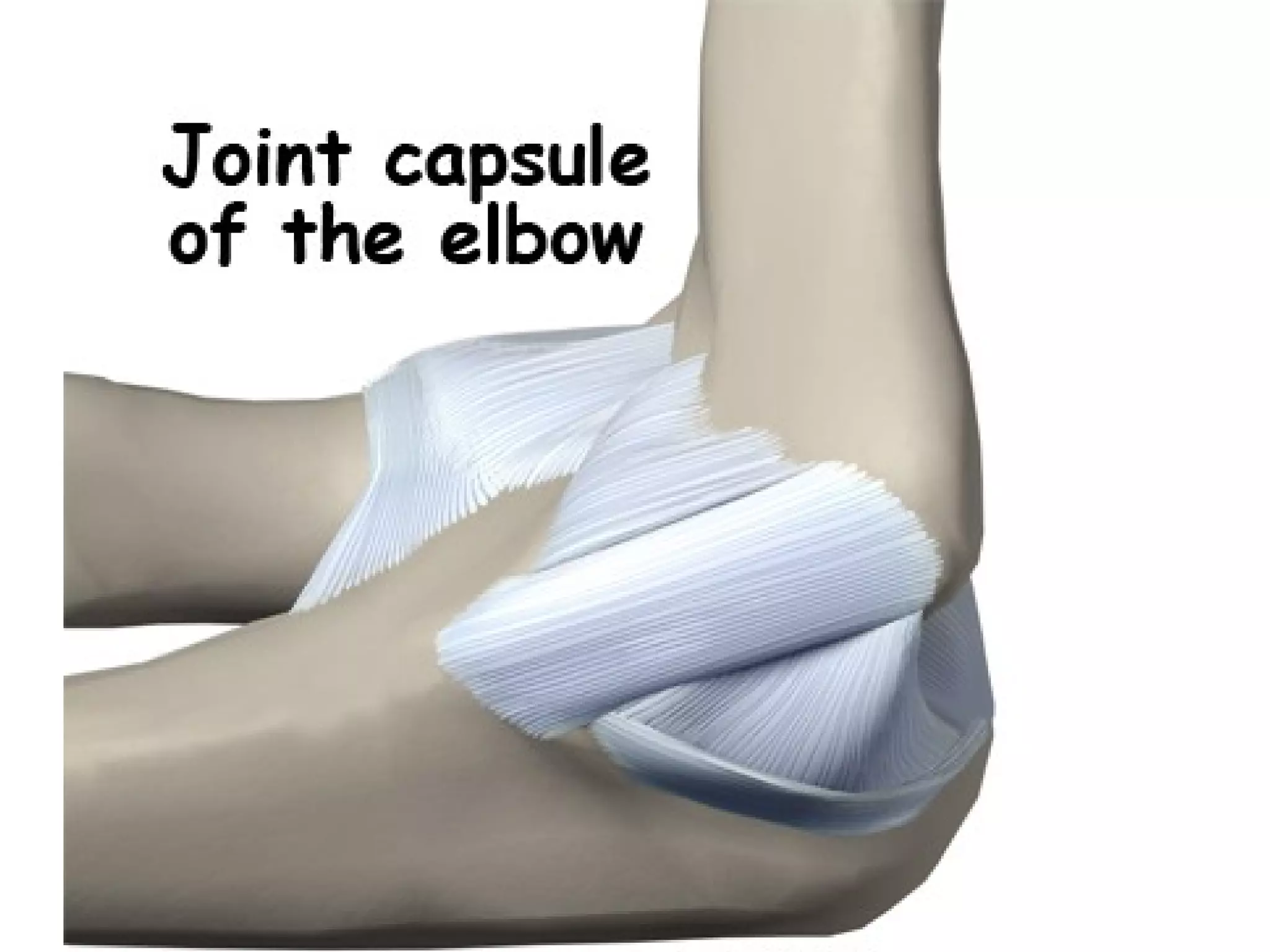
Look at the
elbow joint.
Identify at least
one ligament.
Ligaments
connect bones
together.
Ligaments are
around between
the bones.
At the surface of
each bone
forming the joint
is a white, shiny,
slippery
substance called
cartilage.
What is the
purpose of
cartilage in
joints?
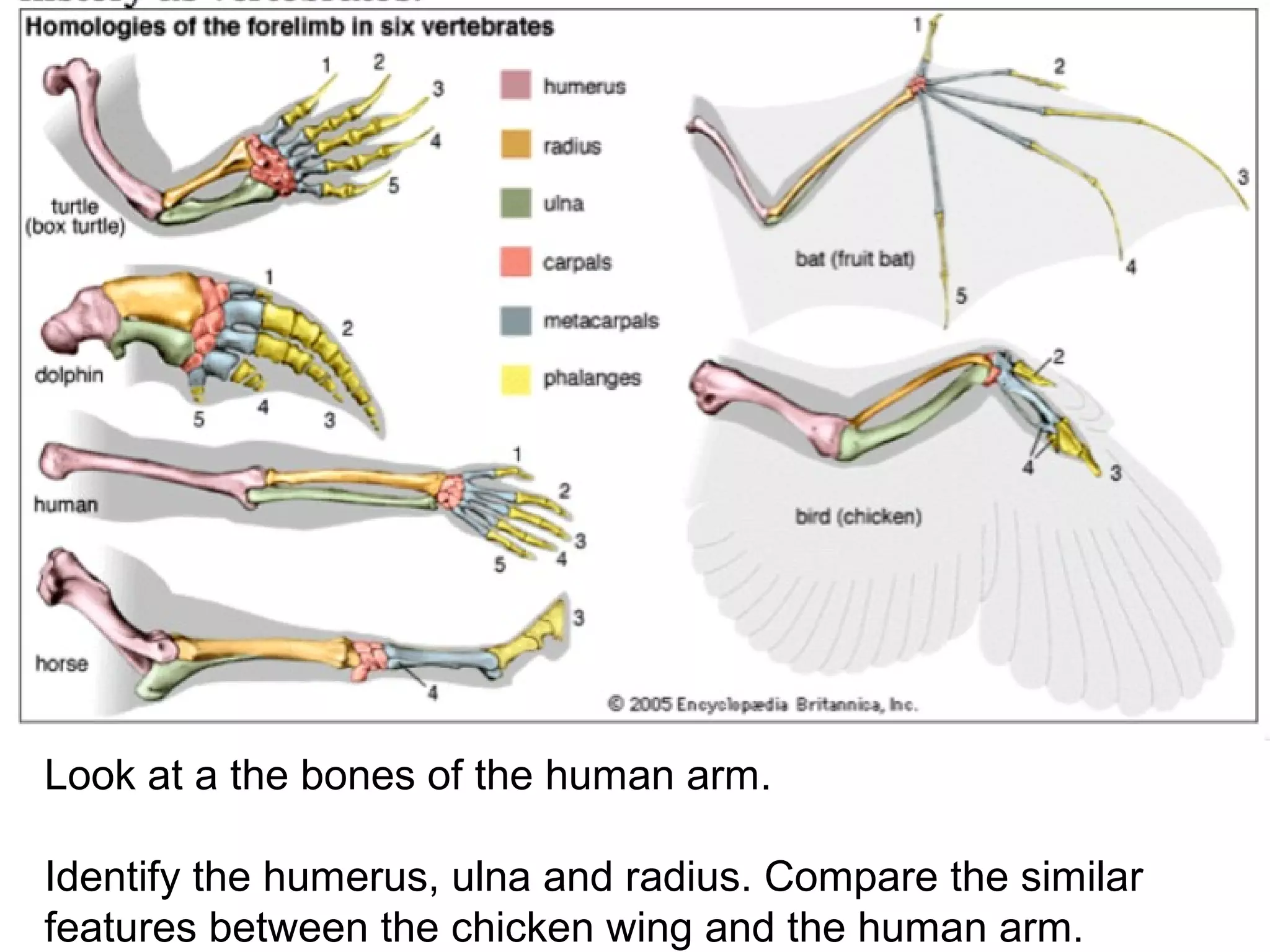
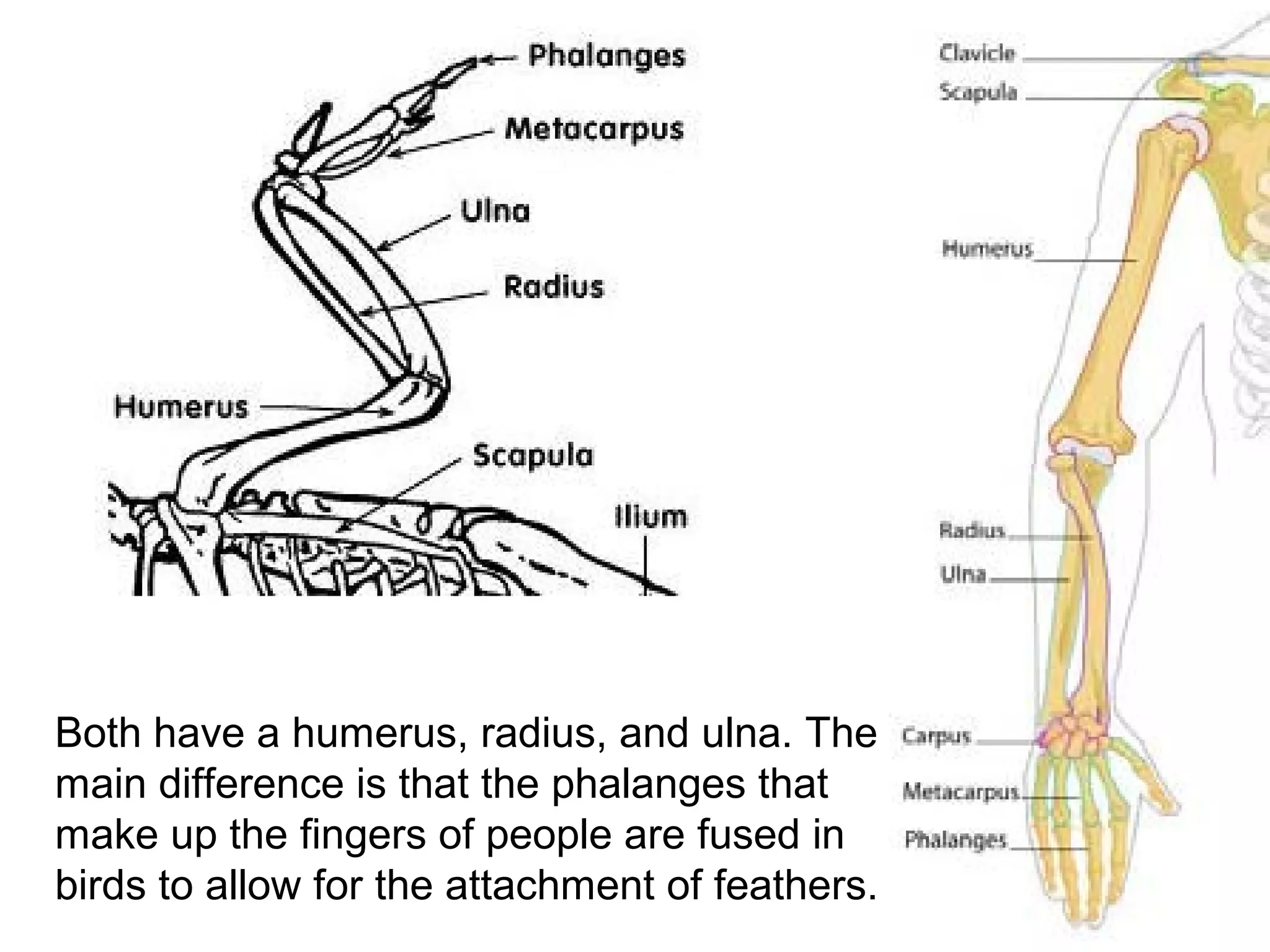
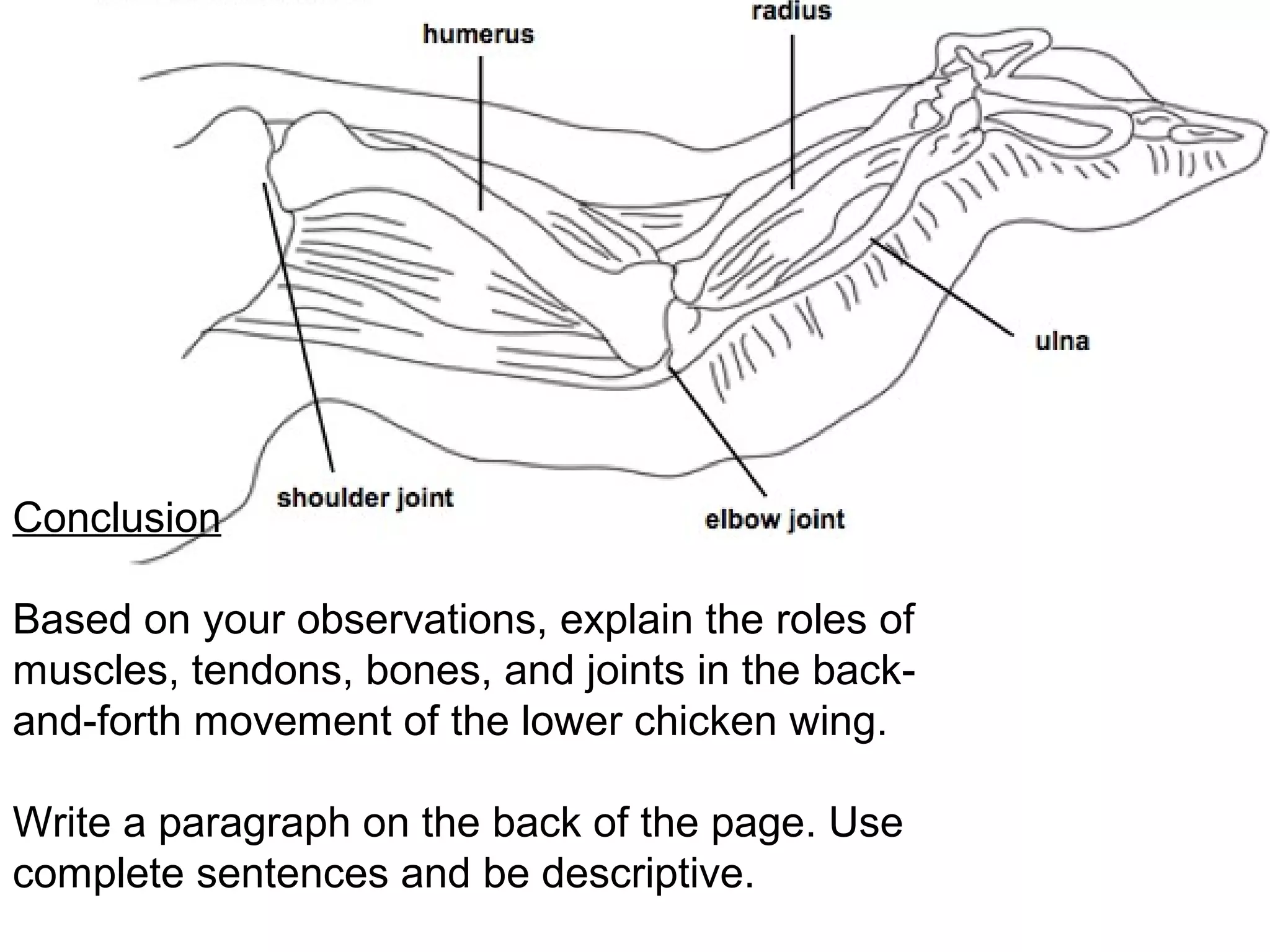
Look at a the bones of the human arm.
Identify the humerus, ulna and radius. Compare the similar
features between the chicken wing and the human arm.
Both have a humerus, radius, and ulna. The
main difference is that the phalanges that
make up the fingers of people are fused in
birds to allow for the attachment of feathers.
Conclusion
Based on your observations, explain the roles of
muscles, tendons, bones, and joints in the back-
and-forth movement of the lower chicken wing.
Write a paragraph on the back of the page. Use
complete sentences and be descriptive.

Chicken wing dissection

  • 1.
    Winging It A MusculoskeletalSystem Lab • How are the muscles and skeleton held together? • How do the muscles and bones work together to provide motion?
  • 2.
    Why do wedissect? Most “higher animals” have body plans very much like that of humans–four limbs, a head on top with two eyes and two ears, a torso with chest and belly, etc. We can expect that the more an animal is like us on the outside, the more it will be like us on the inside, too, and by dissecting another mammal or even a bird, we can gain an idea of what we ourselves are like on the inside.
  • 3.
  • 5.
    Safety • Raw chickencan carry salmonella. During the lab do not touch your face. • At the end of the lab you MUST wash your hands! • You will wear aprons.
  • 6.
    Clean- up • Atthe end of the lab, your group is responsible for cleaning up your table. • You must throw your plate and your dissection paper away. • I will give you Clorox wipes for your tools and table.
  • 7.
    How is yourarm like a chicken wing? Look at your wing, hold it up to your body if you need to, do you think it is the right wing or the left wing?
  • 10.
    • Carefully cuta slit down the wing from the shoulder to the lower wing. Try to cut from the inside of the skin to the outside so you do not cut up the muscles. • Pull on the skin by the shoulder and pull it back to the lower wing. You might have to cut some of the connective tissue to help the skin separate. 1.1.
  • 12.
    Use closed scissorsto “tease” the skin from the muscle. Stick the scissor tip between the muscle and skin, pointing toward the skin and away from the muscle. Open the scissors to tear the skin from the muscle. You will see clear connective tissue. Pull the skin back gently. Use the scissors and forceps, to cut the skin and peel it away from the muscle below.
  • 13.
    • Identify theunderlayer of fat, the capillaries, and connective tissue by coloring the label and part the same color.
  • 14.
    Skin your chicken wing. DoNOT cut the muscles!
  • 16.
    • Observe themuscles in the wing. They look like bundles of pale pink tissue. • Grab the wing by the wing tip and shoulder and pull and push it. • Watch the muscles, and identify when muscles are stretched and squished. • Identify the biceps and triceps by coloring the label and muscle the same color. 2.2.
  • 18.
    What happened toeach muscle as you raised and lowered it? Which bones in the arm moved? Which bones in the arm didn’t move?
  • 19.
    The biceps andthe triceps are the muscles that work to lift and lower your arm. Your biceps are on the upper front portion of the arm, and your triceps are on the upper back portion, as shown below.
  • 20.
    Skin your chicken wing. DoNOT cut the muscles! Bicep Tricep Tendon
  • 21.
    3.3. • Carefully workyour fingertip or a probe between the muscles until they separate into the muscle groups. • Pull on each group to see how the muscle makes the wing move. • Notice how and where the muscle attaches to the bone. • Use several muscle groups and see if you can get the wing to punch or wave. • Identify the tendons and bones by coloring the label and muscle the same color.
  • 22.
    The tendon isthe white, tough, fibrous material that connects the muscle to the bone. The tendons connecting muscle and bone can be seen in several muscle groups. Where these tendons run over joints, like the elbow, they are often in well developed sheathes. Such a sheath can be seen above. Do such sheathes exist in the Human elbow?
  • 24.
    4.4. • Cut allthe tendons around the elbow and pull away the muscles. • Pull slowly on the bones to make a small gap in the elbow. You should be able to see the ligaments inside the joint. • Cut the ligaments to separate the joint. Observe and see how and where the ligaments and tendons attach. • Feel the cartilage in the joint where the bones touch. Scrape the cartilage and bone to see how different they are. • Identify all the labeled parts by coloring them the same color.
  • 25.
    Look at the elbowjoint. Identify at least one ligament. Ligaments connect bones together. Ligaments are around between the bones.
  • 27.
    At the surfaceof each bone forming the joint is a white, shiny, slippery substance called cartilage. What is the purpose of cartilage in joints?
  • 30.
    Look at athe bones of the human arm. Identify the humerus, ulna and radius. Compare the similar features between the chicken wing and the human arm.
  • 31.
    Both have ahumerus, radius, and ulna. The main difference is that the phalanges that make up the fingers of people are fused in birds to allow for the attachment of feathers.
  • 32.
    Conclusion Based on yourobservations, explain the roles of muscles, tendons, bones, and joints in the back- and-forth movement of the lower chicken wing. Write a paragraph on the back of the page. Use complete sentences and be descriptive.

Editor's Notes

  • #4 if you feel for the bones through the flesh, you may discover a single large bone in the “upper arm”, resembling the human humerus, two long bones in the “forearm”, resembling the human ulna and radius, and several smaller bones in the “hand”. Given the similarity in bone structure, is there a similarity in muscle and tendon arrangement too? Will there be two big muscles on the front and back of the “upper arm” that bend and straighten the “elbow”, like the biceps and triceps muscles in humans? Will there be a bundle of muscles in the “forearm” that move the “hand”? It is easy enough to remove the skin from a chicken wing, observe the muscles and tendons directly, and find out.
  • #5 The tricky part is to remove the covering of skin without damaging anything underneath. It is loose in most places, so it peels up fairly easily. But it isn’t completely free, either. It is stuck down tight to the bone at the trailing edge of the ulna, it is stuck pretty firmly around the hand, and elsewhere it is interconnected with the muscles with an interwoven network of “fascia”. In very rough terms, you need to peel the skin off of the muscles and other fabric underneath, starting with the cut end and working your way out towards the wing tip. Exactly how you do this is a matter of technique. I have done it with a scalpel and dissection scissors, but I think it works just as well with a simple pair of kitchen shears. You can loosen the skin and free it from the underlying material by inserting the blade sideways between the skin and muscle, and working it gradually side to side, forcing it between the skin and underlying tissue. You then cut the skin and pull it off in strips by hand, and begin the process again, working your way in steps outwards towards the tip. I have also used a scalpel to cut and scrape the skin free from the material underneath, but in general, I think tearing works better than cutting. The connective fabric tends to tear most easily between skin and muscle, which is what you want, whereas a scalpel cuts whatever it touches.