DR RITESH SHIWAKOTI 
MScD PROSTHODONTICS 
S NO: 20130204556
Anatomy of Sperm
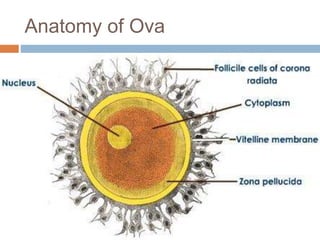
Anatomy of Ova
Ovum and sperms: (In vitro) 
From this photograph, it 
should be clear that the 
heads of human sperm 
are less than 1/20 the 
diameter of human eggs. 
sperm heads 
The surfaces of unfertilized eggs are usually smooth in appearance. The mottled look 
of this egg is not normally seen, but apparently all the ova from this woman had this 
appearance.
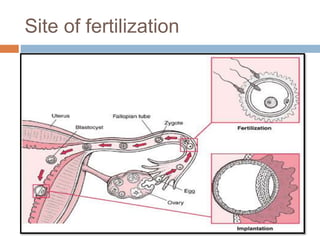
Site of fertilization
Morphology of the Oviduct: 
Fallopian tube S = smooth muscle 
H & E × 150 E = ciliated epithelium Fallopian tube 
From Wheater’s Functional Histology, 4th ed., 2000. Azan × 320
Pre- fertilization events 
 Helping the sperm: 
At ovulation, the cervical mucus increases in amount 
and becomes less thick, allowing easier sperm 
transport. 
Passage of the sperm through the uterus and oviduct 
occurs mainly due to muscular contractions of these 
organs. 
 Oocyte: 
The ends of the oviducts come into close contact 
with the ovary during ovulation. 
Fimbriae of oviduct ends “sweep” the ovulated ovum 
into the oviduct. 
Peristaltic waves of oviduct musculature bring the 
ovum into the ampulla of the oviduct.
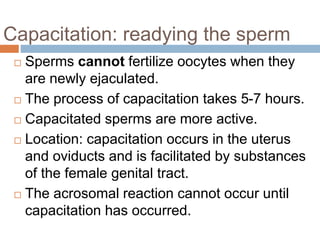
Capacitation: readying the sperm 
 Sperms cannot fertilize oocytes when they 
are newly ejaculated. 
 The process of capacitation takes 5-7 hours. 
 Capacitated sperms are more active. 
 Location: capacitation occurs in the uterus 
and oviducts and is facilitated by substances 
of the female genital tract. 
 The acrosomal reaction cannot occur until 
capacitation has occurred.
Process of Fertilization 
(1) Chemo attraction 
(2) Release of acrosomal enzymes 
(3) Binding of sperm to extra cellular envelopes 
(4) Passage through extra cellular envelopes 
(5) Fusion of sperm and egg pronuclei
(1) Chemo attraction 
 Species specific in many invertebrates, In 
sea urchin a peptide resact is such chemo 
tactic molecule. It is also sperm activating 
molecule. 
 Egg jelly has other compounds as well, 
which bind with specific receptors on 
sperm, which inturn opens calcium ion 
channels, leading to exocytosis of 
acrosome.
(2) Release of acrosomal enzymes 
 In mammals, zona pellucida ZP-3 glycoprotein 
which triggers Acrosomal reaction. 
 Prerequisite for the fusion of nuclei. Steps are:
Cont.
(3) Binding of sperm to extra cellular envelopes 
 Passage of sperm through the corona radiata depends 
on enzyme action: 
 Flagella action also aids corona radiata penetration. 
 Penetration of the zona pellucida around the oocyte: 
 Once sperm penetrates zona pellucida, the zona 
reaction occurs: 
This reaction makes the zona pellucida impermeable to 
other sperms. 
When more than one sperm manages to enter the ovum 
(dispermy = 2; triploidy = 3), the fetus nearly always 
aborts.
Prevention of polyspermy 
 In mammals, prevention of polyspermy is 
mainly achieved by: 
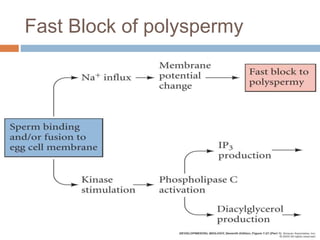
 Changing of the electric potential of egg 
membrane by pumping high amount of Na+ 
outside the egg surface- 
 The cortical reaction occurs in fertilisation when a 
sperm cell unites with the egg's plasma 
membrane, (zona reaction).This reaction leads to 
a modification of the zona pellucida that blocks 
polyspermy-
Fast Block of polyspermy
Slow Block of polyspermy
(4) Passage through extra cellular envelopes 
Head and tail of a sperm enter the cytoplasm 
of the oocyte, but the sperm plasma 
membrane remains behind. 
The secondary oocyte was previously 
arrested in metaphase of the 2nd meiotic 
division, and now forms the mature ovum and
(5) Fusion of sperm and egg pronuclei 
 Formation of male and female pronuclei: 
Chromosomal material of the sperm 
decondensates and enlarges 
Chromosomal material of the ovum 
decondensates following the completion of 
meiosis 
 At this stage, the male and female 
pronuclei are indistinguishable. 
 As they grow, the pronuclei replicate their 
DNA  still 1N (haploid)- 23 
chromosomes, each in chromatid pairs
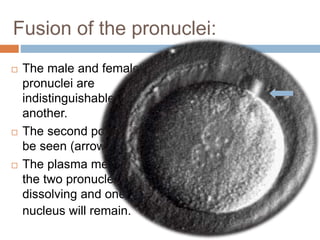
Fusion of the pronuclei: 
 The male and female 
pronuclei are 
indistinguishable from one 
another. 
 The second polar body can 
be seen (arrow). 
 The plasma membranes of 
the two pronuclei are 
dissolving and one diploid 
nucleus will remain.
Cont. 
Membranes of the pronuclei break down, 
chromosomes condense and arrange 
themselves for mitotic cell division 
On membrane dissolution, there is 1 cell with 
46 chromosomes = diploid (2N) 
The first cleavage follows shortly, leaving 2 
cells, each with 46 chromosomes. 
Mitosis in the new zygote uses centrioles derived 
from the sperm. The oocyte has no centrioles.
Fertilization facts: 
 Completed within 24 hours of ovulation 
 Approximately 400 to 600 MILLION sperms are 
deposited at cervical opening during ejaculation. 
Some sperm are held up by the folds of the cervix and 
are gradually released into the cervical canal; this gradual 
release increases the chances of fertilization. 
Most human sperms do not survive longer than 48 hours 
in the female genital tract. 
 Only about 200 sperms reach the fertilization site; 
most degenerate and are absorbed by the female 
genital tract.
The results of fertilization: 
 Stimulates the secondary oocyte to complete 
meiosis. 
 Restores the normal diploid number of 
chromosomes (46). 
 Results in variation of human species as 
maternal and paternal chromosomes 
intermingle. 
 The embryo contains only maternal 
mitochondria because the sperm mitochondria 
are dispersed into the egg cytoplasm and 
discarded. 
 Determines the sex of the embryo.

Fertilization process

  • 1.
    DR RITESH SHIWAKOTI MScD PROSTHODONTICS S NO: 20130204556
  • 2.
  • 3.
  • 4.
    Ovum and sperms:(In vitro) From this photograph, it should be clear that the heads of human sperm are less than 1/20 the diameter of human eggs. sperm heads The surfaces of unfertilized eggs are usually smooth in appearance. The mottled look of this egg is not normally seen, but apparently all the ova from this woman had this appearance.
  • 5.
  • 6.
    Morphology of theOviduct: Fallopian tube S = smooth muscle H & E × 150 E = ciliated epithelium Fallopian tube From Wheater’s Functional Histology, 4th ed., 2000. Azan × 320
  • 7.
    Pre- fertilization events  Helping the sperm: At ovulation, the cervical mucus increases in amount and becomes less thick, allowing easier sperm transport. Passage of the sperm through the uterus and oviduct occurs mainly due to muscular contractions of these organs.  Oocyte: The ends of the oviducts come into close contact with the ovary during ovulation. Fimbriae of oviduct ends “sweep” the ovulated ovum into the oviduct. Peristaltic waves of oviduct musculature bring the ovum into the ampulla of the oviduct.
  • 8.
    Capacitation: readying thesperm  Sperms cannot fertilize oocytes when they are newly ejaculated.  The process of capacitation takes 5-7 hours.  Capacitated sperms are more active.  Location: capacitation occurs in the uterus and oviducts and is facilitated by substances of the female genital tract.  The acrosomal reaction cannot occur until capacitation has occurred.
  • 9.
    Process of Fertilization (1) Chemo attraction (2) Release of acrosomal enzymes (3) Binding of sperm to extra cellular envelopes (4) Passage through extra cellular envelopes (5) Fusion of sperm and egg pronuclei
  • 10.
    (1) Chemo attraction  Species specific in many invertebrates, In sea urchin a peptide resact is such chemo tactic molecule. It is also sperm activating molecule.  Egg jelly has other compounds as well, which bind with specific receptors on sperm, which inturn opens calcium ion channels, leading to exocytosis of acrosome.
  • 11.
    (2) Release ofacrosomal enzymes  In mammals, zona pellucida ZP-3 glycoprotein which triggers Acrosomal reaction.  Prerequisite for the fusion of nuclei. Steps are:
  • 12.
  • 13.
    (3) Binding ofsperm to extra cellular envelopes  Passage of sperm through the corona radiata depends on enzyme action:  Flagella action also aids corona radiata penetration.  Penetration of the zona pellucida around the oocyte:  Once sperm penetrates zona pellucida, the zona reaction occurs: This reaction makes the zona pellucida impermeable to other sperms. When more than one sperm manages to enter the ovum (dispermy = 2; triploidy = 3), the fetus nearly always aborts.
  • 14.
    Prevention of polyspermy  In mammals, prevention of polyspermy is mainly achieved by:  Changing of the electric potential of egg membrane by pumping high amount of Na+ outside the egg surface-  The cortical reaction occurs in fertilisation when a sperm cell unites with the egg's plasma membrane, (zona reaction).This reaction leads to a modification of the zona pellucida that blocks polyspermy-
  • 15.
    Fast Block ofpolyspermy
  • 16.
    Slow Block ofpolyspermy
  • 17.
    (4) Passage throughextra cellular envelopes Head and tail of a sperm enter the cytoplasm of the oocyte, but the sperm plasma membrane remains behind. The secondary oocyte was previously arrested in metaphase of the 2nd meiotic division, and now forms the mature ovum and
  • 18.
    (5) Fusion ofsperm and egg pronuclei  Formation of male and female pronuclei: Chromosomal material of the sperm decondensates and enlarges Chromosomal material of the ovum decondensates following the completion of meiosis  At this stage, the male and female pronuclei are indistinguishable.  As they grow, the pronuclei replicate their DNA  still 1N (haploid)- 23 chromosomes, each in chromatid pairs
  • 19.
    Fusion of thepronuclei:  The male and female pronuclei are indistinguishable from one another.  The second polar body can be seen (arrow).  The plasma membranes of the two pronuclei are dissolving and one diploid nucleus will remain.
  • 20.
    Cont. Membranes ofthe pronuclei break down, chromosomes condense and arrange themselves for mitotic cell division On membrane dissolution, there is 1 cell with 46 chromosomes = diploid (2N) The first cleavage follows shortly, leaving 2 cells, each with 46 chromosomes. Mitosis in the new zygote uses centrioles derived from the sperm. The oocyte has no centrioles.
  • 21.
    Fertilization facts: Completed within 24 hours of ovulation  Approximately 400 to 600 MILLION sperms are deposited at cervical opening during ejaculation. Some sperm are held up by the folds of the cervix and are gradually released into the cervical canal; this gradual release increases the chances of fertilization. Most human sperms do not survive longer than 48 hours in the female genital tract.  Only about 200 sperms reach the fertilization site; most degenerate and are absorbed by the female genital tract.
  • 22.
    The results offertilization:  Stimulates the secondary oocyte to complete meiosis.  Restores the normal diploid number of chromosomes (46).  Results in variation of human species as maternal and paternal chromosomes intermingle.  The embryo contains only maternal mitochondria because the sperm mitochondria are dispersed into the egg cytoplasm and discarded.  Determines the sex of the embryo.