CAPD Catheters
By,
DARSHAN S
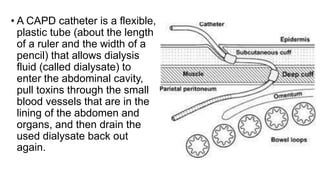
• A CAPD catheter is a flexible,
plastic tube (about the length
of a ruler and the width of a
pencil) that allows dialysis
fluid (called dialysate) to
enter the abdominal cavity,
pull toxins through the small
blood vessels that are in the
lining of the abdomen and
organs, and then drain the
used dialysate back out
again.
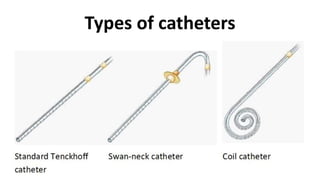
Types of catheters
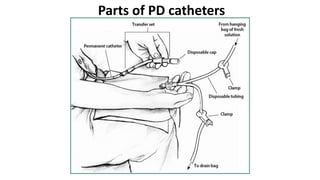
Parts of PD catheters
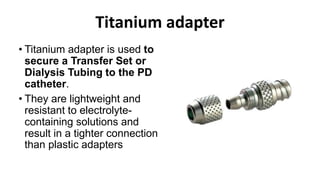
Titanium adapter
• Titanium adapter is used to
secure a Transfer Set or
Dialysis Tubing to the PD
catheter.
• They are lightweight and
resistant to electrolyte-
containing solutions and
result in a tighter connection
than plastic adapters
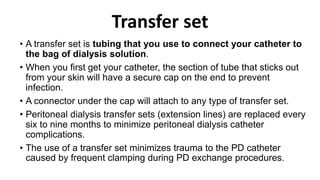
Transfer set
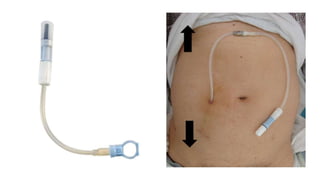
• A transfer set is tubing that you use to connect your catheter to
the bag of dialysis solution.
• When you first get your catheter, the section of tube that sticks out
from your skin will have a secure cap on the end to prevent
infection.
• A connector under the cap will attach to any type of transfer set.
• Peritoneal dialysis transfer sets (extension lines) are replaced every
six to nine months to minimize peritoneal dialysis catheter
complications.
• The use of a transfer set minimizes trauma to the PD catheter
caused by frequent clamping during PD exchange procedures.
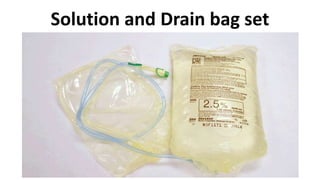
Solution and Drain bag set
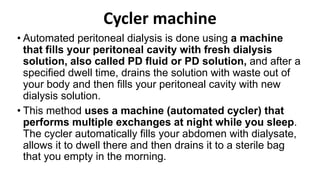
Cycler machine
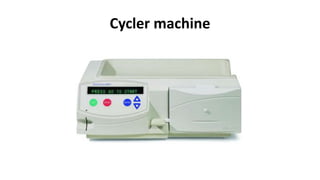
• Automated peritoneal dialysis is done using a machine
that fills your peritoneal cavity with fresh dialysis
solution, also called PD fluid or PD solution, and after a
specified dwell time, drains the solution with waste out of
your body and then fills your peritoneal cavity with new
dialysis solution.
• This method uses a machine (automated cycler) that
performs multiple exchanges at night while you sleep.
The cycler automatically fills your abdomen with dialysate,
allows it to dwell there and then drains it to a sterile bag
that you empty in the morning.
Cycler machine
APD CYCLER
MACHINE
CASSATTE
THANK YOU

CAPD Catheters.pptx

  • 1.
  • 2.
    • A CAPDcatheter is a flexible, plastic tube (about the length of a ruler and the width of a pencil) that allows dialysis fluid (called dialysate) to enter the abdominal cavity, pull toxins through the small blood vessels that are in the lining of the abdomen and organs, and then drain the used dialysate back out again.
  • 3.
  • 4.
    Parts of PDcatheters
  • 5.
    Titanium adapter • Titaniumadapter is used to secure a Transfer Set or Dialysis Tubing to the PD catheter. • They are lightweight and resistant to electrolyte- containing solutions and result in a tighter connection than plastic adapters
  • 6.
    Transfer set • Atransfer set is tubing that you use to connect your catheter to the bag of dialysis solution. • When you first get your catheter, the section of tube that sticks out from your skin will have a secure cap on the end to prevent infection. • A connector under the cap will attach to any type of transfer set. • Peritoneal dialysis transfer sets (extension lines) are replaced every six to nine months to minimize peritoneal dialysis catheter complications. • The use of a transfer set minimizes trauma to the PD catheter caused by frequent clamping during PD exchange procedures.
  • 8.
  • 9.
    Cycler machine • Automatedperitoneal dialysis is done using a machine that fills your peritoneal cavity with fresh dialysis solution, also called PD fluid or PD solution, and after a specified dwell time, drains the solution with waste out of your body and then fills your peritoneal cavity with new dialysis solution. • This method uses a machine (automated cycler) that performs multiple exchanges at night while you sleep. The cycler automatically fills your abdomen with dialysate, allows it to dwell there and then drains it to a sterile bag that you empty in the morning.
  • 10.
  • 11.
  • 12.

Editor's Notes

  • #3 Omentum a fold of peritoneum connecting the stomach with other abdominal organs.