OSTEITIS FIBROSA
CYSTICA
Dr. Bipul Borthakur ( Professor )
Dept of Orthopaedics, SMCH
OVERVIEW
 Definition
 Epidemiology
 Pathogenesis
 Causes
 Clinical Features
 Diagnosis
 Management
 Prognosis
DEFINITION
Osteitis fibrosa cystica
 skeletal disorder
 loss of bone mass
 calcified supporting structures are
replaced with fibrous tissue (peritrabecular
fibrosis)
 formation of brown tumors (cyst ) in and
around the bone.
• also known as
 osteitis fibrosa,
 osteodystrophia fibrosa,
 von Recklinghausen's disease of bone
• caused by hyperparathyroidism - surplus of parathyroid hormone
from over-active parathyroid glands
EPIDEMIOLOGY
• Rare disease
• Occurs in 2% of individuals with primary Hyper PTH –
accounting for 90 % of it
• 10 % - associated with primary hyperplasia
• < 1 % - parathyroid carcinoma - in individuals around 50 yrs
of age
• Male = Female
• Primarily affects younger individuals with age < 40 yrs
• 70 % cases occurs < 20 yrs of age
• 85 % cases occurs < 35 yrs of age
• Common in Asiatic countries
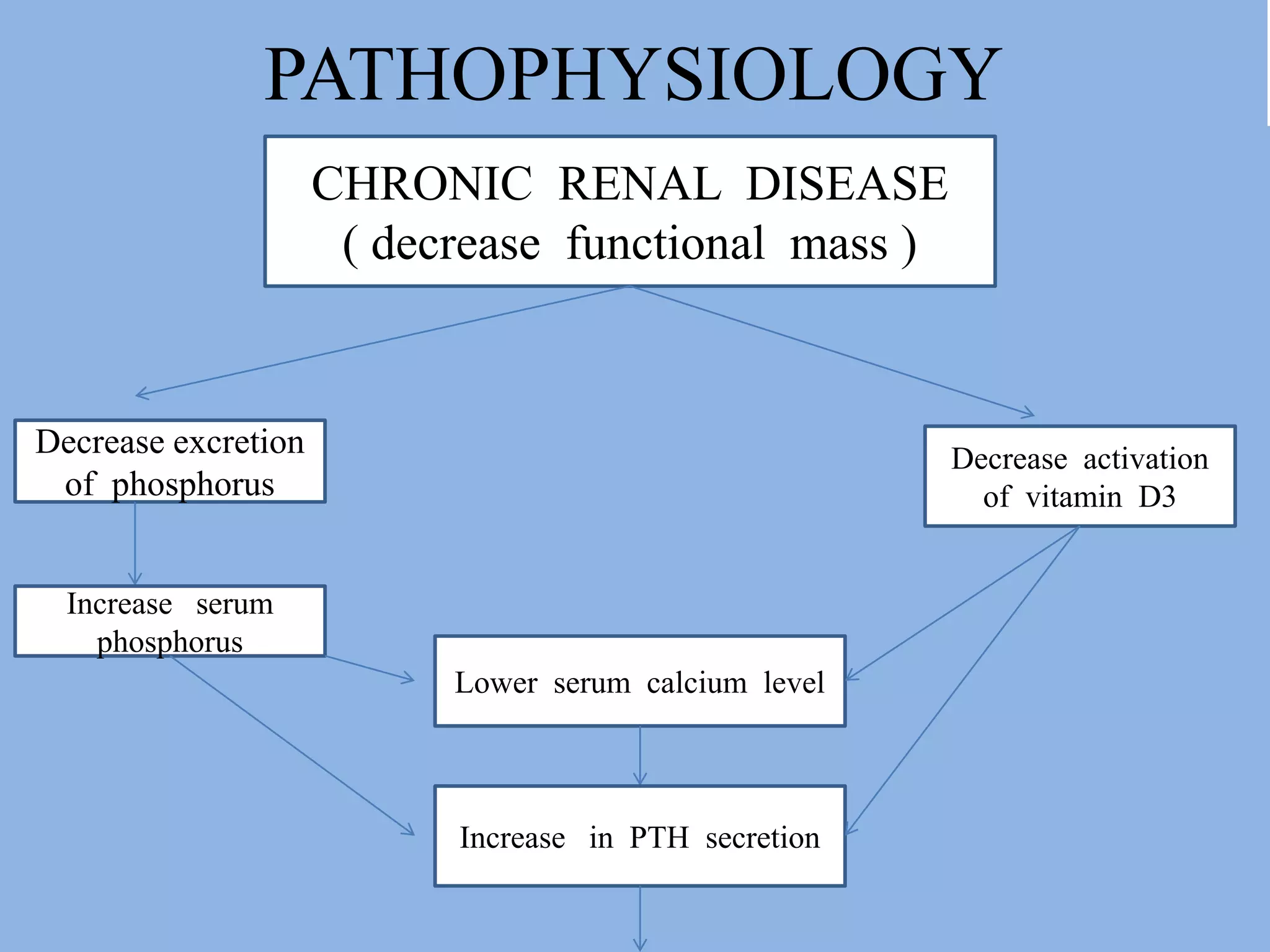
PATHOPHYSIOLOGY
CHRONIC RENAL DISEASE
( decrease functional mass )
CHRONIC RENAL DISEASE
( decrease functional mass )
Decrease excretion
of phosphorus
Decrease activation
of vitamin D3
Increase serum
phosphorus
Lower serum calcium level
Increase in PTH secretion
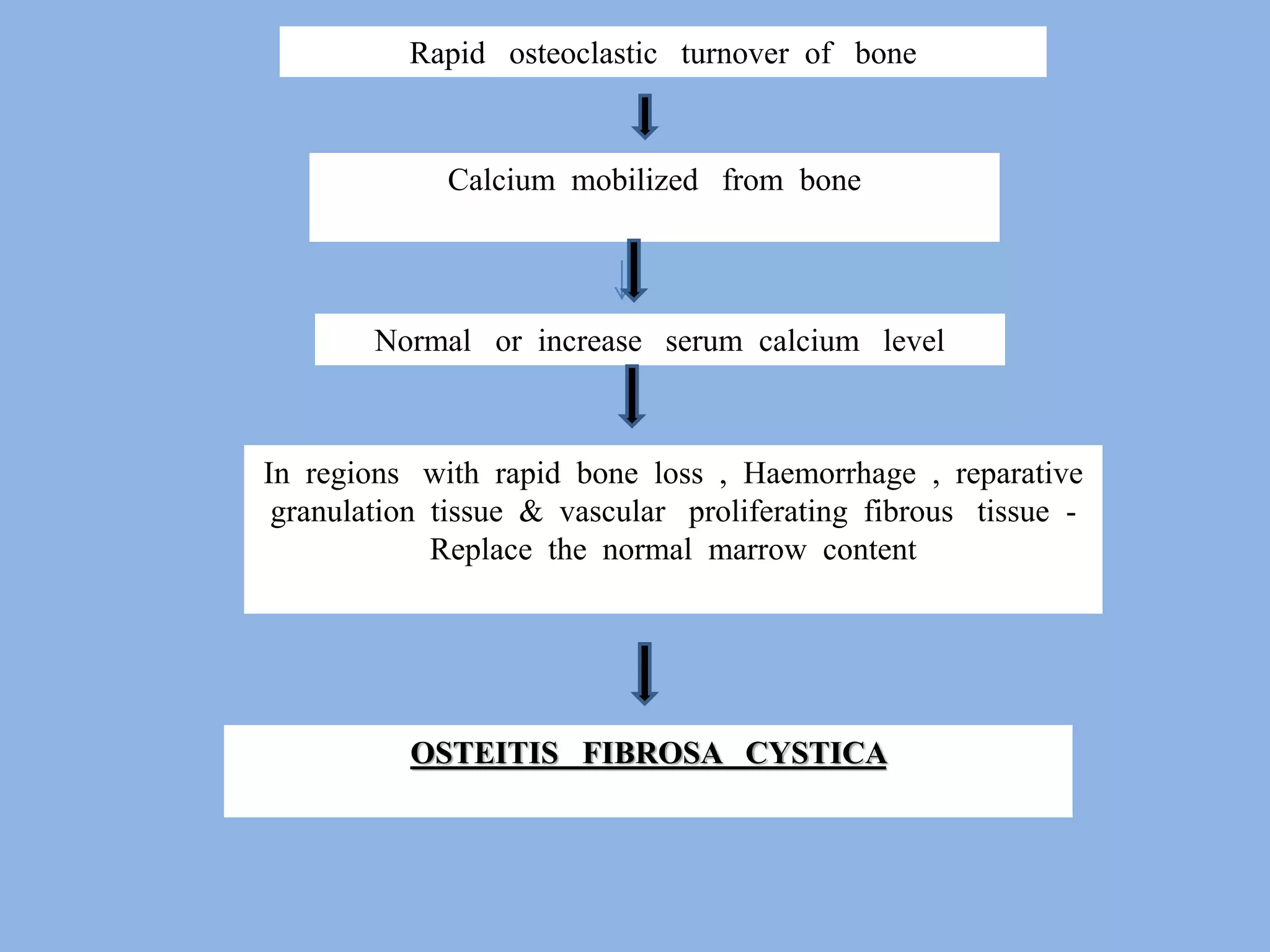
Rapid osteoclastic turnover of bone
Calcium mobilized from bone
Normal or increase serum calcium level
In regions with rapid bone loss , Haemorrhage , reparative
granulation tissue & vascular proliferating fibrous tissue -
Replace the normal marrow content
OSTEITIS FIBROSA CYSTICA
CAUSES
1) PARATHYROID ADENOMA
Benign , metabolically active
Comprises 80 -85 % of documented case of Hyper PTH
2) HEREDITARY FACTORS
Familial hyperparathyroidism
MEN Type 1 - Autosomal dominant disorder
Hyperparathyroidism - jaw tumour syndrome
• mutations leading to hyperparathyroidism
- parathyroid harmone receptor
- G – proteins
- Adenyl cyclase
- Gene HRPT2 – protein parafibromin
3 ) PARATHYROID CARCINOMA
4 ) RENAL COMPLICATIONS
Renal osteodystrophy - skeletal complication of ESRD
decrease calcitriol production from kidney
increase PTH level
mobilize calcium from bone
5 ) FLUORIDE INTOXICATION
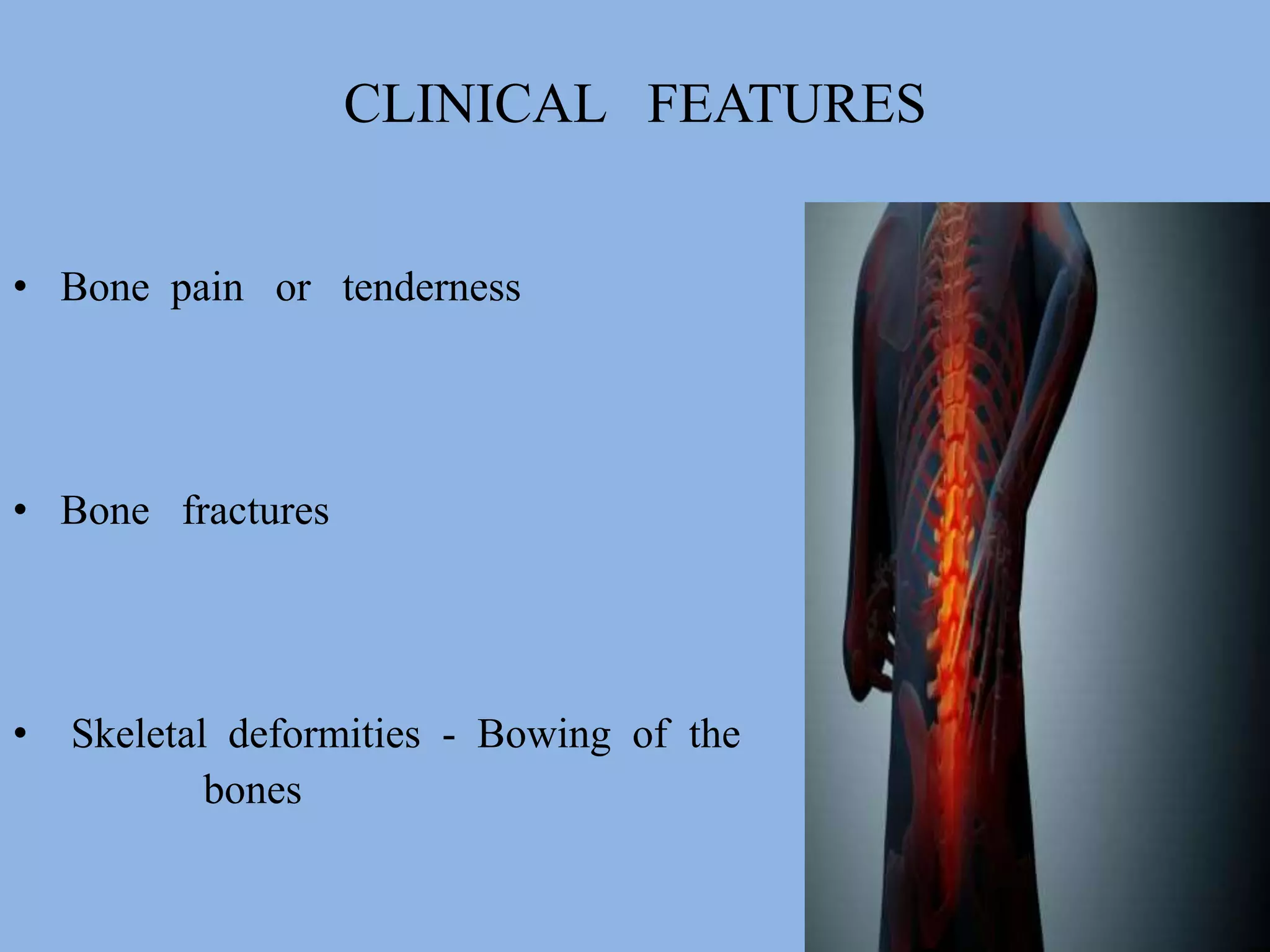
CLINICAL FEATURES
• Bone pain or tenderness
• Bone fractures
• Skeletal deformities - Bowing of the
bones
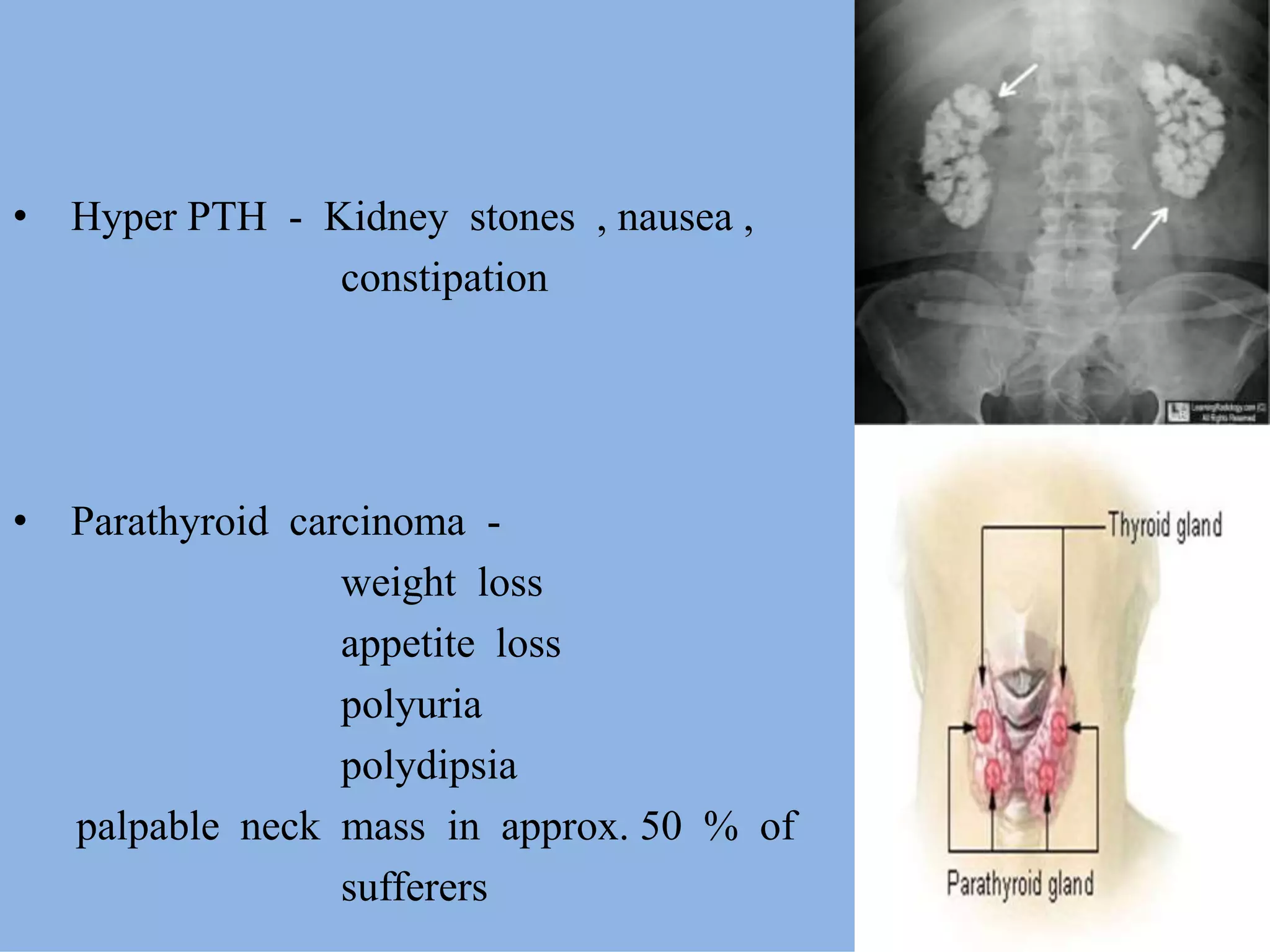
• Hyper PTH - Kidney stones , nausea ,
constipation
• Parathyroid carcinoma -
weight loss
appetite loss
polyuria
polydipsia
palpable neck mass in approx. 50 % of
sufferers
DIAGNOSIS
 Lab test reveals
 ↑ Calcium level ( N – 8.5 - 10.2 mg/ dl )
 ↑ PTH level ( > 250 pg /dl ) ( N – 65 pg/ ml )
 ↑ ALP level ( N – 20 – 140 IU /L )
• X – Ray
 extreme thin bones - bowed or
fractured
M/C affected - fingers (bone resorption)
Skull x-ray - Ground glass/salt & pepper
appearance
• SESTAMIBI NUCLEAR SCAN
 diagnose Brown tumour - cyst lined
by osteoclast & sometimes blood
pigments
FINE NEEDLE ASPIRATION ( FNA )
biopsy of the bone lesion - fibrosis &
intertrabecular tunnels
Brown tumours - display osteoclast
Benign , dense , granular cytoplasm
nucleus - ovular in shape
fine chromatin
nucleoli smaller than average
MANAGEMENT
 MEDICAL
 Vitamin D ( alfacalcidiol or calcitriol ) - given IV
Treat not only Hyper PTH , but also regress the brown
tumour or other symtom of OFC
SURGERY
 Severe case of OFC - PARATHYROIDECTOMY
Result in removal of bone resorption & complete
regression of brown tumours
 Bone transplants - succesful in filling lesion caused by
OFC
PROGNOSIS
• After parathyroidectomy
* increase bone density & repair of skeleton within weeks
* regression of brown tumours within six months
Following parathyoidectomy - hypocalcemia is common
THANK YOU
“krodhādbhavati sammohaḥ
sammohātsmṛtivibhramaḥ
smṛtibhraṃśād buddhināśo buddhināśātpraṇaśyati”
“From anger there comes delusion; from delusion, the loss of
memory; from the loss of memory,
the destruction of discrimination; and with the destruction of
discrimination, he is lost.”

Osteitis fibrosa cystica

  • 1.
    OSTEITIS FIBROSA CYSTICA Dr. BipulBorthakur ( Professor ) Dept of Orthopaedics, SMCH
  • 2.
    OVERVIEW  Definition  Epidemiology Pathogenesis  Causes  Clinical Features  Diagnosis  Management  Prognosis
  • 3.
    DEFINITION Osteitis fibrosa cystica skeletal disorder  loss of bone mass  calcified supporting structures are replaced with fibrous tissue (peritrabecular fibrosis)  formation of brown tumors (cyst ) in and around the bone.
  • 4.
    • also knownas  osteitis fibrosa,  osteodystrophia fibrosa,  von Recklinghausen's disease of bone • caused by hyperparathyroidism - surplus of parathyroid hormone from over-active parathyroid glands
  • 5.
    EPIDEMIOLOGY • Rare disease •Occurs in 2% of individuals with primary Hyper PTH – accounting for 90 % of it • 10 % - associated with primary hyperplasia • < 1 % - parathyroid carcinoma - in individuals around 50 yrs of age
  • 6.
    • Male =Female • Primarily affects younger individuals with age < 40 yrs • 70 % cases occurs < 20 yrs of age • 85 % cases occurs < 35 yrs of age • Common in Asiatic countries
  • 7.
    PATHOPHYSIOLOGY CHRONIC RENAL DISEASE (decrease functional mass ) CHRONIC RENAL DISEASE ( decrease functional mass ) Decrease excretion of phosphorus Decrease activation of vitamin D3 Increase serum phosphorus Lower serum calcium level Increase in PTH secretion
  • 8.
    Rapid osteoclastic turnoverof bone Calcium mobilized from bone Normal or increase serum calcium level In regions with rapid bone loss , Haemorrhage , reparative granulation tissue & vascular proliferating fibrous tissue - Replace the normal marrow content OSTEITIS FIBROSA CYSTICA
  • 9.
    CAUSES 1) PARATHYROID ADENOMA Benign, metabolically active Comprises 80 -85 % of documented case of Hyper PTH 2) HEREDITARY FACTORS Familial hyperparathyroidism MEN Type 1 - Autosomal dominant disorder Hyperparathyroidism - jaw tumour syndrome
  • 10.
    • mutations leadingto hyperparathyroidism - parathyroid harmone receptor - G – proteins - Adenyl cyclase - Gene HRPT2 – protein parafibromin 3 ) PARATHYROID CARCINOMA
  • 11.
    4 ) RENALCOMPLICATIONS Renal osteodystrophy - skeletal complication of ESRD decrease calcitriol production from kidney increase PTH level mobilize calcium from bone 5 ) FLUORIDE INTOXICATION
  • 12.
    CLINICAL FEATURES • Bonepain or tenderness • Bone fractures • Skeletal deformities - Bowing of the bones
  • 13.
    • Hyper PTH- Kidney stones , nausea , constipation • Parathyroid carcinoma - weight loss appetite loss polyuria polydipsia palpable neck mass in approx. 50 % of sufferers
  • 14.
    DIAGNOSIS  Lab testreveals  ↑ Calcium level ( N – 8.5 - 10.2 mg/ dl )  ↑ PTH level ( > 250 pg /dl ) ( N – 65 pg/ ml )  ↑ ALP level ( N – 20 – 140 IU /L )
  • 15.
    • X –Ray  extreme thin bones - bowed or fractured M/C affected - fingers (bone resorption) Skull x-ray - Ground glass/salt & pepper appearance • SESTAMIBI NUCLEAR SCAN  diagnose Brown tumour - cyst lined by osteoclast & sometimes blood pigments
  • 16.
    FINE NEEDLE ASPIRATION( FNA ) biopsy of the bone lesion - fibrosis & intertrabecular tunnels Brown tumours - display osteoclast Benign , dense , granular cytoplasm nucleus - ovular in shape fine chromatin nucleoli smaller than average
  • 17.
    MANAGEMENT  MEDICAL  VitaminD ( alfacalcidiol or calcitriol ) - given IV Treat not only Hyper PTH , but also regress the brown tumour or other symtom of OFC
  • 18.
    SURGERY  Severe caseof OFC - PARATHYROIDECTOMY Result in removal of bone resorption & complete regression of brown tumours  Bone transplants - succesful in filling lesion caused by OFC
  • 19.
    PROGNOSIS • After parathyroidectomy *increase bone density & repair of skeleton within weeks * regression of brown tumours within six months Following parathyoidectomy - hypocalcemia is common
  • 20.
    THANK YOU “krodhādbhavati sammohaḥ sammohātsmṛtivibhramaḥ smṛtibhraṃśādbuddhināśo buddhināśātpraṇaśyati” “From anger there comes delusion; from delusion, the loss of memory; from the loss of memory, the destruction of discrimination; and with the destruction of discrimination, he is lost.”