Thoracoscopy
History:
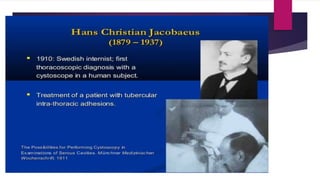
 Developed by Jacobeus in early 1900s to break adhesions in tuberculosis patients
 Also was used to localize and diagnose benign and malignant lesions of pleura
 Later it was used extensively to assist in diagnosis of pleural effusion
TYPES
 Medical thoracoscopy
 VATS (Video Assisted Thoracoscopy)
Medical Thoracoscopy
 Two methods: Single Puncture and double puncture
 Single Puncture:A single rigid thoracoscope in a 9mm working channel is used
 All equipments are used through a single working channel
 Double Puncture: Two ports
 1. a 7 mm rigid thoracoscope
 2. 5 mm trocar-biopsy forceps,brushes,needles
 Single Puncture-easier to perform and preferred by chest physicians
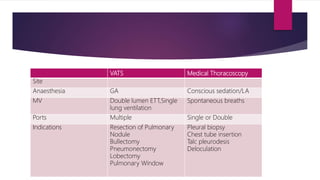
VATS Medical Thoracoscopy
Site
Anaesthesia GA Conscious sedation/LA
MV Double lumen ETT,Single
lung ventilation
Spontaneous breaths
Ports Multiple Single or Double
Indications Resection of Pulmonary
Nodule
Bullectomy
Pneumonectomy
Lobectomy
Pulmonary Window
Pleural biopsy
Chest tube insertion
Talc pleurodesis
Deloculation
Role in diagnosis
 1.Undiagnosed pleural effusion:
 Mainly to establish a diagnosis of malignancy
 Used only when less invasive procedures didn’t get any desired results
 More preferred when :
 1)history of more than one month
 No fever
 Blood tinged pleural fluid
 Ct suggestive of malignancy
 2.Malignant pleural effusions:
 Mainly for pleurodesis
 Especially in loculated effusions
 Ovarian cancer and pleural effusion-because the amount of material in pleural
effusion,dictate surgical therapy
 3.Parapneumonic pleural effusions
 If not drained by thoracocentesis or ICD
 CT Scan should be done prior to know the exact location of the empyema and
need for intervention
 If fibropurulent material cannot be drained-convert to a open thoracotomy
 If there is undrained empyema,there are usually four basic alternatives:
 A)insert one more ICD tube
 B)Instill fibrinolytics and dna ase intrapleurally
 C)thoracoscopy
 D)Thoracotomy
 4.Pneumothorax
 Mainly done for two objectives:
 A)to treat the bullous disease responsible for pneumothorax
 B)to create a pleurodesis
 Bullae- treated by endoscopic stapling device
 Earlier-Electrocoagulation and roeder loops was used
 Howover using a loop can have high chance of recurrence.
 Mostly VATS is used, But medical thoracoscopy with talc insufflation is also being
used
 ACCP Guidelines :
 thoracoscopy preferred for primary spontaneous pneumothorax ,usually after an
ipsilateral recurrence
 Bullectomy and parietal pleural ablation also has been recommended
 Secondary spontaneous pneumothorax-always indicated
 BTS-chemical pleurodesis to be performed only if the patient is unwilling for
surgical intervention
 Indications :
 A)Secondary ipsilateral pneumothorax
 B)First contralateral pneumothorax
 C)Bilateral spontaneous pneumothorax
 D)Persisitent Air Leaks (5-7 days of tube drainage)
 E)Professions at risk (pilots,divers)
 5.Haemothorax
 Usually thoracotomy is more preferred to thoracoscopy
 Can be used for removing retained blood clots
 If retained blood clots are more than 30 percentage usually thoracotomy is
preferred
Complications
 Prolonged Air Leak – 3.2 percentage
 Significant bleeding –only in 1 percent
 Pneumonia-1.1 %
 Empyema – 0.6 %
 Complications of medical thoracoscopy is less than VATS

Thoracoscopy

  • 1.
  • 2.
    History:  Developed byJacobeus in early 1900s to break adhesions in tuberculosis patients  Also was used to localize and diagnose benign and malignant lesions of pleura  Later it was used extensively to assist in diagnosis of pleural effusion
  • 4.
    TYPES  Medical thoracoscopy VATS (Video Assisted Thoracoscopy)
  • 5.
    Medical Thoracoscopy  Twomethods: Single Puncture and double puncture  Single Puncture:A single rigid thoracoscope in a 9mm working channel is used  All equipments are used through a single working channel  Double Puncture: Two ports  1. a 7 mm rigid thoracoscope  2. 5 mm trocar-biopsy forceps,brushes,needles  Single Puncture-easier to perform and preferred by chest physicians
  • 6.
    VATS Medical Thoracoscopy Site AnaesthesiaGA Conscious sedation/LA MV Double lumen ETT,Single lung ventilation Spontaneous breaths Ports Multiple Single or Double Indications Resection of Pulmonary Nodule Bullectomy Pneumonectomy Lobectomy Pulmonary Window Pleural biopsy Chest tube insertion Talc pleurodesis Deloculation
  • 8.
    Role in diagnosis 1.Undiagnosed pleural effusion:  Mainly to establish a diagnosis of malignancy  Used only when less invasive procedures didn’t get any desired results  More preferred when :  1)history of more than one month  No fever  Blood tinged pleural fluid  Ct suggestive of malignancy
  • 9.
     2.Malignant pleuraleffusions:  Mainly for pleurodesis  Especially in loculated effusions  Ovarian cancer and pleural effusion-because the amount of material in pleural effusion,dictate surgical therapy
  • 10.
     3.Parapneumonic pleuraleffusions  If not drained by thoracocentesis or ICD  CT Scan should be done prior to know the exact location of the empyema and need for intervention  If fibropurulent material cannot be drained-convert to a open thoracotomy
  • 11.
     If thereis undrained empyema,there are usually four basic alternatives:  A)insert one more ICD tube  B)Instill fibrinolytics and dna ase intrapleurally  C)thoracoscopy  D)Thoracotomy
  • 12.
     4.Pneumothorax  Mainlydone for two objectives:  A)to treat the bullous disease responsible for pneumothorax  B)to create a pleurodesis  Bullae- treated by endoscopic stapling device  Earlier-Electrocoagulation and roeder loops was used  Howover using a loop can have high chance of recurrence.
  • 13.
     Mostly VATSis used, But medical thoracoscopy with talc insufflation is also being used  ACCP Guidelines :  thoracoscopy preferred for primary spontaneous pneumothorax ,usually after an ipsilateral recurrence  Bullectomy and parietal pleural ablation also has been recommended  Secondary spontaneous pneumothorax-always indicated
  • 14.
     BTS-chemical pleurodesisto be performed only if the patient is unwilling for surgical intervention  Indications :  A)Secondary ipsilateral pneumothorax  B)First contralateral pneumothorax  C)Bilateral spontaneous pneumothorax  D)Persisitent Air Leaks (5-7 days of tube drainage)  E)Professions at risk (pilots,divers)
  • 15.
     5.Haemothorax  Usuallythoracotomy is more preferred to thoracoscopy  Can be used for removing retained blood clots  If retained blood clots are more than 30 percentage usually thoracotomy is preferred
  • 16.
    Complications  Prolonged AirLeak – 3.2 percentage  Significant bleeding –only in 1 percent  Pneumonia-1.1 %  Empyema – 0.6 %  Complications of medical thoracoscopy is less than VATS