National Institute of Fashion Technology, 
Chennai 
Management Information System 
Topic- Application of MIS in Manufacturing Sector 
Submitted To:- 
Mr. S Senthilvel 
Assistant Professor 
NIFT Chennai 
Submitted By :- 
Arpan Mahato 
B/AP/12/1643
APPLICATION OF MANAGEMENT 
INFORMATION SYSTEMS 
•INTRODUCTION 
•PERSONAL MANAGEMENT 
•PRODUCTION MANAGEMENT 
•MARKETING MANAGEMENT 
•ACCOUNTING AND FINANACE 
MANAGEMENT
Goals of an MIS 
 Provide managers with information 
 Regular, routine operations 
 Control, organize and plan better 
3 MIS 175 Spring 2002 Chapter 10
Typical Inputs and Outputs 
 Inputs: Information from the TPS 
 Outputs: hard and softcopy reports 
Scheduled reports 
On-demand reports 
Key-indicator (business fundamentals) 
Exception reports 
4 MIS 175 Spring 2002 Chapter 10
Functional Perspectives of MIS 
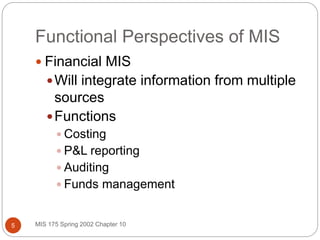
 Financial MIS 
Will integrate information from multiple 
sources 
Functions 
 Costing 
 P&L reporting 
 Auditing 
 Funds management 
5 MIS 175 Spring 2002 Chapter 10
Functional Perspectives of MIS 
 Manufacturing 
Design and Engineering 
Master Production Scheduling 
Inventory Control 
Materials Planning 
Manufacturing and Process Control 
Quality Control 
6 MIS 175 Spring 2002 Chapter 10
Functional Perspectives of MIS 
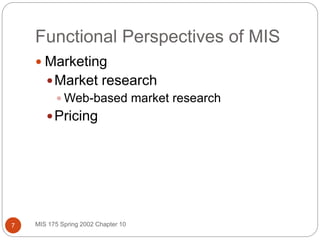
 Marketing 
Market research 
Web-based market research 
Pricing 
7 MIS 175 Spring 2002 Chapter 10
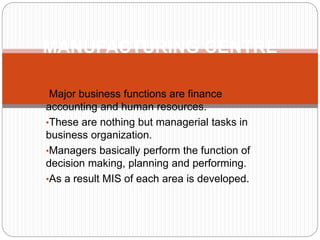
MANUFACTURING CENTRE 
•Major business functions are finance 
accounting and human resources. 
•These are nothing but managerial tasks in 
business organization. 
•Managers basically perform the function of 
decision making, planning and performing. 
•As a result MIS of each area is developed.
MIS THAT SUPPORTS THE GOAL 
•Financial management 
•Human resource management 
•Materials management 
•Production management 
•Marketing management
PLANNING IN MANUFACTURING 
Input : 
 capacity constraints 
 financial constraints 
 demand forecasts 
 objectives, strategies and policies. 
Output : 
 size of workforce 
 production/month 
 inventory levels 
 units or bahts subcontracted 
 back ordered.
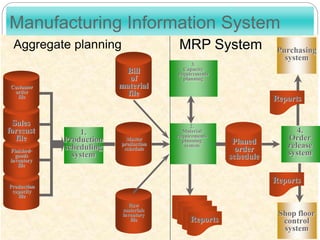
Manufacturing Information System 
Aggregate planning 
Customer 
order 
file 
Sales 
forecast 
file 
Finished-goods 
inventory 
file 
Production 
capacity 
file 
Bill 
of 
material 
file 
Master 
production 
schedule 
Raw 
materials 
inventory 
file 
3. 
Capacity 
requirements 
planning 
2. 
Material 
requirements 
planning 
system Planed 
Reports 
order 
schedule 
Purchasing 
system 
Reports 
4. 
Order 
release 
system 
Reports 
Shop floor 
control 
system 
1. 
Production 
scheduling 
system 
MRP System
Manufacturing Information System 
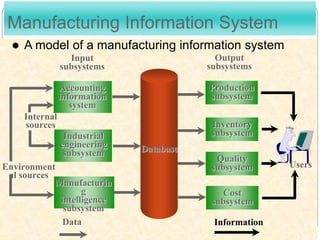
 A model of a manufacturing information system 
Input 
subsystems 
Accounting 
information 
system 
Industrial 
engineering 
subsystem 
Manufacturin 
g 
intelligence 
subsystem 
Internal 
sources 
Environment 
al sources 
Database 
Output 
subsystems 
Production 
subsystem 
Inventory 
subsystem 
Quality 
subsystem 
Cost 
subsystem 
Users 
Data Information
Manufacturing Information System 
 Industrial Engineering Subsystem 
 IE’s work involves the setting up of production 
standard and are compared to actual performance. 
 Manufacturing Intelligence Subsystem 
 Labor information 
 Supplier information
Supplier input : Financial strength, past 
quality and delivery performance, and so 
on. 
Quality control input : Units rejected upon 
receipt, units rejected during production, 
reasons for rejection, etc. 
Customer service input : Units replaced or 
repaired because of defective parts, 
supplier spare parts availability, and so on.
Manufacturing Information System 
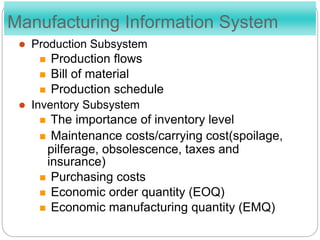
 Production Subsystem 
 Production flows 
 Bill of material 
 Production schedule 
 Inventory Subsystem 
 The importance of inventory level 
 Maintenance costs/carrying cost(spoilage, 
pilferage, obsolescence, taxes and 
insurance) 
 Purchasing costs 
 Economic order quantity (EOQ) 
 Economic manufacturing quantity (EMQ)
Manufacturing Information System 
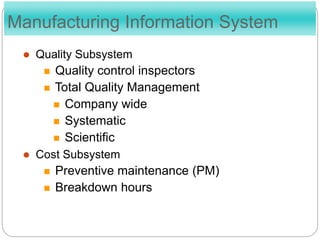
 Quality Subsystem 
 Quality control inspectors 
 Total Quality Management 
 Company wide 
 Systematic 
 Scientific 
 Cost Subsystem 
 Preventive maintenance (PM) 
 Breakdown hours
Marketing Information Systems 
A model of a Manufacturing Information Systems 
Input 
subsystems 
Accounting 
information 
system 
Marketing 
research 
subsystem 
Marketing 
intelligence 
subsystem 
Internal 
sources 
Data 
Database 
Environment 
al sources 
Output 
subsystems 
Product 
subsystem 
Place 
subsystem 
Promotion 
subsystem 
Price 
subsystem 
Integrated-mix 
subsystem 
Information 
Users
 One of the major problems of organizations that 
make them fail may be insufficient utilization of the 
major resource of the organization, viz. information. 
Managers have to be aware of utilizing management 
information systems effectively to be competitive in 
the business world. Many managers in the 
manufacturing industries in South Africa may be 
unaware of the capabilities and use of an effective 
MIS.
manufacturing industries 
 An organization succeeds by bringing together 
and managing certain resources in a productive 
way. The traditional list of resources comprises 
labour (manpower), money, material, managers, 
machines and facilities. Only over the past two 
decades has information come to be recognized 
as another resource, one that is crucial to the 
management of others and one, which under 
certain circumstances, may be substituted for 
them cost-effectively.

Application of MIS in manufacturing sector

  • 1.
    National Institute ofFashion Technology, Chennai Management Information System Topic- Application of MIS in Manufacturing Sector Submitted To:- Mr. S Senthilvel Assistant Professor NIFT Chennai Submitted By :- Arpan Mahato B/AP/12/1643
  • 2.
    APPLICATION OF MANAGEMENT INFORMATION SYSTEMS •INTRODUCTION •PERSONAL MANAGEMENT •PRODUCTION MANAGEMENT •MARKETING MANAGEMENT •ACCOUNTING AND FINANACE MANAGEMENT
  • 3.
    Goals of anMIS  Provide managers with information  Regular, routine operations  Control, organize and plan better 3 MIS 175 Spring 2002 Chapter 10
  • 4.
    Typical Inputs andOutputs  Inputs: Information from the TPS  Outputs: hard and softcopy reports Scheduled reports On-demand reports Key-indicator (business fundamentals) Exception reports 4 MIS 175 Spring 2002 Chapter 10
  • 5.
    Functional Perspectives ofMIS  Financial MIS Will integrate information from multiple sources Functions  Costing  P&L reporting  Auditing  Funds management 5 MIS 175 Spring 2002 Chapter 10
  • 6.
    Functional Perspectives ofMIS  Manufacturing Design and Engineering Master Production Scheduling Inventory Control Materials Planning Manufacturing and Process Control Quality Control 6 MIS 175 Spring 2002 Chapter 10
  • 7.
    Functional Perspectives ofMIS  Marketing Market research Web-based market research Pricing 7 MIS 175 Spring 2002 Chapter 10
  • 8.
    MANUFACTURING CENTRE •Majorbusiness functions are finance accounting and human resources. •These are nothing but managerial tasks in business organization. •Managers basically perform the function of decision making, planning and performing. •As a result MIS of each area is developed.
  • 9.
    MIS THAT SUPPORTSTHE GOAL •Financial management •Human resource management •Materials management •Production management •Marketing management
  • 10.
    PLANNING IN MANUFACTURING Input :  capacity constraints  financial constraints  demand forecasts  objectives, strategies and policies. Output :  size of workforce  production/month  inventory levels  units or bahts subcontracted  back ordered.
  • 11.
    Manufacturing Information System Aggregate planning Customer order file Sales forecast file Finished-goods inventory file Production capacity file Bill of material file Master production schedule Raw materials inventory file 3. Capacity requirements planning 2. Material requirements planning system Planed Reports order schedule Purchasing system Reports 4. Order release system Reports Shop floor control system 1. Production scheduling system MRP System
  • 12.
    Manufacturing Information System  A model of a manufacturing information system Input subsystems Accounting information system Industrial engineering subsystem Manufacturin g intelligence subsystem Internal sources Environment al sources Database Output subsystems Production subsystem Inventory subsystem Quality subsystem Cost subsystem Users Data Information
  • 13.
    Manufacturing Information System  Industrial Engineering Subsystem  IE’s work involves the setting up of production standard and are compared to actual performance.  Manufacturing Intelligence Subsystem  Labor information  Supplier information
  • 14.
    Supplier input :Financial strength, past quality and delivery performance, and so on. Quality control input : Units rejected upon receipt, units rejected during production, reasons for rejection, etc. Customer service input : Units replaced or repaired because of defective parts, supplier spare parts availability, and so on.
  • 15.
    Manufacturing Information System  Production Subsystem  Production flows  Bill of material  Production schedule  Inventory Subsystem  The importance of inventory level  Maintenance costs/carrying cost(spoilage, pilferage, obsolescence, taxes and insurance)  Purchasing costs  Economic order quantity (EOQ)  Economic manufacturing quantity (EMQ)
  • 16.
    Manufacturing Information System  Quality Subsystem  Quality control inspectors  Total Quality Management  Company wide  Systematic  Scientific  Cost Subsystem  Preventive maintenance (PM)  Breakdown hours
  • 17.
    Marketing Information Systems A model of a Manufacturing Information Systems Input subsystems Accounting information system Marketing research subsystem Marketing intelligence subsystem Internal sources Data Database Environment al sources Output subsystems Product subsystem Place subsystem Promotion subsystem Price subsystem Integrated-mix subsystem Information Users
  • 18.
     One ofthe major problems of organizations that make them fail may be insufficient utilization of the major resource of the organization, viz. information. Managers have to be aware of utilizing management information systems effectively to be competitive in the business world. Many managers in the manufacturing industries in South Africa may be unaware of the capabilities and use of an effective MIS.
  • 19.
    manufacturing industries An organization succeeds by bringing together and managing certain resources in a productive way. The traditional list of resources comprises labour (manpower), money, material, managers, machines and facilities. Only over the past two decades has information come to be recognized as another resource, one that is crucial to the management of others and one, which under certain circumstances, may be substituted for them cost-effectively.