AUDIO-VISUAL AIDS
Group one
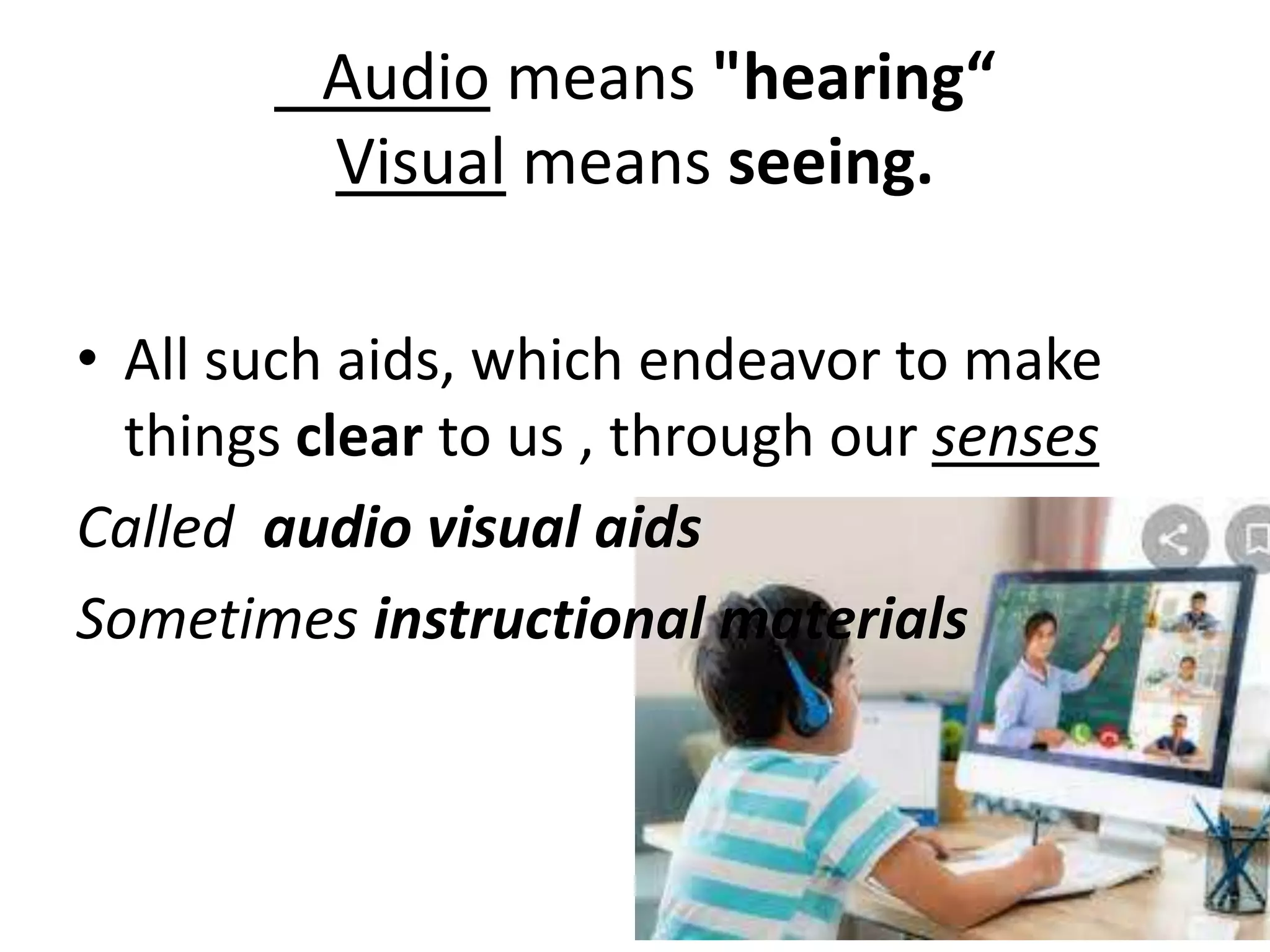
Audio means "hearing“
Visual means seeing.
• All such aids, which endeavor to make
things clear to us , through our senses
Called audio visual aids
Sometimes instructional materials
Audio -visual aids
• make the learning situations as real as
possible and give us firsthand knowledge
through the organs of hearing and
seeing.
Senses
We learn through our sense organs
Senses are the gateways of knowledge.
Most of the knowledge
comes through our ears and eyes
Difinitions
• any device which can used to make the
learning more effective, concrete, realistic
and dynamic (Kinder )
• sensory objectives and images stimulate and
emphasis on learning process ( Burton )
Carter V Good
• Audio visual aids are those aIds that help in
completing the triangular process of learning
I.e.
 Motivation.
 Mlassification and
 Stimulation."
Definitions continued
• Audio visual aids are anything by means of
which, the learning process may be
encouraged or carried on through the sense of
hearing or sense of sight.“
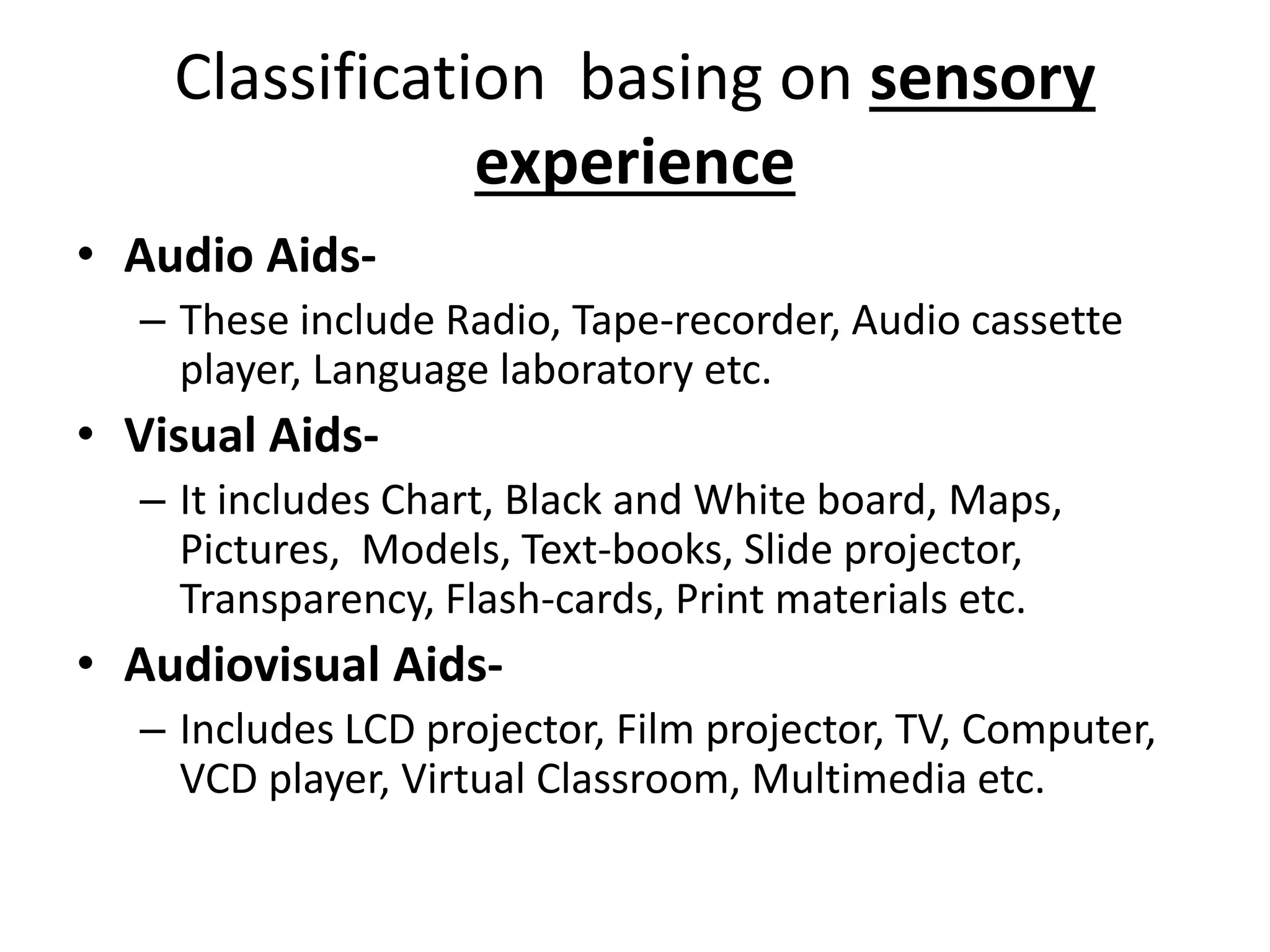
Classification basing on sensory
experience
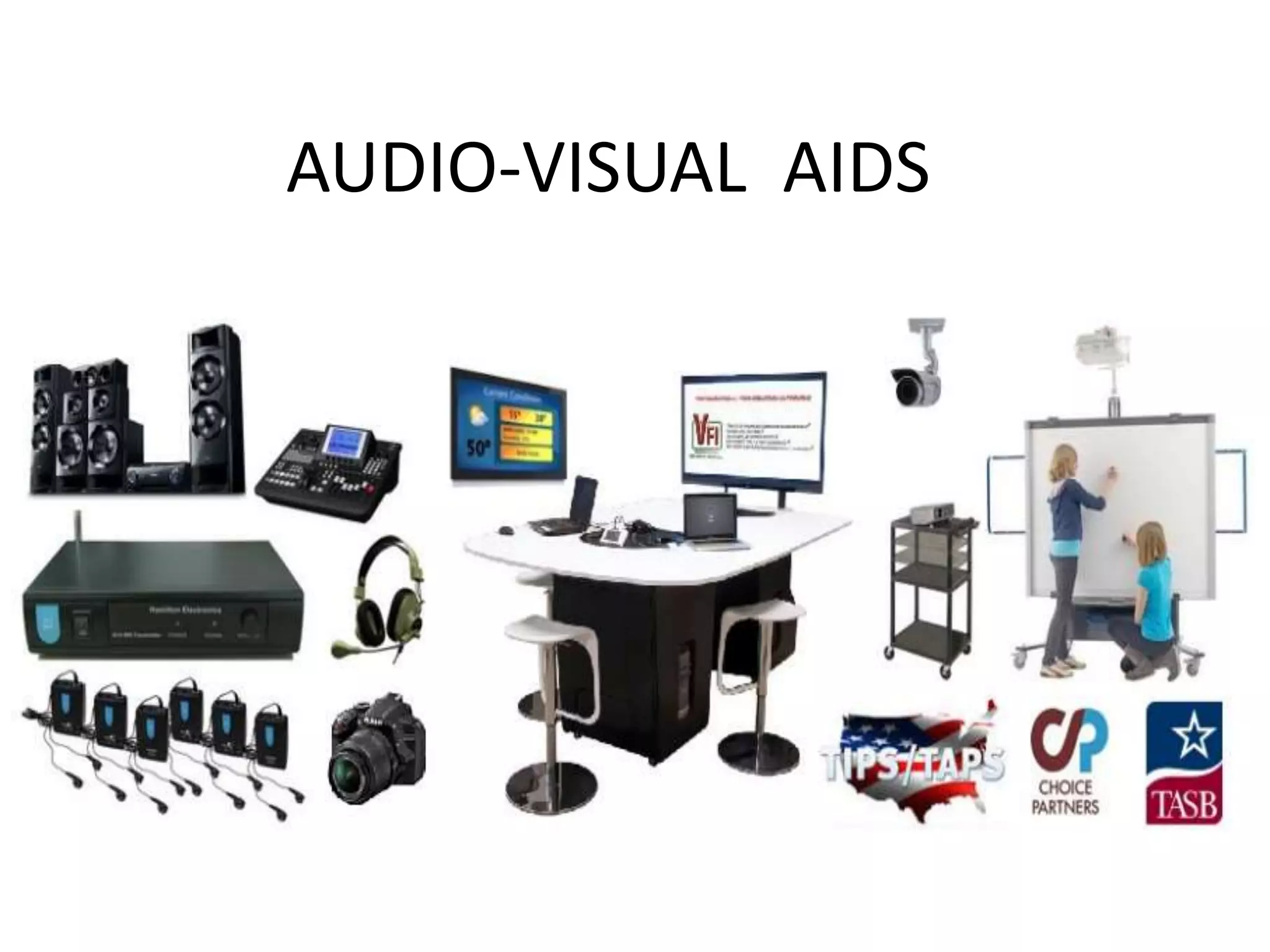
• Audio Aids-
– These include Radio, Tape-recorder, Audio cassette
player, Language laboratory etc.
• Visual Aids-
– It includes Chart, Black and White board, Maps,
Pictures, Models, Text-books, Slide projector,
Transparency, Flash-cards, Print materials etc.
• Audiovisual Aids-
– Includes LCD projector, Film projector, TV, Computer,
VCD player, Virtual Classroom, Multimedia etc.
Basing on the principle of projection
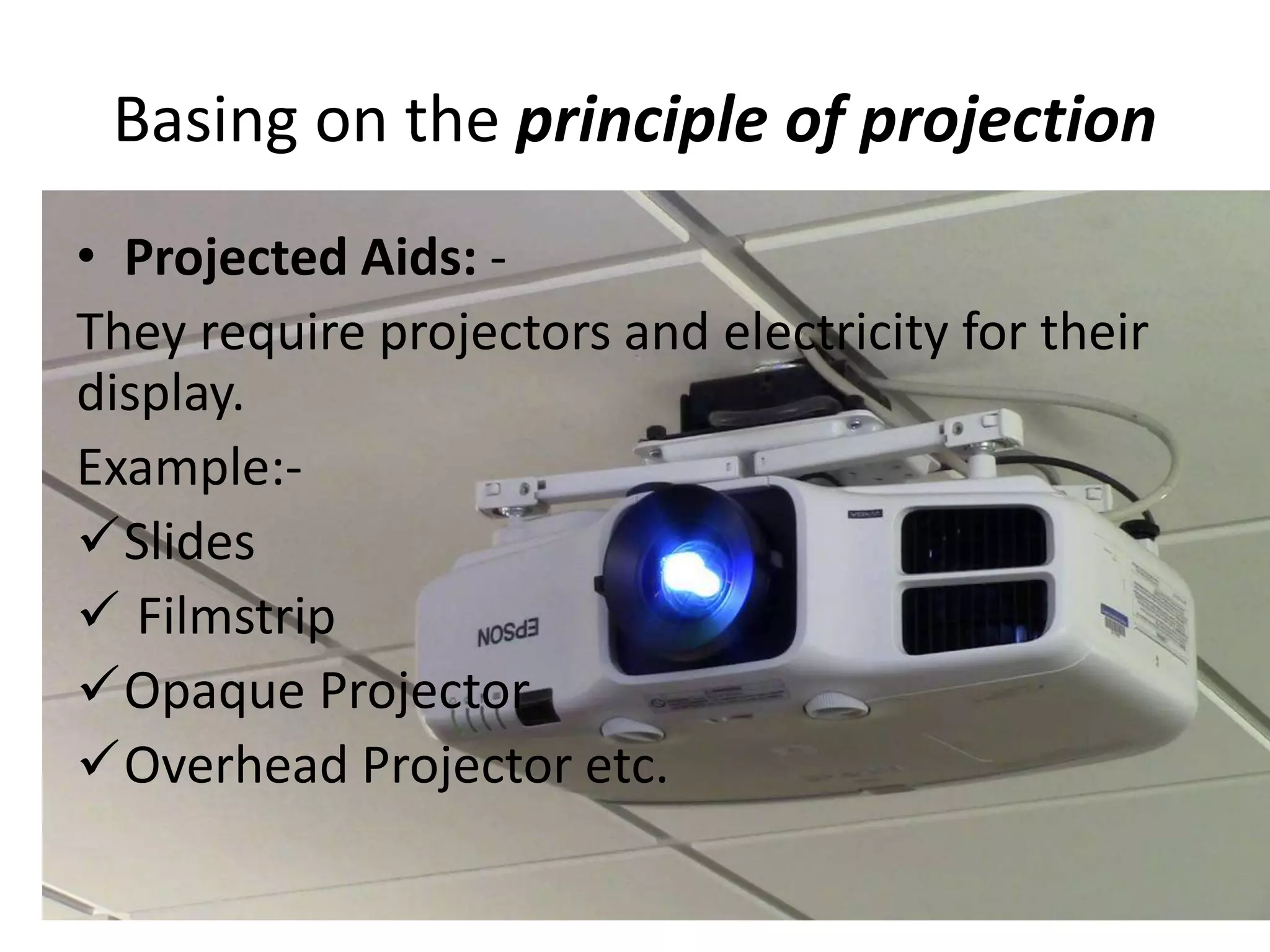
• Projected Aids: -
They require projectors and electricity for their
display.
Example:-
Slides
 Filmstrip
Opaque Projector
Overhead Projector etc.
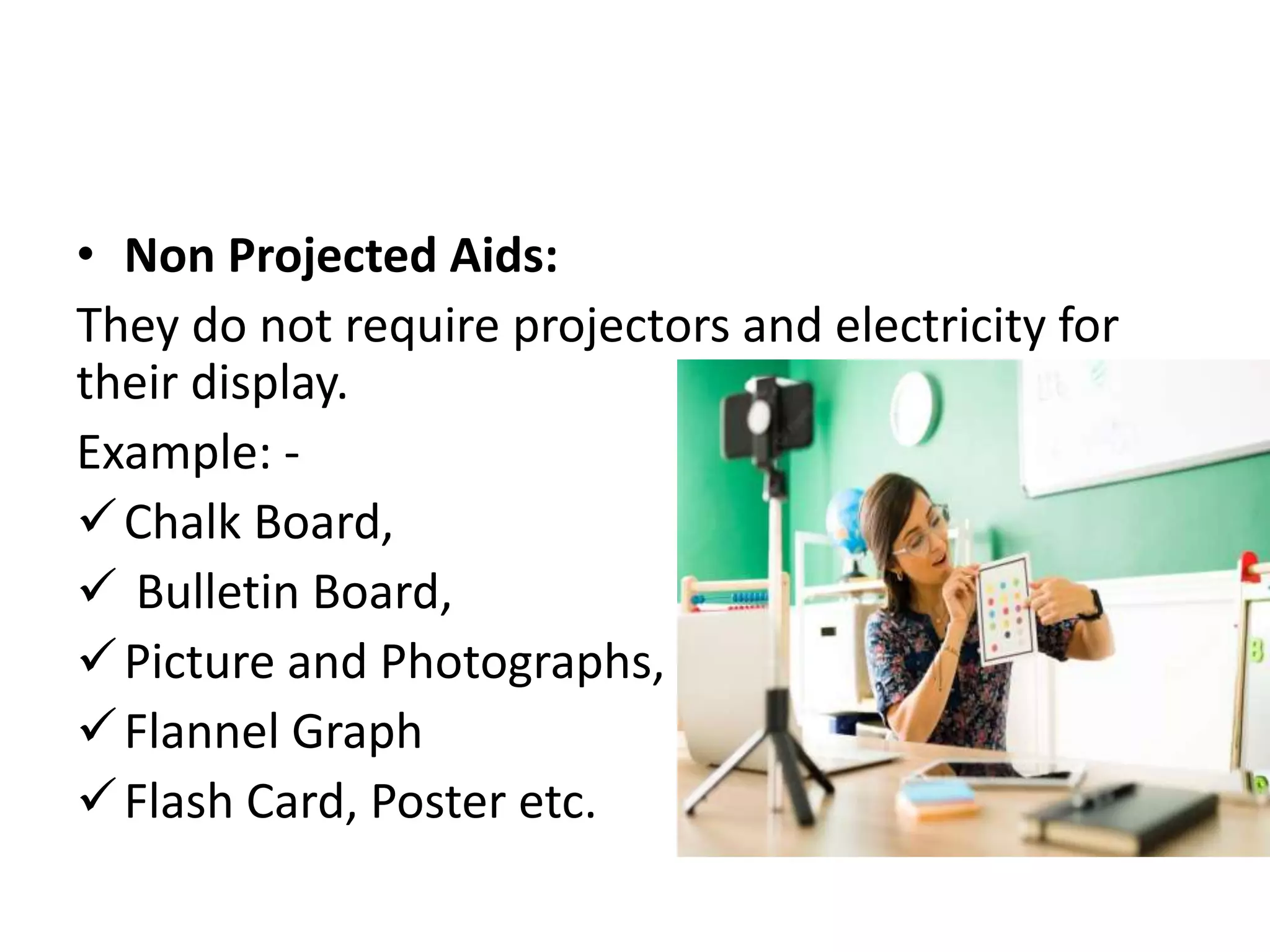
• Non Projected Aids:
They do not require projectors and electricity for
their display.
Example: -
Chalk Board,
 Bulletin Board,
Picture and Photographs,
Flannel Graph
Flash Card, Poster etc.
Advantages of Audio - Visual Aids
It helps to make the learning process more
effective and conceptual.
 It helps to grab the attention of students
 It builds interest and motivates teachers and
students.
It enhances the energy level of students
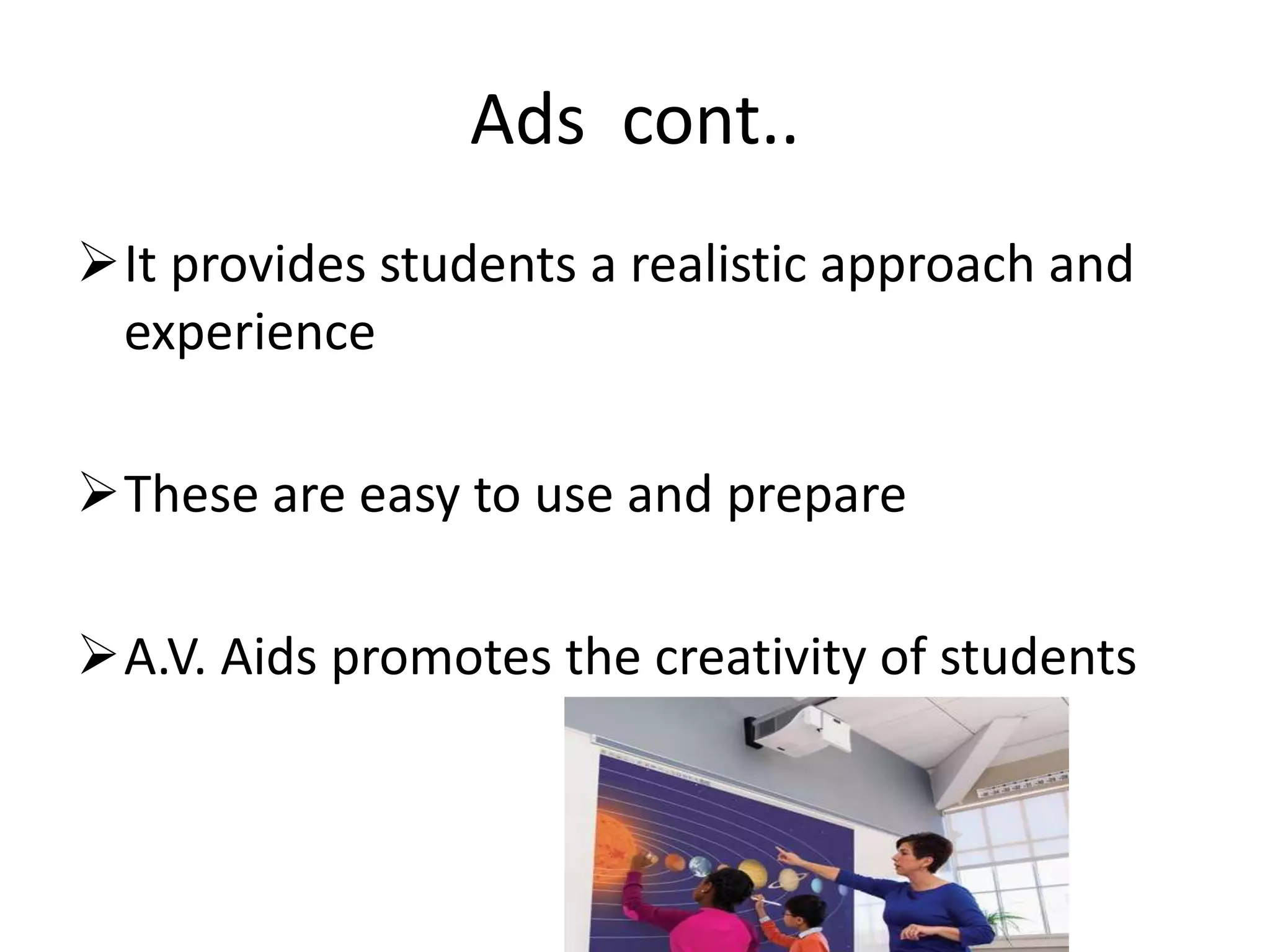
Ads cont..
It provides students a realistic approach and
experience
These are easy to use and prepare
A.V. Aids promotes the creativity of students
Advantages cont.
A.V. aids can be reused
AV aids can be used for an illiterate group
Almost all the topics can be covered by using
these aids, thus ensuring multidisciplinary
approach
Disadvantages
• V.aids require proper environment for its
projection, Students may get distracted due to
noise.
• Some projected aids are expensive to carry
out. E.g projectors
Disadvantages
• Projected aids require electricity, for their
display thus, limiting their
• Some AV Aids require technical help
• All the topics cannot be studied with A.V.aids.
• They require accuracy and innovativeness for
their construction.
• Some aids are expensive.

audio visual-1.pptx

  • 1.
  • 2.
    Audio means "hearing“ Visualmeans seeing. • All such aids, which endeavor to make things clear to us , through our senses Called audio visual aids Sometimes instructional materials
  • 3.
    Audio -visual aids •make the learning situations as real as possible and give us firsthand knowledge through the organs of hearing and seeing.
  • 4.
    Senses We learn throughour sense organs Senses are the gateways of knowledge. Most of the knowledge comes through our ears and eyes
  • 5.
    Difinitions • any devicewhich can used to make the learning more effective, concrete, realistic and dynamic (Kinder ) • sensory objectives and images stimulate and emphasis on learning process ( Burton )
  • 6.
    Carter V Good •Audio visual aids are those aIds that help in completing the triangular process of learning I.e.  Motivation.  Mlassification and  Stimulation."
  • 7.
    Definitions continued • Audiovisual aids are anything by means of which, the learning process may be encouraged or carried on through the sense of hearing or sense of sight.“
  • 8.
    Classification basing onsensory experience • Audio Aids- – These include Radio, Tape-recorder, Audio cassette player, Language laboratory etc. • Visual Aids- – It includes Chart, Black and White board, Maps, Pictures, Models, Text-books, Slide projector, Transparency, Flash-cards, Print materials etc. • Audiovisual Aids- – Includes LCD projector, Film projector, TV, Computer, VCD player, Virtual Classroom, Multimedia etc.
  • 9.
    Basing on theprinciple of projection • Projected Aids: - They require projectors and electricity for their display. Example:- Slides  Filmstrip Opaque Projector Overhead Projector etc.
  • 10.
    • Non ProjectedAids: They do not require projectors and electricity for their display. Example: - Chalk Board,  Bulletin Board, Picture and Photographs, Flannel Graph Flash Card, Poster etc.
  • 11.
    Advantages of Audio- Visual Aids It helps to make the learning process more effective and conceptual.  It helps to grab the attention of students  It builds interest and motivates teachers and students. It enhances the energy level of students
  • 12.
    Ads cont.. It providesstudents a realistic approach and experience These are easy to use and prepare A.V. Aids promotes the creativity of students
  • 13.
    Advantages cont. A.V. aidscan be reused AV aids can be used for an illiterate group Almost all the topics can be covered by using these aids, thus ensuring multidisciplinary approach
  • 14.
    Disadvantages • V.aids requireproper environment for its projection, Students may get distracted due to noise. • Some projected aids are expensive to carry out. E.g projectors
  • 15.
    Disadvantages • Projected aidsrequire electricity, for their display thus, limiting their • Some AV Aids require technical help • All the topics cannot be studied with A.V.aids. • They require accuracy and innovativeness for their construction. • Some aids are expensive.