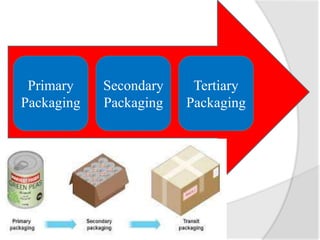
Primary
Packaging
Secondary
Packaging
Tertiary
Packaging
Primary Packaging
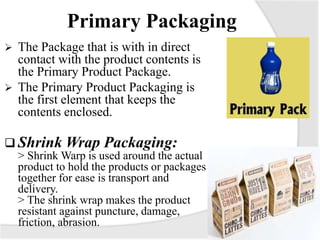
 The Package that is with in direct
contact with the product contents is
the Primary Product Package.
 The Primary Product Packaging is
the first element that keeps the
contents enclosed.
 Shrink Wrap Packaging:
> Shrink Warp is used around the actual
product to hold the products or packages
together for ease is transport and
delivery.
> The shrink wrap makes the product
resistant against puncture, damage,
friction, abrasion.
 Vacuum Product Packaging:
> This type of packaging is used for
perishable goods or food items that
require seal for freshness, hydration and
taste.
> The Package keeps the food items safe
from germs, dust, air, bacteria, mold,
fungus and yeast.
 Bubble Wrap Packaging:
> The most efficient and inexpensive way
to cushion and to protect the goods form
impact, friction and damage while
shipping is bubble warp.
 Preservation Packaging:
> The Packages designed to preserve the product for
later use for example, Jars, Cans, aluminum
containers, silver sheets, cartons, glass jars, plastic
bottles, foam and other types of product packages
that are used to protect the contents of the product
and the food items.
> The Preservation product
Packages ensures product
safety, protection and freshness.
Secondary Packaging
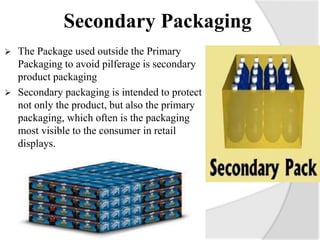
 The Package used outside the Primary
Packaging to avoid pilferage is secondary
product packaging
 Secondary packaging is intended to protect
not only the product, but also the primary
packaging, which often is the packaging
most visible to the consumer in retail
displays.
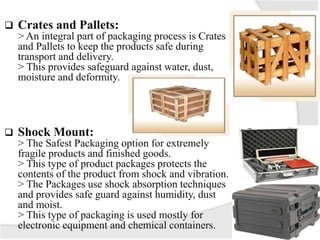
 Crates and Pallets:
> An integral part of packaging process is Crates
and Pallets to keep the products safe during
transport and delivery.
> This provides safeguard against water, dust,
moisture and deformity.
 Shock Mount:
> The Safest Packaging option for extremely
fragile products and finished goods.
> This type of product packages protects the
contents of the product from shock and vibration.
> The Packages use shock absorption techniques
and provides safe guard against humidity, dust
and moist.
> This type of packaging is used mostly for
electronic equipment and chemical containers.
Tertiary or Transportation Packaging
 Is used for Bulk Handling, Warehouse storage
and transport shipping.
 facilitate the safe handling and transport of a
number of sellable units or grouped packaging.
 prevent physical damage due to incorrect
handling or transport.
 Transport packaging does not include road, rail,
ship or air containers.
Consumer Packaging
 Design For consumers Convenience and appeal.
Marketing Consideration and display
 The main emphasis is on Marketing
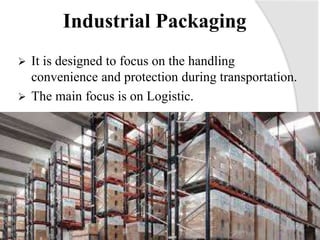
Industrial Packaging
 It is designed to focus on the handling
convenience and protection during transportation.
 The main focus is on Logistic.
Plastic
 This is the most common packaging
material and, at the same time, one of
the most difficult to dispose of.
 plastic packaging as it can be made
flexible or rigid depending on the
need of packaging.
 The factors common to all plastics
are that they are light, strong cheap
to manufacture.
Metal Or
Aluminum
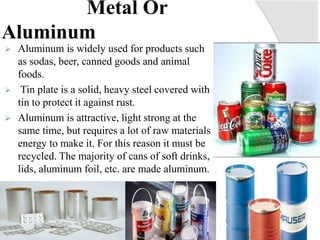
 Aluminum is widely used for products such
as sodas, beer, canned goods and animal
foods.
 Tin plate is a solid, heavy steel covered with
tin to protect it against rust.
 Aluminum is attractive, light strong at the
same time, but requires a lot of raw materials
energy to make it. For this reason it must be
recycled. The majority of cans of soft drinks,
lids, aluminum foil, etc. are made aluminum.
Cardboard
 Most products that are packaged in
cardboard boxes are first wrapped in another
type of packaging such as bubble wrap or
foam.
 Industry is planning on cardboard becoming
the main packaging method, it is ideal to
invest in a taping machine to insure you and
the customer that the package is sealed
tightly with no chance of it falling out
during the delivery.
Glass
 Glass jars and bottles are highly used for numerous food and
beverage products including jam, honey, alcoholic beverages and
food items such as pickles and peppers.
 Glass is extremely fragile it makes for
an excellent, well-sealed packaged for
any perishable products.
 It's a good idea to label any plain glass
jars or use glass transfer to help you
identify the contents.
Foam
 Foam is not as common as other packaging methods, but is used
for a variety of household items like furniture, TV’s, glass or
anything else that may have sharp edges that could puncture
cardboard and plastic.
 Even though the foam is the main
part to the packaging, cardboard
is normally used after to encase
the product and foam so it all
stays compact.

TYPES OF PACKAGING PRESENTATION BY AMAN DWIVEDI

  • 2.
  • 3.
    Primary Packaging  ThePackage that is with in direct contact with the product contents is the Primary Product Package.  The Primary Product Packaging is the first element that keeps the contents enclosed.  Shrink Wrap Packaging: > Shrink Warp is used around the actual product to hold the products or packages together for ease is transport and delivery. > The shrink wrap makes the product resistant against puncture, damage, friction, abrasion.
  • 4.
     Vacuum ProductPackaging: > This type of packaging is used for perishable goods or food items that require seal for freshness, hydration and taste. > The Package keeps the food items safe from germs, dust, air, bacteria, mold, fungus and yeast.  Bubble Wrap Packaging: > The most efficient and inexpensive way to cushion and to protect the goods form impact, friction and damage while shipping is bubble warp.
  • 5.
     Preservation Packaging: >The Packages designed to preserve the product for later use for example, Jars, Cans, aluminum containers, silver sheets, cartons, glass jars, plastic bottles, foam and other types of product packages that are used to protect the contents of the product and the food items. > The Preservation product Packages ensures product safety, protection and freshness.
  • 6.
    Secondary Packaging  ThePackage used outside the Primary Packaging to avoid pilferage is secondary product packaging  Secondary packaging is intended to protect not only the product, but also the primary packaging, which often is the packaging most visible to the consumer in retail displays.
  • 7.
     Crates andPallets: > An integral part of packaging process is Crates and Pallets to keep the products safe during transport and delivery. > This provides safeguard against water, dust, moisture and deformity.  Shock Mount: > The Safest Packaging option for extremely fragile products and finished goods. > This type of product packages protects the contents of the product from shock and vibration. > The Packages use shock absorption techniques and provides safe guard against humidity, dust and moist. > This type of packaging is used mostly for electronic equipment and chemical containers.
  • 8.
    Tertiary or TransportationPackaging  Is used for Bulk Handling, Warehouse storage and transport shipping.  facilitate the safe handling and transport of a number of sellable units or grouped packaging.  prevent physical damage due to incorrect handling or transport.  Transport packaging does not include road, rail, ship or air containers.
  • 10.
    Consumer Packaging  DesignFor consumers Convenience and appeal. Marketing Consideration and display  The main emphasis is on Marketing
  • 11.
    Industrial Packaging  Itis designed to focus on the handling convenience and protection during transportation.  The main focus is on Logistic.
  • 13.
    Plastic  This isthe most common packaging material and, at the same time, one of the most difficult to dispose of.  plastic packaging as it can be made flexible or rigid depending on the need of packaging.  The factors common to all plastics are that they are light, strong cheap to manufacture.
  • 14.
    Metal Or Aluminum  Aluminumis widely used for products such as sodas, beer, canned goods and animal foods.  Tin plate is a solid, heavy steel covered with tin to protect it against rust.  Aluminum is attractive, light strong at the same time, but requires a lot of raw materials energy to make it. For this reason it must be recycled. The majority of cans of soft drinks, lids, aluminum foil, etc. are made aluminum.
  • 15.
    Cardboard  Most productsthat are packaged in cardboard boxes are first wrapped in another type of packaging such as bubble wrap or foam.  Industry is planning on cardboard becoming the main packaging method, it is ideal to invest in a taping machine to insure you and the customer that the package is sealed tightly with no chance of it falling out during the delivery.
  • 16.
    Glass  Glass jarsand bottles are highly used for numerous food and beverage products including jam, honey, alcoholic beverages and food items such as pickles and peppers.  Glass is extremely fragile it makes for an excellent, well-sealed packaged for any perishable products.  It's a good idea to label any plain glass jars or use glass transfer to help you identify the contents.
  • 17.
    Foam  Foam isnot as common as other packaging methods, but is used for a variety of household items like furniture, TV’s, glass or anything else that may have sharp edges that could puncture cardboard and plastic.  Even though the foam is the main part to the packaging, cardboard is normally used after to encase the product and foam so it all stays compact.