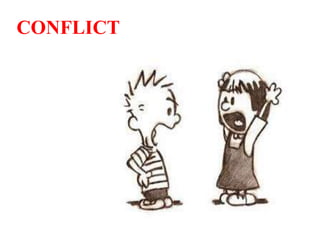
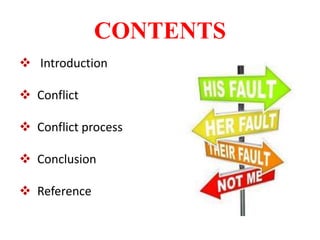
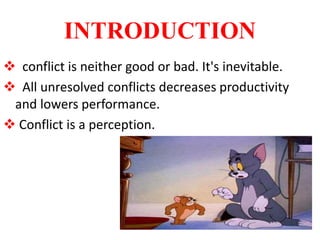
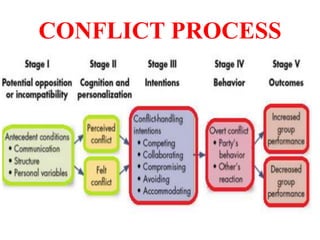
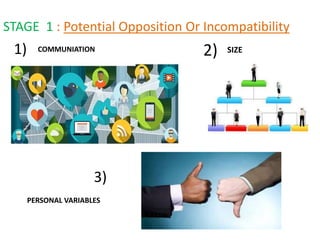
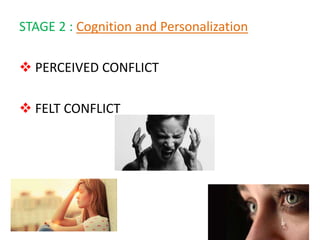
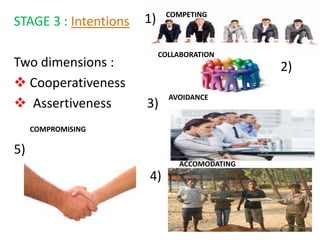
The document outlines a 5-stage conflict process: 1) potential opposition arises from differences in opinions, interests, or needs; 2) cognition and personalization where a party perceives a conflict; 3) intentions where parties determine whether to cooperate, compete, avoid, accommodate, or compromise; 4) behavior where intentions are enacted through interaction; 5) outcomes which can be functional and improve performance or disfunctional and hurt productivity. It defines conflict as a perception of differences and discusses how all unresolved conflicts lower performance.