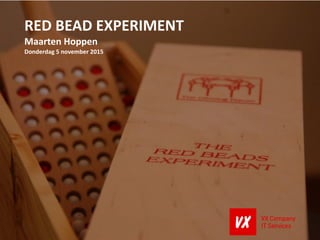
RED	
  BEAD	
  EXPERIMENT	
  
Maarten	
  Hoppen	
  
Donderdag	
  5	
  november	
  2015
W Edwards
Deming
David P.
Joyce
Many thanks to!
J
Twitte
joakim.
Joakim
Sundén
White Bead
Company
The White Bead Co.
IIP
ISO9000
WE LISTEN
TO OUR
PEOPLE
Only at their annual appraisal
CMMI 5
WE
WANT
YOU!
We Are Recruiting!
3 willing workers. Must be willing to put in best efforts.
Continuation of job is based on performance.
No experience in making beads necessary. Educational
requirements-nil.
2 inspectors. Must be able to distinguish red from white. Must be
able to count to 20. No experience necessary.
1 chief inspector. Same qualifications as inspector. Must be able to
speak in a loud voice.
1 recorder. Precise, follow orders, writing capability, human
judgement
ABOVE AVERAGE WORKERS ONLY NEED APPLY
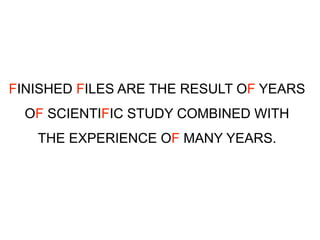
FINISHED FILES ARE THE RESULT OF YEARS
OF SCIENTIFIC STUDY COMBINED WITH
THE EXPERIENCE OF MANY YEARS.
SHOUT OUT YOUR COUNT
3 - 2 - 1 - SHOUT
FINISHED FILES ARE THE RESULT OF YEARS
OF SCIENTIFIC STUDY COMBINED WITH
THE EXPERIENCE OF MANY YEARS.
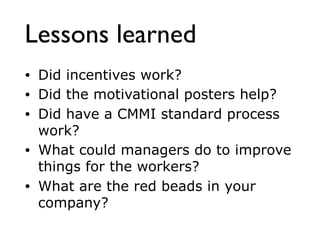
Lessons learned
• Did incentives work?
• Did the motivational posters help?
• Did have a CMMI standard process
work?
• What could managers do to improve
things for the workers?
• What are the red beads in your
company?
Lessons learned
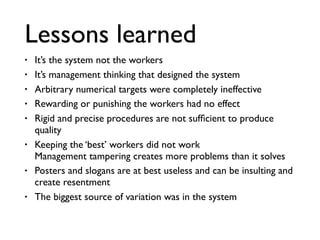
• It’s the system not the workers
• It’s management thinking that designed the system
• Arbitrary numerical targets were completely ineffective
• Rewarding or punishing the workers had no effect
• Rigid and precise procedures are not sufficient to produce
quality
• Keeping the ‘best’ workers did not work

Management tampering creates more problems than it solves
• Posters and slogans are at best useless and can be insulting and
create resentment
• The biggest source of variation was in the system
Theory of Variation
The First Principle of the Theory of
Variation
We Should Expect Things
toVary,
They Always Do
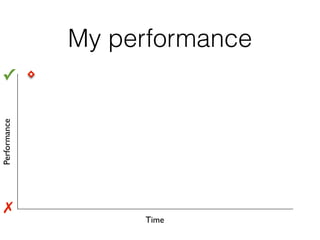
My performance
Performance
Time
✓
✗
My performance
✓
My performance
Performance
Time
✓
✗
My performance
Performance
✓
✗
My performance
Performance
Time
✓
✗
My performancePerformance
Time
✓
✗
My performancePerformance
✓
✗
My performance
Performance
✓
✗
My performan
Performance
Time
✓
✗
My performa
Performance
✓
✗
My perform
Performance
✓
✗
My perform
Performance
Time
✓
✗
My perfor
Performance
Time
✓
✗
My perfo
Performance
Tim
✓
✗
My perf
Performance
✓
✗
My per
Performance
✓
✗
My pe
Performance
✓
✗
My p
Performance
✓
✗
My
Performance
✓
✗
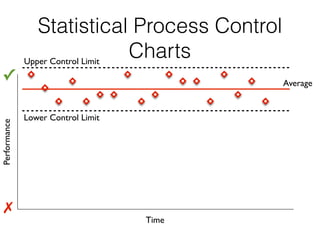
Charts
Performance
Time
✓
✗
Upper Control Limit
Lower Control Limit
Average
Statistical Process Control
Charts
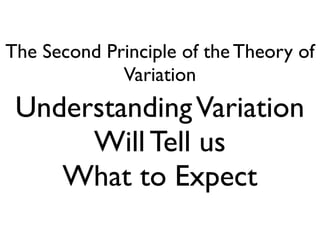
The Second Principle of the Theory of
Variation
UnderstandingVariation
Will Tell us

What to Expect
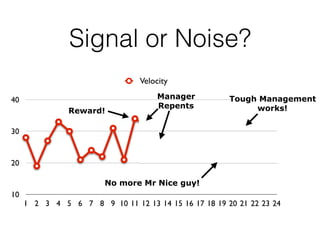
Signal or Noise?
10
20
30
40
1 2 3 4 5 6 7 8 9 10 11 12 13 14 15 16 17 18 19 20 21 22 23 24
Velocity
Control
Limits
10
20
30
40
Signal or Noise?
Velocity
Reward!
No more Mr Nice Guy!
Manager
repents...
Tough management
works!
20
30
40
Signal or Noise?
Velocity
Reward! Manager
repents...
Tough management
works!
10
20
30
40
SignalorNoise?
Velocity
Reward!
NomoreMrNiceGuy!
Manager
repents...
Toughmanagement
works!
20
30
40
SignalorNoise?
Velocity
Reward! Manager
repents...
Toughmanagement
works!
Signal or Noise?
Reward!
Manager
Repents
No more Mr Nice guy!
Tough Management
works!
Signal or Noise?Signal or Noise?
10
20
30
40
1 2 3 4 5 6 7 8 9 10 11 12 13 14 15 16 17 18 19 20 21 22 23 24
Velocity
Control
Limits
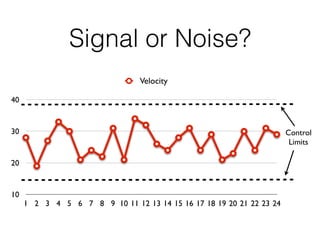
Signal or Noise?
10
20
30
40
1 2 3 4 5 6 7 8 9 10 11 12 13 14 15 16 17 18 19 20 21 22 23 24
Velocity
Control
Limits
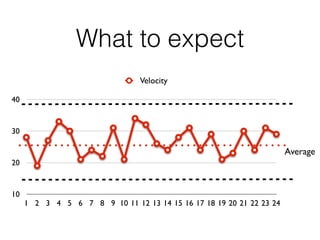
What to expect
10
20
30
40
1 2 3 4 5 6 7 8 9 10 11 12 13 14 15 16 17 18 19 20 21 22 23 24
Velocity
Average
What to expect
What to expect
10
20
30
40
1 2 3 4 5 6 7 8 9 10 11 12 13 14 15 16 17 18 19 20 21 22 23 24
Velocity
Average
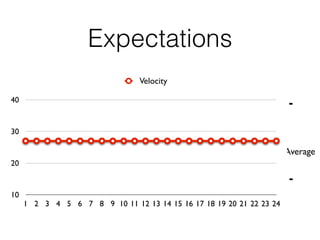
Expectations...
10
20
30
40
1 2 3 4 5 6 7 8 9 10 11 12 13 14 15 16 17 18 19 20 21 22 23 24
Velocity
Expectations
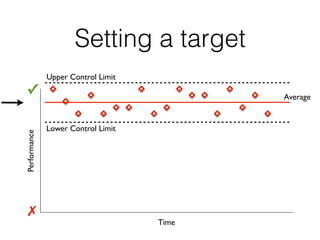
Setting a TargetPerformance
Time
✓
✗
Upper Control Limit
Lower Control Limit
Average
Setting a targetSetting a TargetPerformance
Time
✓
✗
Upper Control Limit
Lower Control Limit
Average
“I recently asked a colleague [CIO] whether he would
prefer to deliver a project somewhat late and
overbudget, but rich with business benefits, or one that is
on time and underbudget but of scant value to the
business.


He thought it was a tough call, and then went for the on-
time scenario.
Delivering on time and within budget is part of his IT
department’s performance metrics.
Chasing after the elusive business value, over which he
thought he had little control anyway, is not.”
Cutter Sr. Consultant Helen Pukszta
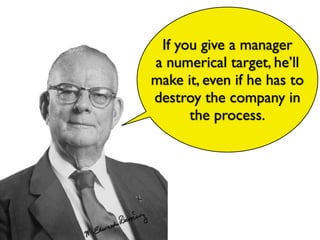
If you give a manager
a numerical target, he’ll
make it, even if he has to
destroy the company in
the process.
The Third Principle of the Theory of
Variation
Work on the Causes of
Variation,
Which are Always Found
in the System
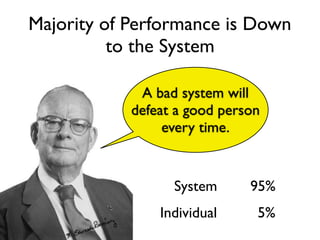
Majority of Performance is Down
to the System
Majority of Performance is
Down to the System
A bad system will
defeat a good person
every time.
System
Individual
95%
5%
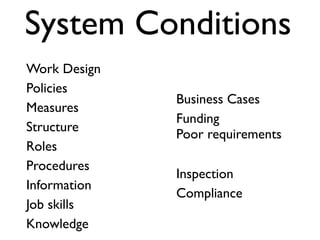
System Conditions
Work Design
Policies
Measures
Structure
Roles
Procedures
Information
Job skills
Knowledge
Business Cases
Funding

Poor requirements
Inspection
Compliance
The Fourth Principle of the Theory of
Variation
UnderstandingVariation
Tells you When
Something has Happened
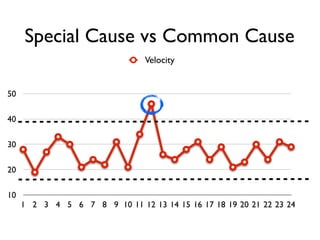
Special Cause vs Common Cause
Special Cause vs
Common Cause
10
20
30
40
50
1 2 3 4 5 6 7 8 9 10 11 12 13 14 15 16 17 18 19 20 21 22 23 24
Velocity
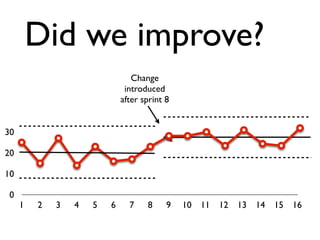
Did we improve?Did we improve?
0
10
20
30
1 2 3 4 5 6 7 8 9 10 11 12 13 14 15 16
Change
introduced
after sprint 8
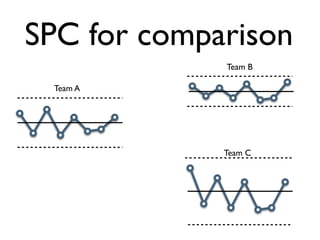
SPC for comparison
SPC for comparison
Team A
Team B
Team C

Acnl2015 maarten hoppe-red bead experiment

  • 1.
    RED  BEAD  EXPERIMENT   Maarten  Hoppen   Donderdag  5  november  2015
  • 2.
    W Edwards Deming David P. Joyce Manythanks to! J Twitte joakim. Joakim Sundén
  • 3.
  • 4.
    The White BeadCo. IIP ISO9000 WE LISTEN TO OUR PEOPLE Only at their annual appraisal CMMI 5
  • 5.
  • 6.
    We Are Recruiting! 3willing workers. Must be willing to put in best efforts. Continuation of job is based on performance. No experience in making beads necessary. Educational requirements-nil. 2 inspectors. Must be able to distinguish red from white. Must be able to count to 20. No experience necessary. 1 chief inspector. Same qualifications as inspector. Must be able to speak in a loud voice. 1 recorder. Precise, follow orders, writing capability, human judgement ABOVE AVERAGE WORKERS ONLY NEED APPLY
  • 7.
    FINISHED FILES ARETHE RESULT OF YEARS OF SCIENTIFIC STUDY COMBINED WITH THE EXPERIENCE OF MANY YEARS.
  • 8.
    SHOUT OUT YOURCOUNT 3 - 2 - 1 - SHOUT
  • 9.
    FINISHED FILES ARETHE RESULT OF YEARS OF SCIENTIFIC STUDY COMBINED WITH THE EXPERIENCE OF MANY YEARS.
  • 10.
    Lessons learned • Didincentives work? • Did the motivational posters help? • Did have a CMMI standard process work? • What could managers do to improve things for the workers? • What are the red beads in your company?
  • 11.
    Lessons learned • It’sthe system not the workers • It’s management thinking that designed the system • Arbitrary numerical targets were completely ineffective • Rewarding or punishing the workers had no effect • Rigid and precise procedures are not sufficient to produce quality • Keeping the ‘best’ workers did not work
 Management tampering creates more problems than it solves • Posters and slogans are at best useless and can be insulting and create resentment • The biggest source of variation was in the system
  • 13.
  • 14.
    The First Principleof the Theory of Variation We Should Expect Things toVary, They Always Do
  • 15.
  • 16.
    My performance Performance Time ✓ ✗ My performance Performance ✓ ✗ Myperformance Performance Time ✓ ✗ My performancePerformance Time ✓ ✗ My performancePerformance ✓ ✗ My performance Performance ✓ ✗ My performan Performance Time ✓ ✗ My performa Performance ✓ ✗ My perform Performance ✓ ✗ My perform Performance Time ✓ ✗ My perfor Performance Time ✓ ✗ My perfo Performance Tim ✓ ✗ My perf Performance ✓ ✗ My per Performance ✓ ✗ My pe Performance ✓ ✗ My p Performance ✓ ✗ My Performance ✓ ✗ Charts Performance Time ✓ ✗ Upper Control Limit Lower Control Limit Average Statistical Process Control Charts
  • 17.
    The Second Principleof the Theory of Variation UnderstandingVariation Will Tell us
 What to Expect
  • 18.
    Signal or Noise? 10 20 30 40 12 3 4 5 6 7 8 9 10 11 12 13 14 15 16 17 18 19 20 21 22 23 24 Velocity Control Limits 10 20 30 40 Signal or Noise? Velocity Reward! No more Mr Nice Guy! Manager repents... Tough management works! 20 30 40 Signal or Noise? Velocity Reward! Manager repents... Tough management works! 10 20 30 40 SignalorNoise? Velocity Reward! NomoreMrNiceGuy! Manager repents... Toughmanagement works! 20 30 40 SignalorNoise? Velocity Reward! Manager repents... Toughmanagement works! Signal or Noise? Reward! Manager Repents No more Mr Nice guy! Tough Management works!
  • 19.
    Signal or Noise?Signalor Noise? 10 20 30 40 1 2 3 4 5 6 7 8 9 10 11 12 13 14 15 16 17 18 19 20 21 22 23 24 Velocity Control Limits
  • 20.
    Signal or Noise? 10 20 30 40 12 3 4 5 6 7 8 9 10 11 12 13 14 15 16 17 18 19 20 21 22 23 24 Velocity Control Limits What to expect 10 20 30 40 1 2 3 4 5 6 7 8 9 10 11 12 13 14 15 16 17 18 19 20 21 22 23 24 Velocity Average What to expect
  • 21.
    What to expect 10 20 30 40 12 3 4 5 6 7 8 9 10 11 12 13 14 15 16 17 18 19 20 21 22 23 24 Velocity Average Expectations... 10 20 30 40 1 2 3 4 5 6 7 8 9 10 11 12 13 14 15 16 17 18 19 20 21 22 23 24 Velocity Expectations
  • 22.
    Setting a TargetPerformance Time ✓ ✗ UpperControl Limit Lower Control Limit Average Setting a targetSetting a TargetPerformance Time ✓ ✗ Upper Control Limit Lower Control Limit Average
  • 23.
    “I recently askeda colleague [CIO] whether he would prefer to deliver a project somewhat late and overbudget, but rich with business benefits, or one that is on time and underbudget but of scant value to the business. 
 He thought it was a tough call, and then went for the on- time scenario. Delivering on time and within budget is part of his IT department’s performance metrics. Chasing after the elusive business value, over which he thought he had little control anyway, is not.” Cutter Sr. Consultant Helen Pukszta
  • 24.
    If you givea manager a numerical target, he’ll make it, even if he has to destroy the company in the process.
  • 25.
    The Third Principleof the Theory of Variation Work on the Causes of Variation, Which are Always Found in the System
  • 26.
    Majority of Performanceis Down to the System Majority of Performance is Down to the System A bad system will defeat a good person every time. System Individual 95% 5%
  • 27.
    System Conditions Work Design Policies Measures Structure Roles Procedures Information Jobskills Knowledge Business Cases Funding
 Poor requirements Inspection Compliance
  • 28.
    The Fourth Principleof the Theory of Variation UnderstandingVariation Tells you When Something has Happened
  • 29.
    Special Cause vsCommon Cause Special Cause vs Common Cause 10 20 30 40 50 1 2 3 4 5 6 7 8 9 10 11 12 13 14 15 16 17 18 19 20 21 22 23 24 Velocity
  • 30.
    Did we improve?Didwe improve? 0 10 20 30 1 2 3 4 5 6 7 8 9 10 11 12 13 14 15 16 Change introduced after sprint 8
  • 31.
    SPC for comparison SPCfor comparison Team A Team B Team C