What is Globalization
Contents
• What’s globalization
• Types of globalization
• Americanization
• Migration
• WTO
• UNO
• EU
What’s Globalization
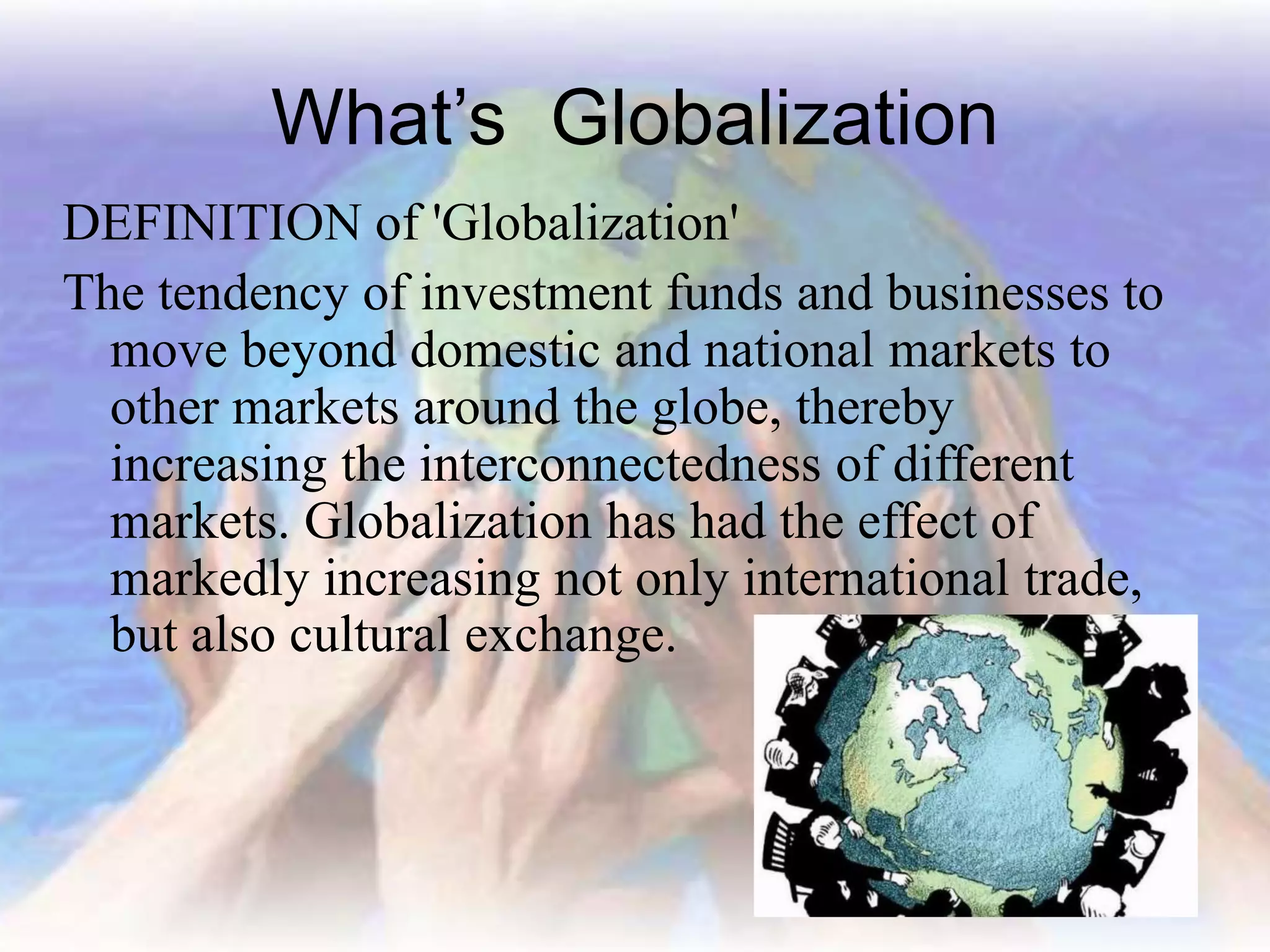
DEFINITION of 'Globalization'
The tendency of investment funds and businesses to
move beyond domestic and national markets to
other markets around the globe, thereby
increasing the interconnectedness of different
markets. Globalization has had the effect of
markedly increasing not only international trade,
but also cultural exchange.
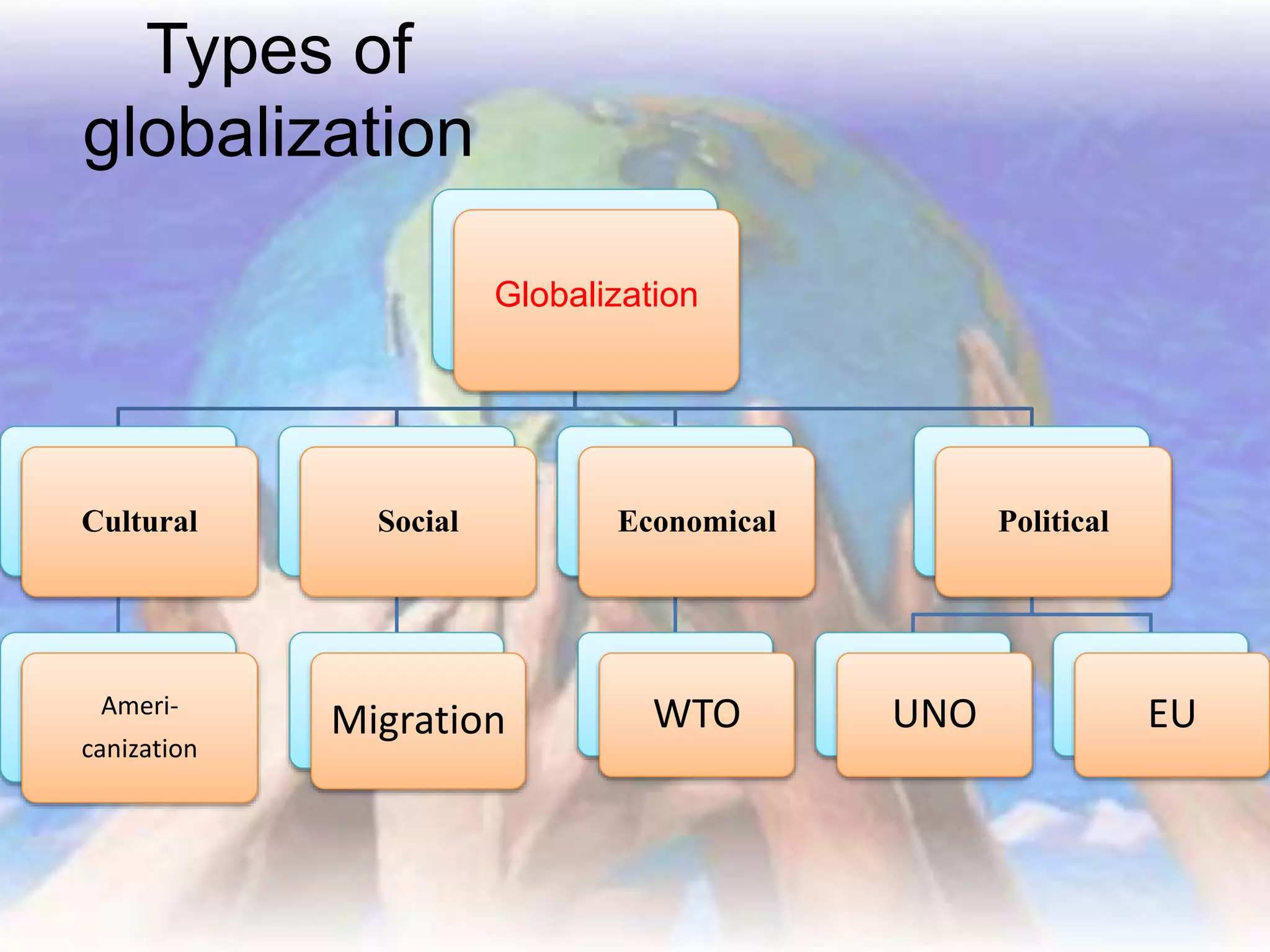
Types of
globalization
Globalization
Cultural
Ameri-
canization
Social
Migration
Economical
WTO
Political
UNO EU
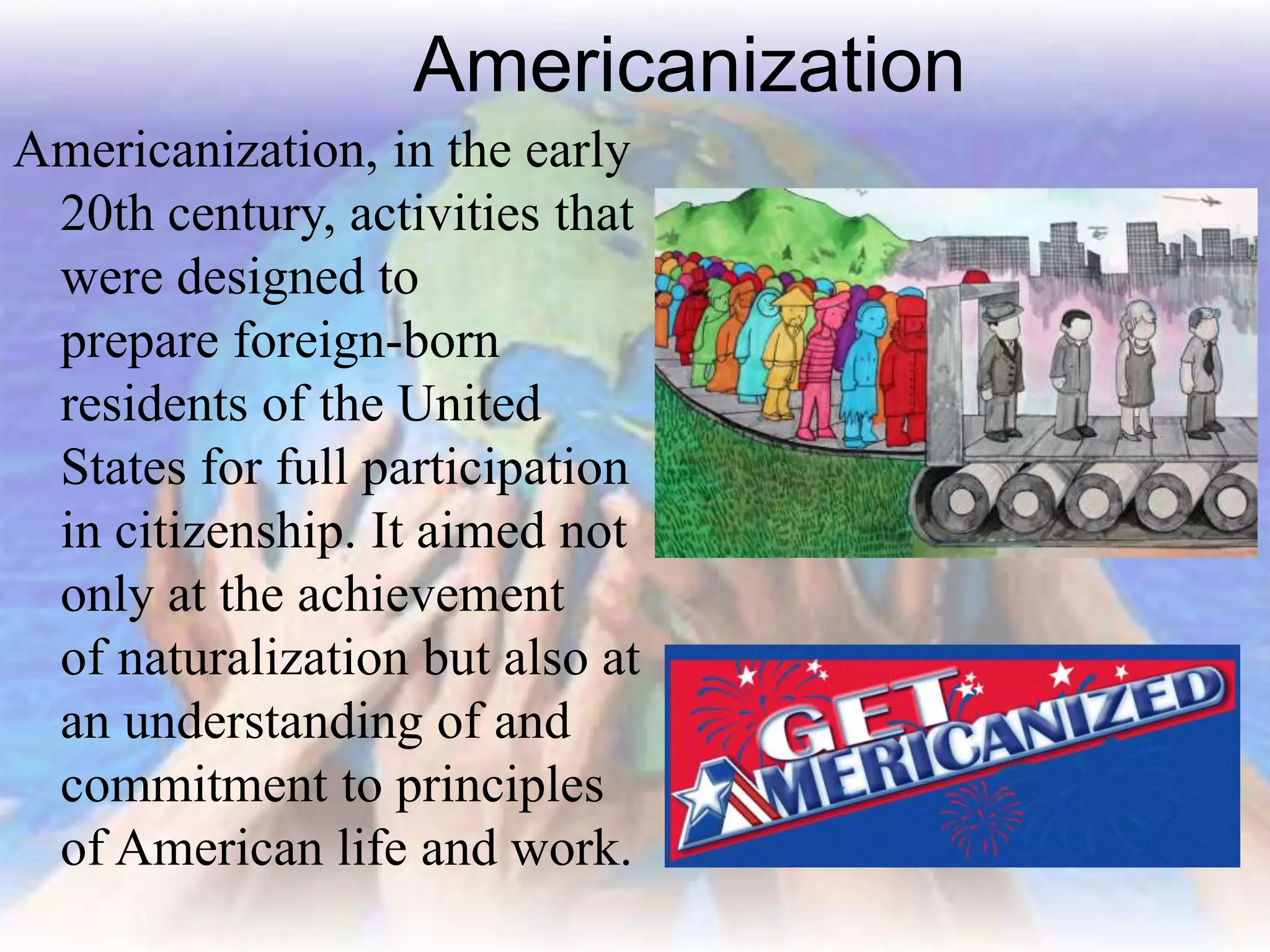
Americanization
Americanization, in the early
20th century, activities that
were designed to
prepare foreign-born
residents of the United
States for full participation
in citizenship. It aimed not
only at the achievement
of naturalization but also at
an understanding of and
commitment to principles
of American life and work.
• The Americanization movement that came into
being was primarily a program of education
propagated through schools, businesses, voluntary
associations (such as the YMCA), libraries, and
citizens bureaus. The teaching of foreigners
became a favourite form of patriotic service for
organizations such as the Daughters of the
American Revolution, particularly after the entry
of the United States into the war. The movement
also took hold in nascent industries that desired an
immigrant workforce capable of adjusting to
mass-production work standards.
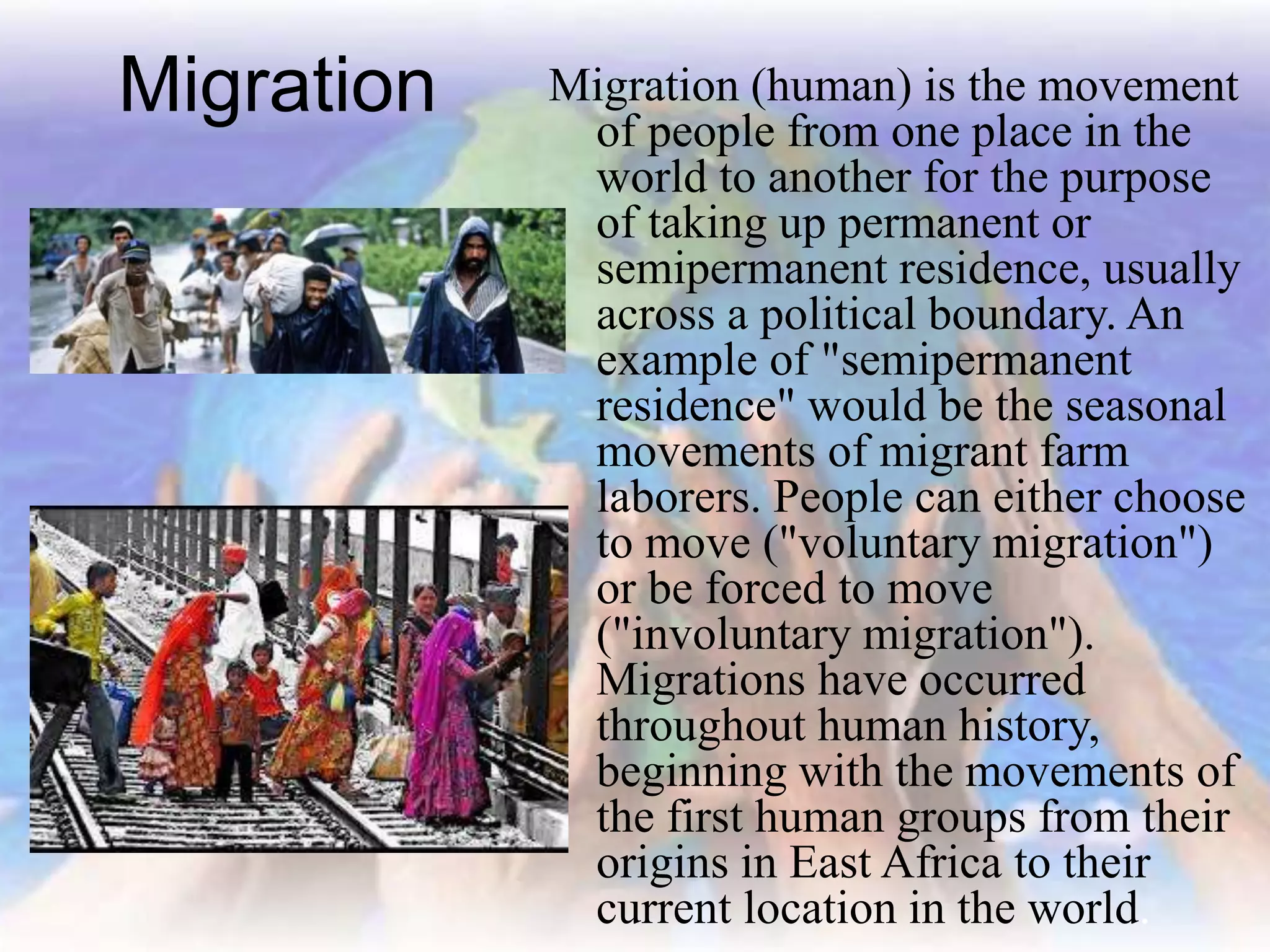
Migration Migration (human) is the movement
of people from one place in the
world to another for the purpose
of taking up permanent or
semipermanent residence, usually
across a political boundary. An
example of "semipermanent
residence" would be the seasonal
movements of migrant farm
laborers. People can either choose
to move ("voluntary migration")
or be forced to move
("involuntary migration").
Migrations have occurred
throughout human history,
beginning with the movements of
the first human groups from their
origins in East Africa to their
current location in the world.
WTO
The World Trade
Organization (WTO) is the
only global international
organization dealing with
the rules of trade between
nations. At its heart are the
WTO agreements,
negotiated and signed by
the bulk of the world’s
trading nations and
ratified in their
parliaments. The goal is to
help producers of goods
and services, exporters,
and importers conduct
their business.
UNOThe United Nations is an international
organization founded in 1945. It is
currently made up of 193 Member
States. The mission and work of the
United Nations are guided by the
purposes and principles contained in
its founding Charter.
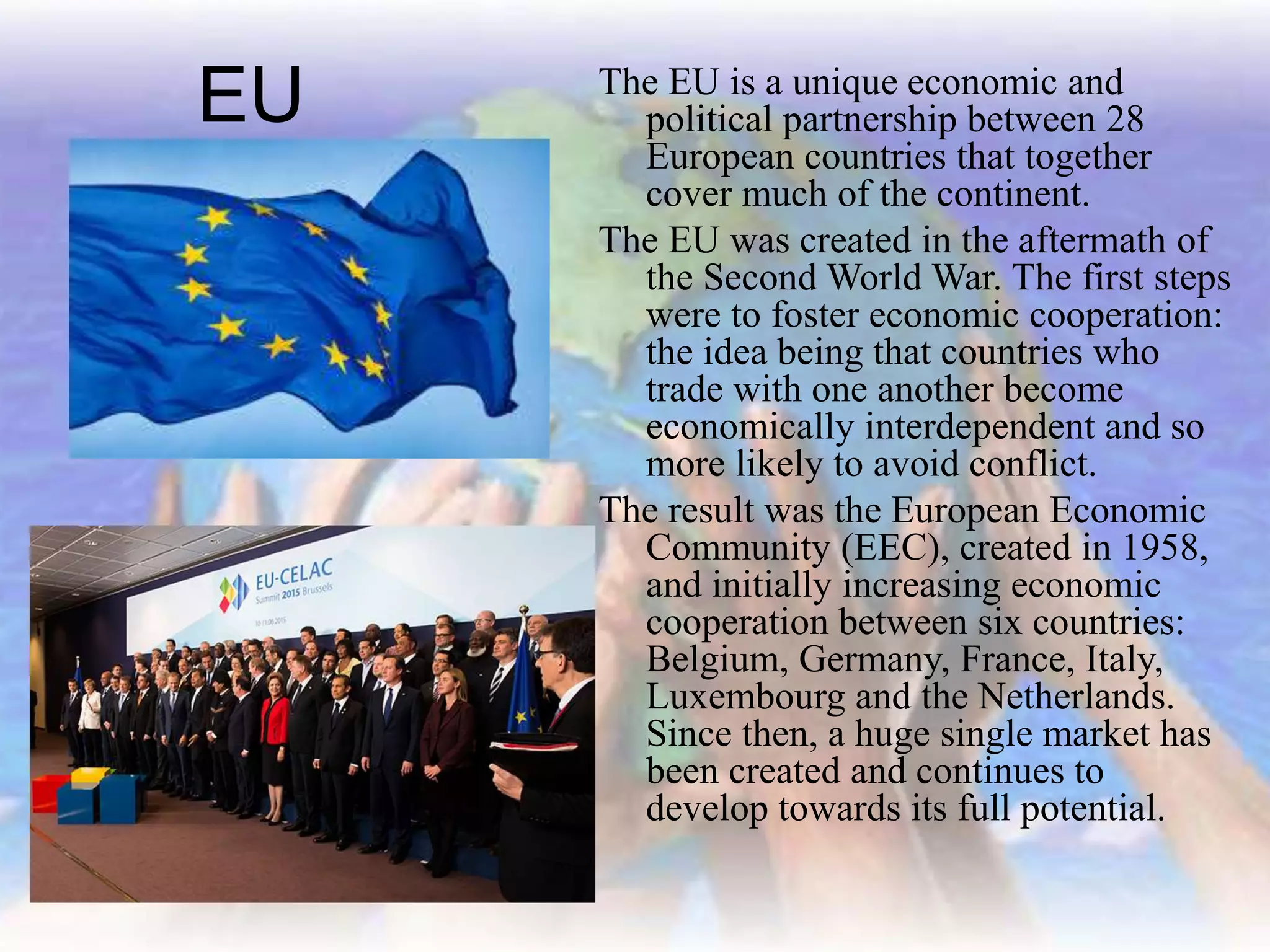
UN Photo
United Nations Headquarters in New
York City.
Due to the powers vested in
its Charter and its unique
international character, the United
Nations can take action on the issues
confronting humanity in the 21st
century, such as peace and security,
climate change, sustainable
development, human rights,
disarmament, terrorism,
humanitarian and health
emergencies, gender equality,
governance, food production, and
more.
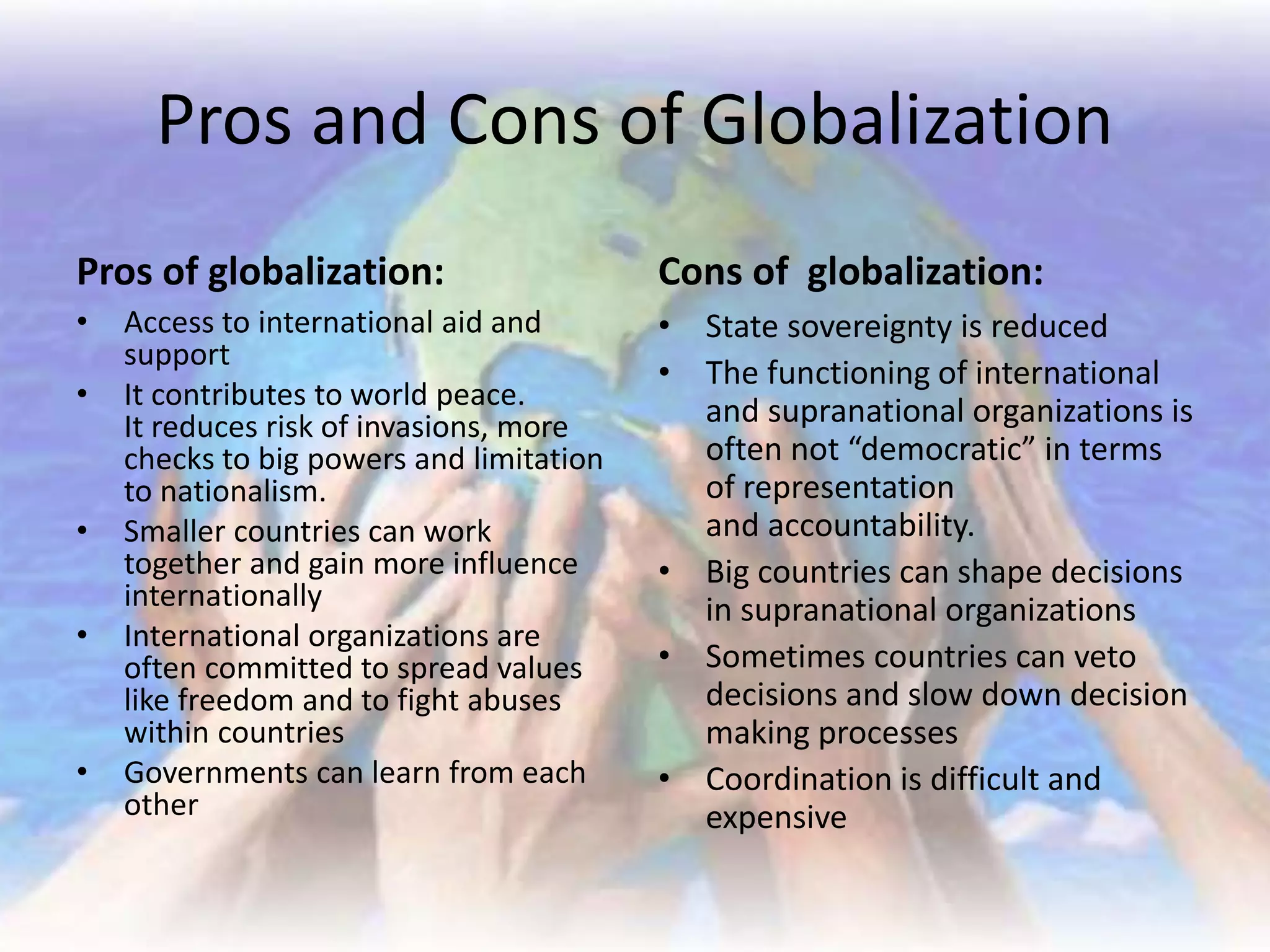
EU The EU is a unique economic and
political partnership between 28
European countries that together
cover much of the continent.
The EU was created in the aftermath of
the Second World War. The first steps
were to foster economic cooperation:
the idea being that countries who
trade with one another become
economically interdependent and so
more likely to avoid conflict.
The result was the European Economic
Community (EEC), created in 1958,
and initially increasing economic
cooperation between six countries:
Belgium, Germany, France, Italy,
Luxembourg and the Netherlands.
Since then, a huge single market has
been created and continues to
develop towards its full potential.
Pros and Cons of Globalization
Pros of globalization:
• Access to international aid and
support
• It contributes to world peace.
It reduces risk of invasions, more
checks to big powers and limitation
to nationalism.
• Smaller countries can work
together and gain more influence
internationally
• International organizations are
often committed to spread values
like freedom and to fight abuses
within countries
• Governments can learn from each
other
Cons of globalization:
• State sovereignty is reduced
• The functioning of international
and supranational organizations is
often not “democratic” in terms
of representation
and accountability.
• Big countries can shape decisions
in supranational organizations
• Sometimes countries can veto
decisions and slow down decision
making processes
• Coordination is difficult and
expensive

What is Globalization

  • 1.
  • 2.
    Contents • What’s globalization •Types of globalization • Americanization • Migration • WTO • UNO • EU
  • 3.
    What’s Globalization DEFINITION of'Globalization' The tendency of investment funds and businesses to move beyond domestic and national markets to other markets around the globe, thereby increasing the interconnectedness of different markets. Globalization has had the effect of markedly increasing not only international trade, but also cultural exchange.
  • 4.
  • 5.
    Americanization Americanization, in theearly 20th century, activities that were designed to prepare foreign-born residents of the United States for full participation in citizenship. It aimed not only at the achievement of naturalization but also at an understanding of and commitment to principles of American life and work.
  • 6.
    • The Americanizationmovement that came into being was primarily a program of education propagated through schools, businesses, voluntary associations (such as the YMCA), libraries, and citizens bureaus. The teaching of foreigners became a favourite form of patriotic service for organizations such as the Daughters of the American Revolution, particularly after the entry of the United States into the war. The movement also took hold in nascent industries that desired an immigrant workforce capable of adjusting to mass-production work standards.
  • 7.
    Migration Migration (human)is the movement of people from one place in the world to another for the purpose of taking up permanent or semipermanent residence, usually across a political boundary. An example of "semipermanent residence" would be the seasonal movements of migrant farm laborers. People can either choose to move ("voluntary migration") or be forced to move ("involuntary migration"). Migrations have occurred throughout human history, beginning with the movements of the first human groups from their origins in East Africa to their current location in the world.
  • 8.
    WTO The World Trade Organization(WTO) is the only global international organization dealing with the rules of trade between nations. At its heart are the WTO agreements, negotiated and signed by the bulk of the world’s trading nations and ratified in their parliaments. The goal is to help producers of goods and services, exporters, and importers conduct their business.
  • 9.
    UNOThe United Nationsis an international organization founded in 1945. It is currently made up of 193 Member States. The mission and work of the United Nations are guided by the purposes and principles contained in its founding Charter. UN Photo United Nations Headquarters in New York City. Due to the powers vested in its Charter and its unique international character, the United Nations can take action on the issues confronting humanity in the 21st century, such as peace and security, climate change, sustainable development, human rights, disarmament, terrorism, humanitarian and health emergencies, gender equality, governance, food production, and more.
  • 10.
    EU The EUis a unique economic and political partnership between 28 European countries that together cover much of the continent. The EU was created in the aftermath of the Second World War. The first steps were to foster economic cooperation: the idea being that countries who trade with one another become economically interdependent and so more likely to avoid conflict. The result was the European Economic Community (EEC), created in 1958, and initially increasing economic cooperation between six countries: Belgium, Germany, France, Italy, Luxembourg and the Netherlands. Since then, a huge single market has been created and continues to develop towards its full potential.
  • 11.
    Pros and Consof Globalization Pros of globalization: • Access to international aid and support • It contributes to world peace. It reduces risk of invasions, more checks to big powers and limitation to nationalism. • Smaller countries can work together and gain more influence internationally • International organizations are often committed to spread values like freedom and to fight abuses within countries • Governments can learn from each other Cons of globalization: • State sovereignty is reduced • The functioning of international and supranational organizations is often not “democratic” in terms of representation and accountability. • Big countries can shape decisions in supranational organizations • Sometimes countries can veto decisions and slow down decision making processes • Coordination is difficult and expensive