LIBERALISATION,PRIVATISATION AND
GLOBALISATION
N
July 1991,India has taken a series of measures to structure
the economy and improve the BOP position. The new
economic policy introduced changes in several areas.
The policy have salient feature which are: 1.Liberlisation (internal and external)
2.Extending Privatization
3.Globalisation of the economy
Which are known as “ LPG ”. (liberalization privatization
globalization)
Reasons for implementing LPG :
 Excess of consumption and expenditure over revenue resulting in heavy govt.

borrowings.
 Growing inefficiency on the use of resources.
 Over protection to industries.
 Mismanagement of the firm and the economy.
 Increase in losses for public sector enterprises.
 Various distortion like poor technological development, shortage of foreign

exchange and borrowing from abroad.
 Low foreign exchange reserves.
LIBERALIZATION
 Liberalization is a very broad term that usually

refers to fewer government regulations and
restrictions in the economy in exchange for
greater participation of private entities
 Liberalization refers to the relaxation of the

previous government restriction usually in area of
social and economic policies. When government
liberalized trade , it means it has removed the
tariff ,subsidies and other restriction on the flow of
goods and services between the countries.
Measures taken for liberalization
•

Liberalization for industrial licensing

•

Concession from monopolies act

•

Freedom for expansion and production to industries

•

Increase in the investment limit of the small industries

•

Freedom to import the capital goods and raw material

•

Freedom to import technology

•

Liberalization of export and import transactions

•

Liberalization in taxation policy

•

Liberalization in banking sector
ADVANTAGE
 Industrial licensing

 Increase the foreign investment.

 Increase the foreign exchange reserve.

 Increase in consumption and Control over price.

 Reduction in dependence on external commercial borrowings

 Competition promotes efficiency, so resources are wasted much less
 Liberalization allows financial markets to provide loans to people who previously may

not have been able to access loans that they can pay off, and it allows more financial
instruments to be developed so people can choose the one that suits them
 Liberalization removes government regulations on the economy, which
DISADVANTAGE
• Increase in unemployment.
• Loss to domestic units.

• Increase dependence on foreign nations
• Unbalanced development
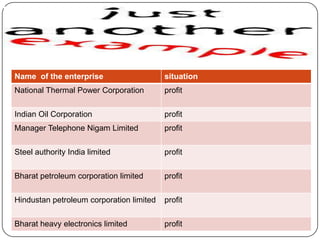
Name of the enterprise

situation

National Thermal Power Corporation

profit

Indian Oil Corporation

profit

Manager Telephone Nigam Limited

profit

Steel authority India limited

profit

Bharat petroleum corporation limited

profit

Hindustan petroleum corporation limited

profit

Bharat heavy electronics limited

profit
N
 Privatization means transfer of ownership and/or

management of an enterprise from the public sector
to the private sector .It also means the withdrawal of
the state from an industry or sector partially or fully.
Privatization is opening up of an industry that has
been reserved for public sector to the private sector.
 Privatization means replacing government

monopolies with the competitive pressures of the
marketplace to encourage efficiency, quality and
innovation in the delivery of goods and services .
Different Ways in privatization:
 Liberalization Approach
 Relative Share Enlargement Approach
 Association of Private Sector Management Approach
 Transfer of Minority Equity Ownership Approach
 Transfer of Complete Ownership Approach
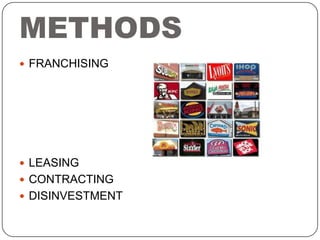
METHODS
 FRANCHISING

 LEASING
 CONTRACTING
 DISINVESTMENT
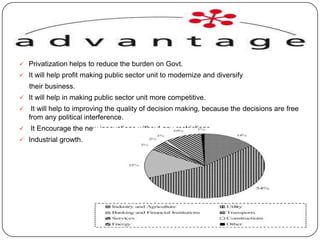
ADVANTAGE
 Privatization helps to reduce the burden on Govt.
 It will help profit making public sector unit to modernize and diversify

their business.
 It will help in making public sector unit more competitive.



It will help to improving the quality of decision making, because the decisions are free
from any political interference.
It Encourage the new innovations without any restrictions.

 Industrial growth.
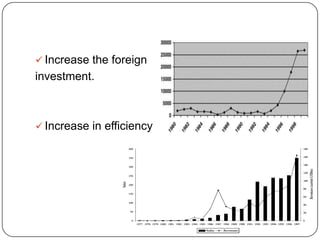
 Increase the foreign

investment.

 Increase in efficiency
DISADVANTAGE
•
•
•
•

Lack of welfare.
Class struggle.
Increase in inequality
Opposition by employees.

•

Problem of financing.

•

Problem in unemployment.

•

Ignores the weaker sections.

•

Ignores the national importance
EXAMPLE
 Lagan jute machinery company limited(LJMC)
o Vides Sanchar Nigam limited (VSNL)
o Hindustan zinc limited (HZL)
 Hotel corporation limited of India (HCL)
 Bharat aluminum company limited(BACLO)
GLOBALIZATION
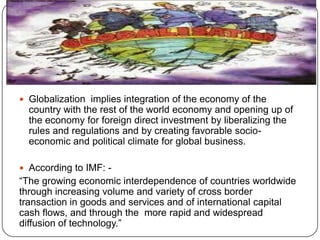
 Globalization implies integration of the economy of the

country with the rest of the world economy and opening up of
the economy for foreign direct investment by liberalizing the
rules and regulations and by creating favorable socioeconomic and political climate for global business.
 According to IMF: -

“The growing economic interdependence of countries worldwide
through increasing volume and variety of cross border
transaction in goods and services and of international capital
cash flows, and through the more rapid and widespread
diffusion of technology.”
FEATURES
 Opening and planning to expand business

throughout the world.
 Erasing the difference between domestic and
foreign market
 Buying and selling goods and services from / to
any countries in the world.
 Locating the production and other physical
facilities on a considerations of the global
business dynamics, irrespective of national
considerations
 Global sourcing of factors of production i.e. raw

material, components ,machinery, technology,
finance etc. are obtained from the best source
anywhere in the world
 Global orientation of organizational structure and
management culture
FACTORS
 Technological Advances in communication
 Improvements in transportation and Technology
 other Factors:
ADVANTAGE
 Increase in Trade in Goods and Services
 Free flow of technology
 Increase in industrialization

 Increase in production and higher standard of living.
 Commodities at lower price with high quality
 Increase in jobs and incomes
 Balanced human development
DISADVANTAGE
 Loss of domestic industries
 Exploits human resources
 Decline in income
o Transfer of natural resources
 Widening gap between rich and poor

 Dominance of foreign institute
THANK YOU

LIBRALISATION PRIVATISATION AND GLOBALISATION

  • 1.
  • 2.
    N July 1991,India hastaken a series of measures to structure the economy and improve the BOP position. The new economic policy introduced changes in several areas. The policy have salient feature which are: 1.Liberlisation (internal and external) 2.Extending Privatization 3.Globalisation of the economy Which are known as “ LPG ”. (liberalization privatization globalization)
  • 3.
    Reasons for implementingLPG :  Excess of consumption and expenditure over revenue resulting in heavy govt. borrowings.  Growing inefficiency on the use of resources.  Over protection to industries.  Mismanagement of the firm and the economy.  Increase in losses for public sector enterprises.  Various distortion like poor technological development, shortage of foreign exchange and borrowing from abroad.  Low foreign exchange reserves.
  • 4.
    LIBERALIZATION  Liberalization isa very broad term that usually refers to fewer government regulations and restrictions in the economy in exchange for greater participation of private entities  Liberalization refers to the relaxation of the previous government restriction usually in area of social and economic policies. When government liberalized trade , it means it has removed the tariff ,subsidies and other restriction on the flow of goods and services between the countries.
  • 5.
    Measures taken forliberalization • Liberalization for industrial licensing • Concession from monopolies act • Freedom for expansion and production to industries • Increase in the investment limit of the small industries • Freedom to import the capital goods and raw material • Freedom to import technology • Liberalization of export and import transactions • Liberalization in taxation policy • Liberalization in banking sector
  • 6.
    ADVANTAGE  Industrial licensing Increase the foreign investment.  Increase the foreign exchange reserve.  Increase in consumption and Control over price.  Reduction in dependence on external commercial borrowings  Competition promotes efficiency, so resources are wasted much less  Liberalization allows financial markets to provide loans to people who previously may not have been able to access loans that they can pay off, and it allows more financial instruments to be developed so people can choose the one that suits them  Liberalization removes government regulations on the economy, which
  • 7.
    DISADVANTAGE • Increase inunemployment. • Loss to domestic units. • Increase dependence on foreign nations • Unbalanced development
  • 8.
    Name of theenterprise situation National Thermal Power Corporation profit Indian Oil Corporation profit Manager Telephone Nigam Limited profit Steel authority India limited profit Bharat petroleum corporation limited profit Hindustan petroleum corporation limited profit Bharat heavy electronics limited profit
  • 9.
    N  Privatization meanstransfer of ownership and/or management of an enterprise from the public sector to the private sector .It also means the withdrawal of the state from an industry or sector partially or fully. Privatization is opening up of an industry that has been reserved for public sector to the private sector.  Privatization means replacing government monopolies with the competitive pressures of the marketplace to encourage efficiency, quality and innovation in the delivery of goods and services .
  • 12.
    Different Ways inprivatization:  Liberalization Approach  Relative Share Enlargement Approach  Association of Private Sector Management Approach  Transfer of Minority Equity Ownership Approach  Transfer of Complete Ownership Approach
  • 13.
    METHODS  FRANCHISING  LEASING CONTRACTING  DISINVESTMENT
  • 14.
    ADVANTAGE  Privatization helpsto reduce the burden on Govt.  It will help profit making public sector unit to modernize and diversify their business.  It will help in making public sector unit more competitive.   It will help to improving the quality of decision making, because the decisions are free from any political interference. It Encourage the new innovations without any restrictions.  Industrial growth.
  • 15.
     Increase theforeign investment.  Increase in efficiency
  • 16.
    DISADVANTAGE • • • • Lack of welfare. Classstruggle. Increase in inequality Opposition by employees. • Problem of financing. • Problem in unemployment. • Ignores the weaker sections. • Ignores the national importance
  • 17.
    EXAMPLE  Lagan jutemachinery company limited(LJMC) o Vides Sanchar Nigam limited (VSNL) o Hindustan zinc limited (HZL)  Hotel corporation limited of India (HCL)  Bharat aluminum company limited(BACLO)
  • 18.
    GLOBALIZATION  Globalization impliesintegration of the economy of the country with the rest of the world economy and opening up of the economy for foreign direct investment by liberalizing the rules and regulations and by creating favorable socioeconomic and political climate for global business.  According to IMF: - “The growing economic interdependence of countries worldwide through increasing volume and variety of cross border transaction in goods and services and of international capital cash flows, and through the more rapid and widespread diffusion of technology.”
  • 19.
    FEATURES  Opening andplanning to expand business throughout the world.  Erasing the difference between domestic and foreign market  Buying and selling goods and services from / to any countries in the world.  Locating the production and other physical facilities on a considerations of the global business dynamics, irrespective of national considerations
  • 20.
     Global sourcingof factors of production i.e. raw material, components ,machinery, technology, finance etc. are obtained from the best source anywhere in the world  Global orientation of organizational structure and management culture
  • 21.
    FACTORS  Technological Advancesin communication  Improvements in transportation and Technology  other Factors:
  • 22.
    ADVANTAGE  Increase inTrade in Goods and Services  Free flow of technology  Increase in industrialization  Increase in production and higher standard of living.  Commodities at lower price with high quality  Increase in jobs and incomes  Balanced human development
  • 23.
    DISADVANTAGE  Loss ofdomestic industries  Exploits human resources  Decline in income o Transfer of natural resources  Widening gap between rich and poor  Dominance of foreign institute
  • 24.