GC Basic Principles
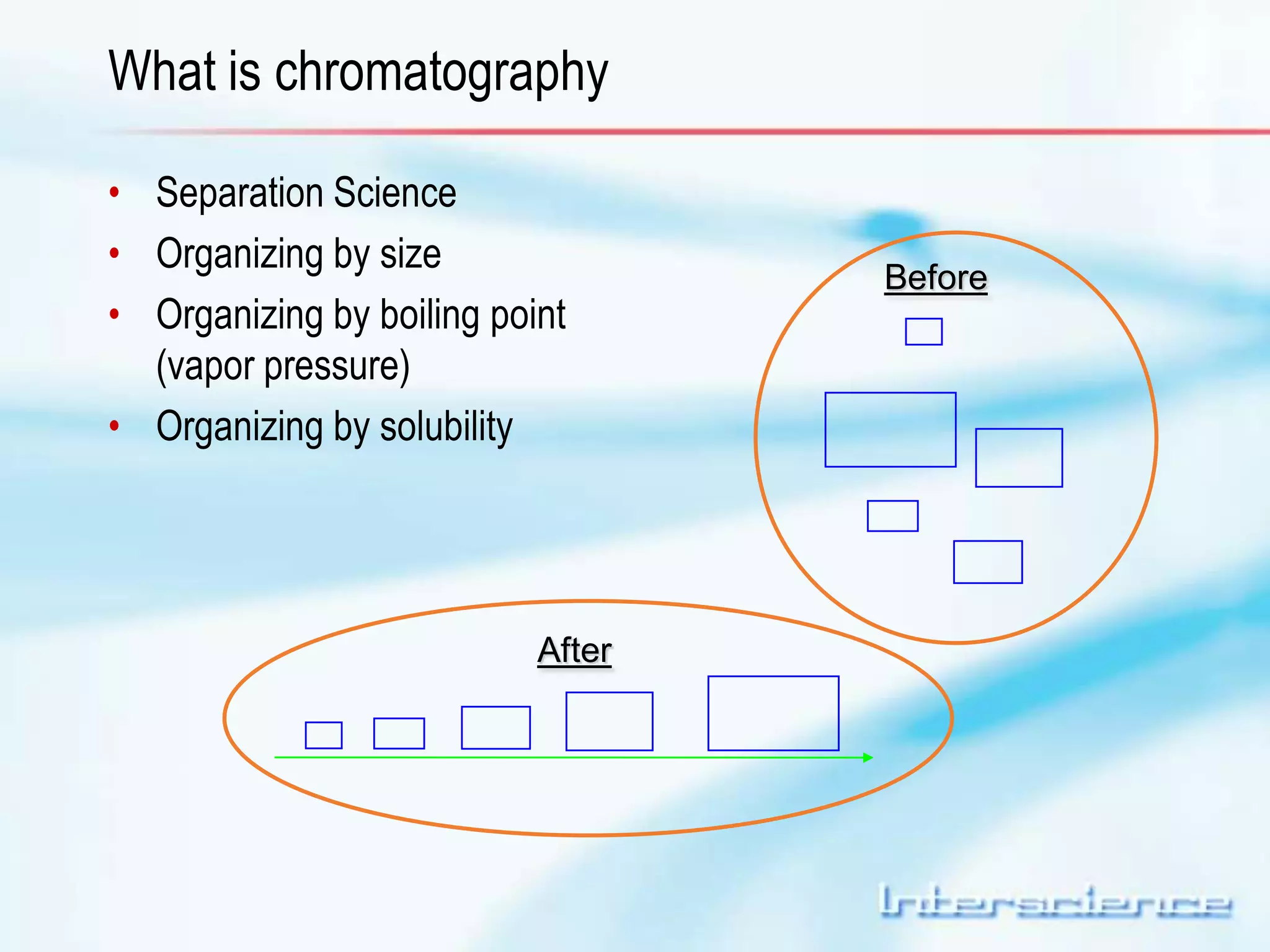
What is chromatography 
• Separation Science 
• Organizing by size 
• Organizing by boiling point 
(vapor pressure) 
• Organizing by solubility 
Before 
After
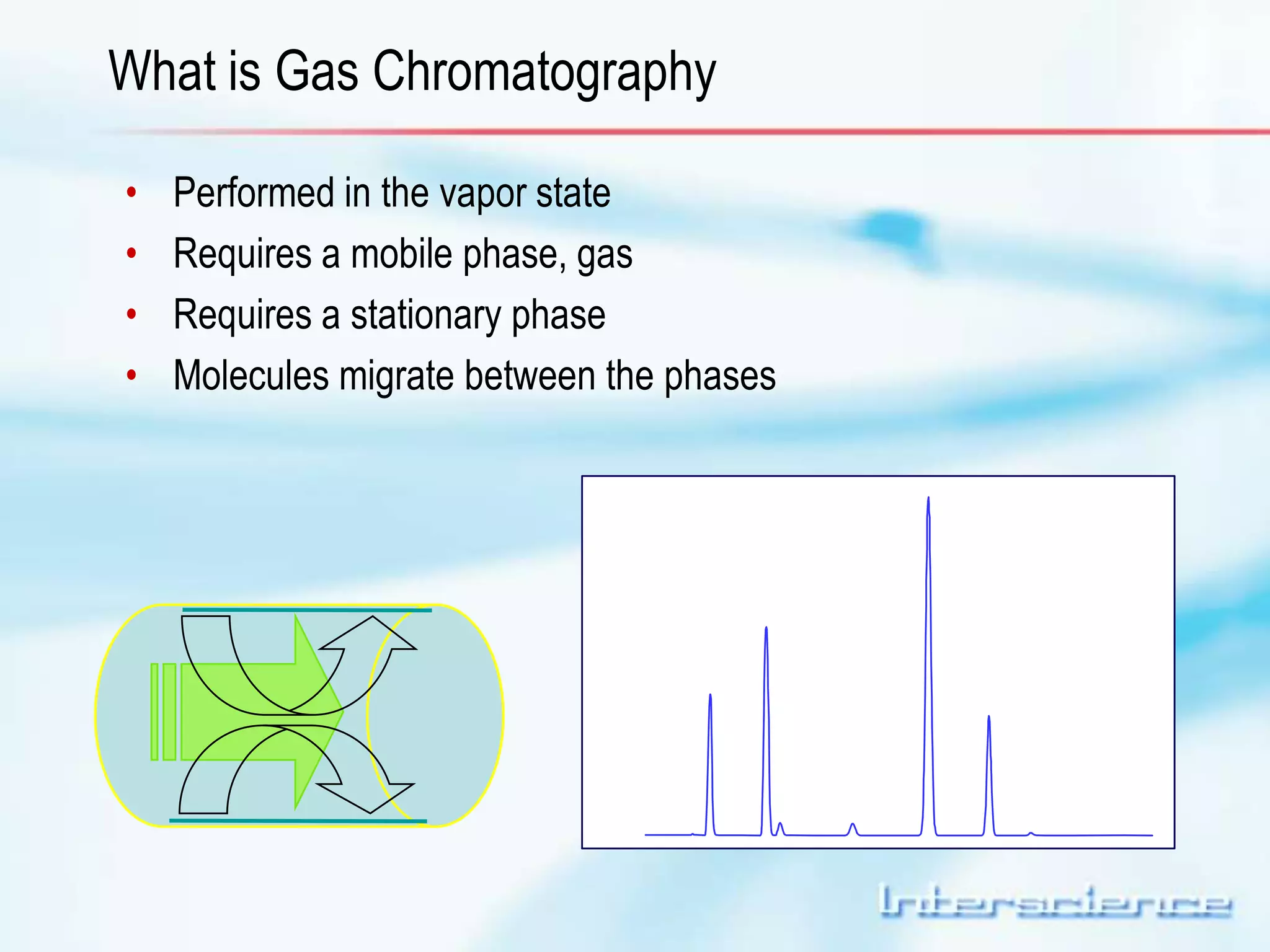
What is Gas Chromatography 
• Performed in the vapor state 
• Requires a mobile phase, gas 
• Requires a stationary phase 
• Molecules migrate between the phases
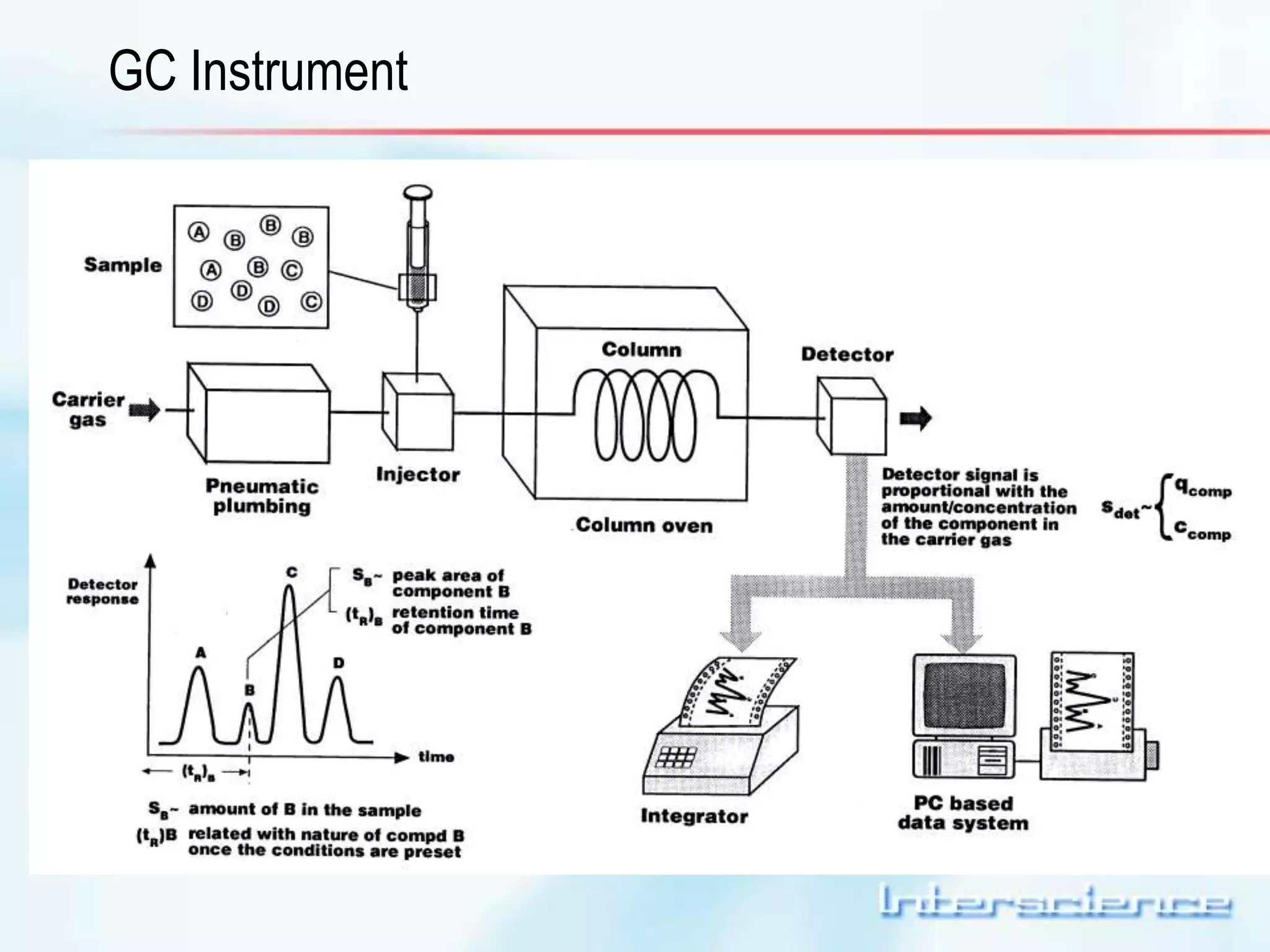
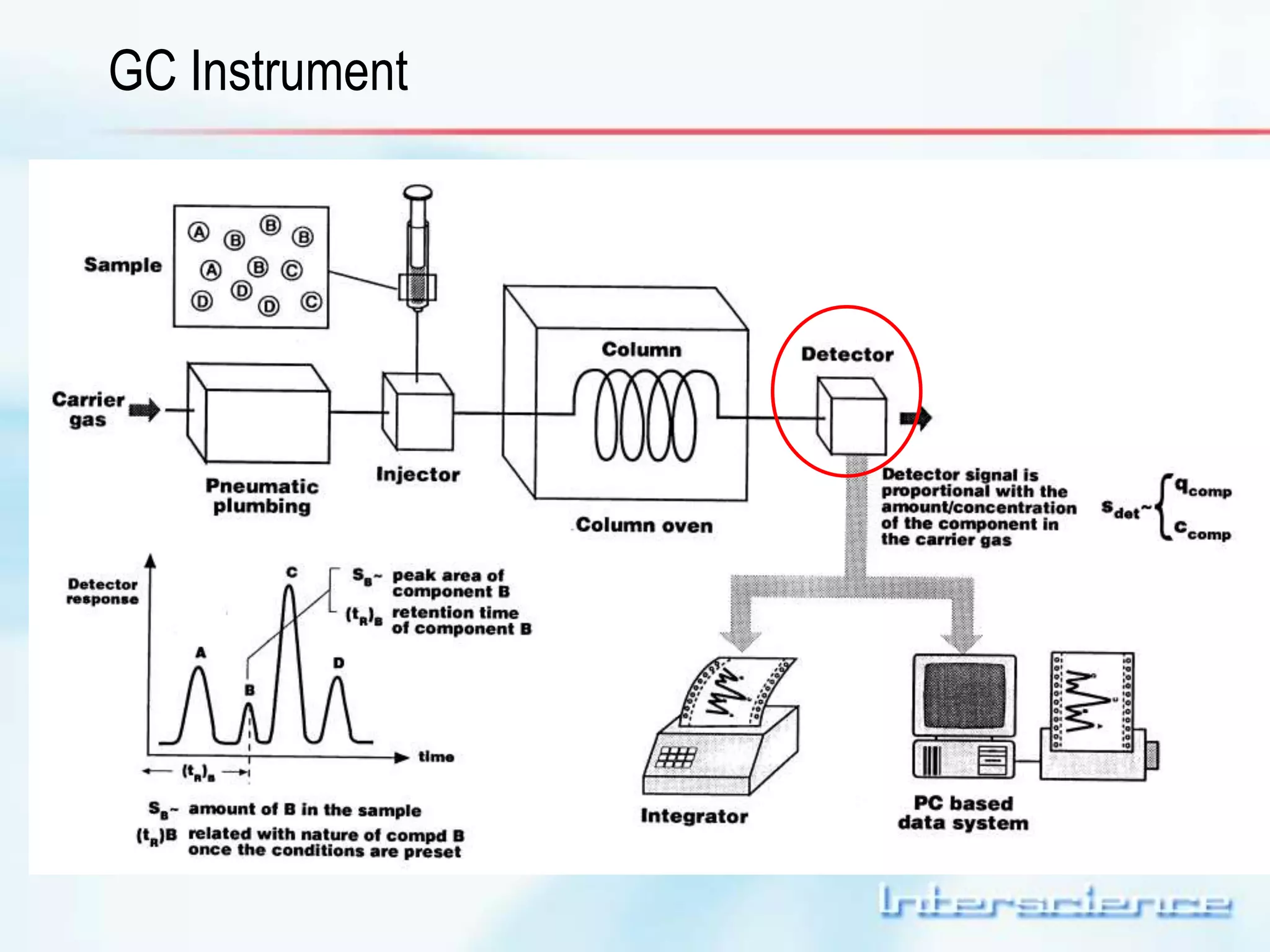
GC Instrument
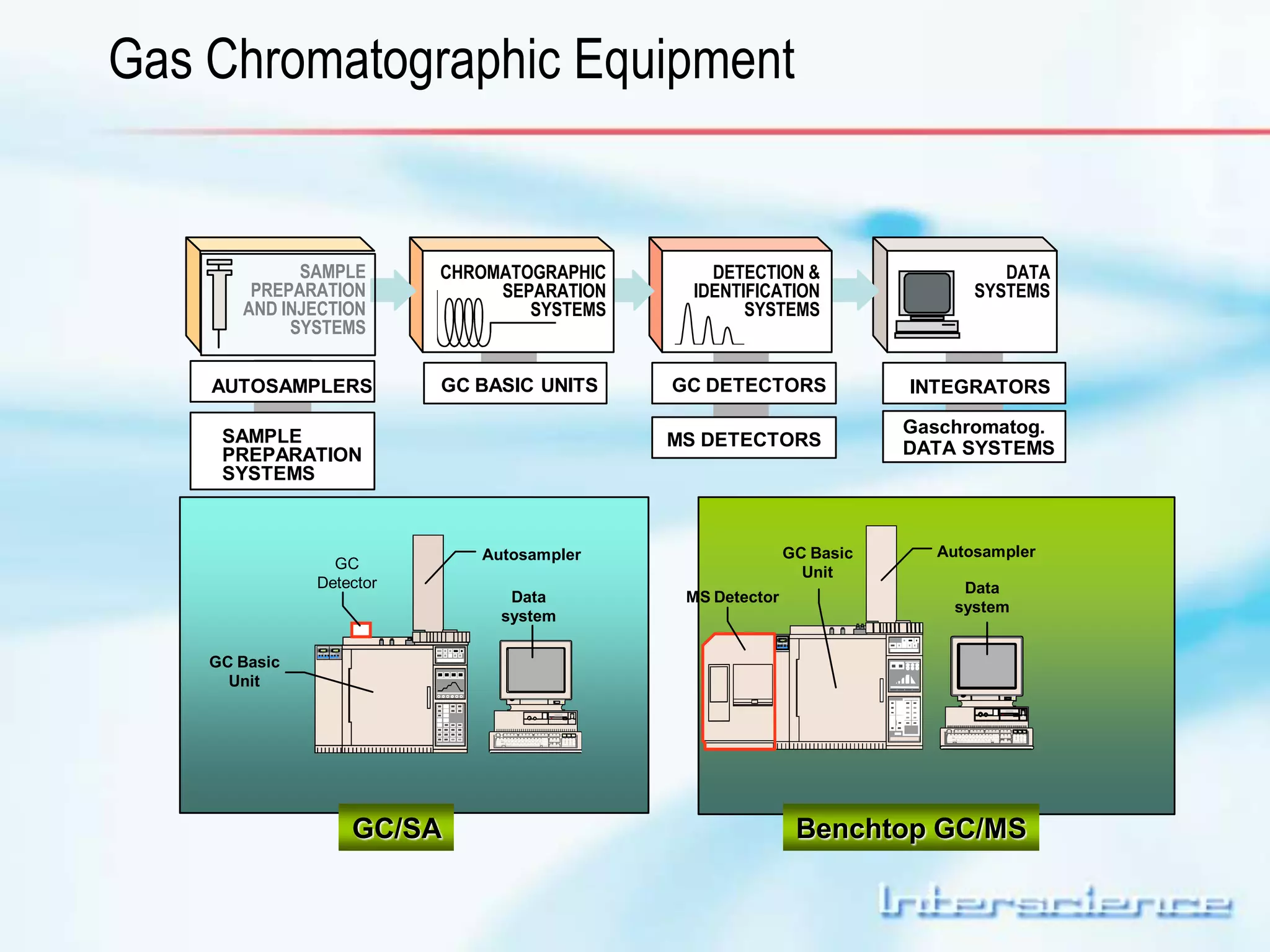
Gas Chromatographic Equipment 
AUTOSAMPLERS GC BASIC UNITS GC DETECTORS INTEGRATORS 
MS DETECTORS 
MS Detector 
Autosampler 
GC 
Detector 
Autosampler 
Data 
system 
GC Basic 
Unit 
Gaschromatog. 
DATA SYSTEMS 
SAMPLE 
PREPARATION 
SYSTEMS 
GC Basic 
Unit 
Data 
system 
SAMPLE 
PREPARATION 
AND INJECTION 
SYSTEMS 
CHROMATOGRAPHIC 
SEPARATION 
SYSTEMS 
DETECTION & 
IDENTIFICATION 
SYSTEMS 
DATA 
SYSTEMS 
GC/SA Benchtop GC/MS
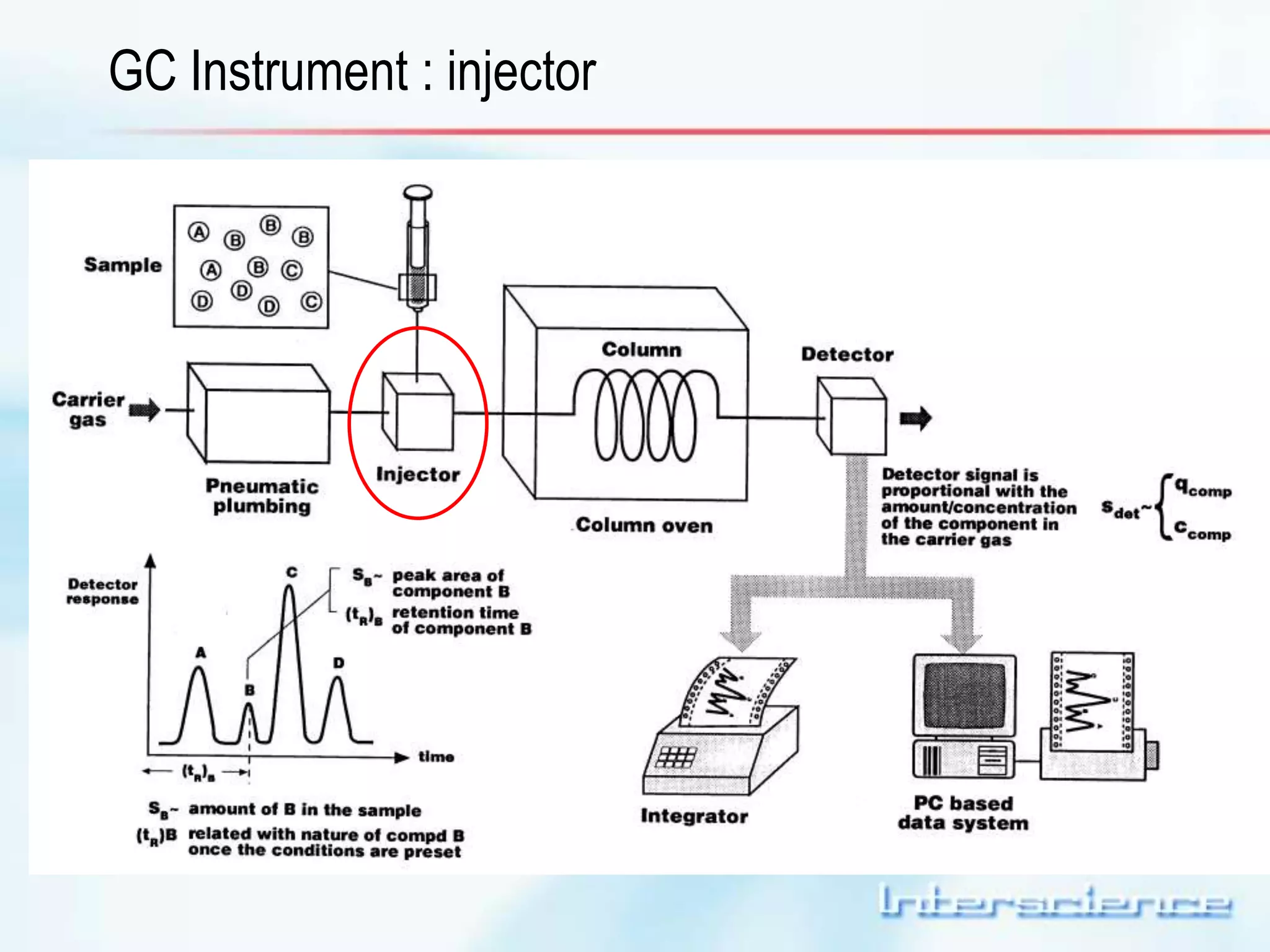
GC Instrument : injector
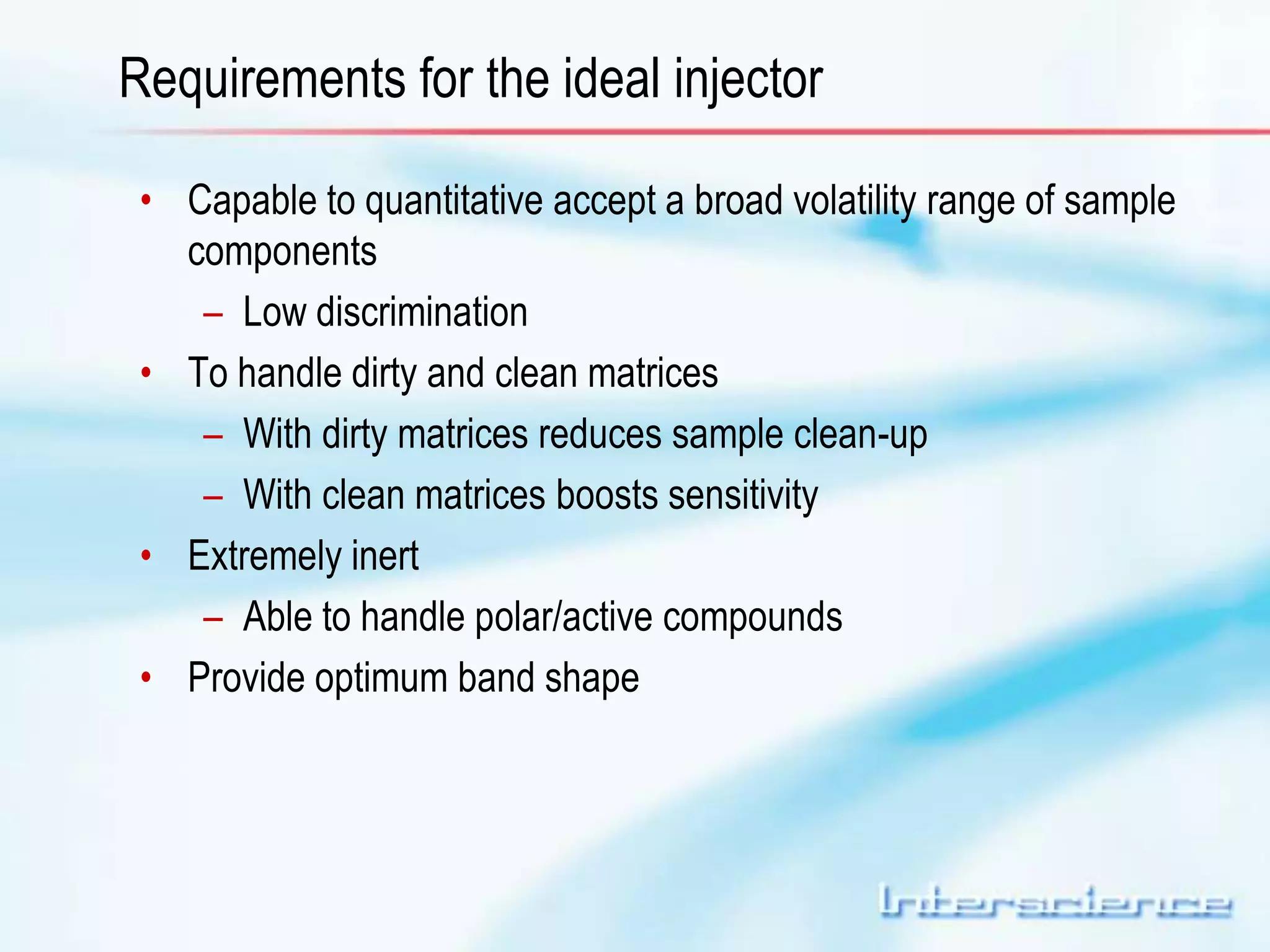
Requirements for the ideal injector 
• Capable to quantitative accept a broad volatility range of sample 
components 
– Low discrimination 
• To handle dirty and clean matrices 
– With dirty matrices reduces sample clean-up 
– With clean matrices boosts sensitivity 
• Extremely inert 
– Able to handle polar/active compounds 
• Provide optimum band shape
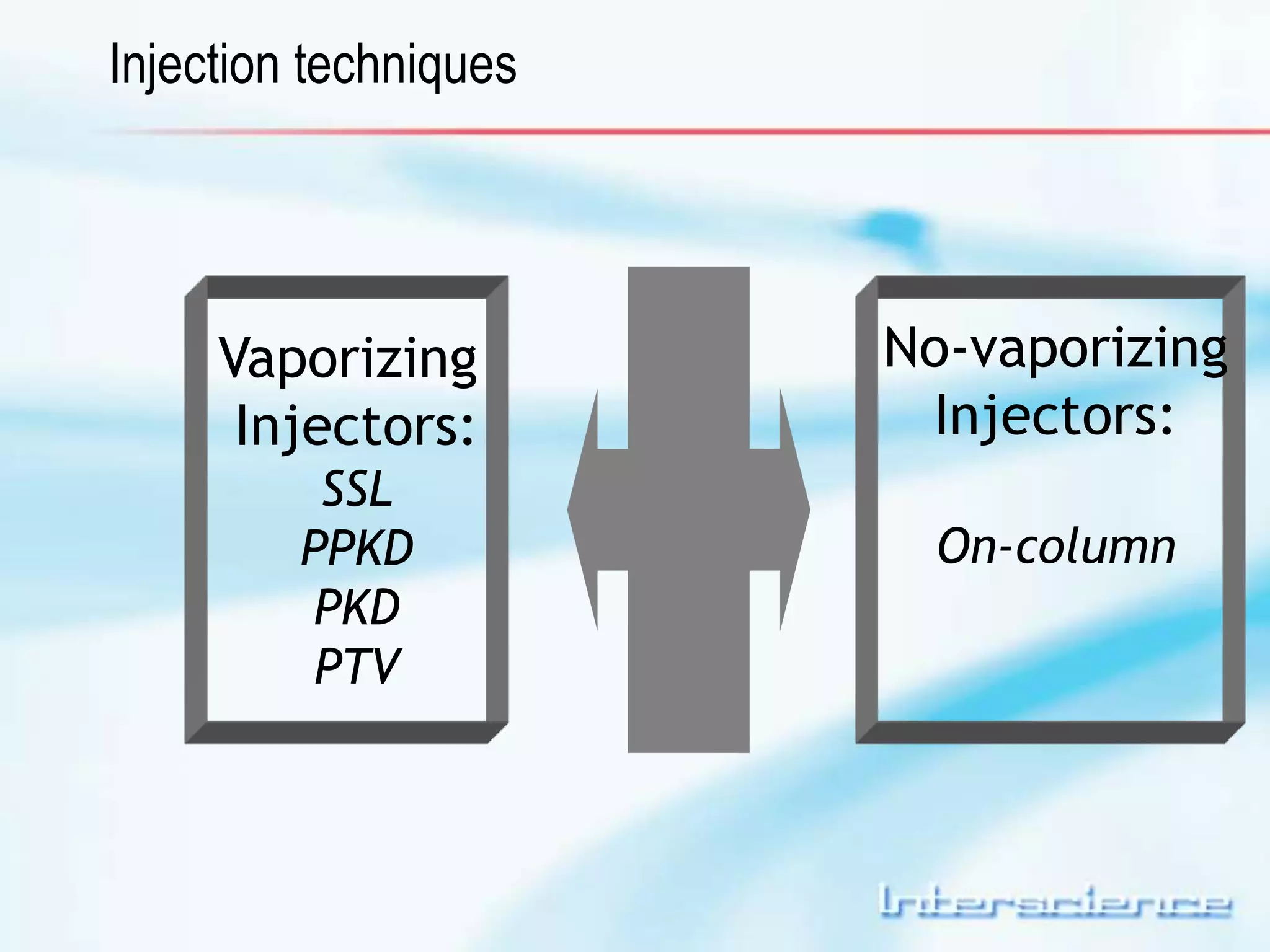
Vaporizing 
Injectors: 
SSL 
PPKD 
PKD 
PTV 
No-vaporizing 
Injectors: 
On-column 
Injection techniques
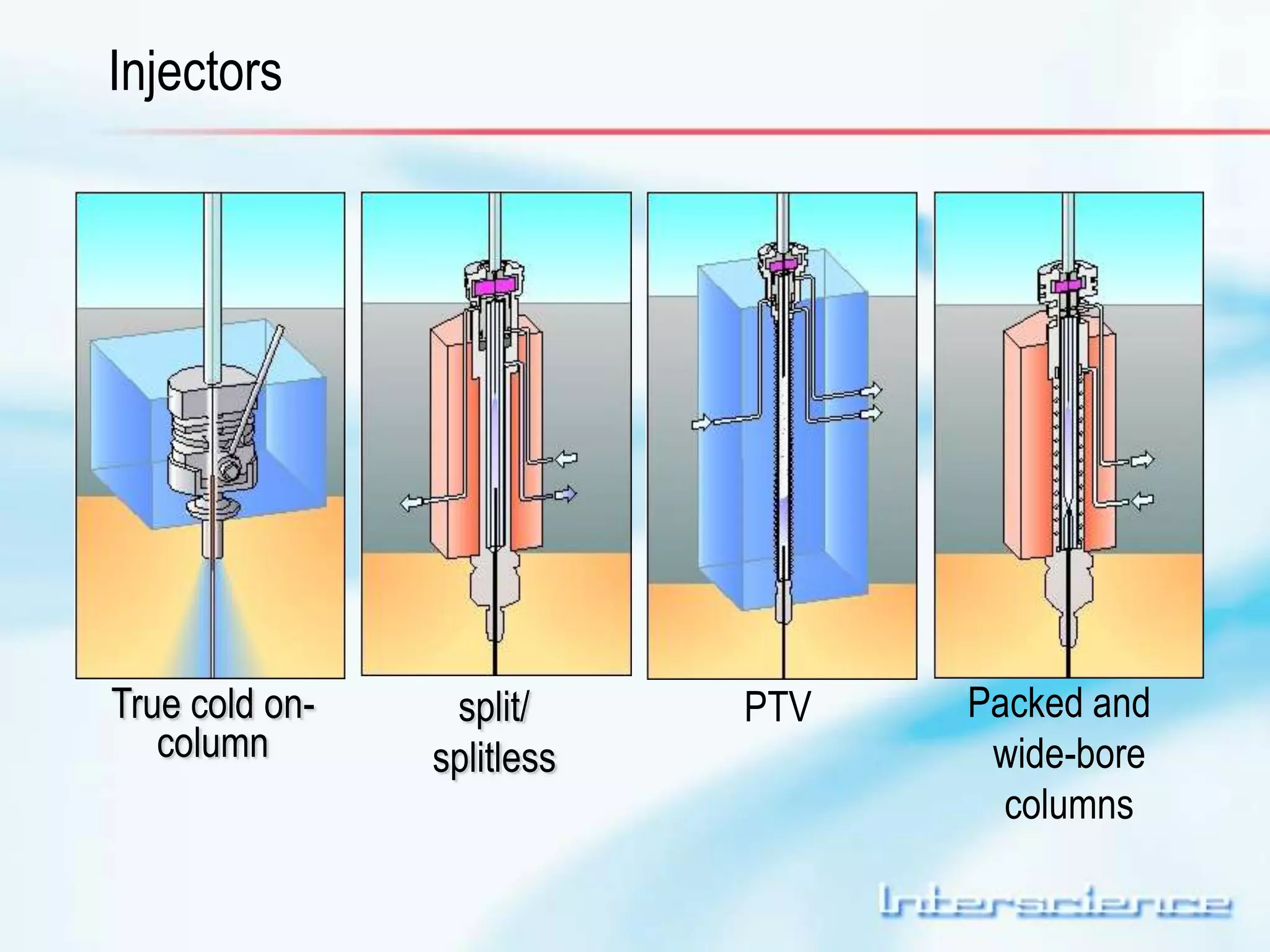
Injectors 
True cold on-column 
split/ 
splitless 
PTV Packed and 
wide-bore 
columns
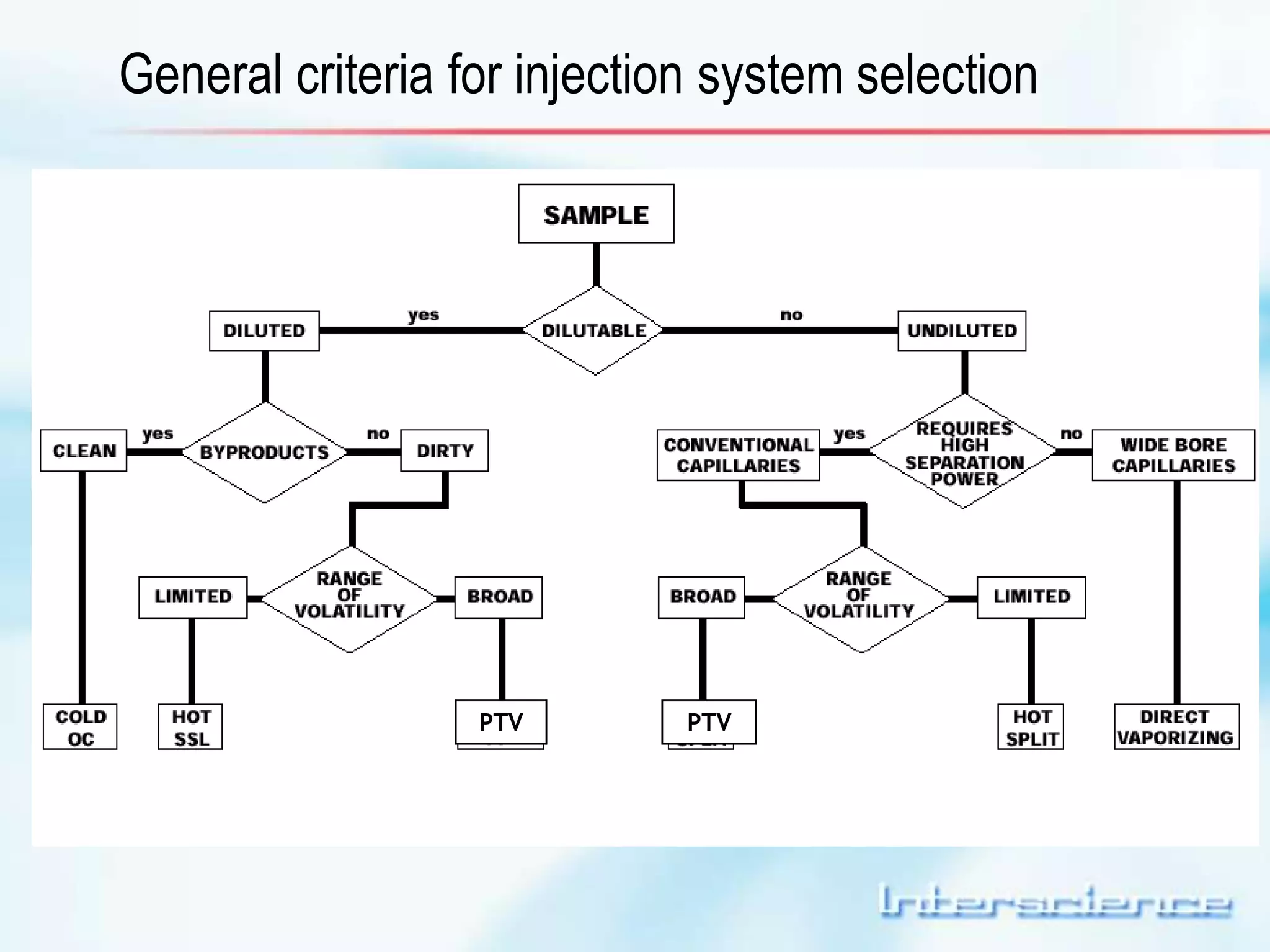
General criteria for injection system selection 
PTV PTV
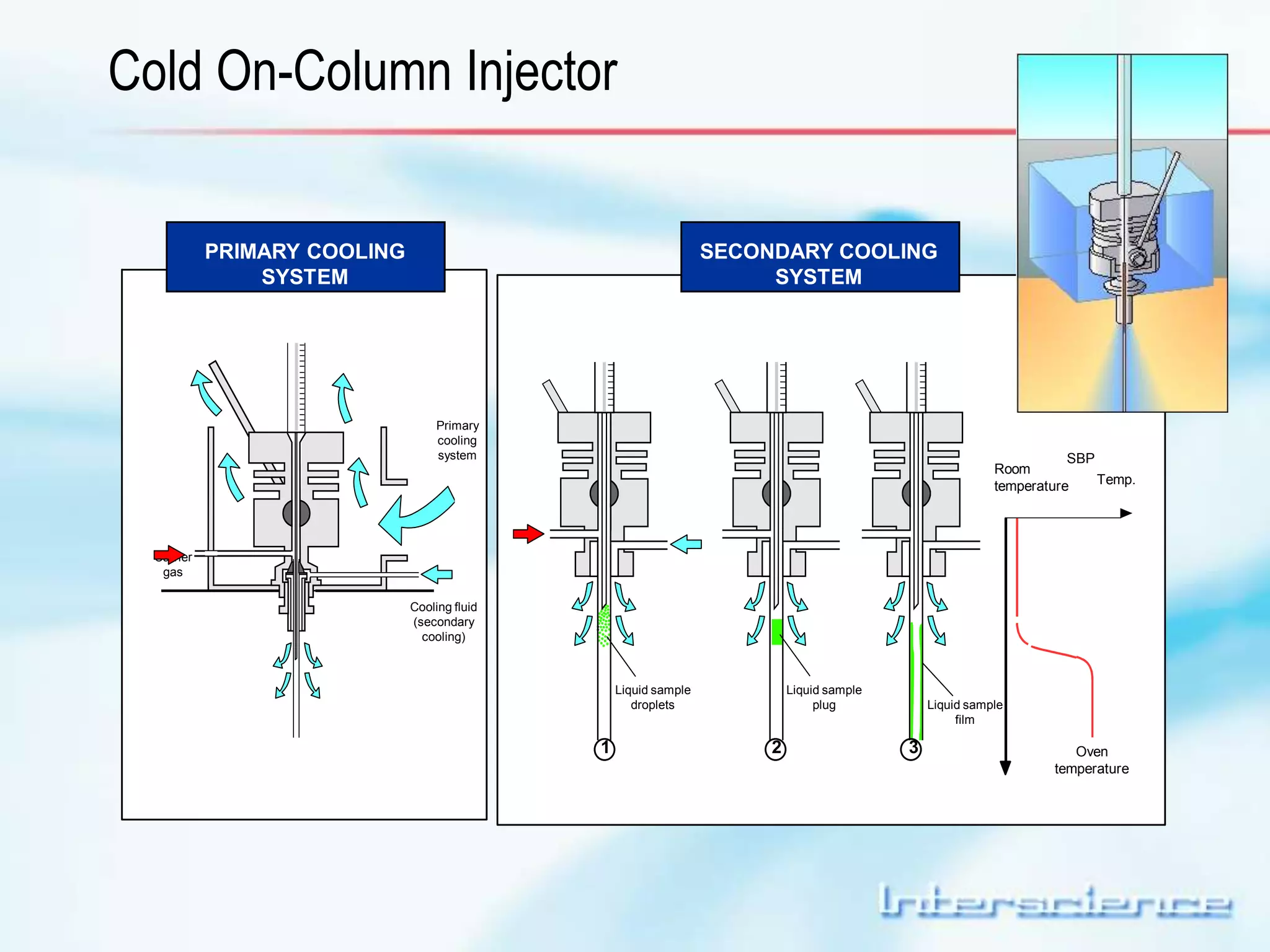
PRIMARY COOLING 
SYSTEM 
SECONDARY COOLING 
SYSTEM 
SBP 
Room 
temperature Temp. 
Liquid sample 
droplets 
Liquid sample 
plug Liquid sample 
film 
1 2 
Carrier 
gas 
Primary 
cooling 
system 
Cooling fluid 
(secondary 
cooling) 
Oven 
temperature 
3 
Cold On-Column Injector
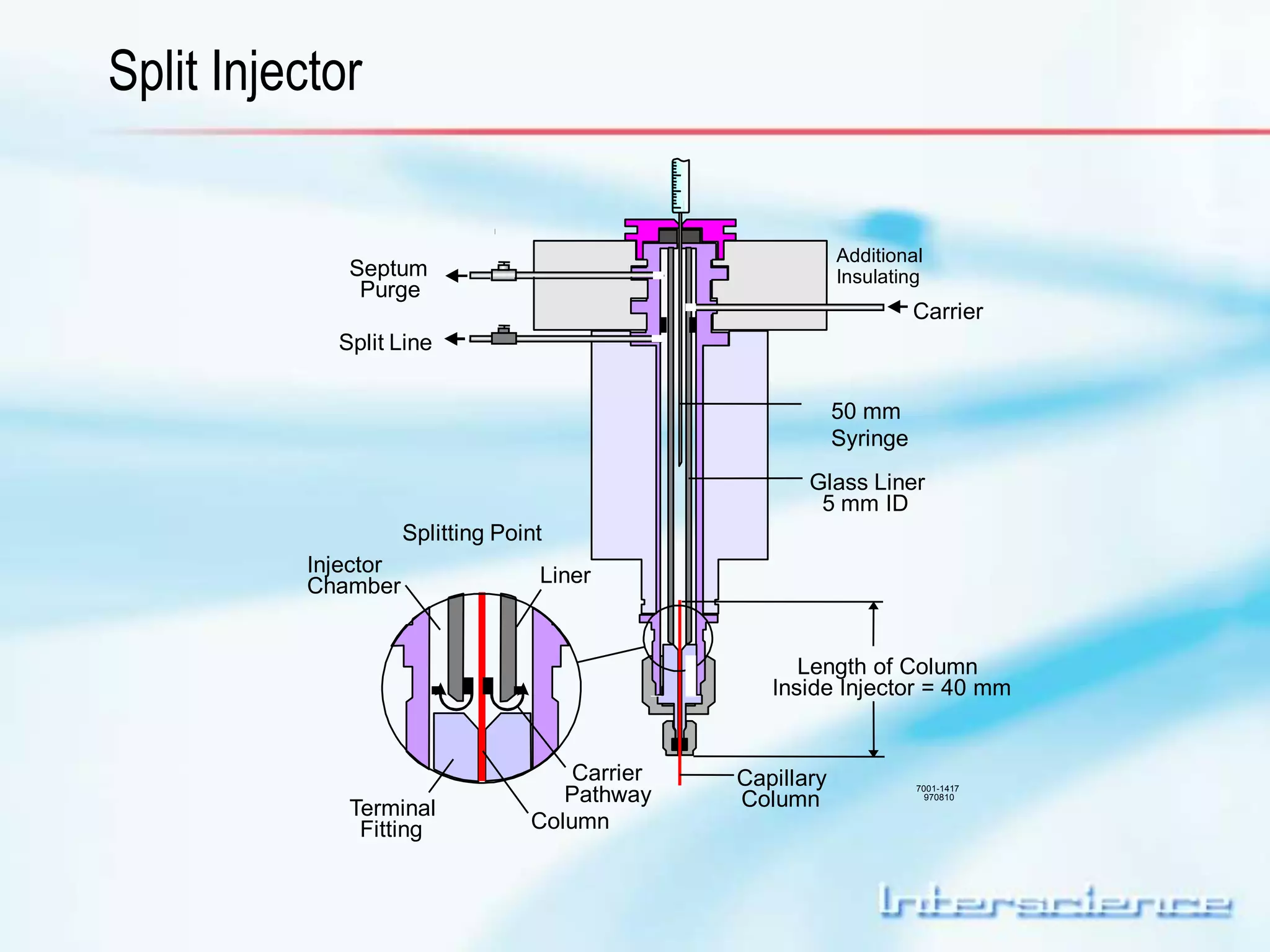
Split Injector 
Additional 
Insulating 
Carrier 
Septum 
Purge 
Split Line 
Glass Liner 
5 mm ID 
Length of Column 
Inside Injector = 40 mm 
Capillary 
Column 
7001-1417 
970810 
50 mm 
Syringe 
Splitting Point 
Liner 
Carrier 
Pathway 
Column 
Injector 
Chamber 
Terminal 
Fitting
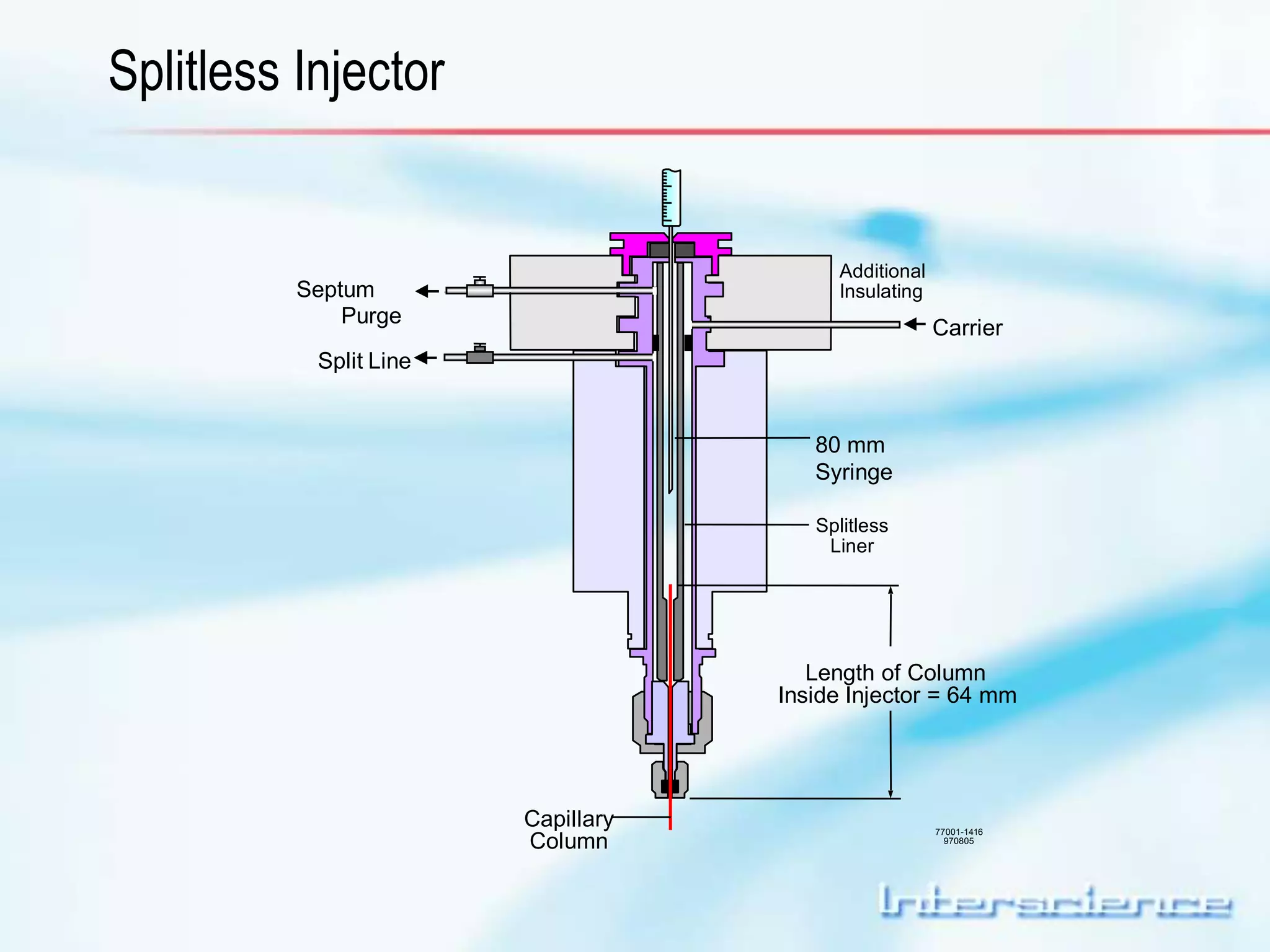
Splitless Injector 
Carrier 
Septum 
Purge 
Split Line 
80 mm 
Syringe 
Length of Column 
Inside Injector = 64 mm 
Capillary 
Column 77001-1416 
970805 
Additional 
Insulating 
Splitless 
Liner
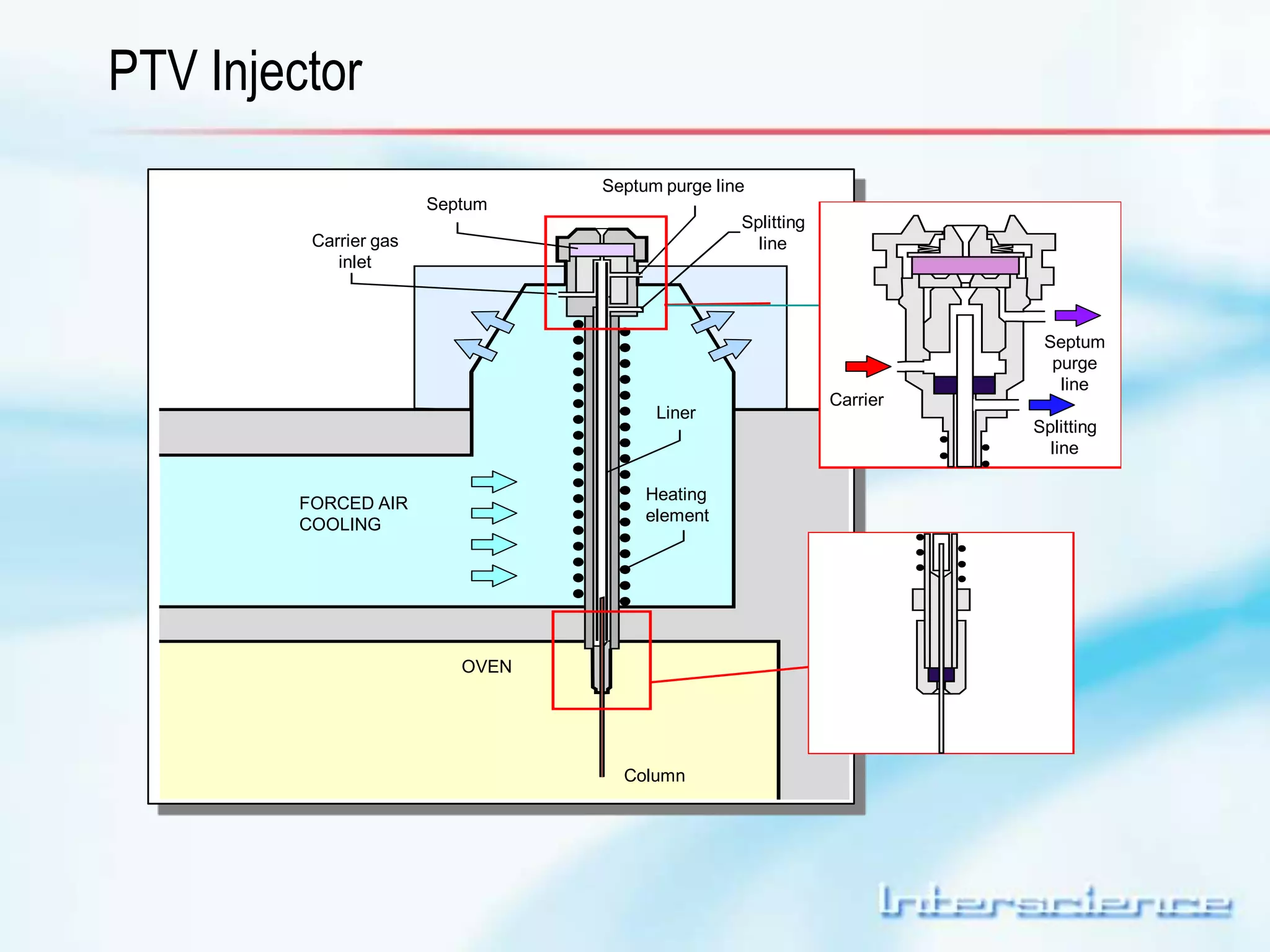
PTV Injector 
Septum 
purge 
line 
Splitting 
line 
Carrier 
OVEN 
Liner 
Column 
Carrier gas 
inlet 
Septum 
Septum purge line 
Splitting 
line 
FORCED AIR 
COOLING 
Heating 
element
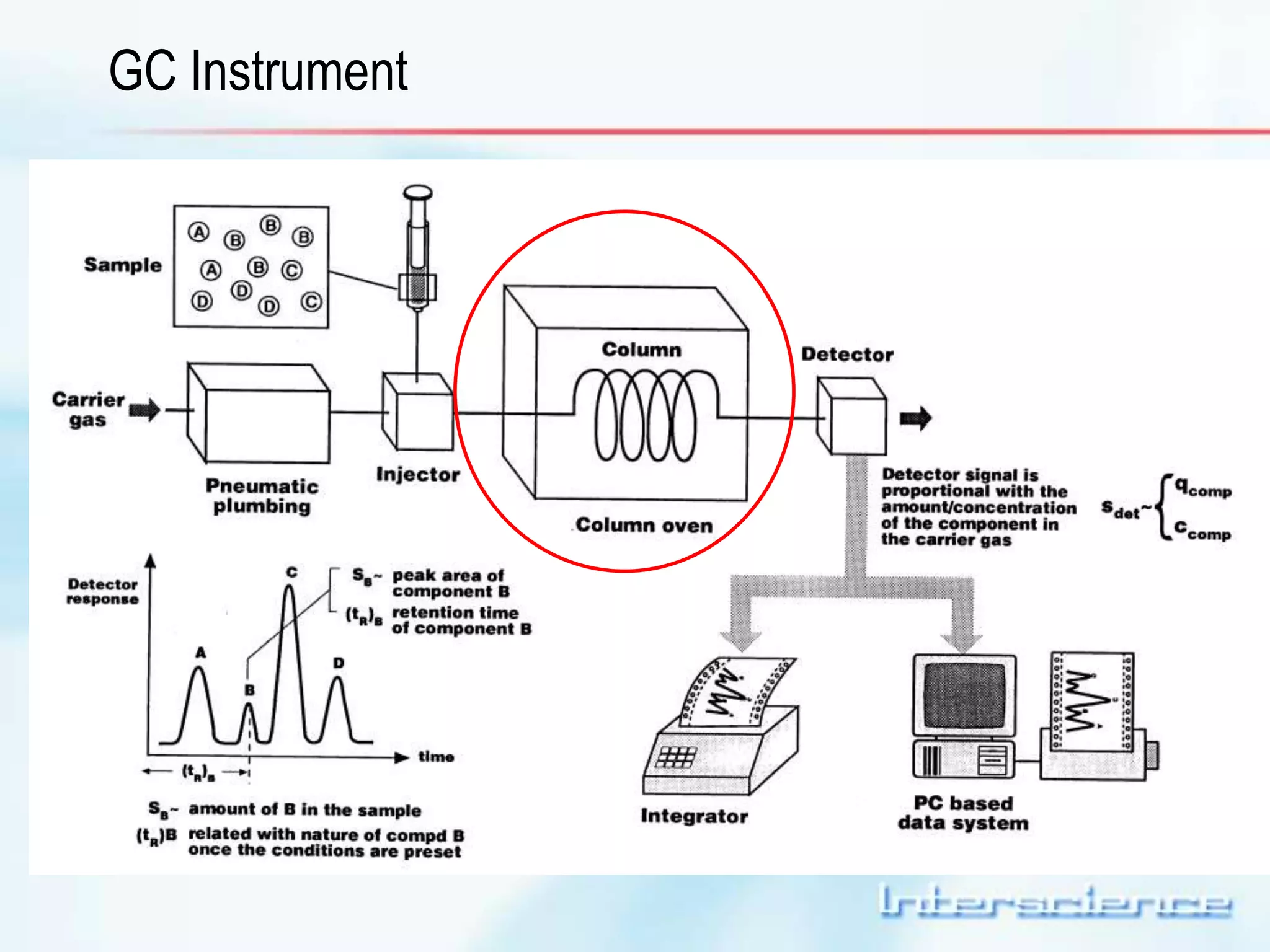
GC Instrument
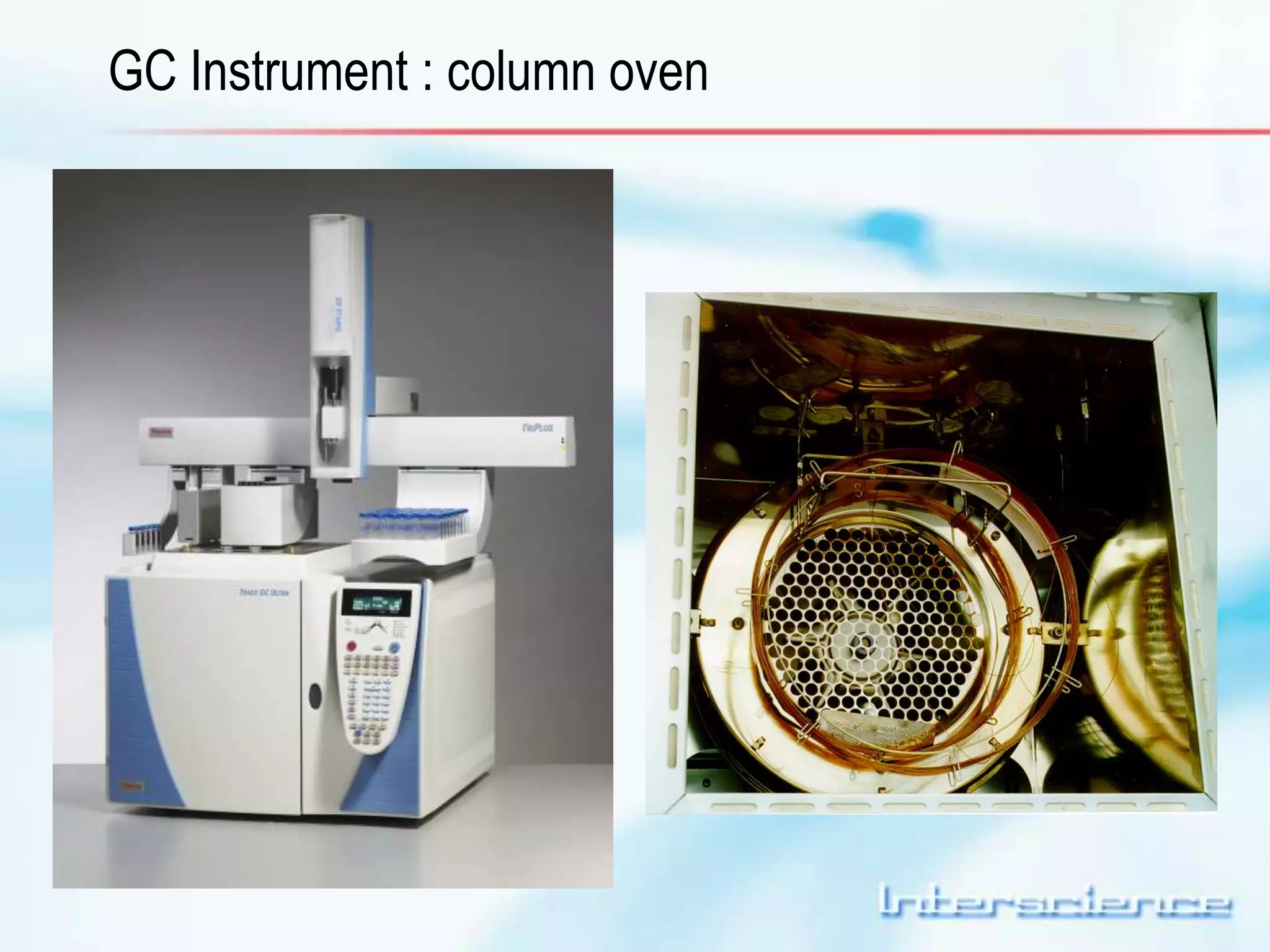
GC Instrument : column oven
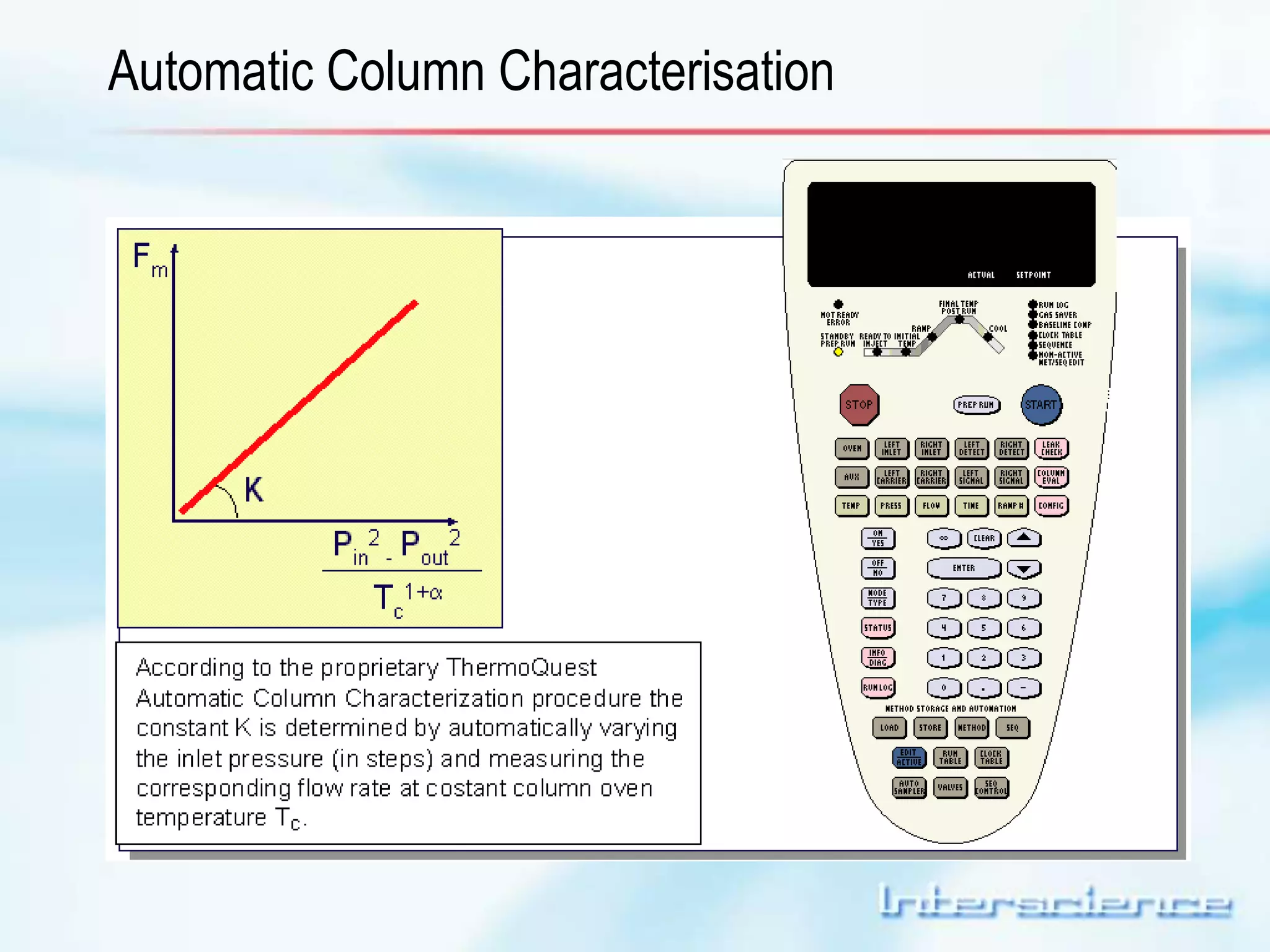
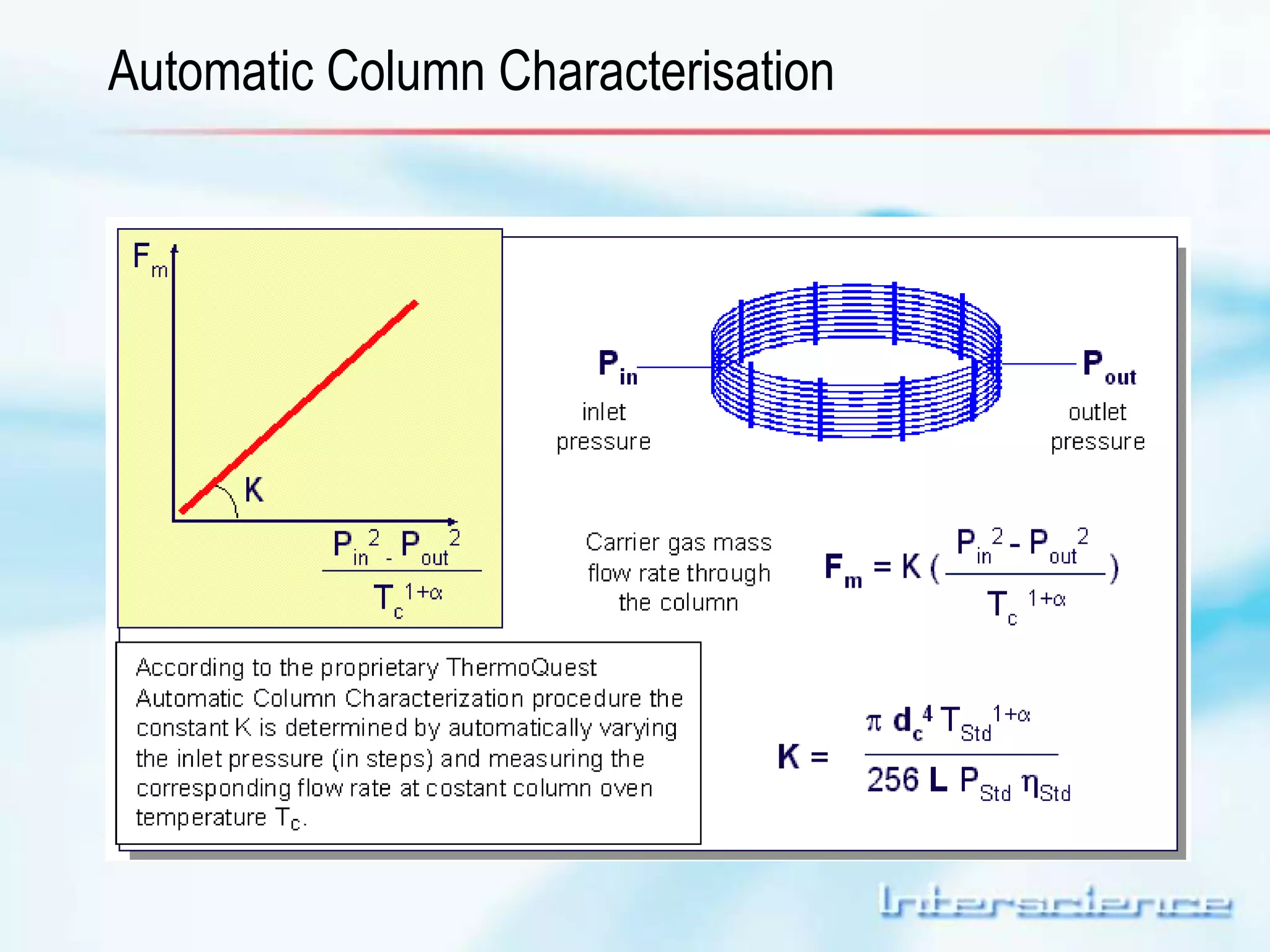
Automatic Column Characterisation
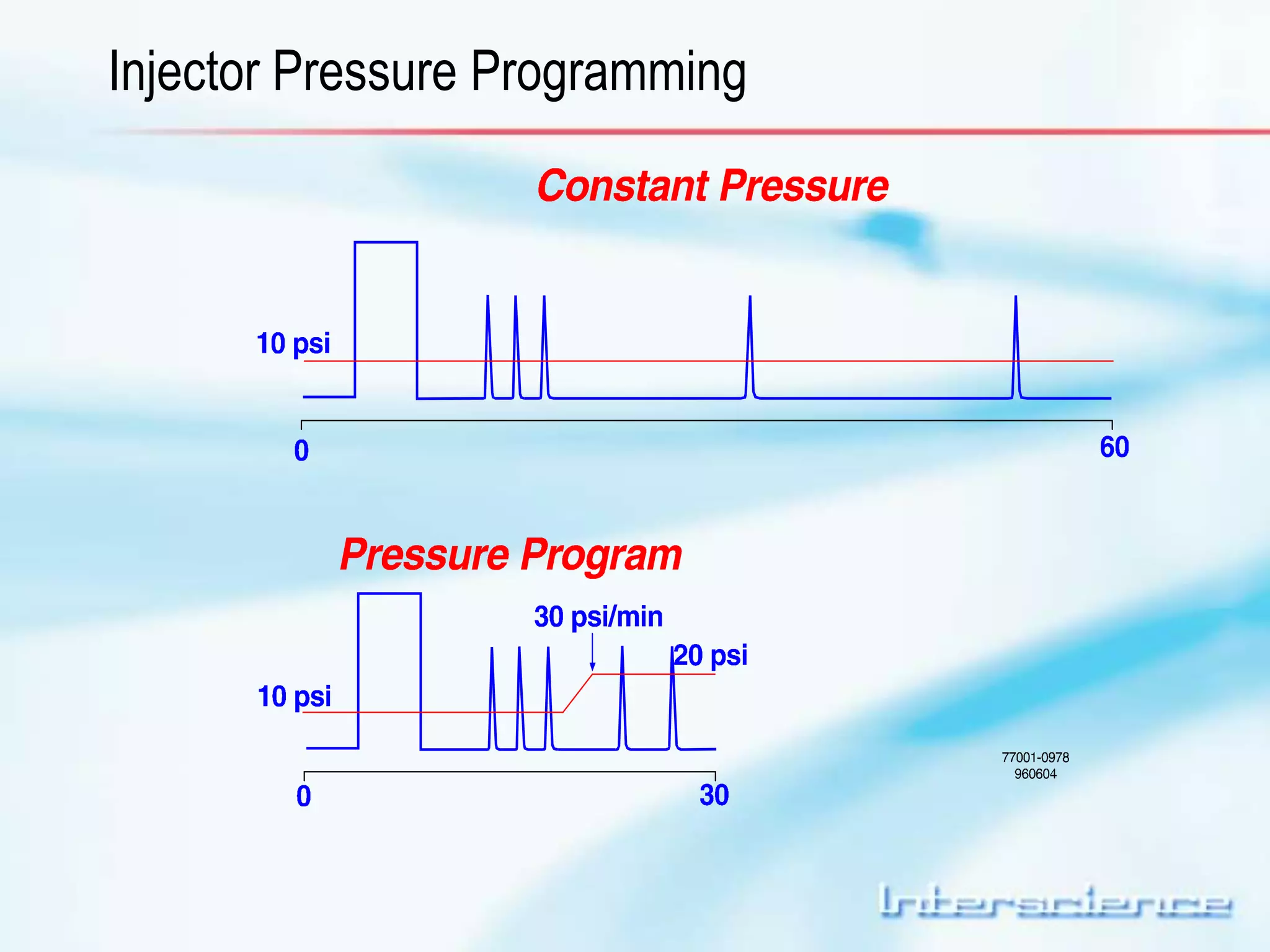
Injector Pressure Programming
GC Instrument
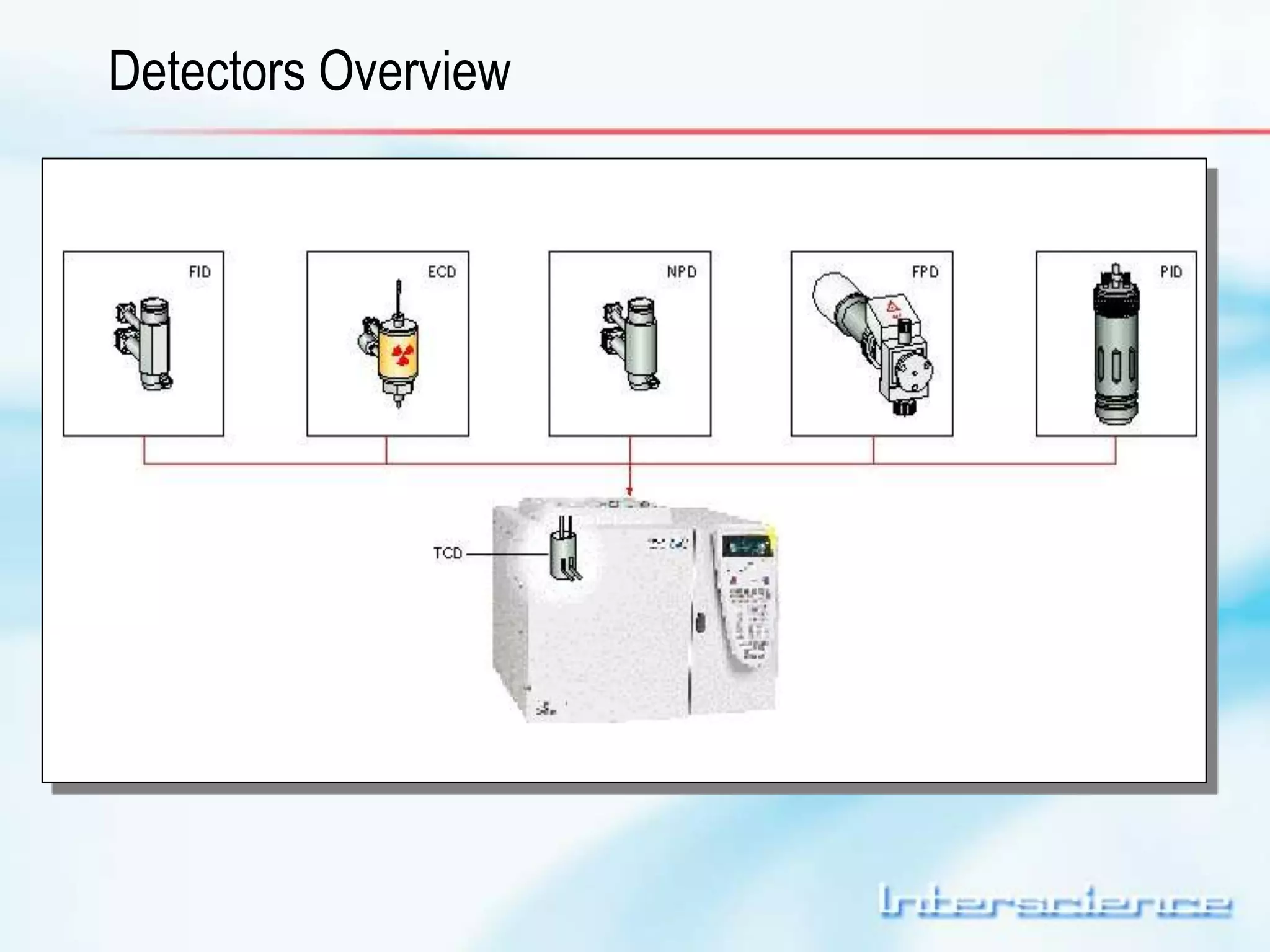
Detectors Overview
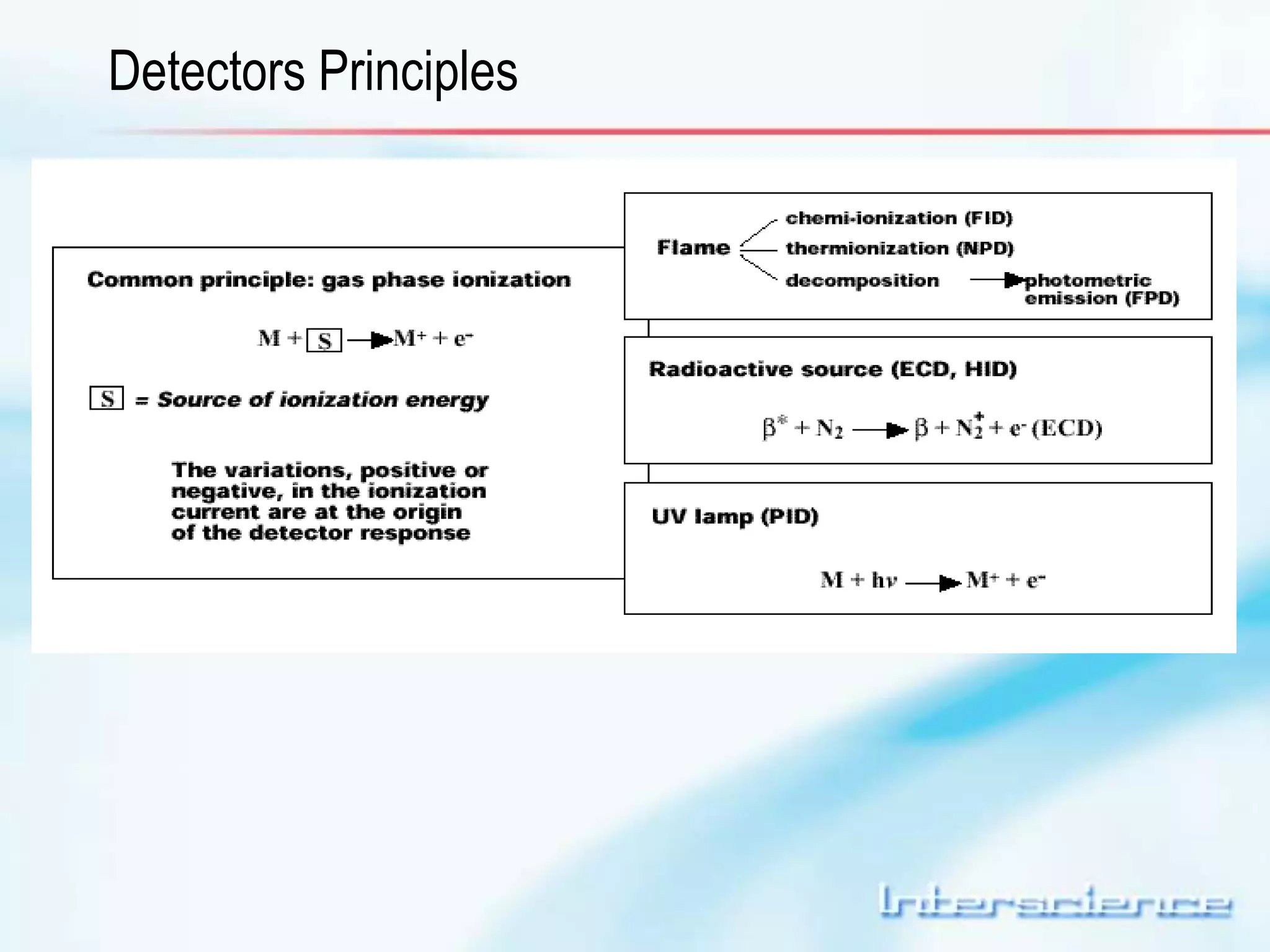
Detectors Principles
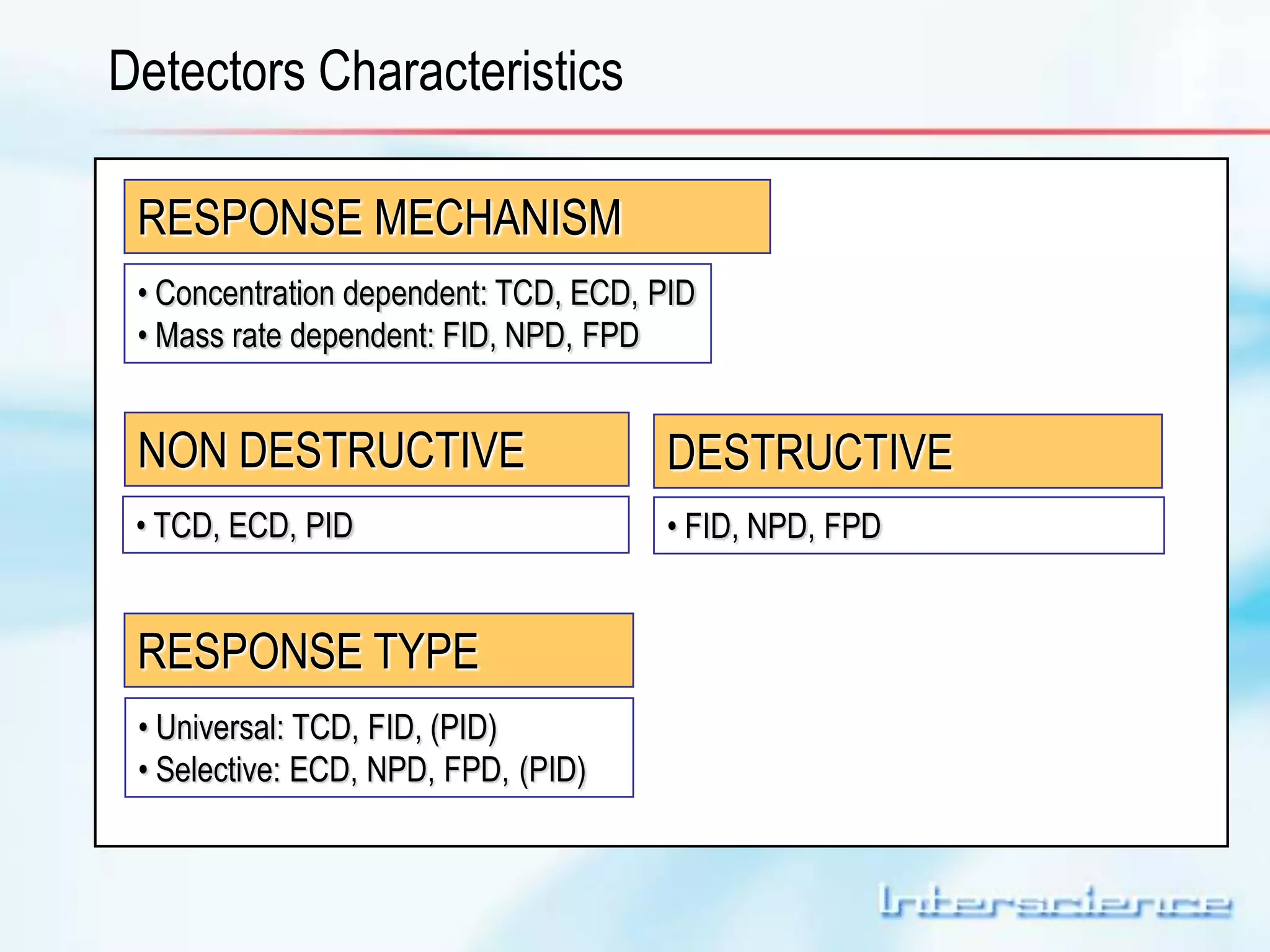
Detectors Characteristics 
RESPONSE MECHANISM 
• Concentration dependent: TCD, ECD, PID 
• Mass rate dependent: FID, NPD, FPD 
NON DESTRUCTIVE DESTRUCTIVE 
• TCD, ECD, PID • FID, NPD, FPD 
RESPONSE TYPE 
• Universal: TCD, FID, (PID) 
• Selective: ECD, NPD, FPD, (PID)
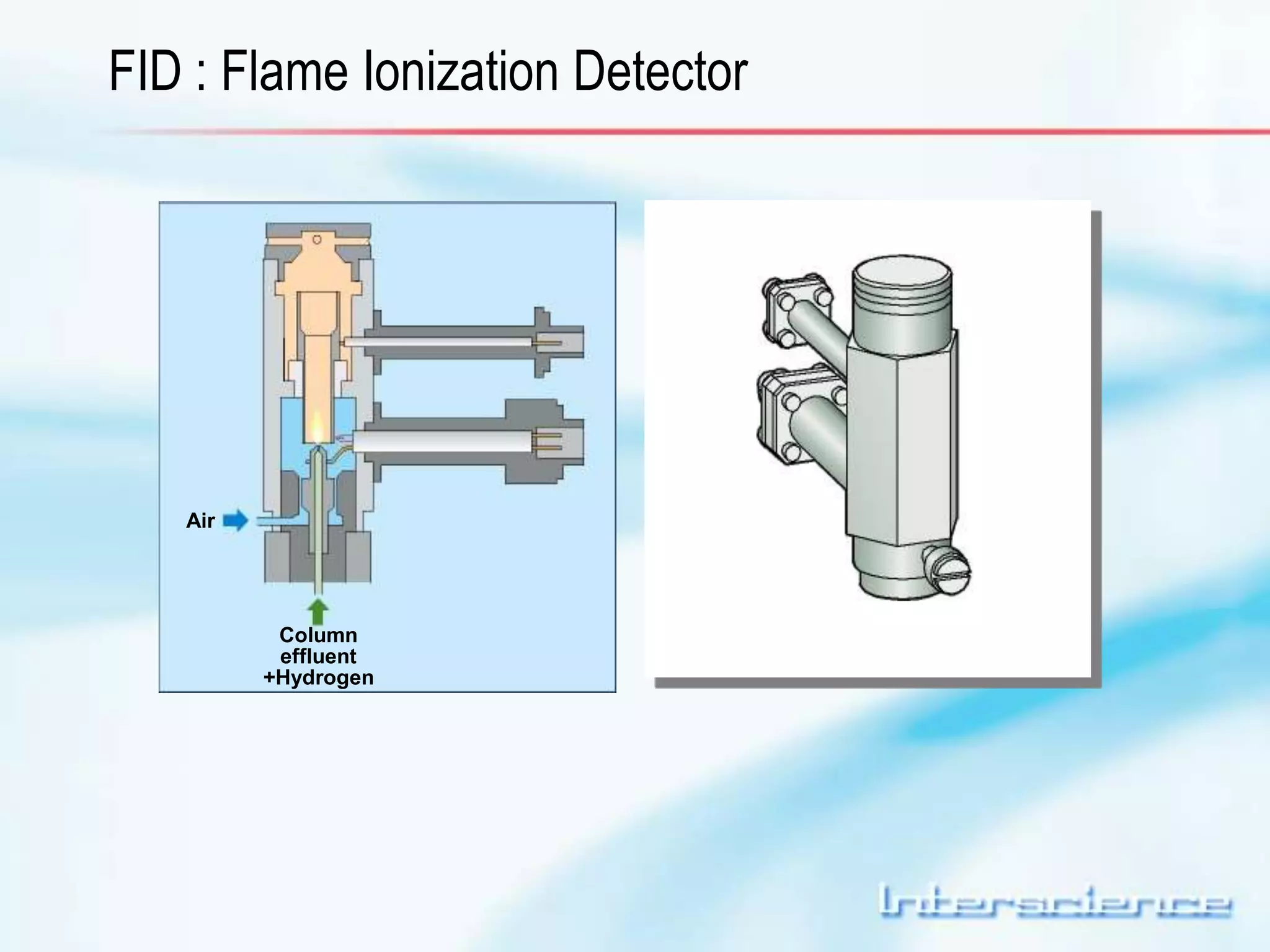
FID : Flame Ionization Detector 
Air 
Column 
effluent 
+Hydrogen
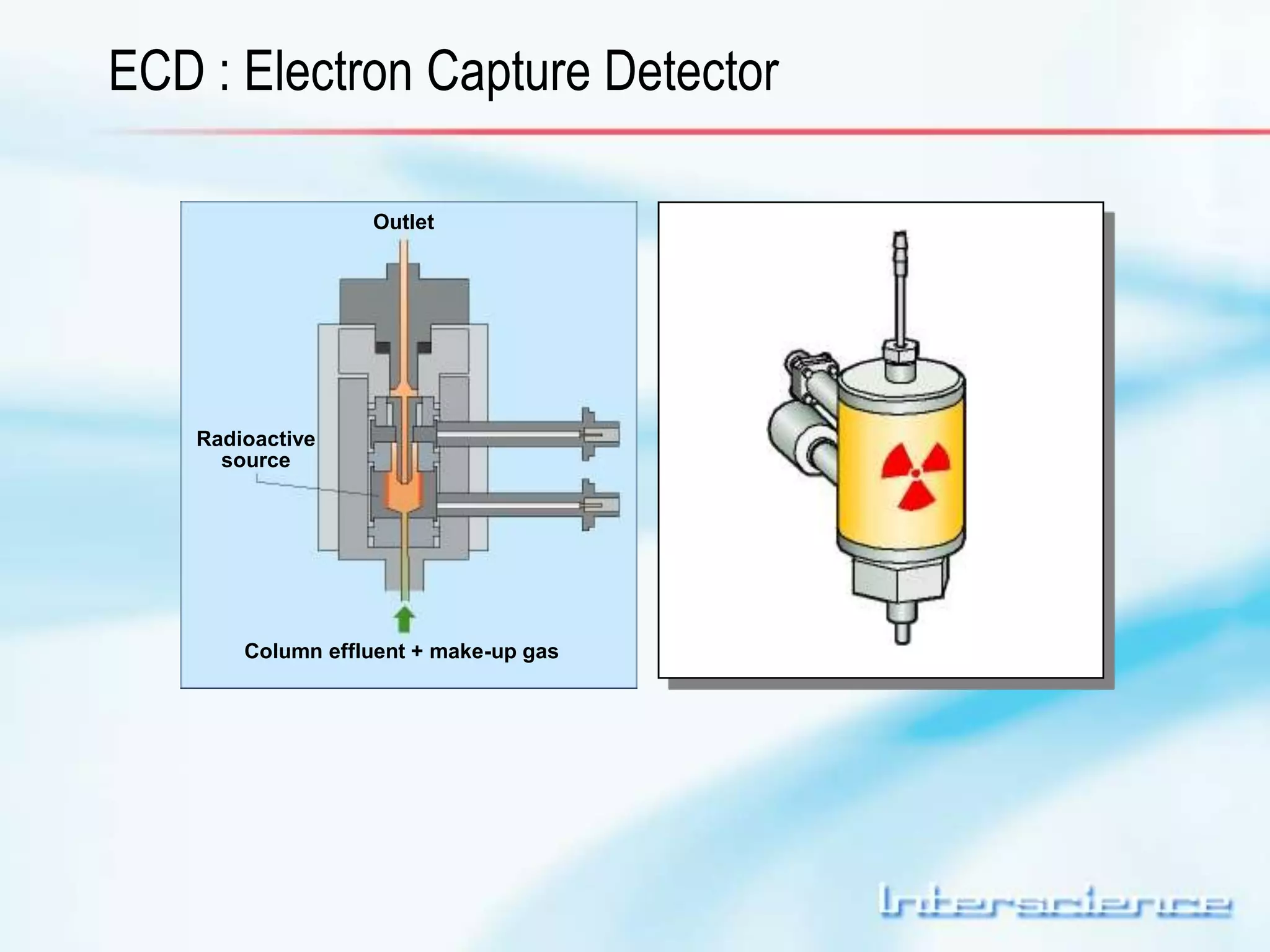
ECD : Electron Capture Detector 
Radioactive 
source 
Outlet 
Column effluent + make-up gas
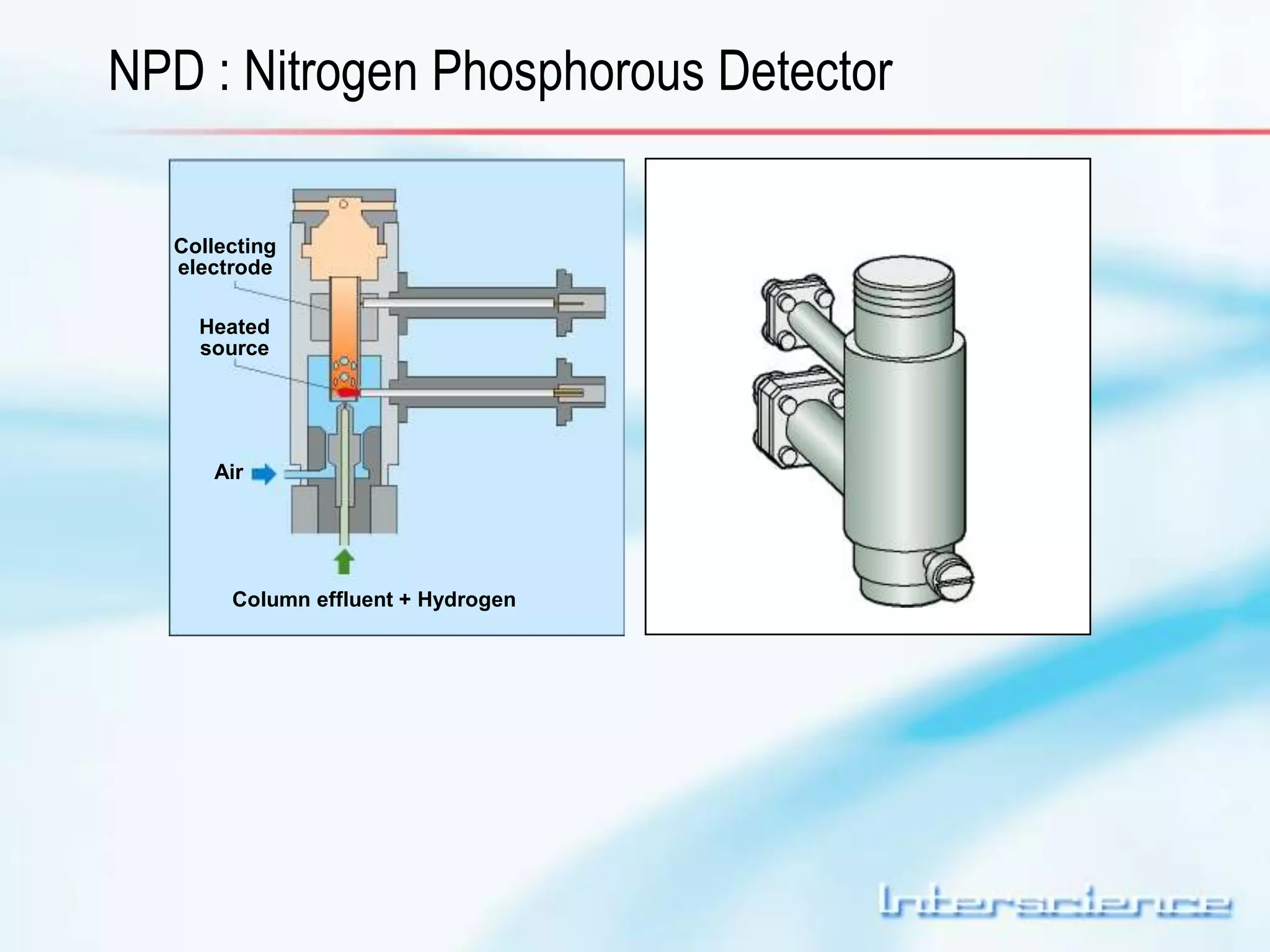
NPD : Nitrogen Phosphorous Detector 
Collecting 
electrode 
Heated 
source 
Air 
Column effluent + Hydrogen
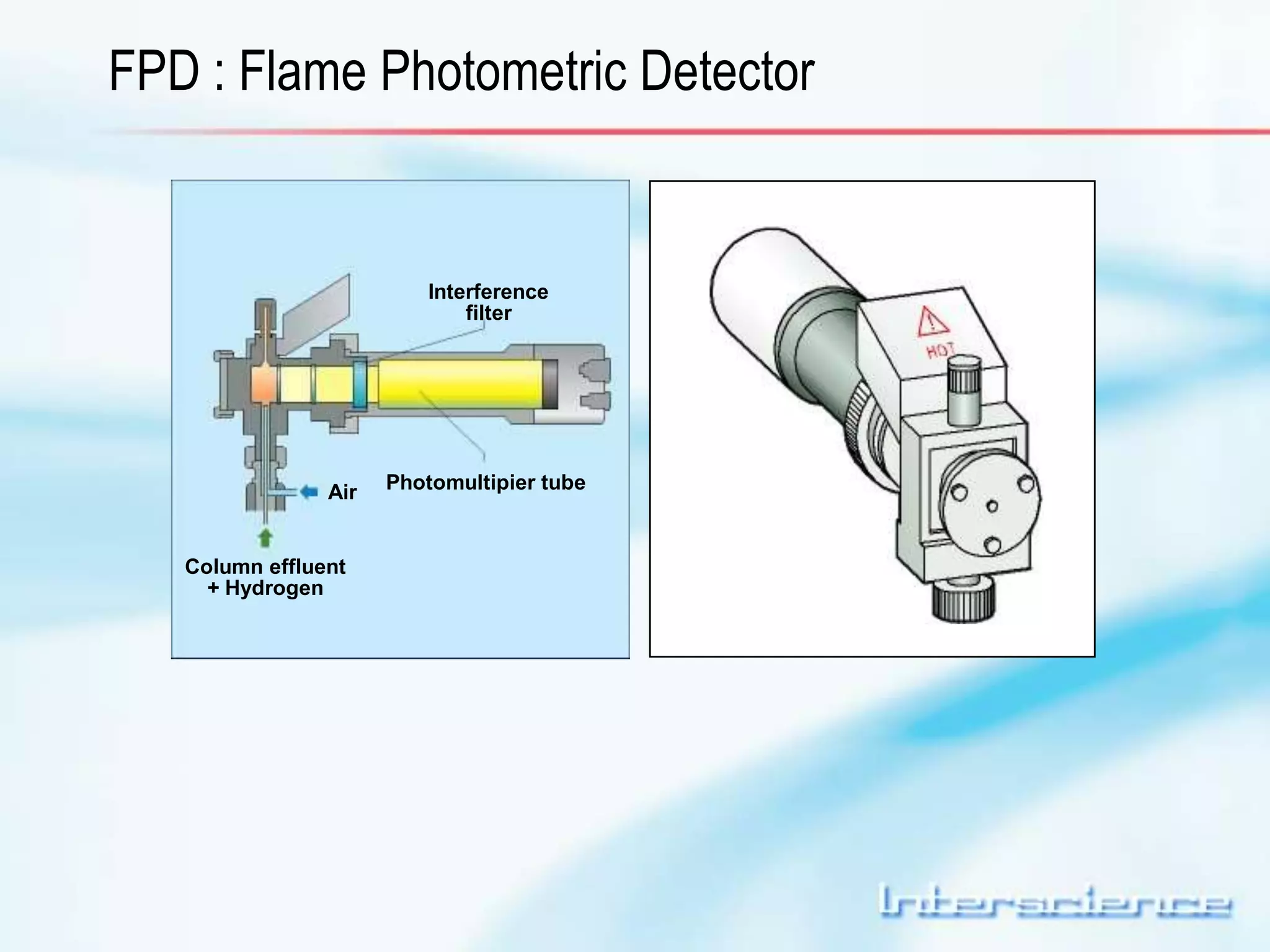
FPD : Flame Photometric Detector 
Interference 
filter 
Photomultipier tube 
Air 
Column effluent 
+ Hydrogen
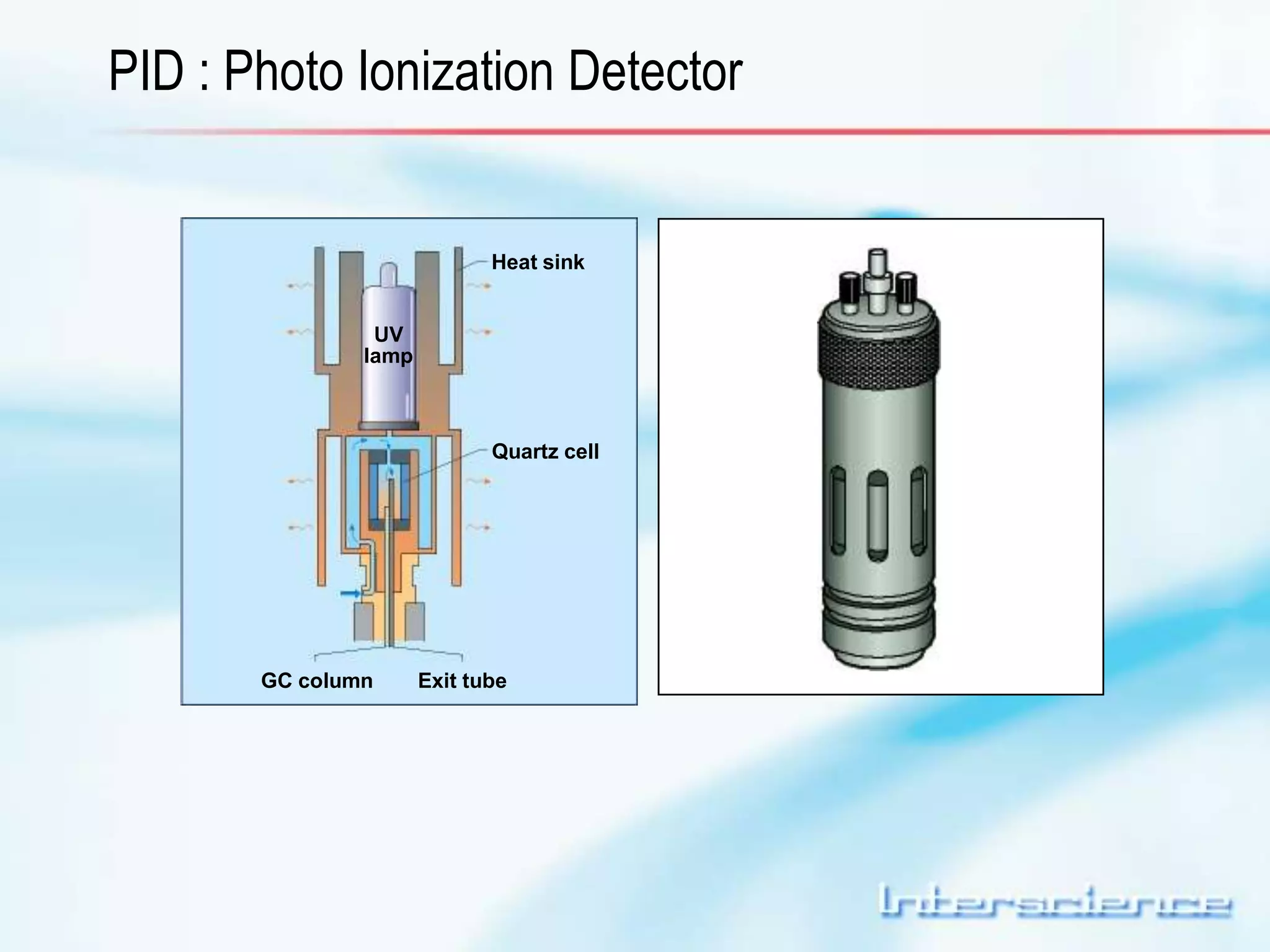
PID : Photo Ionization Detector 
Heat sink 
Quartz cell 
UV 
lamp 
GC column Exit tube
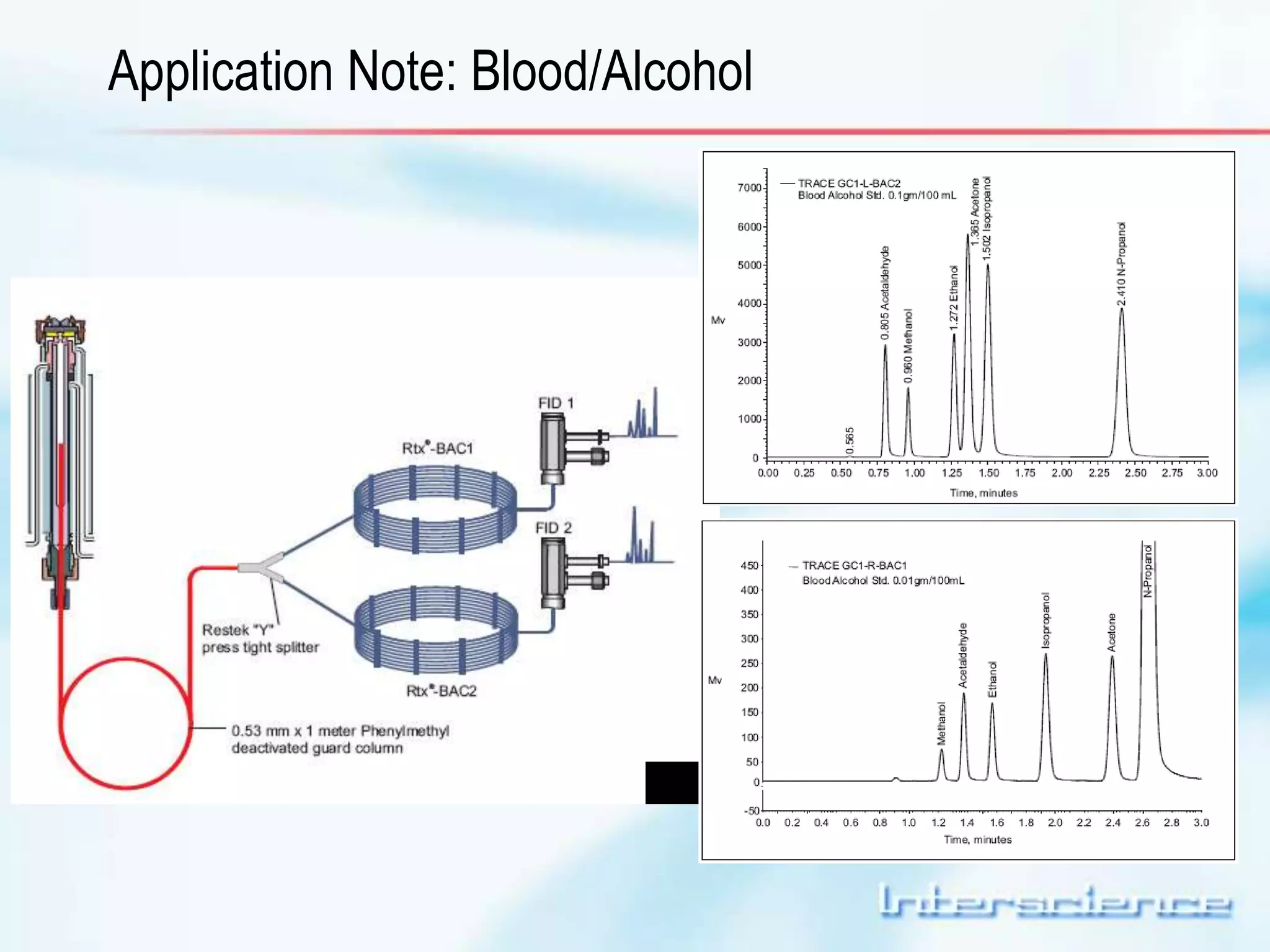
Application Note: Blood/Alcohol
Coupling Chromatography to 
Mass Spectrometry 
Separation plus identification
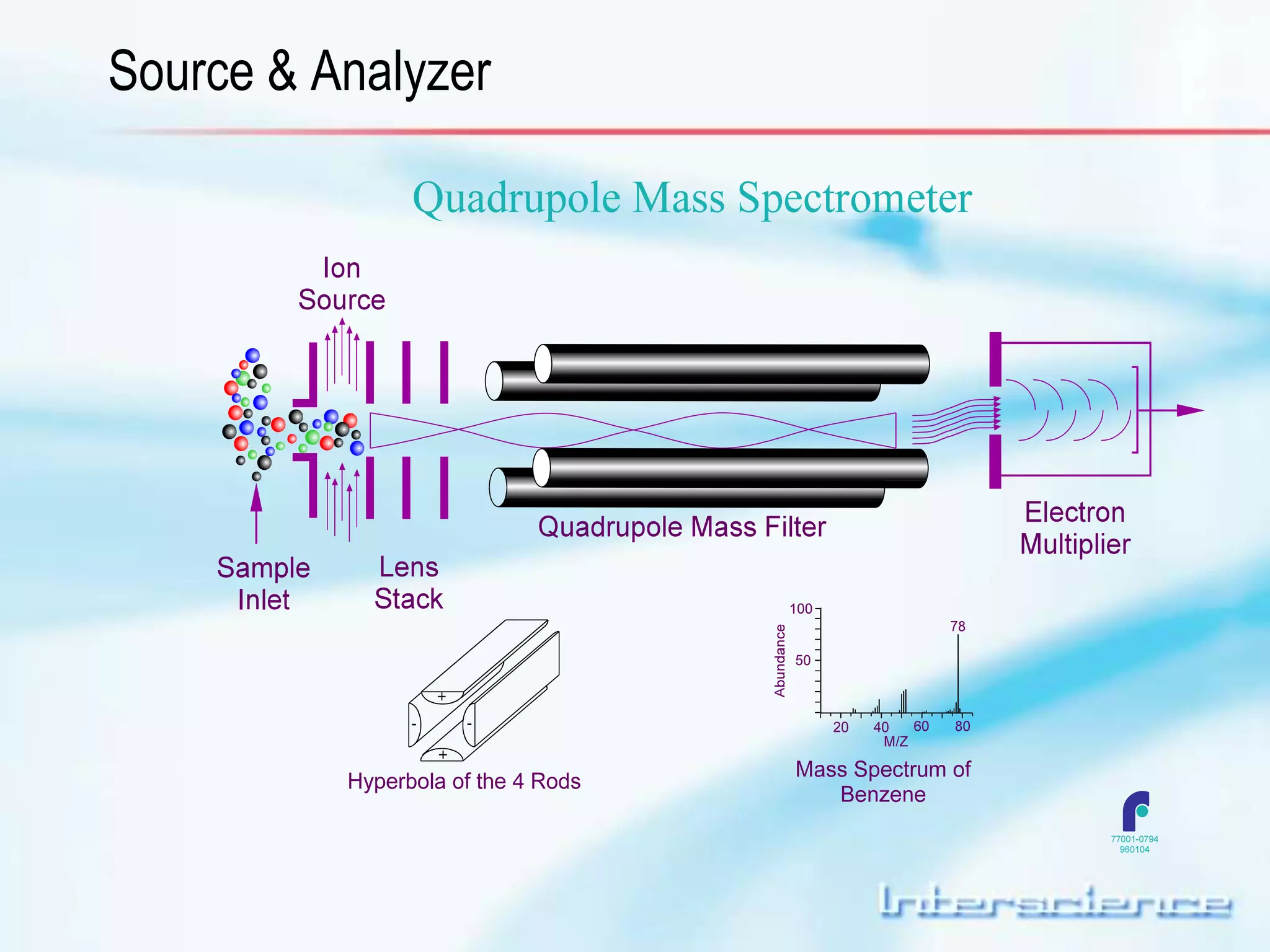
Source & Analyzer
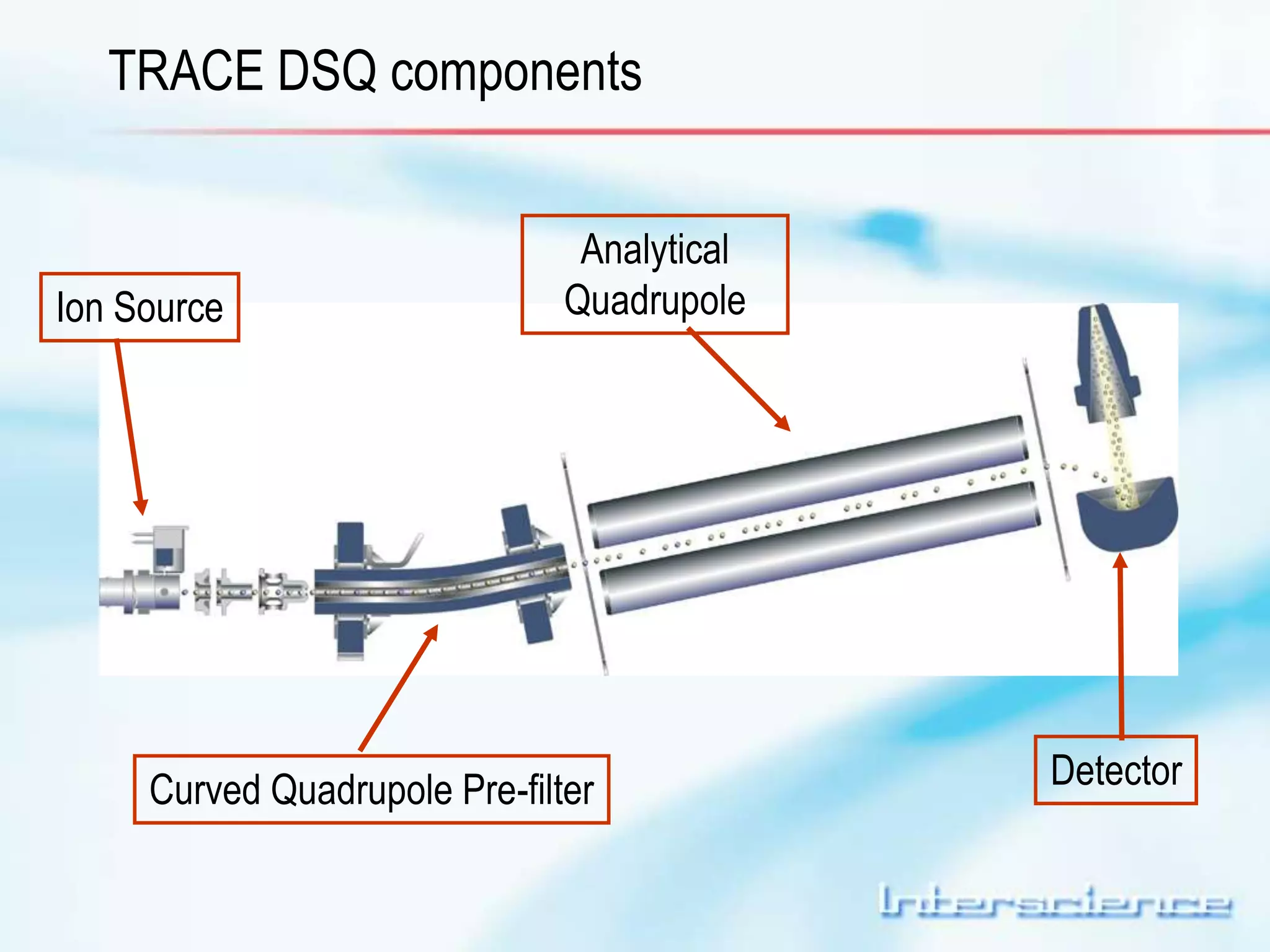
TRACE DSQ components 
Ion Source 
Analytical 
Quadrupole 
Curved Quadrupole Pre-filter 
Detector
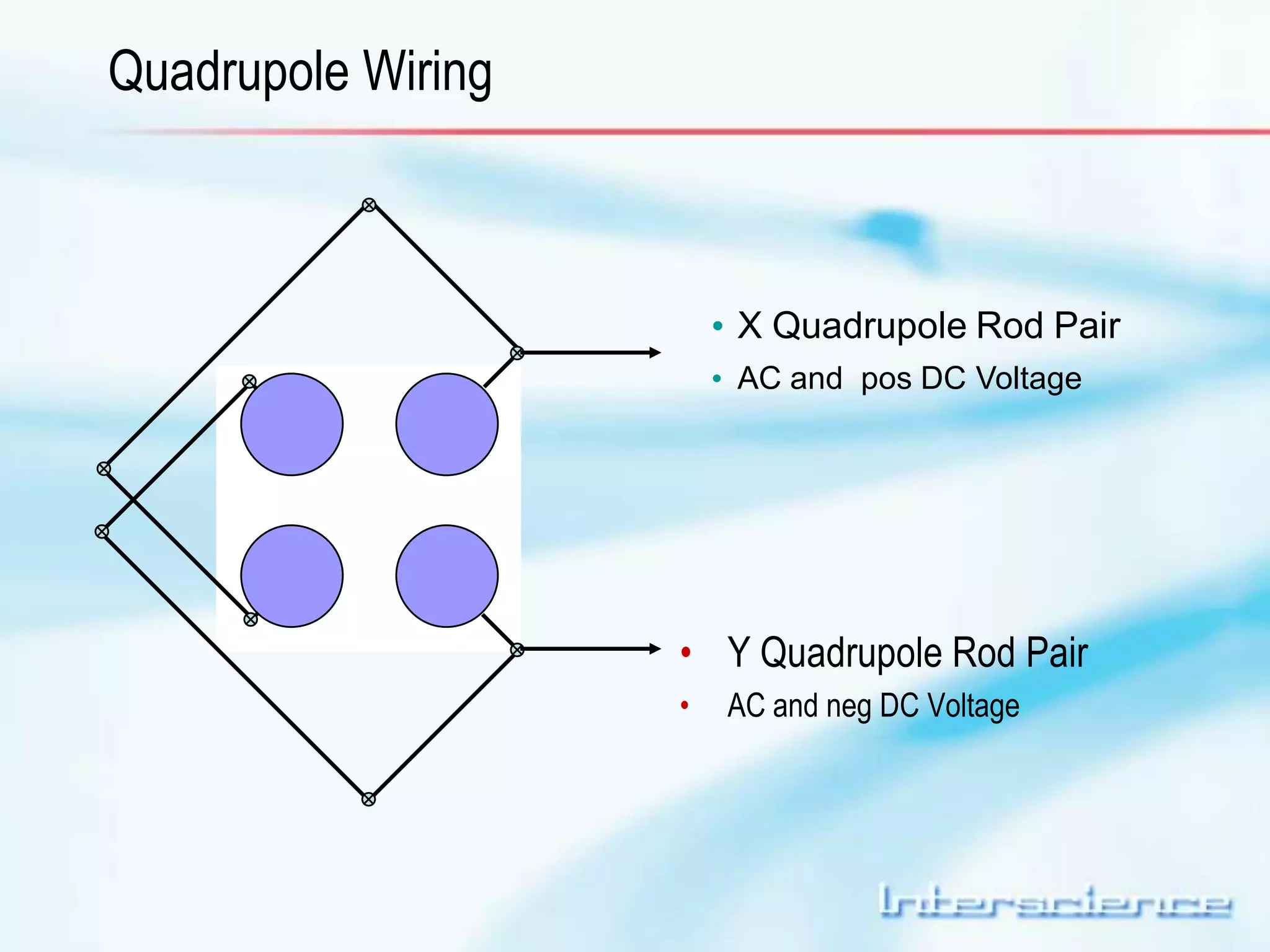
Quadrupole Wiring 
• X Quadrupole Rod Pair 
• AC and pos DC Voltage 
• Y Quadrupole Rod Pair 
• AC and neg DC Voltage 
0.5 1 1.5 2 
Series1
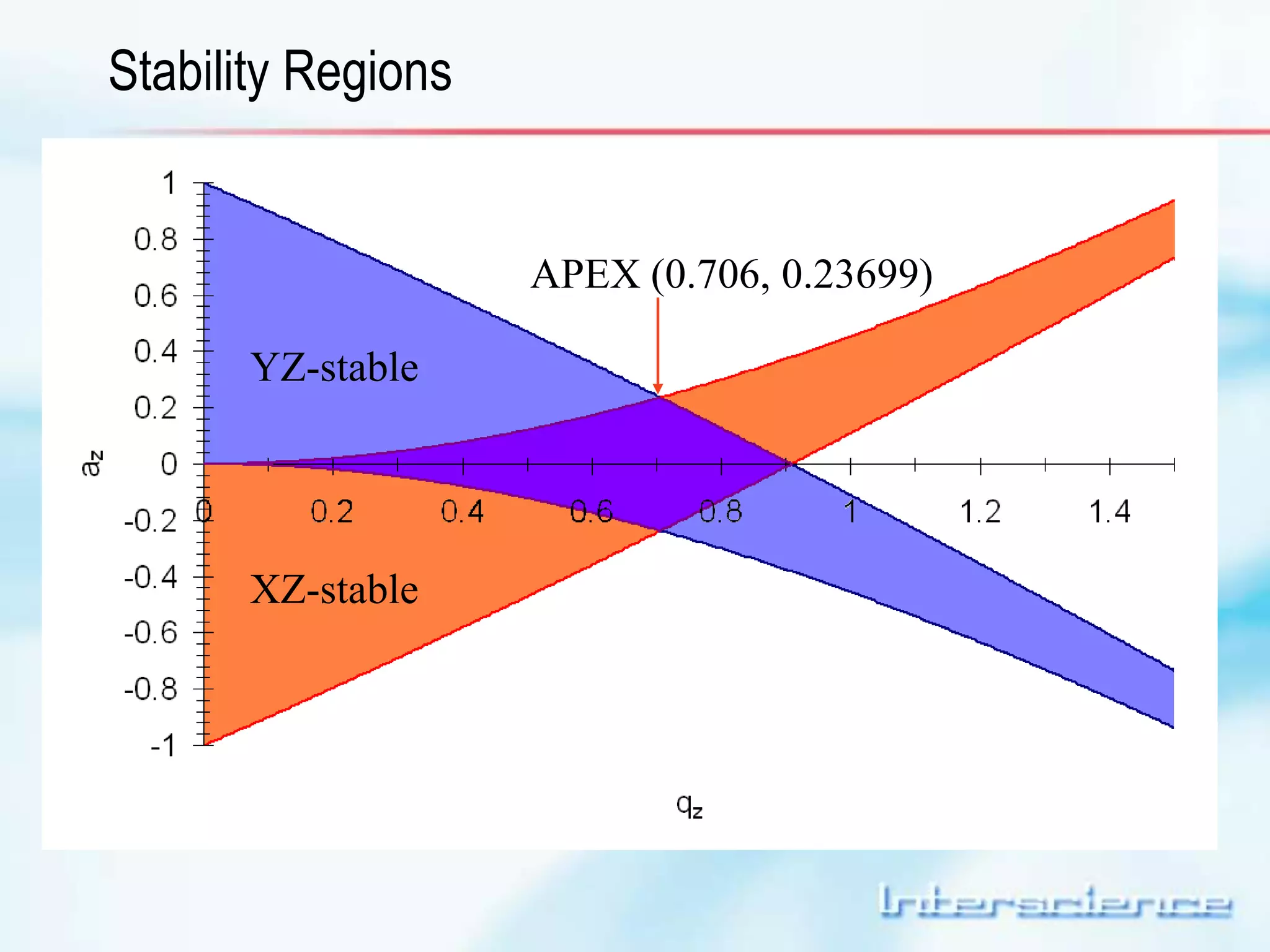
Stability Regions 
APEX (0.706, 0.23699) 
YZ-stable 
XZ-stable
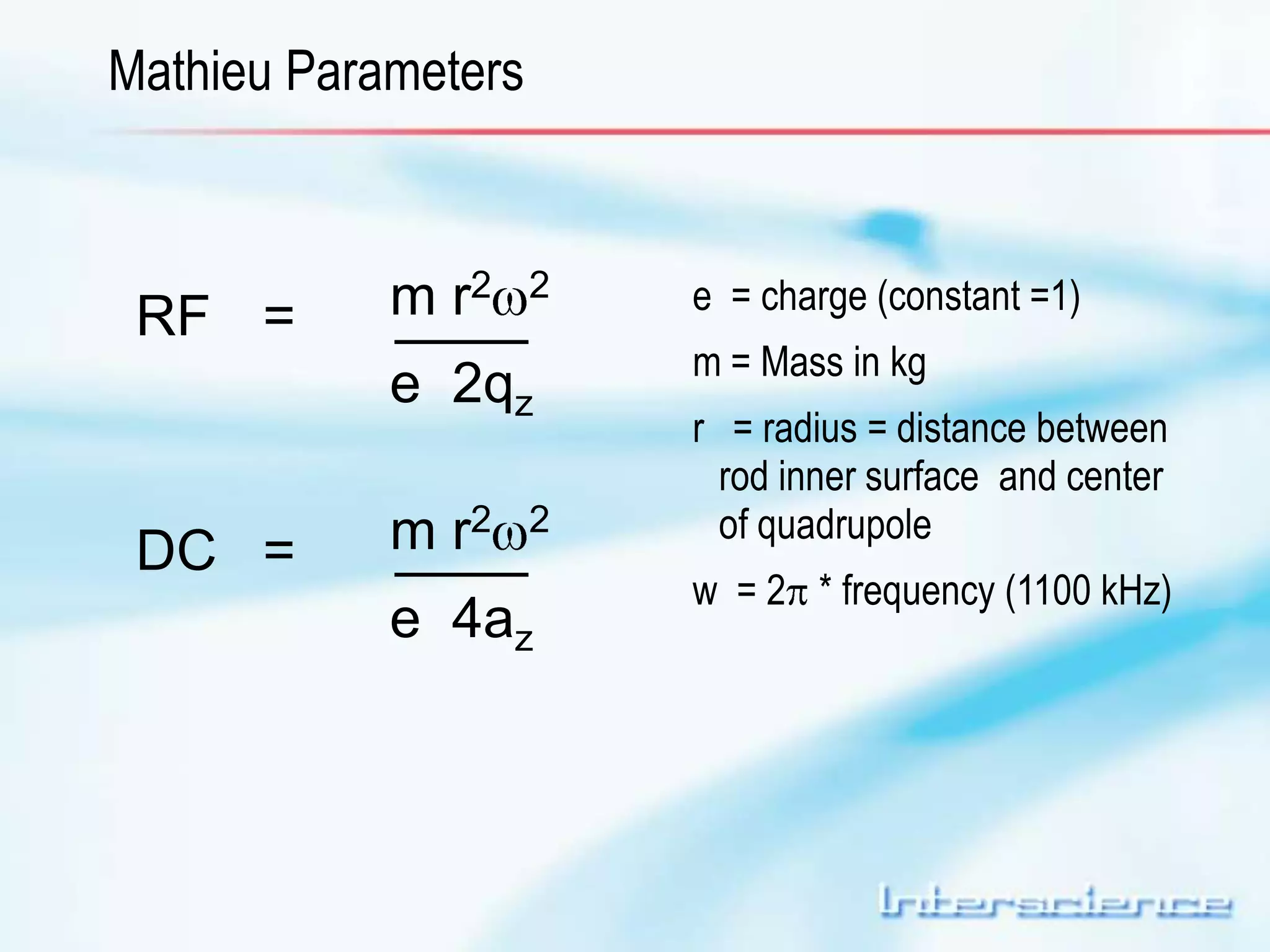
Mathieu Parameters 
RF = m r2 2 
e 2qz 
DC = m r2 2 
e 4az 
e = charge (constant =1) 
m = Mass in kg 
r = radius = distance between 
rod inner surface and center 
of quadrupole 
w = 2 * frequency (1100 kHz)
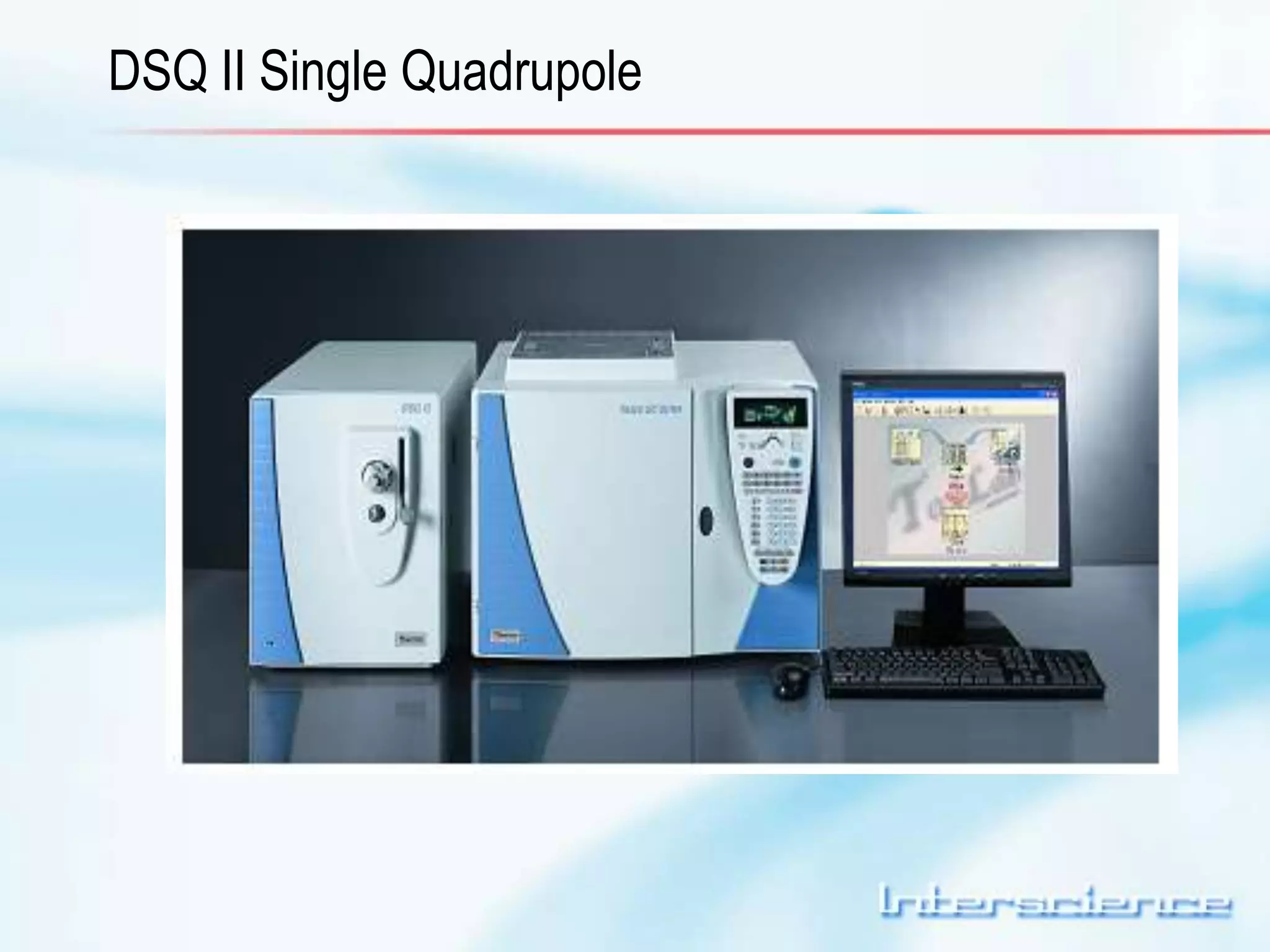
DSQ II Single Quadrupole
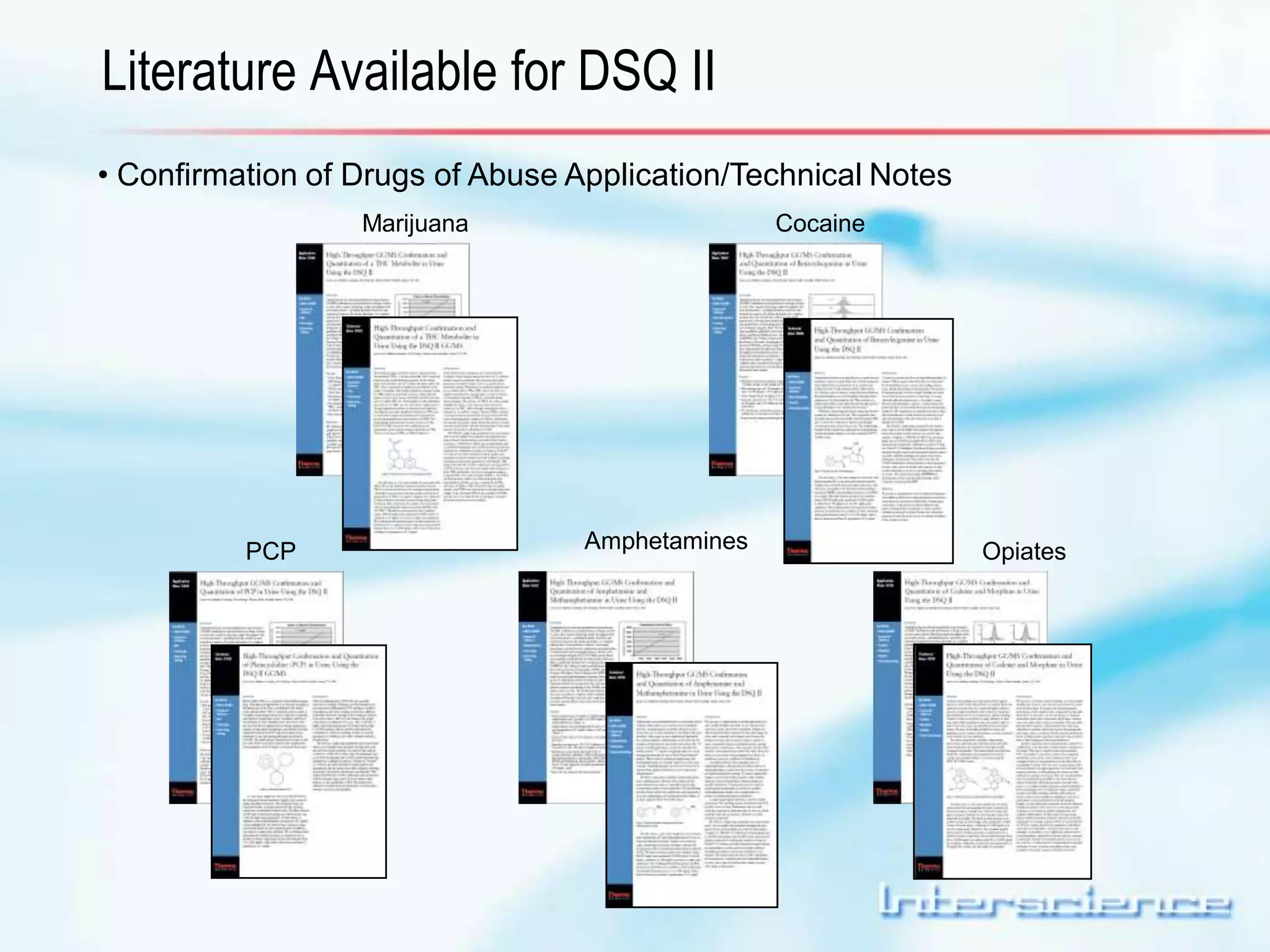
Literature Available for DSQ II 
• Confirmation of Drugs of Abuse Application/Technical Notes 
Marijuana Cocaine 
PCP Amphetamines Opiates

Gas chromatography & cc ms principles is2008-04-18

  • 1.
  • 2.
    What is chromatography • Separation Science • Organizing by size • Organizing by boiling point (vapor pressure) • Organizing by solubility Before After
  • 3.
    What is GasChromatography • Performed in the vapor state • Requires a mobile phase, gas • Requires a stationary phase • Molecules migrate between the phases
  • 4.
  • 5.
    Gas Chromatographic Equipment AUTOSAMPLERS GC BASIC UNITS GC DETECTORS INTEGRATORS MS DETECTORS MS Detector Autosampler GC Detector Autosampler Data system GC Basic Unit Gaschromatog. DATA SYSTEMS SAMPLE PREPARATION SYSTEMS GC Basic Unit Data system SAMPLE PREPARATION AND INJECTION SYSTEMS CHROMATOGRAPHIC SEPARATION SYSTEMS DETECTION & IDENTIFICATION SYSTEMS DATA SYSTEMS GC/SA Benchtop GC/MS
  • 6.
  • 7.
    Requirements for theideal injector • Capable to quantitative accept a broad volatility range of sample components – Low discrimination • To handle dirty and clean matrices – With dirty matrices reduces sample clean-up – With clean matrices boosts sensitivity • Extremely inert – Able to handle polar/active compounds • Provide optimum band shape
  • 8.
    Vaporizing Injectors: SSL PPKD PKD PTV No-vaporizing Injectors: On-column Injection techniques
  • 9.
    Injectors True coldon-column split/ splitless PTV Packed and wide-bore columns
  • 10.
    General criteria forinjection system selection PTV PTV
  • 11.
    PRIMARY COOLING SYSTEM SECONDARY COOLING SYSTEM SBP Room temperature Temp. Liquid sample droplets Liquid sample plug Liquid sample film 1 2 Carrier gas Primary cooling system Cooling fluid (secondary cooling) Oven temperature 3 Cold On-Column Injector
  • 12.
    Split Injector Additional Insulating Carrier Septum Purge Split Line Glass Liner 5 mm ID Length of Column Inside Injector = 40 mm Capillary Column 7001-1417 970810 50 mm Syringe Splitting Point Liner Carrier Pathway Column Injector Chamber Terminal Fitting
  • 13.
    Splitless Injector Carrier Septum Purge Split Line 80 mm Syringe Length of Column Inside Injector = 64 mm Capillary Column 77001-1416 970805 Additional Insulating Splitless Liner
  • 14.
    PTV Injector Septum purge line Splitting line Carrier OVEN Liner Column Carrier gas inlet Septum Septum purge line Splitting line FORCED AIR COOLING Heating element
  • 15.
  • 16.
    GC Instrument :column oven
  • 17.
  • 18.
  • 19.
  • 20.
  • 21.
  • 22.
  • 23.
    Detectors Characteristics RESPONSEMECHANISM • Concentration dependent: TCD, ECD, PID • Mass rate dependent: FID, NPD, FPD NON DESTRUCTIVE DESTRUCTIVE • TCD, ECD, PID • FID, NPD, FPD RESPONSE TYPE • Universal: TCD, FID, (PID) • Selective: ECD, NPD, FPD, (PID)
  • 24.
    FID : FlameIonization Detector Air Column effluent +Hydrogen
  • 25.
    ECD : ElectronCapture Detector Radioactive source Outlet Column effluent + make-up gas
  • 26.
    NPD : NitrogenPhosphorous Detector Collecting electrode Heated source Air Column effluent + Hydrogen
  • 27.
    FPD : FlamePhotometric Detector Interference filter Photomultipier tube Air Column effluent + Hydrogen
  • 28.
    PID : PhotoIonization Detector Heat sink Quartz cell UV lamp GC column Exit tube
  • 29.
  • 30.
    Coupling Chromatography to Mass Spectrometry Separation plus identification
  • 31.
  • 32.
    TRACE DSQ components Ion Source Analytical Quadrupole Curved Quadrupole Pre-filter Detector
  • 33.
    Quadrupole Wiring •X Quadrupole Rod Pair • AC and pos DC Voltage • Y Quadrupole Rod Pair • AC and neg DC Voltage 0.5 1 1.5 2 Series1
  • 34.
    Stability Regions APEX(0.706, 0.23699) YZ-stable XZ-stable
  • 35.
    Mathieu Parameters RF= m r2 2 e 2qz DC = m r2 2 e 4az e = charge (constant =1) m = Mass in kg r = radius = distance between rod inner surface and center of quadrupole w = 2 * frequency (1100 kHz)
  • 36.
    DSQ II SingleQuadrupole
  • 37.
    Literature Available forDSQ II • Confirmation of Drugs of Abuse Application/Technical Notes Marijuana Cocaine PCP Amphetamines Opiates