


 “color writing”
 Isatechniqueused to separateand identify the
componentsof amixture.
 Ettre& Zlatkis, 1967 introduced “ThePracticeof
GasChromatography.
 Gaschromatography isatechniqueused for
separation of volatilesubstanceswherethemobile
phaseisgasand stationary phasemay besolid/liquid.
 A samplecontaining thematerialsto beseparated isinjected
into thegaschromatograph. A mobilephase(carrier gas)
movesthrough acolumn that containsawall coated or
granular solid coated stationary phase. Asthecarrier gasflows
through thecolumn, thecomponentsof thesamplecomein
contact with thestationary phase. Thedifferent componentsof
thesamplehavedifferent affinitiesfor thestationary phase,
which resultsin differential migration of solutes, thusleading
to separation
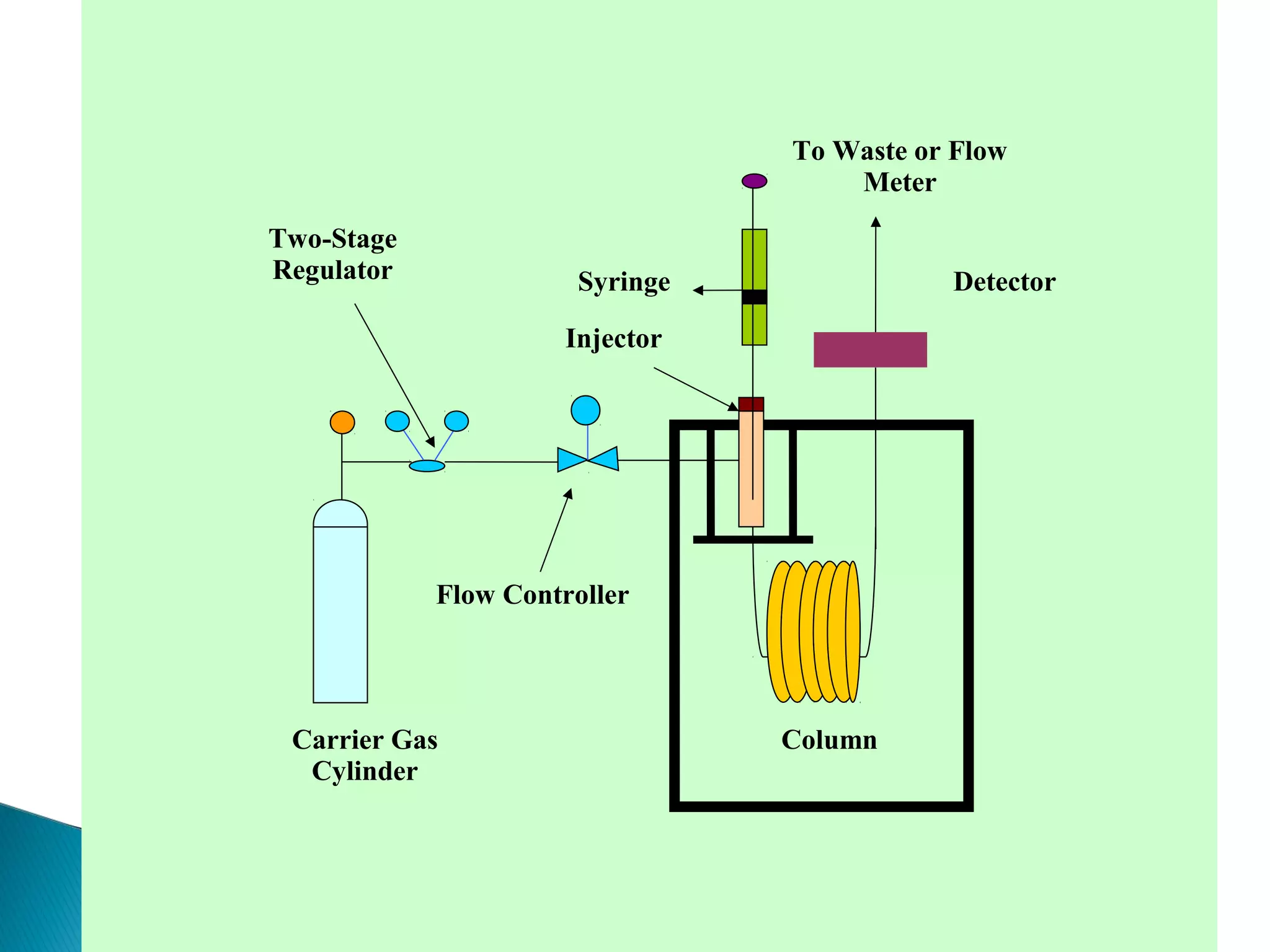
Syringe
Injector
Detector
Carrier Gas
Cylinder
Column
To Waste or Flow
Meter
Flow Controller
Two-Stage
Regulator
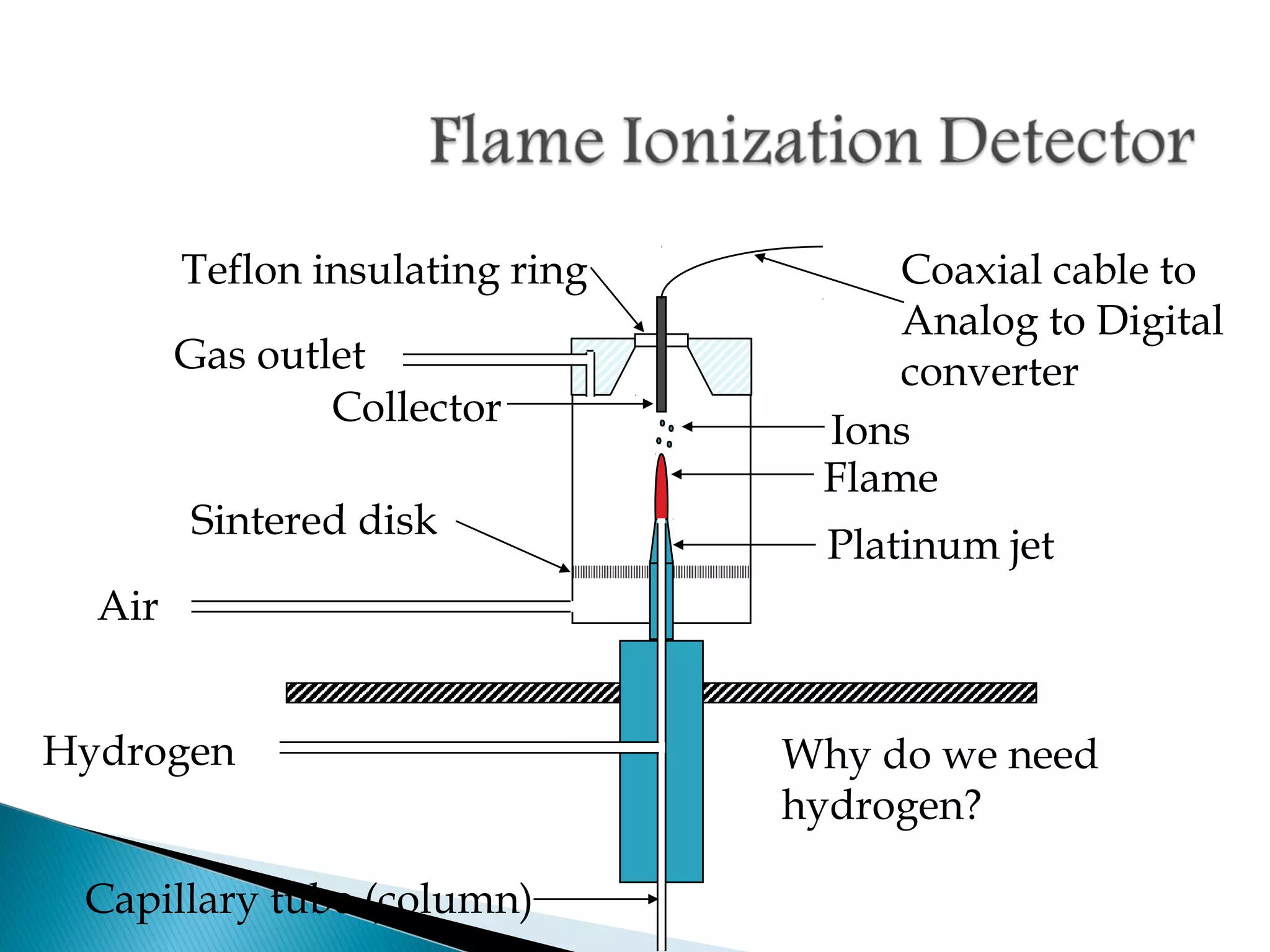
Hydrogen
Air
Capillary tube (column)
Platinum jet
Collector
Sintered disk
Teflon insulating ring
Flame
Gas outlet
Coaxial cable to
Analog to Digital
converter
Ions
Why do we need
hydrogen?
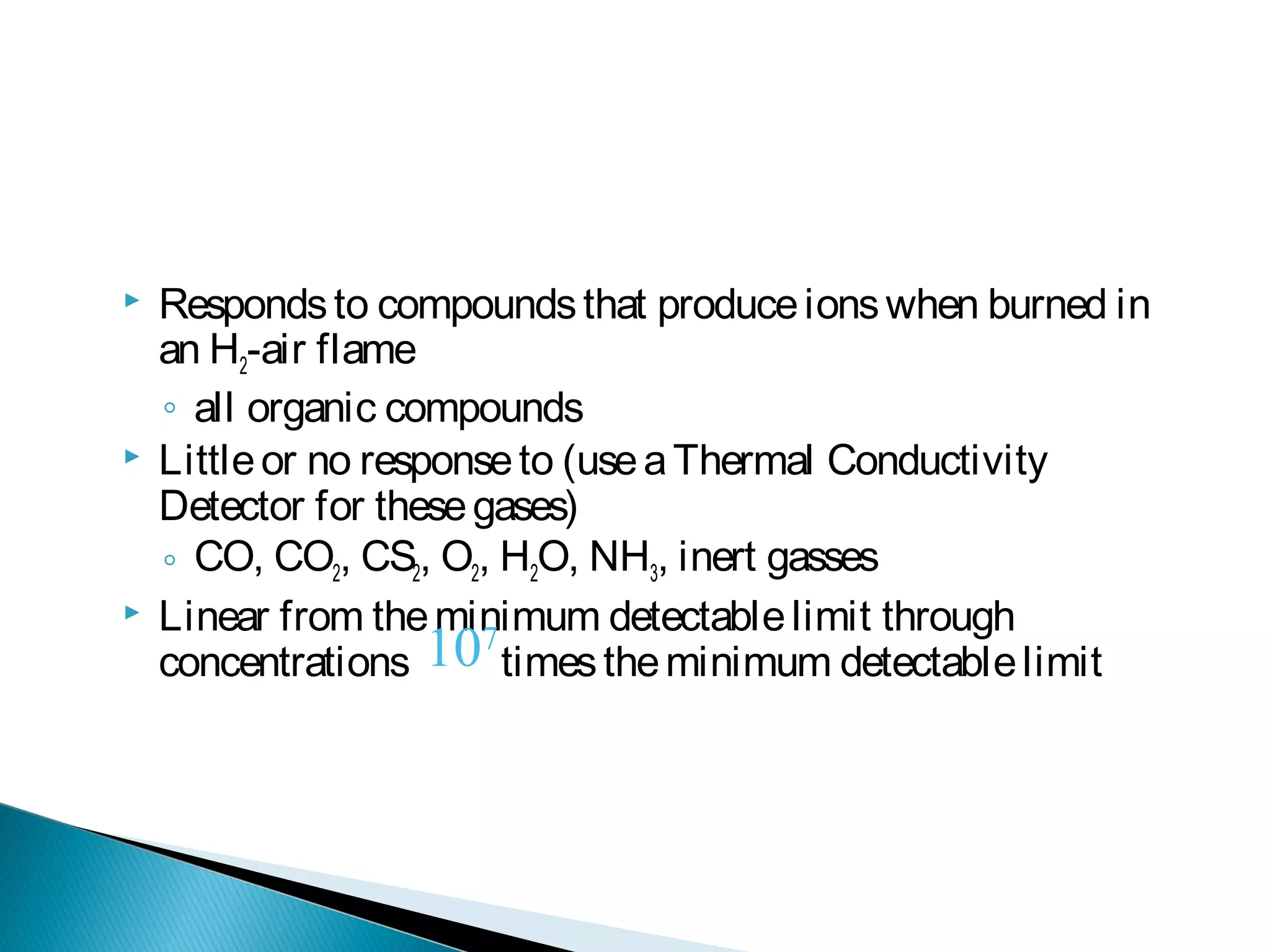
 Respondsto compoundsthat produceionswhen burned in
an H2-air flame
◦ all organic compounds
 Littleor no responseto (useaThermal Conductivity
Detector for thesegases)
◦ CO, CO2, CS2, O2, H2O, NH3, inert gasses
 Linear from theminimum detectablelimit through
concentrations timestheminimum detectablelimit107
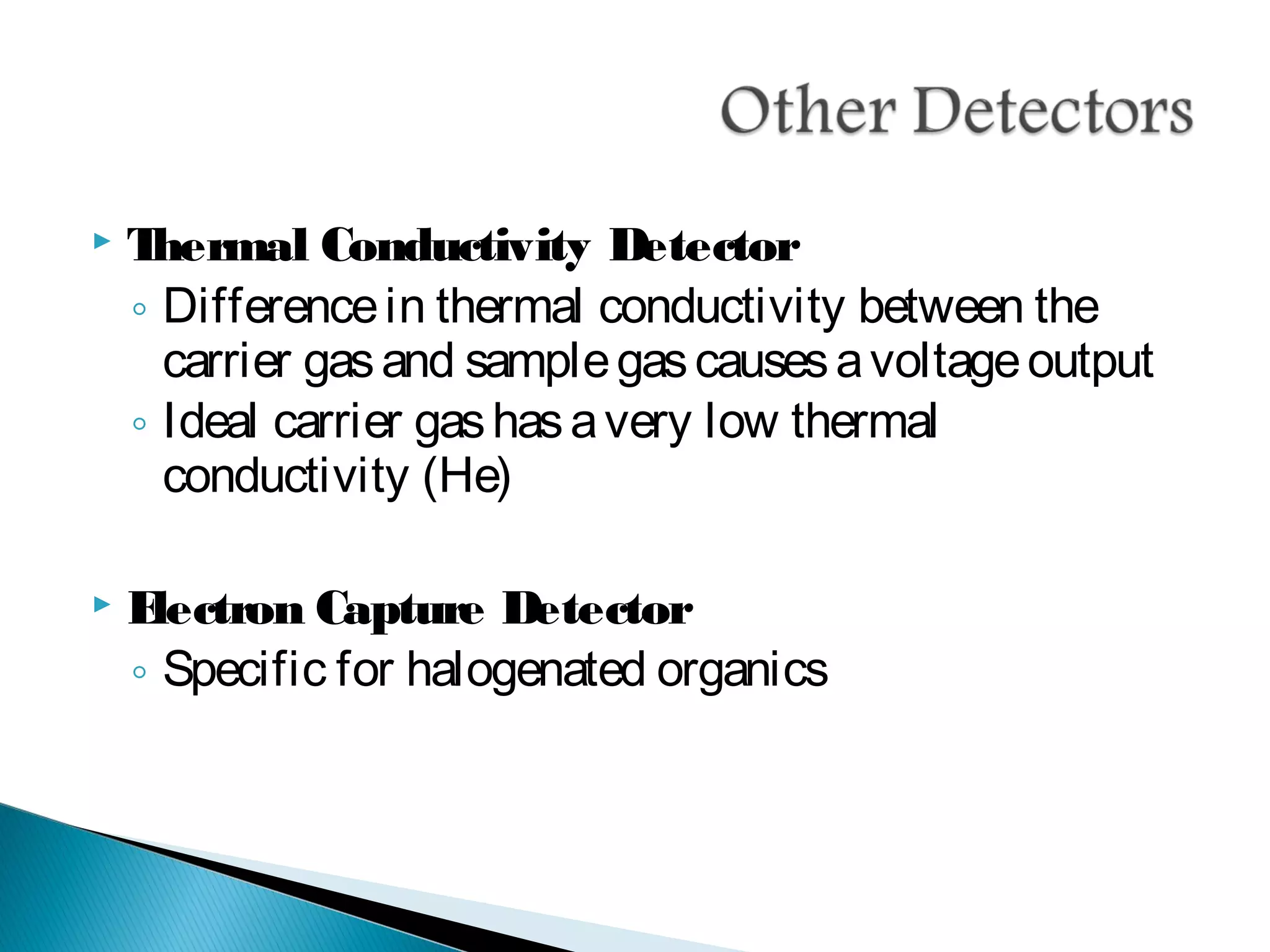
 Thermal Conductivity Detector
◦ Differencein thermal conductivity between the
carrier gasand samplegascausesavoltageoutput
◦ Ideal carrier gashasavery low thermal
conductivity (He)
 Electron Capture Detector
◦ Specific for halogenated organics
 Requiresonly very small sampleswith little
preparation
 Good at separating complex mixturesinto
components
 Resultsarerapidly obtained (1 to 100 minutes)
 Very high precision
 Only instrument with thesensitivity to detect volatile
organic mixturesof low concentrations
 Equipment isnot very complex (sophisticated oven)
 Only volatilesamplesor thesamplewhich can bemade
volatileareseparated by thismethod.
 During injection of thegaseoussample proper attention is
required.
 Thesampleof gaswhich isabout to inject must bethermally
stableso that it doesnot get degraded when heated.
gas Compound must exist asa____ at atemperaturethat
can beproduced by theGC and withstood by the
column (up to 450°C)
 Alcoholsin blood
 Aromatics(benzene, toluene, ethylbenzene, xylene)
 Flavorsand Fragrances
 Permanent gases(H2, N2, O2, Ar, CO2, CO, CH4)
 Hydrocarbons
 Pesticides, Herbicides, PCBs, and Dioxins
 Solvents
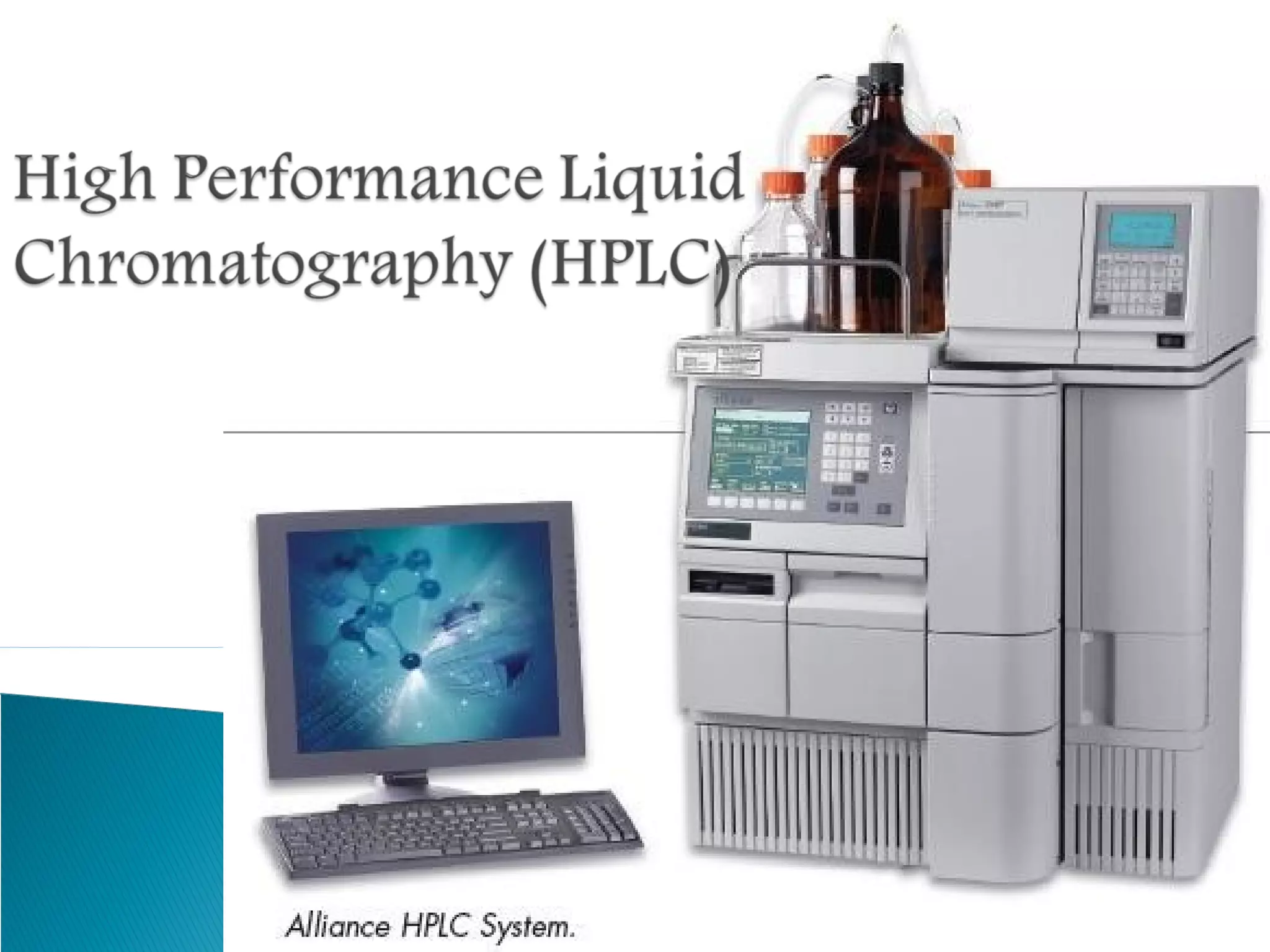
 Originally referred to asHigh-Pressure Liquid
Chromatography
 Now morecommonly called High
Performance Liquid Chromatography
 HPLC isaform of liquid chromatography used to
separatecompoundsthat aredissolved in solution.
 Mobilephase– liquid
 Stationary phase- solid
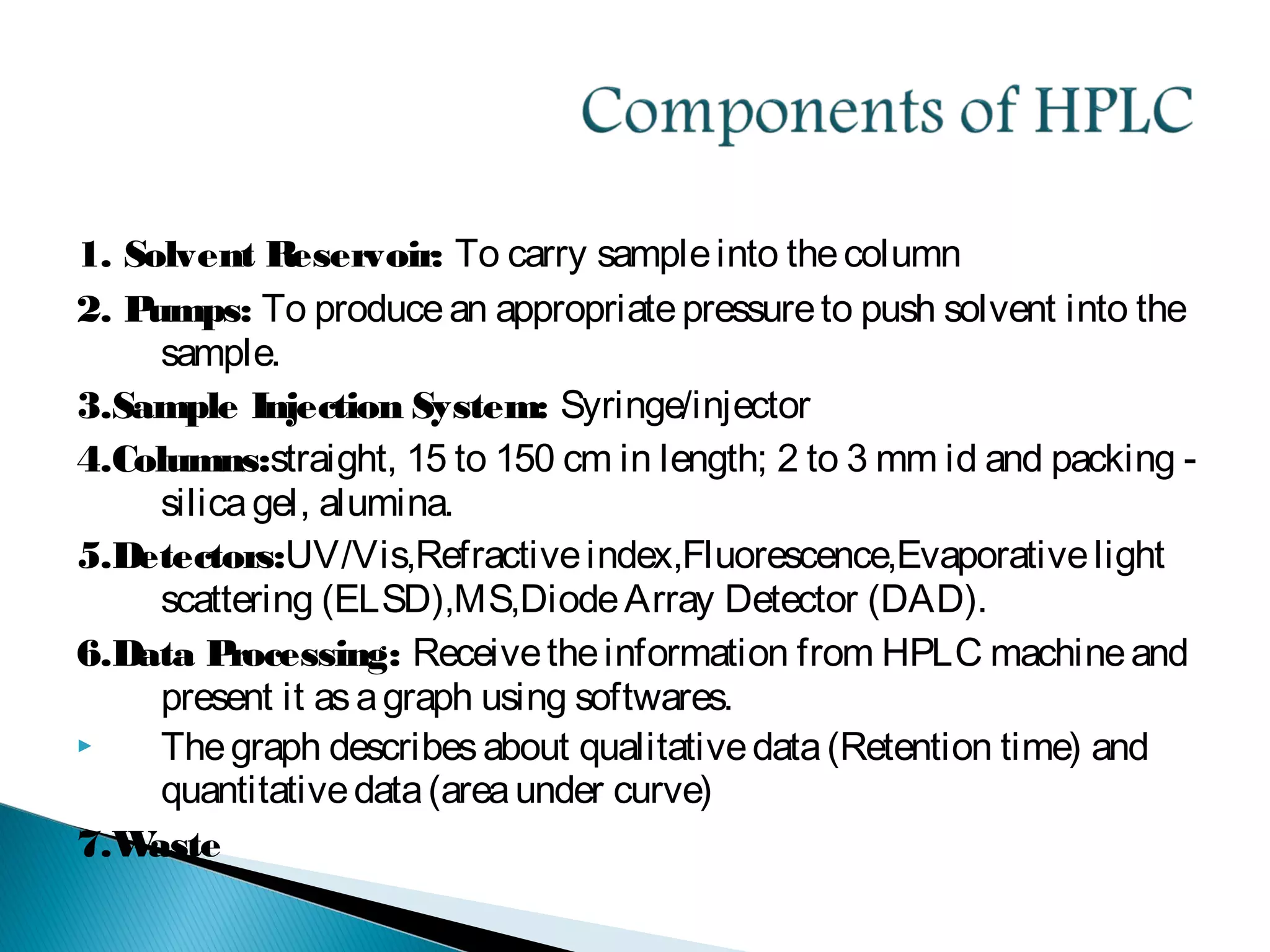
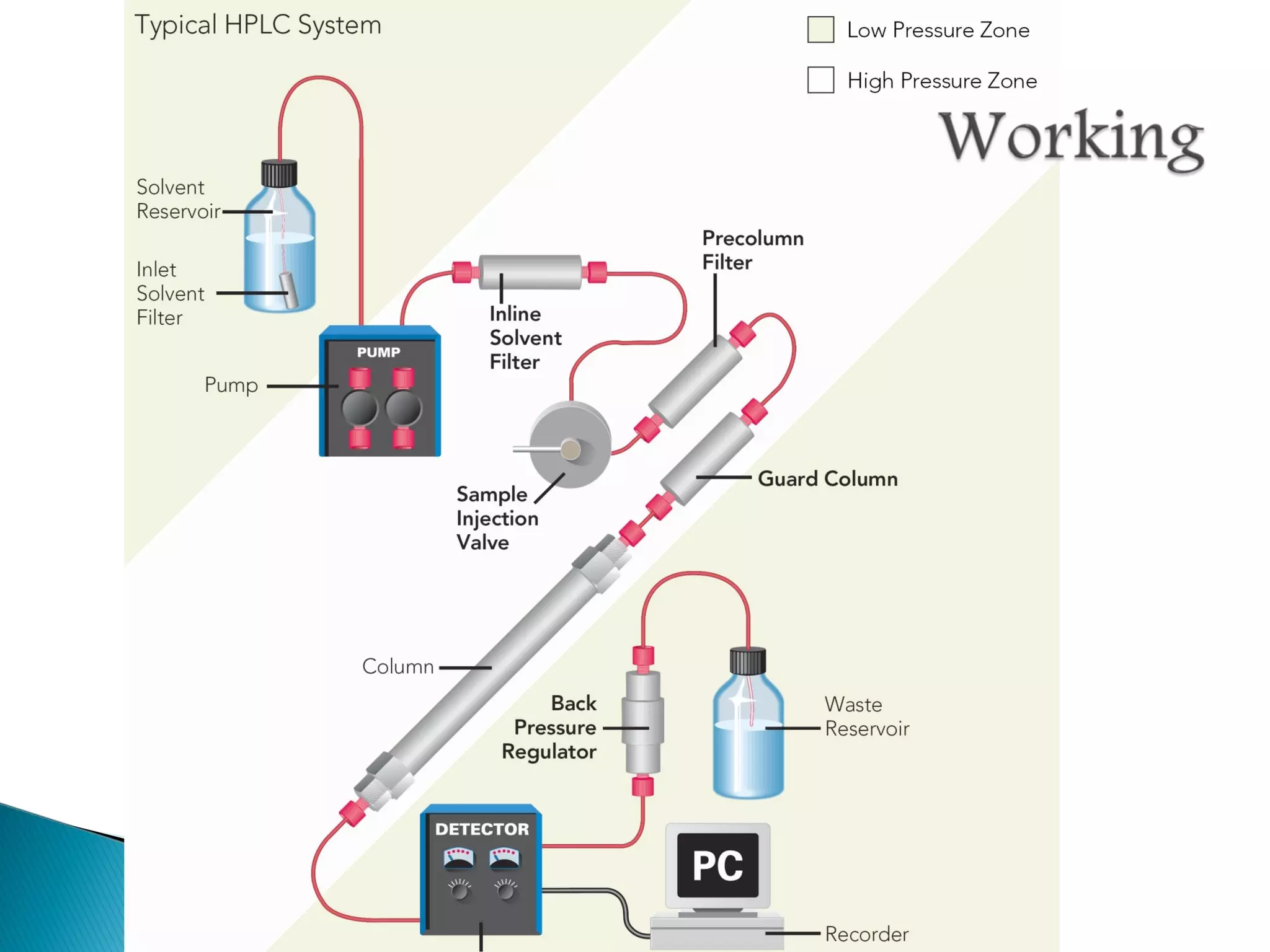
1. Solvent Reservoir: To carry sampleinto thecolumn
2. Pumps: To producean appropriatepressureto push solvent into the
sample.
3.Sample Injection System: Syringe/injector
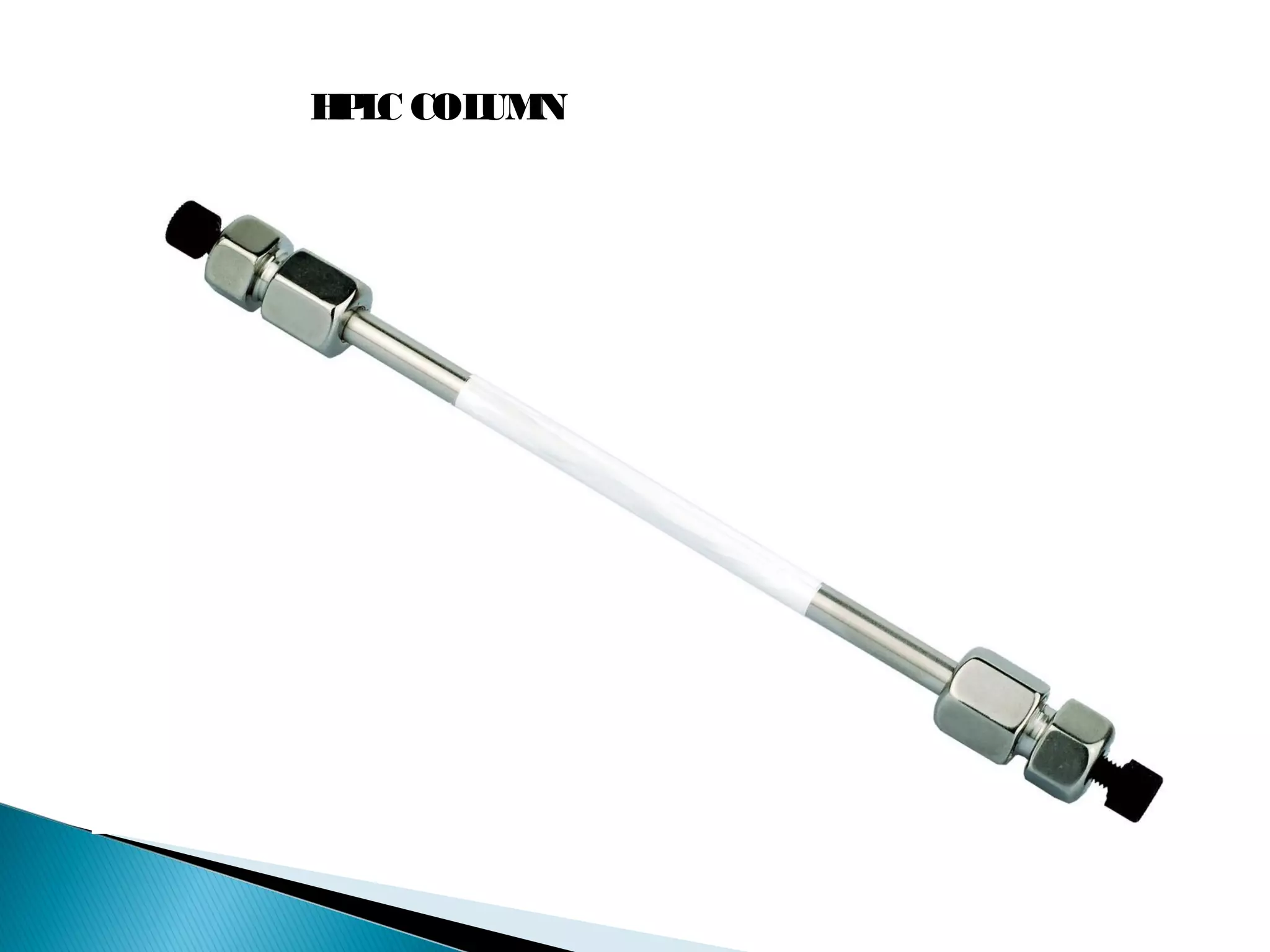
4.Columns:straight, 15 to 150 cm in length; 2 to 3 mm id and packing -
silicagel, alumina.
5.Detectors:UV/Vis,Refractiveindex,Fluorescence,Evaporativelight
scattering (ELSD),MS,DiodeArray Detector (DAD).
6.Data Processing: Receivetheinformation from HPLC machineand
present it asagraph using softwares.
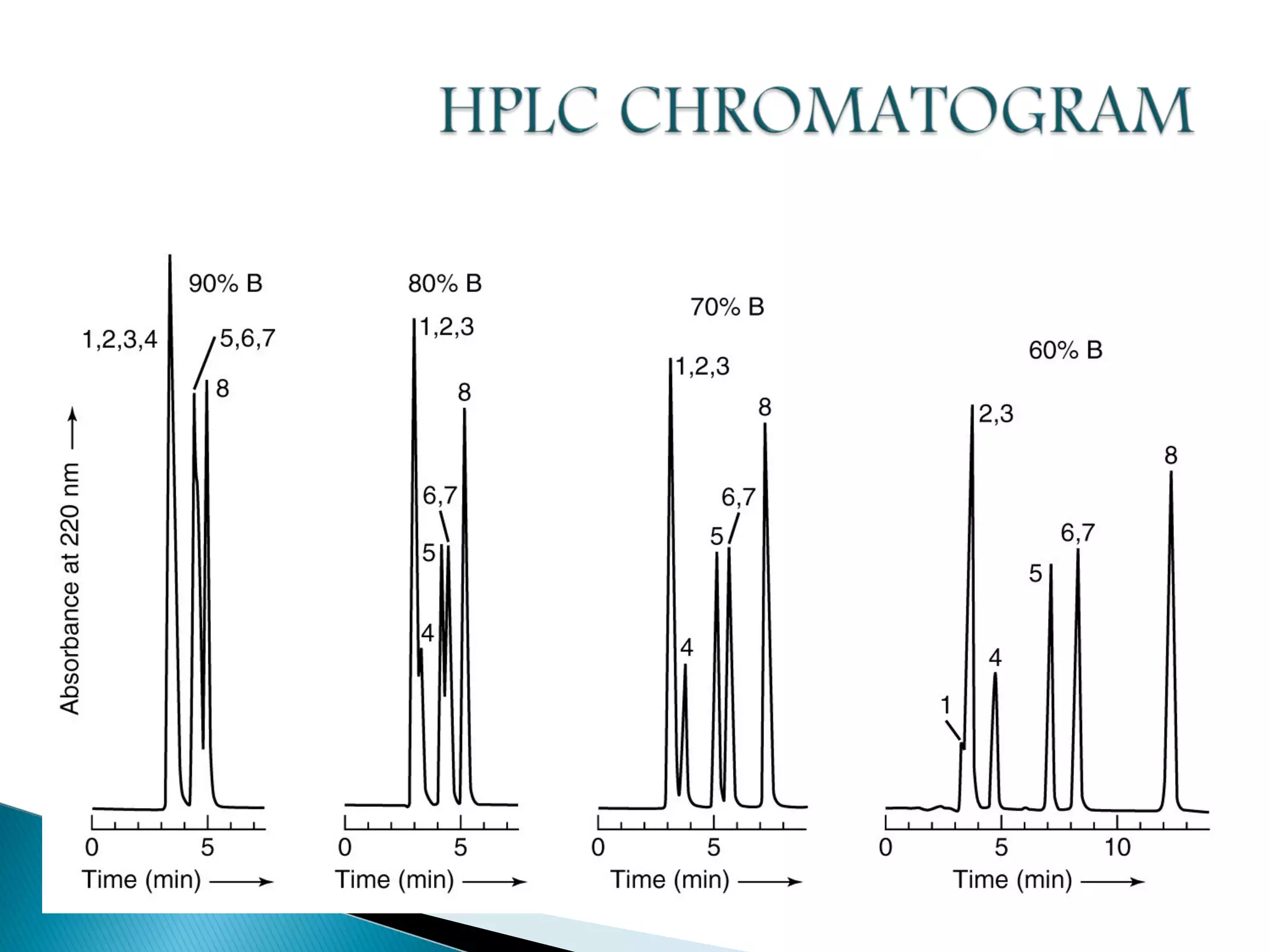
 Thegraph describesabout qualitativedata(Retention time) and
quantitativedata(areaunder curve)
7.Waste
HPLC COLUMN
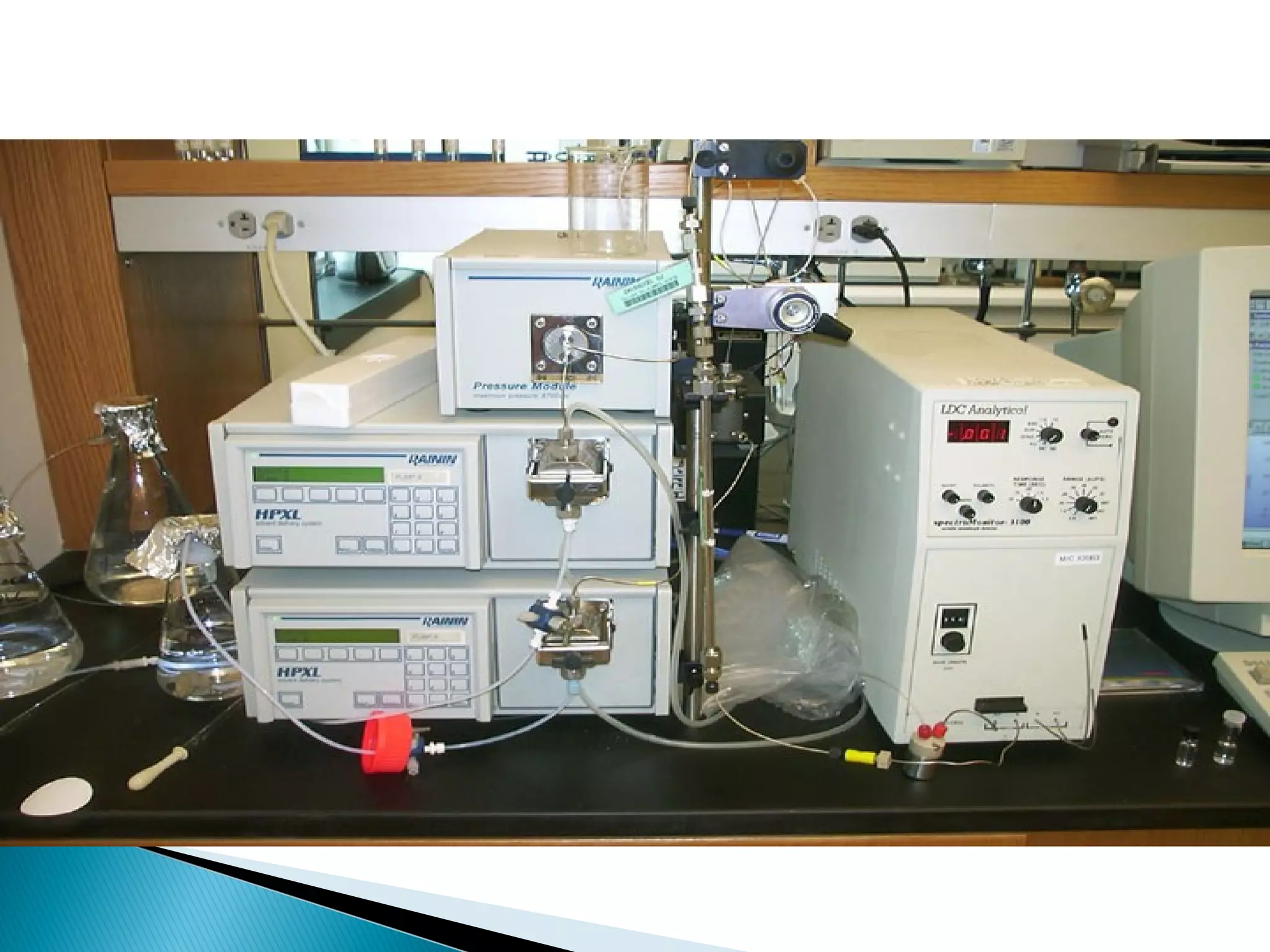
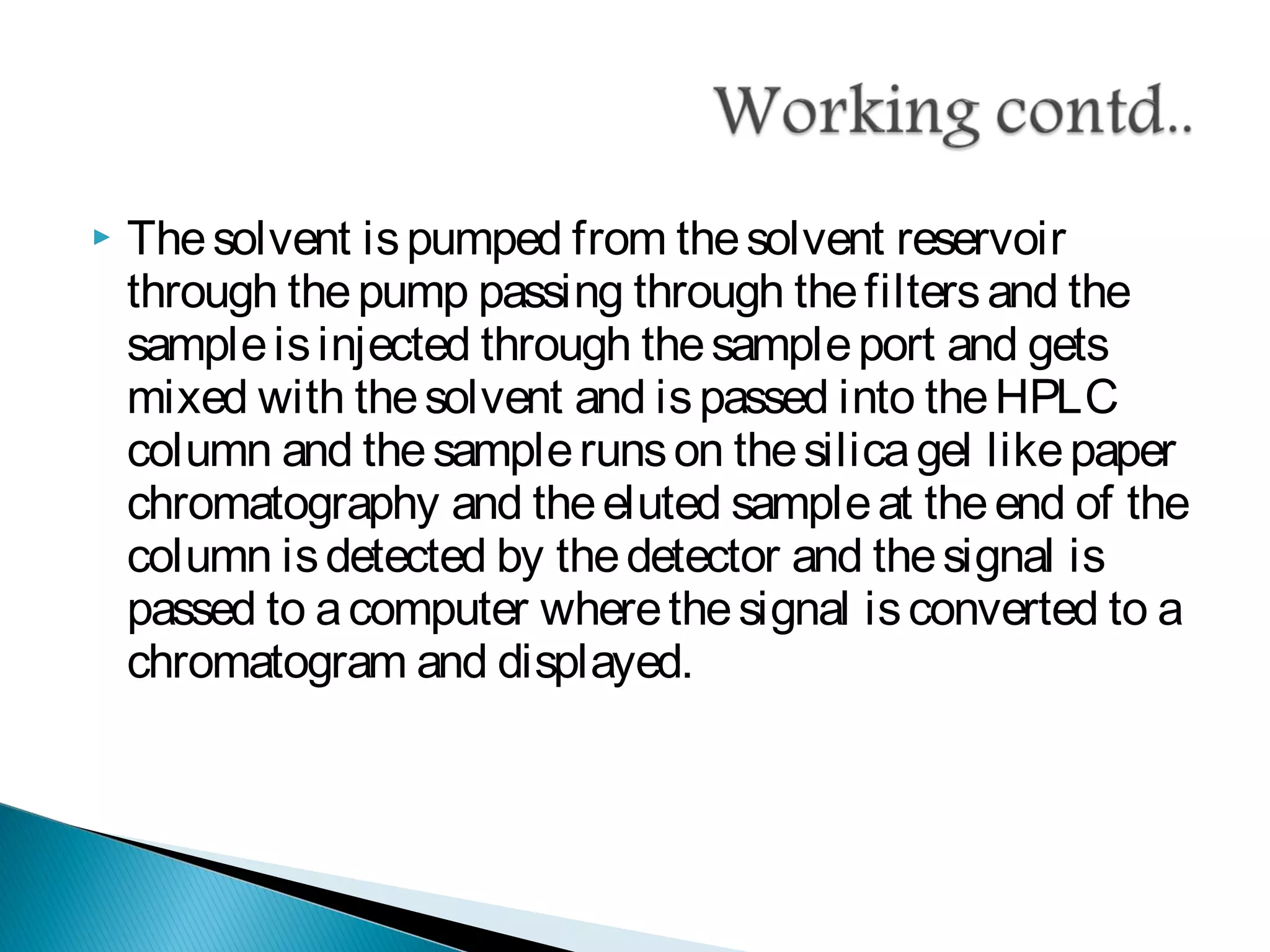
 Thesolvent ispumped from thesolvent reservoir
through thepump passing through thefiltersand the
sampleisinjected through thesampleport and gets
mixed with thesolvent and ispassed into theHPLC
column and thesamplerunson thesilicagel likepaper
chromatography and theeluted sampleat theend of the
column isdetected by thedetector and thesignal is
passed to acomputer wherethesignal isconverted to a
chromatogram and displayed.
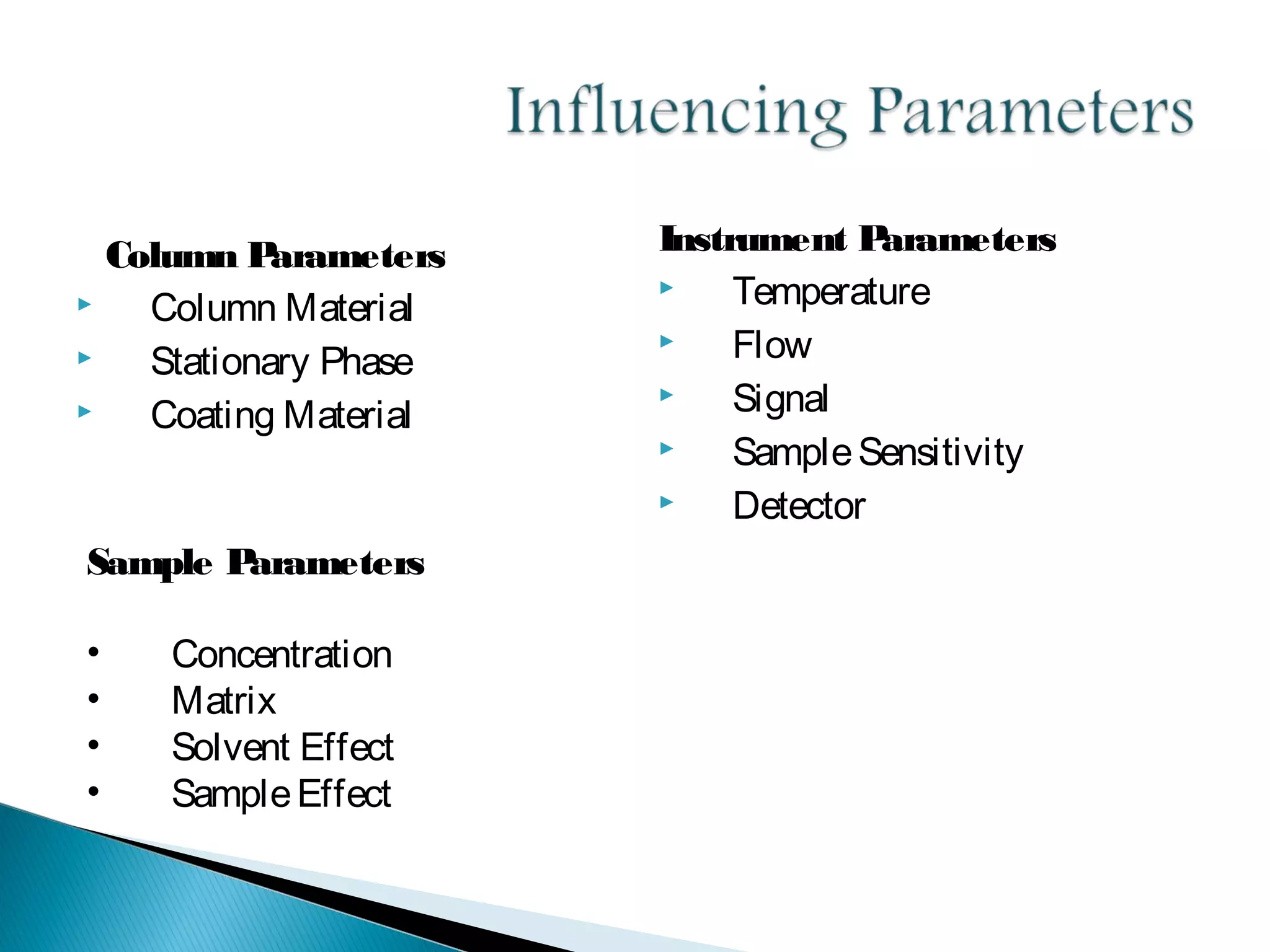
Column Parameters
 Column Material
 Stationary Phase
 Coating Material
Instrument Parameters
 Temperature
 Flow
 Signal
 SampleSensitivity
 Detector
Sample Parameters
• Concentration
• Matrix
• Solvent Effect
• SampleEffect
 Speed in minutes
 High resolution
 High accuracy and reproducibility.
 Automated
 Need askill to run theinstruments
 High cost
 Complexity
 Low sensitivity for few compounds.
1. Pharmaceuticalsindustry
 To control thedrug stability
 Quantity of drug determination from pharmaceutical dosage
forms, ex. Paracetamol determination in panadol tablet
 Quantity of drug determination from biological fluids, ex:
blood glucoselevel
2. Analysisof natural contamination
- Phenol & Mercury from seawater
3. Forensic test
- Determination of steroid in blood, urine& sweat.
- Detection of psychotropic drug in plasma
4. Clinical test
- Monitoring of hepatic chirosispatient through
aquaporin 2 in theurine.
5. Food and essencemanufacture
- sweetener analysisin thefruit juice
- preservativeanalysisin sausage.
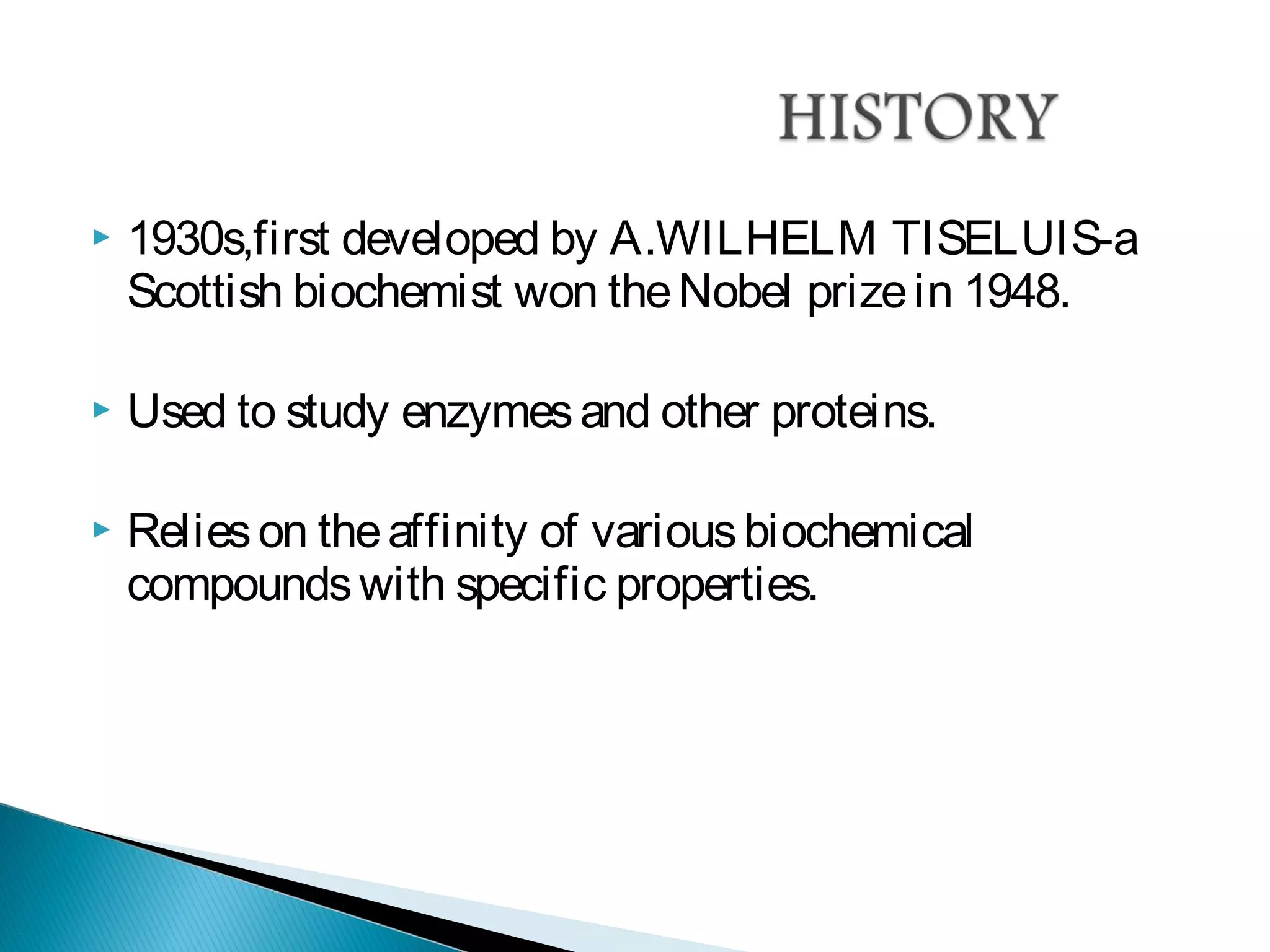
 1930s,first developed by A.WILHELM TISELUIS-a
Scottish biochemist won theNobel prizein 1948.
 Used to study enzymesand other proteins.
 Relieson theaffinity of variousbiochemical
compoundswith specific properties.
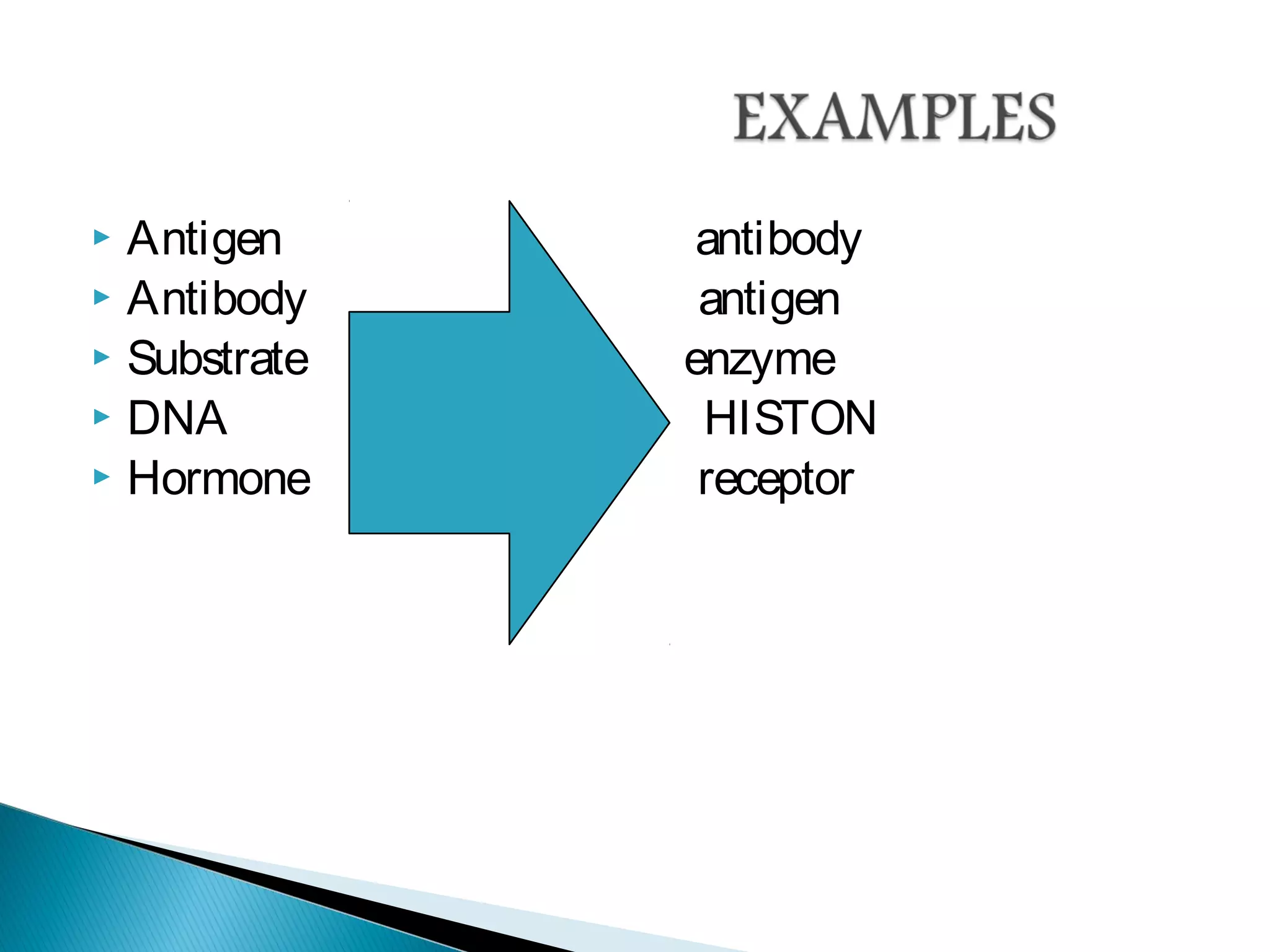
 Antigen antibody
 Antibody antigen
 Substrate enzyme
 DNA HISTON
 Hormone receptor
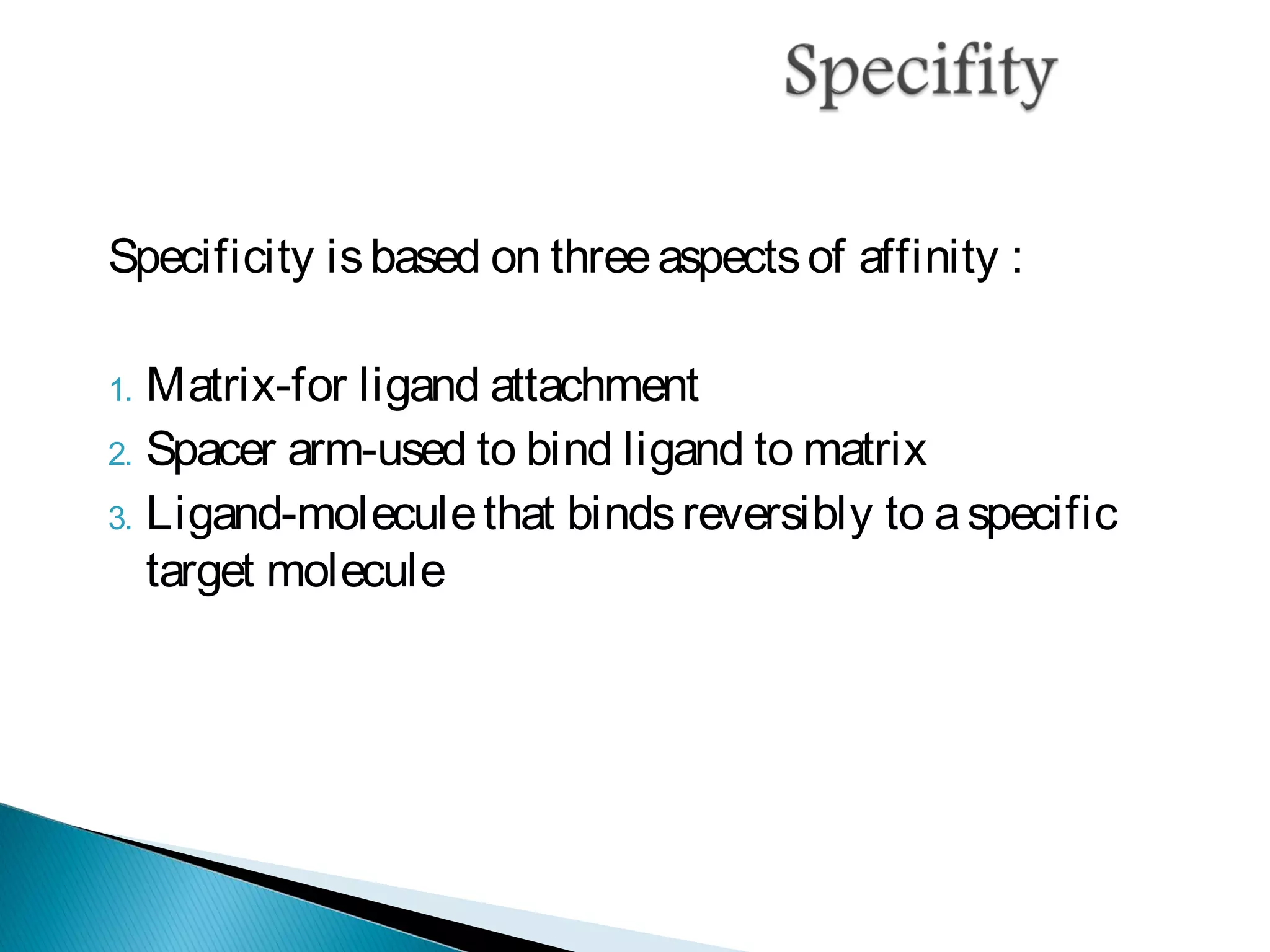
Specificity isbased on threeaspectsof affinity :
1. Matrix-for ligand attachment
2. Spacer arm-used to bind ligand to matrix
3. Ligand-moleculethat bindsreversibly to aspecific
target molecule
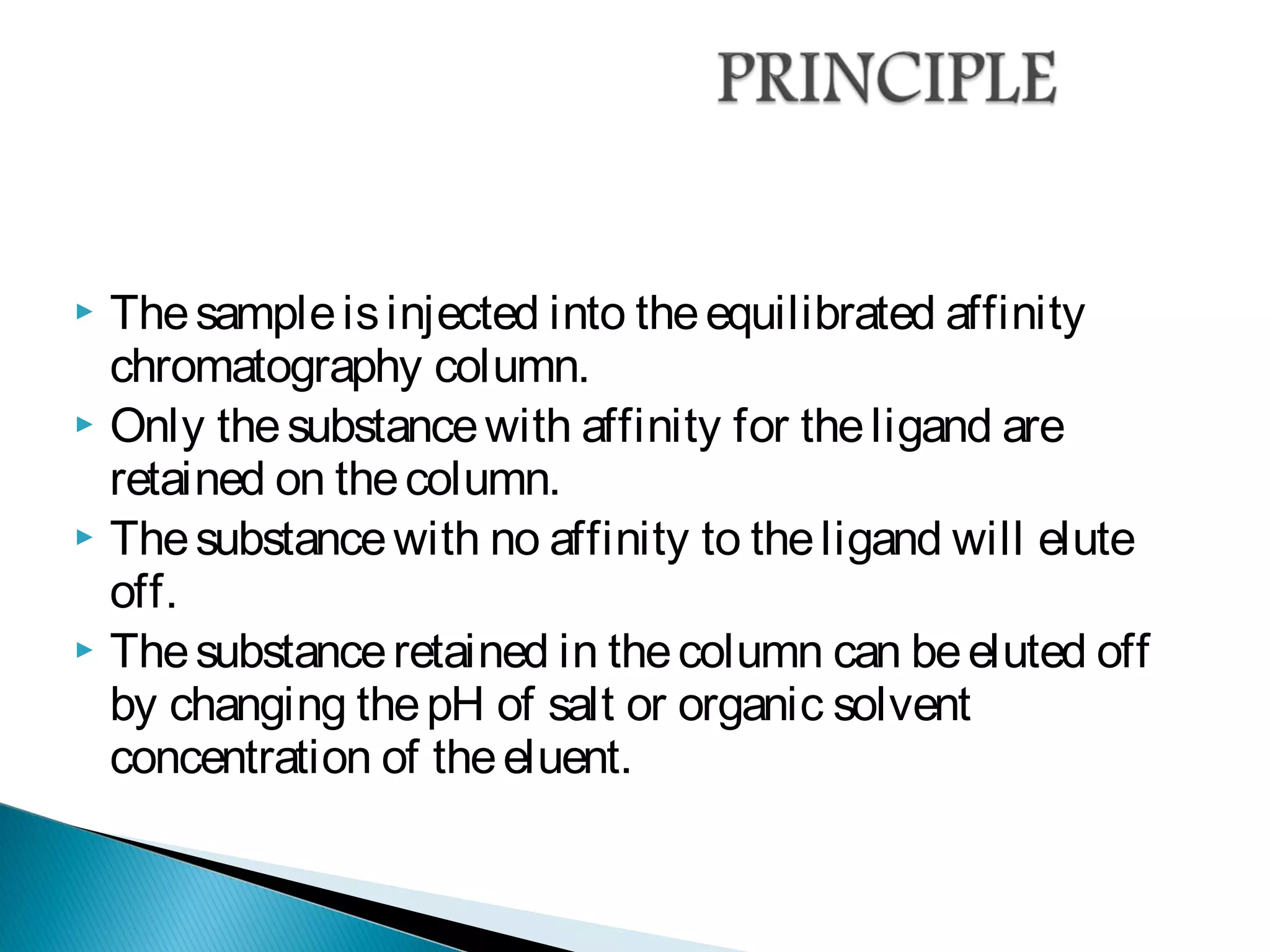
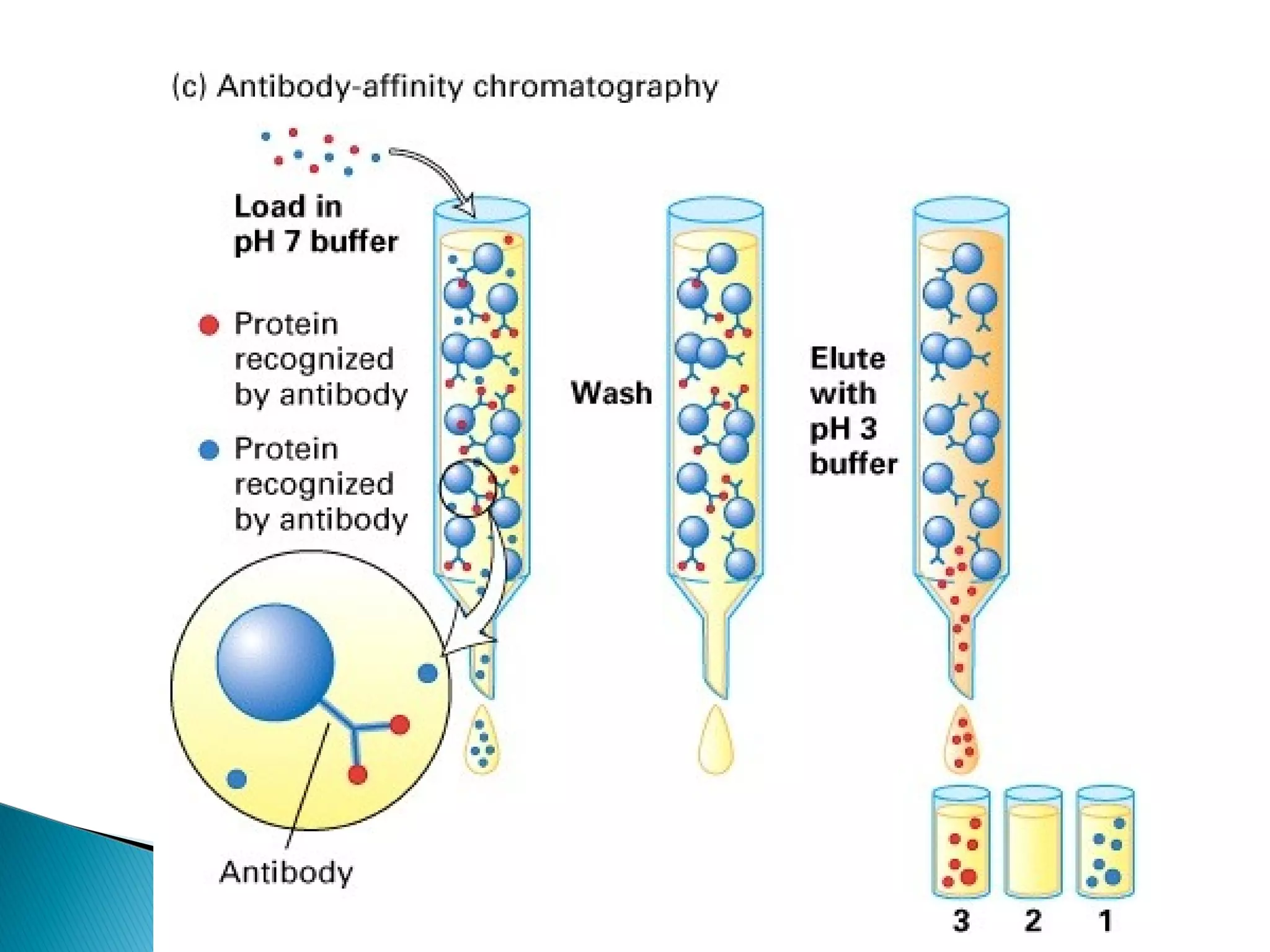
 Thesampleisinjected into theequilibrated affinity
chromatography column.
 Only thesubstancewith affinity for theligand are
retained on thecolumn.
 Thesubstancewith no affinity to theligand will elute
off.
 Thesubstanceretained in thecolumn can beeluted off
by changing thepH of salt or organic solvent
concentration of theeluent.
 Used in Genetic Engineering for nucleic acid
purification
 Vaccineproduction-antibody purification from blood
 Basic metabolism research-protein or enzyme
purification from cell freeextracts.
1. Extremely high specificity
2. High degreesof purity can beobtained
3. Theprocessisreproducible
 Expensiveligands
 Leakageof ligand
 Degradation of thesolid support
 Limited lifetme
 Non specific adsorption
 Relatively low productivity
High performance-liquid-chromatography-hplc

High performance-liquid-chromatography-hplc

  • 1.
  • 2.
     “color writing” Isatechniqueused to separateand identify the componentsof amixture.  Ettre& Zlatkis, 1967 introduced “ThePracticeof GasChromatography.  Gaschromatography isatechniqueused for separation of volatilesubstanceswherethemobile phaseisgasand stationary phasemay besolid/liquid.
  • 4.
     A samplecontainingthematerialsto beseparated isinjected into thegaschromatograph. A mobilephase(carrier gas) movesthrough acolumn that containsawall coated or granular solid coated stationary phase. Asthecarrier gasflows through thecolumn, thecomponentsof thesamplecomein contact with thestationary phase. Thedifferent componentsof thesamplehavedifferent affinitiesfor thestationary phase, which resultsin differential migration of solutes, thusleading to separation
  • 5.
    Syringe Injector Detector Carrier Gas Cylinder Column To Wasteor Flow Meter Flow Controller Two-Stage Regulator
  • 6.
    Hydrogen Air Capillary tube (column) Platinumjet Collector Sintered disk Teflon insulating ring Flame Gas outlet Coaxial cable to Analog to Digital converter Ions Why do we need hydrogen?
  • 7.
     Respondsto compoundsthatproduceionswhen burned in an H2-air flame ◦ all organic compounds  Littleor no responseto (useaThermal Conductivity Detector for thesegases) ◦ CO, CO2, CS2, O2, H2O, NH3, inert gasses  Linear from theminimum detectablelimit through concentrations timestheminimum detectablelimit107
  • 8.
     Thermal ConductivityDetector ◦ Differencein thermal conductivity between the carrier gasand samplegascausesavoltageoutput ◦ Ideal carrier gashasavery low thermal conductivity (He)  Electron Capture Detector ◦ Specific for halogenated organics
  • 9.
     Requiresonly verysmall sampleswith little preparation  Good at separating complex mixturesinto components  Resultsarerapidly obtained (1 to 100 minutes)  Very high precision  Only instrument with thesensitivity to detect volatile organic mixturesof low concentrations  Equipment isnot very complex (sophisticated oven)
  • 10.
     Only volatilesamplesorthesamplewhich can bemade volatileareseparated by thismethod.  During injection of thegaseoussample proper attention is required.  Thesampleof gaswhich isabout to inject must bethermally stableso that it doesnot get degraded when heated.
  • 11.
    gas Compound mustexist asa____ at atemperaturethat can beproduced by theGC and withstood by the column (up to 450°C)  Alcoholsin blood  Aromatics(benzene, toluene, ethylbenzene, xylene)  Flavorsand Fragrances  Permanent gases(H2, N2, O2, Ar, CO2, CO, CH4)  Hydrocarbons  Pesticides, Herbicides, PCBs, and Dioxins  Solvents
  • 13.
     Originally referredto asHigh-Pressure Liquid Chromatography  Now morecommonly called High Performance Liquid Chromatography  HPLC isaform of liquid chromatography used to separatecompoundsthat aredissolved in solution.  Mobilephase– liquid  Stationary phase- solid
  • 14.
    1. Solvent Reservoir:To carry sampleinto thecolumn 2. Pumps: To producean appropriatepressureto push solvent into the sample. 3.Sample Injection System: Syringe/injector 4.Columns:straight, 15 to 150 cm in length; 2 to 3 mm id and packing - silicagel, alumina. 5.Detectors:UV/Vis,Refractiveindex,Fluorescence,Evaporativelight scattering (ELSD),MS,DiodeArray Detector (DAD). 6.Data Processing: Receivetheinformation from HPLC machineand present it asagraph using softwares.  Thegraph describesabout qualitativedata(Retention time) and quantitativedata(areaunder curve) 7.Waste
  • 16.
  • 18.
     Thesolvent ispumpedfrom thesolvent reservoir through thepump passing through thefiltersand the sampleisinjected through thesampleport and gets mixed with thesolvent and ispassed into theHPLC column and thesamplerunson thesilicagel likepaper chromatography and theeluted sampleat theend of the column isdetected by thedetector and thesignal is passed to acomputer wherethesignal isconverted to a chromatogram and displayed.
  • 19.
    Column Parameters  ColumnMaterial  Stationary Phase  Coating Material Instrument Parameters  Temperature  Flow  Signal  SampleSensitivity  Detector Sample Parameters • Concentration • Matrix • Solvent Effect • SampleEffect
  • 21.
     Speed inminutes  High resolution  High accuracy and reproducibility.  Automated
  • 22.
     Need askillto run theinstruments  High cost  Complexity  Low sensitivity for few compounds.
  • 23.
    1. Pharmaceuticalsindustry  Tocontrol thedrug stability  Quantity of drug determination from pharmaceutical dosage forms, ex. Paracetamol determination in panadol tablet  Quantity of drug determination from biological fluids, ex: blood glucoselevel 2. Analysisof natural contamination - Phenol & Mercury from seawater 3. Forensic test - Determination of steroid in blood, urine& sweat. - Detection of psychotropic drug in plasma
  • 24.
    4. Clinical test -Monitoring of hepatic chirosispatient through aquaporin 2 in theurine. 5. Food and essencemanufacture - sweetener analysisin thefruit juice - preservativeanalysisin sausage.
  • 26.
     1930s,first developedby A.WILHELM TISELUIS-a Scottish biochemist won theNobel prizein 1948.  Used to study enzymesand other proteins.  Relieson theaffinity of variousbiochemical compoundswith specific properties.
  • 27.
     Antigen antibody Antibody antigen  Substrate enzyme  DNA HISTON  Hormone receptor
  • 28.
    Specificity isbased onthreeaspectsof affinity : 1. Matrix-for ligand attachment 2. Spacer arm-used to bind ligand to matrix 3. Ligand-moleculethat bindsreversibly to aspecific target molecule
  • 29.
     Thesampleisinjected intotheequilibrated affinity chromatography column.  Only thesubstancewith affinity for theligand are retained on thecolumn.  Thesubstancewith no affinity to theligand will elute off.  Thesubstanceretained in thecolumn can beeluted off by changing thepH of salt or organic solvent concentration of theeluent.
  • 32.
     Used inGenetic Engineering for nucleic acid purification  Vaccineproduction-antibody purification from blood  Basic metabolism research-protein or enzyme purification from cell freeextracts.
  • 33.
    1. Extremely highspecificity 2. High degreesof purity can beobtained 3. Theprocessisreproducible
  • 34.
     Expensiveligands  Leakageofligand  Degradation of thesolid support  Limited lifetme  Non specific adsorption  Relatively low productivity