Who is Jerome Bruner?
Jerome Bruner and the Process of Thought
Four Major Principles of Bruner’s Theory
Discovery Learning
Jerome Bruner and Discovery Learning: An
Early Constructivist Perspective
Facets of Constructivism
Applying Constructivist Perspective
• Born New York City, October 1, 1915
• He received his A.B. degree from Duke
University in 1937 and his Ph.D. in 1947
from Harvard.
• In 1960 Bruner published The Process
of Education.
• Howard Gardner and other young
researchers worked under Bruner and
were much-influenced by his work.
Who is
Bruner and Process of Thought
• Cognitive-gestalts position
• “Grasping the structure of a
subject is understanding it in
a way that permits many
other things to be related to
it meaningfully” (Bruner,
1962, p. 28)
“makers of
meaning in
the ordinary
conduct”
Theory of Instruction=
“Concerned with how
what one wishes to teach
can best be learned, with
improving rather than
describing learning”
Four Major Principles of Bruner’s Theory
Reinforcement
“will to
learn”
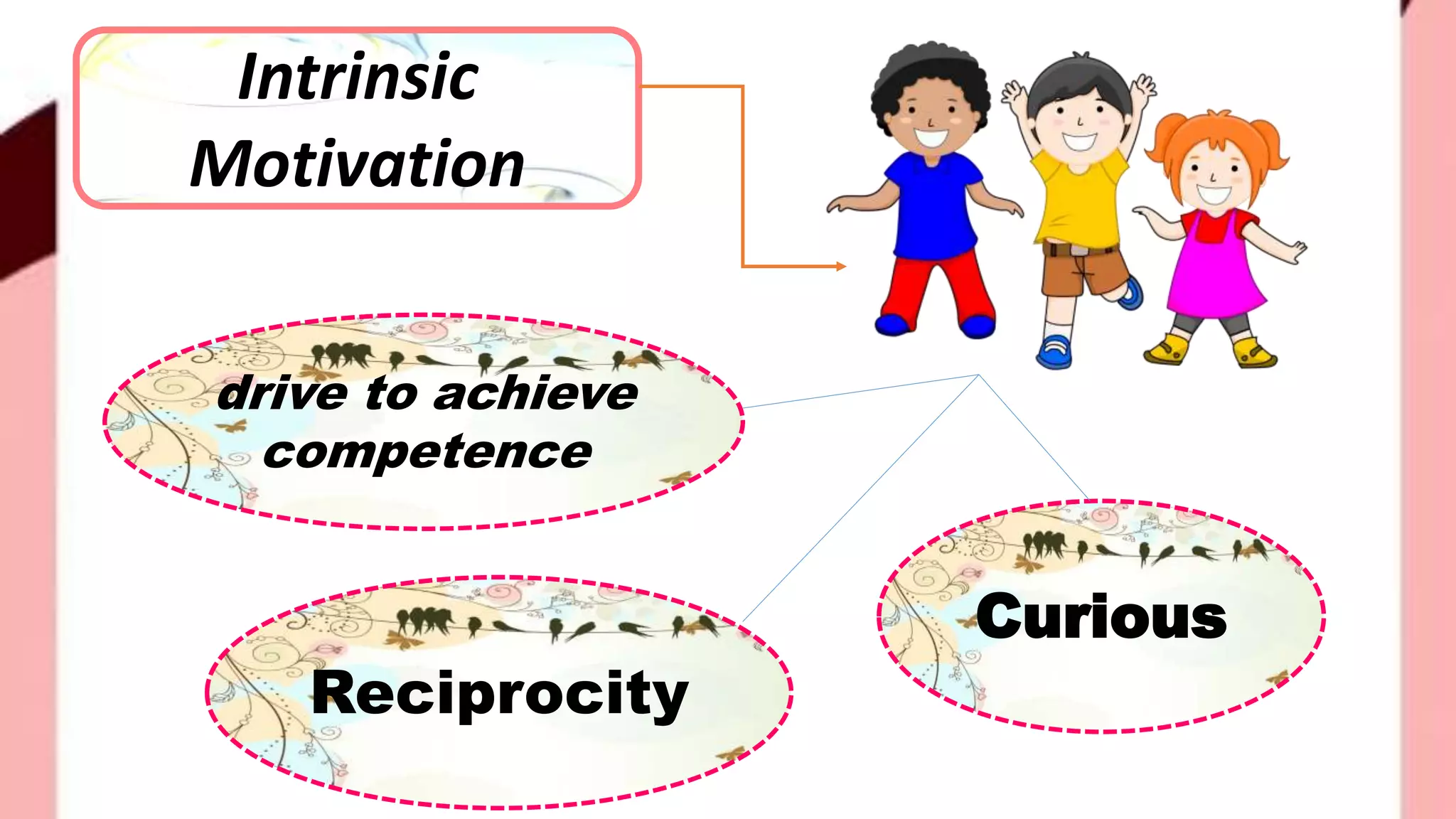
Intrinsic
Motivation
Intrinsic
Motivation
Curious
drive to achieve
competence
Reciprocity
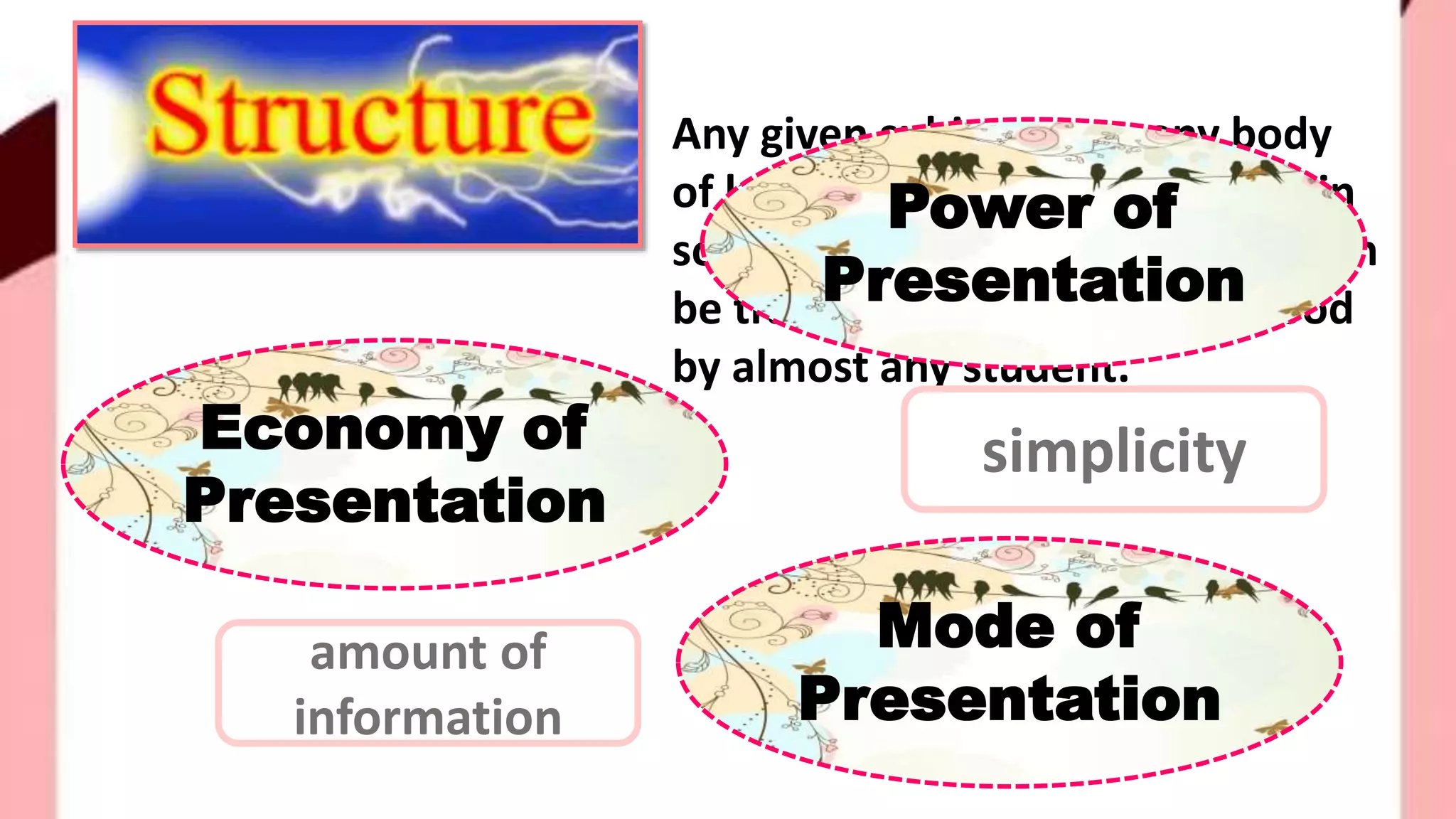
Any given subject area, any body
of knowledge, can be organized in
some optimal fashion so that it can
be transmitted to and understood
by almost any student.
Economy of
Presentation
Power of
Presentation
Mode of
Presentation
amount of
information
simplicity
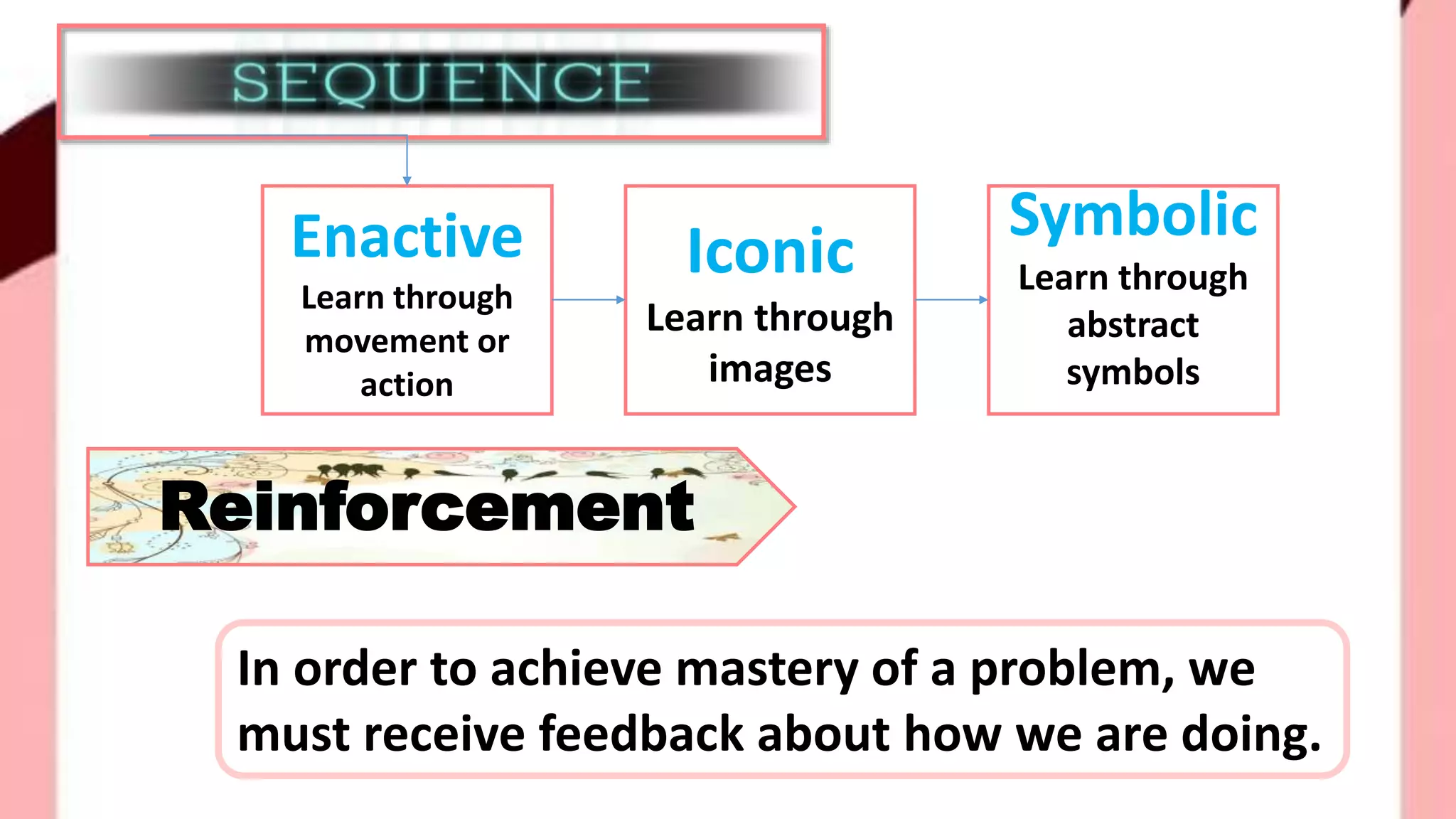
Mode of
Presentation
Technique or method
Enactive
Learn through
movement or
action
Iconic
Learn through
images
Symbolic
Learn through
abstract
symbols
Enactive
Learn through
movement or
action
Iconic
Learn through
images
Symbolic
Learn through
abstract
symbols
Reinforcement
In order to achieve mastery of a problem, we
must receive feedback about how we are doing.
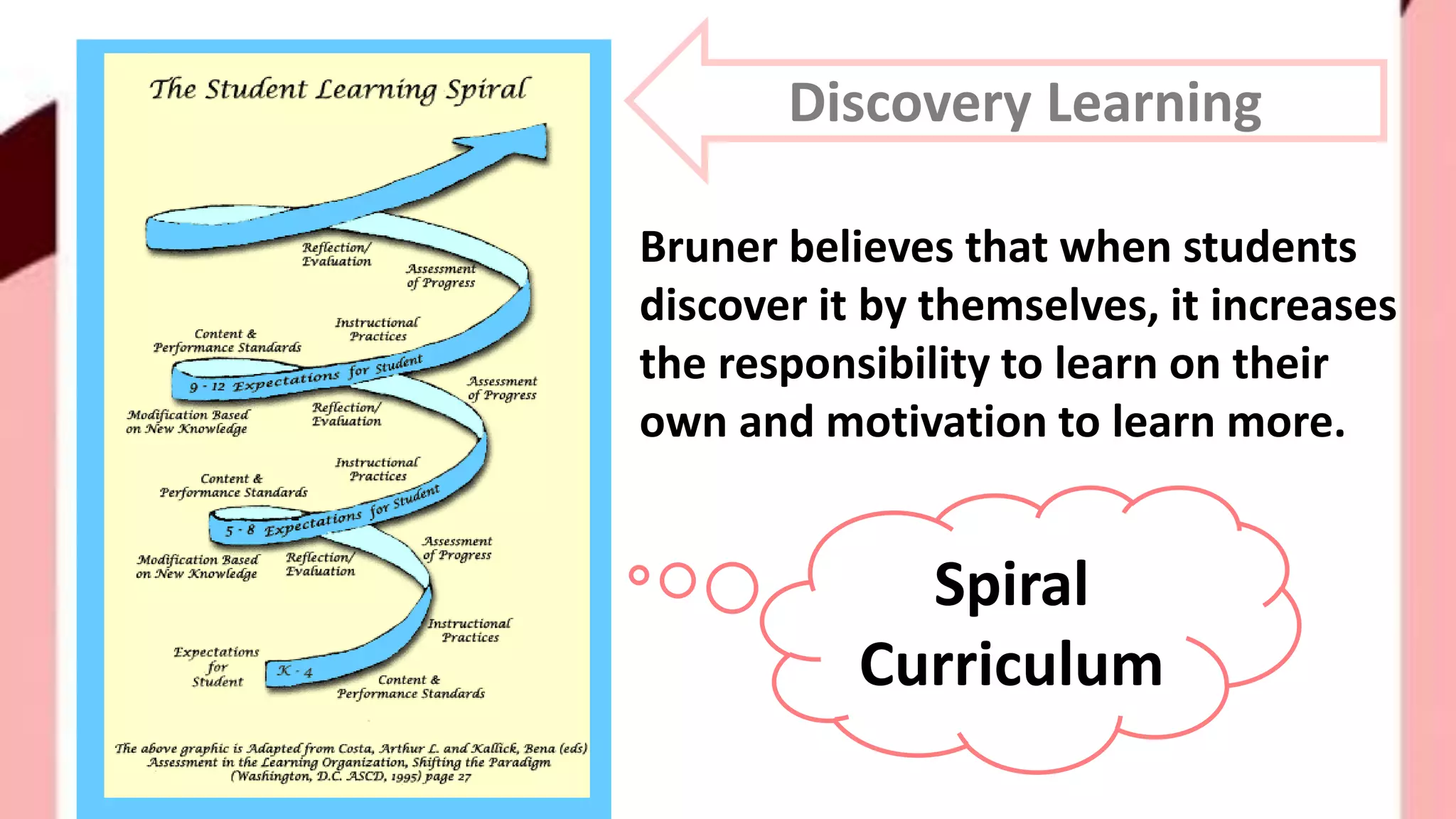
Discovery Learning
Bruner believes that when students
discover it by themselves, it increases
the responsibility to learn on their
own and motivation to learn more.
Spiral
Curriculum
Jerome Bruner and Discovery Learning: An Early
Constructivist Perspective
According to Bruner, discover how ideas relate to each
other and to existing knowledge.
Facets of Constructivism
1.Meaningful learning is the active creation of knowledge structure
based from personal experience.
2. The essence of one person’s knowledge can never be totally
transferred to another person.
3. The third facet always follows directly from the second. Truth is where
it always is for the constructivist-in the mind of the beholder.
4. Formation and changing of knowledge structures
Applying Constructivist Perspective
• Provide students with realistic problems that cannot
be solved with their current understanding level
and, by allowing them to interact mainly among
themselves, to work out new understandings.
• Teachers elicit students’ ideas and experiences in
relation to key topics, then fashion learning
situations that help students elaborate on or
restructure their current knowledge.
•Constructivist approaches include
scaffolding to support student’s
developing expertise.
•Inquiry Learning- approach in which the
teacher presents a puzzling situation and
students solve the problem by gathering
data and testing their conclusions.
•Students work individually and together
construct new more effective schemes.
Jerome Bruner and Constructivism

Jerome Bruner and Constructivism

  • 2.
    Who is JeromeBruner? Jerome Bruner and the Process of Thought Four Major Principles of Bruner’s Theory Discovery Learning Jerome Bruner and Discovery Learning: An Early Constructivist Perspective Facets of Constructivism Applying Constructivist Perspective
  • 3.
    • Born NewYork City, October 1, 1915 • He received his A.B. degree from Duke University in 1937 and his Ph.D. in 1947 from Harvard. • In 1960 Bruner published The Process of Education. • Howard Gardner and other young researchers worked under Bruner and were much-influenced by his work. Who is
  • 4.
    Bruner and Processof Thought • Cognitive-gestalts position • “Grasping the structure of a subject is understanding it in a way that permits many other things to be related to it meaningfully” (Bruner, 1962, p. 28)
  • 5.
    “makers of meaning in theordinary conduct” Theory of Instruction= “Concerned with how what one wishes to teach can best be learned, with improving rather than describing learning”
  • 6.
    Four Major Principlesof Bruner’s Theory Reinforcement “will to learn” Intrinsic Motivation
  • 7.
  • 8.
    Any given subjectarea, any body of knowledge, can be organized in some optimal fashion so that it can be transmitted to and understood by almost any student. Economy of Presentation Power of Presentation Mode of Presentation amount of information simplicity
  • 9.
    Mode of Presentation Technique ormethod Enactive Learn through movement or action Iconic Learn through images Symbolic Learn through abstract symbols
  • 10.
    Enactive Learn through movement or action Iconic Learnthrough images Symbolic Learn through abstract symbols Reinforcement In order to achieve mastery of a problem, we must receive feedback about how we are doing.
  • 11.
    Discovery Learning Bruner believesthat when students discover it by themselves, it increases the responsibility to learn on their own and motivation to learn more. Spiral Curriculum
  • 12.
    Jerome Bruner andDiscovery Learning: An Early Constructivist Perspective According to Bruner, discover how ideas relate to each other and to existing knowledge. Facets of Constructivism 1.Meaningful learning is the active creation of knowledge structure based from personal experience. 2. The essence of one person’s knowledge can never be totally transferred to another person. 3. The third facet always follows directly from the second. Truth is where it always is for the constructivist-in the mind of the beholder. 4. Formation and changing of knowledge structures
  • 13.
    Applying Constructivist Perspective •Provide students with realistic problems that cannot be solved with their current understanding level and, by allowing them to interact mainly among themselves, to work out new understandings. • Teachers elicit students’ ideas and experiences in relation to key topics, then fashion learning situations that help students elaborate on or restructure their current knowledge.
  • 14.
    •Constructivist approaches include scaffoldingto support student’s developing expertise. •Inquiry Learning- approach in which the teacher presents a puzzling situation and students solve the problem by gathering data and testing their conclusions. •Students work individually and together construct new more effective schemes.