Colorado Master Gardener Training Pruning Cuts
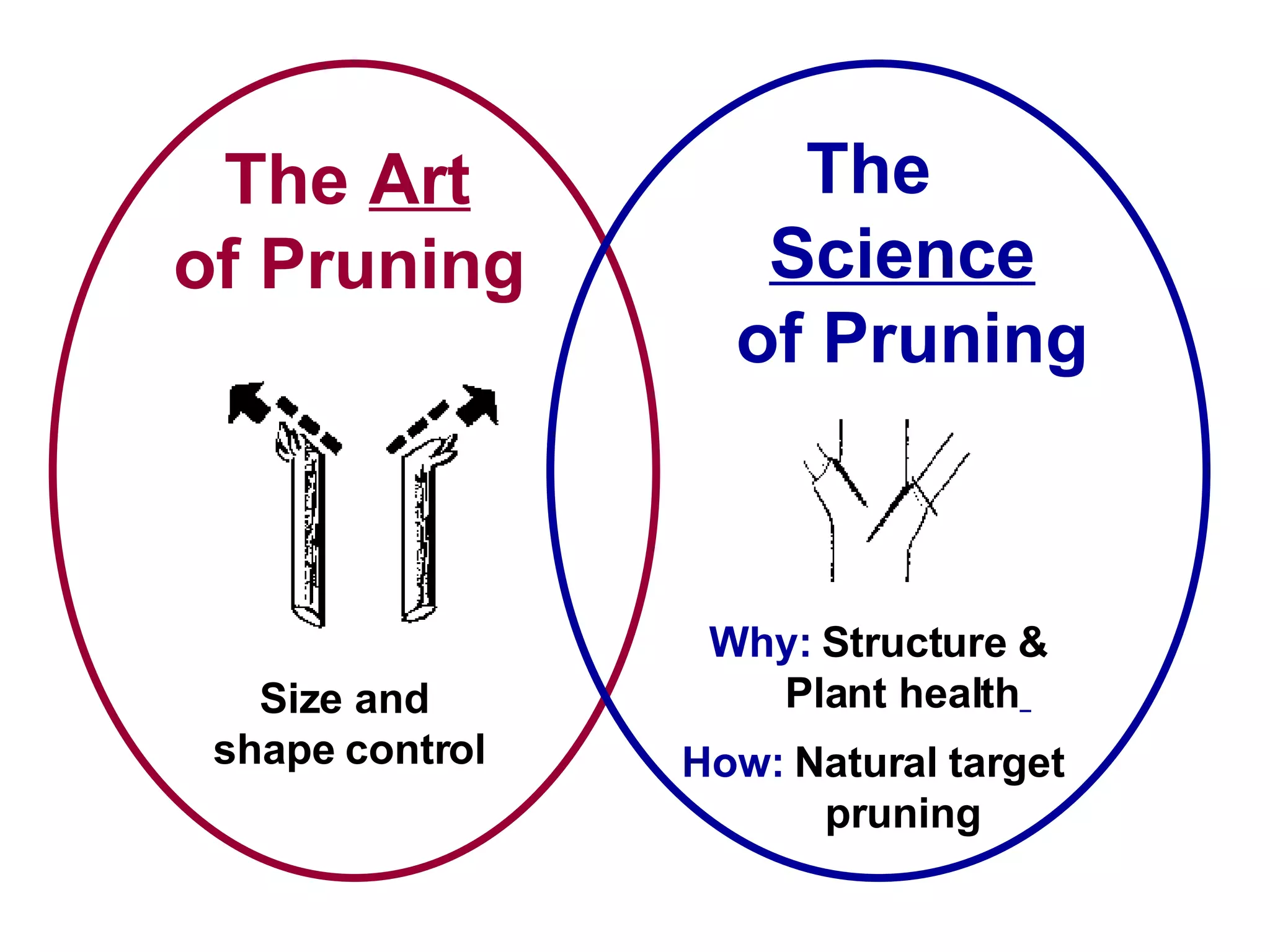
The  Art   of Pruning Size and  shape control The  Science  of Pruning Why:  Structure &  Plant health   How:   Natural target  pruning
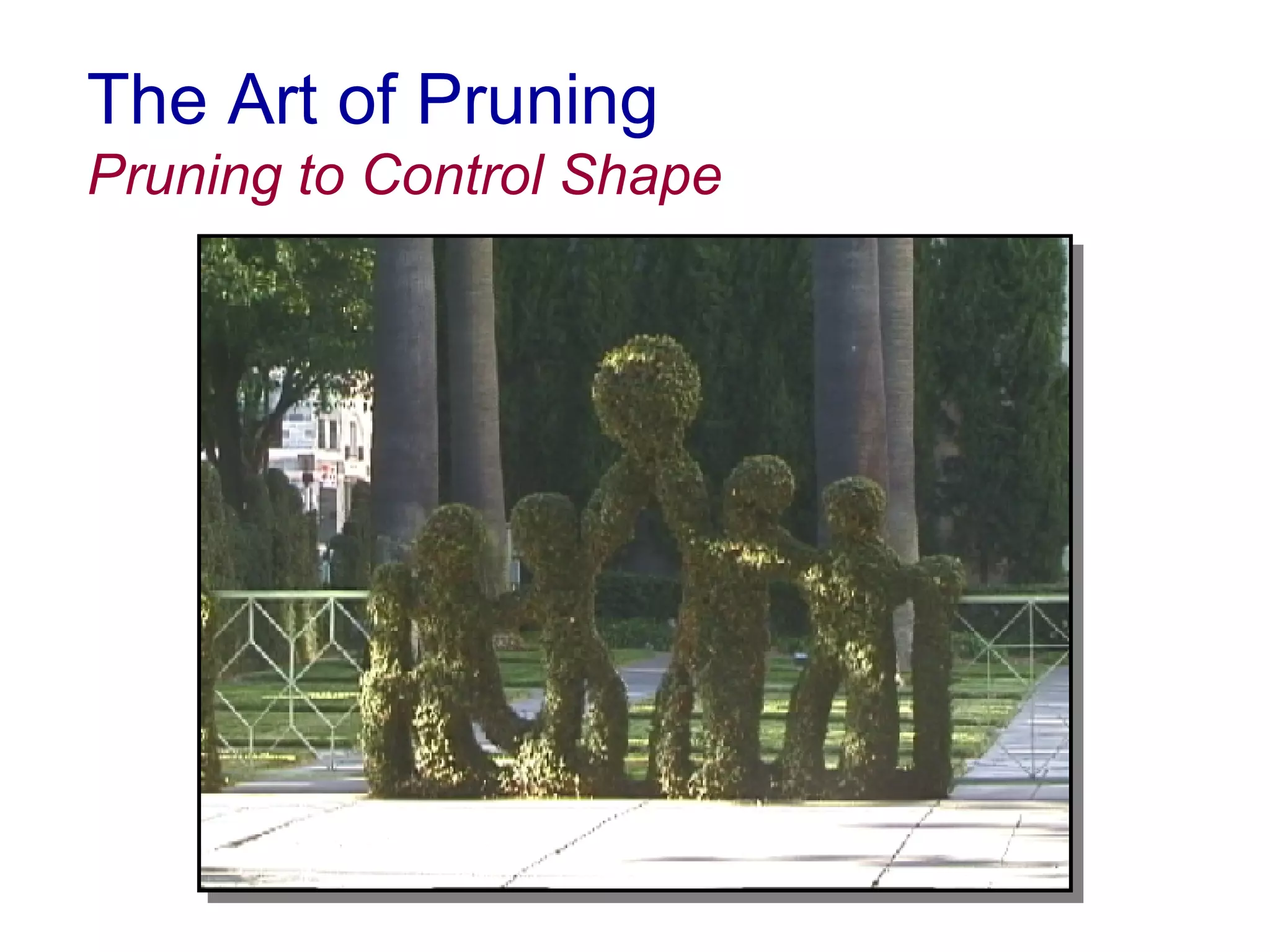
The Art of Pruning Pruning to Control Shape
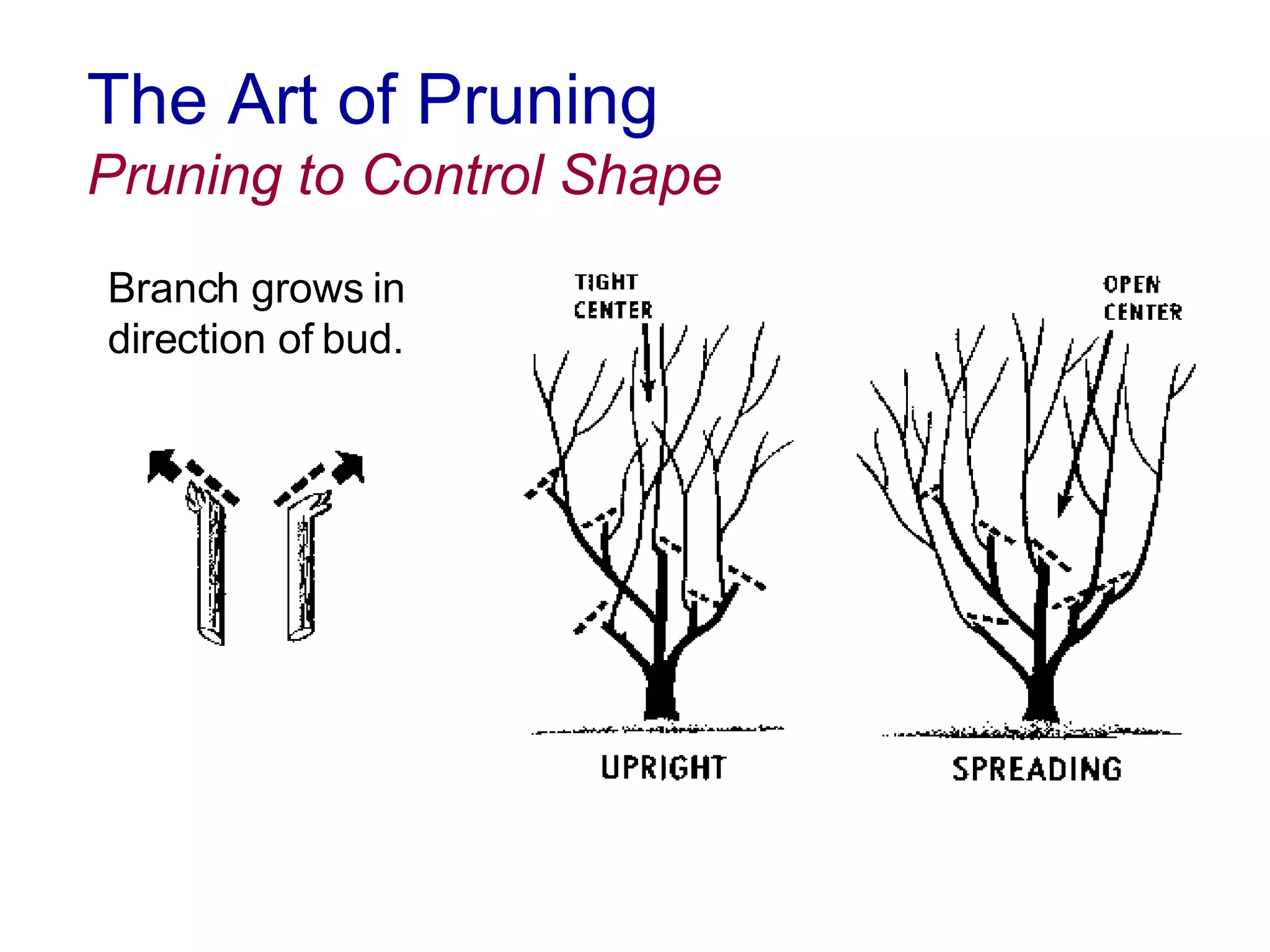
The Art of Pruning Pruning to Control Shape Branch grows in  direction of bud.
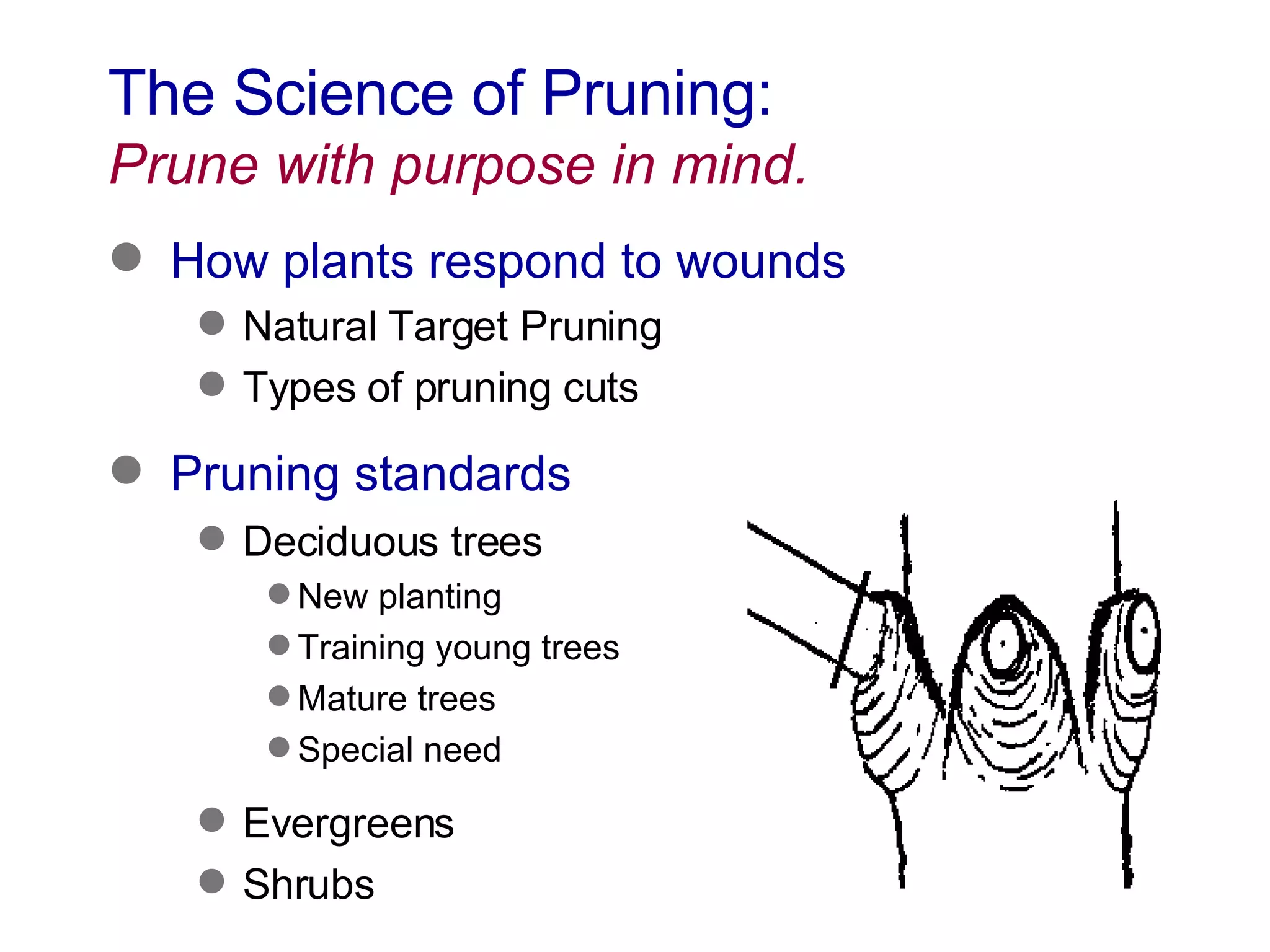
The Science of Pruning:  Prune with purpose in mind. How plants respond to wounds Natural Target Pruning Types of pruning cuts Pruning standards  Deciduous trees New planting Training young trees Mature trees Special need Evergreens Shrubs
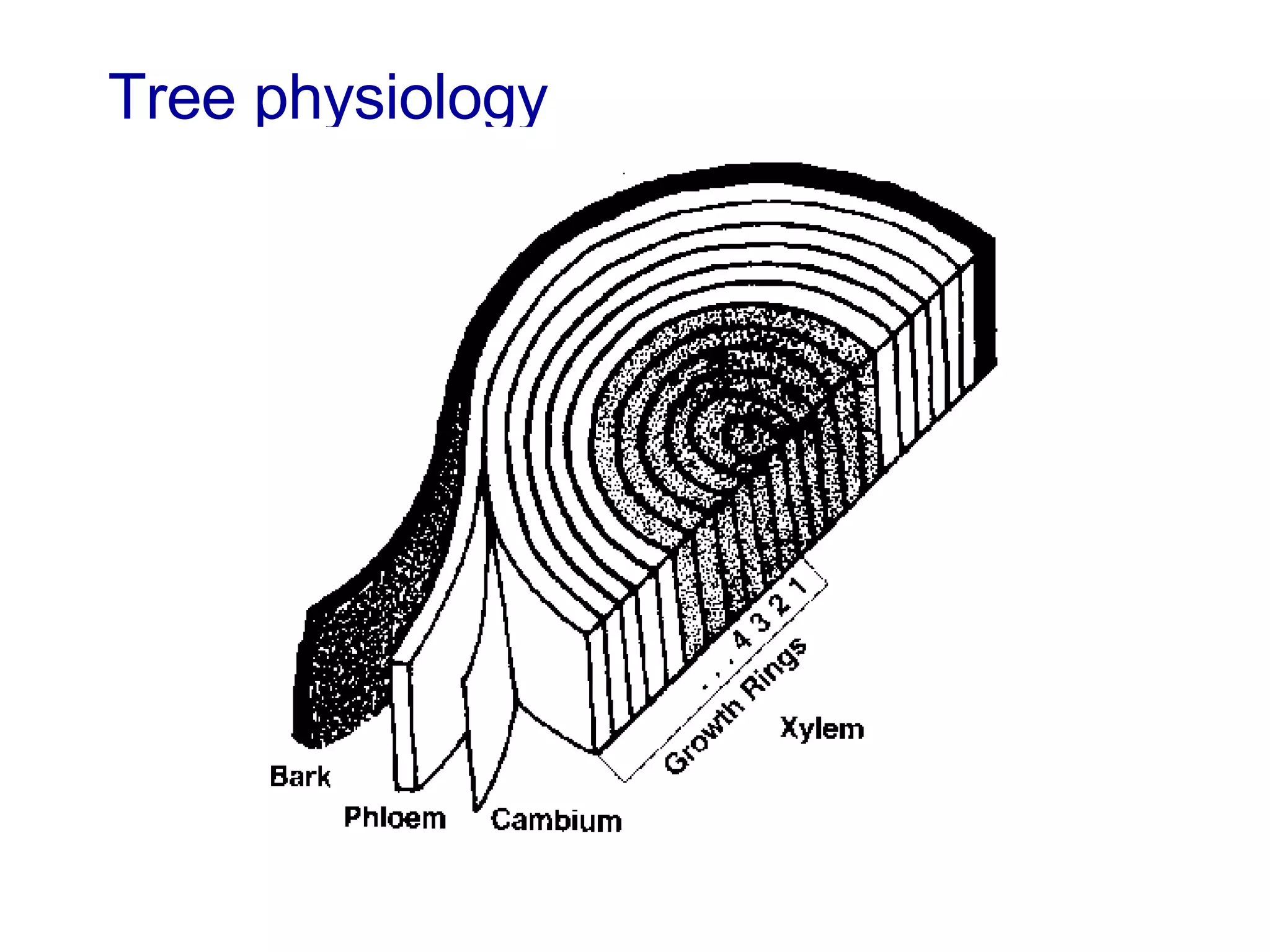
Tree physiology
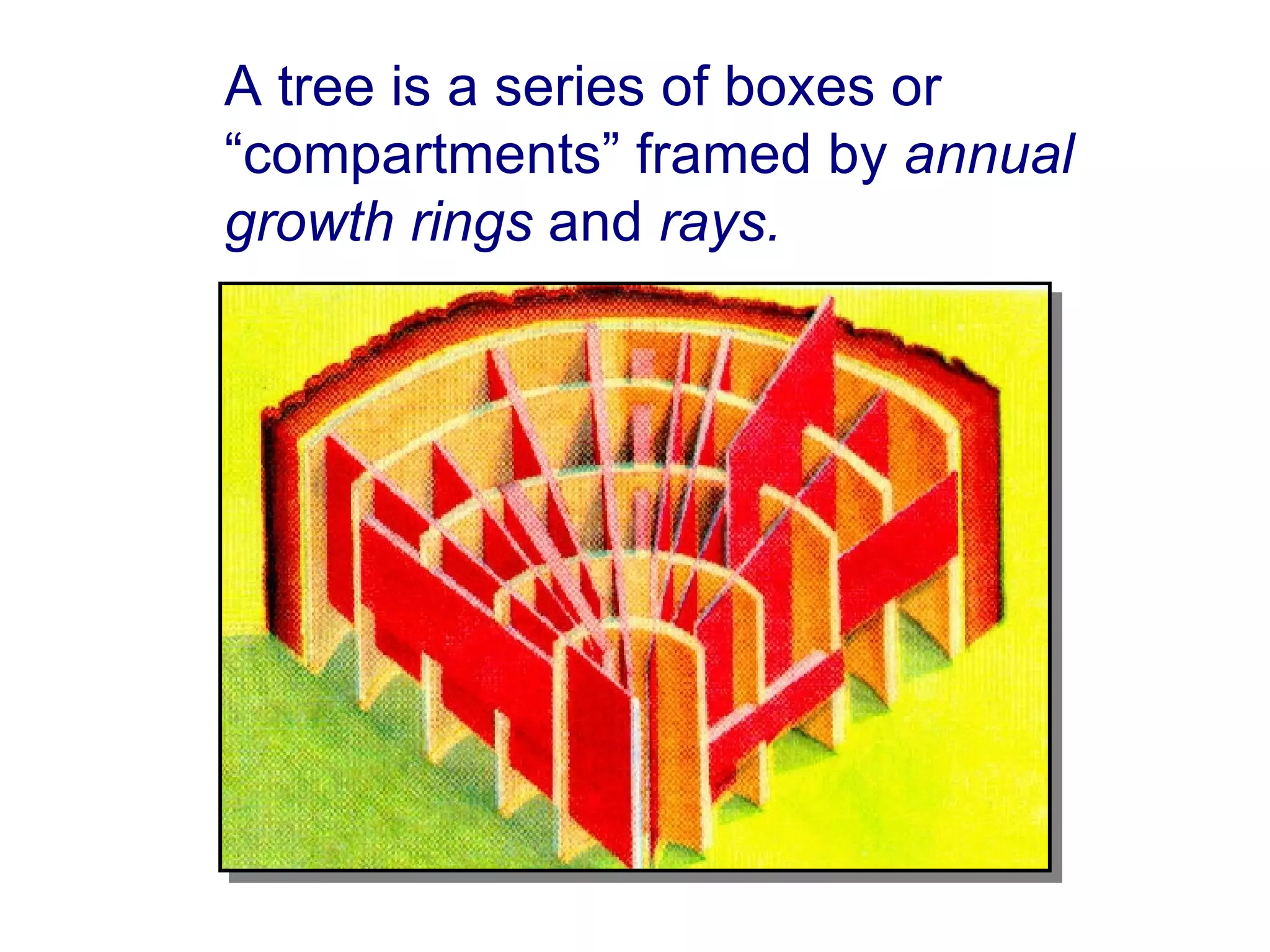
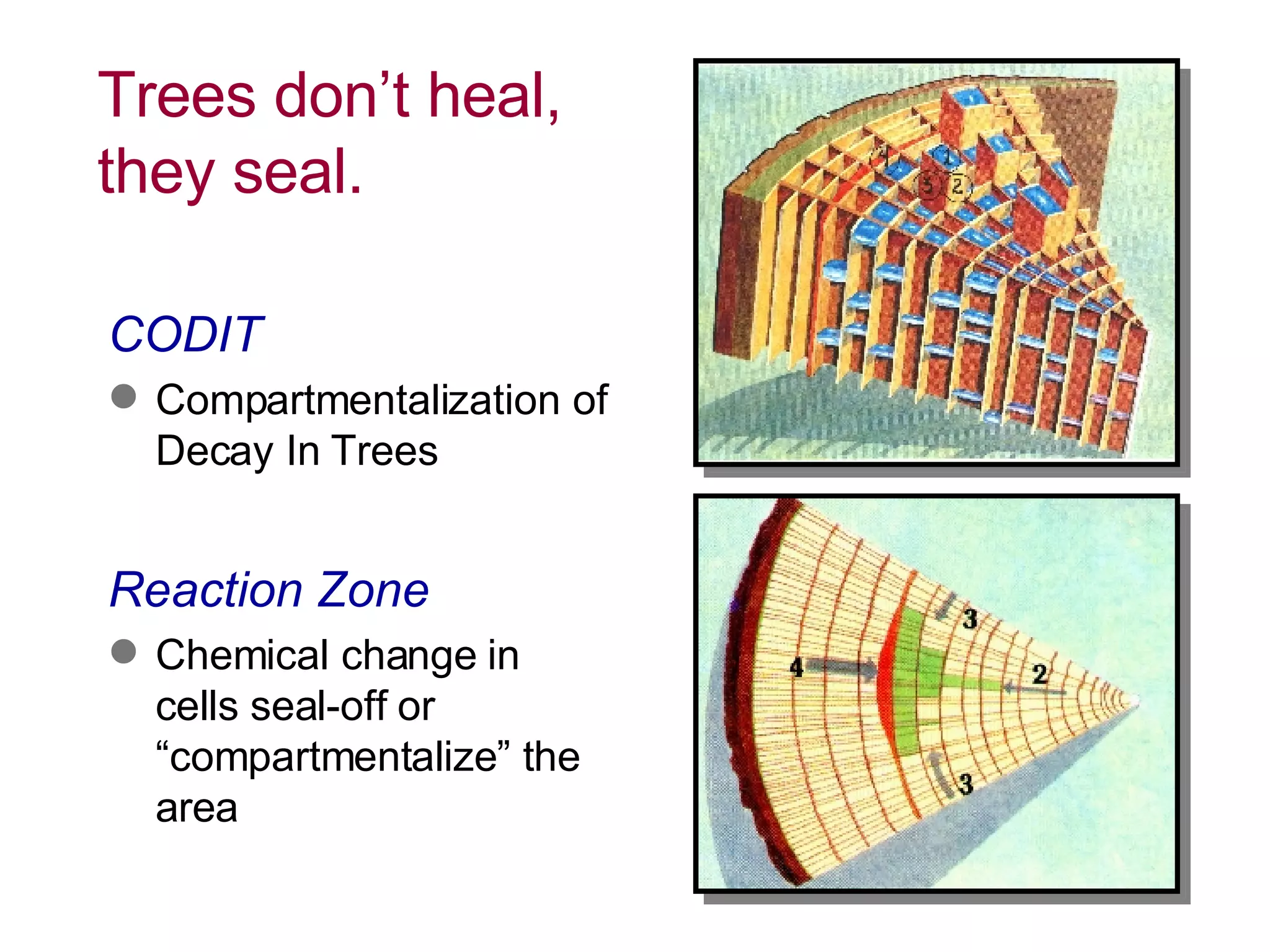
A tree is a series of boxes or “compartments” framed by  annual growth rings  and  rays.
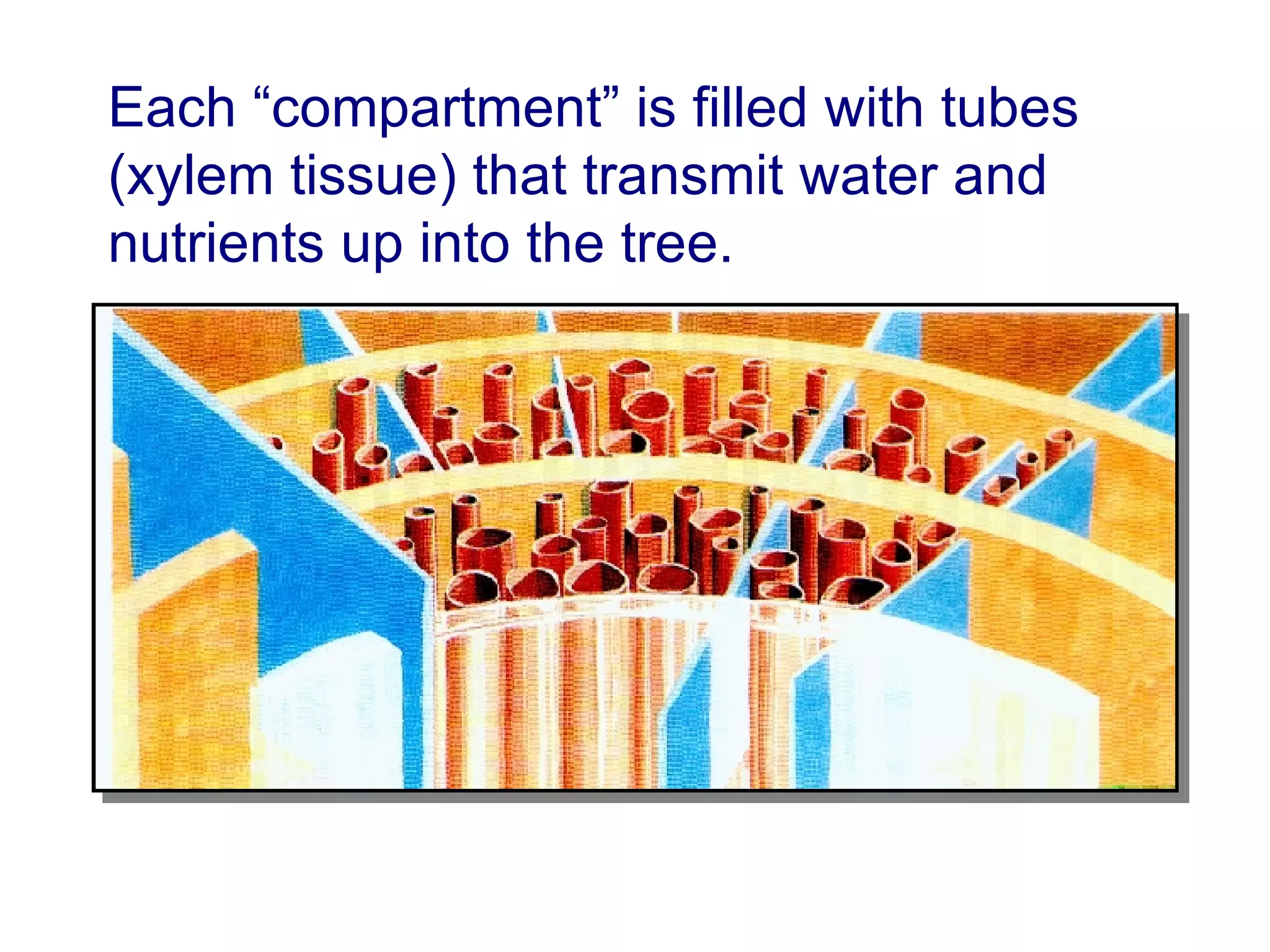
Each “compartment” is filled with tubes (xylem tissue) that transmit water and nutrients up into the tree.
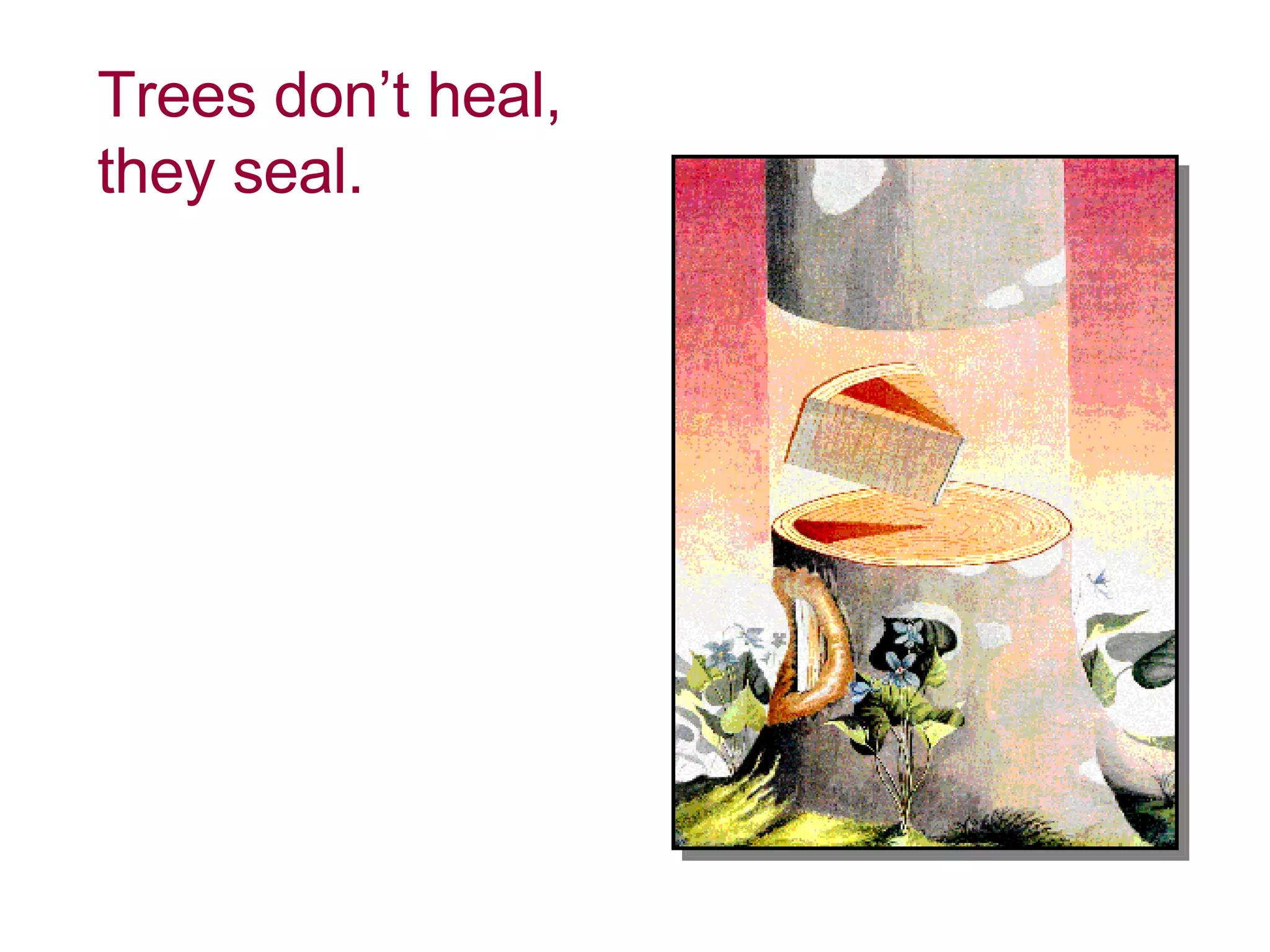
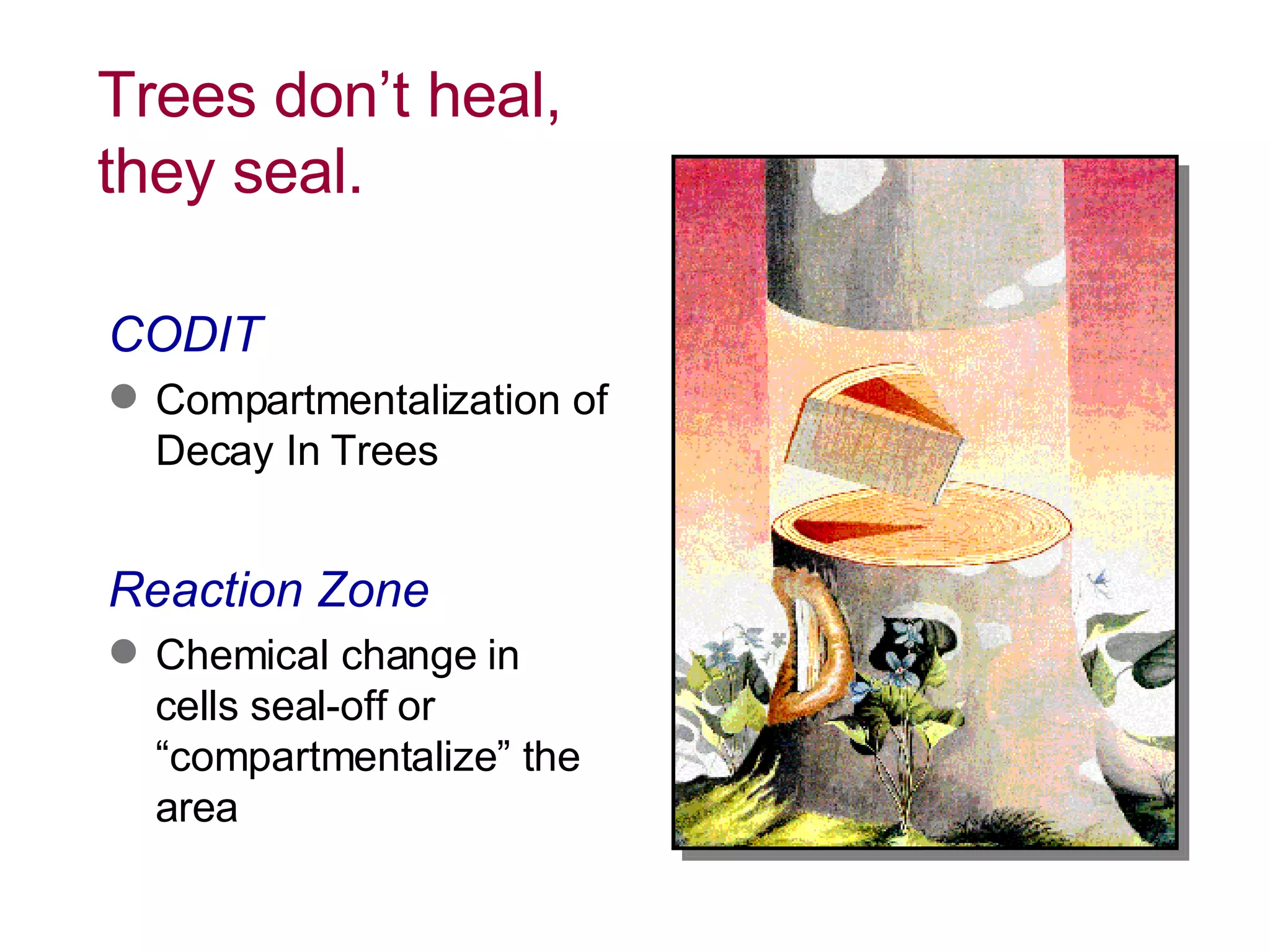
Trees don’t heal, they seal.
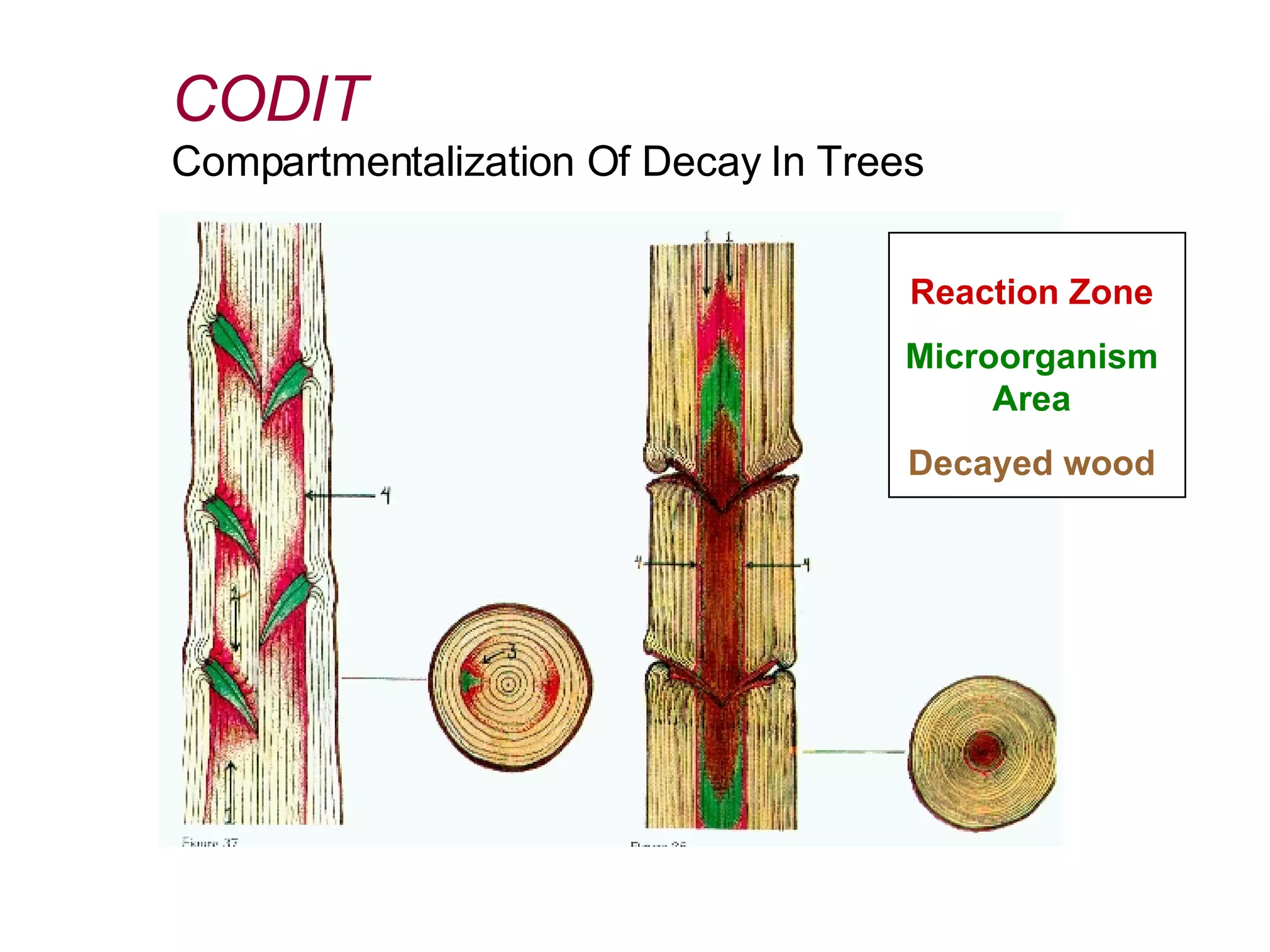
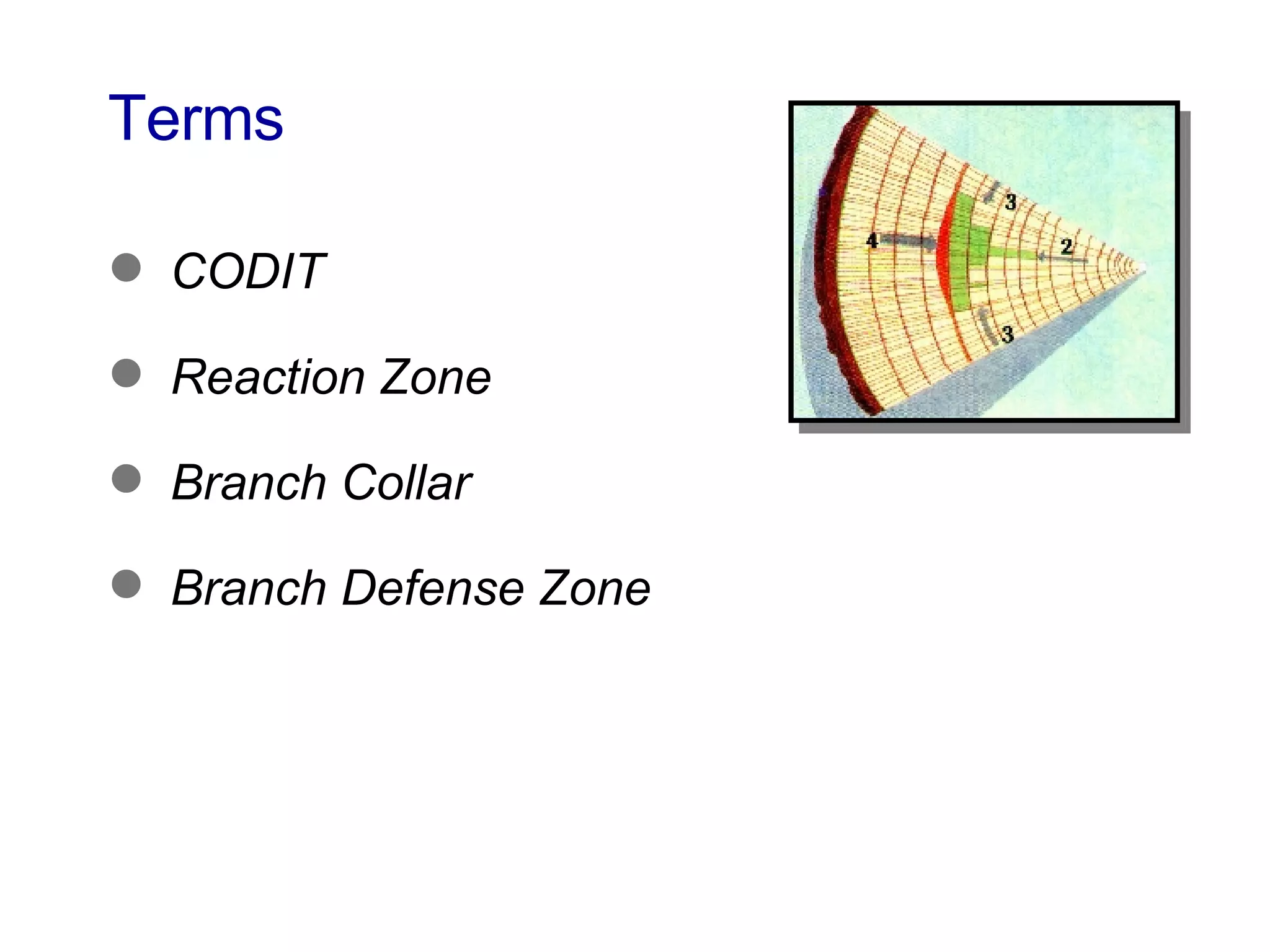
Trees don’t heal, they seal. CODIT Compartmentalization of Decay In Trees Reaction Zone Chemical change in  cells seal-off or “compartmentalize” the area
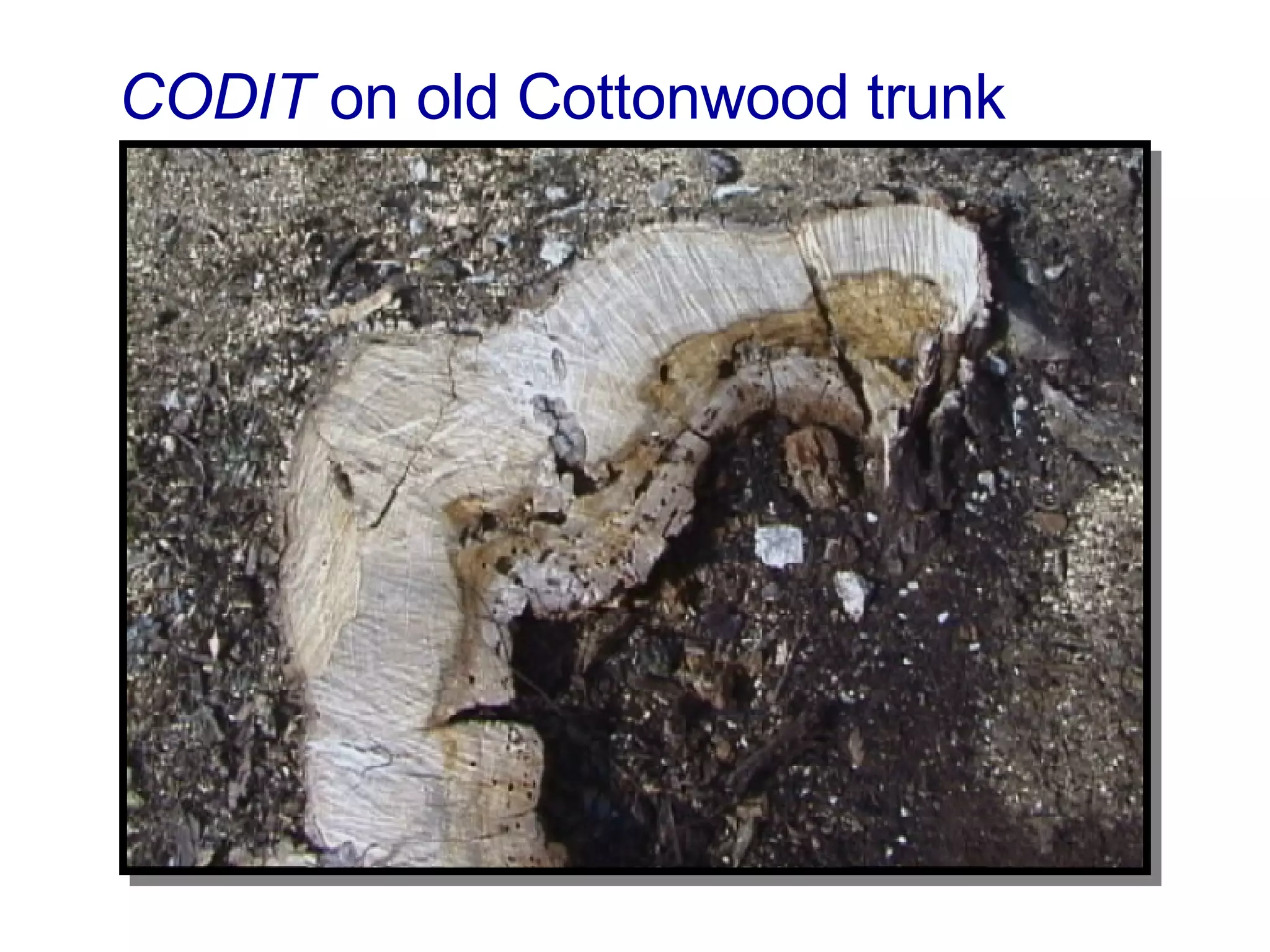
CODIT  on old Cottonwood trunk
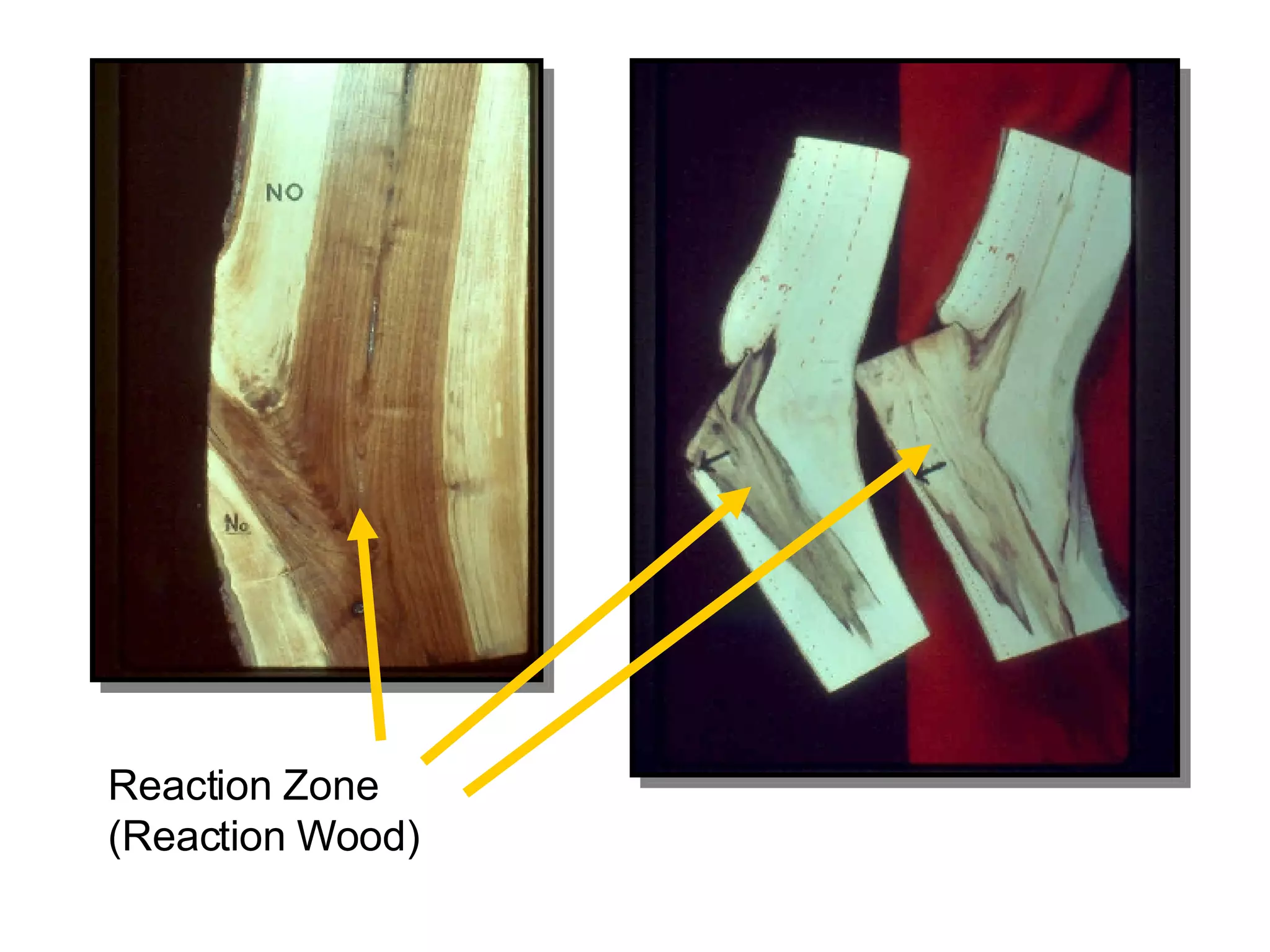
Reaction Zone (Reaction Wood)
CODIT Compartmentalization Of Decay In Trees Reaction Zone Microorganism Area Decayed wood
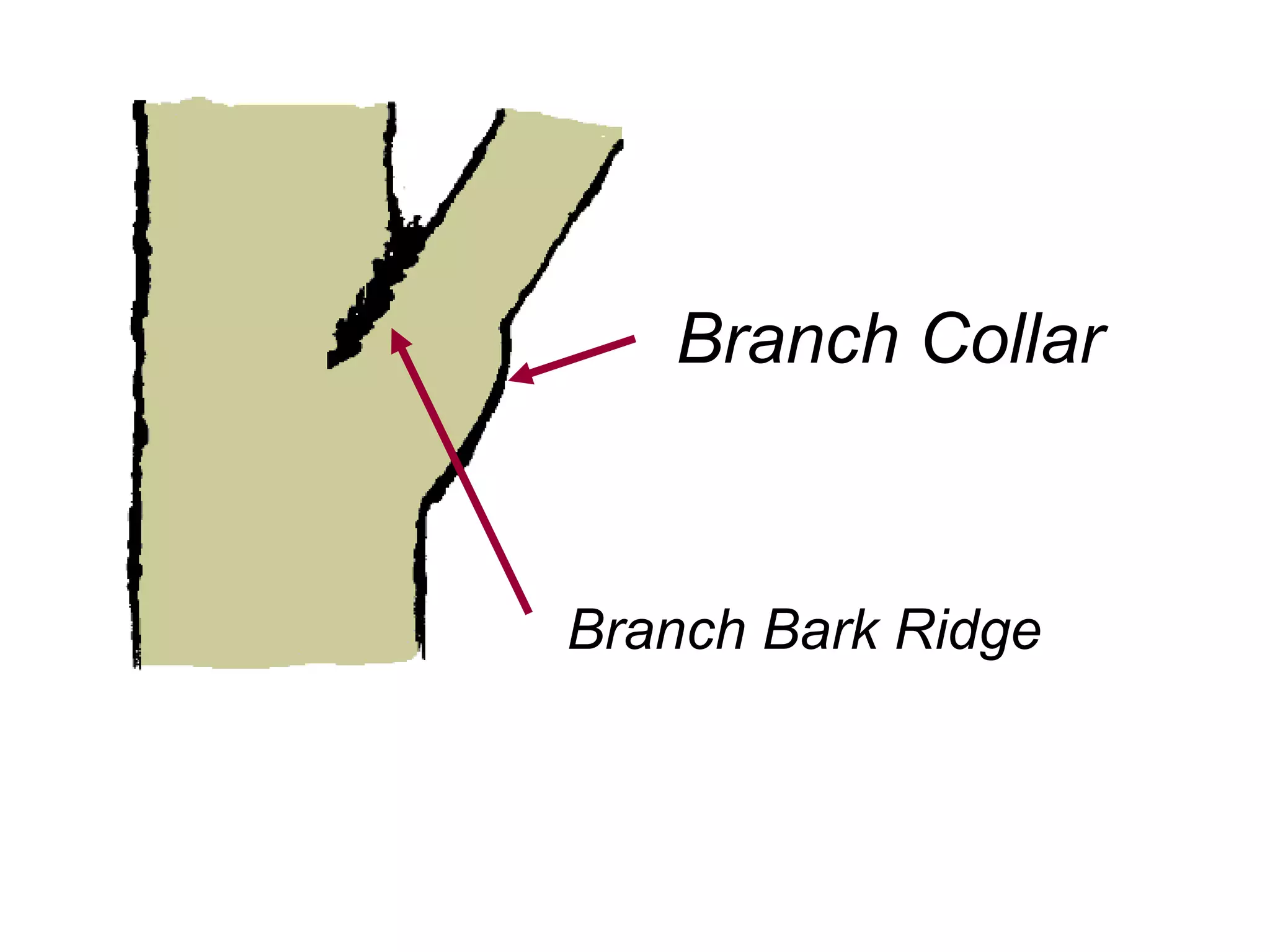
Branch Collar Branch Bark Ridge
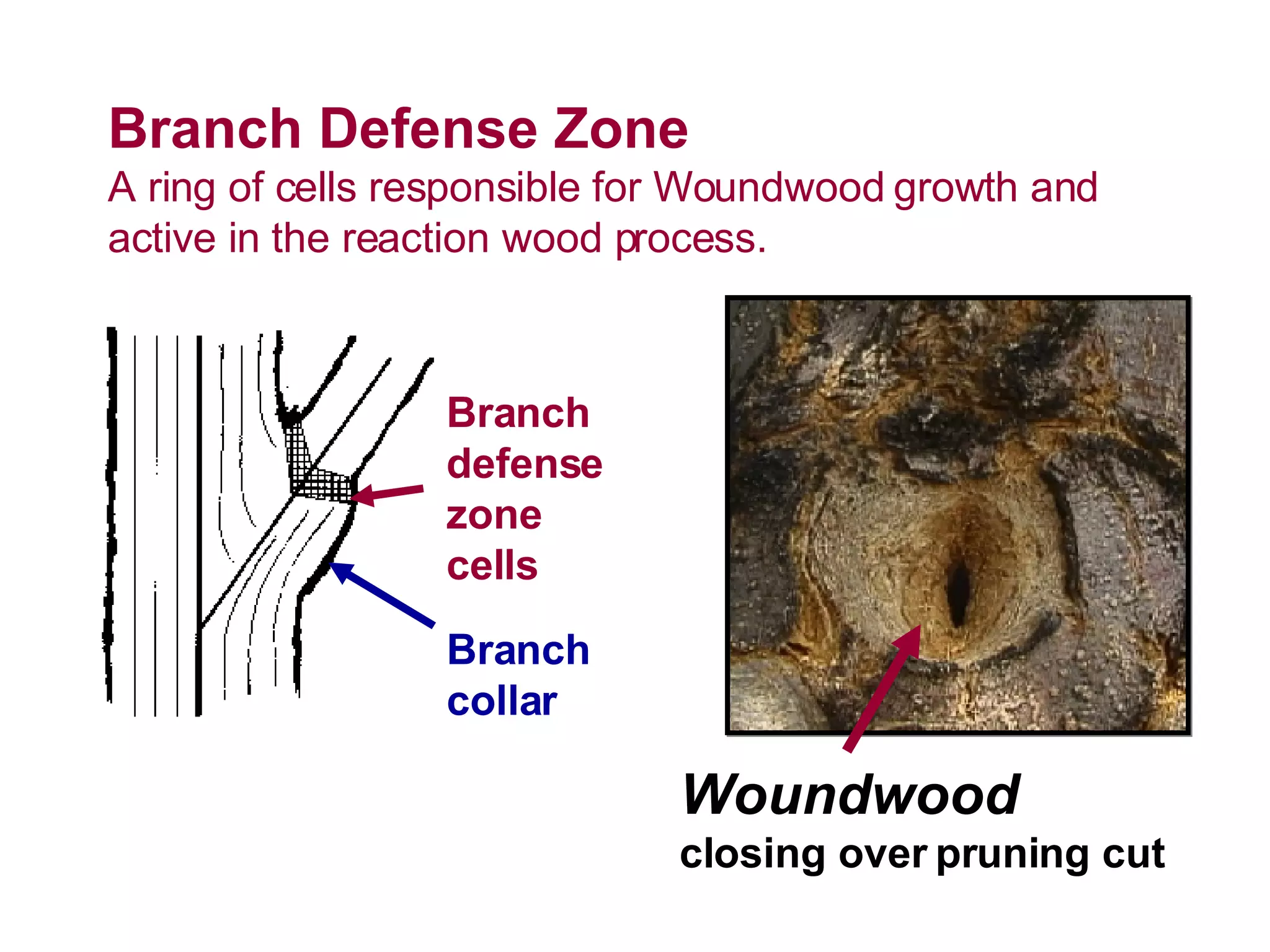
Branch Defense Zone A ring of cells responsible for Woundwood growth and active in the reaction wood process. Woundwood  closing over pruning cut Branch collar Branch defense zone cells
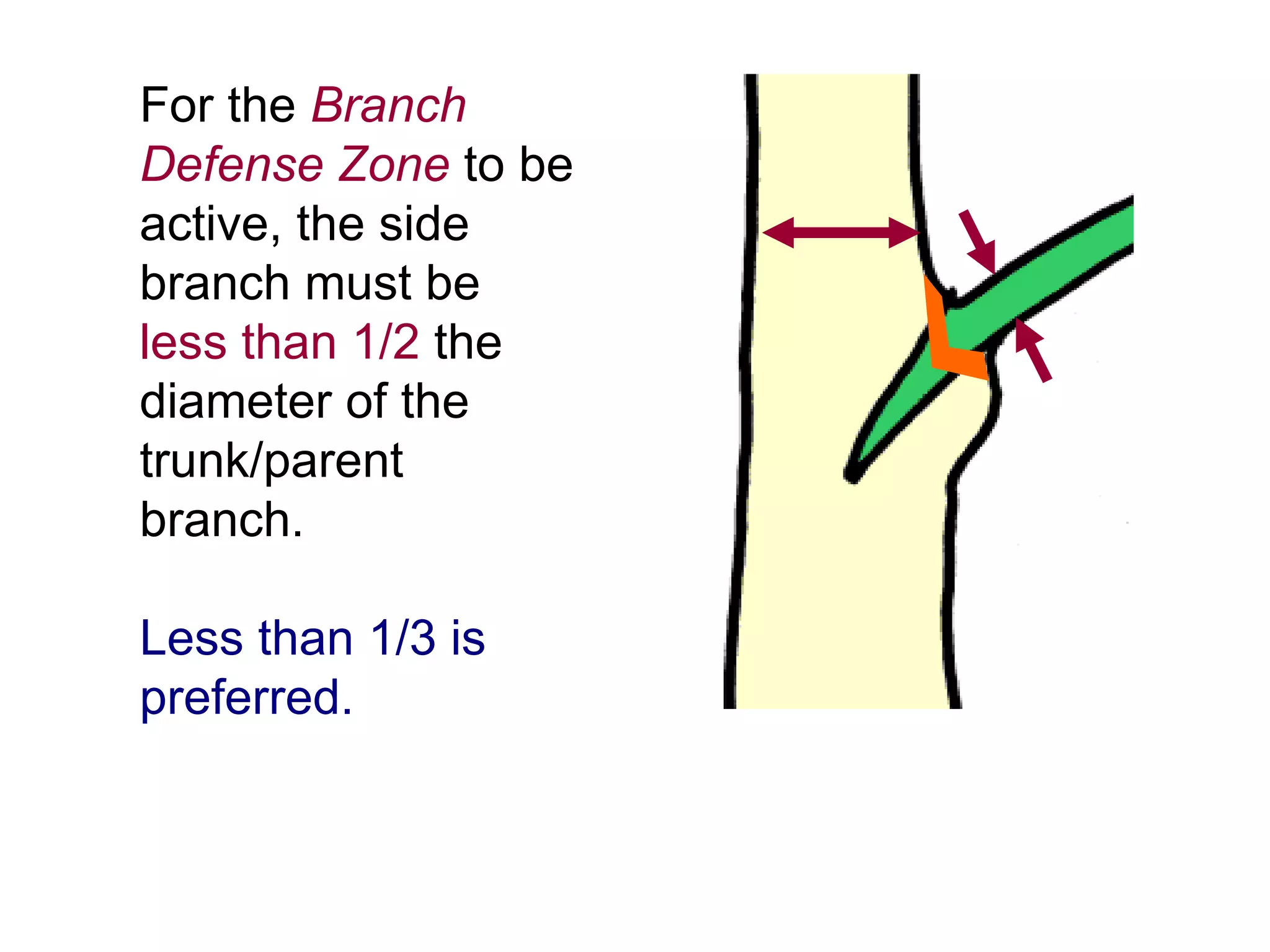
For the   Branch Defense Zone   to be active, the side branch must be   less than 1/2   the diameter of the trunk/parent branch. Less than 1/3 is preferred.
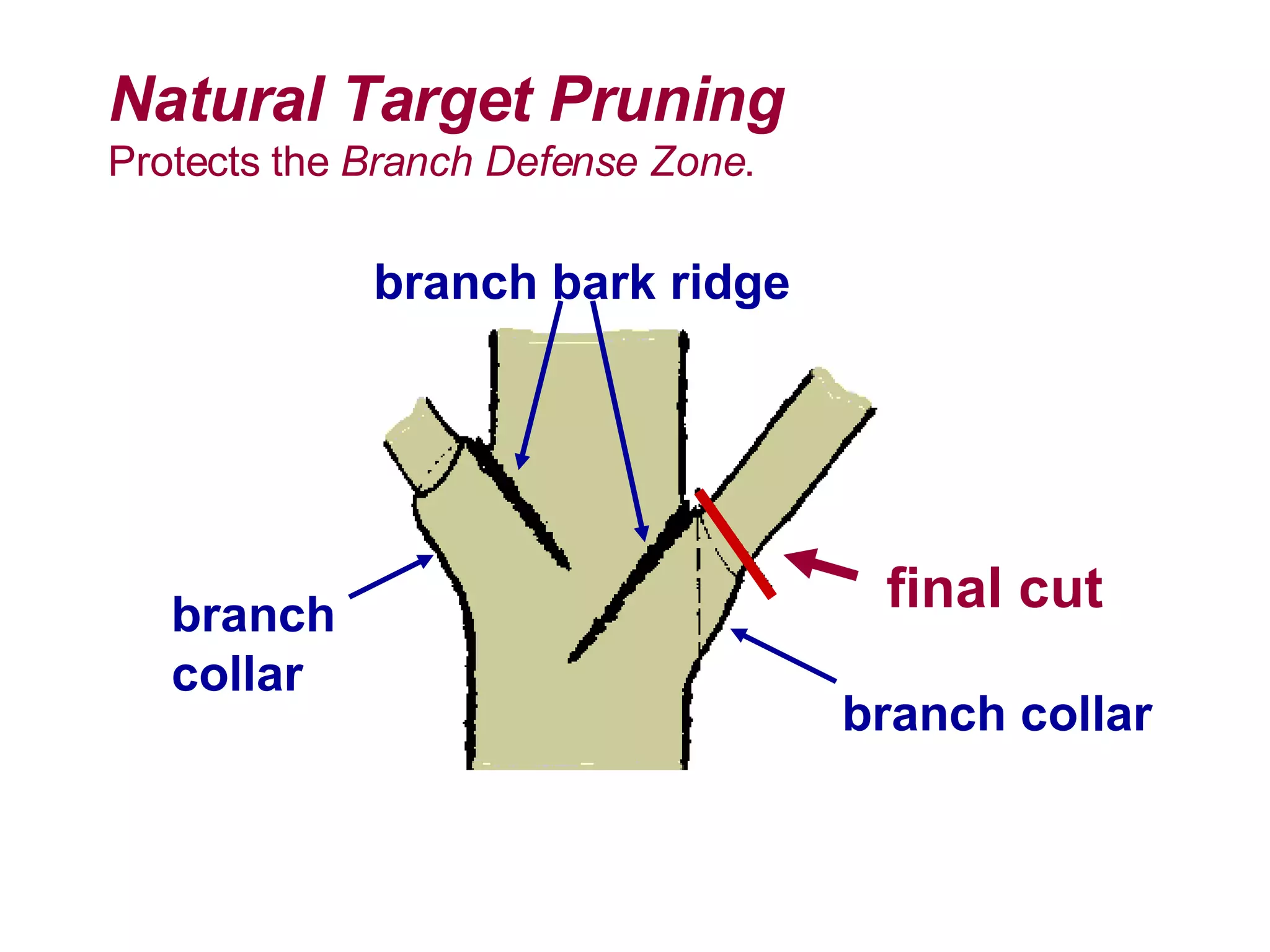
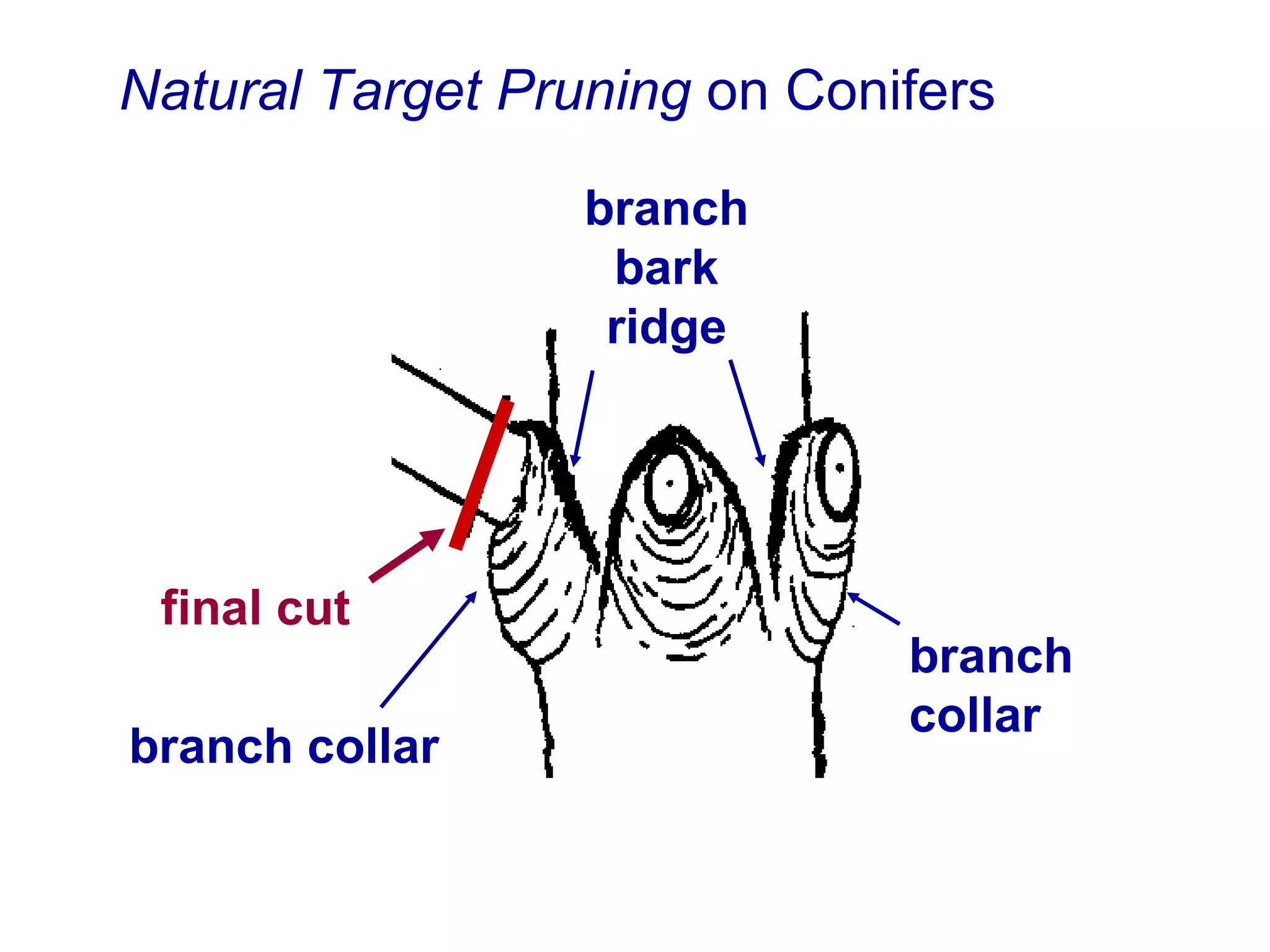
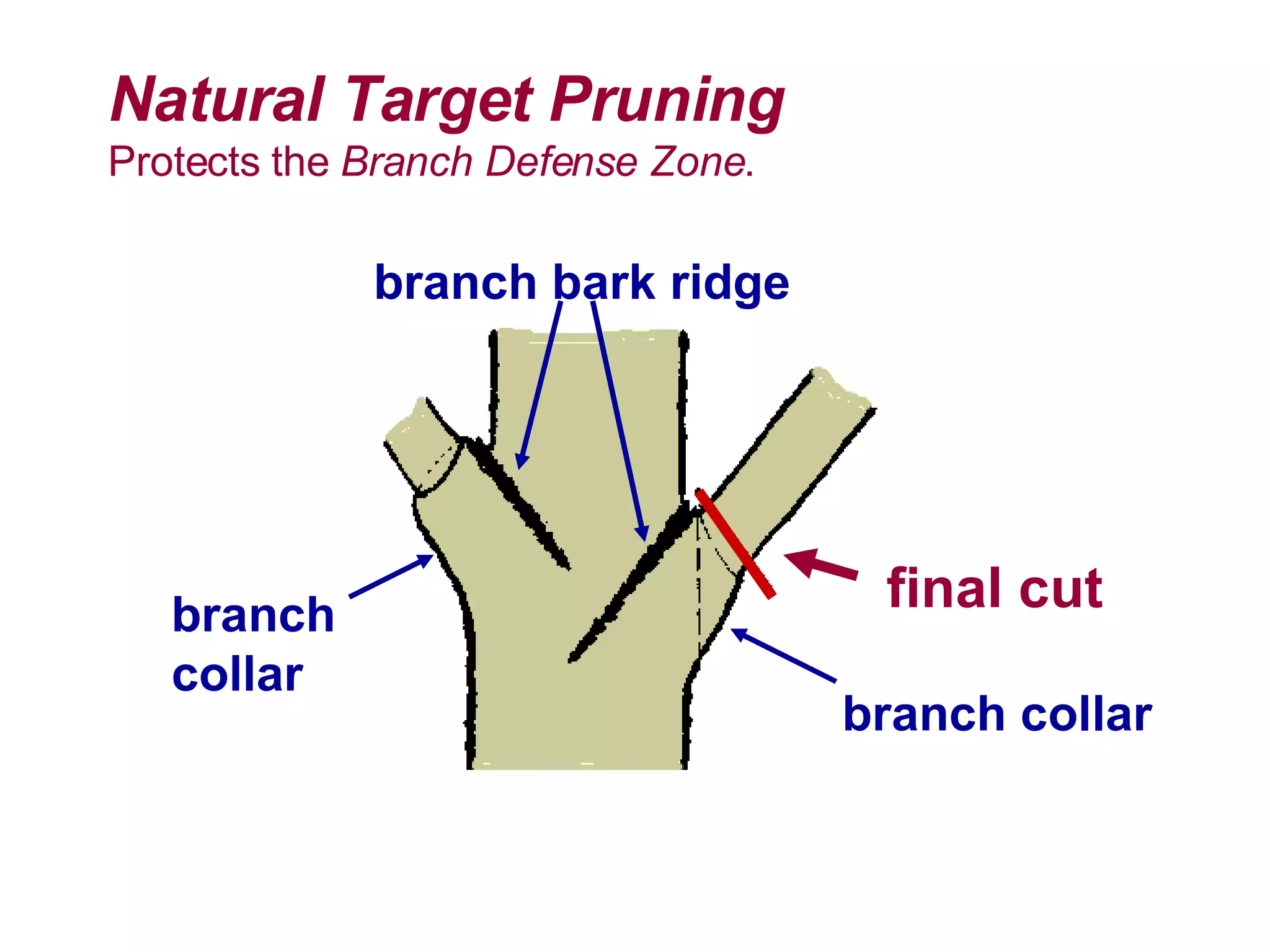
Natural Target Pruning Protects the  Branch Defense Zone . branch bark ridge branch collar branch collar final cut
Terms CODIT Reaction Zone Branch Collar Branch Defense Zone
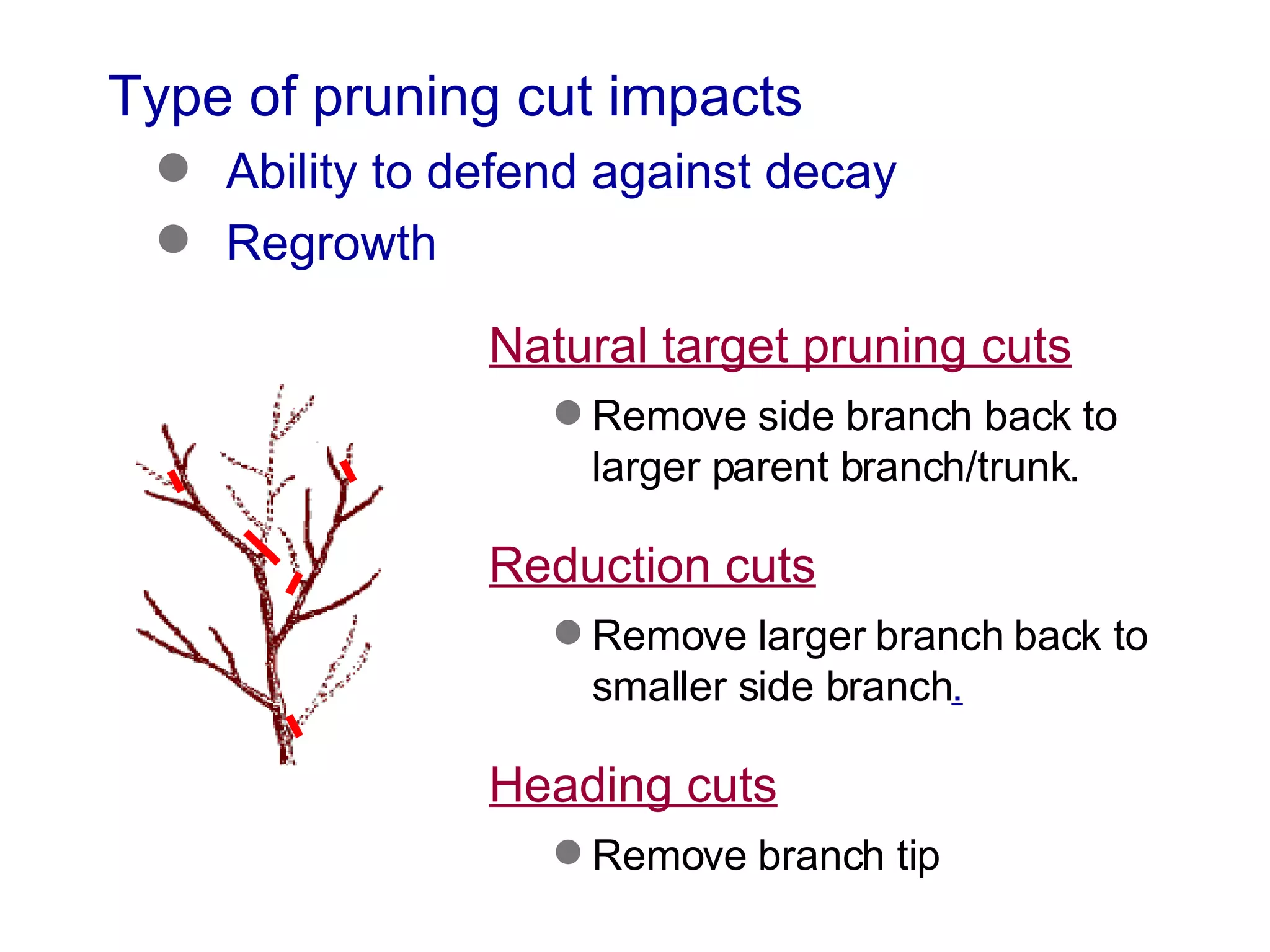
Type of pruning cut impacts  Ability to defend against decay Regrowth Natural target pruning cuts Remove side branch back to larger parent branch/trunk. Reduction cuts Remove larger branch back to smaller side branch . Heading cuts Remove branch tip
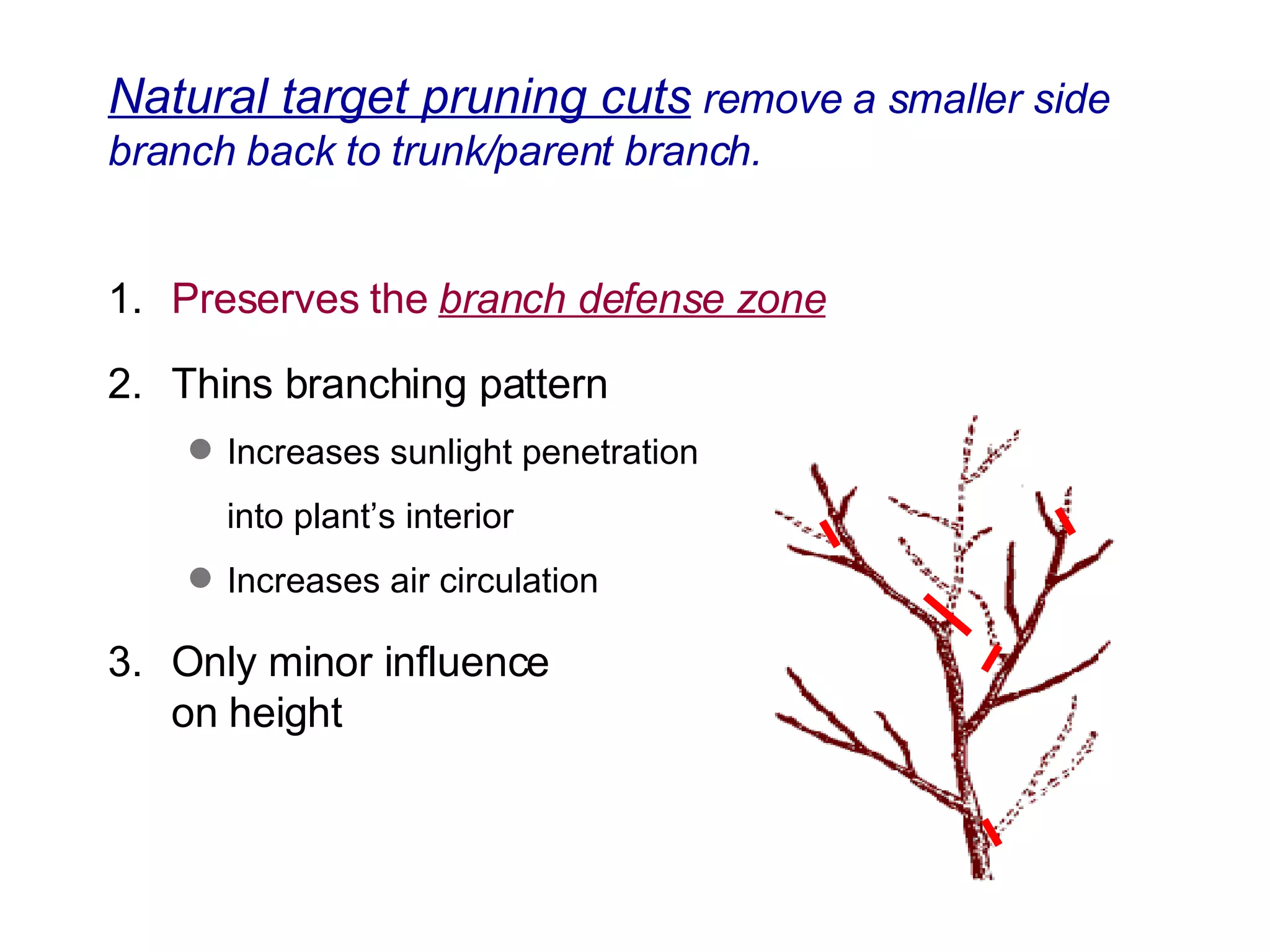
1. Preserves the  branch defense zone 2. Thins branching pattern Increases sunlight penetration  into plant’s interior  Increases air circulation 3. Only minor influence  on height Natural target pruning cuts  remove a smaller side branch back to trunk/parent branch.
Natural Target Pruning Protects the  Branch Defense Zone . branch bark ridge branch collar branch collar final cut
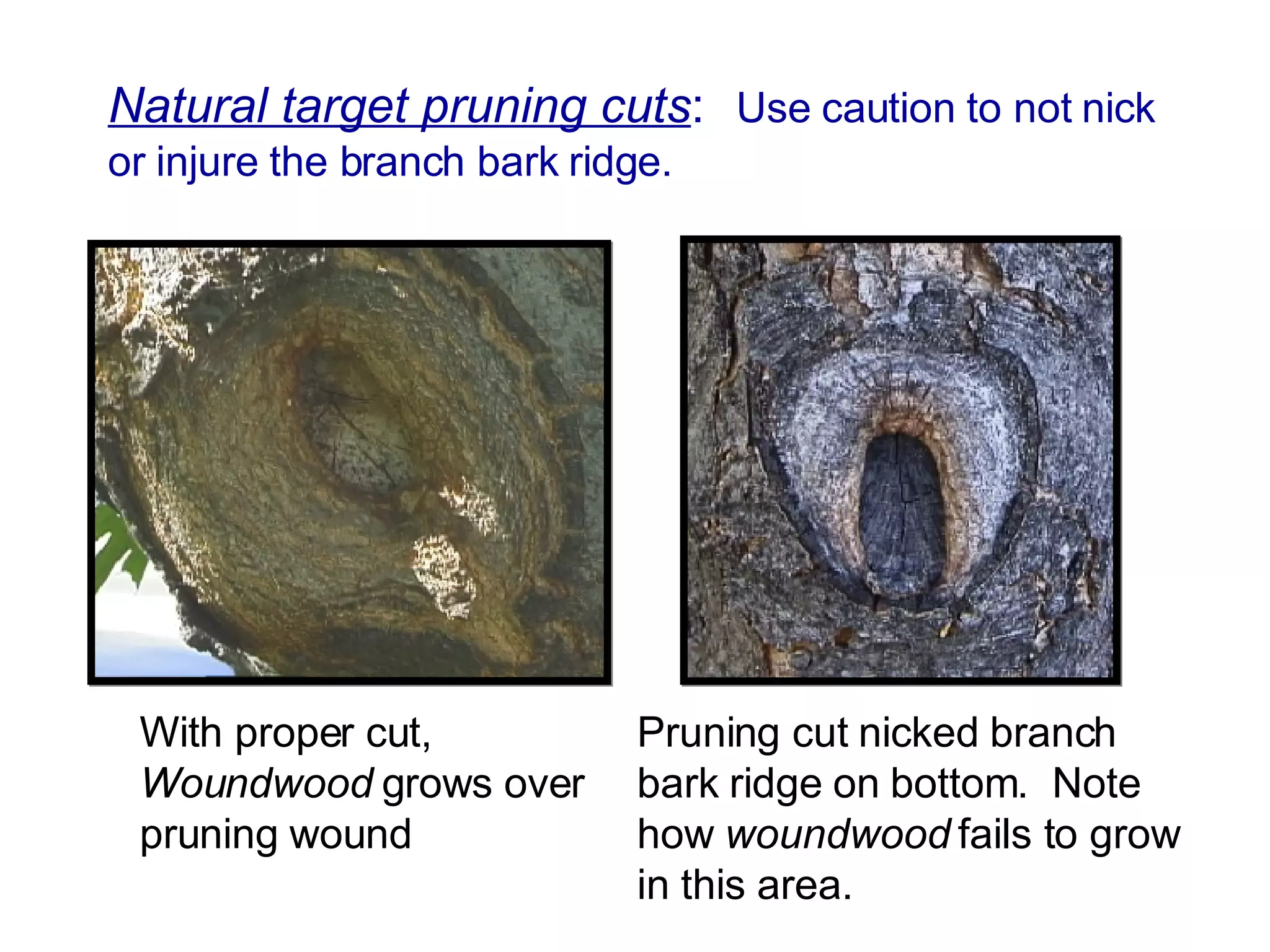
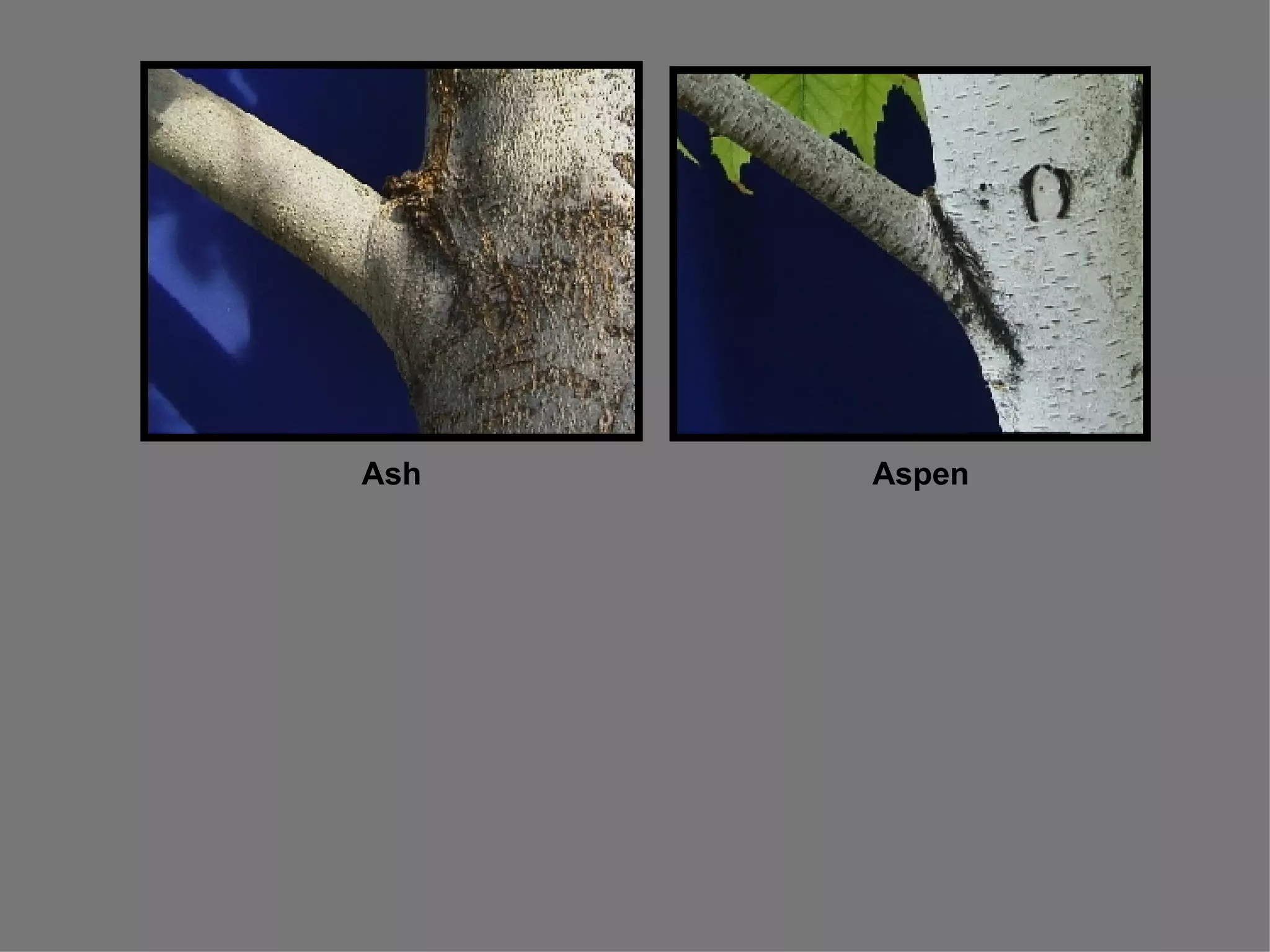
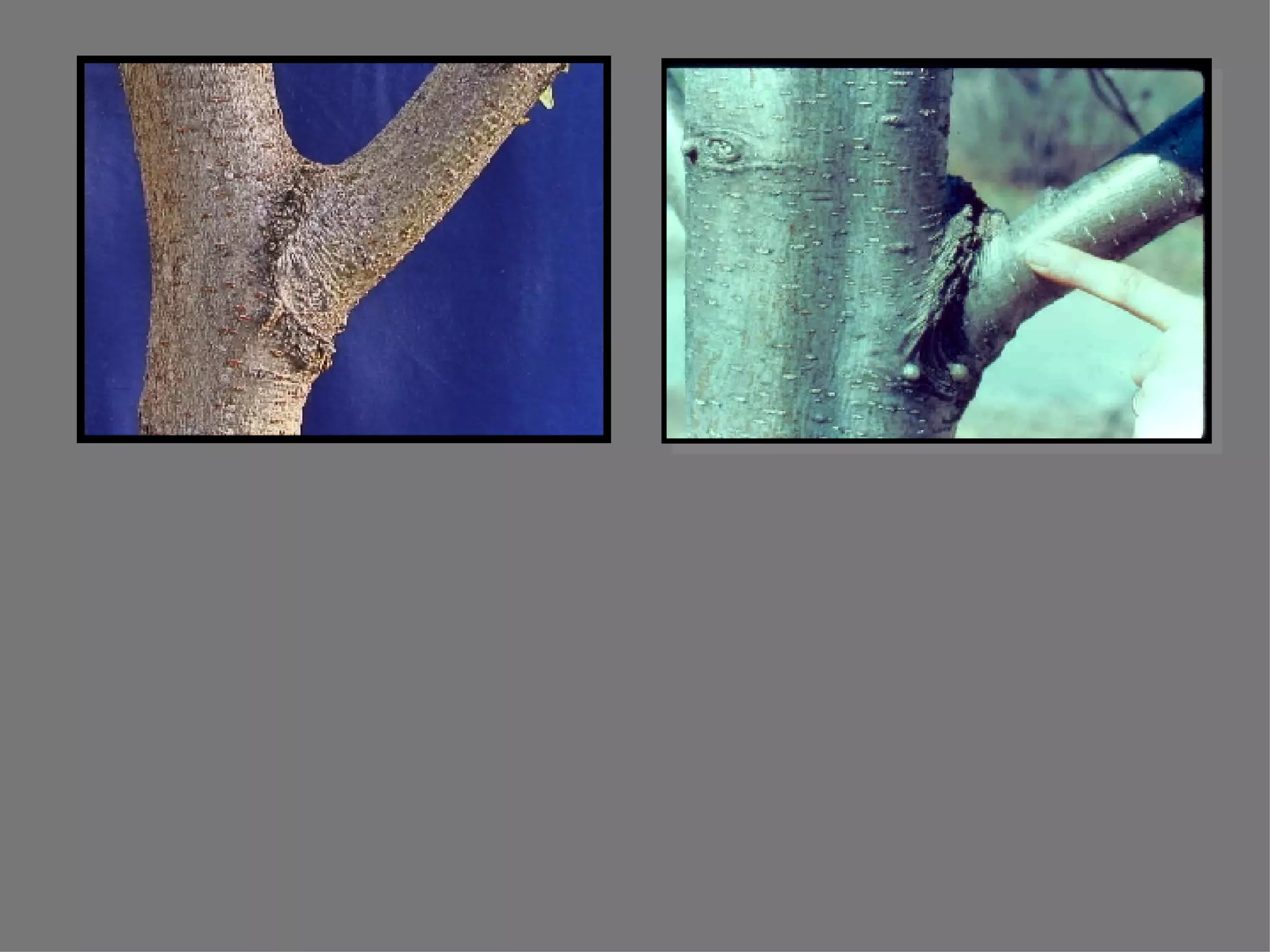
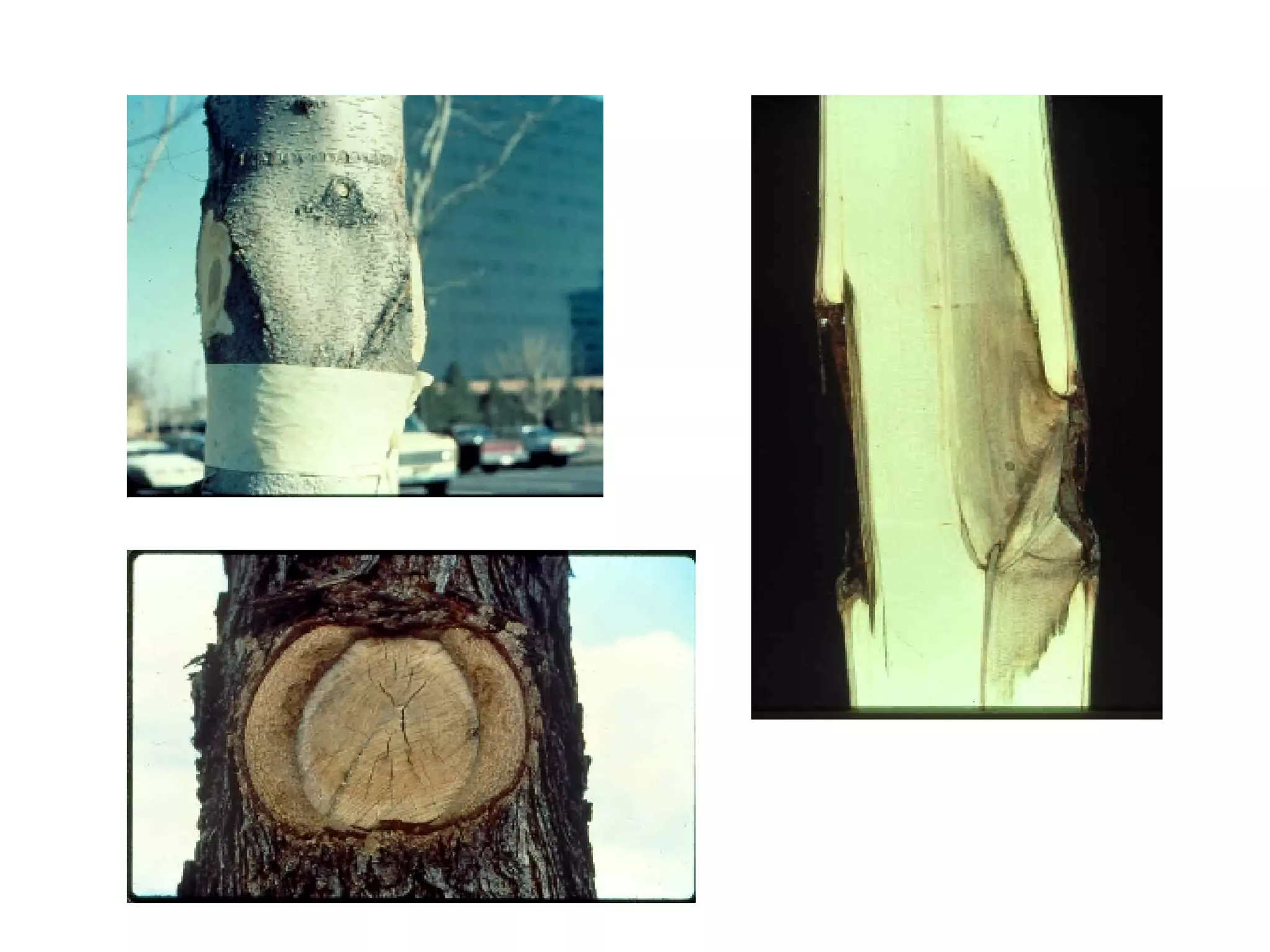
Natural target pruning cuts :   Use caution to not nick or injure the branch bark ridge. With proper cut,  Woundwood  grows over pruning wound Pruning cut nicked branch bark ridge on bottom.  Note how  woundwood  fails to grow in this area.
Ash Aspen
 
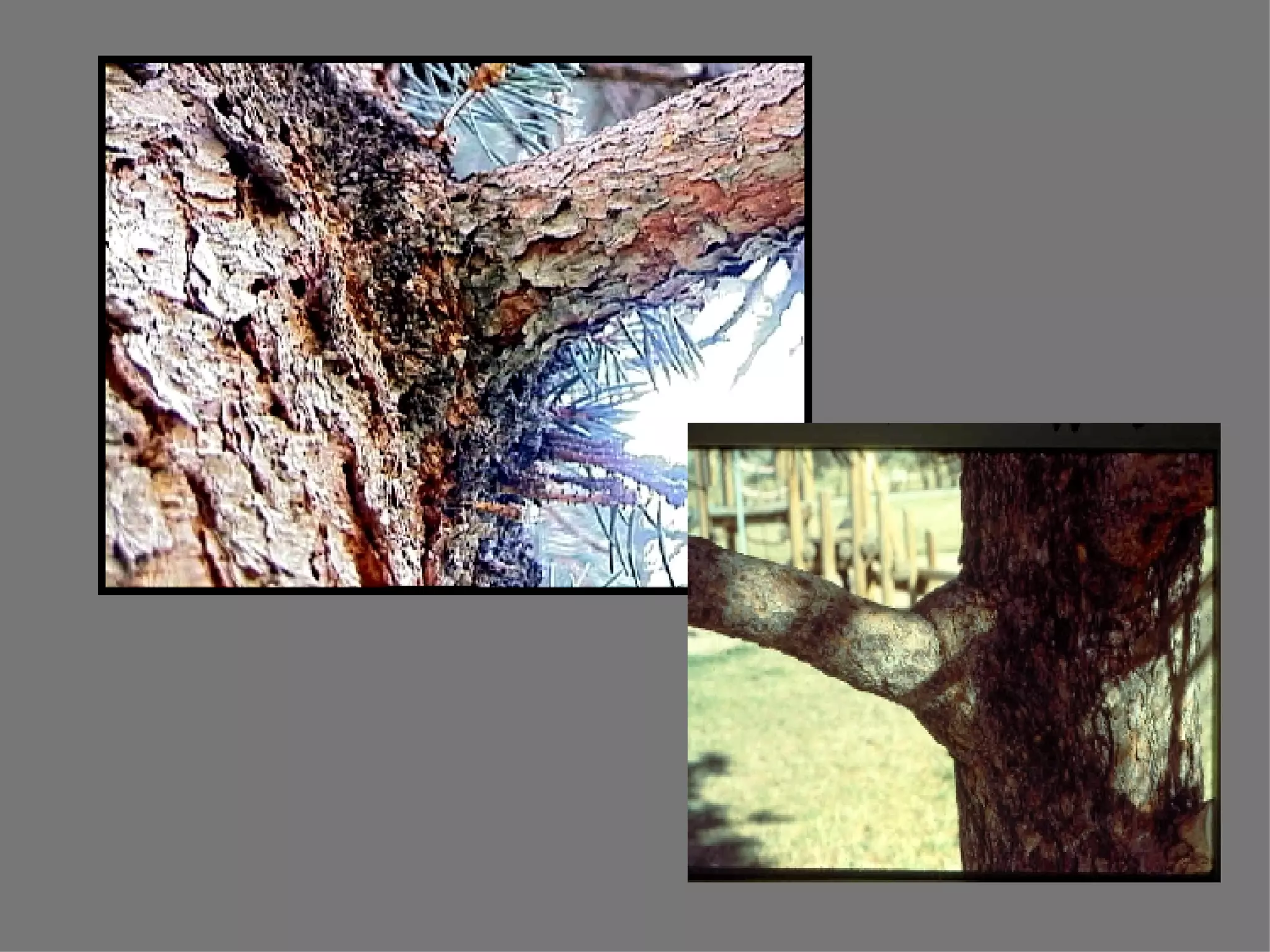
Natural Target Pruning  on Conifers branch bark ridge branch collar final cut branch collar
 
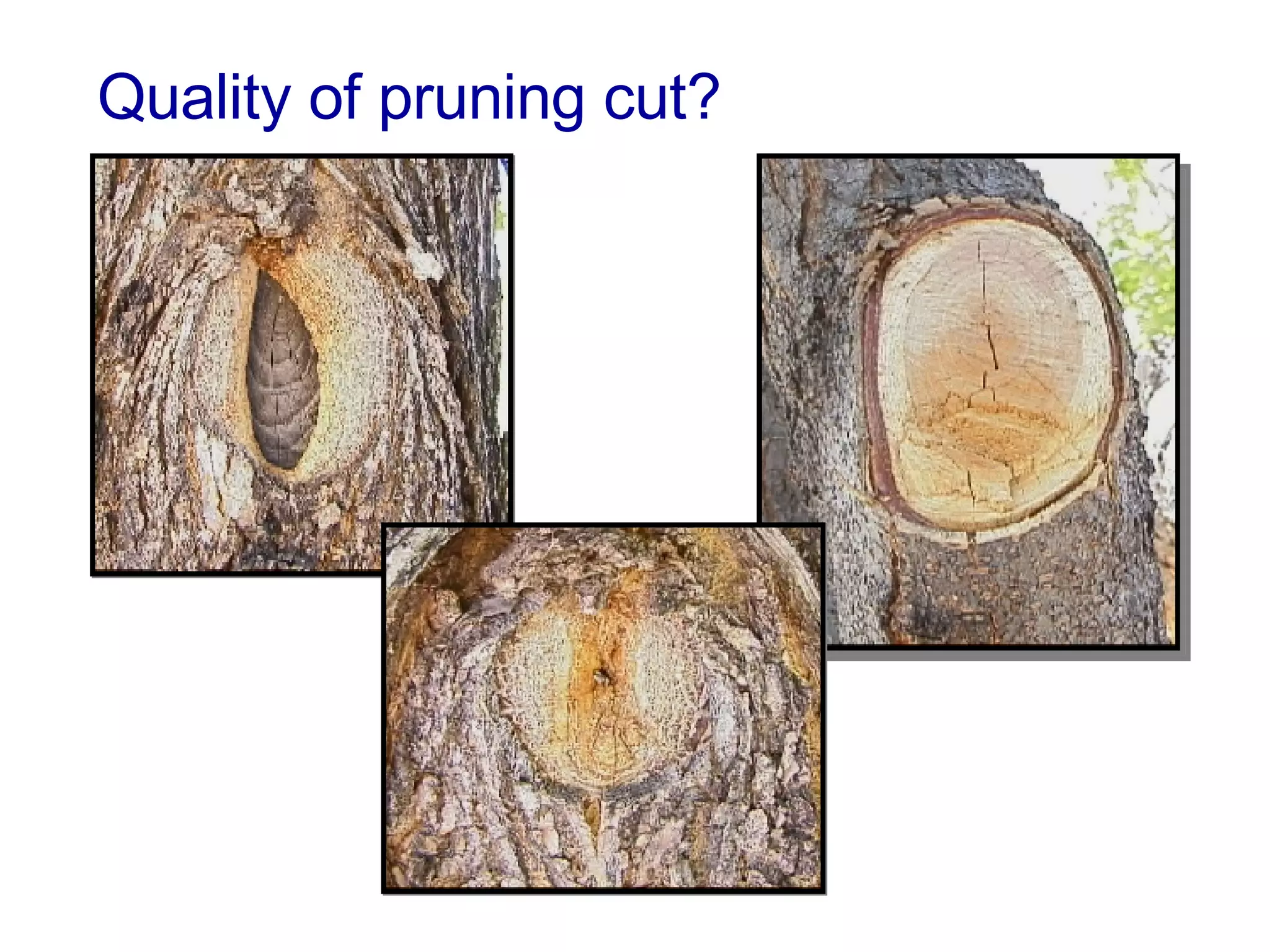
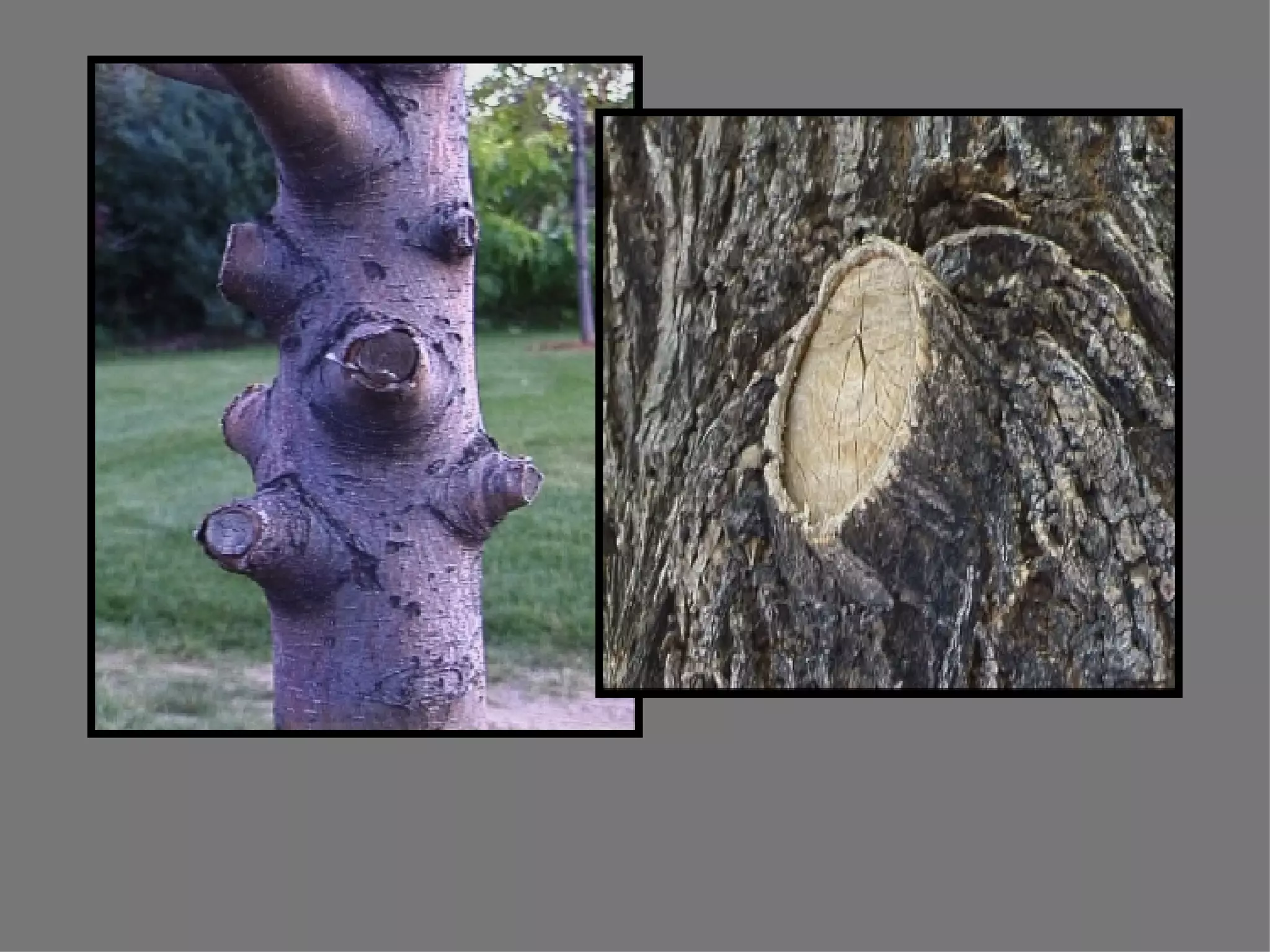
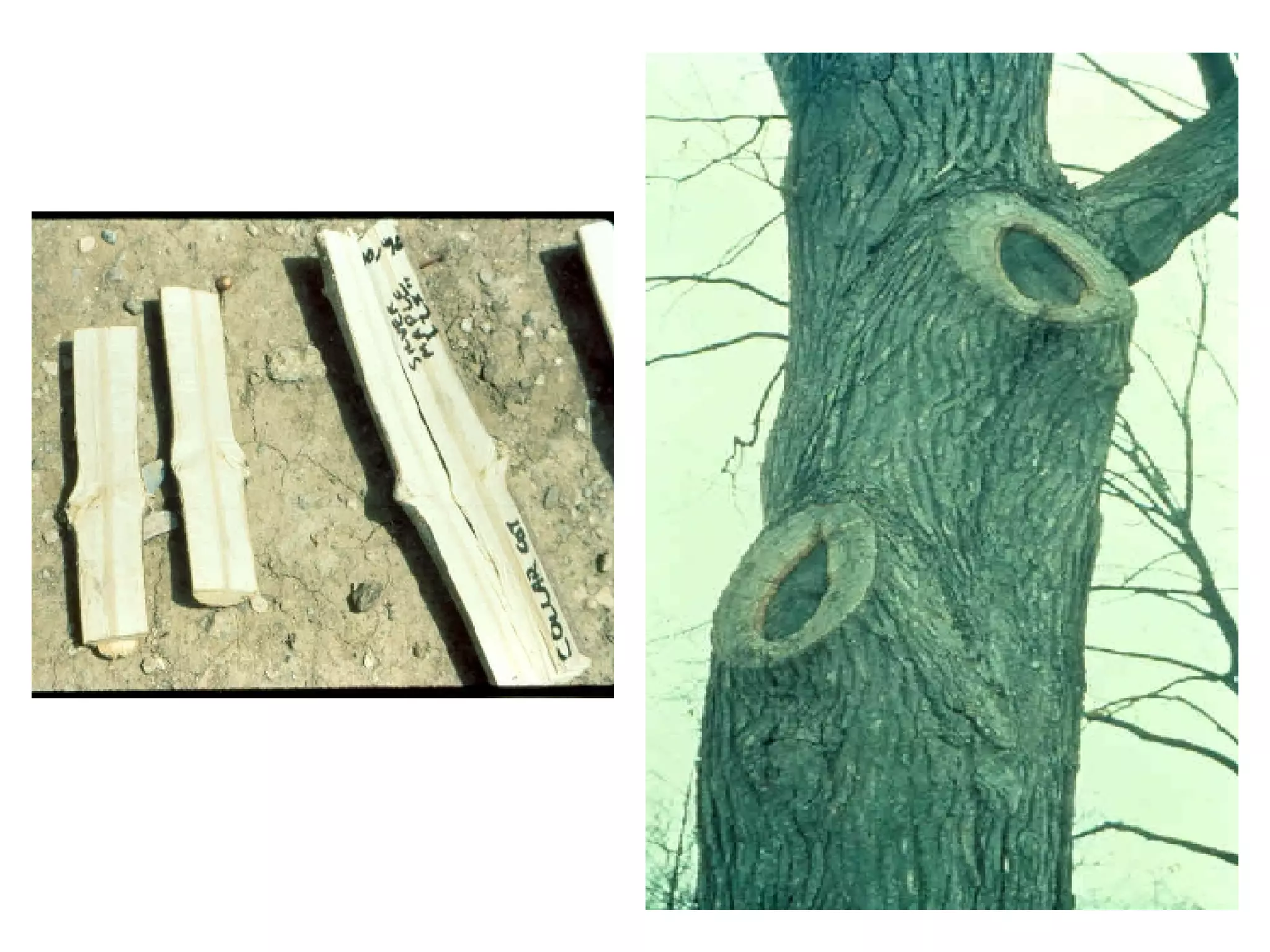
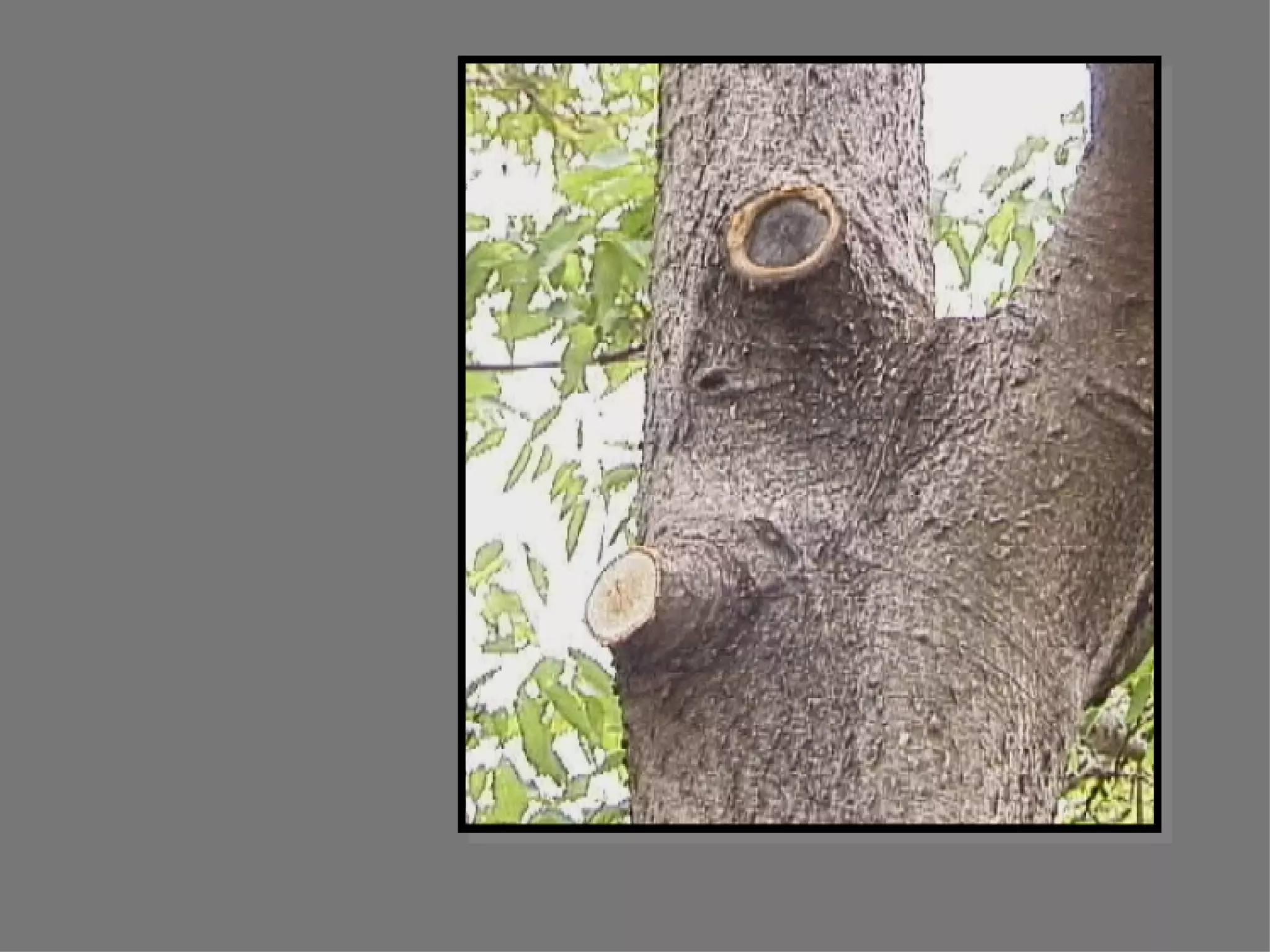
Quality of pruning cut?


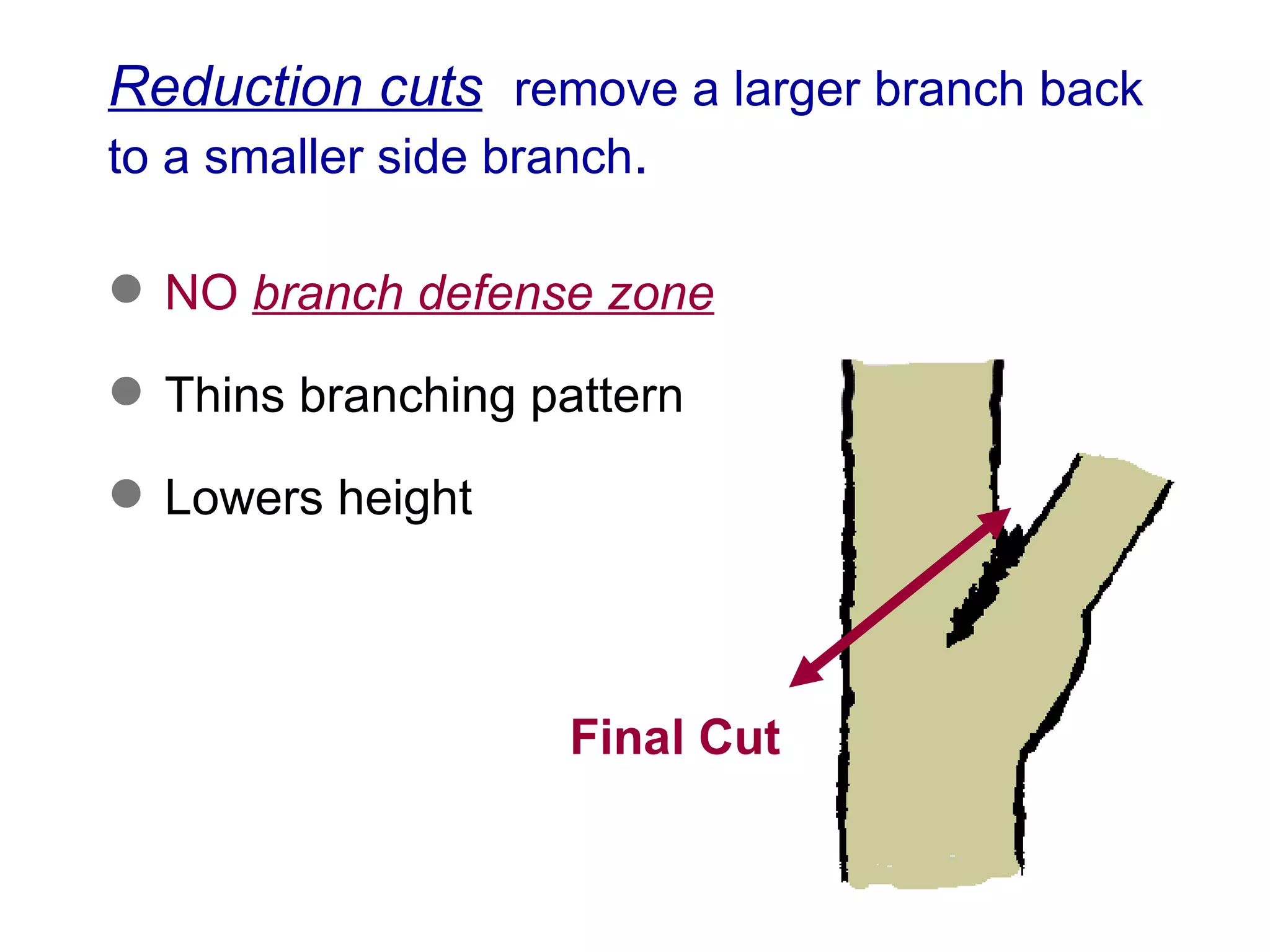
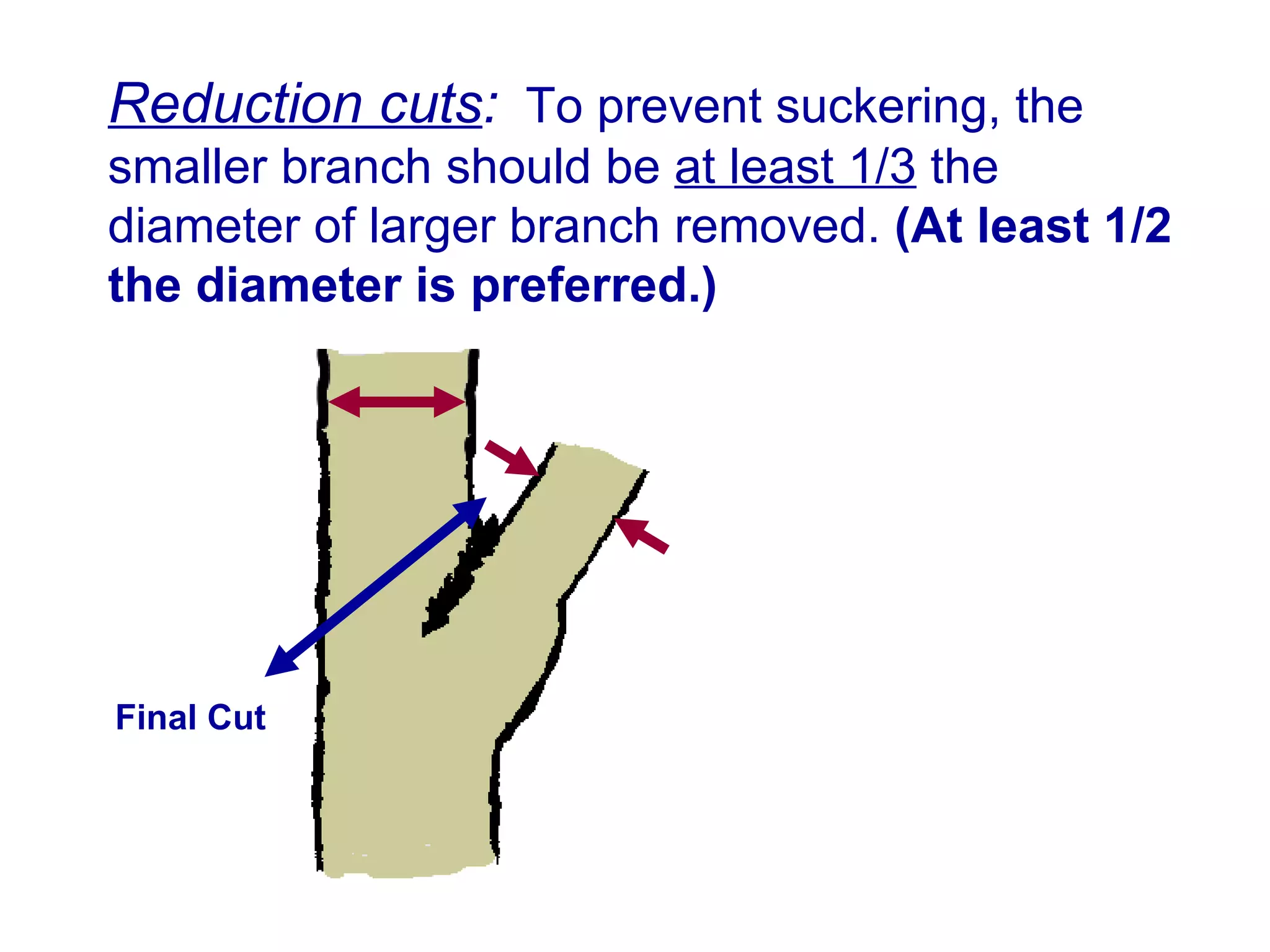
Reduction cuts   remove a larger branch back to a smaller side branch . NO  branch defense zone Thins branching pattern Lowers height Final Cut
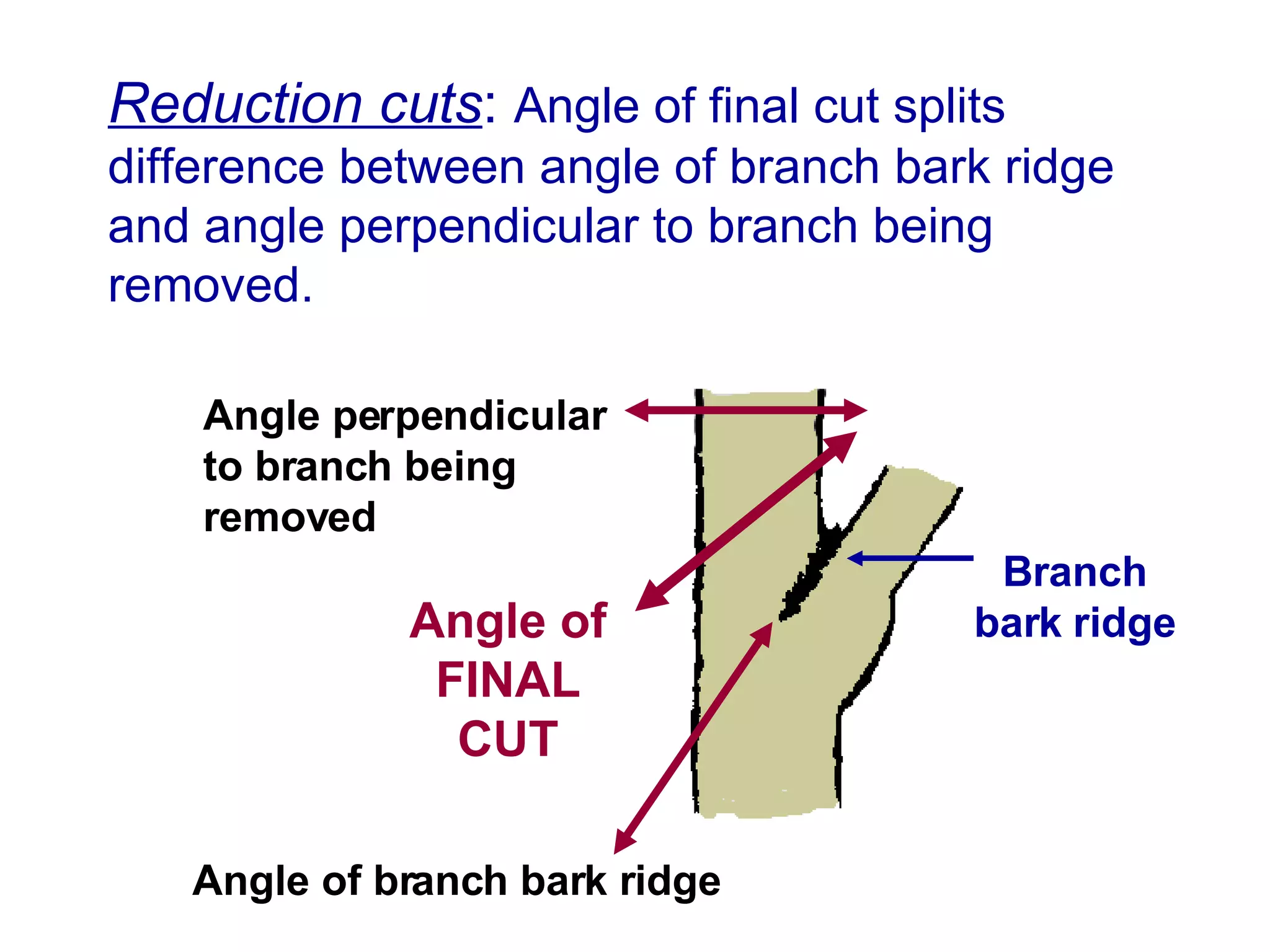
Reduction cuts :  Angle of final cut splits difference between angle of branch bark ridge and angle perpendicular to branch being removed. Angle perpendicular to branch being removed Angle of FINAL CUT Angle of branch bark ridge Branch bark ridge
 
Reduction cuts :   To prevent suckering, the smaller branch should be  at least 1/3  the diameter of larger branch removed.  (At least 1/2 the diameter is preferred.) Final Cut
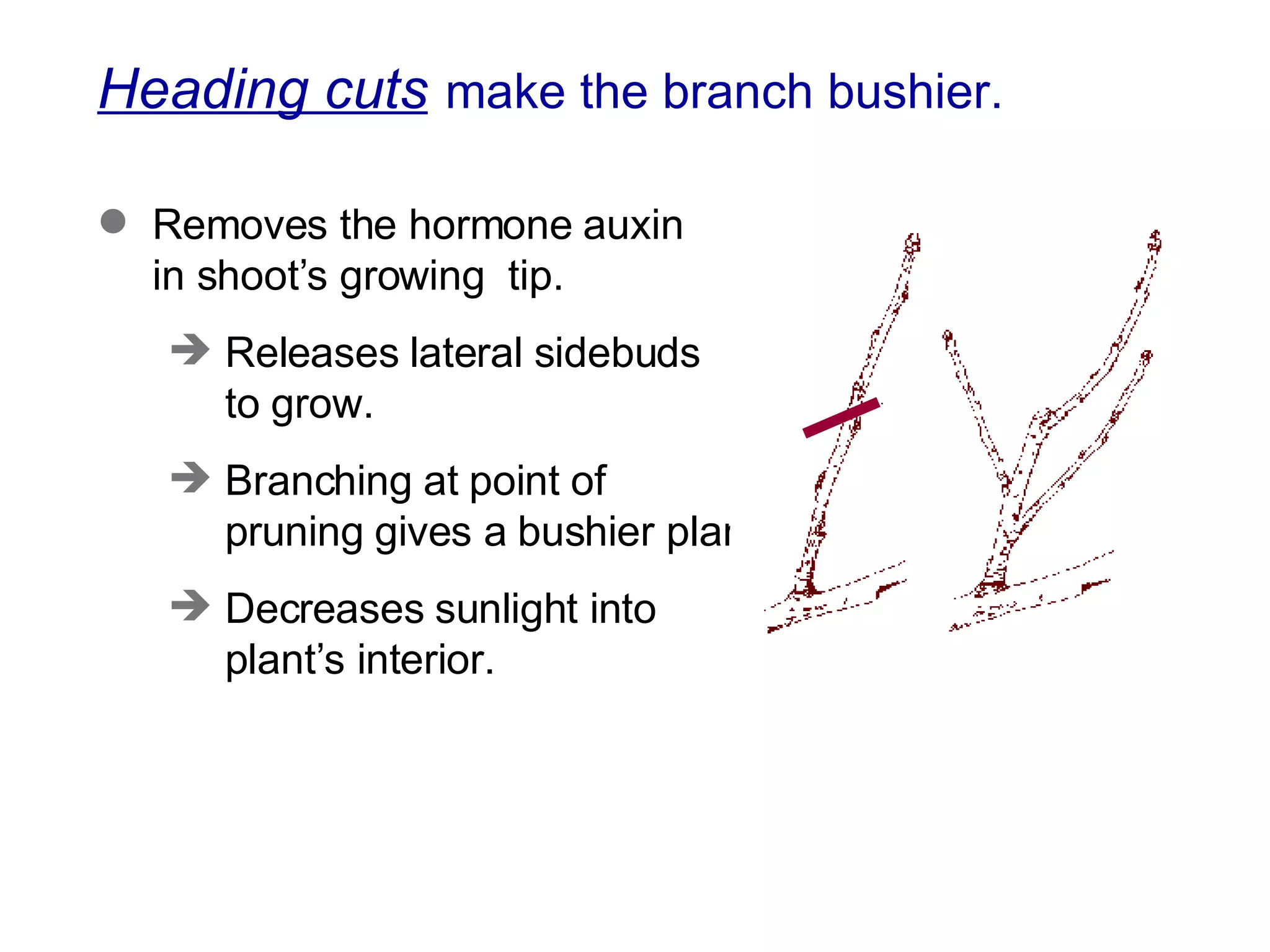
Heading cuts   make the branch bushier. Removes the hormone auxin in shoot’s growing  tip.  Releases lateral sidebuds  to grow. Branching at point of  pruning gives a bushier plant. Decreases sunlight into plant’s interior.
Natural Target Pruning (thinning) Cut Reduction Cut Heading Cut
 
 
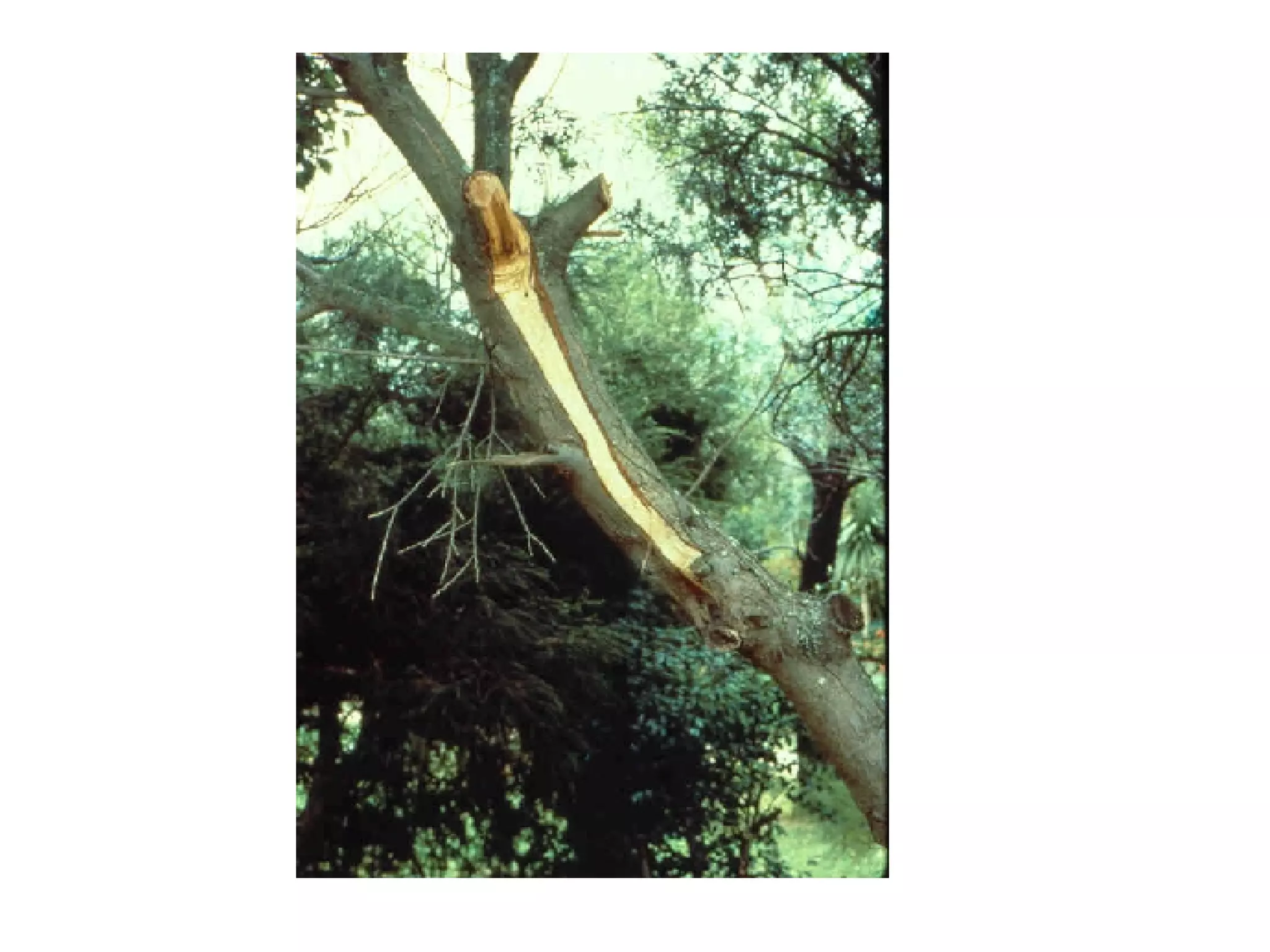
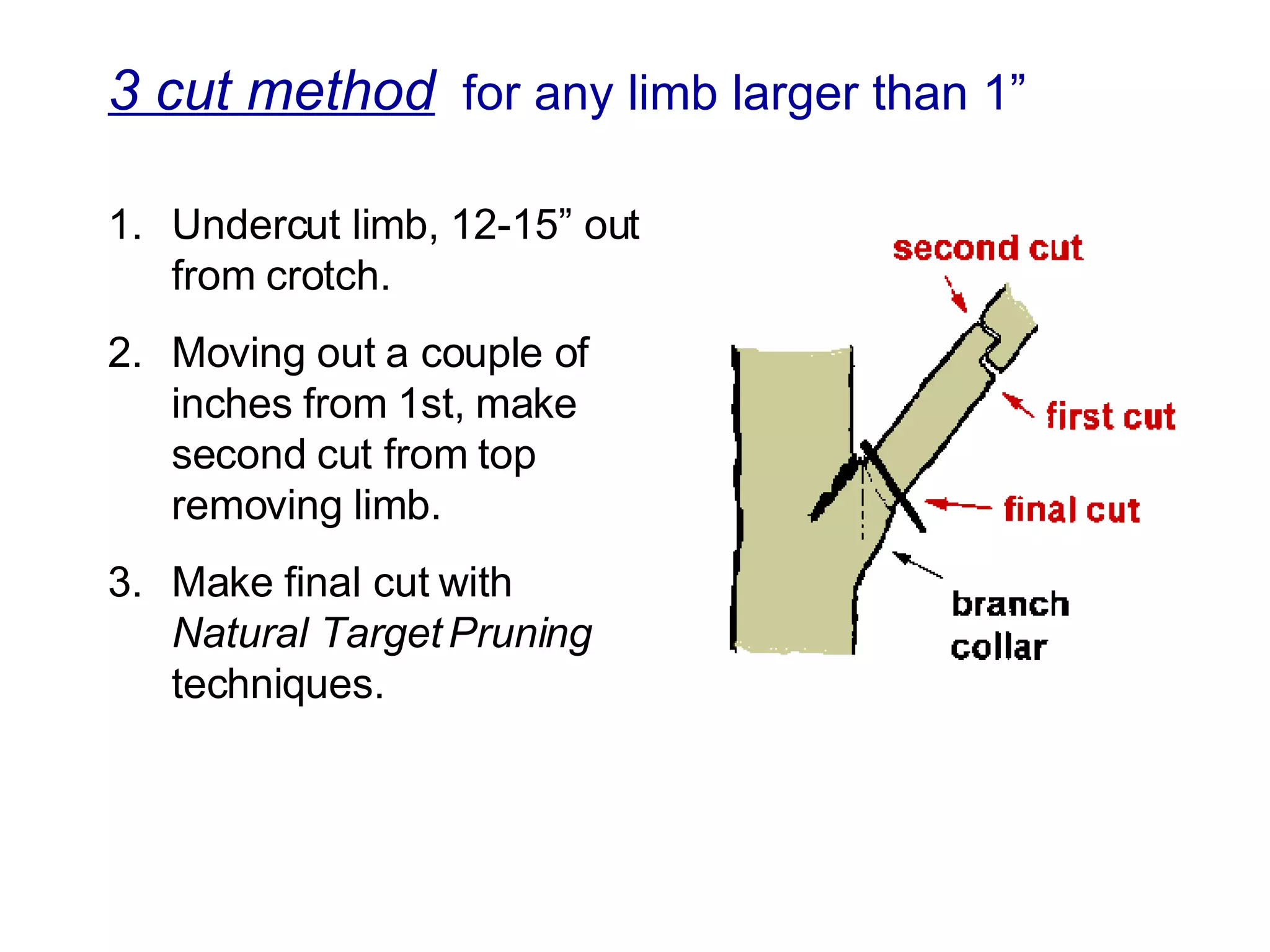
3 cut method   for any limb larger than 1” 1. Undercut limb, 12-15” out from crotch. 2. Moving out a couple of inches from 1st, make second cut from top removing limb. 3. Make final cut with  Natural Target Pruning  techniques.
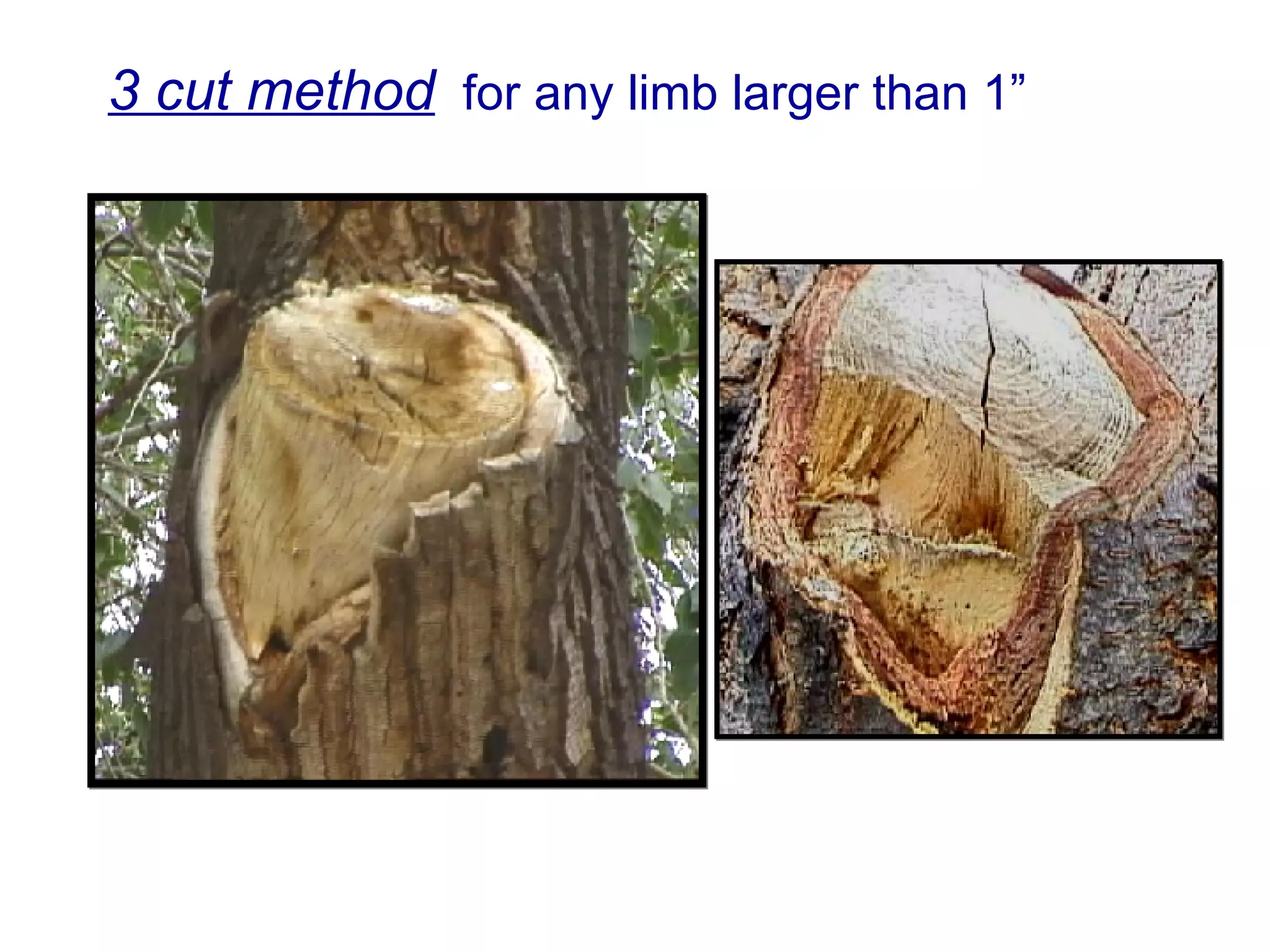
3 cut method   for any limb larger than 1”
 
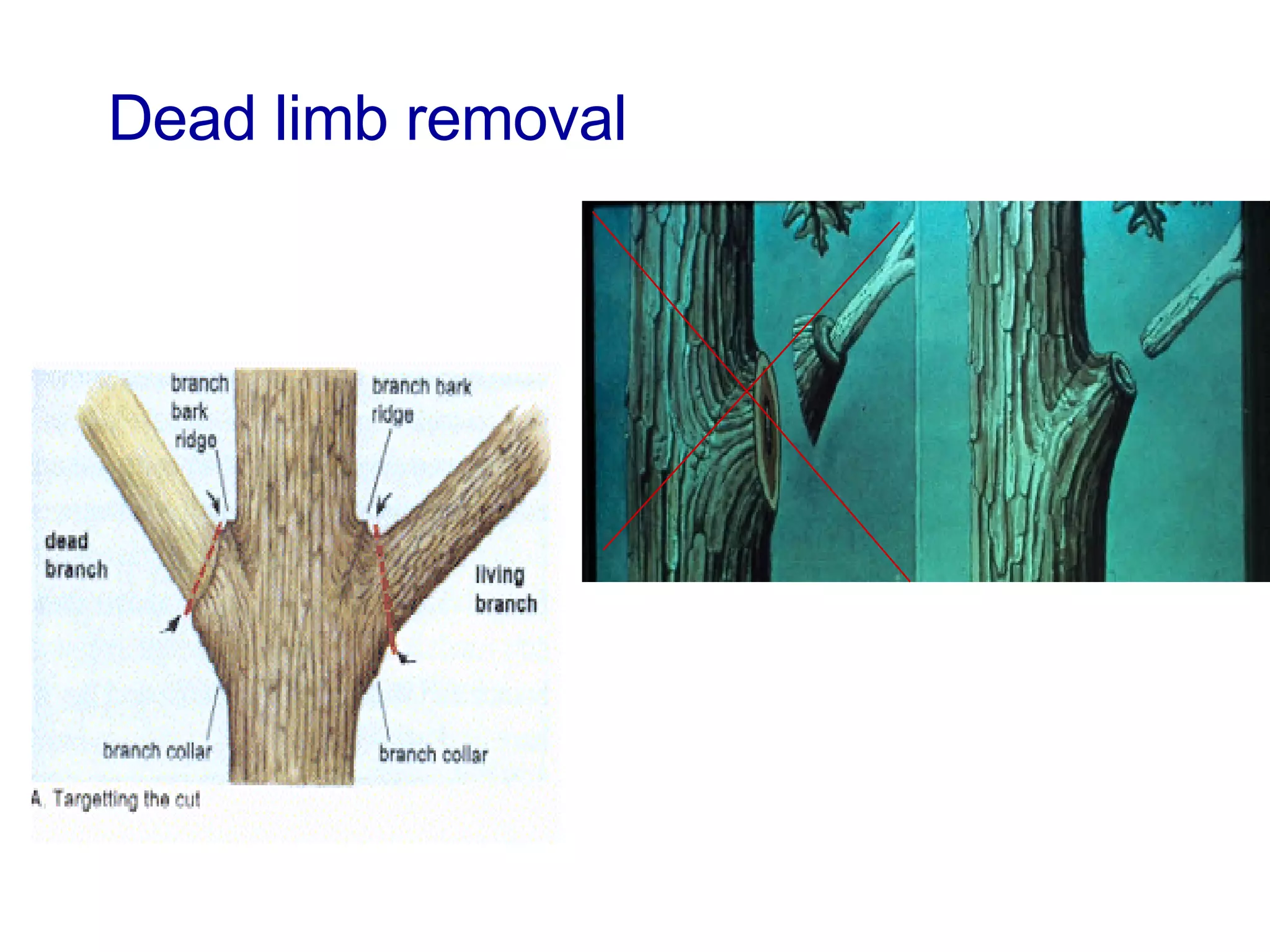
Dead limb removal

4a Basic Pruning Cuts & Codit

  • 1.
    Colorado Master GardenerTraining Pruning Cuts
  • 2.
    The Art of Pruning Size and shape control The Science of Pruning Why: Structure & Plant health How: Natural target pruning
  • 3.
    The Art ofPruning Pruning to Control Shape
  • 4.
    The Art ofPruning Pruning to Control Shape Branch grows in direction of bud.
  • 5.
    The Science ofPruning: Prune with purpose in mind. How plants respond to wounds Natural Target Pruning Types of pruning cuts Pruning standards Deciduous trees New planting Training young trees Mature trees Special need Evergreens Shrubs
  • 6.
  • 7.
    A tree isa series of boxes or “compartments” framed by annual growth rings and rays.
  • 8.
    Each “compartment” isfilled with tubes (xylem tissue) that transmit water and nutrients up into the tree.
  • 9.
  • 10.
    Trees don’t heal,they seal. CODIT Compartmentalization of Decay In Trees Reaction Zone Chemical change in cells seal-off or “compartmentalize” the area
  • 11.
    Trees don’t heal,they seal. CODIT Compartmentalization of Decay In Trees Reaction Zone Chemical change in cells seal-off or “compartmentalize” the area
  • 12.
    CODIT onold Cottonwood trunk
  • 13.
  • 14.
    CODIT Compartmentalization OfDecay In Trees Reaction Zone Microorganism Area Decayed wood
  • 15.
  • 16.
    Branch Defense ZoneA ring of cells responsible for Woundwood growth and active in the reaction wood process. Woundwood closing over pruning cut Branch collar Branch defense zone cells
  • 17.
    For the Branch Defense Zone to be active, the side branch must be less than 1/2 the diameter of the trunk/parent branch. Less than 1/3 is preferred.
  • 18.
    Natural Target PruningProtects the Branch Defense Zone . branch bark ridge branch collar branch collar final cut
  • 19.
    Terms CODIT ReactionZone Branch Collar Branch Defense Zone
  • 20.
    Type of pruningcut impacts Ability to defend against decay Regrowth Natural target pruning cuts Remove side branch back to larger parent branch/trunk. Reduction cuts Remove larger branch back to smaller side branch . Heading cuts Remove branch tip
  • 21.
    1. Preserves the branch defense zone 2. Thins branching pattern Increases sunlight penetration into plant’s interior Increases air circulation 3. Only minor influence on height Natural target pruning cuts remove a smaller side branch back to trunk/parent branch.
  • 22.
    Natural Target PruningProtects the Branch Defense Zone . branch bark ridge branch collar branch collar final cut
  • 23.
    Natural target pruningcuts : Use caution to not nick or injure the branch bark ridge. With proper cut, Woundwood grows over pruning wound Pruning cut nicked branch bark ridge on bottom. Note how woundwood fails to grow in this area.
  • 24.
  • 25.
  • 26.
    Natural Target Pruning on Conifers branch bark ridge branch collar final cut branch collar
  • 27.
  • 28.
  • 29.
  • 30.
  • 31.
  • 32.
  • 33.
    Reduction cuts remove a larger branch back to a smaller side branch . NO branch defense zone Thins branching pattern Lowers height Final Cut
  • 34.
    Reduction cuts : Angle of final cut splits difference between angle of branch bark ridge and angle perpendicular to branch being removed. Angle perpendicular to branch being removed Angle of FINAL CUT Angle of branch bark ridge Branch bark ridge
  • 35.
  • 36.
    Reduction cuts : To prevent suckering, the smaller branch should be at least 1/3 the diameter of larger branch removed. (At least 1/2 the diameter is preferred.) Final Cut
  • 37.
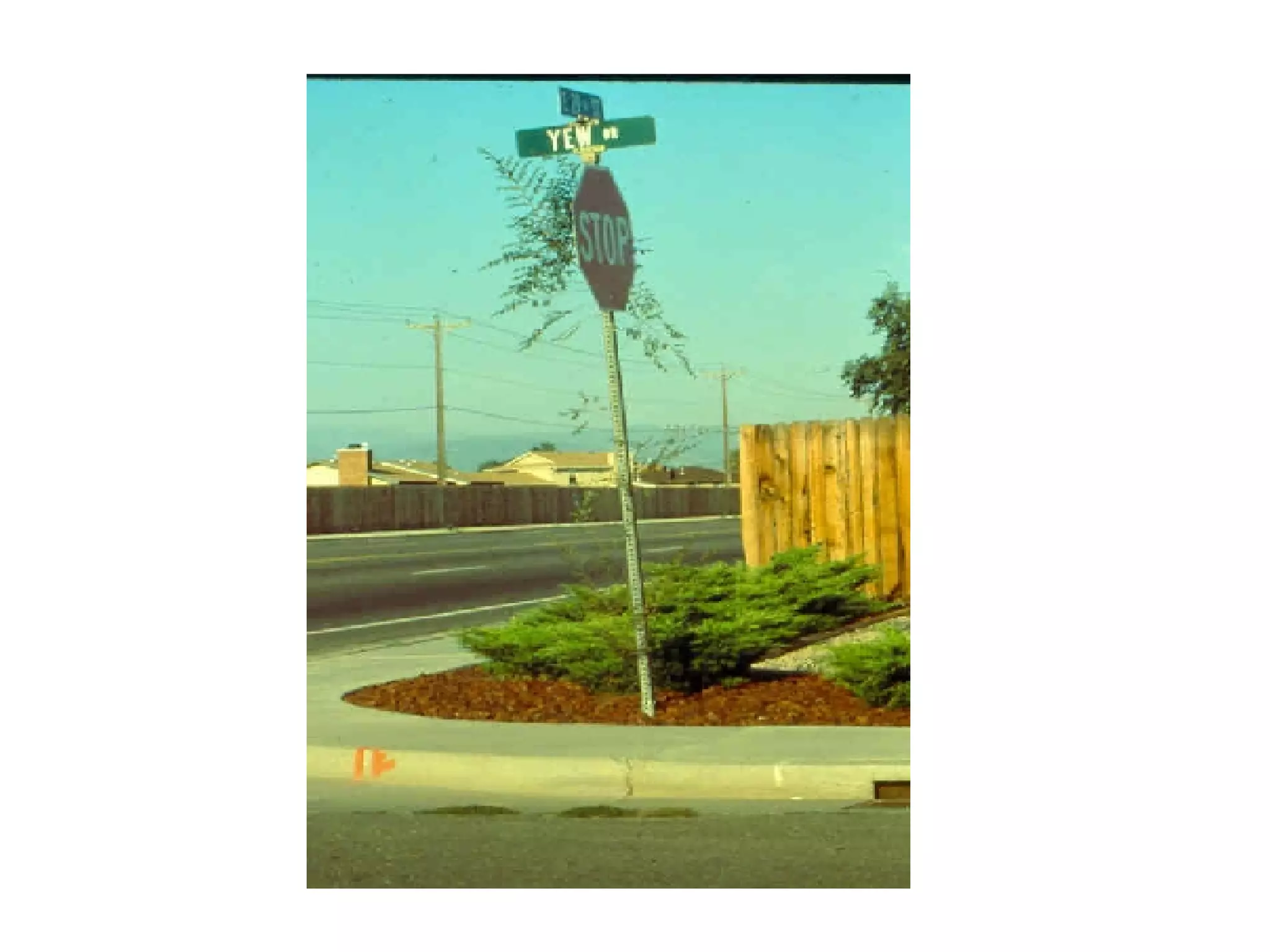
    Heading cuts make the branch bushier. Removes the hormone auxin in shoot’s growing tip. Releases lateral sidebuds to grow. Branching at point of pruning gives a bushier plant. Decreases sunlight into plant’s interior.
  • 38.
    Natural Target Pruning(thinning) Cut Reduction Cut Heading Cut
  • 39.
  • 40.
  • 41.
    3 cut method for any limb larger than 1” 1. Undercut limb, 12-15” out from crotch. 2. Moving out a couple of inches from 1st, make second cut from top removing limb. 3. Make final cut with Natural Target Pruning techniques.
  • 42.
    3 cut method for any limb larger than 1”
  • 43.
  • 44.