Disruptive Mobile Learning   Mike Sharples Learning Sciences Research Institute University of Nottingham www.nottingham.ac.uk/lsri/msh
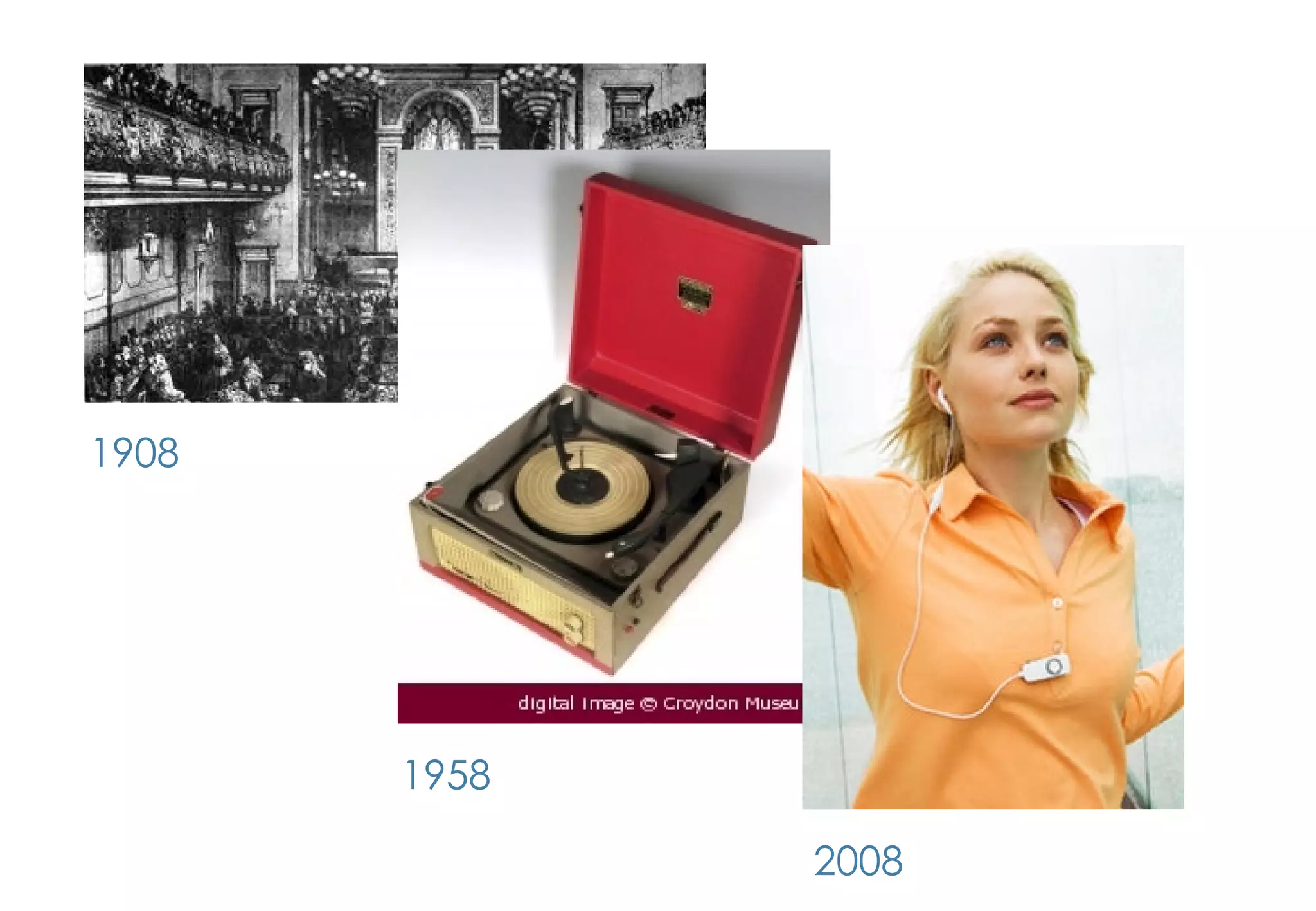
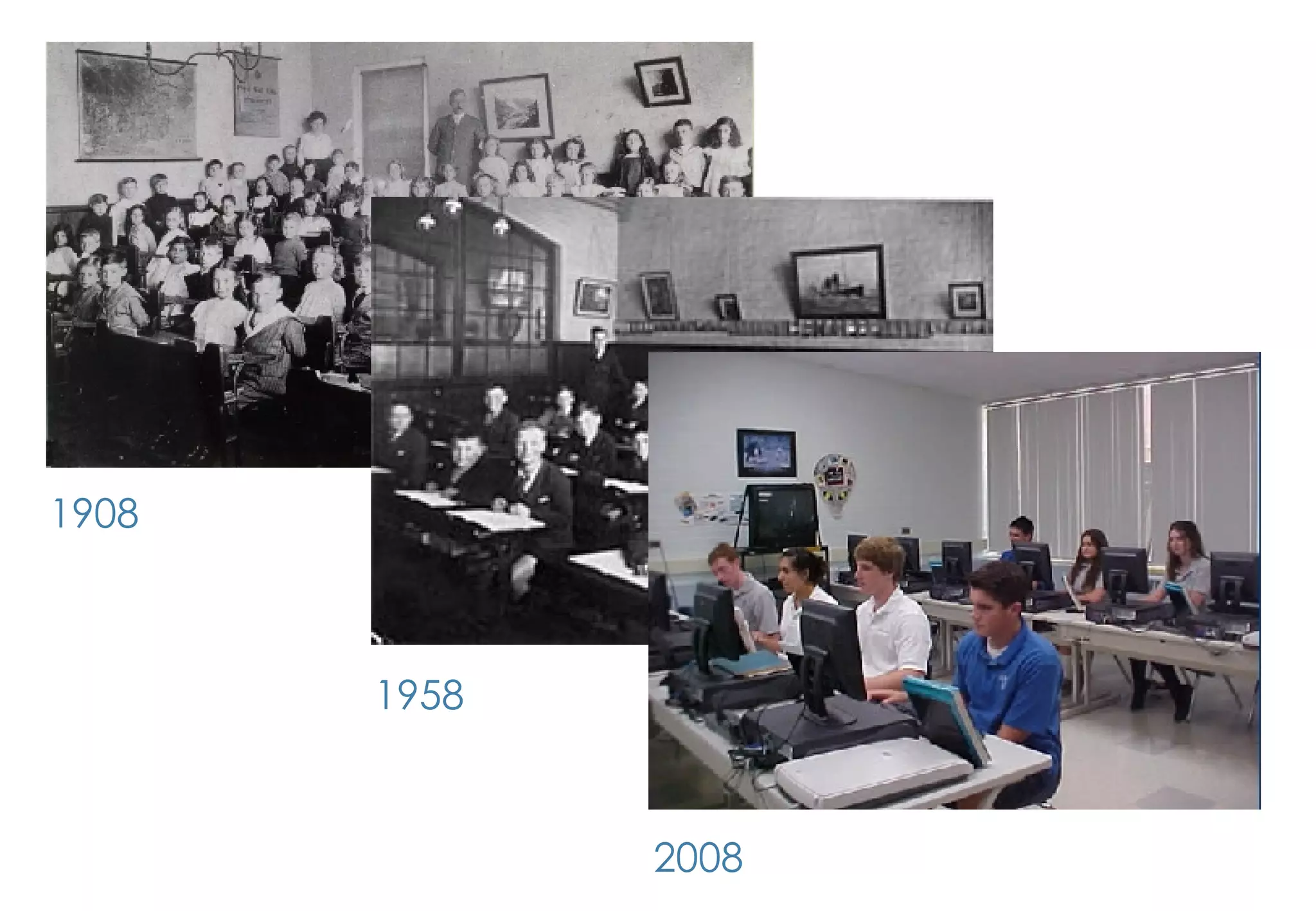
1908 1958 2008
1908 1958 2008
Why have schools changed so little over the past 100 years?
The education system is internally consistent and self sustaining…
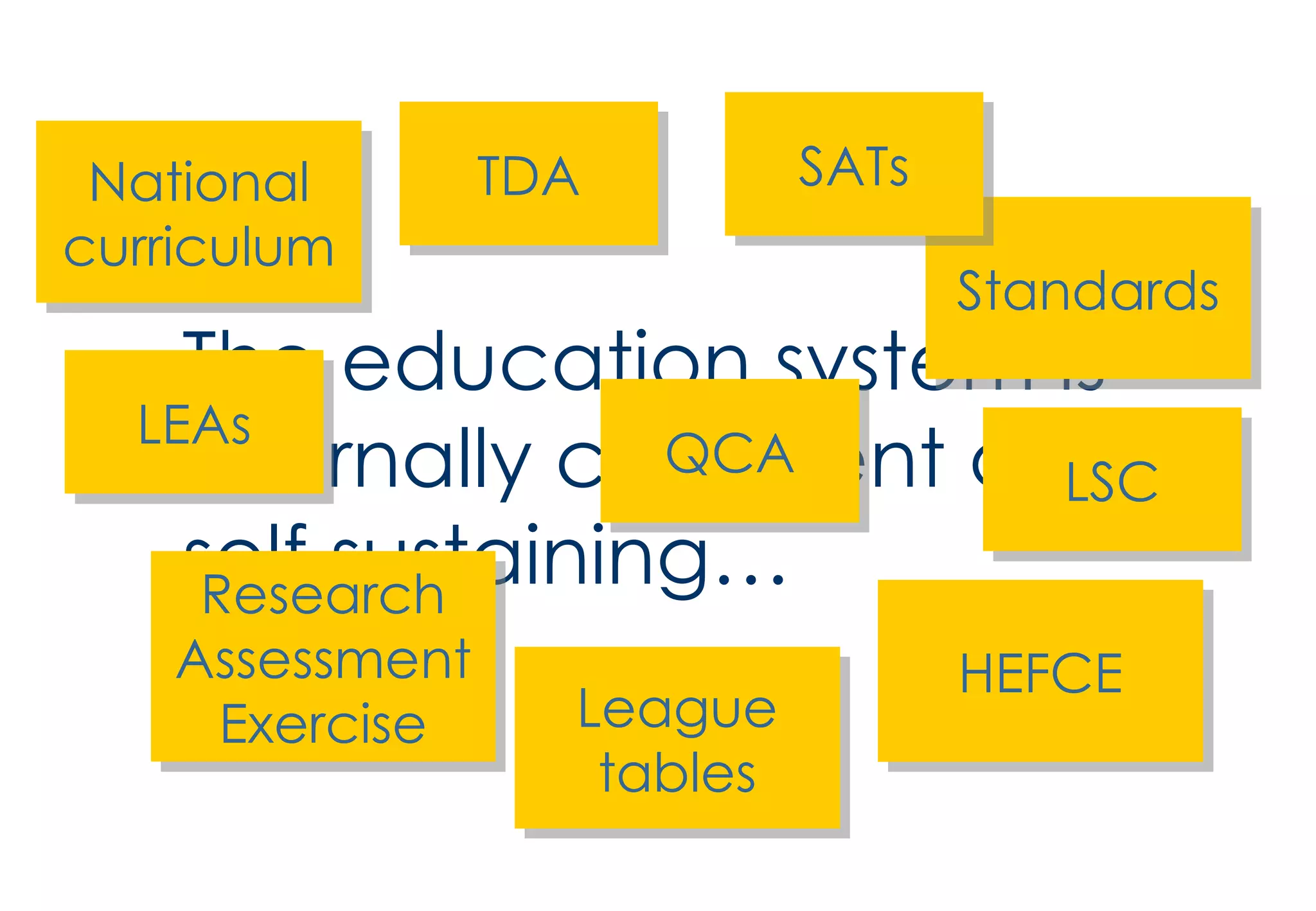
The education system is internally consistent and self sustaining… National curriculum Standards League tables Research Assessment Exercise QCA TDA LSC HEFCE LEAs SATs
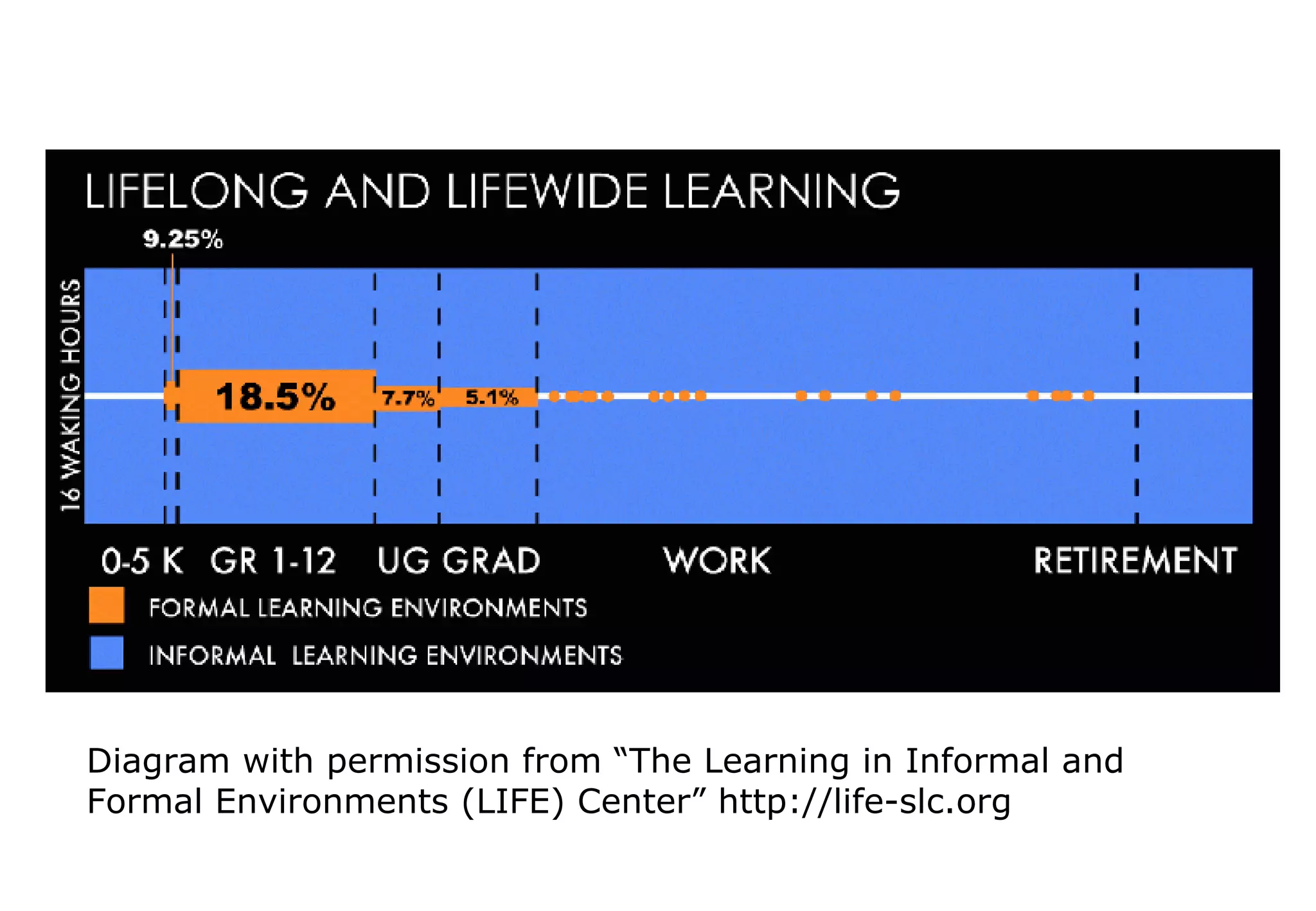
… but doesn’t connect with the rest of learning
Diagram with permission from “The Learning in Informal and Formal Environments (LIFE) Center” http://life-slc.org
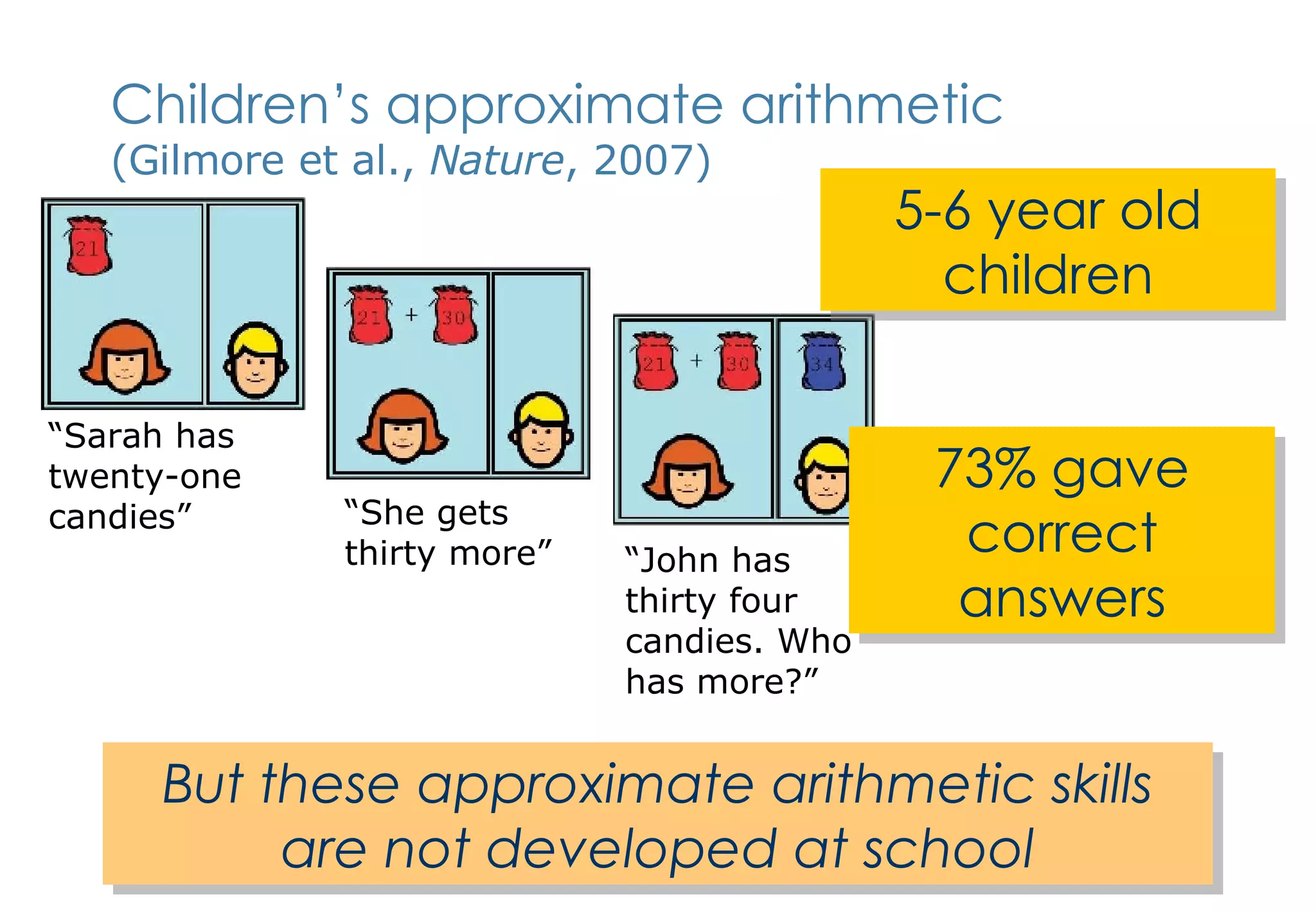
Children’s approximate arithmetic (Gilmore et al.,  Nature , 2007) 5-6 year old children 73% gave correct answers But these approximate arithmetic skills are not developed at school “ Sarah has twenty-one candies” “ She gets thirty more” “ John has thirty four candies. Who has more?”
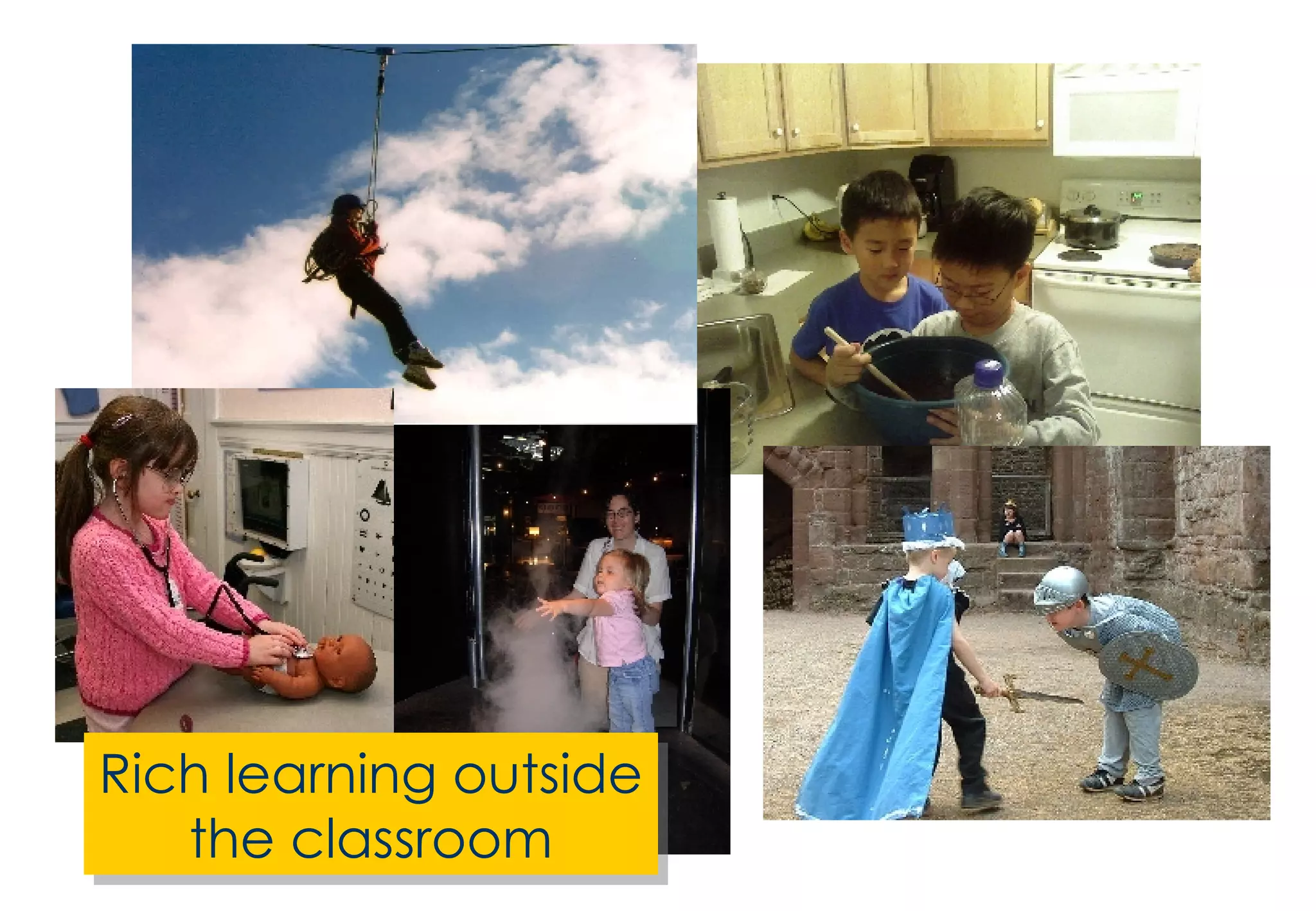
Rich learning outside the classroom
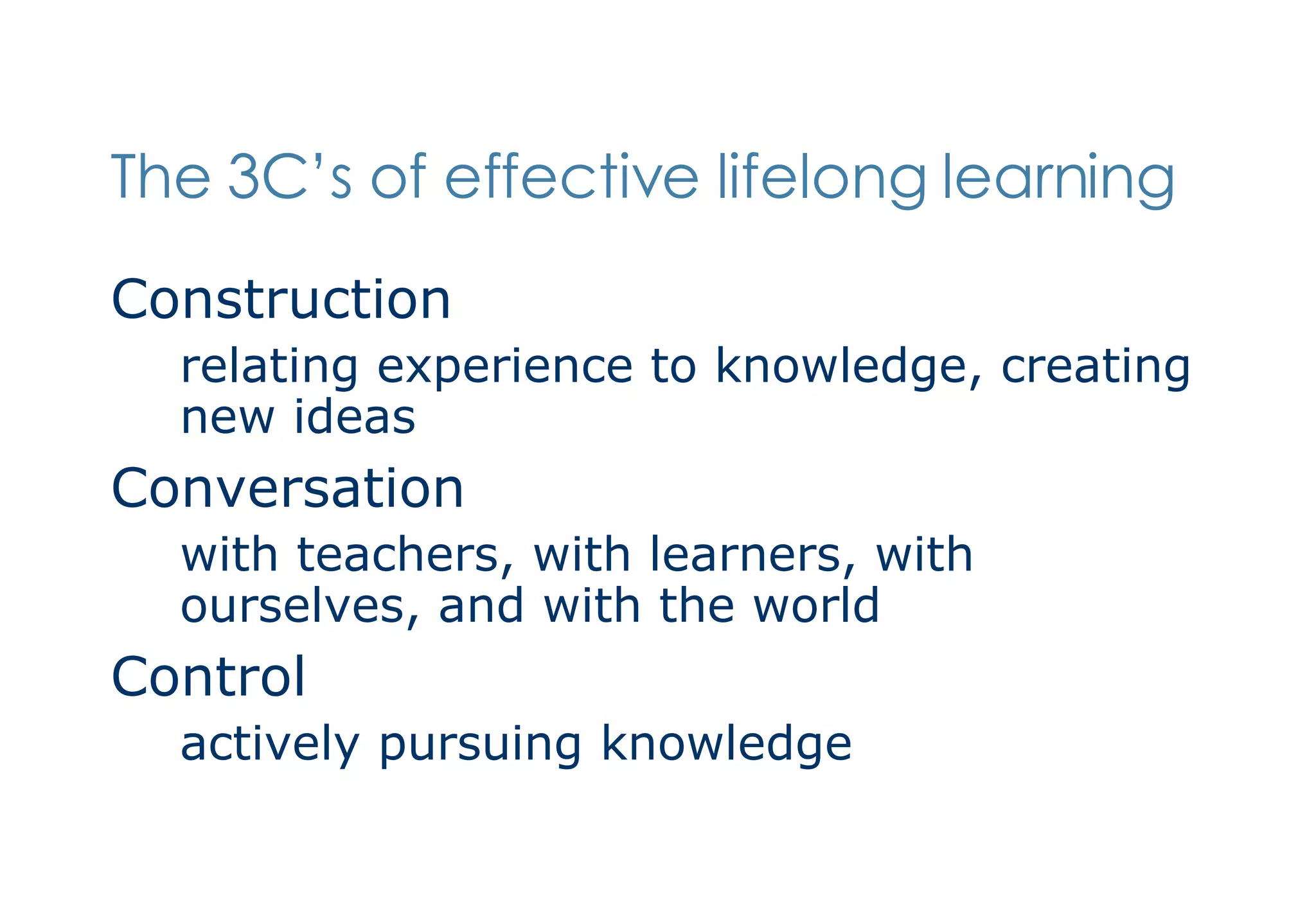
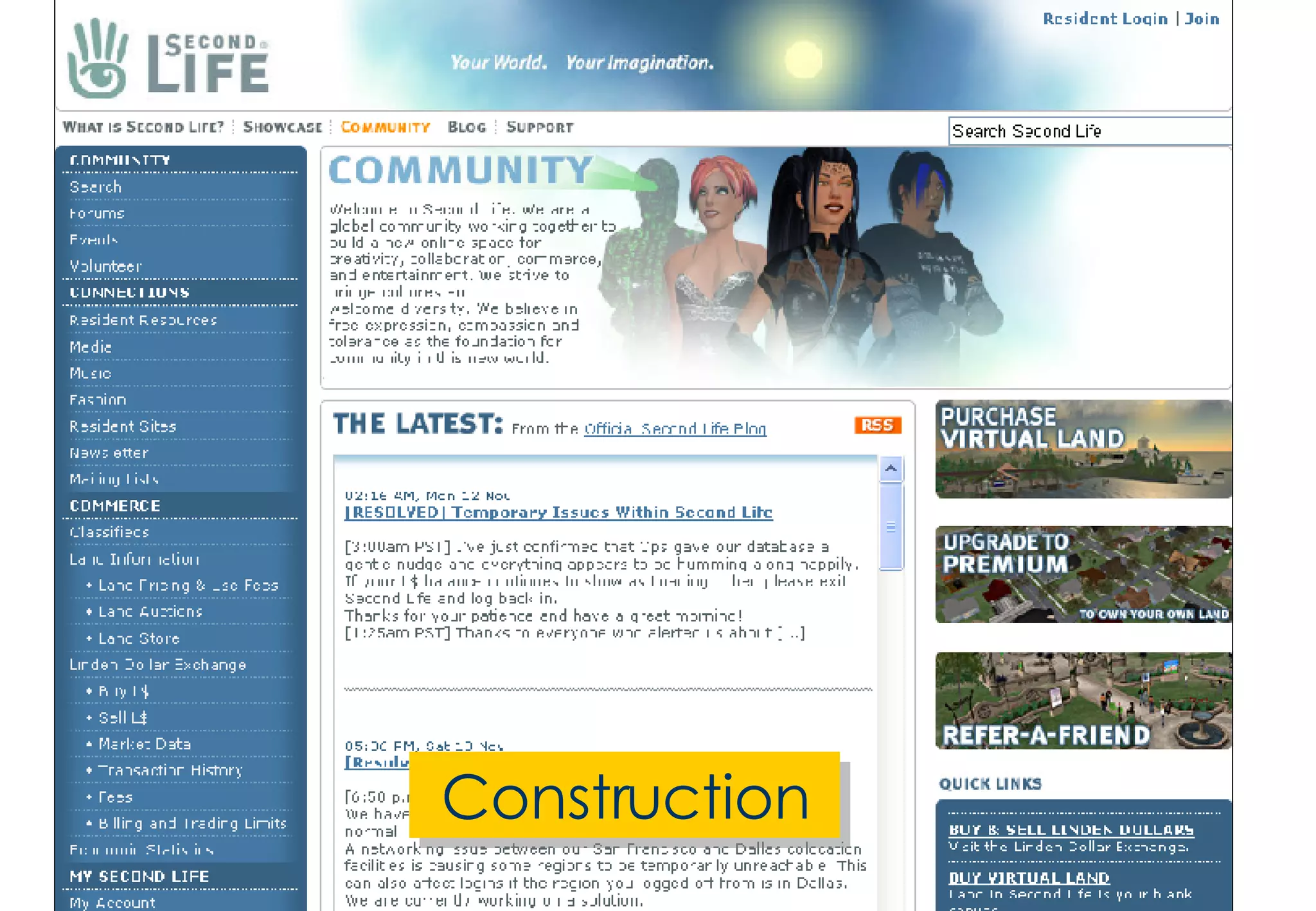
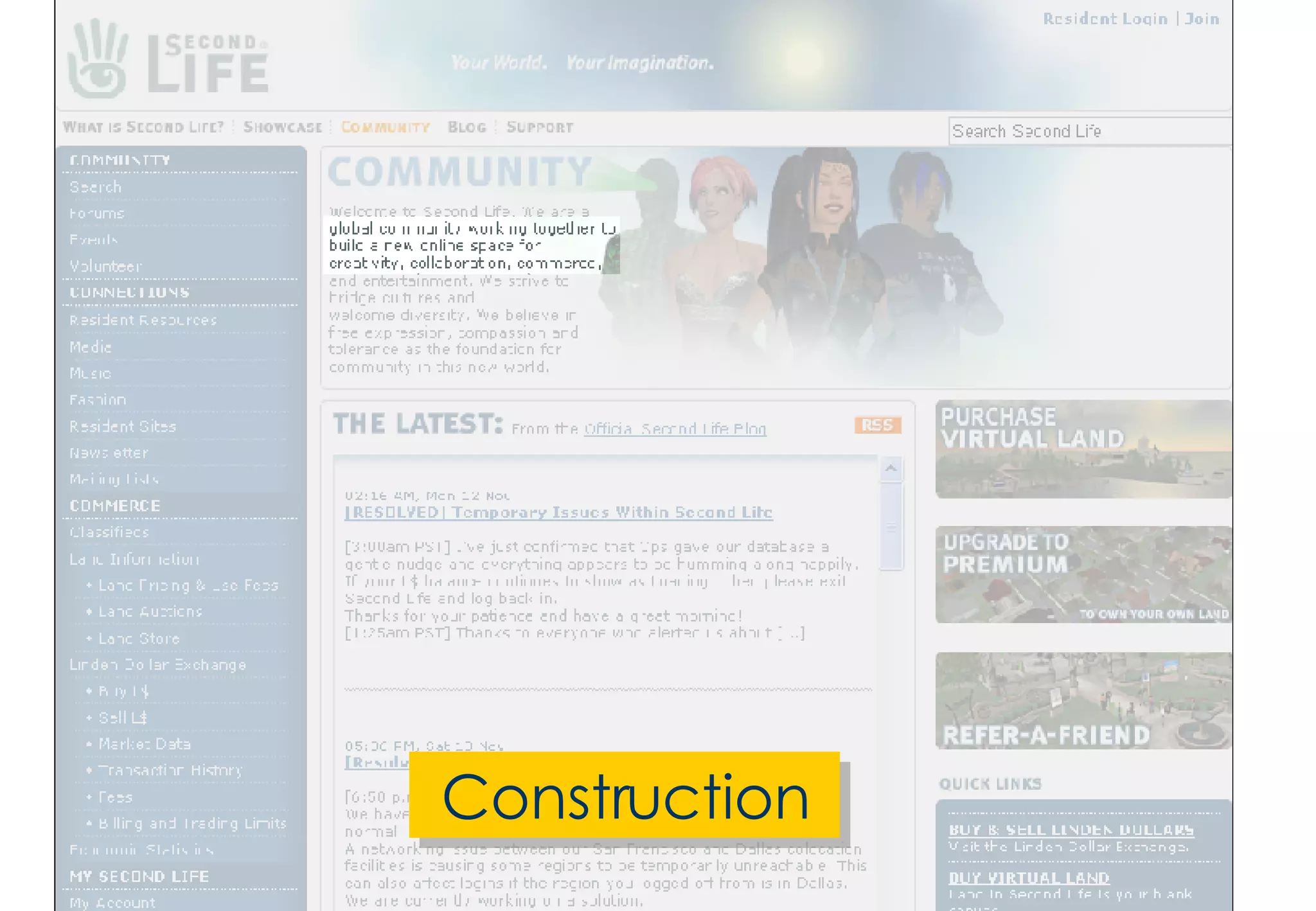
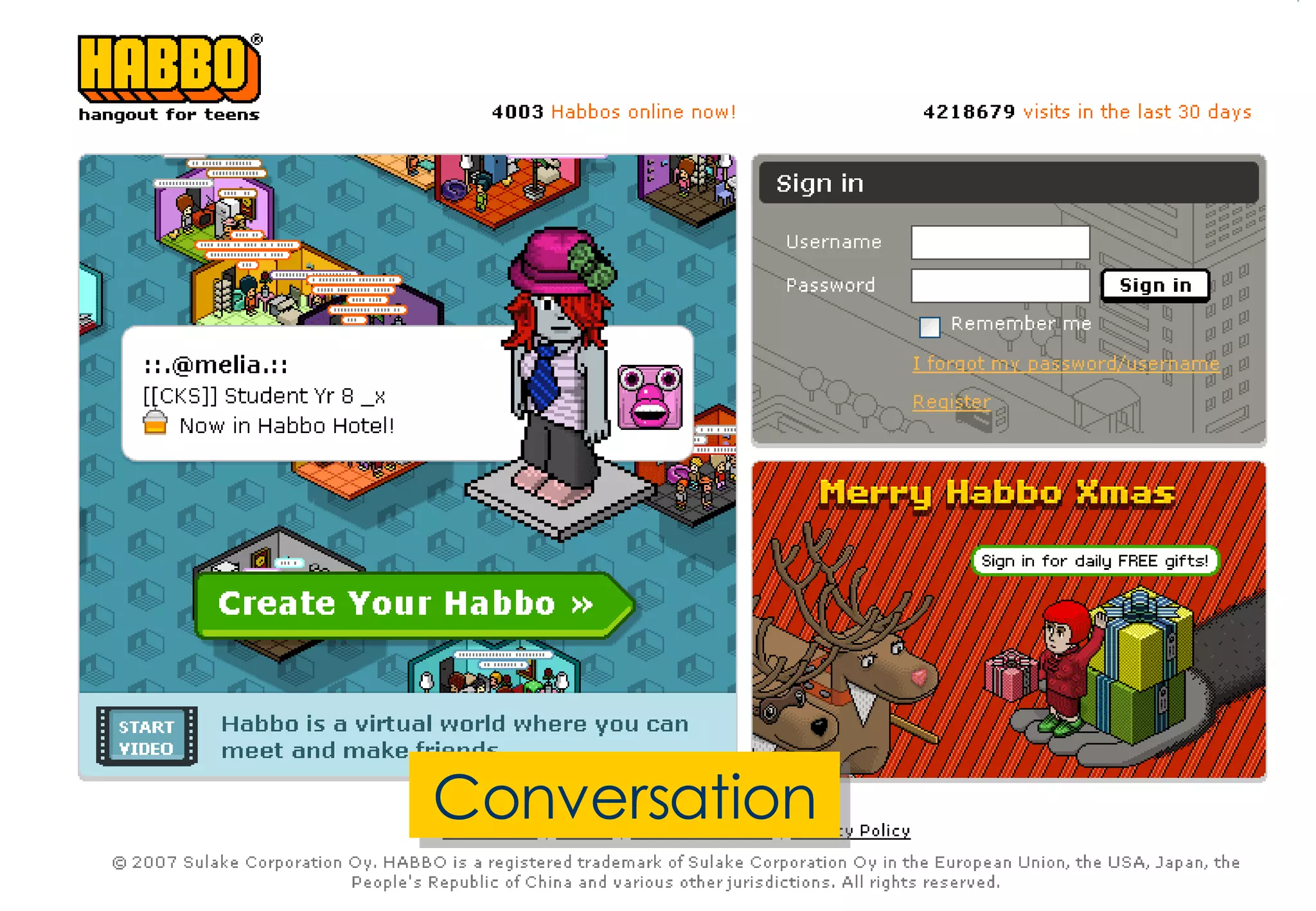
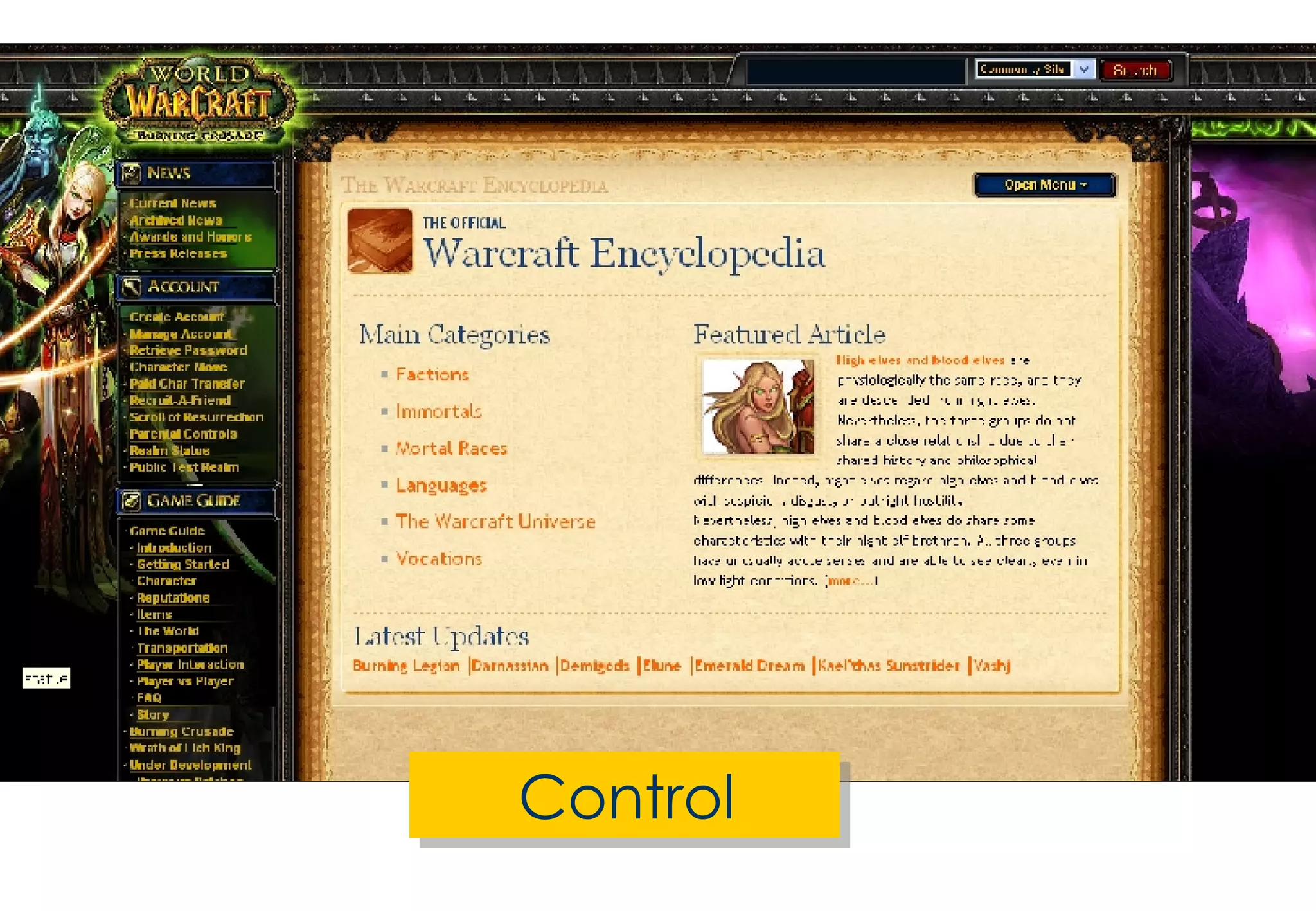
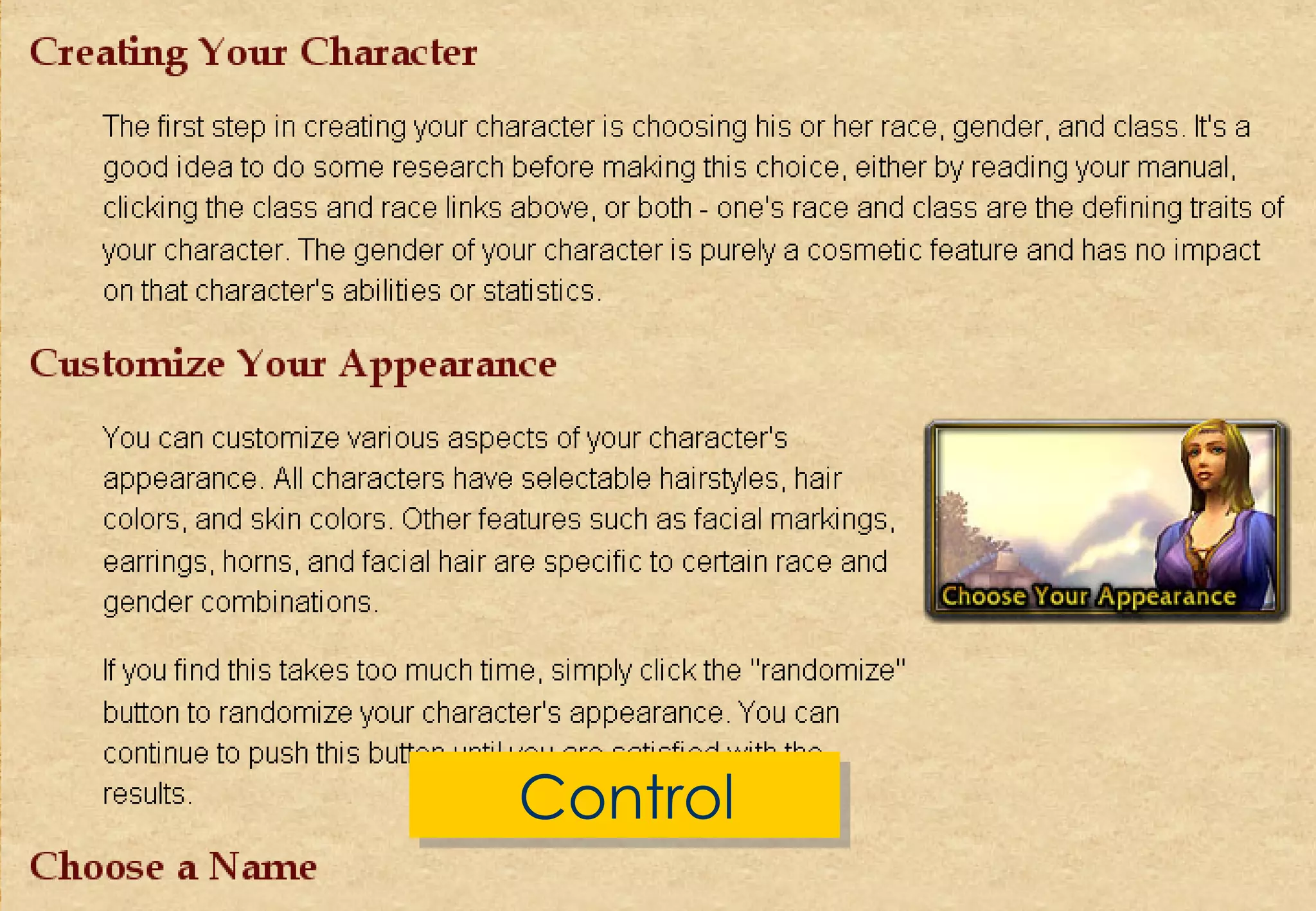
The 3C’s of effective lifelong learning Construction relating experience to knowledge, creating new ideas  Conversation with teachers, with learners, with ourselves, and with the world Control actively pursuing knowledge
Construction
Construction
Conversation
Conversation
Control
Control
Control
How do we connect…
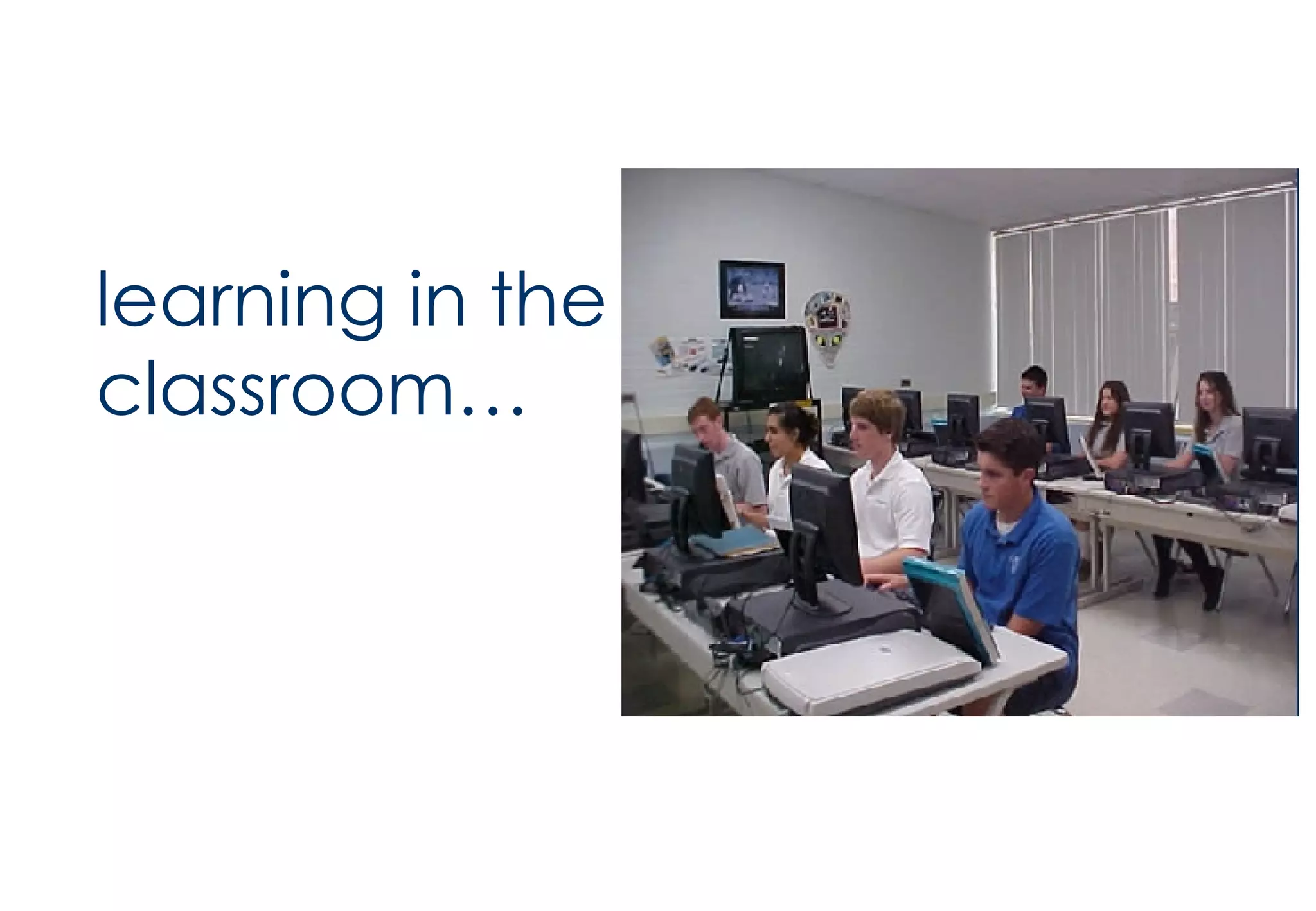
learning in the classroom…
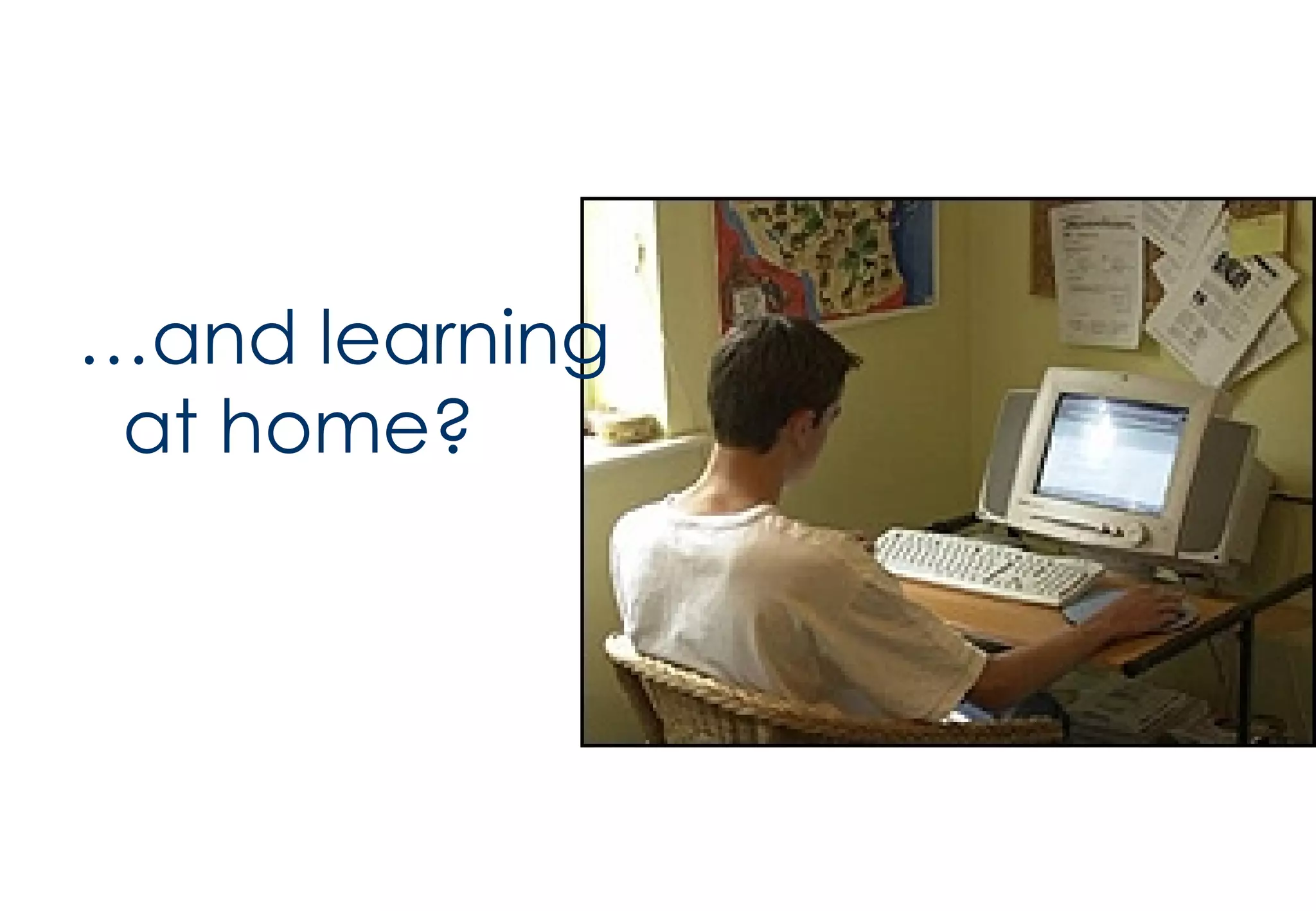
… and learning at home?
How do we connect…
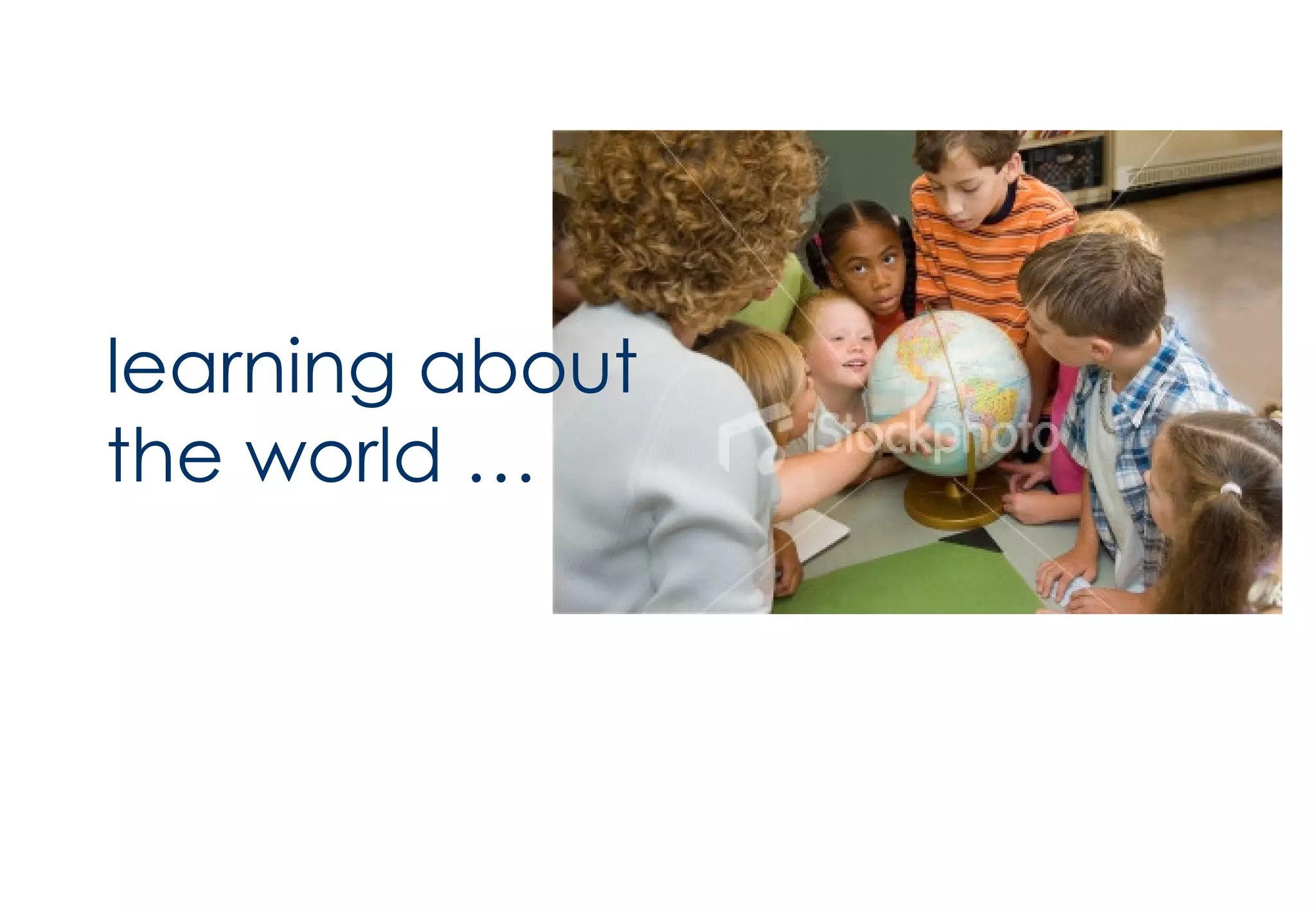
learning about the world …
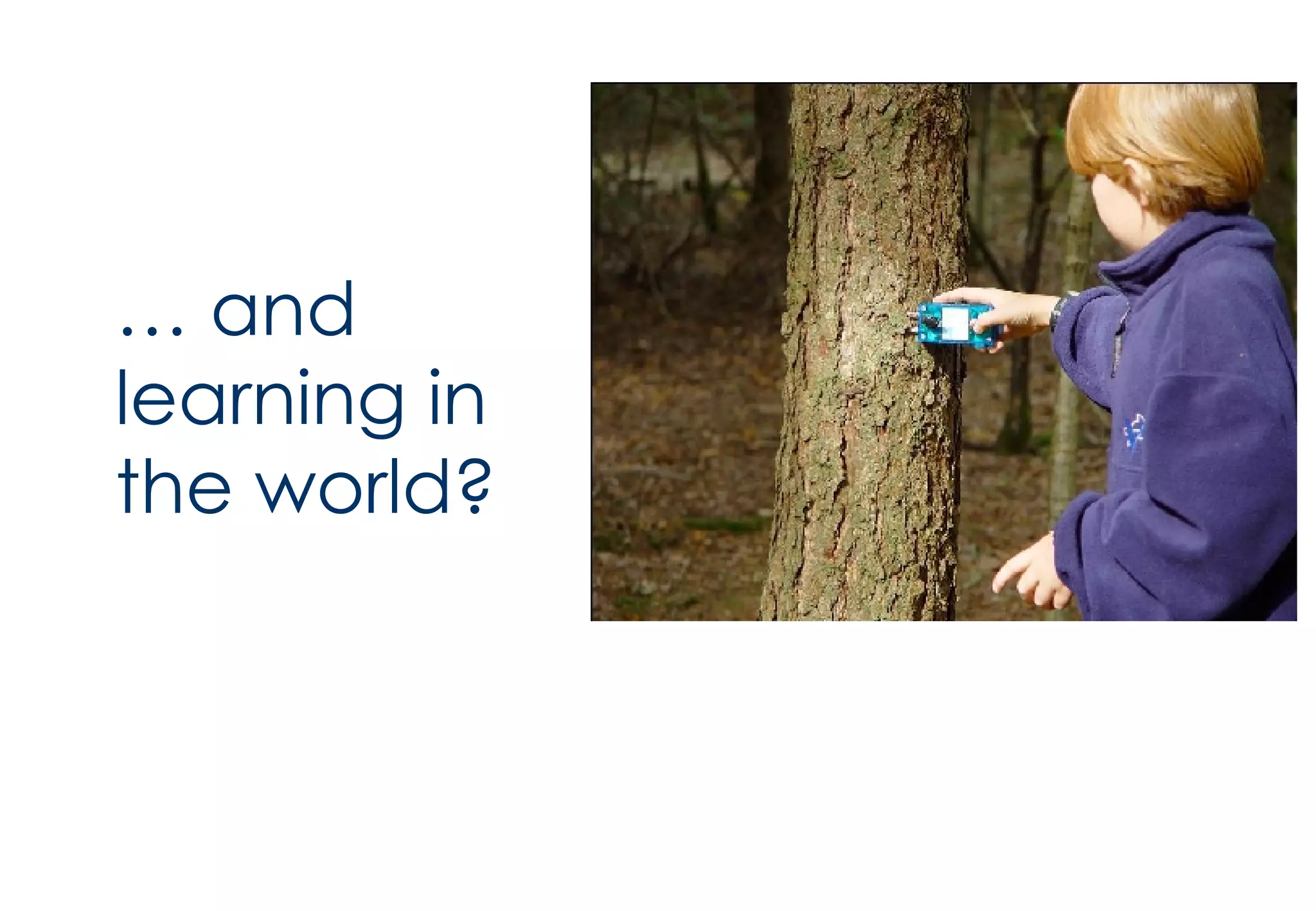
…  and learning in the world?
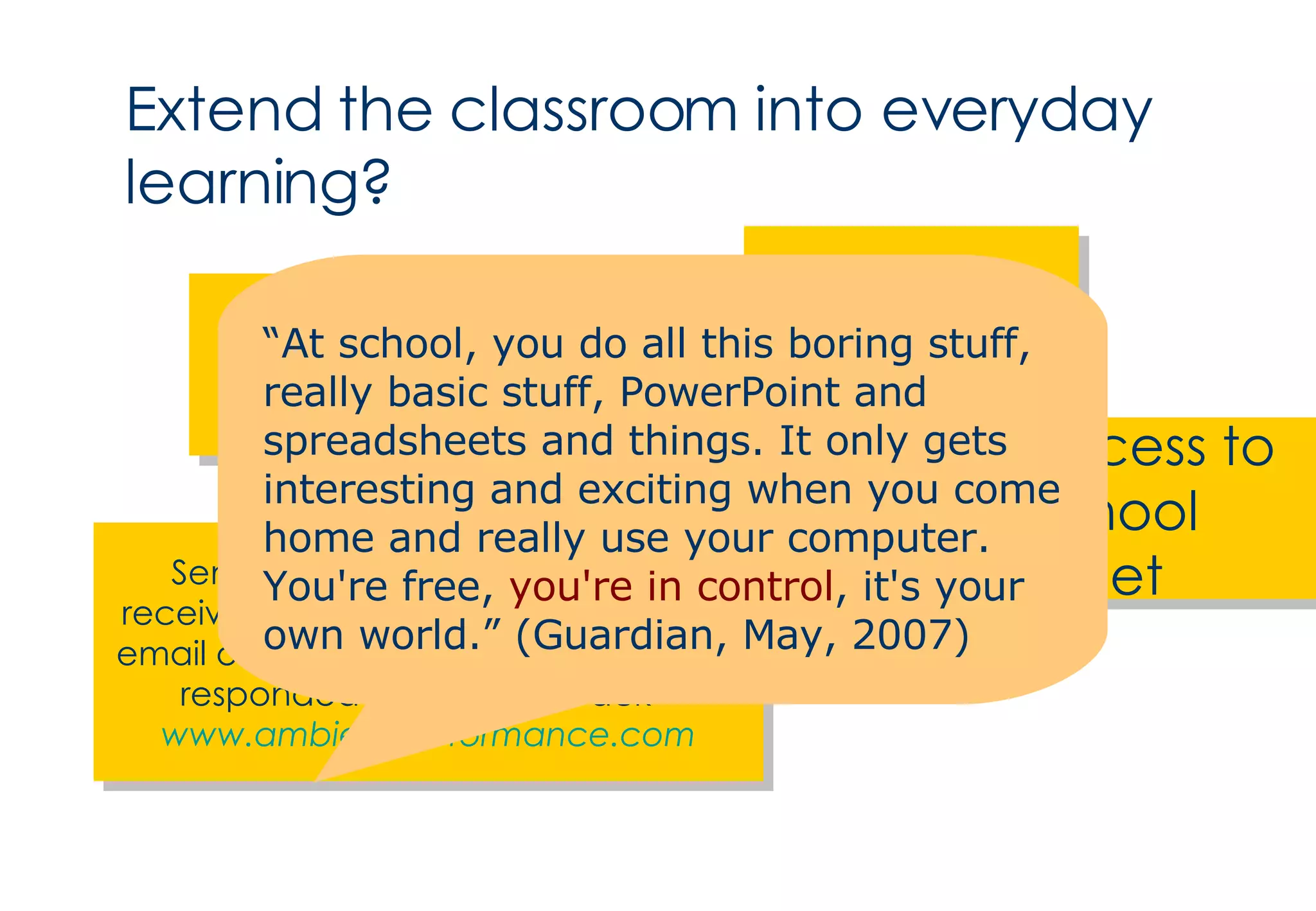
Extend the classroom into everyday learning? Podcasts Teaching on mobile phones Home access to the school intranet Send assessment questions and receive multiple choice responses via email or SMS which can then be auto-responded to with feedback”  www.ambientperformance.com
Extend the classroom into everyday learning? Podcasts Teaching on mobile phones Home access to the school intranet Send assessment questions and receive multiple choice responses via email or SMS which can then be auto-responded to with feedback”  www.ambientperformance.com “ At school, you do all this boring stuff, really basic stuff, PowerPoint and spreadsheets and things. It only gets interesting and exciting when you come home and really use your computer. You're free,  you're in control , it's your own world.” (Guardian, May, 2007)
Extend everyday learning into the classroom?
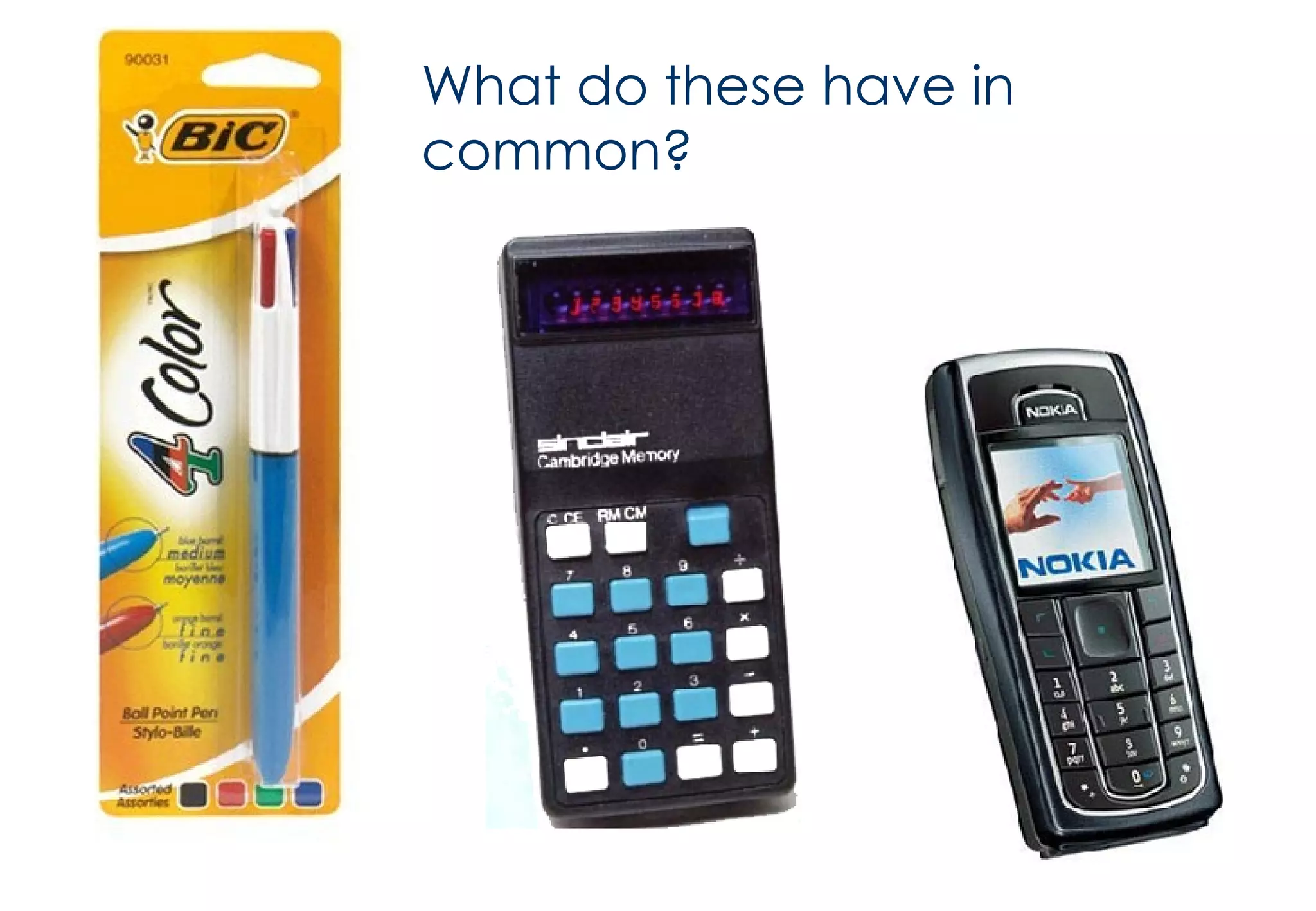
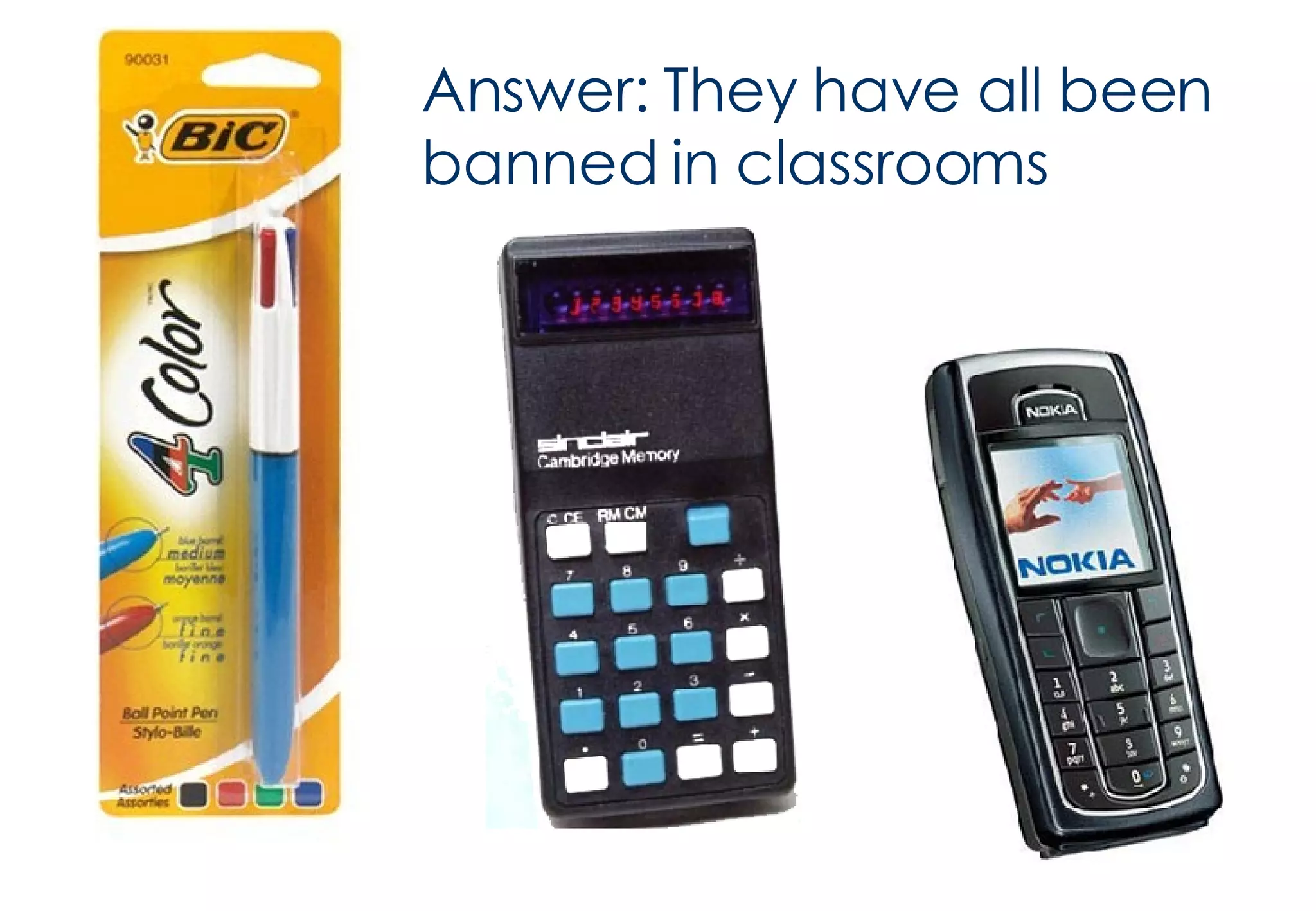
What do these have in common?
Answer: They have all been banned in classrooms
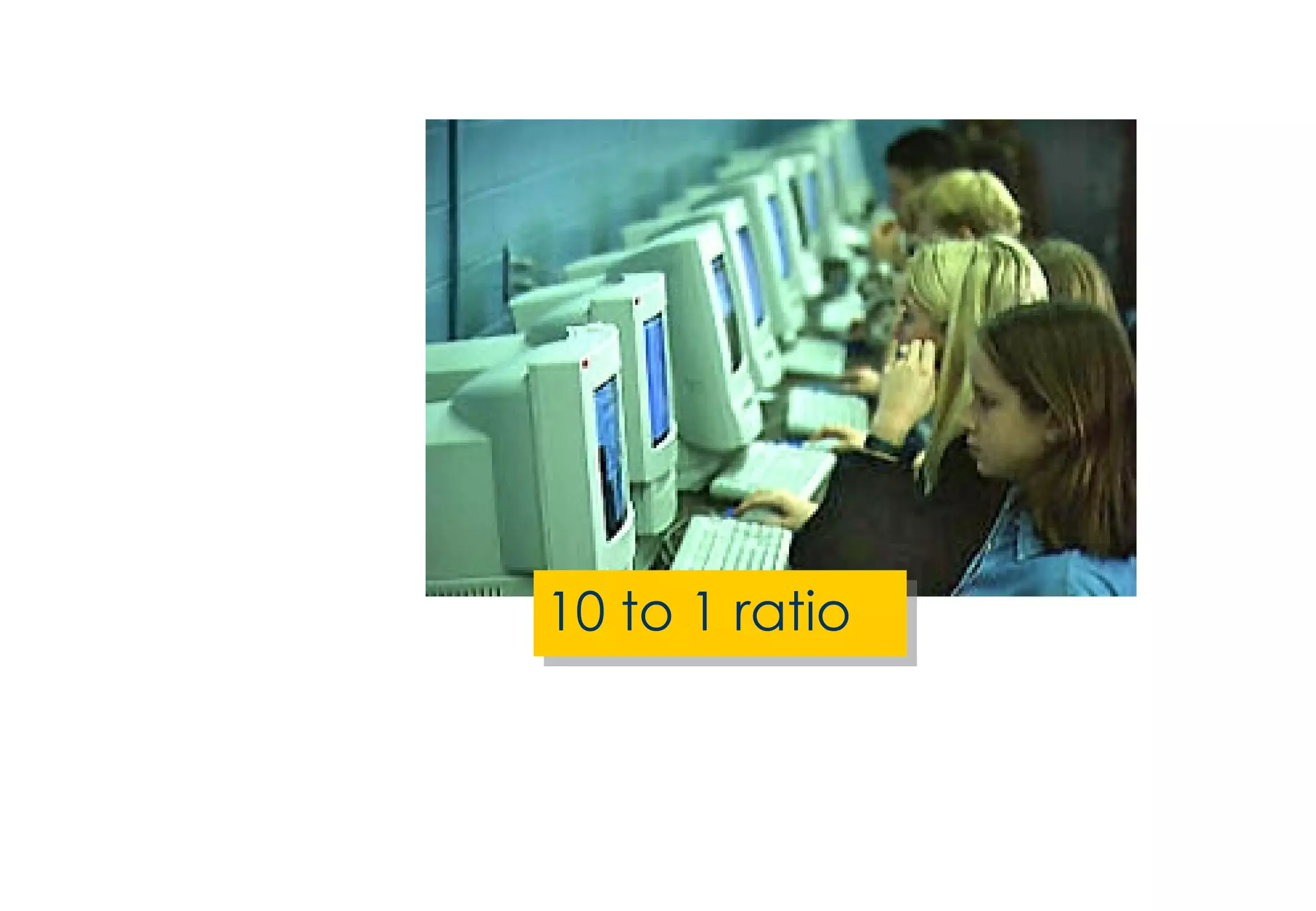
10 to 1 ratio
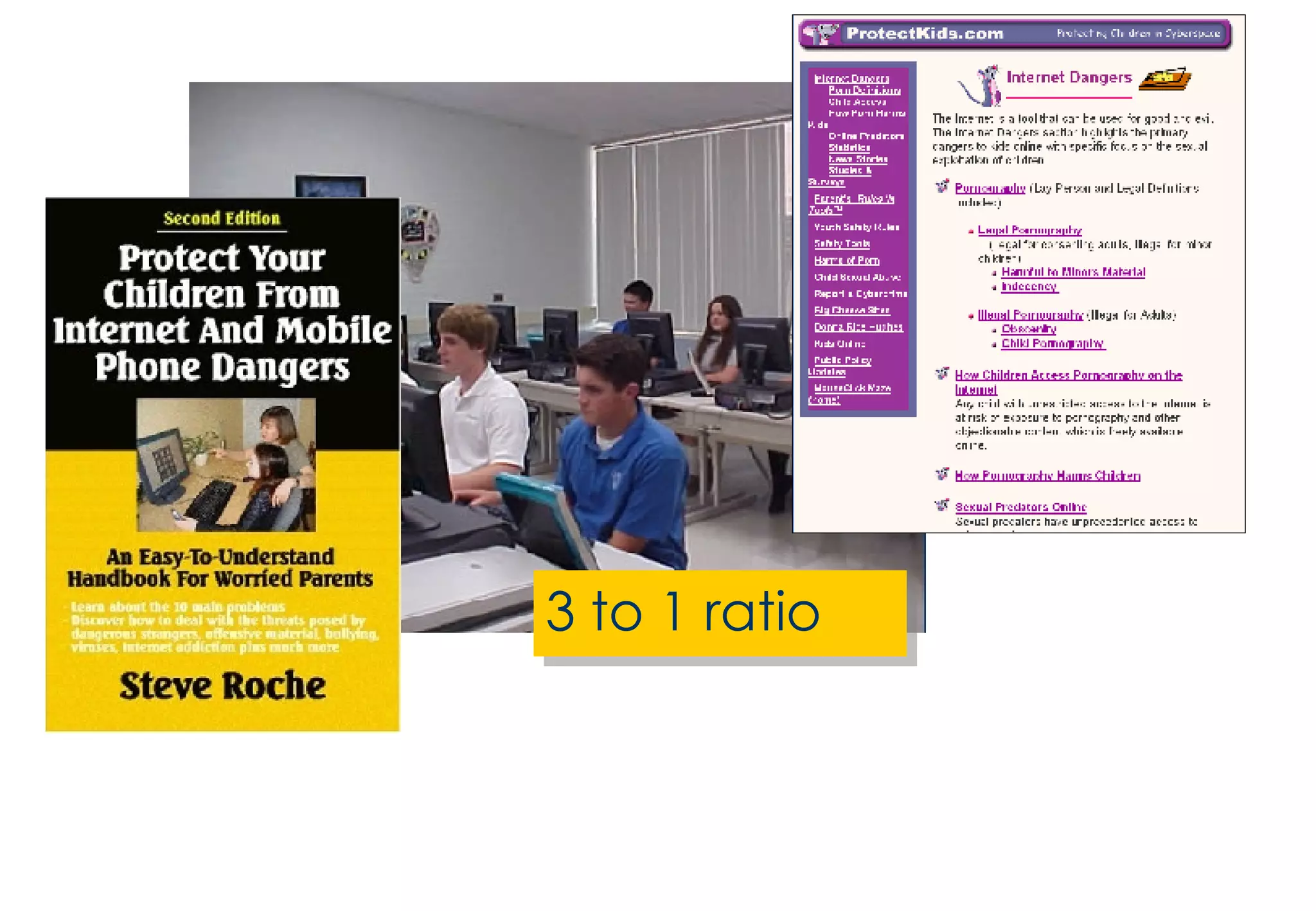
3 to 1 ratio
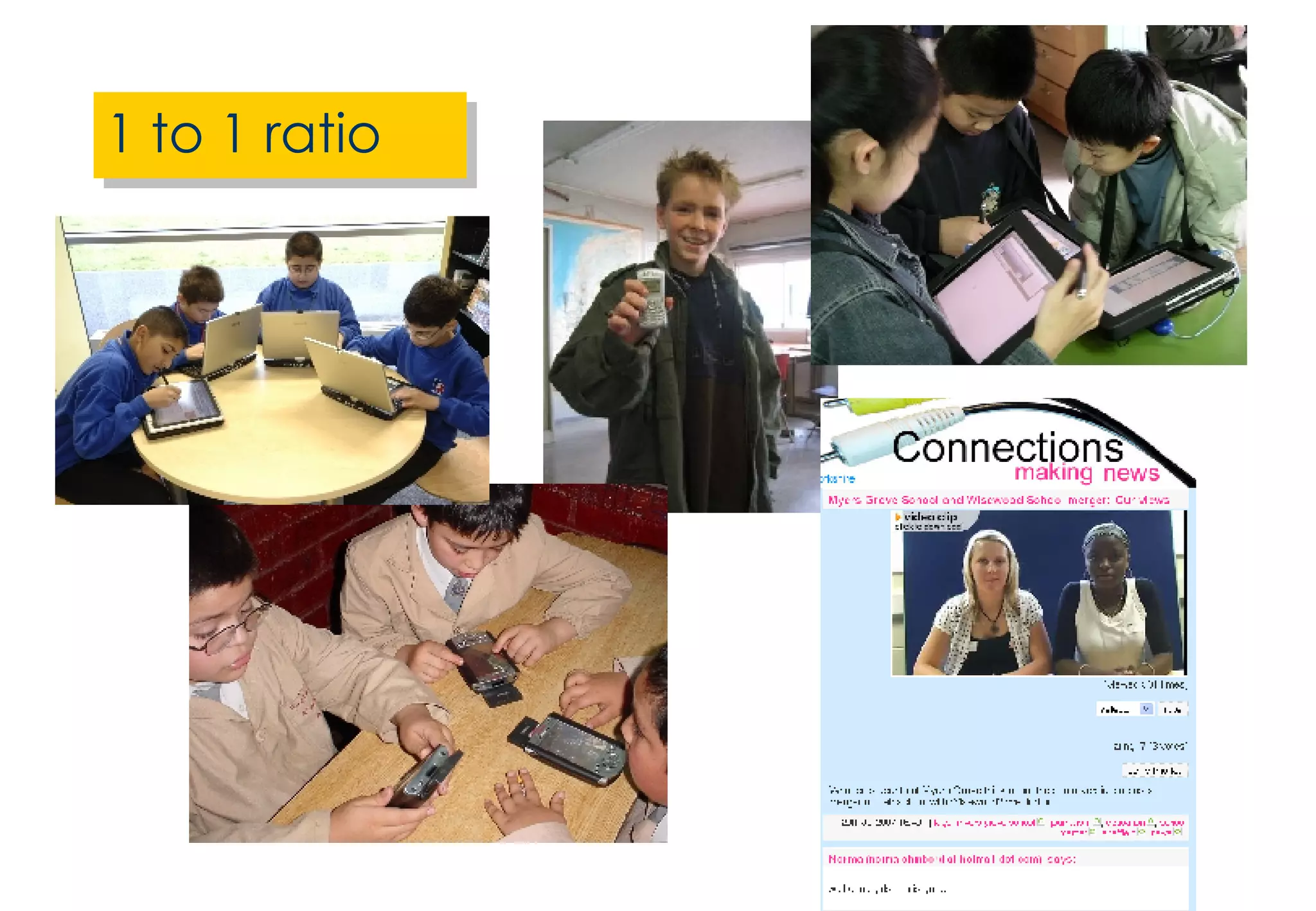
1 to 1 ratio
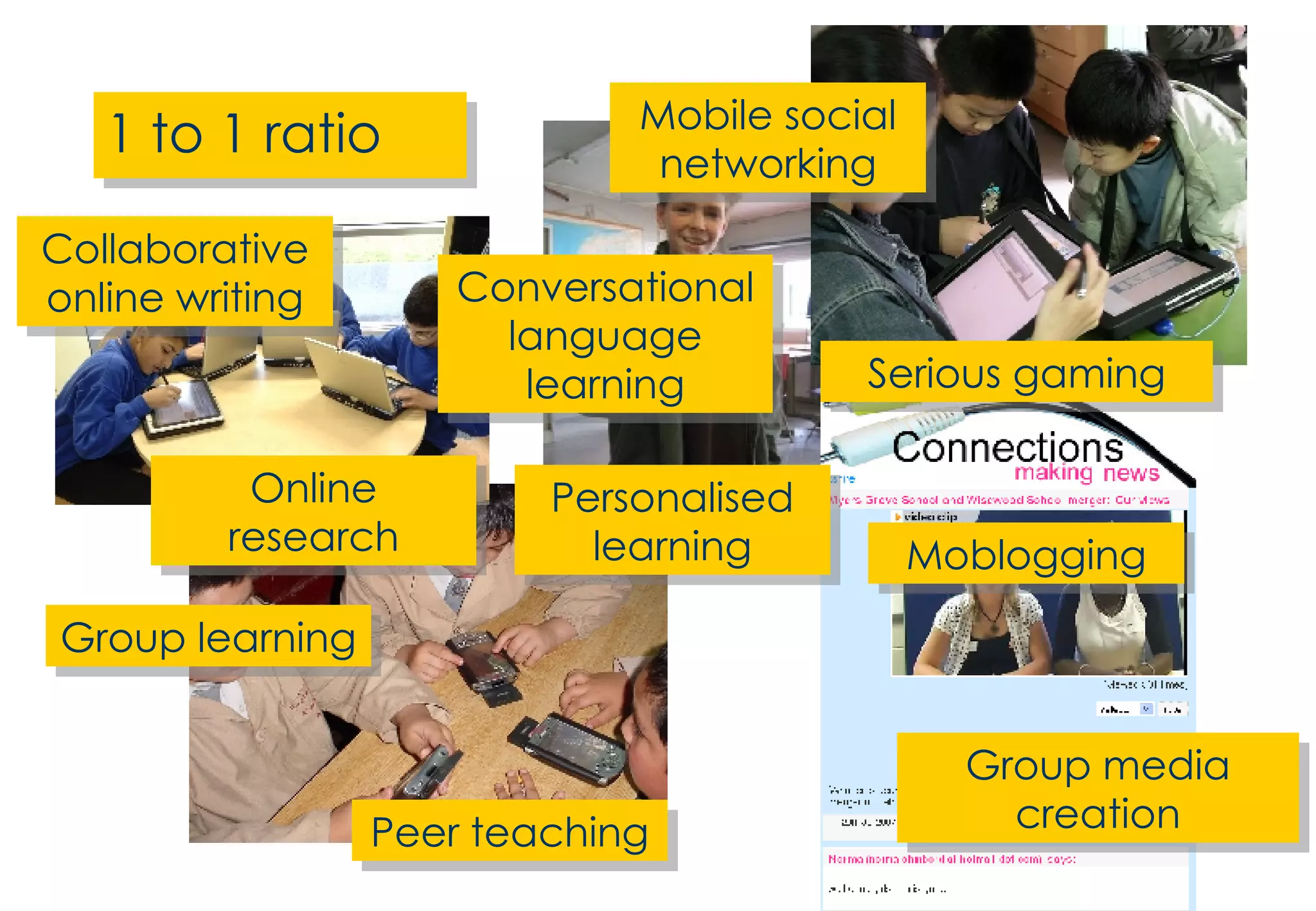
1 to 1 ratio Moblogging Online research Group media creation Collaborative online writing Serious gaming Conversational language learning Mobile social networking Group learning Peer teaching Personalised learning
“ In class I have to  power down ” (Guardian, May, 2007)
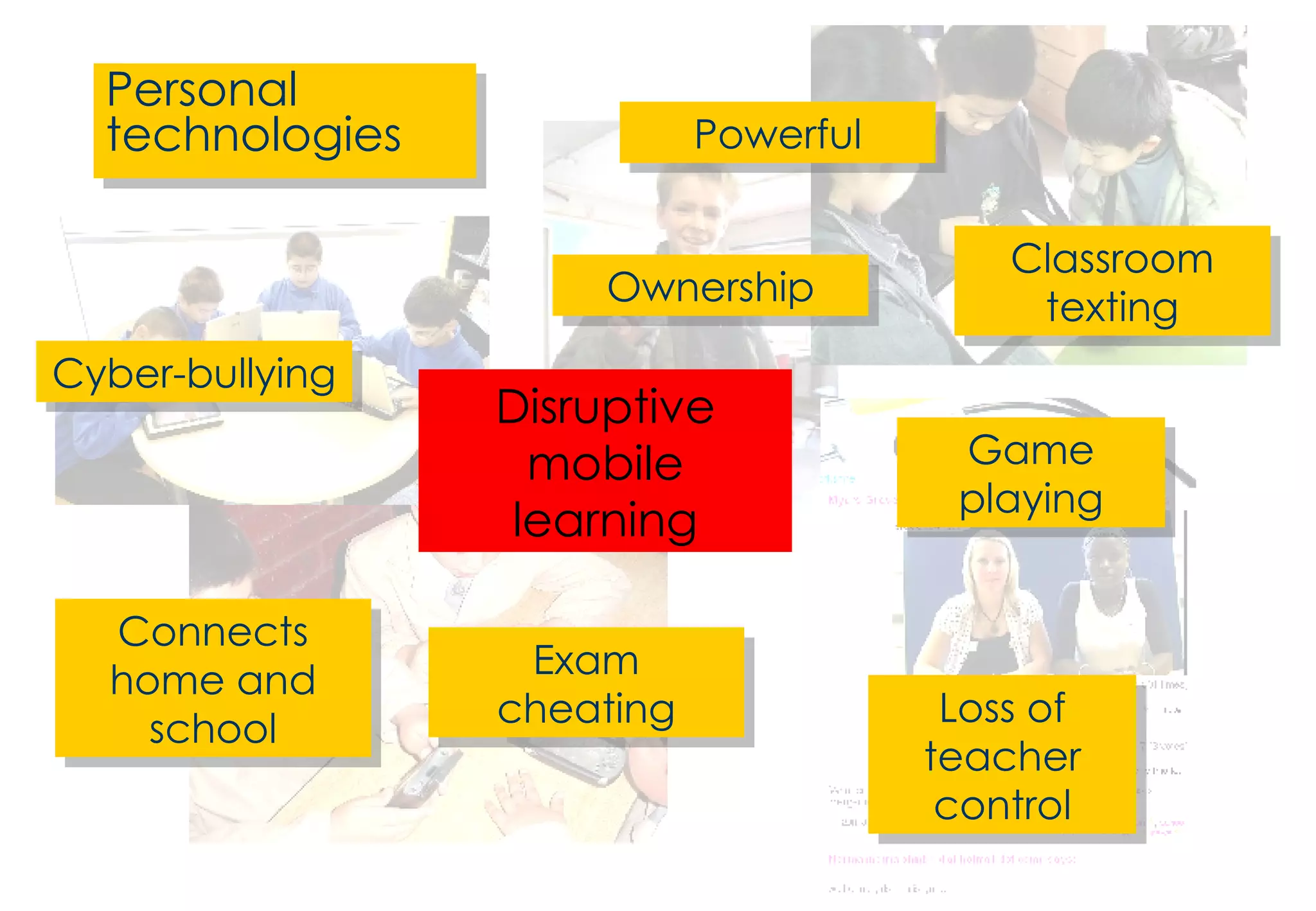
Personal technologies Cyber-bullying Classroom texting Exam cheating Game playing Disruptive mobile learning Loss of teacher control Powerful Connects home and school Ownership
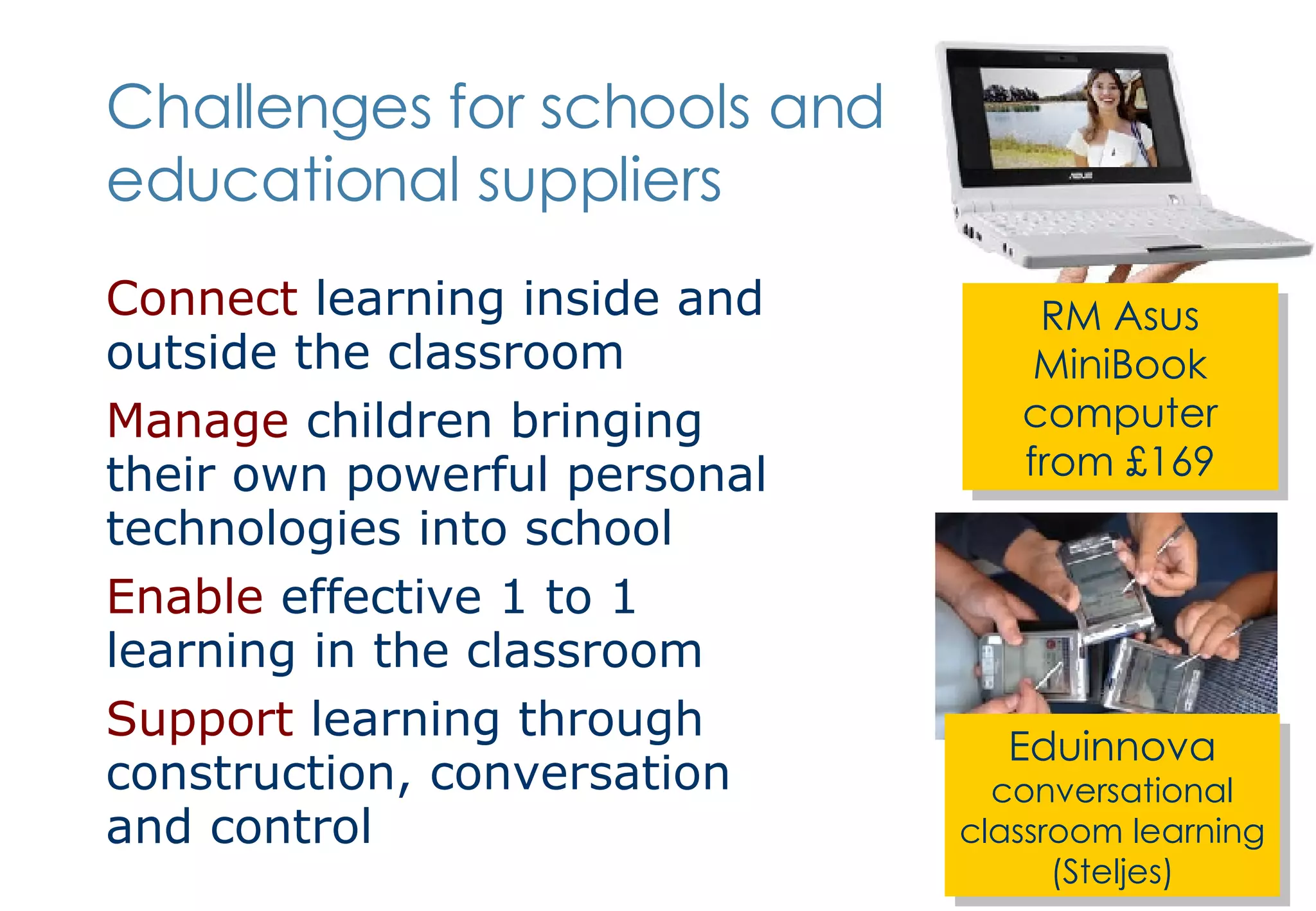
Challenges for schools and educational suppliers Connect  learning inside and outside the classroom Manage  children bringing their own powerful personal technologies into school Enable  effective 1 to 1 learning in the classroom Support  learning through construction, conversation and control Eduinnova  conversational classroom learning (Steljes) RM Asus MiniBook computer from £169
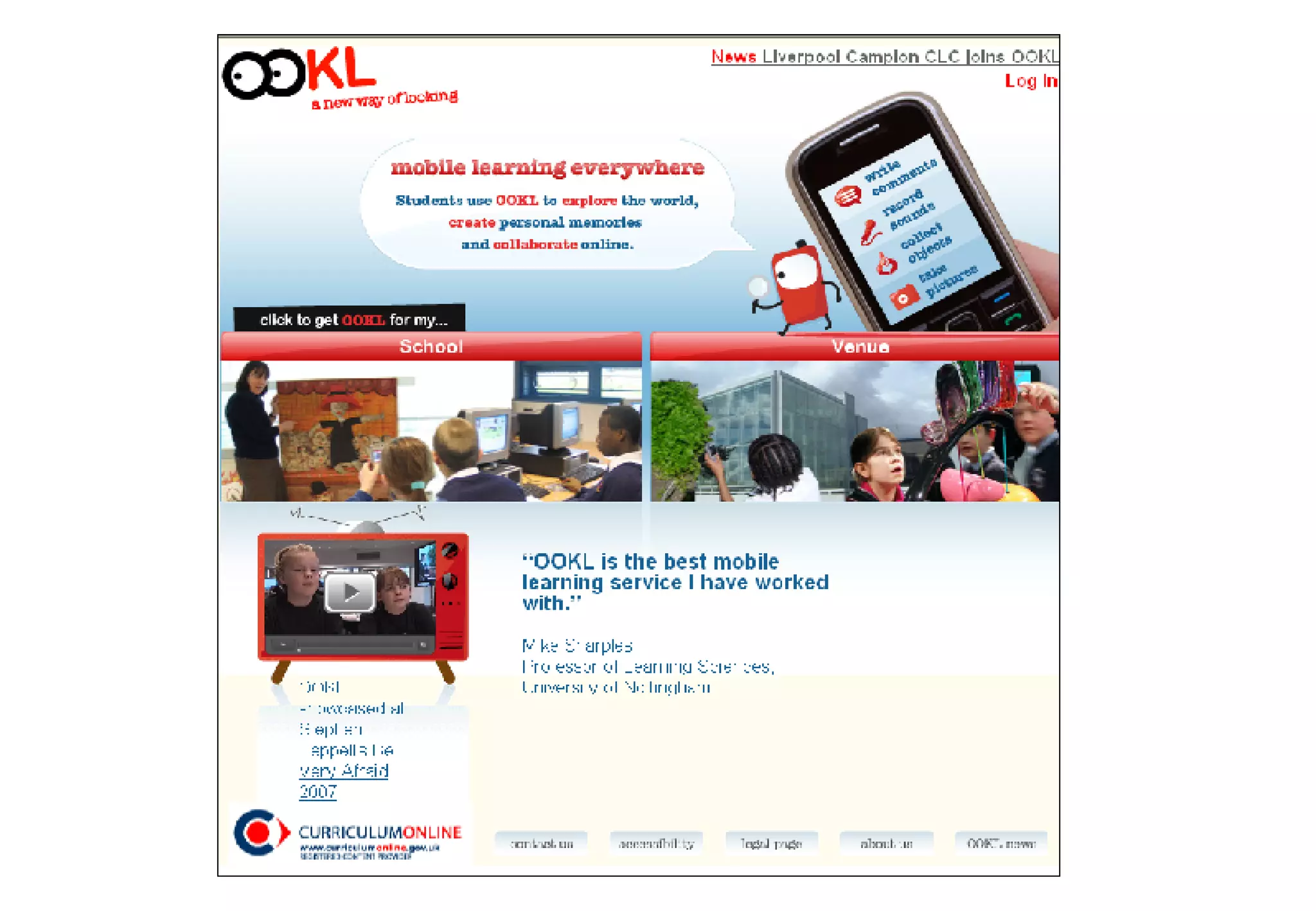
Connecting learning inside and beyond the classroom MyArtSpace PI: Personal Inquiry
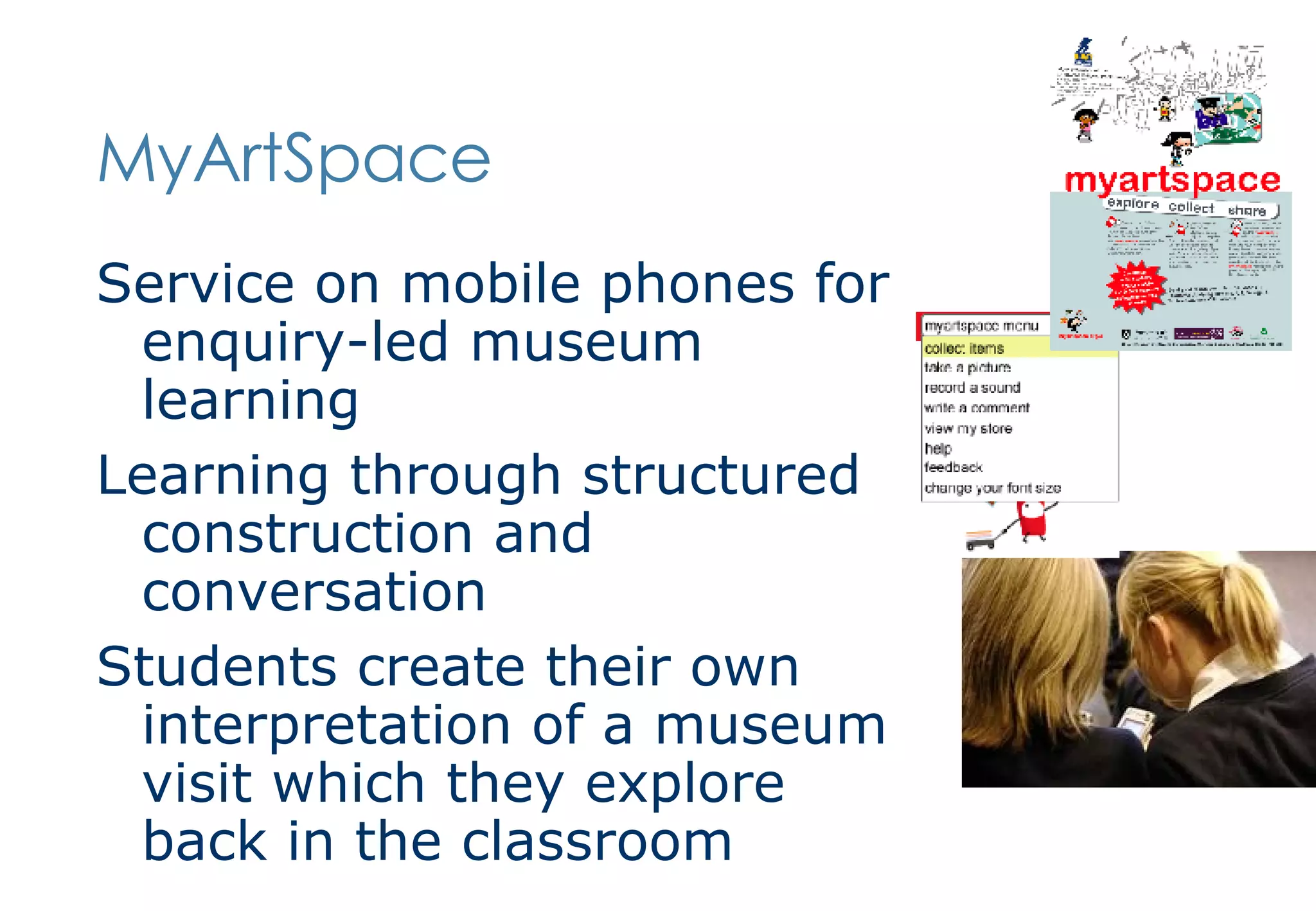
MyArtSpace Service on mobile phones for enquiry-led museum learning Learning through structured construction and conversation Students create their own interpretation of a museum visit which they explore back in the classroom
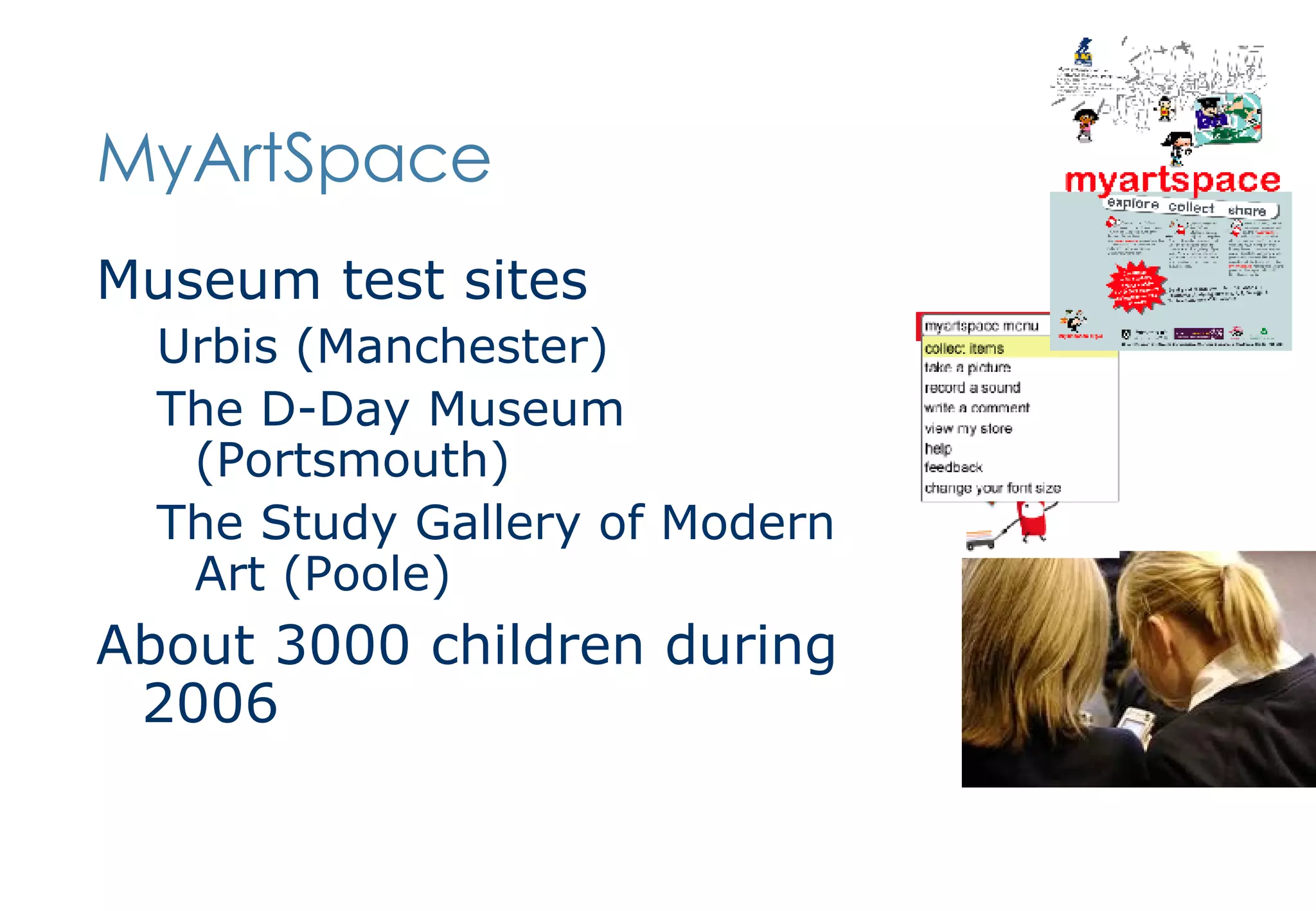
MyArtSpace Museum test sites  Urbis (Manchester) The D-Day Museum (Portsmouth) The Study Gallery of Modern Art (Poole) About 3000 children during 2006
How it works In class before the visit, the teacher sets an  inquiry topic At the museum, children are loaned  multimedia phones Exhibits in the museum have  2-letter codes  printed by them Children can use the phone to Type the code to  ‘collect’ an object  and see a presentation about it Record  sounds Take  photos Make  notes See who else has ‘collected’ the object All the information collected or created is sent automatically to a personal website showing a  list of the items The website provides a record of the  child’s interpretation  of the visit In class after the visit, the children  share  the collected and recorded items and make them into  presentations
 
Summary of results The  technology worked Photos, information on exhibits, notes, automatic sending to website Students liked the  ‘cool’ technology   Students  spent longer  (90 mins compared to 20 mins) Supported  enquiry learning Encouraged children to  make active choices   Museum more  accessible Need for more  teacher preparation
 
PI: Personal Inquiry Project with the Open University Inquiry science learning  Connecting learning inside and outside the classroom Handheld wireless technology
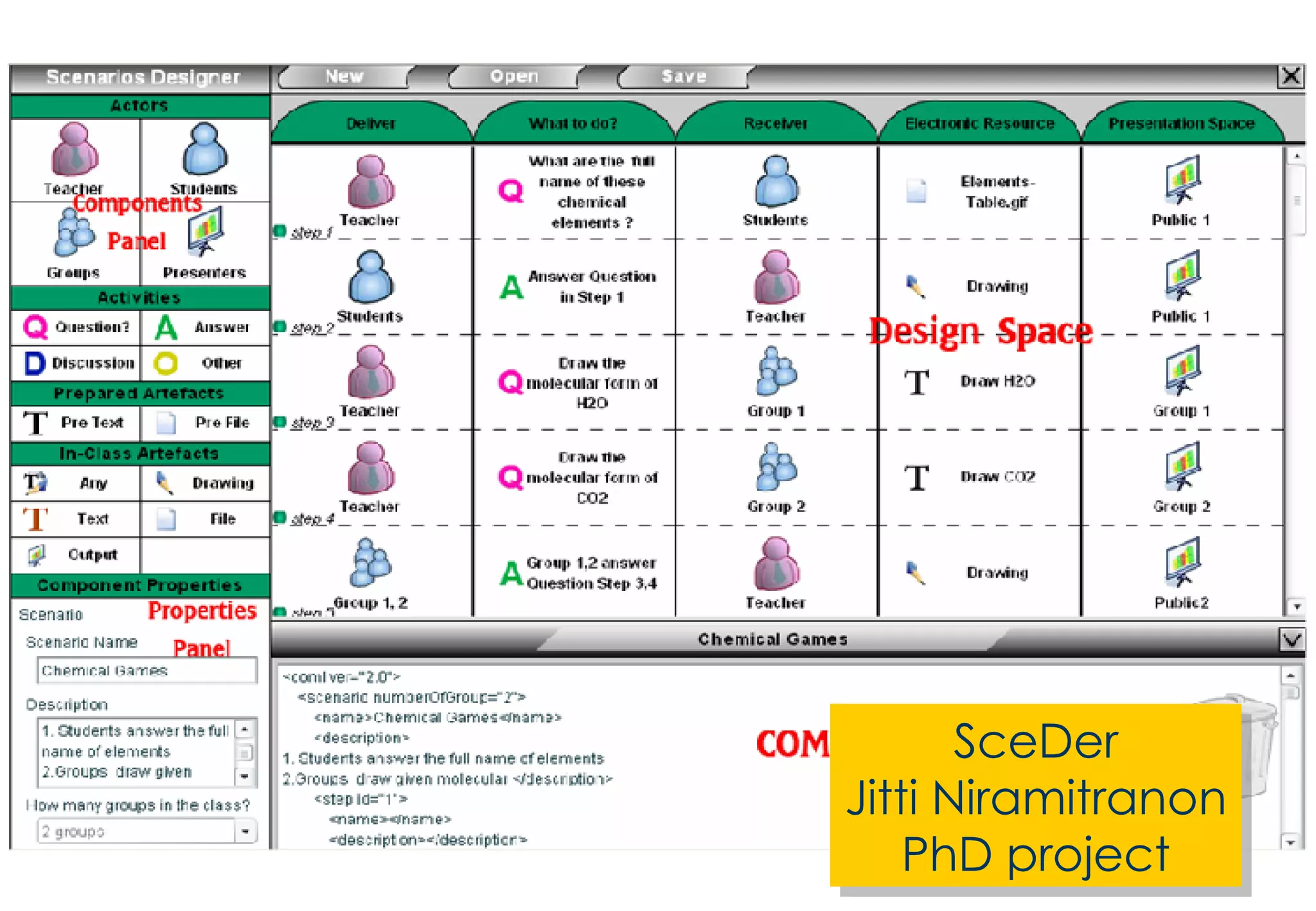
SceDer Jitti Niramitranon PhD project
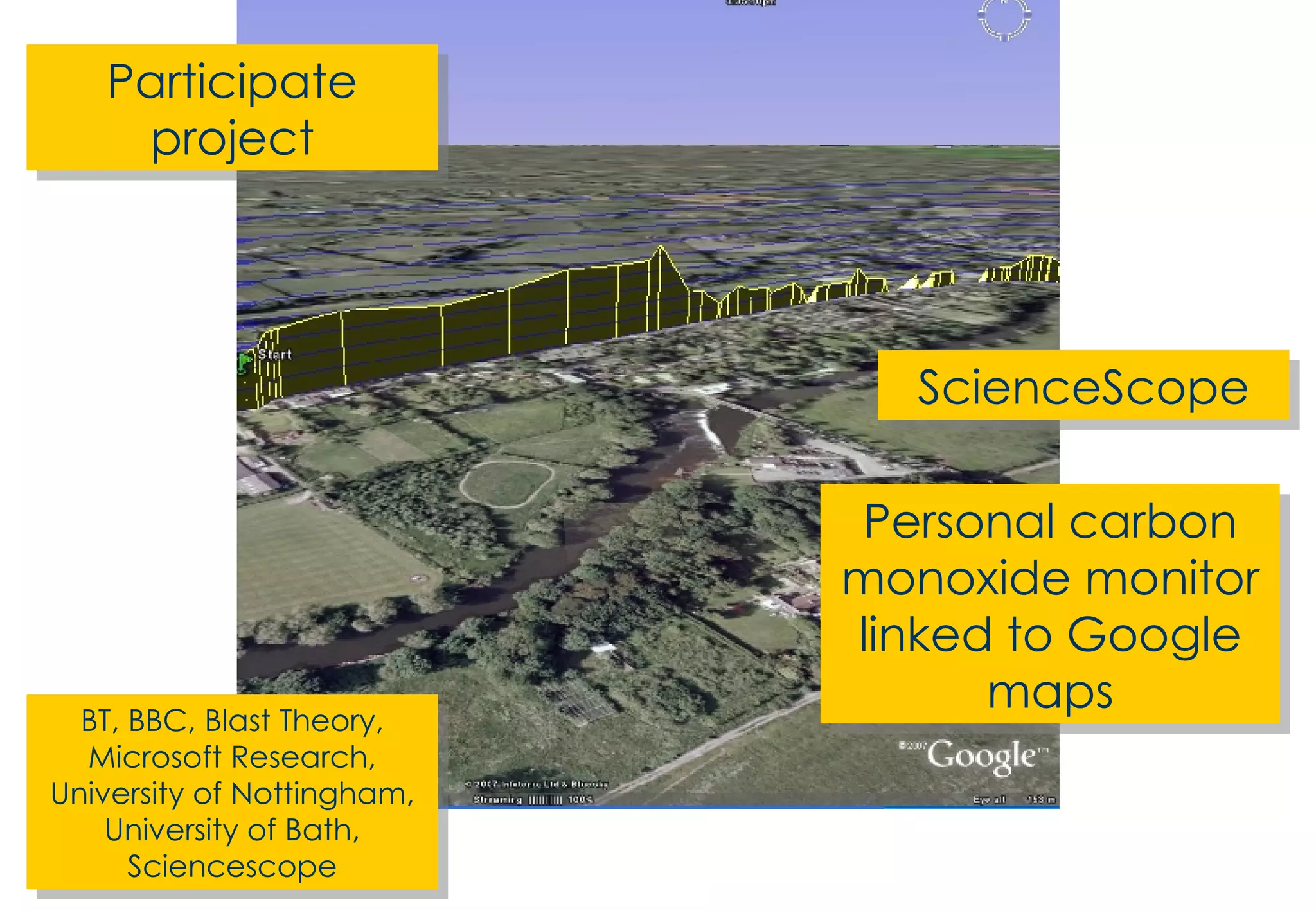
Participate project ScienceScope BT, BBC, Blast Theory, Microsoft Research, University of Nottingham, University of Bath, Sciencescope Personal carbon monoxide monitor linked to Google maps
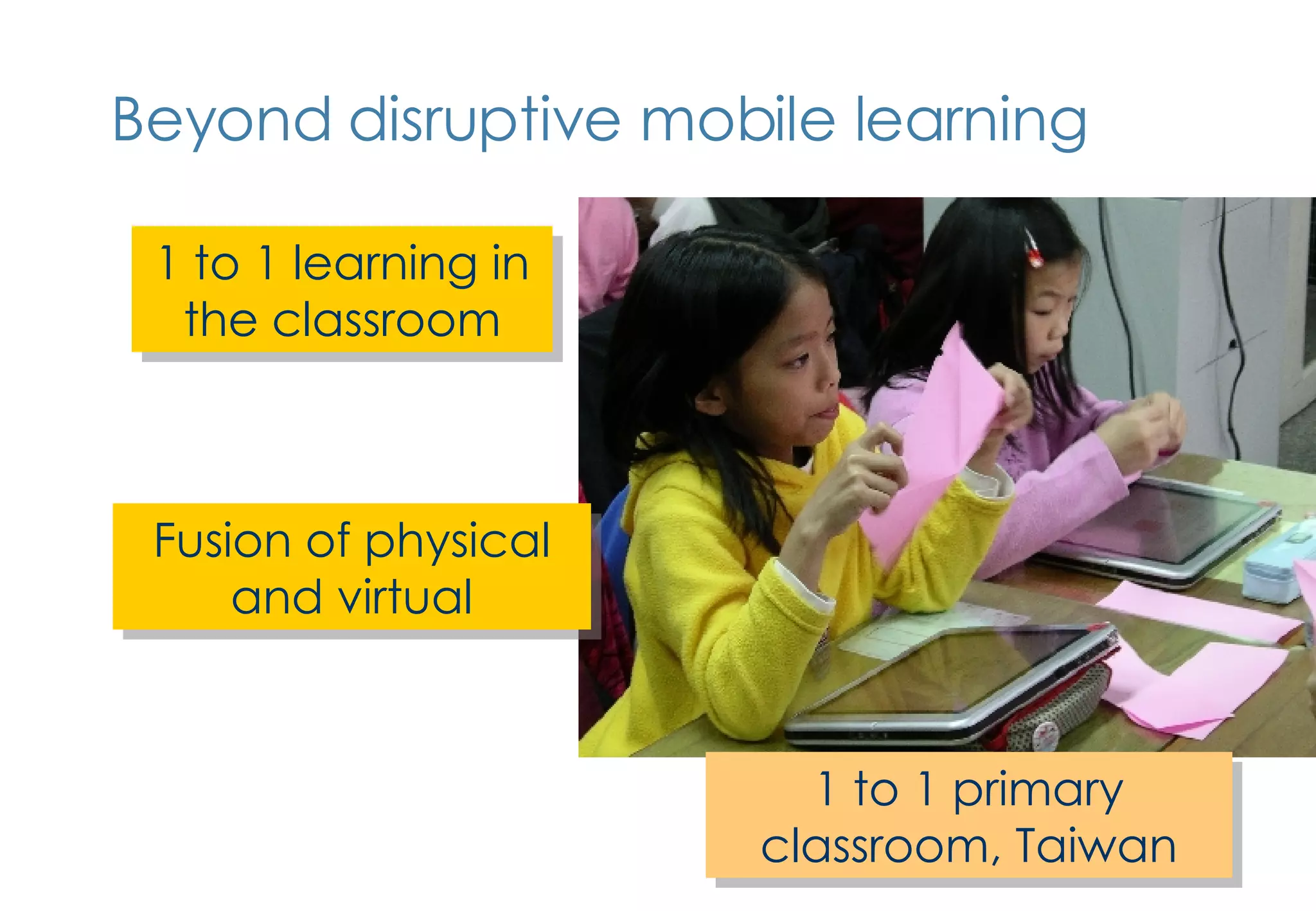
Beyond disruptive mobile learning Fusion of physical and virtual 1 to 1 learning in the classroom 1 to 1 primary classroom, Taiwan
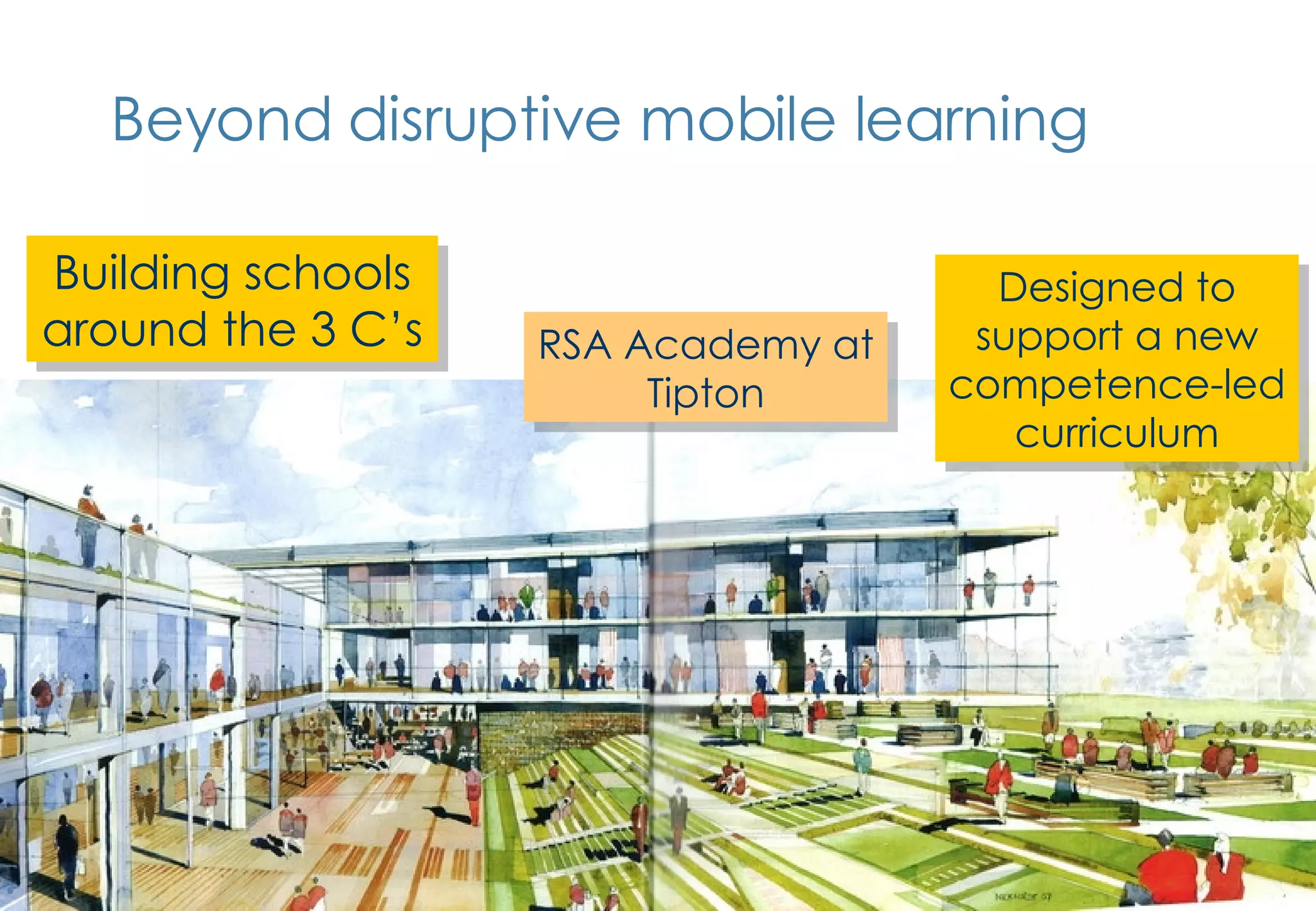
Beyond disruptive mobile learning RSA Academy at Tipton Designed to support a new competence-led curriculum Building schools around the 3 C’s
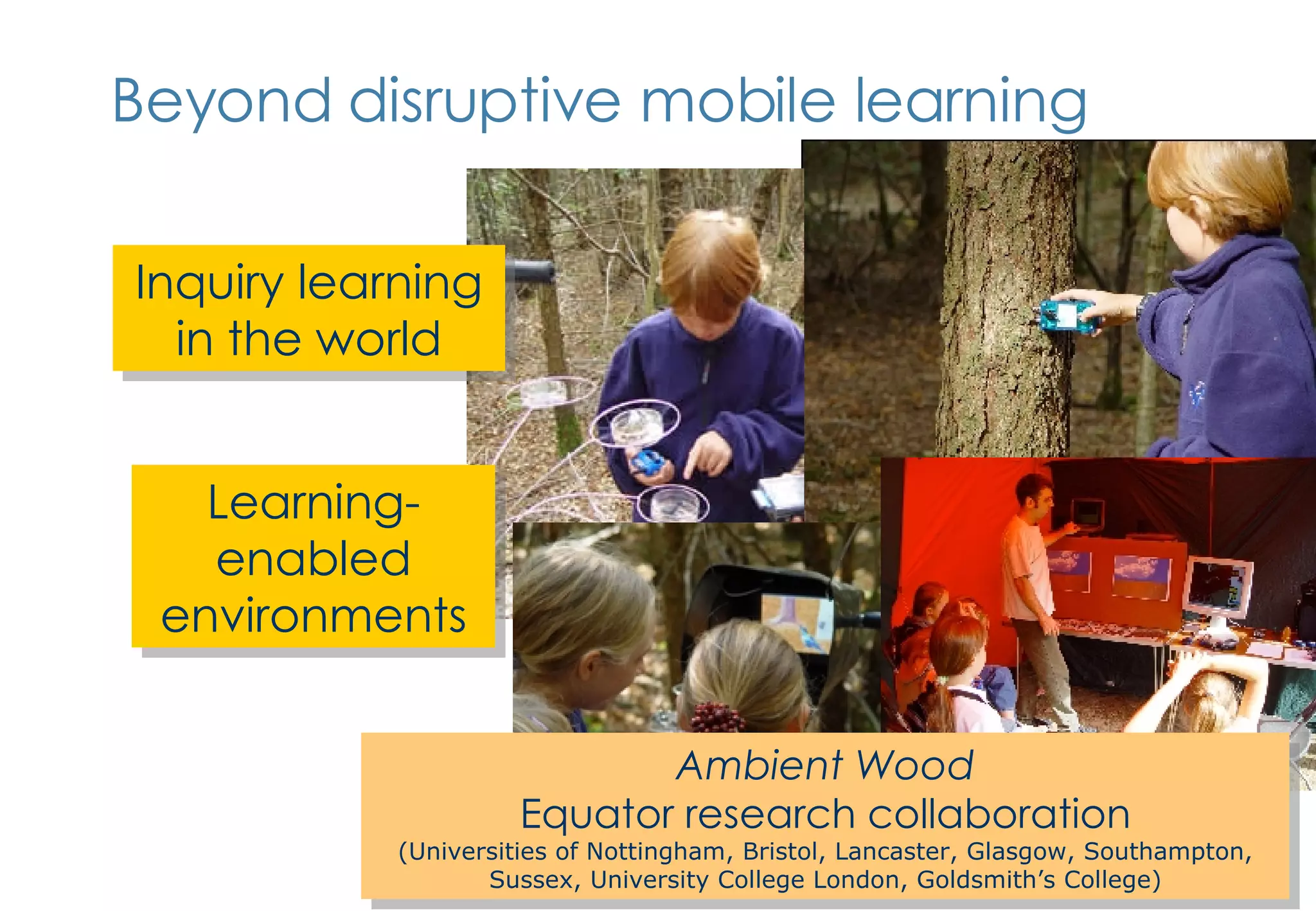
Beyond disruptive mobile learning Inquiry learning in the world Ambient Wood Equator research collaboration (Universities of Nottingham, Bristol, Lancaster, Glasgow, Southampton, Sussex, University College London, Goldsmith’s College) Learning-enabled environments
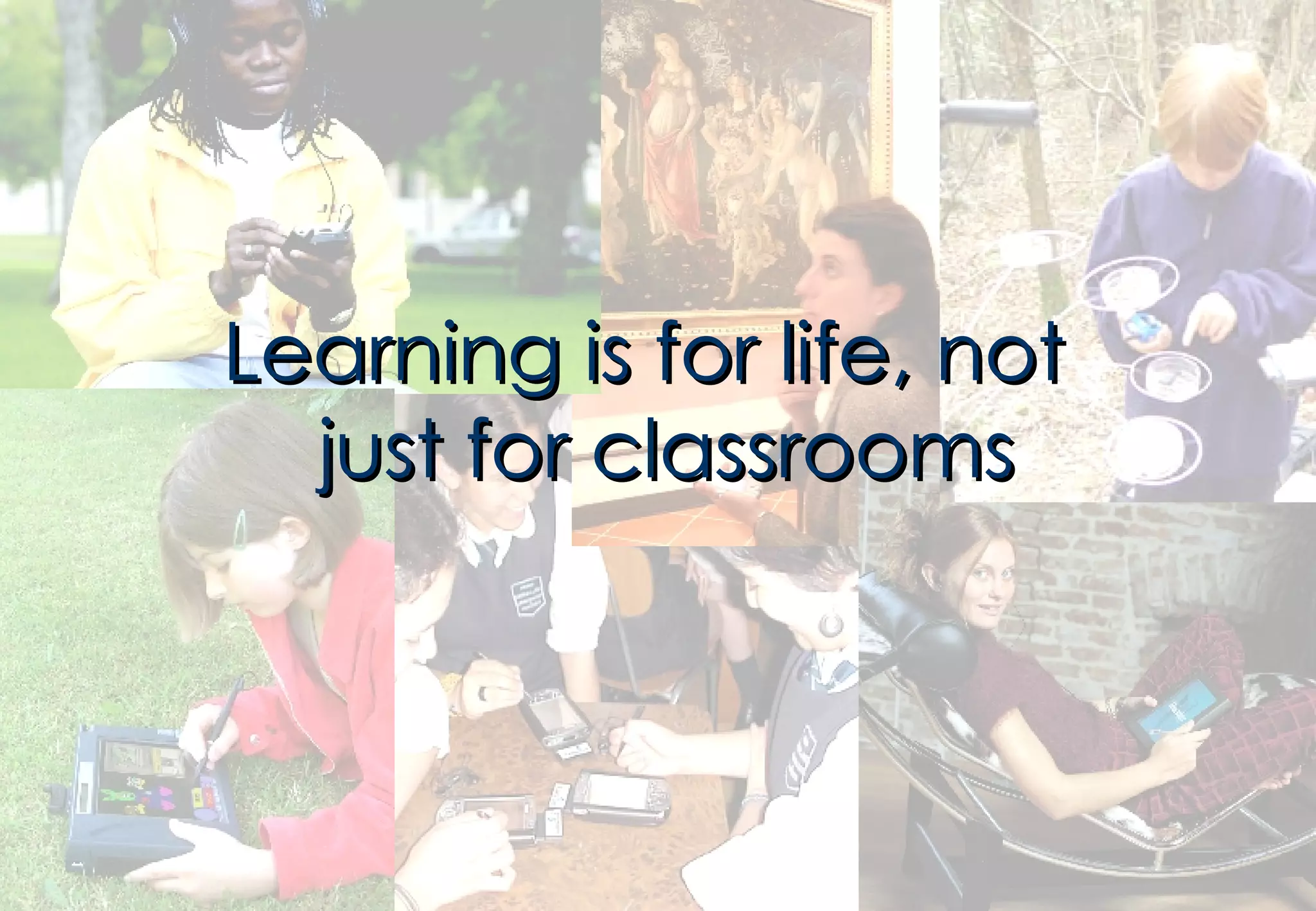
Learning is for life, not just for classrooms

Disruptive Mobile Learning

  • 1.
    Disruptive Mobile Learning Mike Sharples Learning Sciences Research Institute University of Nottingham www.nottingham.ac.uk/lsri/msh
  • 2.
  • 3.
  • 4.
    Why have schoolschanged so little over the past 100 years?
  • 5.
    The education systemis internally consistent and self sustaining…
  • 6.
    The education systemis internally consistent and self sustaining… National curriculum Standards League tables Research Assessment Exercise QCA TDA LSC HEFCE LEAs SATs
  • 7.
    … but doesn’tconnect with the rest of learning
  • 8.
    Diagram with permissionfrom “The Learning in Informal and Formal Environments (LIFE) Center” http://life-slc.org
  • 9.
    Children’s approximate arithmetic(Gilmore et al., Nature , 2007) 5-6 year old children 73% gave correct answers But these approximate arithmetic skills are not developed at school “ Sarah has twenty-one candies” “ She gets thirty more” “ John has thirty four candies. Who has more?”
  • 10.
    Rich learning outsidethe classroom
  • 11.
    The 3C’s ofeffective lifelong learning Construction relating experience to knowledge, creating new ideas Conversation with teachers, with learners, with ourselves, and with the world Control actively pursuing knowledge
  • 12.
  • 13.
  • 14.
  • 15.
  • 16.
  • 17.
  • 18.
  • 19.
    How do weconnect…
  • 20.
    learning in theclassroom…
  • 21.
  • 22.
    How do weconnect…
  • 23.
  • 24.
    … andlearning in the world?
  • 25.
    Extend the classroominto everyday learning? Podcasts Teaching on mobile phones Home access to the school intranet Send assessment questions and receive multiple choice responses via email or SMS which can then be auto-responded to with feedback” www.ambientperformance.com
  • 26.
    Extend the classroominto everyday learning? Podcasts Teaching on mobile phones Home access to the school intranet Send assessment questions and receive multiple choice responses via email or SMS which can then be auto-responded to with feedback” www.ambientperformance.com “ At school, you do all this boring stuff, really basic stuff, PowerPoint and spreadsheets and things. It only gets interesting and exciting when you come home and really use your computer. You're free, you're in control , it's your own world.” (Guardian, May, 2007)
  • 27.
    Extend everyday learninginto the classroom?
  • 28.
    What do thesehave in common?
  • 29.
    Answer: They haveall been banned in classrooms
  • 30.
    10 to 1ratio
  • 31.
    3 to 1ratio
  • 32.
    1 to 1ratio
  • 33.
    1 to 1ratio Moblogging Online research Group media creation Collaborative online writing Serious gaming Conversational language learning Mobile social networking Group learning Peer teaching Personalised learning
  • 34.
    “ In classI have to power down ” (Guardian, May, 2007)
  • 35.
    Personal technologies Cyber-bullyingClassroom texting Exam cheating Game playing Disruptive mobile learning Loss of teacher control Powerful Connects home and school Ownership
  • 36.
    Challenges for schoolsand educational suppliers Connect learning inside and outside the classroom Manage children bringing their own powerful personal technologies into school Enable effective 1 to 1 learning in the classroom Support learning through construction, conversation and control Eduinnova conversational classroom learning (Steljes) RM Asus MiniBook computer from £169
  • 37.
    Connecting learning insideand beyond the classroom MyArtSpace PI: Personal Inquiry
  • 38.
    MyArtSpace Service onmobile phones for enquiry-led museum learning Learning through structured construction and conversation Students create their own interpretation of a museum visit which they explore back in the classroom
  • 39.
    MyArtSpace Museum testsites Urbis (Manchester) The D-Day Museum (Portsmouth) The Study Gallery of Modern Art (Poole) About 3000 children during 2006
  • 40.
    How it worksIn class before the visit, the teacher sets an inquiry topic At the museum, children are loaned multimedia phones Exhibits in the museum have 2-letter codes printed by them Children can use the phone to Type the code to ‘collect’ an object and see a presentation about it Record sounds Take photos Make notes See who else has ‘collected’ the object All the information collected or created is sent automatically to a personal website showing a list of the items The website provides a record of the child’s interpretation of the visit In class after the visit, the children share the collected and recorded items and make them into presentations
  • 41.
  • 42.
    Summary of resultsThe technology worked Photos, information on exhibits, notes, automatic sending to website Students liked the ‘cool’ technology Students spent longer (90 mins compared to 20 mins) Supported enquiry learning Encouraged children to make active choices Museum more accessible Need for more teacher preparation
  • 43.
  • 44.
    PI: Personal InquiryProject with the Open University Inquiry science learning Connecting learning inside and outside the classroom Handheld wireless technology
  • 45.
  • 46.
    Participate project ScienceScopeBT, BBC, Blast Theory, Microsoft Research, University of Nottingham, University of Bath, Sciencescope Personal carbon monoxide monitor linked to Google maps
  • 47.
    Beyond disruptive mobilelearning Fusion of physical and virtual 1 to 1 learning in the classroom 1 to 1 primary classroom, Taiwan
  • 48.
    Beyond disruptive mobilelearning RSA Academy at Tipton Designed to support a new competence-led curriculum Building schools around the 3 C’s
  • 49.
    Beyond disruptive mobilelearning Inquiry learning in the world Ambient Wood Equator research collaboration (Universities of Nottingham, Bristol, Lancaster, Glasgow, Southampton, Sussex, University College London, Goldsmith’s College) Learning-enabled environments
  • 50.
    Learning is forlife, not just for classrooms