Chlamydia
Definition
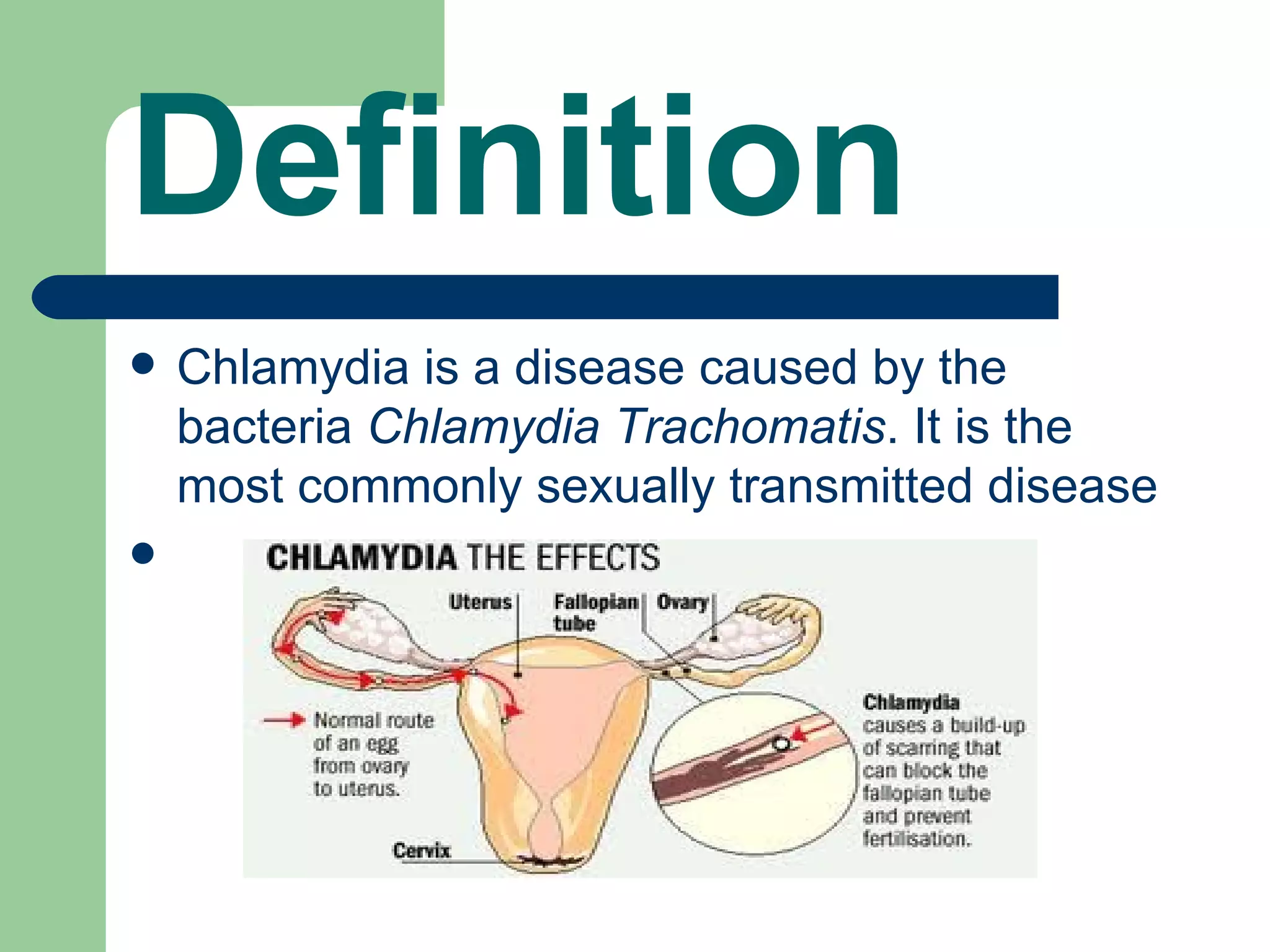
   Chlamydia is a disease caused by the
    bacteria Chlamydia Trachomatis. It is the
    most commonly sexually transmitted disease

Symptoms
   chlamydia may produce symptoms similar to gonorrhea. Symptoms
    may include:
   Burning sensation during urination
   Discharge from the penis or rectum
   Testicular tenderness or pain
   Rectal discharge or pain
   Only about 30% of women with Chlamydia have symptoms.
    Symptoms that may occur in women include:
   Burning sensation during urination
   Painful sexual intercourse
   Rectal pain or discharge
   Symptoms of PID (pelvic inflammatory disease), Salpingitis, liver
    inflammation similar to hepatitis
   Vaginal discharge
Risk Factors
   Sexually transmitted Chlamydial infections are
    transferred from one person to another by direct
    contact with genital tissues. Chlamydia is highly
    contagious and one of the most common sexually
    transmitted disease.
   Multiple sex partners
   Having sex without a condom
Treatment
   Chlamydia can be easily treated and cured
    with antibiotics. A single dose of
    Azithromycin or a week of Doxycycline are
    the most commonly used treatments.
   Persons with Chlamydia should abstain from
    sexual intercourse for 7 days after single
    dose antibiotics.
Statistics
   As many as 1 in 4 men with Chlamydia have no
    symptoms.
   Chlamydia remains the most commonly reported
    infectious disease in the United States. There were
    more than 1.2 million cases of Chlamydia
    (1,244,180) reported to CDC in 2009, the largest
    number of cases ever reported to CDC for any
    condition. Women, especially young and minority
    women are hardest hit by Chlamydia. CDC
    recommends annual Chlamydia screening for young
    women under the age of 26.

Chlamydia

  • 1.
  • 2.
    Definition  Chlamydia is a disease caused by the bacteria Chlamydia Trachomatis. It is the most commonly sexually transmitted disease 
  • 3.
    Symptoms  chlamydia may produce symptoms similar to gonorrhea. Symptoms may include:  Burning sensation during urination  Discharge from the penis or rectum  Testicular tenderness or pain  Rectal discharge or pain  Only about 30% of women with Chlamydia have symptoms. Symptoms that may occur in women include:  Burning sensation during urination  Painful sexual intercourse  Rectal pain or discharge  Symptoms of PID (pelvic inflammatory disease), Salpingitis, liver inflammation similar to hepatitis  Vaginal discharge
  • 4.
    Risk Factors  Sexually transmitted Chlamydial infections are transferred from one person to another by direct contact with genital tissues. Chlamydia is highly contagious and one of the most common sexually transmitted disease.  Multiple sex partners  Having sex without a condom
  • 5.
    Treatment  Chlamydia can be easily treated and cured with antibiotics. A single dose of Azithromycin or a week of Doxycycline are the most commonly used treatments.  Persons with Chlamydia should abstain from sexual intercourse for 7 days after single dose antibiotics.
  • 6.
    Statistics  As many as 1 in 4 men with Chlamydia have no symptoms.  Chlamydia remains the most commonly reported infectious disease in the United States. There were more than 1.2 million cases of Chlamydia (1,244,180) reported to CDC in 2009, the largest number of cases ever reported to CDC for any condition. Women, especially young and minority women are hardest hit by Chlamydia. CDC recommends annual Chlamydia screening for young women under the age of 26.