Directors:Fanta BayohRozanne CarlosEric CarpioErika HowellEnockTeefeRosa Vasquez
Icebreaker
What do people with HIV look Like???
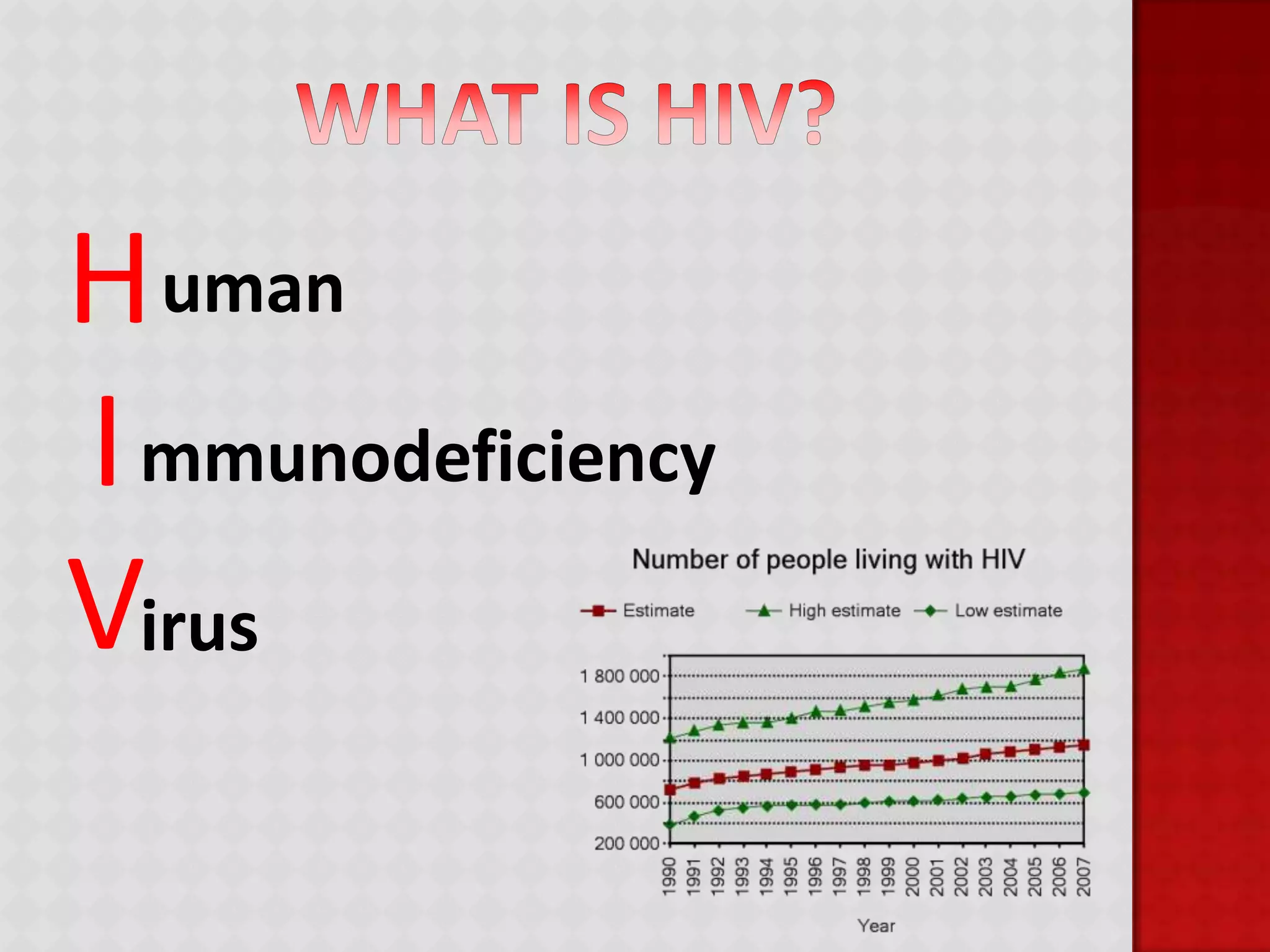
What is HIV?HIVumanmmunodeficiencyirus
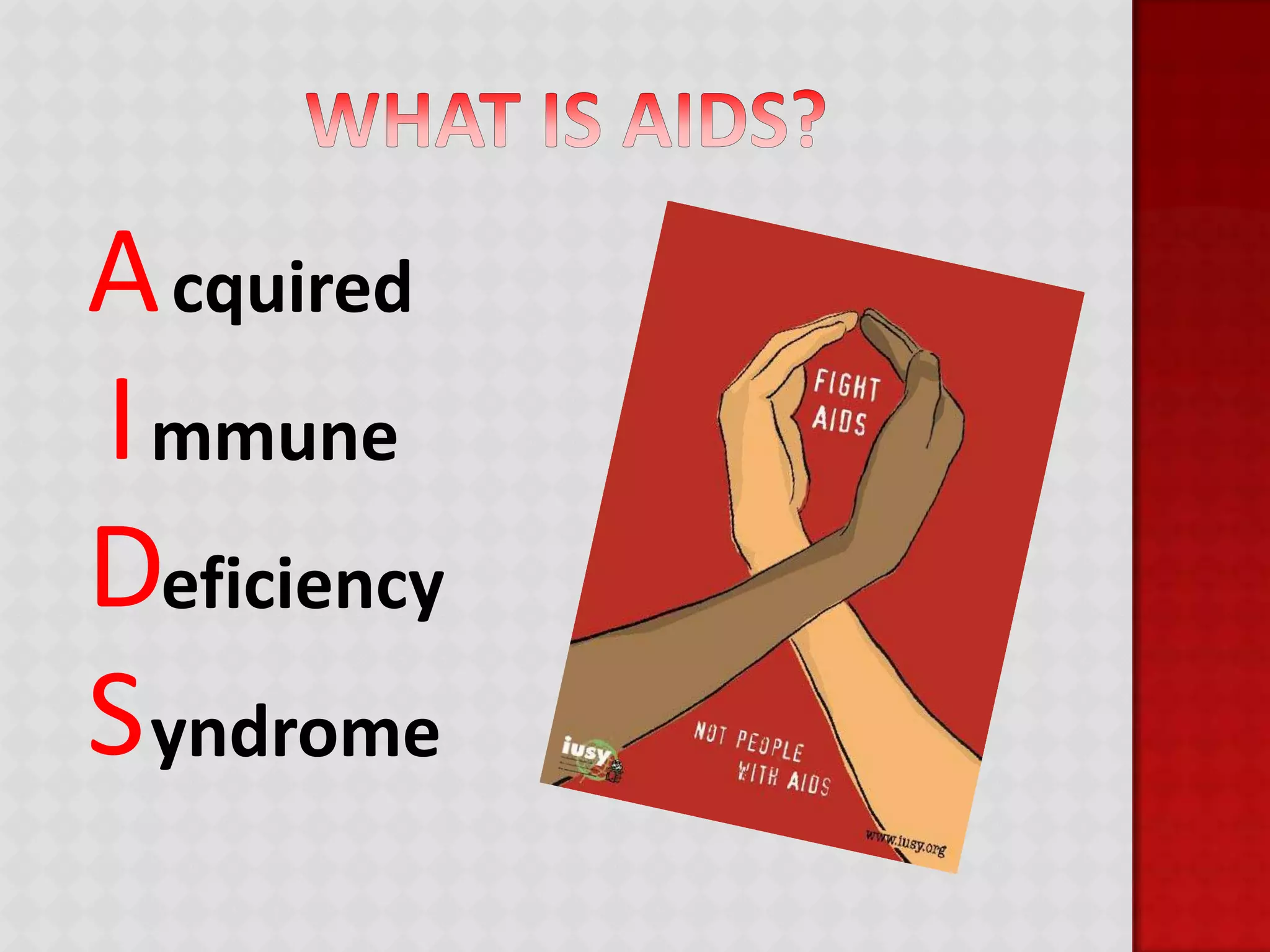
What is AIDS?AIDScquiredmmuneeficiencyyndrome
StaGES OF HIV
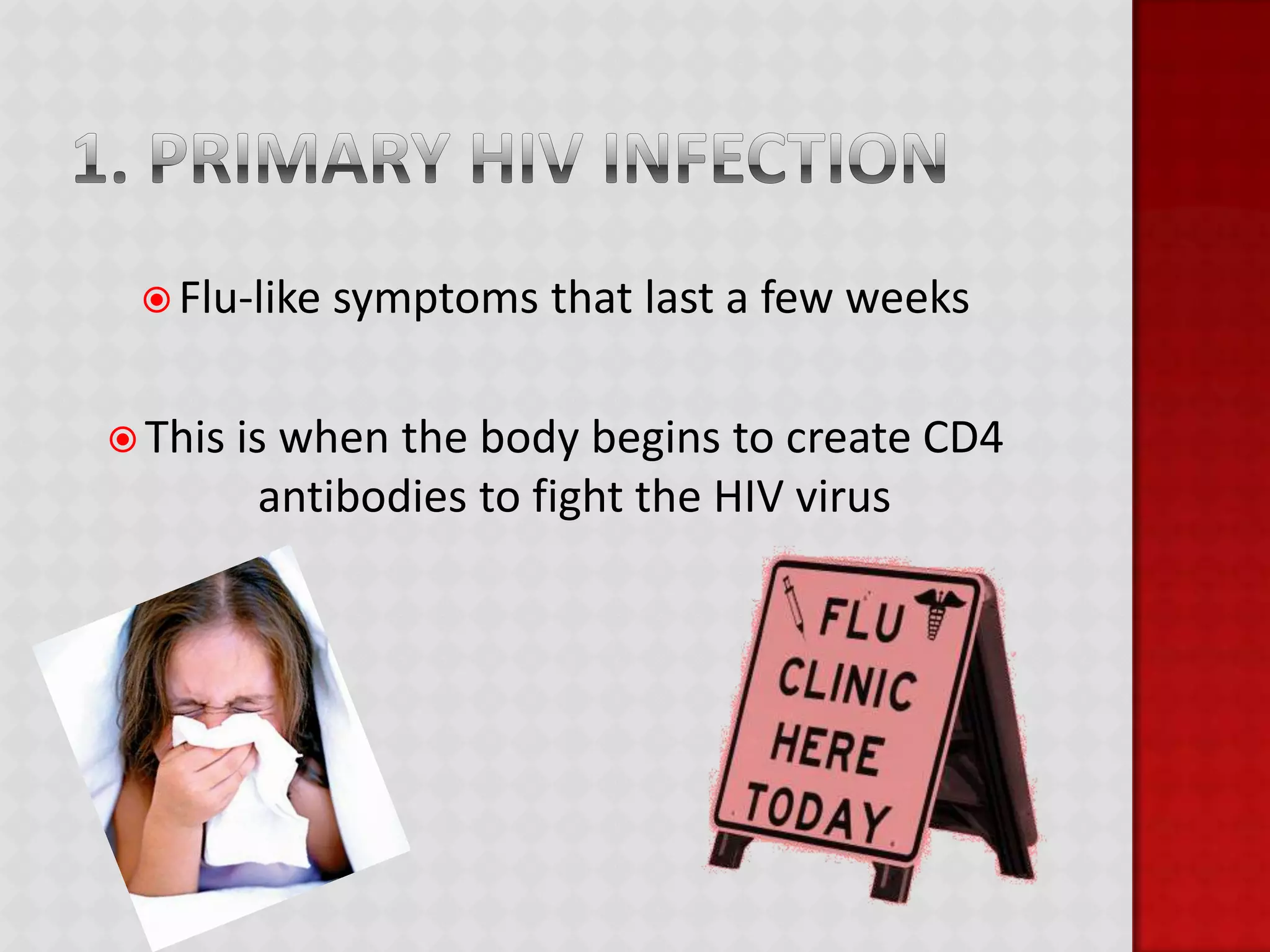
1. Primary HIV infectionFlu-like symptoms that last a few weeksThis is when the body begins to create CD4 antibodies to fight the HIV virus
2. Clinical Asymptomatic StageAsymptomatic: does not currently show symptoms of the disease being discussed
Can last for an average of 10 years
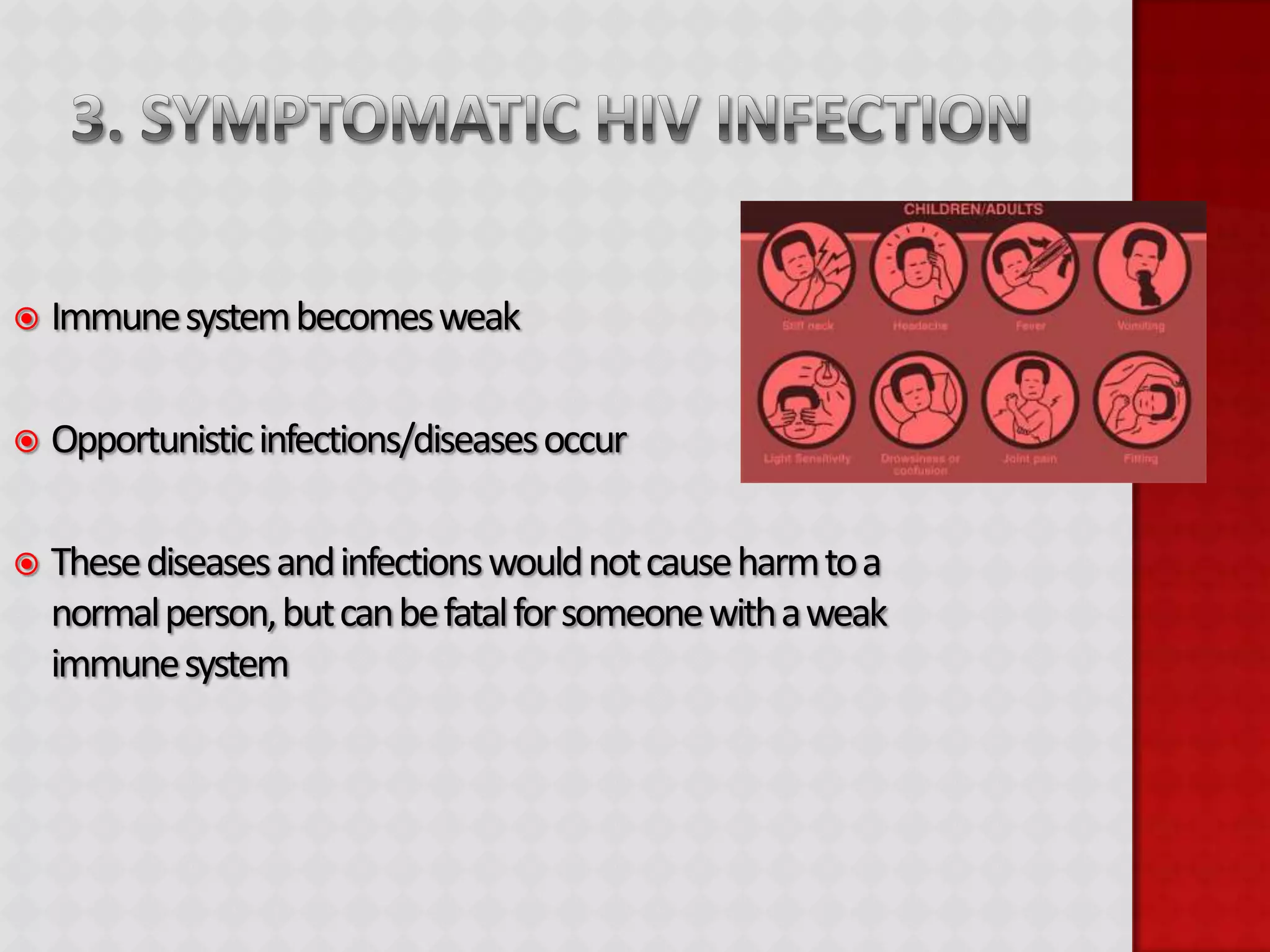
HIV is present and active in blood.3. Symptomatic HIV infectionImmune system becomes weak
Opportunistic infections/diseases occur
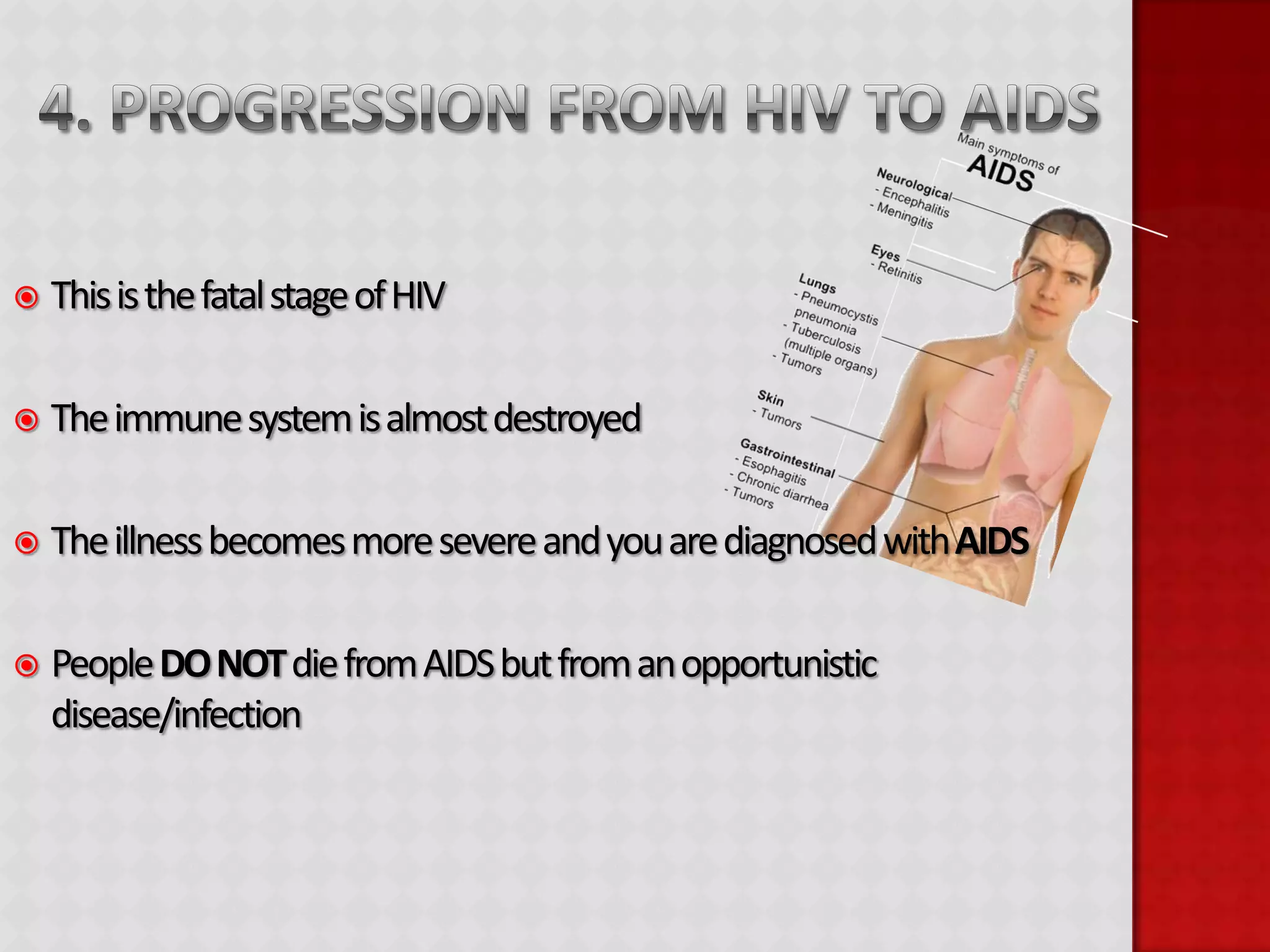
These diseases and infections would not cause harm to a normal person, but can be fatal for someone with a weak immune system4. Progression from HIV to AIDSThis is the fatal stage of HIV
The immune system is almost destroyed
The illness becomes more severe and you are diagnosed with AIDS
People DO NOT die from AIDS but from an opportunistic disease/infectionThose with the virus may or may not show any symptoms!
Ways of transmission
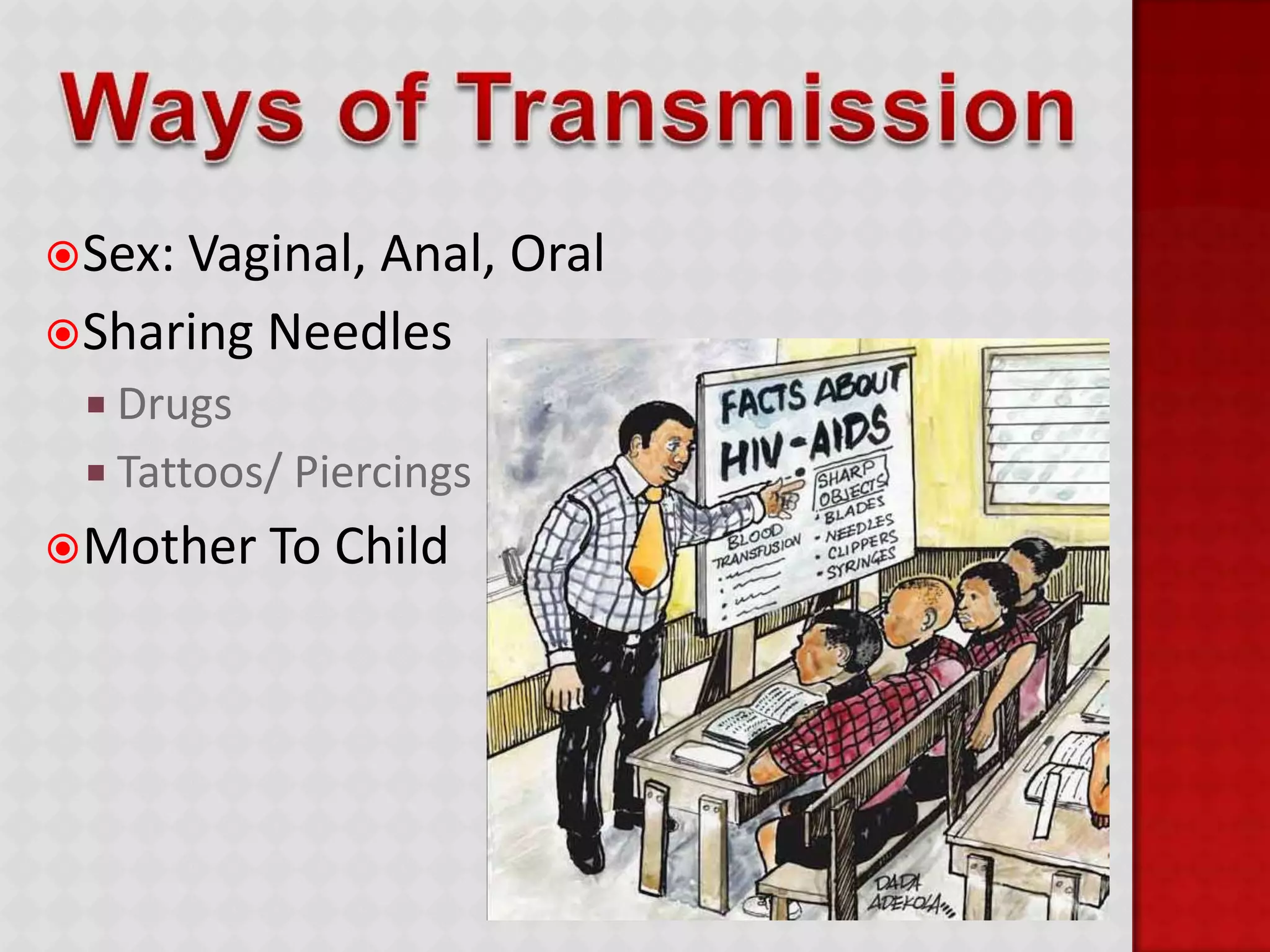
Ways of TransmissionSex: Vaginal, Anal, OralSharing NeedlesDrugsTattoos/ PiercingsMother To Child
5 Bodily FluidsBloodSemenPre-ejaculateVaginal SecretionsBreast Milk
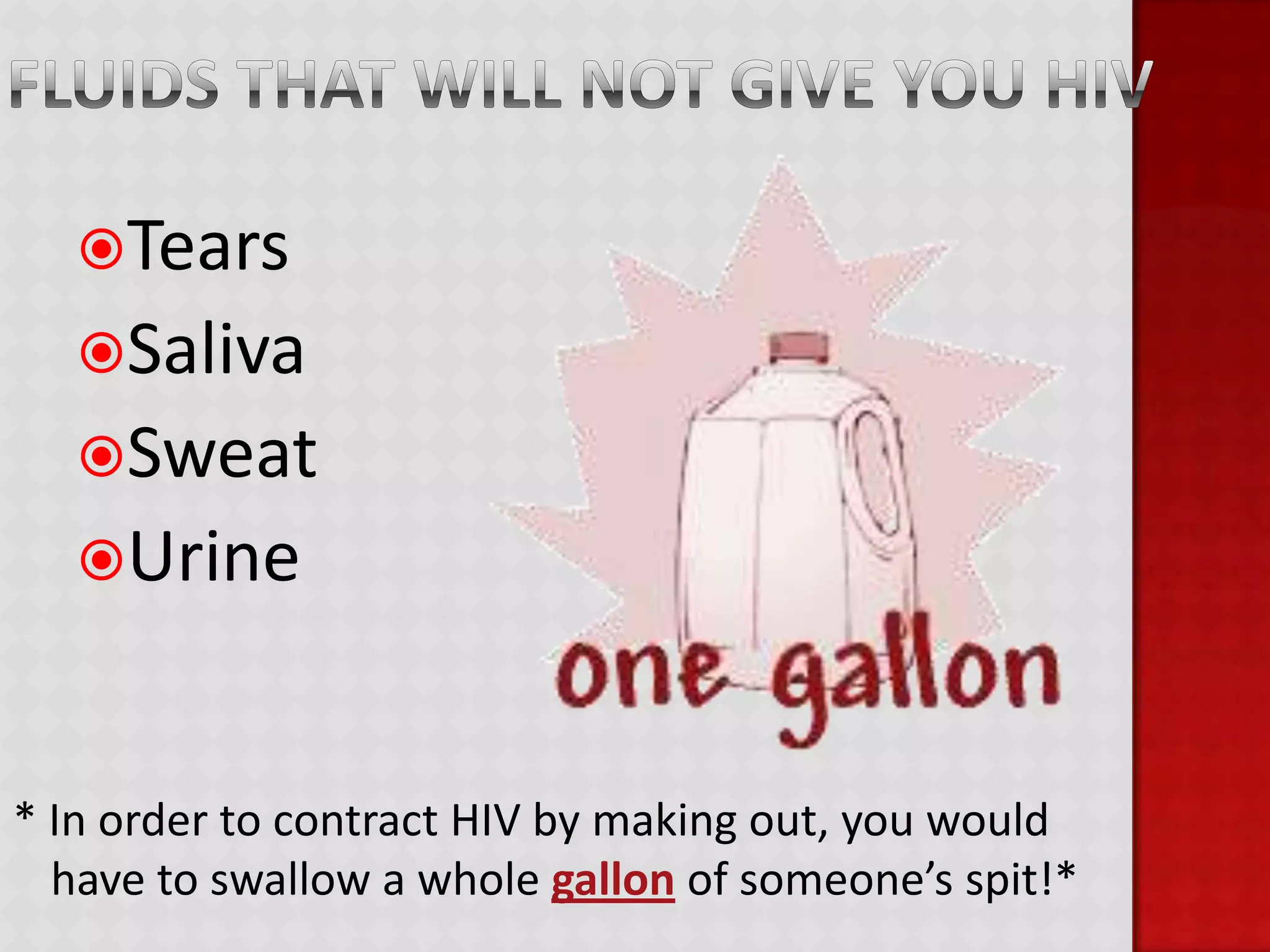
Fluids That Will Not Give You HIVTearsSalivaSweatUrine* In order to contract HIV by making out, you would have to swallow a whole gallon of someone’s spit!*
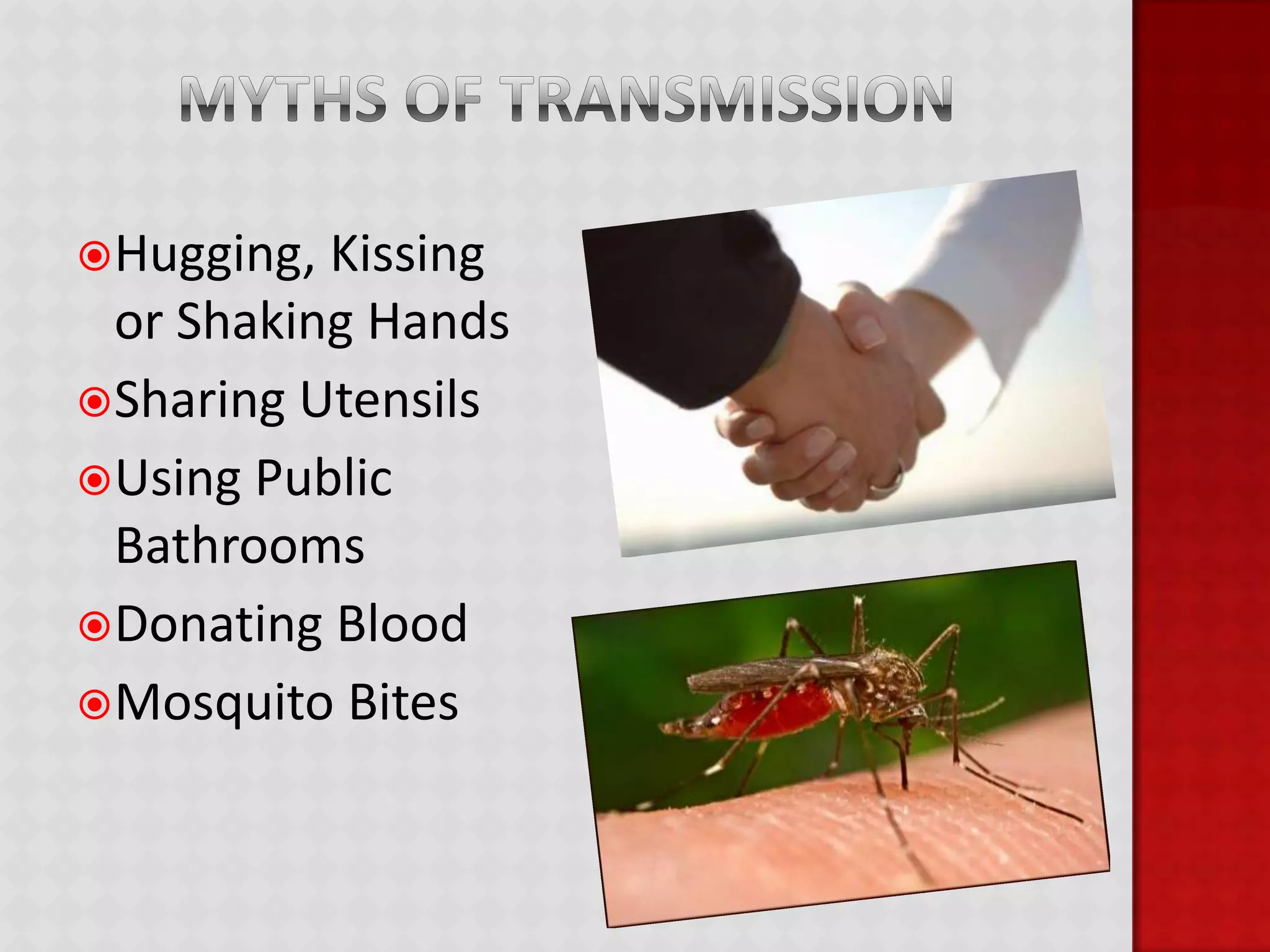
Myths of TransmissionHugging, Kissing or Shaking HandsSharing UtensilsUsing Public BathroomsDonating BloodMosquito Bites
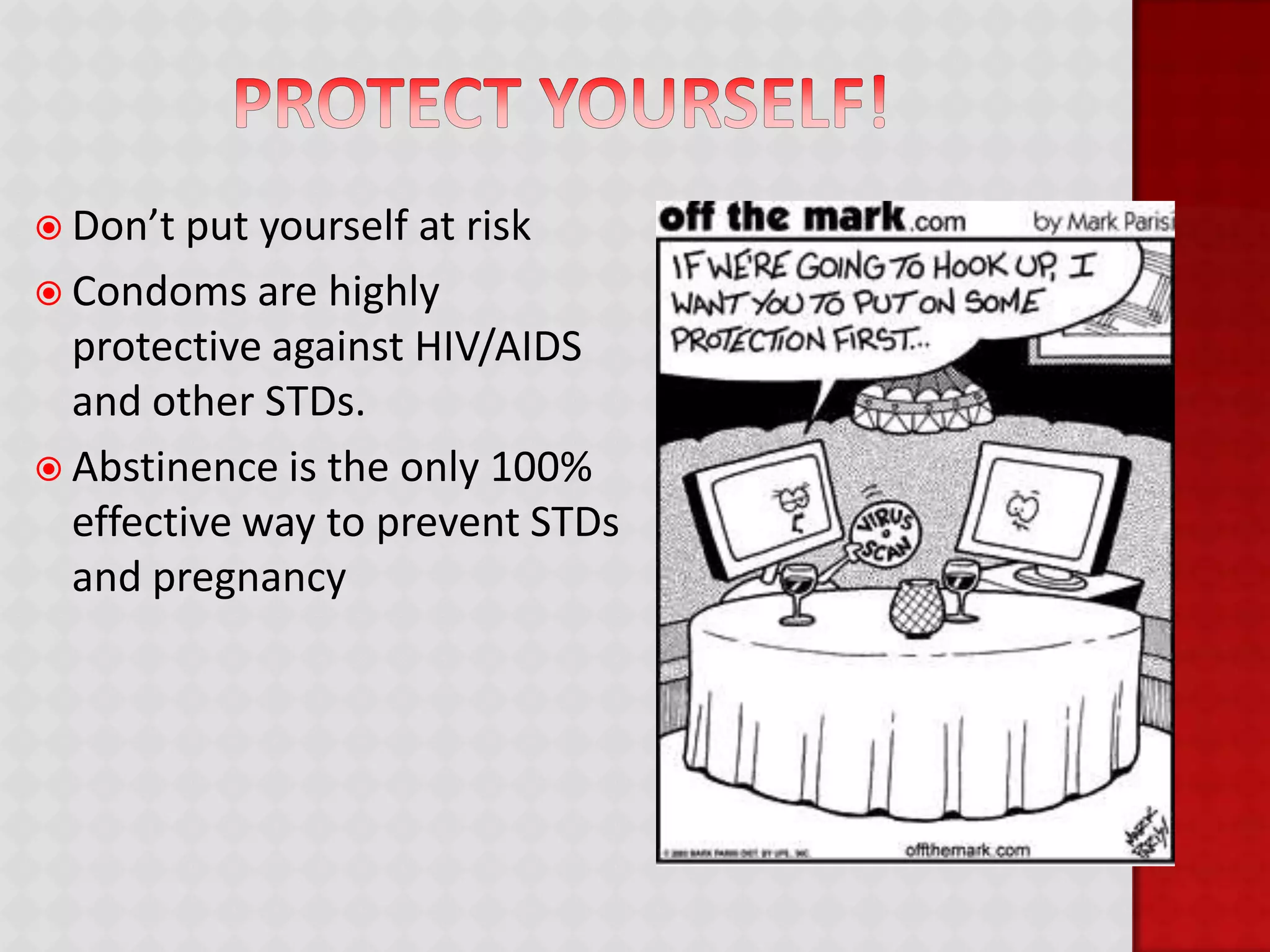
Protect Yourself!Don’t put yourself at risk Condoms are highly protective against HIV/AIDS and other STDs.Abstinence is the only 100% effective way to prevent STDs and pregnancy
The HIV Test
How the test worksThe HIV test looks for HIV antibodies in a person’s blood. NOT FOR AIDS.If you have enough of the antibodies, your test will be positive, which means you have been infected with HIVIf you do not have the antibodies (or enough of them), your test will be negative, and this could mean one of two things:		You do not have HIVORYou have been infected but your body has not made enough antibodies for the test to detect them.
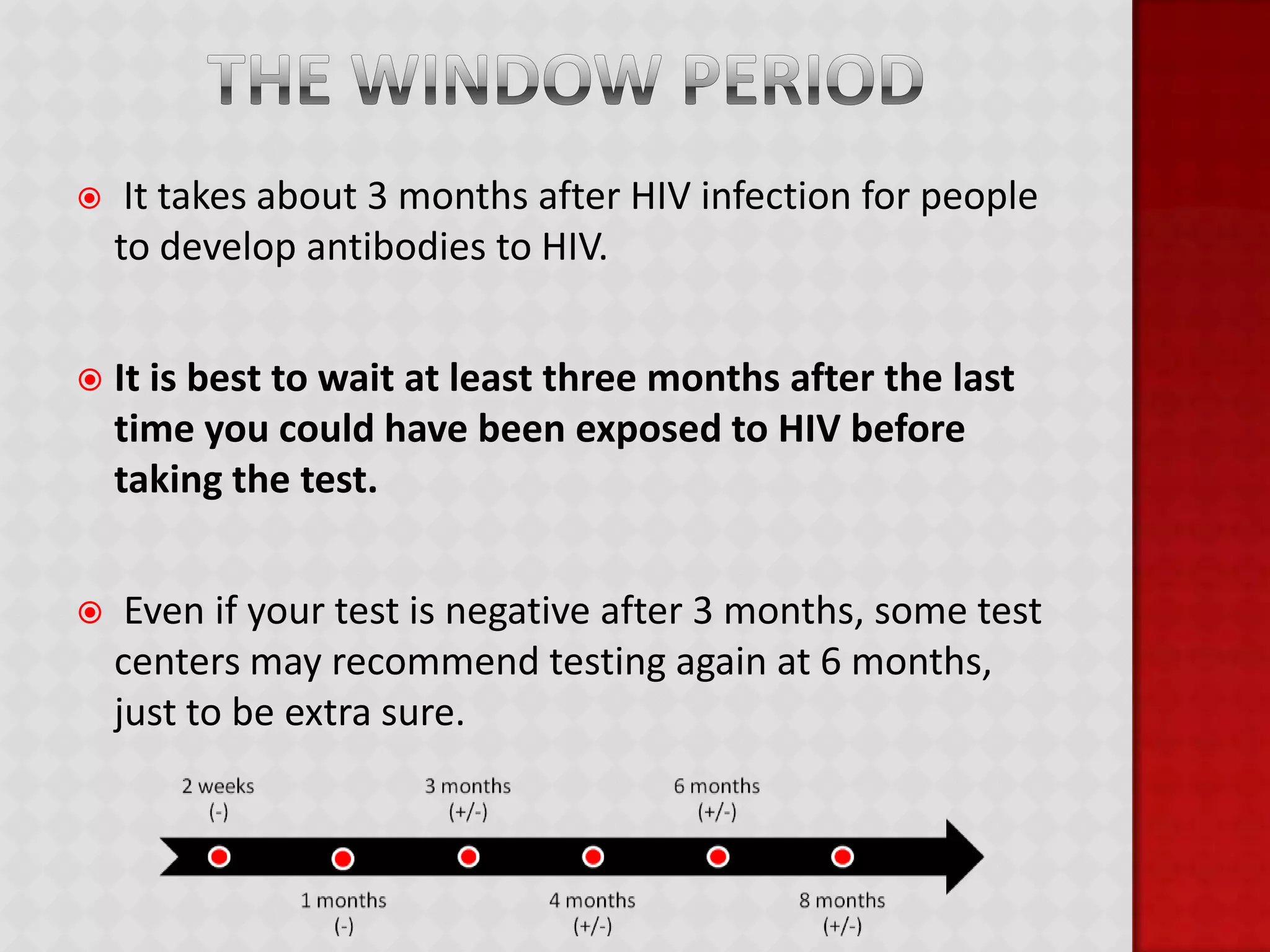
The window periodIt takes about 3 months after HIV infection for people to develop antibodies to HIV.
It is best to wait at least three months after the last time you could have been exposed to HIV before taking the test.
 Even if your test is negative after 3 months, some test centers may recommend testing again at 6 months, just to be extra sure. Types of Testing
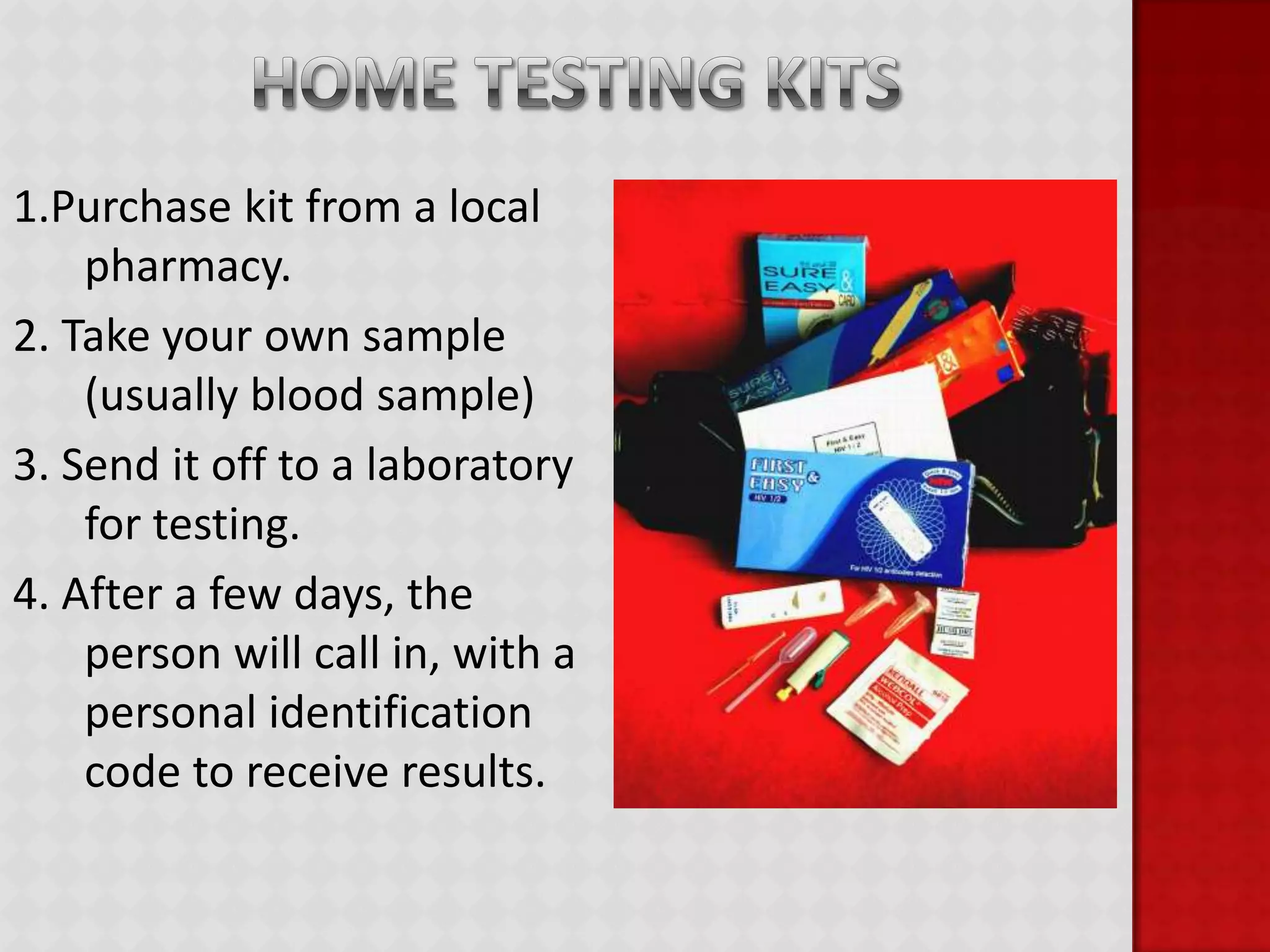
Home Testing Kits1.Purchase kit from a local pharmacy.2. Take your own sample (usually blood sample) 3. Send it off to a laboratory for testing.4. After a few days, the person will call in, with a personal identification code to receive results.
Home Testing Kits: DISADVANTAGESIt’s not as efficient or reliable!There are many home test kits out that are not approved by the FDA which potentially can lead to unreliable results.The testing kit may be expensive  (~ $80.00)
Rapid TestingThe rapid HIV test consists of either a small blood sample, or saliva.Some testing centers require that a patient provide their name and a mailing address. ADVANTAGE short amount of time you wait to receive your results. DISADVANTAGEtests are expensive and there are a few places that offer it free of charge.
ConfidentiaL TestingThis test takes place in a clinic. Personal information and results will be kept in your medical record. DISADVANTAGETakes a little longer to get results  HOWEVER….ADVANTAGEThese results are given to you at the clinicUsually, FREE!It becomes part of your medical history
Anonymous  TestingThis test also takes place in a clinic.You’re given a code that you’ll use to call and get your results.DISADVANTAGESAlso takes a little longer to get resultsADVANTAGESQuality counselingAnonymousUsually FREE!!
Free HIV TestingTo find free HIV Testing near you go to:http://www.hivtest.org/
Methods of birth control
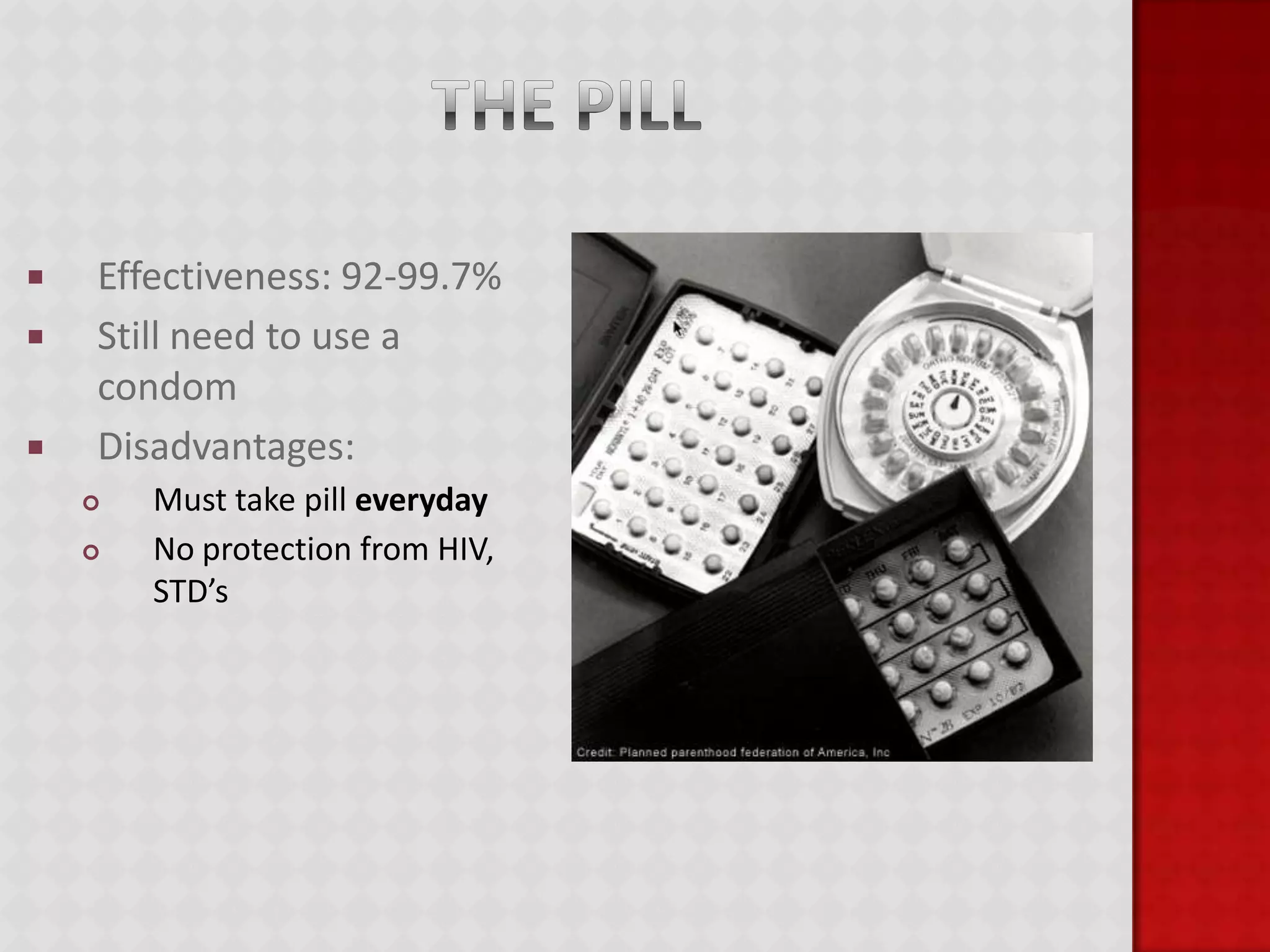
THE PILLEffectiveness: 92-99.7%Still need to use a condomDisadvantages: Must take pill everydayNo protection from HIV, STD’s
The Shot: DepoProveraEffectiveness: 97-99.7%Still need to use a condomAdvantages: Not taken daily and prevents pregnancy for 12 weeks.DisadvantagesMay cause delay in getting pregnant after shots are stopped.
The condomEffectiveness: 85-98%Advantages: Latex Condoms offer protection against HIV & STDs. Inexpensive & readily available.Disadvantages:Uncooperative partners, allergies, and possibility of breakage
Sexually Transmitted Diseases
STDsSexually Transmitted DiseasesAlso known as STIs: sexually transmitted infectionsSTDs are infectious diseases usually transmitted from person to person through sexual intercourse or other intimate contactIf untreated, they can cause permanent damage such as infertility and can lead to life-threatening conditionsSTD transmission can be prevented by the use of condoms or the practice of abstinence.
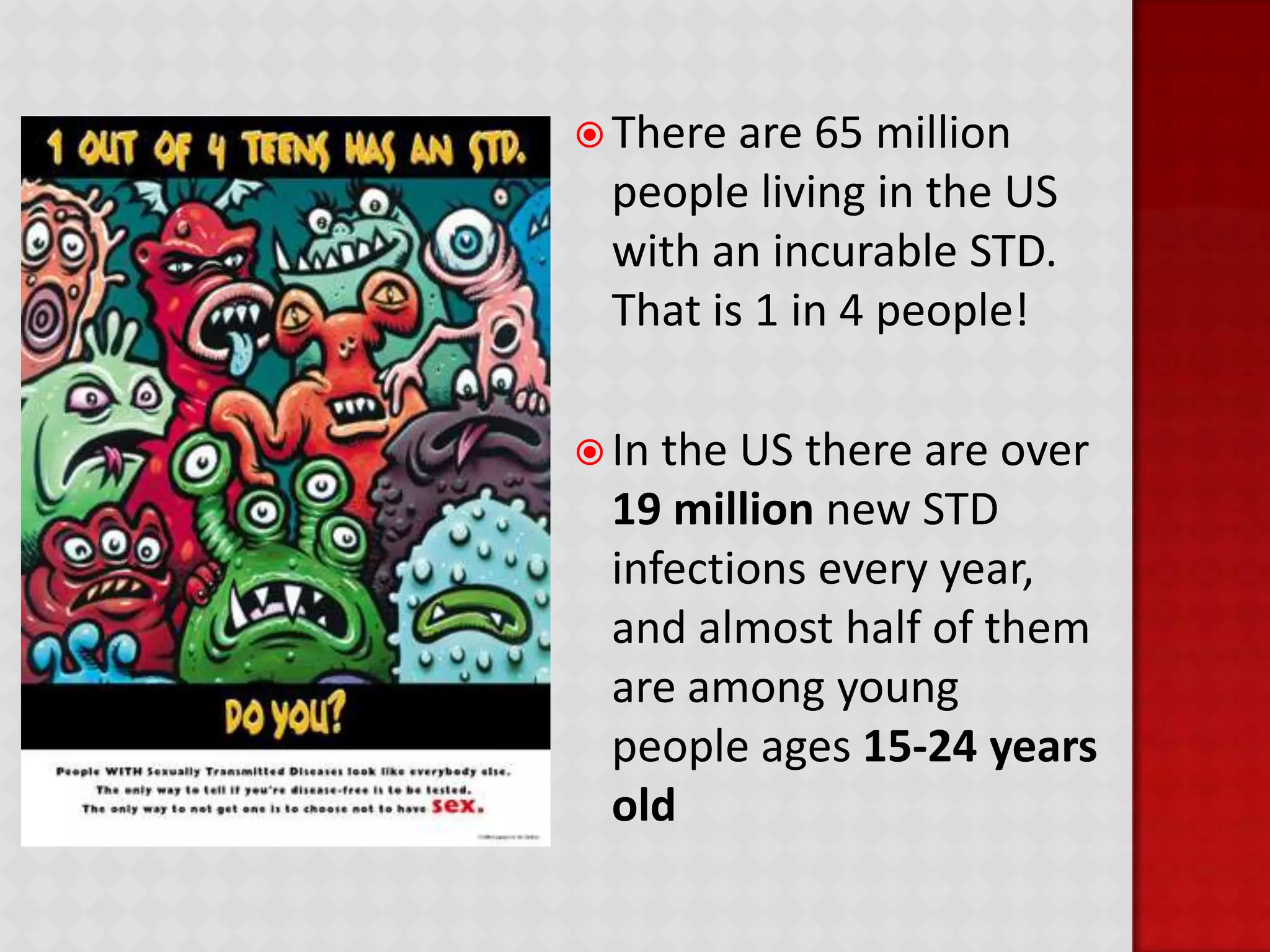
There are 65 million people living in the US with an incurable STD. That is 1 in 4 people!In the US there are over 19 million new STD infections every year, and almost half of them are among young people ages 15-24 years old
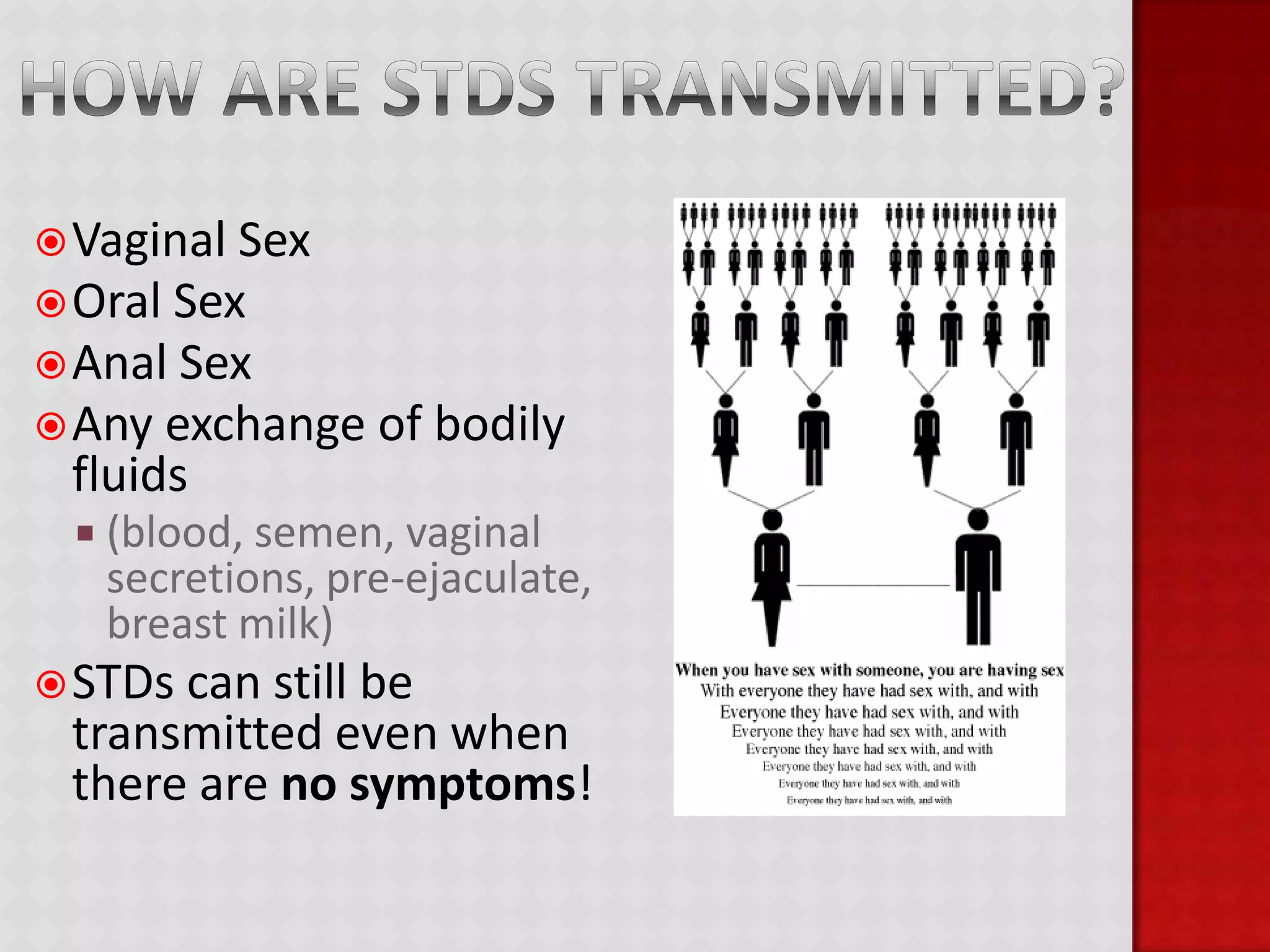
How are STDs transmitted?Vaginal SexOral SexAnal SexAny exchange of bodily fluids(blood, semen, vaginal secretions, pre-ejaculate, breast milk)STDs can still be transmitted even when there are no symptoms!
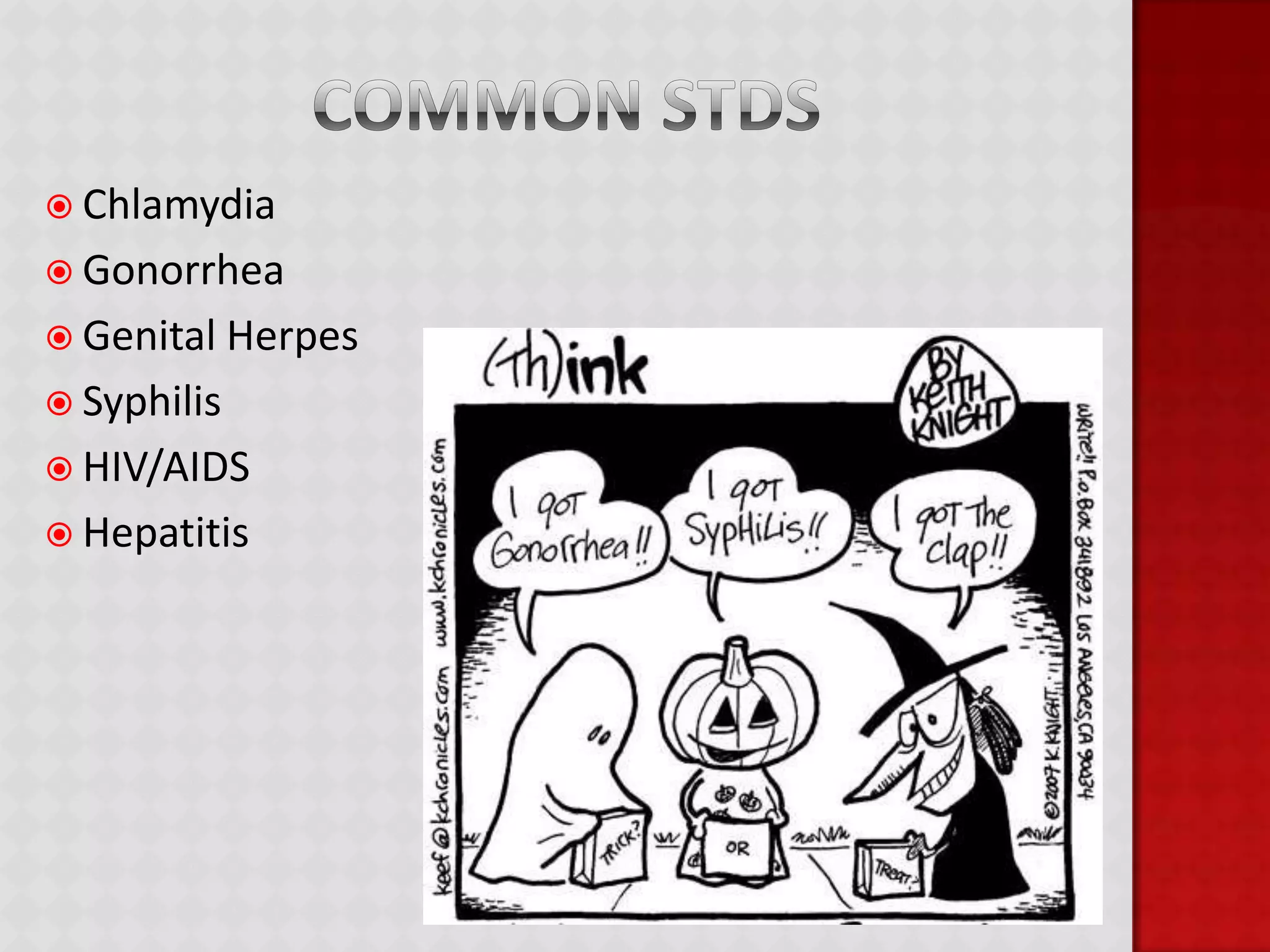
Common STDsChlamydiaGonorrheaGenital HerpesSyphilisHIV/AIDSHepatitis
ChlamydiaThe most widespread STD in the United StatesIt is a bacterial infection that can be treated with antibioticsMore than 50% of those infected have no symptoms at allIn 2007, the rate of infection for females was over 3 times greater than the rate for males
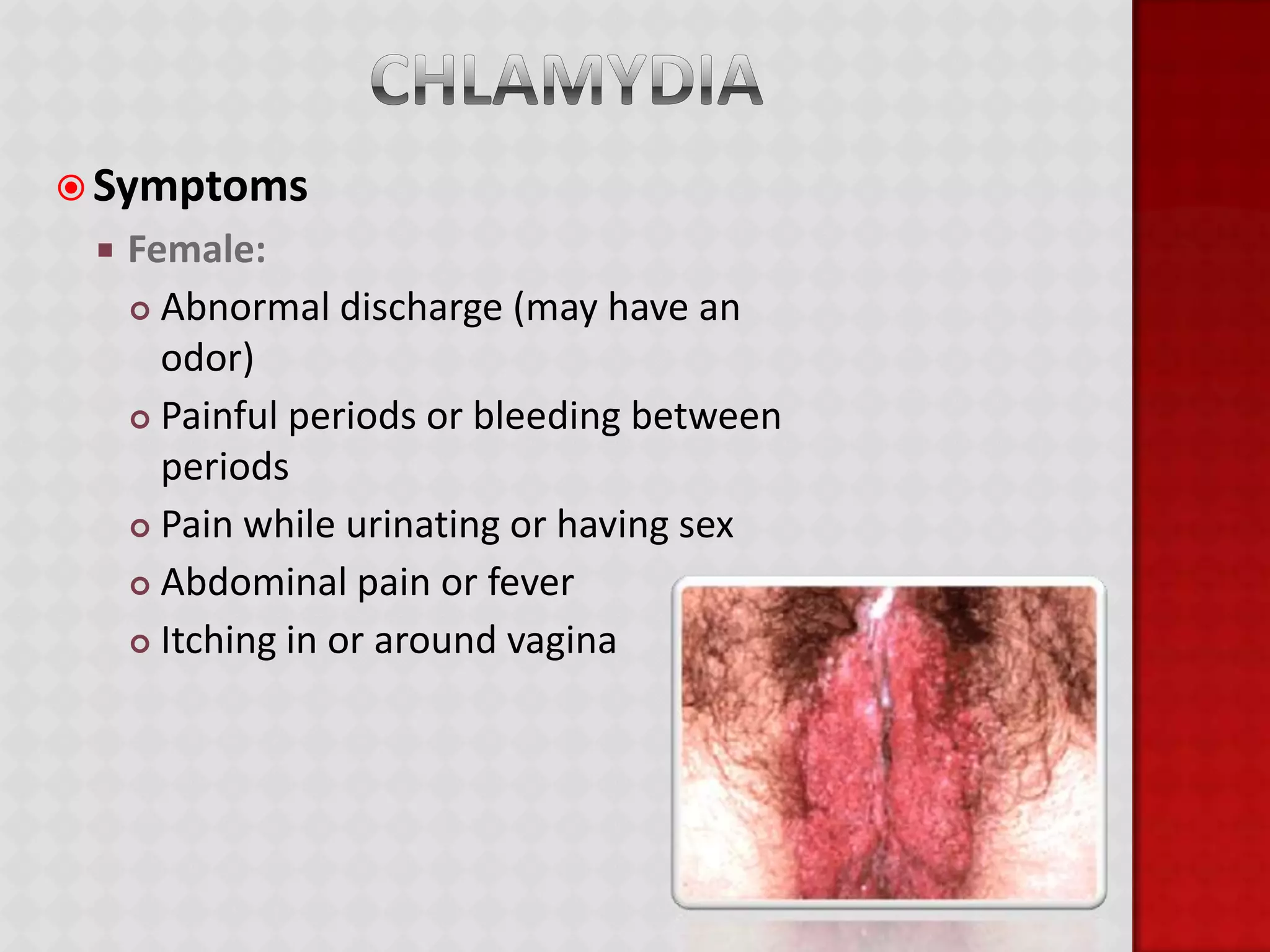
ChlamydiaSymptomsFemale:Abnormal discharge (may have an odor)Painful periods or bleeding between periodsPain while urinating or having sexAbdominal pain or feverItching in or around vagina
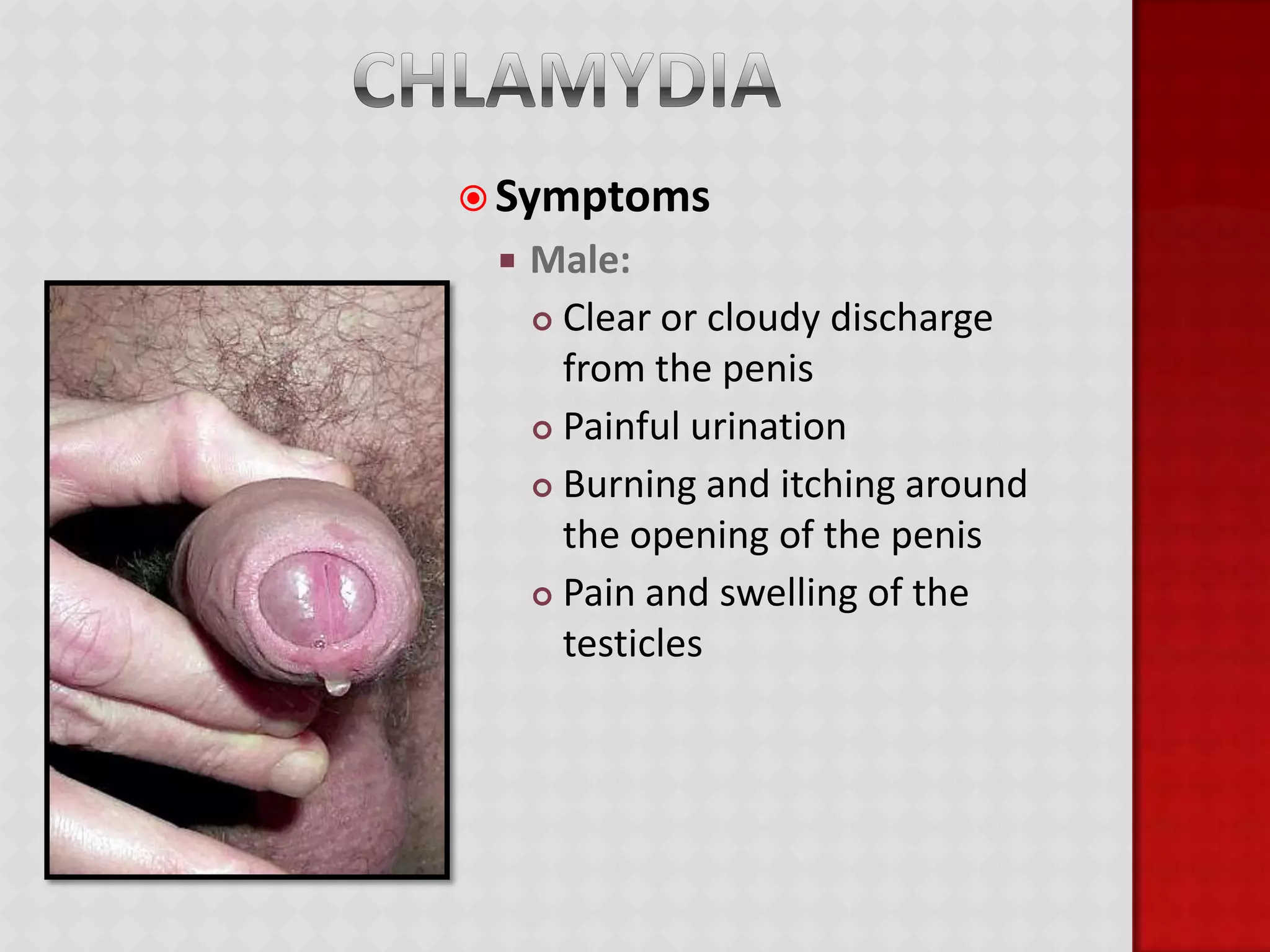
ChlamydiaSymptomsMale:Clear or cloudy discharge from the penisPainful urinationBurning and itching around the opening of the penisPain and swelling of the testicles
GonorrheaAlso known as “the clap”It is a bacterial infection that can be treated with antibioticsSymptoms usually appear within 2-5 days of exposure but many people have no symptoms
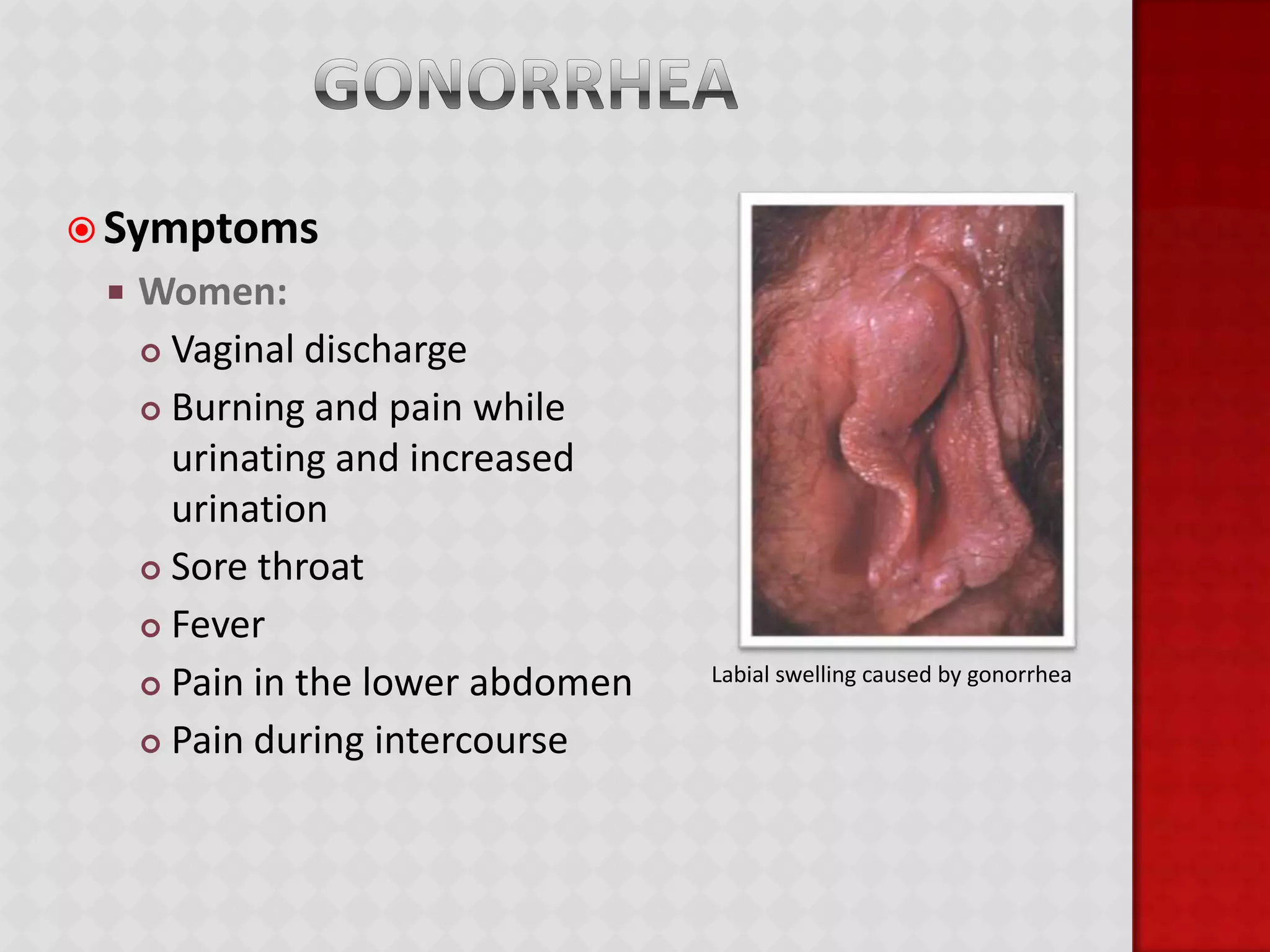
GonorrheaSymptomsWomen:Vaginal dischargeBurning and pain while urinating and increased urinationSore throatFeverPain in the lower abdomenPain during intercourseLabial swelling caused by gonorrhea
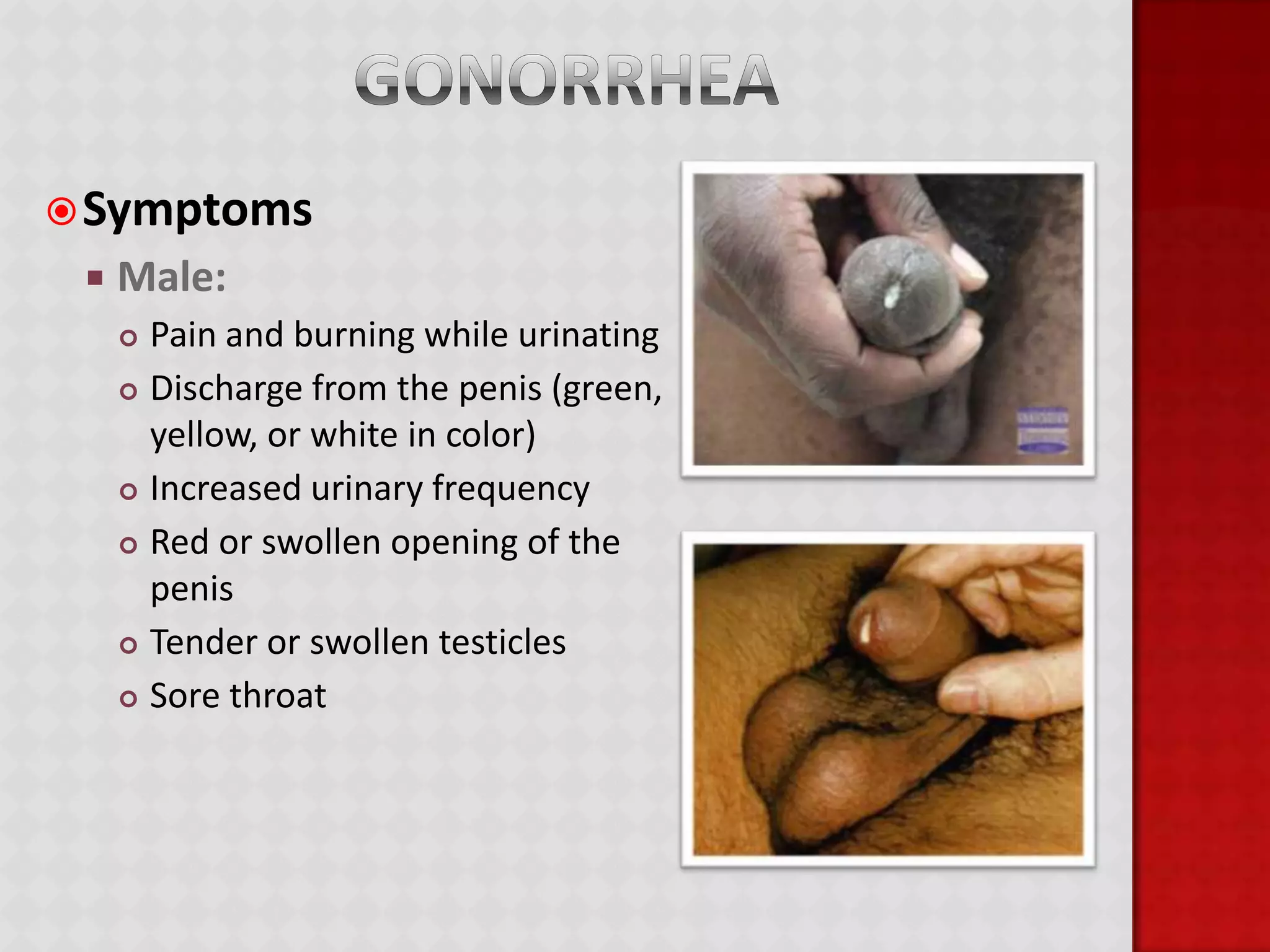
GonorrheaSymptomsMale:Pain and burning while urinatingDischarge from the penis (green, yellow, or white in color)Increased urinary frequencyRed or swollen opening of the penisTender or swollen testiclesSore throat
Genital Herpes1 in 4 adults has herpesThere are 30 million cases of herpes in the US with about 1 million NEW cases every year!The infection is caused by a virus that has no known cure.Most people infected with the virus do not know that they have it since they have no symptoms.
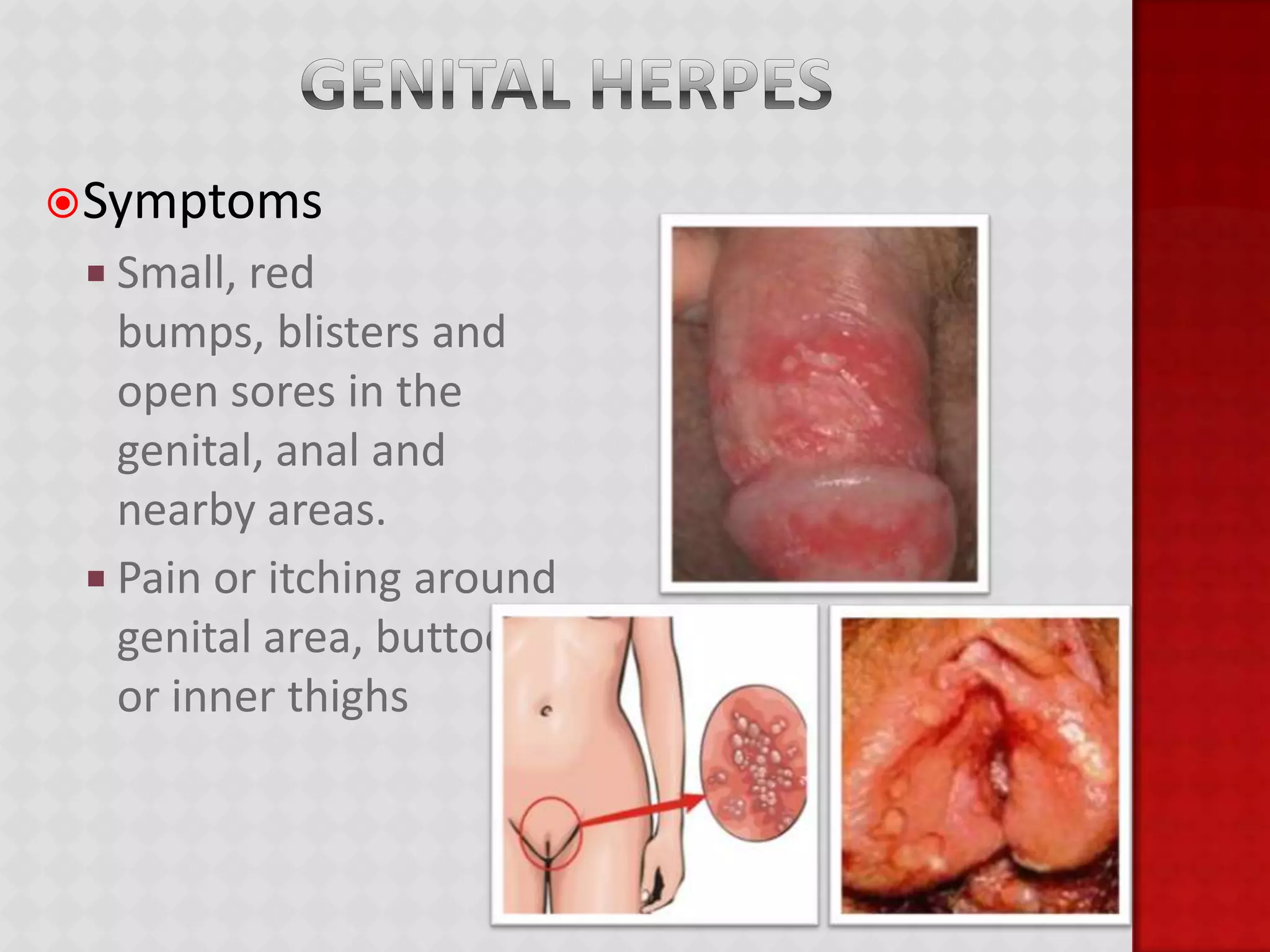
GenitalHerpesSymptomsSmall, red bumps, blisters and open sores in the genital, anal and nearby areas.Pain or itching around genital area, buttocks or inner thighs
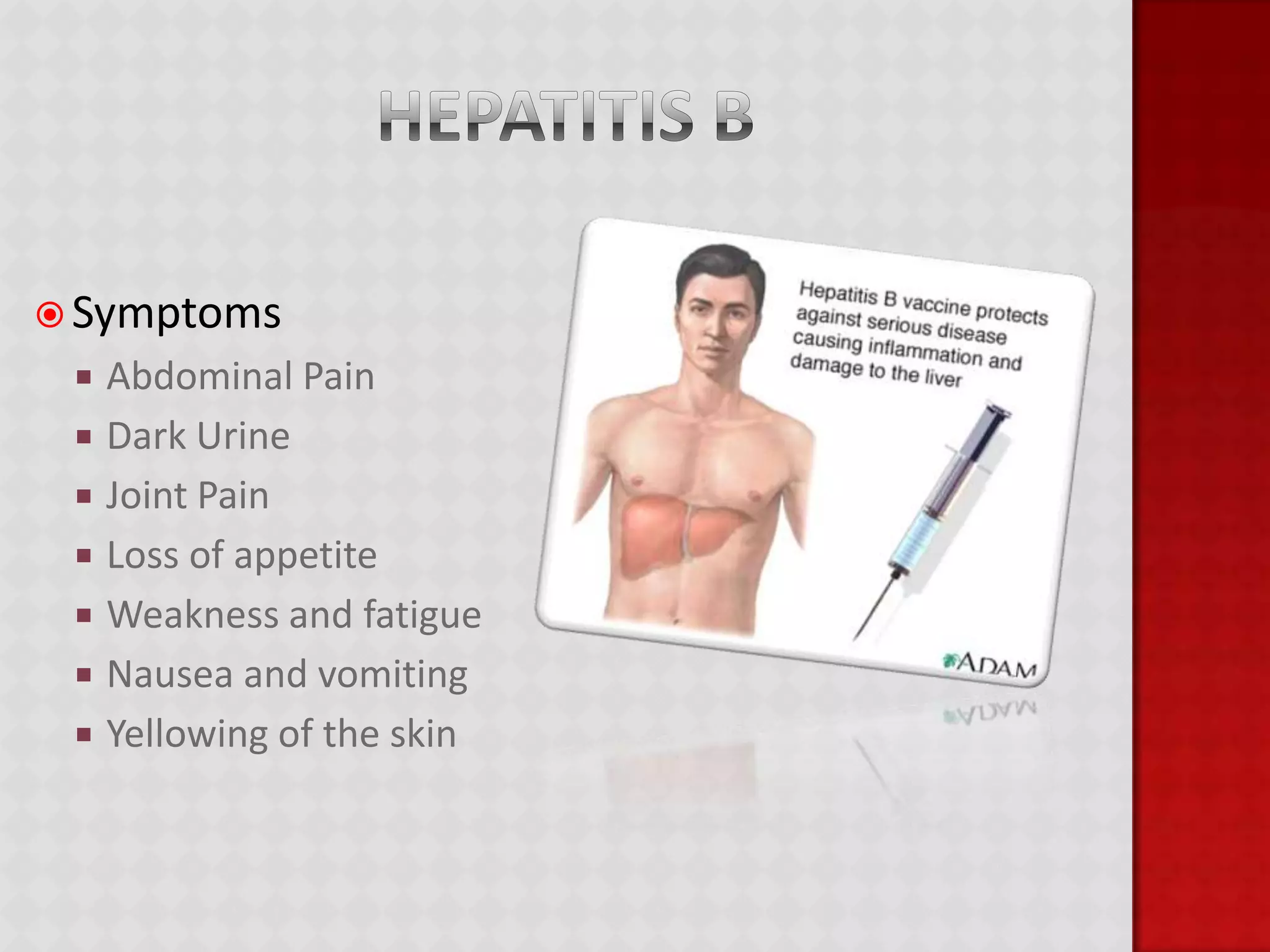
Hepatitis BA virus that primarily infects the liver causing inflammationResults from exposure to blood or bodily fluids containing blood, including unprotected sexual contact and contaminated needles.Can be prevented by a vaccineCan be treated with antiviral treatment
Hepatitis B	Symptoms	Abdominal PainDark UrineJoint PainLoss of appetiteWeakness and fatigueNausea and vomitingYellowing of the skin
HPVHPV stands for Human PapillomavirusThere is no cure for HPVThere are over 100 types of HPV, some which can cause complications such as cervical cancer. Can be prevented by a vaccine.
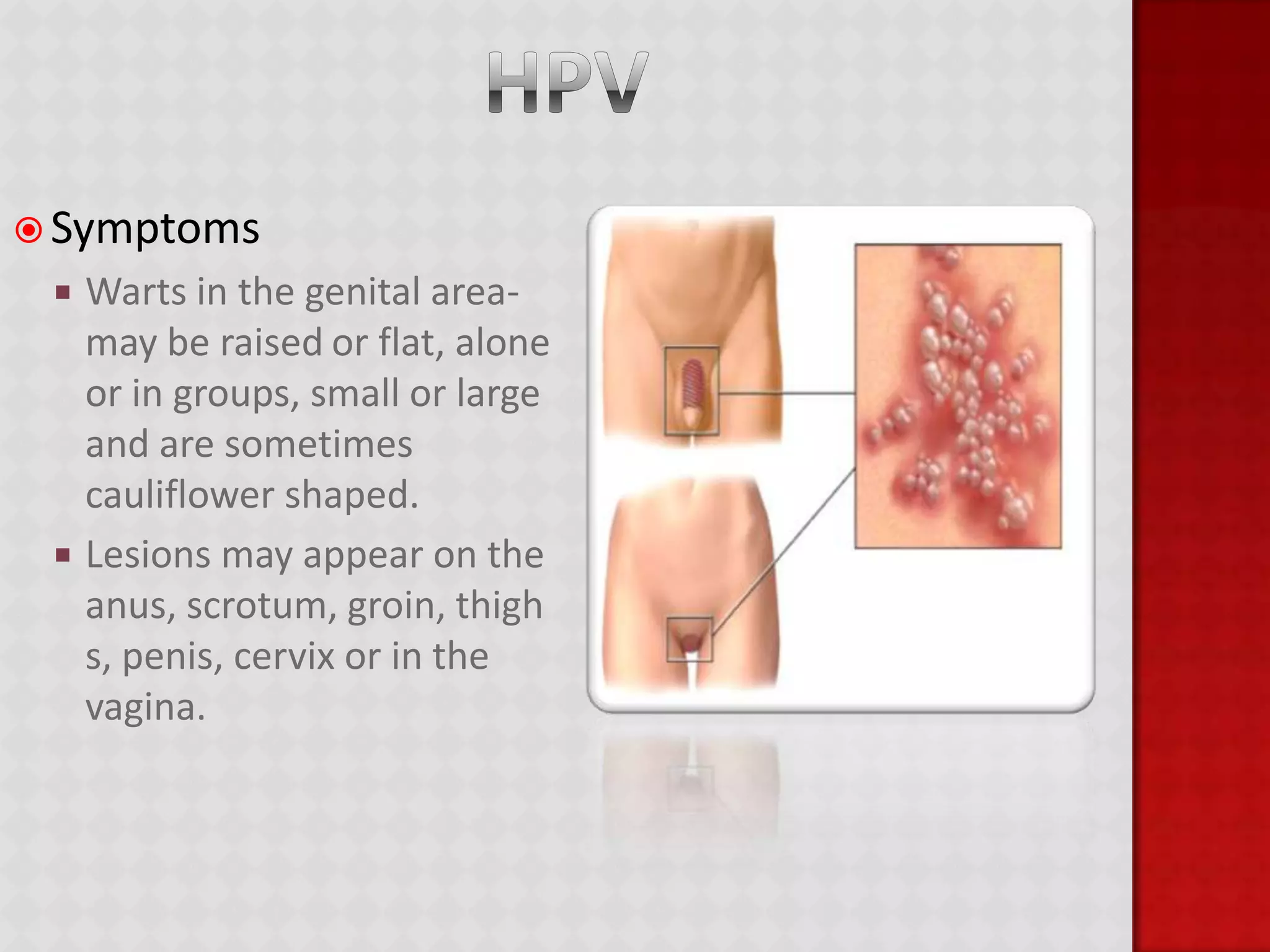
HPVSymptomsWarts in the genital area- may be raisedor flat, alone or in groups, small or large and are sometimes cauliflower shaped.Lesions may appear on the anus, scrotum, groin, thighs, penis, cervix or in the vagina.
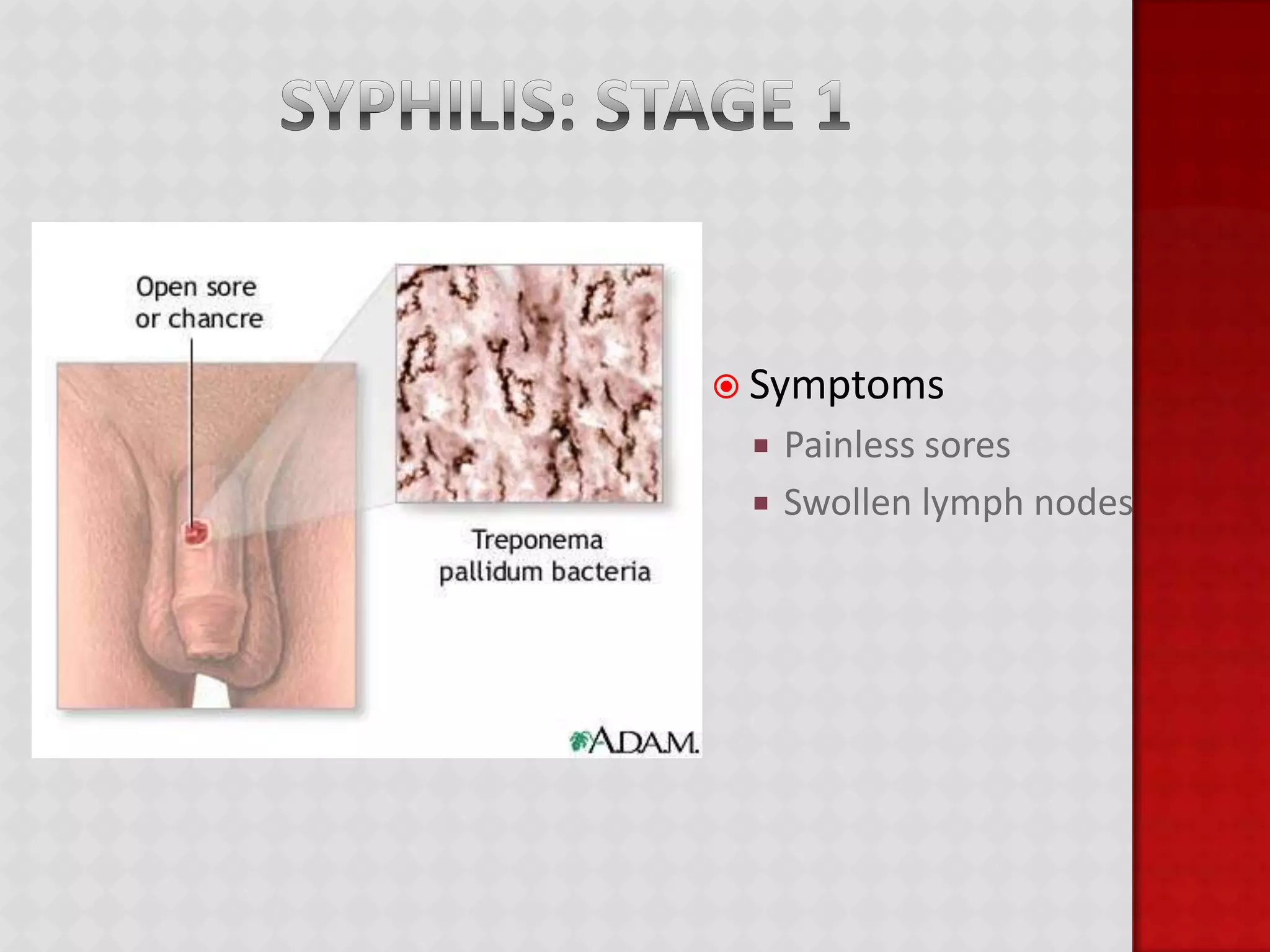
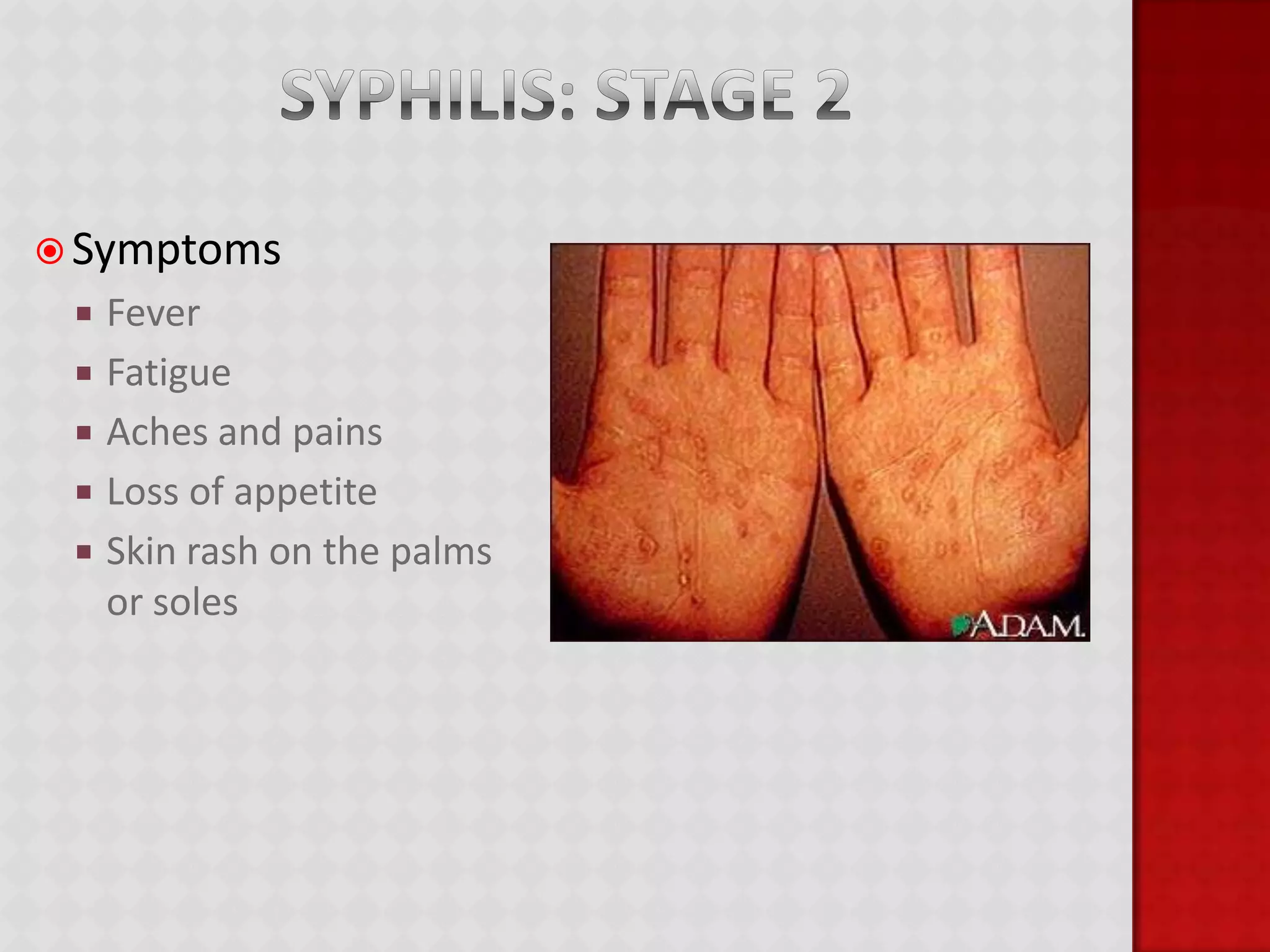
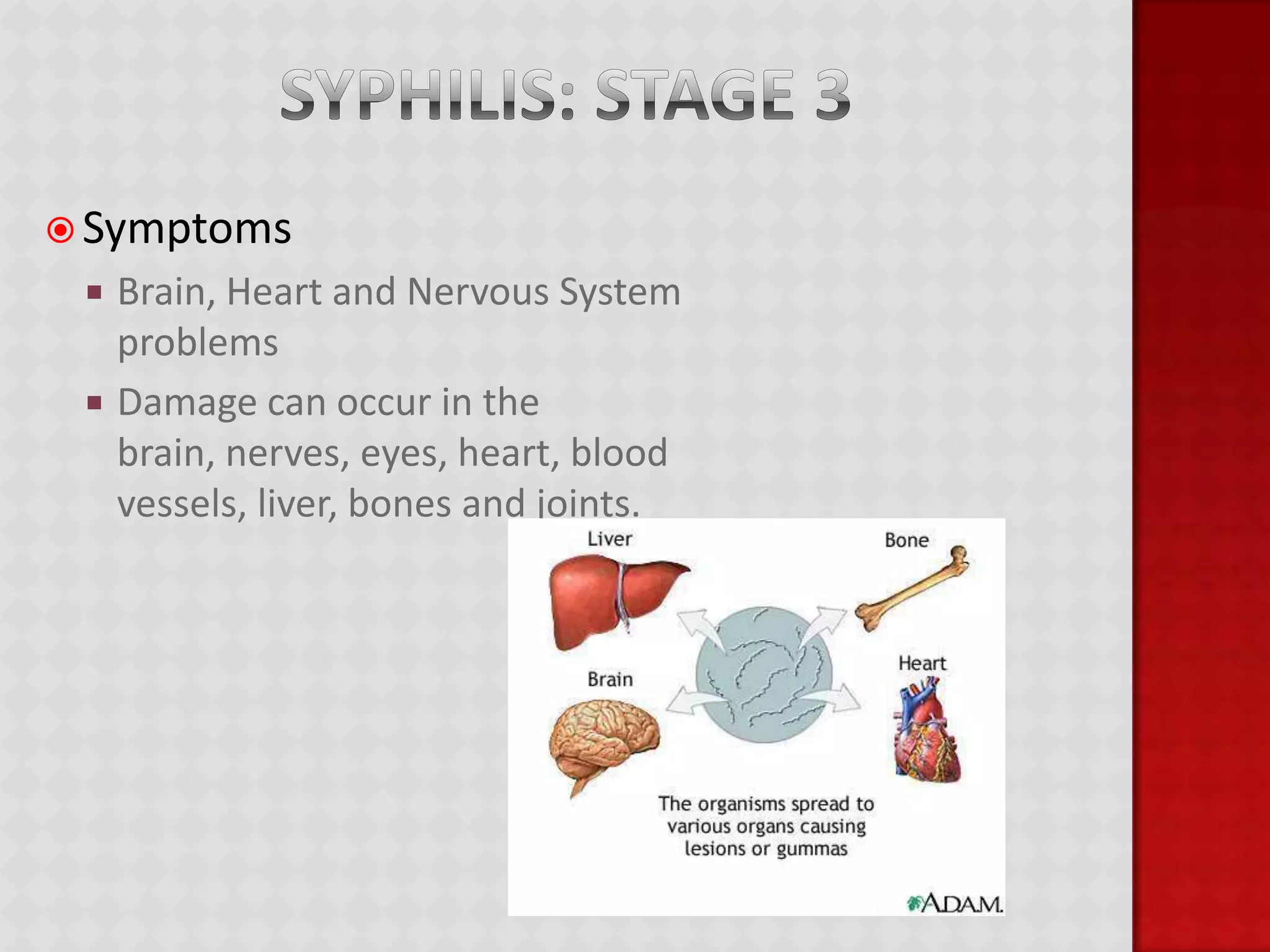
SyphilisSyphilis is a bacterial infection that can be treated with antibioticsIt is a three stage infection with different symptoms in each stage
Syphilis: Stage 1SymptomsPainless soresSwollen lymph nodes

Blaids powerpoint 2010 2011

  • 1.
    Directors:Fanta BayohRozanne CarlosEricCarpioErika HowellEnockTeefeRosa Vasquez
  • 2.
  • 3.
    What do peoplewith HIV look Like???
  • 5.
  • 6.
  • 7.
  • 8.
    1. Primary HIVinfectionFlu-like symptoms that last a few weeksThis is when the body begins to create CD4 antibodies to fight the HIV virus
  • 9.
    2. Clinical AsymptomaticStageAsymptomatic: does not currently show symptoms of the disease being discussed
  • 10.
    Can last foran average of 10 years
  • 11.
    HIV is presentand active in blood.3. Symptomatic HIV infectionImmune system becomes weak
  • 12.
  • 13.
    These diseases andinfections would not cause harm to a normal person, but can be fatal for someone with a weak immune system4. Progression from HIV to AIDSThis is the fatal stage of HIV
  • 14.
    The immune systemis almost destroyed
  • 15.
    The illness becomesmore severe and you are diagnosed with AIDS
  • 16.
    People DO NOTdie from AIDS but from an opportunistic disease/infectionThose with the virus may or may not show any symptoms!
  • 17.
  • 18.
    Ways of TransmissionSex:Vaginal, Anal, OralSharing NeedlesDrugsTattoos/ PiercingsMother To Child
  • 19.
  • 20.
    Fluids That WillNot Give You HIVTearsSalivaSweatUrine* In order to contract HIV by making out, you would have to swallow a whole gallon of someone’s spit!*
  • 21.
    Myths of TransmissionHugging,Kissing or Shaking HandsSharing UtensilsUsing Public BathroomsDonating BloodMosquito Bites
  • 22.
    Protect Yourself!Don’t putyourself at risk Condoms are highly protective against HIV/AIDS and other STDs.Abstinence is the only 100% effective way to prevent STDs and pregnancy
  • 23.
  • 24.
    How the testworksThe HIV test looks for HIV antibodies in a person’s blood. NOT FOR AIDS.If you have enough of the antibodies, your test will be positive, which means you have been infected with HIVIf you do not have the antibodies (or enough of them), your test will be negative, and this could mean one of two things: You do not have HIVORYou have been infected but your body has not made enough antibodies for the test to detect them.
  • 25.
    The window periodIttakes about 3 months after HIV infection for people to develop antibodies to HIV.
  • 26.
    It is bestto wait at least three months after the last time you could have been exposed to HIV before taking the test.
  • 27.
    Even ifyour test is negative after 3 months, some test centers may recommend testing again at 6 months, just to be extra sure. Types of Testing
  • 28.
    Home Testing Kits1.Purchasekit from a local pharmacy.2. Take your own sample (usually blood sample) 3. Send it off to a laboratory for testing.4. After a few days, the person will call in, with a personal identification code to receive results.
  • 29.
    Home Testing Kits:DISADVANTAGESIt’s not as efficient or reliable!There are many home test kits out that are not approved by the FDA which potentially can lead to unreliable results.The testing kit may be expensive (~ $80.00)
  • 30.
    Rapid TestingThe rapidHIV test consists of either a small blood sample, or saliva.Some testing centers require that a patient provide their name and a mailing address. ADVANTAGE short amount of time you wait to receive your results. DISADVANTAGEtests are expensive and there are a few places that offer it free of charge.
  • 31.
    ConfidentiaL TestingThis testtakes place in a clinic. Personal information and results will be kept in your medical record. DISADVANTAGETakes a little longer to get results HOWEVER….ADVANTAGEThese results are given to you at the clinicUsually, FREE!It becomes part of your medical history
  • 32.
    Anonymous TestingThistest also takes place in a clinic.You’re given a code that you’ll use to call and get your results.DISADVANTAGESAlso takes a little longer to get resultsADVANTAGESQuality counselingAnonymousUsually FREE!!
  • 33.
    Free HIV TestingTofind free HIV Testing near you go to:http://www.hivtest.org/
  • 34.
  • 35.
    THE PILLEffectiveness: 92-99.7%Stillneed to use a condomDisadvantages: Must take pill everydayNo protection from HIV, STD’s
  • 36.
    The Shot: DepoProveraEffectiveness:97-99.7%Still need to use a condomAdvantages: Not taken daily and prevents pregnancy for 12 weeks.DisadvantagesMay cause delay in getting pregnant after shots are stopped.
  • 37.
    The condomEffectiveness: 85-98%Advantages:Latex Condoms offer protection against HIV & STDs. Inexpensive & readily available.Disadvantages:Uncooperative partners, allergies, and possibility of breakage
  • 38.
  • 39.
    STDsSexually Transmitted DiseasesAlsoknown as STIs: sexually transmitted infectionsSTDs are infectious diseases usually transmitted from person to person through sexual intercourse or other intimate contactIf untreated, they can cause permanent damage such as infertility and can lead to life-threatening conditionsSTD transmission can be prevented by the use of condoms or the practice of abstinence.
  • 40.
    There are 65million people living in the US with an incurable STD. That is 1 in 4 people!In the US there are over 19 million new STD infections every year, and almost half of them are among young people ages 15-24 years old
  • 41.
    How are STDstransmitted?Vaginal SexOral SexAnal SexAny exchange of bodily fluids(blood, semen, vaginal secretions, pre-ejaculate, breast milk)STDs can still be transmitted even when there are no symptoms!
  • 42.
  • 43.
    ChlamydiaThe most widespreadSTD in the United StatesIt is a bacterial infection that can be treated with antibioticsMore than 50% of those infected have no symptoms at allIn 2007, the rate of infection for females was over 3 times greater than the rate for males
  • 44.
    ChlamydiaSymptomsFemale:Abnormal discharge (mayhave an odor)Painful periods or bleeding between periodsPain while urinating or having sexAbdominal pain or feverItching in or around vagina
  • 45.
    ChlamydiaSymptomsMale:Clear or cloudydischarge from the penisPainful urinationBurning and itching around the opening of the penisPain and swelling of the testicles
  • 46.
    GonorrheaAlso known as“the clap”It is a bacterial infection that can be treated with antibioticsSymptoms usually appear within 2-5 days of exposure but many people have no symptoms
  • 47.
    GonorrheaSymptomsWomen:Vaginal dischargeBurning andpain while urinating and increased urinationSore throatFeverPain in the lower abdomenPain during intercourseLabial swelling caused by gonorrhea
  • 48.
    GonorrheaSymptomsMale:Pain and burningwhile urinatingDischarge from the penis (green, yellow, or white in color)Increased urinary frequencyRed or swollen opening of the penisTender or swollen testiclesSore throat
  • 49.
    Genital Herpes1 in4 adults has herpesThere are 30 million cases of herpes in the US with about 1 million NEW cases every year!The infection is caused by a virus that has no known cure.Most people infected with the virus do not know that they have it since they have no symptoms.
  • 50.
    GenitalHerpesSymptomsSmall, red bumps,blisters and open sores in the genital, anal and nearby areas.Pain or itching around genital area, buttocks or inner thighs
  • 51.
    Hepatitis BA virusthat primarily infects the liver causing inflammationResults from exposure to blood or bodily fluids containing blood, including unprotected sexual contact and contaminated needles.Can be prevented by a vaccineCan be treated with antiviral treatment
  • 52.
    Hepatitis B Symptoms Abdominal PainDarkUrineJoint PainLoss of appetiteWeakness and fatigueNausea and vomitingYellowing of the skin
  • 53.
    HPVHPV stands forHuman PapillomavirusThere is no cure for HPVThere are over 100 types of HPV, some which can cause complications such as cervical cancer. Can be prevented by a vaccine.
  • 54.
    HPVSymptomsWarts in thegenital area- may be raisedor flat, alone or in groups, small or large and are sometimes cauliflower shaped.Lesions may appear on the anus, scrotum, groin, thighs, penis, cervix or in the vagina.
  • 55.
    SyphilisSyphilis is abacterial infection that can be treated with antibioticsIt is a three stage infection with different symptoms in each stage
  • 56.
    Syphilis: Stage 1SymptomsPainlesssoresSwollen lymph nodes
  • 57.
    Syphilis: Stage 2SymptomsFeverFatigueAchesand painsLoss of appetite Skin rash on the palms or soles
  • 58.
    Syphilis: Stage 3SymptomsBrain,Heart and Nervous System problemsDamage can occur in the brain, nerves, eyes, heart, blood vessels, liver, bones and joints.
  • 59.
    Protect Yourself!The onlyway to be 100% safe from contracting HIV or STDs is:and not sharing needles of any kind!!ABSTINENCE
  • 60.
    CONDOM DEMOCheck theexpiration dateMake sure there is an air bubbleSlide the condom to the side and open the package Place condom on banana (ridges up) and slide all the way downRoll condom off of banana and place in napkin
  • 61.
    Last Minute Tips!Donot exchange bodily fluidsDo not use oil based lubricantsUse a new latex condom every time you engage in sex.If you are allergic to latex condoms, Polyurethane condoms can be used as a replacement.