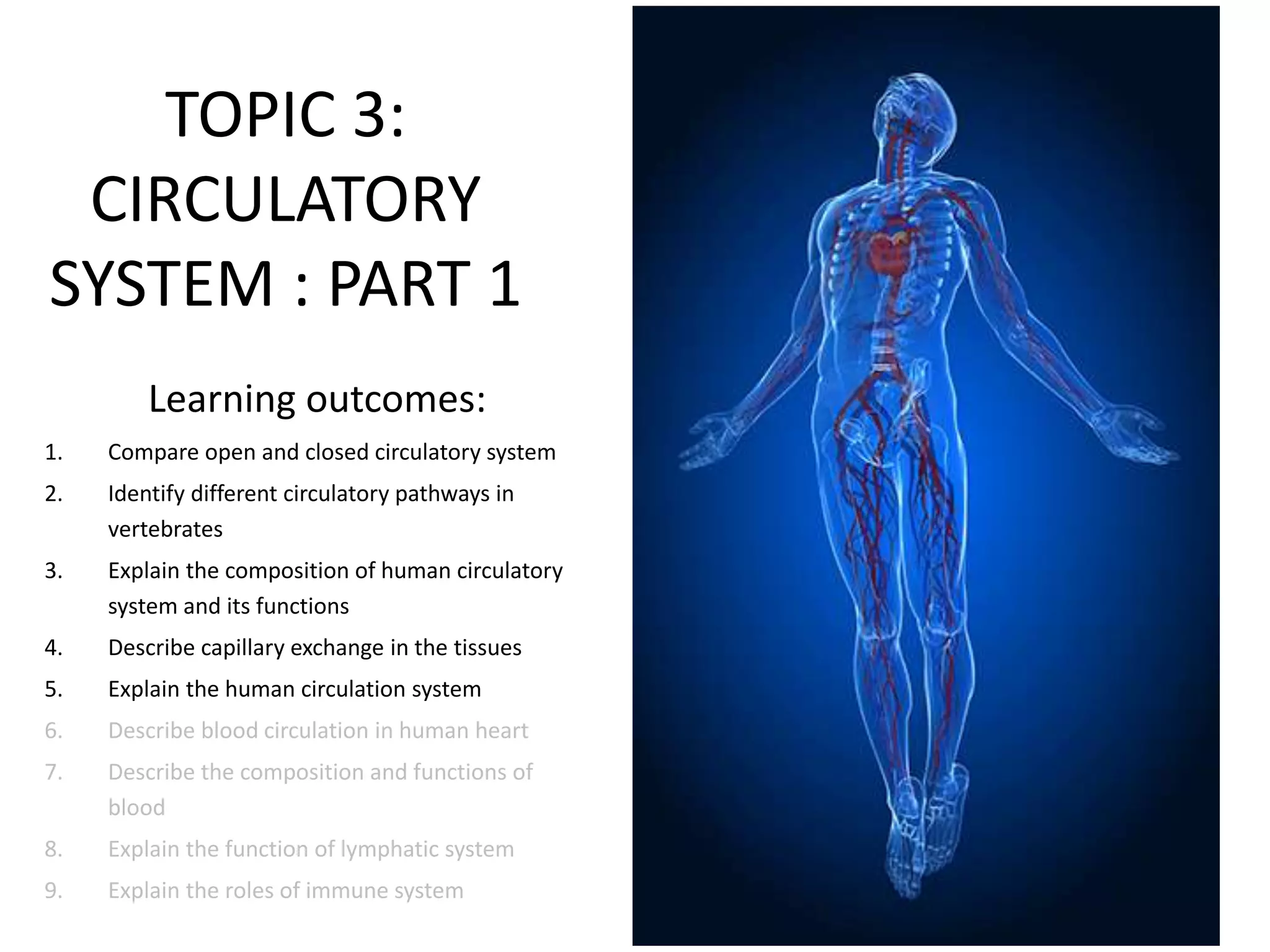
TOPIC 3:
CIRCULATORY
SYSTEM : PART 1
Learning outcomes:
1. Compare open and closed circulatory system
2. Identify different circulatory pathways in
vertebrates
3. Explain the composition of human circulatory
system and its functions
4. Describe capillary exchange in the tissues
5. Explain the human circulation system
6. Describe blood circulation in human heart
7. Describe the composition and functions of
blood
8. Explain the function of lymphatic system
9. Explain the roles of immune system
Circulatory system
Simple
Open
Closed
Single looped
Double looped
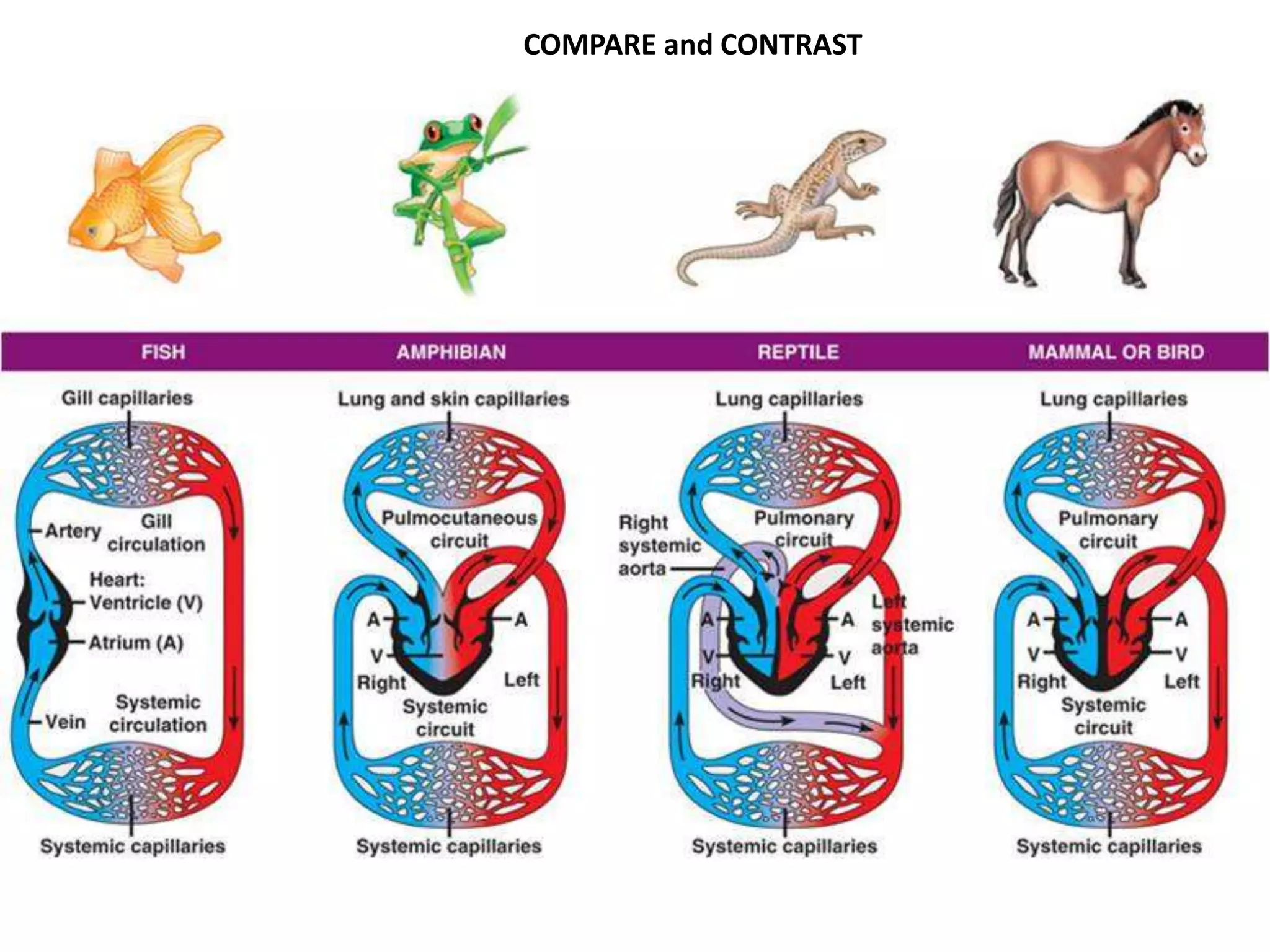
COMPARE and CONTRAST
Circulatory system
Simple
Open
Closed
Single looped
Double looped
Simple Circulatory Systems
• Nutrients can diffuse directly
across the cells into cavity.
• No vessels or blood are required
for transportation of nutrients,
waste or gases
• Hydra and planarians are so small
– diffusion provides for the
movement of fluids, gases, and
wastes.
• Nematodes and echinoderms
– movement of the organism
provides for the movement of
the internal fluids.
Circulatory system
Simple
Open
Closed
Single looped
Double looped
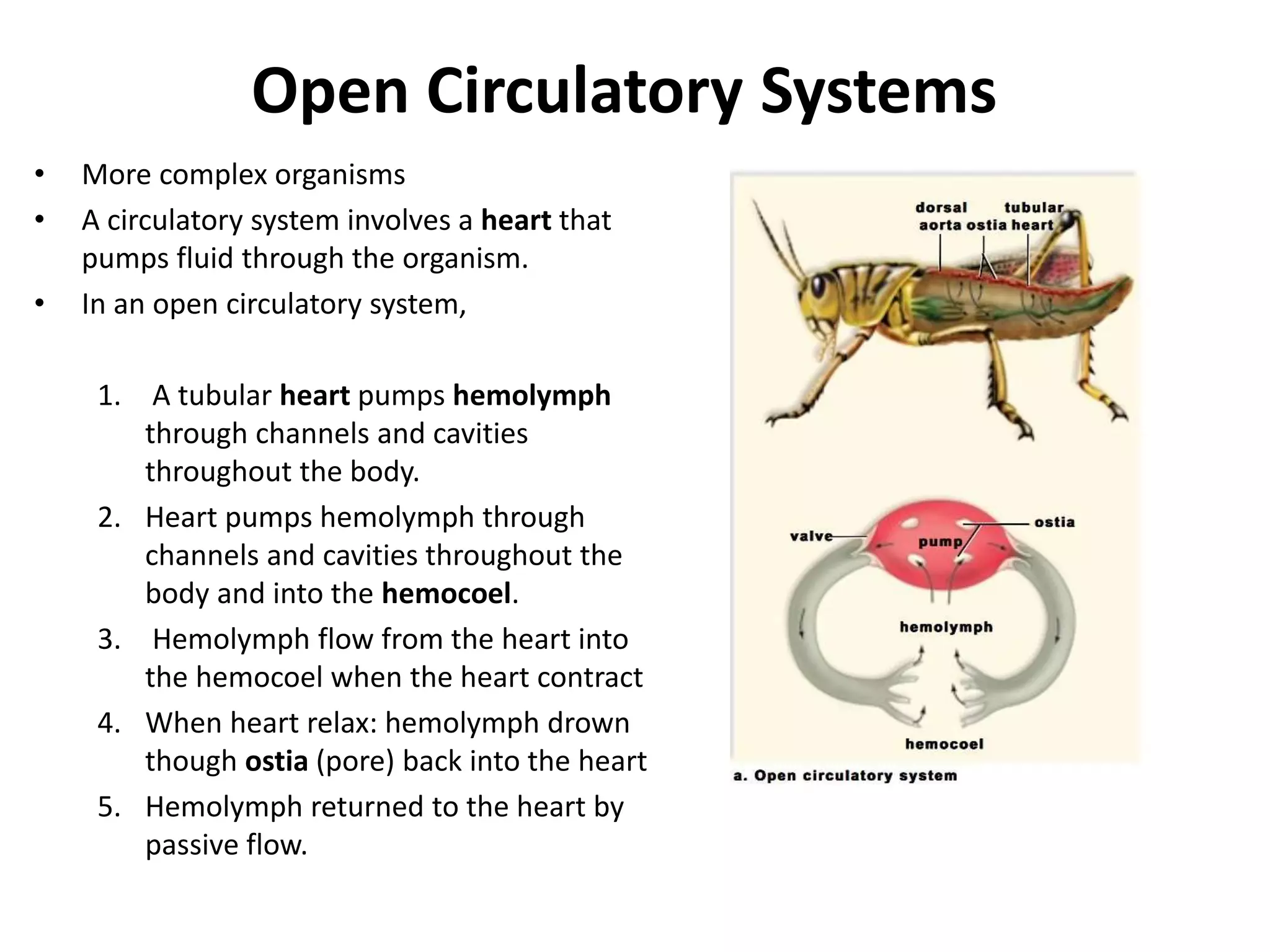
Open Circulatory Systems
• More complex organisms
• A circulatory system involves a heart that
pumps fluid through the organism.
• In an open circulatory system,
1. A tubular heart pumps hemolymph
through channels and cavities
throughout the body.
2. Heart pumps hemolymph through
channels and cavities throughout the
body and into the hemocoel.
3. Hemolymph flow from the heart into
the hemocoel when the heart contract
4. When heart relax: hemolymph drown
though ostia (pore) back into the heart
5. Hemolymph returned to the heart by
passive flow.
Circulatory system
Simple
Open
Closed
Single looped
Double looped
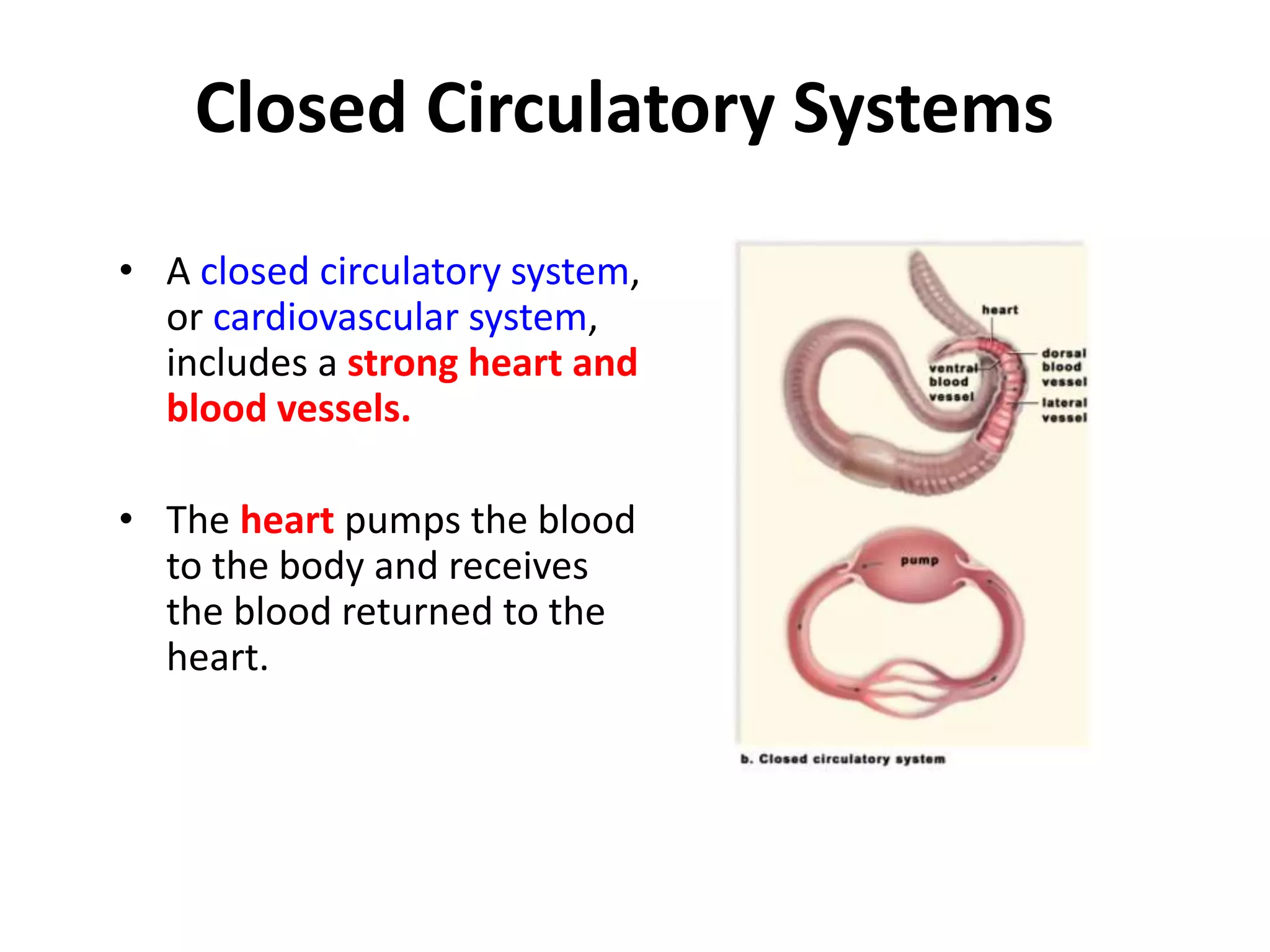
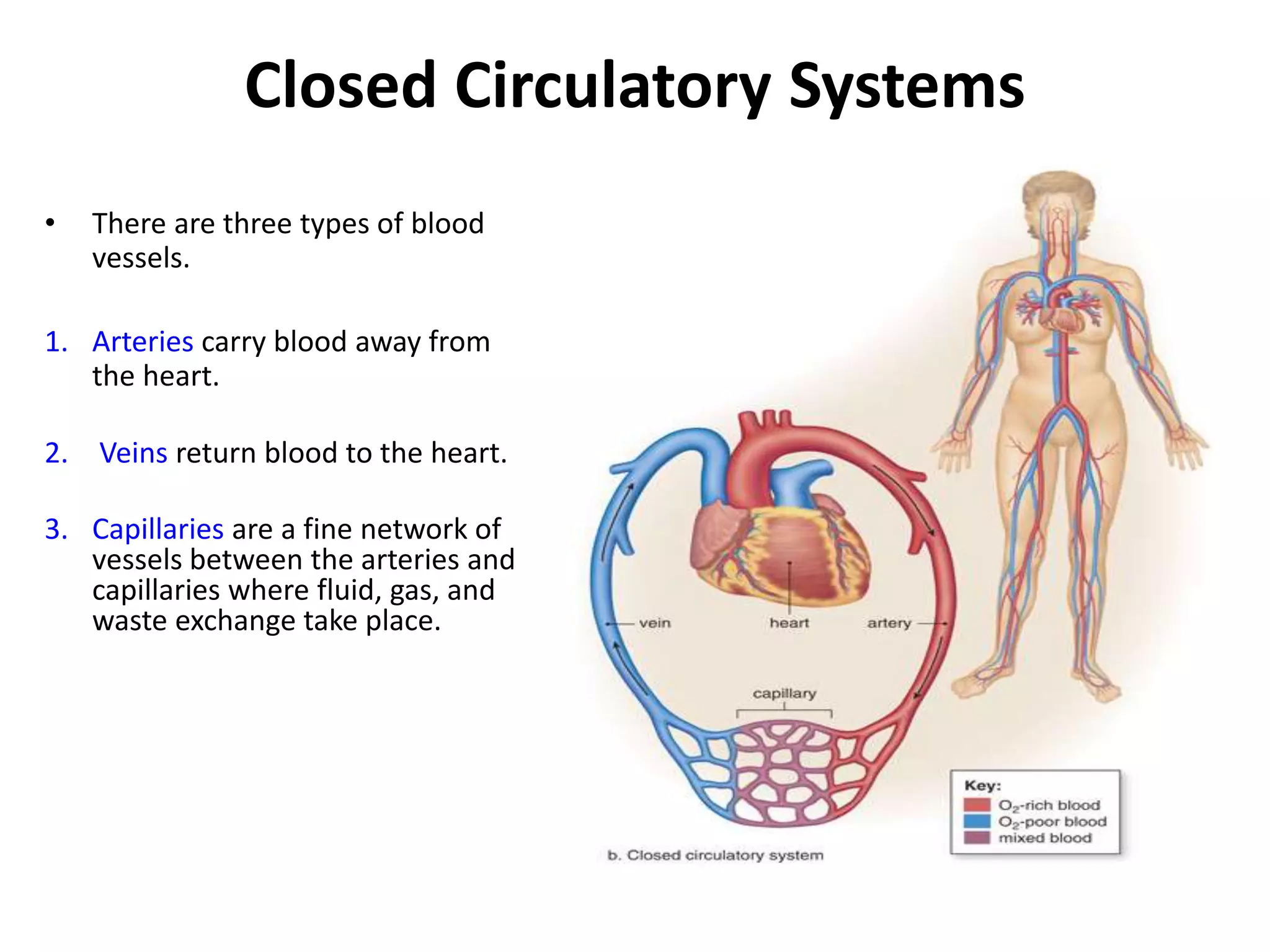
Closed Circulatory Systems
• A closed circulatory system,
or cardiovascular system,
includes a strong heart and
blood vessels.
• The heart pumps the blood
to the body and receives
the blood returned to the
heart.
Closed Circulatory Systems
• There are three types of blood
vessels.
1. Arteries carry blood away from
the heart.
2. Veins return blood to the heart.
3. Capillaries are a fine network of
vessels between the arteries and
capillaries where fluid, gas, and
waste exchange take place.
Circulatory system
Simple
Open
Closed
Single looped
Double looped
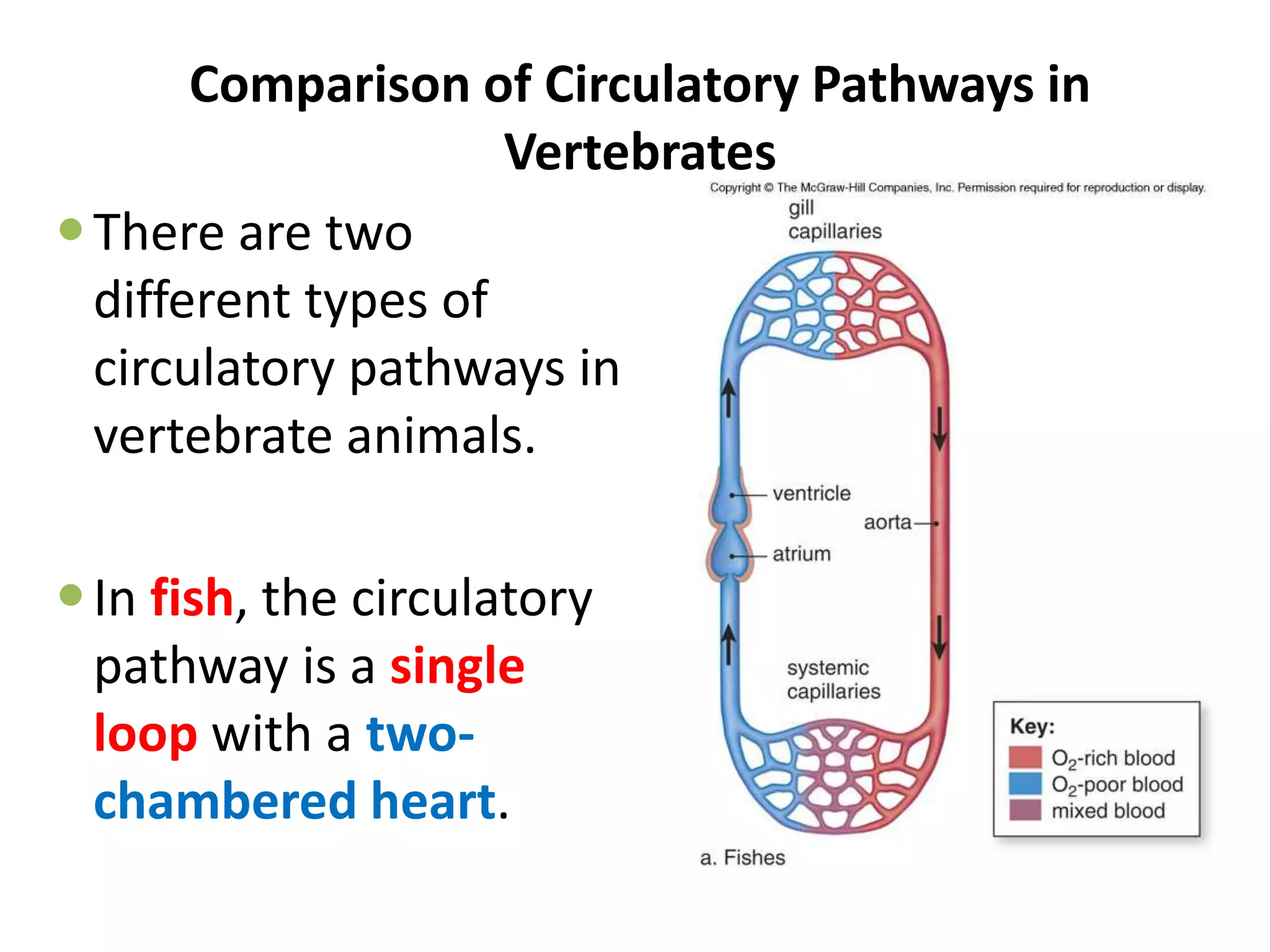
Comparison of Circulatory Pathways in
Vertebrates
There are two
different types of
circulatory pathways in
vertebrate animals.
In fish, the circulatory
pathway is a single
loop with a two-
chambered heart.
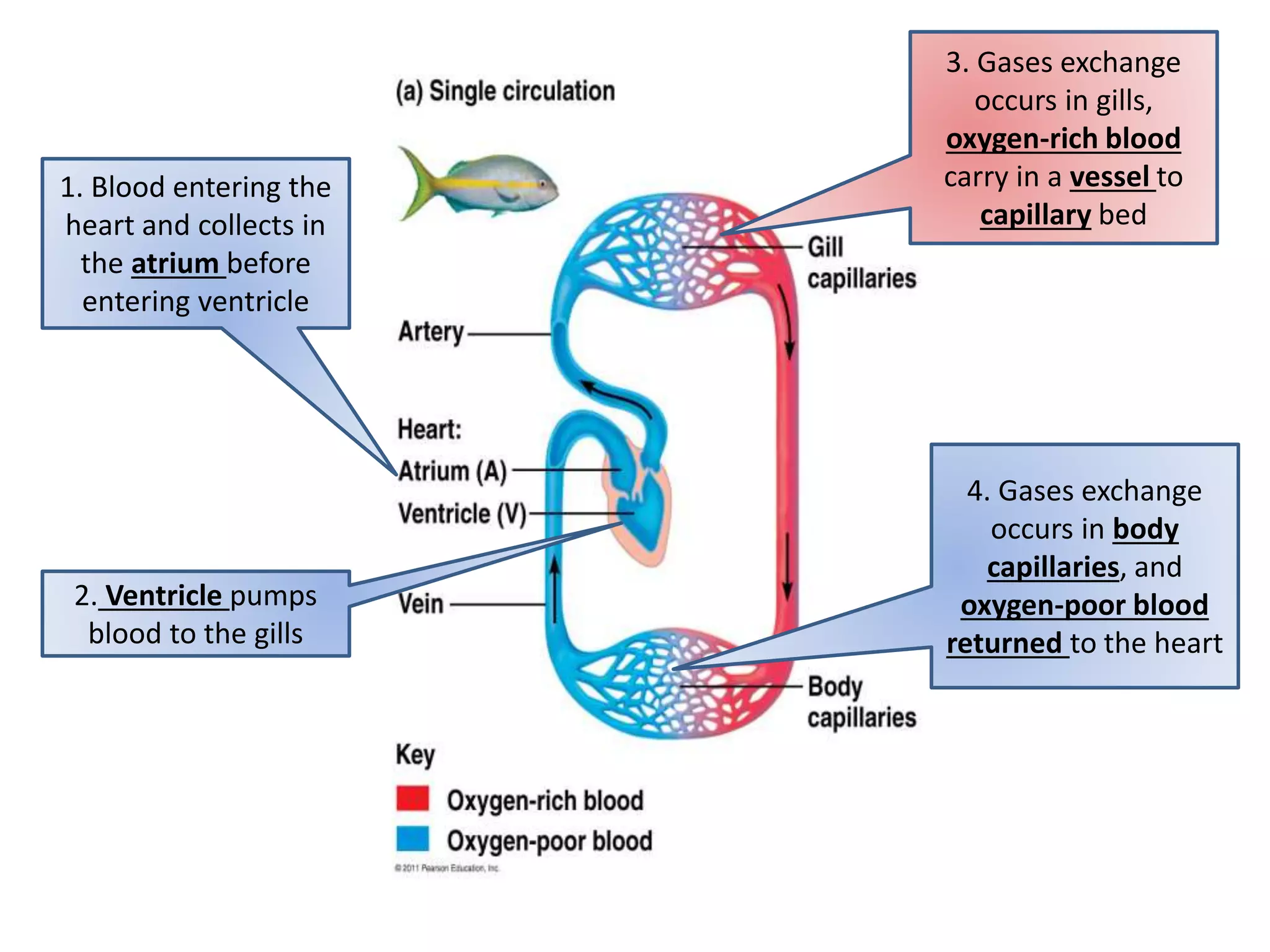
1. Blood entering the
heart and collects in
the atrium before
entering ventricle
2. Ventricle pumps
blood to the gills
3. Gases exchange
occurs in gills,
oxygen-rich blood
carry in a vessel to
capillary bed
4. Gases exchange
occurs in body
capillaries, and
oxygen-poor blood
returned to the heart
Circulatory system
Simple
Open
Closed
Single looped
Double looped
Comparison of Circulatory Pathways
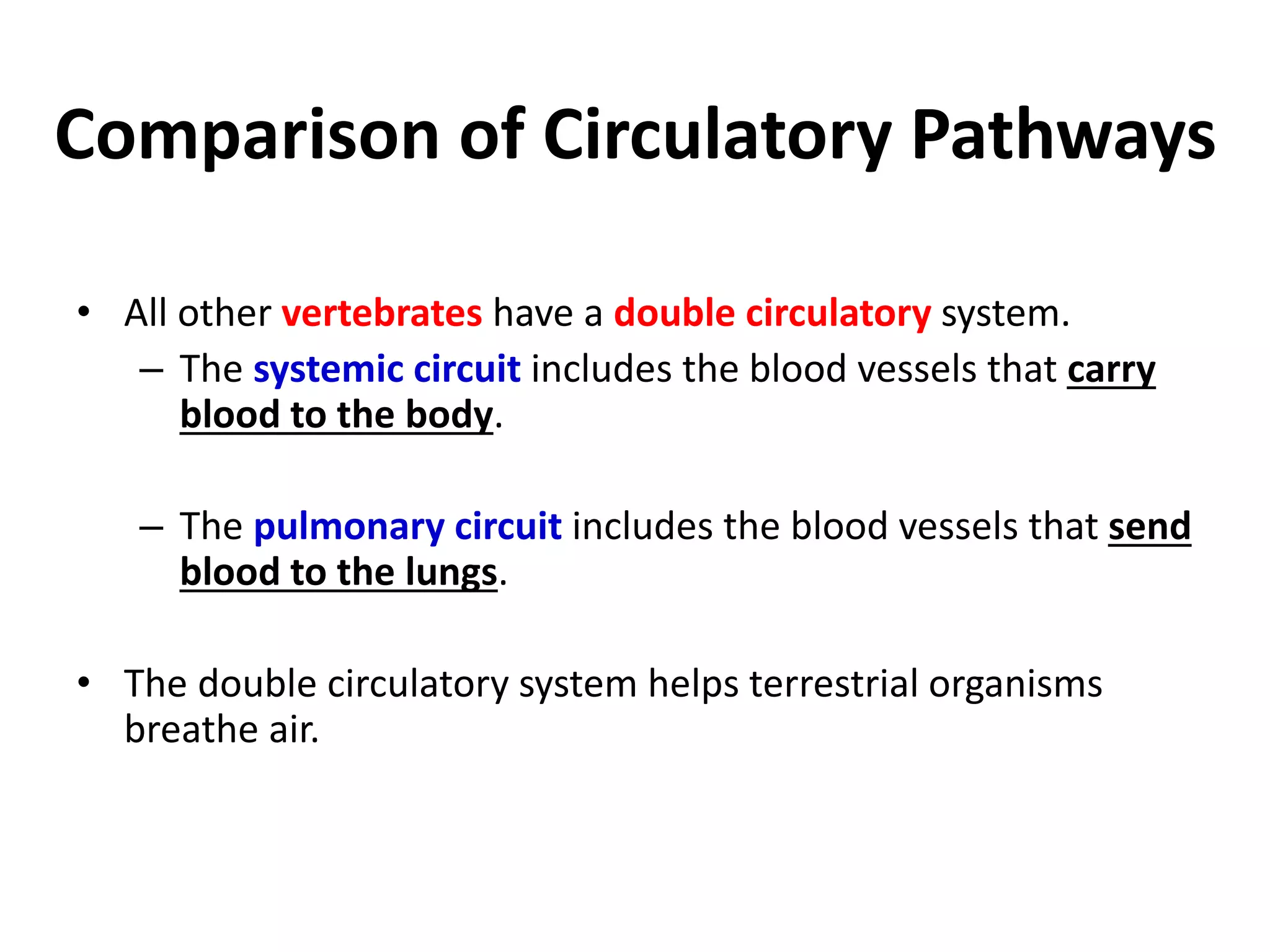
• All other vertebrates have a double circulatory system.
– The systemic circuit includes the blood vessels that carry
blood to the body.
– The pulmonary circuit includes the blood vessels that send
blood to the lungs.
• The double circulatory system helps terrestrial organisms
breathe air.
Comparison of Circulatory Pathways
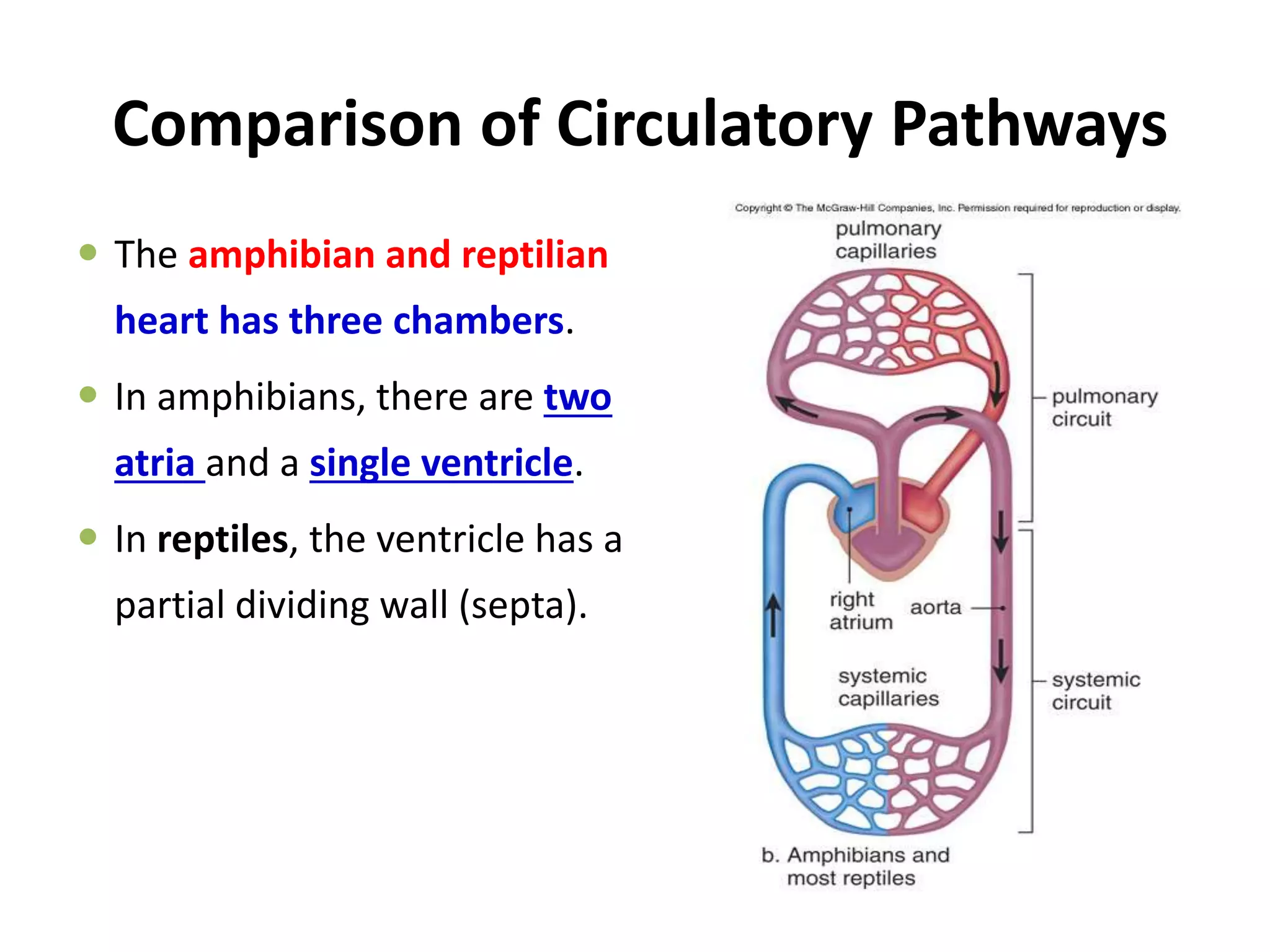
 The amphibian and reptilian
heart has three chambers.
 In amphibians, there are two
atria and a single ventricle.
 In reptiles, the ventricle has a
partial dividing wall (septa).
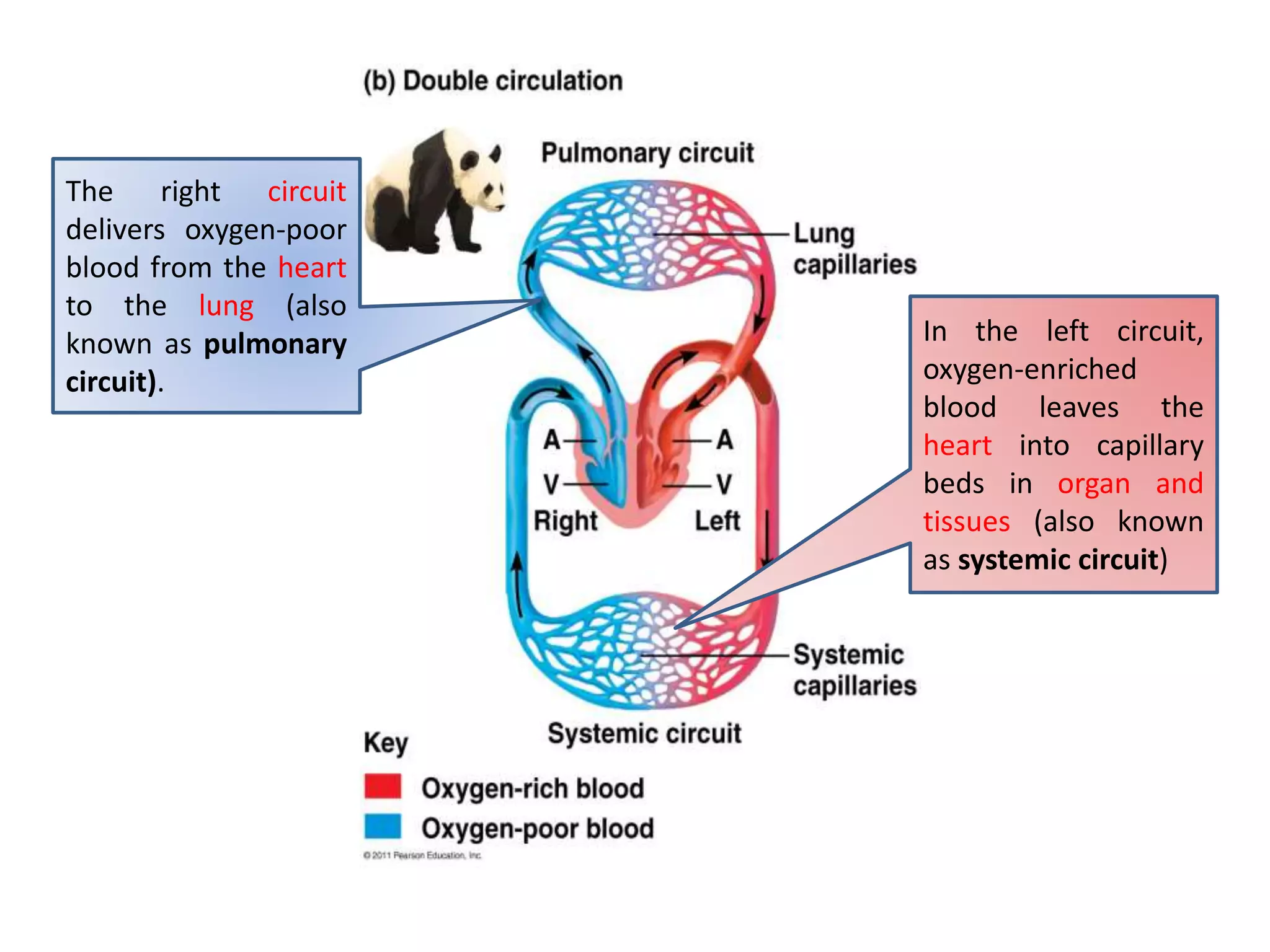
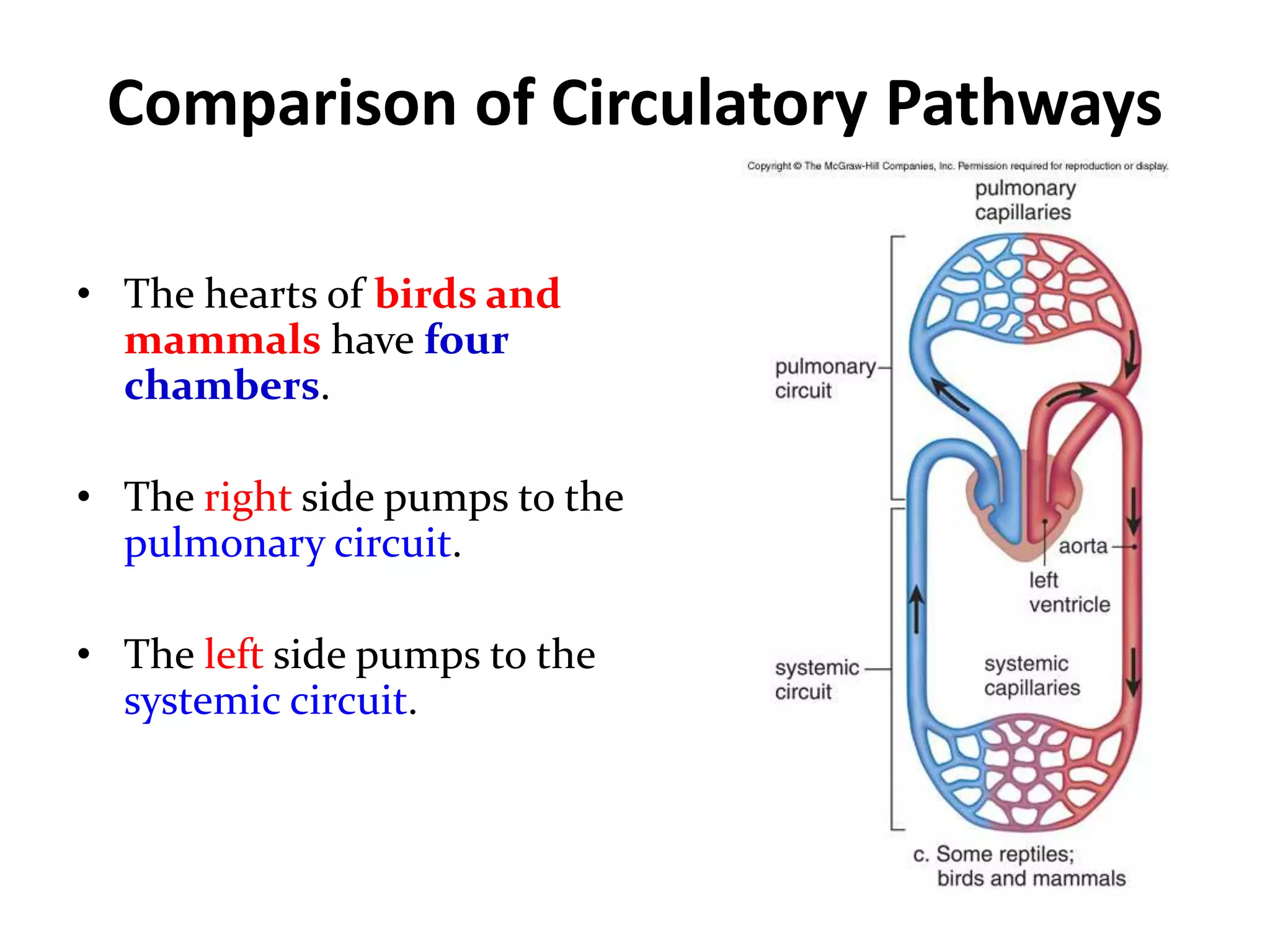
The right circuit
delivers oxygen-poor
blood from the heart
to the lung (also
known as pulmonary
circuit).
In the left circuit,
oxygen-enriched
blood leaves the
heart into capillary
beds in organ and
tissues (also known
as systemic circuit)
Comparison of Circulatory Pathways
• The hearts of birds and
mammals have four
chambers.
• The right side pumps to the
pulmonary circuit.
• The left side pumps to the
systemic circuit.
Transport in Humans
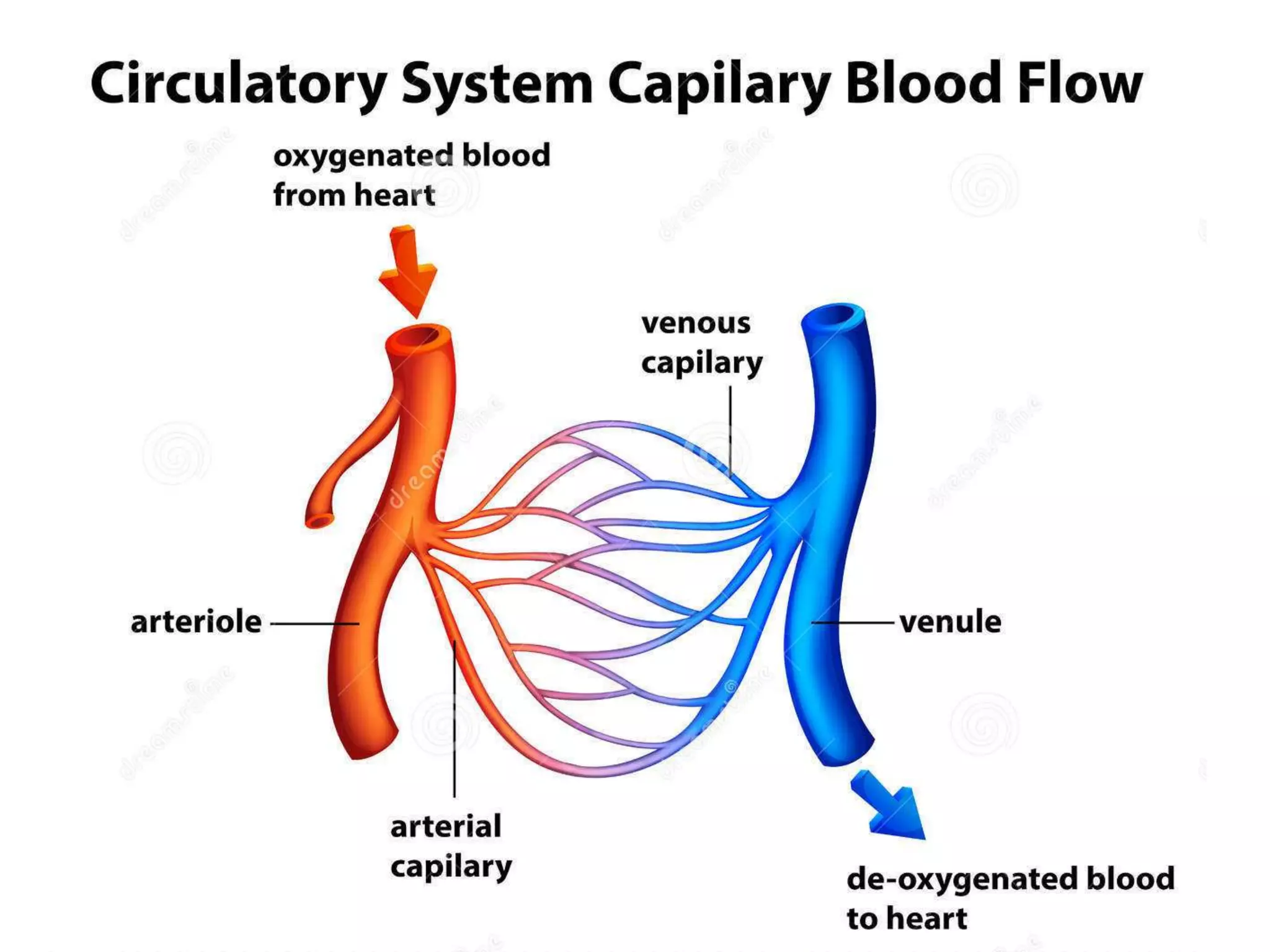
• The mammalian cardiovascular system
pumps blood through the arteries to the
capillaries.
• After gases, nutrients, and wastes are
exchanged in the capillaries, the blood
returns to the heart in the veins.
Heart  Artery  Arterioles  capillaries
Venules Veins  Heart
Blood Vessels: Arteries
• Arteries carry blood (oxygenated blood)
away from the heart.
• The blood pressure is a measure of the
pressure of arterial blood flow.
• The structure of arteries includes muscle
tissue that allows them to expand as the
blood pressure changes.
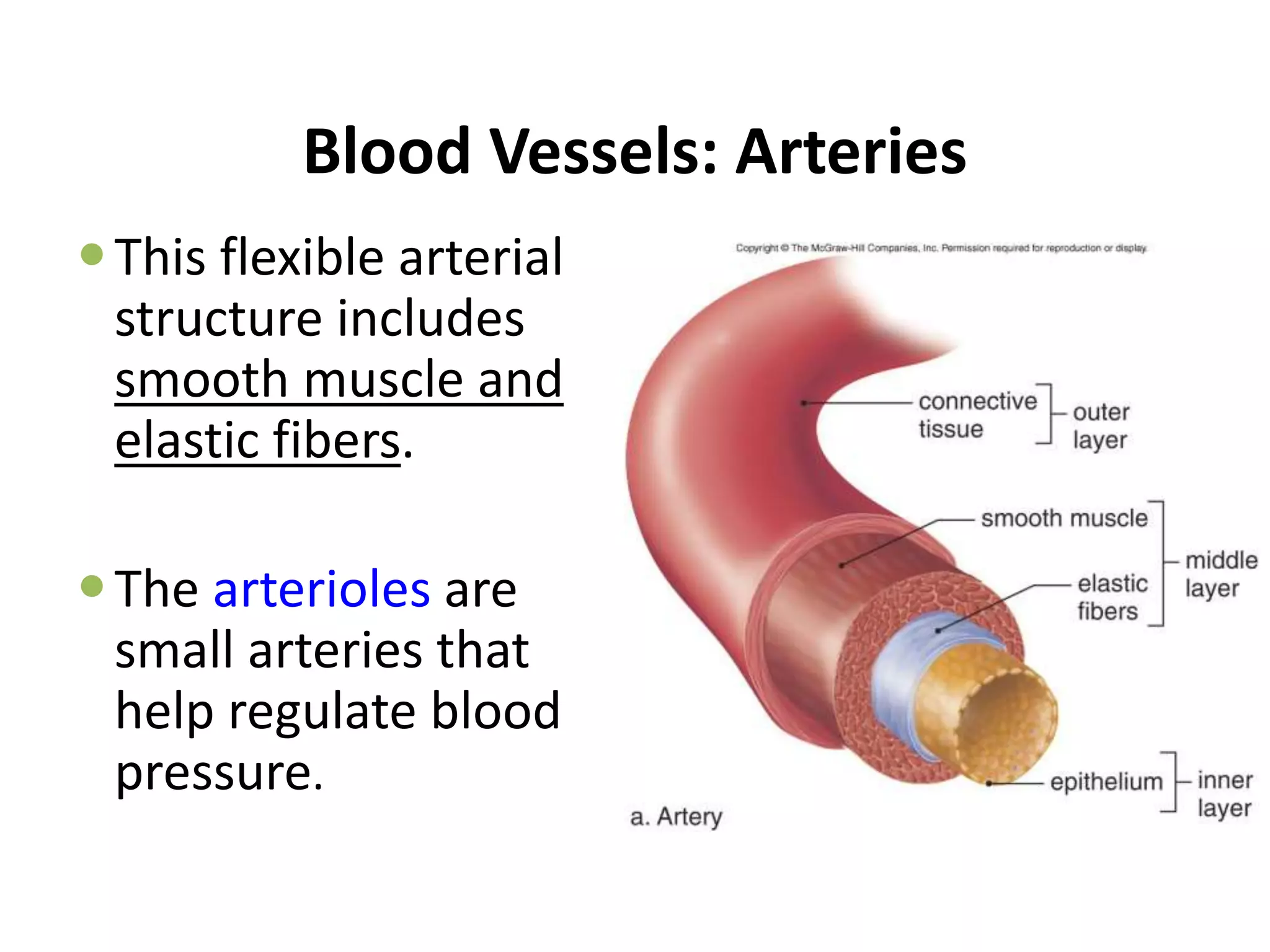
Blood Vessels: Arteries
This flexible arterial
structure includes
smooth muscle and
elastic fibers.
The arterioles are
small arteries that
help regulate blood
pressure.
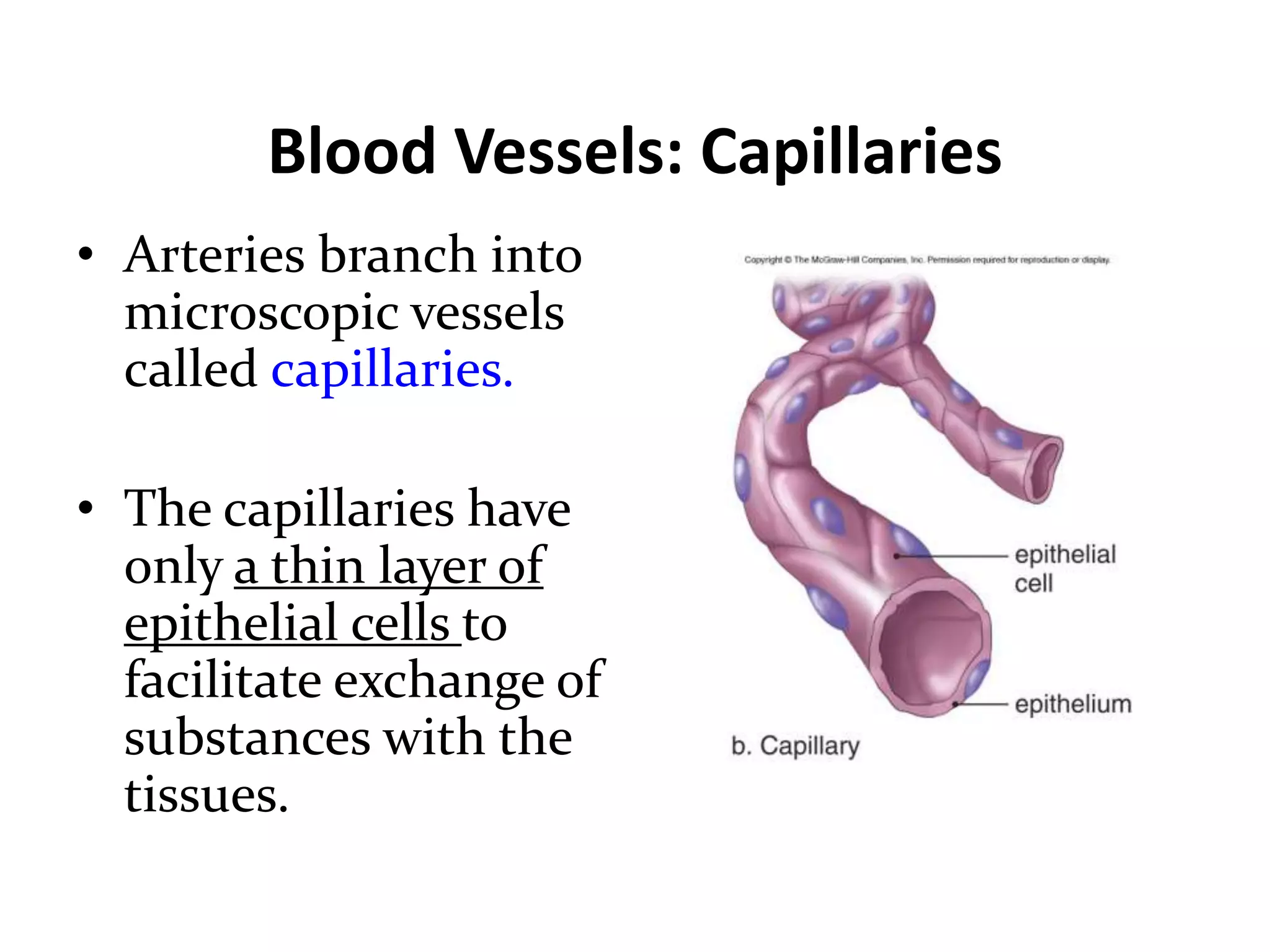
Blood Vessels: Capillaries
• Arteries branch into
microscopic vessels
called capillaries.
• The capillaries have
only a thin layer of
epithelial cells to
facilitate exchange of
substances with the
tissues.
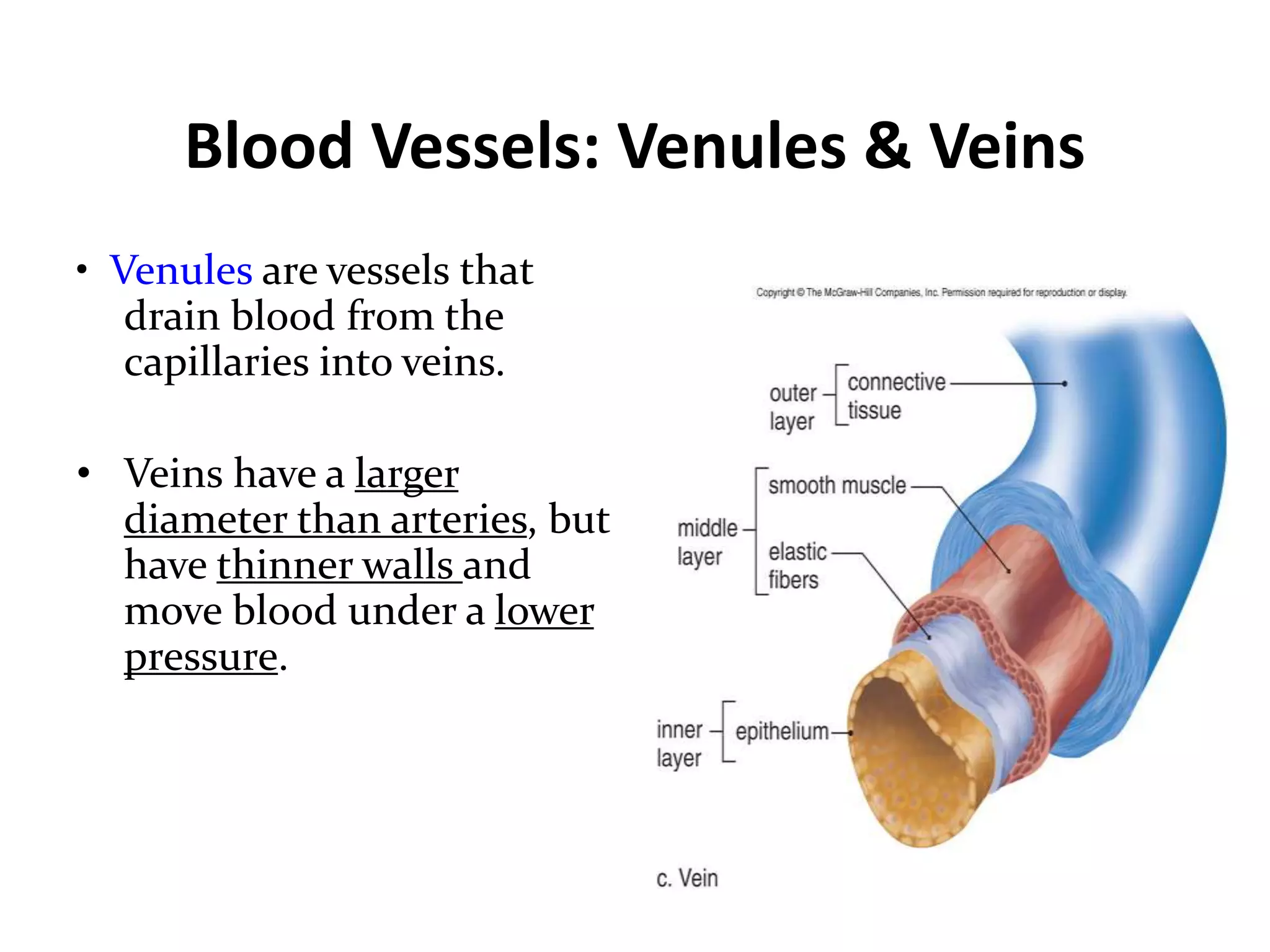
Blood Vessels: Venules & Veins
• Venules are vessels that
drain blood from the
capillaries into veins.
• Veins have a larger
diameter than arteries, but
have thinner walls and
move blood under a lower
pressure.
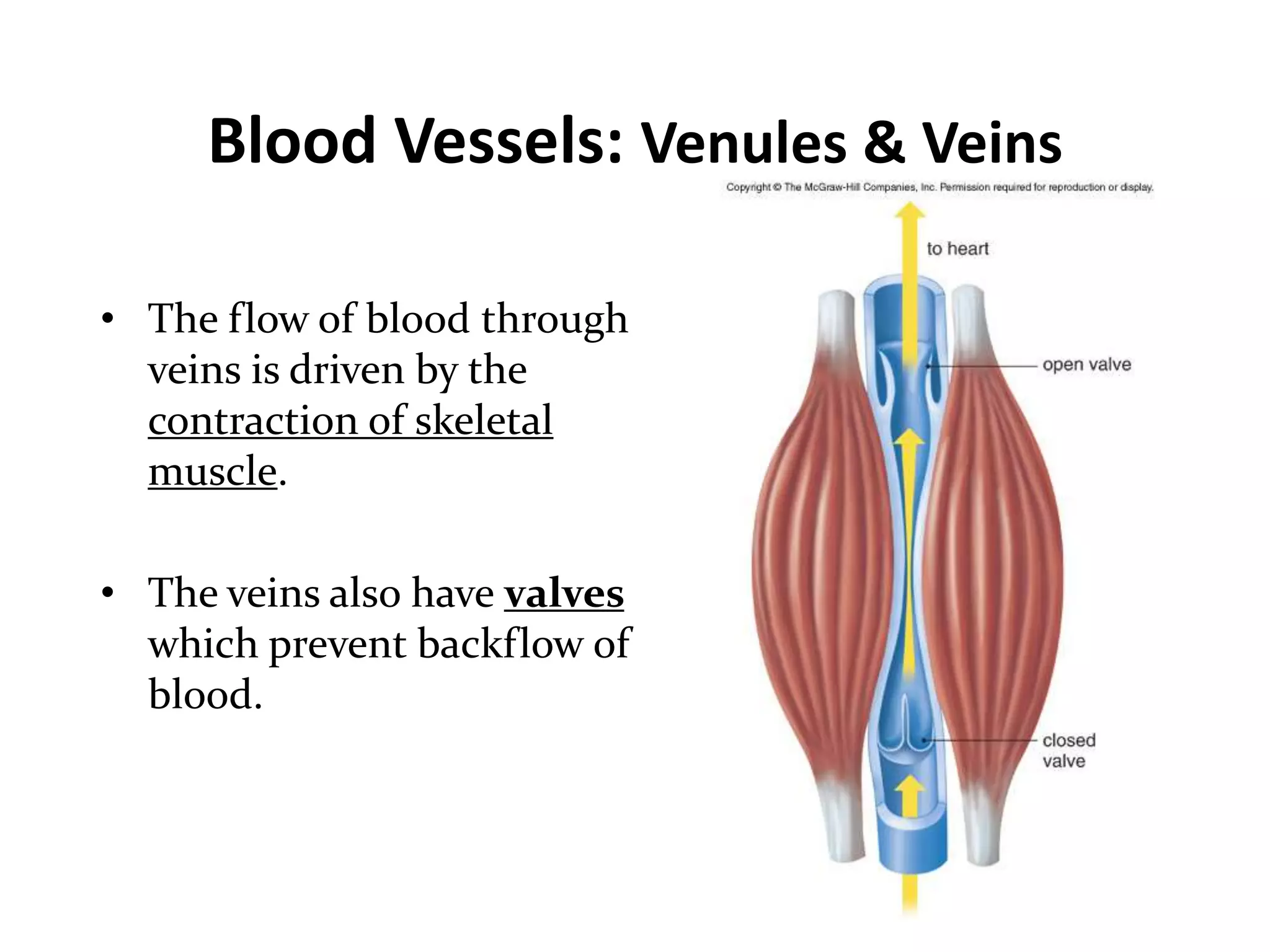
Blood Vessels: Venules & Veins
• The flow of blood through
veins is driven by the
contraction of skeletal
muscle.
• The veins also have valves
which prevent backflow of
blood.
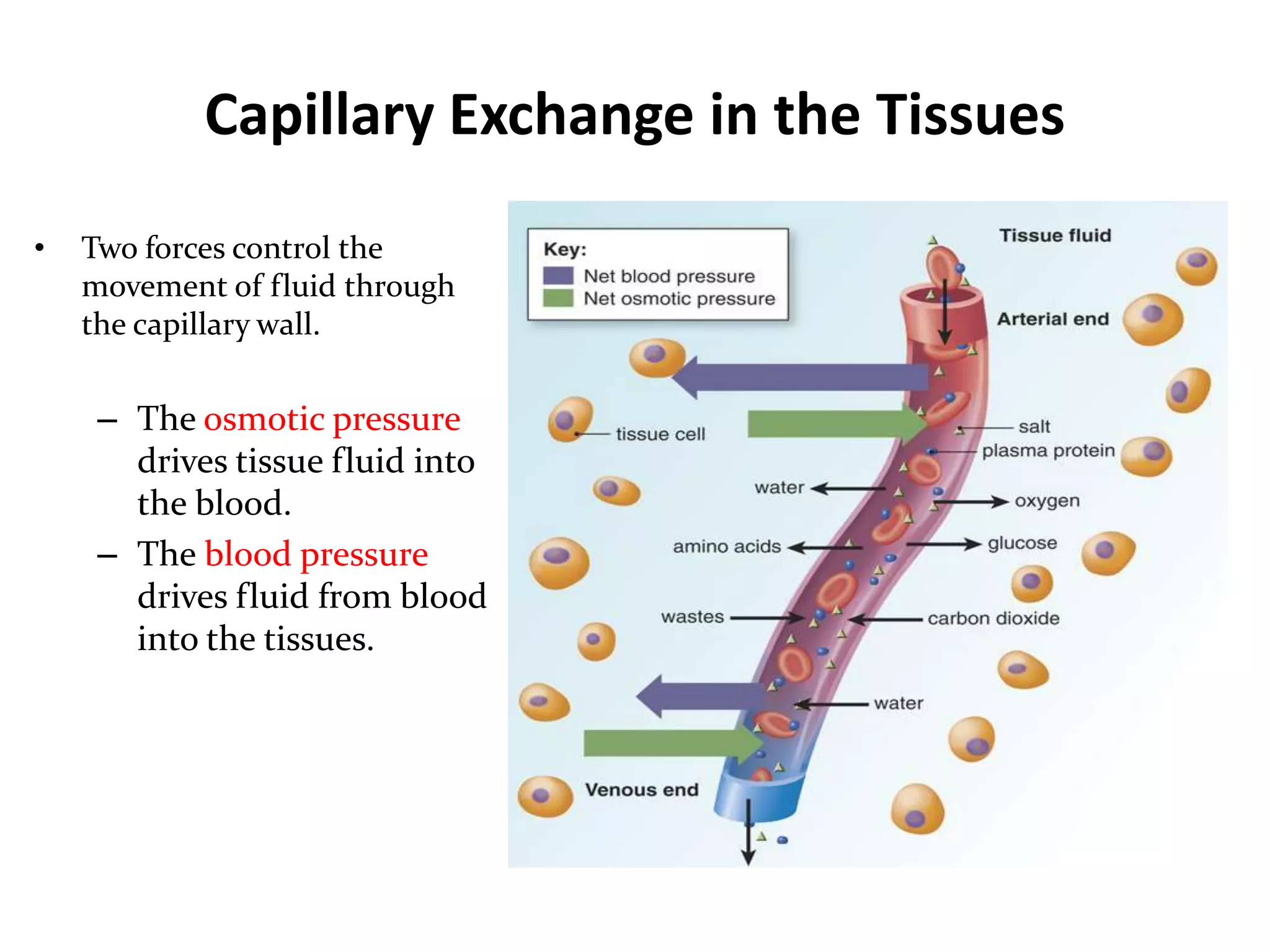
Capillary Exchange in the Tissues
• Two forces control the
movement of fluid through
the capillary wall.
– The osmotic pressure
drives tissue fluid into
the blood.
– The blood pressure
drives fluid from blood
into the tissues.
Capillary Exchange in the Tissues
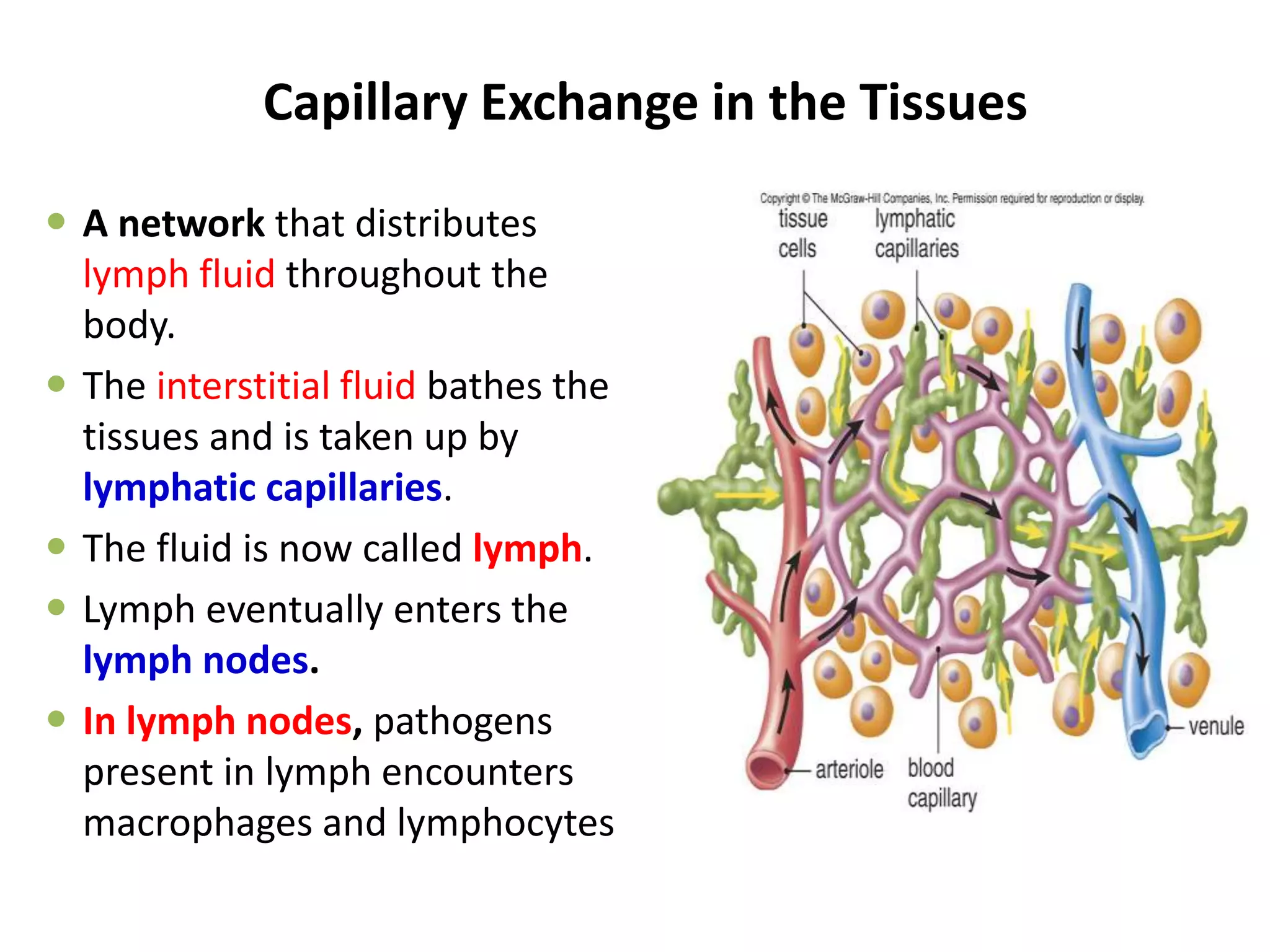
 A network that distributes
lymph fluid throughout the
body.
 The interstitial fluid bathes the
tissues and is taken up by
lymphatic capillaries.
 The fluid is now called lymph.
 Lymph eventually enters the
lymph nodes.
 In lymph nodes, pathogens
present in lymph encounters
macrophages and lymphocytes
Human cardiovascular system
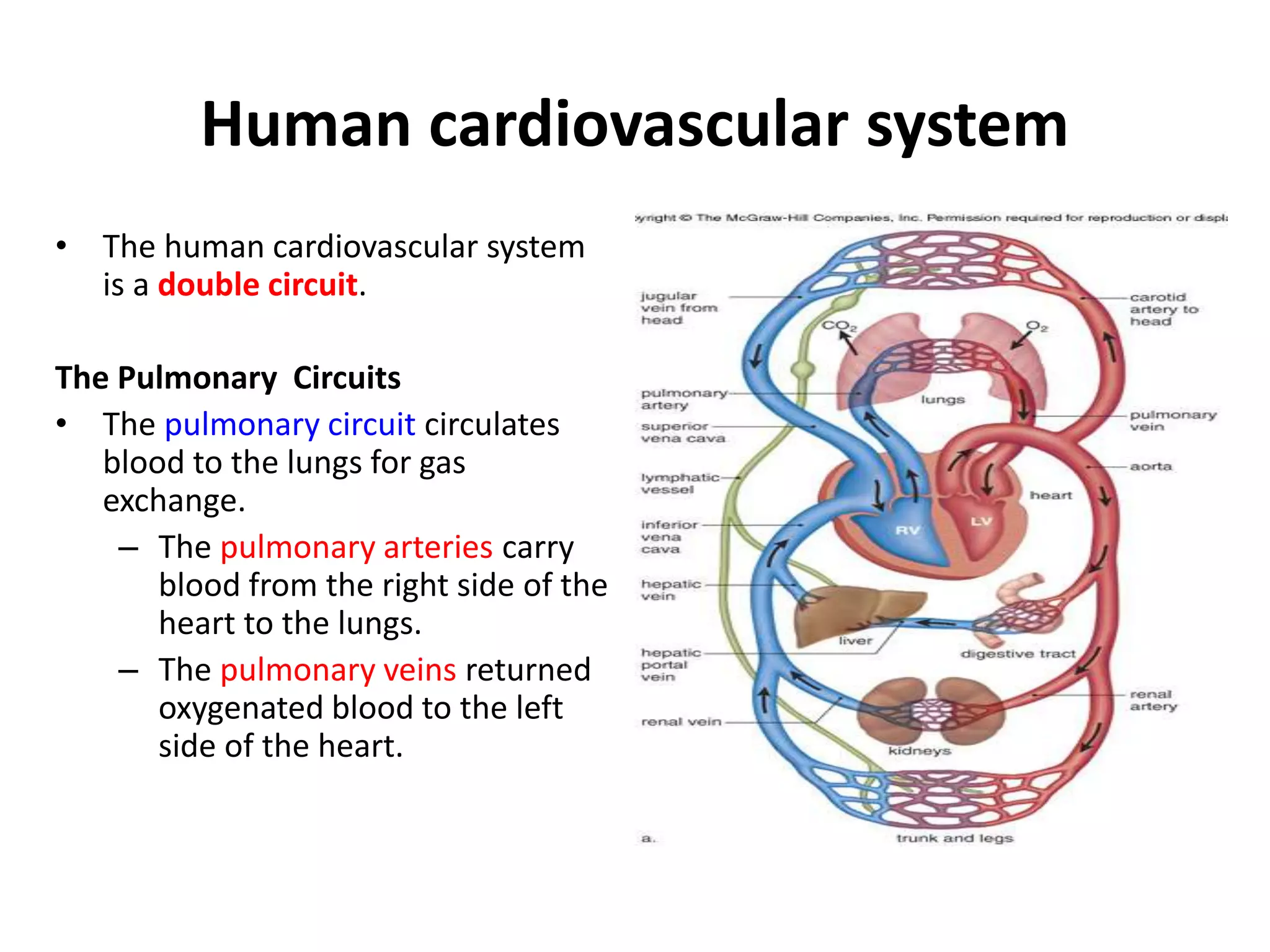
• The human cardiovascular system
is a double circuit.
The Pulmonary Circuits
• The pulmonary circuit circulates
blood to the lungs for gas
exchange.
– The pulmonary arteries carry
blood from the right side of the
heart to the lungs.
– The pulmonary veins returned
oxygenated blood to the left
side of the heart.
The Systemic Circuits
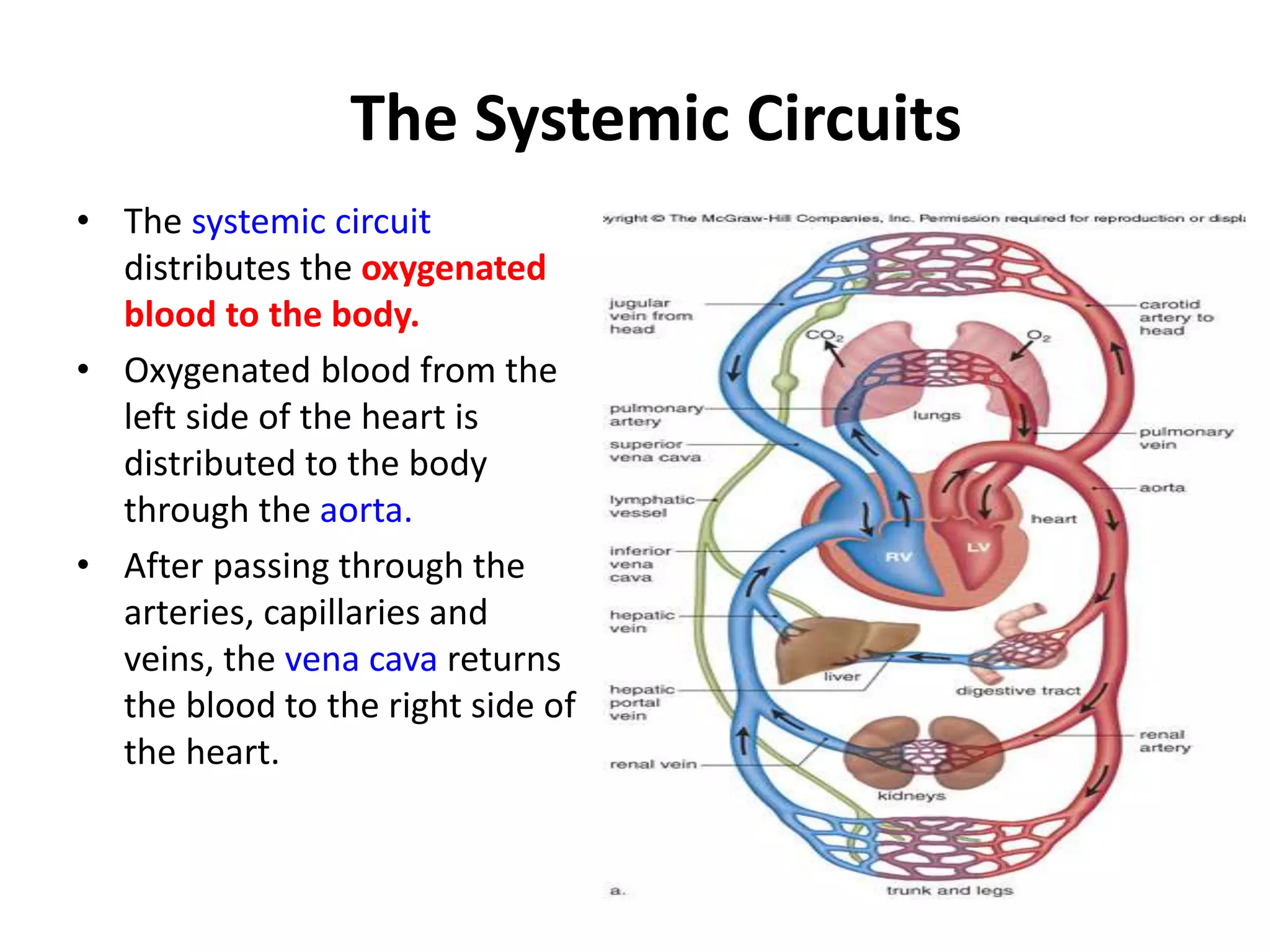
• The systemic circuit
distributes the oxygenated
blood to the body.
• Oxygenated blood from the
left side of the heart is
distributed to the body
through the aorta.
• After passing through the
arteries, capillaries and
veins, the vena cava returns
the blood to the right side of
the heart.
End part 1
• http://www.bbc.co.uk/education/guides/zhnk
7ty/activity

Topic 3 Circulatory System part 1

  • 1.
    TOPIC 3: CIRCULATORY SYSTEM :PART 1 Learning outcomes: 1. Compare open and closed circulatory system 2. Identify different circulatory pathways in vertebrates 3. Explain the composition of human circulatory system and its functions 4. Describe capillary exchange in the tissues 5. Explain the human circulation system 6. Describe blood circulation in human heart 7. Describe the composition and functions of blood 8. Explain the function of lymphatic system 9. Explain the roles of immune system
  • 2.
  • 3.
  • 4.
  • 5.
    Simple Circulatory Systems •Nutrients can diffuse directly across the cells into cavity. • No vessels or blood are required for transportation of nutrients, waste or gases • Hydra and planarians are so small – diffusion provides for the movement of fluids, gases, and wastes. • Nematodes and echinoderms – movement of the organism provides for the movement of the internal fluids.
  • 6.
  • 7.
    Open Circulatory Systems •More complex organisms • A circulatory system involves a heart that pumps fluid through the organism. • In an open circulatory system, 1. A tubular heart pumps hemolymph through channels and cavities throughout the body. 2. Heart pumps hemolymph through channels and cavities throughout the body and into the hemocoel. 3. Hemolymph flow from the heart into the hemocoel when the heart contract 4. When heart relax: hemolymph drown though ostia (pore) back into the heart 5. Hemolymph returned to the heart by passive flow.
  • 8.
  • 9.
    Closed Circulatory Systems •A closed circulatory system, or cardiovascular system, includes a strong heart and blood vessels. • The heart pumps the blood to the body and receives the blood returned to the heart.
  • 10.
    Closed Circulatory Systems •There are three types of blood vessels. 1. Arteries carry blood away from the heart. 2. Veins return blood to the heart. 3. Capillaries are a fine network of vessels between the arteries and capillaries where fluid, gas, and waste exchange take place.
  • 11.
  • 12.
    Comparison of CirculatoryPathways in Vertebrates There are two different types of circulatory pathways in vertebrate animals. In fish, the circulatory pathway is a single loop with a two- chambered heart.
  • 13.
    1. Blood enteringthe heart and collects in the atrium before entering ventricle 2. Ventricle pumps blood to the gills 3. Gases exchange occurs in gills, oxygen-rich blood carry in a vessel to capillary bed 4. Gases exchange occurs in body capillaries, and oxygen-poor blood returned to the heart
  • 14.
  • 15.
    Comparison of CirculatoryPathways • All other vertebrates have a double circulatory system. – The systemic circuit includes the blood vessels that carry blood to the body. – The pulmonary circuit includes the blood vessels that send blood to the lungs. • The double circulatory system helps terrestrial organisms breathe air.
  • 16.
    Comparison of CirculatoryPathways  The amphibian and reptilian heart has three chambers.  In amphibians, there are two atria and a single ventricle.  In reptiles, the ventricle has a partial dividing wall (septa).
  • 17.
    The right circuit deliversoxygen-poor blood from the heart to the lung (also known as pulmonary circuit). In the left circuit, oxygen-enriched blood leaves the heart into capillary beds in organ and tissues (also known as systemic circuit)
  • 18.
    Comparison of CirculatoryPathways • The hearts of birds and mammals have four chambers. • The right side pumps to the pulmonary circuit. • The left side pumps to the systemic circuit.
  • 19.
    Transport in Humans •The mammalian cardiovascular system pumps blood through the arteries to the capillaries. • After gases, nutrients, and wastes are exchanged in the capillaries, the blood returns to the heart in the veins. Heart  Artery  Arterioles  capillaries Venules Veins  Heart
  • 20.
    Blood Vessels: Arteries •Arteries carry blood (oxygenated blood) away from the heart. • The blood pressure is a measure of the pressure of arterial blood flow. • The structure of arteries includes muscle tissue that allows them to expand as the blood pressure changes.
  • 21.
    Blood Vessels: Arteries Thisflexible arterial structure includes smooth muscle and elastic fibers. The arterioles are small arteries that help regulate blood pressure.
  • 22.
    Blood Vessels: Capillaries •Arteries branch into microscopic vessels called capillaries. • The capillaries have only a thin layer of epithelial cells to facilitate exchange of substances with the tissues.
  • 24.
    Blood Vessels: Venules& Veins • Venules are vessels that drain blood from the capillaries into veins. • Veins have a larger diameter than arteries, but have thinner walls and move blood under a lower pressure.
  • 25.
    Blood Vessels: Venules& Veins • The flow of blood through veins is driven by the contraction of skeletal muscle. • The veins also have valves which prevent backflow of blood.
  • 26.
    Capillary Exchange inthe Tissues • Two forces control the movement of fluid through the capillary wall. – The osmotic pressure drives tissue fluid into the blood. – The blood pressure drives fluid from blood into the tissues.
  • 27.
    Capillary Exchange inthe Tissues  A network that distributes lymph fluid throughout the body.  The interstitial fluid bathes the tissues and is taken up by lymphatic capillaries.  The fluid is now called lymph.  Lymph eventually enters the lymph nodes.  In lymph nodes, pathogens present in lymph encounters macrophages and lymphocytes
  • 28.
    Human cardiovascular system •The human cardiovascular system is a double circuit. The Pulmonary Circuits • The pulmonary circuit circulates blood to the lungs for gas exchange. – The pulmonary arteries carry blood from the right side of the heart to the lungs. – The pulmonary veins returned oxygenated blood to the left side of the heart.
  • 29.
    The Systemic Circuits •The systemic circuit distributes the oxygenated blood to the body. • Oxygenated blood from the left side of the heart is distributed to the body through the aorta. • After passing through the arteries, capillaries and veins, the vena cava returns the blood to the right side of the heart.
  • 30.
    End part 1 •http://www.bbc.co.uk/education/guides/zhnk 7ty/activity