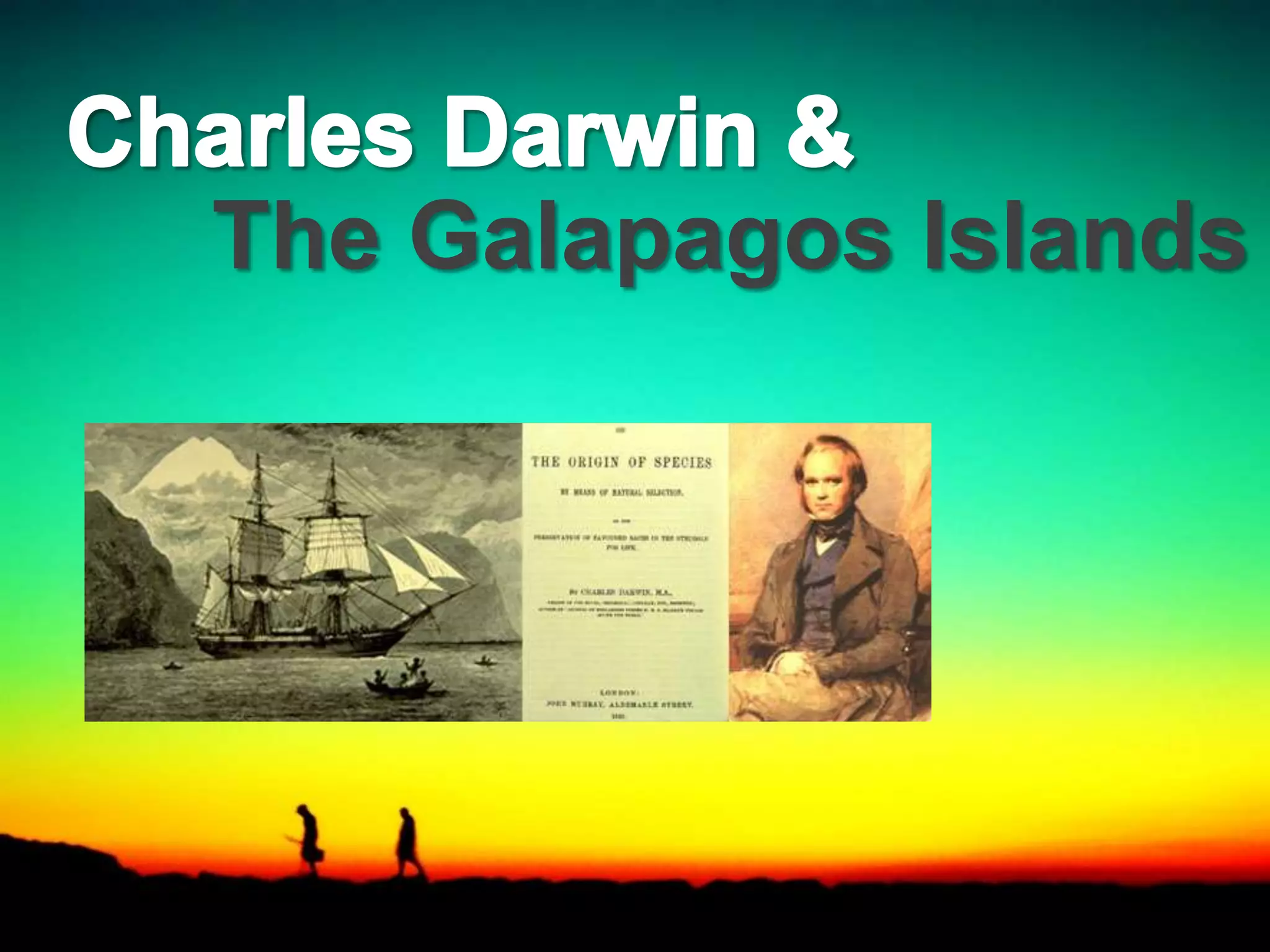
The Galapagos Islands
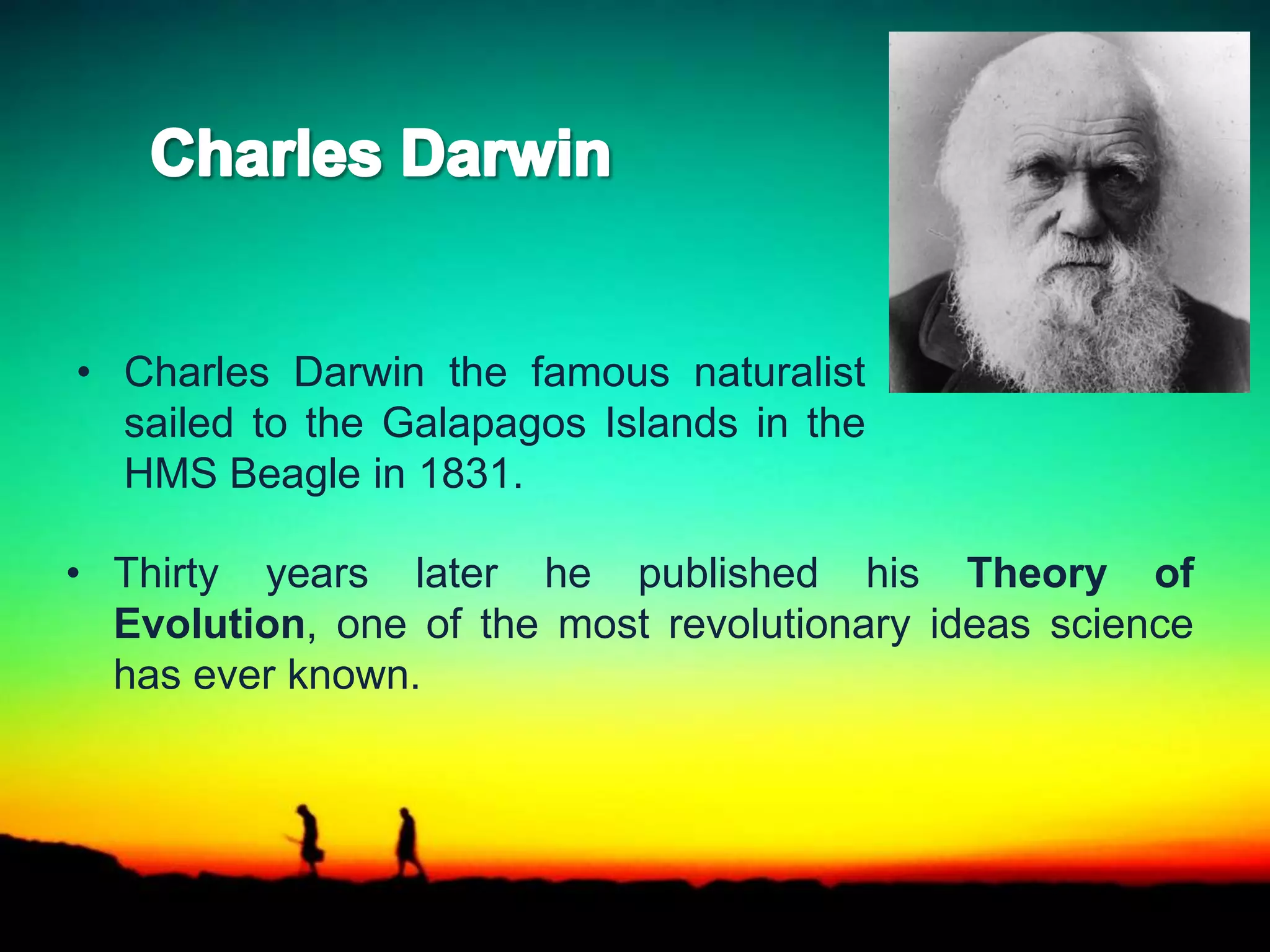
• Charles Darwin the famous naturalist
sailed to the Galapagos Islands in the
HMS Beagle in 1831.
• Thirty years later he published his Theory of
Evolution, one of the most revolutionary ideas science
has ever known.
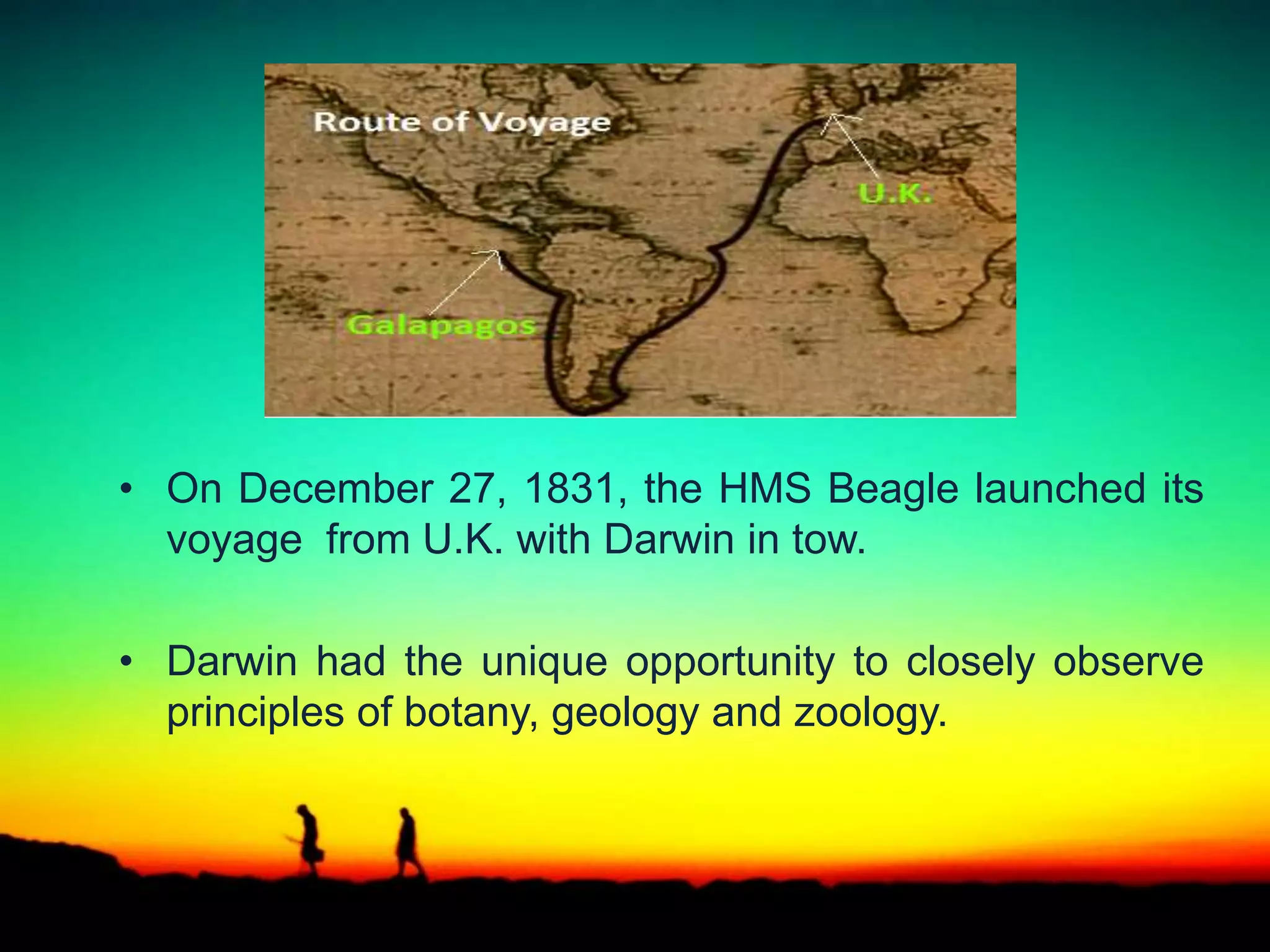
• On December 27, 1831, the HMS Beagle launched its
voyage from U.K. with Darwin in tow.
• Darwin had the unique opportunity to closely observe
principles of botany, geology and zoology.
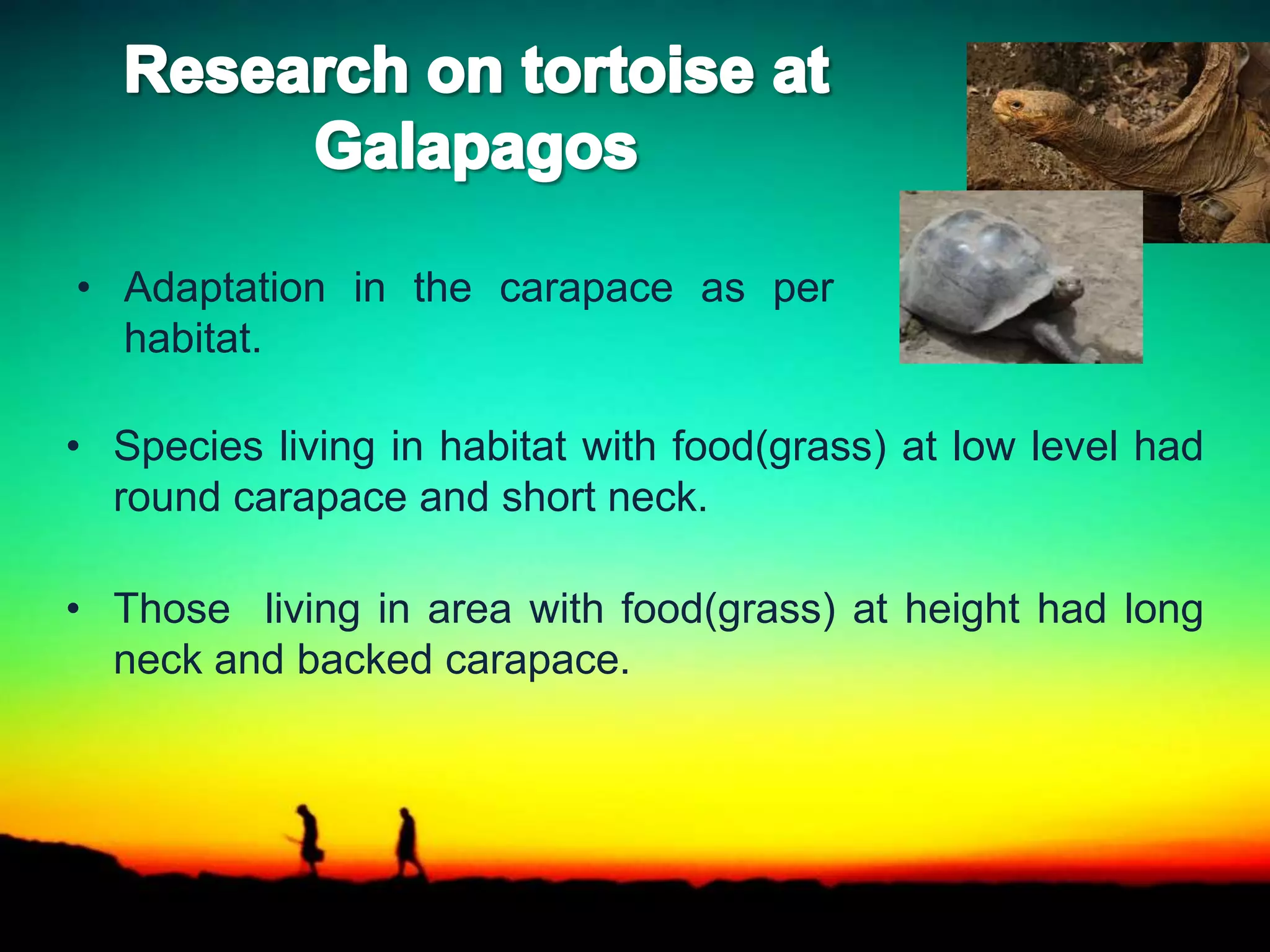
• Adaptation in the carapace as per
habitat.
• Species living in habitat with food(grass) at low level had
round carapace and short neck.
• Those living in area with food(grass) at height had long
neck and backed carapace.
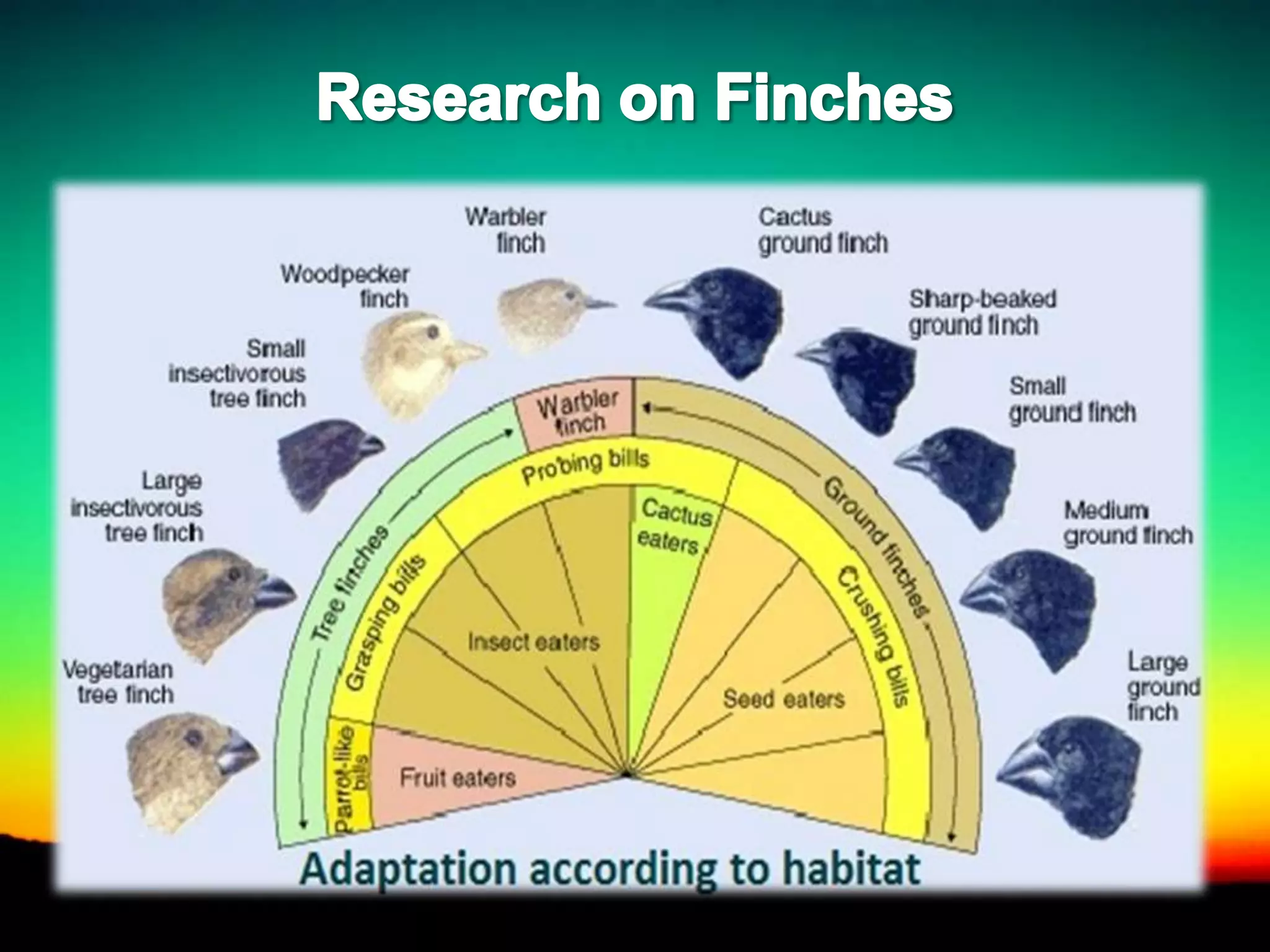
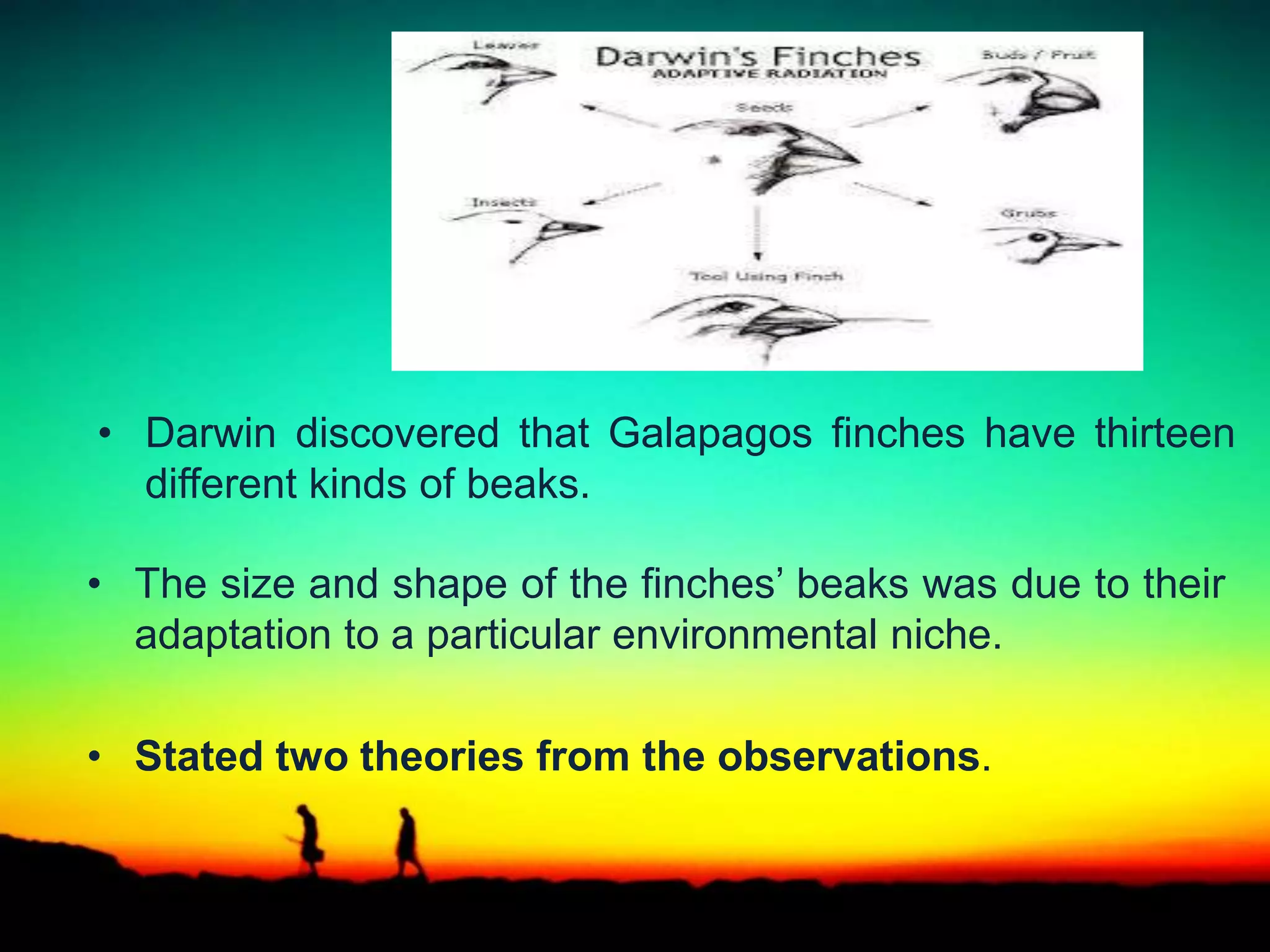
• The size and shape of the finches’ beaks was due to their
adaptation to a particular environmental niche.
• Stated two theories from the observations.
• Darwin discovered that Galapagos finches have thirteen
different kinds of beaks.
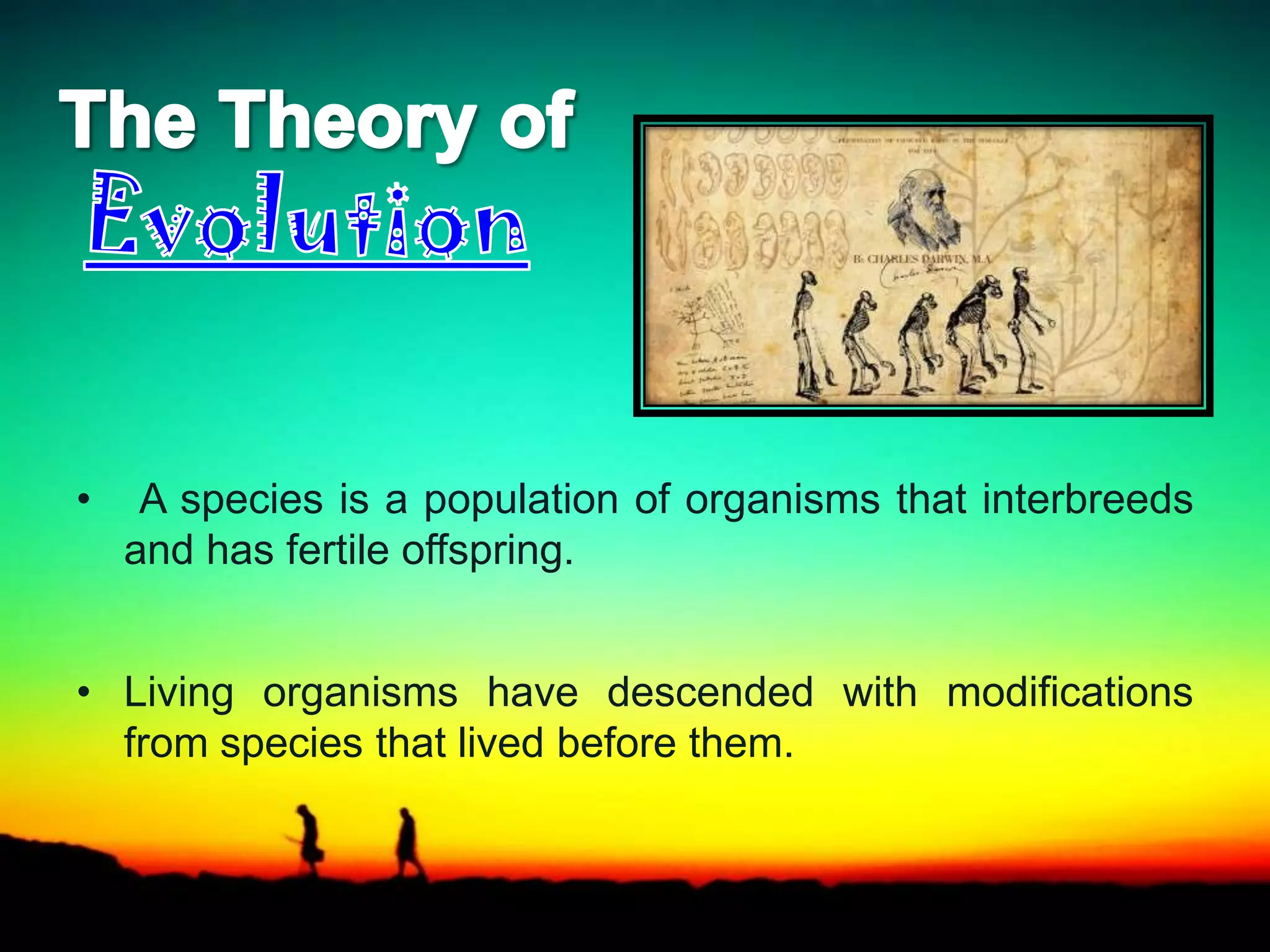
• A species is a population of organisms that interbreeds
and has fertile offspring.
• Living organisms have descended with modifications
from species that lived before them.
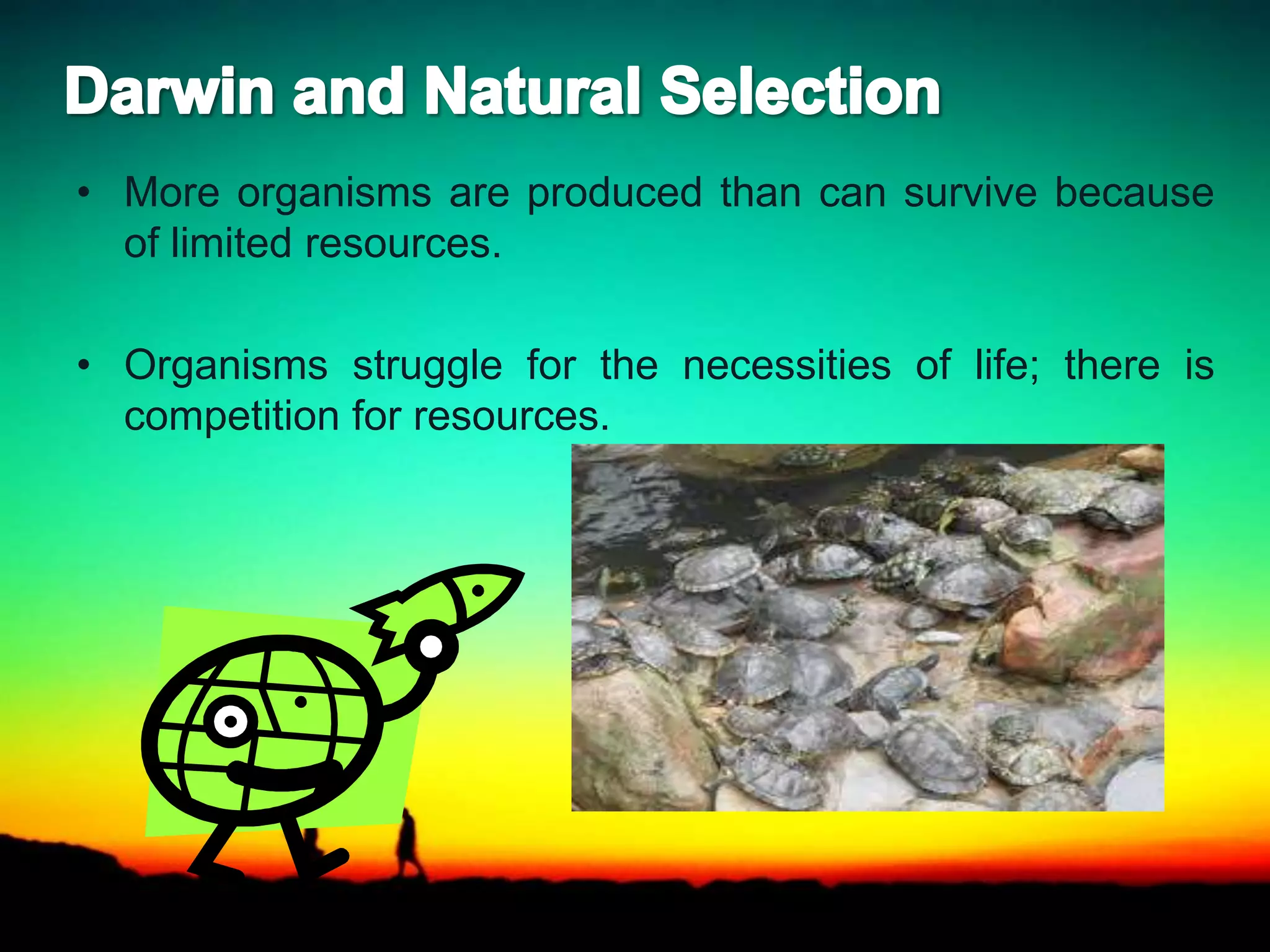
• More organisms are produced than can survive because
of limited resources.
• Organisms struggle for the necessities of life; there is
competition for resources.
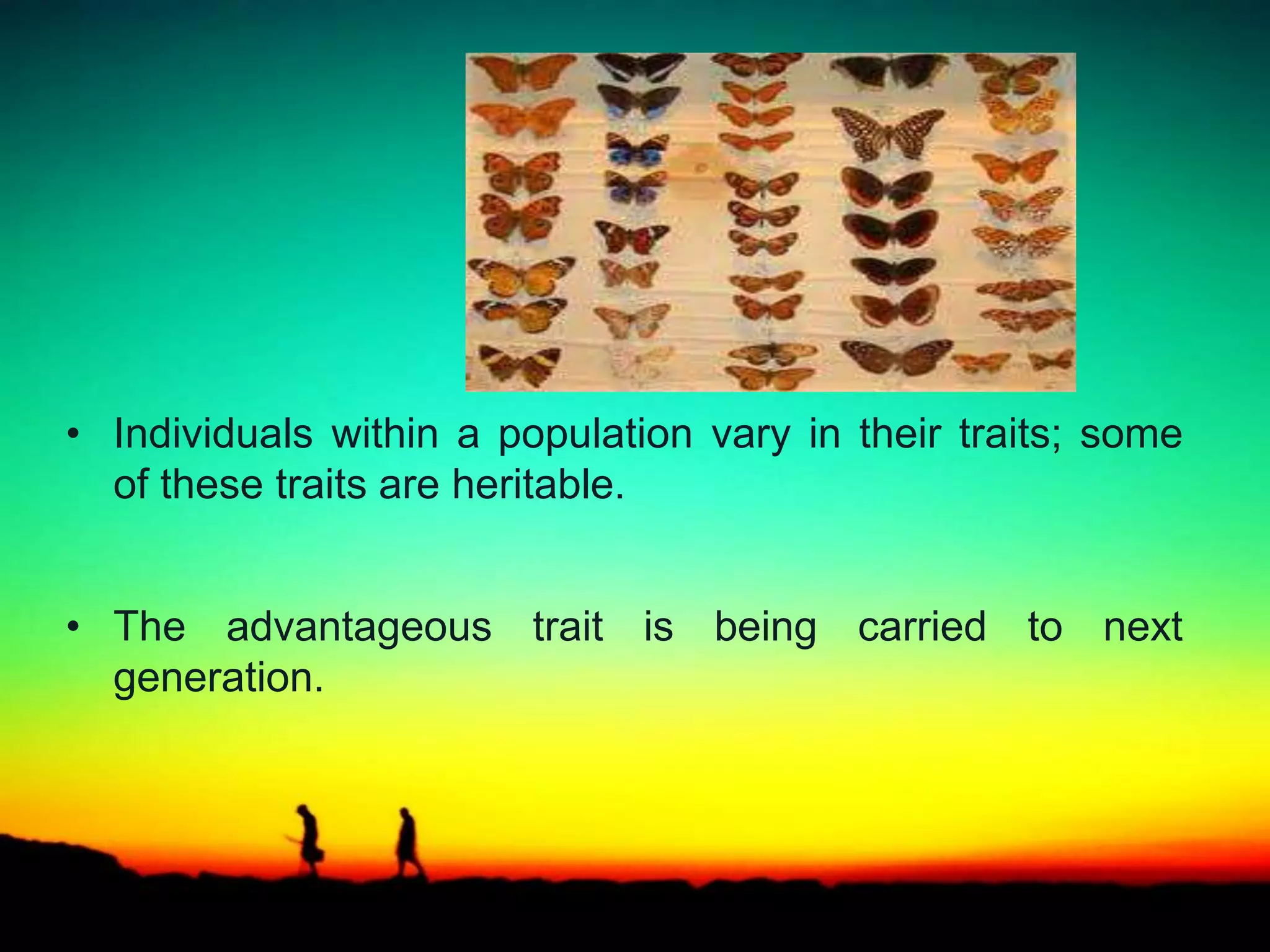
• Individuals within a population vary in their traits; some
of these traits are heritable.
• The advantageous trait is being carried to next
generation.
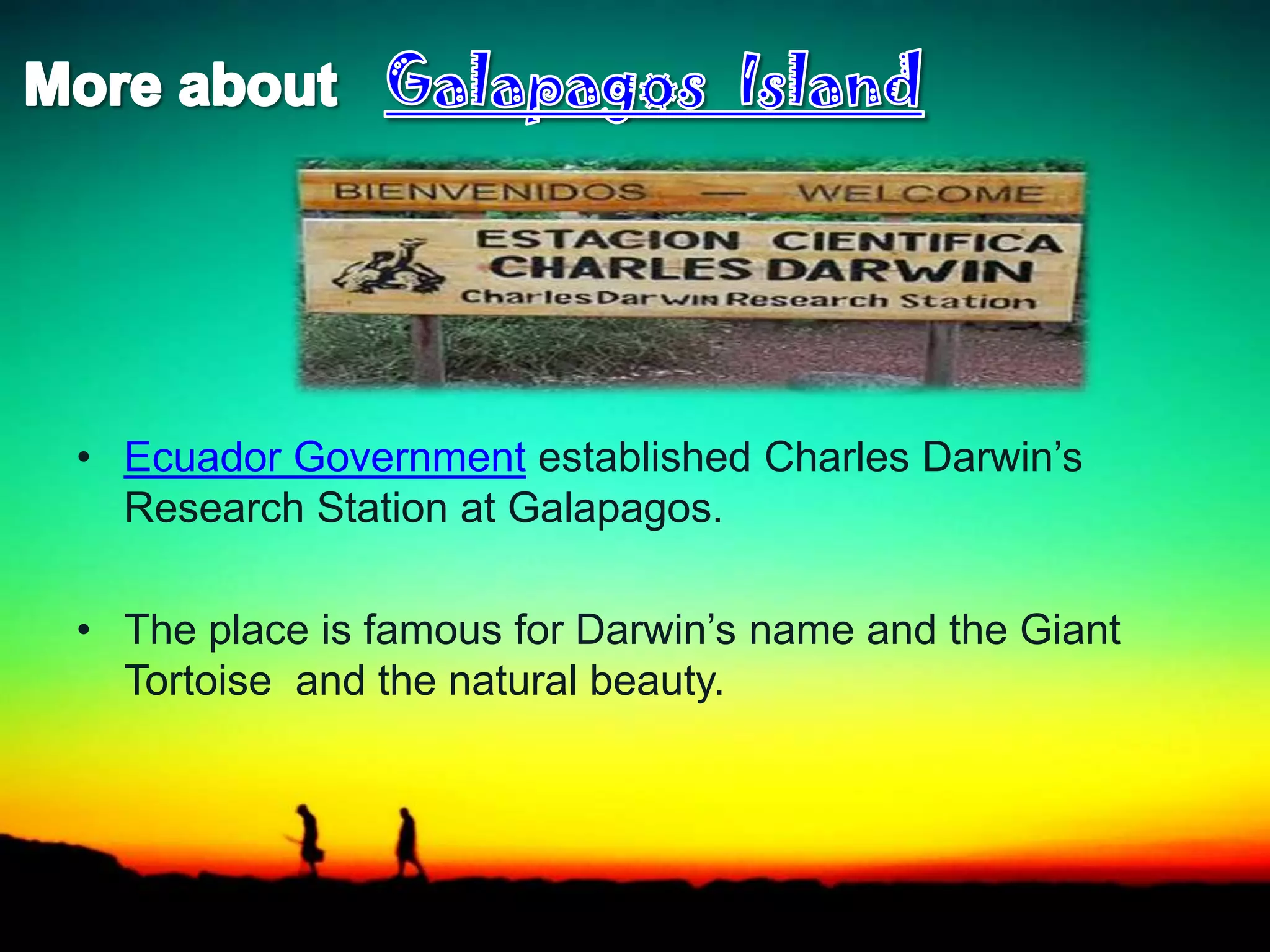
• Ecuador Government established Charles Darwin’s
Research Station at Galapagos.
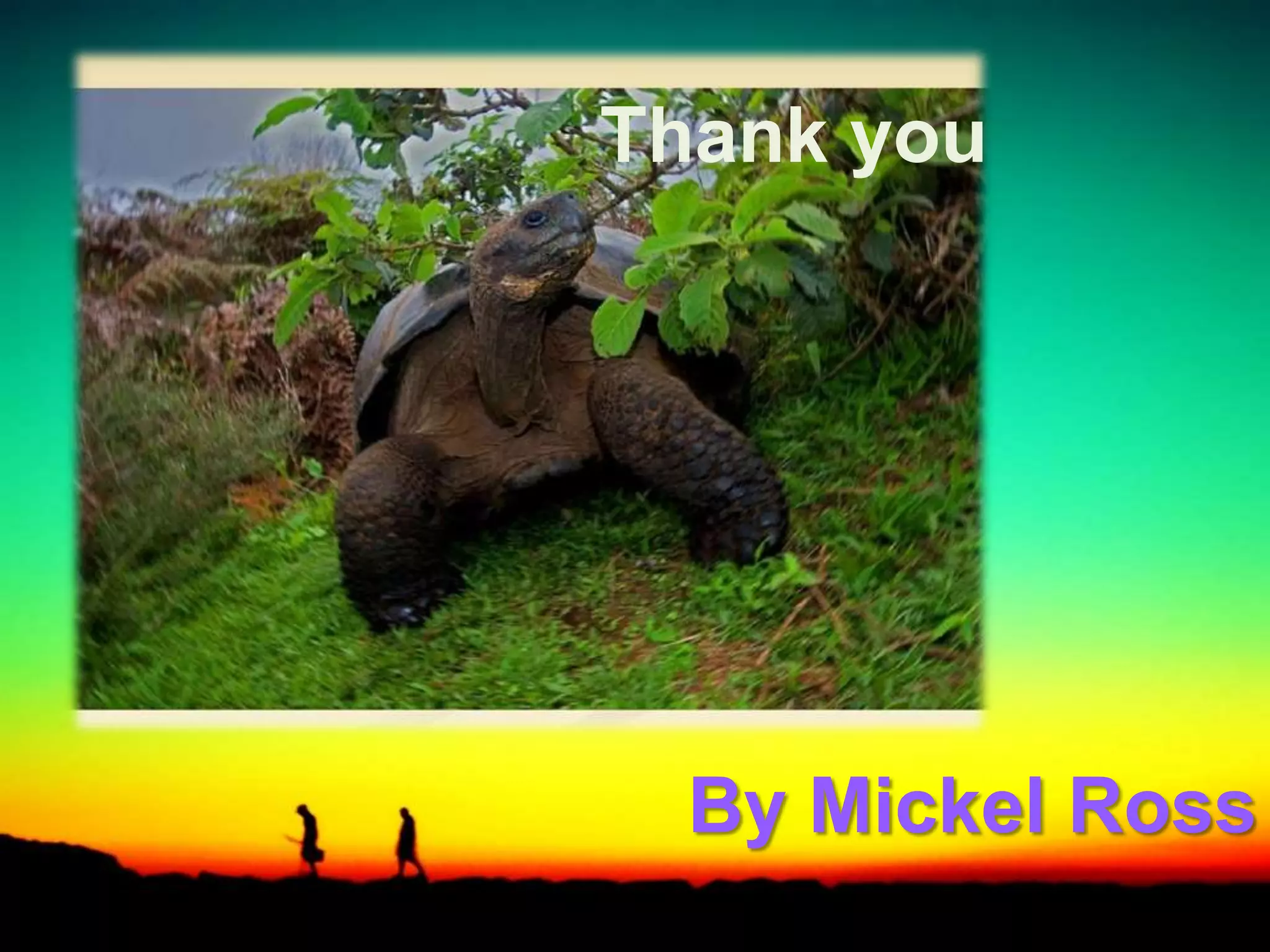
• The place is famous for Darwin’s name and the Giant
Tortoise and the natural beauty.
Thank you
By Mickel Ross

Charles darwin & The Galapagos Islands

  • 1.
  • 2.
    • Charles Darwinthe famous naturalist sailed to the Galapagos Islands in the HMS Beagle in 1831. • Thirty years later he published his Theory of Evolution, one of the most revolutionary ideas science has ever known.
  • 3.
    • On December27, 1831, the HMS Beagle launched its voyage from U.K. with Darwin in tow. • Darwin had the unique opportunity to closely observe principles of botany, geology and zoology.
  • 4.
    • Adaptation inthe carapace as per habitat. • Species living in habitat with food(grass) at low level had round carapace and short neck. • Those living in area with food(grass) at height had long neck and backed carapace.
  • 6.
    • The sizeand shape of the finches’ beaks was due to their adaptation to a particular environmental niche. • Stated two theories from the observations. • Darwin discovered that Galapagos finches have thirteen different kinds of beaks.
  • 7.
    • A speciesis a population of organisms that interbreeds and has fertile offspring. • Living organisms have descended with modifications from species that lived before them.
  • 8.
    • More organismsare produced than can survive because of limited resources. • Organisms struggle for the necessities of life; there is competition for resources.
  • 9.
    • Individuals withina population vary in their traits; some of these traits are heritable. • The advantageous trait is being carried to next generation.
  • 10.
    • Ecuador Governmentestablished Charles Darwin’s Research Station at Galapagos. • The place is famous for Darwin’s name and the Giant Tortoise and the natural beauty.
  • 11.