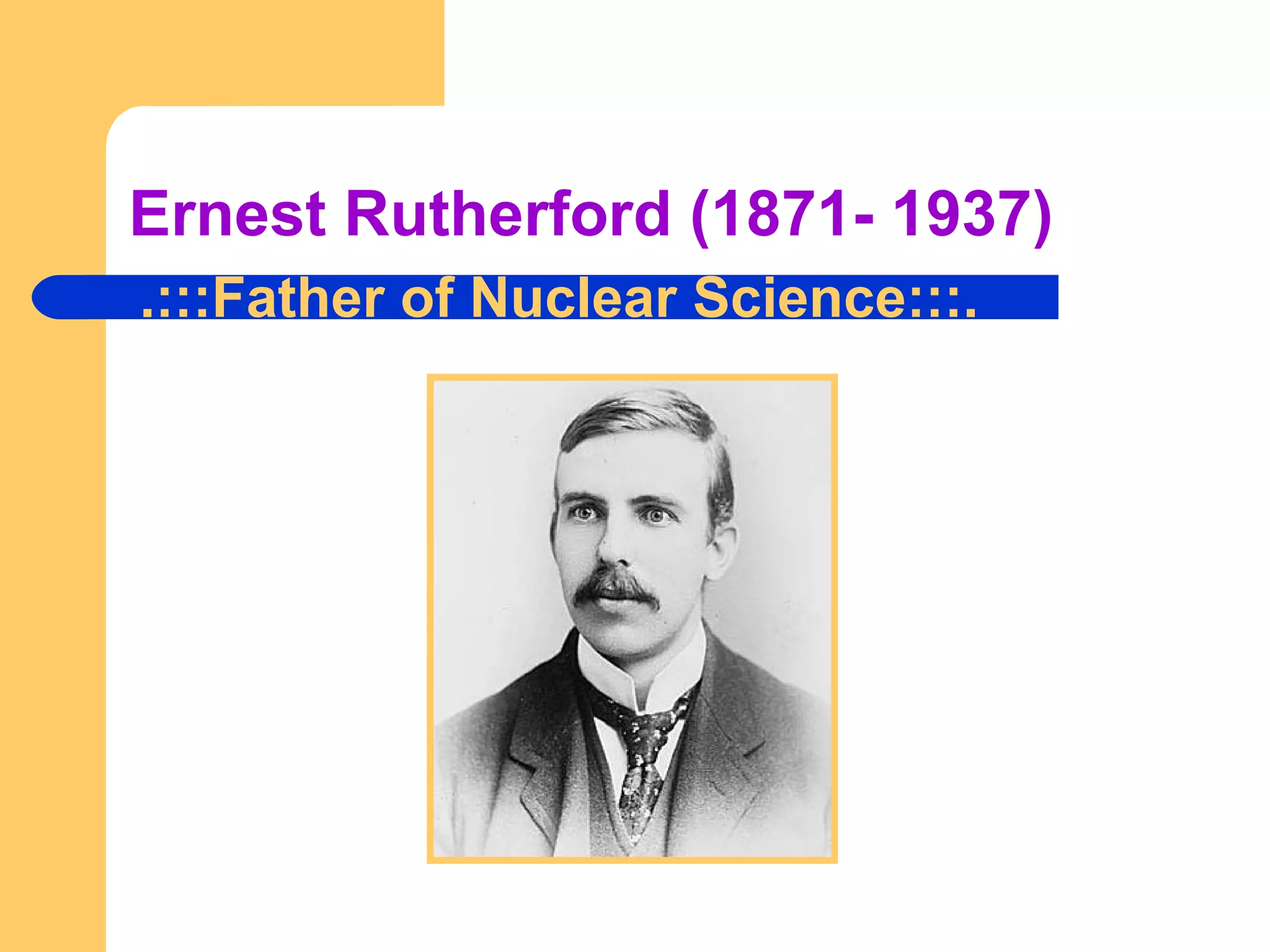
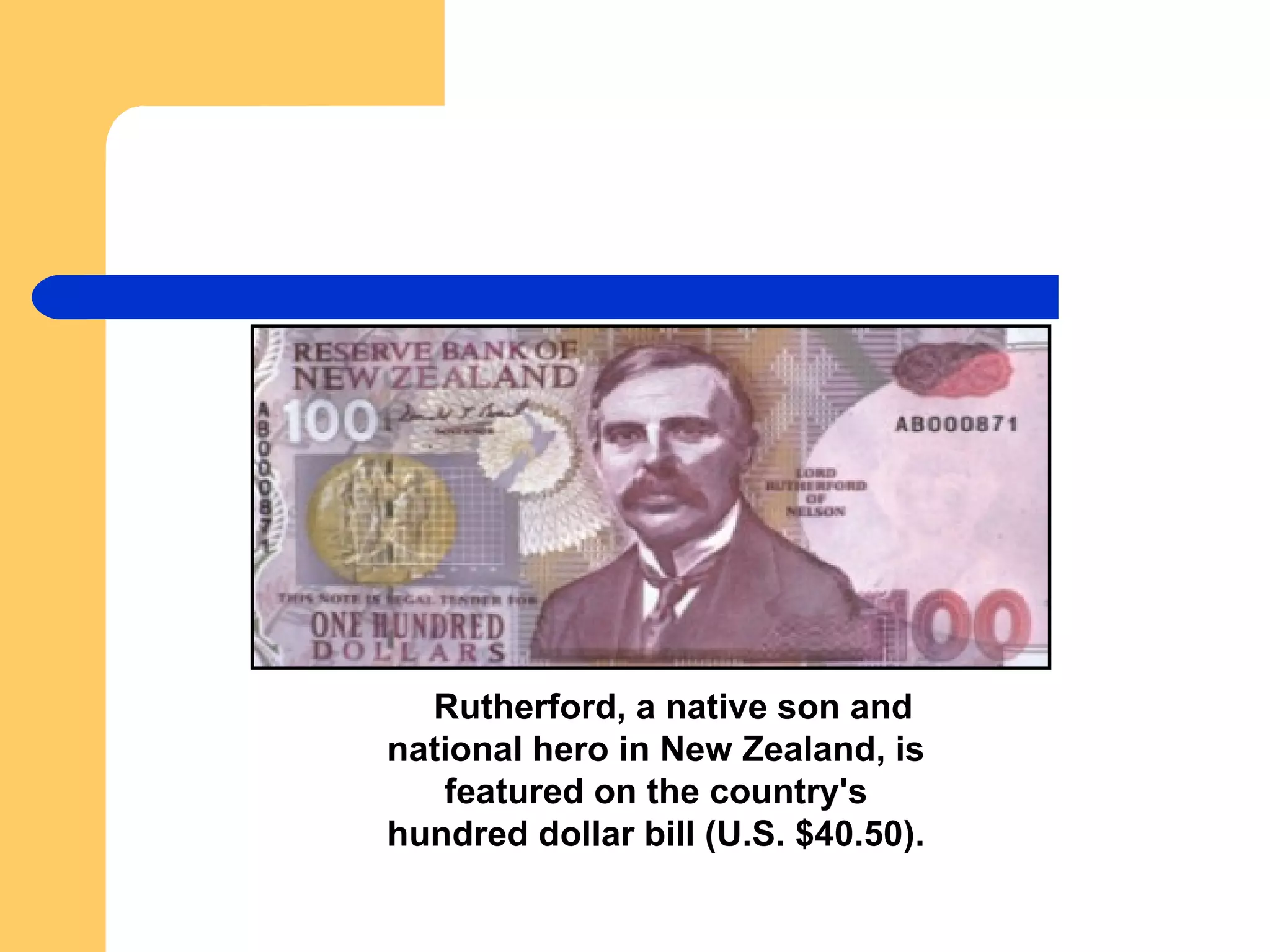
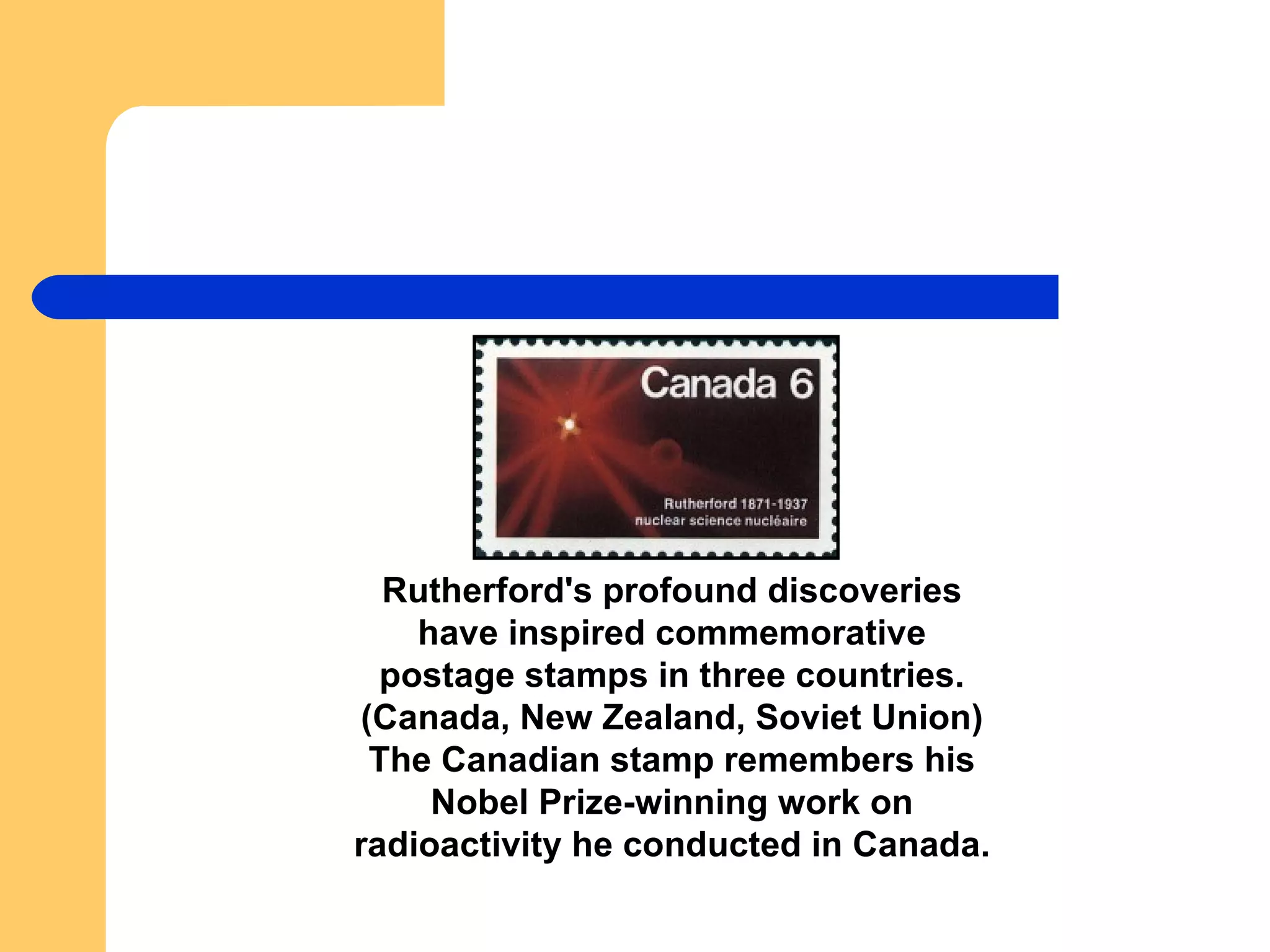
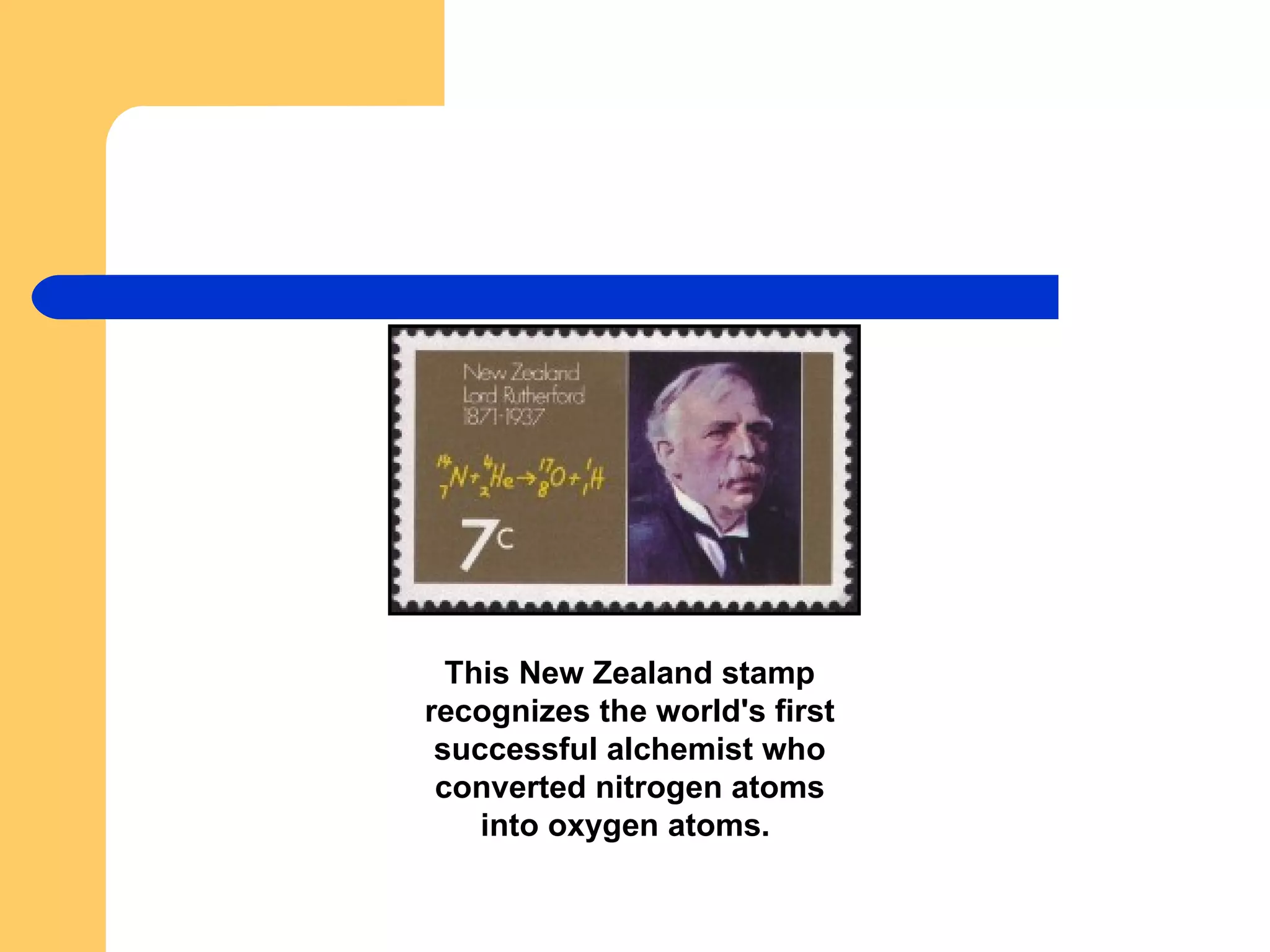
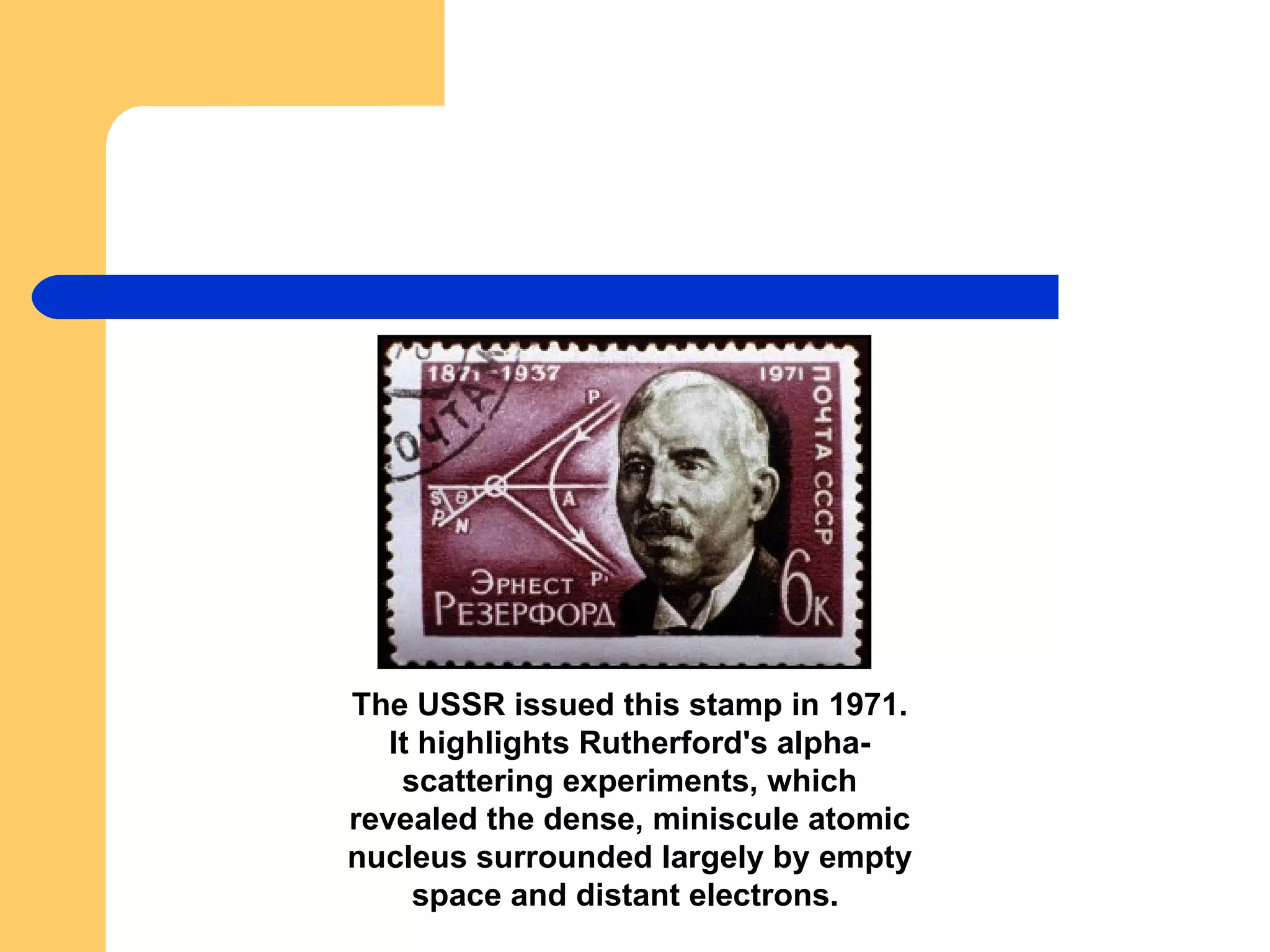
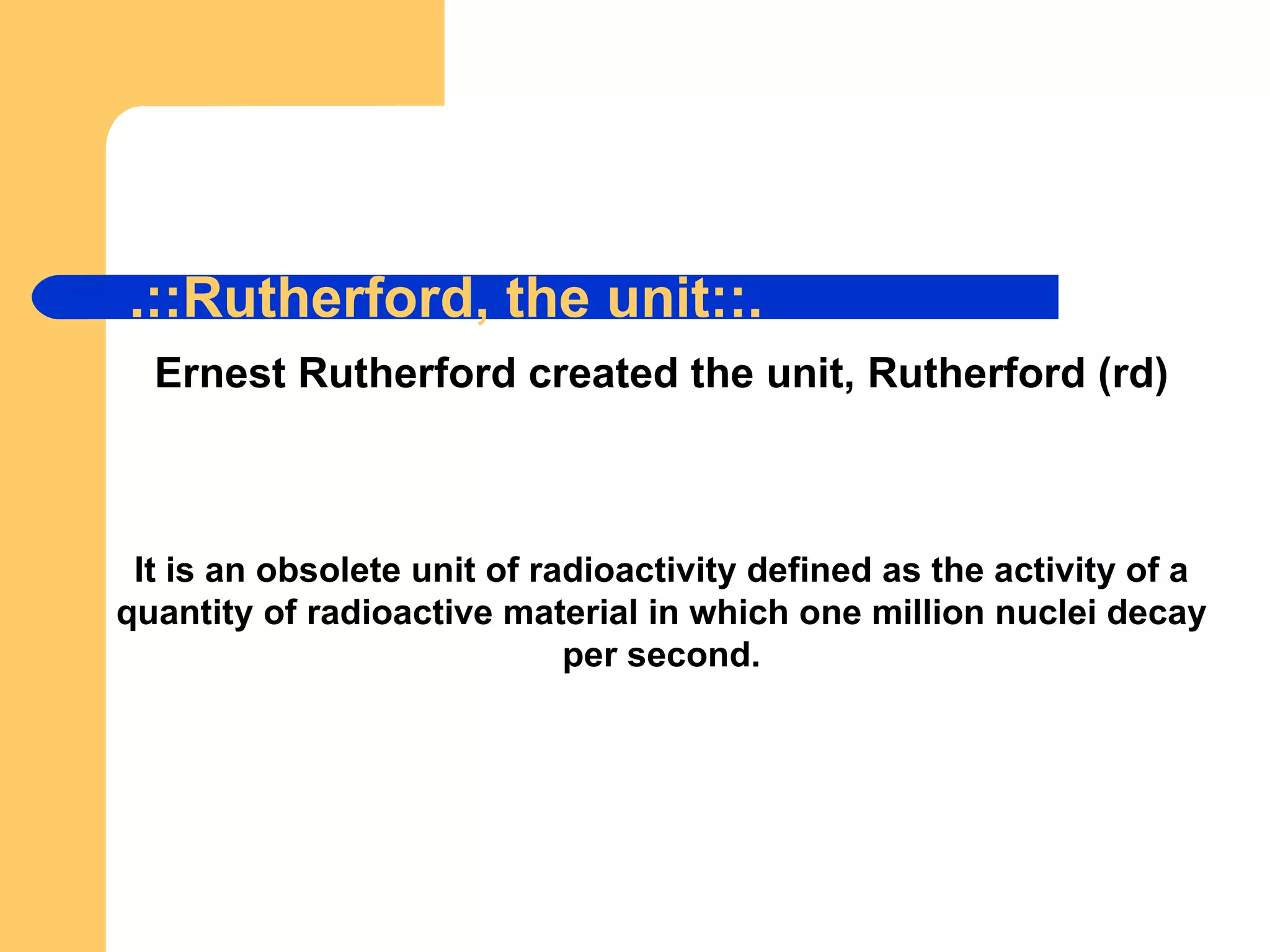
Ernest Rutherford (1871-1937) was a pioneering physicist and chemist from New Zealand who made seminal discoveries about nuclear physics and radioactive decay, including identifying three types of radiation (alpha, beta, gamma rays) and determining that the atom has a small, dense nucleus, work for which he received the 1908 Nobel Prize in Chemistry. Rutherford made many other contributions including the first artificial nuclear reaction and speculation about the existence of neutrons, and he is honored on stamps and currency in New Zealand and elsewhere for his revolutionary scientific achievements.
![Rutherford, Ernest, Baron Rutherford of Nelson, of Cambridge . [Photograph]. Retrieved February 24, 2010, from Encyclopedia Britannica Online School Edition: http://school.eb.com/eb/art-115396 Rutherford, Ernest, Baron Rutherford of Nelson, of Cambridge. (2010). In Encyclopedia Britannica . Retrieved February 25, 2010, from Encyclopedia Britannica 123helpme.com, Initials. (2010, February 25). Ernest rutherford family life. Retrieved from http://www.123helpme.com/view.asp?id=64504 Online School Edition: http://school.eb.com/eb/article-278478 Unknown, Initials. (2009). Rutherford, Ernest Rutherford, 1 st Baron.. Columbia electronic encyclopedia, 6 th edition. Retrieved (2009, October 1) from http://proxygsusput.galileo.usg.edu/login?url=http://search.ebscohost.com/login.aspx?direct=true&db=khh&AN=39029474&site=ehost-live http://www.worldandi.com/specialreport/rutherford/rutherford.html http://nobelprize.org/nobel_prizes/chemistry/laureates/1908/rutherford-bio.html http://christchurchcitylibraries.com/Kids/FamousNewZealanders/Ernest.asp .::Citations::.](https://image.slidesharecdn.com/erpowerpoint-100505083357-phpapp02/75/Ernest-Rutheford-PowerPoint-17-2048.jpg)


![Bhor[2]](https://cdn.slidesharecdn.com/ss_thumbnails/bhor2-140915235154-phpapp02-thumbnail.jpg?width=640&height=640&fit=bounds)


