Presentation on:
ROBOTS & ROBOTICS
Submitted by:
Rajiv Manna
1122221034
Basic Layout:
 Introduction
 Humans Vs Robots
 History Of Robotics
 Robotics Technology
 Types Of Robots
 Recent Advancements
 Advantages & Limitations
Introduction
 What is a Robot?
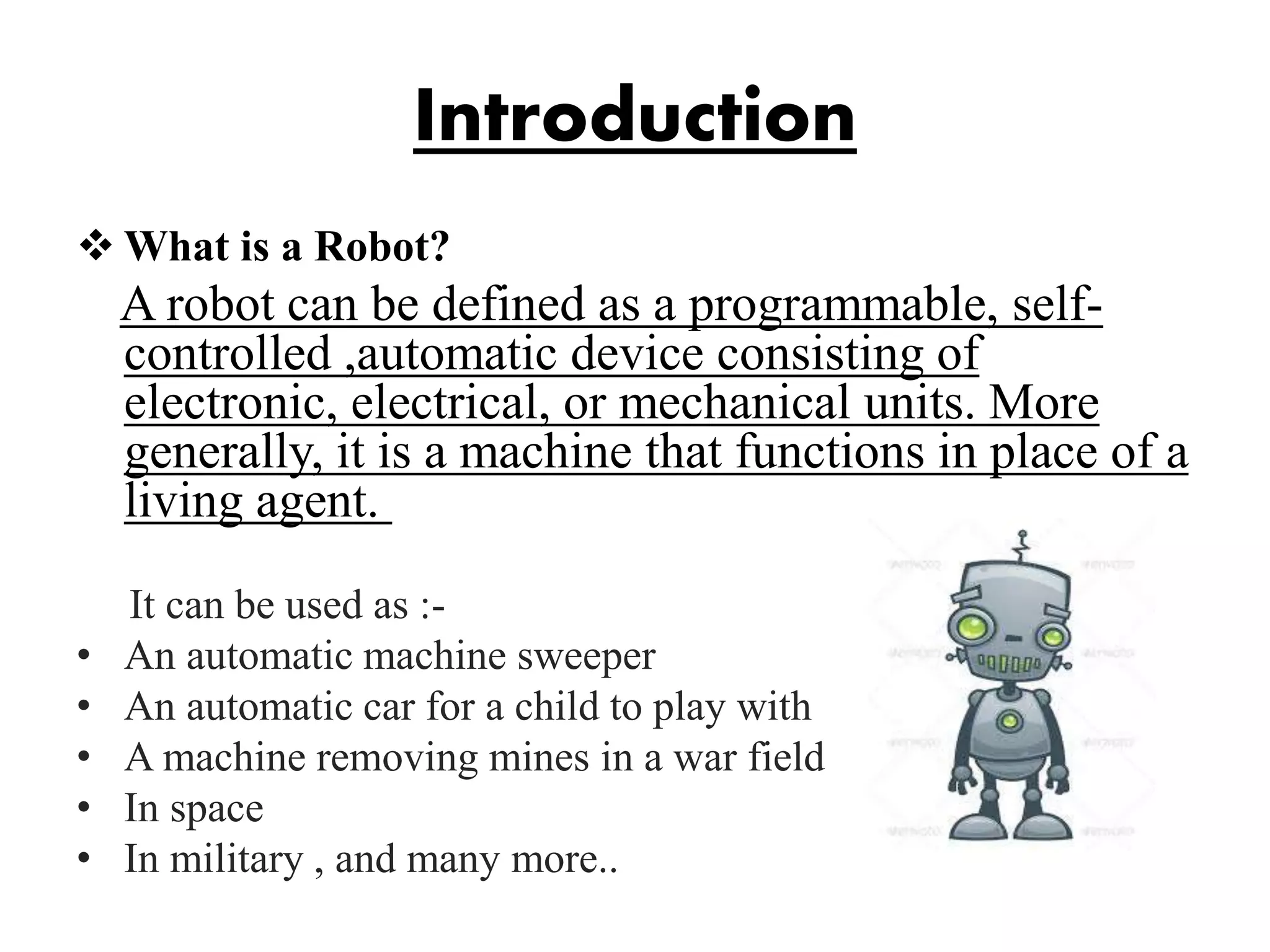
A robot can be defined as a programmable, self-
controlled ,automatic device consisting of
electronic, electrical, or mechanical units. More
generally, it is a machine that functions in place of a
living agent.
It can be used as :-
• An automatic machine sweeper
• An automatic car for a child to play with
• A machine removing mines in a war field
• In space
• In military , and many more..
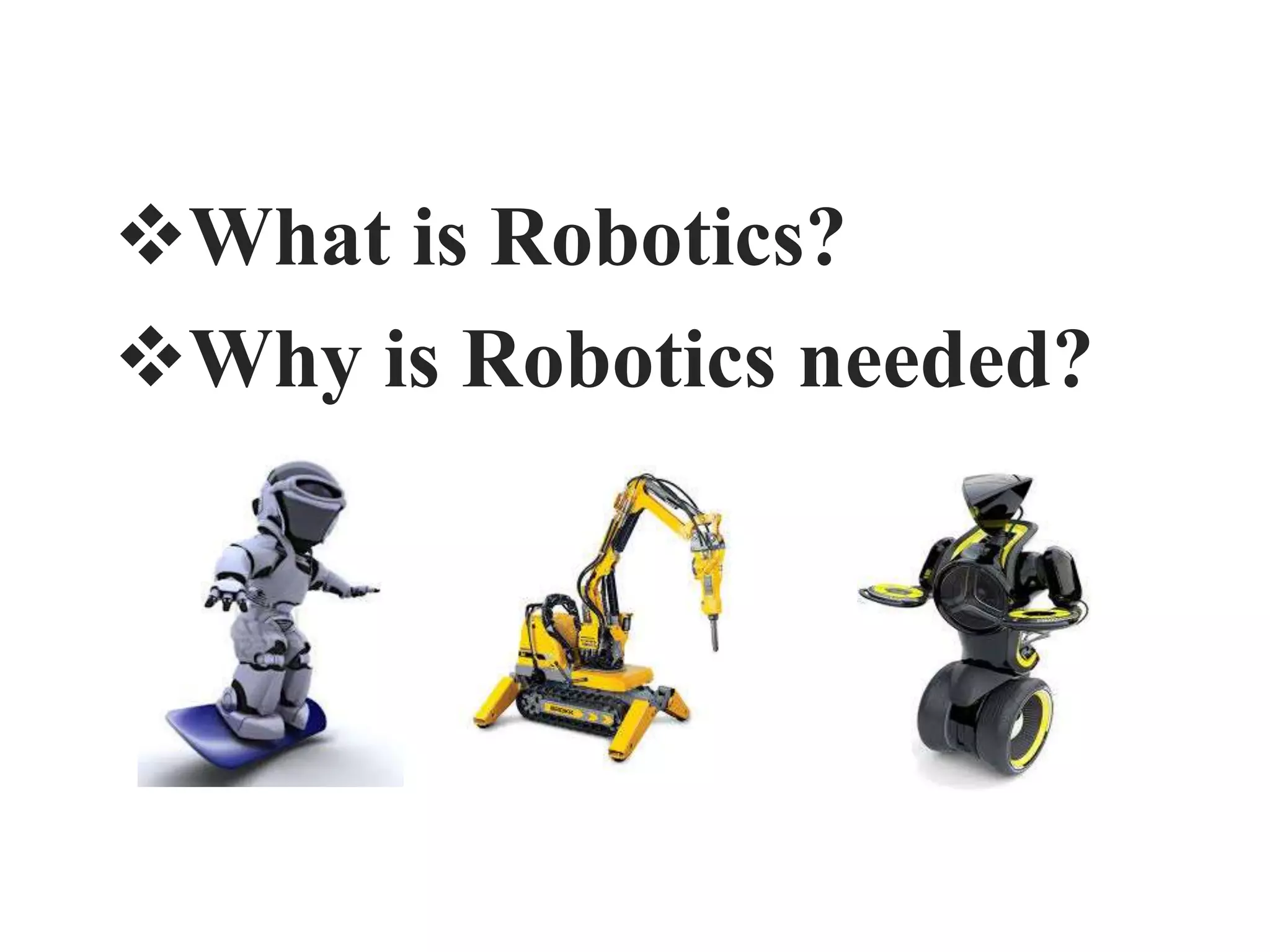
What is Robotics?
Why is Robotics needed?
Human vs Robots
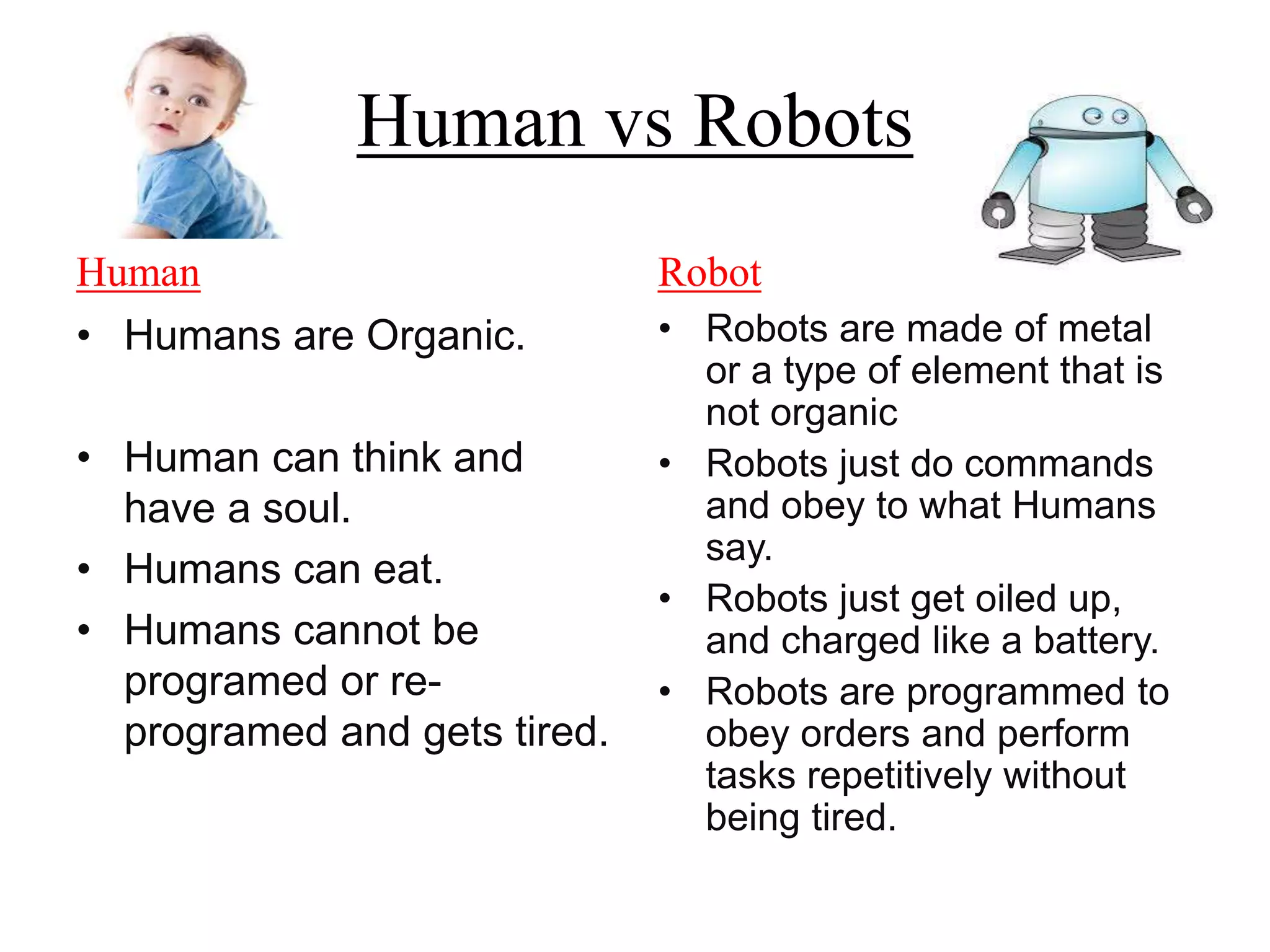
Human
• Humans are Organic.
• Human can think and
have a soul.
• Humans can eat.
• Humans cannot be
programed or re-
programed and gets tired.
Robot
• Robots are made of metal
or a type of element that is
not organic
• Robots just do commands
and obey to what Humans
say.
• Robots just get oiled up,
and charged like a battery.
• Robots are programmed to
obey orders and perform
tasks repetitively without
being tired.
History& EVOLUTION Of Robotics
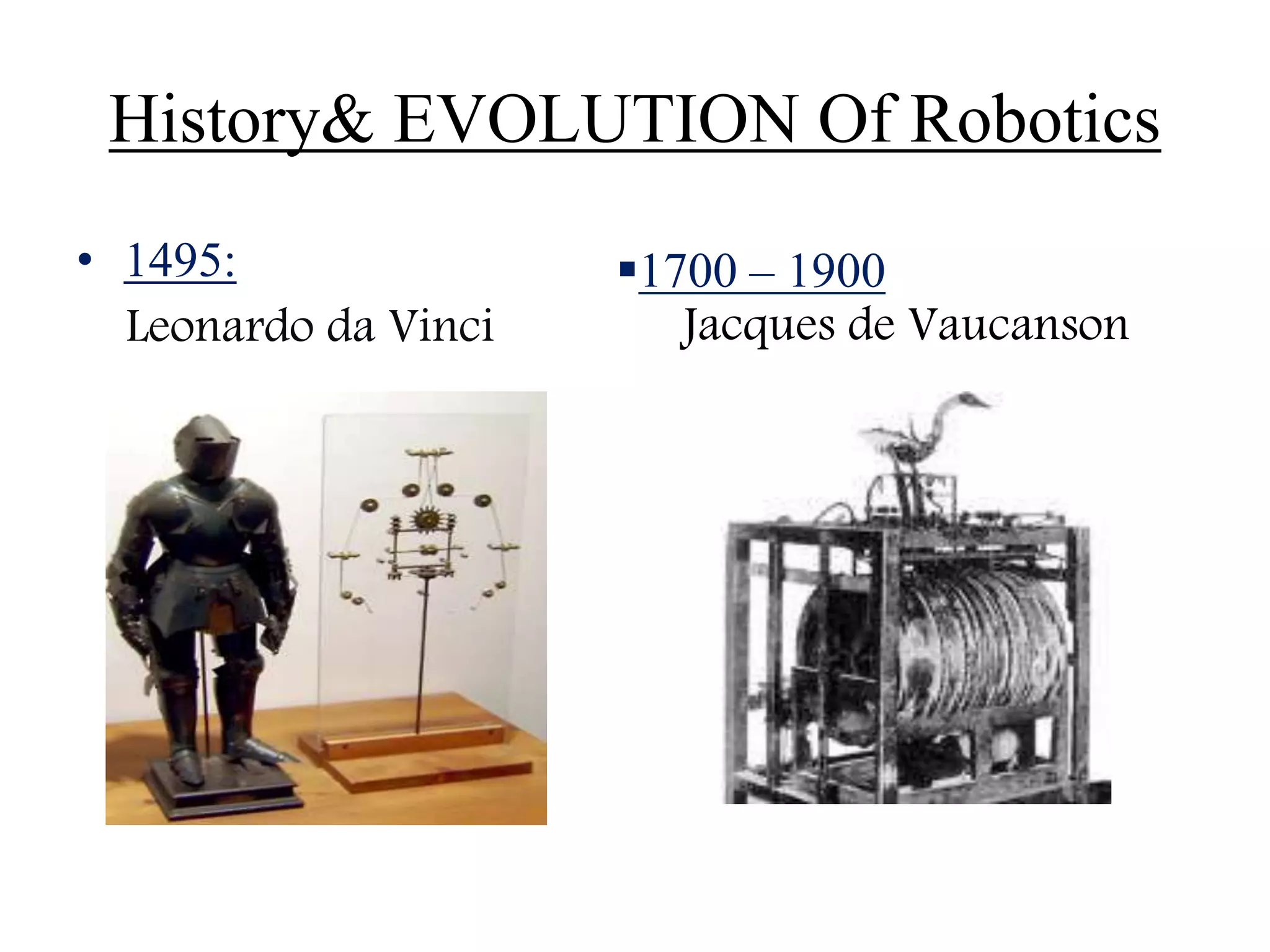
• 1495:
Leonardo da Vinci
1700 – 1900
Jacques de Vaucanson
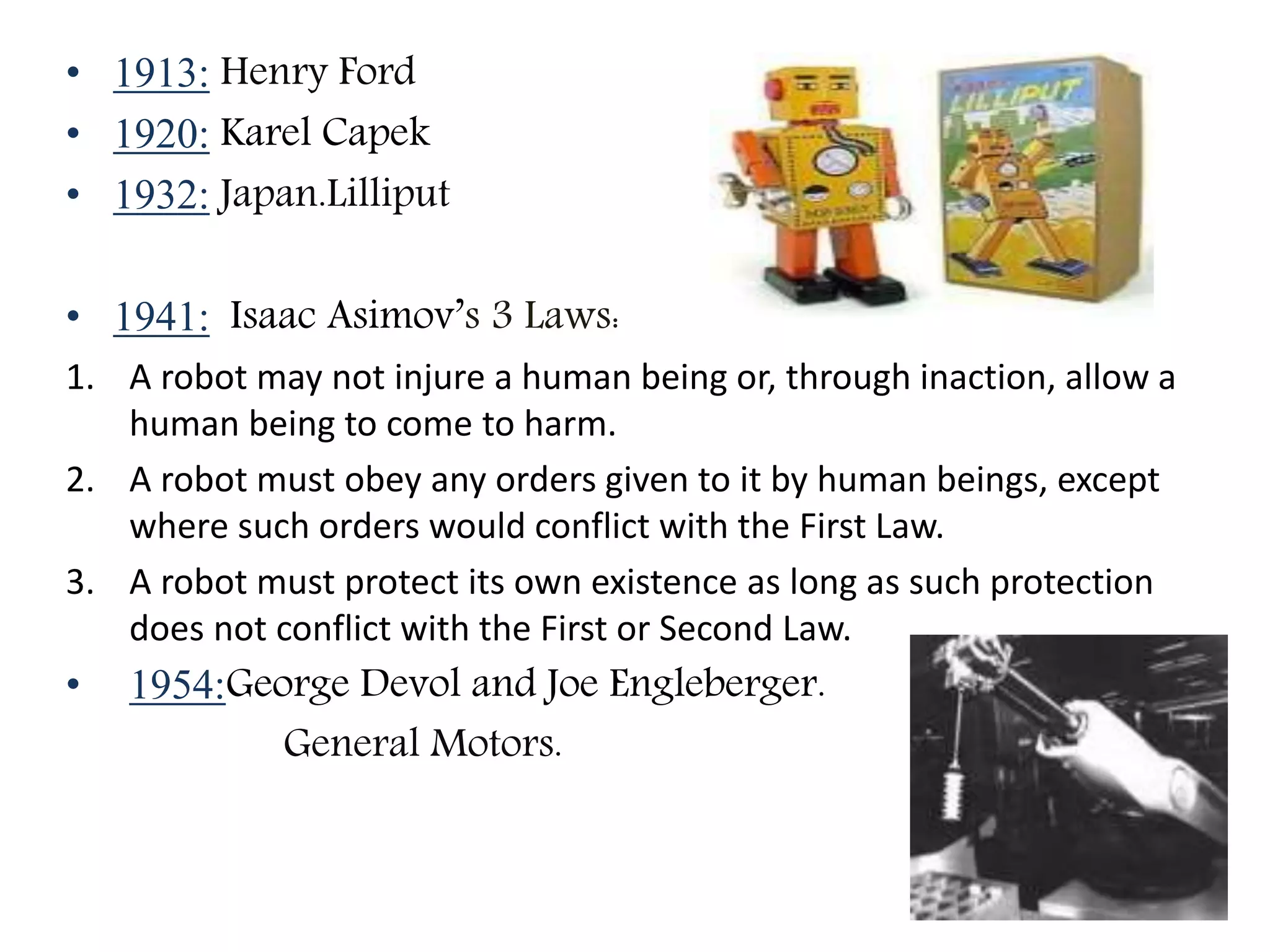
• 1913: Henry Ford
• 1920: Karel Capek
• 1932: Japan.Lilliput
• 1941: Isaac Asimov’s 3 Laws:
1. A robot may not injure a human being or, through inaction, allow a
human being to come to harm.
2. A robot must obey any orders given to it by human beings, except
where such orders would conflict with the First Law.
3. A robot must protect its own existence as long as such protection
does not conflict with the First or Second Law.
• 1954:George Devol and Joe Engleberger.
General Motors.
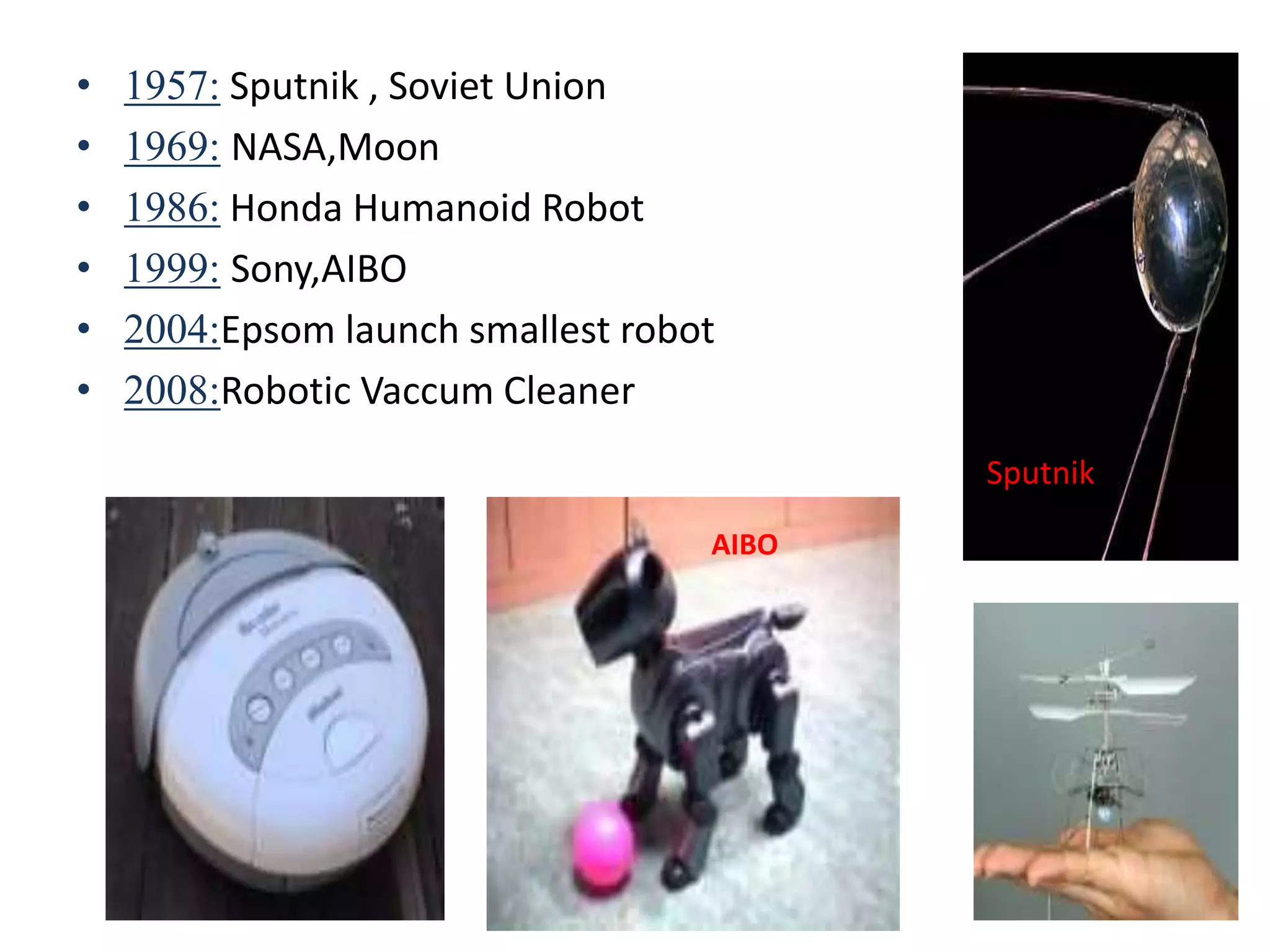
• 1957: Sputnik , Soviet Union
• 1969: NASA,Moon
• 1986: Honda Humanoid Robot
• 1999: Sony,AIBO
• 2004:Epsom launch smallest robot
• 2008:Robotic Vaccum Cleaner
Sputnik
AIBO
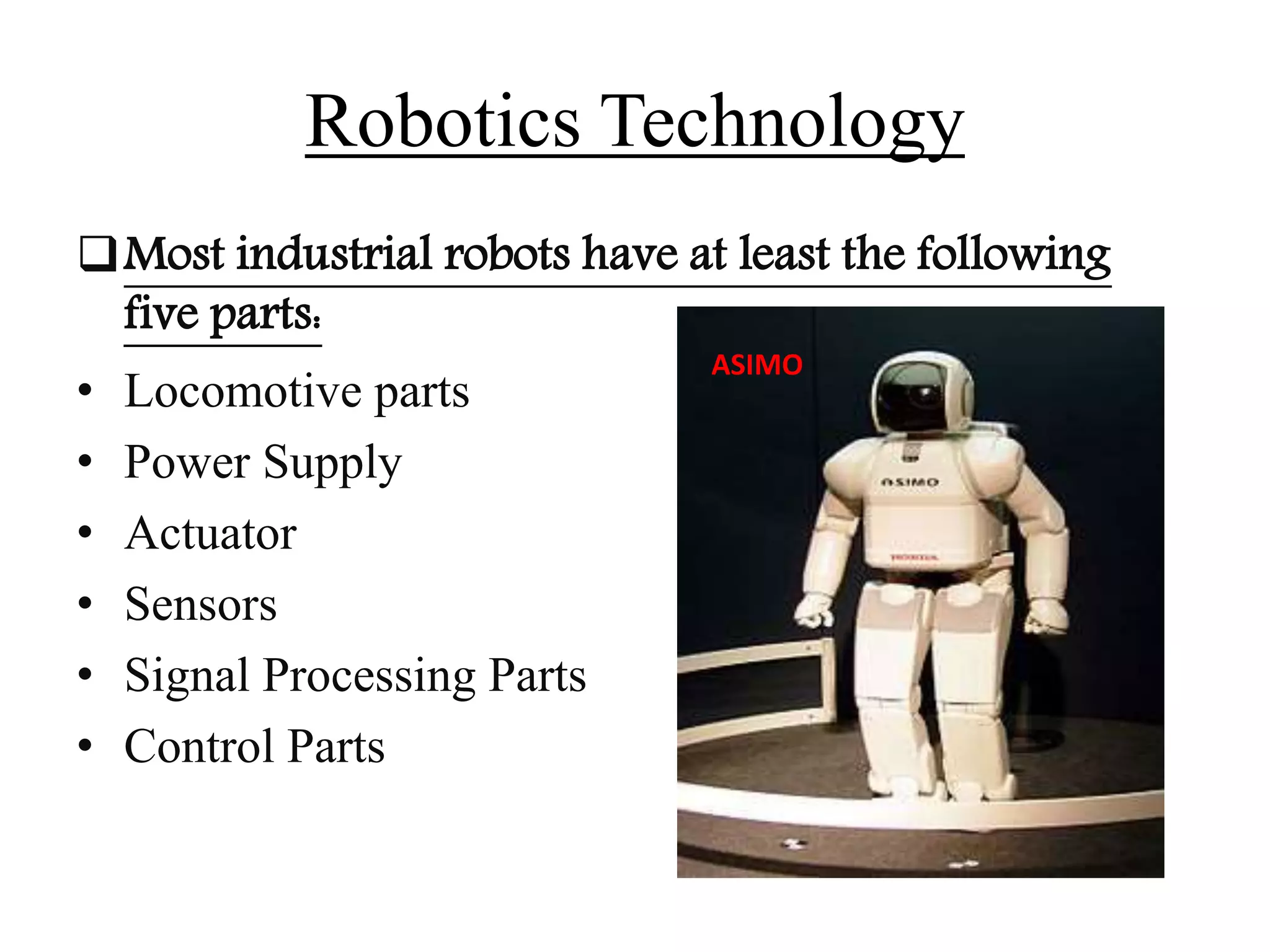
Robotics Technology
Most industrial robots have at least the following
five parts:
• Locomotive parts
• Power Supply
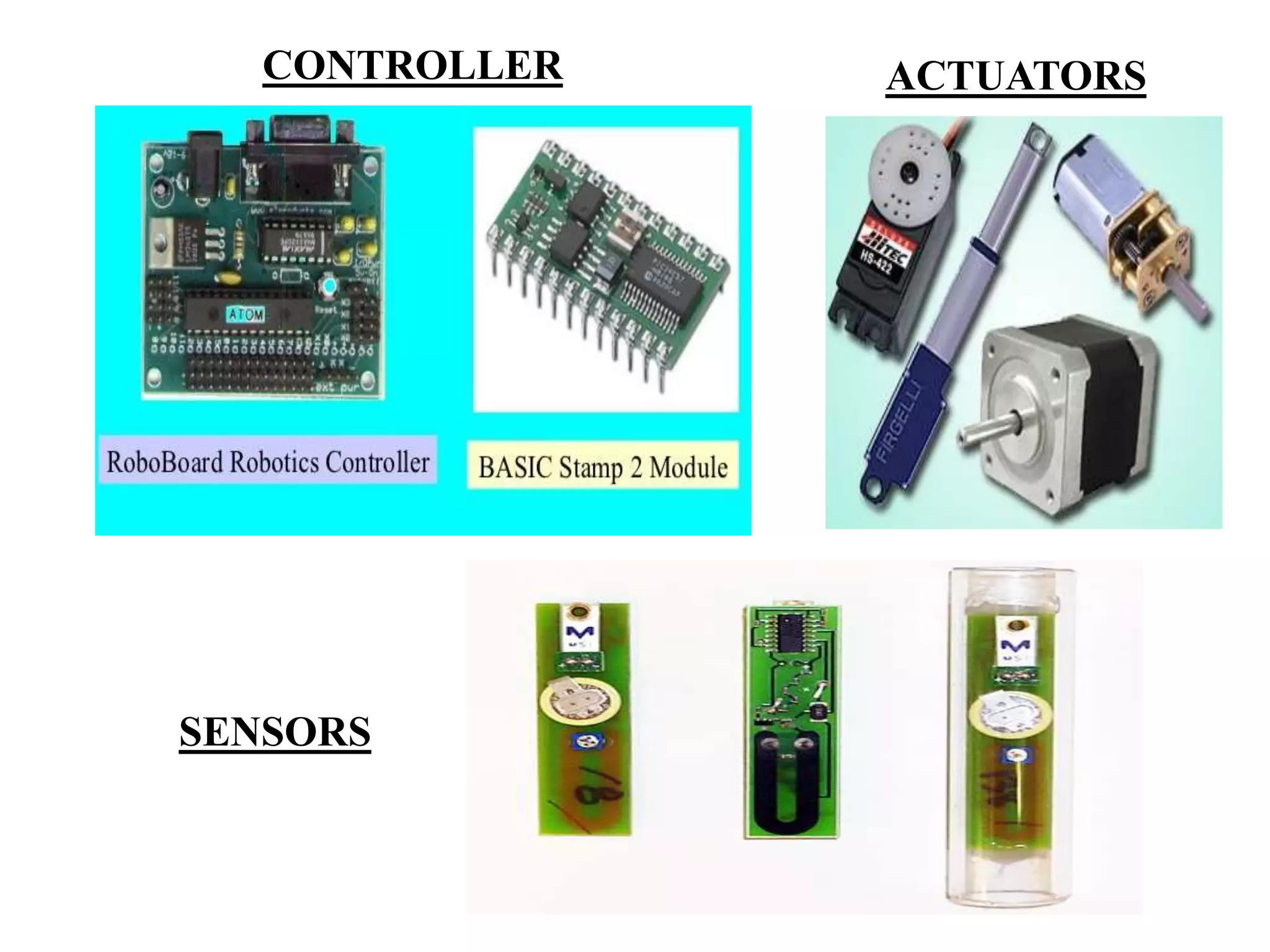
• Actuator
• Sensors
• Signal Processing Parts
• Control Parts
ASIMO
CONTROLLER ACTUATORS
SENSORS
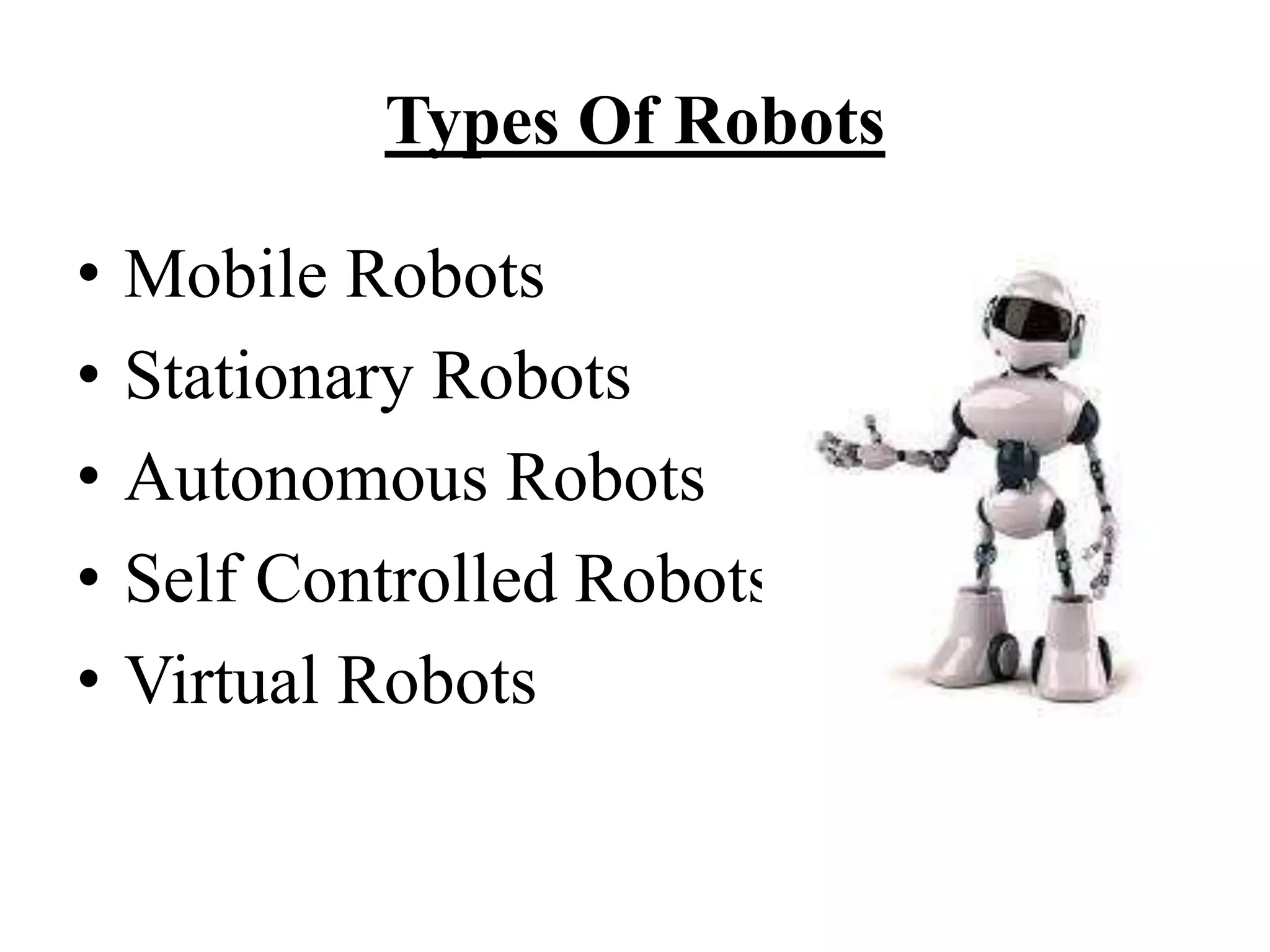
Types Of Robots
• Mobile Robots
• Stationary Robots
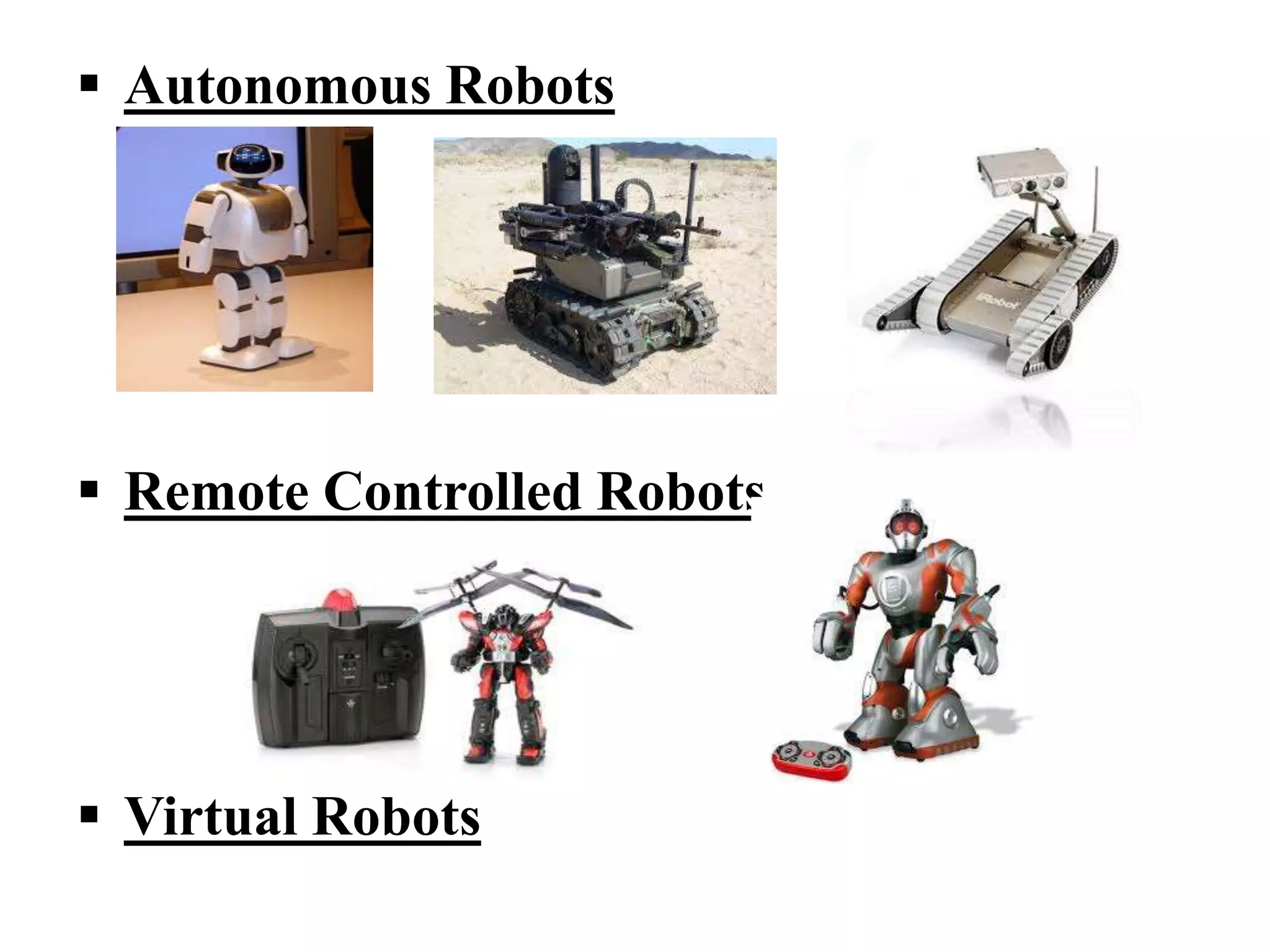
• Autonomous Robots
• Self Controlled Robots
• Virtual Robots
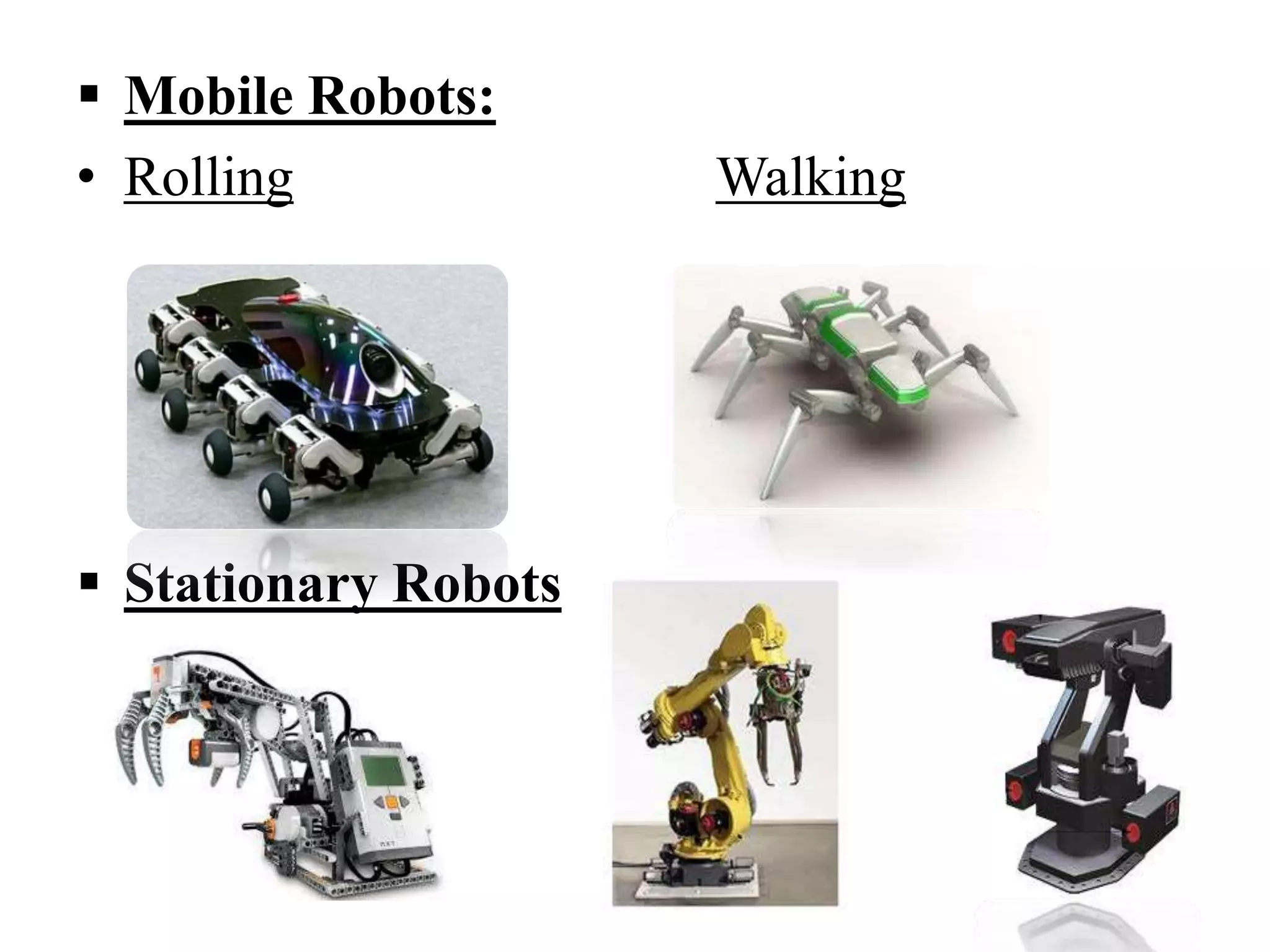
 Mobile Robots:
• Rolling Walking
 Stationary Robots
 Autonomous Robots
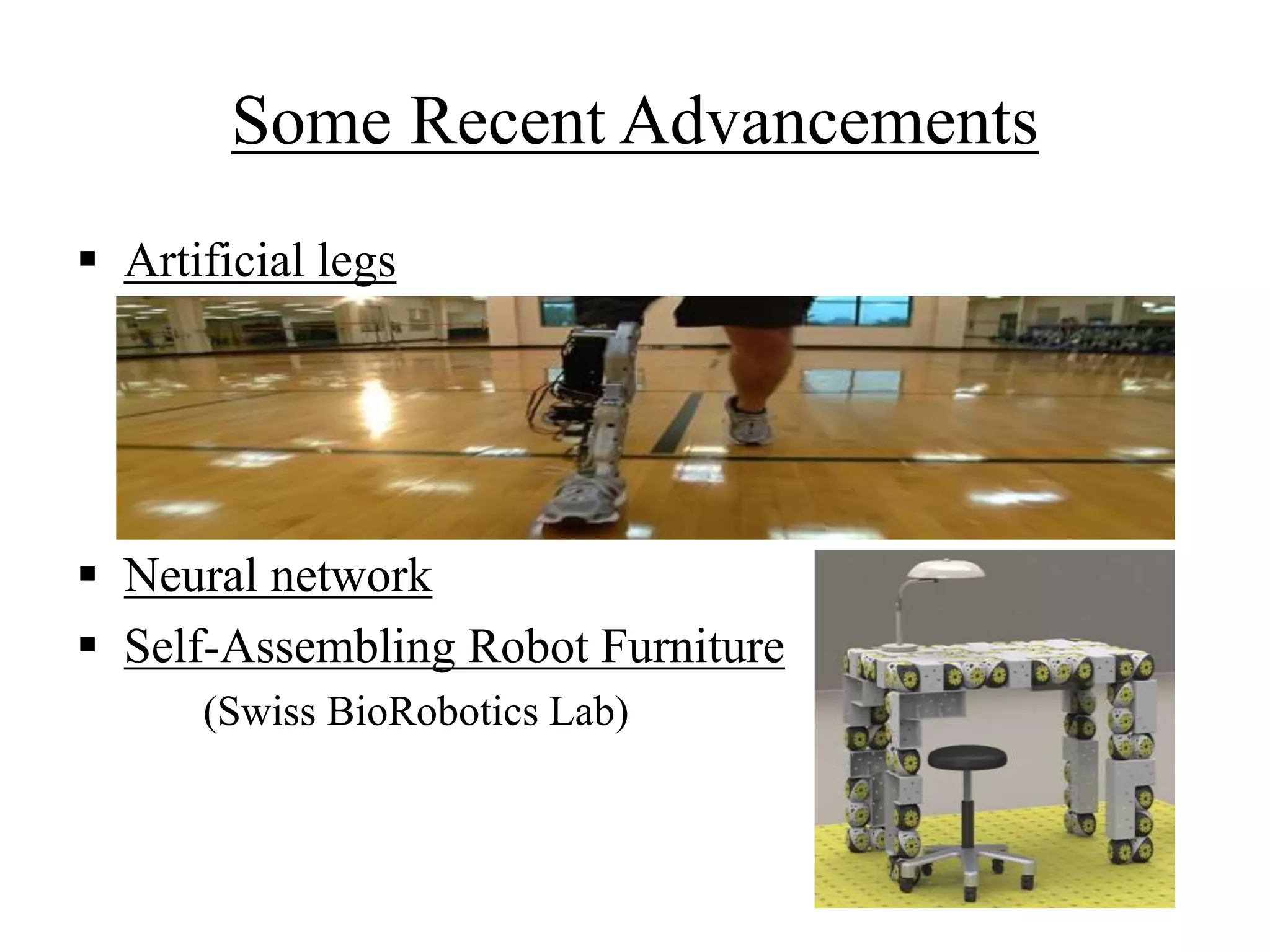
 Remote Controlled Robots
 Virtual Robots
Some Recent Advancements
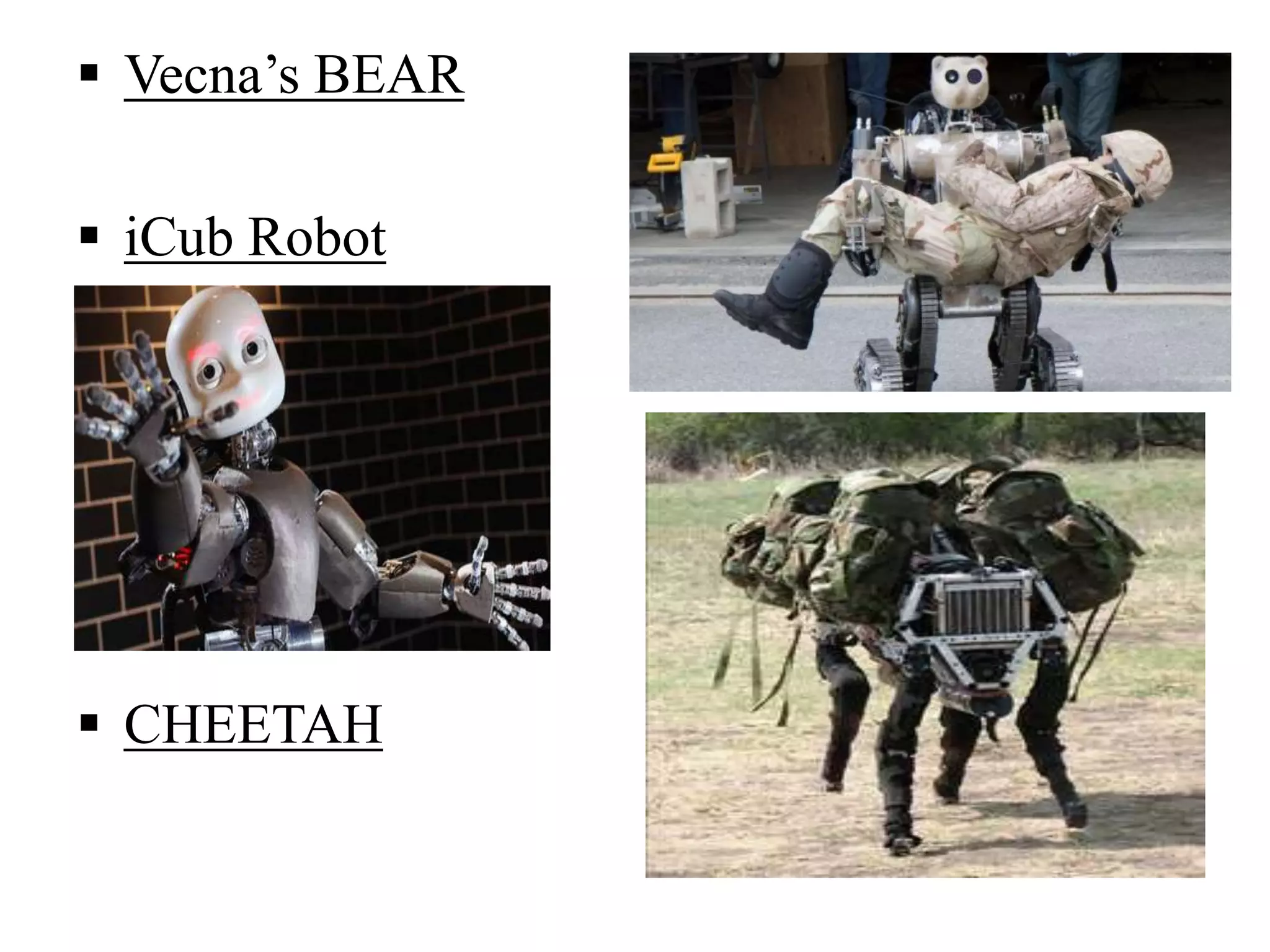
 Artificial legs
 Neural network
 Self-Assembling Robot Furniture
(Swiss BioRobotics Lab)
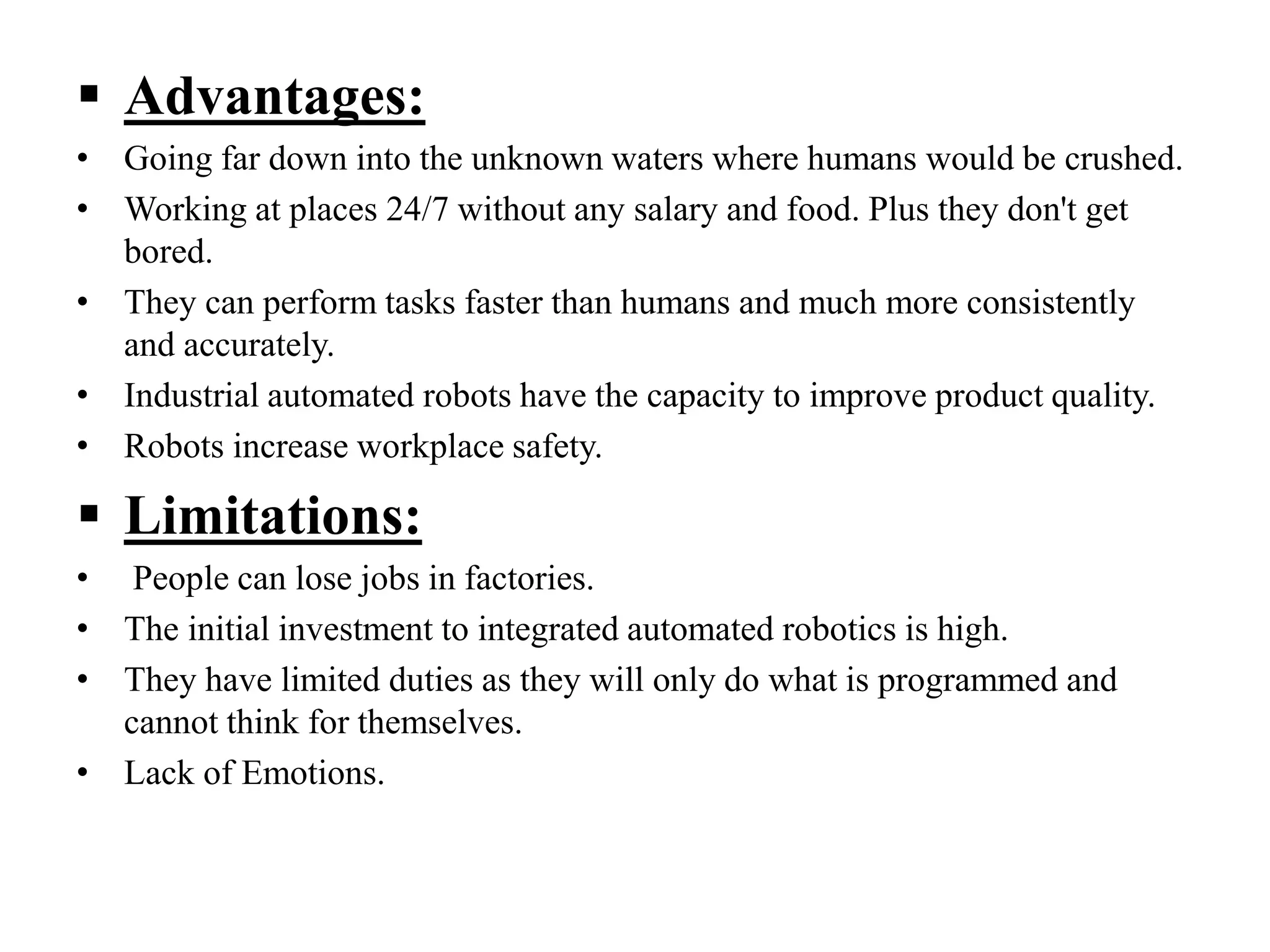
 Vecna’s BEAR
 iCub Robot
 CHEETAH
 Advantages:
• Going far down into the unknown waters where humans would be crushed.
• Working at places 24/7 without any salary and food. Plus they don't get
bored.
• They can perform tasks faster than humans and much more consistently
and accurately.
• Industrial automated robots have the capacity to improve product quality.
• Robots increase workplace safety.
 Limitations:
• People can lose jobs in factories.
• The initial investment to integrated automated robotics is high.
• They have limited duties as they will only do what is programmed and
cannot think for themselves.
• Lack of Emotions.
THANK YOU

Robots & Robotics

  • 1.
    Presentation on: ROBOTS &ROBOTICS Submitted by: Rajiv Manna 1122221034
  • 2.
    Basic Layout:  Introduction Humans Vs Robots  History Of Robotics  Robotics Technology  Types Of Robots  Recent Advancements  Advantages & Limitations
  • 3.
    Introduction  What isa Robot? A robot can be defined as a programmable, self- controlled ,automatic device consisting of electronic, electrical, or mechanical units. More generally, it is a machine that functions in place of a living agent. It can be used as :- • An automatic machine sweeper • An automatic car for a child to play with • A machine removing mines in a war field • In space • In military , and many more..
  • 4.
    What is Robotics? Whyis Robotics needed?
  • 5.
    Human vs Robots Human •Humans are Organic. • Human can think and have a soul. • Humans can eat. • Humans cannot be programed or re- programed and gets tired. Robot • Robots are made of metal or a type of element that is not organic • Robots just do commands and obey to what Humans say. • Robots just get oiled up, and charged like a battery. • Robots are programmed to obey orders and perform tasks repetitively without being tired.
  • 6.
    History& EVOLUTION OfRobotics • 1495: Leonardo da Vinci 1700 – 1900 Jacques de Vaucanson
  • 7.
    • 1913: HenryFord • 1920: Karel Capek • 1932: Japan.Lilliput • 1941: Isaac Asimov’s 3 Laws: 1. A robot may not injure a human being or, through inaction, allow a human being to come to harm. 2. A robot must obey any orders given to it by human beings, except where such orders would conflict with the First Law. 3. A robot must protect its own existence as long as such protection does not conflict with the First or Second Law. • 1954:George Devol and Joe Engleberger. General Motors.
  • 8.
    • 1957: Sputnik, Soviet Union • 1969: NASA,Moon • 1986: Honda Humanoid Robot • 1999: Sony,AIBO • 2004:Epsom launch smallest robot • 2008:Robotic Vaccum Cleaner Sputnik AIBO
  • 9.
    Robotics Technology Most industrialrobots have at least the following five parts: • Locomotive parts • Power Supply • Actuator • Sensors • Signal Processing Parts • Control Parts ASIMO
  • 10.
  • 11.
    Types Of Robots •Mobile Robots • Stationary Robots • Autonomous Robots • Self Controlled Robots • Virtual Robots
  • 12.
     Mobile Robots: •Rolling Walking  Stationary Robots
  • 13.
     Autonomous Robots Remote Controlled Robots  Virtual Robots
  • 14.
    Some Recent Advancements Artificial legs  Neural network  Self-Assembling Robot Furniture (Swiss BioRobotics Lab)
  • 15.
     Vecna’s BEAR iCub Robot  CHEETAH
  • 16.
     Advantages: • Goingfar down into the unknown waters where humans would be crushed. • Working at places 24/7 without any salary and food. Plus they don't get bored. • They can perform tasks faster than humans and much more consistently and accurately. • Industrial automated robots have the capacity to improve product quality. • Robots increase workplace safety.  Limitations: • People can lose jobs in factories. • The initial investment to integrated automated robotics is high. • They have limited duties as they will only do what is programmed and cannot think for themselves. • Lack of Emotions.
  • 17.