Information 
Technology 
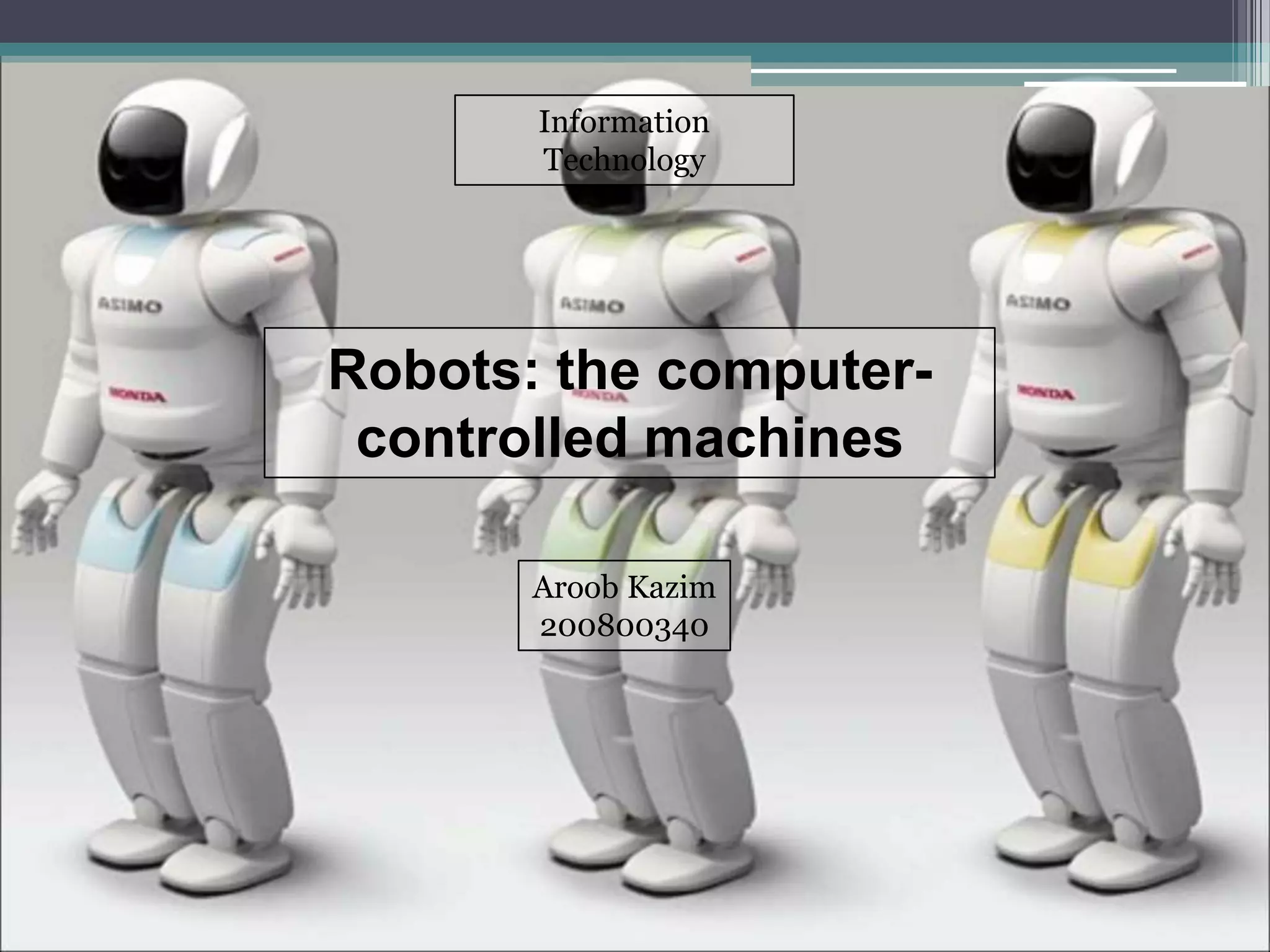
Robots: the computer-controlled 
machines 
Aroob Kazim 
200800340
Introduction 
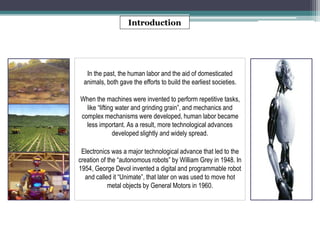
In the past, the human labor and the aid of domesticated 
animals, both gave the efforts to build the earliest societies. 
When the machines were invented to perform repetitive tasks, 
like “lifting water and grinding grain”, and mechanics and 
complex mechanisms were developed, human labor became 
less important. As a result, more technological advances 
developed slightly and widely spread. 
Electronics was a major technological advance that led to the 
creation of the “autonomous robots” by William Grey in 1948. In 
1954, George Devol invented a digital and programmable robot 
and called it “Unimate”, that later on was used to move hot 
metal objects by General Motors in 1960.
Outline 
Will support 
each point 
with 
examples 
Robots: 
• what is a Robot? 
-What are they made of? 
•Robotics (the study of the robot) 
•Why robots were invented? 
-Why use Robots? 
Types of robots by locomotion 
•Stationary robots 
•Wheeled robots 
•Legged robots 
•Swimming robots 
•Flying robots 
Types of robots by application 
•Hard-tasks robots 
•Military robots 
•Social-services robots 
•Space robots 
•Robots under the water 
•Robots with other functions 
Advantages Vs. disadvantages 
•Advantages 
•Disadvantages 
The influence of the robots and their future 
Resources 
Conclusion
Robots 
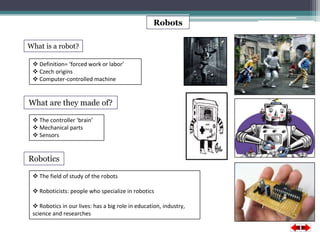
What is a robot? 
 Definition= ‘forced work or labor’ 
 Czech origins 
 Computer-controlled machine 
What are they made of? 
 The controller ‘brain’ 
 Mechanical parts 
 Sensors 
Robotics 
 The field of study of the robots 
 Roboticists: people who specialize in robotics 
 Robotics in our lives: has a big role in education, industry, 
science and researches
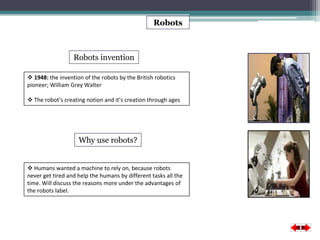
Robots invention 
 1948: the invention of the robots by the British robotics 
pioneer; William Grey Walter 
 The robot’s creating notion and it’s creation through ages 
Why use robots? 
Robots 
 Humans wanted a machine to rely on, because robots 
never get tired and help the humans by different tasks all the 
time. Will discuss the reasons more under the advantages of 
the robots label.
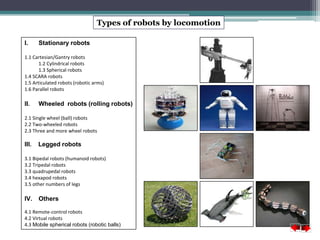
Types of robots by locomotion 
I. Stationary robots 
1.1 Cartesian/Gantry robots 
1.2 Cylindrical robots 
1.3 Spherical robots 
1.4 SCARA robots 
1.5 Articulated robots (robotic arms) 
1.6 Parallel robots 
II. Wheeled robots (rolling robots) 
2.1 Single wheel (ball) robots 
2.2 Two-wheeled robots 
2.3 Three and more wheel robots 
III. Legged robots 
3.1 Bipedal robots (humanoid robots) 
3.2 Tripedal robots 
3.3 quadrupedal robots 
3.4 hexapod robots 
3.5 other numbers of legs 
IV. Others 
4.1 Remote-control robots 
4.2 Virtual robots 
4.3 Mobile spherical robots (robotic balls)
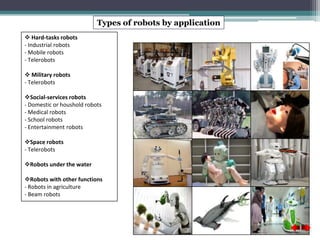
Types of robots by application 
 Hard-tasks robots 
- Industrial robots 
- Mobile robots 
- Telerobots 
 Military robots 
- Telerobots 
Social-services robots 
- Domestic or houshold robots 
- Medical robots 
- School robots 
- Entertainment robots 
Space robots 
- Telerobots 
Robots under the water 
Robots with other functions 
- Robots in agriculture 
- Beam robots
Advantages & disadvantages 
Advantages 
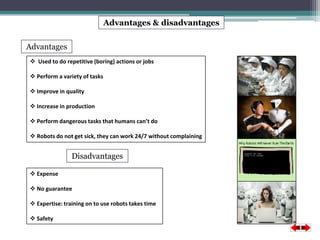
 Used to do repetitive (boring) actions or jobs 
 Perform a variety of tasks 
 Improve in quality 
 Increase in production 
 Perform dangerous tasks that humans can’t do 
 Robots do not get sick, they can work 24/7 without complaining 
 Expense 
 No guarantee 
 Expertise: training on to use robots takes time 
 Safety 
Disadvantages
The robots’ influence, and their future 
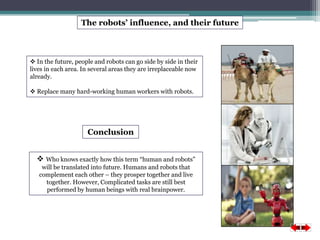
 In the future, people and robots can go side by side in their 
lives in each area. In several areas they are irreplaceable now 
already. 
 Replace many hard-working human workers with robots. 
Conclusion 
 Who knows exactly how this term “human and robots” 
will be translated into future. Humans and robots that 
complement each other – they prosper together and live 
together. However, Complicated tasks are still best 
performed by human beings with real brainpower.
Resources: 
 Websites: 
http://42explore.com/robots.htm 
http://www.wisegeek.com/what-are-robots.htm 
http://idahoptv.org/dialogue4kids/season10/robots/facts.cfm 
http://www.robotmonkeyboy.com/different-types-of-robots.html 
http://www.robotiksistem.com/index_en.html 
http://inventors.about.com/od/roboticsrobots/a/RoboTimeline.htm 
http://www.paulos.net/other/robot.html 
http://www.koolgrapsite.com/advantages-of-robotics.html 
http://www.robots.com/articles.php?tag=3503 
http://www.robots.com/blog.php?tag=112 
http://www.brighthub.com/engineering/mechanical/articles/33043.aspx 
http://www.electronicsteacher.com/robotics/type-of-robots.php 
http://www.buzzle.com/articles/types-of-robots.html 
http://www.allonrobots.com/types-of-robots.html 
http://www.ditii.com/2011/08/01/foxconn-replacing-human-workers-with-1- 
million-robots-in-next-3-years/ 
http://www.wendymag.com/human-and-robots-perfect-relations/ 
 Books- articles: 
Parallax team. (2003-2004). Robotics with Boe-Bot. Parallax Inc.

Robots - All about them

  • 1.
    Information Technology Robots:the computer-controlled machines Aroob Kazim 200800340
  • 2.
    Introduction In thepast, the human labor and the aid of domesticated animals, both gave the efforts to build the earliest societies. When the machines were invented to perform repetitive tasks, like “lifting water and grinding grain”, and mechanics and complex mechanisms were developed, human labor became less important. As a result, more technological advances developed slightly and widely spread. Electronics was a major technological advance that led to the creation of the “autonomous robots” by William Grey in 1948. In 1954, George Devol invented a digital and programmable robot and called it “Unimate”, that later on was used to move hot metal objects by General Motors in 1960.
  • 3.
    Outline Will support each point with examples Robots: • what is a Robot? -What are they made of? •Robotics (the study of the robot) •Why robots were invented? -Why use Robots? Types of robots by locomotion •Stationary robots •Wheeled robots •Legged robots •Swimming robots •Flying robots Types of robots by application •Hard-tasks robots •Military robots •Social-services robots •Space robots •Robots under the water •Robots with other functions Advantages Vs. disadvantages •Advantages •Disadvantages The influence of the robots and their future Resources Conclusion
  • 4.
    Robots What isa robot?  Definition= ‘forced work or labor’  Czech origins  Computer-controlled machine What are they made of?  The controller ‘brain’  Mechanical parts  Sensors Robotics  The field of study of the robots  Roboticists: people who specialize in robotics  Robotics in our lives: has a big role in education, industry, science and researches
  • 5.
    Robots invention 1948: the invention of the robots by the British robotics pioneer; William Grey Walter  The robot’s creating notion and it’s creation through ages Why use robots? Robots  Humans wanted a machine to rely on, because robots never get tired and help the humans by different tasks all the time. Will discuss the reasons more under the advantages of the robots label.
  • 6.
    Types of robotsby locomotion I. Stationary robots 1.1 Cartesian/Gantry robots 1.2 Cylindrical robots 1.3 Spherical robots 1.4 SCARA robots 1.5 Articulated robots (robotic arms) 1.6 Parallel robots II. Wheeled robots (rolling robots) 2.1 Single wheel (ball) robots 2.2 Two-wheeled robots 2.3 Three and more wheel robots III. Legged robots 3.1 Bipedal robots (humanoid robots) 3.2 Tripedal robots 3.3 quadrupedal robots 3.4 hexapod robots 3.5 other numbers of legs IV. Others 4.1 Remote-control robots 4.2 Virtual robots 4.3 Mobile spherical robots (robotic balls)
  • 7.
    Types of robotsby application  Hard-tasks robots - Industrial robots - Mobile robots - Telerobots  Military robots - Telerobots Social-services robots - Domestic or houshold robots - Medical robots - School robots - Entertainment robots Space robots - Telerobots Robots under the water Robots with other functions - Robots in agriculture - Beam robots
  • 8.
    Advantages & disadvantages Advantages  Used to do repetitive (boring) actions or jobs  Perform a variety of tasks  Improve in quality  Increase in production  Perform dangerous tasks that humans can’t do  Robots do not get sick, they can work 24/7 without complaining  Expense  No guarantee  Expertise: training on to use robots takes time  Safety Disadvantages
  • 9.
    The robots’ influence,and their future  In the future, people and robots can go side by side in their lives in each area. In several areas they are irreplaceable now already.  Replace many hard-working human workers with robots. Conclusion  Who knows exactly how this term “human and robots” will be translated into future. Humans and robots that complement each other – they prosper together and live together. However, Complicated tasks are still best performed by human beings with real brainpower.
  • 10.
    Resources:  Websites: http://42explore.com/robots.htm http://www.wisegeek.com/what-are-robots.htm http://idahoptv.org/dialogue4kids/season10/robots/facts.cfm http://www.robotmonkeyboy.com/different-types-of-robots.html http://www.robotiksistem.com/index_en.html http://inventors.about.com/od/roboticsrobots/a/RoboTimeline.htm http://www.paulos.net/other/robot.html http://www.koolgrapsite.com/advantages-of-robotics.html http://www.robots.com/articles.php?tag=3503 http://www.robots.com/blog.php?tag=112 http://www.brighthub.com/engineering/mechanical/articles/33043.aspx http://www.electronicsteacher.com/robotics/type-of-robots.php http://www.buzzle.com/articles/types-of-robots.html http://www.allonrobots.com/types-of-robots.html http://www.ditii.com/2011/08/01/foxconn-replacing-human-workers-with-1- million-robots-in-next-3-years/ http://www.wendymag.com/human-and-robots-perfect-relations/  Books- articles: Parallax team. (2003-2004). Robotics with Boe-Bot. Parallax Inc.