ROBOTICS
 Presented by
  Khisal
 Iftikhar
CONTENTS

 INTRODUCTION
 HISTORY
 TYPES OF ROBOTS
 USES OF ROBOTS
 ADVANTAGES AND DISADVANTAGES
INTRODUCTION TO ROBOTICS

        WHAT IS A ROBOT ?
A robot can be defined as a
programmable , self controlled device
consisting of electronic , electrical or
mechanical units.
                  Or
A robot is a mechanical apparatus designed
to do the work of a man. Its components are
usually electromechanical and are guided by
a computer program or electronic circuitry.
Essential Characteristics
of robots
 Sensing: The robot should be able to sense its surroundings and that
    is only possible with the help of sensors.
 Types of sensors:
    light sensors (eye) , touch sensors(hands) , hearing sensors(ears) or
    chemical sensors(nose)
    Movement: A robot needs to be able to move around its
    environment whether by rolling on wheels , walking , snaking or skating.
   Energy: A robot needs to be able to power itself which
    depends upon its power resources e.g. batteries , power generators
    or fuel.
 Intelligence: A robot needs to be intelligent and smart which
    is only possible by the programmer person.
HISTORY OF ROBOTS

 270 BC: Ktesibus made organs and water clocks
  with movable figures.
 In 1818: Mary Shelley wrote ‘Frankenstein’ which
  was about a frightening artificial life form
  created by Dr. Frankenstein.
 In 1921:The term robot was first used in a play
  called Rossums Universal Robot by Karle Capek.
 In 1956: Worlds first robot company
 In 1961: First industrial robot introduced
 In 1970: ‘Shaky’ was introduced as the first
  mobile robot.
TYPES OF ROBOTS
 Mobile Robots: They are able to move around in their
    environment and not fixed to one physical location.
   Industrial Robots: They are used in industrial manufacturing
    environment e.g. welding , material handling , painting and
    others.
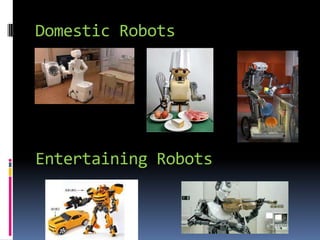
   Domestic Or Household Robots: Robots used at home such
    as robotic vacuum cleaner , robotic pool cleaner and sweeper.
   Medical Robots: Robots used in medicine and medical
    institutions e.g. surgery robots
   Service Robots: Robots that don’t fall into other types by usage
    e.g. robots used for research.
   Military Robots: they are used in military e.g. bomb disposal
    robot , different transportation robots and reconnaissance
    drones
Domestic Robots


Entertaining Robots
Uses and Advantages of
Robots
 Used in vehicles and car factories
 Mounting circuits on electronic devise e.g. mobile phones
 Working where there might be danger e.g. nuclear leaks and bomb
   disposal
 Surgeons are performing robotic surgeries to avoid jiggles and
   movement in microscopically aided surgery or brain surgery
 Mail delivery to various mail stations throughout the building in
   large corporations
 Toy robots are a good source of entertaining for the kids e.g.
   dancing and talking robots
 Robots do not get bored or tired and they can work 24/7 without
   salary and food
Disadvantages Of Robots

 It needs a high supply of power
 People can lose jobs in factories
 It needs maintenance to keep it running
 It cost a lot of money to make or buy a robot
  as they are very expensive
 A robot can not respond in time of danger as
  human can

Robotics

  • 1.
    ROBOTICS Presented by Khisal Iftikhar
  • 2.
    CONTENTS  INTRODUCTION  HISTORY TYPES OF ROBOTS  USES OF ROBOTS  ADVANTAGES AND DISADVANTAGES
  • 3.
    INTRODUCTION TO ROBOTICS WHAT IS A ROBOT ? A robot can be defined as a programmable , self controlled device consisting of electronic , electrical or mechanical units. Or A robot is a mechanical apparatus designed to do the work of a man. Its components are usually electromechanical and are guided by a computer program or electronic circuitry.
  • 4.
    Essential Characteristics of robots Sensing: The robot should be able to sense its surroundings and that is only possible with the help of sensors. Types of sensors: light sensors (eye) , touch sensors(hands) , hearing sensors(ears) or chemical sensors(nose)  Movement: A robot needs to be able to move around its environment whether by rolling on wheels , walking , snaking or skating.  Energy: A robot needs to be able to power itself which depends upon its power resources e.g. batteries , power generators or fuel.  Intelligence: A robot needs to be intelligent and smart which is only possible by the programmer person.
  • 5.
    HISTORY OF ROBOTS 270 BC: Ktesibus made organs and water clocks with movable figures.  In 1818: Mary Shelley wrote ‘Frankenstein’ which was about a frightening artificial life form created by Dr. Frankenstein.  In 1921:The term robot was first used in a play called Rossums Universal Robot by Karle Capek.  In 1956: Worlds first robot company  In 1961: First industrial robot introduced  In 1970: ‘Shaky’ was introduced as the first mobile robot.
  • 6.
    TYPES OF ROBOTS Mobile Robots: They are able to move around in their environment and not fixed to one physical location.  Industrial Robots: They are used in industrial manufacturing environment e.g. welding , material handling , painting and others.  Domestic Or Household Robots: Robots used at home such as robotic vacuum cleaner , robotic pool cleaner and sweeper.  Medical Robots: Robots used in medicine and medical institutions e.g. surgery robots  Service Robots: Robots that don’t fall into other types by usage e.g. robots used for research.  Military Robots: they are used in military e.g. bomb disposal robot , different transportation robots and reconnaissance drones
  • 9.
  • 10.
    Uses and Advantagesof Robots  Used in vehicles and car factories  Mounting circuits on electronic devise e.g. mobile phones  Working where there might be danger e.g. nuclear leaks and bomb disposal  Surgeons are performing robotic surgeries to avoid jiggles and movement in microscopically aided surgery or brain surgery  Mail delivery to various mail stations throughout the building in large corporations  Toy robots are a good source of entertaining for the kids e.g. dancing and talking robots  Robots do not get bored or tired and they can work 24/7 without salary and food
  • 11.
    Disadvantages Of Robots It needs a high supply of power  People can lose jobs in factories  It needs maintenance to keep it running  It cost a lot of money to make or buy a robot as they are very expensive  A robot can not respond in time of danger as human can