1. DIFFRACTION 
2. SINGLE SLIT DIFFRACTION 
3. ANALYSING SINGLE SLIT DIFFRACTION 
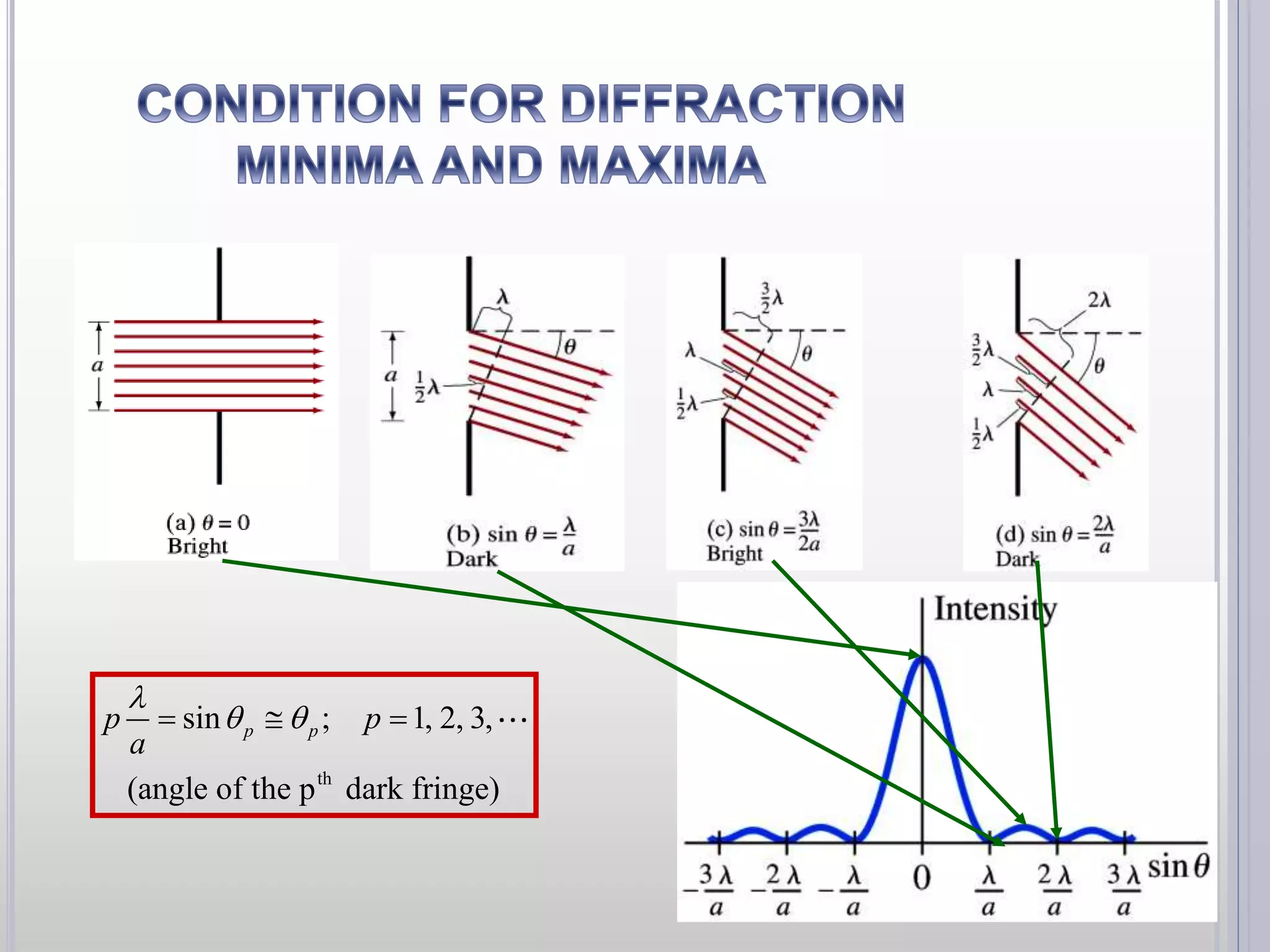
4. CONDITION FOR DIFFRACTION MINIMA AND 
MAXIMA 
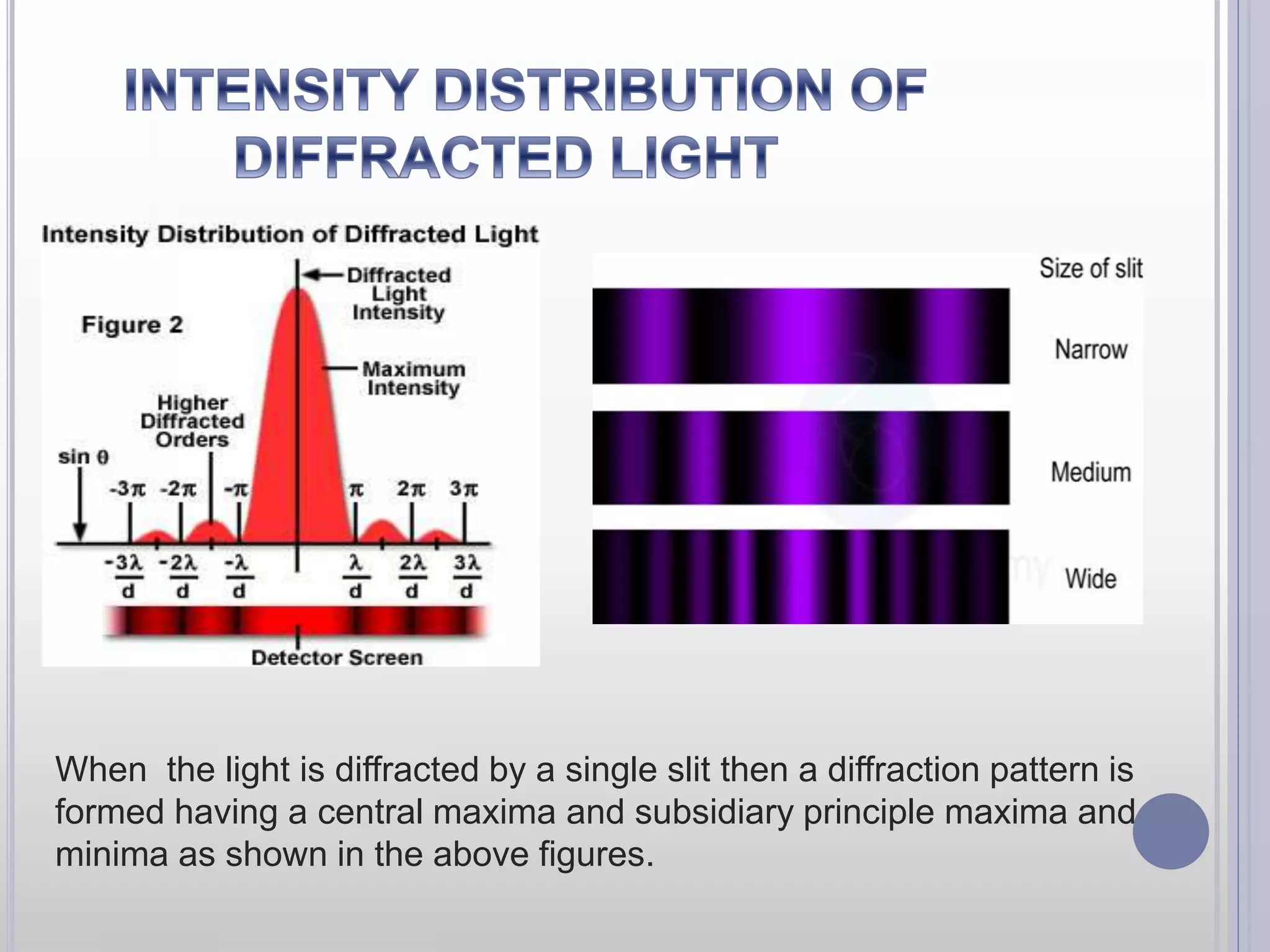
5. INTENSITY DISTRIBUTION OF DIFFRACTED 
LIGHT
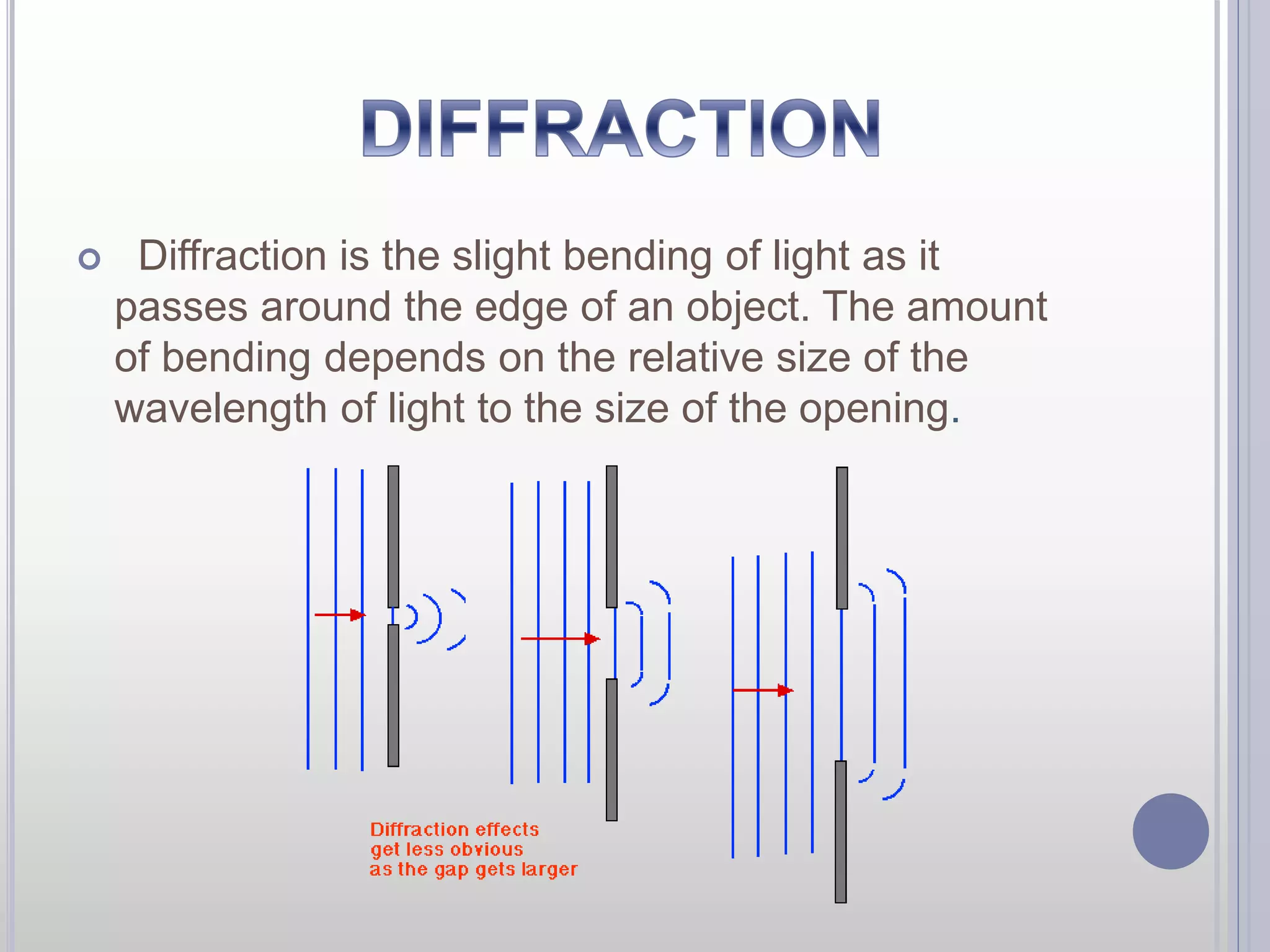
 Diffraction is the slight bending of light as it 
passes around the edge of an object. The amount 
of bending depends on the relative size of the 
wavelength of light to the size of the opening.
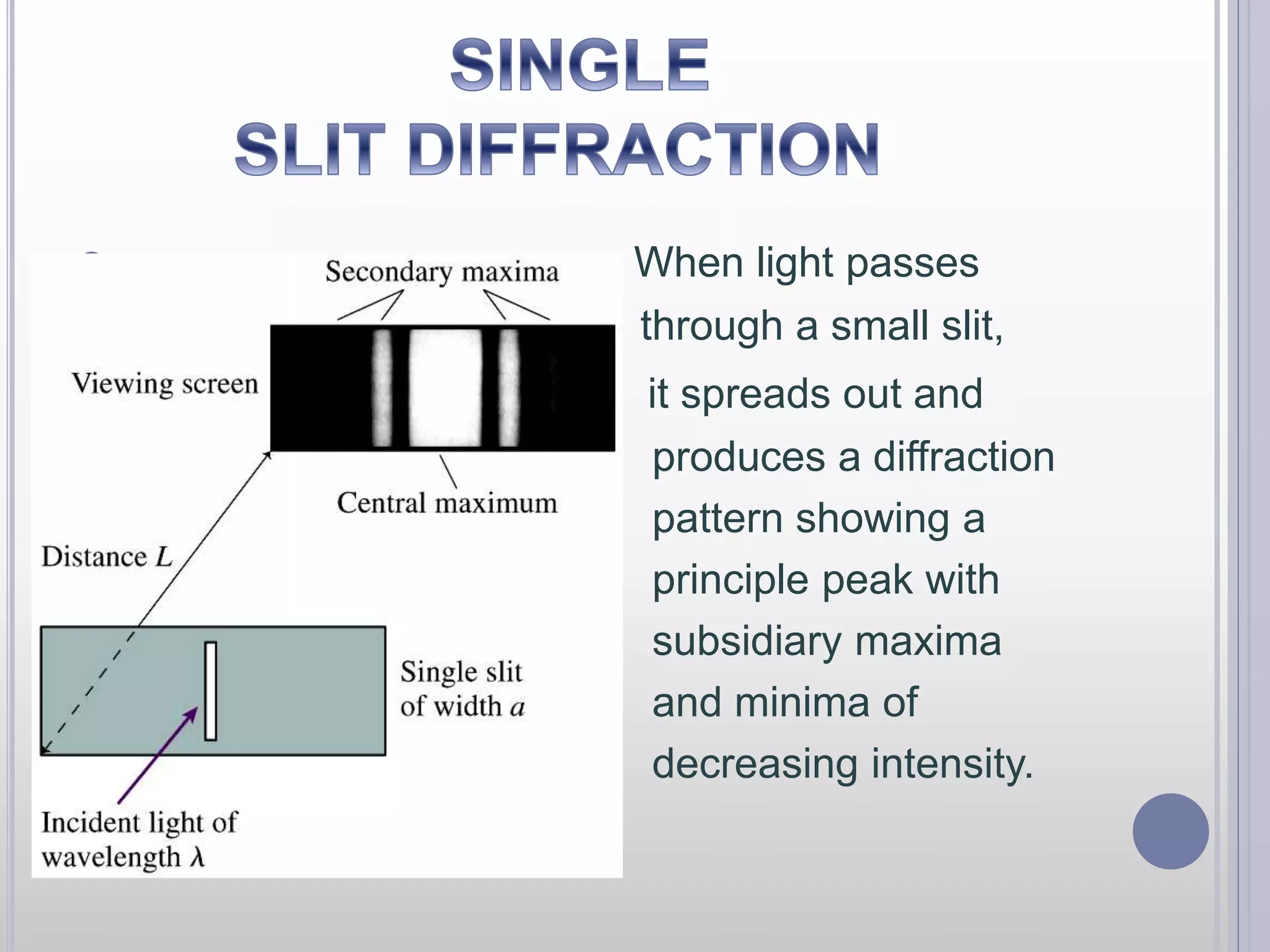
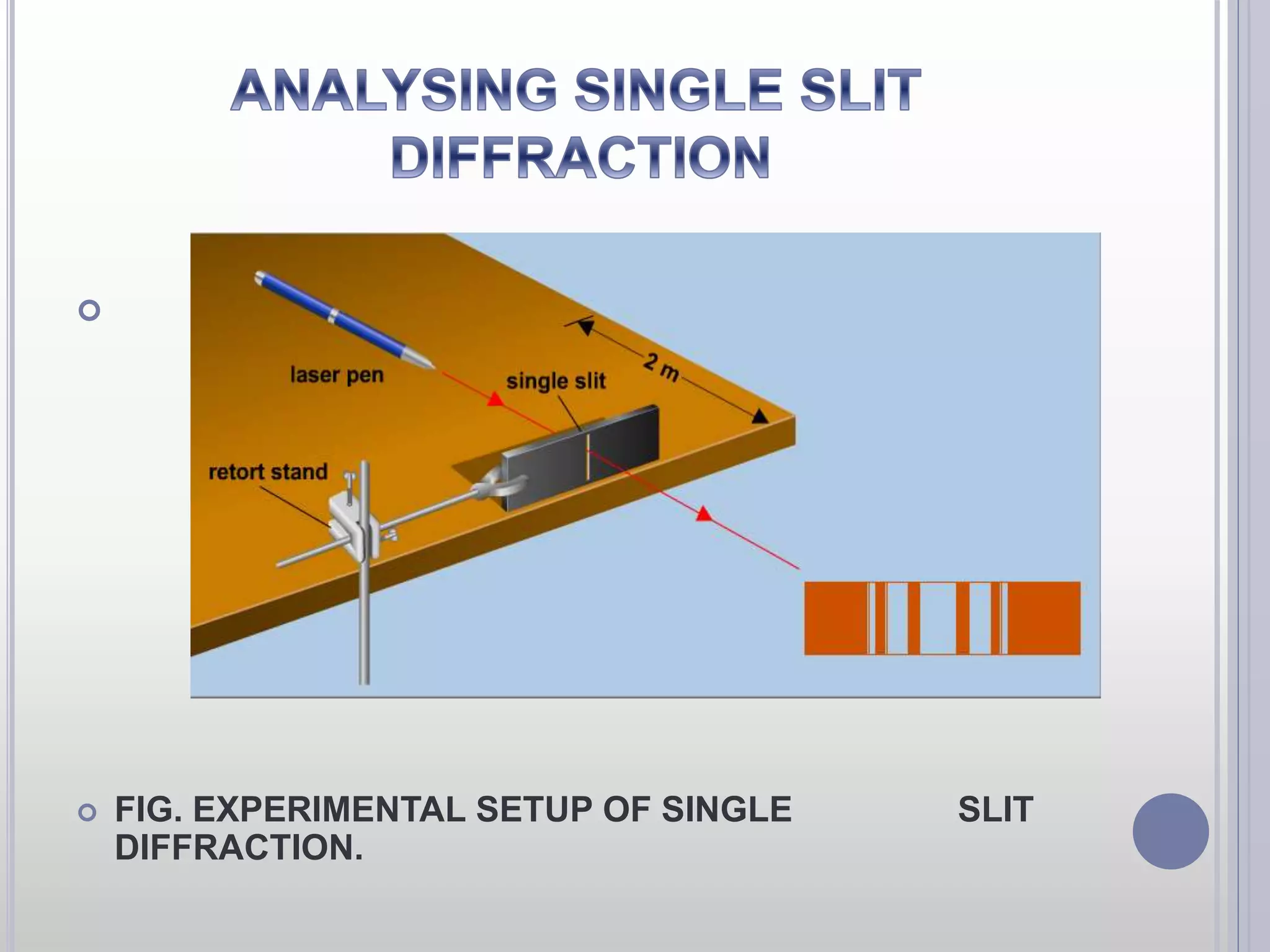
 When light passes 
 through a small slit, 
 it spreads out and 
 produces a diffraction 
 pattern showing a 
 principle peak with 
 subsidiary maxima 
 and minima of 
 decreasing intensity.
 
 FIG. EXPERIMENTAL SETUP OF SINGLE SLIT 
DIFFRACTION.
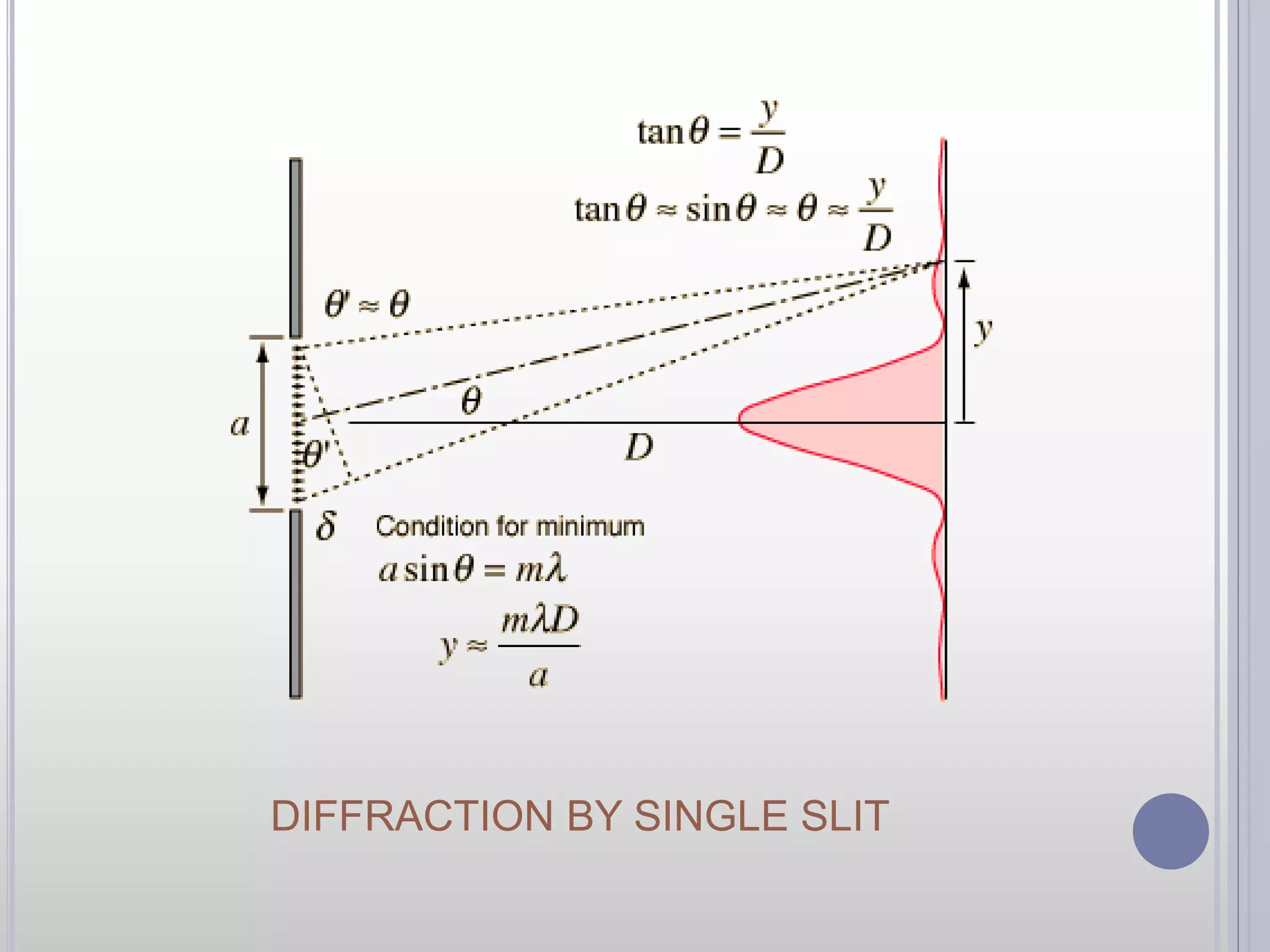
DIFFRACTION BY SINGLE SLIT
 
 
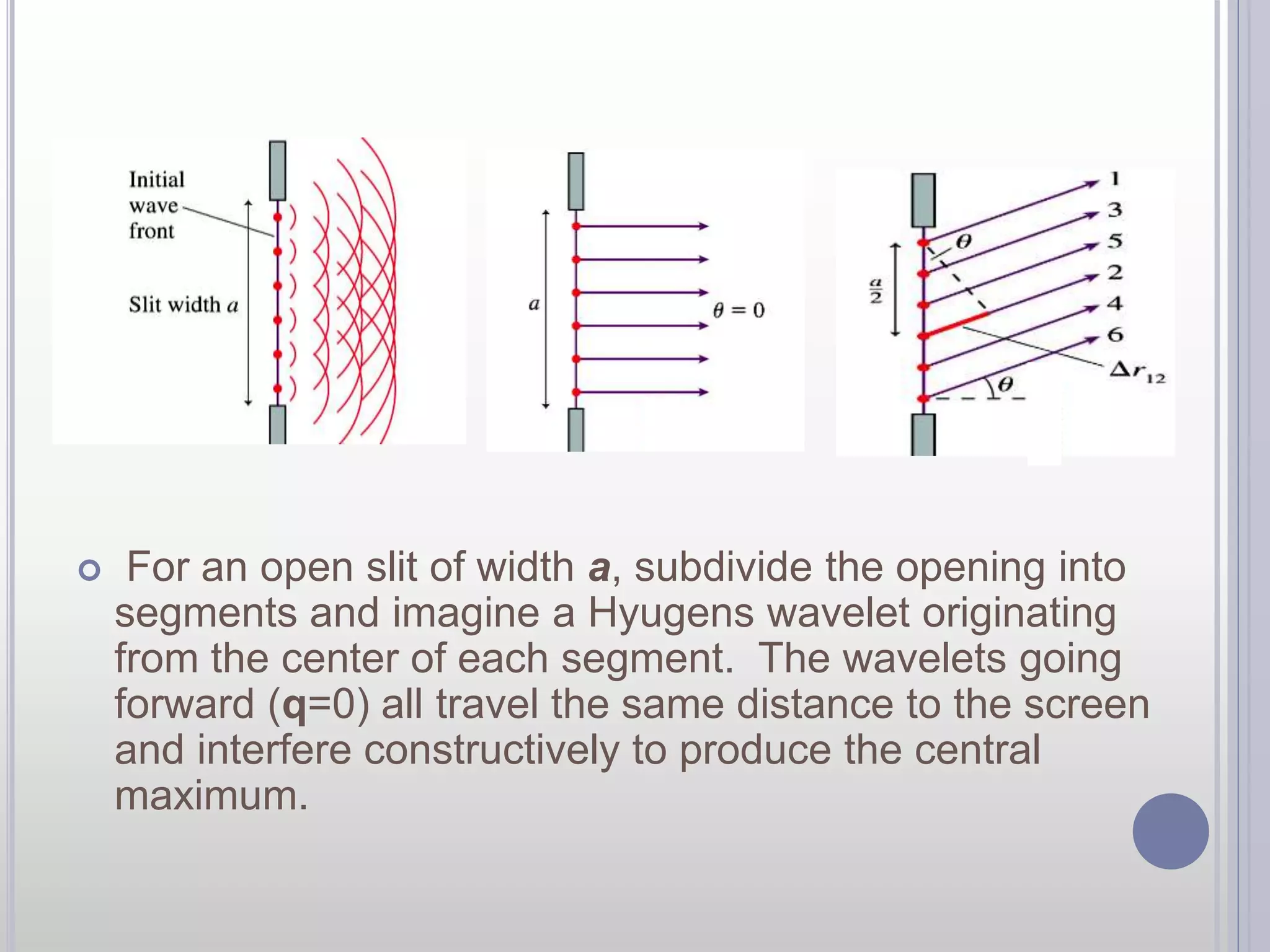
 For an open slit of width a, subdivide the opening into 
segments and imagine a Hyugens wavelet originating 
from the center of each segment. The wavelets going 
forward (q=0) all travel the same distance to the screen 
and interfere constructively to produce the central 
maximum.
 Now consider the wavelets going at an angle such that 
l = a sin q = a q. The wavelet pair (1, 2) has a path 
length difference Dr12 = l/2, and therefore will cancel. 
 The same is true of wavelet pairs (3,4), (5,6), etc. 
Moreover, if the aperture is divided into p sub-parts, 
this procedure can be applied to each sub-part. 
 This procedure locates all of the dark fringes.
 
 
p  sin   ; p 
 
1, 2, 3, 
a 
p p th 
(angle of the p dark fringe)
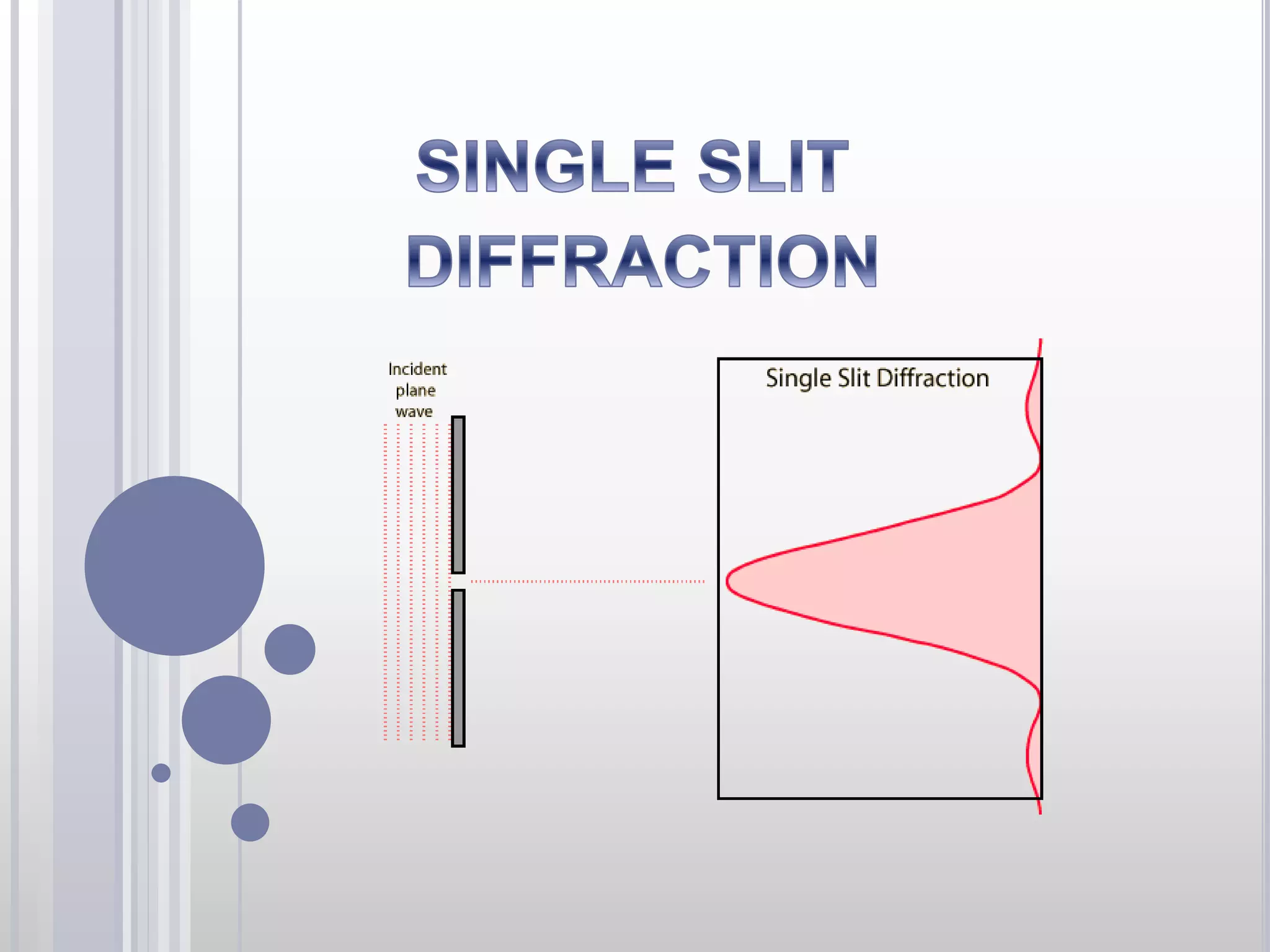
When the light is diffracted by a single slit then a diffraction pattern is 
formed having a central maxima and subsidiary principle maxima and 
minima as shown in the above figures.
Exclusive Single Slit Diffraction

Exclusive Single Slit Diffraction

  • 2.
    1. DIFFRACTION 2.SINGLE SLIT DIFFRACTION 3. ANALYSING SINGLE SLIT DIFFRACTION 4. CONDITION FOR DIFFRACTION MINIMA AND MAXIMA 5. INTENSITY DISTRIBUTION OF DIFFRACTED LIGHT
  • 3.
     Diffraction isthe slight bending of light as it passes around the edge of an object. The amount of bending depends on the relative size of the wavelength of light to the size of the opening.
  • 4.
     When lightpasses  through a small slit,  it spreads out and  produces a diffraction  pattern showing a  principle peak with  subsidiary maxima  and minima of  decreasing intensity.
  • 5.
      FIG.EXPERIMENTAL SETUP OF SINGLE SLIT DIFFRACTION.
  • 6.
  • 7.
      For an open slit of width a, subdivide the opening into segments and imagine a Hyugens wavelet originating from the center of each segment. The wavelets going forward (q=0) all travel the same distance to the screen and interfere constructively to produce the central maximum.
  • 8.
     Now considerthe wavelets going at an angle such that l = a sin q = a q. The wavelet pair (1, 2) has a path length difference Dr12 = l/2, and therefore will cancel.  The same is true of wavelet pairs (3,4), (5,6), etc. Moreover, if the aperture is divided into p sub-parts, this procedure can be applied to each sub-part.  This procedure locates all of the dark fringes.
  • 9.
      p sin   ; p  1, 2, 3, a p p th (angle of the p dark fringe)
  • 10.
    When the lightis diffracted by a single slit then a diffraction pattern is formed having a central maxima and subsidiary principle maxima and minima as shown in the above figures.