Unified Middleware for IoT Applications


             Honbo Zhou

        GM of Foton Telematics
Abstract
     Internet of Things applications are not new and can be
found in all industrial sectors. A four-pillar categorization is
introduced for IoT applications based on their common
characteristics such as technological origin, business
background, and market value chain. IoT is about
connectivity and integration, Middleware plays a crucial
role for IoT applications, Middleware for all 4 pillar IoT
categories are summarized in this presentation. A common
IoT middleware architecture is proposed based on the
speaker’s many years of industrial practices on building
middleware products (the ezM2M IoT platform) for a variety
of IoT applications as well as new developments in IoT
standardization and cloud computing paradigms. Most of
the contents of this presentation are from the speaker’s
new IoT book to be published by Taylor & Francis group
soon.
Outline
IoT: A Web 3.0 View
Ubiquitous IoT Applications
Four Pillars of IoT
DNA of The Internet of Things
Middleware and IoT
Data Standards for WoT
Unified WoT Frameworks
Cloud Computing
The Cloud of Things
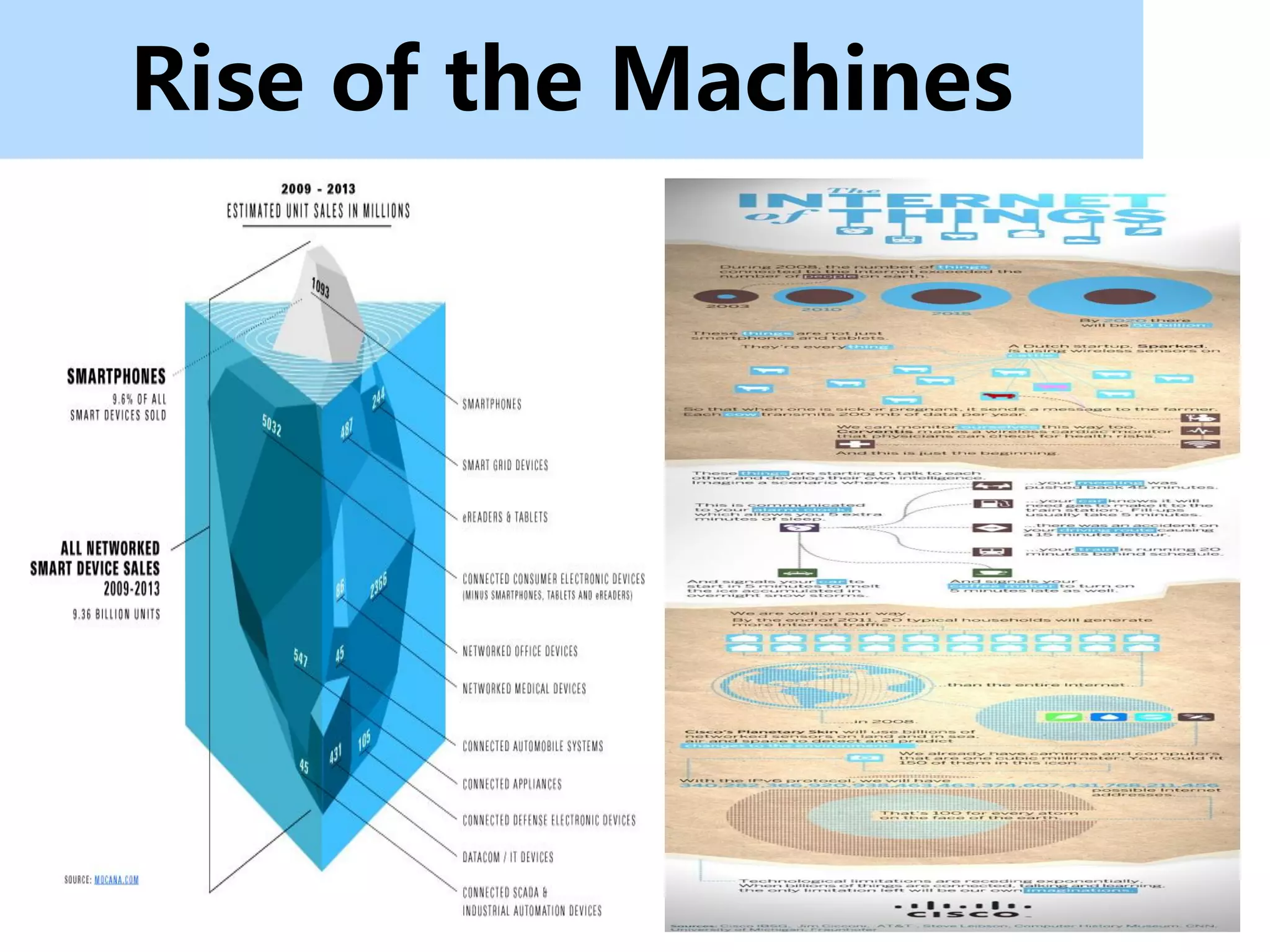
Rise of the Machines
The Third Wave of ICT
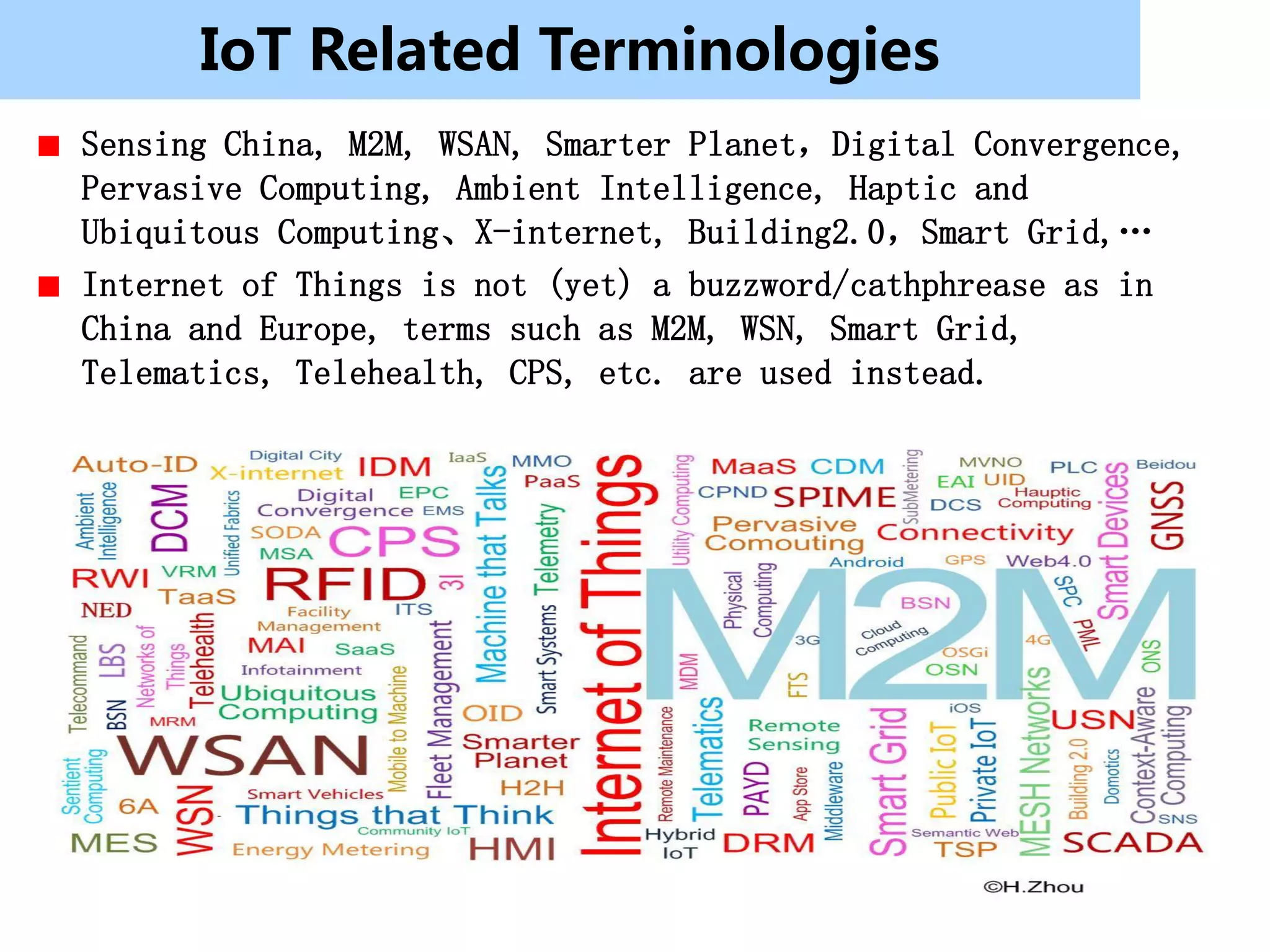
IoT Related Terminologies
Sensing China, M2M, WSAN, Smarter Planet,Digital Convergence,
Pervasive Computing, Ambient Intelligence, Haptic and
Ubiquitous Computing、X-internet, Building2.0,Smart Grid,…
Internet of Things is not (yet) a buzzword/cathphrease as in
China and Europe, terms such as M2M, WSN, Smart Grid,
Telematics, Telehealth, CPS, etc. are used instead.
Defining IoT
    The Internet of Things provide means to access
and control two categories of ubiquitous and
uniquely identifiable devices: those that have
inherent intelligence and those that are externally
enabled, via all sorts of wired and/or wireless
communications in all kinds of networking
environments, supported by cloud computing
technologies with adequate security measures, to
achieve pervasive connectivity and grand integration
and to provide services such as monitoring,
locating, controlling, reporting, decision support,
and so on.
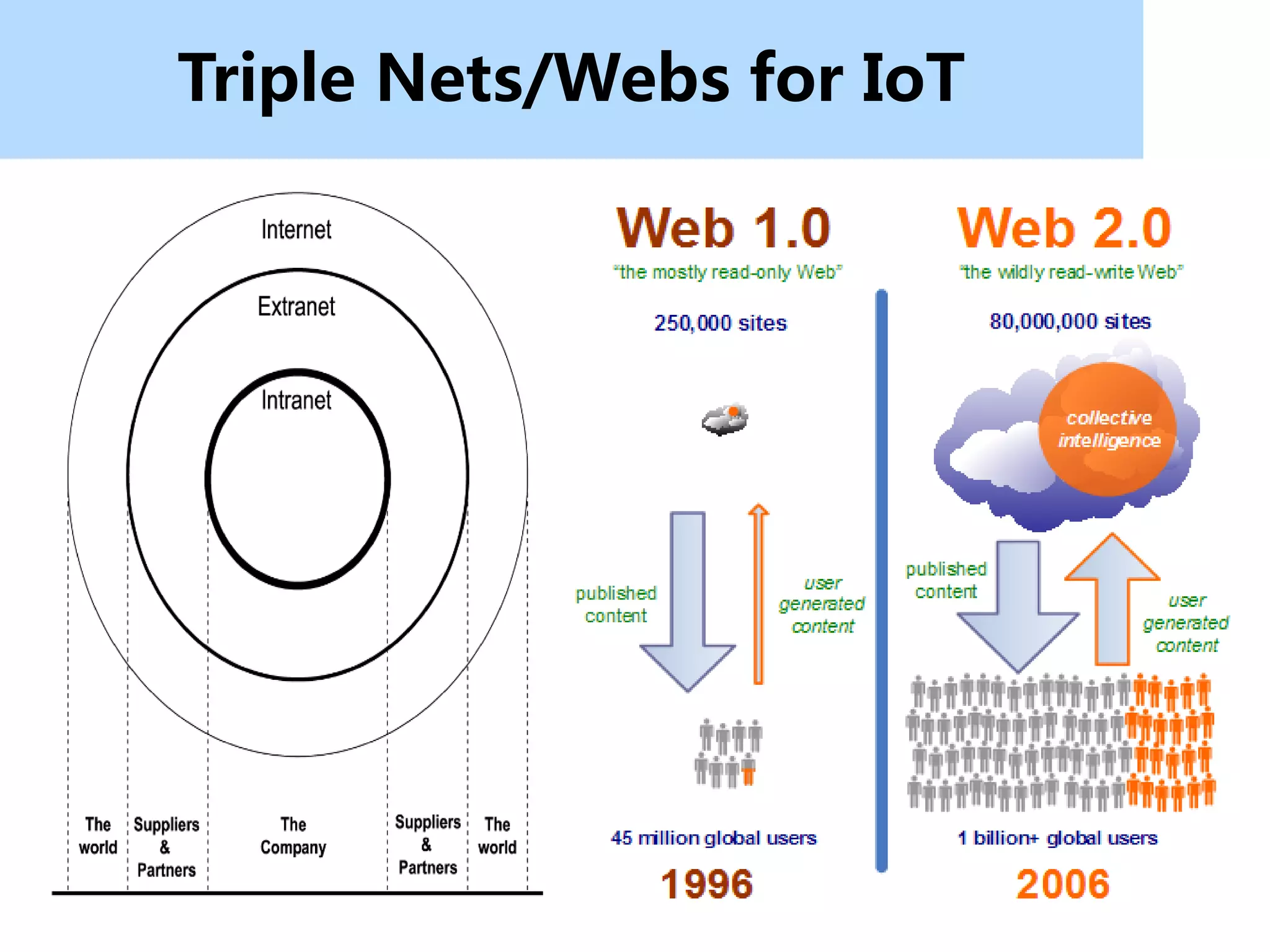
Triple Nets/Webs for IoT
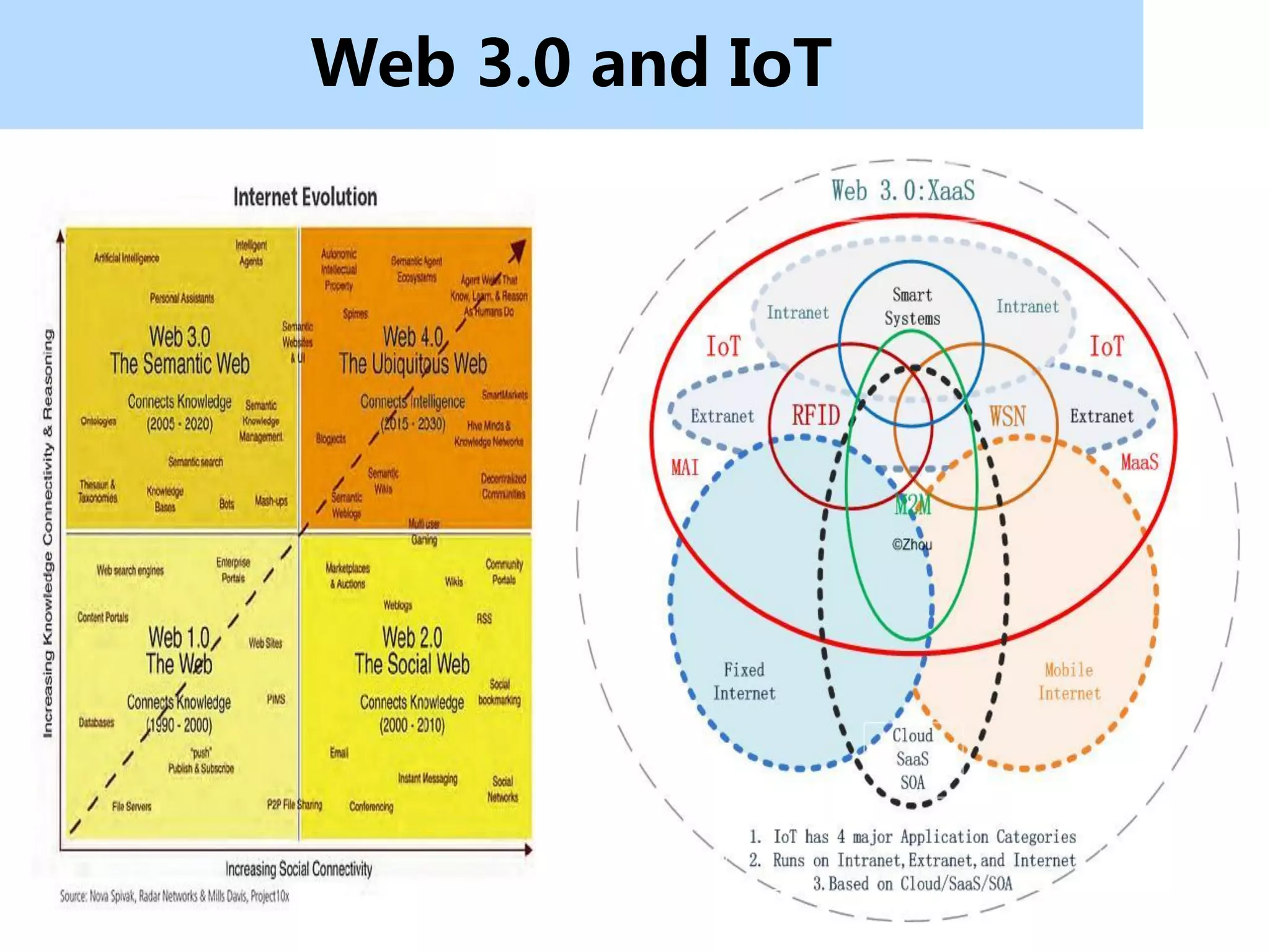
Web 3.0 and IoT
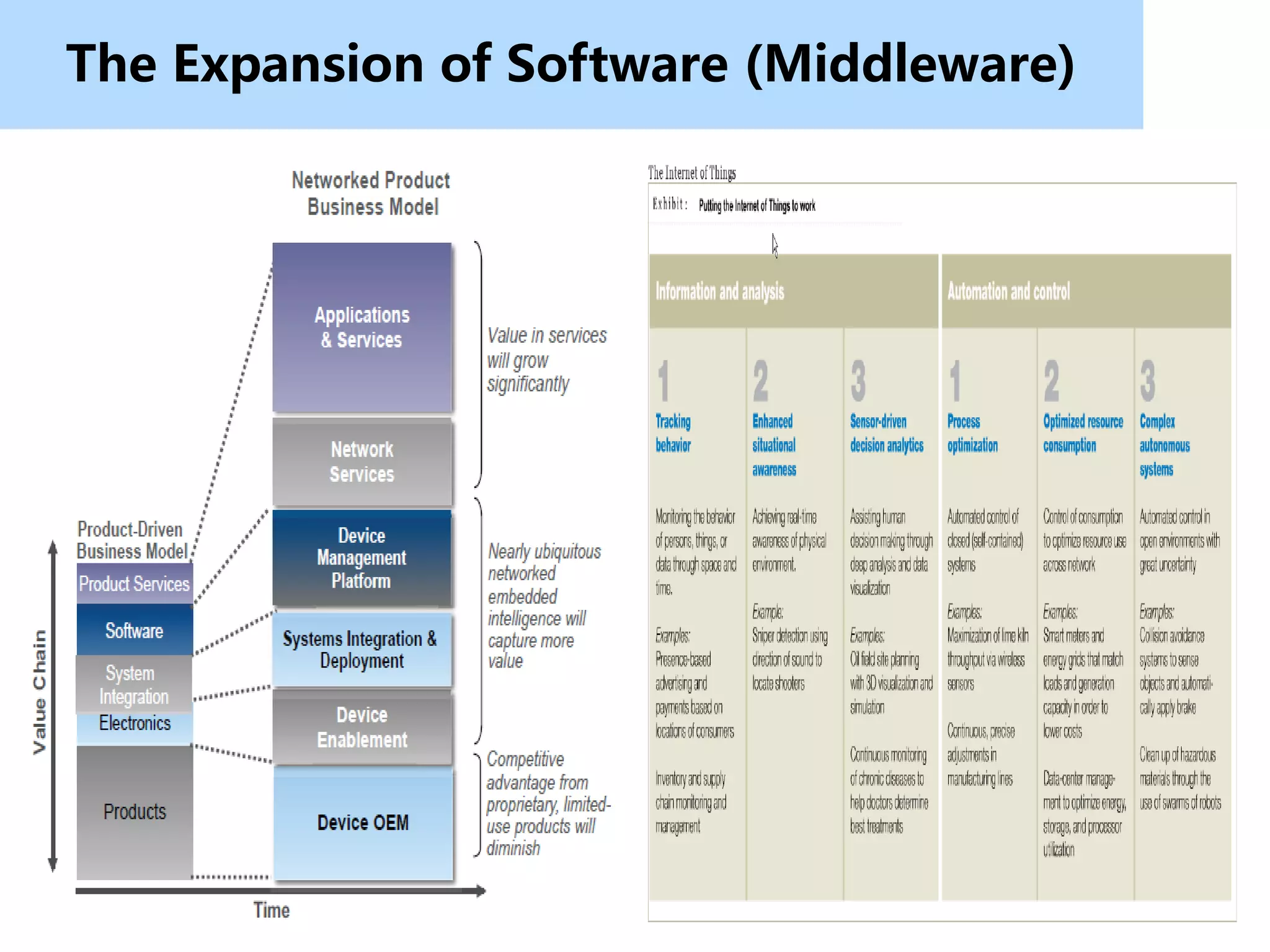
The Expansion of Software (Middleware)
Outline
IoT: A Web 3.0 View
Ubiquitous IoT Applications
Four Pillars of IoT
DNA of The Internet of Things
Middleware and IoT
Data Standards for WoT
Unified WoT Frameworks
Cloud Computing
The Cloud of Things
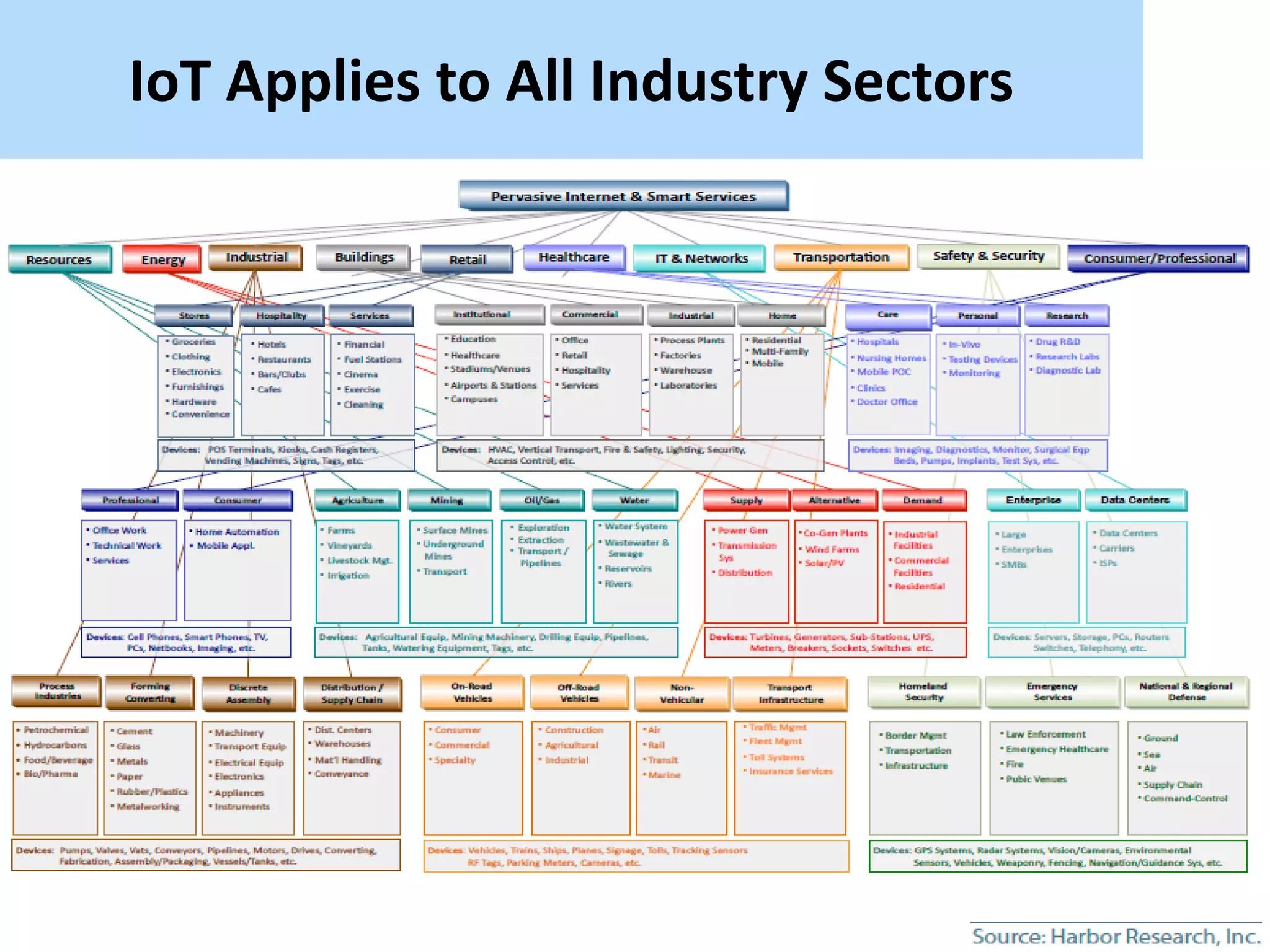
IoT Applies to All Industry Sectors
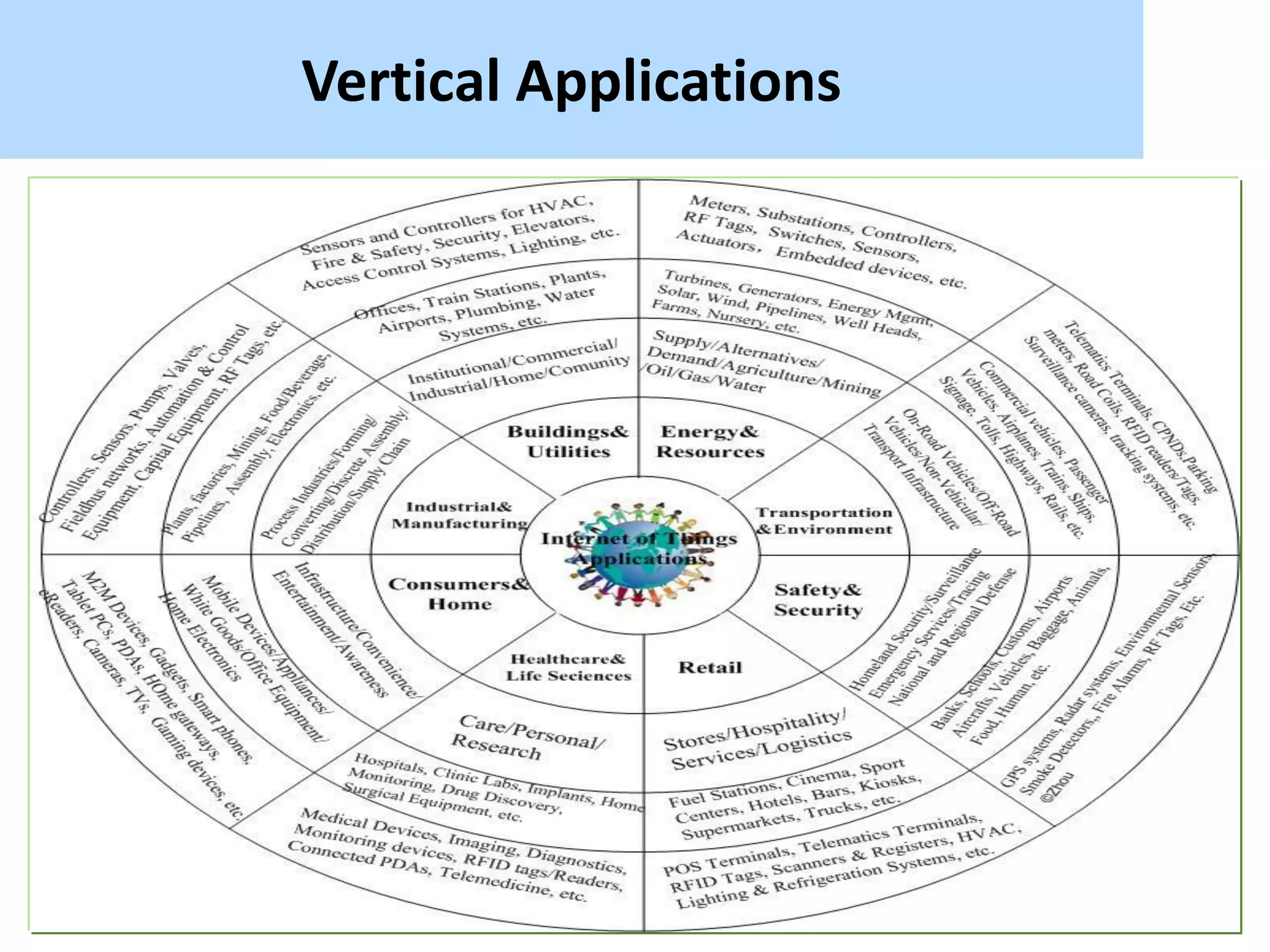
Vertical Applications
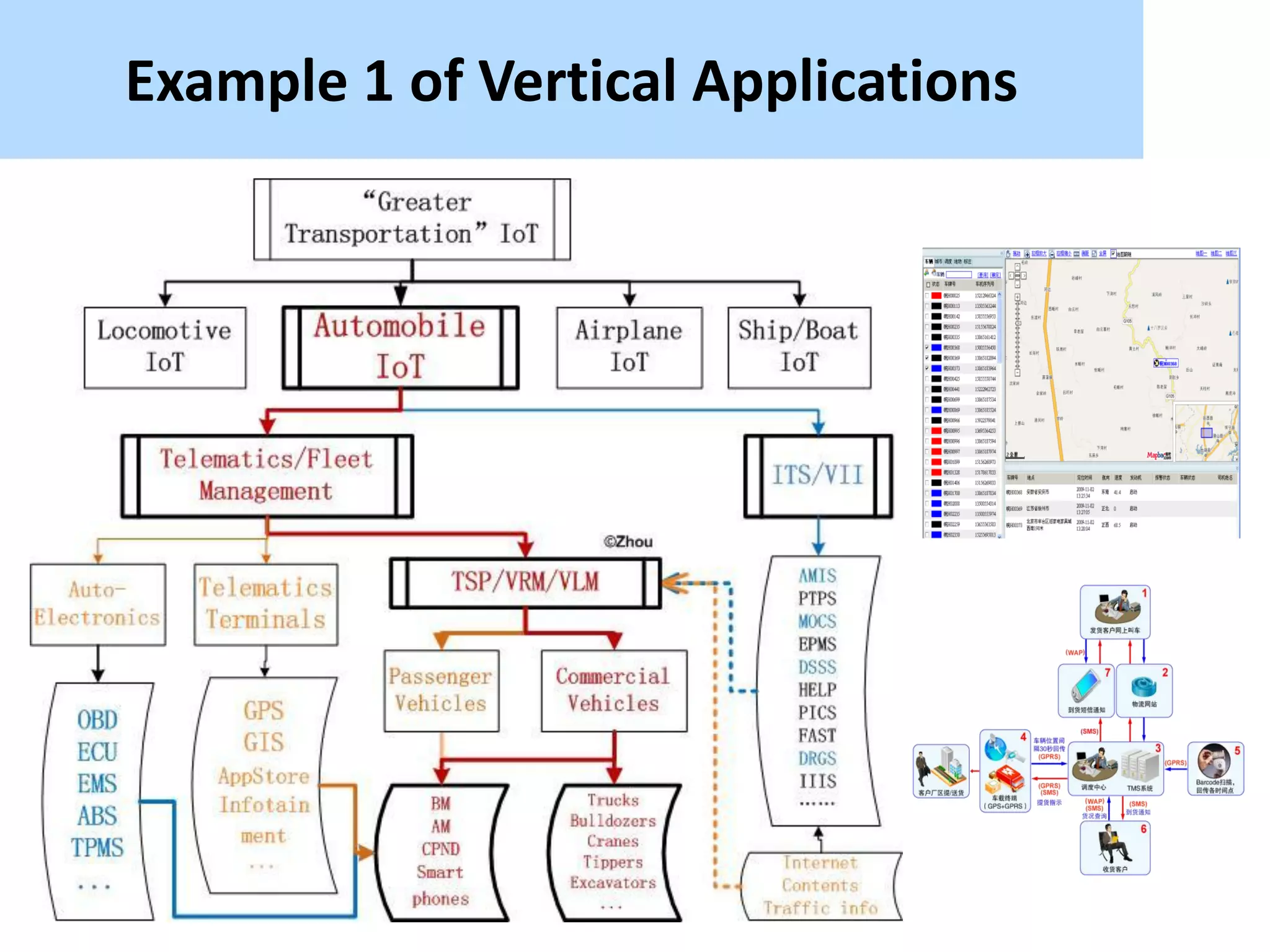
Example 1 of Vertical Applications
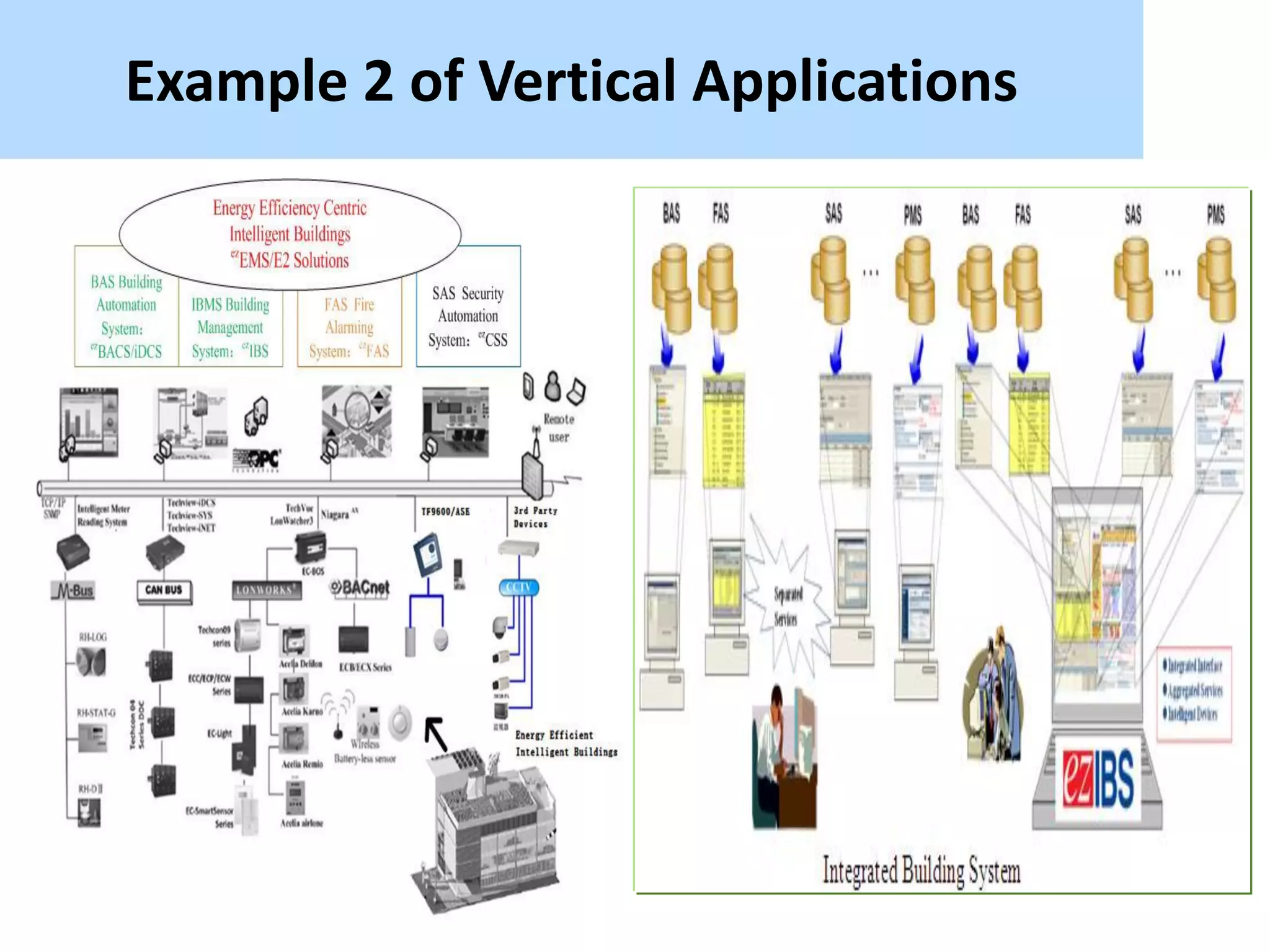
Example 2 of Vertical Applications
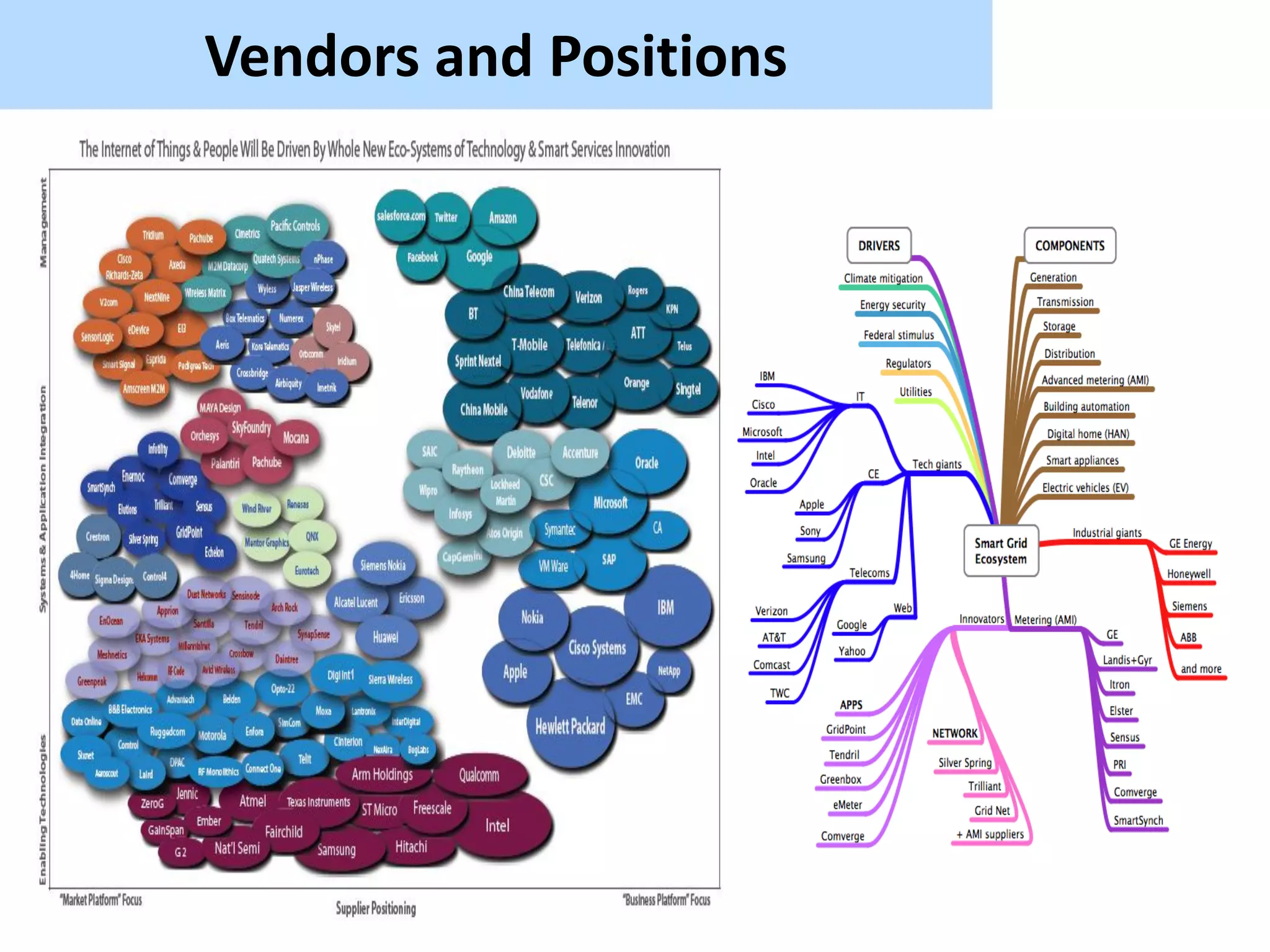
Vendors and Positions
Outline
IoT: A Web 3.0 View
Ubiquitous IoT Applications
Four Pillars of IoT
DNA of The Internet of Things
Middleware and IoT
Data Standards for WoT
Unified WoT Frameworks
Cloud Computing
The Cloud of Things
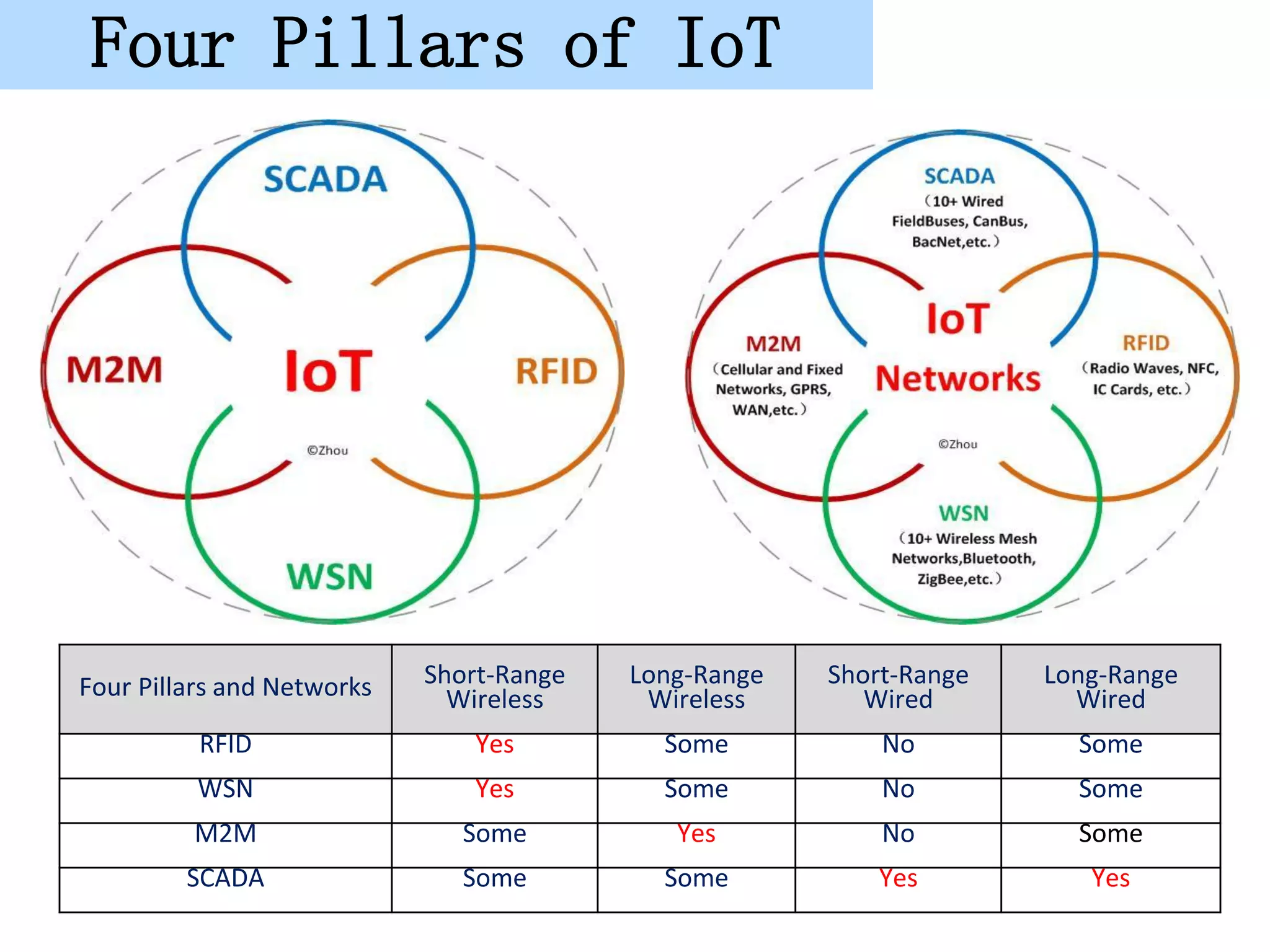
Four Pillars of IoT


Four Pillars and Networks   Short-Range   Long-Range   Short-Range   Long-Range
                              Wireless     Wireless       Wired        Wired
          RFID                 Yes          Some           No          Some
          WSN                  Yes          Some           No          Some
         M2M                   Some          Yes           No          Some
         SCADA                 Some         Some          Yes           Yes
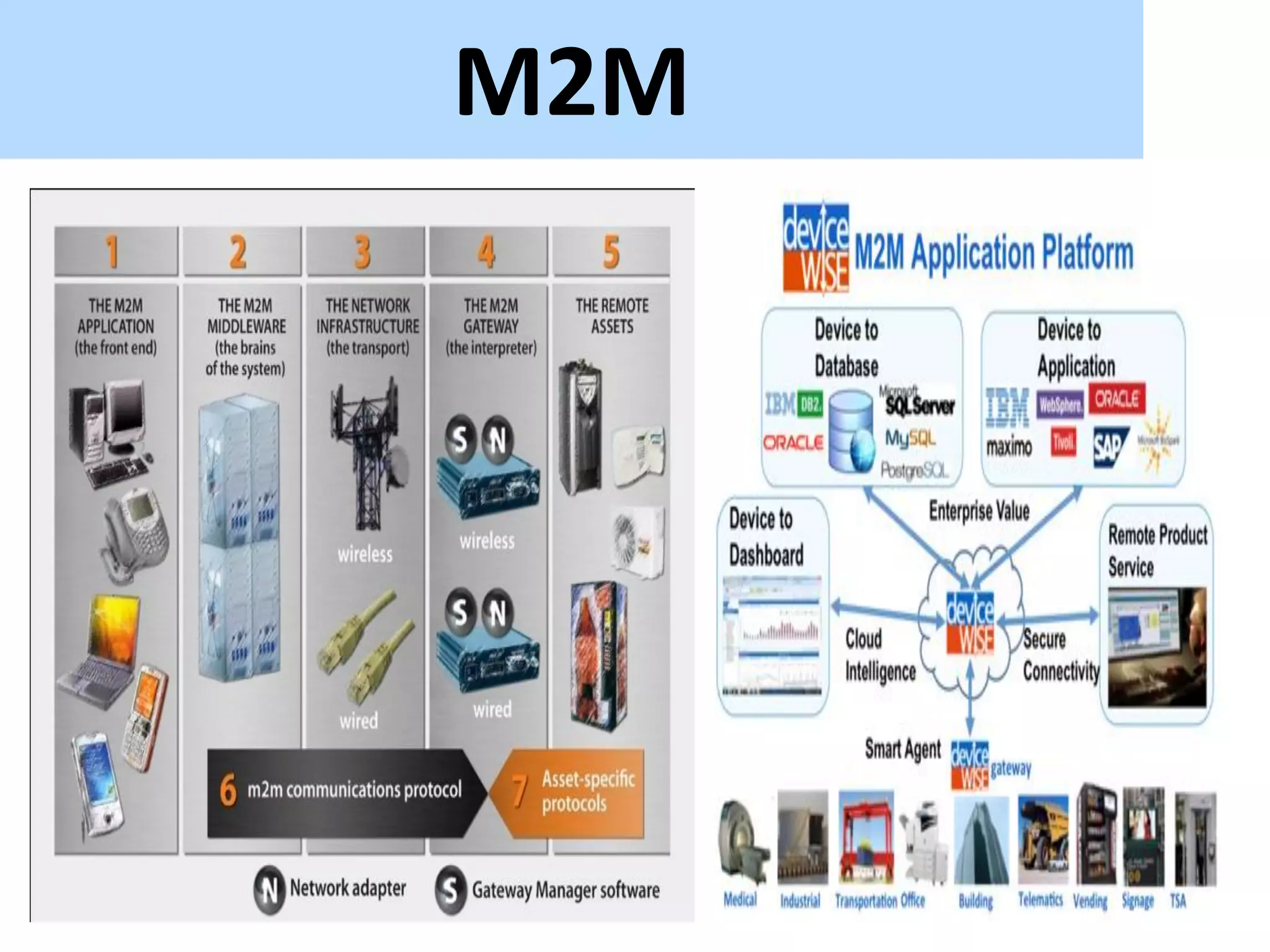
M2M
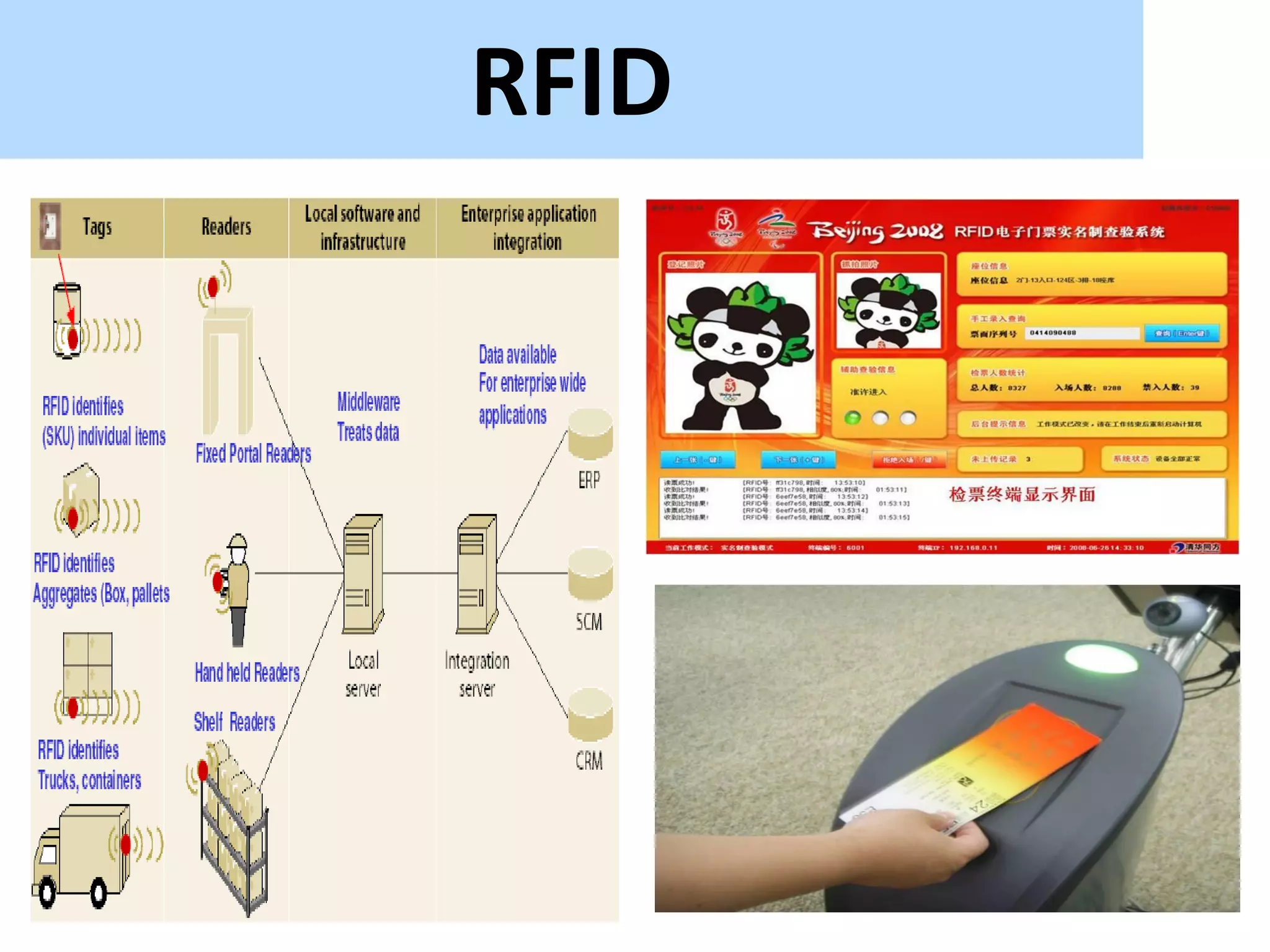
RFID
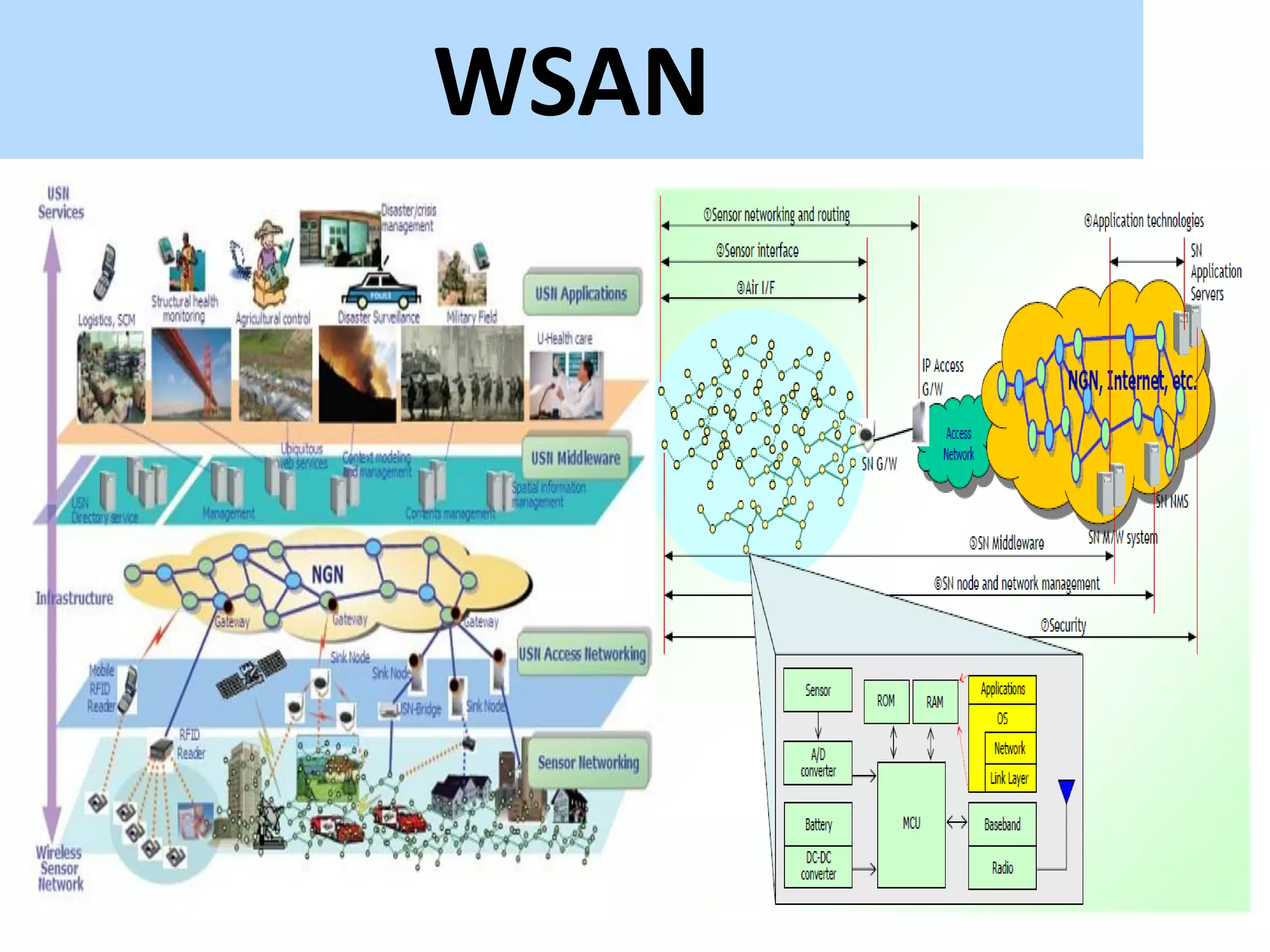
WSAN
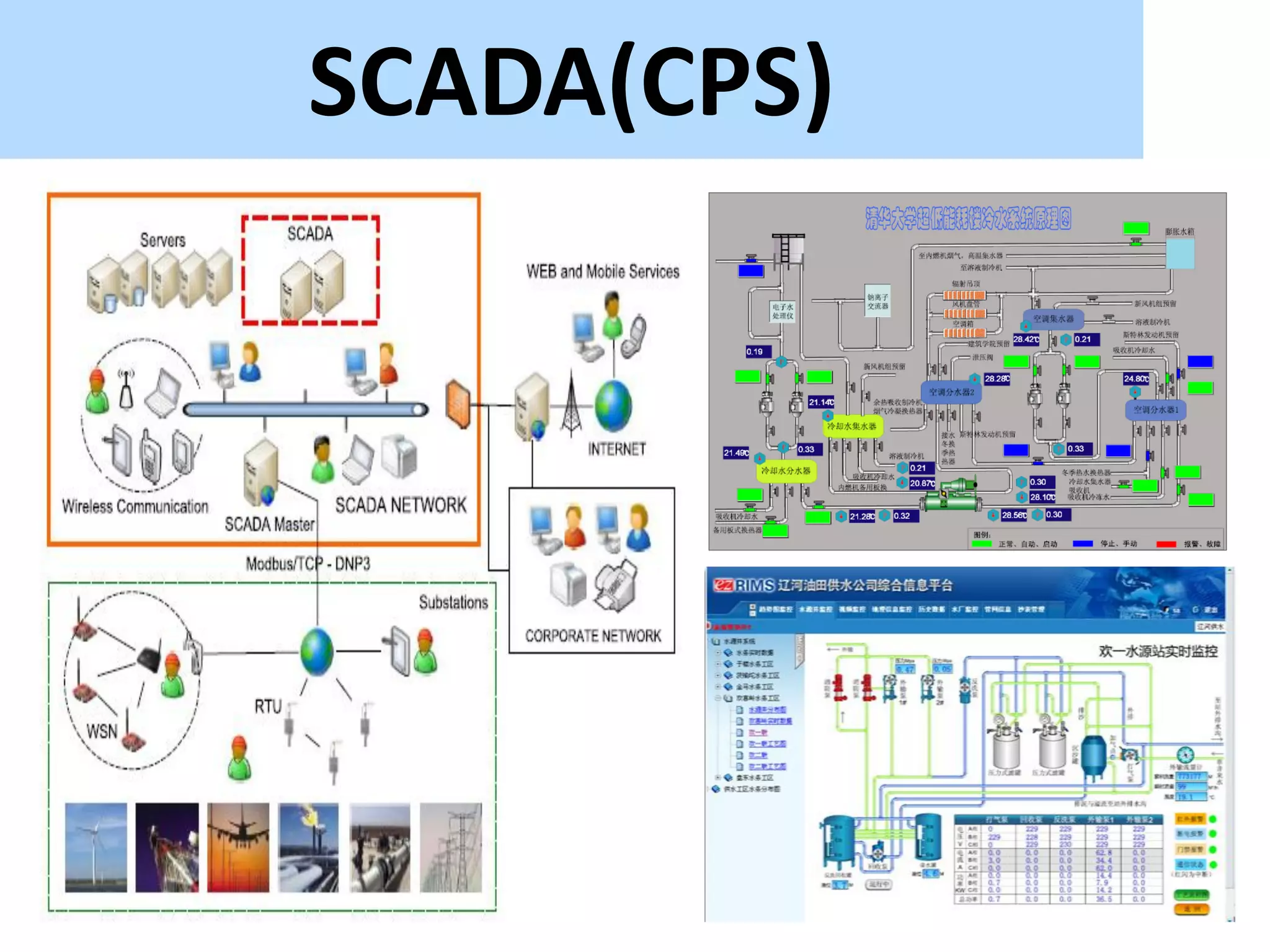
SCADA(CPS)
Outline
IoT: A Web 3.0 View
Ubiquitous IoT Applications
Four Pillars of IoT
DNA of The Internet of Things
Middleware and IoT
Data Standards for WoT
Unified WoT Frameworks
Cloud Computing
The Cloud of Things
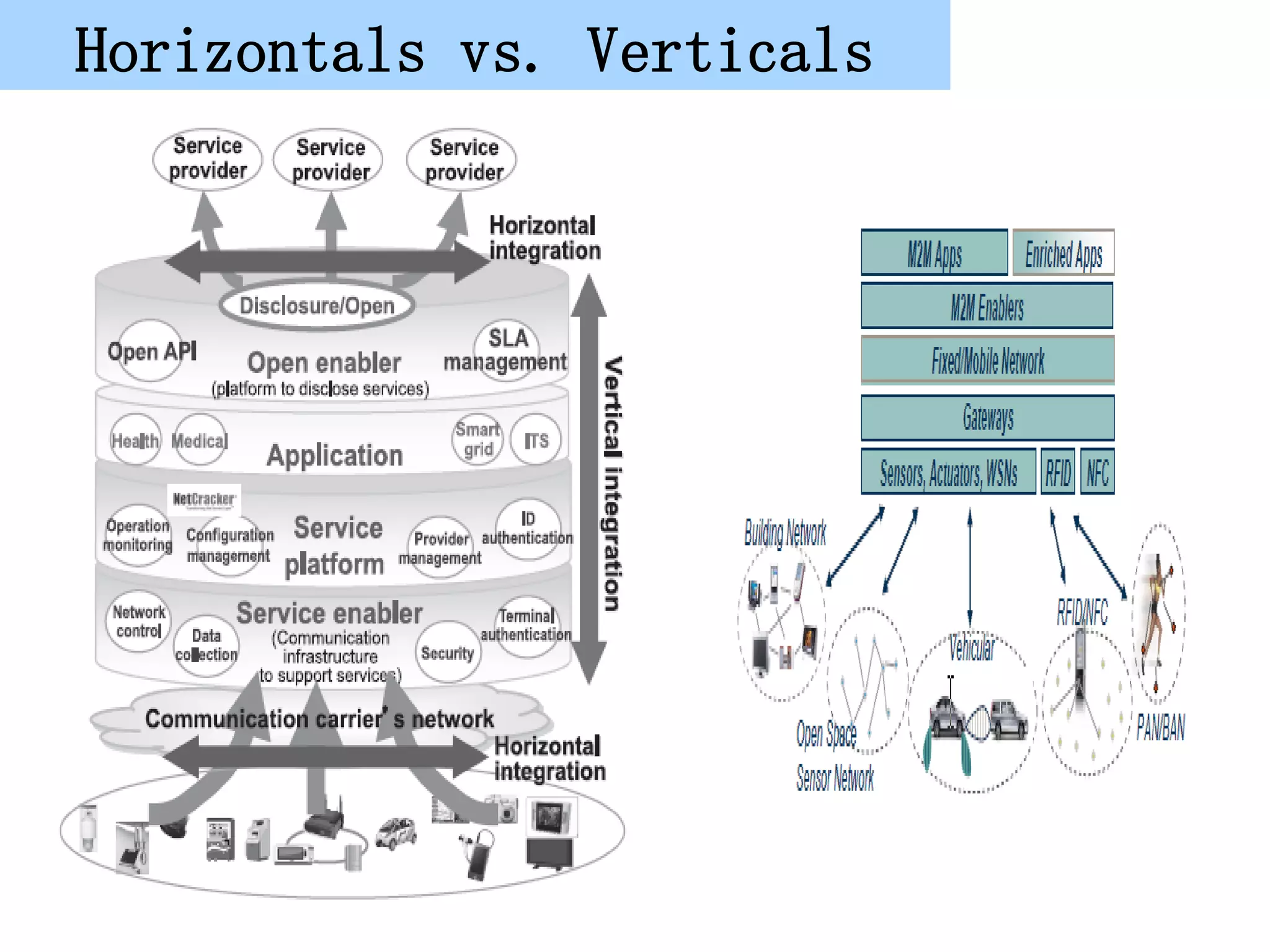
Horizontals vs. Verticals
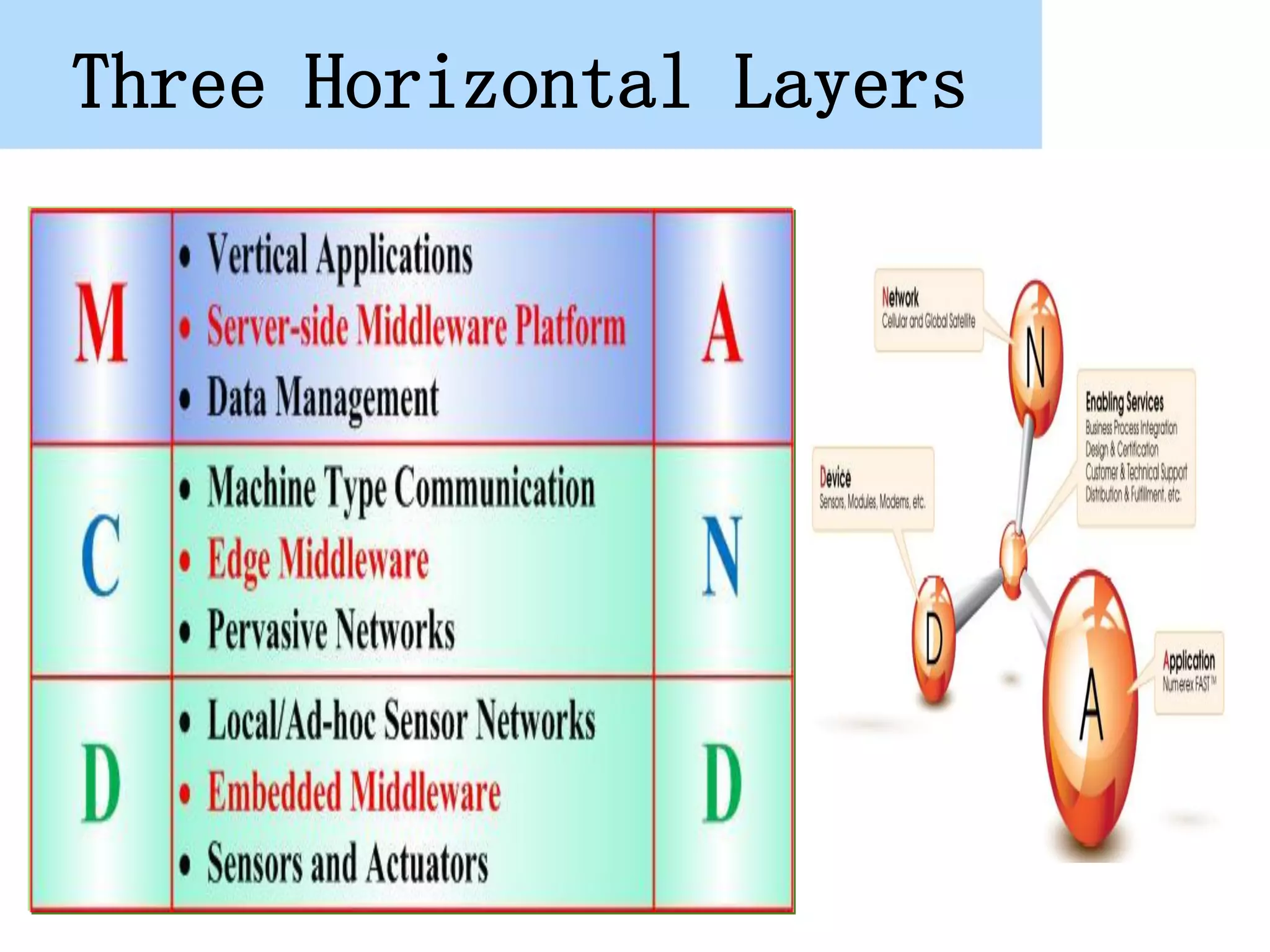
Three Horizontal Layers
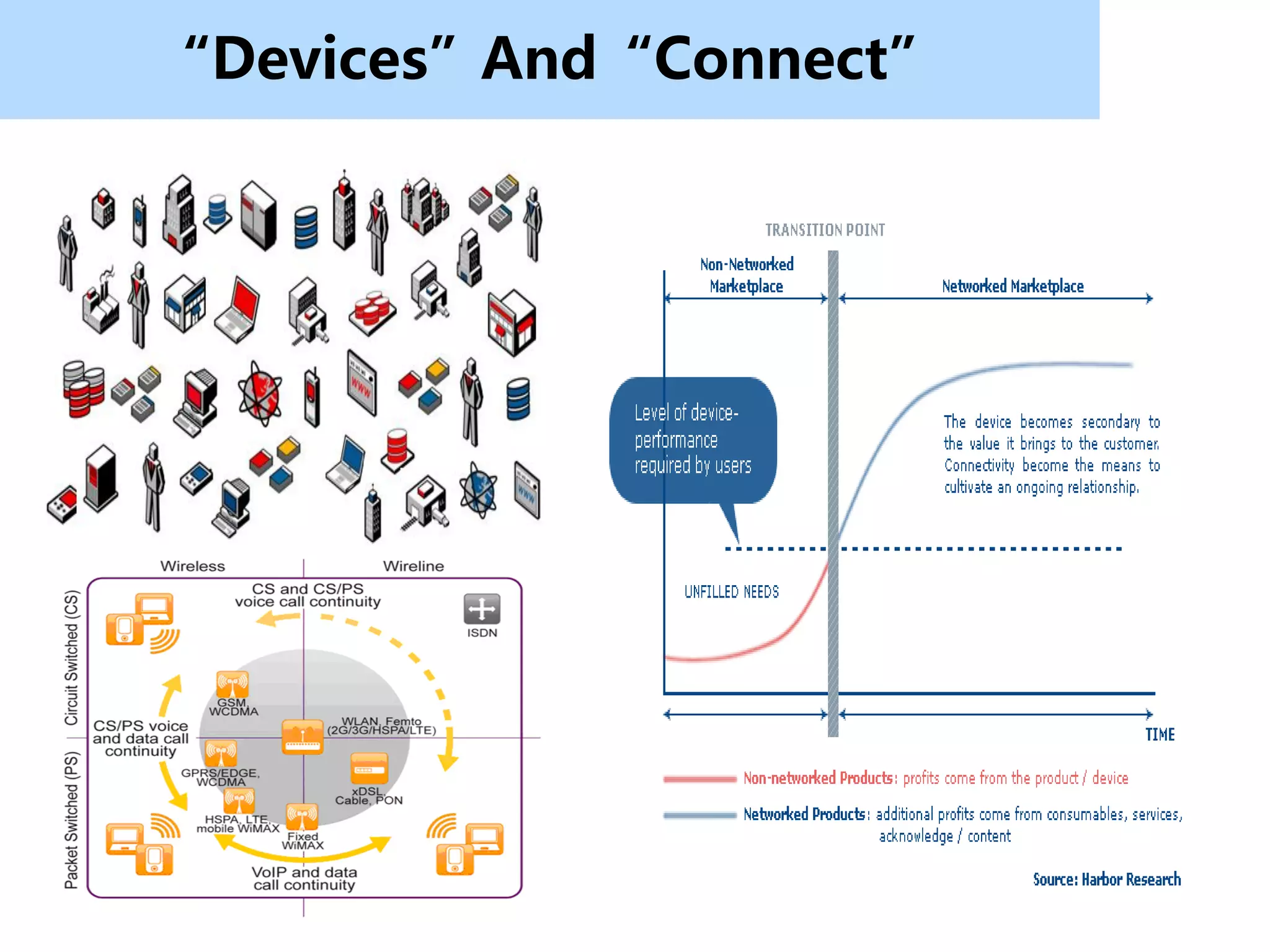
“Devices”And“Connect”
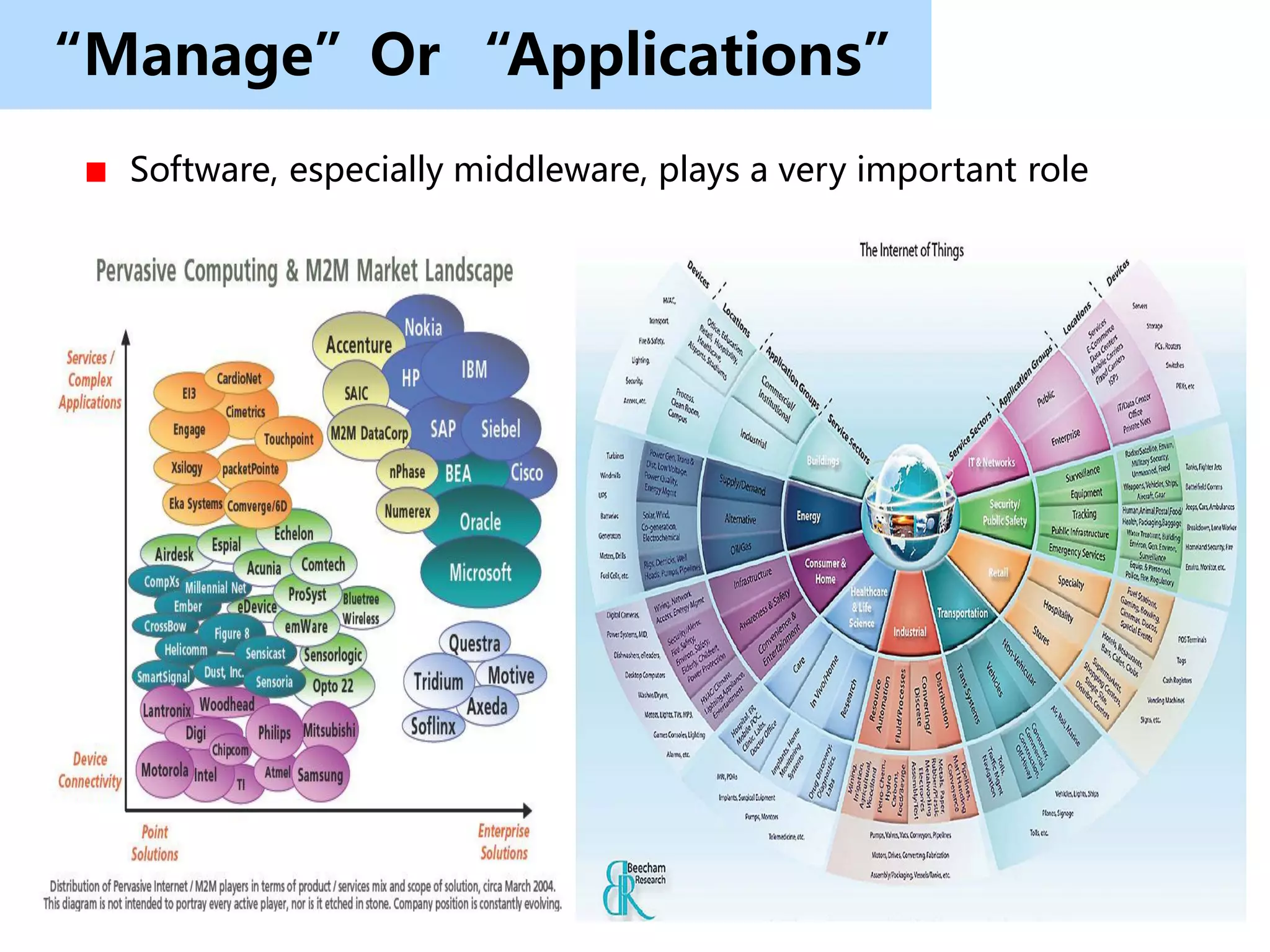
“Manage”Or “Applications”
  Software, especially middleware, plays a very important role
Outline
IoT: A Web 3.0 View
Ubiquitous IoT Applications
Four Pillars of IoT
DNA of The Internet of Things
Middleware and IoT
Data Standards for WoT
Unified WoT Frameworks
Cloud Computing
The Cloud of Things
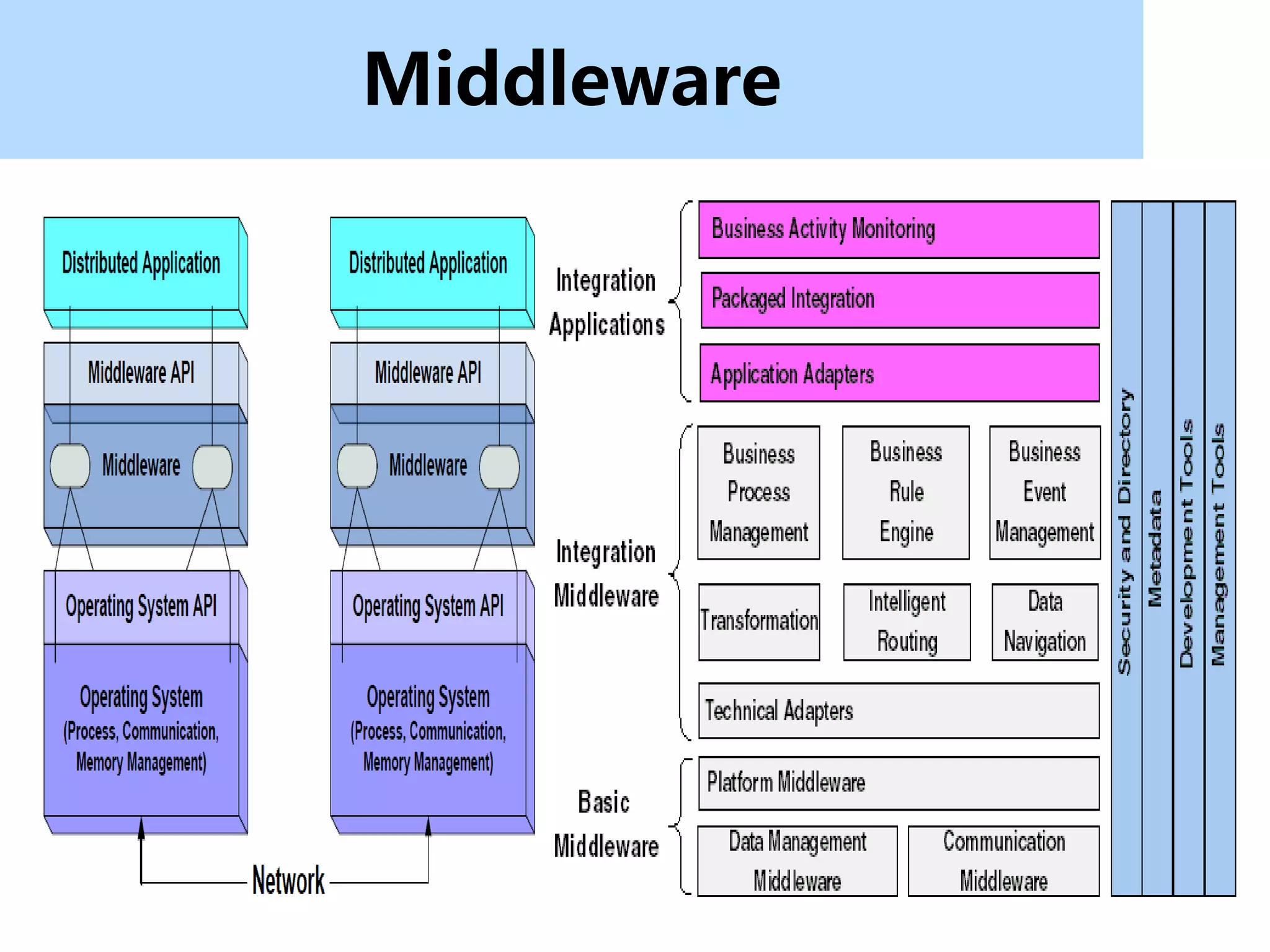
Middleware
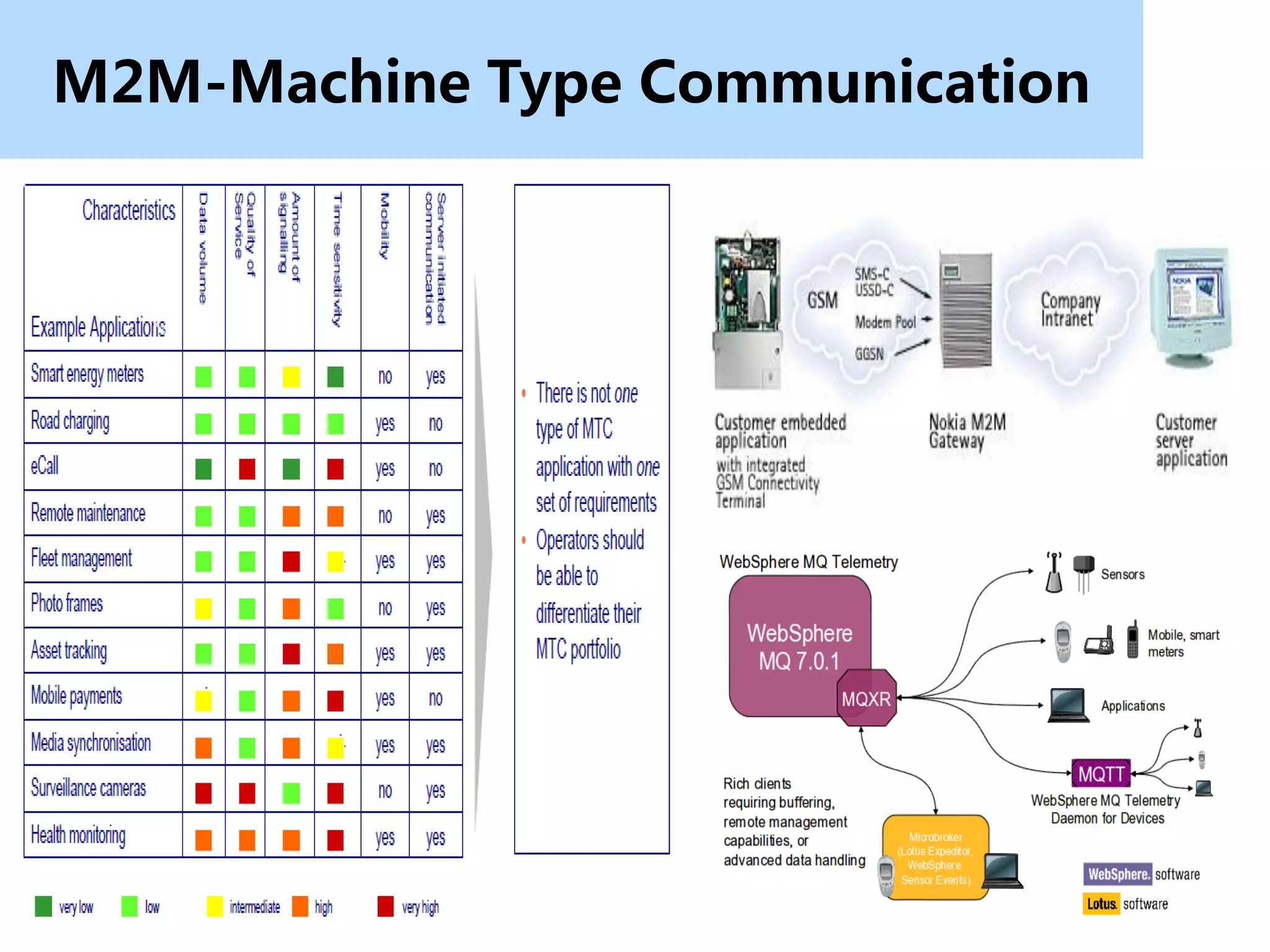
M2M-Machine Type Communication
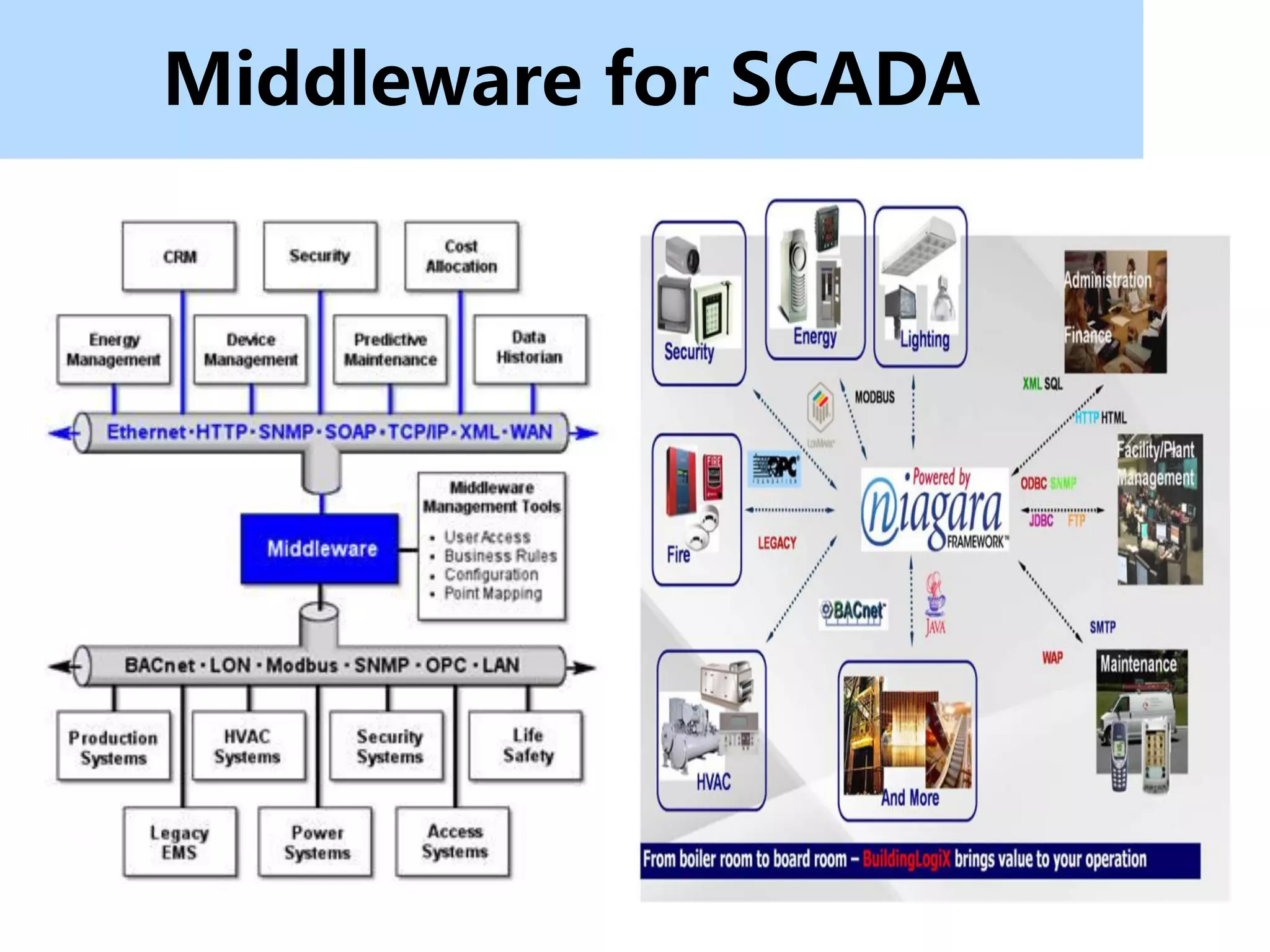
Middleware for SCADA
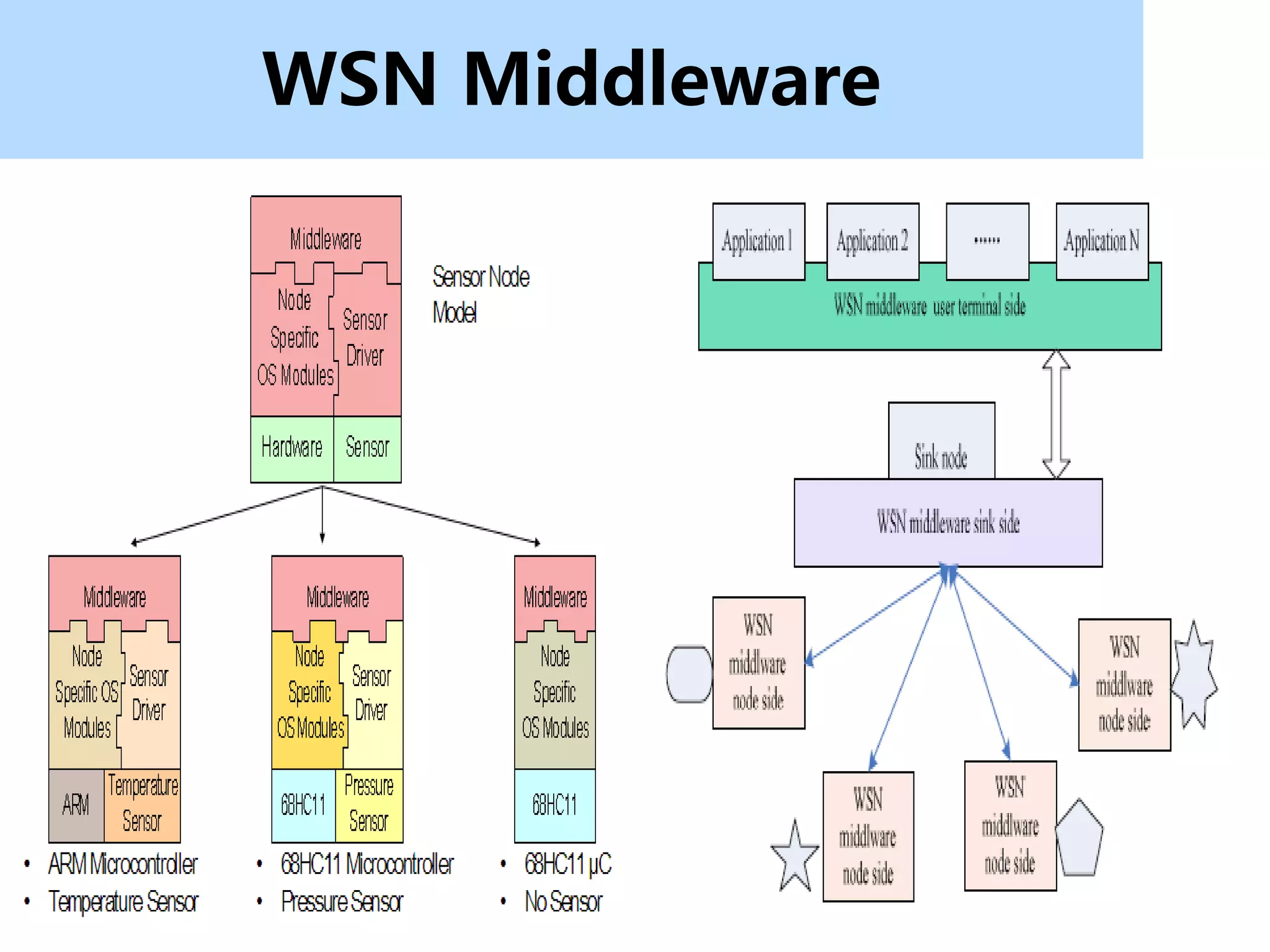
WSN Middleware
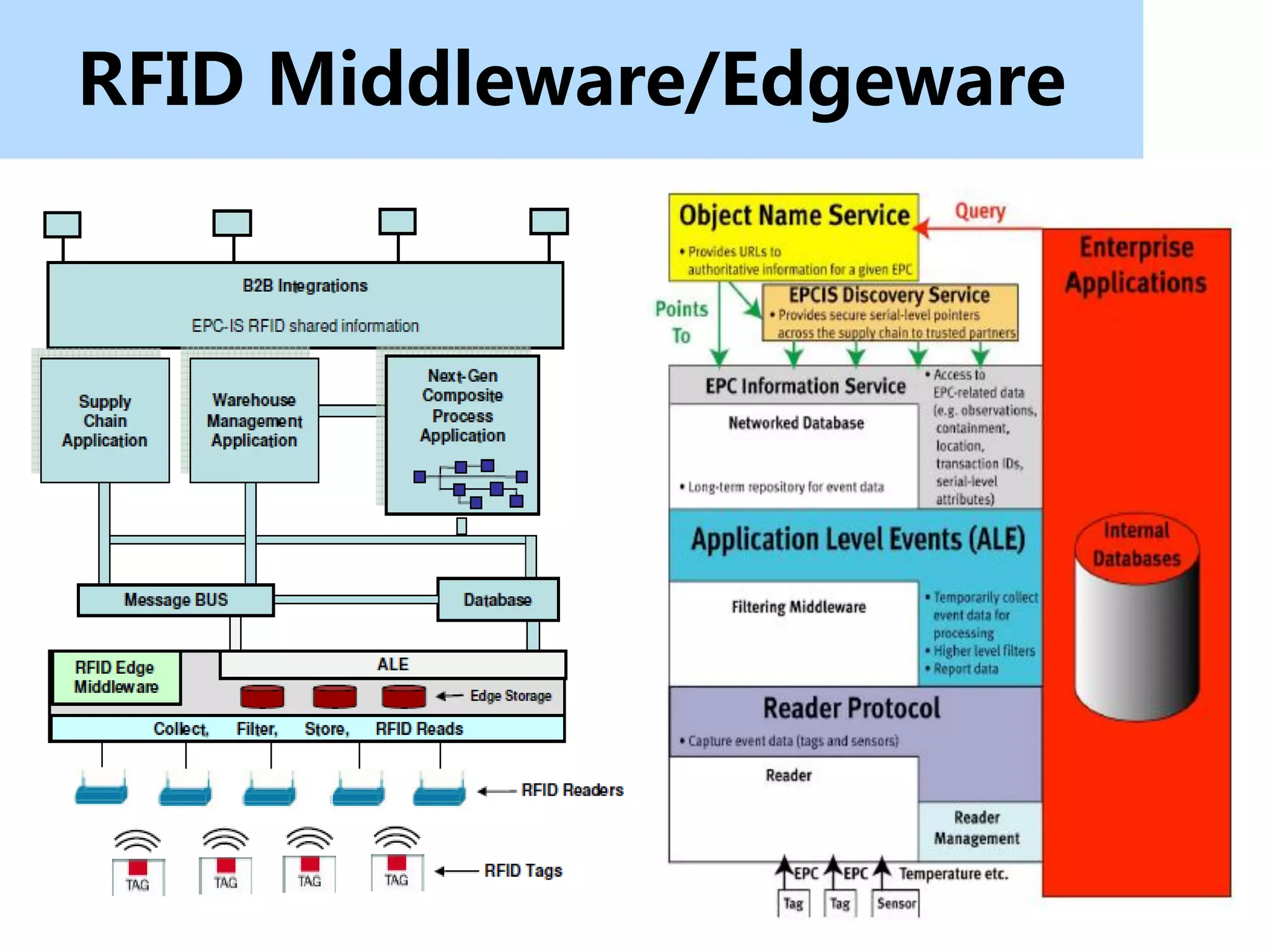
RFID Middleware/Edgeware
Outline
IoT: A Web 3.0 View
Ubiquitous IoT Applications
Four Pillars of IoT
DNA of The Internet of Things
Middleware and IoT
Data Standards for WoT
Unified WoT Frameworks
Cloud Computing
The Cloud of Things
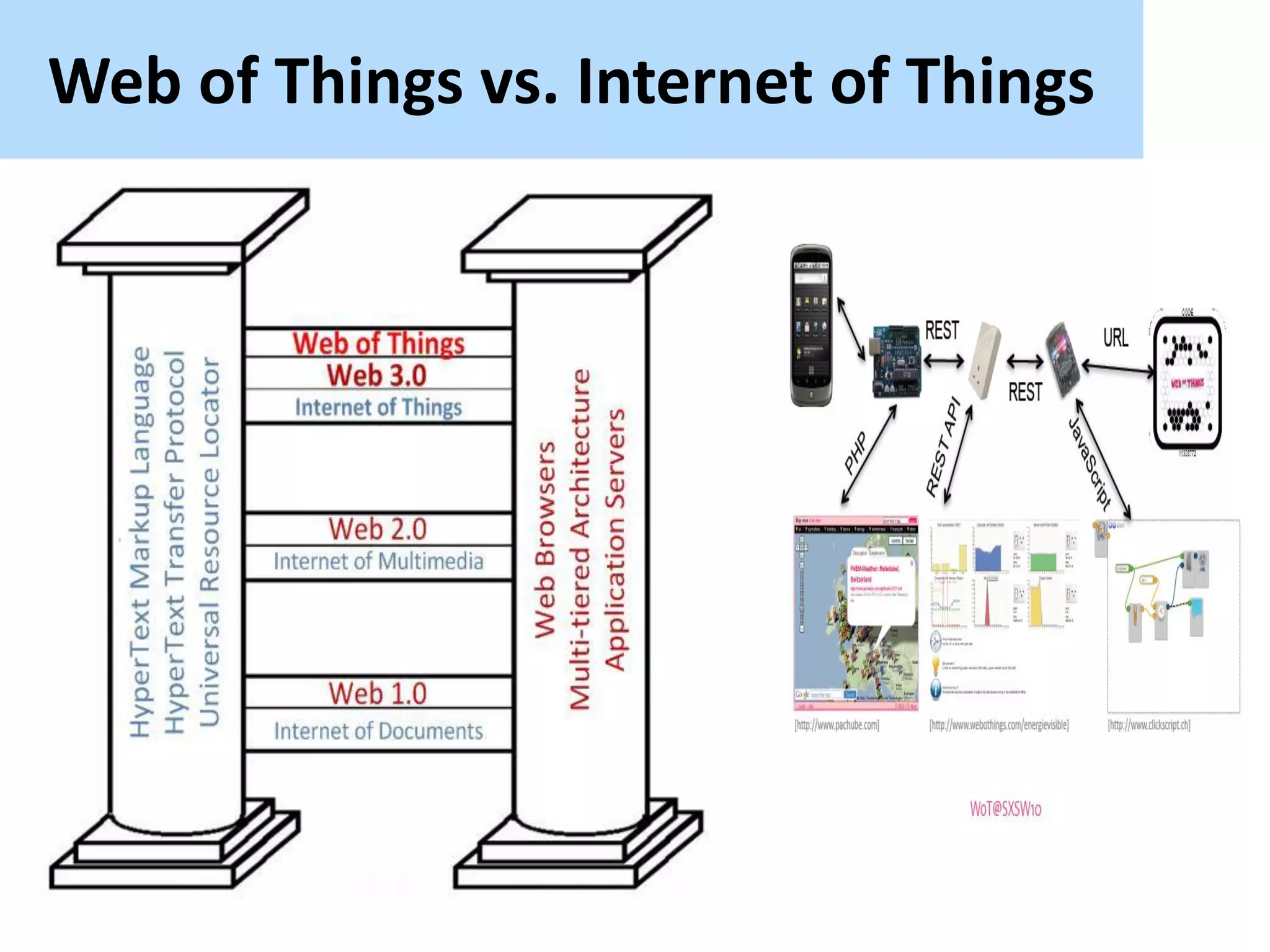
Web of Things vs. Internet of Things
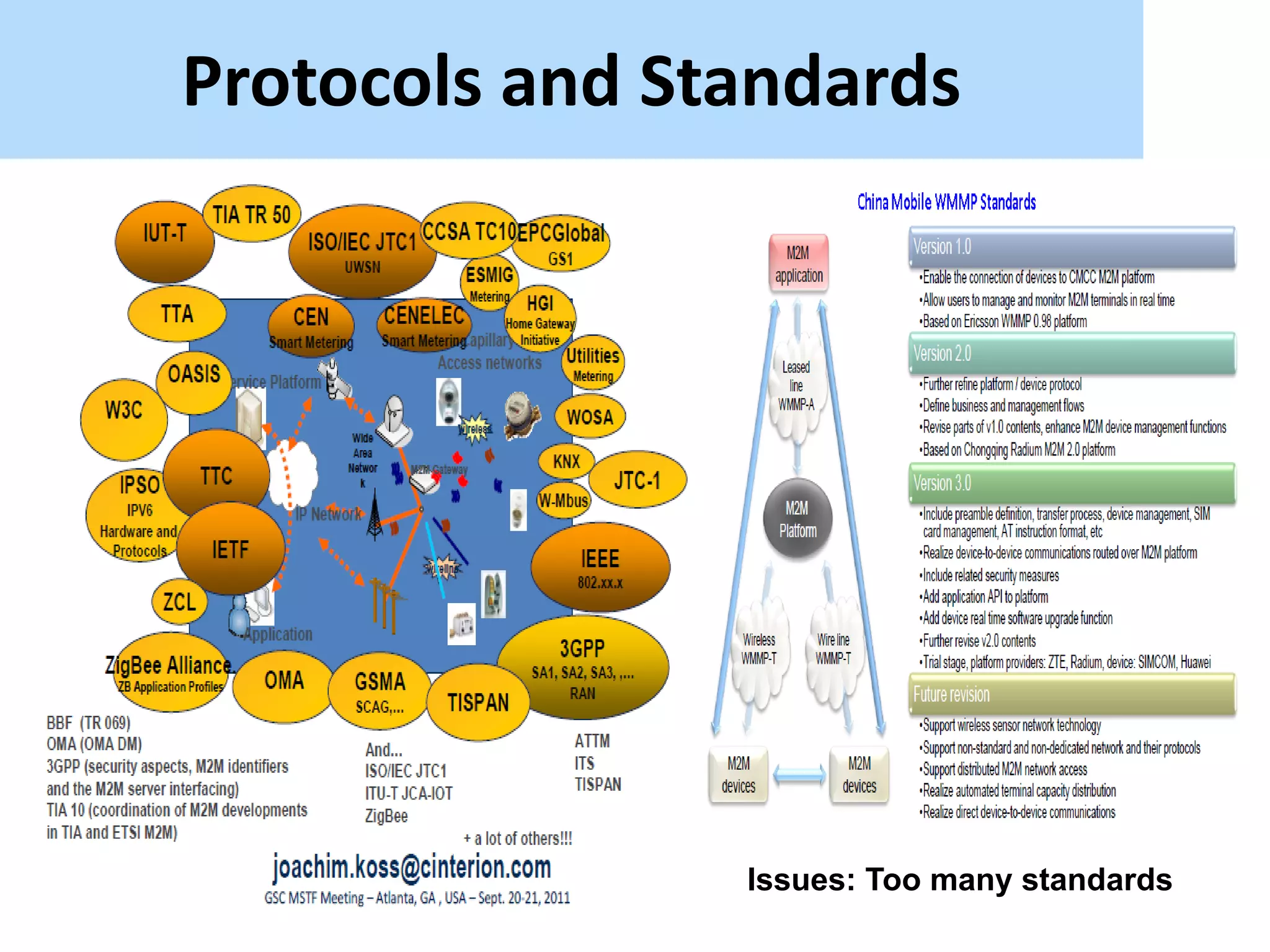
Protocols and Standards


                Issues: Too many standards
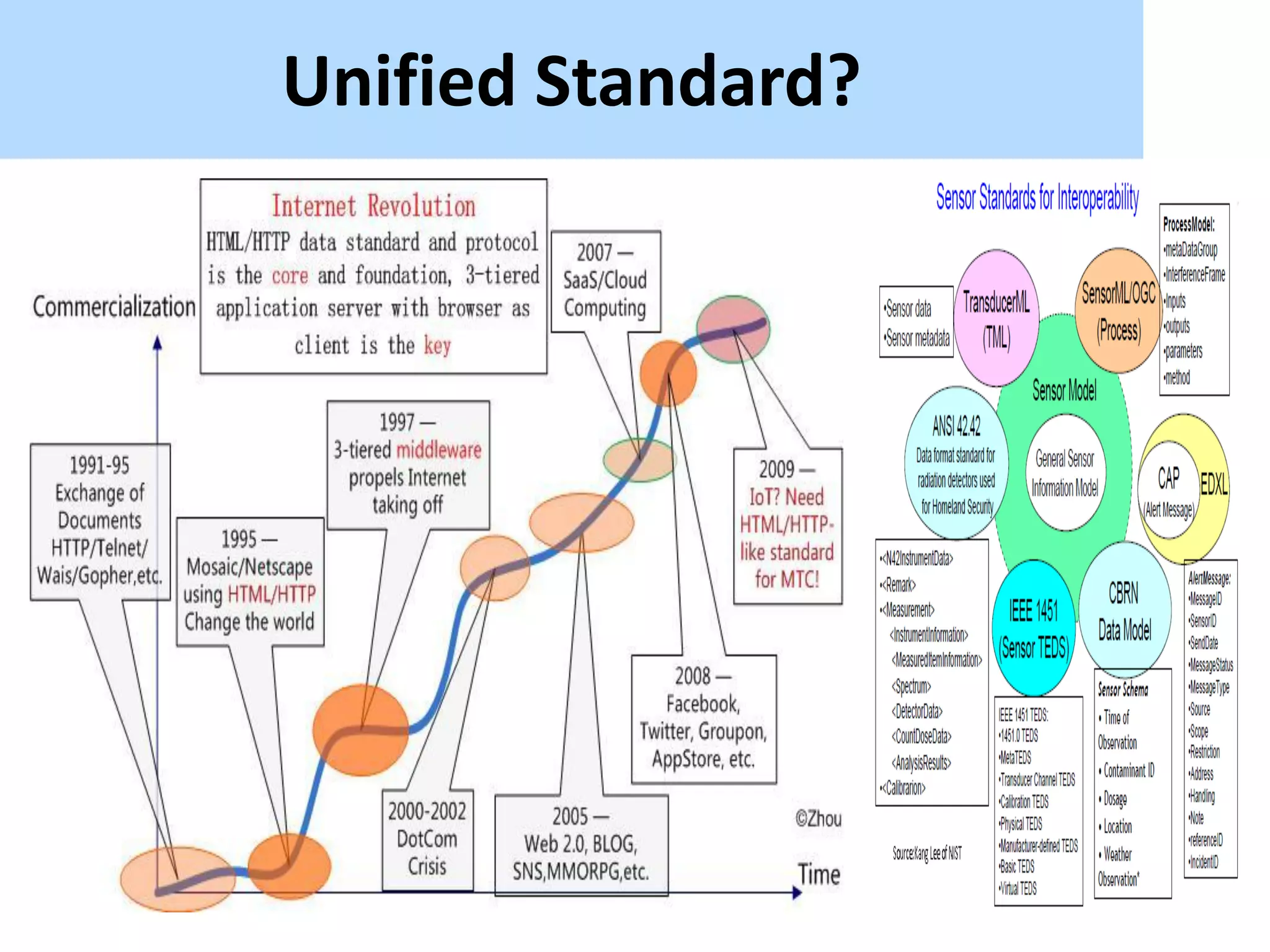
Unified Standard?
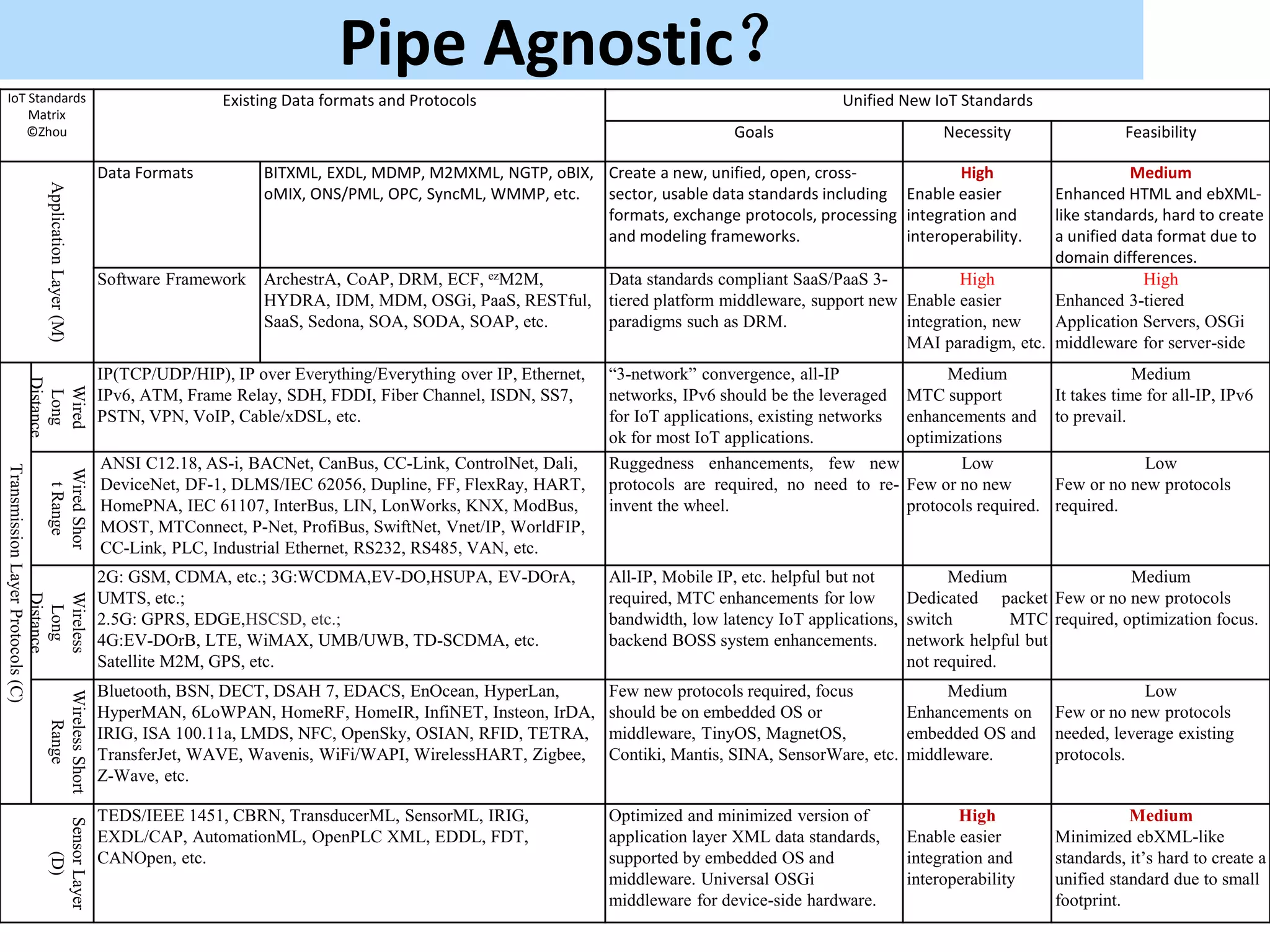
Pipe Agnostic?
IoT Standards                                                  Existing Data formats and Protocols                                                Unified New IoT Standards
    Matrix
   © Zhou                                                                                                                           Goals                         Necessity                  Feasibility

                                               Data Formats          BITXML, EXDL, MDMP, M2MXML, NGTP, oBIX, Create a new, unified, open, cross-             High                Medium
                       Application Layer (M)


                                                                     oMIX, ONS/PML, OPC, SyncML, WMMP, etc.  sector, usable data standards including Enable easier    Enhanced HTML and ebXML-
                                                                                                             formats, exchange protocols, processing integration and  like standards, hard to create
                                                                                                             and modeling frameworks.                interoperability.a unified data format due to
                                                                                                                                                                      domain differences.
                                               Software Framework    ArchestrA, CoAP, DRM, ECF, ezM2M,     Data standards compliant SaaS/PaaS 3-           High                    High
                                                                     HYDRA, IDM, MDM, OSGi, PaaS, RESTful, tiered platform middleware, support new Enable easier      Enhanced 3-tiered
                                                                     SaaS, Sedona, SOA, SODA, SOAP, etc.   paradigms such as DRM.                  integration, new   Application Servers, OSGi
                                                                                                                                                   MAI paradigm, etc. middleware for server-side
                                               IP(TCP/UDP/HIP), IP over Everything/Everything over IP, Ethernet,   “3-network” convergence, all-IP                Medium                       Medium
           Distance

            Wired


                                               IPv6, ATM, Frame Relay, SDH, FDDI, Fiber Channel, ISDN, SS7,        networks, IPv6 should be the leveraged    MTC support           It takes time for all-IP, IPv6
            Long


                                               PSTN, VPN, VoIP, Cable/xDSL, etc.                                   for IoT applications, existing networks   enhancements and      to prevail.
                                                                                                                   ok for most IoT applications.             optimizations
                                               ANSI C12.18, AS-i, BACNet, CanBus, CC-Link, ControlNet, Dali,       Ruggedness enhancements, few new                 Low                        Low
Transmission Layer Protocols (C)


Wired Shor


                                               DeviceNet, DF-1, DLMS/IEC 62056, Dupline, FF, FlexRay, HART,        protocols are required, no need to re-    Few or no new         Few or no new protocols
  t Range


                                               HomePNA, IEC 61107, InterBus, LIN, LonWorks, KNX, ModBus,           invent the wheel.                         protocols required.   required.
                                               MOST, MTConnect, P-Net, ProfiBus, SwiftNet, Vnet/IP, WorldFIP,
                                               CC-Link, PLC, Industrial Ethernet, RS232, RS485, VAN, etc.
                                               2G: GSM, CDMA, etc.; 3G:WCDMA,EV-DO,HSUPA, EV-DOrA,                 All-IP, Mobile IP, etc. helpful but not        Medium                 Medium
                                               UMTS, etc.;                                                         required, MTC enhancements for low       Dedicated packet Few or no new protocols
                Wireless
                Distance
                  Long


                                               2.5G: GPRS, EDGE,HSCSD, etc.;                                       bandwidth, low latency IoT applications, switch        MTC required, optimization focus.
                                               4G:EV-DOrB, LTE, WiMAX, UMB/UWB, TD-SCDMA, etc.                     backend BOSS system enhancements.        network helpful but
                                               Satellite M2M, GPS, etc.                                                                                     not required.
                                               Bluetooth, BSN, DECT, DSAH 7, EDACS, EnOcean, HyperLan,             Few new protocols required, focus            Medium                         Low
                              Wireless Short


                                               HyperMAN, 6LoWPAN, HomeRF, HomeIR, InfiNET, Insteon, IrDA,          should be on embedded OS or             Enhancements on         Few or no new protocols
                                 Range


                                               IRIG, ISA 100.11a, LMDS, NFC, OpenSky, OSIAN, RFID, TETRA,          middleware, TinyOS, MagnetOS,           embedded OS and         needed, leverage existing
                                               TransferJet, WAVE, Wavenis, WiFi/WAPI, WirelessHART, Zigbee,        Contiki, Mantis, SINA, SensorWare, etc. middleware.             protocols.
                                               Z-Wave, etc.

                                               TEDS/IEEE 1451, CBRN, TransducerML, SensorML, IRIG,                 Optimized and minimized version of                High                     Medium
                       Sensor Layer


                                               EXDL/CAP, AutomationML, OpenPLC XML, EDDL, FDT,                     application layer XML data standards,     Enable easier         Minimized ebXML-like
                                                                                                                                                                                   standards, it’s hard to create a
                           (D)


                                               CANOpen, etc.                                                       supported by embedded OS and              integration and
                                                                                                                   middleware. Universal OSGi                interoperability      unified standard due to small
                                                                                                                   middleware for device-side hardware.                            footprint.
Outline
IoT: A Web 3.0 View
Ubiquitous IoT Applications
Four Pillars of IoT
DNA of The Internet of Things
Middleware and IoT
Data Standards for WoT
Unified WoT Frameworks
Cloud Computing
The Cloud of Things
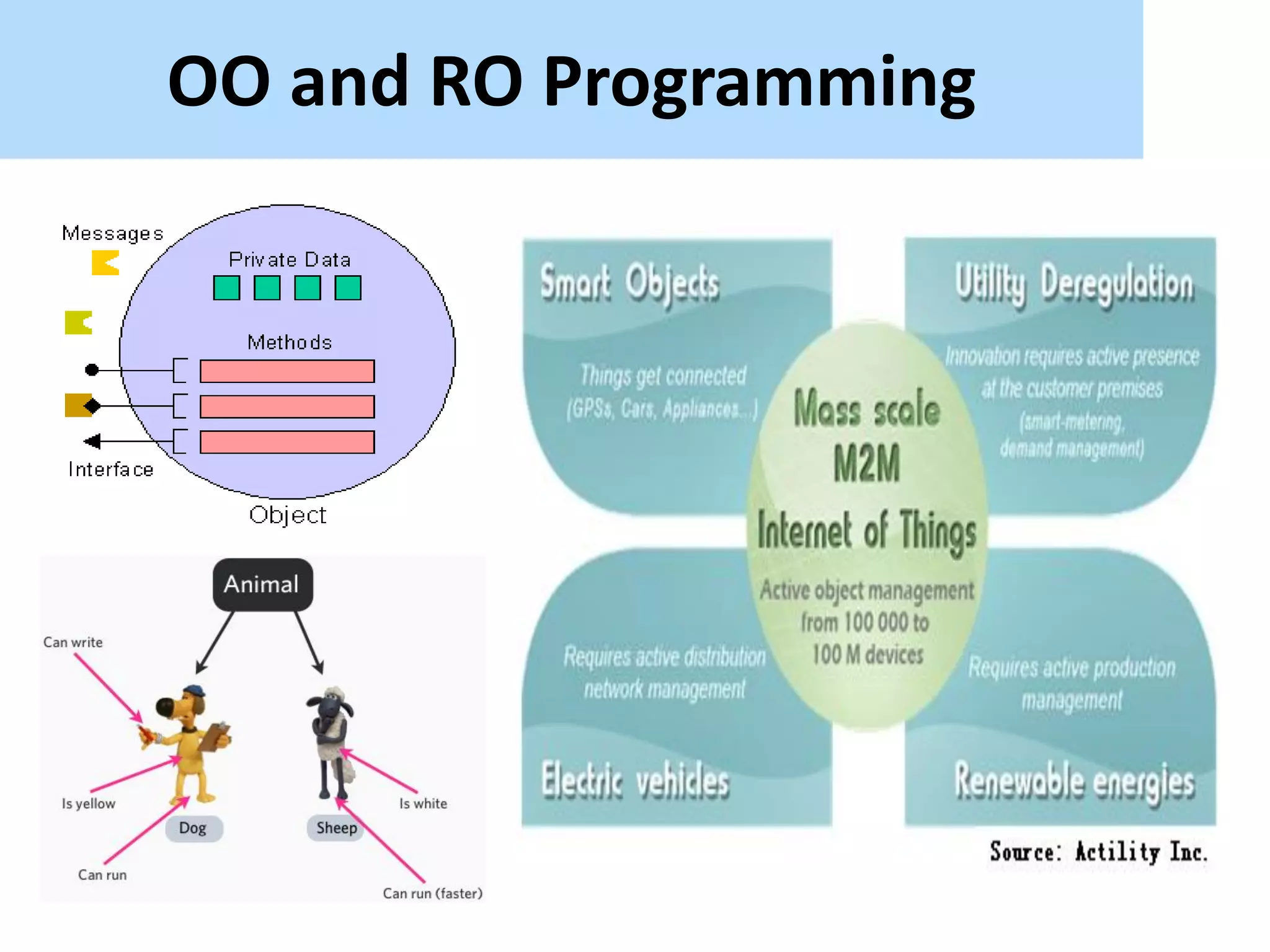
OO and RO Programming
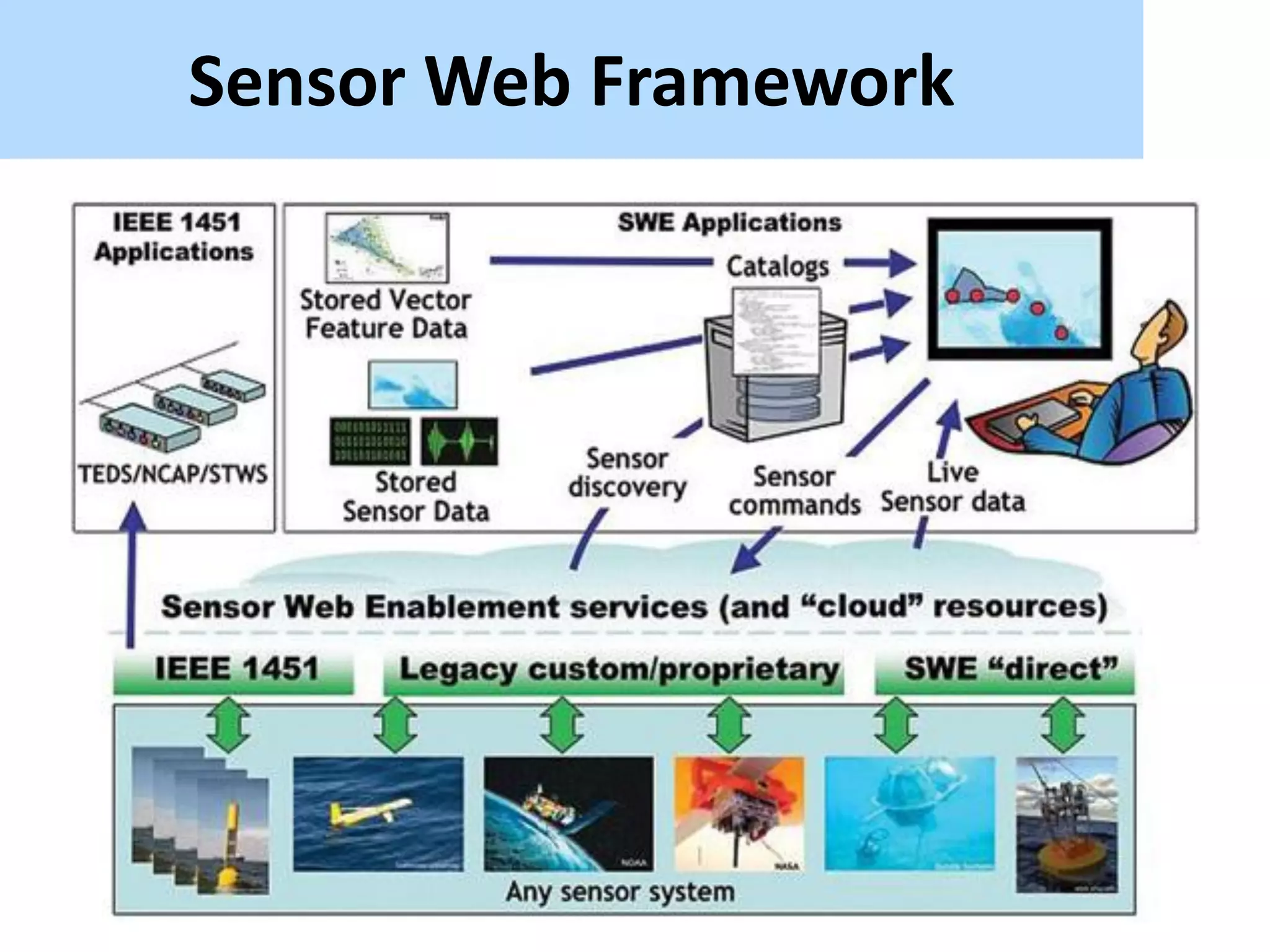
Sensor Web Framework
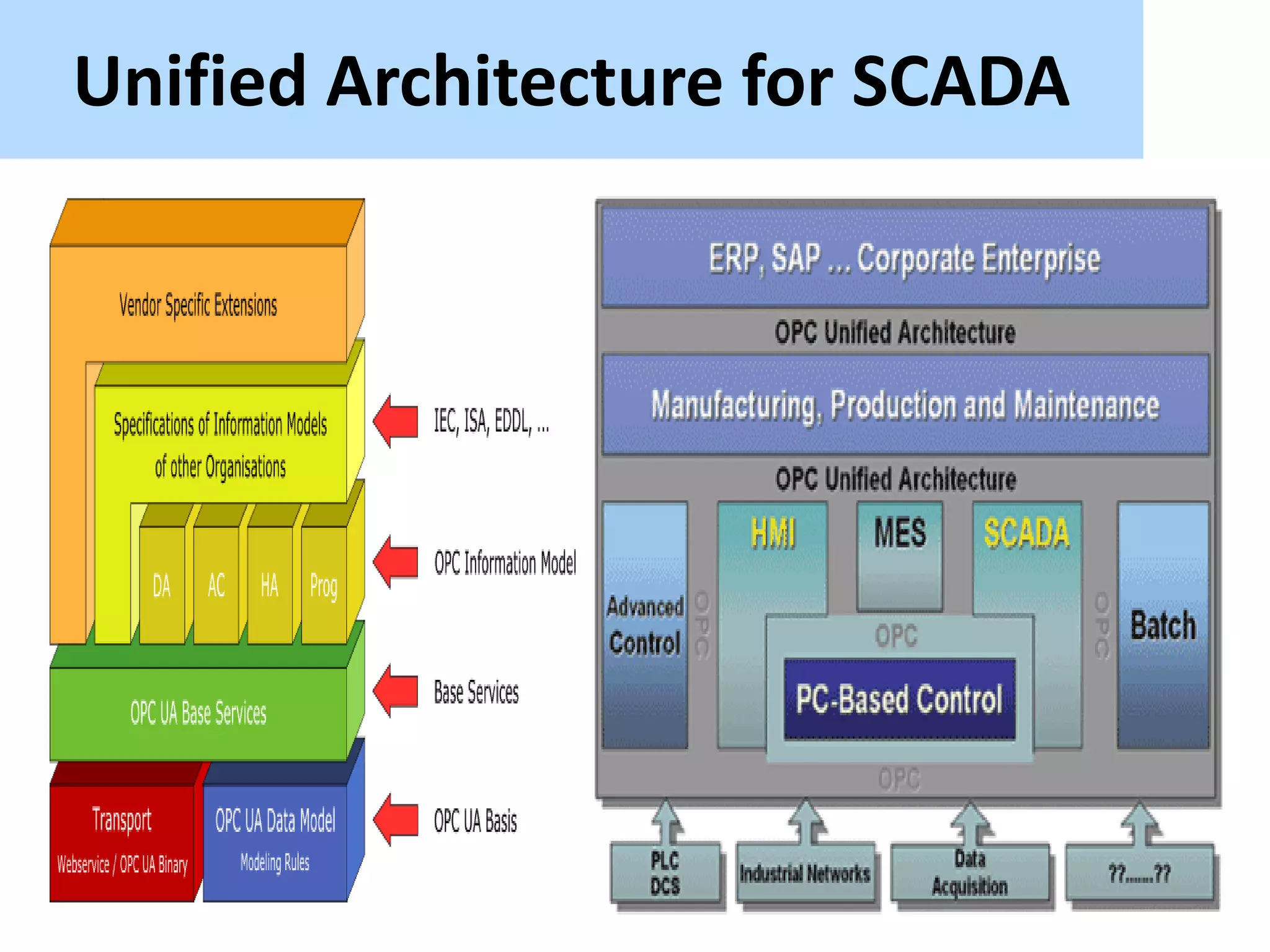
Unified Architecture for SCADA
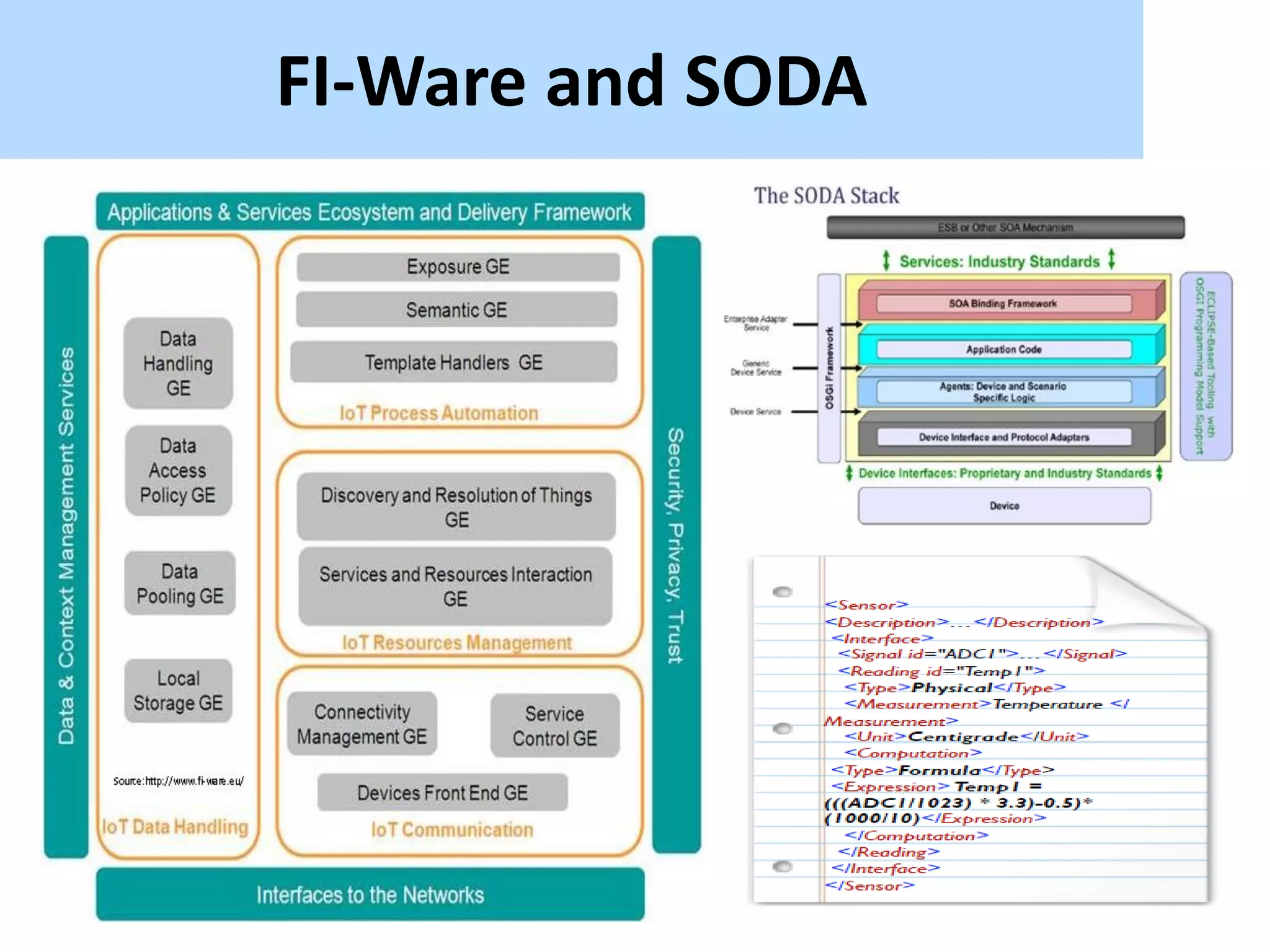
FI-Ware and SODA
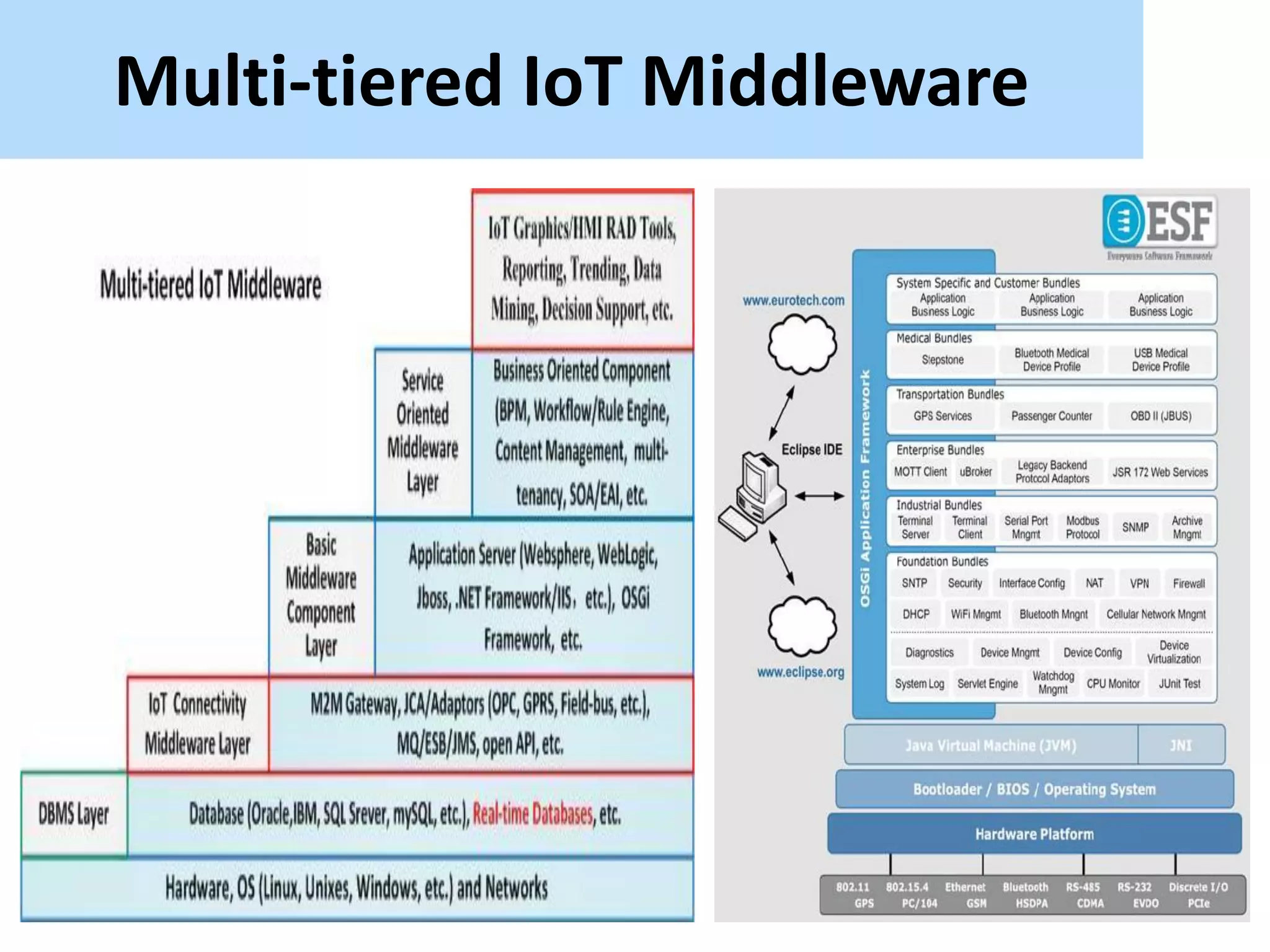
Multi-tiered IoT Middleware
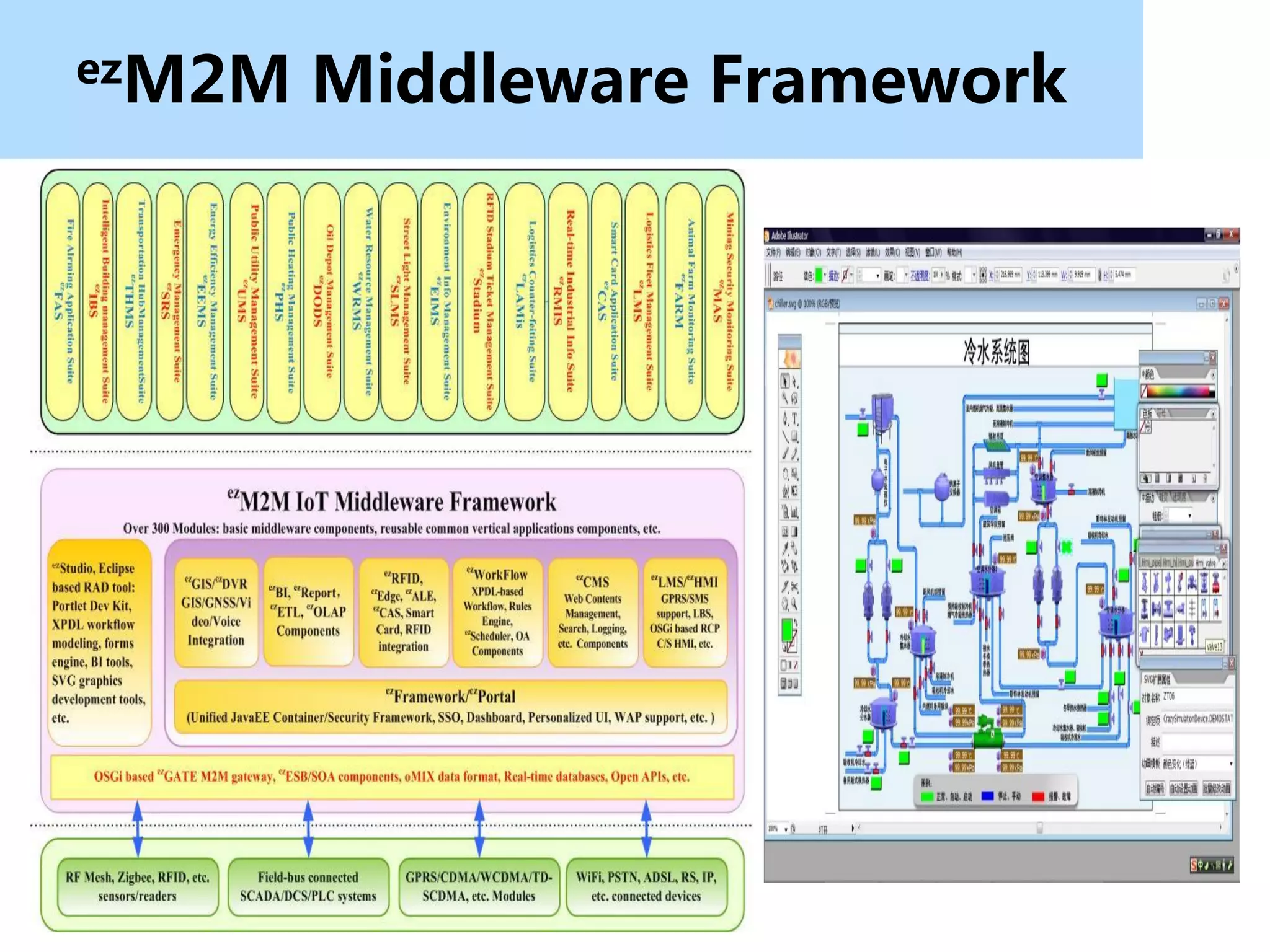
ezM2M   Middleware Framework
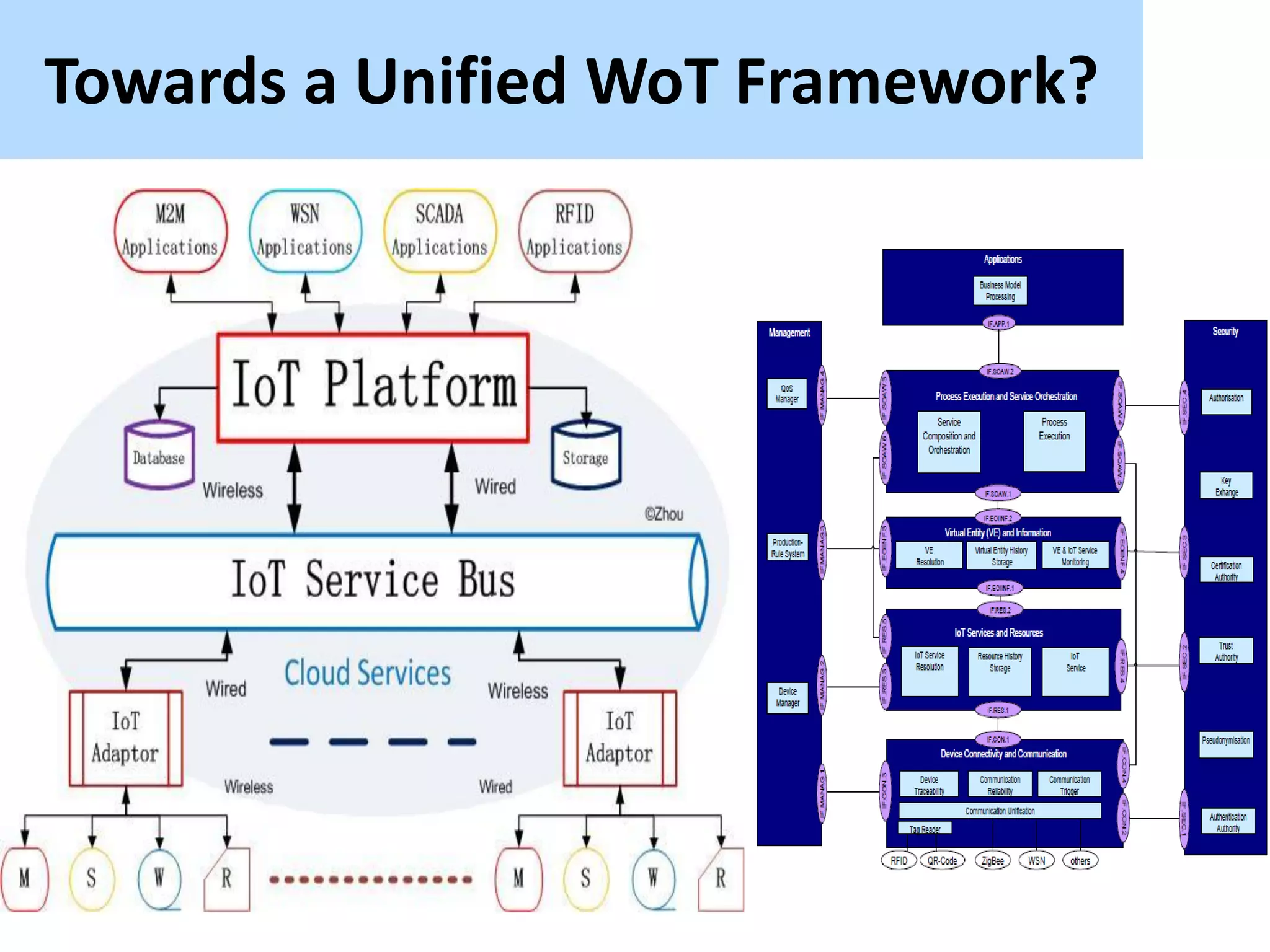
Towards a Unified WoT Framework?
Outline
IoT: A Web 3.0 View
Ubiquitous IoT Applications
Four Pillars of IoT
DNA of The Internet of Things
Middleware and IoT
Data Standards for WoT
Unified WoT Frameworks
Cloud Computing
The Cloud of Things
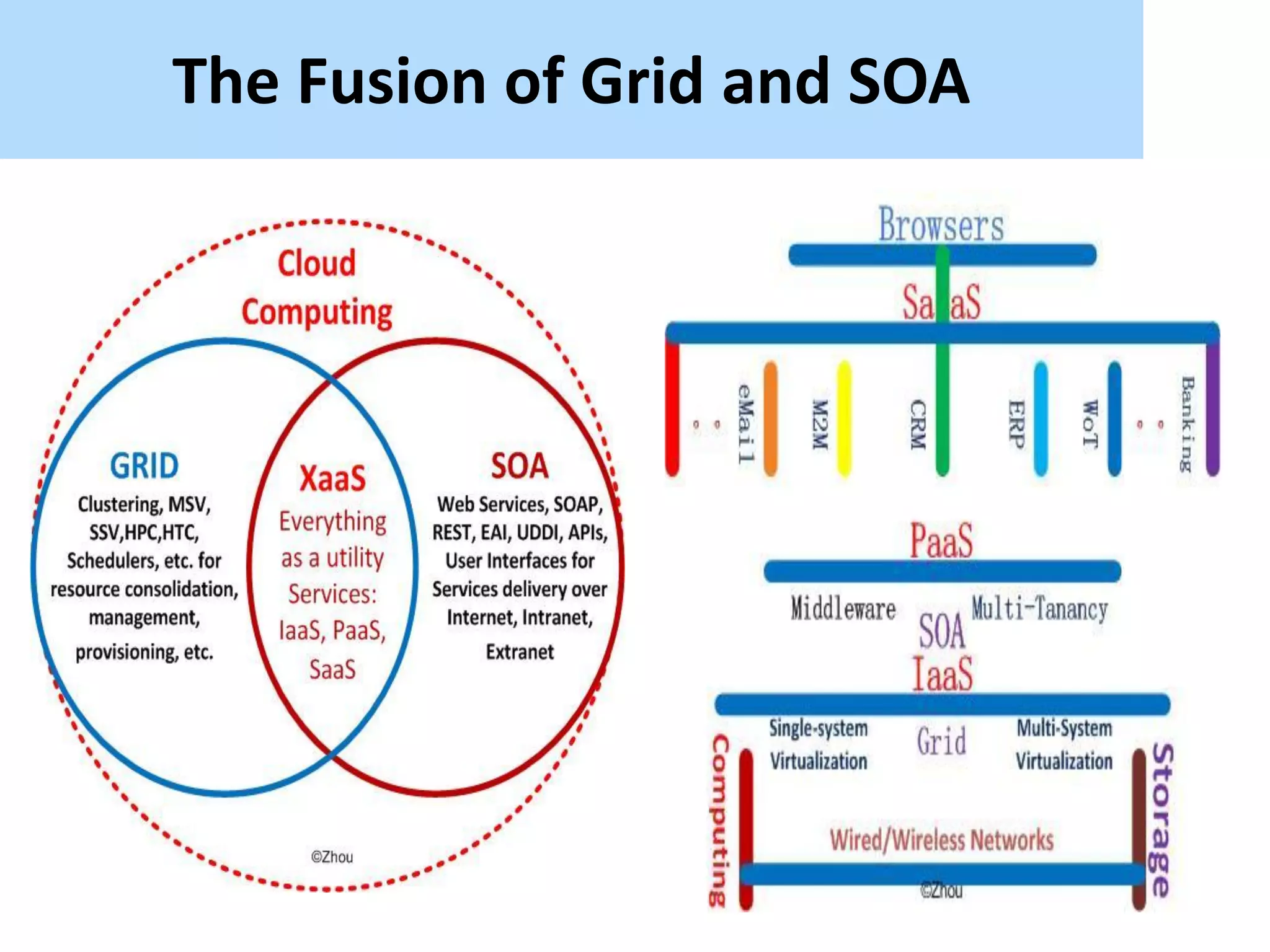
The Fusion of Grid and SOA
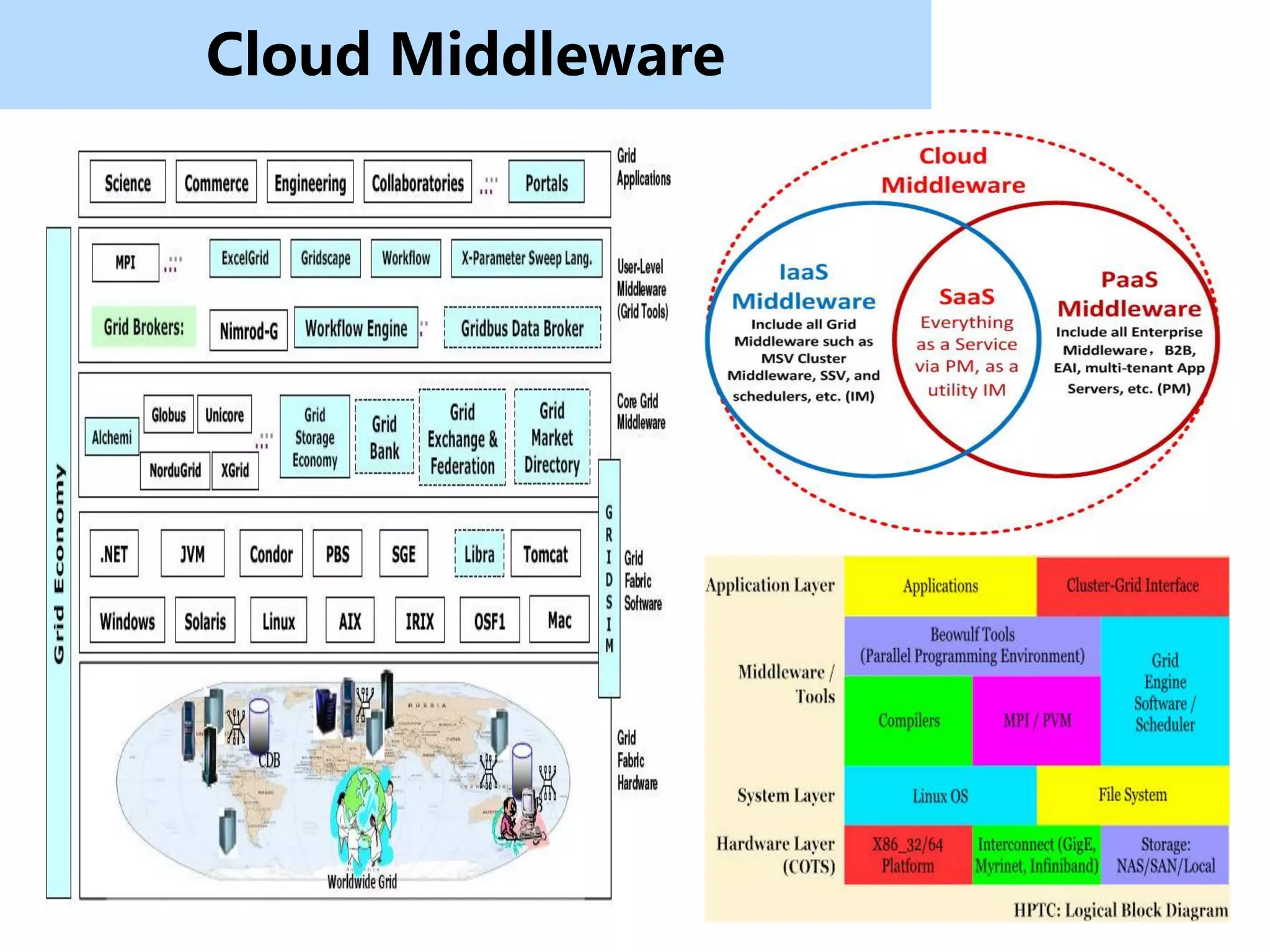
Cloud Middleware
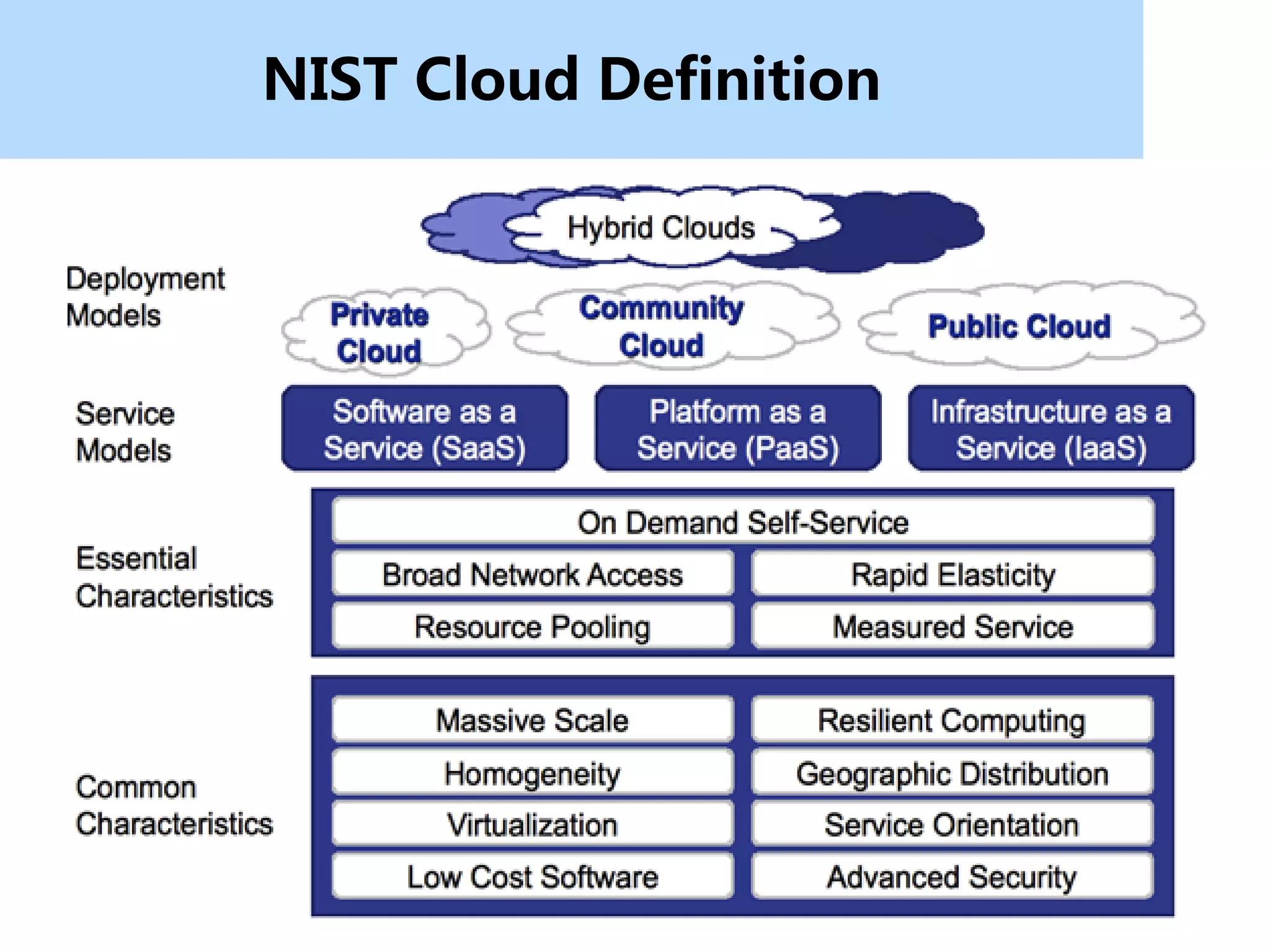
NIST Cloud Definition
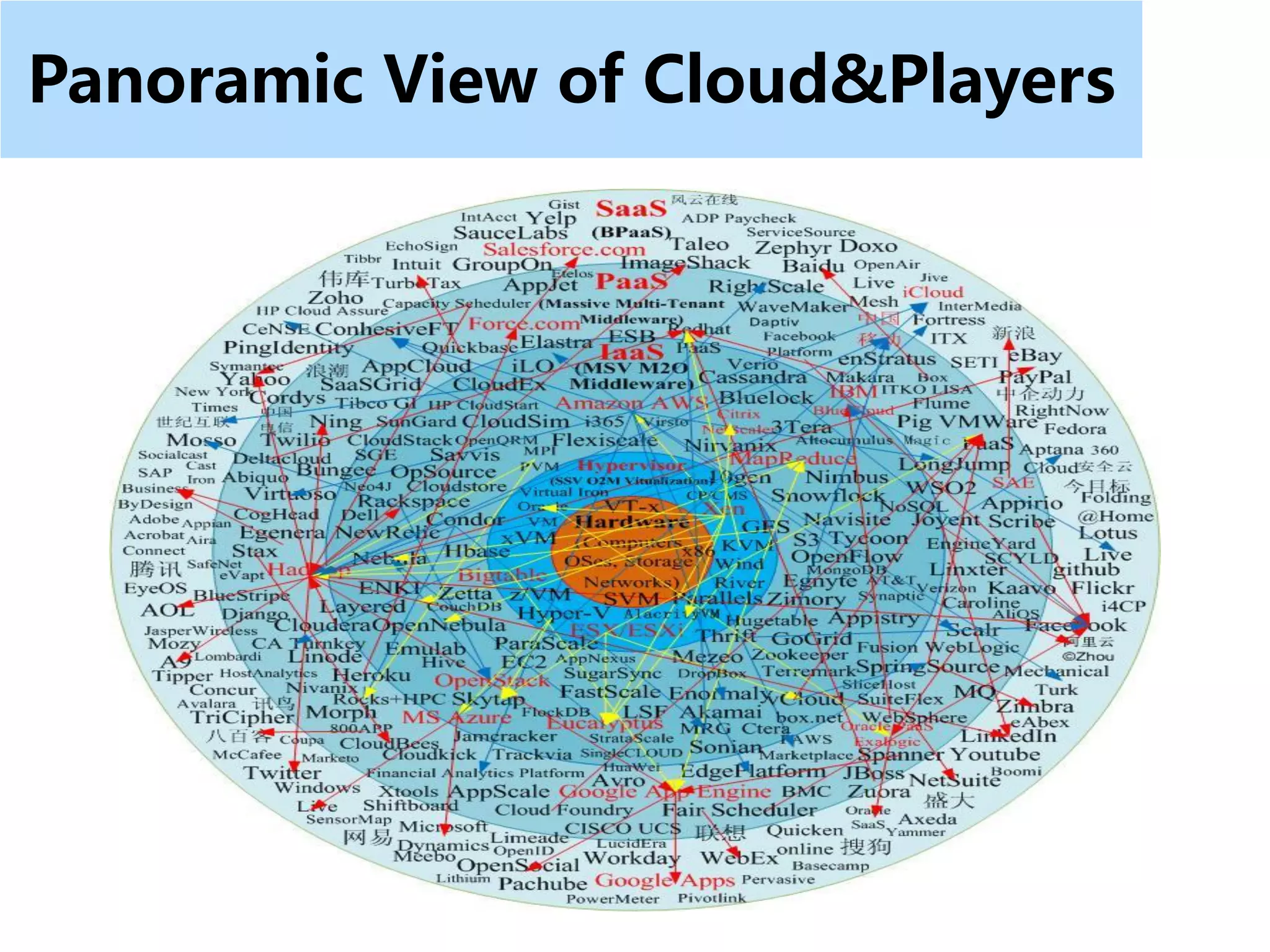
Panoramic View of Cloud&Players
Outline
IoT: A Web 3.0 View
Ubiquitous IoT Applications
Four Pillars of IoT
DNA of The Internet of Things
Middleware and IoT
Data Standards for WoT
Unified WoT Frameworks
Cloud Computing
The Cloud of Things
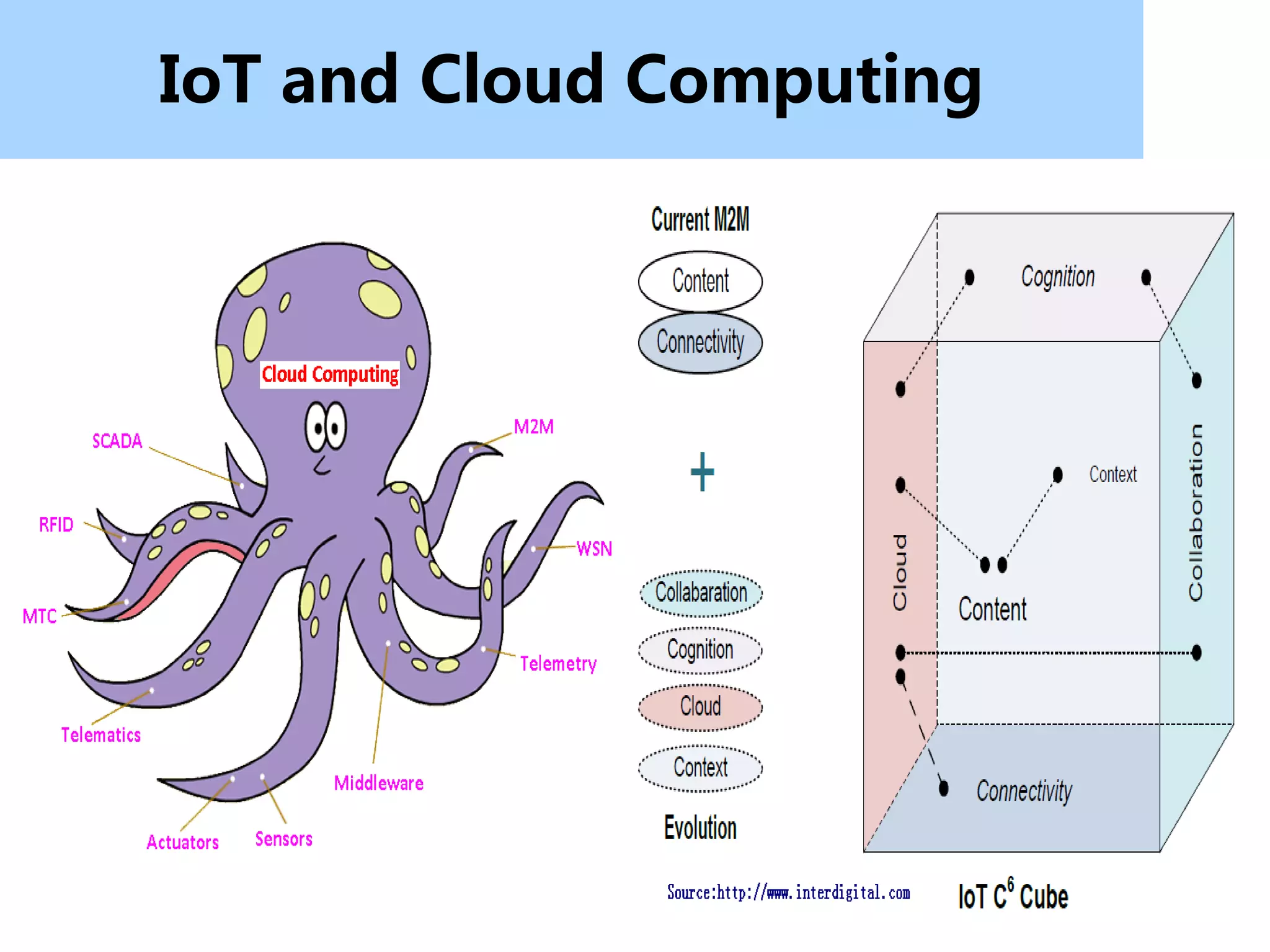
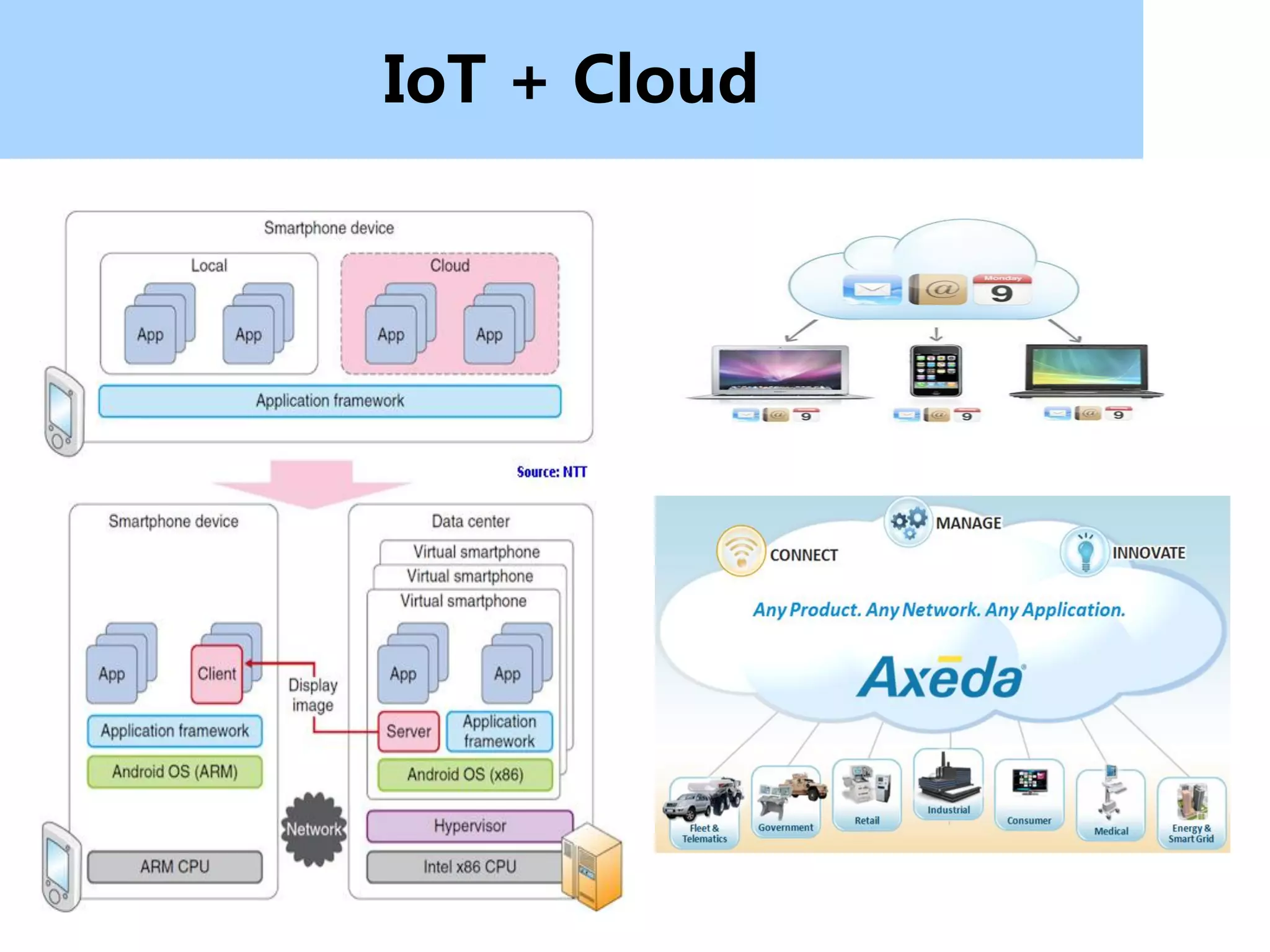
IoT and Cloud Computing
IoT + Cloud
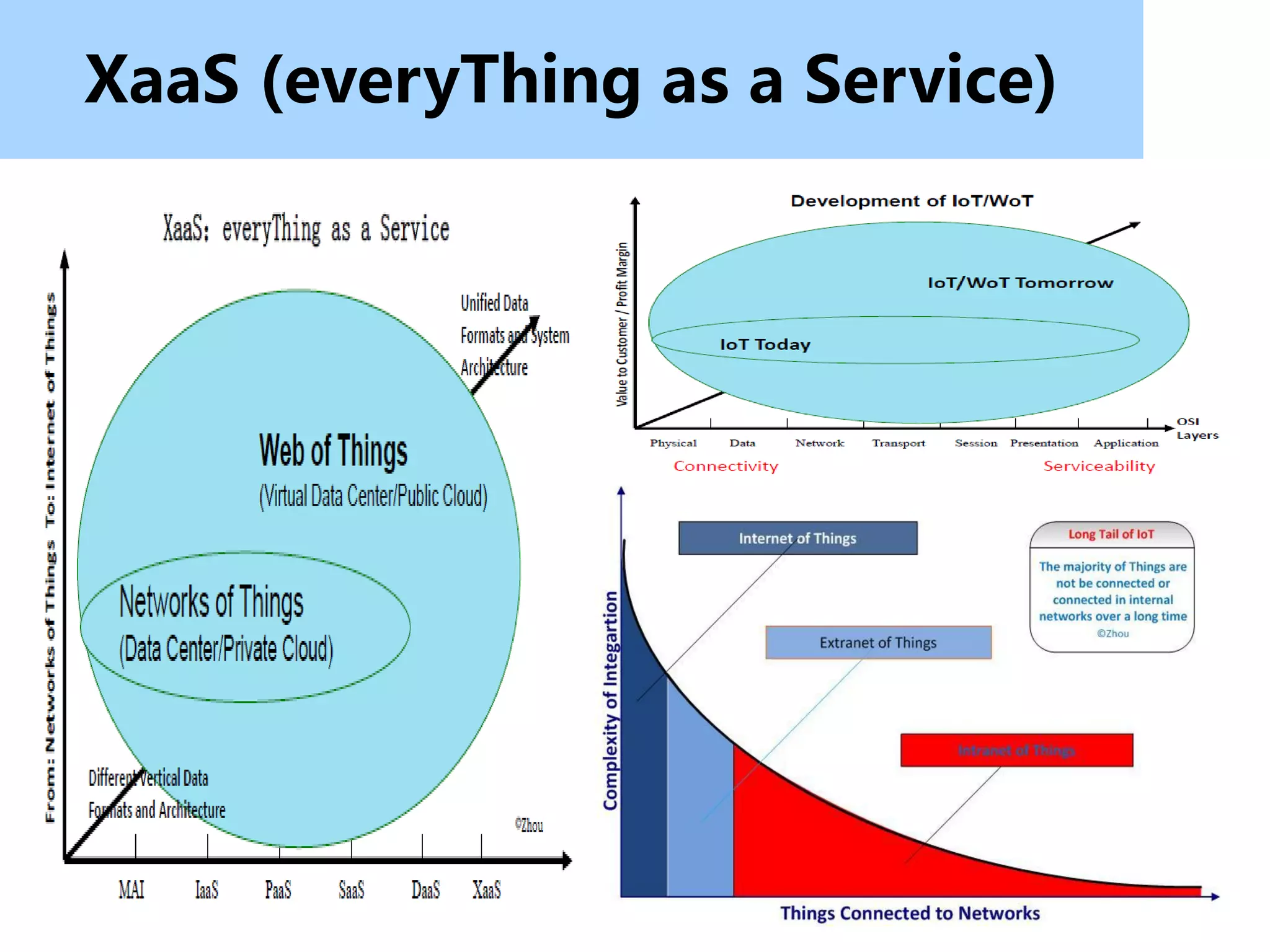
XaaS (everyThing as a Service)
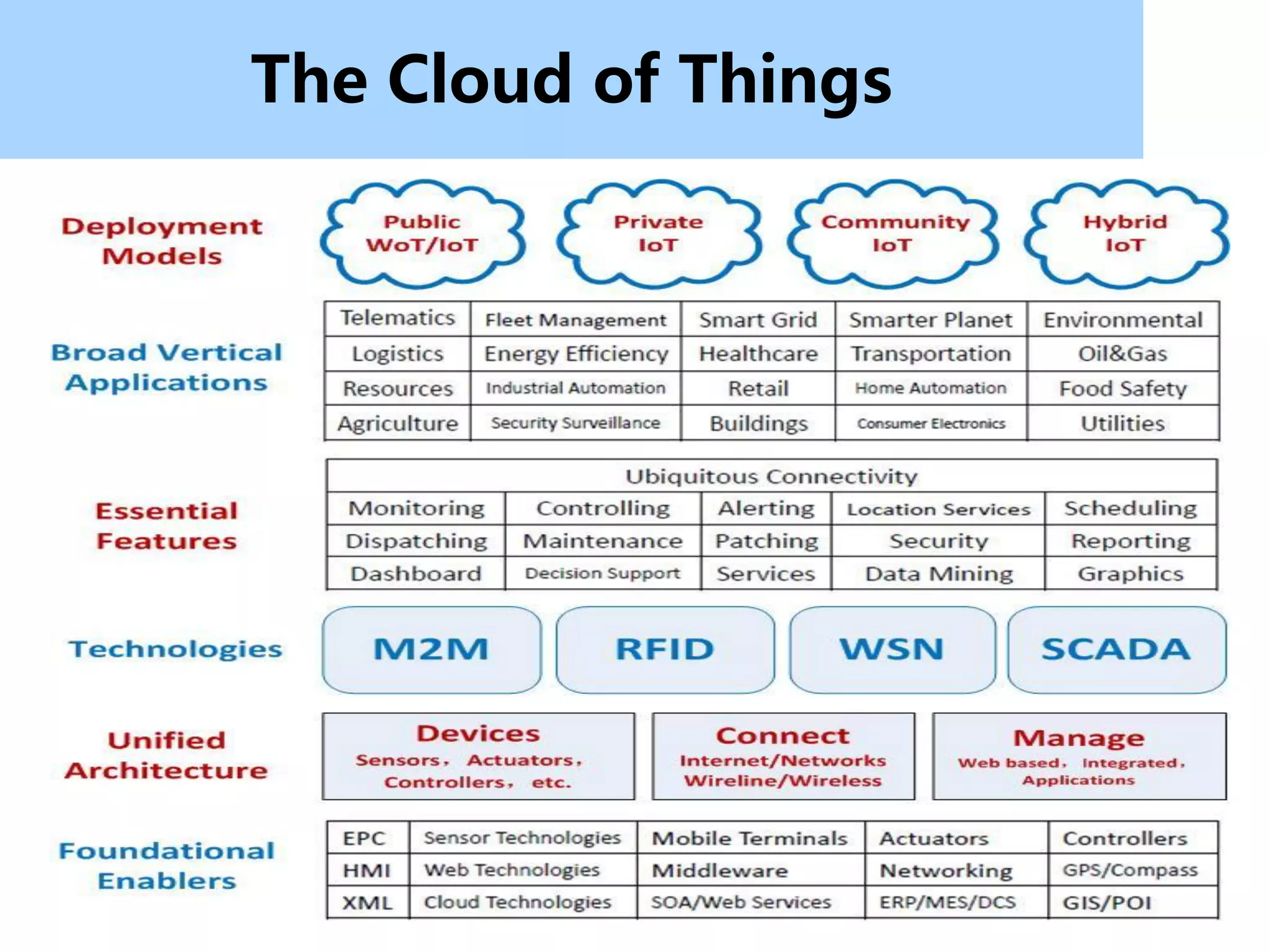
The Cloud of Things
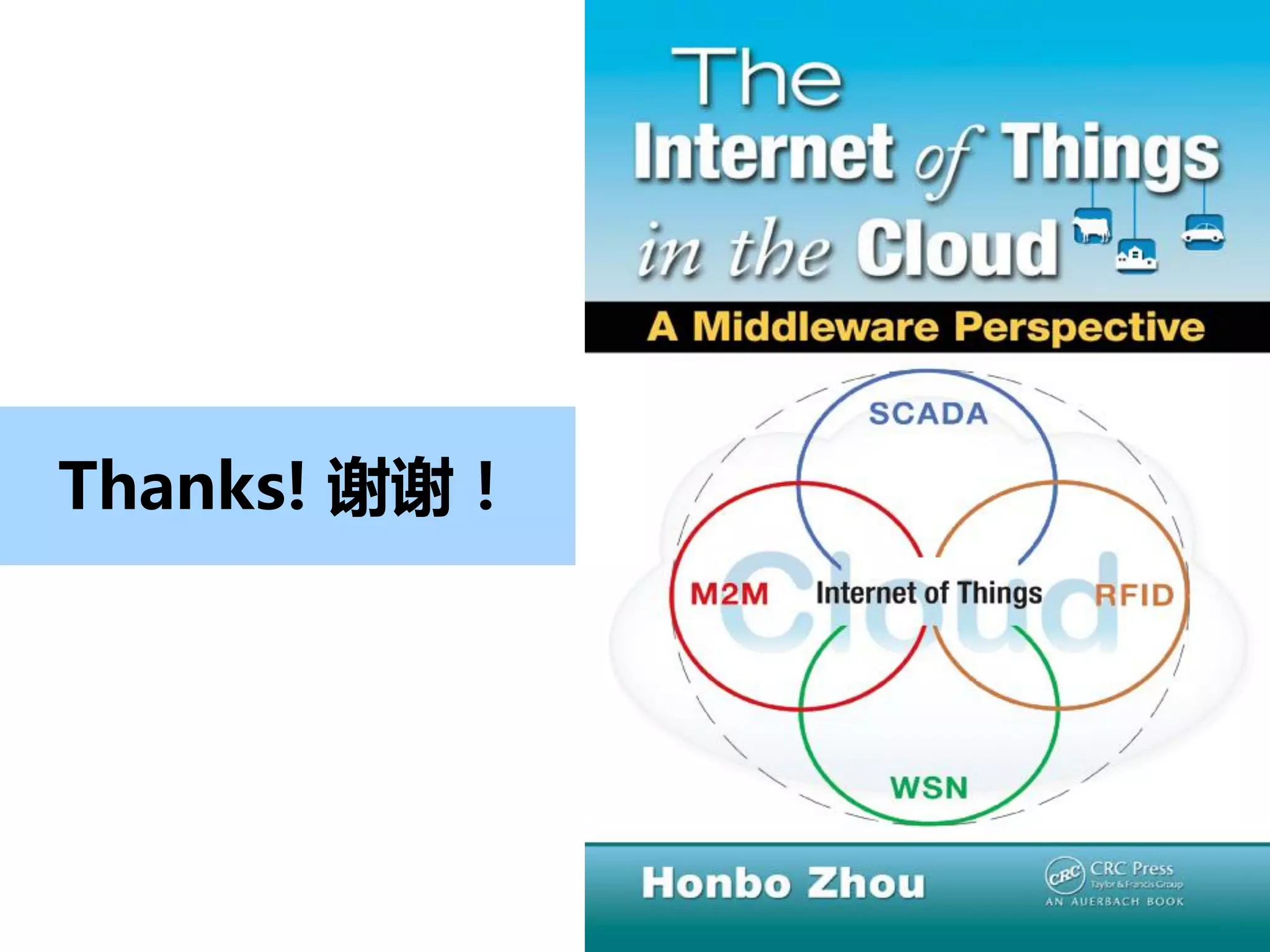
Thanks! 谢谢!

Unified Middleware for Internet of Things

  • 1.
    Unified Middleware forIoT Applications Honbo Zhou GM of Foton Telematics
  • 2.
    Abstract Internet of Things applications are not new and can be found in all industrial sectors. A four-pillar categorization is introduced for IoT applications based on their common characteristics such as technological origin, business background, and market value chain. IoT is about connectivity and integration, Middleware plays a crucial role for IoT applications, Middleware for all 4 pillar IoT categories are summarized in this presentation. A common IoT middleware architecture is proposed based on the speaker’s many years of industrial practices on building middleware products (the ezM2M IoT platform) for a variety of IoT applications as well as new developments in IoT standardization and cloud computing paradigms. Most of the contents of this presentation are from the speaker’s new IoT book to be published by Taylor & Francis group soon.
  • 3.
    Outline IoT: A Web3.0 View Ubiquitous IoT Applications Four Pillars of IoT DNA of The Internet of Things Middleware and IoT Data Standards for WoT Unified WoT Frameworks Cloud Computing The Cloud of Things
  • 4.
    Rise of theMachines
  • 5.
  • 6.
    IoT Related Terminologies SensingChina, M2M, WSAN, Smarter Planet,Digital Convergence, Pervasive Computing, Ambient Intelligence, Haptic and Ubiquitous Computing、X-internet, Building2.0,Smart Grid,… Internet of Things is not (yet) a buzzword/cathphrease as in China and Europe, terms such as M2M, WSN, Smart Grid, Telematics, Telehealth, CPS, etc. are used instead.
  • 7.
    Defining IoT The Internet of Things provide means to access and control two categories of ubiquitous and uniquely identifiable devices: those that have inherent intelligence and those that are externally enabled, via all sorts of wired and/or wireless communications in all kinds of networking environments, supported by cloud computing technologies with adequate security measures, to achieve pervasive connectivity and grand integration and to provide services such as monitoring, locating, controlling, reporting, decision support, and so on.
  • 8.
  • 9.
  • 10.
    The Expansion ofSoftware (Middleware)
  • 11.
    Outline IoT: A Web3.0 View Ubiquitous IoT Applications Four Pillars of IoT DNA of The Internet of Things Middleware and IoT Data Standards for WoT Unified WoT Frameworks Cloud Computing The Cloud of Things
  • 12.
    IoT Applies toAll Industry Sectors
  • 13.
  • 14.
    Example 1 ofVertical Applications
  • 15.
    Example 2 ofVertical Applications
  • 16.
  • 17.
    Outline IoT: A Web3.0 View Ubiquitous IoT Applications Four Pillars of IoT DNA of The Internet of Things Middleware and IoT Data Standards for WoT Unified WoT Frameworks Cloud Computing The Cloud of Things
  • 18.
    Four Pillars ofIoT Four Pillars and Networks Short-Range Long-Range Short-Range Long-Range Wireless Wireless Wired Wired RFID Yes Some No Some WSN Yes Some No Some M2M Some Yes No Some SCADA Some Some Yes Yes
  • 19.
  • 20.
  • 21.
  • 22.
  • 23.
    Outline IoT: A Web3.0 View Ubiquitous IoT Applications Four Pillars of IoT DNA of The Internet of Things Middleware and IoT Data Standards for WoT Unified WoT Frameworks Cloud Computing The Cloud of Things
  • 24.
  • 25.
  • 26.
  • 27.
    “Manage”Or “Applications” Software, especially middleware, plays a very important role
  • 28.
    Outline IoT: A Web3.0 View Ubiquitous IoT Applications Four Pillars of IoT DNA of The Internet of Things Middleware and IoT Data Standards for WoT Unified WoT Frameworks Cloud Computing The Cloud of Things
  • 29.
  • 30.
  • 31.
  • 32.
  • 33.
  • 34.
    Outline IoT: A Web3.0 View Ubiquitous IoT Applications Four Pillars of IoT DNA of The Internet of Things Middleware and IoT Data Standards for WoT Unified WoT Frameworks Cloud Computing The Cloud of Things
  • 35.
    Web of Thingsvs. Internet of Things
  • 36.
    Protocols and Standards Issues: Too many standards
  • 37.
  • 38.
    Pipe Agnostic? IoT Standards Existing Data formats and Protocols Unified New IoT Standards Matrix © Zhou Goals Necessity Feasibility Data Formats BITXML, EXDL, MDMP, M2MXML, NGTP, oBIX, Create a new, unified, open, cross- High Medium Application Layer (M) oMIX, ONS/PML, OPC, SyncML, WMMP, etc. sector, usable data standards including Enable easier Enhanced HTML and ebXML- formats, exchange protocols, processing integration and like standards, hard to create and modeling frameworks. interoperability.a unified data format due to domain differences. Software Framework ArchestrA, CoAP, DRM, ECF, ezM2M, Data standards compliant SaaS/PaaS 3- High High HYDRA, IDM, MDM, OSGi, PaaS, RESTful, tiered platform middleware, support new Enable easier Enhanced 3-tiered SaaS, Sedona, SOA, SODA, SOAP, etc. paradigms such as DRM. integration, new Application Servers, OSGi MAI paradigm, etc. middleware for server-side IP(TCP/UDP/HIP), IP over Everything/Everything over IP, Ethernet, “3-network” convergence, all-IP Medium Medium Distance Wired IPv6, ATM, Frame Relay, SDH, FDDI, Fiber Channel, ISDN, SS7, networks, IPv6 should be the leveraged MTC support It takes time for all-IP, IPv6 Long PSTN, VPN, VoIP, Cable/xDSL, etc. for IoT applications, existing networks enhancements and to prevail. ok for most IoT applications. optimizations ANSI C12.18, AS-i, BACNet, CanBus, CC-Link, ControlNet, Dali, Ruggedness enhancements, few new Low Low Transmission Layer Protocols (C) Wired Shor DeviceNet, DF-1, DLMS/IEC 62056, Dupline, FF, FlexRay, HART, protocols are required, no need to re- Few or no new Few or no new protocols t Range HomePNA, IEC 61107, InterBus, LIN, LonWorks, KNX, ModBus, invent the wheel. protocols required. required. MOST, MTConnect, P-Net, ProfiBus, SwiftNet, Vnet/IP, WorldFIP, CC-Link, PLC, Industrial Ethernet, RS232, RS485, VAN, etc. 2G: GSM, CDMA, etc.; 3G:WCDMA,EV-DO,HSUPA, EV-DOrA, All-IP, Mobile IP, etc. helpful but not Medium Medium UMTS, etc.; required, MTC enhancements for low Dedicated packet Few or no new protocols Wireless Distance Long 2.5G: GPRS, EDGE,HSCSD, etc.; bandwidth, low latency IoT applications, switch MTC required, optimization focus. 4G:EV-DOrB, LTE, WiMAX, UMB/UWB, TD-SCDMA, etc. backend BOSS system enhancements. network helpful but Satellite M2M, GPS, etc. not required. Bluetooth, BSN, DECT, DSAH 7, EDACS, EnOcean, HyperLan, Few new protocols required, focus Medium Low Wireless Short HyperMAN, 6LoWPAN, HomeRF, HomeIR, InfiNET, Insteon, IrDA, should be on embedded OS or Enhancements on Few or no new protocols Range IRIG, ISA 100.11a, LMDS, NFC, OpenSky, OSIAN, RFID, TETRA, middleware, TinyOS, MagnetOS, embedded OS and needed, leverage existing TransferJet, WAVE, Wavenis, WiFi/WAPI, WirelessHART, Zigbee, Contiki, Mantis, SINA, SensorWare, etc. middleware. protocols. Z-Wave, etc. TEDS/IEEE 1451, CBRN, TransducerML, SensorML, IRIG, Optimized and minimized version of High Medium Sensor Layer EXDL/CAP, AutomationML, OpenPLC XML, EDDL, FDT, application layer XML data standards, Enable easier Minimized ebXML-like standards, it’s hard to create a (D) CANOpen, etc. supported by embedded OS and integration and middleware. Universal OSGi interoperability unified standard due to small middleware for device-side hardware. footprint.
  • 39.
    Outline IoT: A Web3.0 View Ubiquitous IoT Applications Four Pillars of IoT DNA of The Internet of Things Middleware and IoT Data Standards for WoT Unified WoT Frameworks Cloud Computing The Cloud of Things
  • 40.
    OO and ROProgramming
  • 41.
  • 42.
  • 43.
  • 44.
  • 45.
    ezM2M Middleware Framework
  • 46.
    Towards a UnifiedWoT Framework?
  • 47.
    Outline IoT: A Web3.0 View Ubiquitous IoT Applications Four Pillars of IoT DNA of The Internet of Things Middleware and IoT Data Standards for WoT Unified WoT Frameworks Cloud Computing The Cloud of Things
  • 48.
    The Fusion ofGrid and SOA
  • 49.
  • 50.
  • 51.
    Panoramic View ofCloud&Players
  • 52.
    Outline IoT: A Web3.0 View Ubiquitous IoT Applications Four Pillars of IoT DNA of The Internet of Things Middleware and IoT Data Standards for WoT Unified WoT Frameworks Cloud Computing The Cloud of Things
  • 53.
    IoT and CloudComputing
  • 54.
  • 55.
  • 56.
  • 57.