OLTP VS OLAP
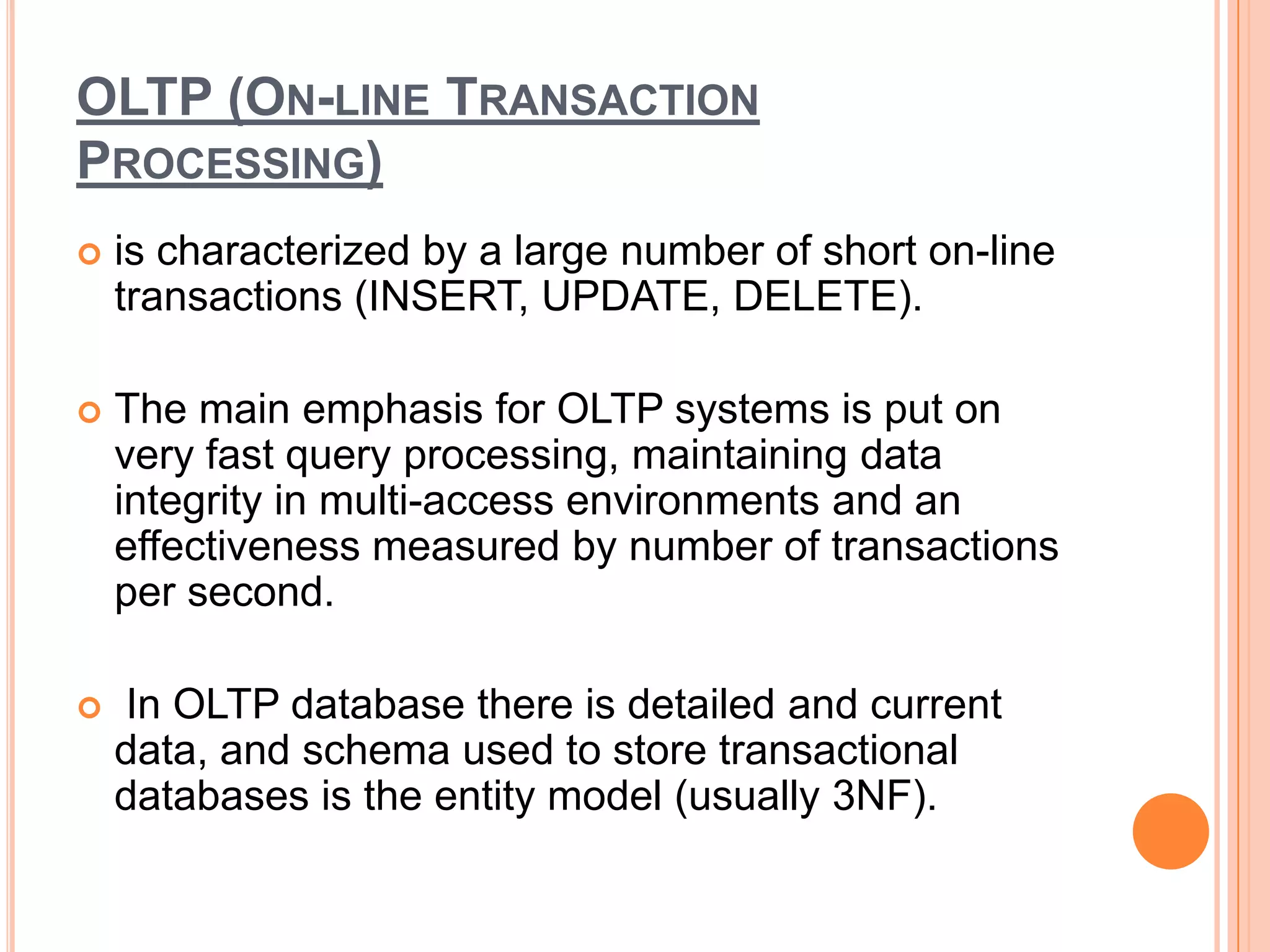
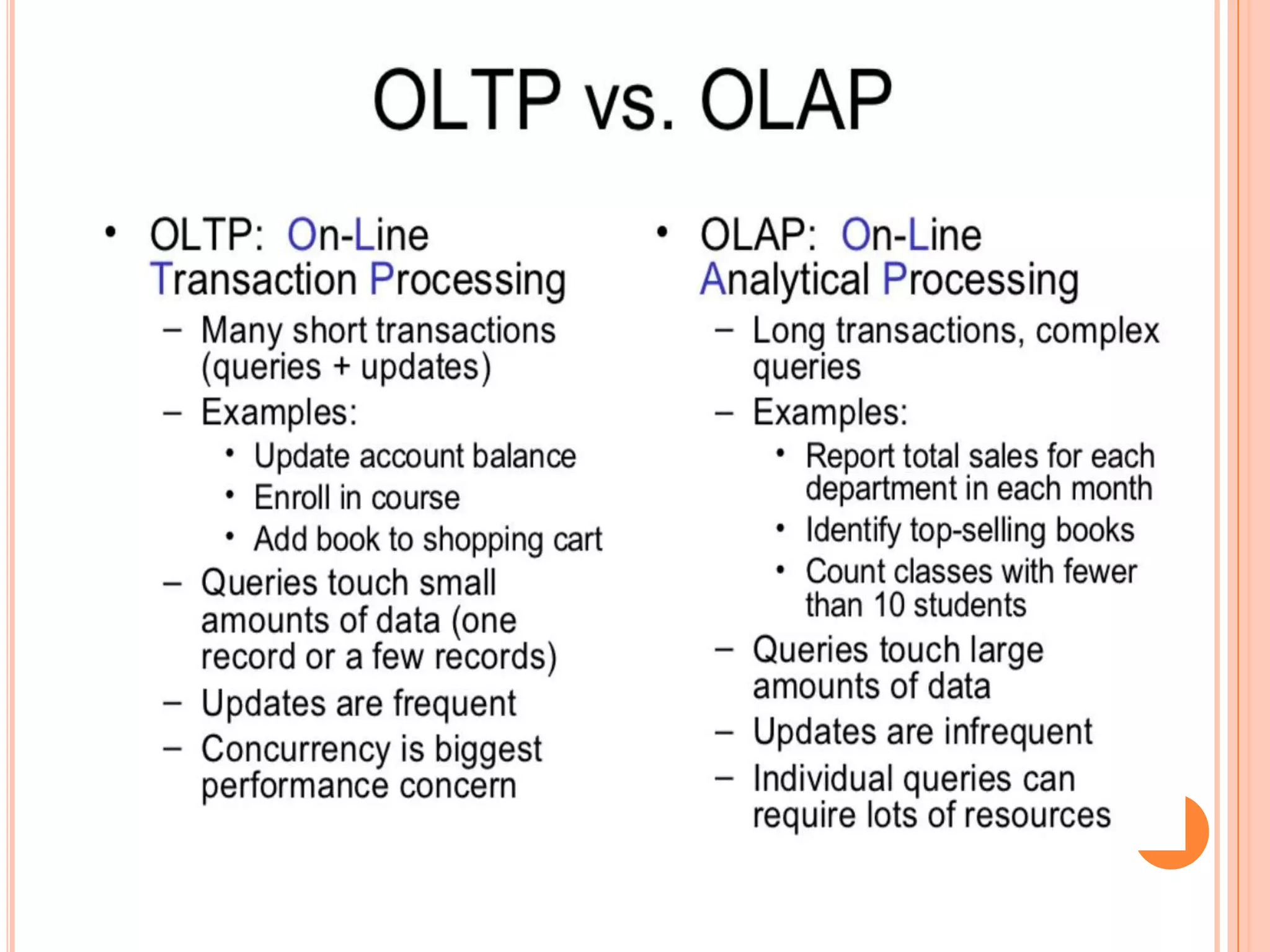
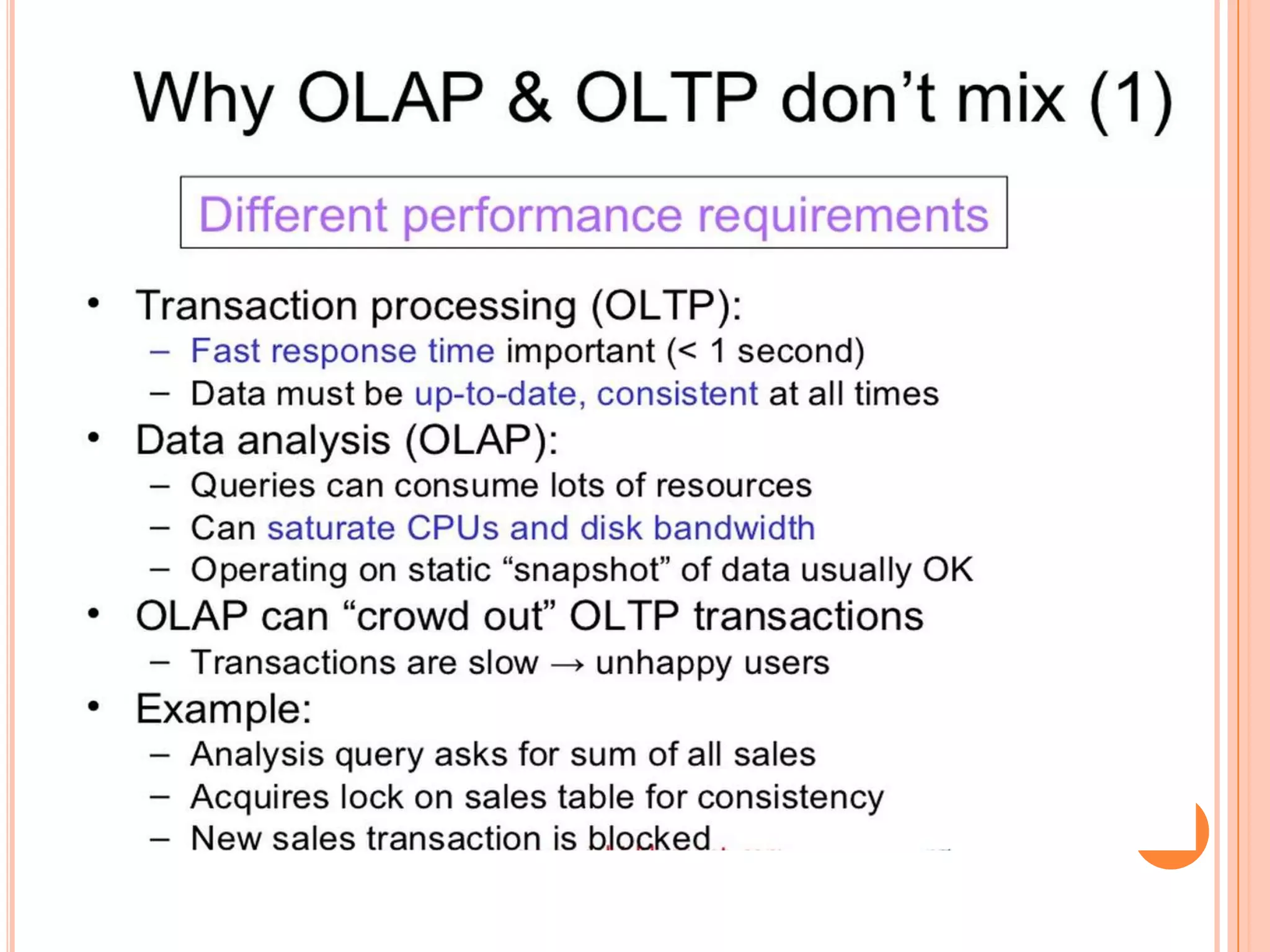
OLTP (ON-LINE TRANSACTION
PROCESSING)
 is characterized by a large number of short on-line
transactions (INSERT, UPDATE, DELETE).
 The main emphasis for OLTP systems is put on
very fast query processing, maintaining data
integrity in multi-access environments and an
effectiveness measured by number of transactions
per second.
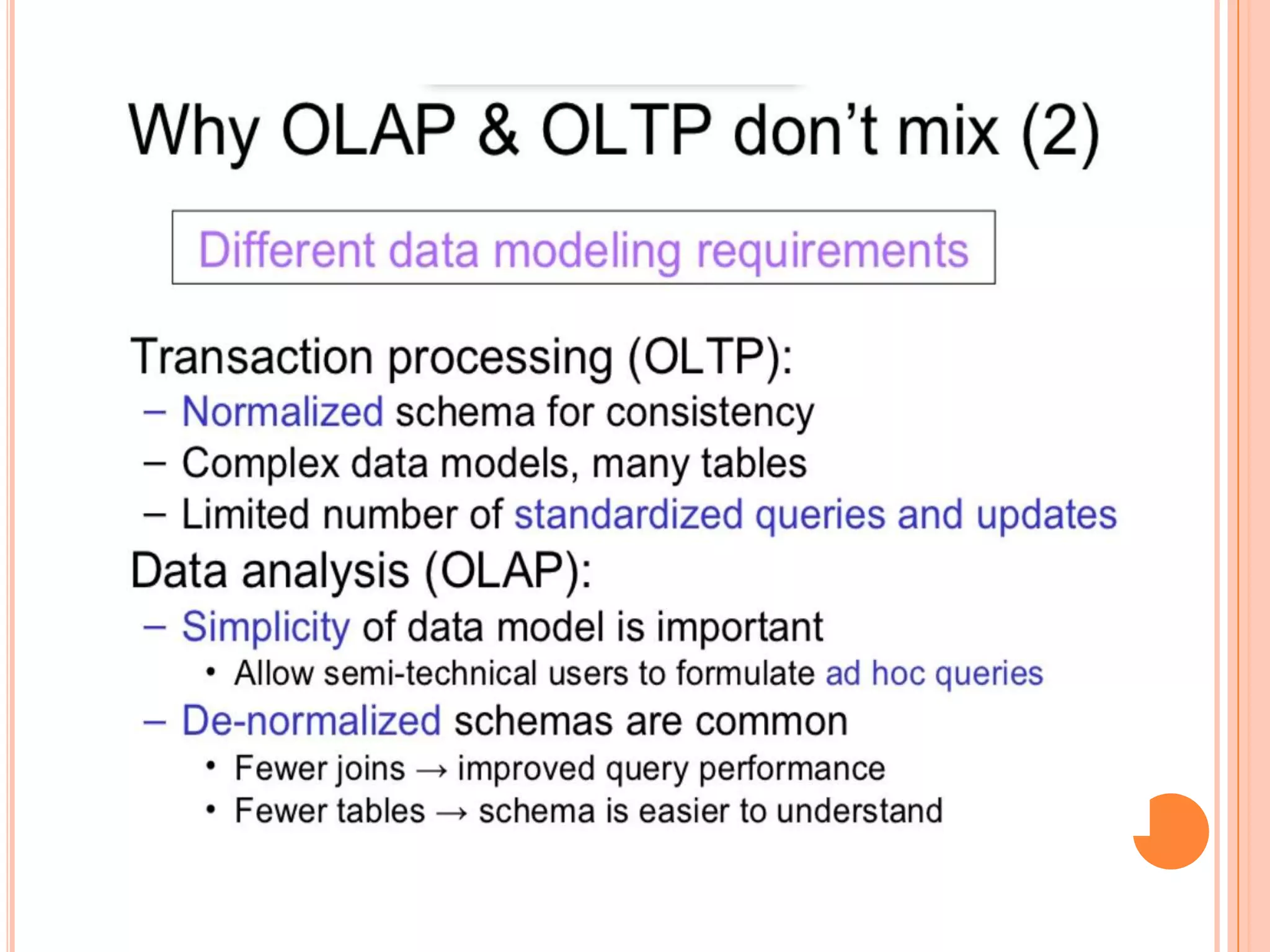
 In OLTP database there is detailed and current
data, and schema used to store transactional
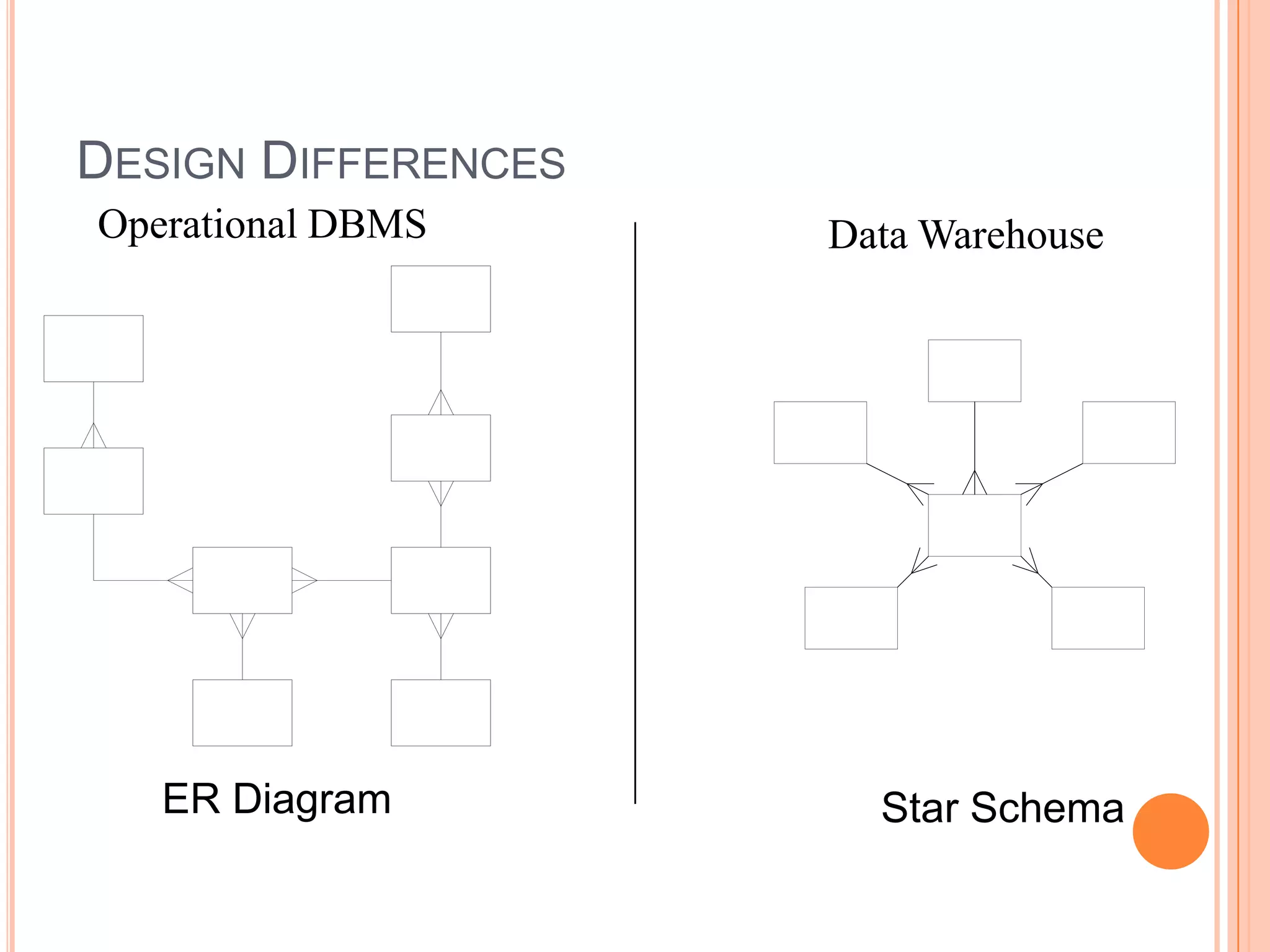
databases is the entity model (usually 3NF).
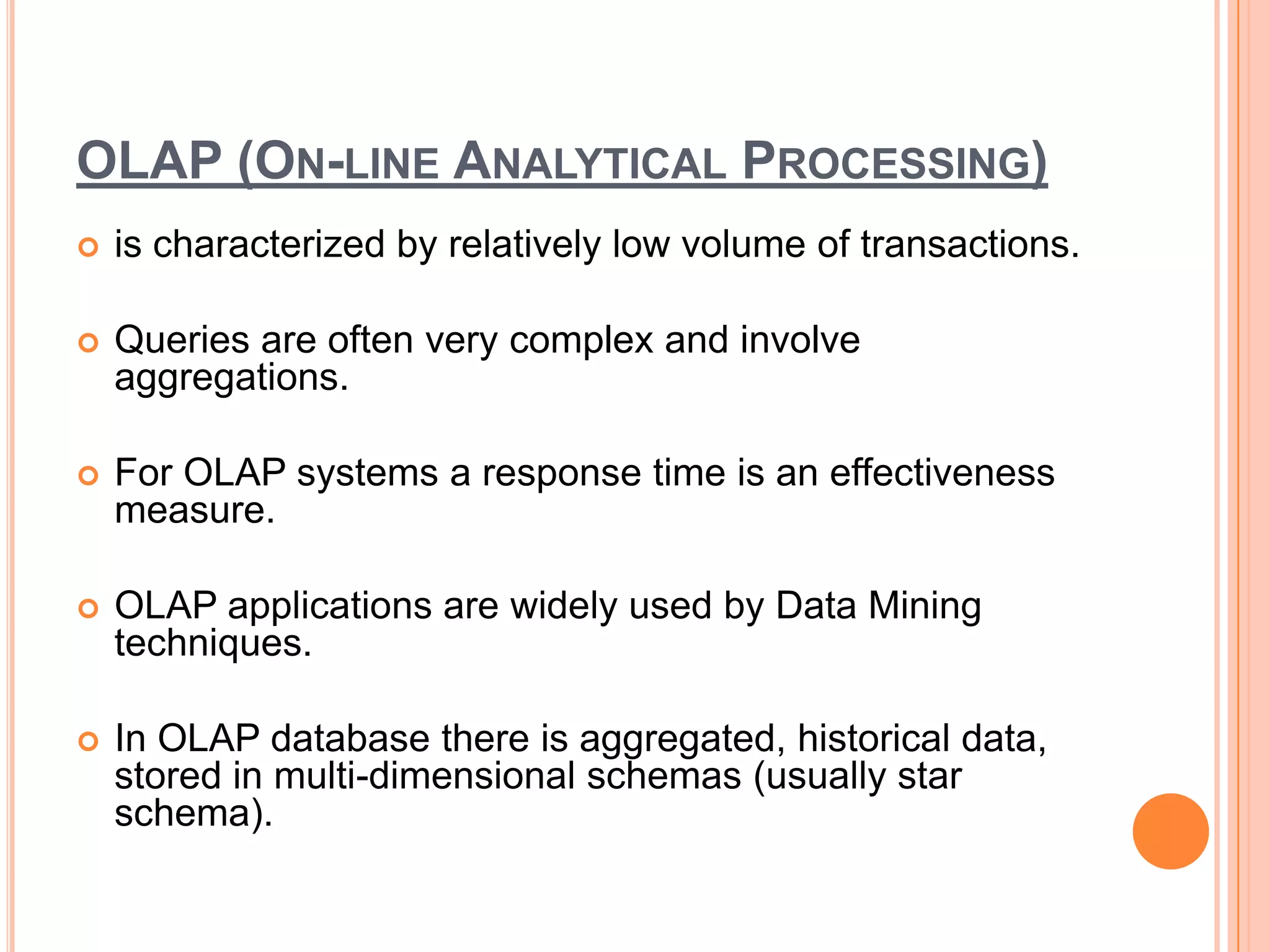
OLAP (ON-LINE ANALYTICAL PROCESSING)
 is characterized by relatively low volume of transactions.
 Queries are often very complex and involve
aggregations.
 For OLAP systems a response time is an effectiveness
measure.
 OLAP applications are widely used by Data Mining
techniques.
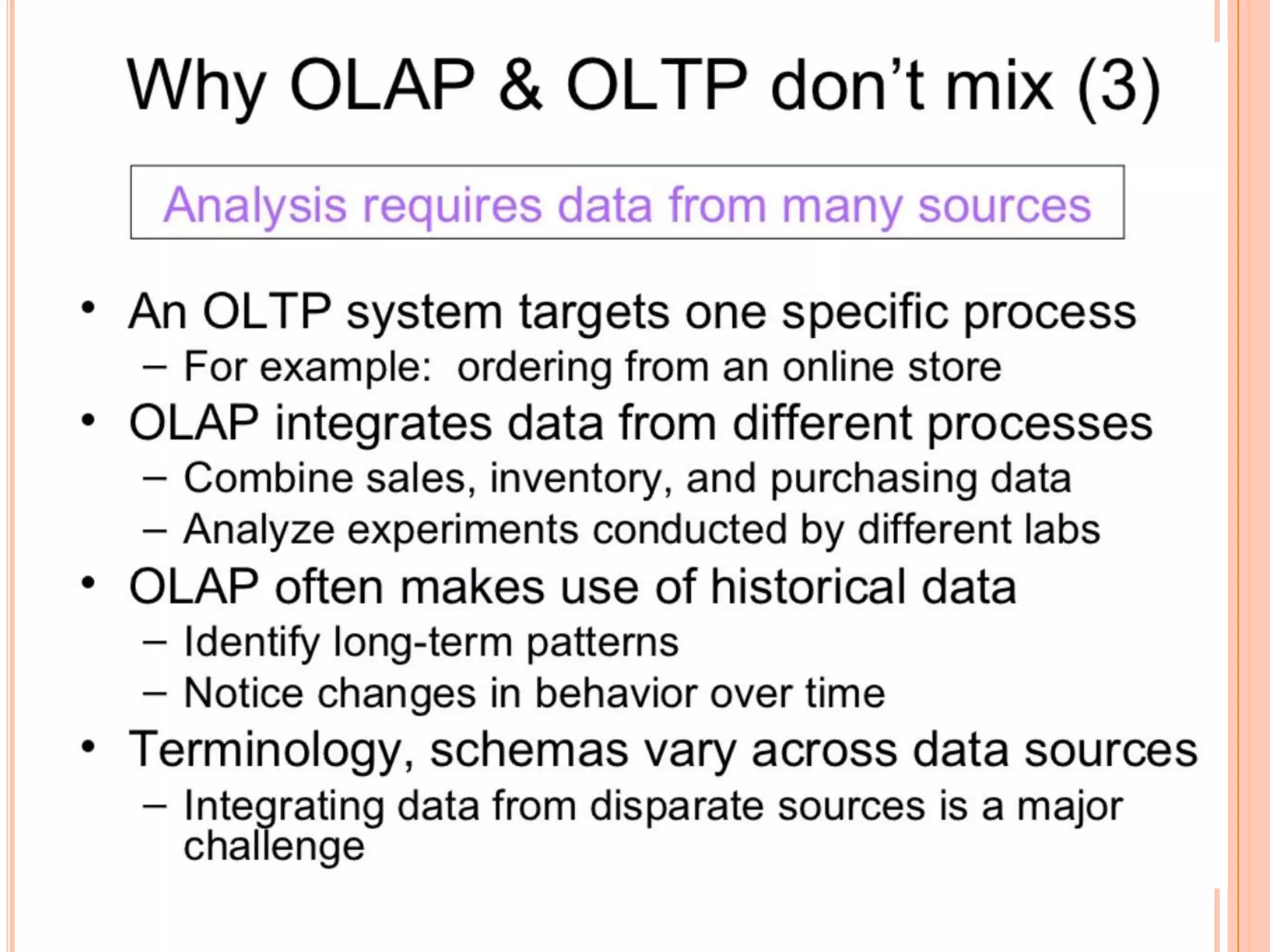
 In OLAP database there is aggregated, historical data,
stored in multi-dimensional schemas (usually star
schema).
DATA WAREHOUSING AND
OPERATIONAL DBMS
WHAT IS DATA WAREHOUSING?
DEFINITION:
 A data warehouse is a copy of transaction data
specifically structured for querying and reporting.
 An expanded definition for data warehousing
includes business intelligence tools, tools to
extract, transform and load data into the
repository, and tools to manage and retrieve
metadata.
NOTHING TO DO WITH WHETHER
SOMETHING IS A DATA WAREHOUSE.
 This definition of the data warehouse focuses on
data storage.
 A data warehouse can be normalized or
denormalized.
 It can be a relational database, multidimensional
database, flat file, hierarchical database, object
database, etc.
 Data warehouse data often gets changed.
 And data warehouses often focus on a specific
activity or entity.
WHY DO WE NEED DATA WAREHOUSES?
 Consolidation of information resources
 Improved query performance
 Separate research and decision support functions
from the operational systems
 Foundation for data mining, data visualization,
advanced reporting and OLAP tools
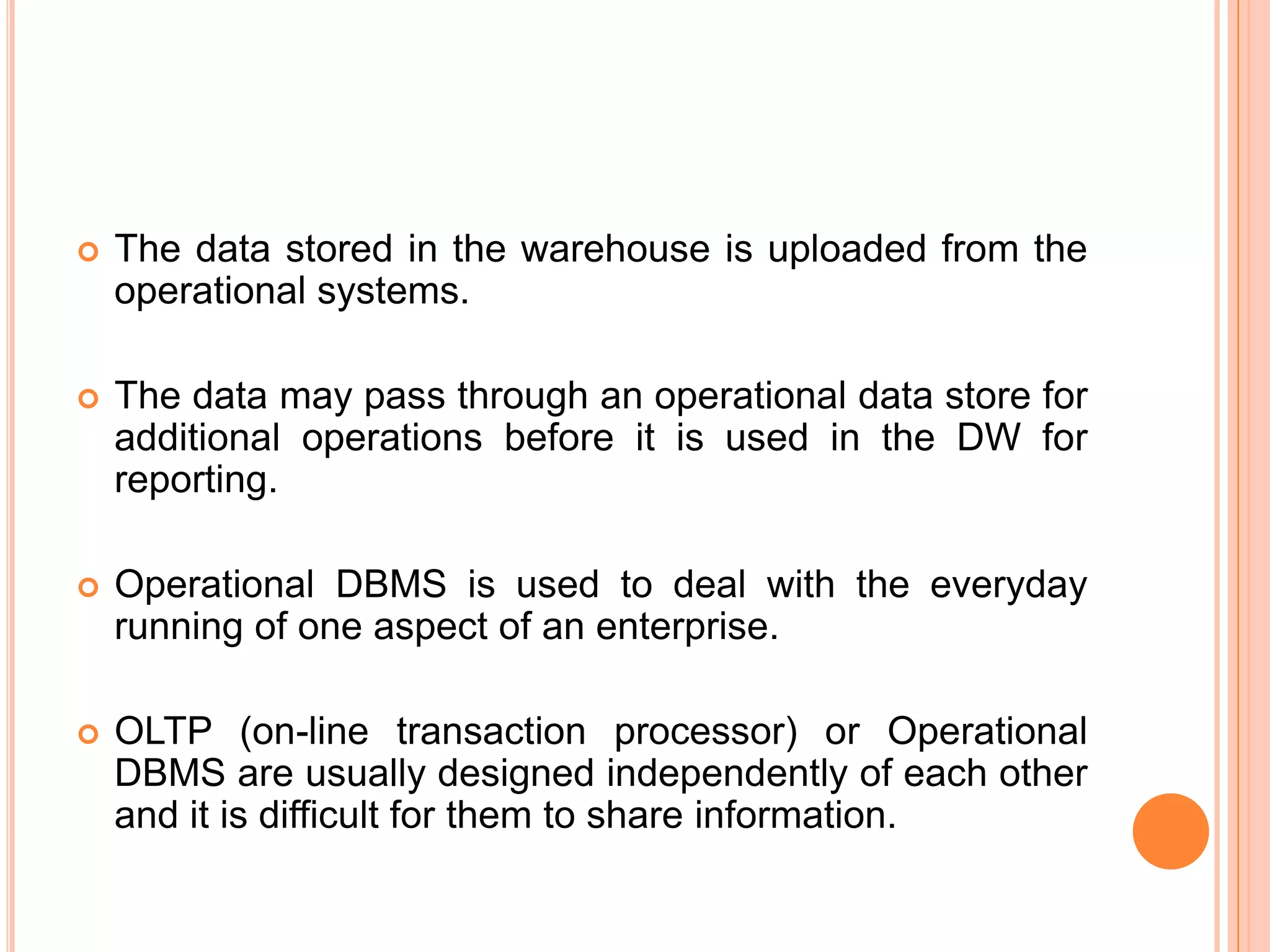
 The data stored in the warehouse is uploaded from the
operational systems.
 The data may pass through an operational data store for
additional operations before it is used in the DW for
reporting.
 Operational DBMS is used to deal with the everyday
running of one aspect of an enterprise.
 OLTP (on-line transaction processor) or Operational
DBMS are usually designed independently of each other
and it is difficult for them to share information.
HOW DO DATA WAREHOUSES DIFFER FROM
OPERATIONAL DBMS?
 Goals
 Structure
 Size
 Performance optimization
 Technologies used
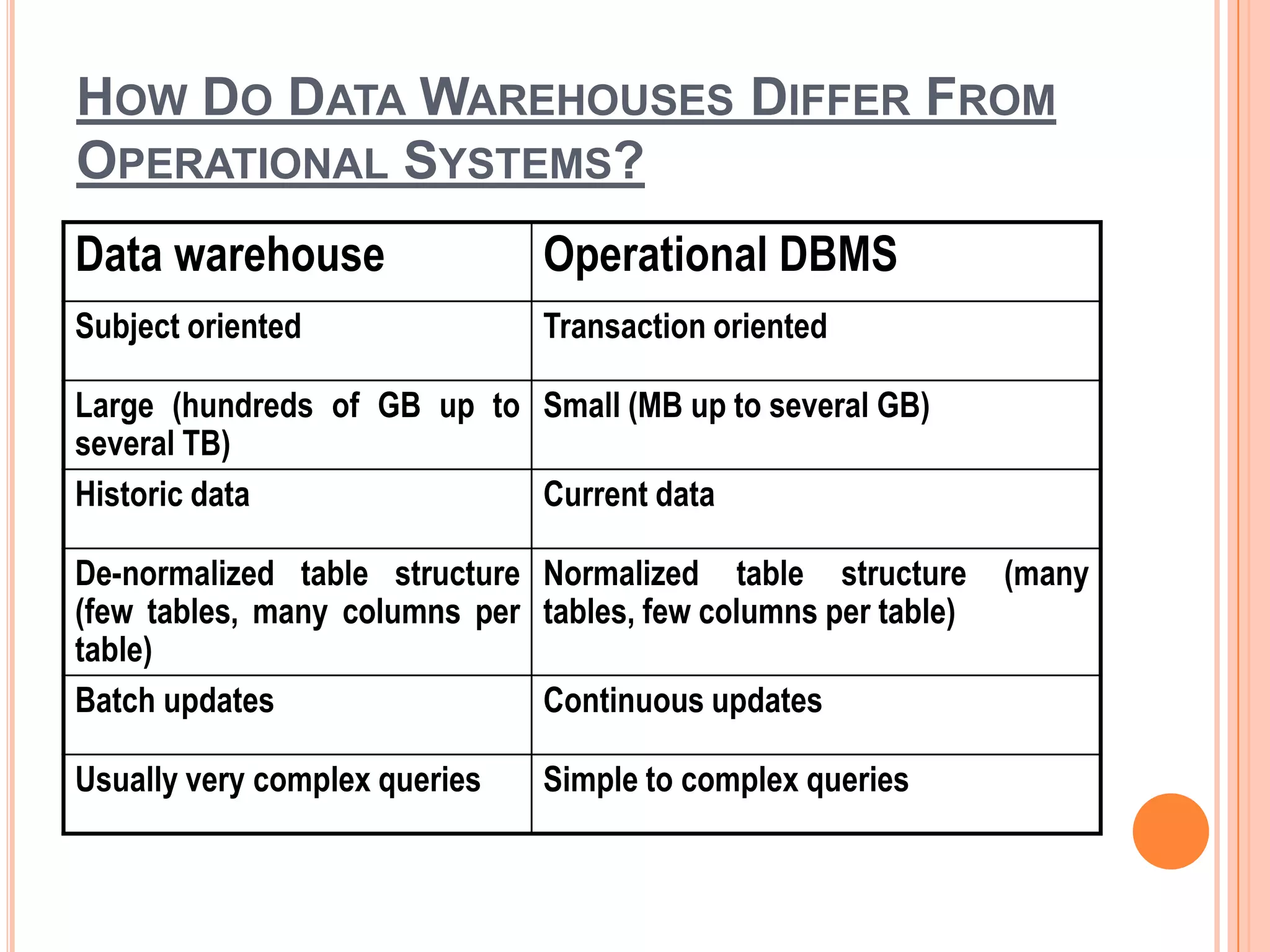
HOW DO DATA WAREHOUSES DIFFER FROM
OPERATIONAL SYSTEMS?
Data warehouse Operational DBMS
Subject oriented Transaction oriented
Large (hundreds of GB up to
several TB)
Small (MB up to several GB)
Historic data Current data
De-normalized table structure
(few tables, many columns per
table)
Normalized table structure (many
tables, few columns per table)
Batch updates Continuous updates
Usually very complex queries Simple to complex queries
DESIGN DIFFERENCES
Star Schema
Data WarehouseOperational DBMS
ER Diagram
FUNCTIONS
 A data warehouse maintains its functions in three
layers: staging, integration, and access.
 Staging is used to store raw data for use by
developers (analysis and support).
 The integration layer is used to integrate data and
to have a level of abstraction from users.
 The access layer is for getting data out for users.
WHAT IS A DATA WAREHOUSE USED FOR?
 Knowledge discovery
 Making consolidated reports
 Finding relationships and correlations
 Data mining
 Examples
 Banks identifying credit risks
 Insurance companies searching for fraud
 Medical research
THE END

Oltp vs olap

  • 1.
  • 2.
    OLTP (ON-LINE TRANSACTION PROCESSING) is characterized by a large number of short on-line transactions (INSERT, UPDATE, DELETE).  The main emphasis for OLTP systems is put on very fast query processing, maintaining data integrity in multi-access environments and an effectiveness measured by number of transactions per second.  In OLTP database there is detailed and current data, and schema used to store transactional databases is the entity model (usually 3NF).
  • 3.
    OLAP (ON-LINE ANALYTICALPROCESSING)  is characterized by relatively low volume of transactions.  Queries are often very complex and involve aggregations.  For OLAP systems a response time is an effectiveness measure.  OLAP applications are widely used by Data Mining techniques.  In OLAP database there is aggregated, historical data, stored in multi-dimensional schemas (usually star schema).
  • 8.
  • 9.
    WHAT IS DATAWAREHOUSING?
  • 10.
    DEFINITION:  A datawarehouse is a copy of transaction data specifically structured for querying and reporting.  An expanded definition for data warehousing includes business intelligence tools, tools to extract, transform and load data into the repository, and tools to manage and retrieve metadata.
  • 11.
    NOTHING TO DOWITH WHETHER SOMETHING IS A DATA WAREHOUSE.  This definition of the data warehouse focuses on data storage.  A data warehouse can be normalized or denormalized.  It can be a relational database, multidimensional database, flat file, hierarchical database, object database, etc.  Data warehouse data often gets changed.  And data warehouses often focus on a specific activity or entity.
  • 12.
    WHY DO WENEED DATA WAREHOUSES?  Consolidation of information resources  Improved query performance  Separate research and decision support functions from the operational systems  Foundation for data mining, data visualization, advanced reporting and OLAP tools
  • 13.
     The datastored in the warehouse is uploaded from the operational systems.  The data may pass through an operational data store for additional operations before it is used in the DW for reporting.  Operational DBMS is used to deal with the everyday running of one aspect of an enterprise.  OLTP (on-line transaction processor) or Operational DBMS are usually designed independently of each other and it is difficult for them to share information.
  • 14.
    HOW DO DATAWAREHOUSES DIFFER FROM OPERATIONAL DBMS?  Goals  Structure  Size  Performance optimization  Technologies used
  • 15.
    HOW DO DATAWAREHOUSES DIFFER FROM OPERATIONAL SYSTEMS? Data warehouse Operational DBMS Subject oriented Transaction oriented Large (hundreds of GB up to several TB) Small (MB up to several GB) Historic data Current data De-normalized table structure (few tables, many columns per table) Normalized table structure (many tables, few columns per table) Batch updates Continuous updates Usually very complex queries Simple to complex queries
  • 16.
    DESIGN DIFFERENCES Star Schema DataWarehouseOperational DBMS ER Diagram
  • 17.
    FUNCTIONS  A datawarehouse maintains its functions in three layers: staging, integration, and access.  Staging is used to store raw data for use by developers (analysis and support).  The integration layer is used to integrate data and to have a level of abstraction from users.  The access layer is for getting data out for users.
  • 18.
    WHAT IS ADATA WAREHOUSE USED FOR?  Knowledge discovery  Making consolidated reports  Finding relationships and correlations  Data mining  Examples  Banks identifying credit risks  Insurance companies searching for fraud  Medical research
  • 19.