CARBOHYDRATE
METABOLISM
By :Dr.Priyanka Sharma
1st year MDS
Dept. Of Public Health Dentistry
1
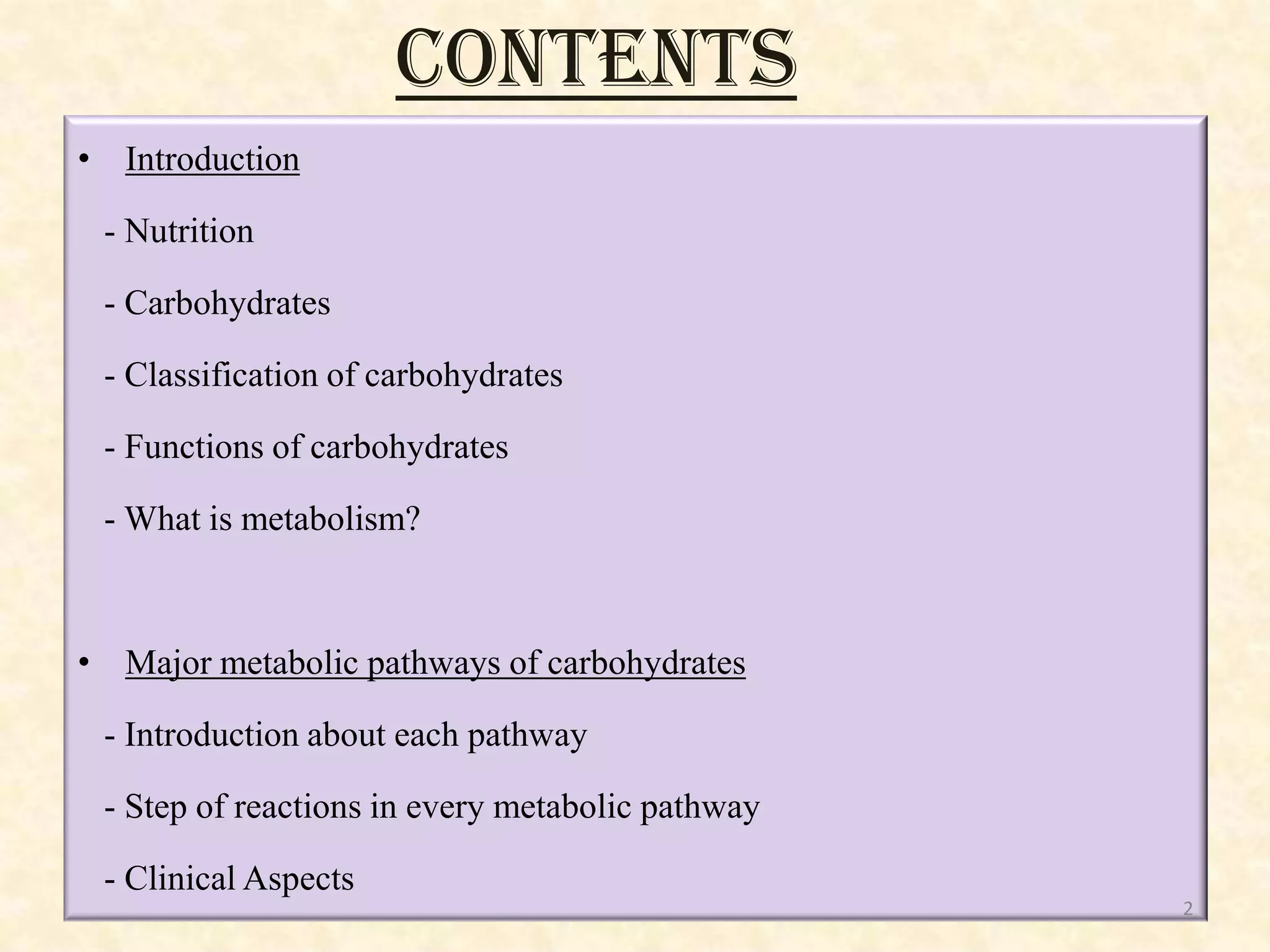
CONTENTS
• Introduction
- Nutrition
- Carbohydrates
- Classification of carbohydrates
- Functions of carbohydrates
- What is metabolism?

• Major metabolic pathways of carbohydrates
- Introduction about each pathway
- Step of reactions in every metabolic pathway
- Clinical Aspects
2
• Polysaccharides and clinical aspects
• Role of hormones in carbohydrate metabolism
• Dental aspects of carbohydrate metabolism
• Recent issue related to carbohydrate metabolism

• Summary of carbohydrate metabolism

• Conclusion
• References
3
INTRODUCTION

4
NUTRITION
• Nutrition is defined as “ the science of how the
body utilizes food to meet requirements for
development growth, repair and maintenance.”
CARBOHYDRATES
FATS

PROTEINS
VITAMINS
MINERALS
WATER

5
Daily Intake
• Nutrient Quantity Per Day
 Energy = 8,700 kilojoules
 Protein = 50 grams

 Fat = 70 grams
 Carbohydrates = 310 grams
 Sugars = 90 grams
 Sodium (salt) = 2.3 grams
 Dietary Fibre = 30 grams
 Saturated Fatty Acids = 24 grams

6
CARBOHYDRATE:
 Most abundant organic molecule on earth.
 Carbohydrates are defined as aldehyde or keto derivatives
of polyhydric alcohols.
 For example: Glycerol on oxidation is converted to
D-glyceraldehyde, which is a carbohydrate derived from the
trihydric alcohol (glycerol).
 All carbohydrates have the general formula CnH2nOn [or it
can be re-written as Cn(H2O)n ] .

7
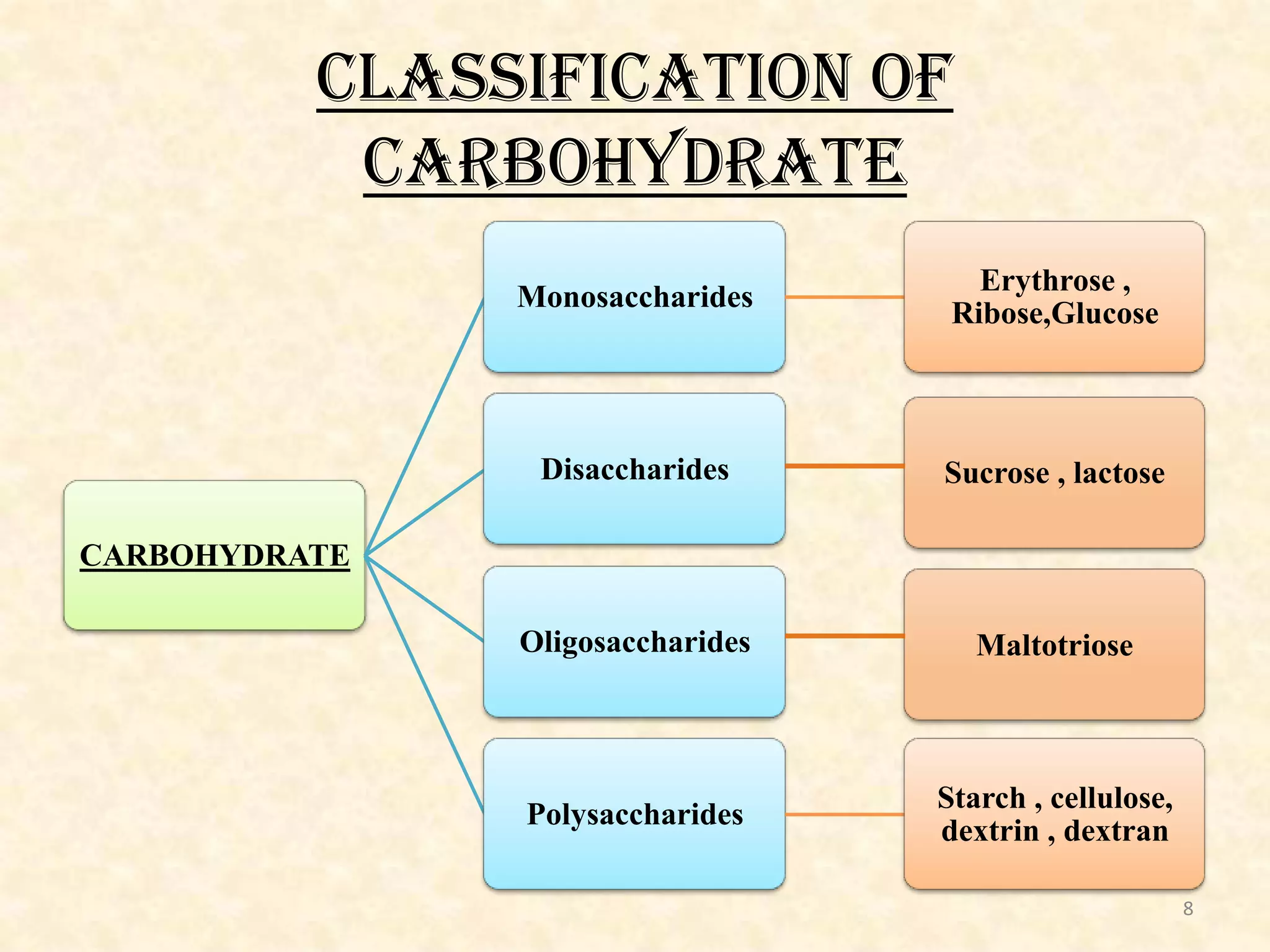
CLASSIFICATION OF
CARBOHYDRATE
Monosaccharides

Erythrose ,
Ribose,Glucose

Disaccharides

Sucrose , lactose

Oligosaccharides

Maltotriose

Polysaccharides

Starch , cellulose,
dextrin , dextran

CARBOHYDRATE

8
FUNCTIONS OF CARBOHYDRATES
 Main source of energy in the body. Energy
production from carbohydrates will be 4 k
calories/g (16 k Joules/g).
 Storage form of energy (starch and glycogen).
 Excess carbohydrate is converted to fat.
 Glycoproteins and glycolipids are components of
cell membranes and receptors.
 Structural basis of many organisms. For example,
cellulose of plants,exoskeleton of insects etc.
9
Biomedical Importance Of Glucose
• Glucose is a major carbohydrate
• It is a major fuel of tissues
• It is converted into other carbohydrates
 Glycogen for storage.
 Ribose in nucleic acids.
 Galactose in lactose of milk.
 They form glycoproteins & proteoglycans
 They are present in some lipoproteins (LDL) .
 Present in plasma membrane:glycocalyx.
 Glycophorin is a major intergral membrane glycoprotein
of human erythrocytes.
10
Metabolism
Thousands of chemical reactions are
taking place inside a cell in an
organized, well co-ordinated and
purposeful manner; all these
reactions are called as
METABOLISM.
TYPES OF METABOLIC
PATHWAY:
Catabolic Pathway
Anabolic Pathway
Amphibolic Pathway
STAGES AND PHASES
OF METABOLISM:
Primary
Secondary
Tertiary

11
Food molecules

Simpler molecules

Amphibolic pathway
Anabolic

Proteins, carbohydrates,
lipids, nucleic acids etc.

Catabolic

CO2+H2O

12
Major Pathways
of
Carbohydrate
Metabolism

13
1) Glycolysis
2) Citric Acid Cycle
3) Gluconeogenesis
4) Glycogenesis
5) Glycogenolysis

6) Hexose monophosphate shunt
7) Uronic Acid Pathway
8) Galactose Metabolism
9) Fructose Metabolism
10) Amino sugar metabolism

14
Entry of Glucose into cells
1) Insulin-independent transport system of glucose:
Not dependent on hormone insulin. This is operative
in – hepatocytes, erythrocytes (GLUT-1) and brain.
2) Insulin-dependent transport system: Muscles and
adipose tissue (GLUT-4).
Type 2 diabetes
melitus:
-Due to reduction
in the quantity of
GLUT-4 in insulin
deficiency.
-Insuin resistance
is observed in
tissues.
15
Glycolysis
Embden-Meyerhof pathway
(or)
E.M.Pathway
Definition:
Glycolysis is defined as the sequence of
reactions converting glucose (or glycogen) to
pyruvate or lactate, with the production of ATP
16
1)
2)
3)
4)
5)
6)
7)
8)

Salient features:
Takes place in all cells of the body.
Enzymes present in “cytosomal fraction” of the cell.
Lactate – end product – anaerobic condition.
Pyruvate(finally oxidized to CO2 & H2O) – end
product of aerobic condition.
Tissues lacking mitochondria – major pathway – ATP
synthesis.
Very essential for brain – dependent on glucose for
energy.
Central metabolic pathway
Reversal of glycolysis – results in gluconeogenesis.
17
Reactions of Glycolysis

1) Energy Investment phase (or)
priming phase
2) Splitting phase
3) Energy generation phase
18
• Glucose is phosphorylated to glucose-6-phosphate by hexokinase (or) glucokinase.

Energy
Investment
Phase

• Glucose-6-phosphate undergoes isomerization to give fructose -6- phosphate in the presense of
phospho-hexose isomerase and Mg2+
• Fructose-6-phosphate is phoshorylated to fructose 1,6-bisphosphate by phosphofructokinase.

• Fructose 1,6-bisphosphate  glyceraldehyde 3-phosphate + dihydroxyacetone
phosphate.(aldolase enzyme)

Splitting
Phase

• 2 molecules of glyceraldehyde 3-phosphate are obtained from 1 molecule of glucose

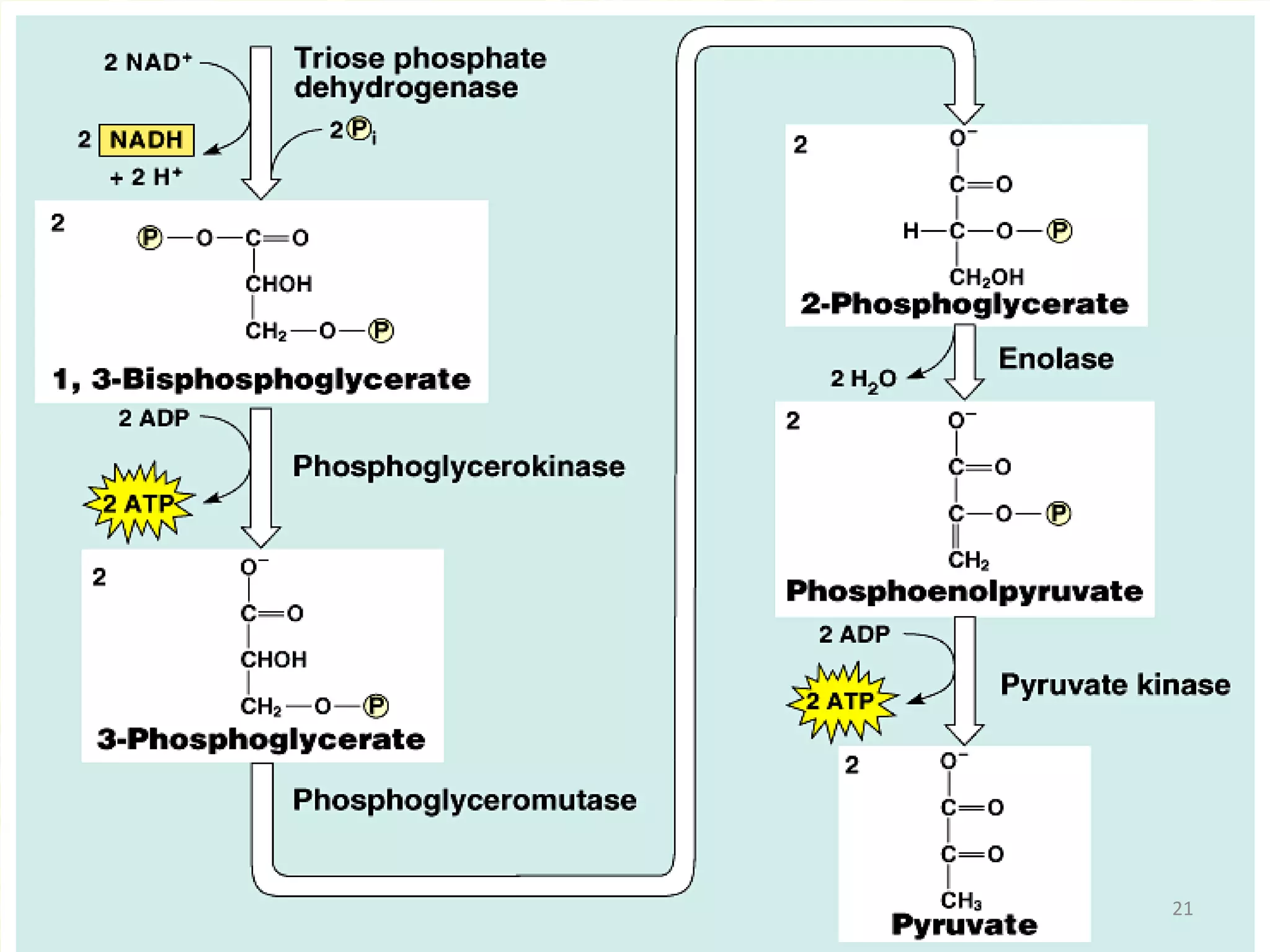
• Glyceraldehyde 3-phosphate  1,3-bisphosphoglycerate(glyceraldehyde 3-phosphate hydrogenase )
• 1,3-bisphosphoglycerate  3-phosphoglycerate (phosphoglycerate kinase)
• 3-phosphoglycerate  2-phosphoglycerate (phosphoglycerate mutase)

Energy
Generation
Phase

• 2-phosphoglycerate  phosphoenol pyruvate (enolase + Mg2+ & Mn2+)
• Phosphoenol pyruvate  pyruvate [enol] (pyruvate kinase )  pyruvate [keto]  L-Lactate
(lactate dehydrogenase)
19
20
21
Energy production of glycolysis:
ATP production = ATP produced - ATP utilized
ATP produced

In absence of oxygen
(anaerobic glycolysis)

4 ATP
(Substrate level
phosphorylation)

ATP utilized

Net energy

2ATP
From glucose to glucose 6-p.
From fructose -6-p to
fructose 1,6 p.

2 ATP

4 ATP
(substrate level
phosphorylation)

2ATP
-From glucose to glucose 6-p.

2ATP from 1,3 BPG.
2ATP from phosphoenol
pyruvate.

From fructose -6-p to
fructose 1,6 p.

8 ATP /
6 ATP (Pyruvate
dehydrogenase
2NADH,ETC,
Oxidative
phosphorylation)

2ATP from 1,3 DPG.
2ATP from phosphoenol
pyruvate
In presence of oxygen
(aerobic glycolysis)

+ 4ATP or 6ATP
(from oxidation of 2
NADH + H in
mitochondria).
22
CLINICAL ASPECT
1) Lactic acidosis
- Normal value – 4 to 15 mg/dl.
- Mild forms – strenous exercise, shock,
respiratory diseases, cancers
- Severe forms – Impairment/collapse of
circulatory system – myocardial infarction,
pulmonary embolism, uncontrolled
hemmorrhage and severe shock.
23
2) Cancer and glycolysis :
- Cancer cells – increased uptake of glucose and
glycolysis.

- Blood vessels unable to supply adequate oxygen –
HYPOXIC condition – Anaerobic glycolysis /
hypoxic glycolysis – Involvement of Hypoxic
inducible transcription factor (HIF).
- Treatment : Use drugs that inhibit vascularization
of tumours
24
 Pasteur effect : Inhibition of glycolysis by
oxygen (Phosphofructokinase) .
 Crabtree effect : The phenomenon of
inhibition of oxygen consumption by the
addition of glucose to tissues having high
aerobic glycolysis.

25
RAPARPORT – LEUBERING CYCLE
• Supplementary pathway/ Shunt pathway to glycolysis .

• Erythrocytes
• Synthesis of 2,3-bisphosphoglycerate (2,3-BPG).

• Without the synthesis of ATP.
• Help to dissipate or waste the energy not needed by RBCs.

• Supply more oxygen to the tissues.
26
CITRIC ACID CYCLE
KREBS CYCLE /
TRICARBOXYLIC ACID/ TCA
CYCLE
Essentially involves the oxidation of acetyl CoA
to CO2 and H2O.
This Cycle utilizes about two-third of total
oxygen consumed by the body.
27
Brief History:

Location of
TCA

• Hans Adolf
Krebs

• Mitochondrial
matrix

• 1937

• In close
proximity to
the electronic
transport
chain.

• Studies of
oxygen
consumptiom
in pigeon
breast muscle.

Overview
• 65-70% of the
ATP is
synthesized
• Name : TCA
used because
at the ouset of
the cycle
tricarboxylic
acids
participate.
28
Reactions of citric acid cycle
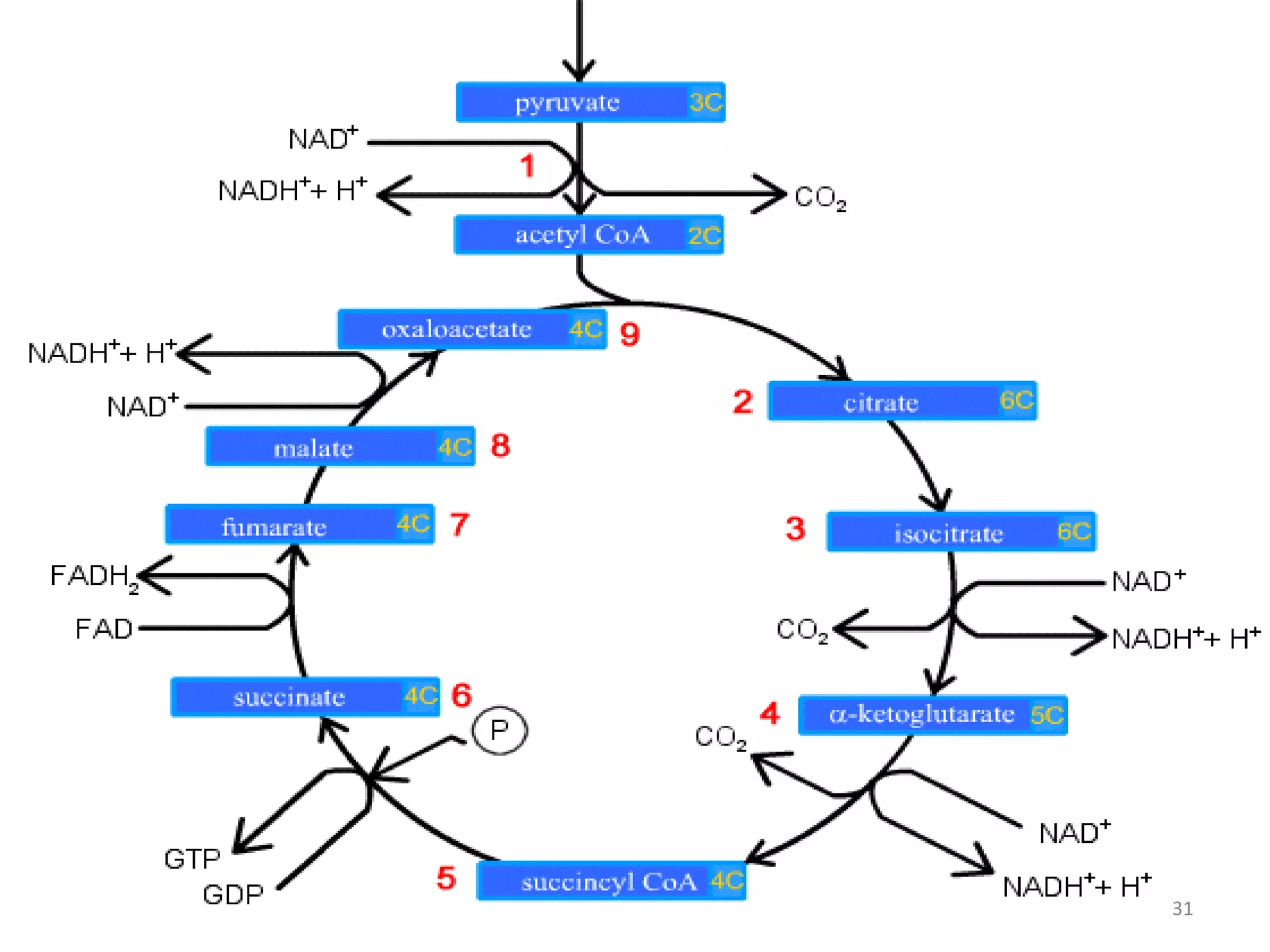
1) Formation of citrate : Condensation of acetyl CoA and
oxaloacetate  catalysed by citrate synthase.
2) & 3) Citrate is isomerized to isocitrate  aconitase (two
steps).
4) & 5) Formation of ᾀ-ketoglutarate : enzyme isocitrate
dehydrogenase.

6) Conversion of ᾀ-ketoglutarate to succinyl CoA :
through oxidative decarboxylation, catalysed by ᾀketoglutarate dehydrogenase complex.

29
7)Formation of succinate : enzyme succinate
thiokinase
GTP + ADP  ATP + GDP (nucleoside
diphosphate kinase)
8)Conversion of succinate to fumarase : enzyme
succinate dehydrogenase

9)Formation of malate : enzyme fumarase
10)Conversion of malate to oxaloacetate : enzyme
malate dehydrogenase.
30
31
• TCA cycle is strictly aerobic in contrast to glycolysis.
• Total of 12 ATP are produced from one acetyl CoA : During the process of oxidation of acetyl CoA via citric
acid cycle  3 NADH & 1 FADH2.

 Oxidation of 3 NADH by electron transport chain
coupled with oxidative phosphorylation results in 9
ATP, FADH2  2 ATP.
 One substrate level phosphorylation.
32
APPLIED
ASPECTS
OF
TCA CYCLE

Mitochondrial
encephalopathy
occurs due to
fumarase
deficiency .
It is a
mitochondrial
myopathy affecting
both the skeletal
muscles and brain .
33
GLUCONEOGENESIS
The synthesis of glucose from non-carbohydrate
compounds is known as gluconeogenesis.

Major substrate/precursors : lactate, pyruvate, glycogenic
amino acids, propionate & glycerol.

-Takes place in liver (1kg glucose) ; kidney matrix( 1/3rd).
- Occurs in cytosol and some produced in mitochondria.
34
Importance of Gluconeogenesis
Brain,CNS,
erythrocytes,testes
and kidney medulla
dependent on
glucose for cont.
supply of energy.

Under anaerobic
condition, glucose
is the only source
to supply skeletal
muscles.

Occurs to meet the
basal req of the
body for glucose
in fasting for even
more than a day.

Effectively
clears,certain
metabolites
produced in the
tissues that
accumulates in
blood
35
Reaction of Gluconeogenesis
Glucose

36
Cori Cycle
The cycle
involveing the
synthesis of
glucose in liver
from the skeletal
muscle lactate and
the reuse of
glucose thus
synthesized by the
muscle for energy
purpose is known
as Cori cycle.
37
Glucose-Alanine Cycle

38
Clinical Aspects
* Glucagon stimulates gluconeogenesis:
1)Active pyruvate kinase converted to inactive form
2)Reduces the concentration of fructose 2,6-bisphosphate.

* Glycogenic amino acids have stimulating influence on gluconeogenesis.
* Diabetes mellitus where amino acids are mobilized from muscle protein for the
purpose of gluconeogenesis.
Acetyl CoA promotes gluconeogenesis:
* During starvation – due to excessive lipolysis in adipose tissue –acetyl CoA
accumulates in the liver.
* Acetyl CoA allosterically activates pyruvate carboxylase resulting in enhanced
glucose production

* Alcohol inhibits gluconeogenesis
39
GLYCOGEN
METABOLISM
Glycogen is a storage form of glucose in animals.
Stored mostly in liver (6-8%) and muscle (1-2%)
Due to muscle mass the quantity of glycogen in muscle = 250g
and liver =75g
Stored as granules in the cytosol.
Functions : Liver glycogen – maintain the blood glucose level
Muscle glycogen – serves as fuel reserve
40
GLYCOGENESIS
 Synthesis of glycogen from glucose.

 Takes place in cytosol.
 Requires UTP and ATP besides glucose.
 Steps in synthesis :
1) Synthesis of UDP- glucose
2) Requirement of primer to initiate glycogenesis
3) Glycogen synthesis by glycogen synthase
4) Formation of branches in glycogen
41
42
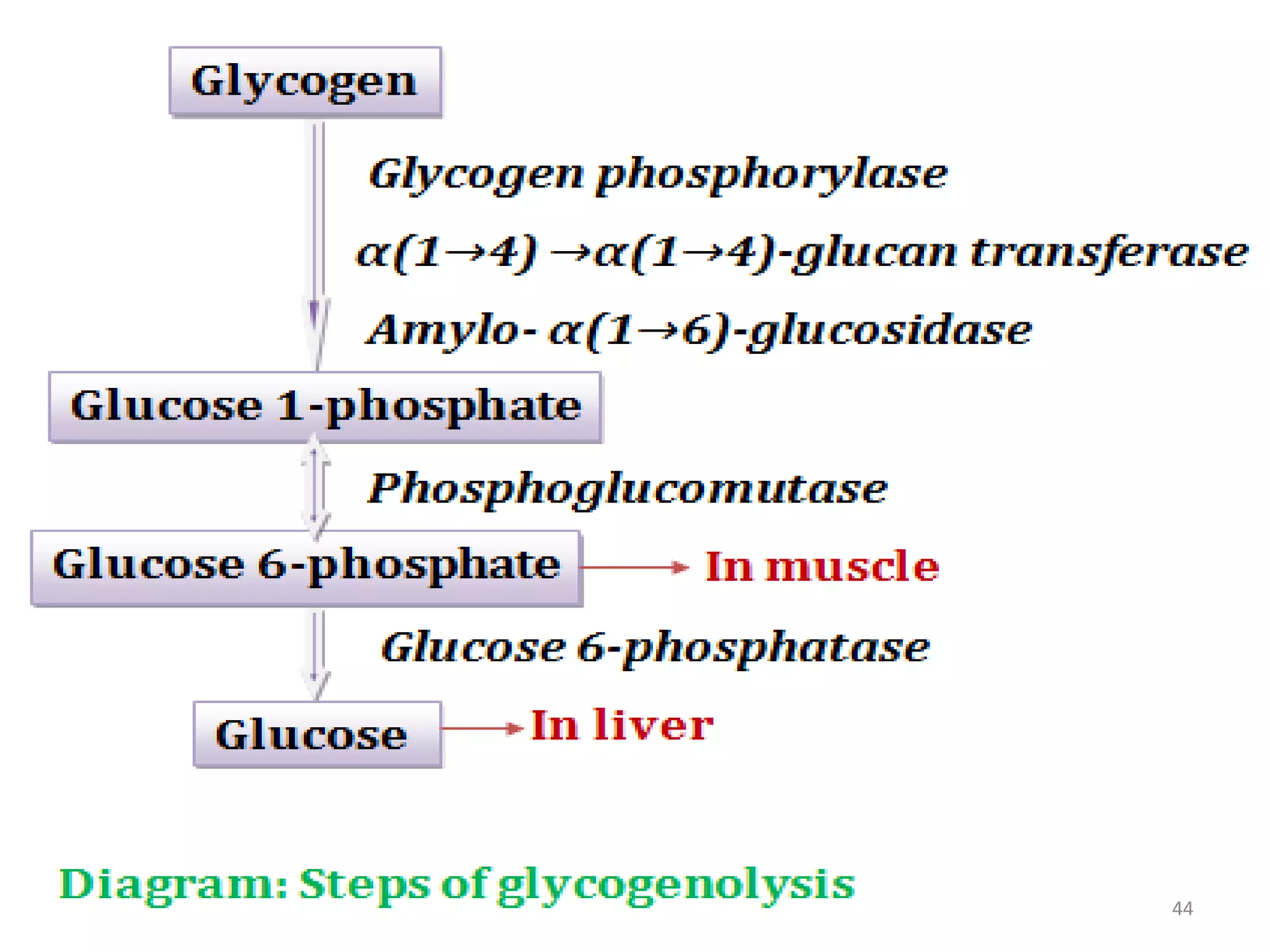
GLYCOGENOLYSIS
 Degradation of stored glycogen in liver and muscle constitutes
glycogenolysis.
 Irreversible pathway takes place in cytosol.
 Hormonal effect on glycogen metabolism :
1) Elevated glucagon – increases glycogen degradation
2) Elevated insulin – increases glycogen synthesis

 Degraded by breaking majorly α-1,4- and α-1,6-glycosidic bonds.
 Steps in glycogenolysis:
1) Action of glycogen phosphorylase
2) Action of debranching enzyme
3) Formation of glucose-6-phosphate and glucose
43
44
Glycogen storage diseases
TYPE

ENZYME DEFECT

Type I (Von Gierke’s
disease)

Glucose-6phosphatase
deficiency.

Hypoglycemia, enlarged liver and kidneys,
gastro-intestinal symptoms, Nose bleed, short
stature, gout

Type II (Pompe’s
disease)

Acid maltase
deficiency

Diminished muscle tone, heart failure, enlarged
tongue

Type III (Cori’s
disease,Forbe disease)

Debranching enzyme
deficiency

Hypoglycemia, enlarged liver, cirrhosis, muscle
weakness, cardiac involvement

Type IV (Andersen’s
disease)

Branching enzyme
deficiency

Type V (Mcardle’s
disease)

CLINICAL FEATURES

Enlarged liver & spleen, cirrhosis, diminished
muscle tone, possible nervous system
involvement

Muscle phosphorylase Muscle weakness, fatigue and muscle cramps
deficiency
45
TYPE

ENZYME DEFECT

CLINICAL FEATURES

Type VI (Her’s
disease)

Liver phosphorylase
deficiency

Type VII (Tarui’s
disease)

Phosphofructokinase Muscle pain, weakness and decreased
deficiency
endurance

Type VIII

Liver phosphorylase
kinase

Type 0

Liver glycogen
synthetase

Mild hypoglycemia, enlarged liver, short
stature in childhood

Mild hypoglycemia, enlarged liver, short
stature in childhood, possible muscle weakness
and cramps

Hypoglycemia, possible liver enlargement

46
Von Gierke’s disease)

Pompe’s disease

47
Cori’s disease, Forbe
disease

48
HEXOSE MONOPHOSPHATE
SHUNT
HMP Shunt/ Pentose Phosphate Pathway/
Phosphogluconate Pathway

49
* This is an alternative pathway to glycolysis and TCA cycle
for the oxidation of glucose.

* Anabolic in nature, since it is concerned with the
biosynthesis of NADPH and pentoses.

* Unique multifunctional pathway

* Enzymes located – cytosol
* Tissues active – liver, adipose tissue, adrenal gland,
erythrocytes, testes and lactating mammary gland.

50
Reactions of the HMP Shunt Pathway

51
Significance of HMP Shunt
• Pentose or its derivatives are useful for the
synthesis of nucleic acids and nucleotides.
• NADPH is required :
- For reductive biosynthesis of fatty acids and
steroids.
- For the synthesis of certain amino acids.
- Anti-oxidant reaction
- Hydroxylation reaction– detoxification of drugs.
- Phagocytosis
- Preserve the integrity of RBC membrane.

52
Clinical Aspects
• Glucose-6-Phosphate dehydrogenase
deficiency :
- Inherited sex-linked trait
- Red blood cells
- Impaired synthesis of NADPH
- hemolysis , developing hemolytic anemia
 Resistance towards malaria [Africans]
53
Clinical Aspects
• Wernicke-Korsakoff syndrome :
- Genetic disorder
- Alteration in transketolase activity
- Symptoms : mental disorder, loss of memory,
partial paralysis
• Pernicious anemia : transketolase activity
increases.
54
URONIC ACID PATHWAY
(Or)
Glucoronic acis pathway

55
 Alternative oxidative pathway for glucose.
 synthesis of glucorinc acid,pentoses and vitamin
(ascorbic acid).
 Normal carbohydrate metabolism ,phosphate
esters are involved – but in uronic acid pathway
free sugars and sugar acids are involved.

1)
2)
3)
4)

Steps of reactions :
Formation of UDP-glucoronate
Conversion of UDP- glucoronate to L-gulonate
Synthesis of ascorbic acid in some animals
Oxidation of L-gulonate
56
57
Clinical Aspects
• Effects of drugs : increases the pathway to achieve
more synthesis of glucaronate from glucose .
- barbital,chloro-butanol etc.

• Essential pentosuria : deficiency of xylitoldehydrogenase
- Rare genetic disorder
- Asymptomatic
- Excrete large amount of L-xylulose in urine
- No ill-effects
58
METABOLISM OF
GALACTOSE

59
 Disaccharide lactose present in milk – principle source of of galactose.
 Lactase of intestinal mucosal cells hydrolyses lactose to galactose and glucose.
 Within cell galactose is produced by lysosomal degradation of glycoproteins
and glycolipids.
 CLINICAL ASPECTS :
- Classical galactosemia : deficiency of galactose-1-phosphate
uridyltransferase. Increase in galactose level.
- Galactokinase deficiency : Responsible for galactosemia and galactosuria.
- Clinical symptoms : loss of weight in infants, hepatosplenomegaly, jaundice,
mental retardation , cataract etc.
- Treatment : removal of galactose and lactose from diet.
60
METABOLISM OF
FRUCTOSE
Sorbitol/Polyol Pathway:
 Conversion of glucose to fructose via sorbitol.
 Glucose to Sorbitol reduction by enzyme aldolase (NADPH).
 Sorbitol is then oxidized to fructose by sorbitol dehydrogenase and
NAD+.
 Fructose is preferred carbohydrate for energy needs of sperm cells
due to the presence of sorbitol pathway.
Pathway is absent in liver.
Directly related to glucose : higher in uncontrolled diabetes.
61
METABOLISM OF AMINO
SUGARS
When the hydroxyl group of the sugar is replaced by the amino
group, the resultant compound is an amino sugar.
Eg. Glucosamine,galactosamine,mannosamine,sialic acid etc.
Essential components of glycoproteins, glycosaminoglycans,
glycolipids.
Found in some antibiotics.
20% of glucose utilized for the synthesis of amino sugars –
connective tissues.
62
Electron transport chain
reactions
• Electron transport chain is a series of protein
complexes located in the inner membrane of
mitochondria .

63
POLYSACCHARIDES
&
CLINICAL ASPECTS

64
Proteoglycans & Glycosaminoglycans
 Seven glycosaminoglycans :
1 ) Hyaluronic acid
2 ) Chondriotin sulfate
3 ) Keratan sulfate I
4 ) Keratan sulfate II
5 ) Heparin
6 ) Heparan sulfate
7 ) Dermatan sulfate
65
Functions of glycoaminoglycans
• Structural components of extracellular matrix.
• Act as sieves in extracellular matrix.
• Facilitate cell migration.

• Corneal transparency.
• Anticoagulant (Heparin).

• Components of synaptic & other vesicles.
66
Mucopolysaccharidoses
MPS

Defect

Symptoms

MPS I (Hurler
syndrome)

Alpha-L-Iduronidase

Mental retardation, micrognathia, coarse facial
features, macroglossia, retinal degeneration,
corneal clouding, cardiomyopathy,
hepatosplenomegaly

MPS II (Hunter
syndrome)

Iduronate sulfatase

Mental retardation (similar, but milder,
symptoms to MPS I). This type exceptionally
has X-linked recessive inheritance

MPS IIIA
(Sanfilippo A)

Heparan sulfate N
sulfatase

MPS IIIB
(Sanfilippo B)

AlphaAcetylglucosaminidase

MPS IIIC
(Sanfilippo C)

Acetyl transferase

Developmental delay, severe hyperactivity,
spasticity, motor dysfunction, death by the
second decade

67
MPS
MPS IVA
(Morquio A)

Defect

Symptoms

Galactose-6-sulfatase

MPS IVB (Morquio Beta galactosidase
B)

Severe skeletal dysplasia, short stature, motor
dysfunction

MPS VI
(Maroteaux Lamy
syndrome)

N acetylgalactosamine 4
sulfatase

Severe skeletal dysplasia, short stature, motor
dysfunction, kyphosis, heart defects

MPS VII (Sly)

Beta glucoronidase

Hepatomegaly, skeletal dysplasia, short
stature, corneal clouding, developmental delay

MPS IX (Natowicz
syndrome)

Hyaluronidase deficiency

Nodular soft-tissue masses around joints,
episodes of painful swelling of the masses,
short-term pain, mild facial changes, short
stature, normal joint movement, normal
68
intelligence
Hunter’s syndrome
• Short and broad mandible
• Localized radiolucent
lesions of the jaw
• Flattened
temporomandibular joints
• Macroglossia
• Conical peg-shaped teeth
with generalized wide spacing
• Highly arched palated with
flattened alveolar ridges
• Hyperplastic gingiva
69
ROLE OF HORMONES IN
CARBOHYDRATE
METABOLISM

70
Regulation of Blood glucose
• Postabsorptive state: Blood glucose is 4.55.5mmol/L.
• After carbohydrate meal: 6.5-7.2mmol/L
• During fasting : 3.3-3.9mmol/L

71
Metabolic & hormonal mechanisms
regulate blood glucose level
Maintenance of stable levels of glucose in blood is by
 Liver.
 Extrahepatic tissues.
 Hormones .

72
Regulation of blood glucose levels
Insulin

73
Role of glucagon

74
Role of thyroid hormone


It stimulates glycogenolysis & gluconeogenesis.

Hypothyroid
 Fasting blood glucose
is lowered.
 Patients have
decreased ability to
utilise glucose.
 Patients are less
sensitive to insulin
than normal or
hyperthyroid patients.

Hyperthyroid
Fasting blood
glucose is elevated
Patients utilise
glucose at normal or
increased rate

75
Glucocorticoids
 Glucocorticoids are antagonistic to insulin.

 Inhibit the utilisation of glucose in extrahepatic

tissues.

 Increased gluconeogenesis .
76
Epinephrine
 Secreted by adrenal medulla.

 It stimulates glycogenolysis in liver & muscle.

 It diminishes the release of insulin from pancreas.

77
Other Hormones
 Anterior pituitary hormones

Growth hormone:
 Elevates blood glucose level & antagonizes action of
insulin.
 Growth hormone is stimulated by hypoglycemia
(decreases glucose uptake in tissues)

 Chronic administration of growth hormone leads to
diabetes due to B cell exhaustion.
78
SEX HORMONES
Estrogens cause increased liberation of
insulin.

Testosterone decrease blood sugar level.

79
Hyperglycemia
 Thirst, dry mouth
 Polyuria
 Tiredness, fatigue
 Blurring of vision.
 Nausea, headache,
 Hyperphagia
 Mood change

Hypoglycemia
 Sweating
 Trembling,pounding
heart
 Anxiety, hunger
 Confusion, drowsiness
 Speech difficulty
 Incoordination.
 Inability to concentrate

80
Clinical aspects
 Glycosuria: occurs when venous blood
glucose concentration exceeds
9.5-10.0mmol/L

 Fructose-1,6-Biphosphatase deficiency causes
lactic acidosis & hypoglycemia..
81
Diabetes Mellitus
A multi-organ catabolic response caused by insulin insufficiency

Muscle
– Protein catabolism for gluconeogenesis
Adipose tissue

– Lipolysis for fatty acid release
Liver
– Ketogenesis from fatty acid oxidation

– Gluconeogenesis from amino acids and glycerol
Kidney
– Ketonuria and cation excretion

– Renal ammoniagenesis.

82
DENTAL ASPECTS OF
CARBOHYDRATES
METABOLISM

83
Role of carbohydrates in dental caries
• Fermentable carbohydrates causes loss of
caries resistance.
• Caries process is an interplay between oral
bacteria, local carbohydrates & tooth surface
Bacteria + Sugars+ Teeth

Organic acids
Caries
84
Role of carbohydrates in periodontal
disease
Abnormal
glucose metabolism
Diabetes Mellitus

Periodontal disease

Excessive carbohydrate
intake
Obesity

Periodontal disease

85
RECENT CLINICAL ISSUES
RELATED TO
CARBOHYDRATES
METABOLISM

86
Cystic Fibrosis
• CMD in Cystic Fibrosis is characterized by its high

rates and latent course.
• The patients with CMD have retarded physical
development, more pronounced morphofunctional
disorders in the bronchopulmonary system, lower lung
functional parameters, and more aggressive sputum

microbial composition. (Samoĭlenko VA et al.)
87
CMD in Gout
• OGTT causes a 34% increase in the detection rate of

T2D in patients with gout.

• Carbohydrate metabolic disturbances are revealed in
the majority of patients with gout and associated with
obesity, hypertriglyceridemia, high serum UA levels,

chronic disease forms, the high incidence of CHD and
arterial hypertension.(Eliseev MS et al.)
88
SUMMARY OF CARBOHYDRATE
METABOLISM

89
PER DAY INTAKE OF
CARBOHYDRATE
• Carbohydrate Calculator
http://www.calculator.net/carbohydratecalculator.html?ctype=metric&cage=25&csex
=f&cheightfeet=5&cheightinch=10&cpound=
160&cheightmeter=163&ckg=74&cactivity=1.
375&x=85&y=10#

90
CONCLUSION
• Carbohydrate are the measure source of energy
for the living cells. Glucose is the central
molecule in carbohydrate metabolism, actively
participating in a number of metabolic
pathway.
• One component of etiology of dental caries is
carbohydrate which act as substrate for
bacteria. Every effort should be made to
reduce sugar intake for healthy tooth.
91
REFERENCES
1) Biochemistry – U.Satyanarayana-3rd Ed.
2) Textbook of Biochemistry- D.M.Vasudevan -14th
Ed.
3) Textbook of Medical Biochemistry –
M.N.Chattergy – 17th Ed.
4) Text book of Physiology –Ganong – 24th Ed.
5) Text book of Oral Pathology – Shafers- 7th Ed.
6) Principles & practice of Medicine-Davidson –
21st Ed.
92
93

Carbohydrate metabolism

  • 1.
    CARBOHYDRATE METABOLISM By :Dr.Priyanka Sharma 1styear MDS Dept. Of Public Health Dentistry 1
  • 2.
    CONTENTS • Introduction - Nutrition -Carbohydrates - Classification of carbohydrates - Functions of carbohydrates - What is metabolism? • Major metabolic pathways of carbohydrates - Introduction about each pathway - Step of reactions in every metabolic pathway - Clinical Aspects 2
  • 3.
    • Polysaccharides andclinical aspects • Role of hormones in carbohydrate metabolism • Dental aspects of carbohydrate metabolism • Recent issue related to carbohydrate metabolism • Summary of carbohydrate metabolism • Conclusion • References 3
  • 4.
  • 5.
    NUTRITION • Nutrition isdefined as “ the science of how the body utilizes food to meet requirements for development growth, repair and maintenance.” CARBOHYDRATES FATS PROTEINS VITAMINS MINERALS WATER 5
  • 6.
    Daily Intake • NutrientQuantity Per Day  Energy = 8,700 kilojoules  Protein = 50 grams  Fat = 70 grams  Carbohydrates = 310 grams  Sugars = 90 grams  Sodium (salt) = 2.3 grams  Dietary Fibre = 30 grams  Saturated Fatty Acids = 24 grams 6
  • 7.
    CARBOHYDRATE:  Most abundantorganic molecule on earth.  Carbohydrates are defined as aldehyde or keto derivatives of polyhydric alcohols.  For example: Glycerol on oxidation is converted to D-glyceraldehyde, which is a carbohydrate derived from the trihydric alcohol (glycerol).  All carbohydrates have the general formula CnH2nOn [or it can be re-written as Cn(H2O)n ] . 7
  • 8.
    CLASSIFICATION OF CARBOHYDRATE Monosaccharides Erythrose , Ribose,Glucose Disaccharides Sucrose, lactose Oligosaccharides Maltotriose Polysaccharides Starch , cellulose, dextrin , dextran CARBOHYDRATE 8
  • 9.
    FUNCTIONS OF CARBOHYDRATES Main source of energy in the body. Energy production from carbohydrates will be 4 k calories/g (16 k Joules/g).  Storage form of energy (starch and glycogen).  Excess carbohydrate is converted to fat.  Glycoproteins and glycolipids are components of cell membranes and receptors.  Structural basis of many organisms. For example, cellulose of plants,exoskeleton of insects etc. 9
  • 10.
    Biomedical Importance OfGlucose • Glucose is a major carbohydrate • It is a major fuel of tissues • It is converted into other carbohydrates  Glycogen for storage.  Ribose in nucleic acids.  Galactose in lactose of milk.  They form glycoproteins & proteoglycans  They are present in some lipoproteins (LDL) .  Present in plasma membrane:glycocalyx.  Glycophorin is a major intergral membrane glycoprotein of human erythrocytes. 10
  • 11.
    Metabolism Thousands of chemicalreactions are taking place inside a cell in an organized, well co-ordinated and purposeful manner; all these reactions are called as METABOLISM. TYPES OF METABOLIC PATHWAY: Catabolic Pathway Anabolic Pathway Amphibolic Pathway STAGES AND PHASES OF METABOLISM: Primary Secondary Tertiary 11
  • 12.
    Food molecules Simpler molecules Amphibolicpathway Anabolic Proteins, carbohydrates, lipids, nucleic acids etc. Catabolic CO2+H2O 12
  • 13.
  • 14.
    1) Glycolysis 2) CitricAcid Cycle 3) Gluconeogenesis 4) Glycogenesis 5) Glycogenolysis 6) Hexose monophosphate shunt 7) Uronic Acid Pathway 8) Galactose Metabolism 9) Fructose Metabolism 10) Amino sugar metabolism 14
  • 15.
    Entry of Glucoseinto cells 1) Insulin-independent transport system of glucose: Not dependent on hormone insulin. This is operative in – hepatocytes, erythrocytes (GLUT-1) and brain. 2) Insulin-dependent transport system: Muscles and adipose tissue (GLUT-4). Type 2 diabetes melitus: -Due to reduction in the quantity of GLUT-4 in insulin deficiency. -Insuin resistance is observed in tissues. 15
  • 16.
    Glycolysis Embden-Meyerhof pathway (or) E.M.Pathway Definition: Glycolysis isdefined as the sequence of reactions converting glucose (or glycogen) to pyruvate or lactate, with the production of ATP 16
  • 17.
    1) 2) 3) 4) 5) 6) 7) 8) Salient features: Takes placein all cells of the body. Enzymes present in “cytosomal fraction” of the cell. Lactate – end product – anaerobic condition. Pyruvate(finally oxidized to CO2 & H2O) – end product of aerobic condition. Tissues lacking mitochondria – major pathway – ATP synthesis. Very essential for brain – dependent on glucose for energy. Central metabolic pathway Reversal of glycolysis – results in gluconeogenesis. 17
  • 18.
    Reactions of Glycolysis 1)Energy Investment phase (or) priming phase 2) Splitting phase 3) Energy generation phase 18
  • 19.
    • Glucose isphosphorylated to glucose-6-phosphate by hexokinase (or) glucokinase. Energy Investment Phase • Glucose-6-phosphate undergoes isomerization to give fructose -6- phosphate in the presense of phospho-hexose isomerase and Mg2+ • Fructose-6-phosphate is phoshorylated to fructose 1,6-bisphosphate by phosphofructokinase. • Fructose 1,6-bisphosphate  glyceraldehyde 3-phosphate + dihydroxyacetone phosphate.(aldolase enzyme) Splitting Phase • 2 molecules of glyceraldehyde 3-phosphate are obtained from 1 molecule of glucose • Glyceraldehyde 3-phosphate  1,3-bisphosphoglycerate(glyceraldehyde 3-phosphate hydrogenase ) • 1,3-bisphosphoglycerate  3-phosphoglycerate (phosphoglycerate kinase) • 3-phosphoglycerate  2-phosphoglycerate (phosphoglycerate mutase) Energy Generation Phase • 2-phosphoglycerate  phosphoenol pyruvate (enolase + Mg2+ & Mn2+) • Phosphoenol pyruvate  pyruvate [enol] (pyruvate kinase )  pyruvate [keto]  L-Lactate (lactate dehydrogenase) 19
  • 20.
  • 21.
  • 22.
    Energy production ofglycolysis: ATP production = ATP produced - ATP utilized ATP produced In absence of oxygen (anaerobic glycolysis) 4 ATP (Substrate level phosphorylation) ATP utilized Net energy 2ATP From glucose to glucose 6-p. From fructose -6-p to fructose 1,6 p. 2 ATP 4 ATP (substrate level phosphorylation) 2ATP -From glucose to glucose 6-p. 2ATP from 1,3 BPG. 2ATP from phosphoenol pyruvate. From fructose -6-p to fructose 1,6 p. 8 ATP / 6 ATP (Pyruvate dehydrogenase 2NADH,ETC, Oxidative phosphorylation) 2ATP from 1,3 DPG. 2ATP from phosphoenol pyruvate In presence of oxygen (aerobic glycolysis) + 4ATP or 6ATP (from oxidation of 2 NADH + H in mitochondria). 22
  • 23.
    CLINICAL ASPECT 1) Lacticacidosis - Normal value – 4 to 15 mg/dl. - Mild forms – strenous exercise, shock, respiratory diseases, cancers - Severe forms – Impairment/collapse of circulatory system – myocardial infarction, pulmonary embolism, uncontrolled hemmorrhage and severe shock. 23
  • 24.
    2) Cancer andglycolysis : - Cancer cells – increased uptake of glucose and glycolysis. - Blood vessels unable to supply adequate oxygen – HYPOXIC condition – Anaerobic glycolysis / hypoxic glycolysis – Involvement of Hypoxic inducible transcription factor (HIF). - Treatment : Use drugs that inhibit vascularization of tumours 24
  • 25.
     Pasteur effect: Inhibition of glycolysis by oxygen (Phosphofructokinase) .  Crabtree effect : The phenomenon of inhibition of oxygen consumption by the addition of glucose to tissues having high aerobic glycolysis. 25
  • 26.
    RAPARPORT – LEUBERINGCYCLE • Supplementary pathway/ Shunt pathway to glycolysis . • Erythrocytes • Synthesis of 2,3-bisphosphoglycerate (2,3-BPG). • Without the synthesis of ATP. • Help to dissipate or waste the energy not needed by RBCs. • Supply more oxygen to the tissues. 26
  • 27.
    CITRIC ACID CYCLE KREBSCYCLE / TRICARBOXYLIC ACID/ TCA CYCLE Essentially involves the oxidation of acetyl CoA to CO2 and H2O. This Cycle utilizes about two-third of total oxygen consumed by the body. 27
  • 28.
    Brief History: Location of TCA •Hans Adolf Krebs • Mitochondrial matrix • 1937 • In close proximity to the electronic transport chain. • Studies of oxygen consumptiom in pigeon breast muscle. Overview • 65-70% of the ATP is synthesized • Name : TCA used because at the ouset of the cycle tricarboxylic acids participate. 28
  • 29.
    Reactions of citricacid cycle 1) Formation of citrate : Condensation of acetyl CoA and oxaloacetate  catalysed by citrate synthase. 2) & 3) Citrate is isomerized to isocitrate  aconitase (two steps). 4) & 5) Formation of ᾀ-ketoglutarate : enzyme isocitrate dehydrogenase. 6) Conversion of ᾀ-ketoglutarate to succinyl CoA : through oxidative decarboxylation, catalysed by ᾀketoglutarate dehydrogenase complex. 29
  • 30.
    7)Formation of succinate: enzyme succinate thiokinase GTP + ADP  ATP + GDP (nucleoside diphosphate kinase) 8)Conversion of succinate to fumarase : enzyme succinate dehydrogenase 9)Formation of malate : enzyme fumarase 10)Conversion of malate to oxaloacetate : enzyme malate dehydrogenase. 30
  • 31.
  • 32.
    • TCA cycleis strictly aerobic in contrast to glycolysis. • Total of 12 ATP are produced from one acetyl CoA : During the process of oxidation of acetyl CoA via citric acid cycle  3 NADH & 1 FADH2.  Oxidation of 3 NADH by electron transport chain coupled with oxidative phosphorylation results in 9 ATP, FADH2  2 ATP.  One substrate level phosphorylation. 32
  • 33.
    APPLIED ASPECTS OF TCA CYCLE Mitochondrial encephalopathy occurs dueto fumarase deficiency . It is a mitochondrial myopathy affecting both the skeletal muscles and brain . 33
  • 34.
    GLUCONEOGENESIS The synthesis ofglucose from non-carbohydrate compounds is known as gluconeogenesis. Major substrate/precursors : lactate, pyruvate, glycogenic amino acids, propionate & glycerol. -Takes place in liver (1kg glucose) ; kidney matrix( 1/3rd). - Occurs in cytosol and some produced in mitochondria. 34
  • 35.
    Importance of Gluconeogenesis Brain,CNS, erythrocytes,testes andkidney medulla dependent on glucose for cont. supply of energy. Under anaerobic condition, glucose is the only source to supply skeletal muscles. Occurs to meet the basal req of the body for glucose in fasting for even more than a day. Effectively clears,certain metabolites produced in the tissues that accumulates in blood 35
  • 36.
  • 37.
    Cori Cycle The cycle involveingthe synthesis of glucose in liver from the skeletal muscle lactate and the reuse of glucose thus synthesized by the muscle for energy purpose is known as Cori cycle. 37
  • 38.
  • 39.
    Clinical Aspects * Glucagonstimulates gluconeogenesis: 1)Active pyruvate kinase converted to inactive form 2)Reduces the concentration of fructose 2,6-bisphosphate. * Glycogenic amino acids have stimulating influence on gluconeogenesis. * Diabetes mellitus where amino acids are mobilized from muscle protein for the purpose of gluconeogenesis. Acetyl CoA promotes gluconeogenesis: * During starvation – due to excessive lipolysis in adipose tissue –acetyl CoA accumulates in the liver. * Acetyl CoA allosterically activates pyruvate carboxylase resulting in enhanced glucose production * Alcohol inhibits gluconeogenesis 39
  • 40.
    GLYCOGEN METABOLISM Glycogen is astorage form of glucose in animals. Stored mostly in liver (6-8%) and muscle (1-2%) Due to muscle mass the quantity of glycogen in muscle = 250g and liver =75g Stored as granules in the cytosol. Functions : Liver glycogen – maintain the blood glucose level Muscle glycogen – serves as fuel reserve 40
  • 41.
    GLYCOGENESIS  Synthesis ofglycogen from glucose.  Takes place in cytosol.  Requires UTP and ATP besides glucose.  Steps in synthesis : 1) Synthesis of UDP- glucose 2) Requirement of primer to initiate glycogenesis 3) Glycogen synthesis by glycogen synthase 4) Formation of branches in glycogen 41
  • 42.
  • 43.
    GLYCOGENOLYSIS  Degradation ofstored glycogen in liver and muscle constitutes glycogenolysis.  Irreversible pathway takes place in cytosol.  Hormonal effect on glycogen metabolism : 1) Elevated glucagon – increases glycogen degradation 2) Elevated insulin – increases glycogen synthesis  Degraded by breaking majorly α-1,4- and α-1,6-glycosidic bonds.  Steps in glycogenolysis: 1) Action of glycogen phosphorylase 2) Action of debranching enzyme 3) Formation of glucose-6-phosphate and glucose 43
  • 44.
  • 45.
    Glycogen storage diseases TYPE ENZYMEDEFECT Type I (Von Gierke’s disease) Glucose-6phosphatase deficiency. Hypoglycemia, enlarged liver and kidneys, gastro-intestinal symptoms, Nose bleed, short stature, gout Type II (Pompe’s disease) Acid maltase deficiency Diminished muscle tone, heart failure, enlarged tongue Type III (Cori’s disease,Forbe disease) Debranching enzyme deficiency Hypoglycemia, enlarged liver, cirrhosis, muscle weakness, cardiac involvement Type IV (Andersen’s disease) Branching enzyme deficiency Type V (Mcardle’s disease) CLINICAL FEATURES Enlarged liver & spleen, cirrhosis, diminished muscle tone, possible nervous system involvement Muscle phosphorylase Muscle weakness, fatigue and muscle cramps deficiency 45
  • 46.
    TYPE ENZYME DEFECT CLINICAL FEATURES TypeVI (Her’s disease) Liver phosphorylase deficiency Type VII (Tarui’s disease) Phosphofructokinase Muscle pain, weakness and decreased deficiency endurance Type VIII Liver phosphorylase kinase Type 0 Liver glycogen synthetase Mild hypoglycemia, enlarged liver, short stature in childhood Mild hypoglycemia, enlarged liver, short stature in childhood, possible muscle weakness and cramps Hypoglycemia, possible liver enlargement 46
  • 47.
  • 48.
  • 49.
    HEXOSE MONOPHOSPHATE SHUNT HMP Shunt/Pentose Phosphate Pathway/ Phosphogluconate Pathway 49
  • 50.
    * This isan alternative pathway to glycolysis and TCA cycle for the oxidation of glucose. * Anabolic in nature, since it is concerned with the biosynthesis of NADPH and pentoses. * Unique multifunctional pathway * Enzymes located – cytosol * Tissues active – liver, adipose tissue, adrenal gland, erythrocytes, testes and lactating mammary gland. 50
  • 51.
    Reactions of theHMP Shunt Pathway 51
  • 52.
    Significance of HMPShunt • Pentose or its derivatives are useful for the synthesis of nucleic acids and nucleotides. • NADPH is required : - For reductive biosynthesis of fatty acids and steroids. - For the synthesis of certain amino acids. - Anti-oxidant reaction - Hydroxylation reaction– detoxification of drugs. - Phagocytosis - Preserve the integrity of RBC membrane. 52
  • 53.
    Clinical Aspects • Glucose-6-Phosphatedehydrogenase deficiency : - Inherited sex-linked trait - Red blood cells - Impaired synthesis of NADPH - hemolysis , developing hemolytic anemia  Resistance towards malaria [Africans] 53
  • 54.
    Clinical Aspects • Wernicke-Korsakoffsyndrome : - Genetic disorder - Alteration in transketolase activity - Symptoms : mental disorder, loss of memory, partial paralysis • Pernicious anemia : transketolase activity increases. 54
  • 55.
  • 56.
     Alternative oxidativepathway for glucose.  synthesis of glucorinc acid,pentoses and vitamin (ascorbic acid).  Normal carbohydrate metabolism ,phosphate esters are involved – but in uronic acid pathway free sugars and sugar acids are involved.  1) 2) 3) 4) Steps of reactions : Formation of UDP-glucoronate Conversion of UDP- glucoronate to L-gulonate Synthesis of ascorbic acid in some animals Oxidation of L-gulonate 56
  • 57.
  • 58.
    Clinical Aspects • Effectsof drugs : increases the pathway to achieve more synthesis of glucaronate from glucose . - barbital,chloro-butanol etc. • Essential pentosuria : deficiency of xylitoldehydrogenase - Rare genetic disorder - Asymptomatic - Excrete large amount of L-xylulose in urine - No ill-effects 58
  • 59.
  • 60.
     Disaccharide lactosepresent in milk – principle source of of galactose.  Lactase of intestinal mucosal cells hydrolyses lactose to galactose and glucose.  Within cell galactose is produced by lysosomal degradation of glycoproteins and glycolipids.  CLINICAL ASPECTS : - Classical galactosemia : deficiency of galactose-1-phosphate uridyltransferase. Increase in galactose level. - Galactokinase deficiency : Responsible for galactosemia and galactosuria. - Clinical symptoms : loss of weight in infants, hepatosplenomegaly, jaundice, mental retardation , cataract etc. - Treatment : removal of galactose and lactose from diet. 60
  • 61.
    METABOLISM OF FRUCTOSE Sorbitol/Polyol Pathway: Conversion of glucose to fructose via sorbitol.  Glucose to Sorbitol reduction by enzyme aldolase (NADPH).  Sorbitol is then oxidized to fructose by sorbitol dehydrogenase and NAD+.  Fructose is preferred carbohydrate for energy needs of sperm cells due to the presence of sorbitol pathway. Pathway is absent in liver. Directly related to glucose : higher in uncontrolled diabetes. 61
  • 62.
    METABOLISM OF AMINO SUGARS Whenthe hydroxyl group of the sugar is replaced by the amino group, the resultant compound is an amino sugar. Eg. Glucosamine,galactosamine,mannosamine,sialic acid etc. Essential components of glycoproteins, glycosaminoglycans, glycolipids. Found in some antibiotics. 20% of glucose utilized for the synthesis of amino sugars – connective tissues. 62
  • 63.
    Electron transport chain reactions •Electron transport chain is a series of protein complexes located in the inner membrane of mitochondria . 63
  • 64.
  • 65.
    Proteoglycans & Glycosaminoglycans Seven glycosaminoglycans : 1 ) Hyaluronic acid 2 ) Chondriotin sulfate 3 ) Keratan sulfate I 4 ) Keratan sulfate II 5 ) Heparin 6 ) Heparan sulfate 7 ) Dermatan sulfate 65
  • 66.
    Functions of glycoaminoglycans •Structural components of extracellular matrix. • Act as sieves in extracellular matrix. • Facilitate cell migration. • Corneal transparency. • Anticoagulant (Heparin). • Components of synaptic & other vesicles. 66
  • 67.
    Mucopolysaccharidoses MPS Defect Symptoms MPS I (Hurler syndrome) Alpha-L-Iduronidase Mentalretardation, micrognathia, coarse facial features, macroglossia, retinal degeneration, corneal clouding, cardiomyopathy, hepatosplenomegaly MPS II (Hunter syndrome) Iduronate sulfatase Mental retardation (similar, but milder, symptoms to MPS I). This type exceptionally has X-linked recessive inheritance MPS IIIA (Sanfilippo A) Heparan sulfate N sulfatase MPS IIIB (Sanfilippo B) AlphaAcetylglucosaminidase MPS IIIC (Sanfilippo C) Acetyl transferase Developmental delay, severe hyperactivity, spasticity, motor dysfunction, death by the second decade 67
  • 68.
    MPS MPS IVA (Morquio A) Defect Symptoms Galactose-6-sulfatase MPSIVB (Morquio Beta galactosidase B) Severe skeletal dysplasia, short stature, motor dysfunction MPS VI (Maroteaux Lamy syndrome) N acetylgalactosamine 4 sulfatase Severe skeletal dysplasia, short stature, motor dysfunction, kyphosis, heart defects MPS VII (Sly) Beta glucoronidase Hepatomegaly, skeletal dysplasia, short stature, corneal clouding, developmental delay MPS IX (Natowicz syndrome) Hyaluronidase deficiency Nodular soft-tissue masses around joints, episodes of painful swelling of the masses, short-term pain, mild facial changes, short stature, normal joint movement, normal 68 intelligence
  • 69.
    Hunter’s syndrome • Shortand broad mandible • Localized radiolucent lesions of the jaw • Flattened temporomandibular joints • Macroglossia • Conical peg-shaped teeth with generalized wide spacing • Highly arched palated with flattened alveolar ridges • Hyperplastic gingiva 69
  • 70.
    ROLE OF HORMONESIN CARBOHYDRATE METABOLISM 70
  • 71.
    Regulation of Bloodglucose • Postabsorptive state: Blood glucose is 4.55.5mmol/L. • After carbohydrate meal: 6.5-7.2mmol/L • During fasting : 3.3-3.9mmol/L 71
  • 72.
    Metabolic & hormonalmechanisms regulate blood glucose level Maintenance of stable levels of glucose in blood is by  Liver.  Extrahepatic tissues.  Hormones . 72
  • 73.
    Regulation of bloodglucose levels Insulin 73
  • 74.
  • 75.
    Role of thyroidhormone  It stimulates glycogenolysis & gluconeogenesis. Hypothyroid  Fasting blood glucose is lowered.  Patients have decreased ability to utilise glucose.  Patients are less sensitive to insulin than normal or hyperthyroid patients. Hyperthyroid Fasting blood glucose is elevated Patients utilise glucose at normal or increased rate 75
  • 76.
    Glucocorticoids  Glucocorticoids areantagonistic to insulin.  Inhibit the utilisation of glucose in extrahepatic tissues.  Increased gluconeogenesis . 76
  • 77.
    Epinephrine  Secreted byadrenal medulla.  It stimulates glycogenolysis in liver & muscle.  It diminishes the release of insulin from pancreas. 77
  • 78.
    Other Hormones  Anteriorpituitary hormones Growth hormone:  Elevates blood glucose level & antagonizes action of insulin.  Growth hormone is stimulated by hypoglycemia (decreases glucose uptake in tissues)  Chronic administration of growth hormone leads to diabetes due to B cell exhaustion. 78
  • 79.
    SEX HORMONES Estrogens causeincreased liberation of insulin. Testosterone decrease blood sugar level. 79
  • 80.
    Hyperglycemia  Thirst, drymouth  Polyuria  Tiredness, fatigue  Blurring of vision.  Nausea, headache,  Hyperphagia  Mood change Hypoglycemia  Sweating  Trembling,pounding heart  Anxiety, hunger  Confusion, drowsiness  Speech difficulty  Incoordination.  Inability to concentrate 80
  • 81.
    Clinical aspects  Glycosuria:occurs when venous blood glucose concentration exceeds 9.5-10.0mmol/L  Fructose-1,6-Biphosphatase deficiency causes lactic acidosis & hypoglycemia.. 81
  • 82.
    Diabetes Mellitus A multi-organcatabolic response caused by insulin insufficiency Muscle – Protein catabolism for gluconeogenesis Adipose tissue – Lipolysis for fatty acid release Liver – Ketogenesis from fatty acid oxidation – Gluconeogenesis from amino acids and glycerol Kidney – Ketonuria and cation excretion – Renal ammoniagenesis. 82
  • 83.
  • 84.
    Role of carbohydratesin dental caries • Fermentable carbohydrates causes loss of caries resistance. • Caries process is an interplay between oral bacteria, local carbohydrates & tooth surface Bacteria + Sugars+ Teeth Organic acids Caries 84
  • 85.
    Role of carbohydratesin periodontal disease Abnormal glucose metabolism Diabetes Mellitus Periodontal disease Excessive carbohydrate intake Obesity Periodontal disease 85
  • 86.
    RECENT CLINICAL ISSUES RELATEDTO CARBOHYDRATES METABOLISM 86
  • 87.
    Cystic Fibrosis • CMDin Cystic Fibrosis is characterized by its high rates and latent course. • The patients with CMD have retarded physical development, more pronounced morphofunctional disorders in the bronchopulmonary system, lower lung functional parameters, and more aggressive sputum microbial composition. (Samoĭlenko VA et al.) 87
  • 88.
    CMD in Gout •OGTT causes a 34% increase in the detection rate of T2D in patients with gout. • Carbohydrate metabolic disturbances are revealed in the majority of patients with gout and associated with obesity, hypertriglyceridemia, high serum UA levels, chronic disease forms, the high incidence of CHD and arterial hypertension.(Eliseev MS et al.) 88
  • 89.
  • 90.
    PER DAY INTAKEOF CARBOHYDRATE • Carbohydrate Calculator http://www.calculator.net/carbohydratecalculator.html?ctype=metric&cage=25&csex =f&cheightfeet=5&cheightinch=10&cpound= 160&cheightmeter=163&ckg=74&cactivity=1. 375&x=85&y=10# 90
  • 91.
    CONCLUSION • Carbohydrate arethe measure source of energy for the living cells. Glucose is the central molecule in carbohydrate metabolism, actively participating in a number of metabolic pathway. • One component of etiology of dental caries is carbohydrate which act as substrate for bacteria. Every effort should be made to reduce sugar intake for healthy tooth. 91
  • 92.
    REFERENCES 1) Biochemistry –U.Satyanarayana-3rd Ed. 2) Textbook of Biochemistry- D.M.Vasudevan -14th Ed. 3) Textbook of Medical Biochemistry – M.N.Chattergy – 17th Ed. 4) Text book of Physiology –Ganong – 24th Ed. 5) Text book of Oral Pathology – Shafers- 7th Ed. 6) Principles & practice of Medicine-Davidson – 21st Ed. 92
  • 93.