What is an Expert System?
 An Expert System is a computer system

that emulates the decision-making
ability of a human expert.
 Expert systems are designed to solve
complex problems by reasoning about
knowledge, like an expert.
CONT…
 Expert systems are:
 Knowledge based systems
 Part of the Artificial Intelligence field
 Computer programs that contain some

subject-specific knowledge of one or more
human experts
 Systems that utilize reasoning capabilities
and draw conclusions.
4 Major Components
Every expert system consists of four principal
parts
 The rule base or knowledge base
 Working storage
 The inference engine

 User interface
1) The rule base or knowledge base
 The knowledge base is the collection of

facts and rules which describe all the
knowledge about the problem domain
 Contain everything necessary for
understanding, formulating and solving a
problem.
 Stores all relevant
information, data, rules, cases, and
relationships used by the expert system
2) WORKING MEMORY (SHORT
TERM MEMORY)
Contains facts about a problem that are
discovered during consultation with the expert
system.
 System matches this information with
knowledge contained in the knowledge base to
infer new facts.
 The conclusion reach will enter the working
memory.

3) The inference engine
The inference engine is the part of the system

that chooses which facts and rules to apply when
trying to solve the user’s query.
 It taps the knowledge base and working memory
to derive new information and solve problems
 The inference engine is a computer program
designed to produce reasoning on rules

 It is based on logic
4) THE USER INTERFACE
The user interface is the part of the system which takes
in the user’s query in a readable form and passes it to
the inference engine. It then displays the results to the
user.
 The user communicates with the expert system
through the user interface.
 It allows the user to query the system, supply
information and receive advice.
 The aims are to provide the same form of
communication facilities provided by the expert.
 The code that controls the dialog between the user and
the system
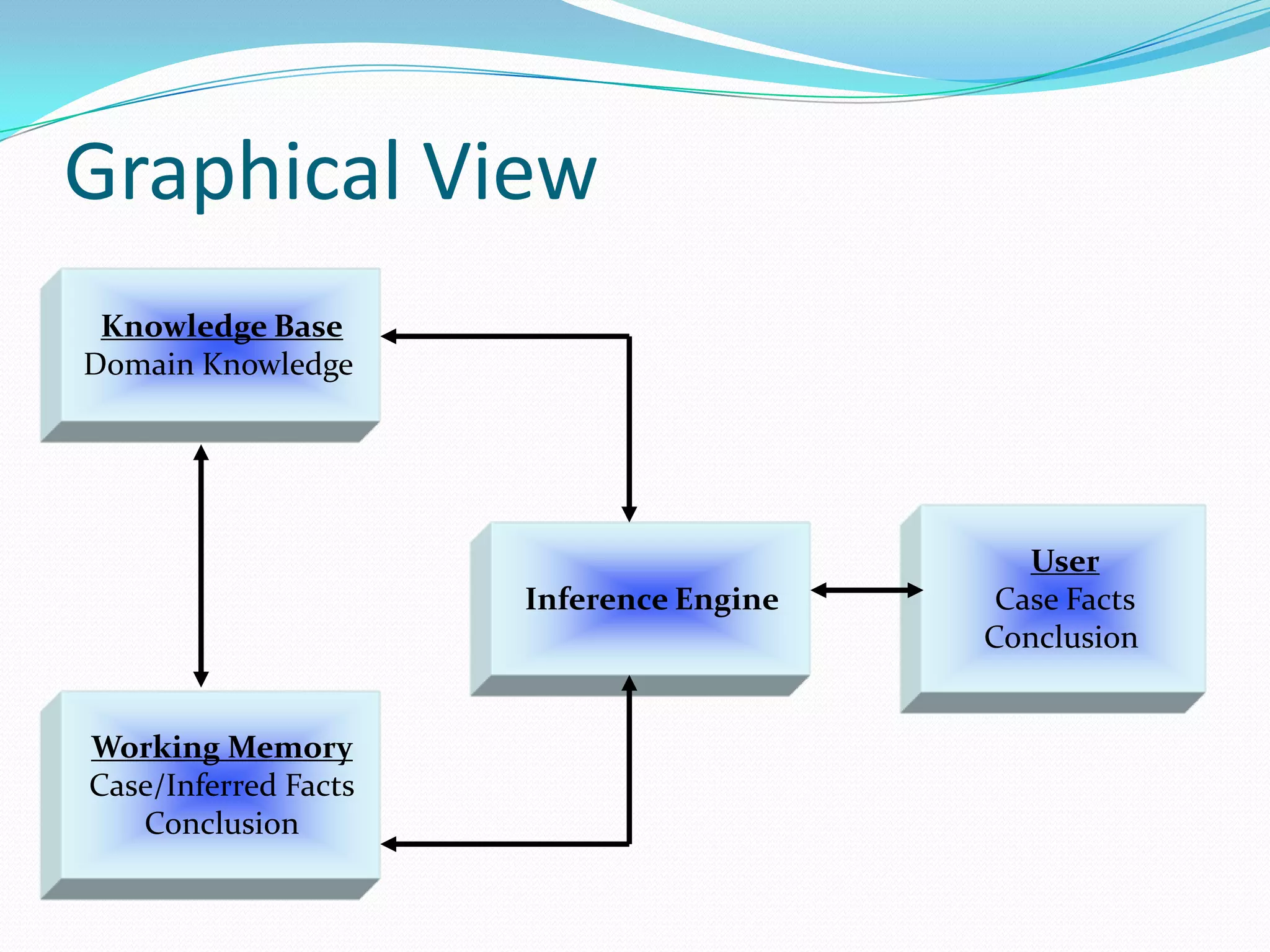
Graphical View
Knowledge Base
Domain Knowledge

Inference Engine

Working Memory
Case/Inferred Facts
Conclusion

User
Case Facts
Conclusion
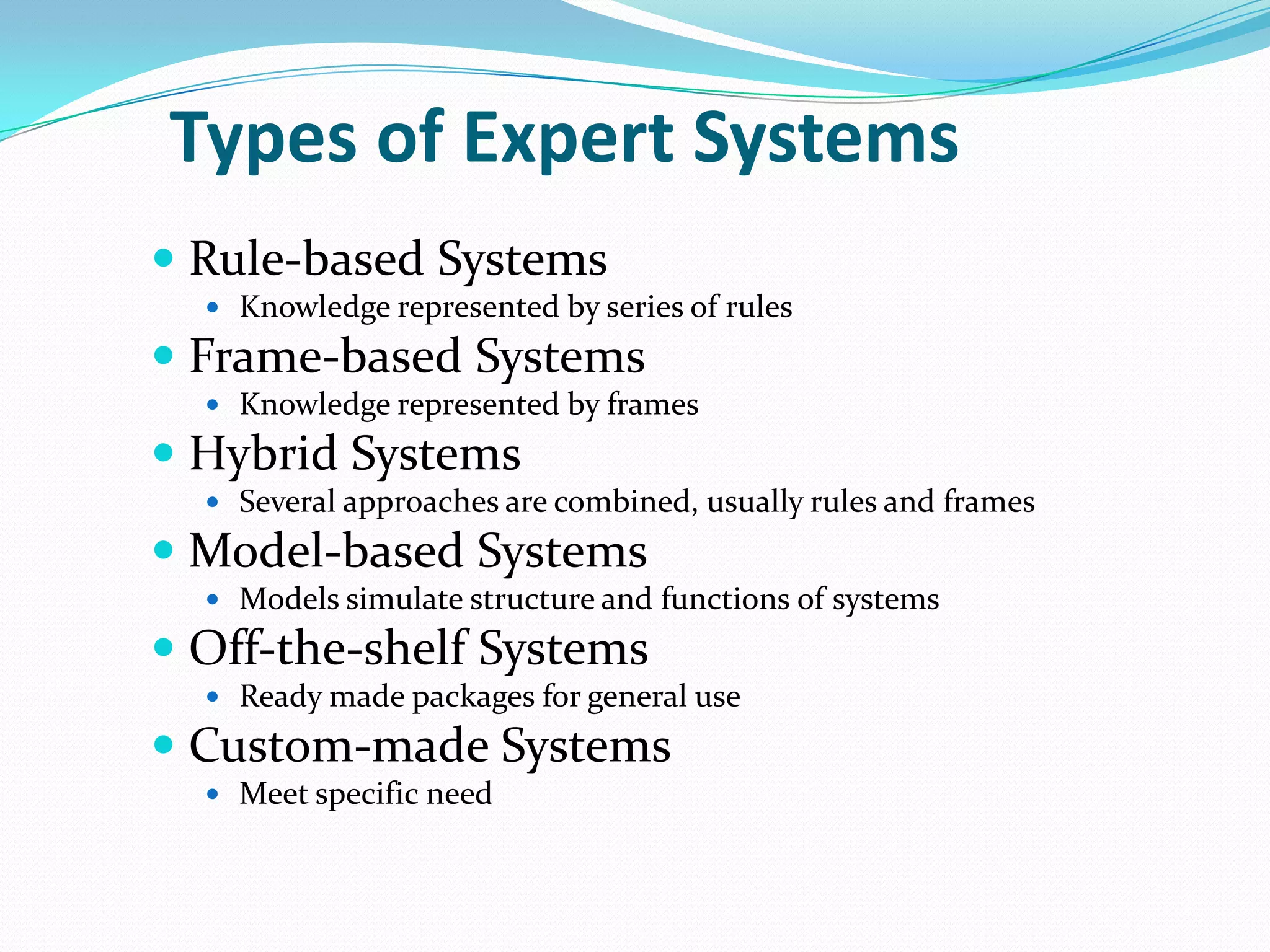
Types of Expert Systems
 Rule-based Systems
 Knowledge represented by series of rules

 Frame-based Systems
 Knowledge represented by frames

 Hybrid Systems
 Several approaches are combined, usually rules and frames

 Model-based Systems
 Models simulate structure and functions of systems

 Off-the-shelf Systems
 Ready made packages for general use

 Custom-made Systems
 Meet specific need
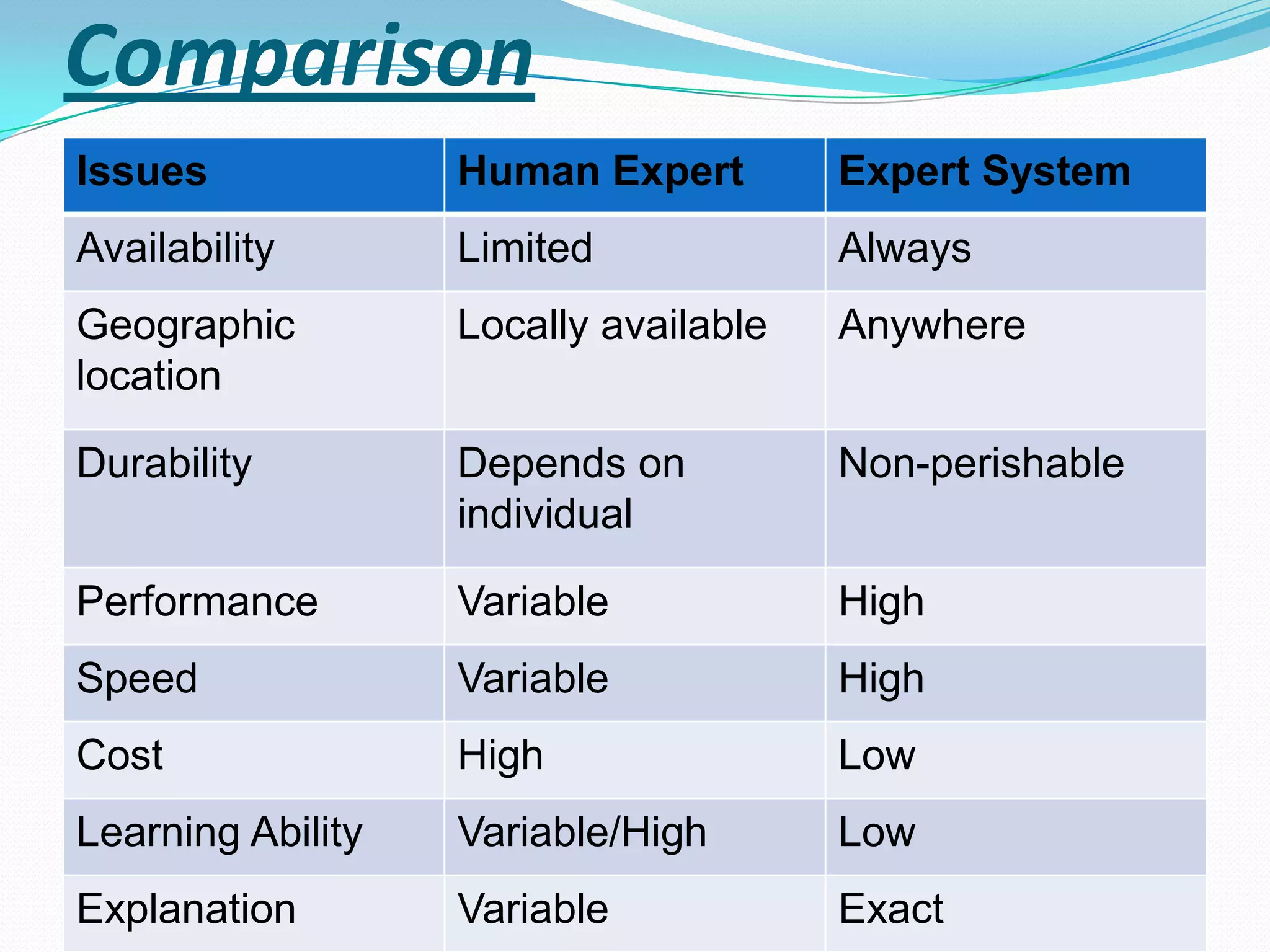
Comparison
Issues

Human Expert

Expert System

Availability

Limited

Always

Geographic
location

Locally available

Anywhere

Durability

Depends on
individual

Non-perishable

Performance

Variable

High

Speed

Variable

High

Cost

High

Low

Learning Ability

Variable/High

Low

Explanation

Variable

Exact
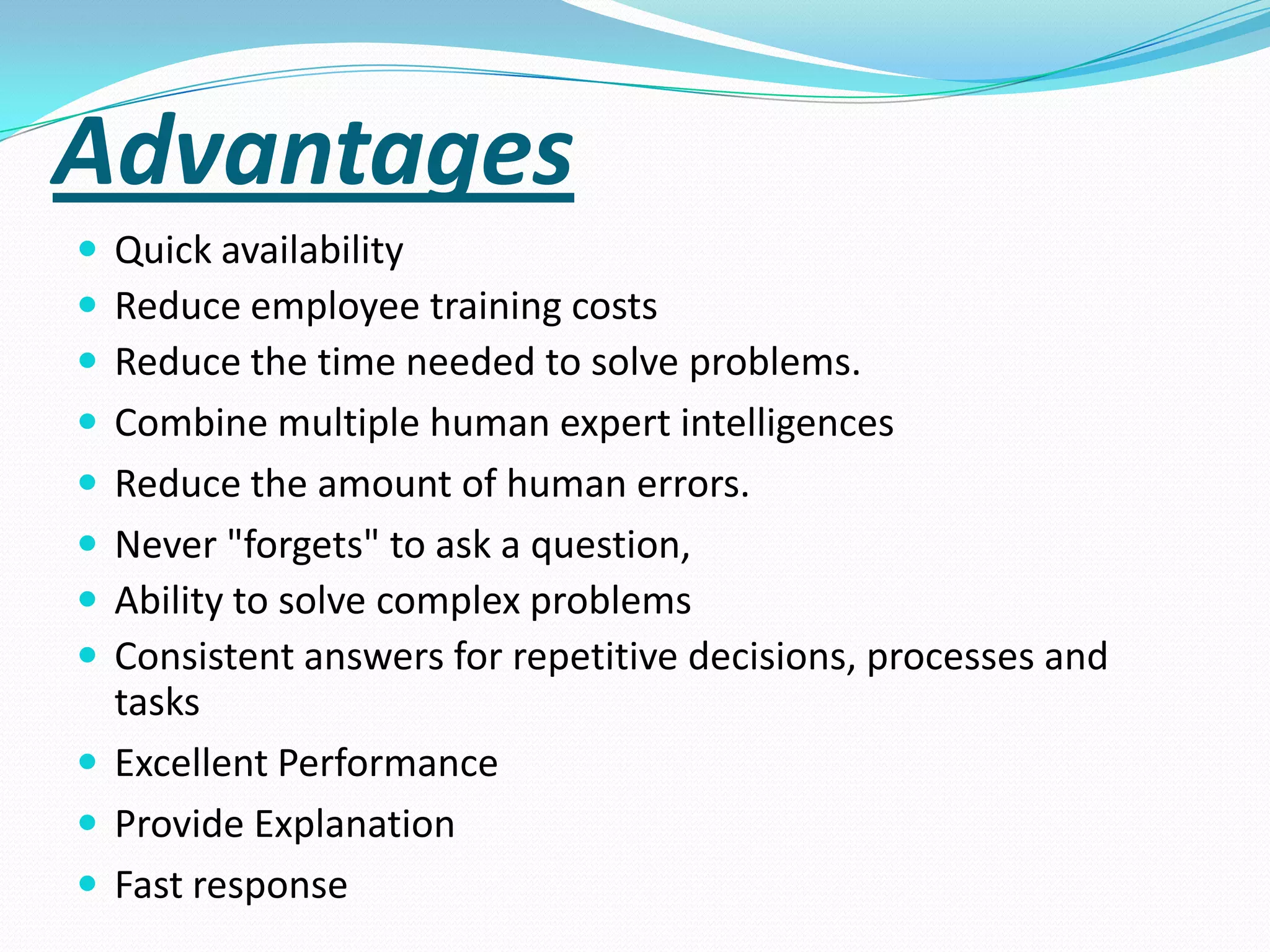
Advantages
 Quick availability
 Reduce employee training costs
 Reduce the time needed to solve problems.
 Combine multiple human expert intelligences
 Reduce the amount of human errors.

 Never "forgets" to ask a question,
 Ability to solve complex problems
 Consistent answers for repetitive decisions, processes and

tasks
 Excellent Performance
 Provide Explanation
 Fast response

Expert systems in artificial intelegence

  • 1.
    What is anExpert System?  An Expert System is a computer system that emulates the decision-making ability of a human expert.  Expert systems are designed to solve complex problems by reasoning about knowledge, like an expert.
  • 2.
    CONT…  Expert systemsare:  Knowledge based systems  Part of the Artificial Intelligence field  Computer programs that contain some subject-specific knowledge of one or more human experts  Systems that utilize reasoning capabilities and draw conclusions.
  • 3.
    4 Major Components Everyexpert system consists of four principal parts  The rule base or knowledge base  Working storage  The inference engine  User interface
  • 4.
    1) The rulebase or knowledge base  The knowledge base is the collection of facts and rules which describe all the knowledge about the problem domain  Contain everything necessary for understanding, formulating and solving a problem.  Stores all relevant information, data, rules, cases, and relationships used by the expert system
  • 5.
    2) WORKING MEMORY(SHORT TERM MEMORY) Contains facts about a problem that are discovered during consultation with the expert system.  System matches this information with knowledge contained in the knowledge base to infer new facts.  The conclusion reach will enter the working memory. 
  • 6.
    3) The inferenceengine The inference engine is the part of the system that chooses which facts and rules to apply when trying to solve the user’s query.  It taps the knowledge base and working memory to derive new information and solve problems  The inference engine is a computer program designed to produce reasoning on rules  It is based on logic
  • 7.
    4) THE USERINTERFACE The user interface is the part of the system which takes in the user’s query in a readable form and passes it to the inference engine. It then displays the results to the user.  The user communicates with the expert system through the user interface.  It allows the user to query the system, supply information and receive advice.  The aims are to provide the same form of communication facilities provided by the expert.  The code that controls the dialog between the user and the system
  • 8.
    Graphical View Knowledge Base DomainKnowledge Inference Engine Working Memory Case/Inferred Facts Conclusion User Case Facts Conclusion
  • 9.
    Types of ExpertSystems  Rule-based Systems  Knowledge represented by series of rules  Frame-based Systems  Knowledge represented by frames  Hybrid Systems  Several approaches are combined, usually rules and frames  Model-based Systems  Models simulate structure and functions of systems  Off-the-shelf Systems  Ready made packages for general use  Custom-made Systems  Meet specific need
  • 10.
    Comparison Issues Human Expert Expert System Availability Limited Always Geographic location Locallyavailable Anywhere Durability Depends on individual Non-perishable Performance Variable High Speed Variable High Cost High Low Learning Ability Variable/High Low Explanation Variable Exact
  • 11.
    Advantages  Quick availability Reduce employee training costs  Reduce the time needed to solve problems.  Combine multiple human expert intelligences  Reduce the amount of human errors.  Never "forgets" to ask a question,  Ability to solve complex problems  Consistent answers for repetitive decisions, processes and tasks  Excellent Performance  Provide Explanation  Fast response