Computers in
     Education
by Allana Delgado
Ed Comp 1: May 17, 2012
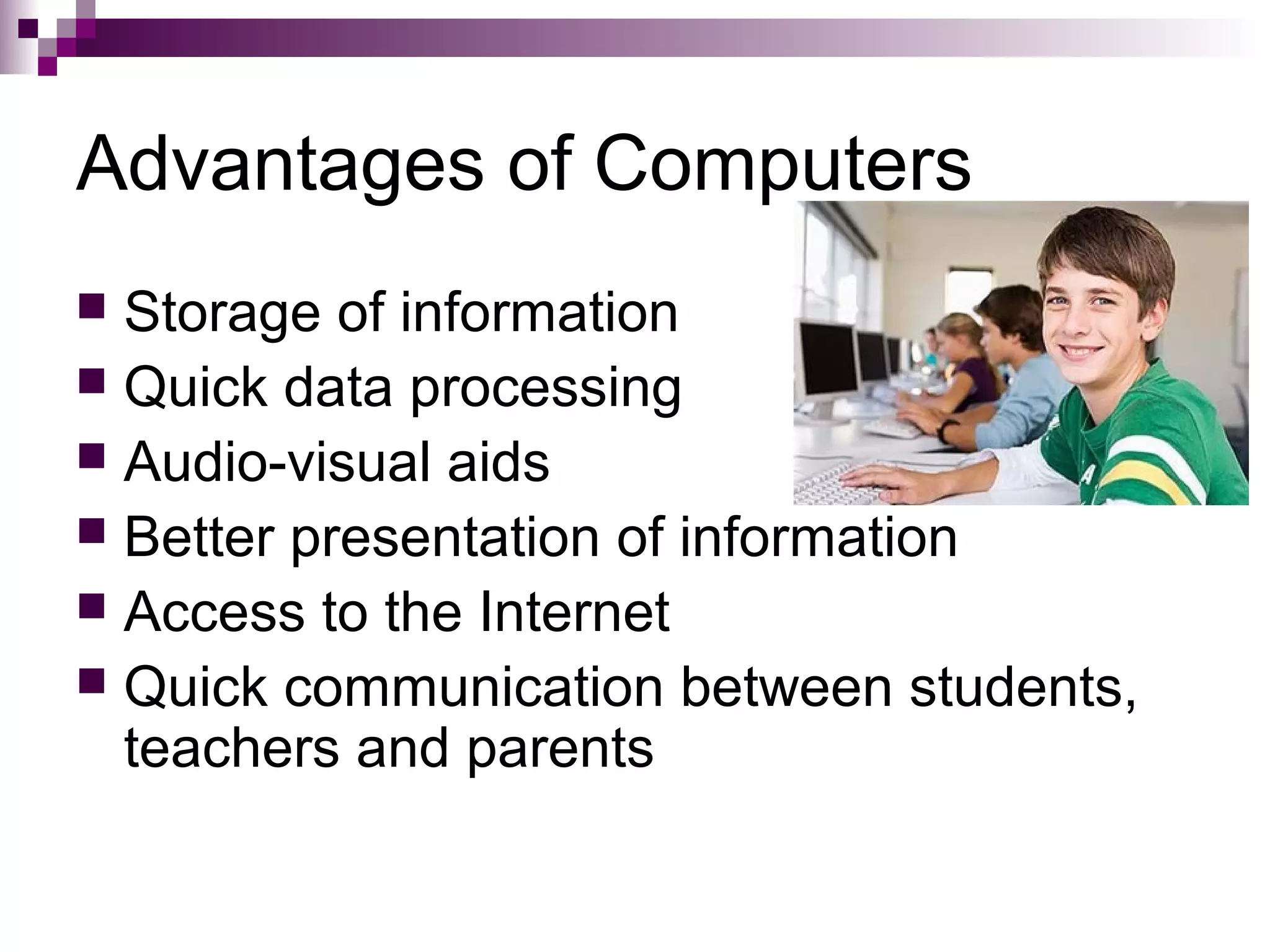
Advantages of Computers
 Storage of information
 Quick data processing
 Audio-visual aids
 Better presentation of information
 Access to the Internet
 Quick communication between students,
  teachers and parents
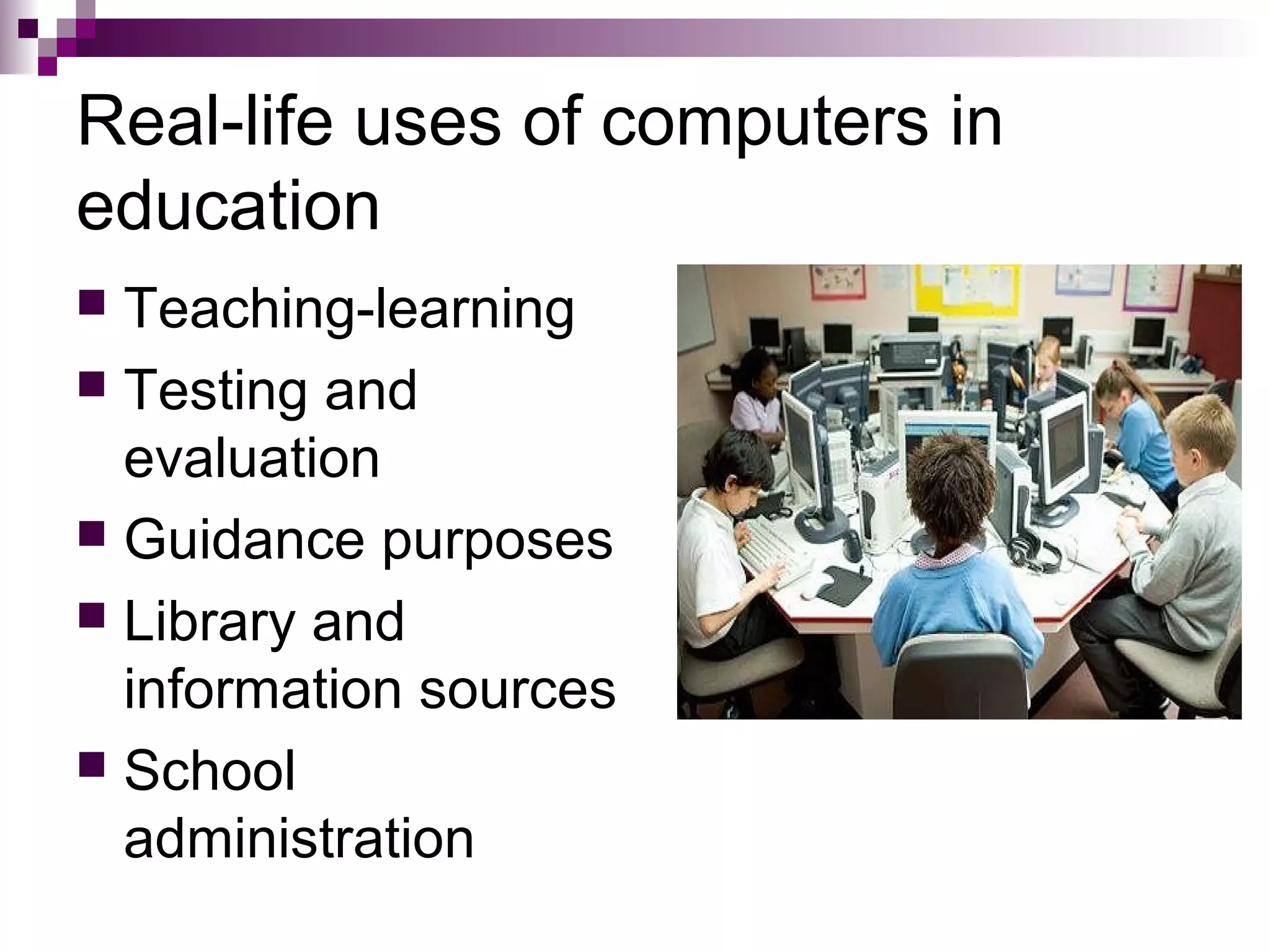
Real-life uses of computers in
education
 Teaching-learning
 Testing and
  evaluation
 Guidance purposes
 Library and
  information sources
 School
  administration
Importance of Computer Literacy

Computer education: know-how of computer
  concepts and basic knowledge of its operation
 Not only for storage and processing, but got
  communication
 Computer knowledge is an important job skill
 Computers serve as efficient means for
  management of information: banking, medicine,
  online shopping
What students do
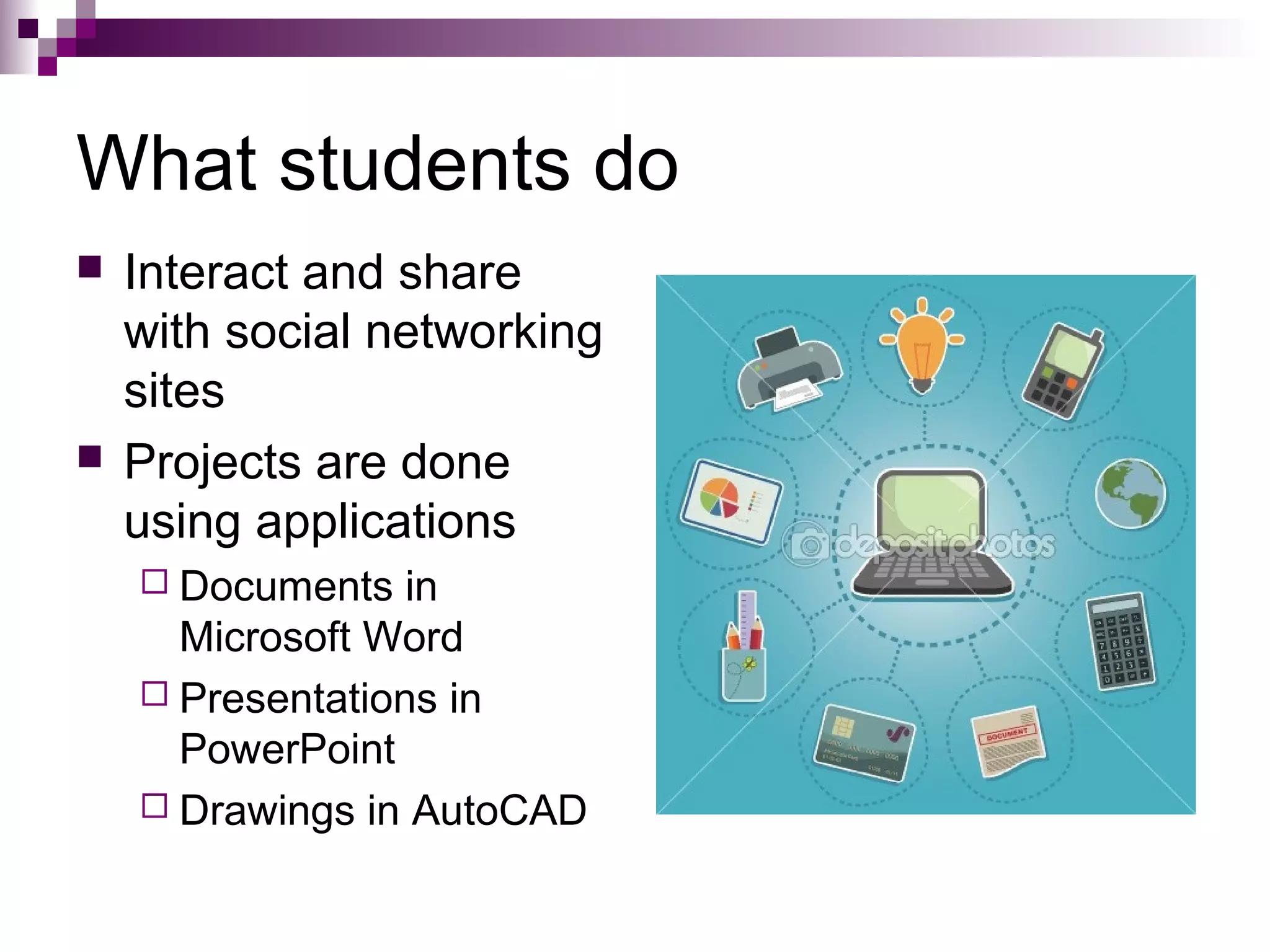
   Interact and share
    with social networking
    sites
   Projects are done
    using applications
     Documents   in
      Microsoft Word
     Presentations in
      PowerPoint
     Drawings in AutoCAD
What students do
   Video conferencing
   Distance learning
   Taking online courses
   Researching
   Entertainment:
    movies, games, etc.
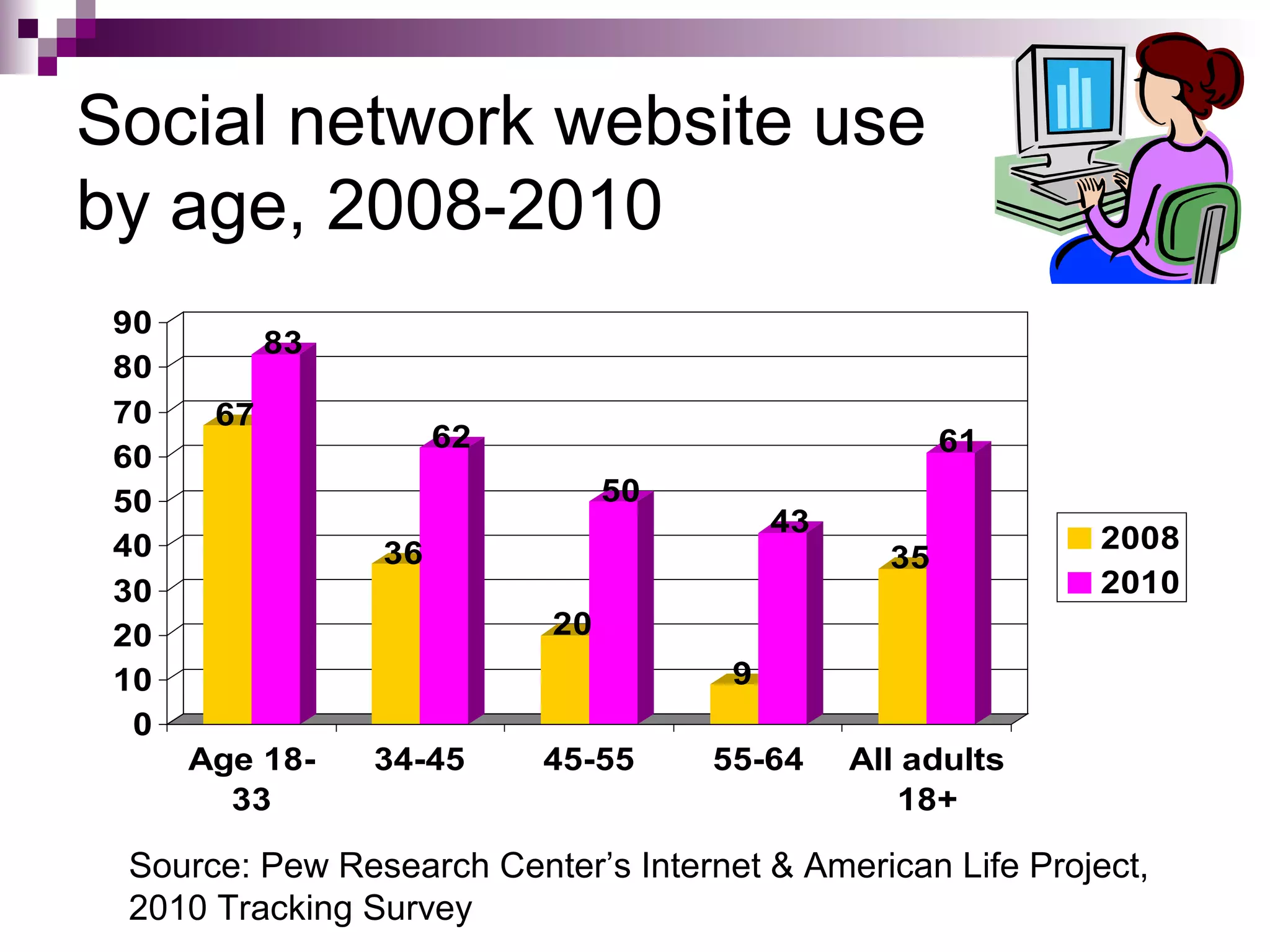
Social network website use
by age, 2008-2010
 90
            83
 80
 70    67
                      62                              61
 60
 50                             50
                                          43
 40              36                                          2008
                                                 35
 30                                                          2010
 20                        20
 10                                   9
  0
      Age 18-    34-45     45-55     55-64     All adults
        33                                        18+

 Source: Pew Research Center’s Internet & American Life Project,
 2010 Tracking Survey
Computers in helping the disabled
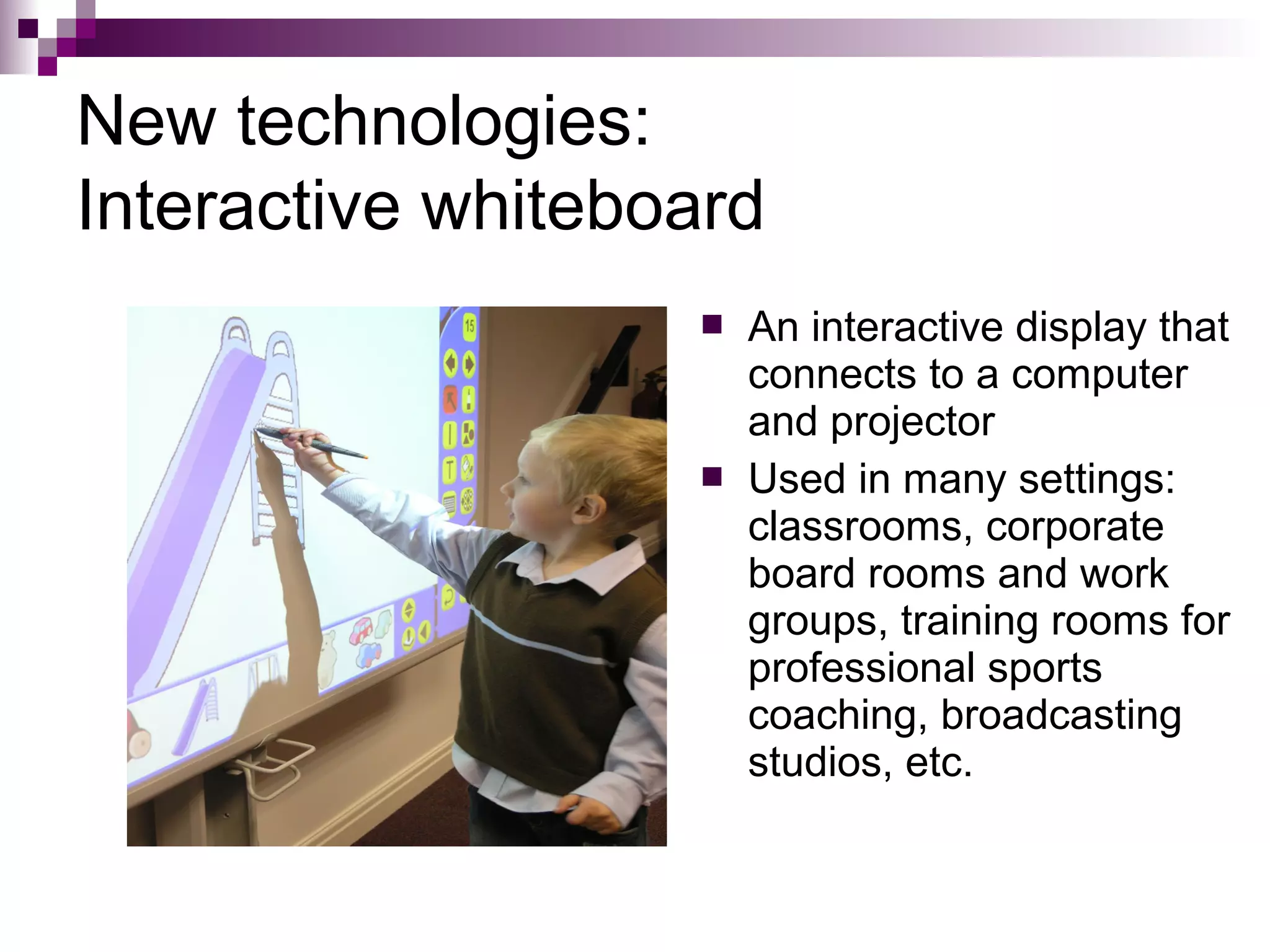
New technologies:
Interactive whiteboard
                      An interactive display that
                       connects to a computer
                       and projector
                      Used in many settings:
                       classrooms, corporate
                       board rooms and work
                       groups, training rooms for
                       professional sports
                       coaching, broadcasting
                       studios, etc.
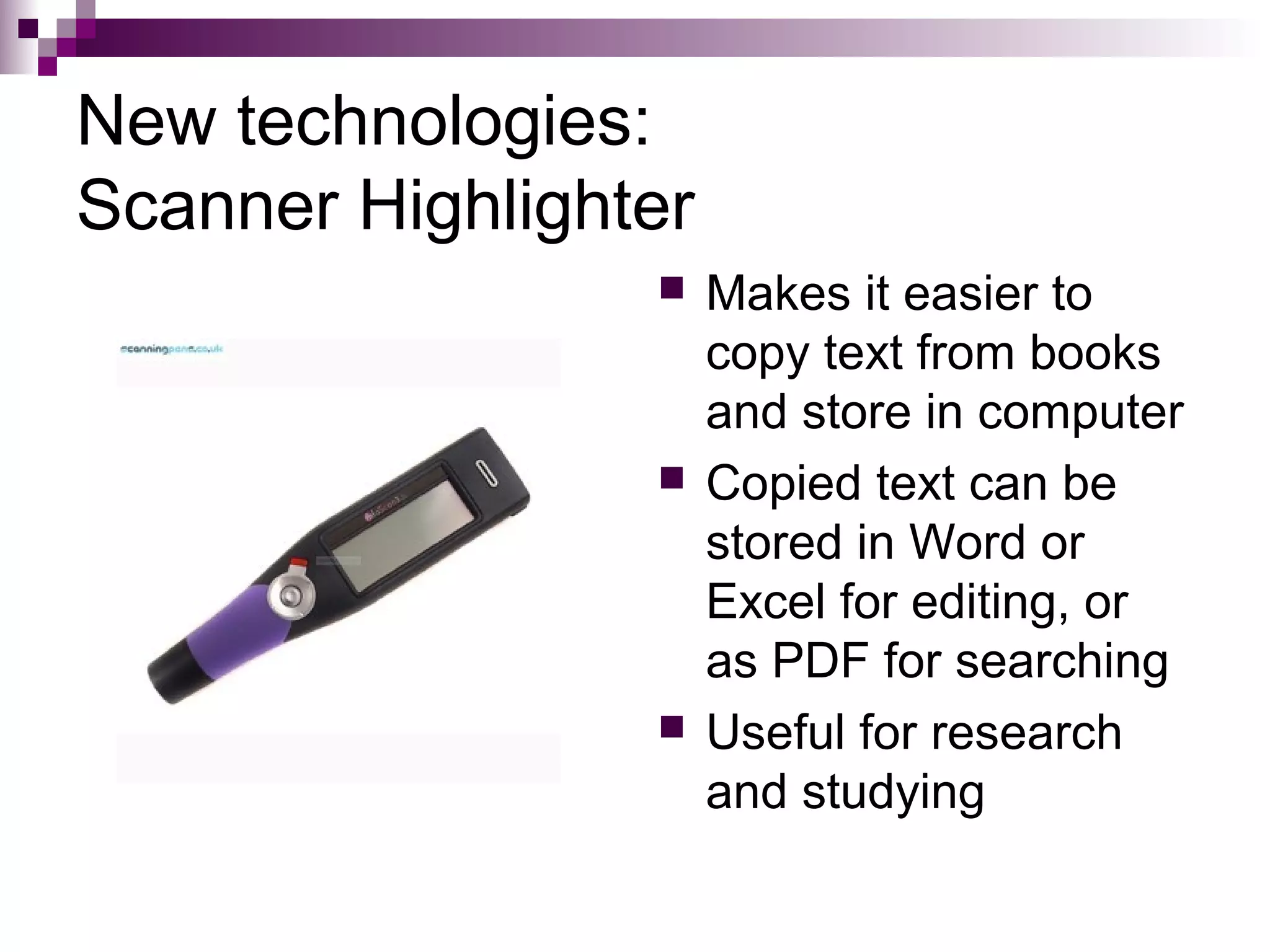
New technologies:
Scanner Highlighter
                     Makes it easier to
                      copy text from books
                      and store in computer
                     Copied text can be
                      stored in Word or
                      Excel for editing, or
                      as PDF for searching
                     Useful for research
                      and studying
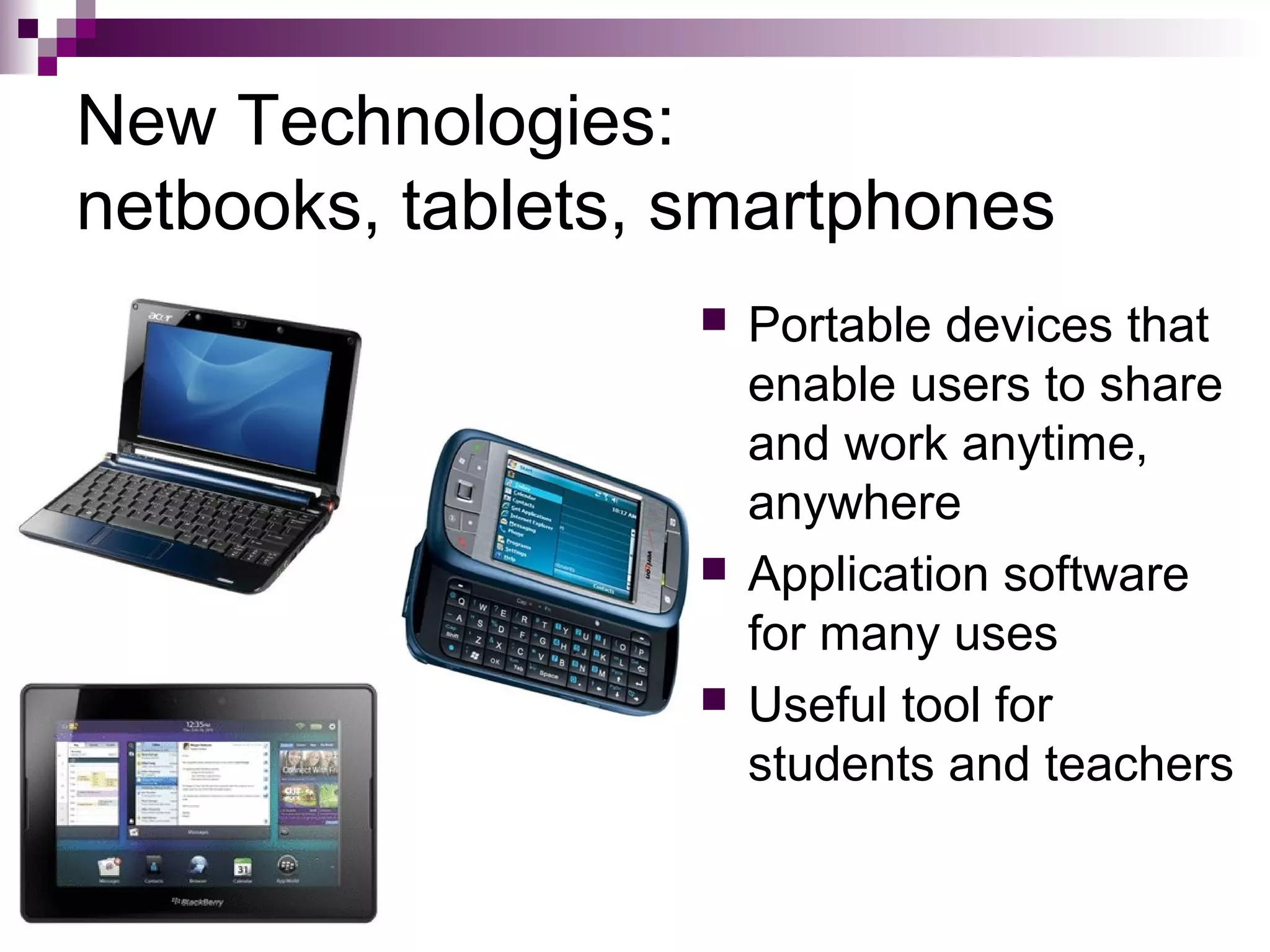
New Technologies:
netbooks, tablets, smartphones
                      Portable devices that
                       enable users to share
                       and work anytime,
                       anywhere
                      Application software
                       for many uses
                      Useful tool for
                       students and teachers
References
   Computers in education. Retrieved 5/14/12 from
    http://wikieducator.org/Computers_in_Education
   Divico, T. Benefits of Using Computers in Education.
    Retrieved 5/14/2012 from
    http://http://www.ehow.com/facts_5336311_benefits-
    using-computers-education.html
   Interactive whiteboard. Retrieved 5/14/12 from
    http://en.wikipedia.org/wiki/Interactive_whiteboard
   Oak, M. (2012). Role of computers in education.
    Retrieved 5/14/12 from
    http://www.buzzle.com/articles/role-of-computers-in-
    education.html
   Oak, M. (2011). Importance of computer education.
    Retrieved 5/14/12 from
    http://www.buzzle.com/articles/importance-of-computer-
    education.html

Uses of Computers in Education

  • 1.
    Computers in Education by Allana Delgado Ed Comp 1: May 17, 2012
  • 2.
    Advantages of Computers Storage of information  Quick data processing  Audio-visual aids  Better presentation of information  Access to the Internet  Quick communication between students, teachers and parents
  • 3.
    Real-life uses ofcomputers in education  Teaching-learning  Testing and evaluation  Guidance purposes  Library and information sources  School administration
  • 4.
    Importance of ComputerLiteracy Computer education: know-how of computer concepts and basic knowledge of its operation  Not only for storage and processing, but got communication  Computer knowledge is an important job skill  Computers serve as efficient means for management of information: banking, medicine, online shopping
  • 5.
    What students do  Interact and share with social networking sites  Projects are done using applications  Documents in Microsoft Word  Presentations in PowerPoint  Drawings in AutoCAD
  • 6.
    What students do  Video conferencing  Distance learning  Taking online courses  Researching  Entertainment: movies, games, etc.
  • 7.
    Social network websiteuse by age, 2008-2010 90 83 80 70 67 62 61 60 50 50 43 40 36 2008 35 30 2010 20 20 10 9 0 Age 18- 34-45 45-55 55-64 All adults 33 18+ Source: Pew Research Center’s Internet & American Life Project, 2010 Tracking Survey
  • 8.
  • 9.
    New technologies: Interactive whiteboard  An interactive display that connects to a computer and projector  Used in many settings: classrooms, corporate board rooms and work groups, training rooms for professional sports coaching, broadcasting studios, etc.
  • 10.
    New technologies: Scanner Highlighter  Makes it easier to copy text from books and store in computer  Copied text can be stored in Word or Excel for editing, or as PDF for searching  Useful for research and studying
  • 11.
    New Technologies: netbooks, tablets,smartphones  Portable devices that enable users to share and work anytime, anywhere  Application software for many uses  Useful tool for students and teachers
  • 12.
    References  Computers in education. Retrieved 5/14/12 from http://wikieducator.org/Computers_in_Education  Divico, T. Benefits of Using Computers in Education. Retrieved 5/14/2012 from http://http://www.ehow.com/facts_5336311_benefits- using-computers-education.html  Interactive whiteboard. Retrieved 5/14/12 from http://en.wikipedia.org/wiki/Interactive_whiteboard  Oak, M. (2012). Role of computers in education. Retrieved 5/14/12 from http://www.buzzle.com/articles/role-of-computers-in- education.html  Oak, M. (2011). Importance of computer education. Retrieved 5/14/12 from http://www.buzzle.com/articles/importance-of-computer- education.html