4 of The 7 Problem Solving Tools Agustini West Coast University
7 Problem Solving Tools: Cause and Effect Diagrams Flowcharts Checklists Control Charts Scatter Diagrams Pareto Analysis Histograms
4 of the 7 problem solving tools : Cause and Effect Diagrams Flowcharts Checklists Pareto Analysis
Cause and Effect Diagrams What is it? A Cause-and-Effect Diagram (also known as a "Fishbone Diagram") is a graphical technique for grouping people's ideas about the causes of a problem. Why use it? Using a Cause-and-Effect Diagram forces the team to consider the complexity of the problem and to take an objective look at all the contributing factors. It helps the team to determine both the primary and the secondary causes of a problem and is helpful for organizing the ideas generated from a  brainstorming  session.
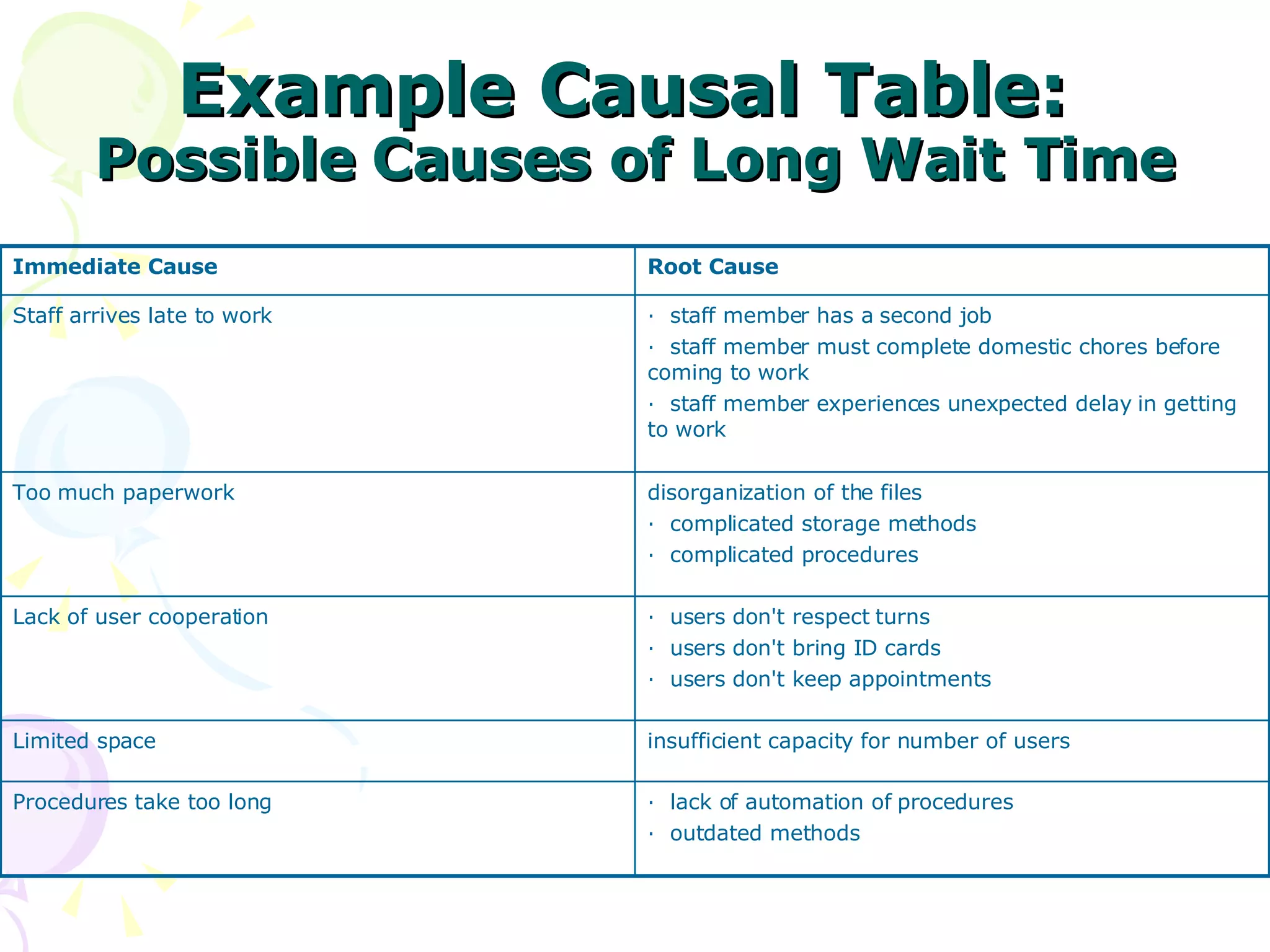
Example Causal Table:  Possible Causes of Long Wait Time ·  lack of automation of procedures  ·  outdated methods  Procedures take too long insufficient capacity for number of users  Limited space  ·  users don't respect turns  ·  users don't bring ID cards  ·  users don't keep appointments  Lack of user cooperation disorganization of the files  ·  complicated storage methods  ·  complicated procedures  Too much paperwork  ·  staff member has a second job  ·  staff member must complete domestic chores before coming to work  ·  staff member experiences unexpected delay in getting to work  Staff arrives late to work  Root Cause   Immediate Cause
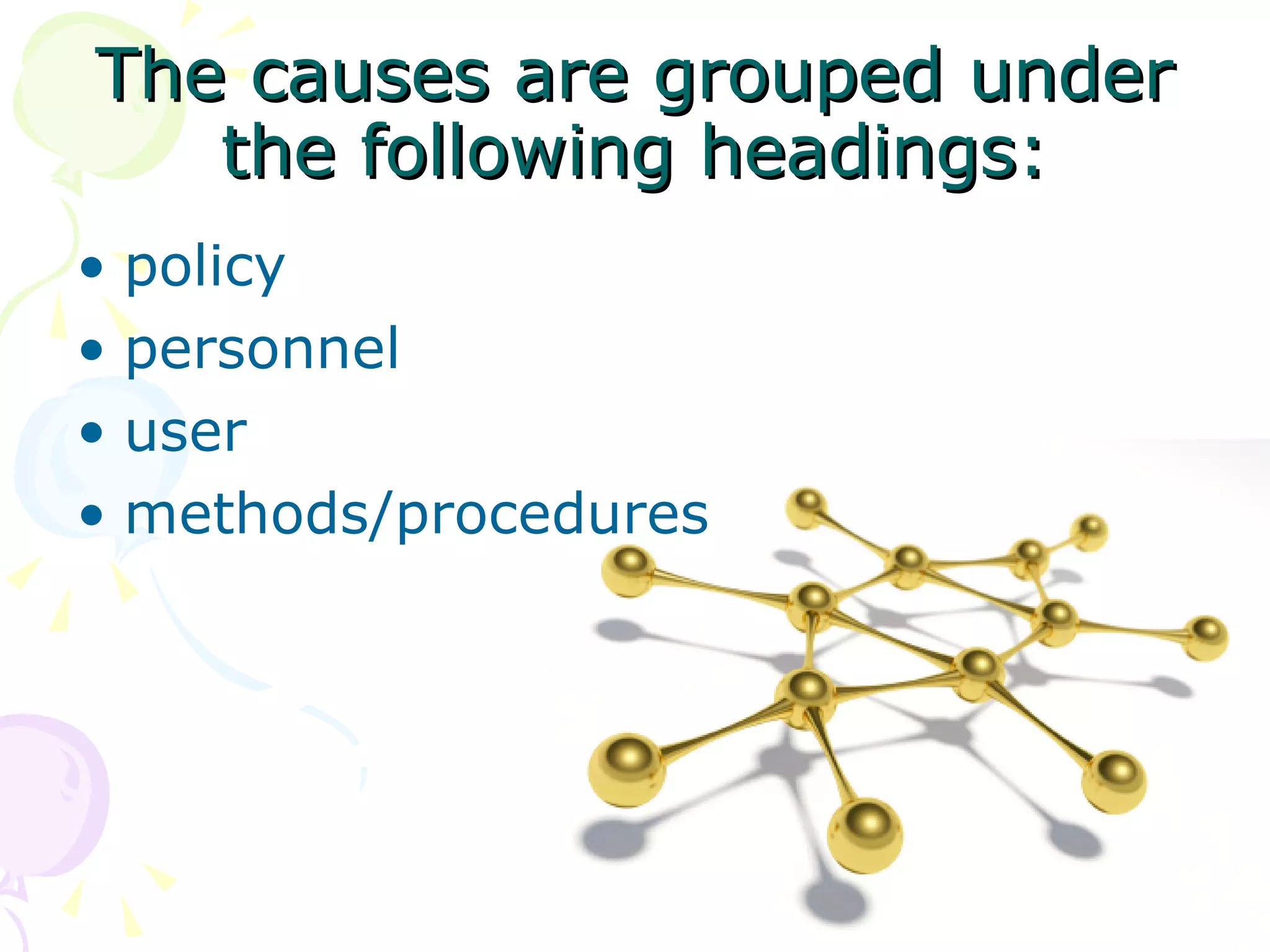
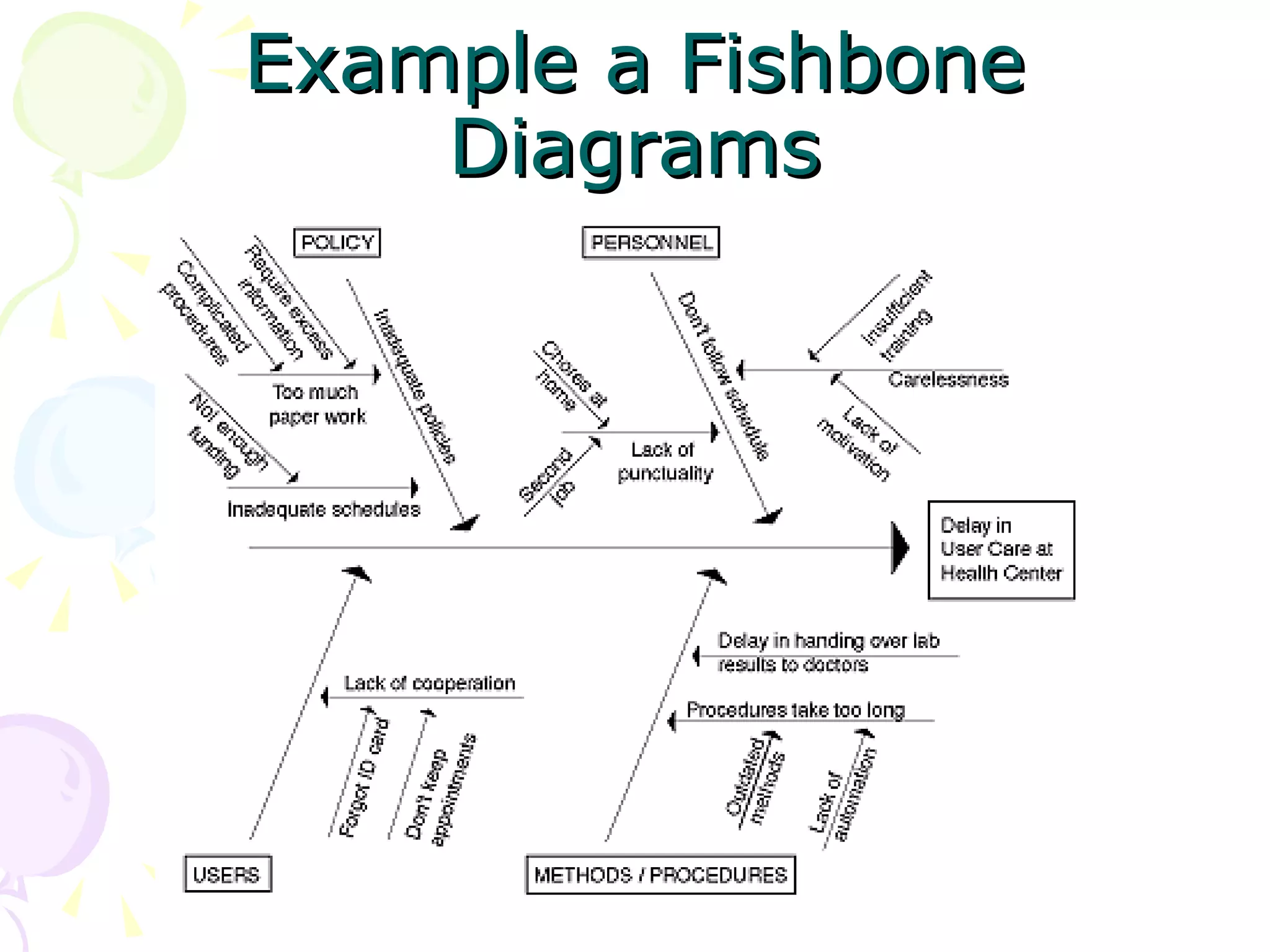
The causes are grouped under the following headings: policy  personnel  user  methods/procedures
Example a Fishbone Diagrams
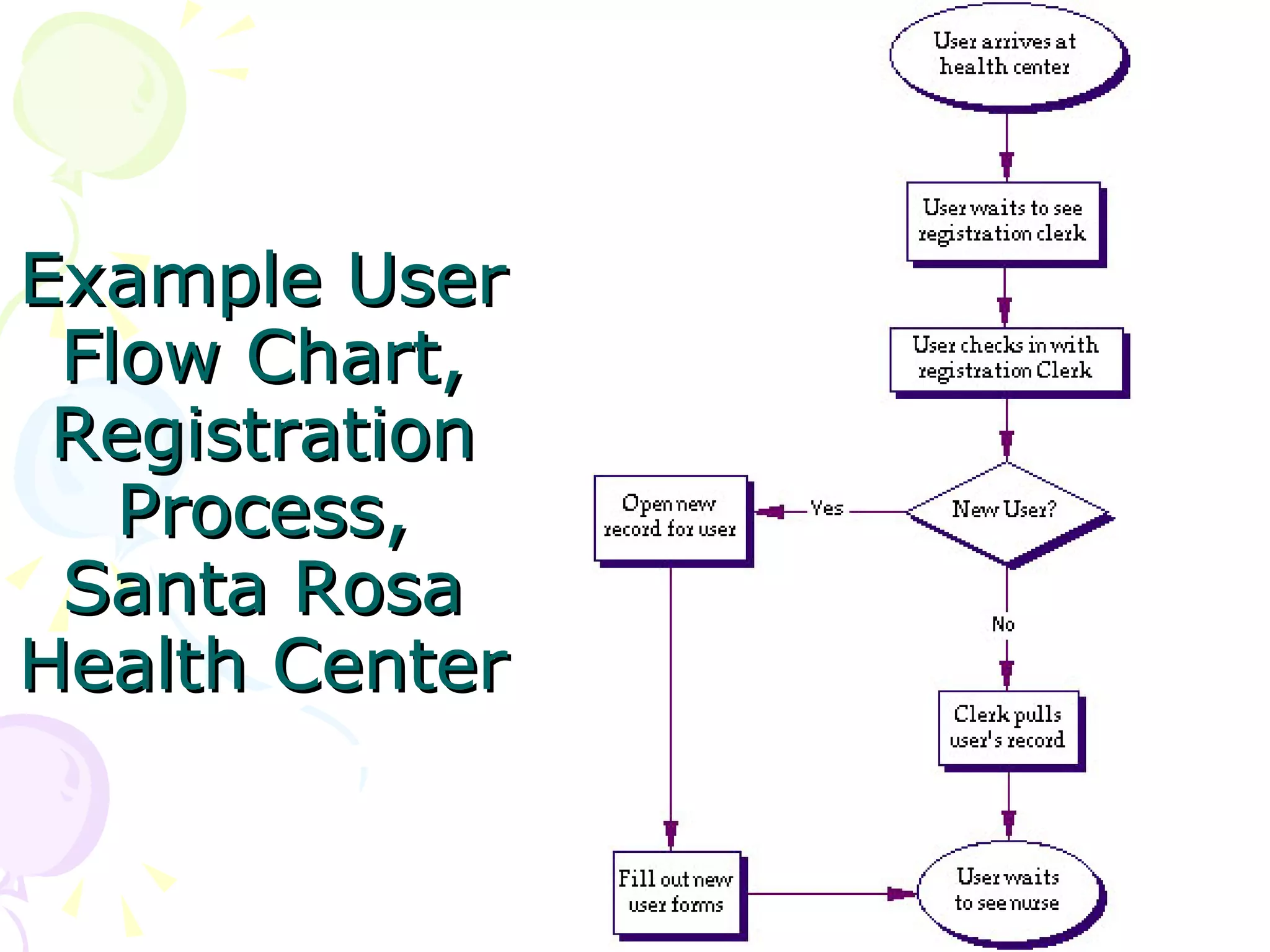
Flowcharts What is it? A Flowchart is a tool that graphically represents the steps of a process or the steps that users have to take to use the service (user Flowchart).  Why use it? The Flowchart helps you analyze the number of steps and the time required for each step, to detect bottlenecks, unnecessary steps, repetitions, and other obstacles.
Example User Flow Chart, Registration Process, Santa Rosa Health Center
Note : The flow chart allows the manager and the team to visualize the process as it actually occurs in their health center and helps them to understand where and when they should make changes to reduce the users' waiting time.
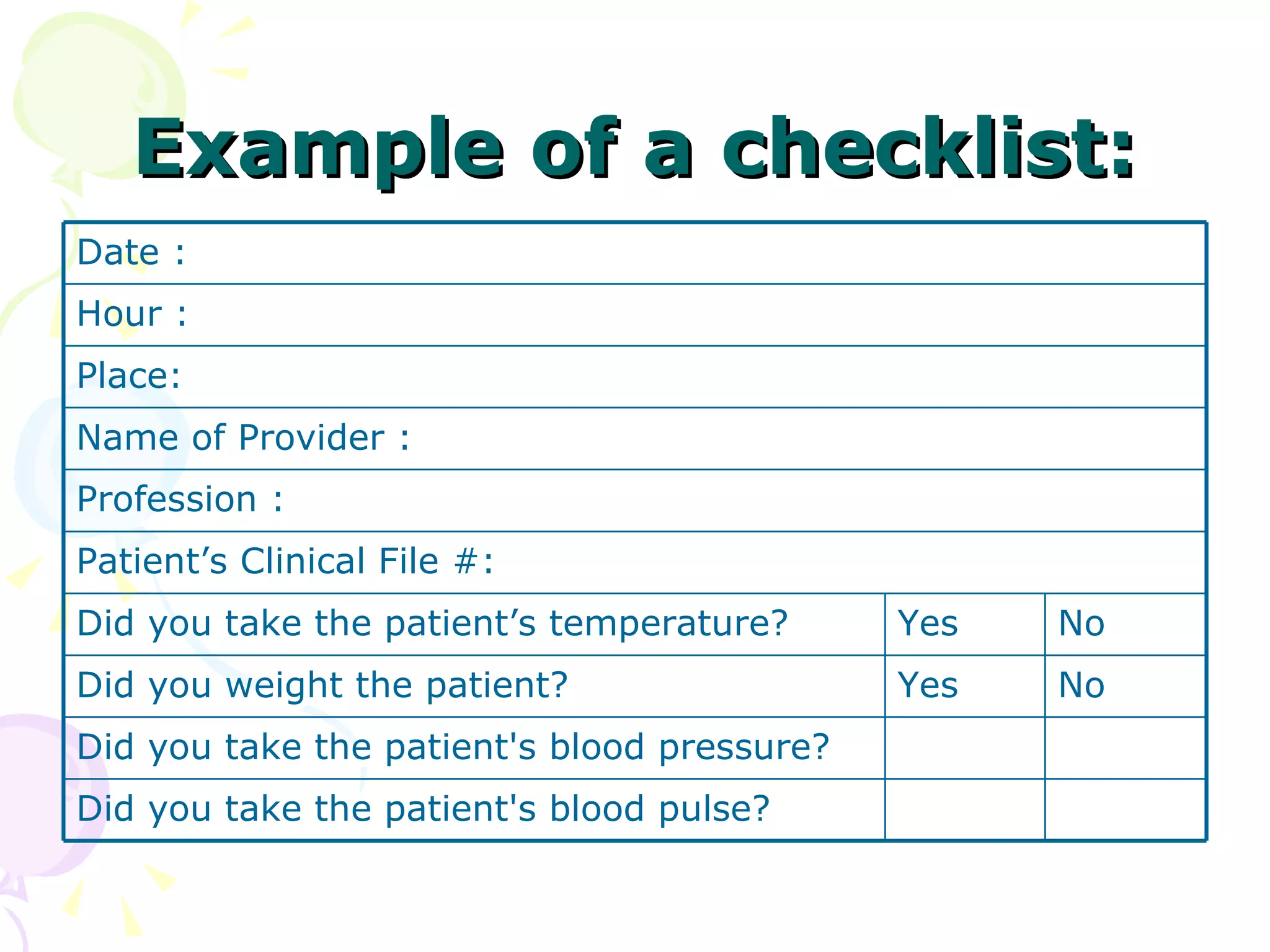
Checklists What is it? A checklist is a tool you can use to systematically observe a process, using a list of closed-ended questions.  Why use it? To ensure that different types of service providers in your organization are complying with the stated standards of treatment.
Example of a checklist: Did you take the patient's blood pulse? Did you take the patient's blood pressure? No Yes Did you weight the patient?  No Yes  Did you take the patient’s temperature? Patient’s Clinical File #: Profession : Name of Provider : Place: Hour : Date :
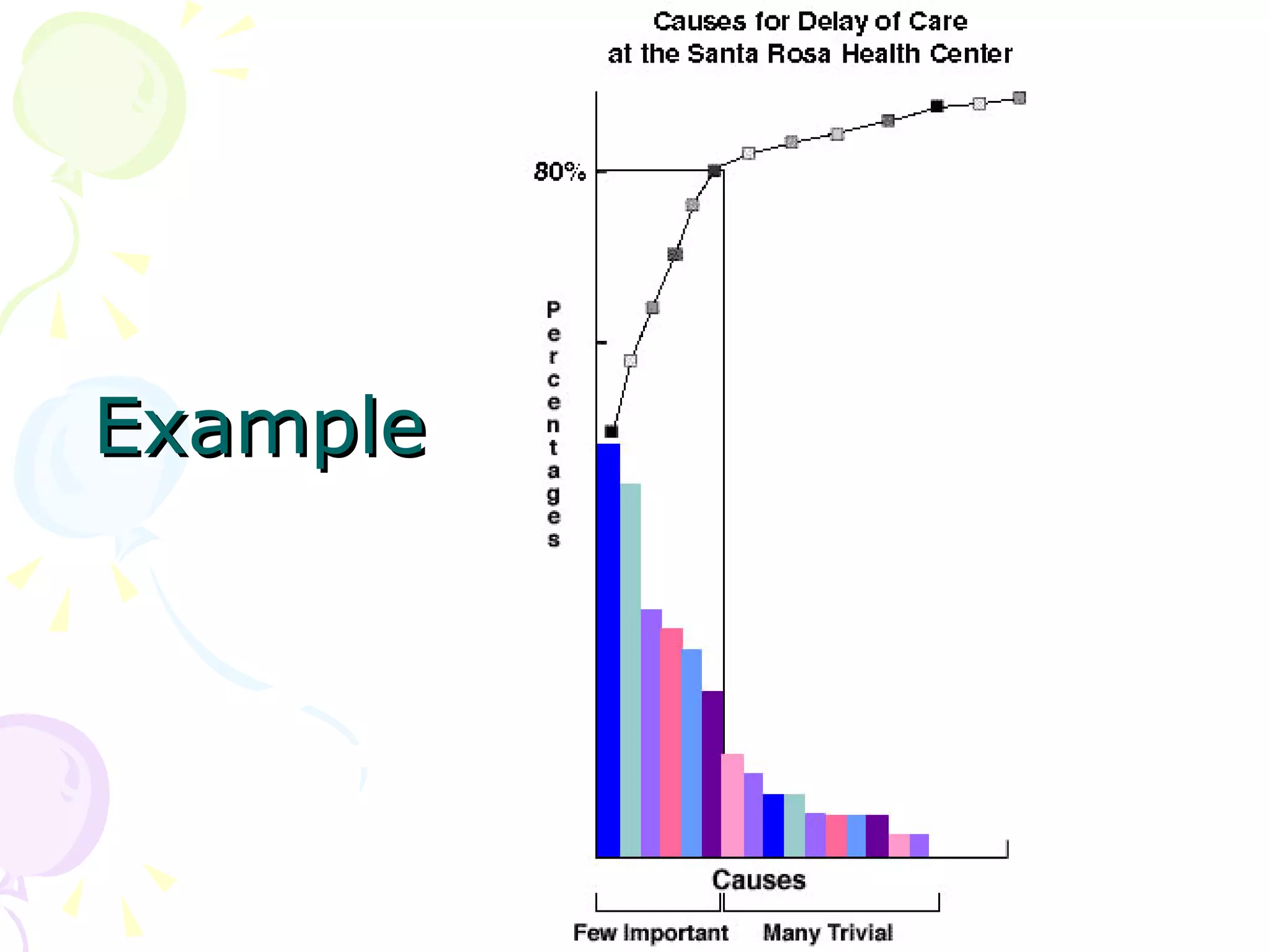
Pareto Analysis What is it? The Pareto Principle states that only a "vital few" factors are responsible for producing most of the problems. This principle can be applied to quality improvement to the extent that a great majority of problems (80%) are produced by a few key causes (20%). If we correct these few key causes, we will have a greater probability of success.  Why use it? For the team to quickly focus its efforts on the key causes of a problem.
Example
Thank You Our ref : http://erc.msh.org

4 Of The 7 Problem Solving Tools

  • 1.
    4 of The7 Problem Solving Tools Agustini West Coast University
  • 2.
    7 Problem SolvingTools: Cause and Effect Diagrams Flowcharts Checklists Control Charts Scatter Diagrams Pareto Analysis Histograms
  • 3.
    4 of the7 problem solving tools : Cause and Effect Diagrams Flowcharts Checklists Pareto Analysis
  • 4.
    Cause and EffectDiagrams What is it? A Cause-and-Effect Diagram (also known as a "Fishbone Diagram") is a graphical technique for grouping people's ideas about the causes of a problem. Why use it? Using a Cause-and-Effect Diagram forces the team to consider the complexity of the problem and to take an objective look at all the contributing factors. It helps the team to determine both the primary and the secondary causes of a problem and is helpful for organizing the ideas generated from a brainstorming session.
  • 5.
    Example Causal Table: Possible Causes of Long Wait Time · lack of automation of procedures · outdated methods Procedures take too long insufficient capacity for number of users Limited space · users don't respect turns · users don't bring ID cards · users don't keep appointments Lack of user cooperation disorganization of the files · complicated storage methods · complicated procedures Too much paperwork · staff member has a second job · staff member must complete domestic chores before coming to work · staff member experiences unexpected delay in getting to work Staff arrives late to work Root Cause Immediate Cause
  • 6.
    The causes aregrouped under the following headings: policy personnel user methods/procedures
  • 7.
  • 8.
    Flowcharts What isit? A Flowchart is a tool that graphically represents the steps of a process or the steps that users have to take to use the service (user Flowchart). Why use it? The Flowchart helps you analyze the number of steps and the time required for each step, to detect bottlenecks, unnecessary steps, repetitions, and other obstacles.
  • 9.
    Example User FlowChart, Registration Process, Santa Rosa Health Center
  • 10.
    Note : Theflow chart allows the manager and the team to visualize the process as it actually occurs in their health center and helps them to understand where and when they should make changes to reduce the users' waiting time.
  • 11.
    Checklists What isit? A checklist is a tool you can use to systematically observe a process, using a list of closed-ended questions. Why use it? To ensure that different types of service providers in your organization are complying with the stated standards of treatment.
  • 12.
    Example of achecklist: Did you take the patient's blood pulse? Did you take the patient's blood pressure? No Yes Did you weight the patient? No Yes Did you take the patient’s temperature? Patient’s Clinical File #: Profession : Name of Provider : Place: Hour : Date :
  • 13.
    Pareto Analysis Whatis it? The Pareto Principle states that only a "vital few" factors are responsible for producing most of the problems. This principle can be applied to quality improvement to the extent that a great majority of problems (80%) are produced by a few key causes (20%). If we correct these few key causes, we will have a greater probability of success. Why use it? For the team to quickly focus its efforts on the key causes of a problem.
  • 14.
  • 15.
    Thank You Ourref : http://erc.msh.org