Presented By: 
VIMAL KUMAR 
ECE 7TH SEM
1) Introduction 
2) Railway Signaling 
3) Interlocking 
4) Train Traffic Control 
5) Communication System 
6) Microwave Transmission 
7) Optical Fiber Communication
 FOUNDED IN 16TH APRIL,1853(ABOUT 161 
YEARS AGO). 
 HEAD QUARTER IS IN NEWDELHI,INDIA. 
 REVENU IS 1441.67 BILLION INC (2013-2014). 
 PROFIT IS 157.8 BILLION INC (2013-2014). 
 ABOUT 1.307 MILLION EMPLOYEES (2014). 
 THERE ARE 17 RAILWAY ZONES.
Indian Railways is an Indian state-owned enterprise, 
owned and operated by the Government of 
India through the Ministry of Railways. 
It is the world's Fourth largest railway networks 
comprising 115,000 km of track over a route of 65,436 
km and 7,172 stations. 
Railways were first introduced to India in 1853 from 
Bombay to Thane. 
Indian Railways is the world's ninth largest 
commercial or utility employer, by number of 
employees.
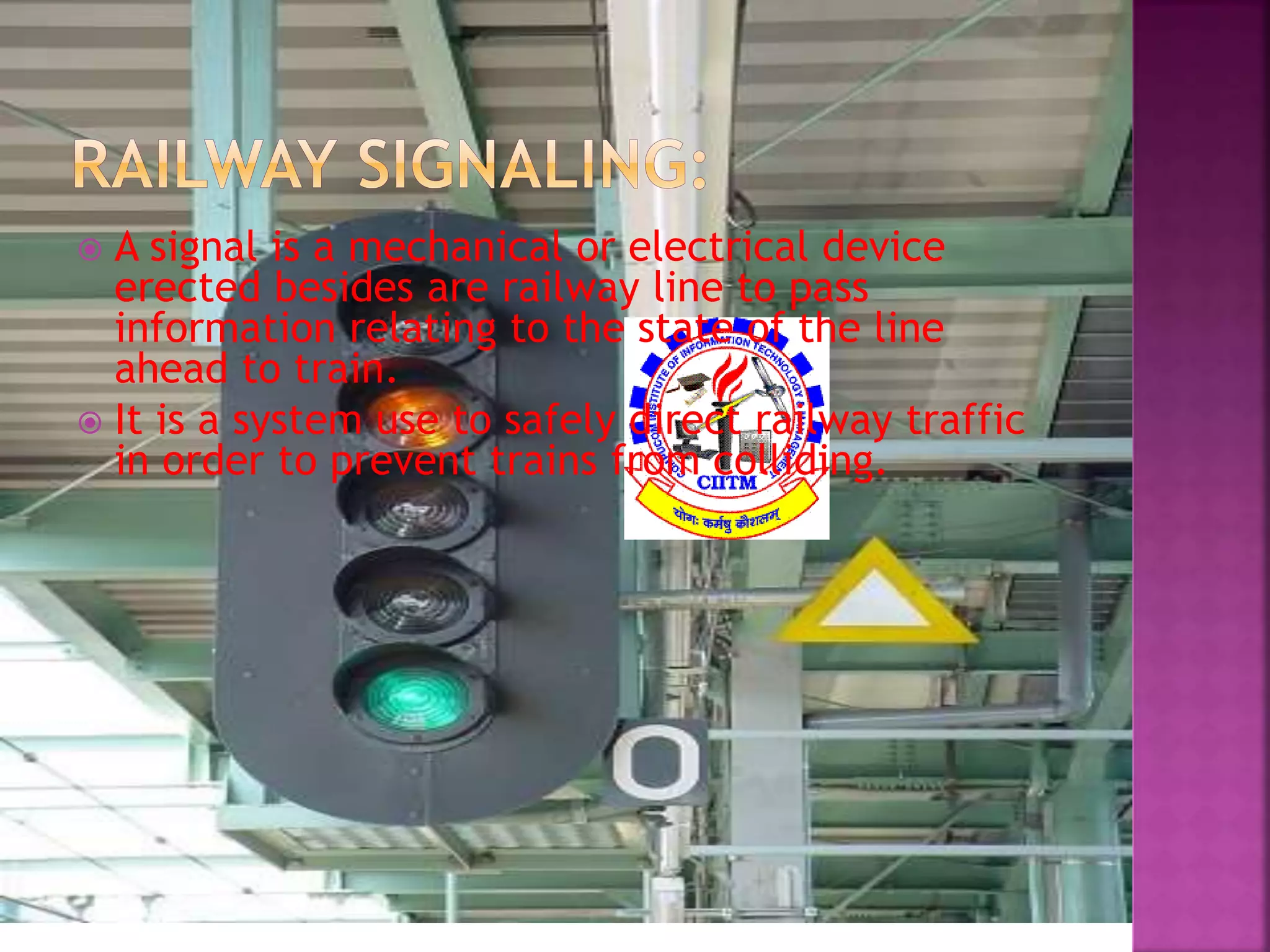
 A signal is a mechanical or electrical device 
erected besides are railway line to pass 
information relating to the state of the line 
ahead to train. 
 It is a system use to safely direct railway traffic 
in order to prevent trains from colliding.
1. BLOCK SIGNAL 
2. TRAIN DETECTION 
3. FIXED SIGNAL 
4. MECHANICAL SIGNAL 
5. COLOUR LIGHT SIGNAL 
6. CAB SIGNAL
 An interlocking is an arrangement of signal 
apparatus that prevents conflicting 
movements through an arrangement of tracks 
such as junctions or crossings. 
 Interlocking system used mechanical device 
both to operated the signaling device and 
ensure their safe operation. 
 Electrical relay interlocking were used.
1. RRI means the station is interlocked and worked with 
control panel located in RRI office. 
2. Control panel has a geometrical layout of the entire yard 
controlled by route interlocking. 
3. Indication Panel is the points setting of the route approach 
locking and provides in front of the SM(panel). 
4. Points which is yard expect hand operated points are power 
operated and worked from the RRI cabin. 
5. Crank Handle Interlocking is the yard of the point 
machine has been group into various group . One crank 
handle of a one group can not be use on the point machine 
of another group. 
6. Track Circuit on the indication panel are mark in different 
color and are provide with indication lamp.
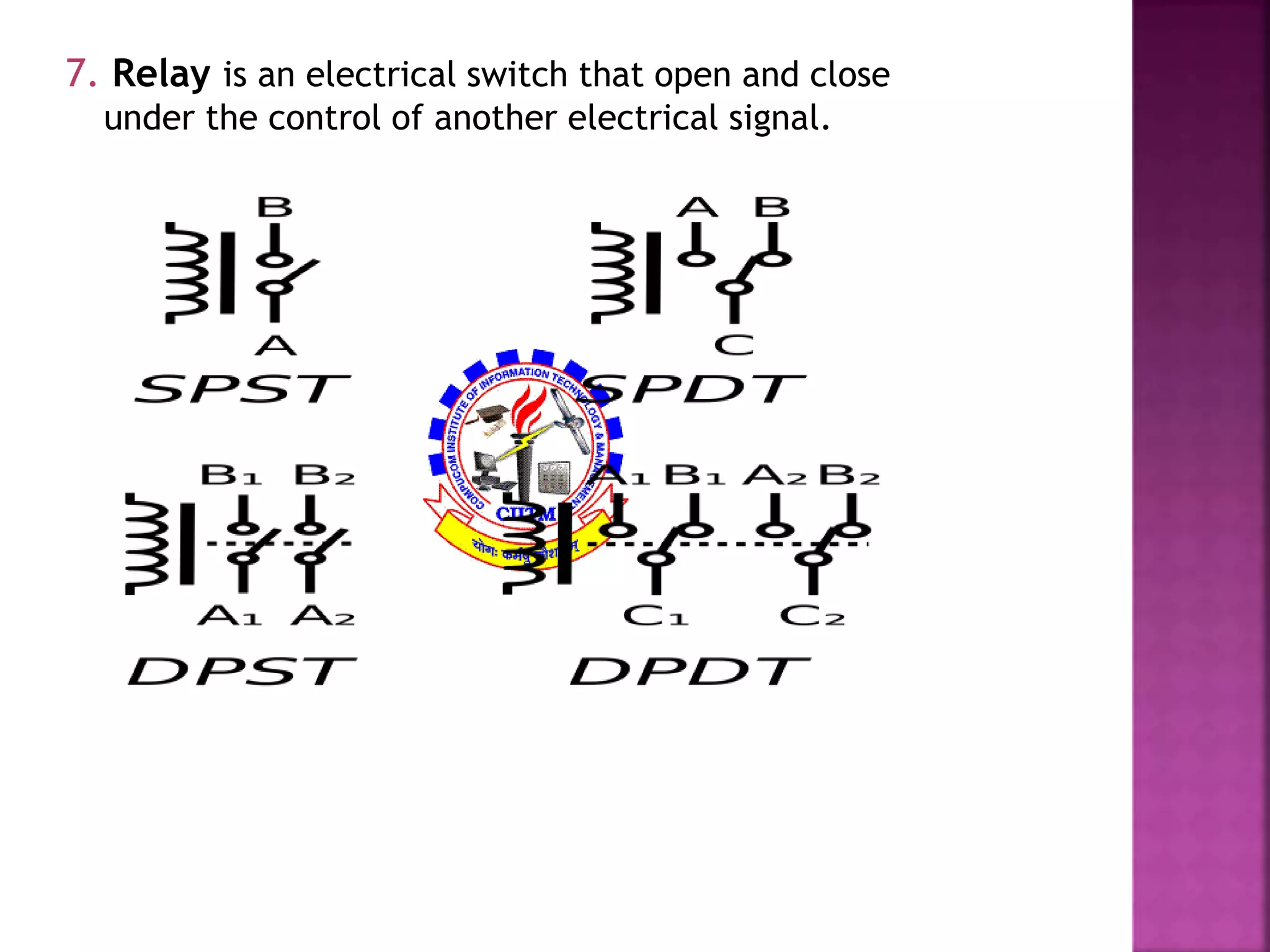
7. Relay is an electrical switch that open and close 
under the control of another electrical signal.
 Railway control circuit are omnibus 
telephone circuits, which provides 
communication with each train working 
point. 
 They should provide satisfactory and reliable 
communication between the controller and 
various way side station , important signal 
cabin, loco sheds, yard offices.
1. Section Control/Train Control 
2. Deputy Control 
3. Traction Loco Control 
4. S&T Control 
5. Emergency Control 
6. Emergency Wireless Control Communication
 The process of sending and receiving signal 
between two station through different 
medium in known as communication system. 
 In communication system there are three 
essential components that should be 
consider. 
1. Sending (Tx) 
2. Receiving (Rx) 
3. Medium
• Optical Systems 
• Microwave Systems 
Over Head 
• Wireless communication 
Media 
• Radio Underground 
System 
Communication 
• Telephone Microwave 
Systems 
• Passenger Communication 
Information 
Optical 
• Public Communication 
Address Systems 
• Signal Post Telephones
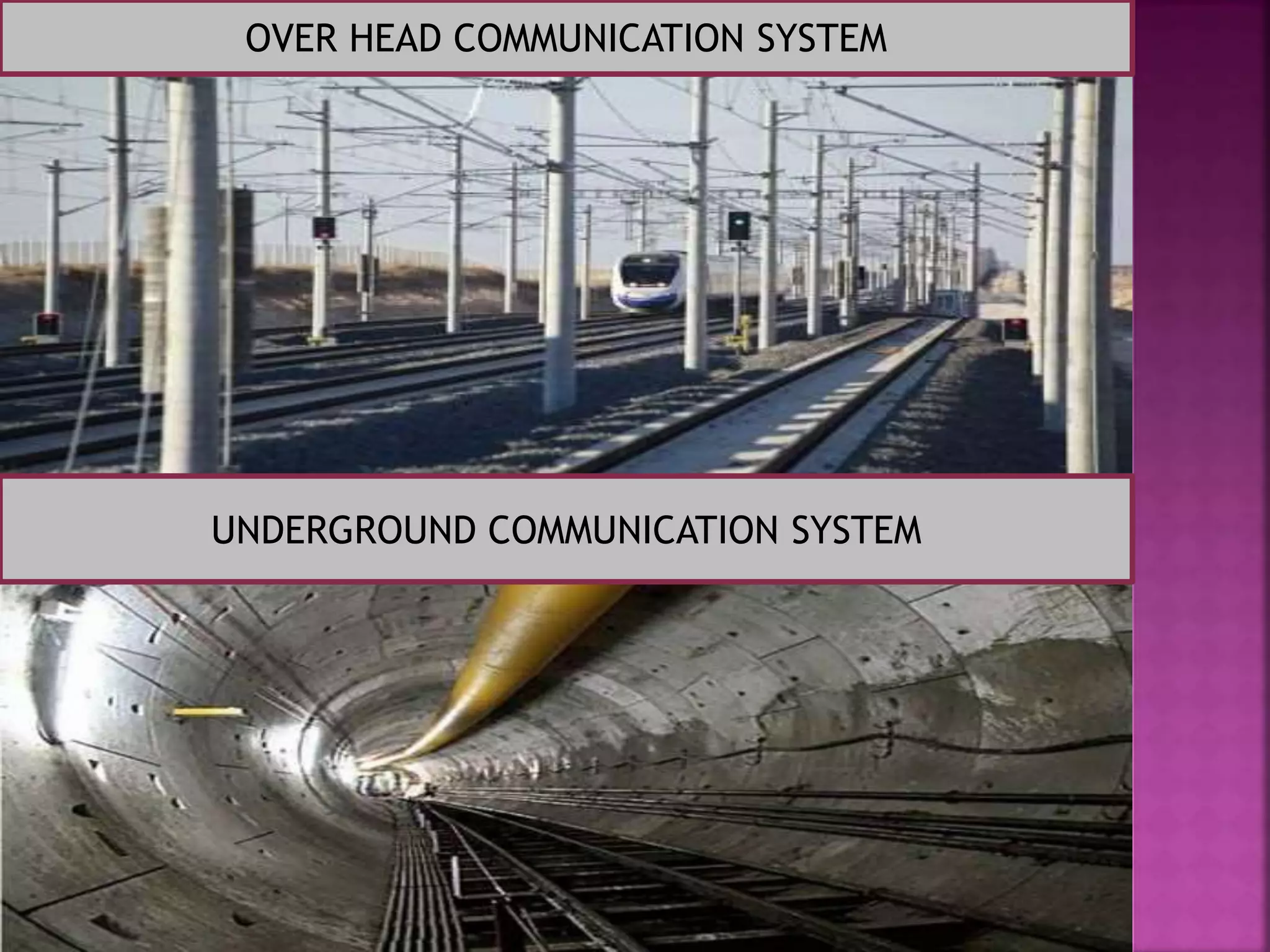
OVER HEAD COMMUNICATION SYSTEM 
UNDERGROUND COMMUNICATION SYSTEM
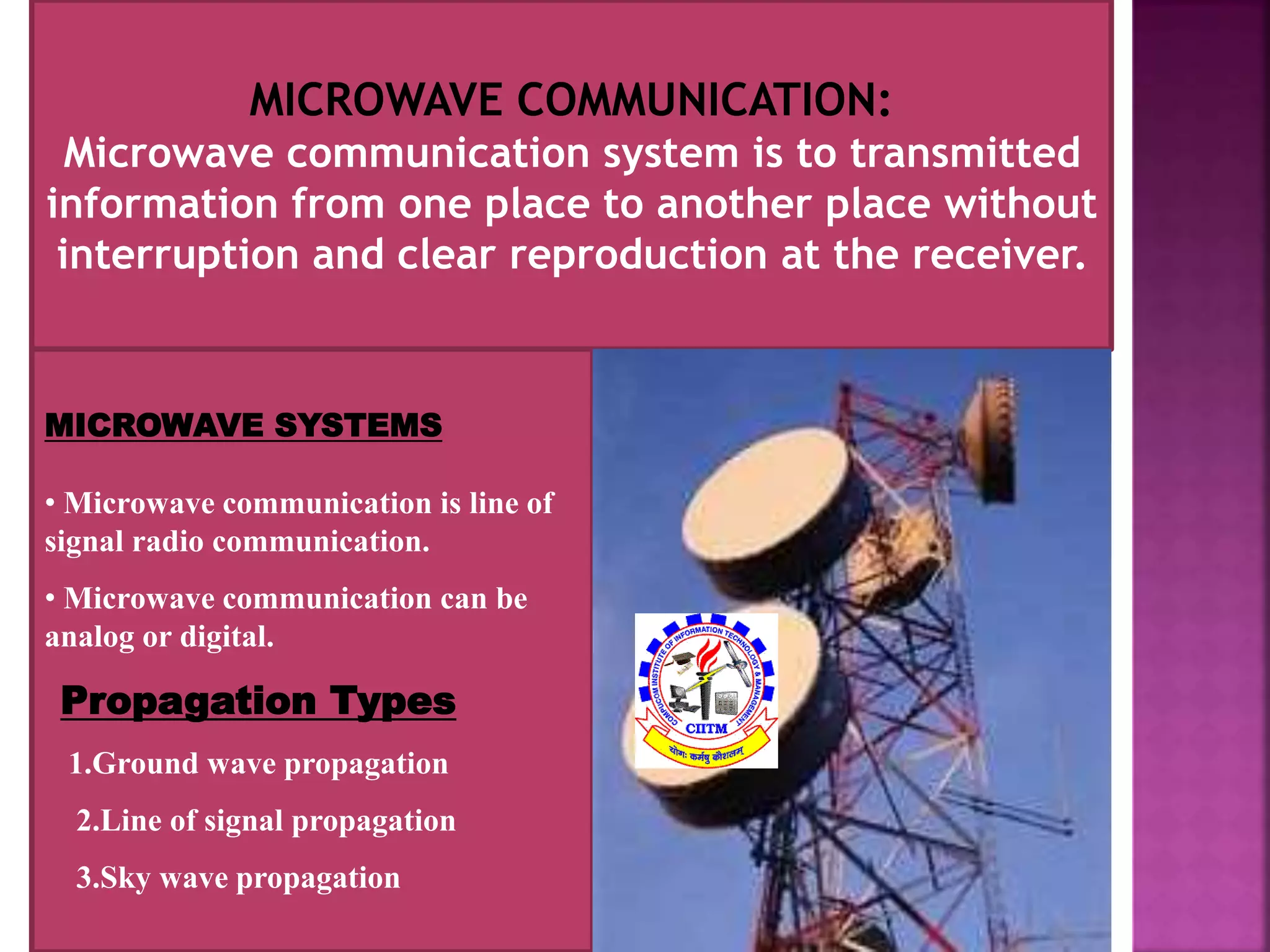
MICROWAVE COMMUNICATION: 
Microwave communication system is to transmitted 
information from one place to another place without 
interruption and clear reproduction at the receiver. 
MICROWAVE SYSTEMS 
• Microwave communication is line of 
signal radio communication. 
• Microwave communication can be 
analog or digital. 
Propagation Types 
1.Ground wave propagation 
2.Line of signal propagation 
3.Sky wave propagation
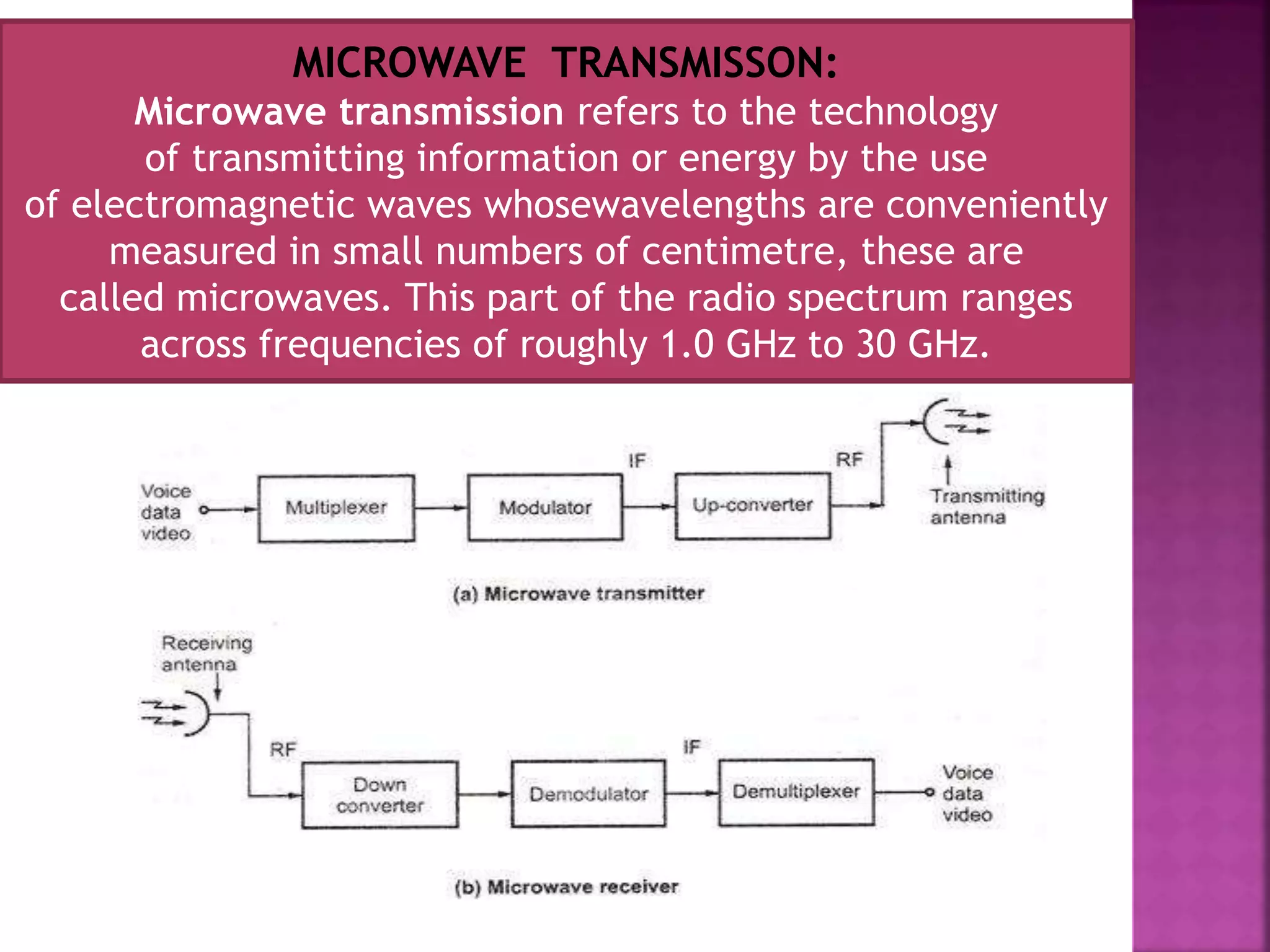
MICROWAVE TRANSMISSON: 
Microwave transmission refers to the technology 
of transmitting information or energy by the use 
of electromagnetic waves whosewavelengths are conveniently 
measured in small numbers of centimetre, these are 
called microwaves. This part of the radio spectrum ranges 
across frequencies of roughly 1.0 GHz to 30 GHz.
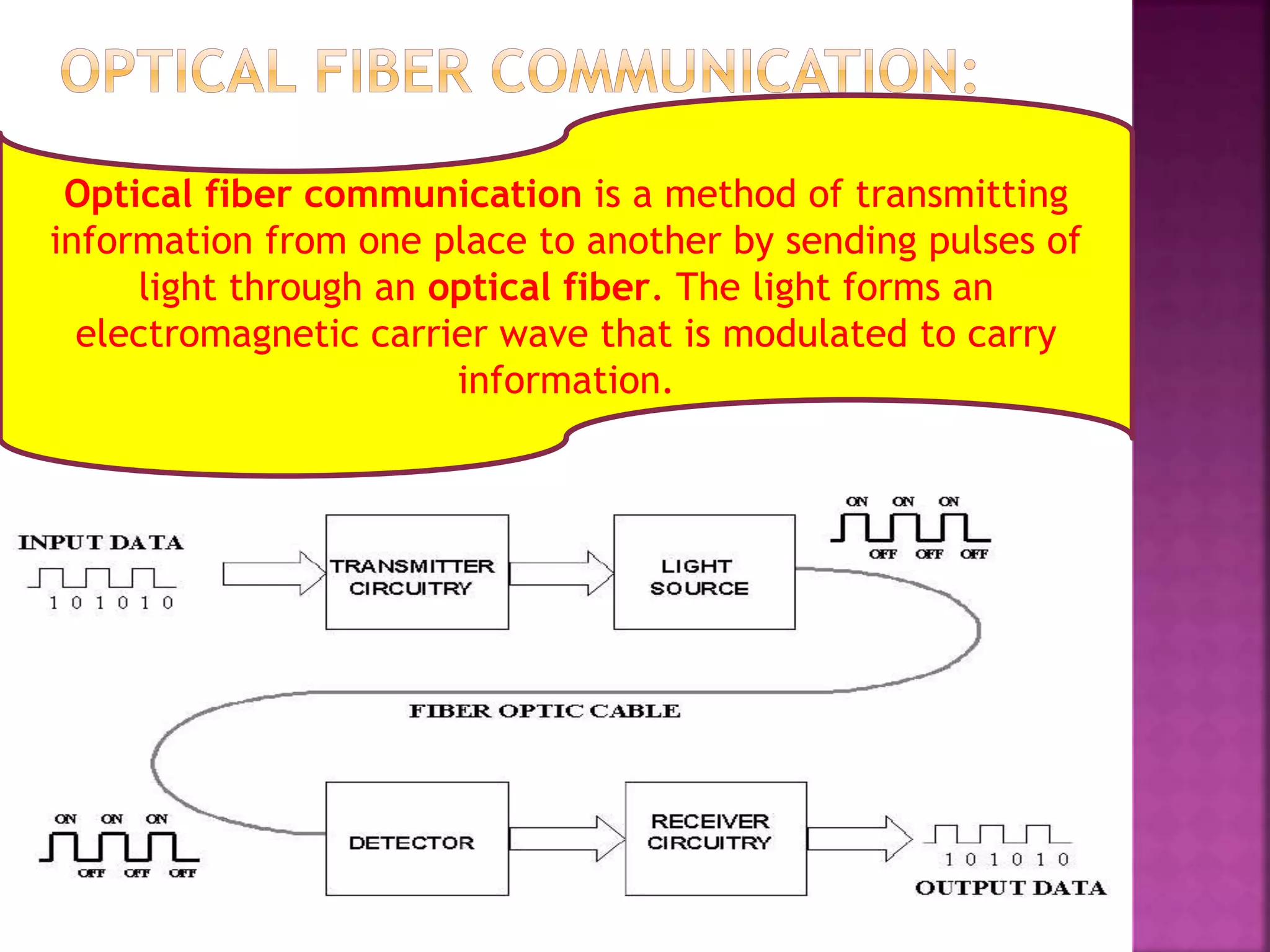
Optical fiber communication is a method of transmitting 
information from one place to another by sending pulses of 
light through an optical fiber. The light forms an 
electromagnetic carrier wave that is modulated to carry 
information.
There is two types of optical fiber: 
1. SINGLE MODE OPTICAL FIBER is an optical fiber in which 
only the lowest order bound mode can propagate at the 
wavelength of interest typically 1300- 1320 nm. 
2. MULTI MODE OPTICAL FIBER is an optical fiber in which 
light waves are dispersed into numerous path or modes as travel 
through the cables core typically 850 or 1300 nm.
indian railway signal system ppt

indian railway signal system ppt

  • 1.
    Presented By: VIMALKUMAR ECE 7TH SEM
  • 2.
    1) Introduction 2)Railway Signaling 3) Interlocking 4) Train Traffic Control 5) Communication System 6) Microwave Transmission 7) Optical Fiber Communication
  • 3.
     FOUNDED IN16TH APRIL,1853(ABOUT 161 YEARS AGO).  HEAD QUARTER IS IN NEWDELHI,INDIA.  REVENU IS 1441.67 BILLION INC (2013-2014).  PROFIT IS 157.8 BILLION INC (2013-2014).  ABOUT 1.307 MILLION EMPLOYEES (2014).  THERE ARE 17 RAILWAY ZONES.
  • 4.
    Indian Railways isan Indian state-owned enterprise, owned and operated by the Government of India through the Ministry of Railways. It is the world's Fourth largest railway networks comprising 115,000 km of track over a route of 65,436 km and 7,172 stations. Railways were first introduced to India in 1853 from Bombay to Thane. Indian Railways is the world's ninth largest commercial or utility employer, by number of employees.
  • 5.
     A signalis a mechanical or electrical device erected besides are railway line to pass information relating to the state of the line ahead to train.  It is a system use to safely direct railway traffic in order to prevent trains from colliding.
  • 7.
    1. BLOCK SIGNAL 2. TRAIN DETECTION 3. FIXED SIGNAL 4. MECHANICAL SIGNAL 5. COLOUR LIGHT SIGNAL 6. CAB SIGNAL
  • 8.
     An interlockingis an arrangement of signal apparatus that prevents conflicting movements through an arrangement of tracks such as junctions or crossings.  Interlocking system used mechanical device both to operated the signaling device and ensure their safe operation.  Electrical relay interlocking were used.
  • 9.
    1. RRI meansthe station is interlocked and worked with control panel located in RRI office. 2. Control panel has a geometrical layout of the entire yard controlled by route interlocking. 3. Indication Panel is the points setting of the route approach locking and provides in front of the SM(panel). 4. Points which is yard expect hand operated points are power operated and worked from the RRI cabin. 5. Crank Handle Interlocking is the yard of the point machine has been group into various group . One crank handle of a one group can not be use on the point machine of another group. 6. Track Circuit on the indication panel are mark in different color and are provide with indication lamp.
  • 10.
    7. Relay isan electrical switch that open and close under the control of another electrical signal.
  • 11.
     Railway controlcircuit are omnibus telephone circuits, which provides communication with each train working point.  They should provide satisfactory and reliable communication between the controller and various way side station , important signal cabin, loco sheds, yard offices.
  • 12.
    1. Section Control/TrainControl 2. Deputy Control 3. Traction Loco Control 4. S&T Control 5. Emergency Control 6. Emergency Wireless Control Communication
  • 13.
     The processof sending and receiving signal between two station through different medium in known as communication system.  In communication system there are three essential components that should be consider. 1. Sending (Tx) 2. Receiving (Rx) 3. Medium
  • 14.
    • Optical Systems • Microwave Systems Over Head • Wireless communication Media • Radio Underground System Communication • Telephone Microwave Systems • Passenger Communication Information Optical • Public Communication Address Systems • Signal Post Telephones
  • 15.
    OVER HEAD COMMUNICATIONSYSTEM UNDERGROUND COMMUNICATION SYSTEM
  • 16.
    MICROWAVE COMMUNICATION: Microwavecommunication system is to transmitted information from one place to another place without interruption and clear reproduction at the receiver. MICROWAVE SYSTEMS • Microwave communication is line of signal radio communication. • Microwave communication can be analog or digital. Propagation Types 1.Ground wave propagation 2.Line of signal propagation 3.Sky wave propagation
  • 17.
    MICROWAVE TRANSMISSON: Microwavetransmission refers to the technology of transmitting information or energy by the use of electromagnetic waves whosewavelengths are conveniently measured in small numbers of centimetre, these are called microwaves. This part of the radio spectrum ranges across frequencies of roughly 1.0 GHz to 30 GHz.
  • 18.
    Optical fiber communicationis a method of transmitting information from one place to another by sending pulses of light through an optical fiber. The light forms an electromagnetic carrier wave that is modulated to carry information.
  • 19.
    There is twotypes of optical fiber: 1. SINGLE MODE OPTICAL FIBER is an optical fiber in which only the lowest order bound mode can propagate at the wavelength of interest typically 1300- 1320 nm. 2. MULTI MODE OPTICAL FIBER is an optical fiber in which light waves are dispersed into numerous path or modes as travel through the cables core typically 850 or 1300 nm.