







Introduction and 
Literature Review 
By Dr. James Lani
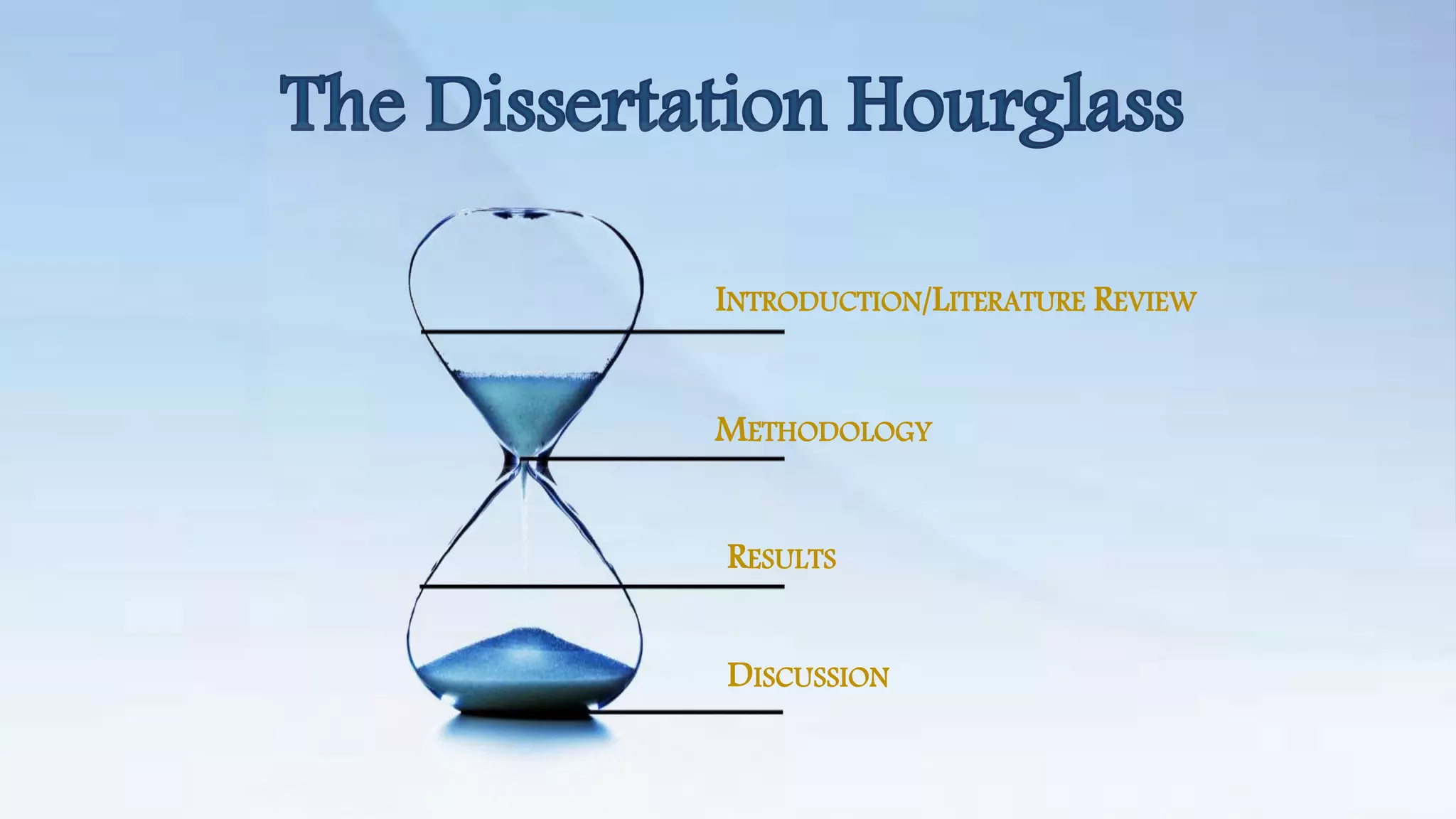
INTRODUCTION/LITERATURE REVIEW 
METHODOLOGY 
RESULTS 
DISCUSSION
Introduction 
• OVERVIEW OF RESEARCH PROBLEM--Why study topic? 
• SIGNIFICANCE OF PROBLEM—Why important? 
• RATIONALE 
• IDENTIFY KEY VARIABLES—How do you measure? 
• EXPLAIN PROCEDURES—How are measures administered? 
• A FEW PAGES IN LENGTH
Introduction/Literature 
• Literature (body of work) and review (survey of). 
• Critical thinking skills matter—especially to the argument. A critical review 
includes previous research strengths and weaknesses. 
• Writing skills matter (organize your chapter, use topic sentences, 
paragraphs must be coherent, have intros and conclusions). 
• Stay in charge of your study (the best you can—you know more than the 
committee). 
• Tells readers what’s been done and identifies the gaps in the literature. 
• Search relevant information then evaluate it.
Literature 
• Provides the context of the study. 
• Empirical and logical. 
• Build a coherent argument, answering why the study needs to be 
conducted.
Articles
Searching 
• Keywords matter. 
• The source matters—e.g., Use peer reviewed. 
• Primary sources—textbooks (overviews), journals (peer reviewed), 
dissertation abstracts, research reviews. 
• Start with recent articles. 
• Find a good reference librarian; learn Boolean searches (AND, OR).
Search Strategies 
• Identify databases. 
• Identify appropriate search terms. 
• Expand and narrow. 
• Use citation chaining.
Identify Databases and Search Terms 
• What are the big databases for this field? 
• Ex. PubMed for medicine 
• What terms best describe this topic? 
• You may already have a clear idea of these terms, if not do some preliminary 
searches to help identify them.
Expand and Narrow 
• Consider the number of results. 
• Use filters. 
• Identify relevant articles and note their subjects or keywords. 
• Use these to do a new search
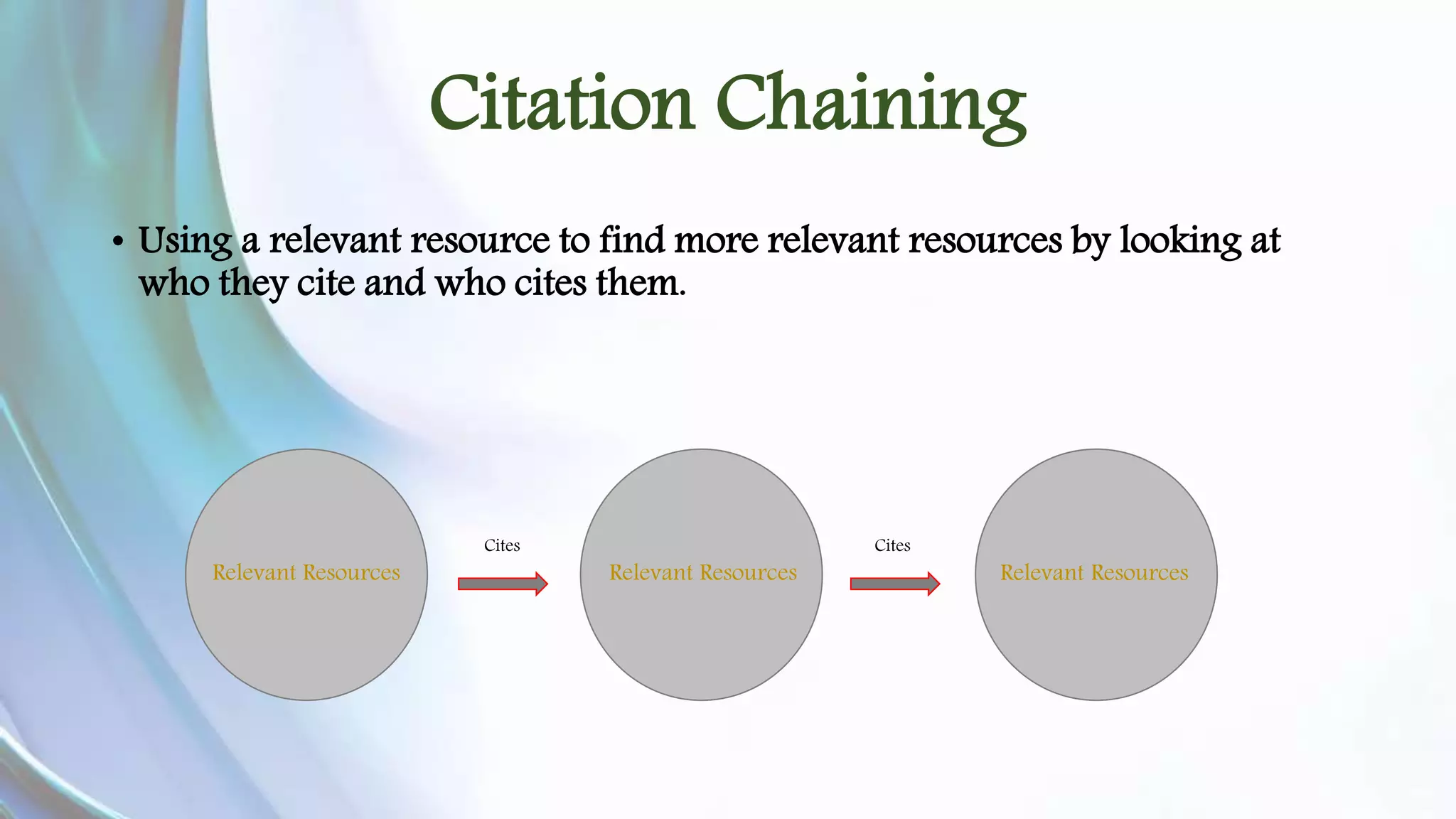
Citation Chaining 
• Using a relevant resource to find more relevant resources by looking at 
who they cite and who cites them. 
Cites Cites 
Relevant Resources Relevant Resources Relevant Resources
Reading 
• Reading Strategy: 
1. Abstract 
2. Introduction 
3. Topic Sentences of method and results 
4. Skim discussion 
5. If interesting, then rest of article 
• What is the problem? What is the research question? 
• What was the research design? 
• Who or what is being studied? 
• Sample size? 
• What measures were used? How were they 
operationalized? 
• What were the procedures used, and what were the 
results? 
• Constantly ask the “so what questions.” 
What is the central theme of the research?
Organizing 
• Use a system of keeping notes (e.g., group articles into categories/themes). 
• Movie analogy: long shot (generally relevant to your topic), medium shot 
and close up (very relevant to your topic) shots.
Organizing Your Search 
• Keep track of databases, search terms 
• Use reference management software 
• Zotero 
• RefWorks 
• EndNote
Writing 
• You don’t have to cite EVERYTHING that you’ve read—be selective (e.g., 
evidence in a courtroom is very selective). 
• Don’t “””quote””” to death. 
• Use tons of subheadings (easy to sequence). 
• Summarize sections often. 
• Transition between paragraphs and between sections.
Literature Review Conclusion 
Solidify that argument 
Example from My Dissertation 
Questions Stimulated By and Limitations of the HW (1999) Study 
• Several Questions were stimulated by the findings of the HW (1999) study. In this section I will discuss 
problematic findings, construct hypotheses as to what may have… 
• One puzzling finding from the 
• A couple of limitations in the HW study hindered the usefulness and generalizability of the marker 
strategy. 
First… 
• I also wondered whether the markers from her study were applicable to other therapies from different 
theoretical orientations. 
Given the above questions and limitations regarding the HW study, I now present my study that address these issues.
Research Questions 
I examined two primary questions in this study: 
1. Can markers of assimilation be reliably identified in excerpted 
passages of psychotherapy transcripts? 
2. Are the identified markers valid indicators of APES stages?
Research Questions: Qualitative 
• Qualitative research questions– Phenomenological research 
(Moustakas) shows human lived experiences, uncovers the texture of 
factors, and encompassing descriptions of experience. 
• Qualitative research questions– Grounded theory research (Morse) 
builds a theory. It is a process type of question: 
• How the process is helped or hindered? 
• How did the process change from time period to time period?
Hypotheses 
Educated guess of how variables interact with each other or change in 
response to time or intervention. 
Should be crystal clear to naïve readers– comprehensible.
Questions 
& 
Answers
Personalized Dissertation Consulting 
See yourself graduate in 2015! 
• Problem Statement 
• Significance 
• Theoretical 
Framework 
• Literature Review 
Searches 
• Annotate Bibliography & 
Synthesize 
• Research Questions 
877-437-8622 
Info@StatisticsSolutions.com
Thank you for your participation 
and attention! 
Join us for our next webinar on 
Wednesday, November 19th at 8:30pm EST 
Methodology and IRB/URR
Join us for our 
Dissertation Workshop 
Completing a Dissertation in 1 Year 
Saturday December 6th, 2014 9:00 am-5:00 pm 
Dallas/Fort Worth Airport Marriott 
Fee: $199 
Lodging: $89/night

Introduction & Literature Review Webinar

  • 1.
    Introduction and LiteratureReview By Dr. James Lani
  • 2.
  • 4.
    Introduction • OVERVIEWOF RESEARCH PROBLEM--Why study topic? • SIGNIFICANCE OF PROBLEM—Why important? • RATIONALE • IDENTIFY KEY VARIABLES—How do you measure? • EXPLAIN PROCEDURES—How are measures administered? • A FEW PAGES IN LENGTH
  • 5.
    Introduction/Literature • Literature(body of work) and review (survey of). • Critical thinking skills matter—especially to the argument. A critical review includes previous research strengths and weaknesses. • Writing skills matter (organize your chapter, use topic sentences, paragraphs must be coherent, have intros and conclusions). • Stay in charge of your study (the best you can—you know more than the committee). • Tells readers what’s been done and identifies the gaps in the literature. • Search relevant information then evaluate it.
  • 7.
    Literature • Providesthe context of the study. • Empirical and logical. • Build a coherent argument, answering why the study needs to be conducted.
  • 8.
  • 9.
    Searching • Keywordsmatter. • The source matters—e.g., Use peer reviewed. • Primary sources—textbooks (overviews), journals (peer reviewed), dissertation abstracts, research reviews. • Start with recent articles. • Find a good reference librarian; learn Boolean searches (AND, OR).
  • 10.
    Search Strategies •Identify databases. • Identify appropriate search terms. • Expand and narrow. • Use citation chaining.
  • 11.
    Identify Databases andSearch Terms • What are the big databases for this field? • Ex. PubMed for medicine • What terms best describe this topic? • You may already have a clear idea of these terms, if not do some preliminary searches to help identify them.
  • 12.
    Expand and Narrow • Consider the number of results. • Use filters. • Identify relevant articles and note their subjects or keywords. • Use these to do a new search
  • 13.
    Citation Chaining •Using a relevant resource to find more relevant resources by looking at who they cite and who cites them. Cites Cites Relevant Resources Relevant Resources Relevant Resources
  • 14.
    Reading • ReadingStrategy: 1. Abstract 2. Introduction 3. Topic Sentences of method and results 4. Skim discussion 5. If interesting, then rest of article • What is the problem? What is the research question? • What was the research design? • Who or what is being studied? • Sample size? • What measures were used? How were they operationalized? • What were the procedures used, and what were the results? • Constantly ask the “so what questions.” What is the central theme of the research?
  • 15.
    Organizing • Usea system of keeping notes (e.g., group articles into categories/themes). • Movie analogy: long shot (generally relevant to your topic), medium shot and close up (very relevant to your topic) shots.
  • 16.
    Organizing Your Search • Keep track of databases, search terms • Use reference management software • Zotero • RefWorks • EndNote
  • 17.
    Writing • Youdon’t have to cite EVERYTHING that you’ve read—be selective (e.g., evidence in a courtroom is very selective). • Don’t “””quote””” to death. • Use tons of subheadings (easy to sequence). • Summarize sections often. • Transition between paragraphs and between sections.
  • 18.
    Literature Review Conclusion Solidify that argument Example from My Dissertation Questions Stimulated By and Limitations of the HW (1999) Study • Several Questions were stimulated by the findings of the HW (1999) study. In this section I will discuss problematic findings, construct hypotheses as to what may have… • One puzzling finding from the • A couple of limitations in the HW study hindered the usefulness and generalizability of the marker strategy. First… • I also wondered whether the markers from her study were applicable to other therapies from different theoretical orientations. Given the above questions and limitations regarding the HW study, I now present my study that address these issues.
  • 19.
    Research Questions Iexamined two primary questions in this study: 1. Can markers of assimilation be reliably identified in excerpted passages of psychotherapy transcripts? 2. Are the identified markers valid indicators of APES stages?
  • 20.
    Research Questions: Qualitative • Qualitative research questions– Phenomenological research (Moustakas) shows human lived experiences, uncovers the texture of factors, and encompassing descriptions of experience. • Qualitative research questions– Grounded theory research (Morse) builds a theory. It is a process type of question: • How the process is helped or hindered? • How did the process change from time period to time period?
  • 21.
    Hypotheses Educated guessof how variables interact with each other or change in response to time or intervention. Should be crystal clear to naïve readers– comprehensible.
  • 22.
  • 23.
    Personalized Dissertation Consulting See yourself graduate in 2015! • Problem Statement • Significance • Theoretical Framework • Literature Review Searches • Annotate Bibliography & Synthesize • Research Questions 877-437-8622 Info@StatisticsSolutions.com
  • 24.
    Thank you foryour participation and attention! Join us for our next webinar on Wednesday, November 19th at 8:30pm EST Methodology and IRB/URR
  • 25.
    Join us forour Dissertation Workshop Completing a Dissertation in 1 Year Saturday December 6th, 2014 9:00 am-5:00 pm Dallas/Fort Worth Airport Marriott Fee: $199 Lodging: $89/night