Contributor Personality
Development Program
Prepared by,
Ronak Machhi
Parth Tank
Prince Jain
Dhaval Darji
Umang Bhatt
Electrical Department
SVIT, Vasad.
Guided by,
Mr. Bharat K. Vadhiya
Mrs. Smita B. Baria
SVIT, Vasad.
Active learning assignment
An initiative by Gujarat Technological University
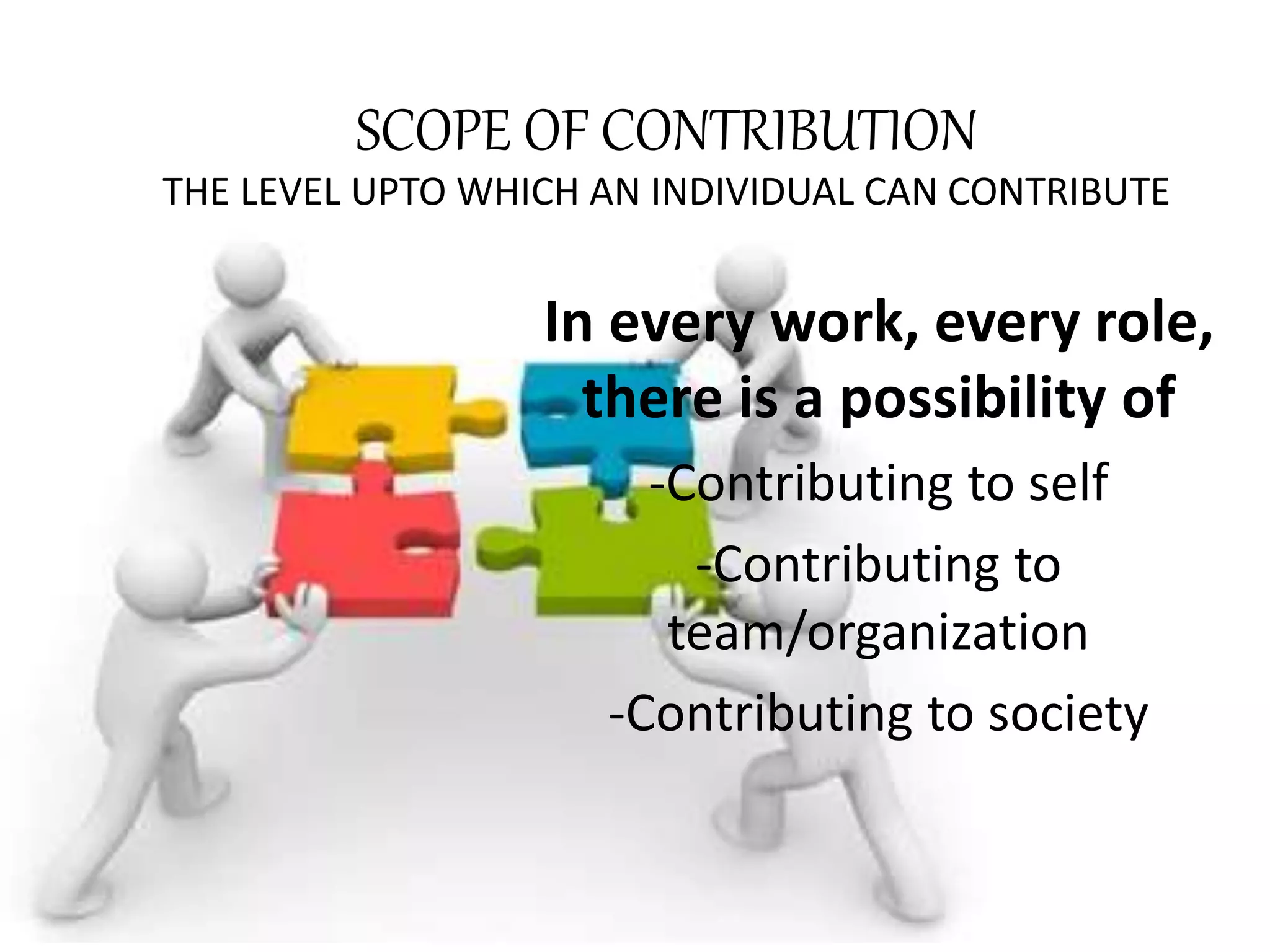
SCOPE OF CONTRIBUTION
THE LEVEL UPTO WHICH AN INDIVIDUAL CAN CONTRIBUTE
In every work, every role,
there is a possibility of
-Contributing to self
-Contributing to
team/organization
-Contributing to society
Outline
• What is Contribution ?
• Who is a Contributor ?
• Scope of Contribution – concept exploration
• Possible ways to Contribute
• Scope of Contribution – concept applications
What is Contribution ?
• The common meaning of contribution is the
part played by a person in bringing about the
result
• Contribution is the act of a person for the
success of the team/company as well as for
improving his/her personal capabilities,
personal fulfillment etc.
Who is a Contributor ?
• Contributors define themselves in terms of
what they will become or accomplish (e.g.
capacity to deliver, commitment and
ownership of the organization’s purpose, etc.).
This is a dynamic identity based on your
“being” and “becoming”. Such an identity lets
you choose to live a better future.
• Contributors have a deeper and wider
definition of success than the non-
contributors.
Why students need to become contributors?
Scope of Contribution
• The scope of contribution refers to the
extension of the contribution provided by an
individual to the team/organization, self, or
the society.
• Defines the level of how much he/she can
contribute towards the goal.
Concept exploration
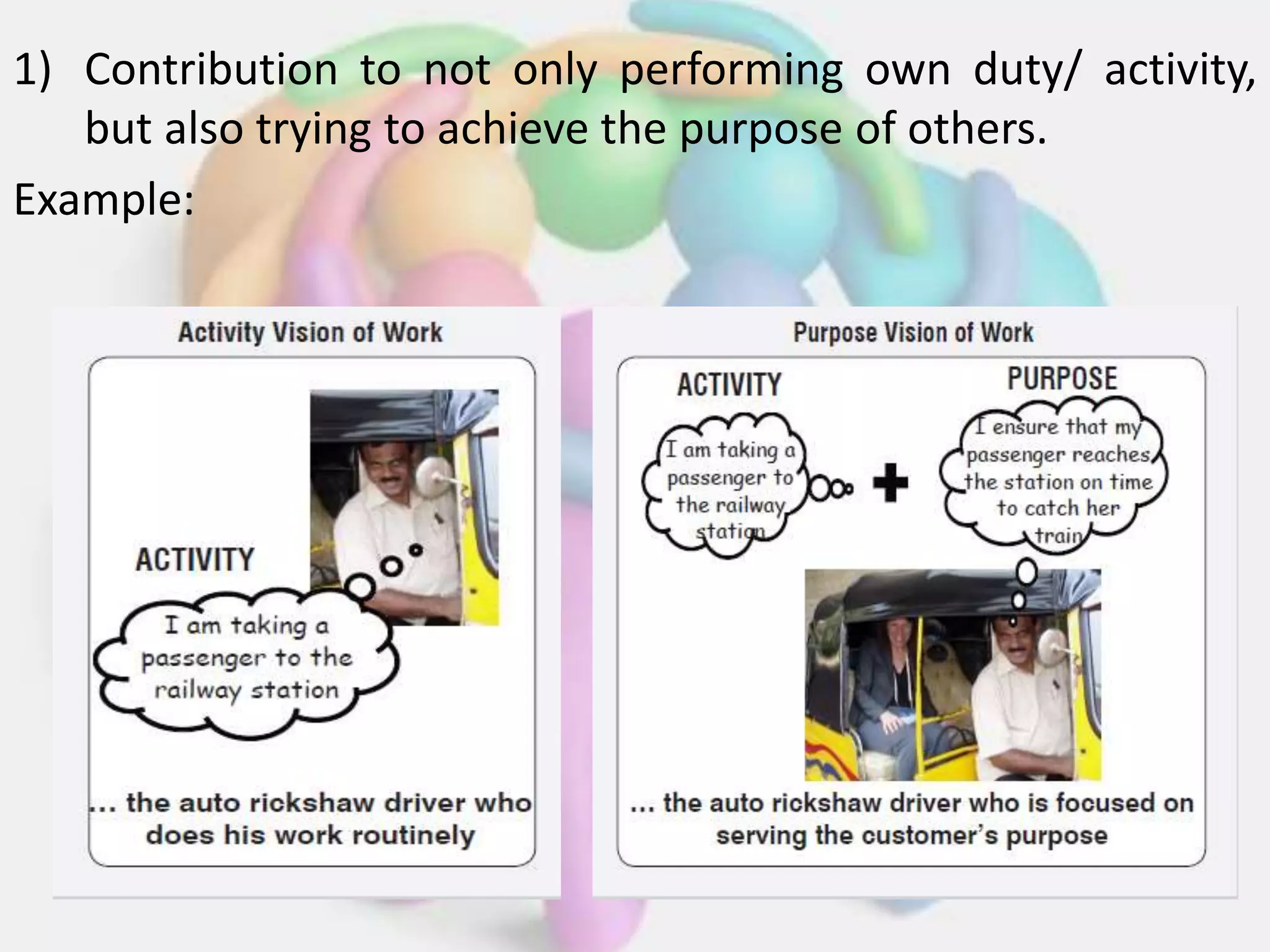
1) Contribution to not only performing own duty/ activity,
but also trying to achieve the purpose of others.
Example:
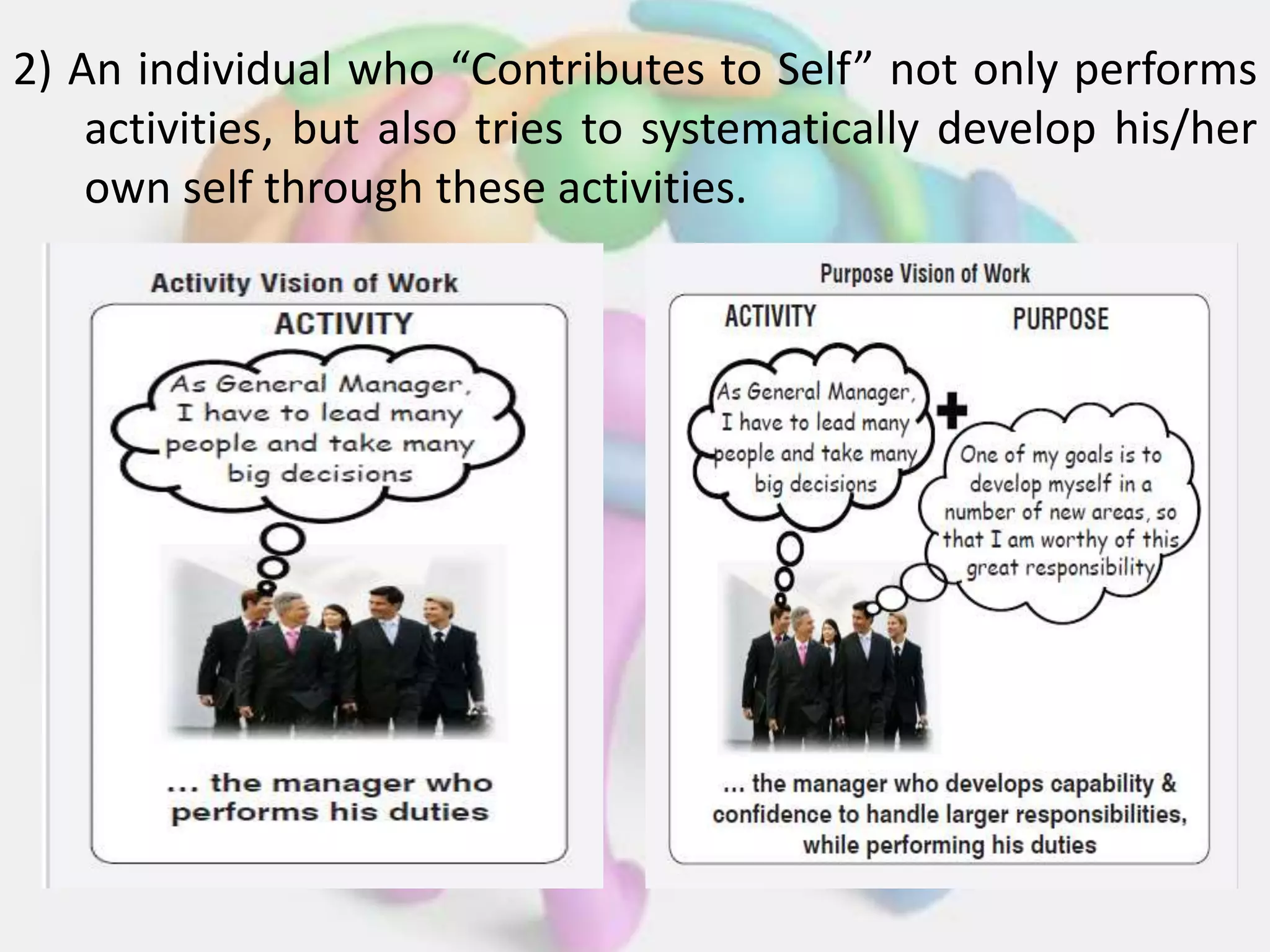
2) An individual who “Contributes to Self” not only performs
activities, but also tries to systematically develop his/her
own self through these activities.
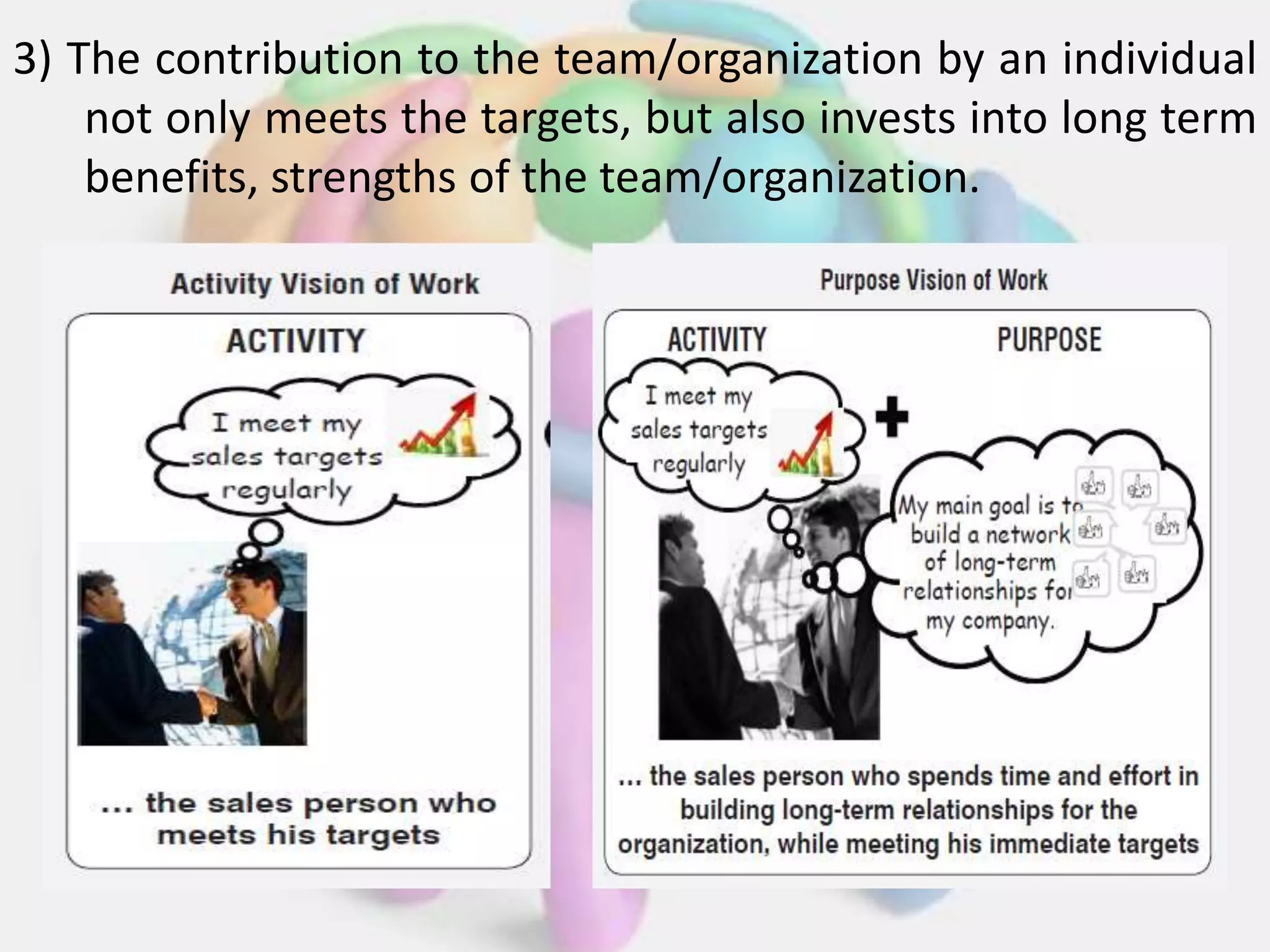
3) The contribution to the team/organization by an individual
not only meets the targets, but also invests into long term
benefits, strengths of the team/organization.
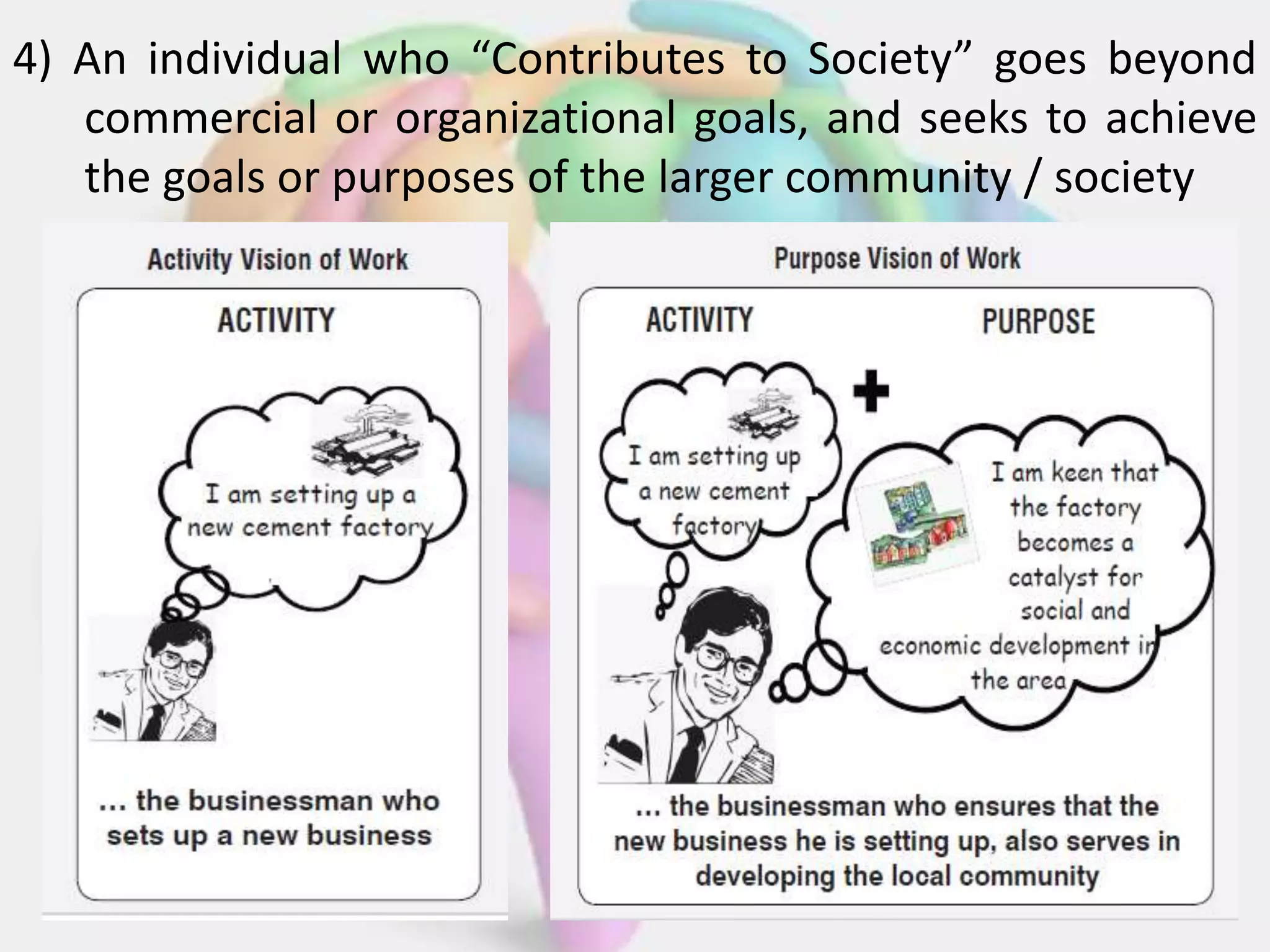
4) An individual who “Contributes to Society” goes beyond
commercial or organizational goals, and seeks to achieve
the goals or purposes of the larger community / society
The possibilities of contribution
by an individual
1) What contributions he/she can make to self ?
- Example 2
2) What contributions he/she can make to the
team/organization?
- Example 1,3
3) What contributions can be made to the society?
- Example 4
Concept Applications
“Building capability of my team is as important as
my own development”
Example
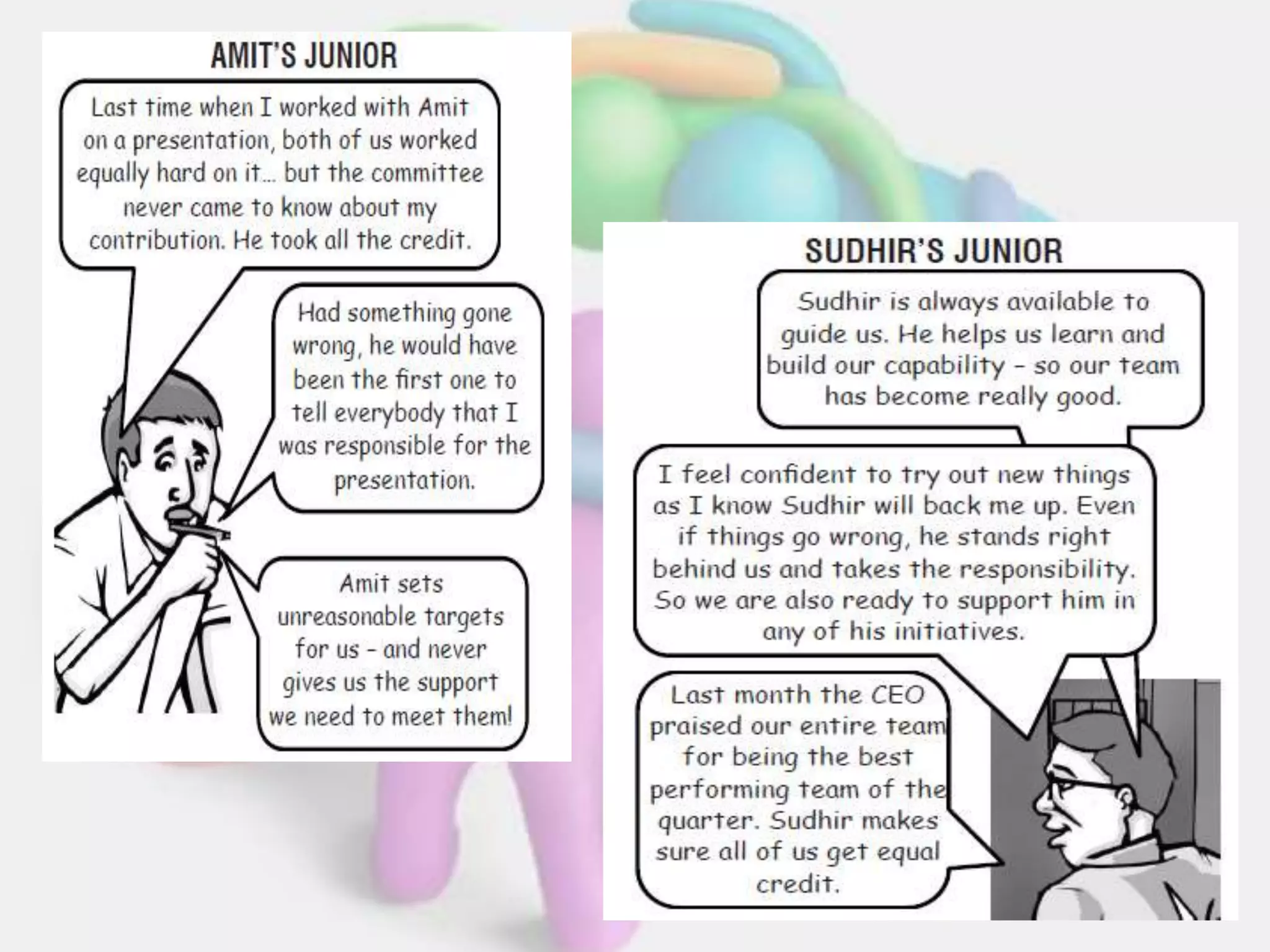
Amit and Sudhir were team leaders. Their boss Navin has been
getting requests for team change from Amit’s team members. This
is what their juniors have to say about them.
REASON:-
AMIT does not contribute to the development of his team -
in fact, he tries to get ahead in the organization, at the
cost of others.
Comparison with Sudhir:-
SUDHIR is concerned about the development of his team
members, as well as development of his own capabilities as
a leader.
“Building customer’s trust in the organization is
more important for the long-term business, than
chasing immediate sales targets”
Example
Alex had recently joined the Relisafe Bank as a sales manager. The bank
had just come out with a new investment product called MultiCash.
Investment to Multicash is not risk free for the customer. Now it
depends on Alex to talk about the risk factors to him/her ,or to only
think about the bank benefits.
Alex: Decision to one aged customer who cant afford lose:-
Alex thought things over and quickly made a choice. He told Mr.
Jha – “Sir, MultiCash indeed has some risks, but the returns are also very
good. I don’t advise you to invest a lot of money in it. In my opinion, you
can invest a small sum and get a very good return on it. Then, even in
the unlikely event of a loss, you will lose very little money”.
“Tough circumstances are an opportunity for
making more contributions (not problems to
ignore or run away from)”
- The difficult conditions / circumstances can lead to make
more contributions not only to self, but to the company or
to the society.
- It can create self confidence which can ultimately lead to
further more contributions as well as benefits.
References
• http://gtu.ibecome.in/
• http://cpdp.gtu.ac.in/
Thank you.


Scope of contribution

  • 1.
    Contributor Personality Development Program Preparedby, Ronak Machhi Parth Tank Prince Jain Dhaval Darji Umang Bhatt Electrical Department SVIT, Vasad. Guided by, Mr. Bharat K. Vadhiya Mrs. Smita B. Baria SVIT, Vasad. Active learning assignment An initiative by Gujarat Technological University
  • 2.
    SCOPE OF CONTRIBUTION THELEVEL UPTO WHICH AN INDIVIDUAL CAN CONTRIBUTE In every work, every role, there is a possibility of -Contributing to self -Contributing to team/organization -Contributing to society
  • 3.
    Outline • What isContribution ? • Who is a Contributor ? • Scope of Contribution – concept exploration • Possible ways to Contribute • Scope of Contribution – concept applications
  • 4.
    What is Contribution? • The common meaning of contribution is the part played by a person in bringing about the result • Contribution is the act of a person for the success of the team/company as well as for improving his/her personal capabilities, personal fulfillment etc.
  • 5.
    Who is aContributor ? • Contributors define themselves in terms of what they will become or accomplish (e.g. capacity to deliver, commitment and ownership of the organization’s purpose, etc.). This is a dynamic identity based on your “being” and “becoming”. Such an identity lets you choose to live a better future. • Contributors have a deeper and wider definition of success than the non- contributors.
  • 6.
    Why students needto become contributors?
  • 7.
    Scope of Contribution •The scope of contribution refers to the extension of the contribution provided by an individual to the team/organization, self, or the society. • Defines the level of how much he/she can contribute towards the goal.
  • 8.
  • 9.
    1) Contribution tonot only performing own duty/ activity, but also trying to achieve the purpose of others. Example:
  • 10.
    2) An individualwho “Contributes to Self” not only performs activities, but also tries to systematically develop his/her own self through these activities.
  • 11.
    3) The contributionto the team/organization by an individual not only meets the targets, but also invests into long term benefits, strengths of the team/organization.
  • 12.
    4) An individualwho “Contributes to Society” goes beyond commercial or organizational goals, and seeks to achieve the goals or purposes of the larger community / society
  • 13.
    The possibilities ofcontribution by an individual 1) What contributions he/she can make to self ? - Example 2 2) What contributions he/she can make to the team/organization? - Example 1,3 3) What contributions can be made to the society? - Example 4
  • 14.
  • 15.
    “Building capability ofmy team is as important as my own development” Example Amit and Sudhir were team leaders. Their boss Navin has been getting requests for team change from Amit’s team members. This is what their juniors have to say about them. REASON:- AMIT does not contribute to the development of his team - in fact, he tries to get ahead in the organization, at the cost of others. Comparison with Sudhir:- SUDHIR is concerned about the development of his team members, as well as development of his own capabilities as a leader.
  • 17.
    “Building customer’s trustin the organization is more important for the long-term business, than chasing immediate sales targets” Example Alex had recently joined the Relisafe Bank as a sales manager. The bank had just come out with a new investment product called MultiCash. Investment to Multicash is not risk free for the customer. Now it depends on Alex to talk about the risk factors to him/her ,or to only think about the bank benefits. Alex: Decision to one aged customer who cant afford lose:- Alex thought things over and quickly made a choice. He told Mr. Jha – “Sir, MultiCash indeed has some risks, but the returns are also very good. I don’t advise you to invest a lot of money in it. In my opinion, you can invest a small sum and get a very good return on it. Then, even in the unlikely event of a loss, you will lose very little money”.
  • 19.
    “Tough circumstances arean opportunity for making more contributions (not problems to ignore or run away from)” - The difficult conditions / circumstances can lead to make more contributions not only to self, but to the company or to the society. - It can create self confidence which can ultimately lead to further more contributions as well as benefits.
  • 20.
  • 21.