Cell culture and
maintenance-
“Cell Lines Used In Screening
Techniques”
Submitted To- Presented By-
Mrs. Jyothi Y. Bhavya Rewari
Asst. Proff., Dept. of Pharmacology M.Pharm, Ist year, Pharmacology
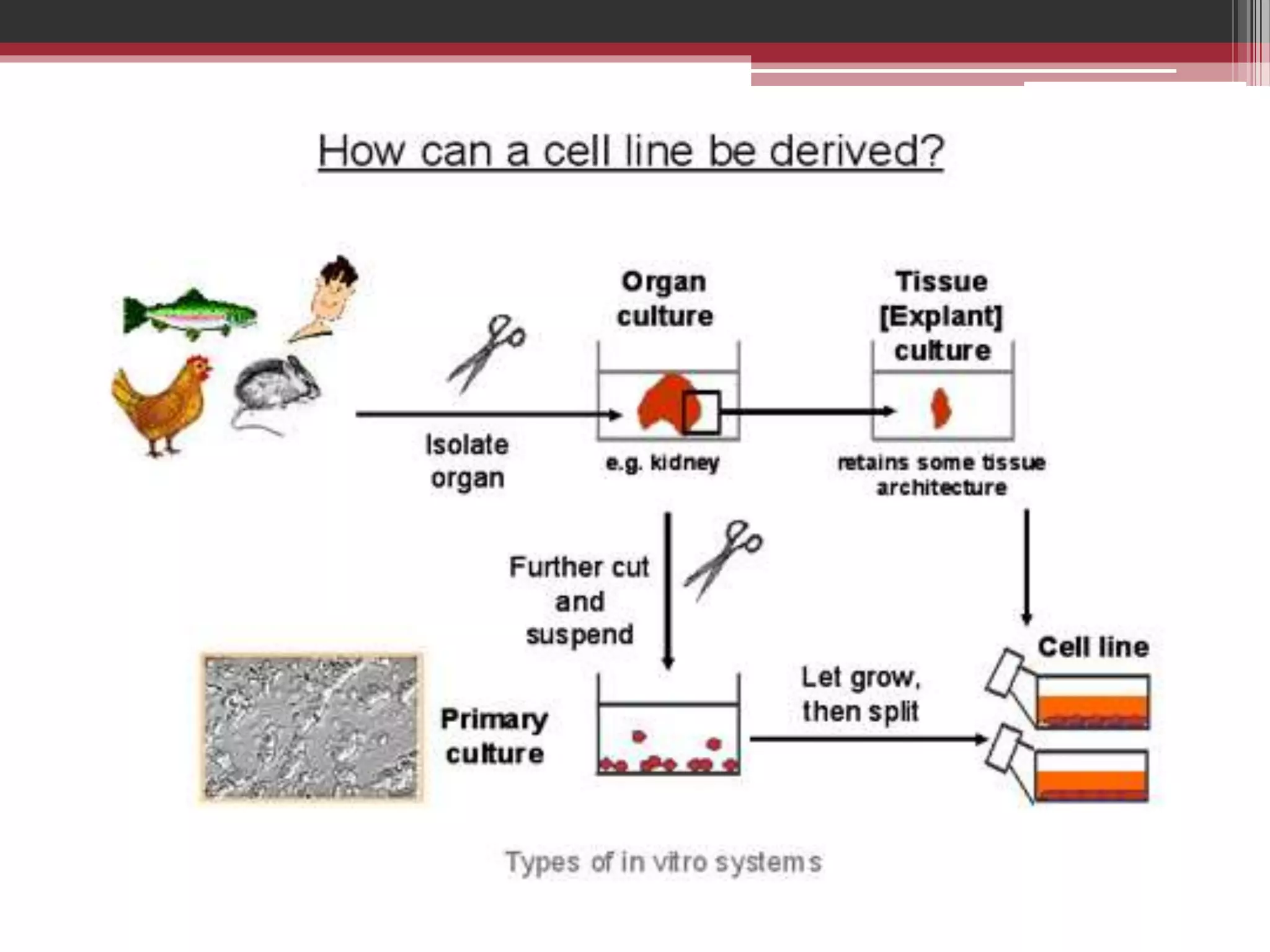
Krupanidhi College of Pharmacy, Bangalore
Contents
• Cell line
• Types of tissue culture
• Primary cultures
• Continuous cell lines
• Cell types
• Human cell lines
• Animal cell lines
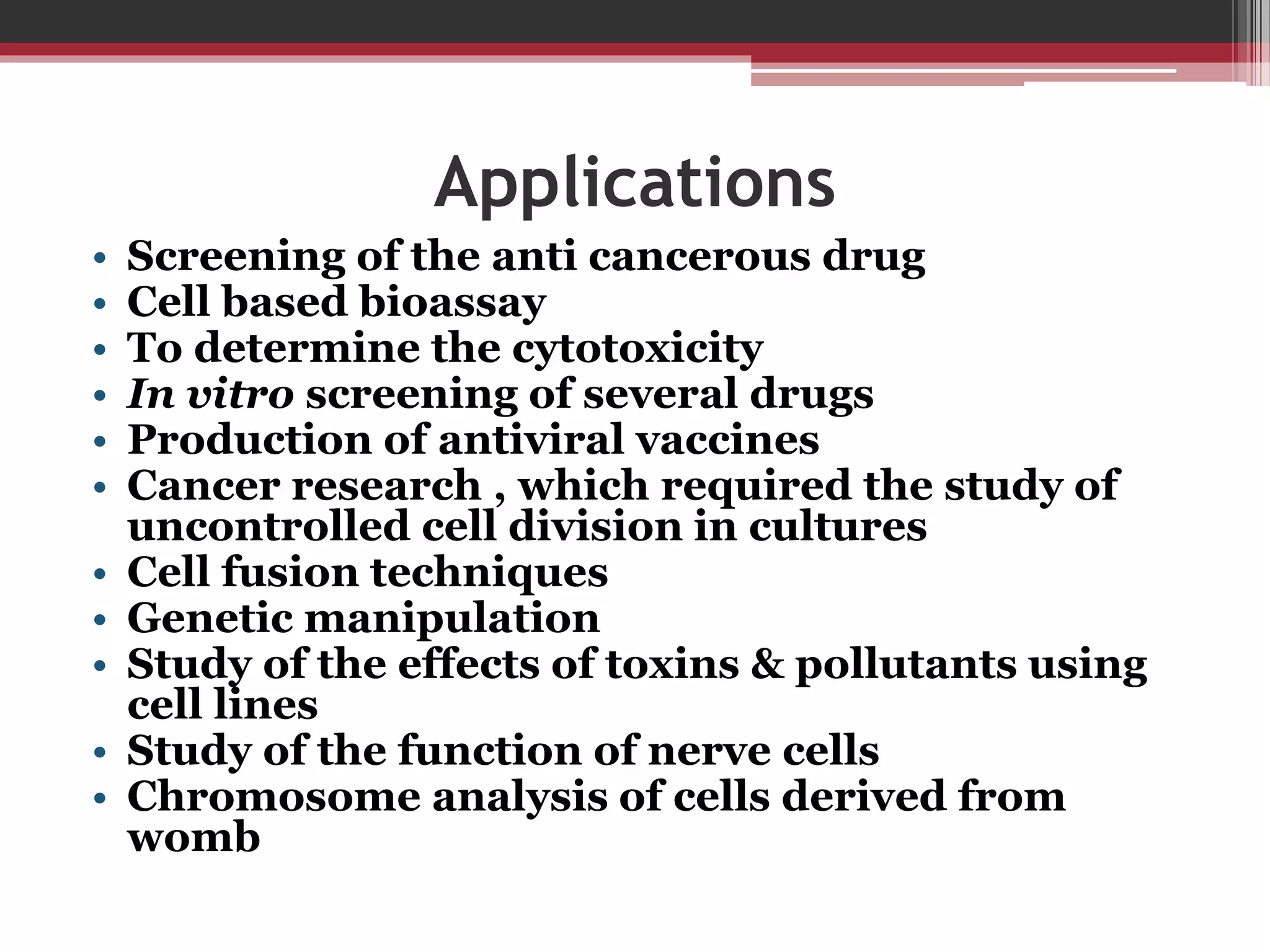
• Applications
Cell line
• A cell line is a permanently established cell culture that
will proliferate indefinitely given appropriate fresh
medium and space
• A cell culture developed from a single cell and therefore
consisting of cells with a uniform genetic make-up
• There is presence of several cell linkage either similar or
distinct
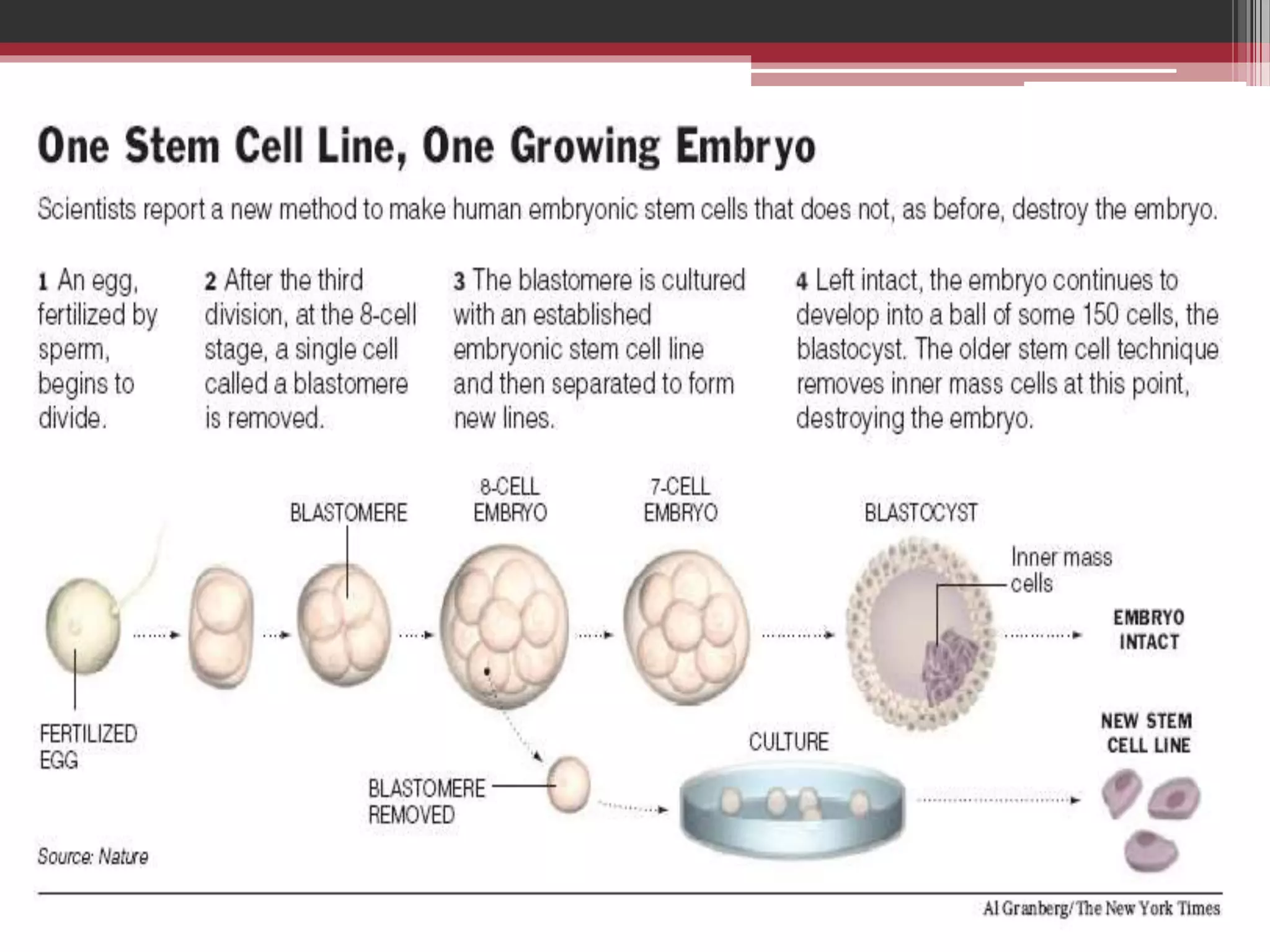
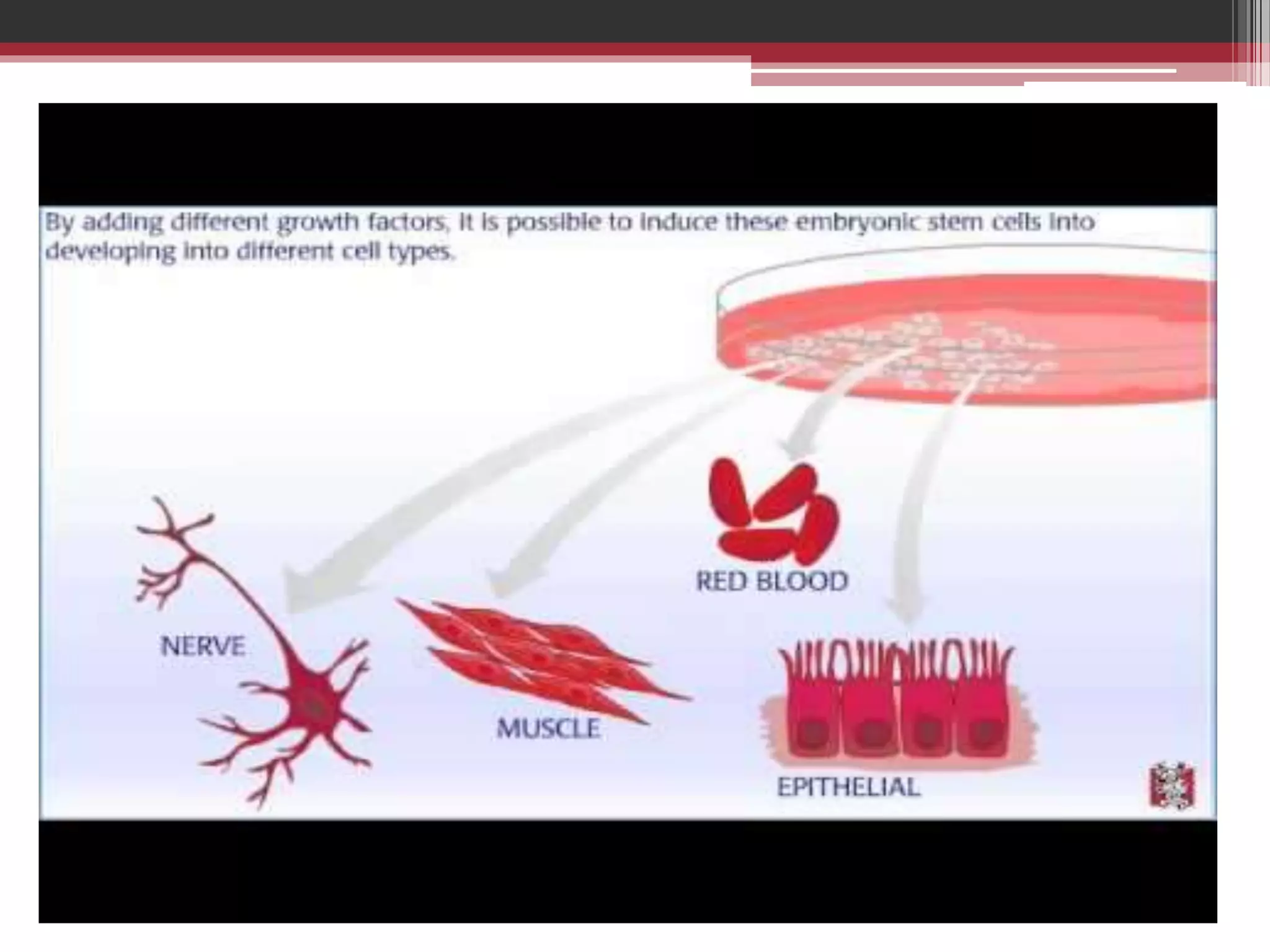
• Generally stem cells are used in this culture
• After the subculture, the primary culture
becomes a cell line & may be propagated & sub
cultured several times
• Some species, particularly rodents,
give rise to lines relatively easily, whereas
other species do not
• No cell lines have been produced
from avian tissues and the establishment of cell
lines from human tissue is difficult
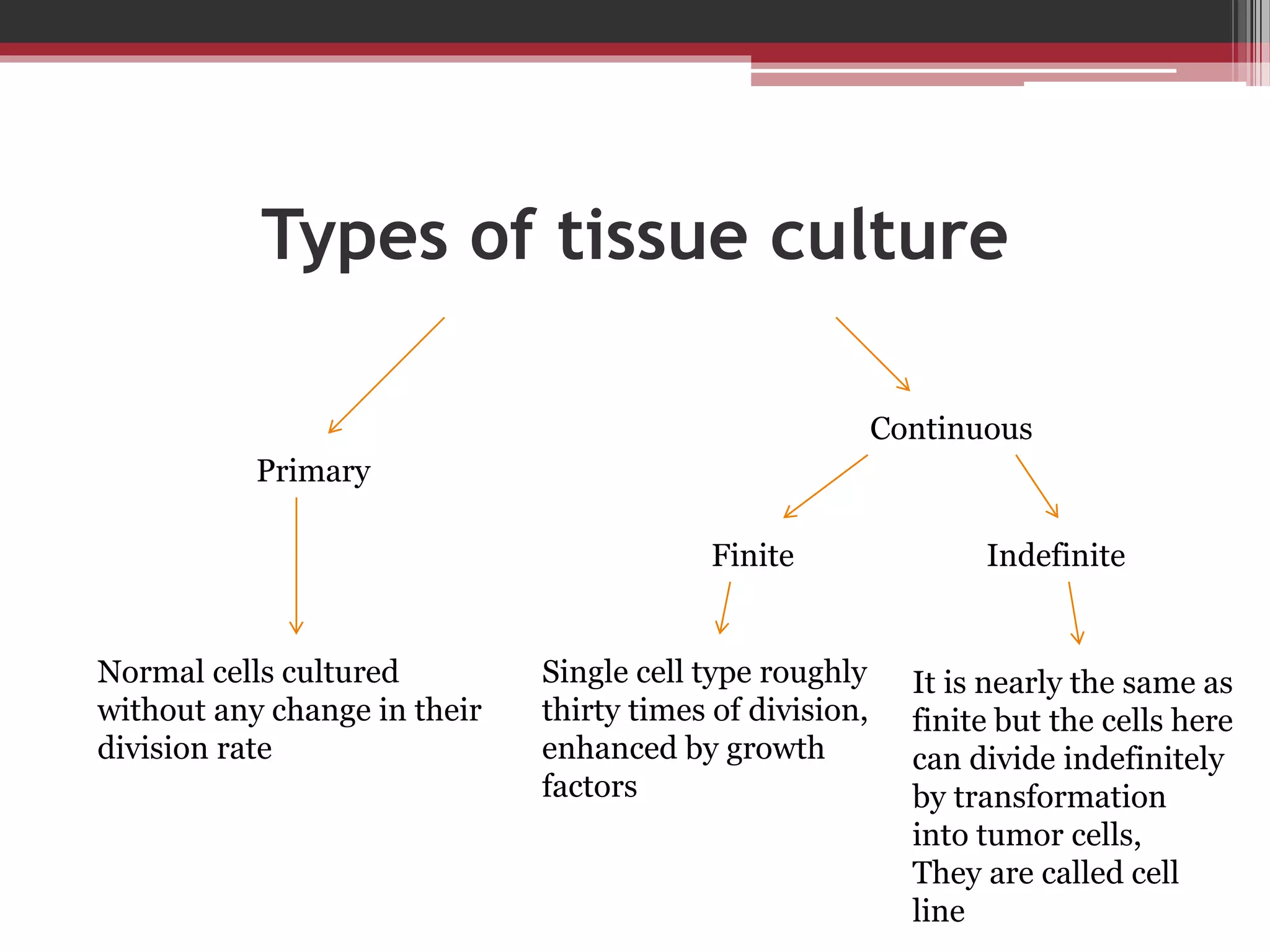
Types of tissue culture
Primary
Continuous
Finite Indefinite
Normal cells cultured
without any change in their
division rate
Single cell type roughly
thirty times of division,
enhanced by growth
factors
It is nearly the same as
finite but the cells here
can divide indefinitely
by transformation
into tumor cells,
They are called cell
line
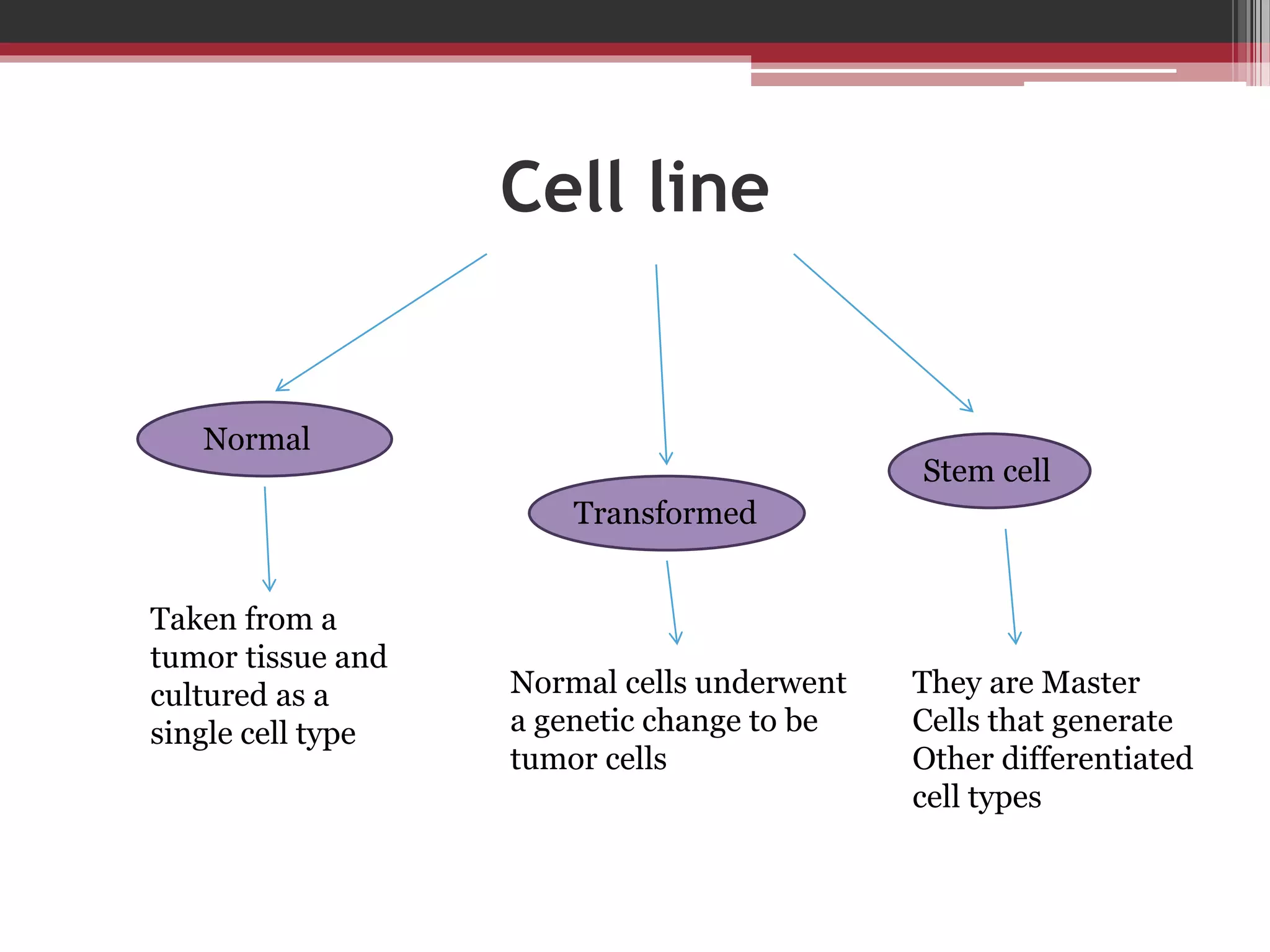
Cell line
Normal
Transformed
Stem cell
Taken from a
tumor tissue and
cultured as a
single cell type
Normal cells underwent
a genetic change to be
tumor cells
They are Master
Cells that generate
Other differentiated
cell types
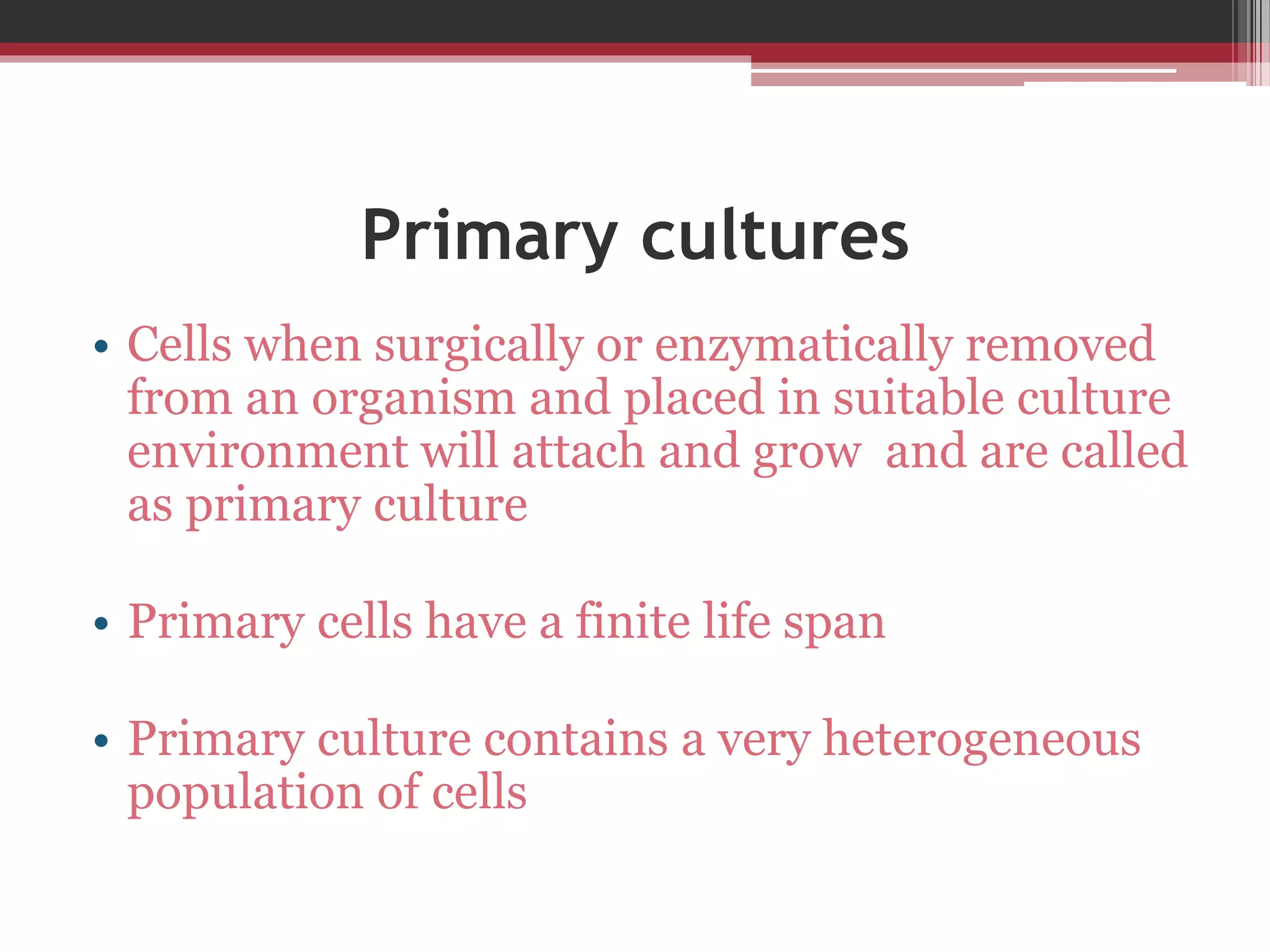
Primary cultures
• Cells when surgically or enzymatically removed
from an organism and placed in suitable culture
environment will attach and grow and are called
as primary culture
• Primary cells have a finite life span
• Primary culture contains a very heterogeneous
population of cells
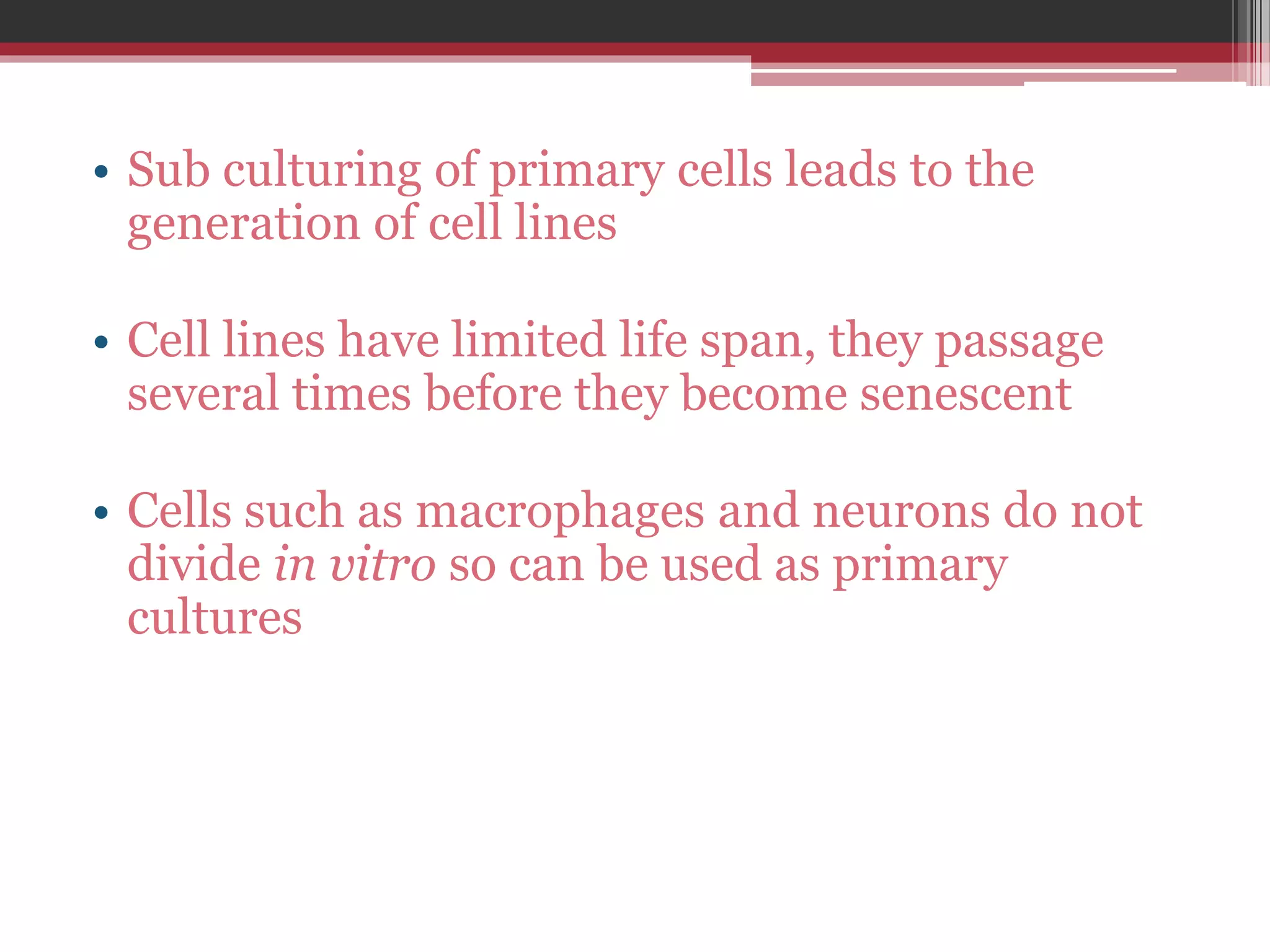
• Sub culturing of primary cells leads to the
generation of cell lines
• Cell lines have limited life span, they passage
several times before they become senescent
• Cells such as macrophages and neurons do not
divide in vitro so can be used as primary
cultures
Continuous cell lines
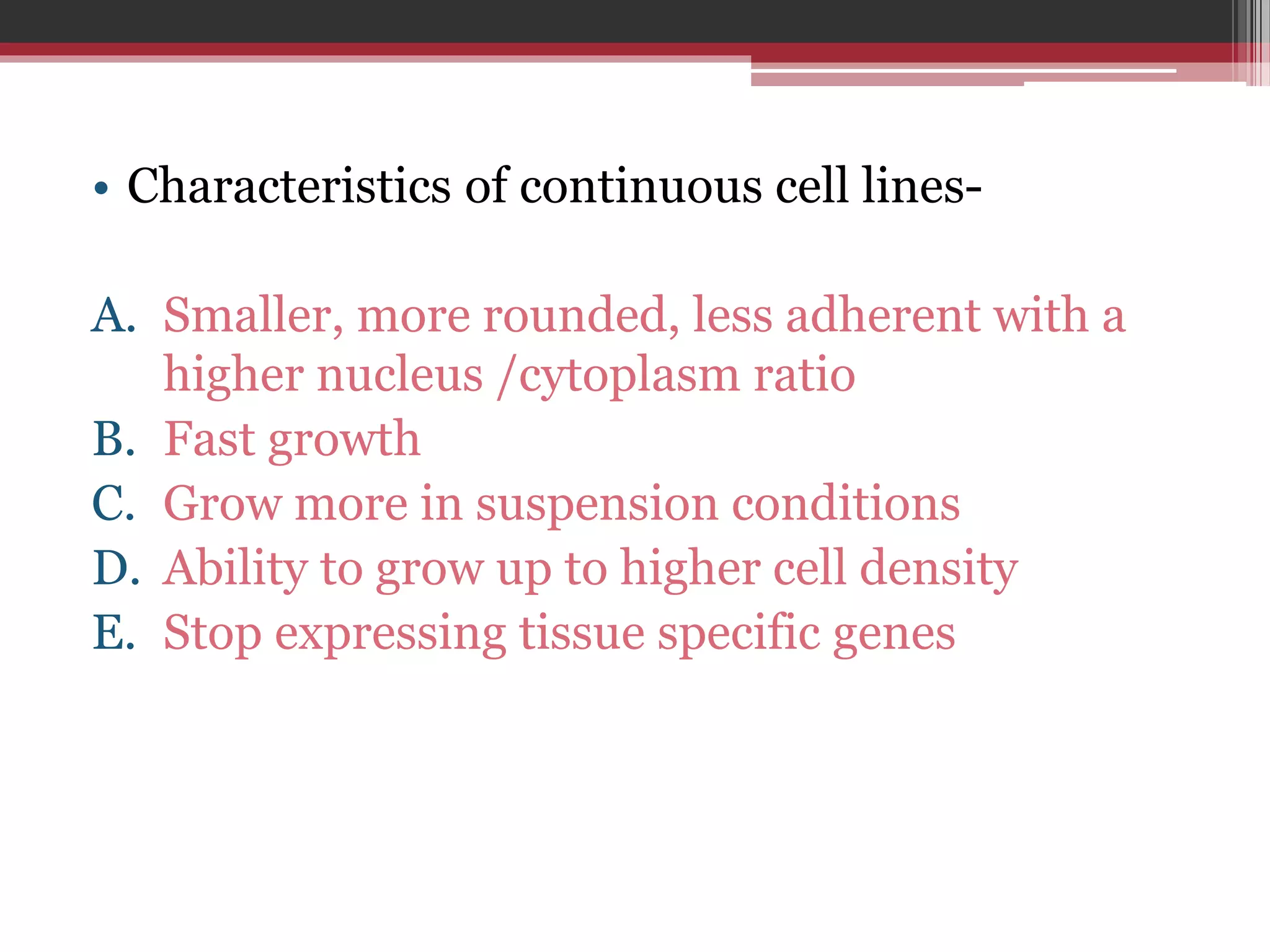
• Most cell lines grow for a limited number of
generations after which they cease
• Cell lines which either occur spontaneously or
induced virally are chemically transformed into
continous cell lines
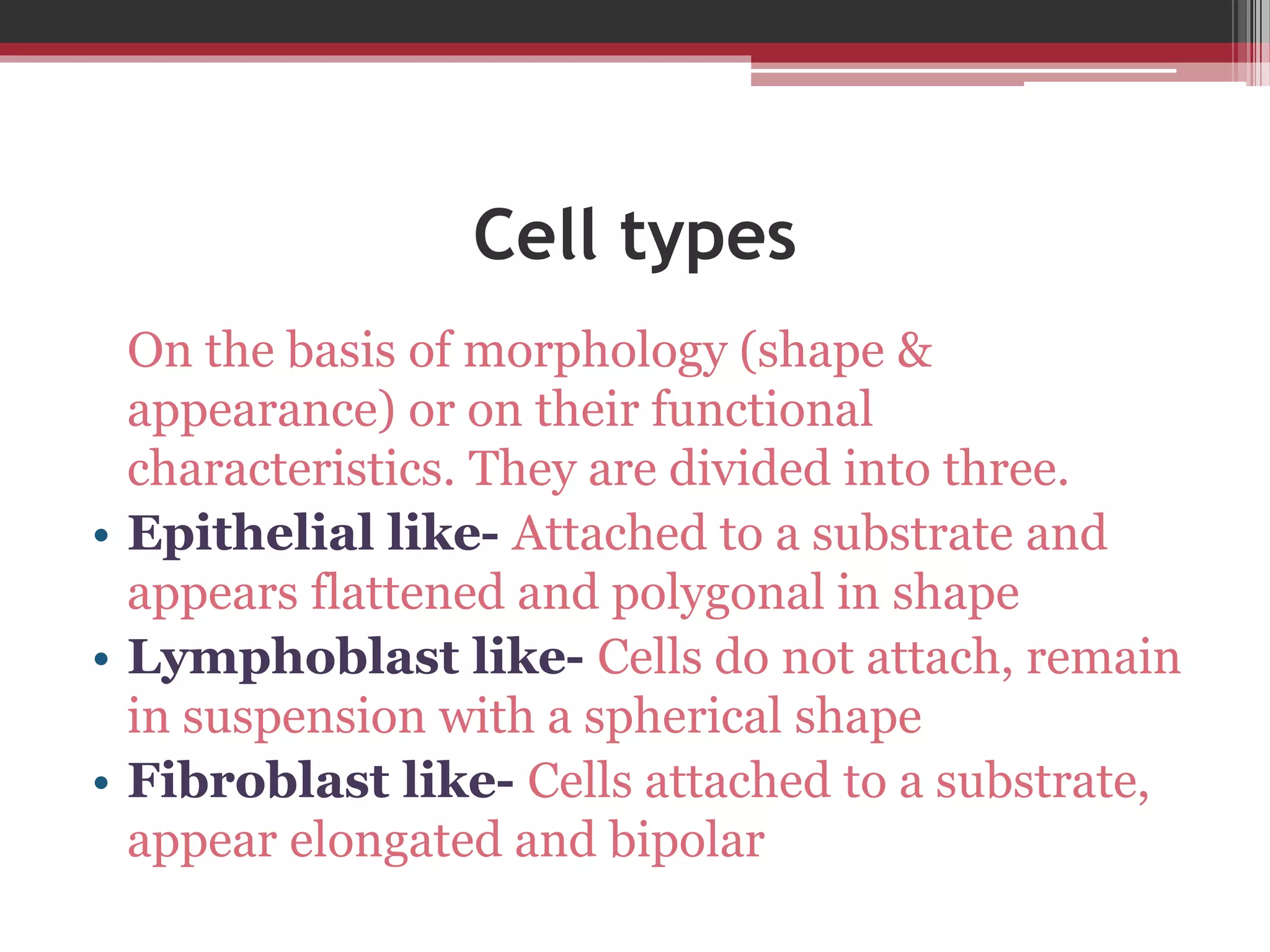
• Characteristics of continuous cell lines-
A. Smaller, more rounded, less adherent with a
higher nucleus /cytoplasm ratio
B. Fast growth
C. Grow more in suspension conditions
D. Ability to grow up to higher cell density
E. Stop expressing tissue specific genes
Cell types
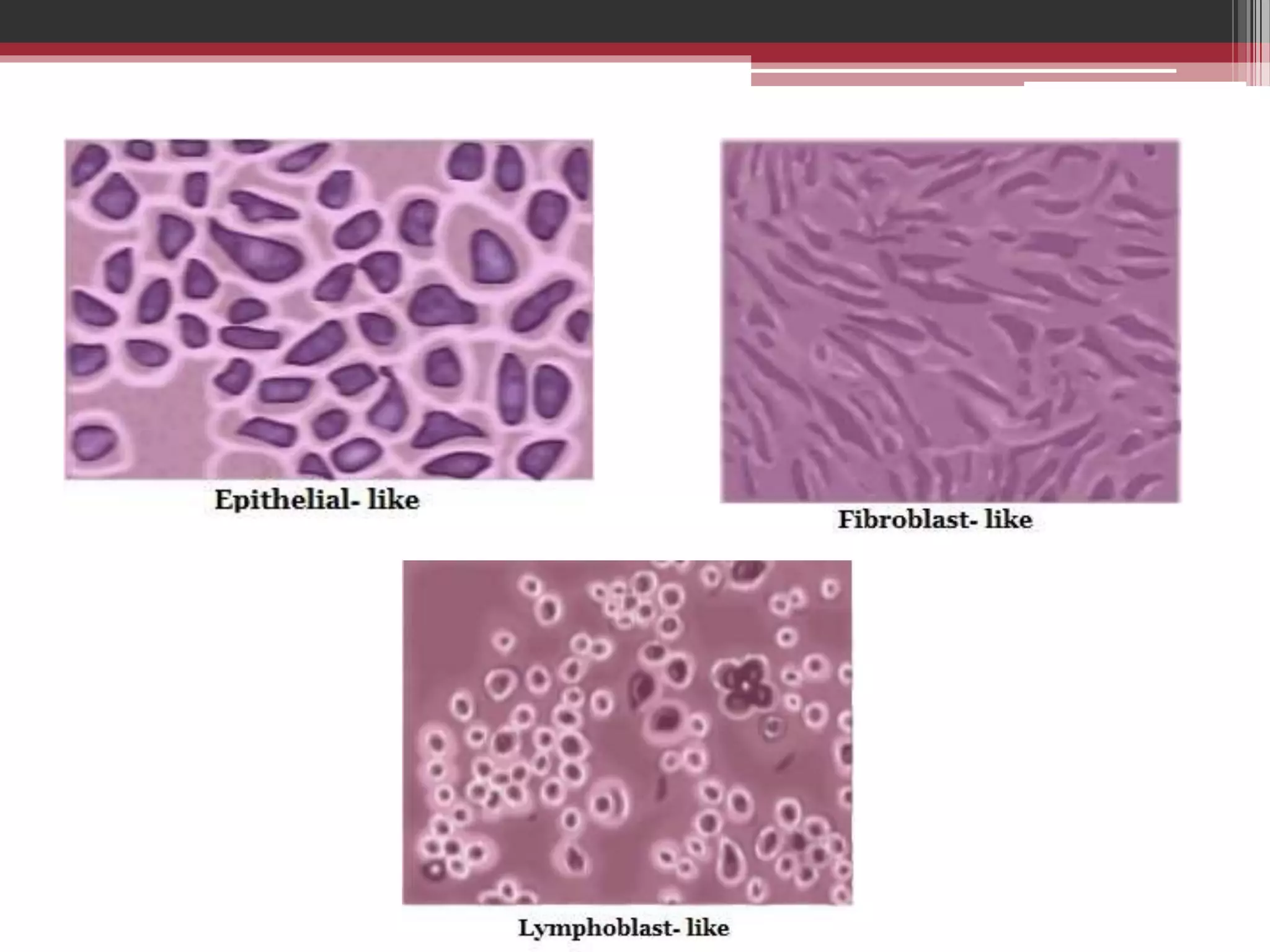
On the basis of morphology (shape &
appearance) or on their functional
characteristics. They are divided into three.
• Epithelial like- Attached to a substrate and
appears flattened and polygonal in shape
• Lymphoblast like- Cells do not attach, remain
in suspension with a spherical shape
• Fibroblast like- Cells attached to a substrate,
appear elongated and bipolar
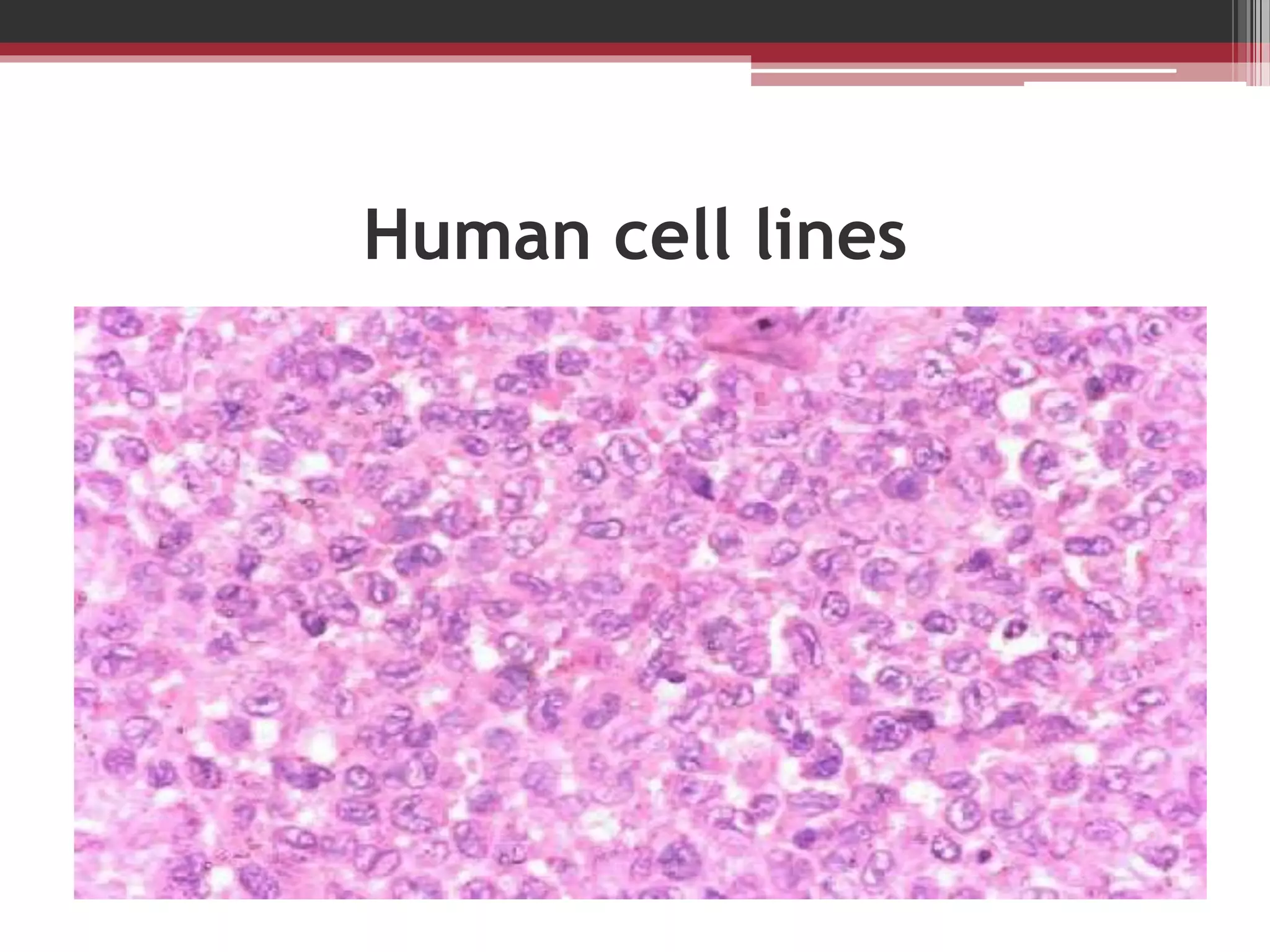
Human cell lines
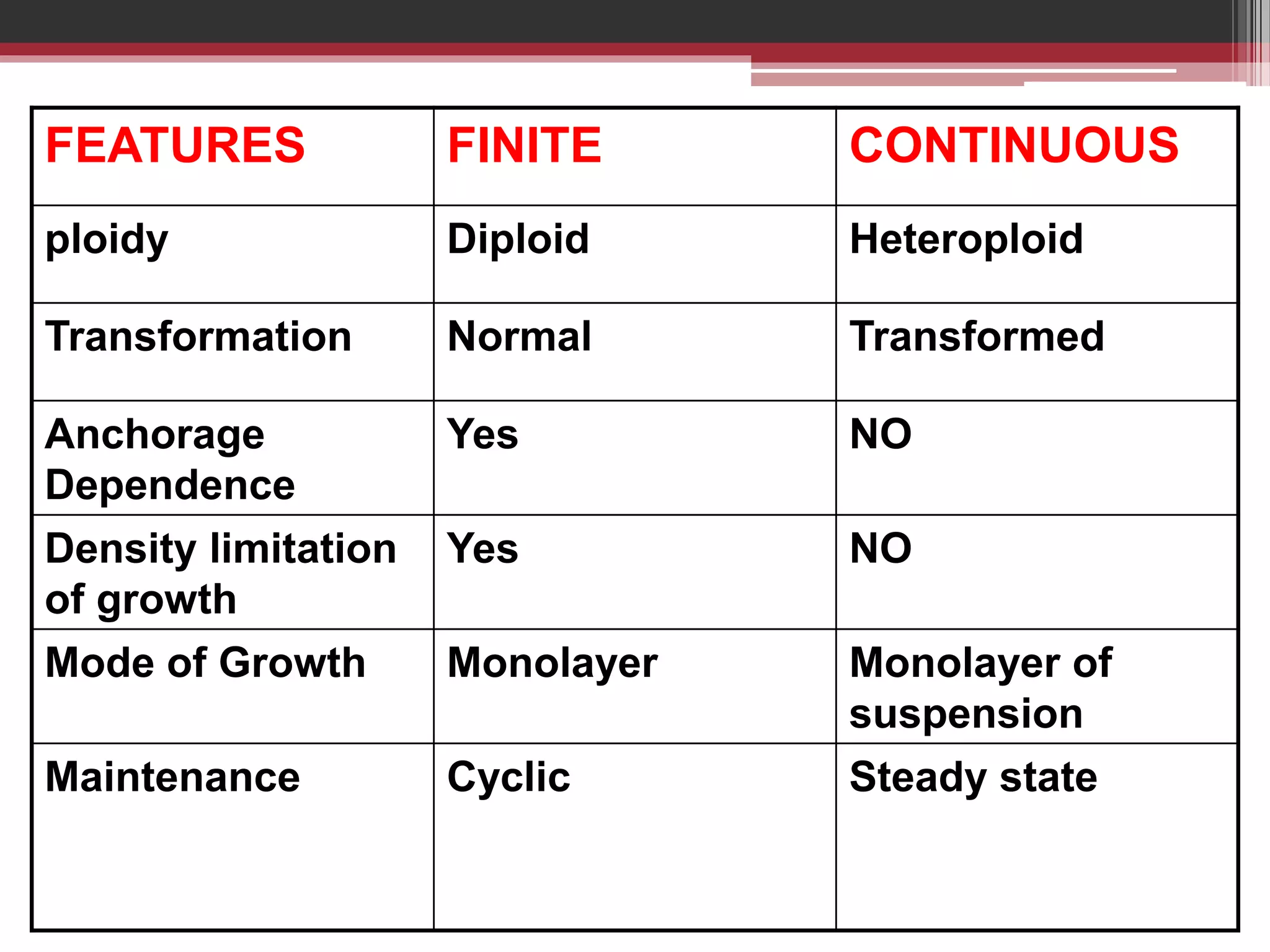
FEATURES FINITE CONTINUOUS
ploidy Diploid Heteroploid
Transformation Normal Transformed
Anchorage
Dependence
Yes NO
Density limitation
of growth
Yes NO
Mode of Growth Monolayer Monolayer of
suspension
Maintenance Cyclic Steady state
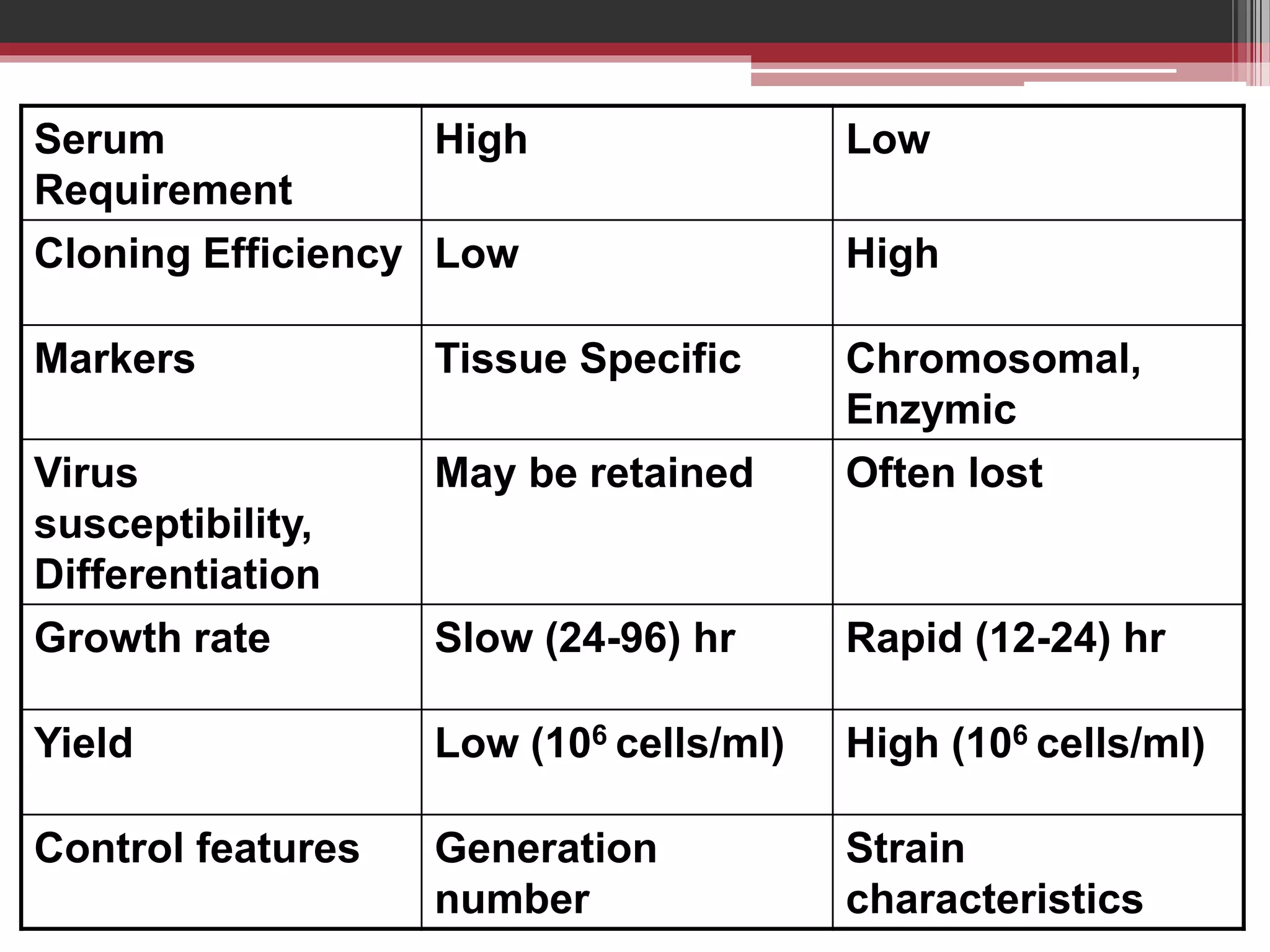
Serum
Requirement
High Low
Cloning Efficiency Low High
Markers Tissue Specific Chromosomal,
Enzymic
Virus
susceptibility,
Differentiation
May be retained Often lost
Growth rate Slow (24-96) hr Rapid (12-24) hr
Yield Low (106 cells/ml) High (106 cells/ml)
Control features Generation
number
Strain
characteristics
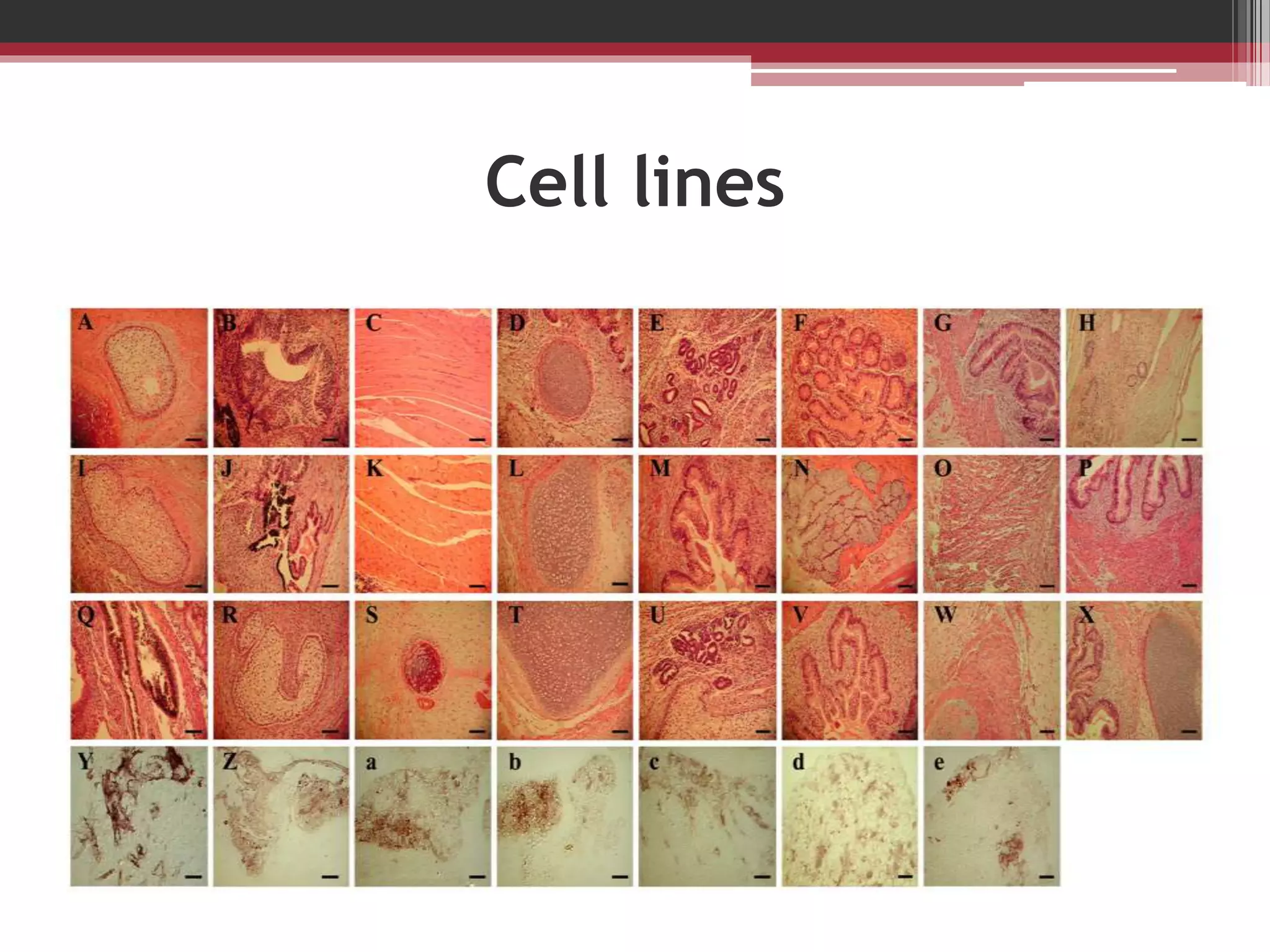
Cell lines
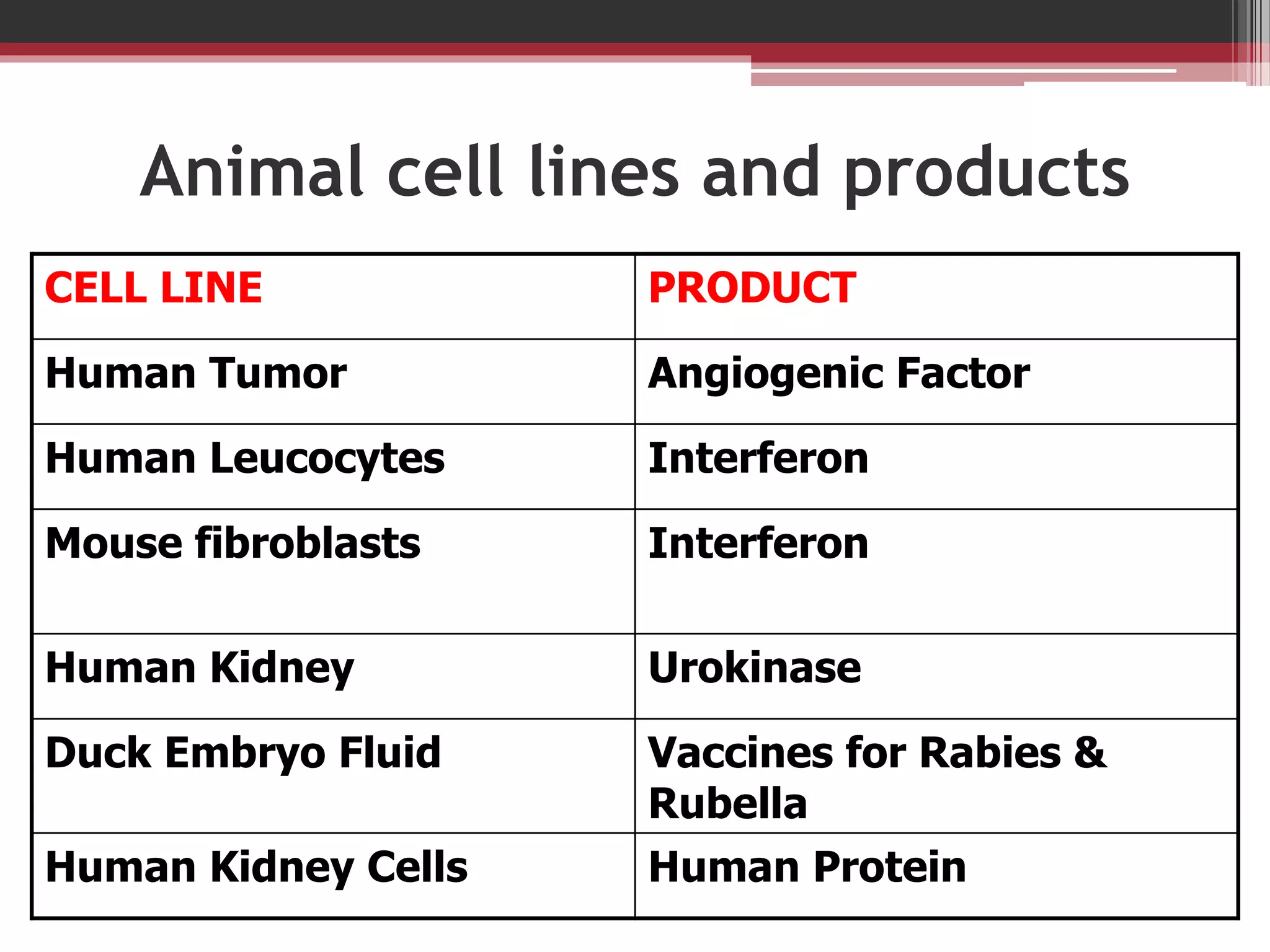
Animal cell lines and products
CELL LINE PRODUCT
Human Tumor Angiogenic Factor
Human Leucocytes Interferon
Mouse fibroblasts Interferon
Human Kidney Urokinase
Duck Embryo Fluid Vaccines for Rabies &
Rubella
Human Kidney Cells Human Protein
Applications
• Screening of the anti cancerous drug
• Cell based bioassay
• To determine the cytotoxicity
• In vitro screening of several drugs
• Production of antiviral vaccines
• Cancer research , which required the study of
uncontrolled cell division in cultures
• Cell fusion techniques
• Genetic manipulation
• Study of the effects of toxins & pollutants using
cell lines
• Study of the function of nerve cells
• Chromosome analysis of cells derived from
womb
References
• http://www.biology-online.org/dictionary/Cell_line
• http://www.aun.edu.eg/gembc/Liver%20cell%20cu
lture/cell%20line%20lect..pdf
• http://amrita.vlab.co.in/?sub=3&brch=188&sim=3
31&cnt=1
• Yadav P. 1, Yadav A. 1, Yadav M. 2, Jain S. 3, Hariom
Yadav3 ,Nagpal R. 4 et al.Basics of Cell Culture
1Department of Animal Biotechnology, 3Animal
Biochemistry Division and 4Dairy Microbiology
Division, National Dairy Research Institute, Karnal
132001 (Haryana), India; 2SOS in Chemistry, Jiwaji
University, Gwalior-474011, M.P., India

Cell line

  • 1.
    Cell culture and maintenance- “CellLines Used In Screening Techniques” Submitted To- Presented By- Mrs. Jyothi Y. Bhavya Rewari Asst. Proff., Dept. of Pharmacology M.Pharm, Ist year, Pharmacology Krupanidhi College of Pharmacy, Bangalore
  • 2.
    Contents • Cell line •Types of tissue culture • Primary cultures • Continuous cell lines • Cell types • Human cell lines • Animal cell lines • Applications
  • 3.
    Cell line • Acell line is a permanently established cell culture that will proliferate indefinitely given appropriate fresh medium and space • A cell culture developed from a single cell and therefore consisting of cells with a uniform genetic make-up • There is presence of several cell linkage either similar or distinct • Generally stem cells are used in this culture
  • 4.
    • After thesubculture, the primary culture becomes a cell line & may be propagated & sub cultured several times • Some species, particularly rodents, give rise to lines relatively easily, whereas other species do not • No cell lines have been produced from avian tissues and the establishment of cell lines from human tissue is difficult
  • 5.
    Types of tissueculture Primary Continuous Finite Indefinite Normal cells cultured without any change in their division rate Single cell type roughly thirty times of division, enhanced by growth factors It is nearly the same as finite but the cells here can divide indefinitely by transformation into tumor cells, They are called cell line
  • 6.
    Cell line Normal Transformed Stem cell Takenfrom a tumor tissue and cultured as a single cell type Normal cells underwent a genetic change to be tumor cells They are Master Cells that generate Other differentiated cell types
  • 7.
    Primary cultures • Cellswhen surgically or enzymatically removed from an organism and placed in suitable culture environment will attach and grow and are called as primary culture • Primary cells have a finite life span • Primary culture contains a very heterogeneous population of cells
  • 8.
    • Sub culturingof primary cells leads to the generation of cell lines • Cell lines have limited life span, they passage several times before they become senescent • Cells such as macrophages and neurons do not divide in vitro so can be used as primary cultures
  • 9.
    Continuous cell lines •Most cell lines grow for a limited number of generations after which they cease • Cell lines which either occur spontaneously or induced virally are chemically transformed into continous cell lines
  • 10.
    • Characteristics ofcontinuous cell lines- A. Smaller, more rounded, less adherent with a higher nucleus /cytoplasm ratio B. Fast growth C. Grow more in suspension conditions D. Ability to grow up to higher cell density E. Stop expressing tissue specific genes
  • 11.
    Cell types On thebasis of morphology (shape & appearance) or on their functional characteristics. They are divided into three. • Epithelial like- Attached to a substrate and appears flattened and polygonal in shape • Lymphoblast like- Cells do not attach, remain in suspension with a spherical shape • Fibroblast like- Cells attached to a substrate, appear elongated and bipolar
  • 14.
  • 16.
    FEATURES FINITE CONTINUOUS ploidyDiploid Heteroploid Transformation Normal Transformed Anchorage Dependence Yes NO Density limitation of growth Yes NO Mode of Growth Monolayer Monolayer of suspension Maintenance Cyclic Steady state
  • 17.
    Serum Requirement High Low Cloning EfficiencyLow High Markers Tissue Specific Chromosomal, Enzymic Virus susceptibility, Differentiation May be retained Often lost Growth rate Slow (24-96) hr Rapid (12-24) hr Yield Low (106 cells/ml) High (106 cells/ml) Control features Generation number Strain characteristics
  • 18.
  • 20.
    Animal cell linesand products CELL LINE PRODUCT Human Tumor Angiogenic Factor Human Leucocytes Interferon Mouse fibroblasts Interferon Human Kidney Urokinase Duck Embryo Fluid Vaccines for Rabies & Rubella Human Kidney Cells Human Protein
  • 21.
    Applications • Screening ofthe anti cancerous drug • Cell based bioassay • To determine the cytotoxicity • In vitro screening of several drugs • Production of antiviral vaccines • Cancer research , which required the study of uncontrolled cell division in cultures • Cell fusion techniques • Genetic manipulation • Study of the effects of toxins & pollutants using cell lines • Study of the function of nerve cells • Chromosome analysis of cells derived from womb
  • 22.
    References • http://www.biology-online.org/dictionary/Cell_line • http://www.aun.edu.eg/gembc/Liver%20cell%20cu lture/cell%20line%20lect..pdf •http://amrita.vlab.co.in/?sub=3&brch=188&sim=3 31&cnt=1 • Yadav P. 1, Yadav A. 1, Yadav M. 2, Jain S. 3, Hariom Yadav3 ,Nagpal R. 4 et al.Basics of Cell Culture 1Department of Animal Biotechnology, 3Animal Biochemistry Division and 4Dairy Microbiology Division, National Dairy Research Institute, Karnal 132001 (Haryana), India; 2SOS in Chemistry, Jiwaji University, Gwalior-474011, M.P., India