DO NOW
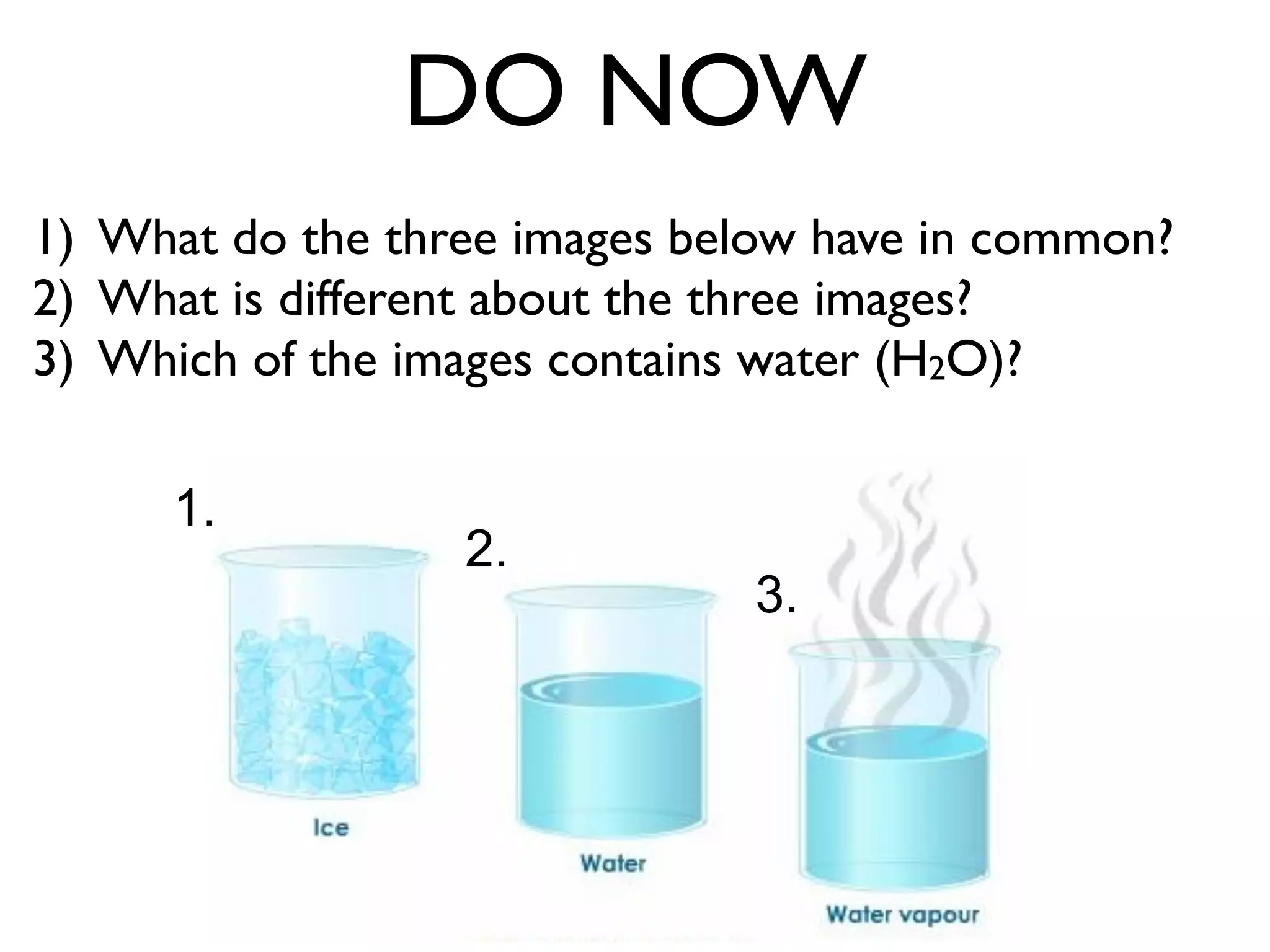
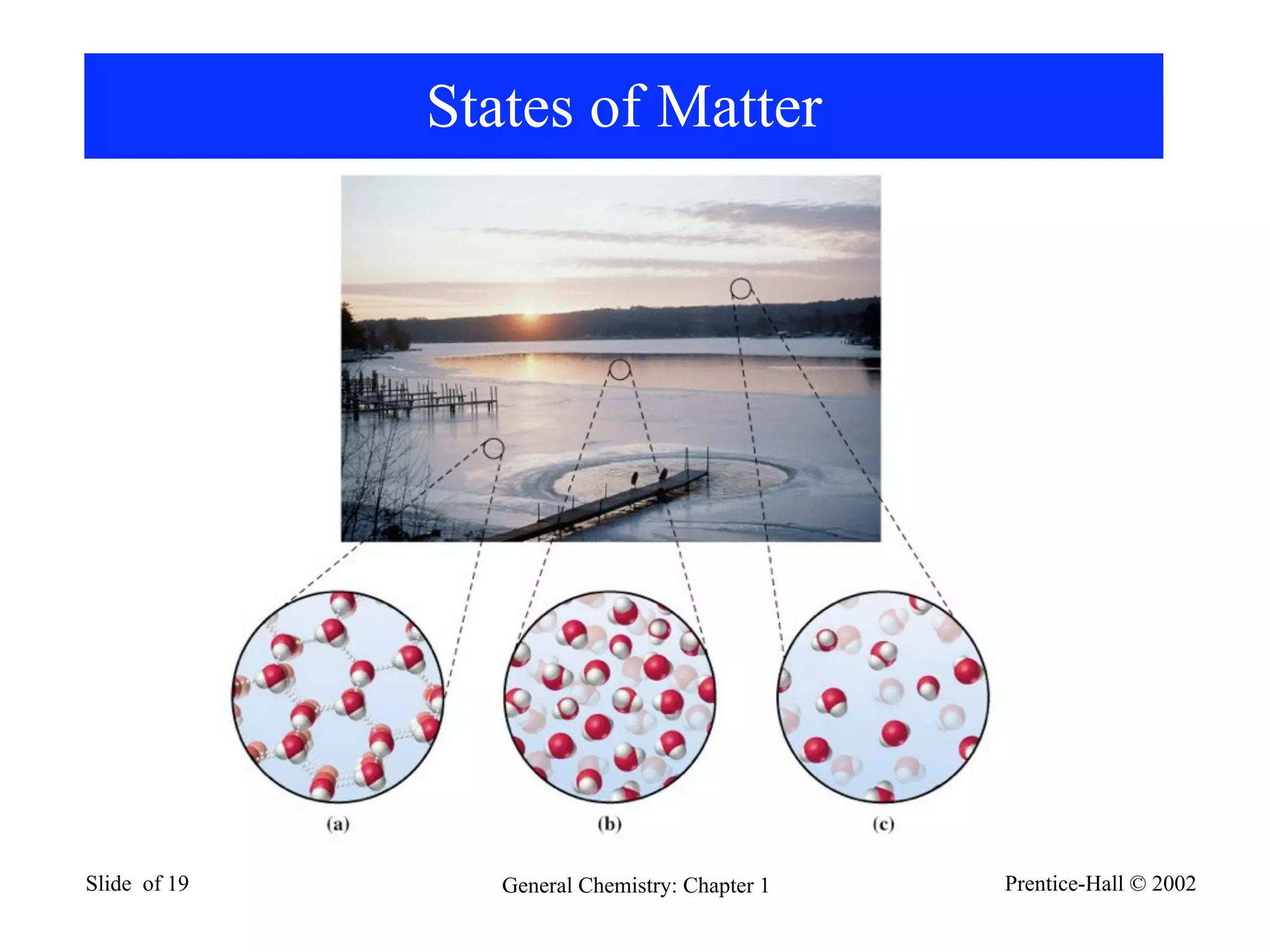
1) What do the three images below have in common?
2) What is different about the three images?
3) Which of the images contains water (H2O)?

      1.
                  2.
                               3.
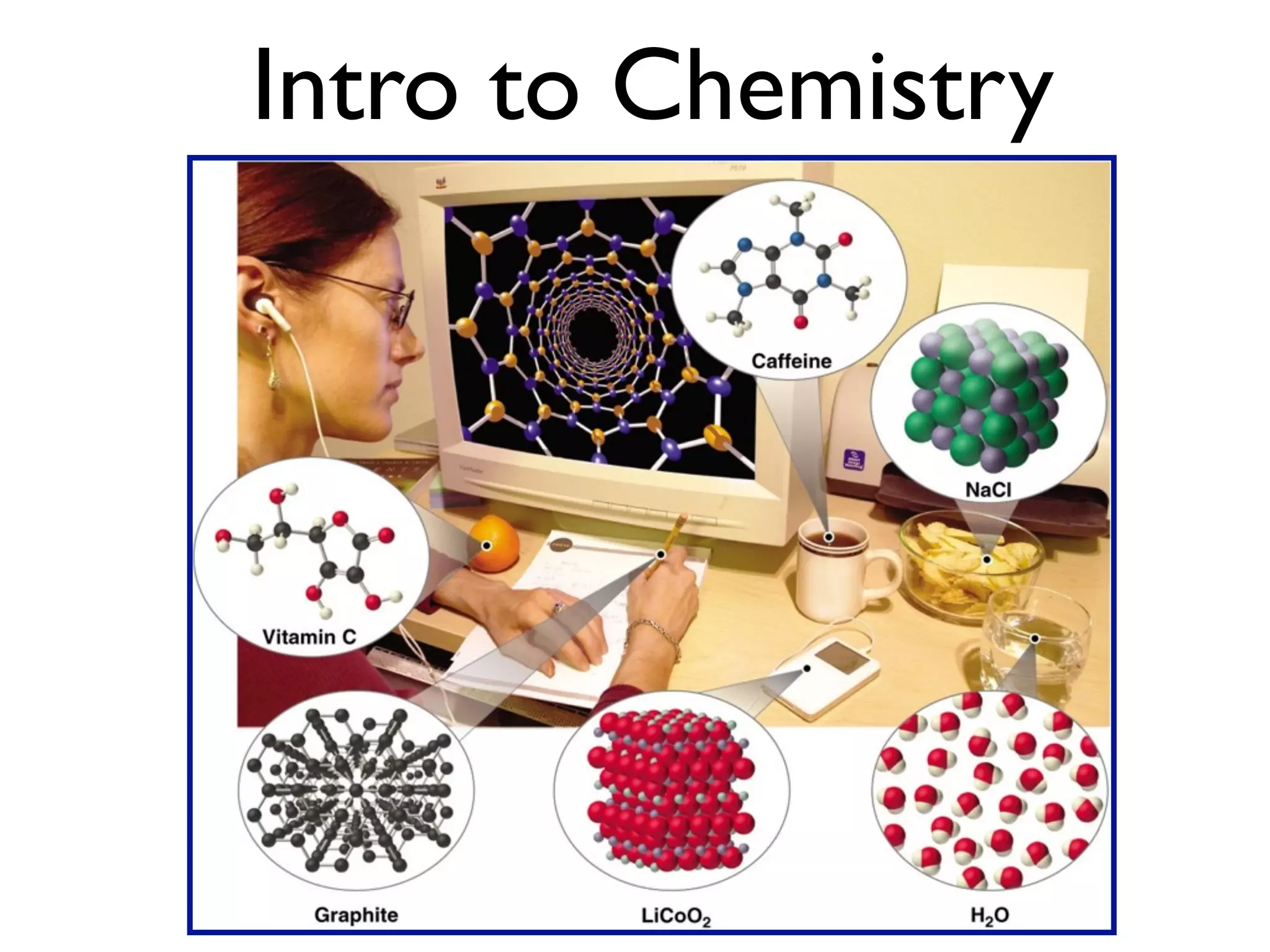
Intro to Chemistry
Today’s Objectives

Students will be able to....


 - describe lab safety rules


 - identify lab tools and explain what
variables are measured with each tool

- identify the 3 states of matter
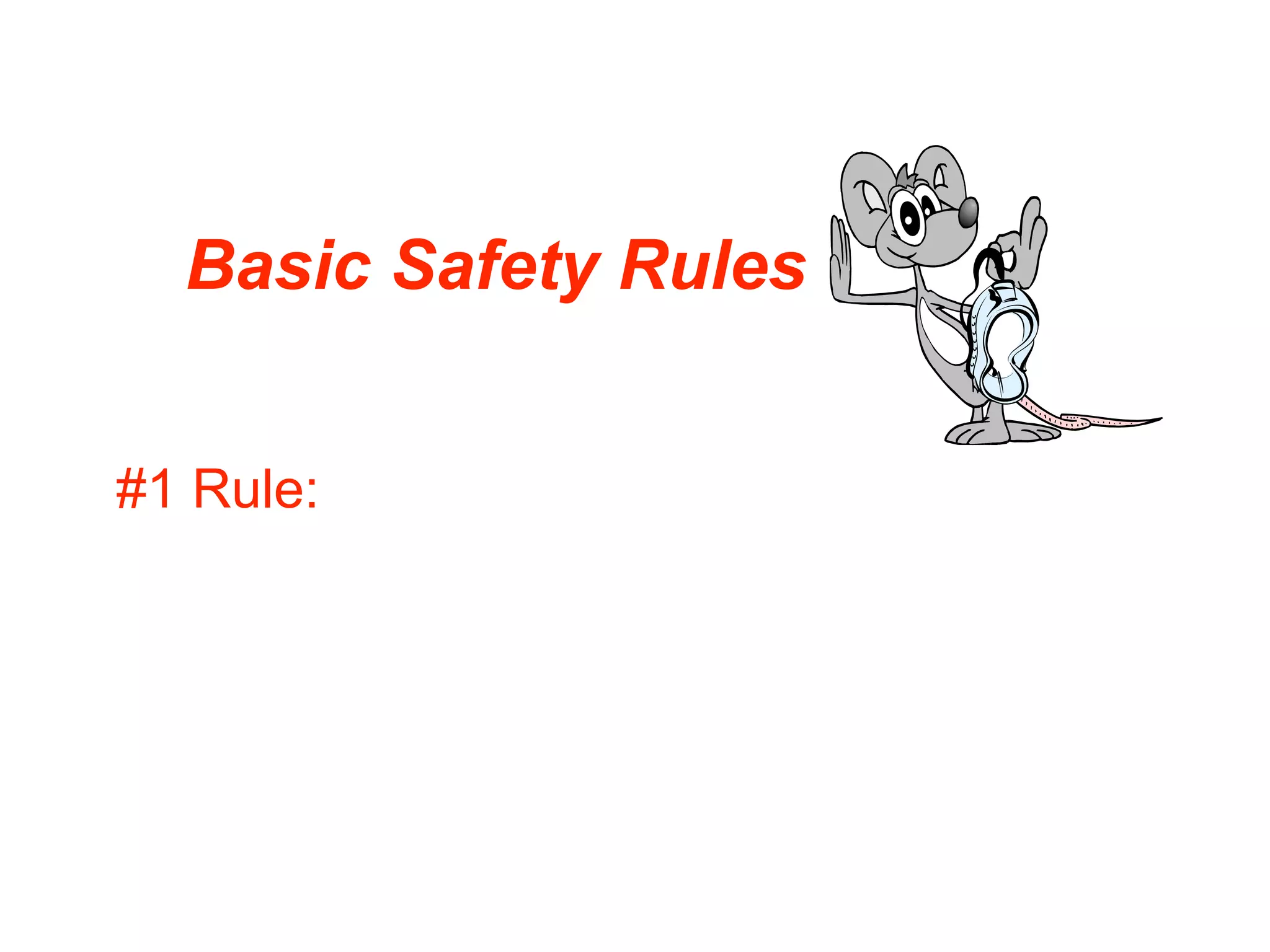
Basic Safety Rules


#1 Rule:
Basic Safety Rules


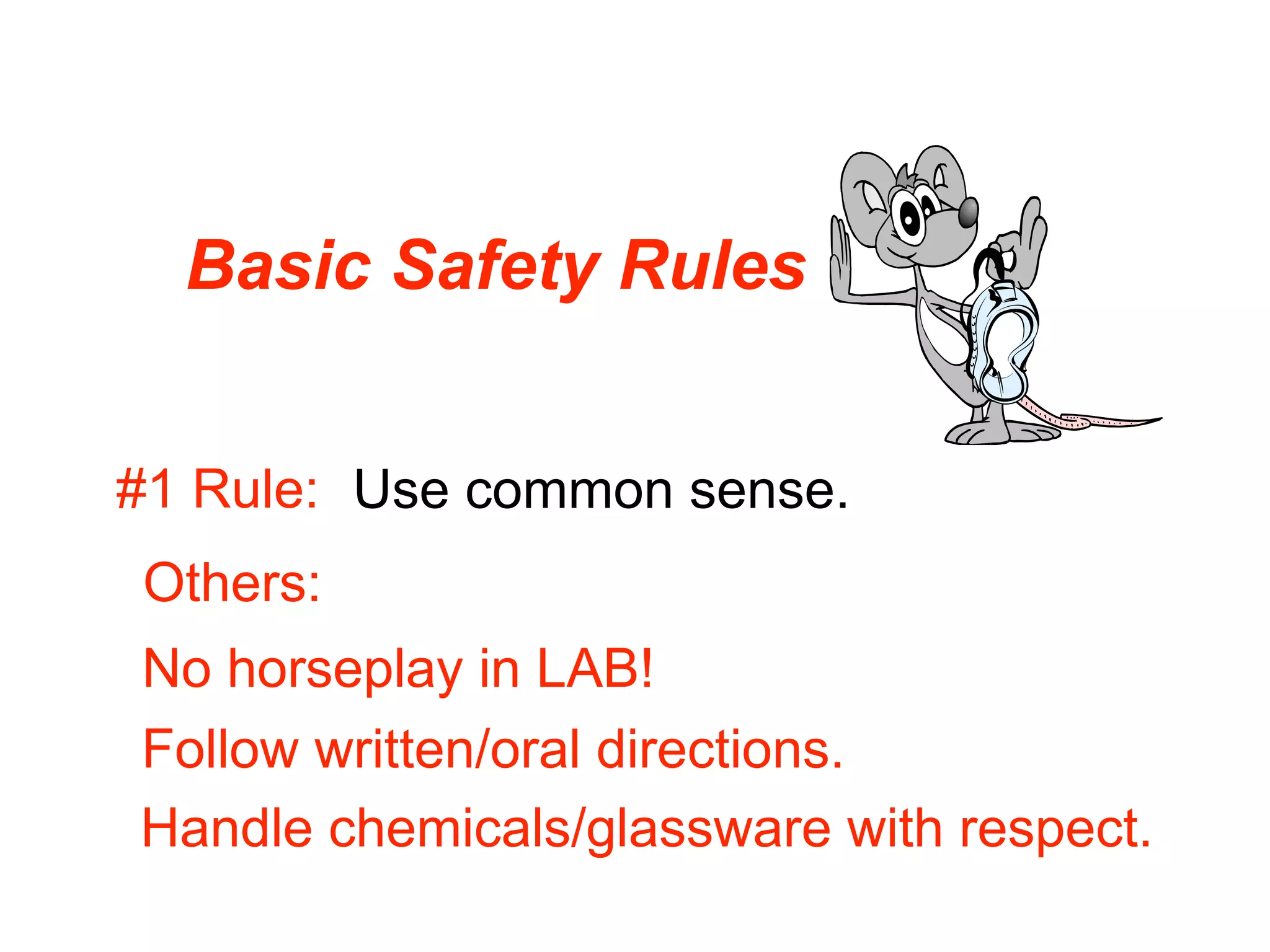
#1 Rule: Use common sense.
Basic Safety Rules


#1 Rule: Use common sense.
Others:
Basic Safety Rules


#1 Rule: Use common sense.
Others:
No horseplay in LAB!
Basic Safety Rules


#1 Rule: Use common sense.
Others:
No horseplay in LAB!
Follow written/oral directions.
Basic Safety Rules


#1 Rule: Use common sense.
Others:
No horseplay in LAB!
Follow written/oral directions.
Handle chemicals/glassware with respect.
Measurements
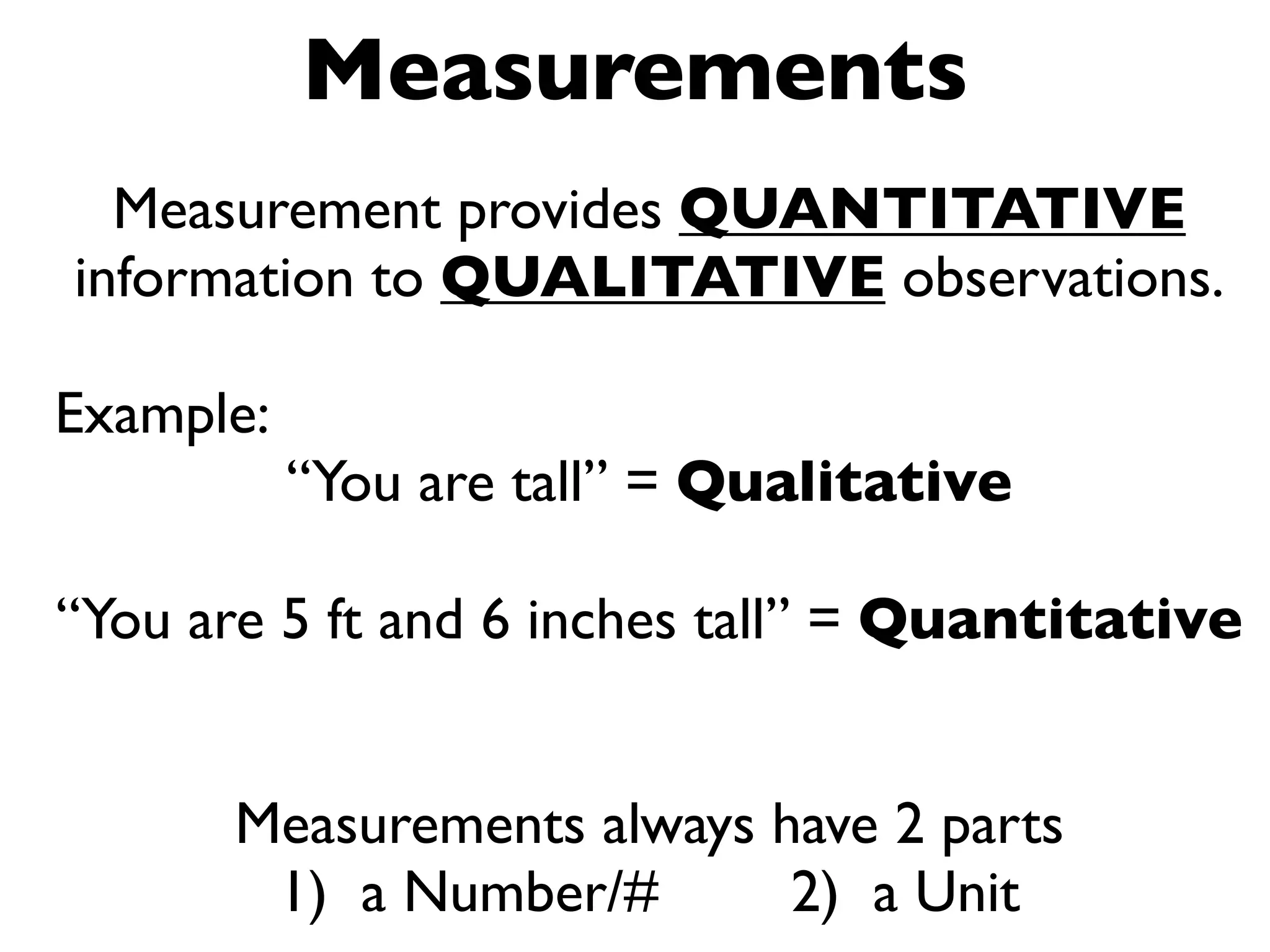
  Measurement provides QUANTITATIVE
information to QUALITATIVE observations.

Example:
           “You are tall” = Qualitative

“You are 5 ft and 6 inches tall” = Quantitative


       Measurements always have 2 parts
        1) a Number/#       2) a Unit
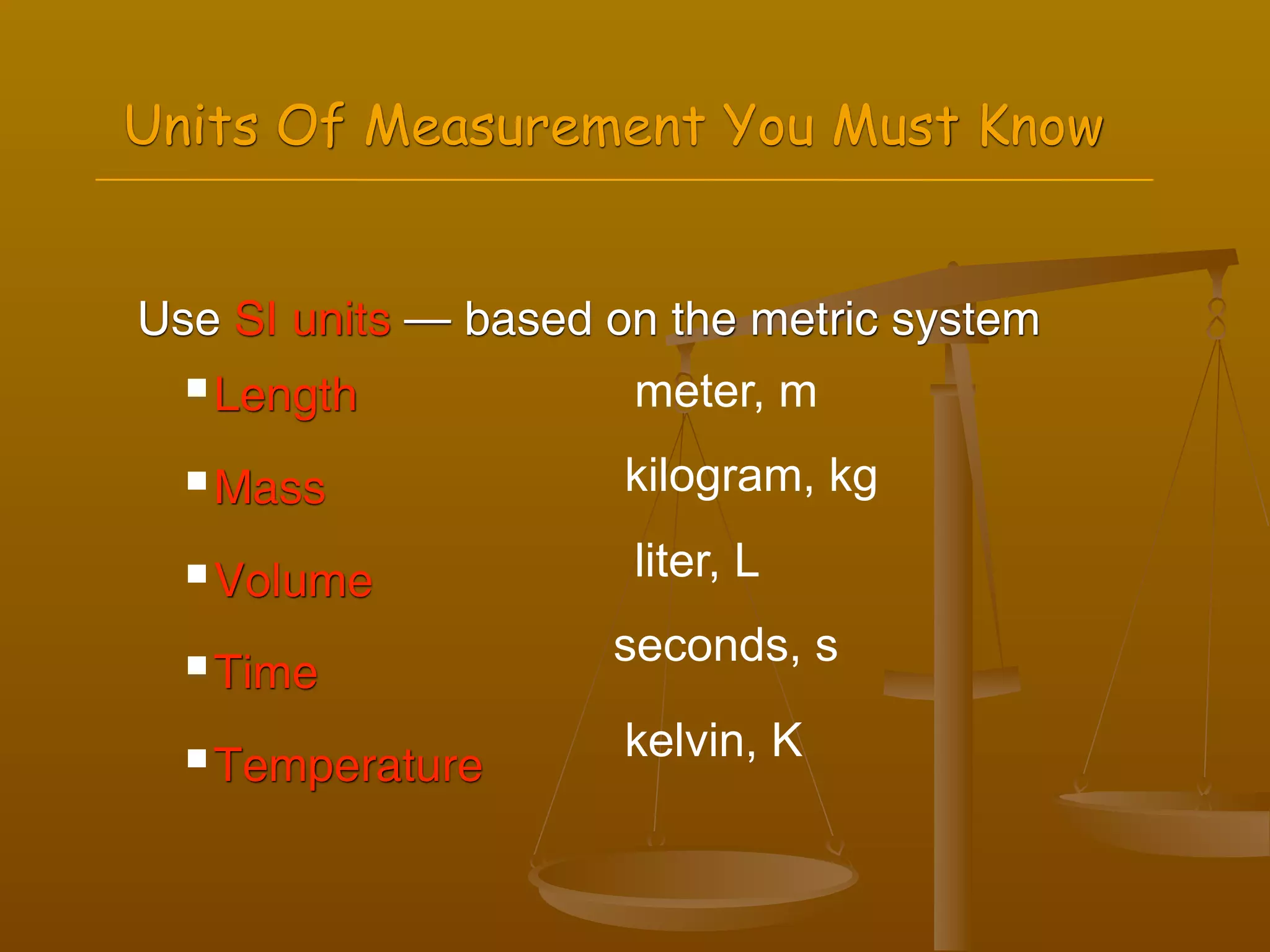
Units Of Measurement You Must Know


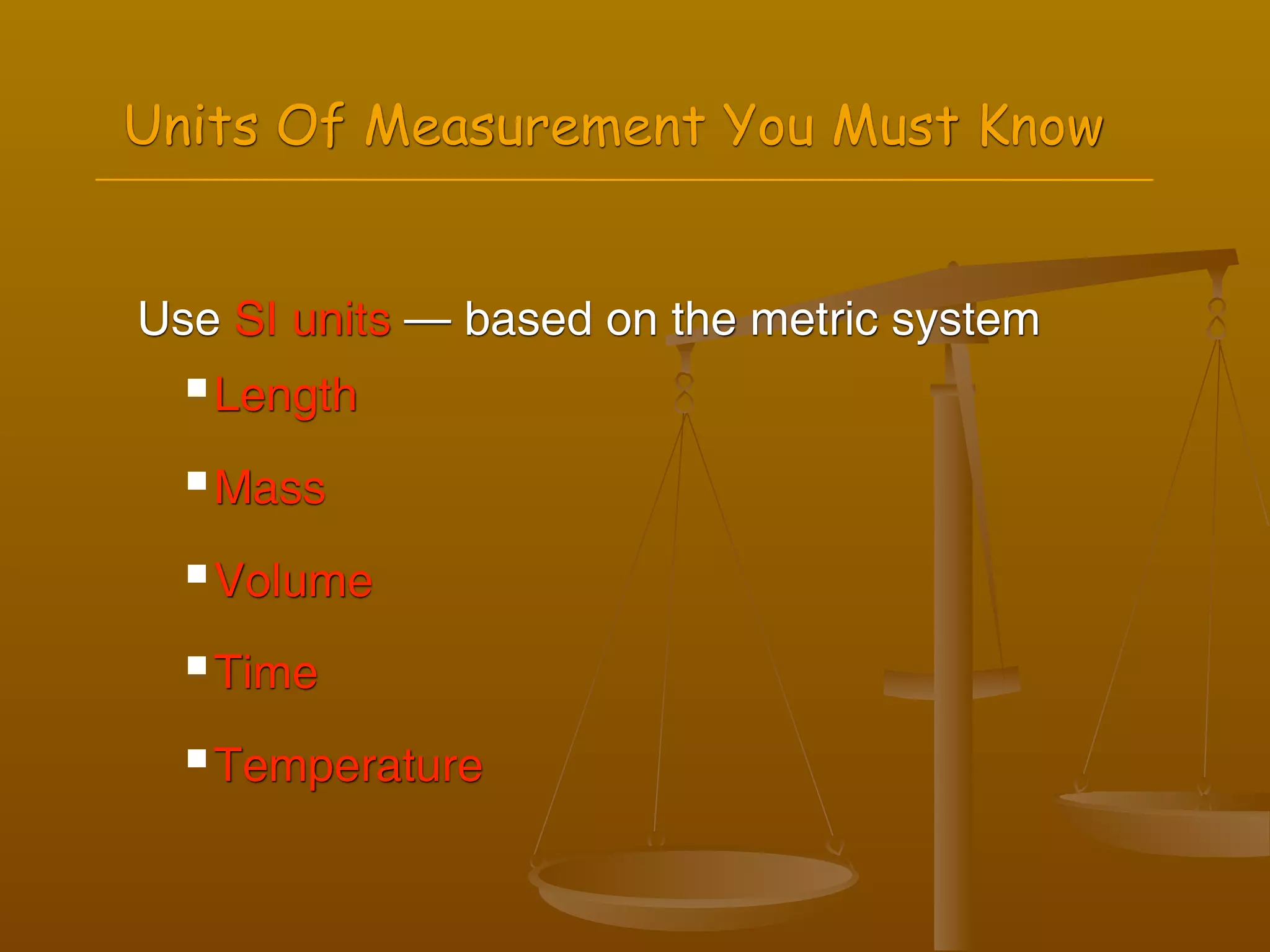
Use SI units — based on the metric system
   Length


   Mass


   Volume

   Time


   Temperature
Units Of Measurement You Must Know


Use SI units — based on the metric system
   Length            meter, m
   Mass


   Volume

   Time


   Temperature
Units Of Measurement You Must Know


Use SI units — based on the metric system
   Length            meter, m
   Mass              kilogram, kg
   Volume

   Time


   Temperature
Units Of Measurement You Must Know


Use SI units — based on the metric system
   Length            meter, m
   Mass              kilogram, kg
   Volume            liter, L

   Time


   Temperature
Units Of Measurement You Must Know


Use SI units — based on the metric system
   Length            meter, m
   Mass              kilogram, kg
   Volume            liter, L

   Time
                     seconds, s

   Temperature
Units Of Measurement You Must Know


Use SI units — based on the metric system
   Length            meter, m
   Mass              kilogram, kg
   Volume            liter, L

   Time
                     seconds, s

   Temperature       kelvin, K
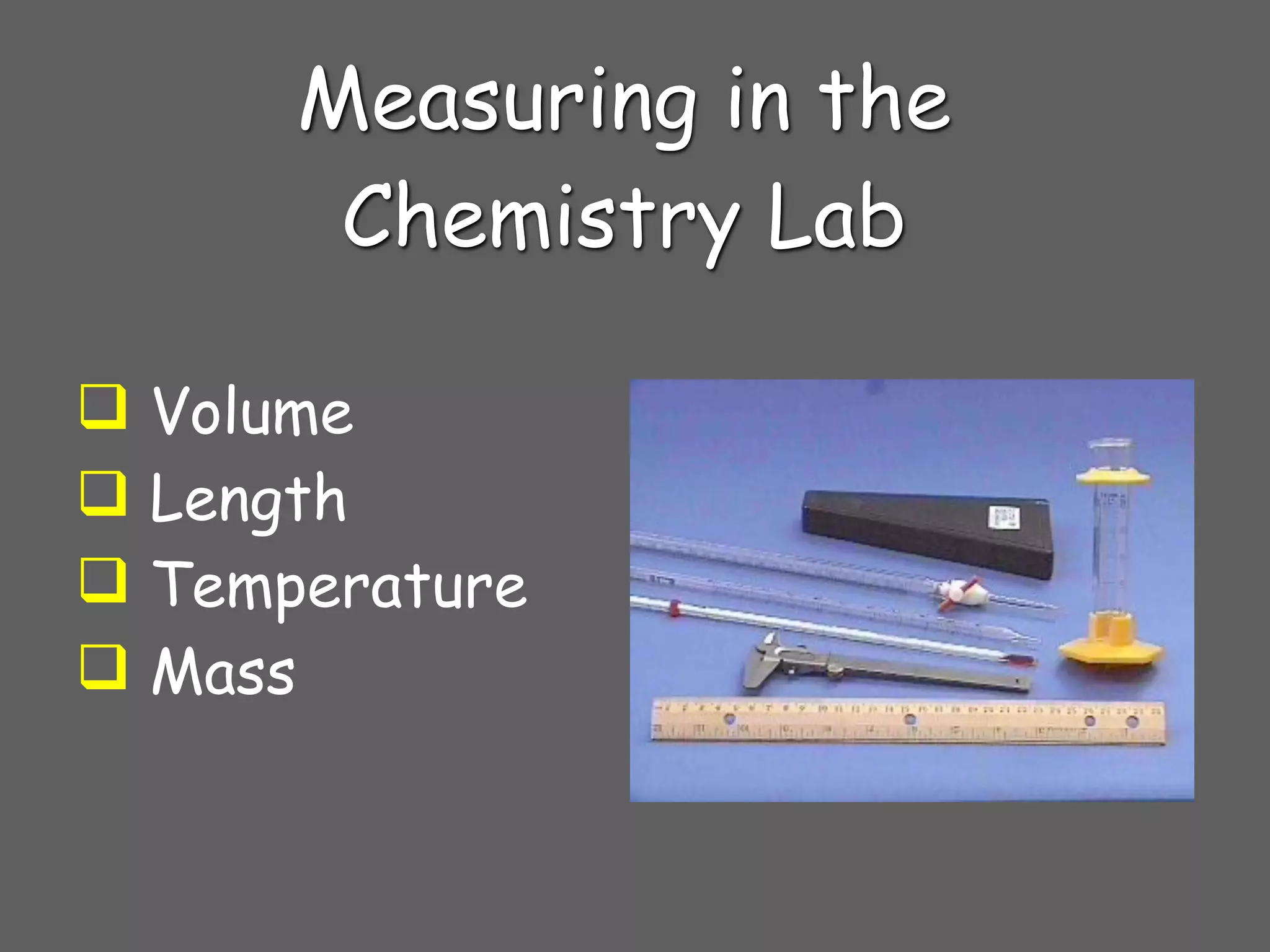
Measuring in the
       Chemistry Lab

 Volume
 Length
 Temperature
 Mass
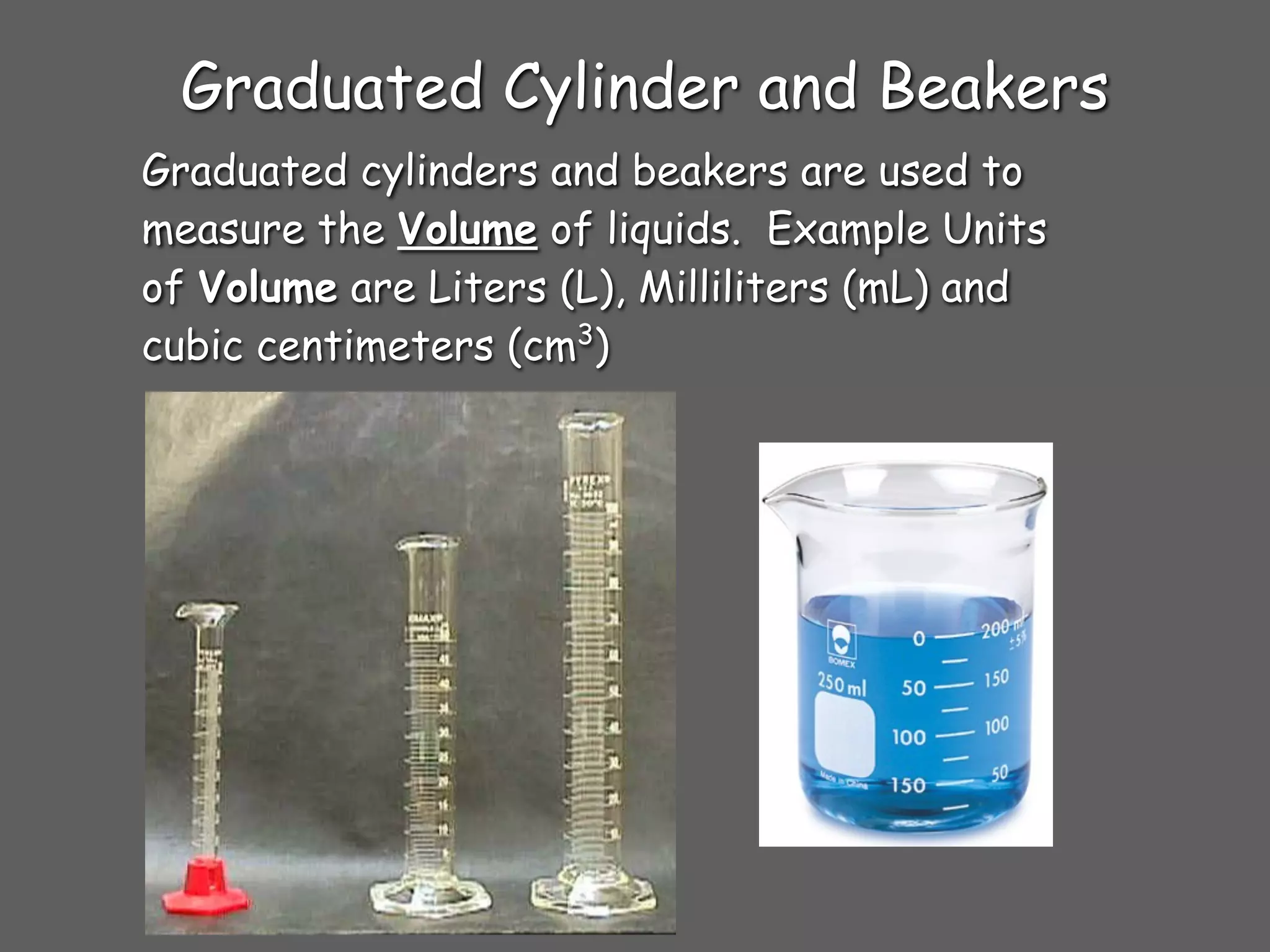
Graduated Cylinder and Beakers
Graduated cylinders and beakers are used to
measure the Volume of liquids. Example Units
of Volume are Liters (L), Milliliters (mL) and
cubic centimeters (cm3)
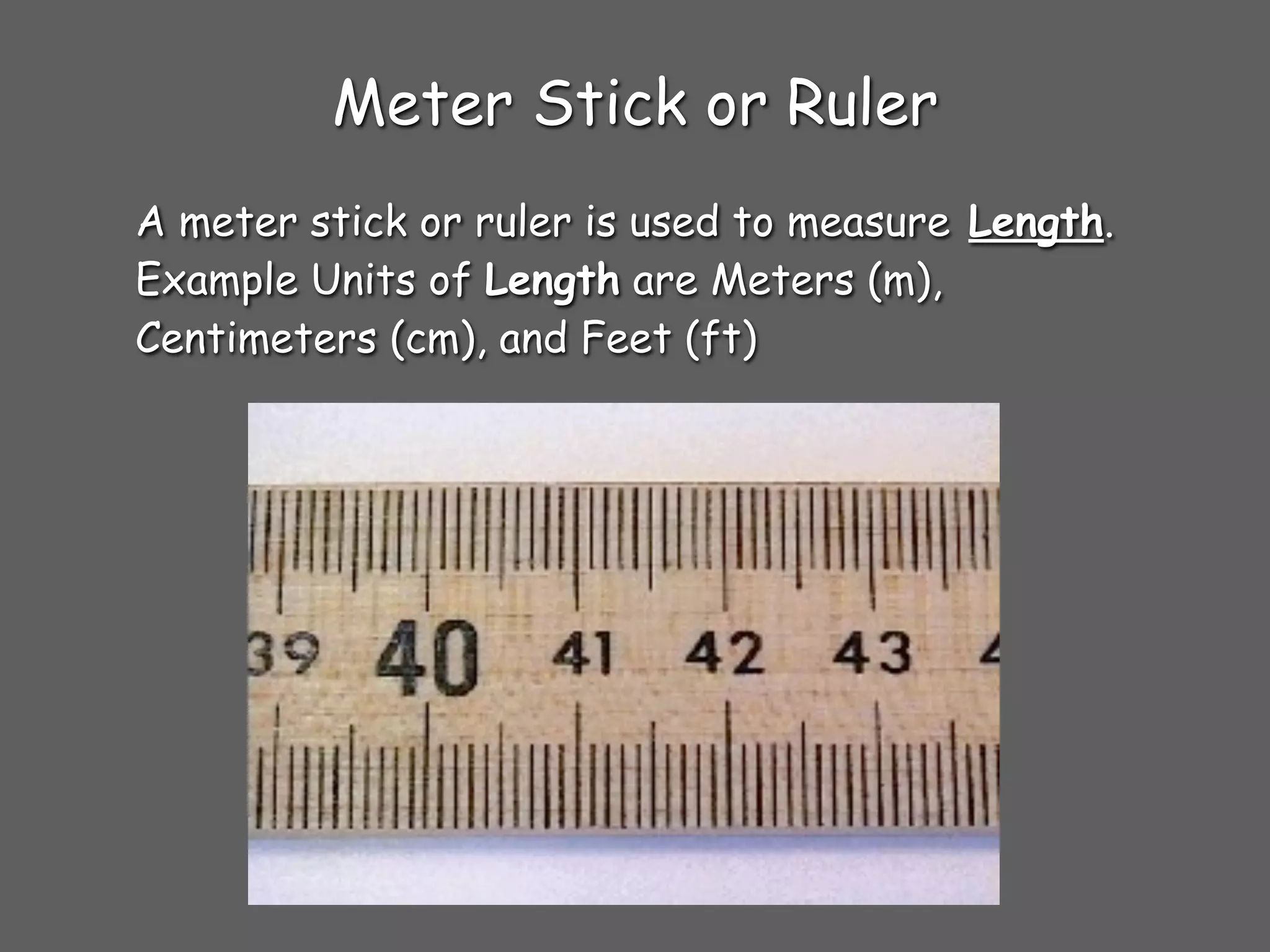
Meter Stick or Ruler
A meter stick or ruler is used to measure Length.
Example Units of Length are Meters (m),
Centimeters (cm), and Feet (ft)
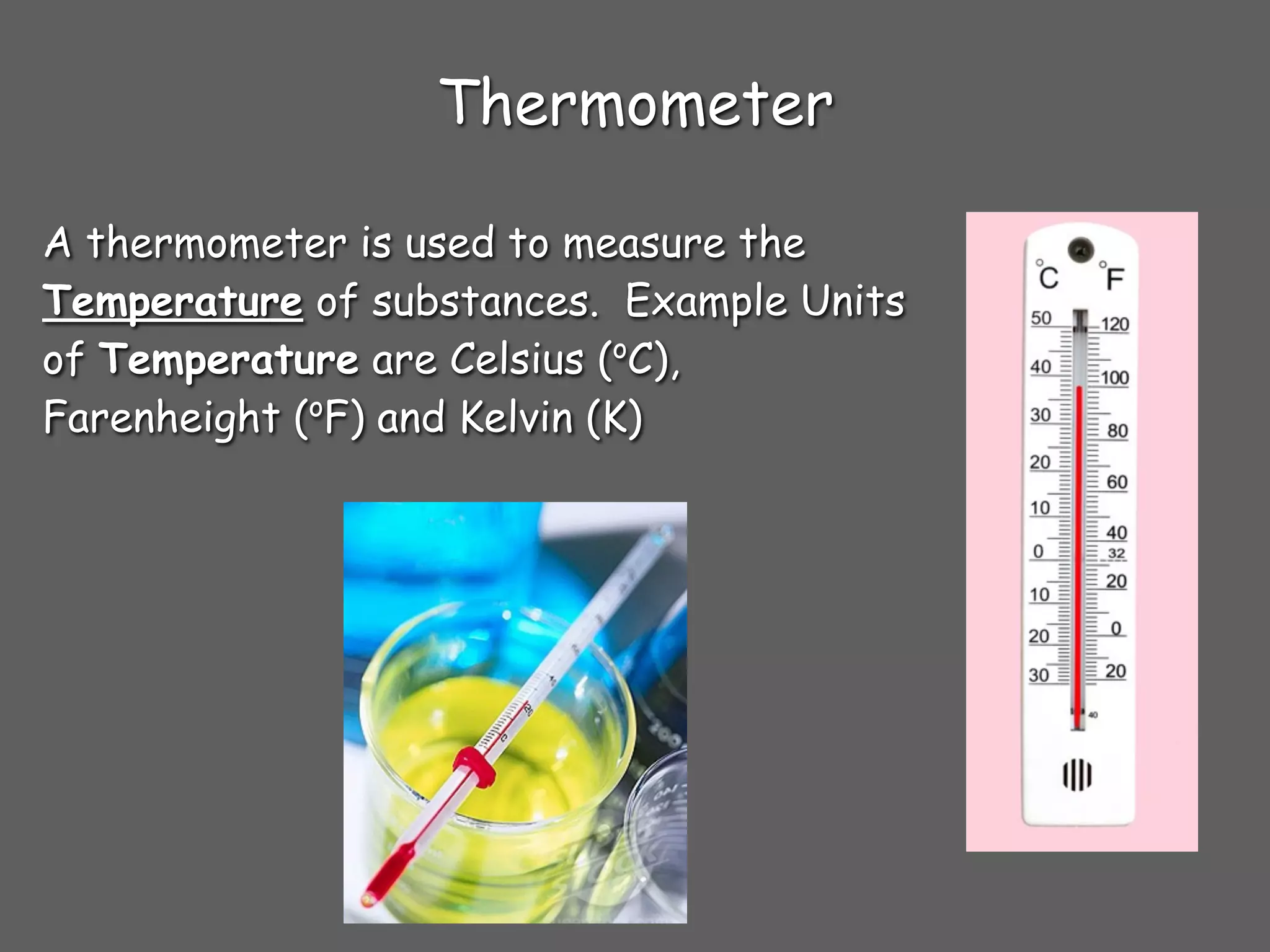
Thermometer

A thermometer is used to measure the
Temperature of substances. Example Units
of Temperature are Celsius (oC),
             o
Farenheight ( F) and Kelvin (K)
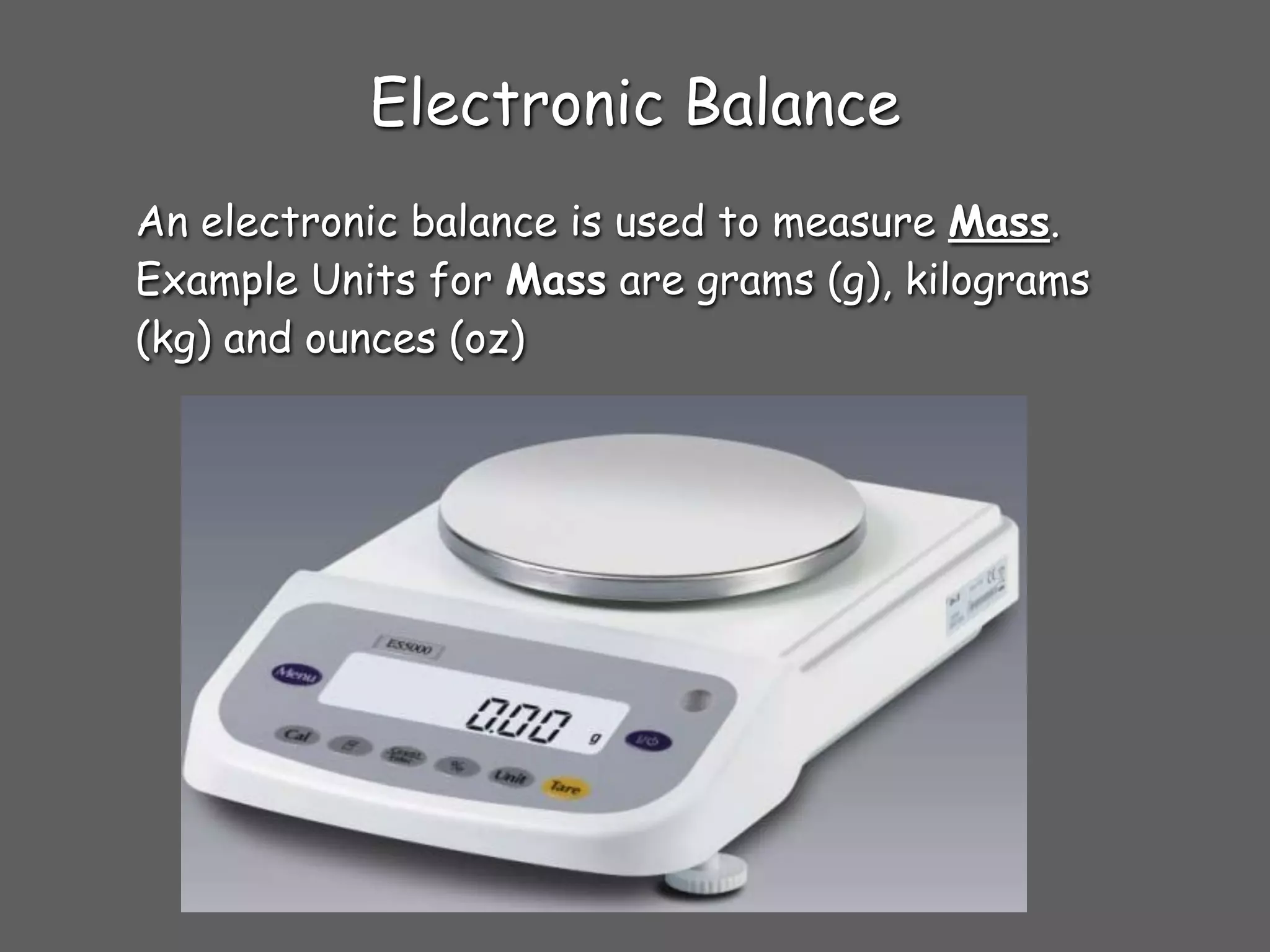
Electronic Balance
An electronic balance is used to measure Mass.
Example Units for Mass are grams (g), kilograms
(kg) and ounces (oz)
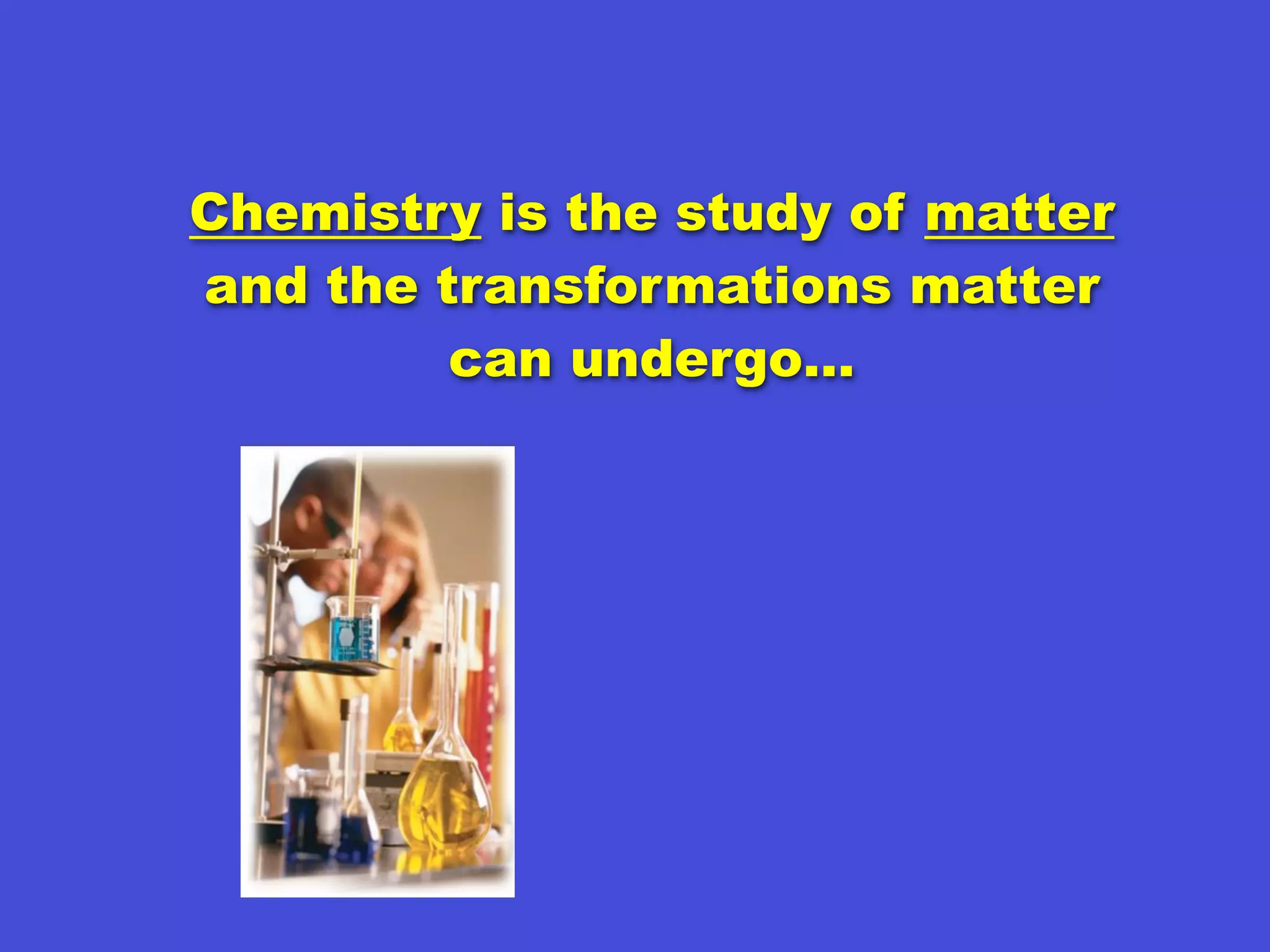
Chemistry is the study of matter
and the transformations matter
         can undergo…
Chemistry is the study of matter
and the transformations matter
         can undergo…
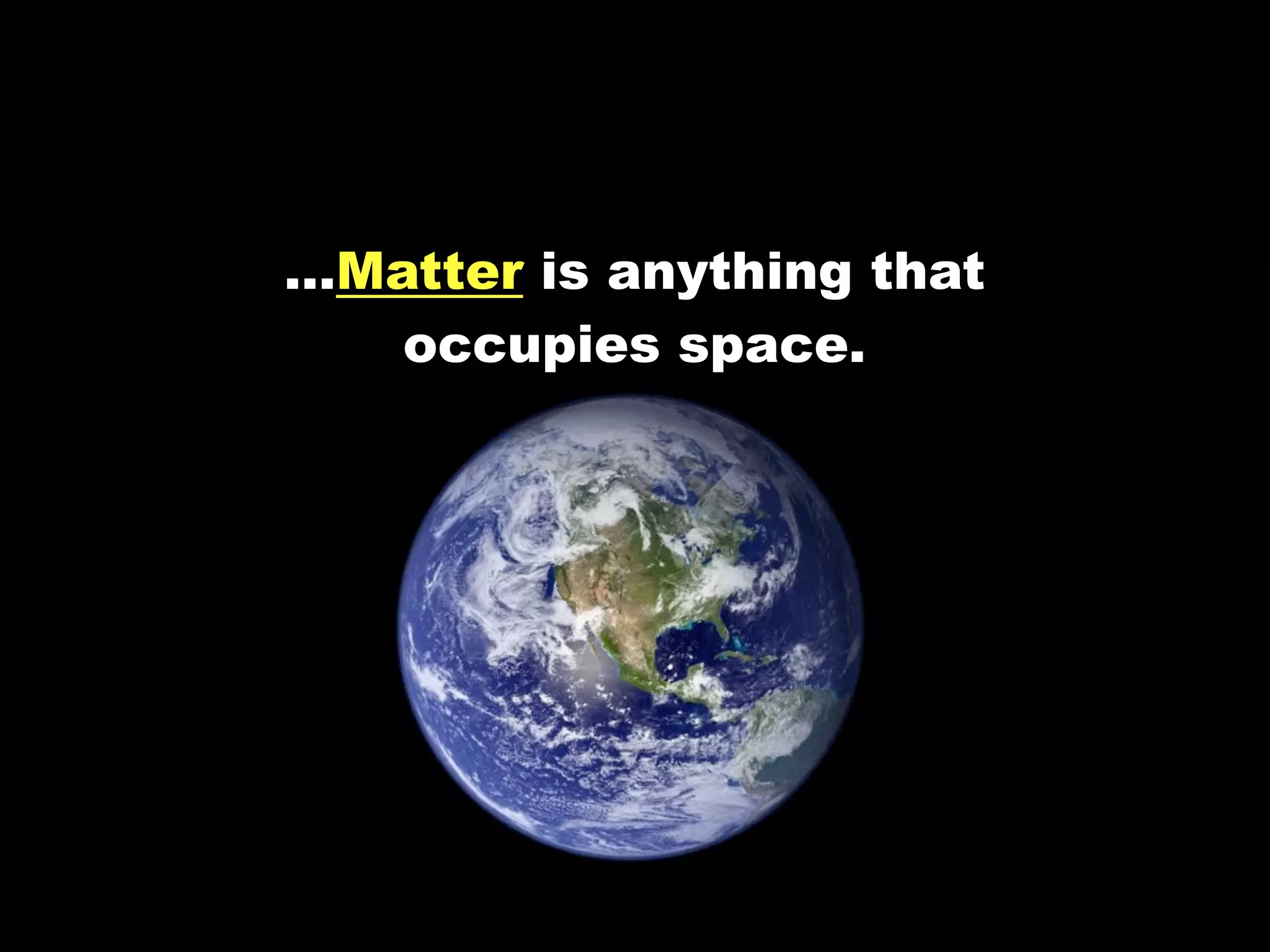
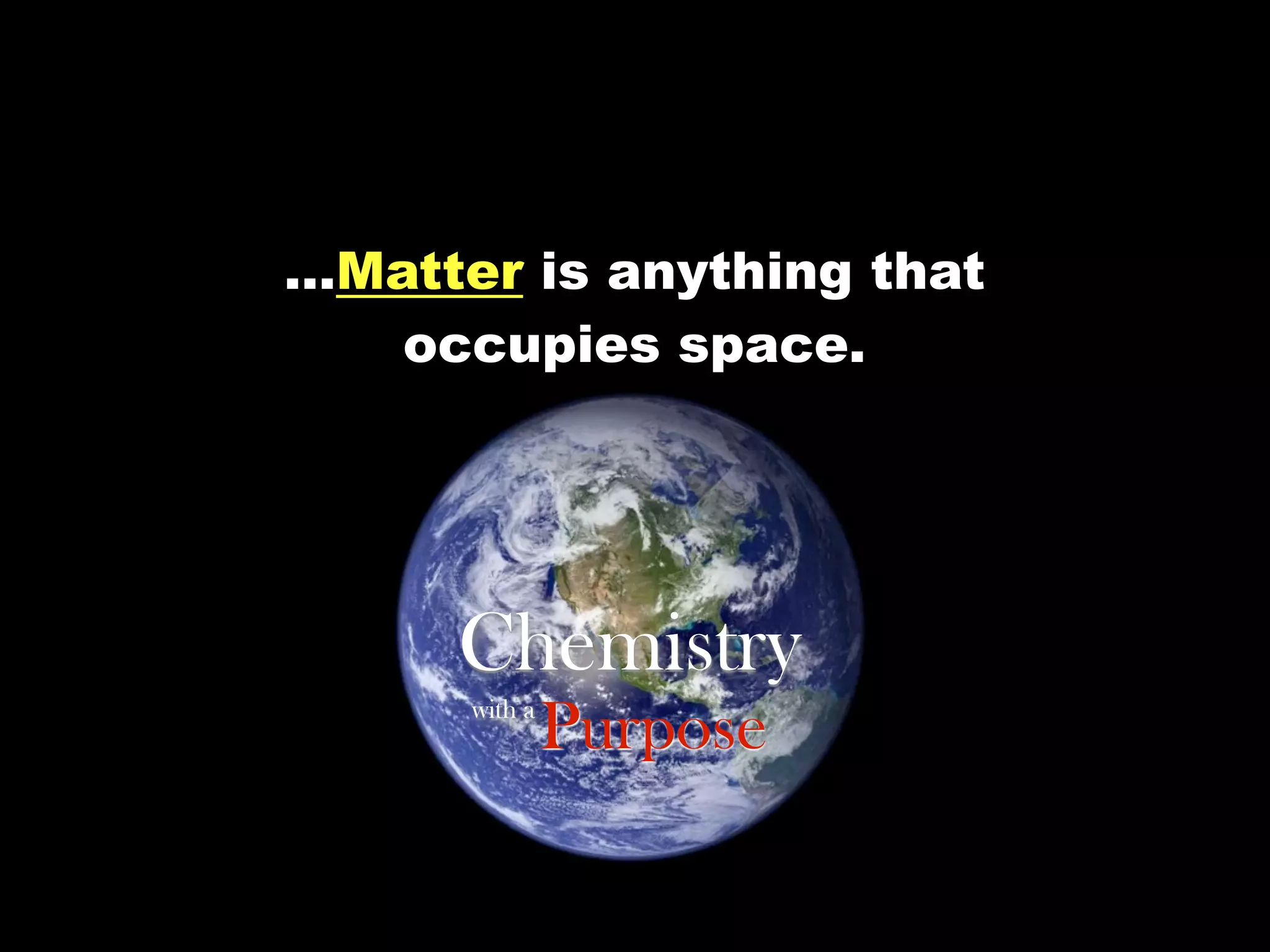
…Matter is anything that
   occupies space.
…Matter is anything that
   occupies space.
…Matter is anything that
   occupies space.


     Chemistry
      with a
               Purpose
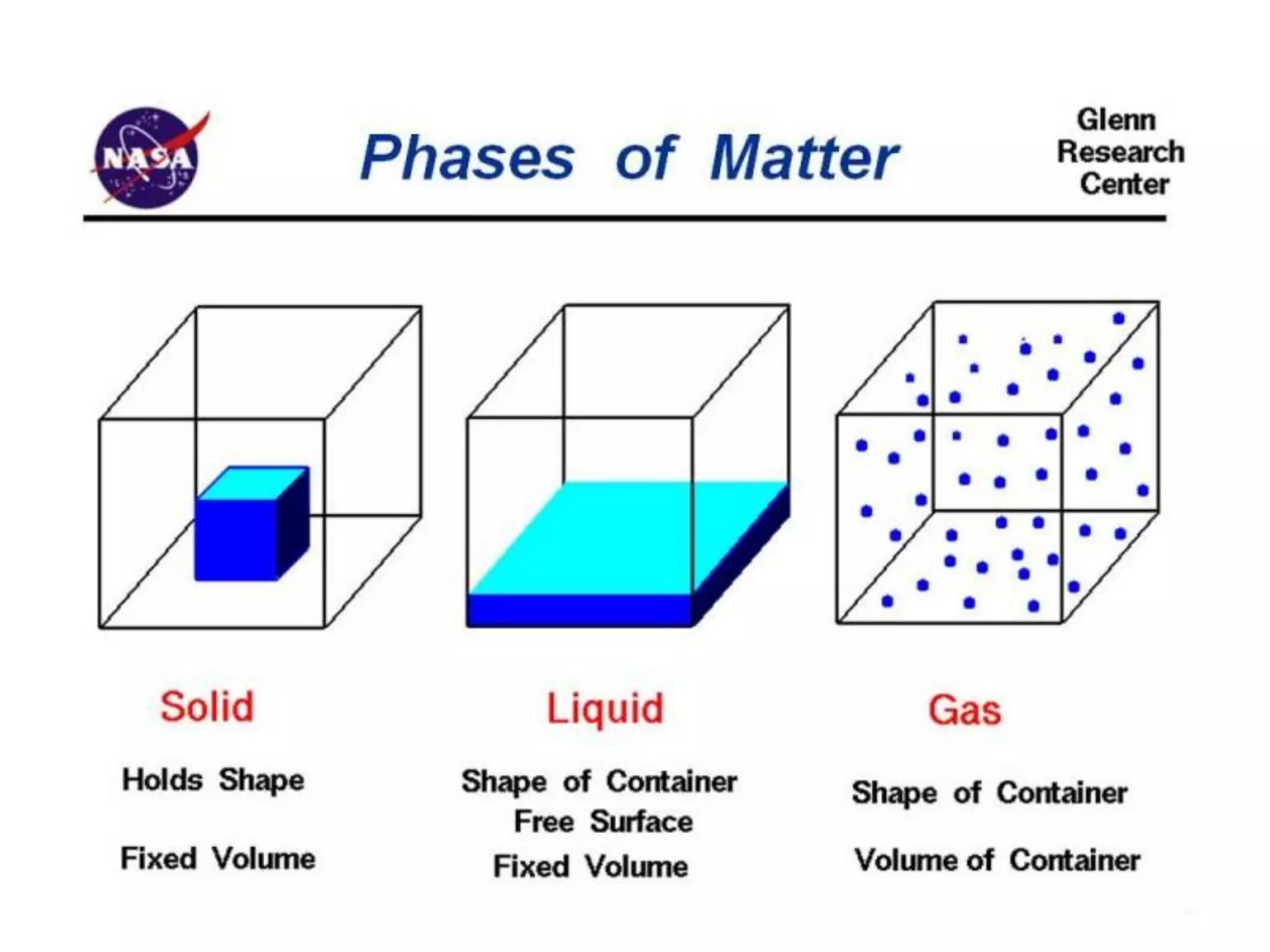
States of Matter


Slide of 19      General Chemistry: Chapter 1   Prentice-Hall © 2002
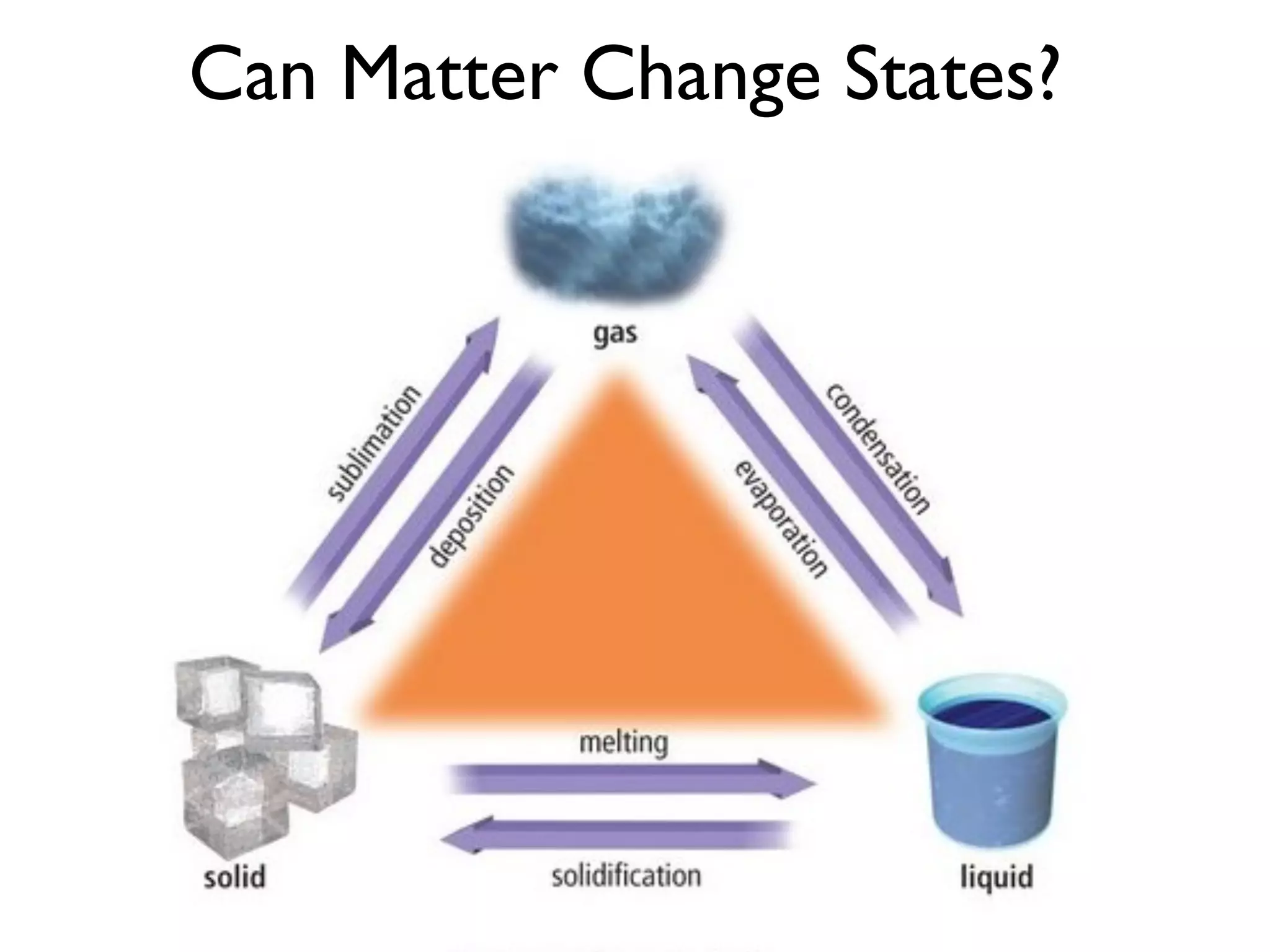
Can Matter Change States?
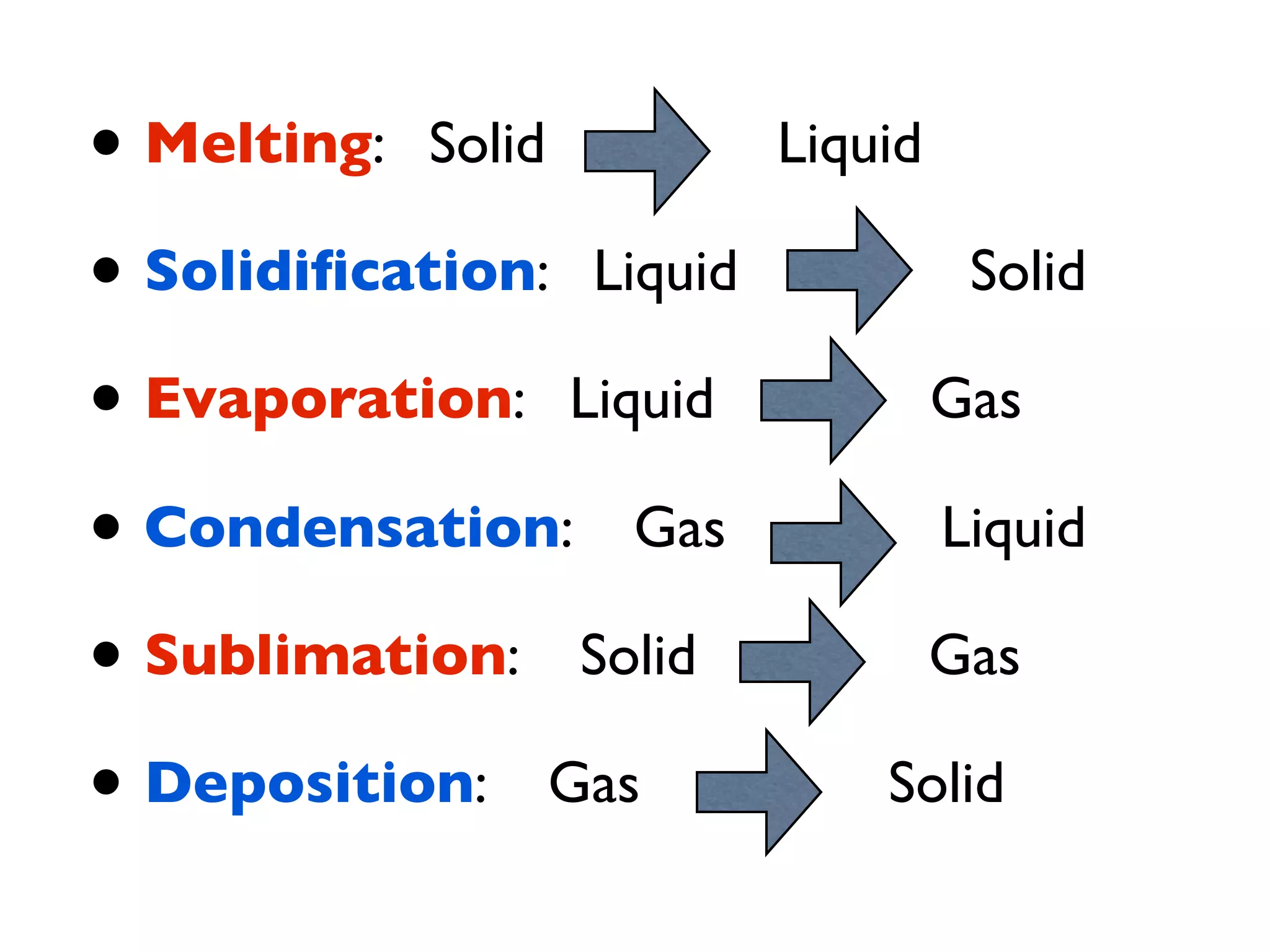
• Melting: Solid          Liquid

• Solidification: Liquid             Solid

• Evaporation: Liquid              Gas

• Condensation: Gas                Liquid

• Sublimation: Solid               Gas

• Deposition: Gas             Solid
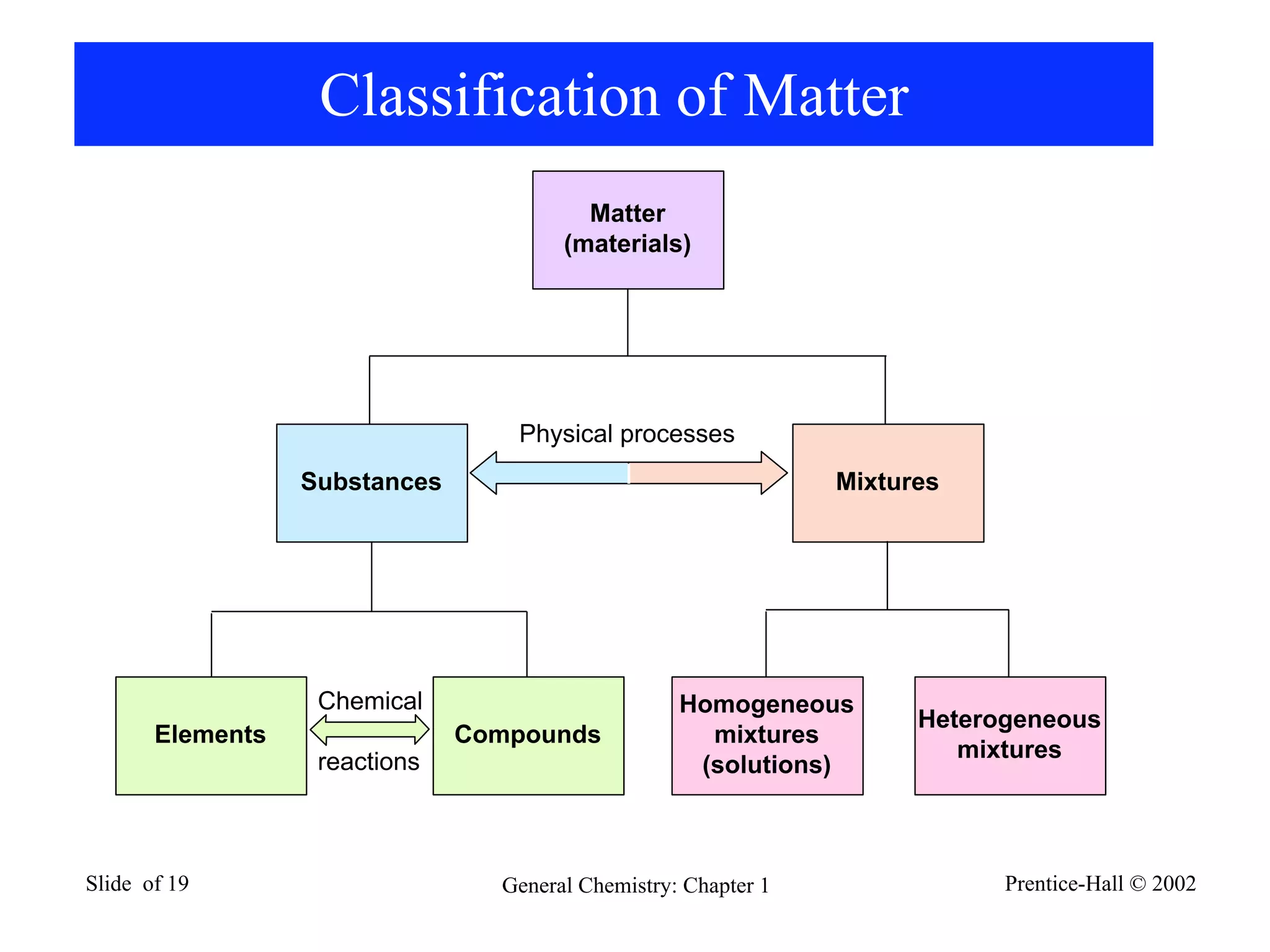
Classification of Matter


Slide of 19          General Chemistry: Chapter 1   Prentice-Hall © 2002

Measurement and matter

  • 1.
    DO NOW 1) Whatdo the three images below have in common? 2) What is different about the three images? 3) Which of the images contains water (H2O)? 1. 2. 3.
  • 2.
  • 3.
    Today’s Objectives Students willbe able to.... - describe lab safety rules - identify lab tools and explain what variables are measured with each tool - identify the 3 states of matter
  • 4.
  • 5.
    Basic Safety Rules #1Rule: Use common sense.
  • 6.
    Basic Safety Rules #1Rule: Use common sense. Others:
  • 7.
    Basic Safety Rules #1Rule: Use common sense. Others: No horseplay in LAB!
  • 8.
    Basic Safety Rules #1Rule: Use common sense. Others: No horseplay in LAB! Follow written/oral directions.
  • 9.
    Basic Safety Rules #1Rule: Use common sense. Others: No horseplay in LAB! Follow written/oral directions. Handle chemicals/glassware with respect.
  • 11.
    Measurements Measurementprovides QUANTITATIVE information to QUALITATIVE observations. Example: “You are tall” = Qualitative “You are 5 ft and 6 inches tall” = Quantitative Measurements always have 2 parts 1) a Number/# 2) a Unit
  • 12.
    Units Of MeasurementYou Must Know Use SI units — based on the metric system  Length  Mass  Volume  Time  Temperature
  • 13.
    Units Of MeasurementYou Must Know Use SI units — based on the metric system  Length meter, m  Mass  Volume  Time  Temperature
  • 14.
    Units Of MeasurementYou Must Know Use SI units — based on the metric system  Length meter, m  Mass kilogram, kg  Volume  Time  Temperature
  • 15.
    Units Of MeasurementYou Must Know Use SI units — based on the metric system  Length meter, m  Mass kilogram, kg  Volume liter, L  Time  Temperature
  • 16.
    Units Of MeasurementYou Must Know Use SI units — based on the metric system  Length meter, m  Mass kilogram, kg  Volume liter, L  Time seconds, s  Temperature
  • 17.
    Units Of MeasurementYou Must Know Use SI units — based on the metric system  Length meter, m  Mass kilogram, kg  Volume liter, L  Time seconds, s  Temperature kelvin, K
  • 18.
    Measuring in the Chemistry Lab  Volume  Length  Temperature  Mass
  • 19.
    Graduated Cylinder andBeakers Graduated cylinders and beakers are used to measure the Volume of liquids. Example Units of Volume are Liters (L), Milliliters (mL) and cubic centimeters (cm3)
  • 20.
    Meter Stick orRuler A meter stick or ruler is used to measure Length. Example Units of Length are Meters (m), Centimeters (cm), and Feet (ft)
  • 21.
    Thermometer A thermometer isused to measure the Temperature of substances. Example Units of Temperature are Celsius (oC), o Farenheight ( F) and Kelvin (K)
  • 22.
    Electronic Balance An electronicbalance is used to measure Mass. Example Units for Mass are grams (g), kilograms (kg) and ounces (oz)
  • 23.
    Chemistry is thestudy of matter and the transformations matter can undergo…
  • 24.
    Chemistry is thestudy of matter and the transformations matter can undergo…
  • 25.
    …Matter is anythingthat occupies space.
  • 26.
    …Matter is anythingthat occupies space.
  • 27.
    …Matter is anythingthat occupies space. Chemistry with a Purpose
  • 29.
    States of Matter Slideof 19 General Chemistry: Chapter 1 Prentice-Hall © 2002
  • 30.
  • 31.
    • Melting: Solid Liquid • Solidification: Liquid Solid • Evaporation: Liquid Gas • Condensation: Gas Liquid • Sublimation: Solid Gas • Deposition: Gas Solid
  • 32.
    Classification of Matter Slideof 19 General Chemistry: Chapter 1 Prentice-Hall © 2002

Editor's Notes

  • #2 \n
  • #3 \n
  • #4 \n
  • #5 \n
  • #6 \n
  • #7 \n
  • #8 \n
  • #9 \n
  • #10 \n
  • #11 \n
  • #12 \n
  • #13 \n
  • #14 \n
  • #15 \n
  • #16 \n
  • #17 \n
  • #18 \n
  • #19 \n
  • #20 \n
  • #21 \n
  • #22 Image courtesy: www.uwf.edu/chemistry/ \n\nIntroduction to Chemistry\n \n1.       What is chemistry?\n2.       What are the four parts of the scientific method?\n3.       What is a control experiment?\n4.       Describe the three types of variables.\n5.       Compare laws, theories, and hypotheses.\n6.       What is the only way to prove a hypothesis true?\n7.       Why do laws and theories evolve?\n8.       What is the last step of solving any problem?\n9.       What is measurement?\n10.     What is a dimension?\n11.     What is a unit?\n12.     What is the difference between fundamental and derived units?\n13.     Why is the standard for mass, in the SI, unique?\n14.     What is the difference between mass and moles?\n15.     Is density a fundamental or derived unit?\n16.     How is a conversion factor made?\n17.     How is one unit converted to another?\n18.     What is precision?\n19.     What do the significant figures of a measurement indicate?\n20.     In what situation are trailing zeros always significant.\n21.     Numbers in scientific notation have the basic form A x10B. What is the range of A?\n22.     What kind of number will have a negative B?\n23.     Why do scientists use graphs?\n24.     What variables go on which of the axes of a graph?\n25.     How do direct and inverse relationships differ?\n26.     Describe the graph of a direct linear relationship.\n27.     Describe the graph of an inverse parabolic relationship.\n28.     What is the slope of a horizontal line?\n29.     In an experiment the independent variable does not change. What is the slope of the graph?\n30.     During a lab experiment the temperature of the gas in a balloon is varied and the volume is measured. \n Which of the two variables will be graphed on the horizontal axis and which will be graphed on the vertical axis?\n31.     What kind of relationship exists between P and z in this equation? P = mv/z2\n
  • #23 \n
  • #24 \n
  • #25 \n
  • #26 \n
  • #27 \n
  • #28 \n
  • #29 \n