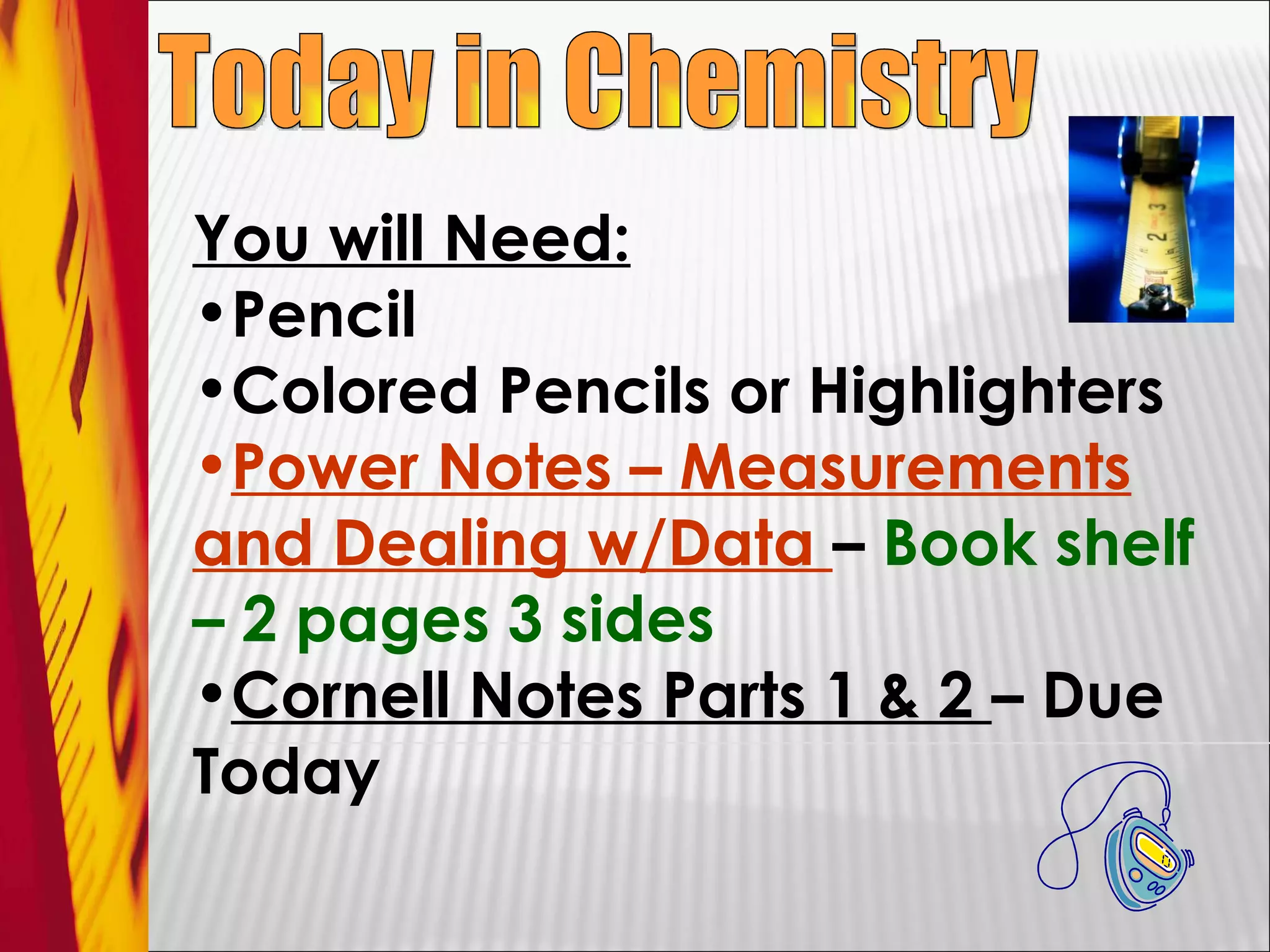
Today in Chemistry You will Need: Pencil Colored Pencils or Highlighters Power Notes – Measurements and Dealing w/Data  –  Book shelf – 2 pages 3 sides Cornell Notes Parts 1 & 2  – Due Today
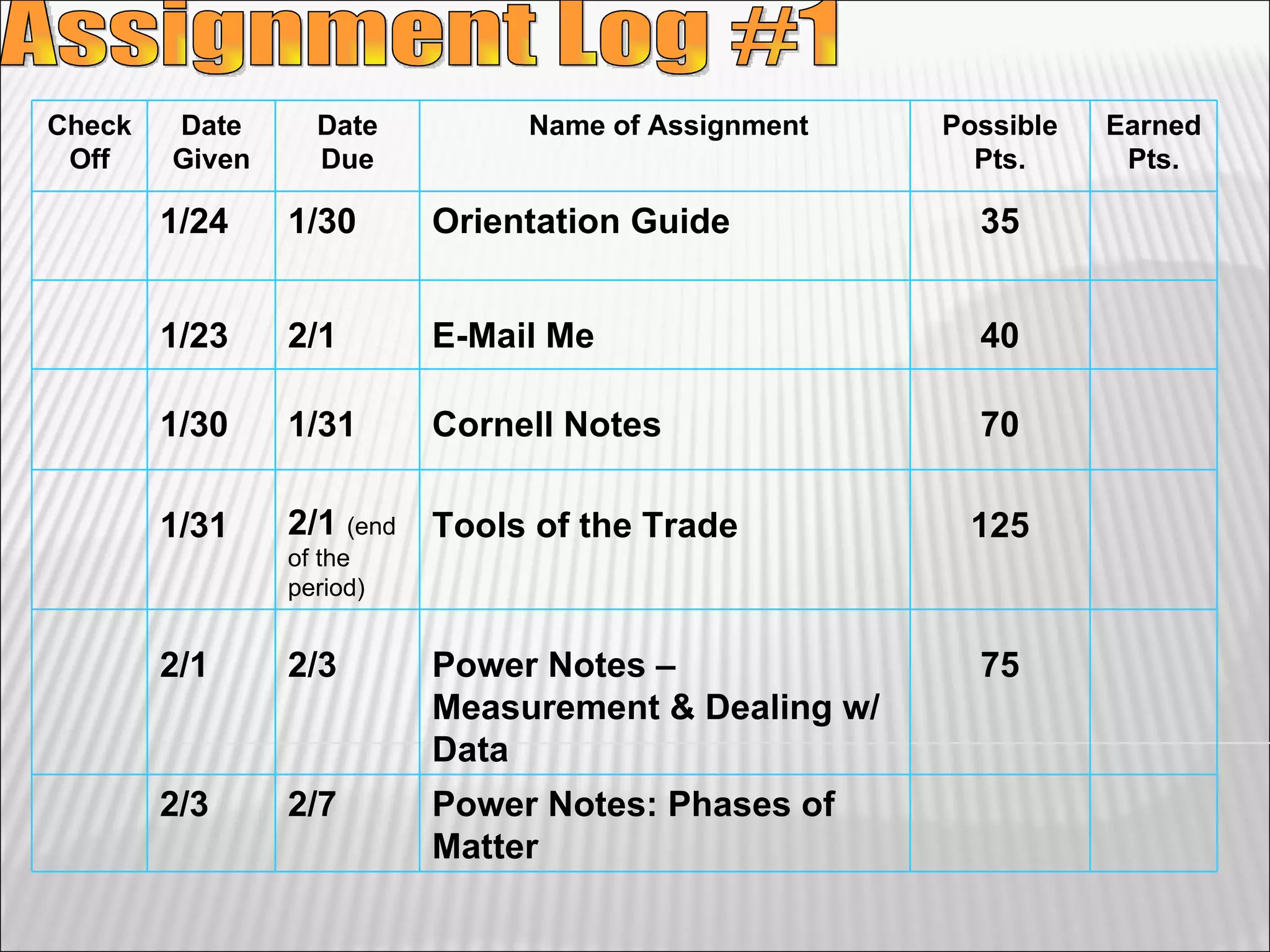
Assignment Log #1 Check Off Date Given Date Due Name of Assignment Possible Pts. Earned Pts. 1/24 1/30 Orientation Guide 35 1/23 2/1 E-Mail Me 40 1/30 1/31 Cornell Notes 70 1/31 2/1  (end of the period) Tools of the Trade 125 2/1 2/3 Power Notes – Measurement & Dealing w/Data 75 2/3 2/7 Power Notes: Phases of Matter
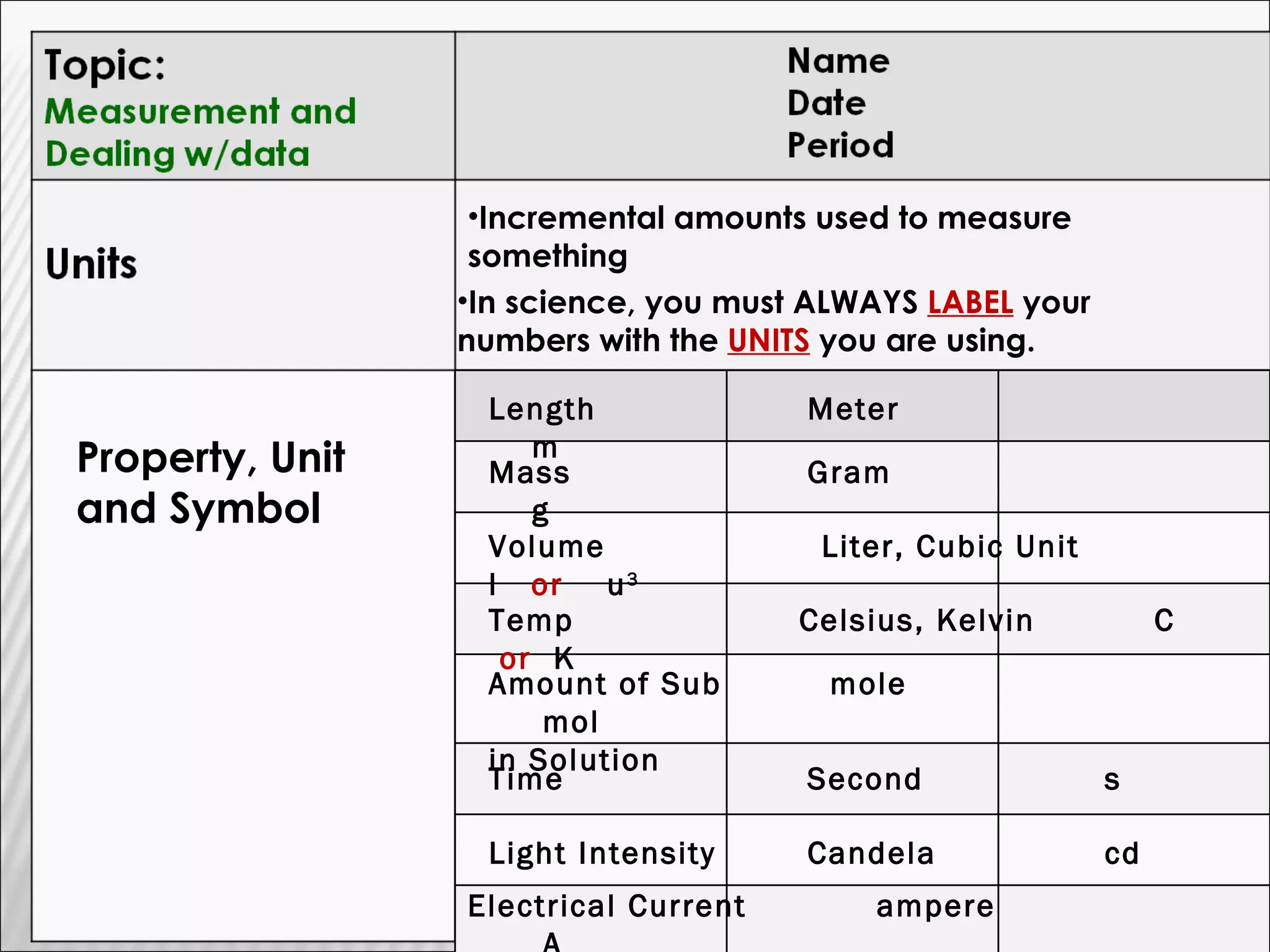
Incremental amounts used to measure something In science, you must ALWAYS  LABEL  your numbers with the  UNITS  you are using. Property, Unit and Symbol Length   Meter   m Mass   Gram   g Volume  Liter, Cubic Unit   l  or   u 3 Temp   Celsius, Kelvin  C  or  K Amount of Sub  mole   mol  in Solution Time   Second   s Light Intensity   Candela   cd Electrical Current  ampere   A
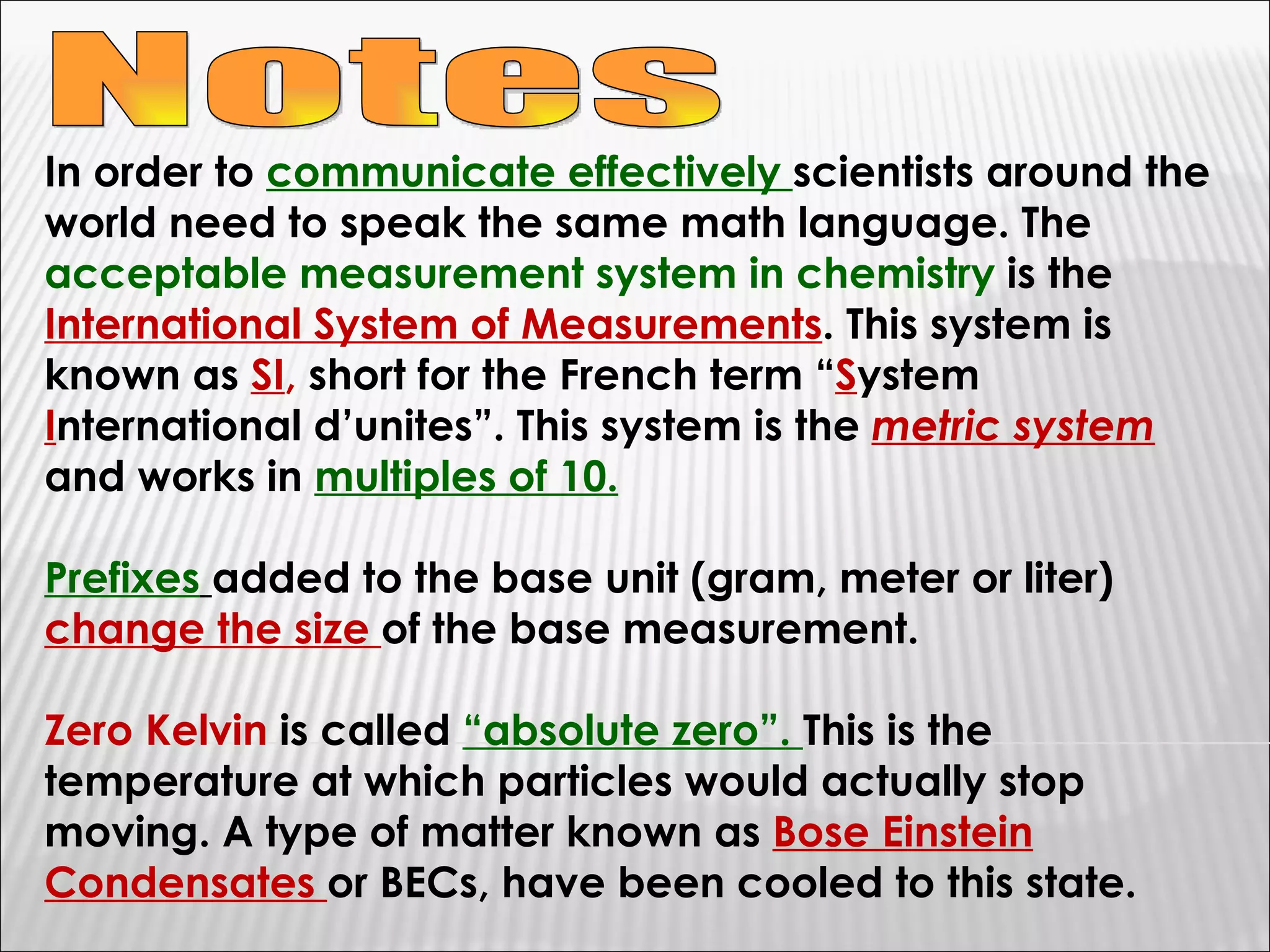
Notes In order to  communicate effectively  scientists around the world need to speak the same math language. The  acceptable measurement system in chemistry  is the  International System of Measurements . This system is known as  SI ,  short for the French term “ S ystem  I nternational d’unites”. This system is the  metric system  and works in  multiples of 10. Prefixes   added to the base unit (gram, meter or liter)  change the size  of the base measurement. Zero Kelvin  is called  “absolute zero”.  This is the temperature at which particles would actually stop moving. A type of matter known as  Bose Einstein Condensates  or BECs, have been cooled to this state.
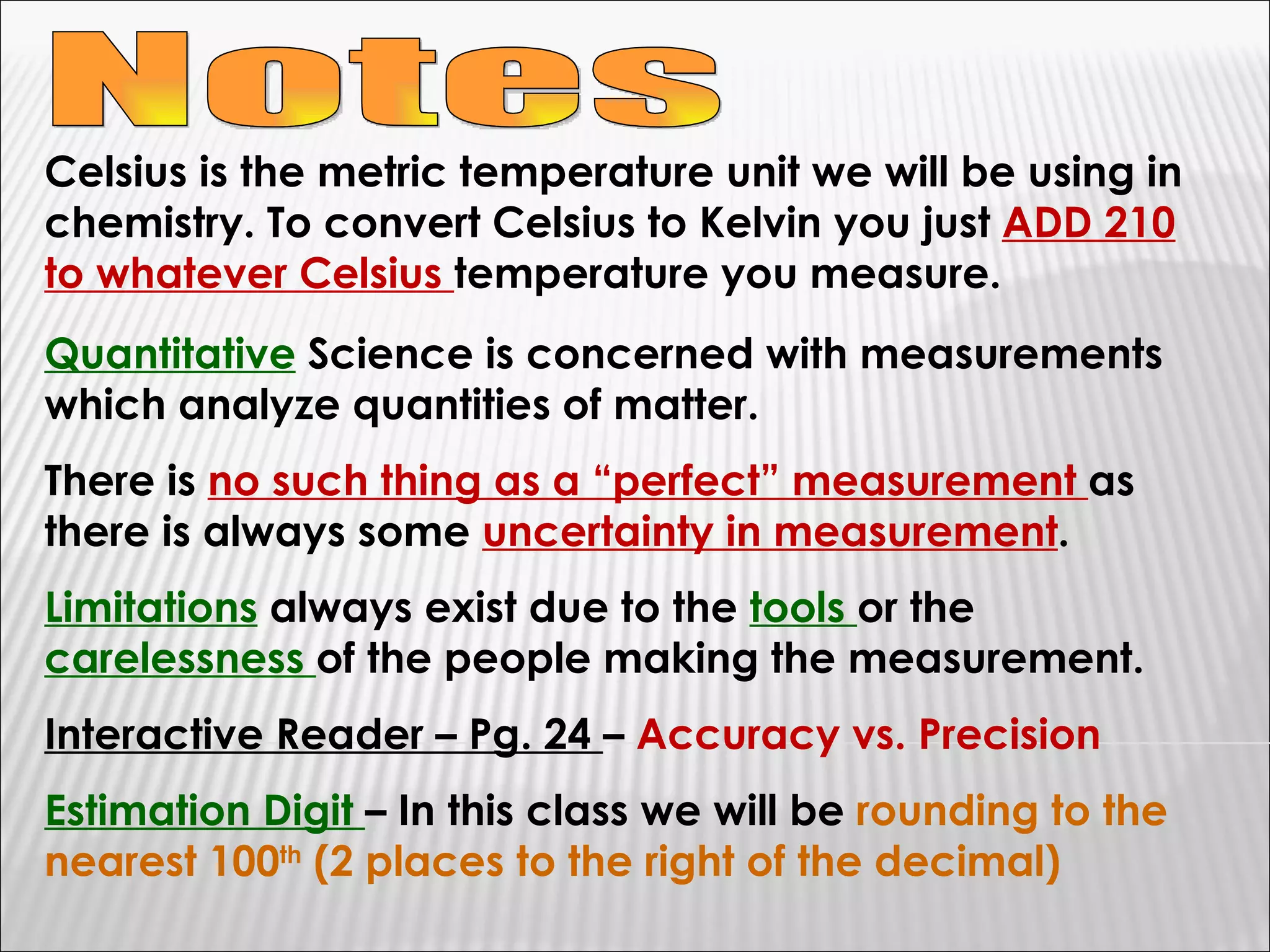
Notes Celsius is the metric temperature unit we will be using in chemistry. To convert Celsius to Kelvin you just  ADD 210 to whatever Celsius  temperature you measure. Quantitative  Science is concerned with measurements which analyze quantities of matter. There is  no such thing as a “perfect” measurement  as there is always some  uncertainty in measurement . Limitations  always exist due to the  tools  or the  carelessness  of the people making the measurement. Interactive Reader – Pg. 24  –  Accuracy vs. Precision Estimation Digit  – In this class we will be  rounding to the nearest 100 th  (2 places to the right of the decimal)
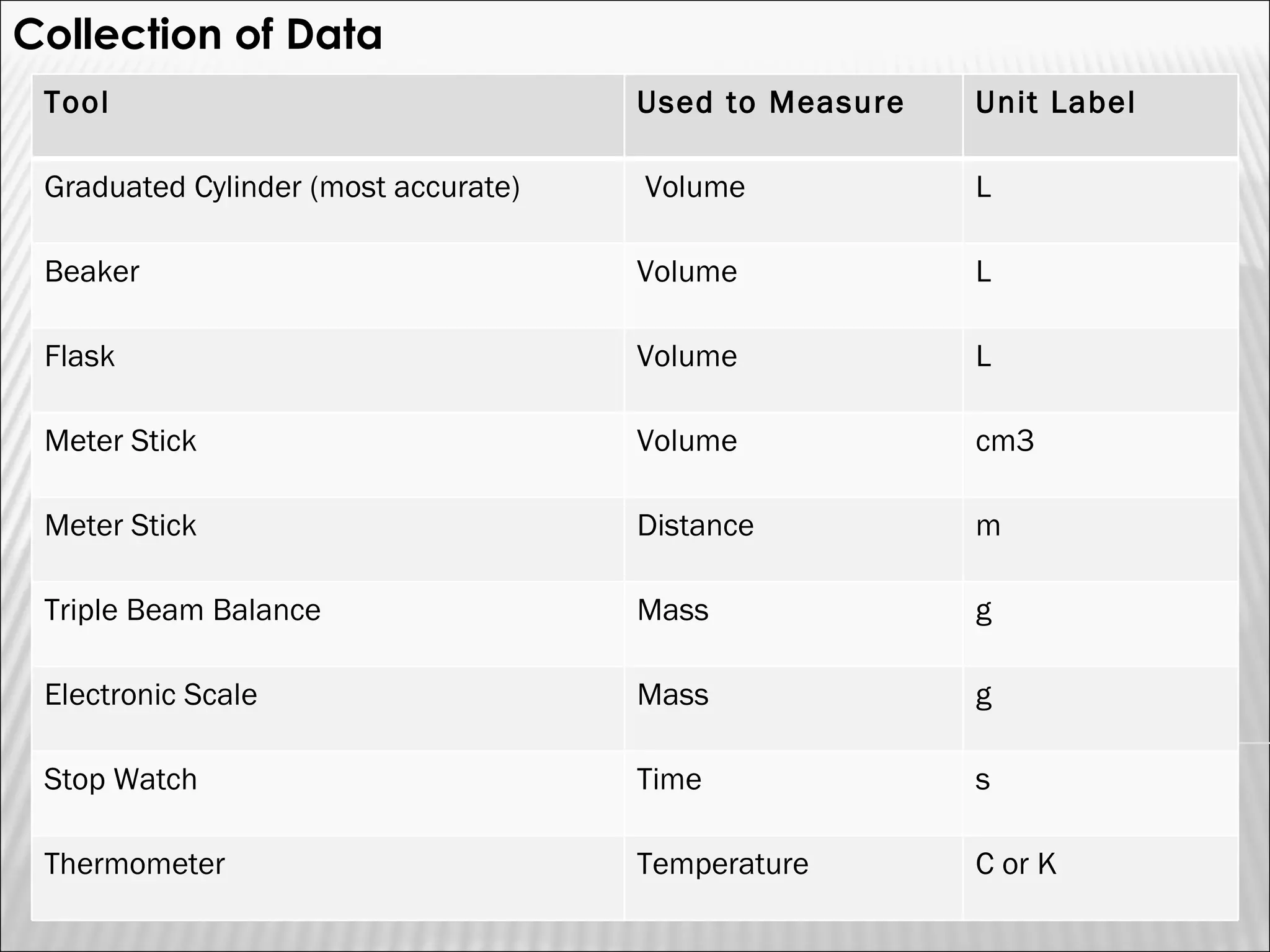
Collection of Data Tool Used to Measure Unit Label Graduated Cylinder (most accurate) Volume L Beaker Volume L Flask Volume L Meter Stick Volume cm3 Meter Stick Distance m Triple Beam Balance Mass g Electronic Scale Mass g Stop Watch Time s Thermometer Temperature C or K
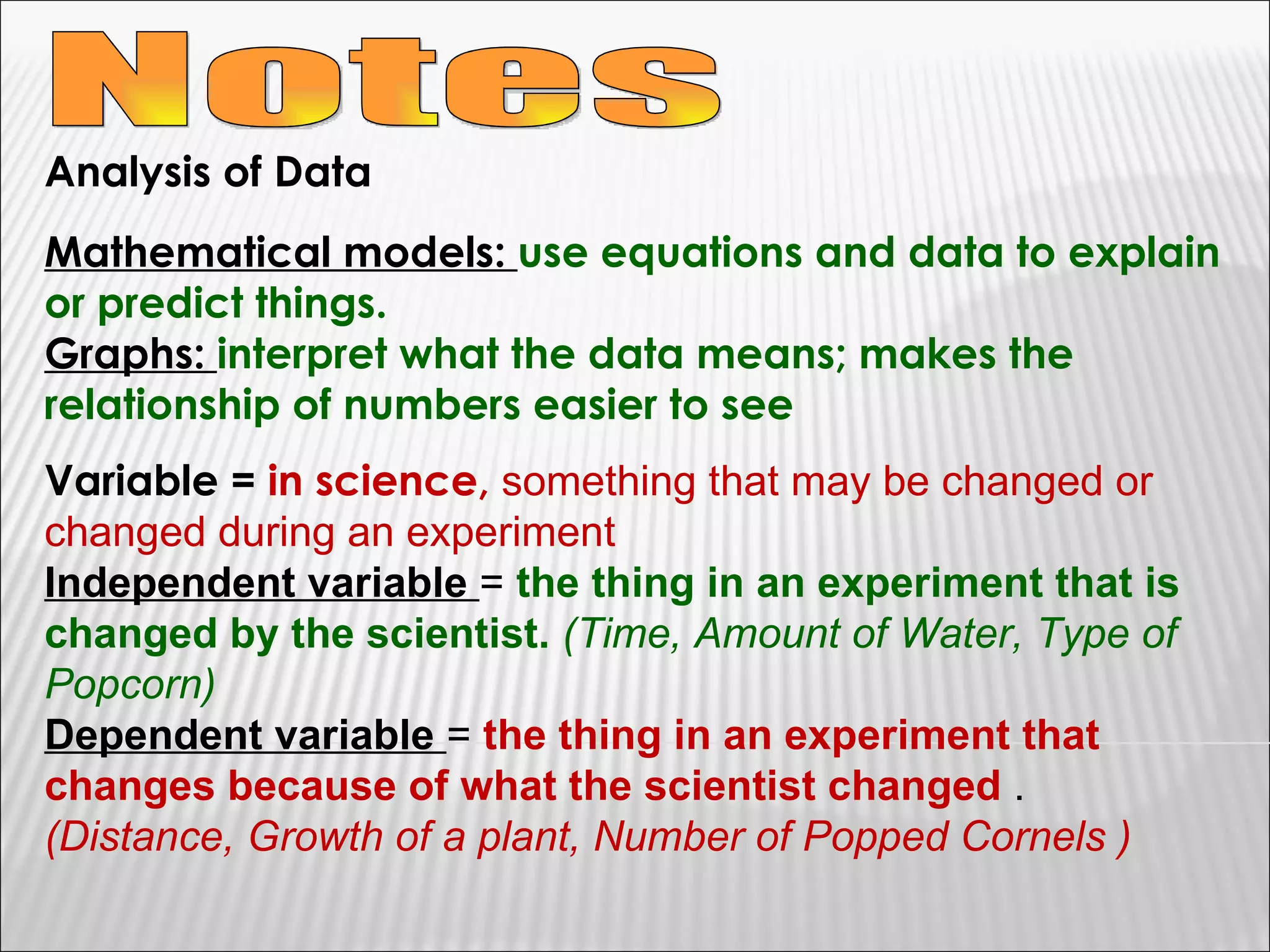
Notes Analysis of Data Mathematical models:  use equations and data to explain or predict things.  Graphs:  interpret what the data means; makes the relationship of numbers easier to see Variable =  in science,  something that may be changed or changed during an experiment Independent variable  =  the thing in an experiment that is changed by the scientist.   (Time, Amount of Water, Type of Popcorn) Dependent variable  =  the thing in an experiment that changes because of what the scientist changed  .  (Distance, Growth of a plant, Number of Popped Cornels )
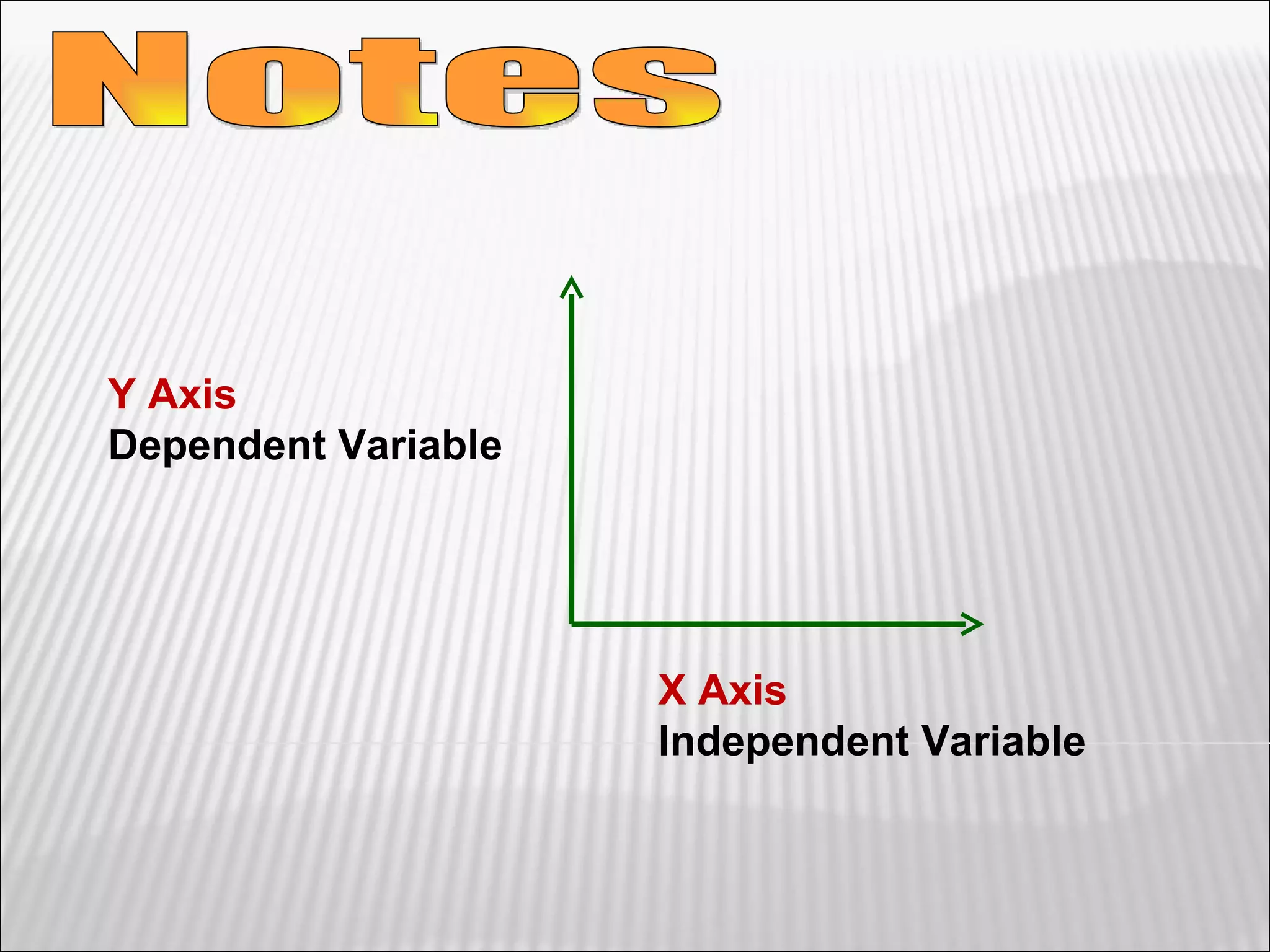
Notes Y Axis Dependent Variable X Axis Independent Variable
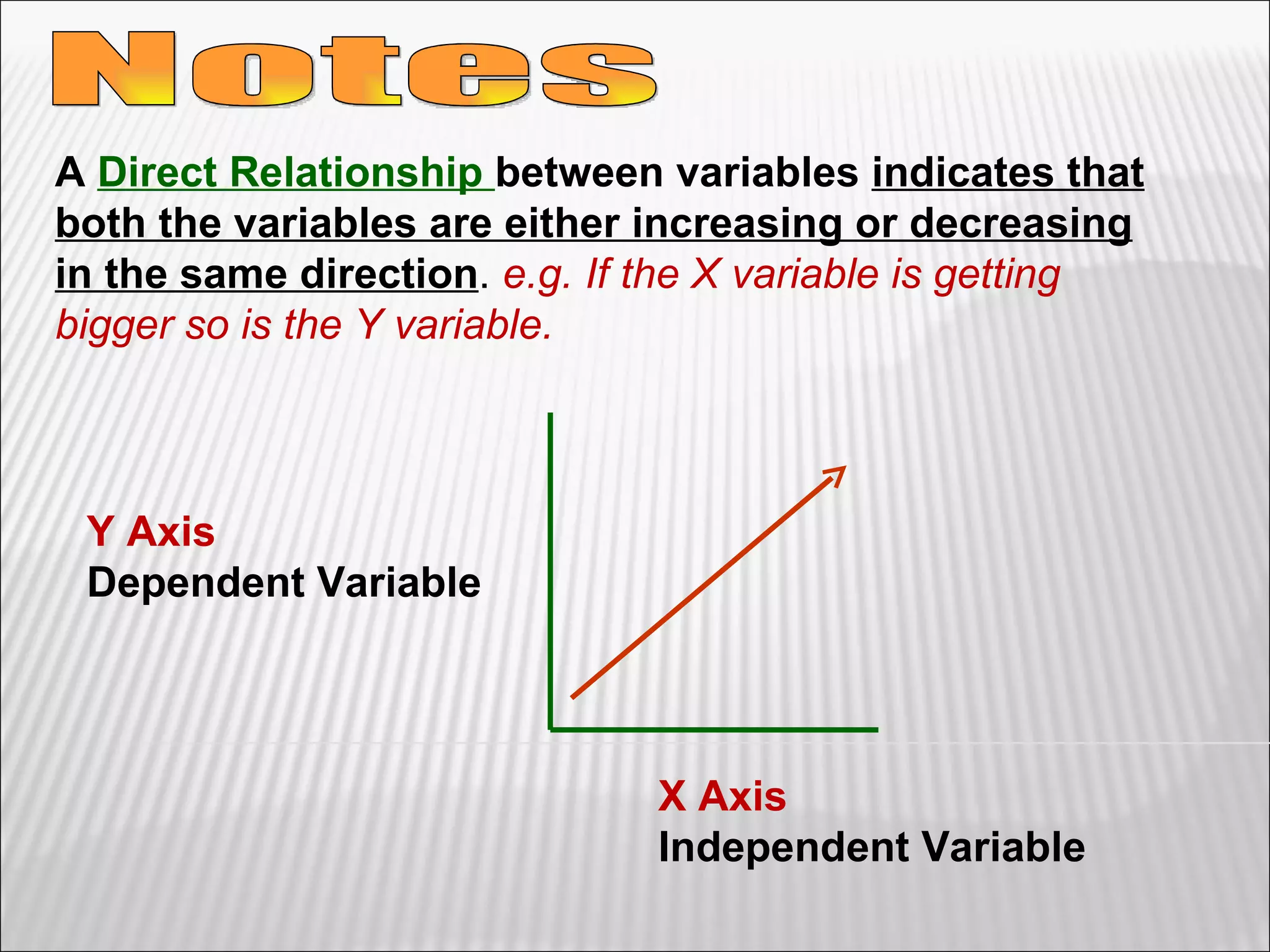
Notes Y Axis Dependent Variable X Axis Independent Variable A  Direct Relationship  between variables  indicates that both the variables are either increasing or decreasing in the same direction .  e.g. If the X variable is getting bigger so is the Y variable.
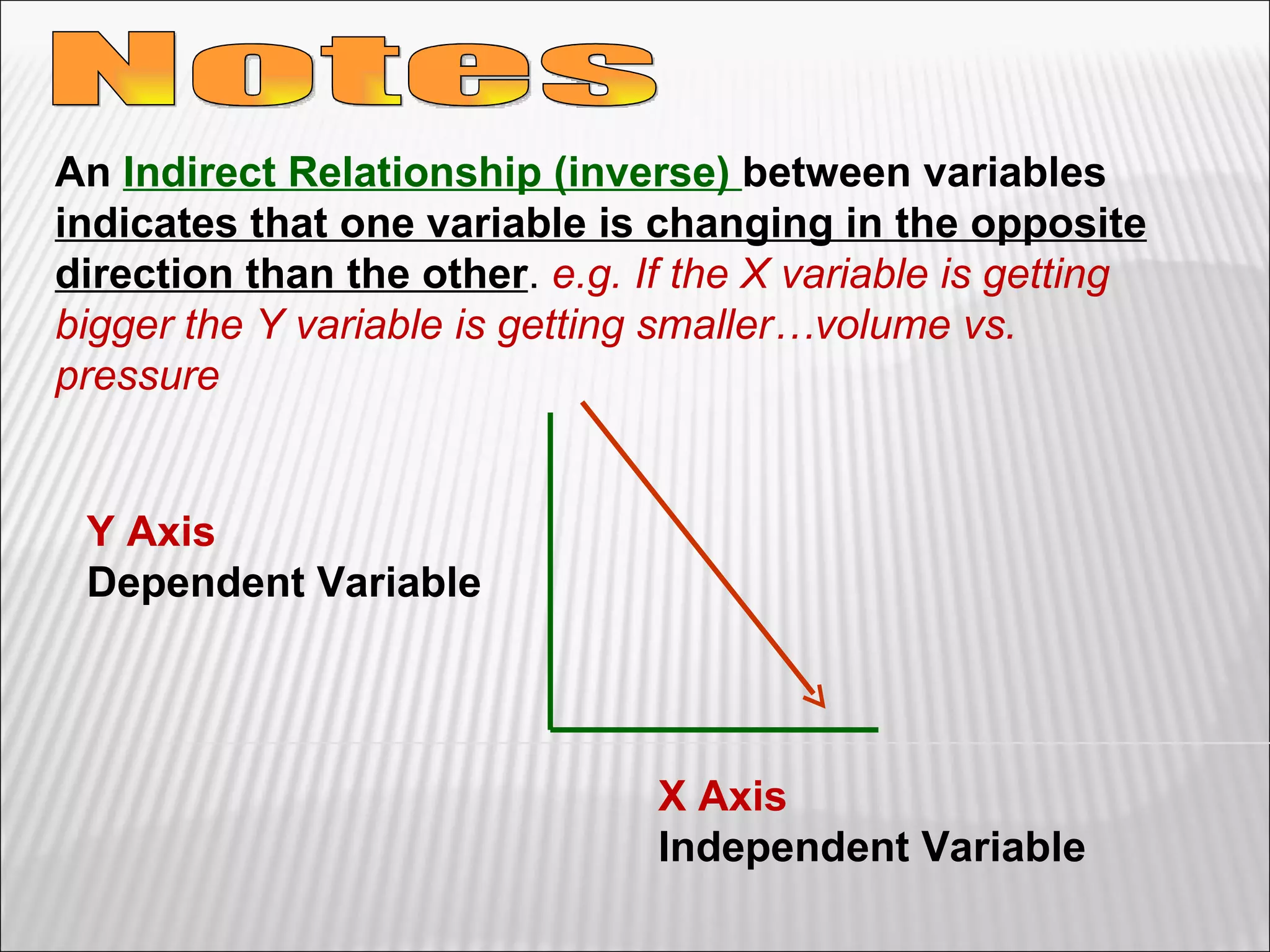
Notes Y Axis Dependent Variable X Axis Independent Variable An  Indirect Relationship (inverse)  between variables  indicates that one variable is changing in the opposite direction than the other .  e.g. If the X variable is getting bigger the Y variable is getting smaller…volume vs. pressure
Review Using your notes on the first two pages, complete the Review.

Power Notes Measurements and Dealing with Data

  • 1.
    Today in ChemistryYou will Need: Pencil Colored Pencils or Highlighters Power Notes – Measurements and Dealing w/Data – Book shelf – 2 pages 3 sides Cornell Notes Parts 1 & 2 – Due Today
  • 2.
    Assignment Log #1Check Off Date Given Date Due Name of Assignment Possible Pts. Earned Pts. 1/24 1/30 Orientation Guide 35 1/23 2/1 E-Mail Me 40 1/30 1/31 Cornell Notes 70 1/31 2/1 (end of the period) Tools of the Trade 125 2/1 2/3 Power Notes – Measurement & Dealing w/Data 75 2/3 2/7 Power Notes: Phases of Matter
  • 3.
    Incremental amounts usedto measure something In science, you must ALWAYS LABEL your numbers with the UNITS you are using. Property, Unit and Symbol Length Meter m Mass Gram g Volume Liter, Cubic Unit l or u 3 Temp Celsius, Kelvin C or K Amount of Sub mole mol in Solution Time Second s Light Intensity Candela cd Electrical Current ampere A
  • 4.
    Notes In orderto communicate effectively scientists around the world need to speak the same math language. The acceptable measurement system in chemistry is the International System of Measurements . This system is known as SI , short for the French term “ S ystem I nternational d’unites”. This system is the metric system and works in multiples of 10. Prefixes added to the base unit (gram, meter or liter) change the size of the base measurement. Zero Kelvin is called “absolute zero”. This is the temperature at which particles would actually stop moving. A type of matter known as Bose Einstein Condensates or BECs, have been cooled to this state.
  • 5.
    Notes Celsius isthe metric temperature unit we will be using in chemistry. To convert Celsius to Kelvin you just ADD 210 to whatever Celsius temperature you measure. Quantitative Science is concerned with measurements which analyze quantities of matter. There is no such thing as a “perfect” measurement as there is always some uncertainty in measurement . Limitations always exist due to the tools or the carelessness of the people making the measurement. Interactive Reader – Pg. 24 – Accuracy vs. Precision Estimation Digit – In this class we will be rounding to the nearest 100 th (2 places to the right of the decimal)
  • 6.
    Collection of DataTool Used to Measure Unit Label Graduated Cylinder (most accurate) Volume L Beaker Volume L Flask Volume L Meter Stick Volume cm3 Meter Stick Distance m Triple Beam Balance Mass g Electronic Scale Mass g Stop Watch Time s Thermometer Temperature C or K
  • 7.
    Notes Analysis ofData Mathematical models: use equations and data to explain or predict things. Graphs: interpret what the data means; makes the relationship of numbers easier to see Variable = in science, something that may be changed or changed during an experiment Independent variable = the thing in an experiment that is changed by the scientist. (Time, Amount of Water, Type of Popcorn) Dependent variable = the thing in an experiment that changes because of what the scientist changed . (Distance, Growth of a plant, Number of Popped Cornels )
  • 8.
    Notes Y AxisDependent Variable X Axis Independent Variable
  • 9.
    Notes Y AxisDependent Variable X Axis Independent Variable A Direct Relationship between variables indicates that both the variables are either increasing or decreasing in the same direction . e.g. If the X variable is getting bigger so is the Y variable.
  • 10.
    Notes Y AxisDependent Variable X Axis Independent Variable An Indirect Relationship (inverse) between variables indicates that one variable is changing in the opposite direction than the other . e.g. If the X variable is getting bigger the Y variable is getting smaller…volume vs. pressure
  • 11.
    Review Using yournotes on the first two pages, complete the Review.