BY
B.AJAY VARDHAN
B.SOWJANYA
INDEX
RFID
•Working
•Applications
RFID Vs Barcodes
•Description
•Types
RFID based attendance system
•Block diagram
•Circuit diagram
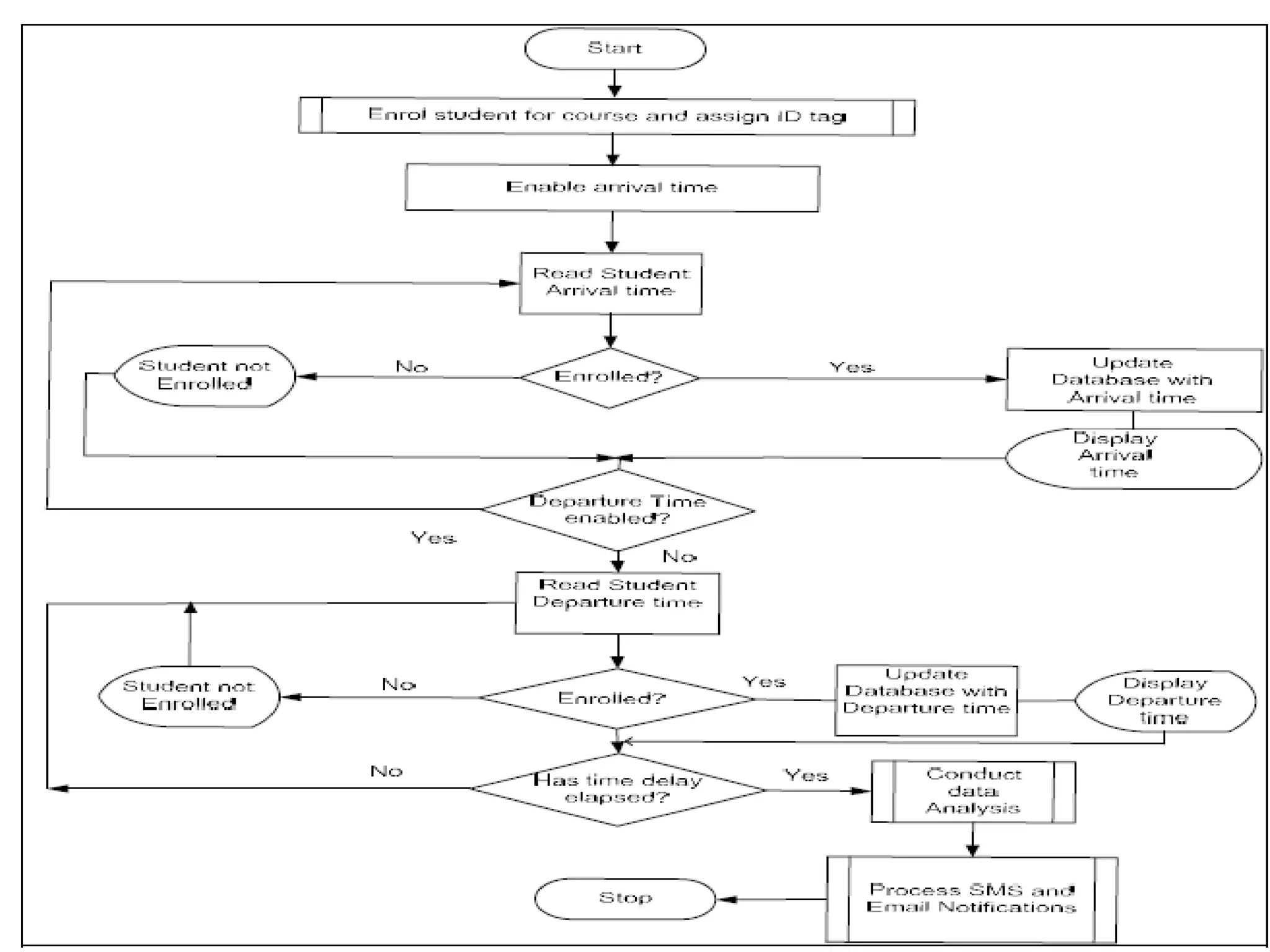
•Algorithm
•working
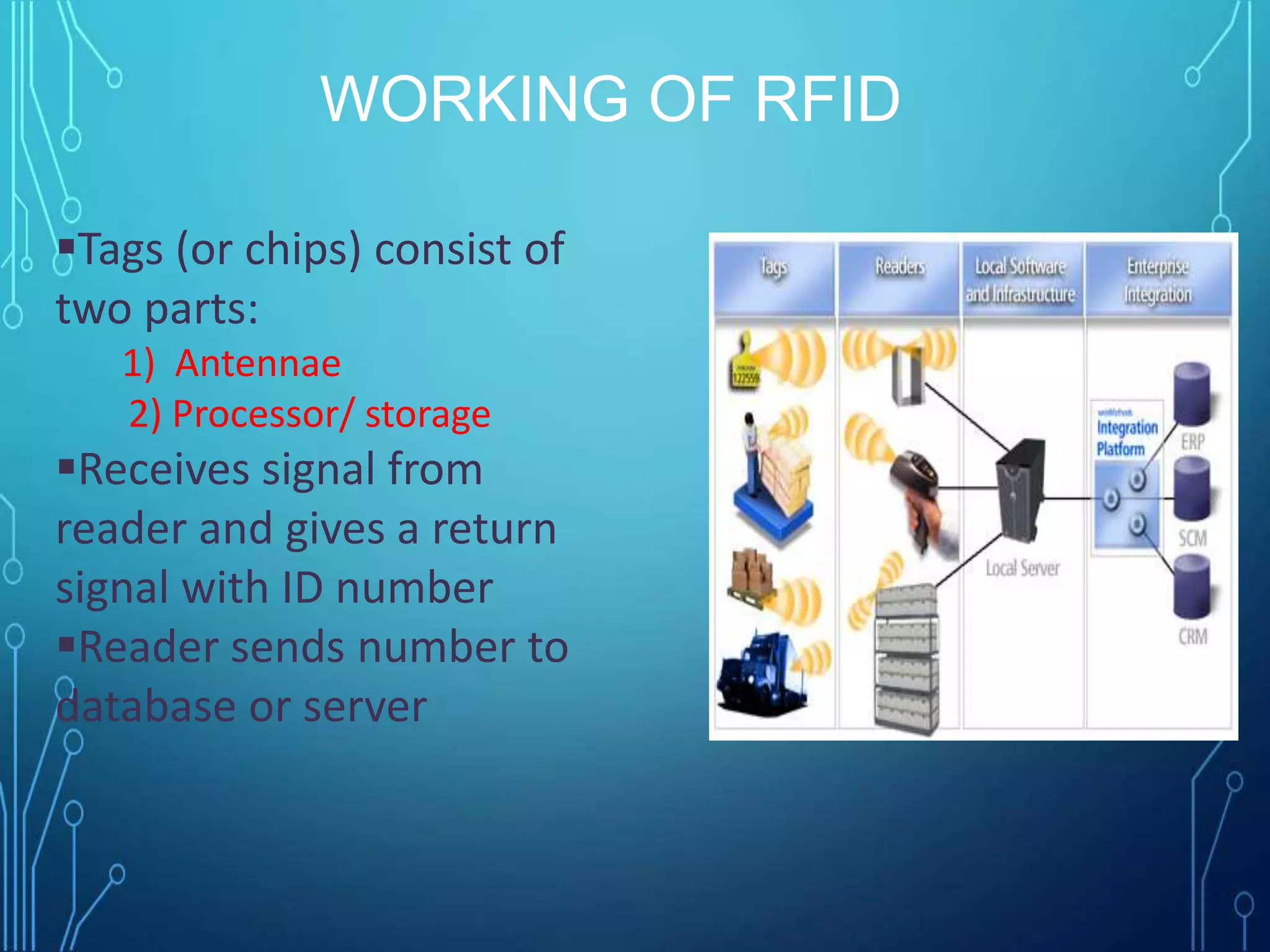
Tags (or chips) consist of
two parts:
1) Antennae
2) Processor/ storage
Receives signal from
reader and gives a return
signal with ID number
Reader sends number to
database or server
WORKING OF RFID
ACTIVE:
Tag signal availability of 100ft.
HIGH signal strength
VERY LOW required signal strength from the reader
example : Railway cars on a track
SEMI- PASSIVE:
Tag signal availability only within field of reader
LOW signal strength
LOW required signal strength from the reader
PASSIVE:
Tag signal availability < 10 ft.
VERY LOW signal strength
VERY HIGH signal strength required from reader
example : Retail Checkout
( Widely used because very cheap to make)
TYPES
Advanced Product Tracking
Real- time data management
Dramatic benefits to manufacturing process
Quick Convenience
Grocery Store, Library, Hospital
Instant identification
Time saver
Safety and Security
Locate/identify missing persons
Monitor prisoners
Easy Access
Access by authorized personnel only
Ease security concerns
APPLICATIONS
Does not require human to manually pass item
over scanner.
More accurate inventory count.
Can be incorporated into product, person,
animal.
Can track each individual item.
RFID vs. Bar Codes
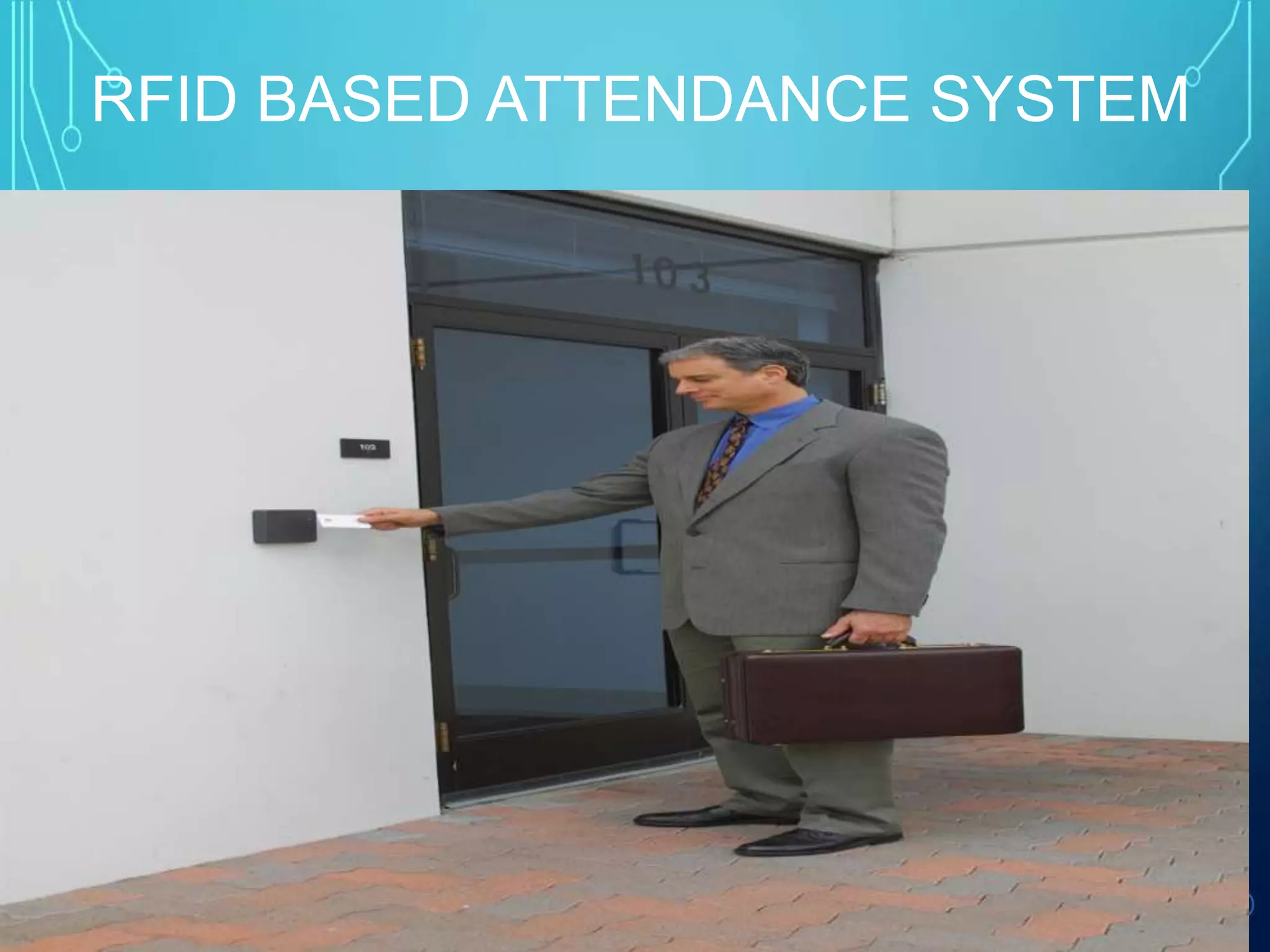
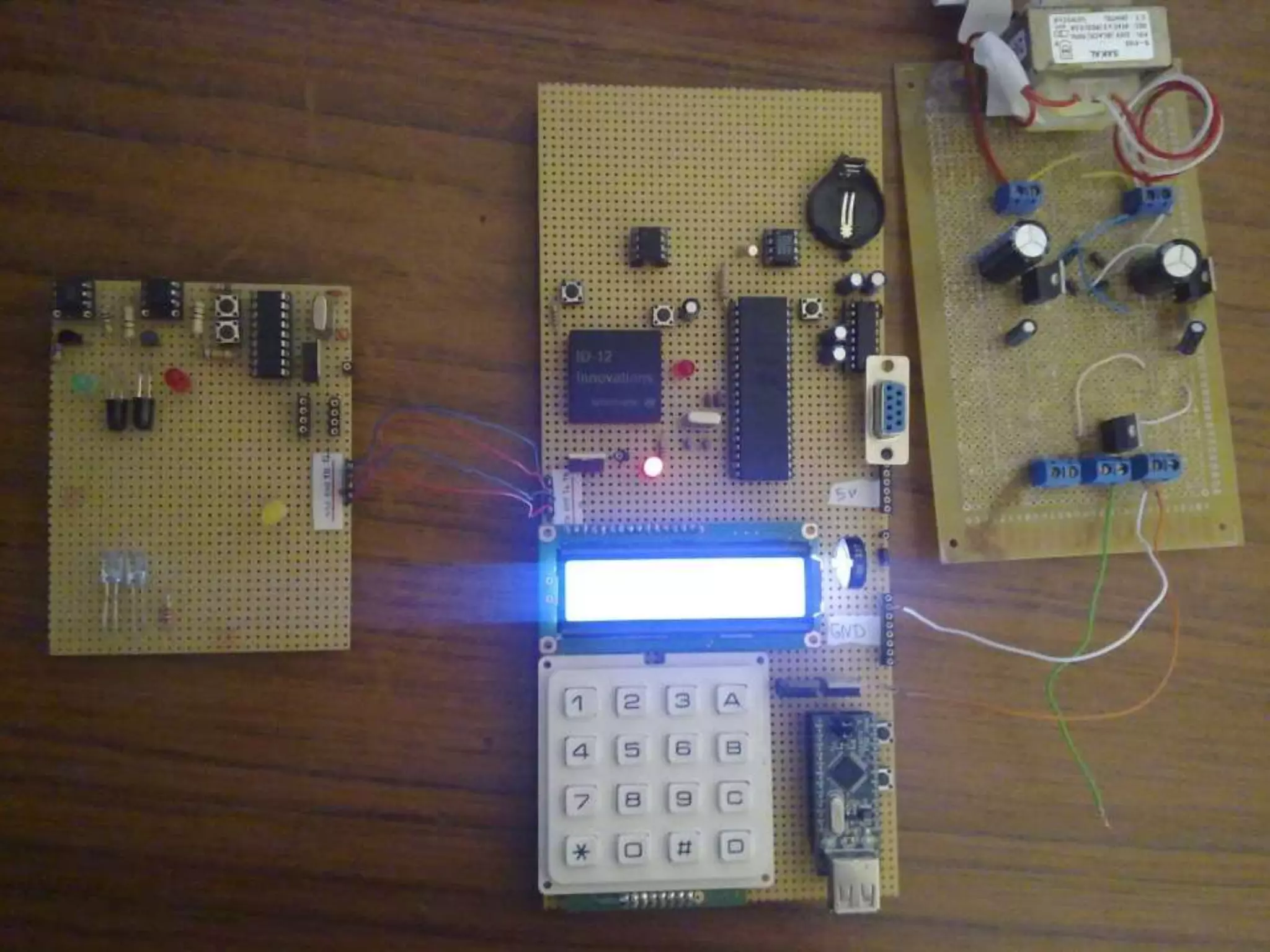
RFID BASED ATTENDANCE SYSTEM
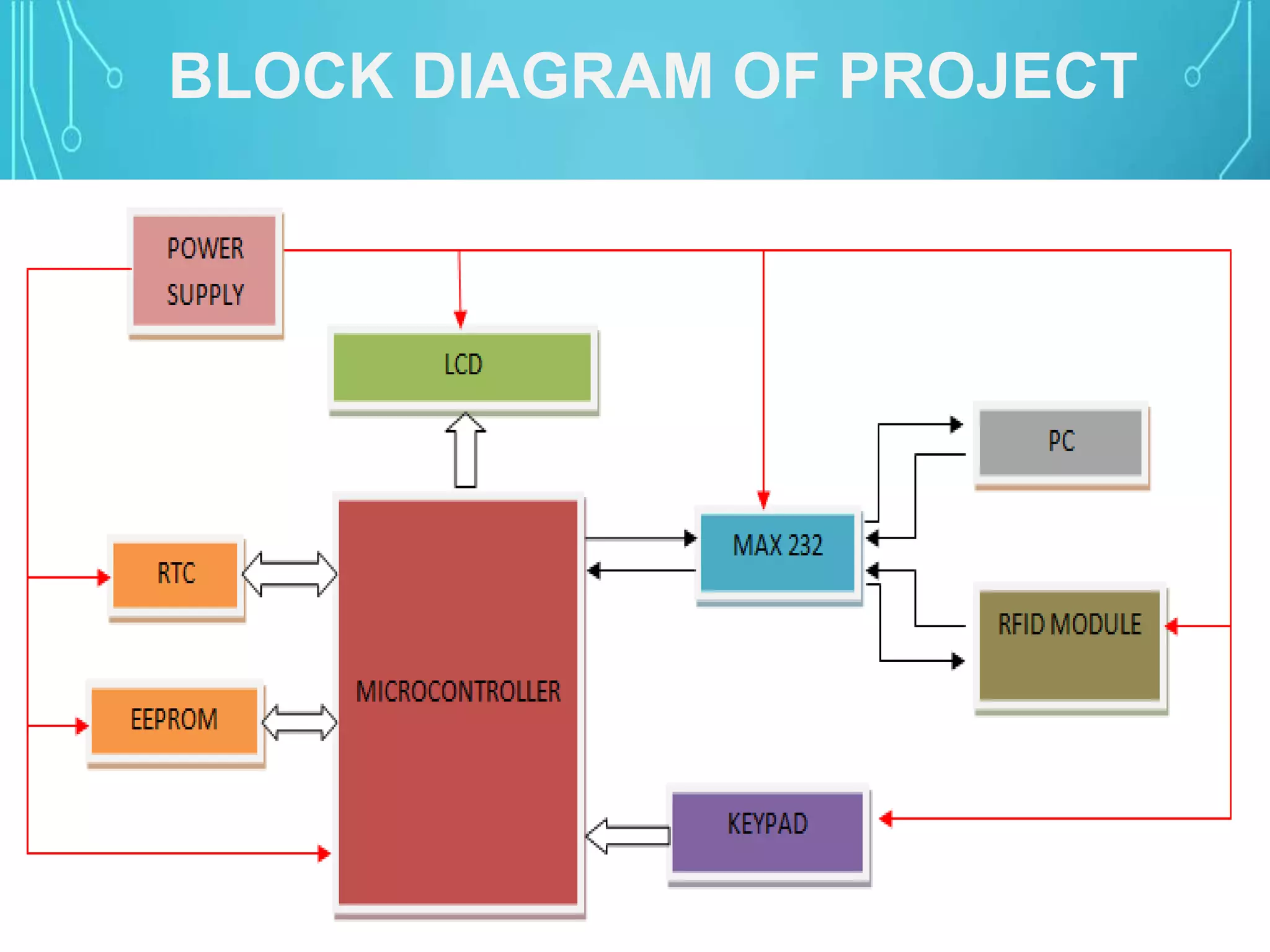
BLOCK DIAGRAM OF PROJECT
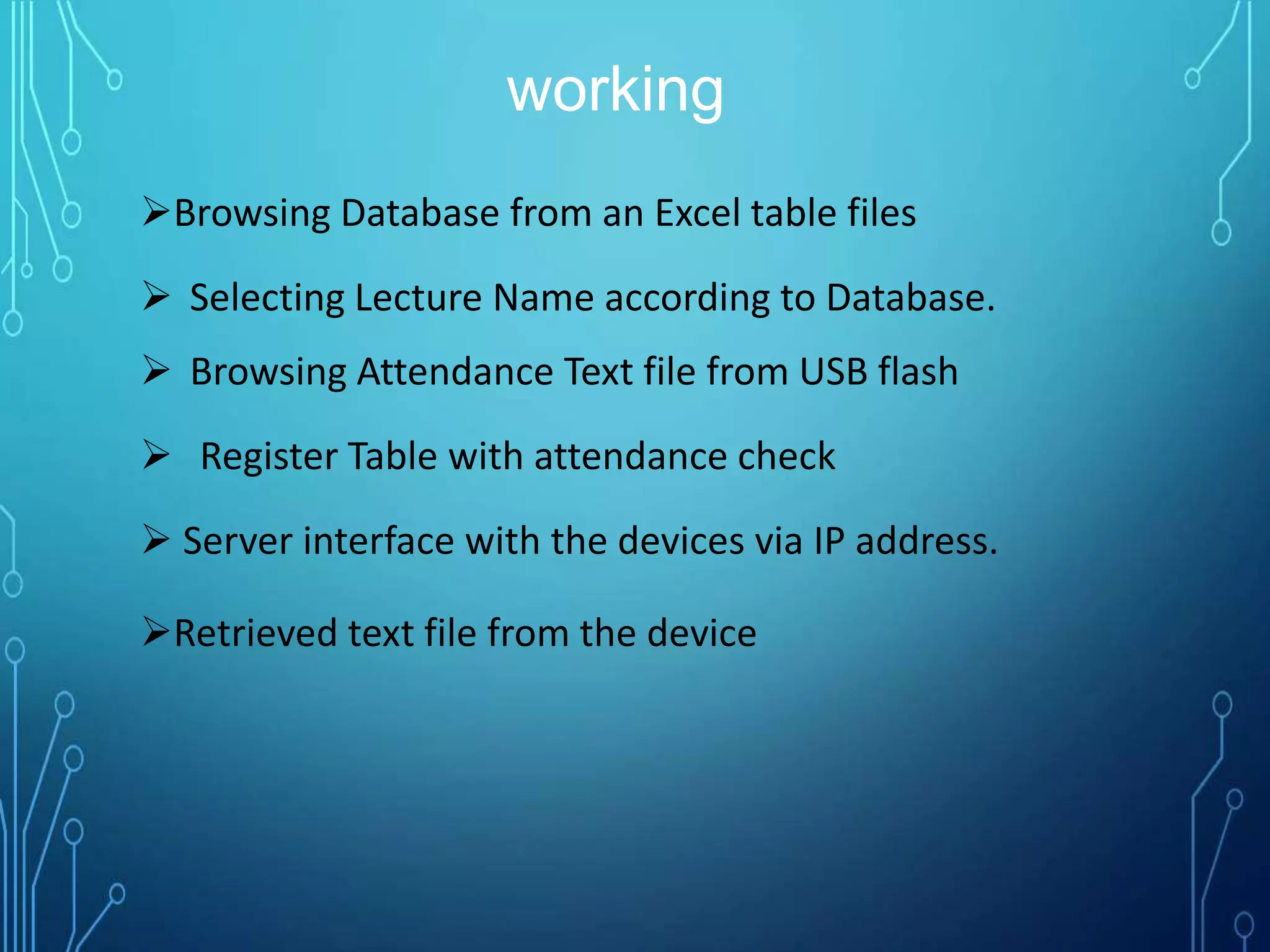
working
Browsing Database from an Excel table files
 Selecting Lecture Name according to Database.
 Browsing Attendance Text file from USB flash
 Register Table with attendance check
 Server interface with the devices via IP address.
Retrieved text file from the device
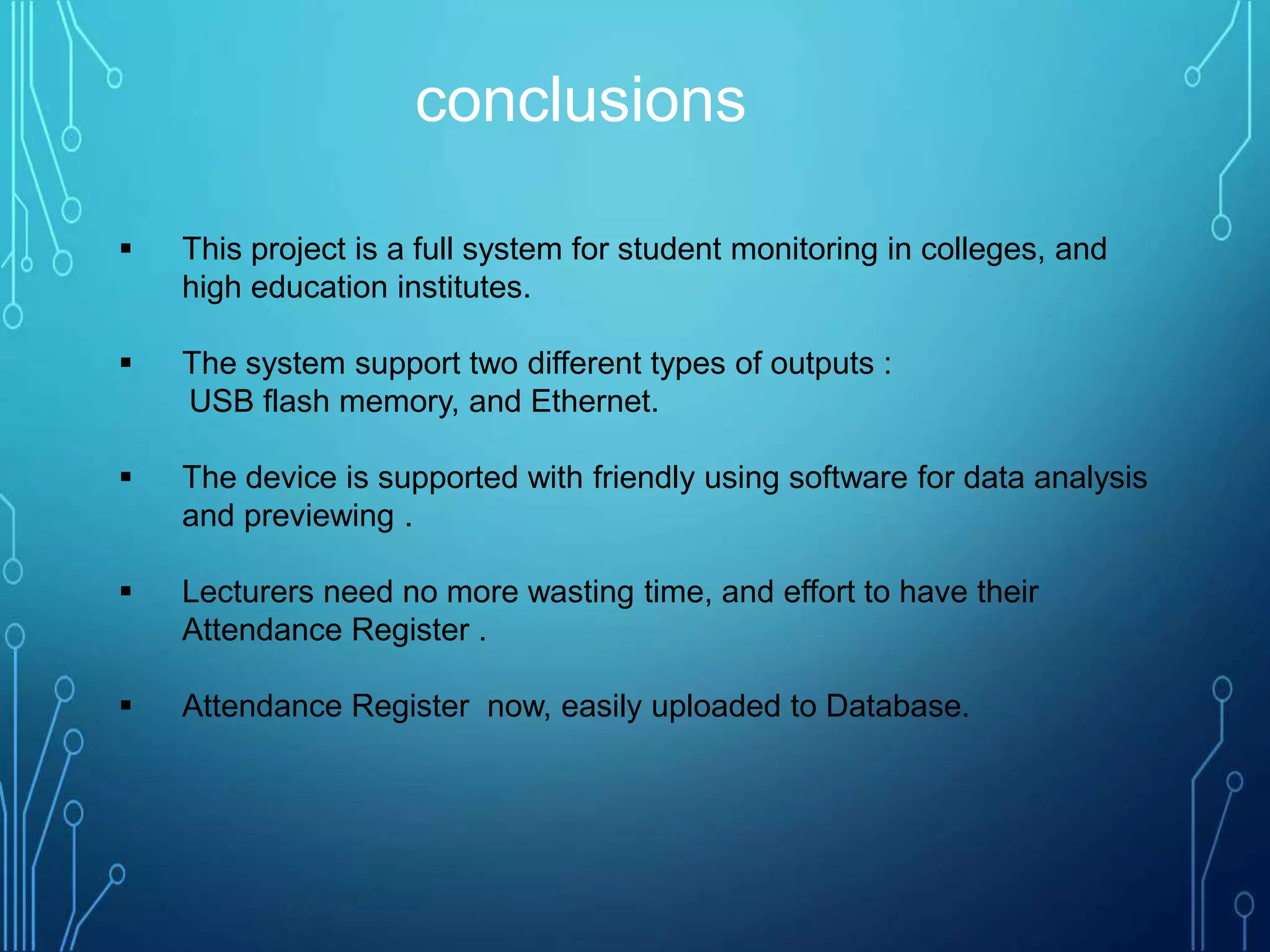
 This project is a full system for student monitoring in colleges, and
high education institutes.
 The system support two different types of outputs :
USB flash memory, and Ethernet.
 The device is supported with friendly using software for data analysis
and previewing .
 Lecturers need no more wasting time, and effort to have their
Attendance Register .
 Attendance Register now, easily uploaded to Database.
conclusions
Rfid based attendance system

Rfid based attendance system

  • 1.
  • 2.
    INDEX RFID •Working •Applications RFID Vs Barcodes •Description •Types RFIDbased attendance system •Block diagram •Circuit diagram •Algorithm •working
  • 4.
    Tags (or chips)consist of two parts: 1) Antennae 2) Processor/ storage Receives signal from reader and gives a return signal with ID number Reader sends number to database or server WORKING OF RFID
  • 5.
    ACTIVE: Tag signal availabilityof 100ft. HIGH signal strength VERY LOW required signal strength from the reader example : Railway cars on a track SEMI- PASSIVE: Tag signal availability only within field of reader LOW signal strength LOW required signal strength from the reader PASSIVE: Tag signal availability < 10 ft. VERY LOW signal strength VERY HIGH signal strength required from reader example : Retail Checkout ( Widely used because very cheap to make) TYPES
  • 6.
    Advanced Product Tracking Real-time data management Dramatic benefits to manufacturing process Quick Convenience Grocery Store, Library, Hospital Instant identification Time saver Safety and Security Locate/identify missing persons Monitor prisoners Easy Access Access by authorized personnel only Ease security concerns APPLICATIONS
  • 7.
    Does not requirehuman to manually pass item over scanner. More accurate inventory count. Can be incorporated into product, person, animal. Can track each individual item. RFID vs. Bar Codes
  • 8.
  • 9.
  • 12.
    working Browsing Database froman Excel table files  Selecting Lecture Name according to Database.  Browsing Attendance Text file from USB flash  Register Table with attendance check  Server interface with the devices via IP address. Retrieved text file from the device
  • 13.
     This projectis a full system for student monitoring in colleges, and high education institutes.  The system support two different types of outputs : USB flash memory, and Ethernet.  The device is supported with friendly using software for data analysis and previewing .  Lecturers need no more wasting time, and effort to have their Attendance Register .  Attendance Register now, easily uploaded to Database. conclusions