Linking research and management of food safety within One Health/Ecohealth context in Vietnam: Concepts & Applications Hanoi School of Public Health, Vietnam ILRI - International Livestock Research Institute, Kenya, Vietnam, Thailand & Laos H. Nguyen-Viet, D. Grace, M. L. Lapar, F. Unger, J. McDermott, J. Gilbert Chiang Mai, 21-22 July 2011
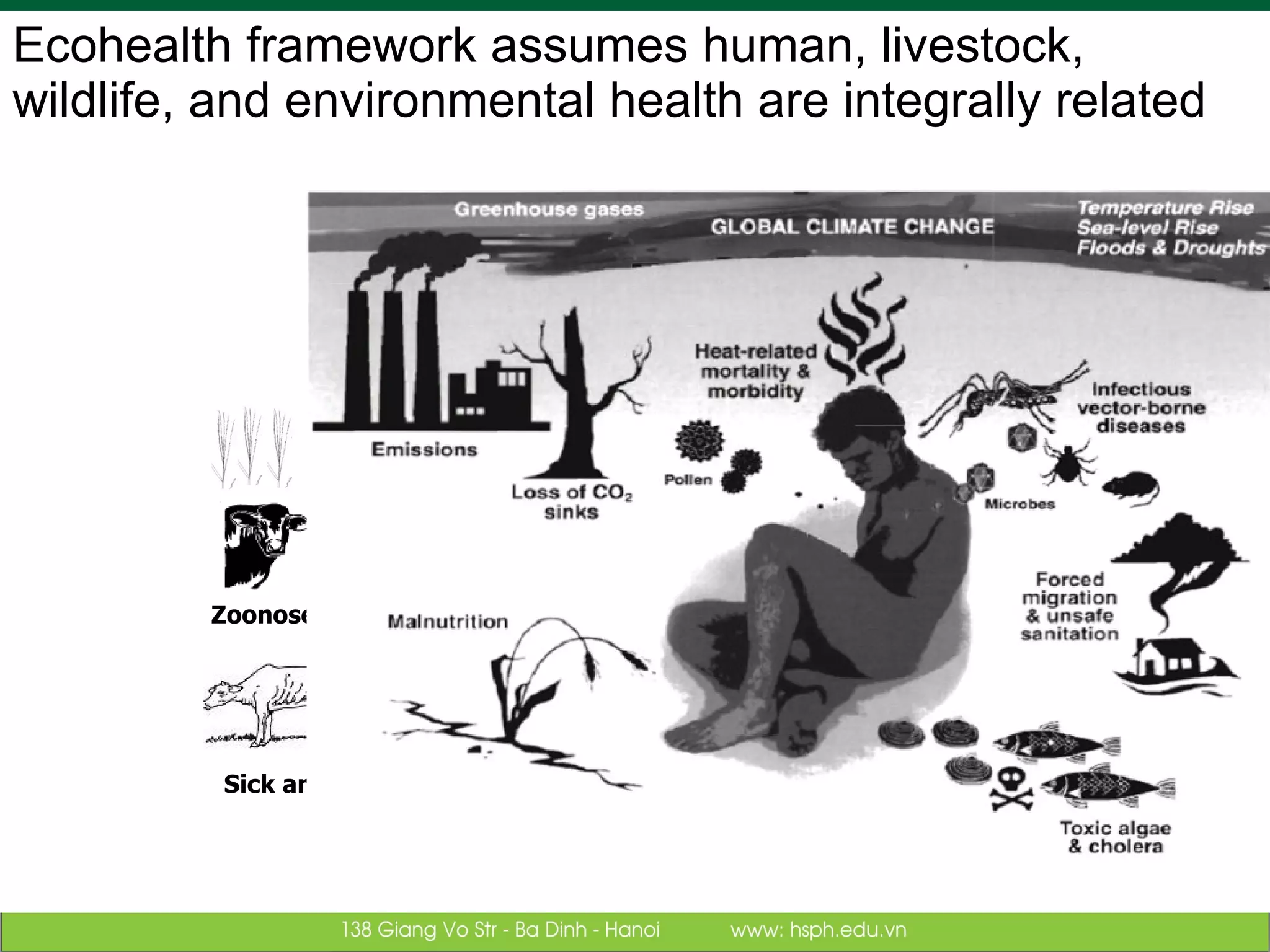
Ecohealth framework assumes human, livestock, wildlife, and environmental health are integrally related Sick animals Zoonoses
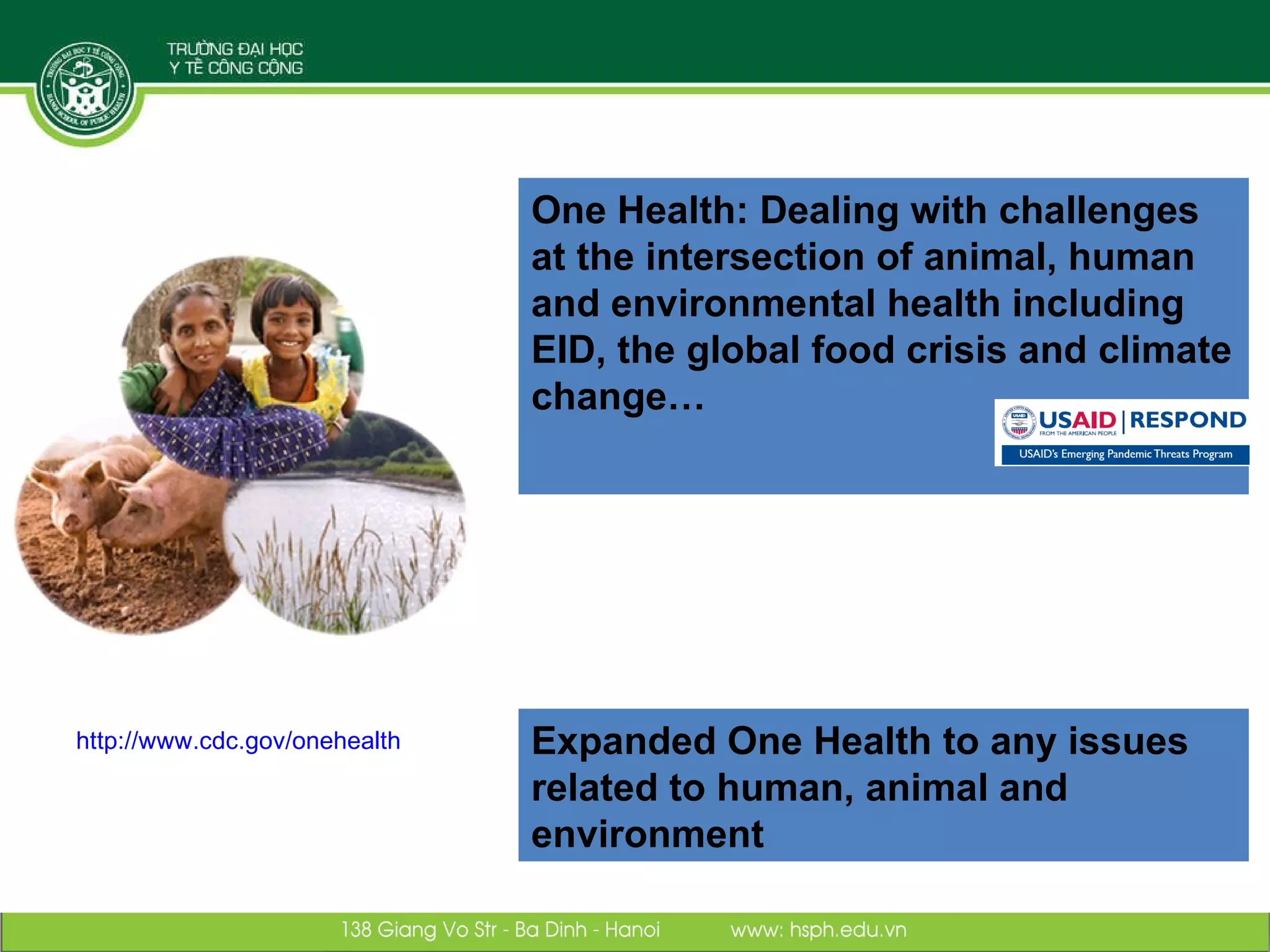
http:// www.cdc.gov/onehealth One Health: Dealing with challenges at the intersection of animal, human and environmental health including EID, the global food crisis and climate change… Expanded One Health to any issues related to human, animal and environment
Challenges of OH/EH Motivation for OH/EH at different levels Cost/Benefit of OH/EH L inking research and management of specific health issues within the  OH/EH
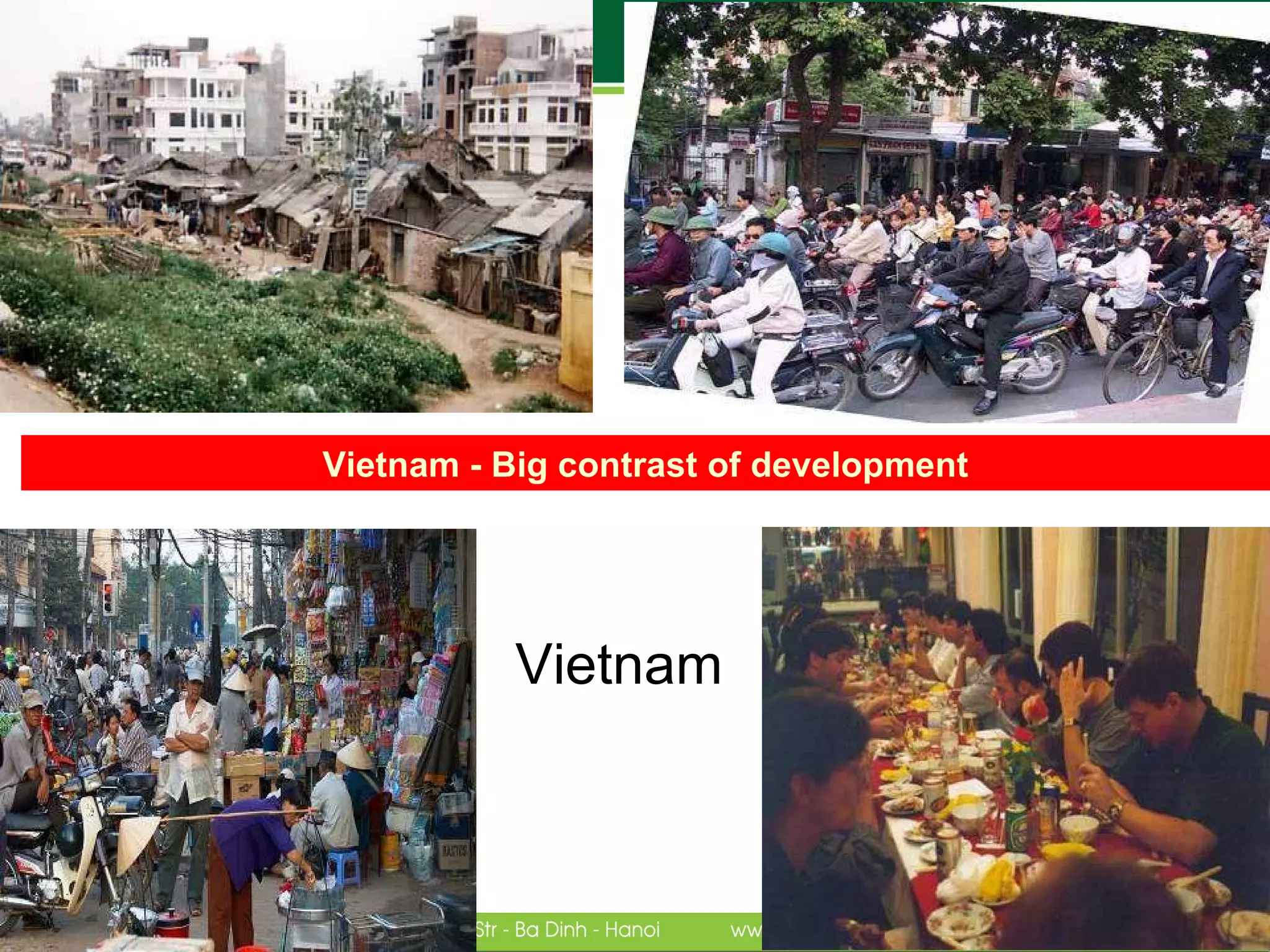
Vietnam - Big contrast of development Vietnam
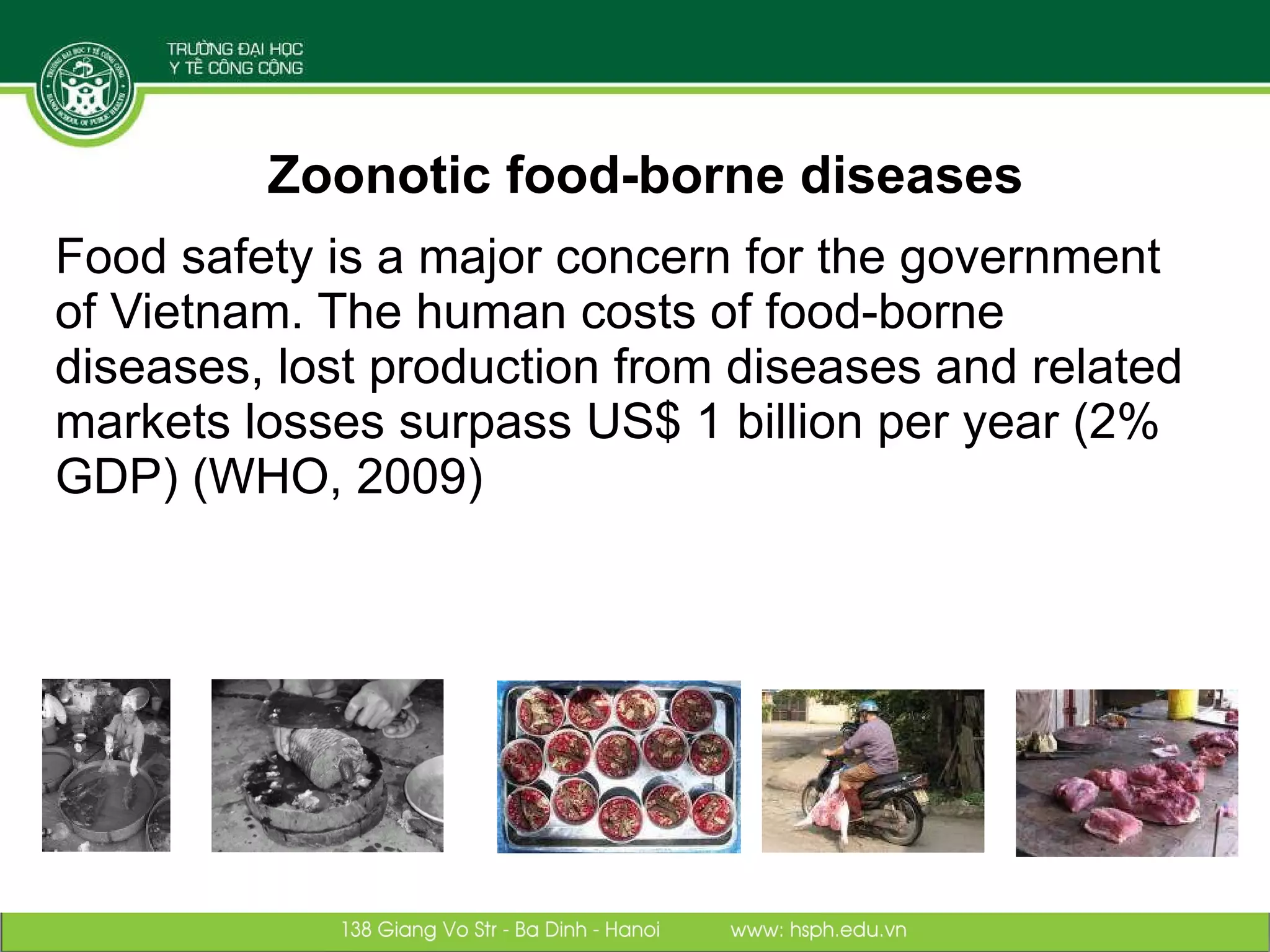
Zoonotic food-borne diseases Food safety is a major concern for the government of Vietnam. The human costs of food-borne diseases, lost production from diseases and related markets losses surpass US$ 1 billion per year (2% GDP) (WHO, 2009)
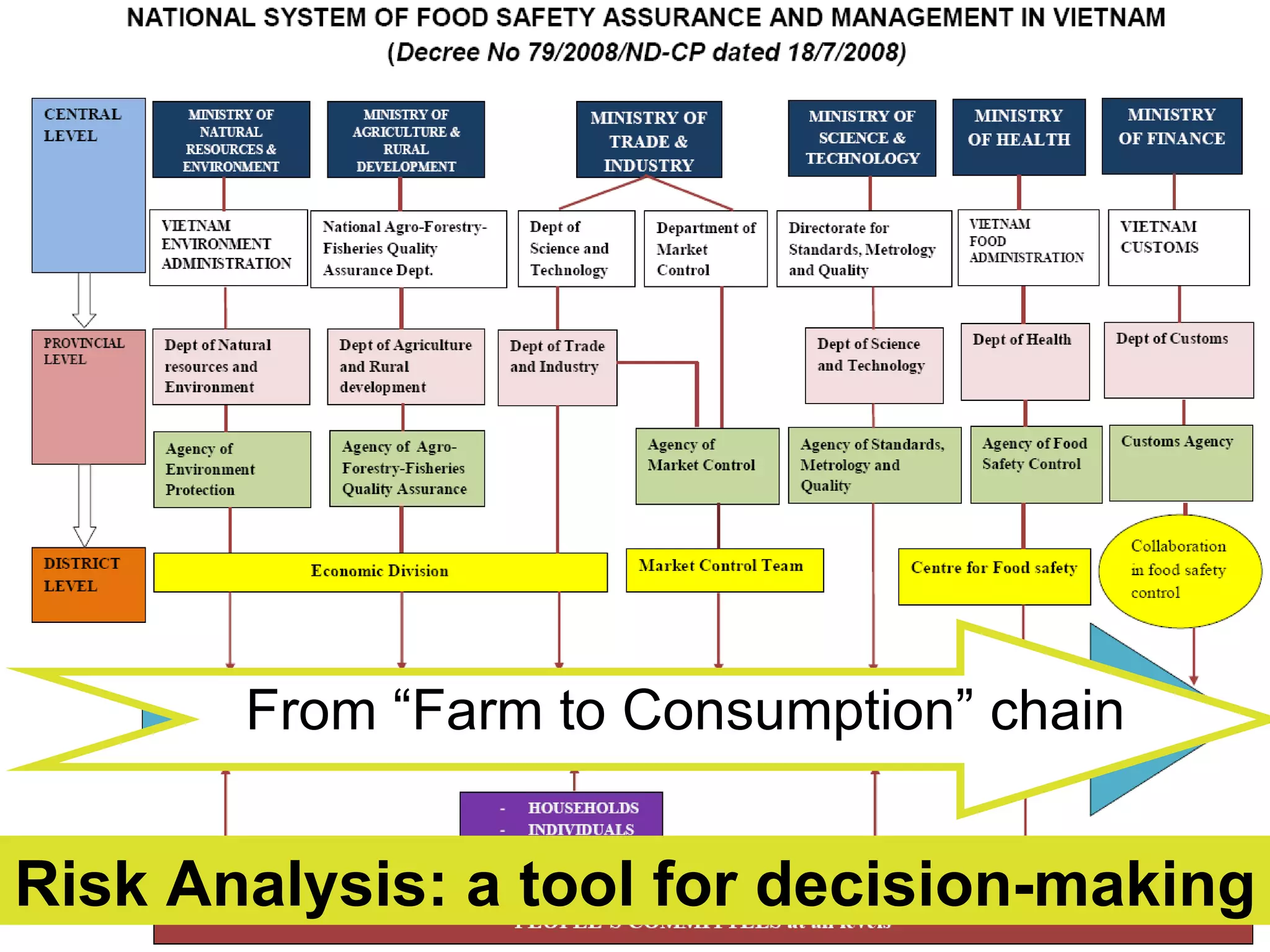
From “Farm to Consumption” chain Risk Analysis:  a tool for decision-making
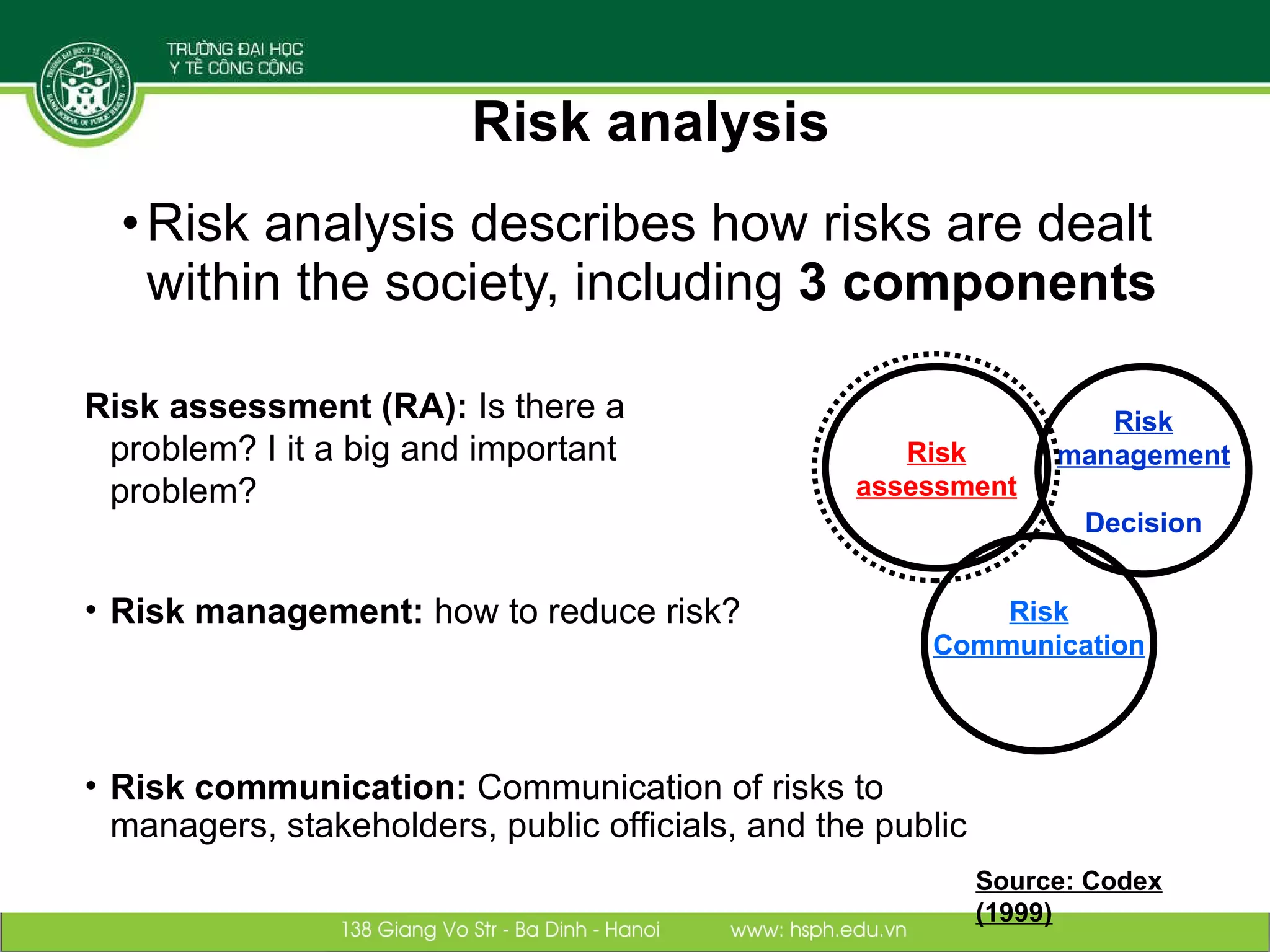
Risk analysis Risk analysis describes how risks are dealt within the society, including  3 components Risk assessment Risk management Decision Risk Communication Risk communication:  Communication of risks to managers, stakeholders, public officials, and the public Risk management:  how to reduce risk? Risk assessment (RA):  Is there a problem? I it a big and important problem?  Source: Codex (1999)
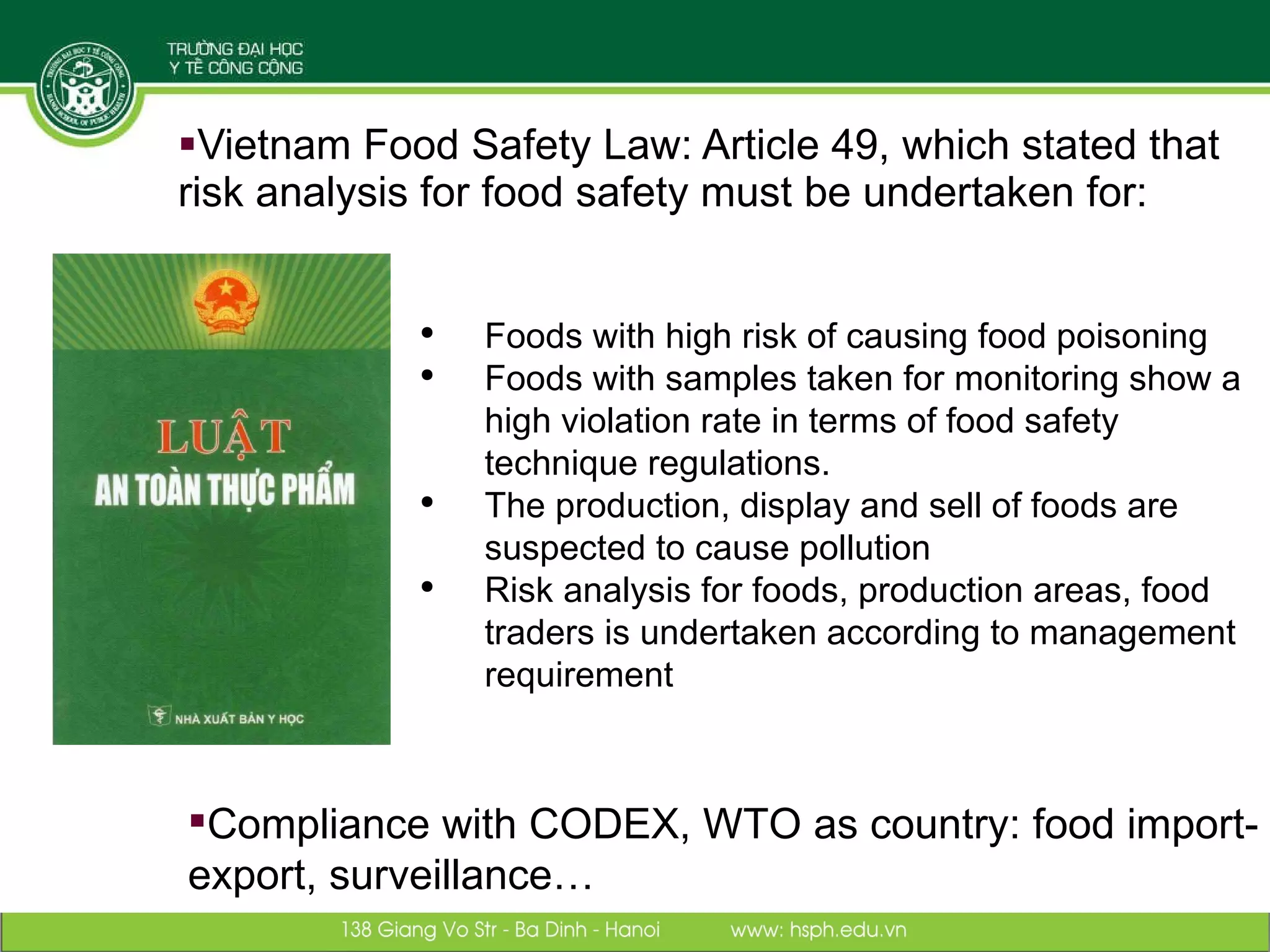
Vietnam Food Safety Law: Article 49, which stated that risk analysis for food safety must be undertaken for: Foods with high risk of causing food poisoning Foods with samples taken for monitoring show a high violation rate in terms of food safety technique regulations. The production, display and sell of foods are suspected to cause pollution Risk analysis for foods, production areas, food traders is undertaken according to management requirement Compliance with CODEX, WTO as country : food import-export, surveillance…
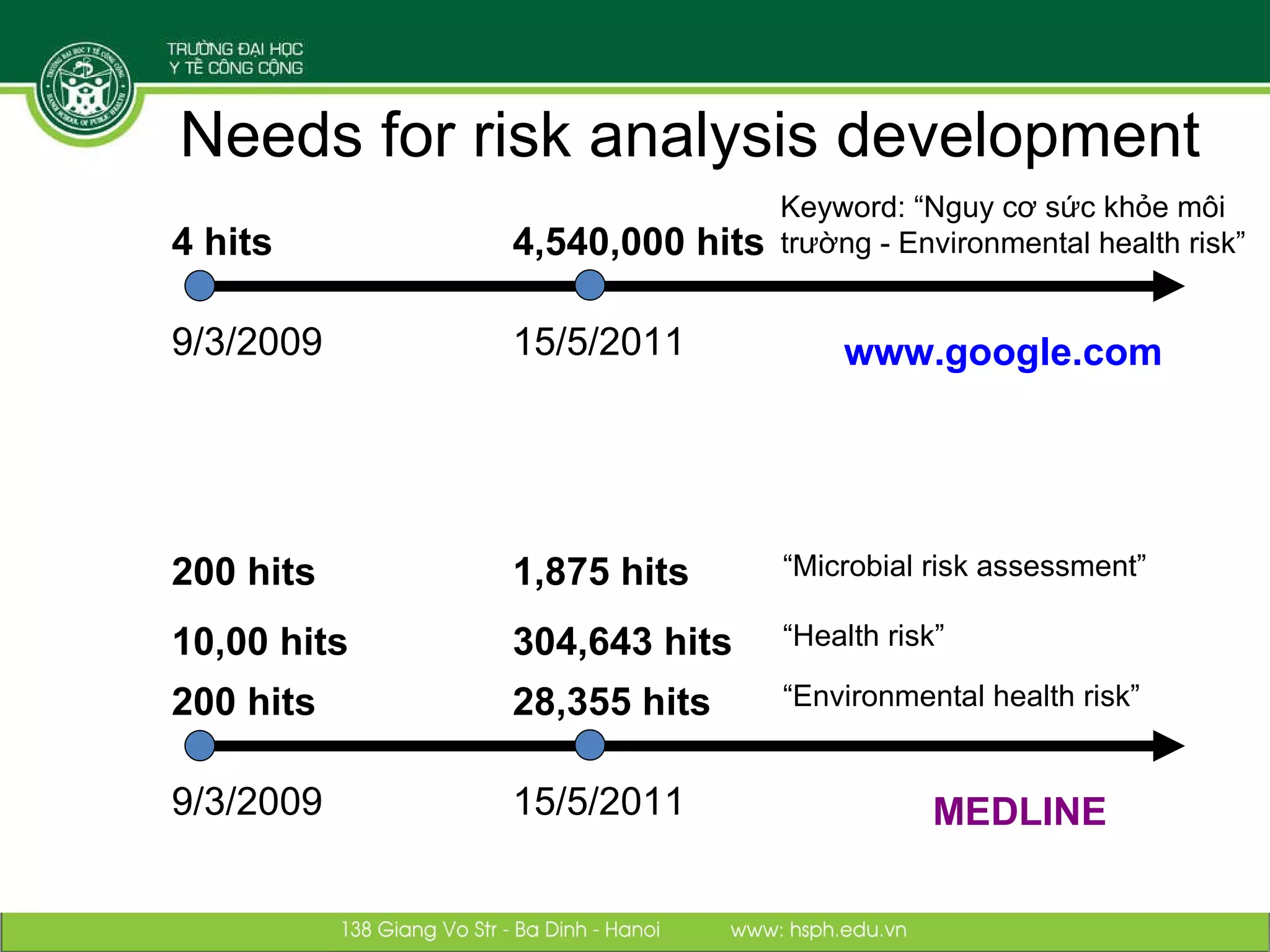
9/3/2009 www.google.com   15/5/2011 4 hits 4,540,000 hits Keyword: “Nguy cơ sức khỏe môi trường - Environmental health risk” 9/3/2009 MEDLINE 15/5/2011 200 hits 28,355 hits “ Environmental health risk” 10,00 hits 304,643 hits “ Health risk” 200 hits 1,875 hits “ Microbial risk assessment” Needs for risk analysis development
Training on risk assessment General goal : developing a training module on health risk assessment related to water supply, sanitation and food in Vietnam Specific objectives :  to develop a training module on heath risk assessment related to water supply, sanitation and food to test the developed training module with various stakeholders of health risk assessment using approach learning by doing (perspective): policy implication, replication elsewhere
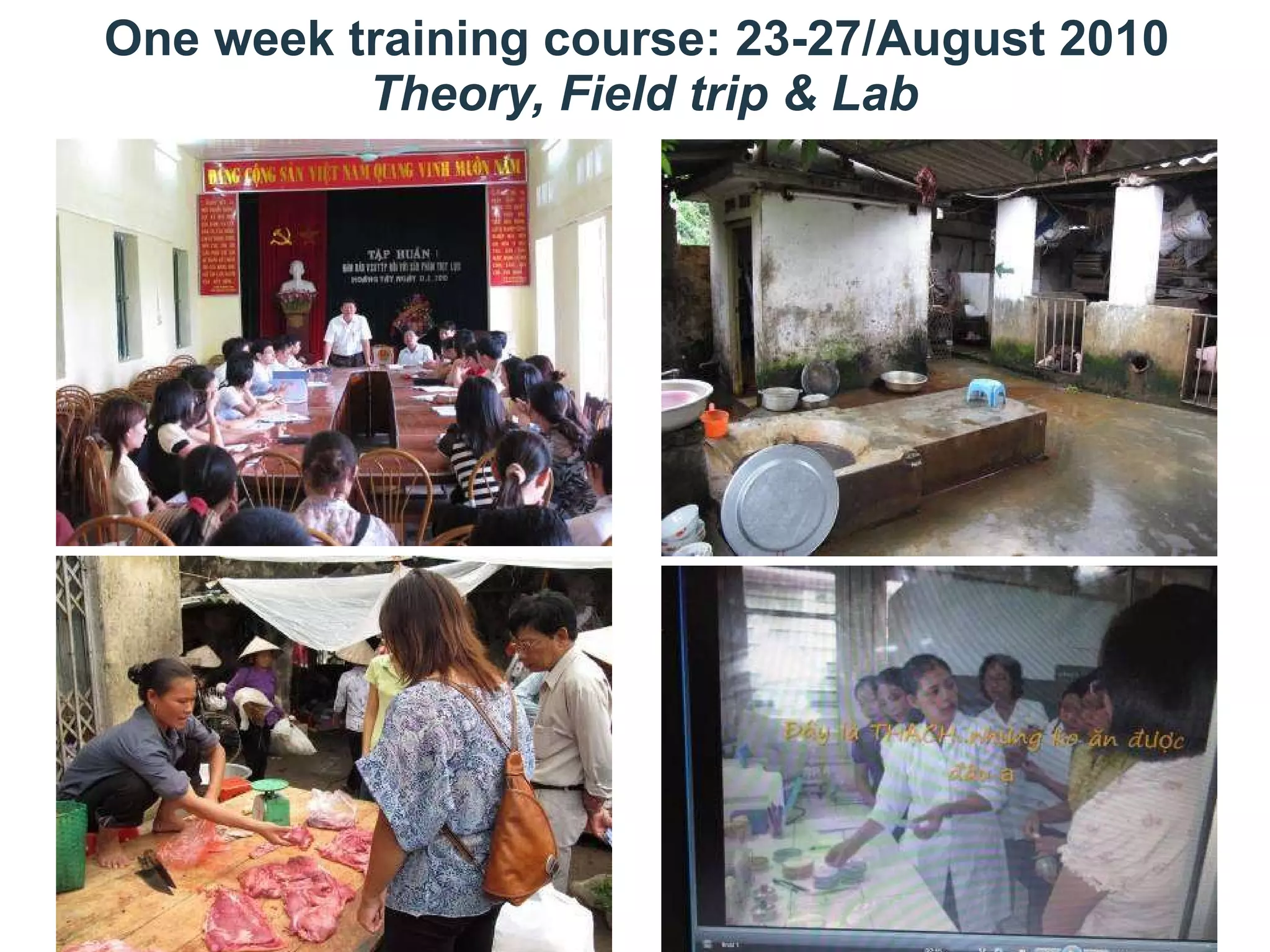
One week training course: 23-27/August 2010   Theory, Field trip & Lab
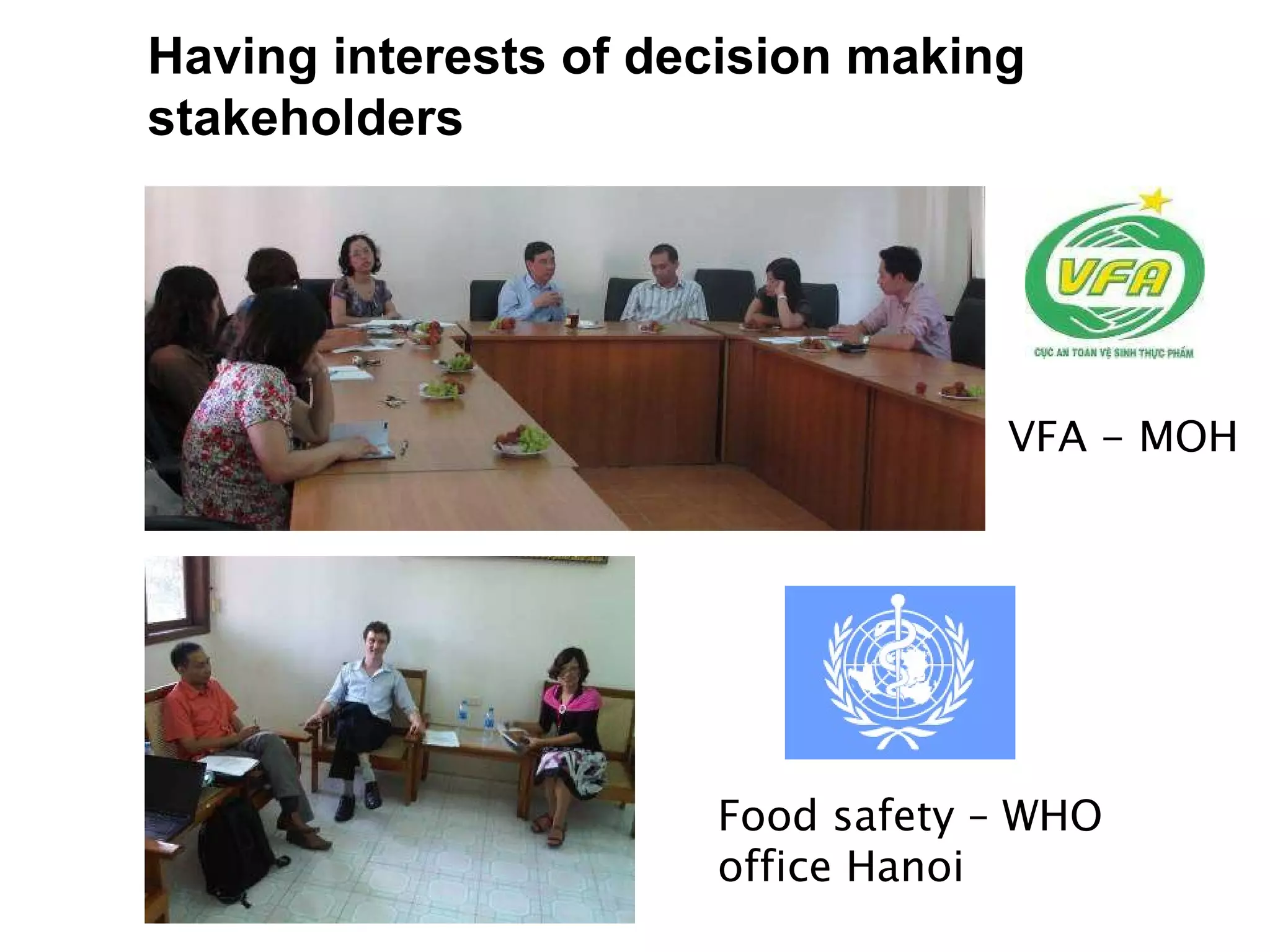
Having interests of decision making stakeholders VFA - MOH Food safety – WHO office Hanoi
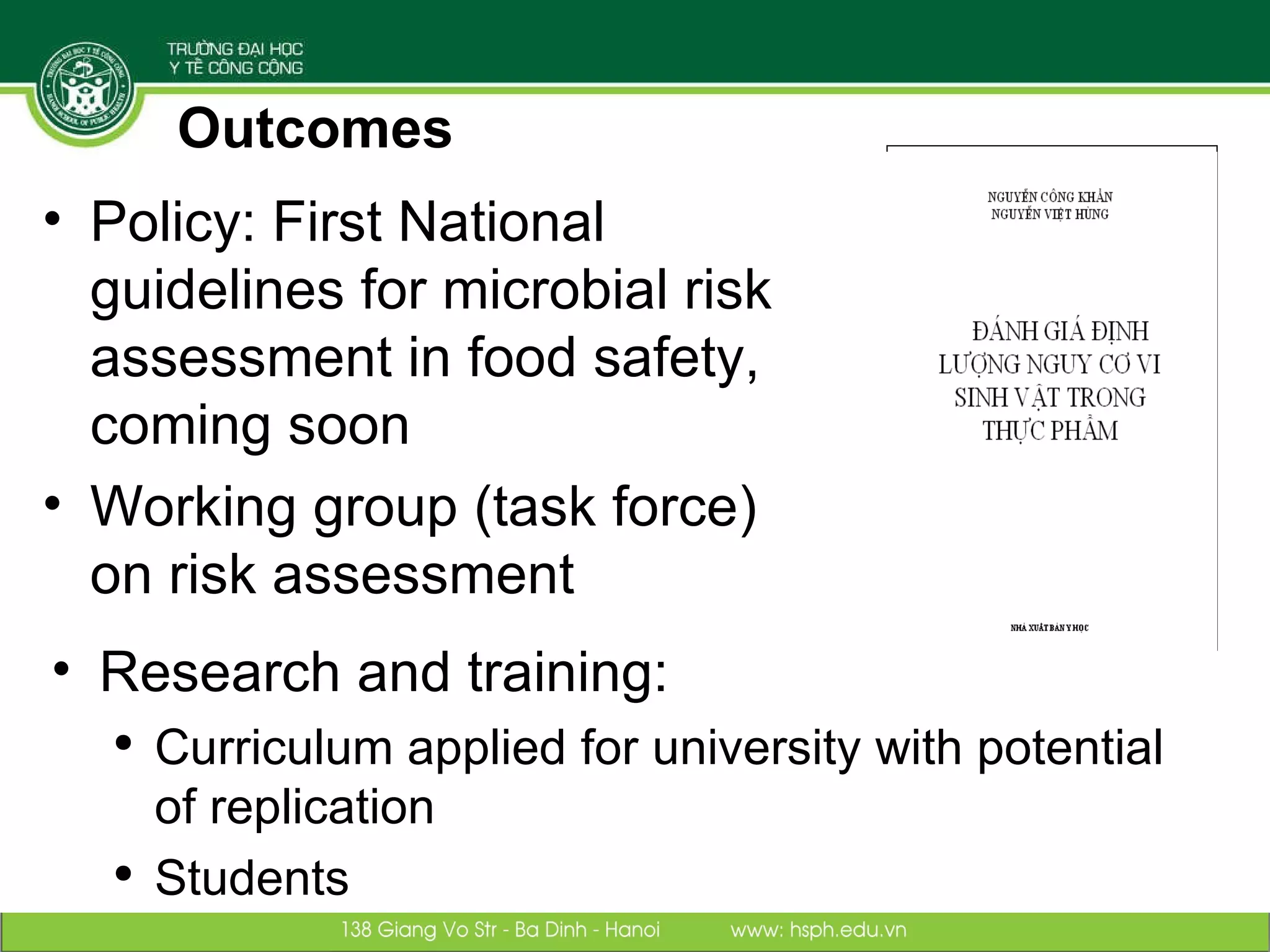
Outcomes Policy: First National guidelines for microbial risk assessment in food safety, coming soon Working group (task force) on risk assessment Research and training:  Curriculum applied for university with potential of replication Students
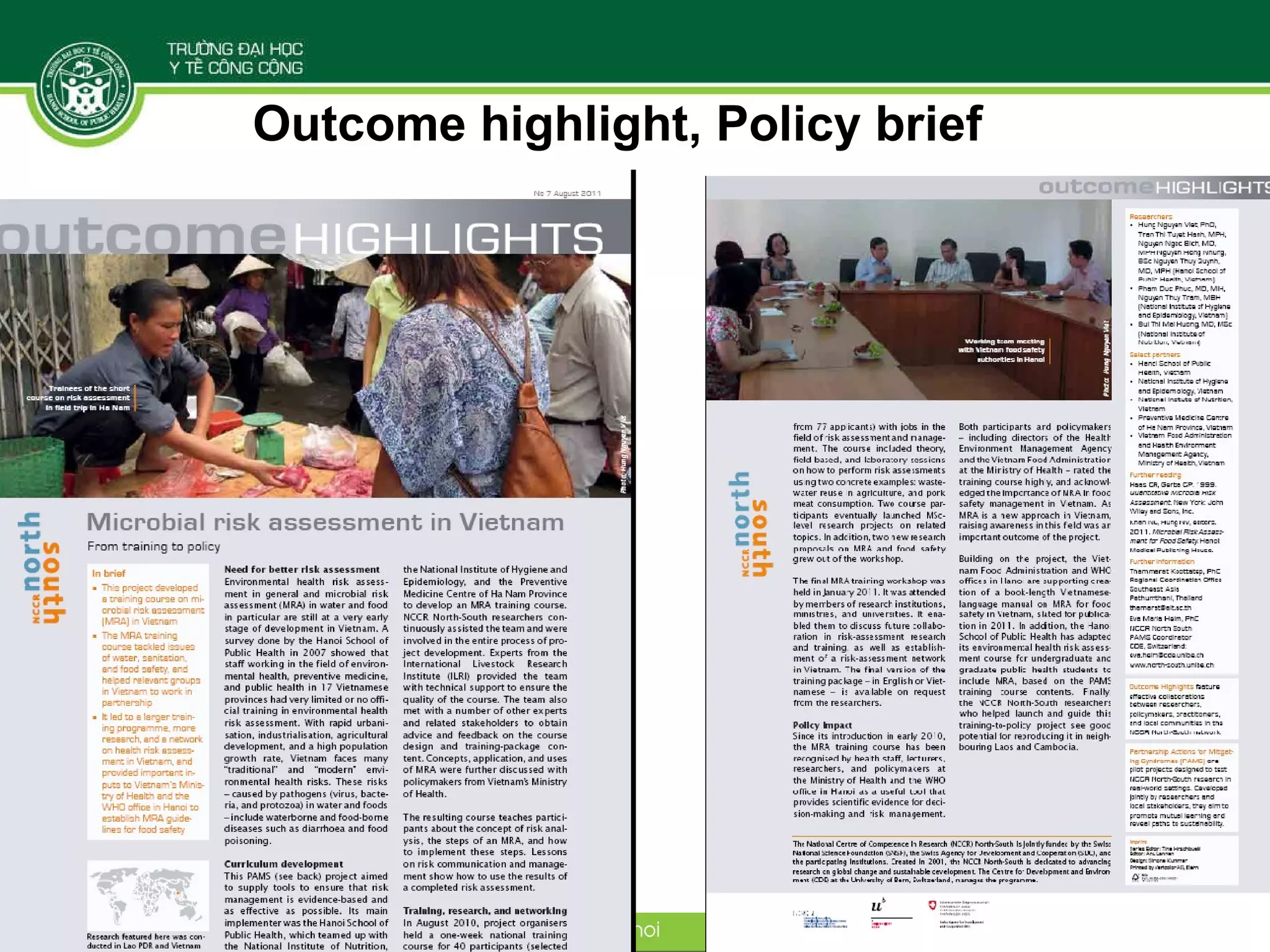
Outcome highlight, Policy brief
ILRI research on food safety in Vietnam
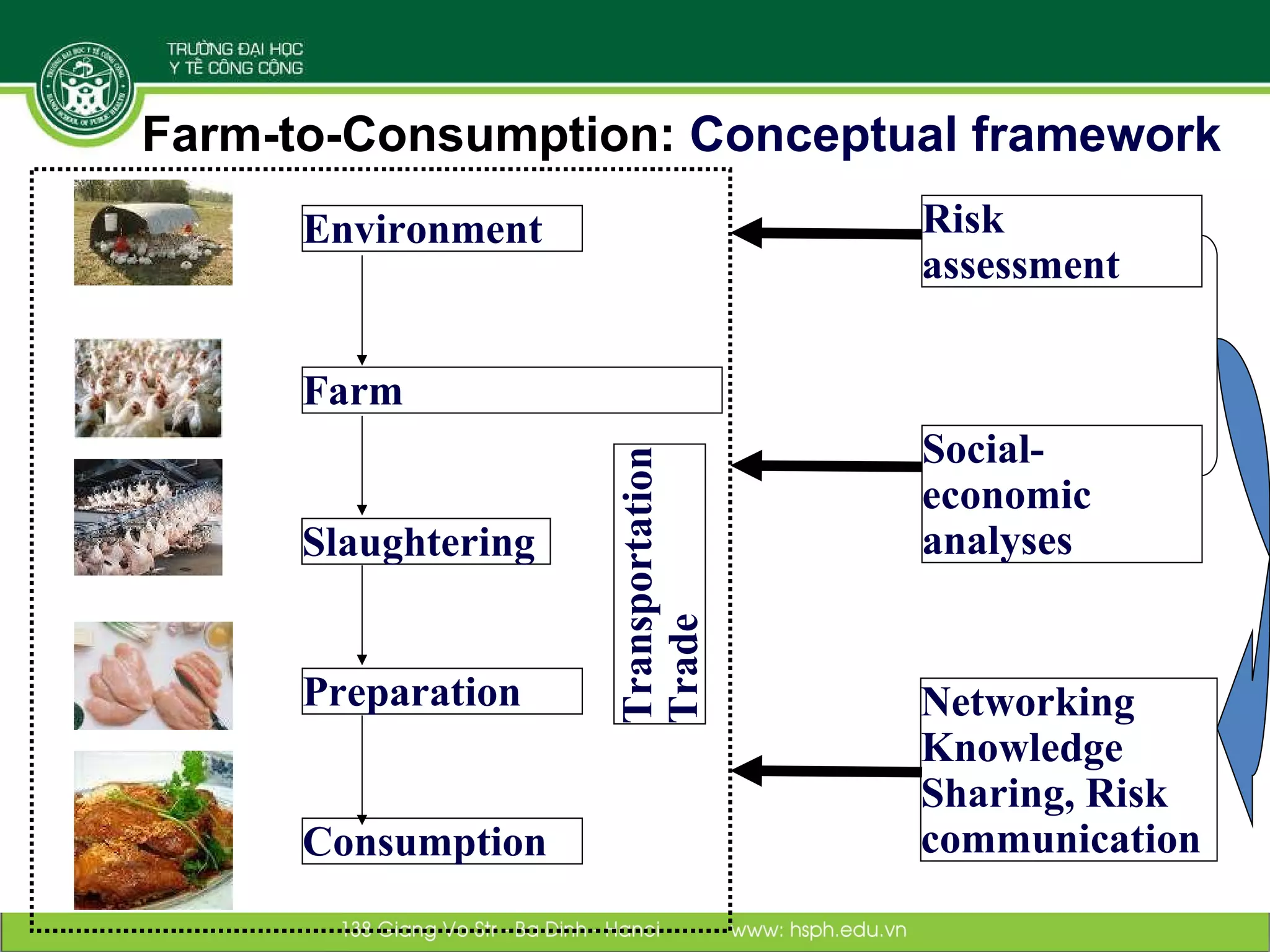
Environment Slaughtering Preparation Consumption Farm Risk assessment Social-economic analyses Networking Knowledge Sharing, Risk communication Transportation Trade Farm-to-Consumption:  Conceptual framework
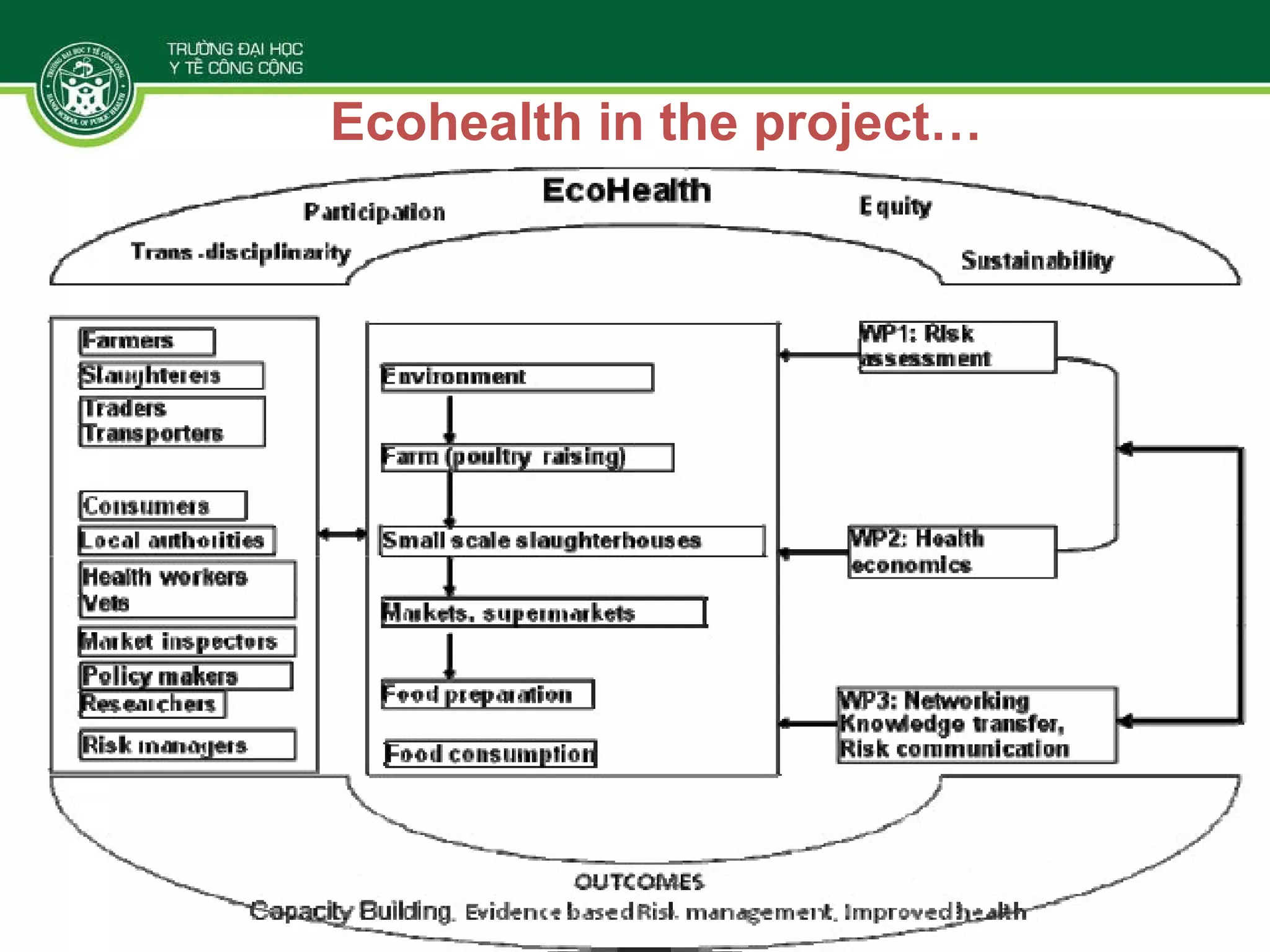
Ecohealth in the project…
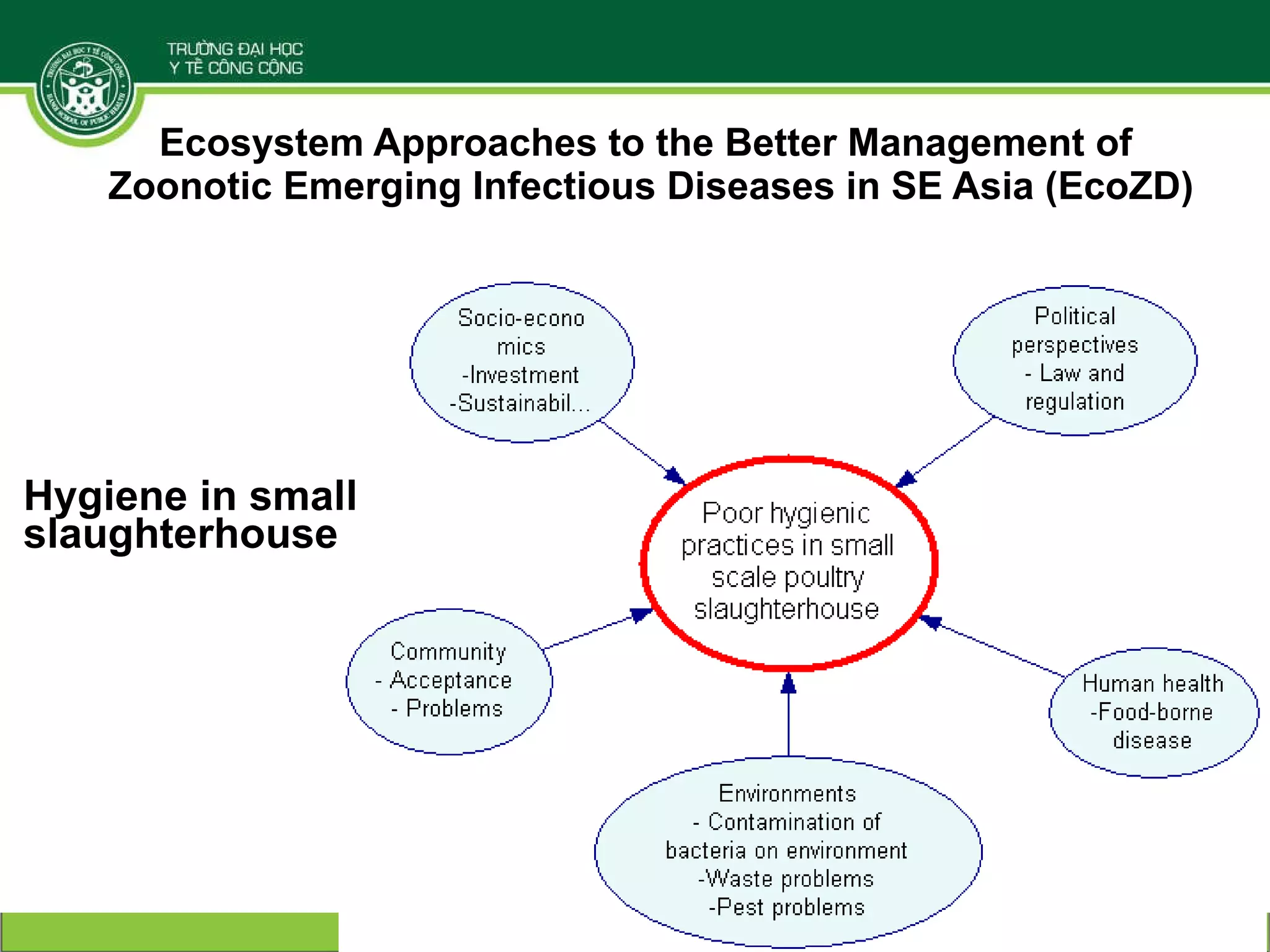
Ecosystem Approaches to the Better Management of  Zoonotic Emerging Infectious Diseases in SE Asia (EcoZD) Hygiene in small slaughterhouse
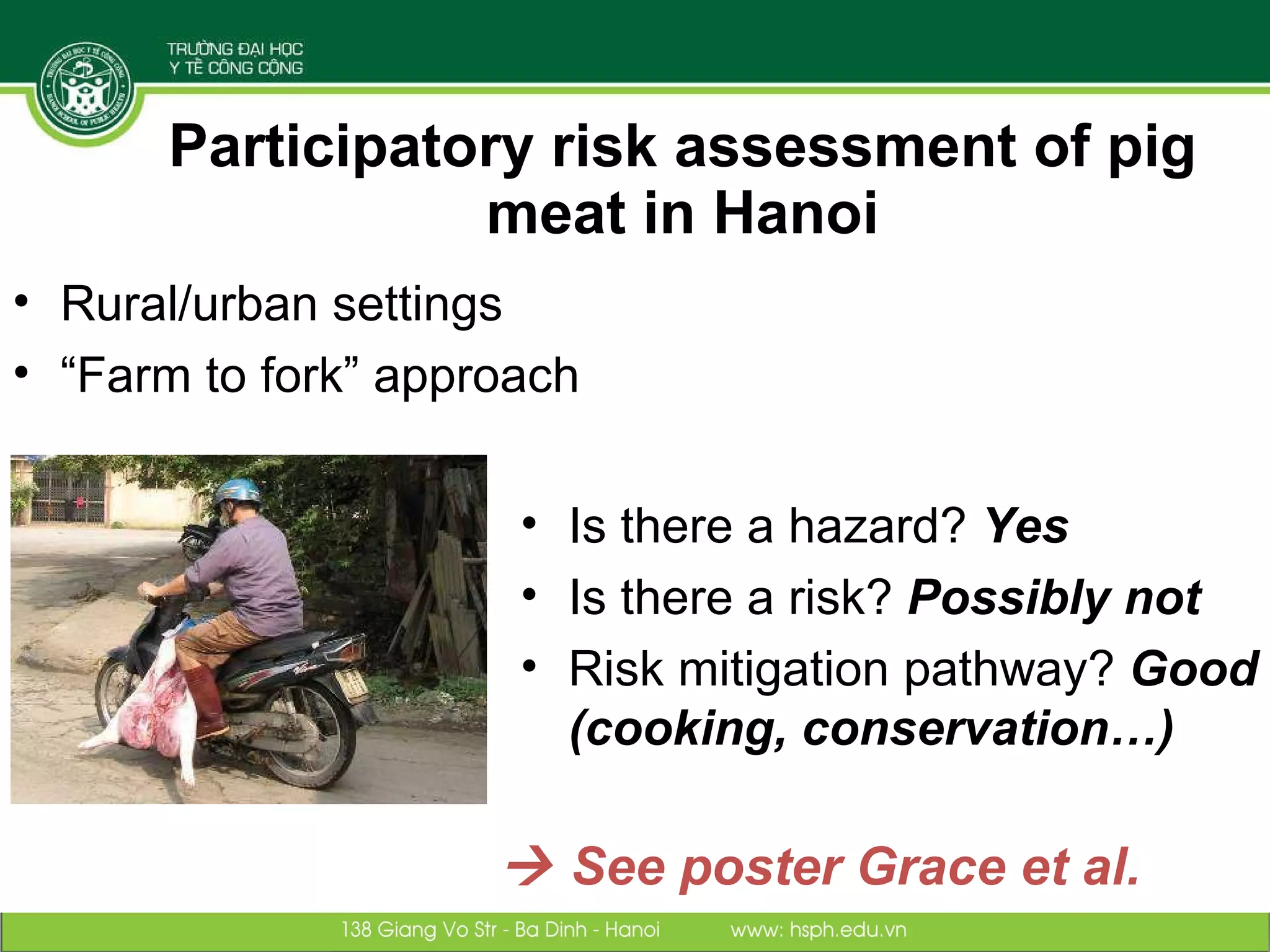
Participatory risk assessment of pig meat in Hanoi Is there a hazard?  Yes Is there a risk?  Possibly not Risk mitigation pathway?  Good (cooking, conservation…)    See poster Grace et al. Rural/urban settings “ Farm to fork” approach
 
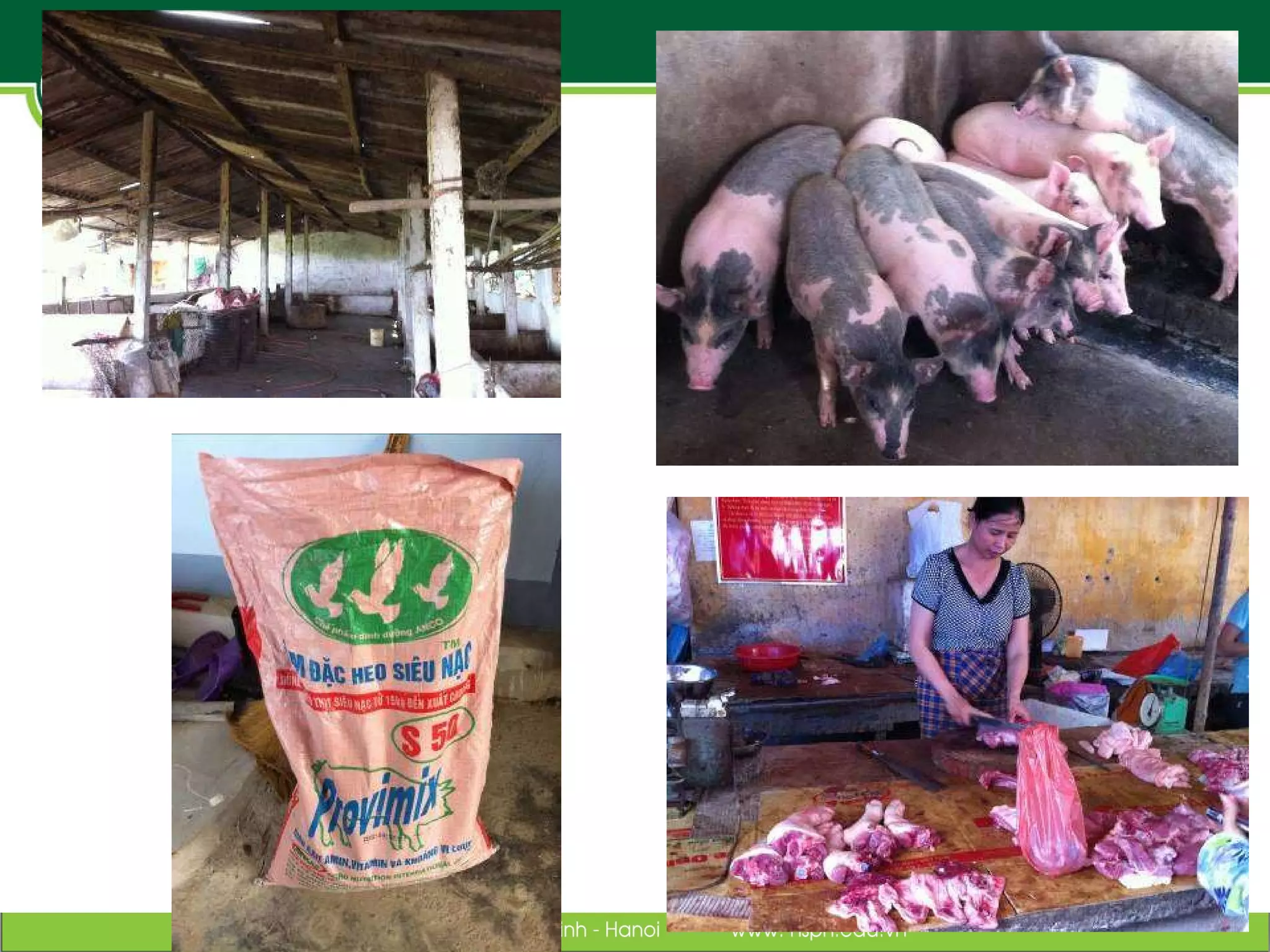
Reducing disease risks and  improving food safety  in smallholder pig value chains in Vietnam (ACIAR) Assess impacts of pork-borne diseases on human health and the livestock sector: risk assessment and economic assessment. Develop and test market-based innovations to improve management of human and animal health risks: impact assessment covering technical efficacy, but also cost/benefit, acceptability and sustainability. Communicate the lessons and tools learned to sustainably improve capacity to assess and manage risks in the pork value chain
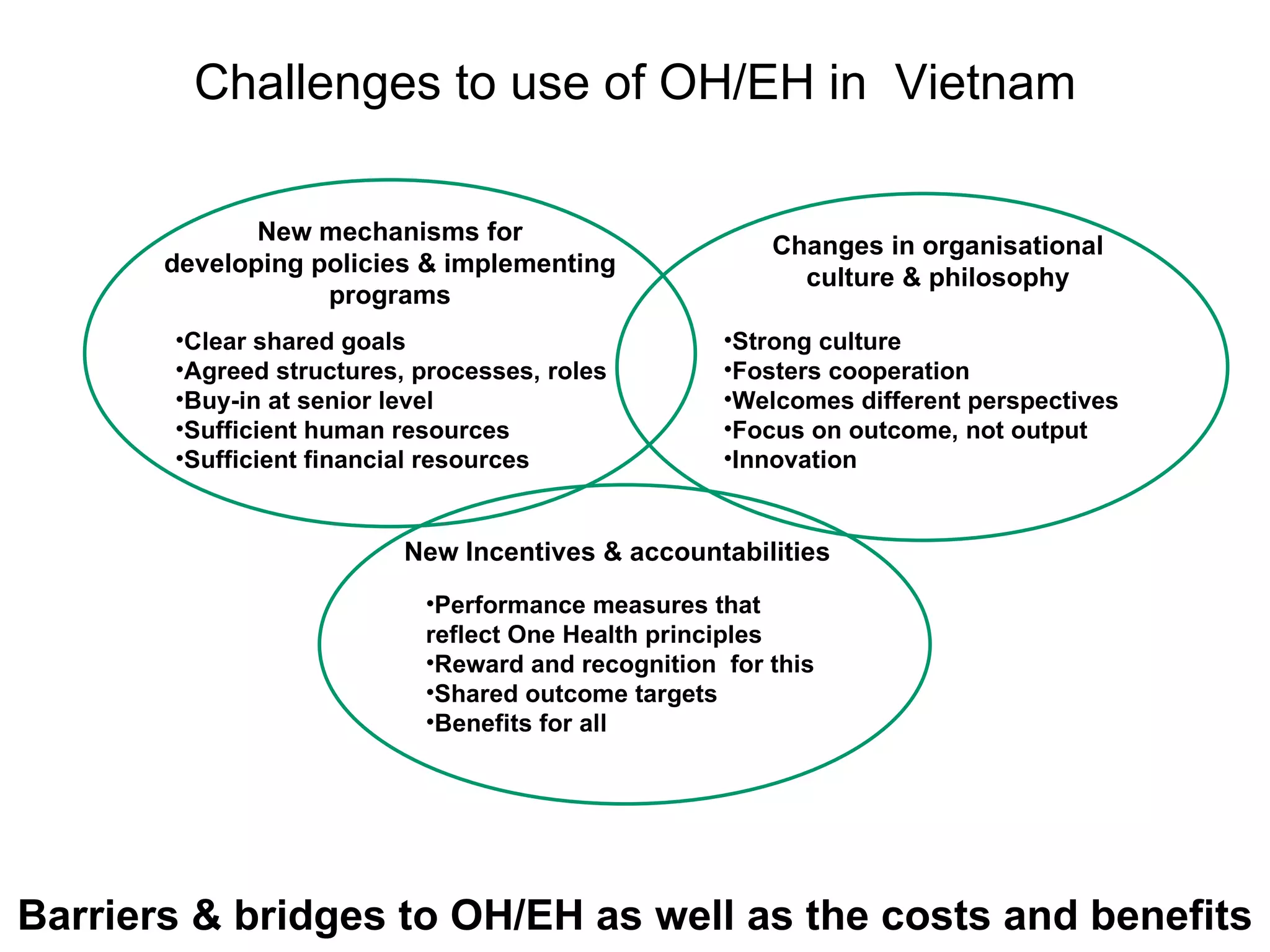
Barriers & bridges to OH/EH as well as the costs and benefits  Challenges to use of OH/EH in  Vietnam New mechanisms for developing policies & implementing programs New Incentives & accountabilities Changes in organisational culture & philosophy Clear shared goals Agreed structures, processes, roles Buy-in at senior level Sufficient human resources Sufficient financial resources Strong culture Fosters cooperation Welcomes different perspectives Focus on outcome, not output Innovation  Performance measures that reflect One Health principles Reward and recognition  for this Shared outcome targets Benefits for all
Acknowledgements

Linking research and management of food safety within One health/ecohealth context in Vietnam: Concepts and applications

  • 1.
    Linking research andmanagement of food safety within One Health/Ecohealth context in Vietnam: Concepts & Applications Hanoi School of Public Health, Vietnam ILRI - International Livestock Research Institute, Kenya, Vietnam, Thailand & Laos H. Nguyen-Viet, D. Grace, M. L. Lapar, F. Unger, J. McDermott, J. Gilbert Chiang Mai, 21-22 July 2011
  • 2.
    Ecohealth framework assumeshuman, livestock, wildlife, and environmental health are integrally related Sick animals Zoonoses
  • 3.
    http:// www.cdc.gov/onehealth OneHealth: Dealing with challenges at the intersection of animal, human and environmental health including EID, the global food crisis and climate change… Expanded One Health to any issues related to human, animal and environment
  • 4.
    Challenges of OH/EHMotivation for OH/EH at different levels Cost/Benefit of OH/EH L inking research and management of specific health issues within the OH/EH
  • 5.
    Vietnam - Bigcontrast of development Vietnam
  • 6.
    Zoonotic food-borne diseasesFood safety is a major concern for the government of Vietnam. The human costs of food-borne diseases, lost production from diseases and related markets losses surpass US$ 1 billion per year (2% GDP) (WHO, 2009)
  • 7.
    From “Farm toConsumption” chain Risk Analysis: a tool for decision-making
  • 8.
    Risk analysis Riskanalysis describes how risks are dealt within the society, including 3 components Risk assessment Risk management Decision Risk Communication Risk communication: Communication of risks to managers, stakeholders, public officials, and the public Risk management: how to reduce risk? Risk assessment (RA): Is there a problem? I it a big and important problem? Source: Codex (1999)
  • 9.
    Vietnam Food SafetyLaw: Article 49, which stated that risk analysis for food safety must be undertaken for: Foods with high risk of causing food poisoning Foods with samples taken for monitoring show a high violation rate in terms of food safety technique regulations. The production, display and sell of foods are suspected to cause pollution Risk analysis for foods, production areas, food traders is undertaken according to management requirement Compliance with CODEX, WTO as country : food import-export, surveillance…
  • 10.
    9/3/2009 www.google.com 15/5/2011 4 hits 4,540,000 hits Keyword: “Nguy cơ sức khỏe môi trường - Environmental health risk” 9/3/2009 MEDLINE 15/5/2011 200 hits 28,355 hits “ Environmental health risk” 10,00 hits 304,643 hits “ Health risk” 200 hits 1,875 hits “ Microbial risk assessment” Needs for risk analysis development
  • 11.
    Training on riskassessment General goal : developing a training module on health risk assessment related to water supply, sanitation and food in Vietnam Specific objectives : to develop a training module on heath risk assessment related to water supply, sanitation and food to test the developed training module with various stakeholders of health risk assessment using approach learning by doing (perspective): policy implication, replication elsewhere
  • 12.
    One week trainingcourse: 23-27/August 2010 Theory, Field trip & Lab
  • 13.
    Having interests ofdecision making stakeholders VFA - MOH Food safety – WHO office Hanoi
  • 14.
    Outcomes Policy: FirstNational guidelines for microbial risk assessment in food safety, coming soon Working group (task force) on risk assessment Research and training: Curriculum applied for university with potential of replication Students
  • 15.
  • 16.
    ILRI research onfood safety in Vietnam
  • 17.
    Environment Slaughtering PreparationConsumption Farm Risk assessment Social-economic analyses Networking Knowledge Sharing, Risk communication Transportation Trade Farm-to-Consumption: Conceptual framework
  • 18.
    Ecohealth in theproject…
  • 19.
    Ecosystem Approaches tothe Better Management of  Zoonotic Emerging Infectious Diseases in SE Asia (EcoZD) Hygiene in small slaughterhouse
  • 20.
    Participatory risk assessmentof pig meat in Hanoi Is there a hazard? Yes Is there a risk? Possibly not Risk mitigation pathway? Good (cooking, conservation…)  See poster Grace et al. Rural/urban settings “ Farm to fork” approach
  • 21.
  • 22.
    Reducing disease risksand improving food safety in smallholder pig value chains in Vietnam (ACIAR) Assess impacts of pork-borne diseases on human health and the livestock sector: risk assessment and economic assessment. Develop and test market-based innovations to improve management of human and animal health risks: impact assessment covering technical efficacy, but also cost/benefit, acceptability and sustainability. Communicate the lessons and tools learned to sustainably improve capacity to assess and manage risks in the pork value chain
  • 23.
    Barriers & bridgesto OH/EH as well as the costs and benefits Challenges to use of OH/EH in Vietnam New mechanisms for developing policies & implementing programs New Incentives & accountabilities Changes in organisational culture & philosophy Clear shared goals Agreed structures, processes, roles Buy-in at senior level Sufficient human resources Sufficient financial resources Strong culture Fosters cooperation Welcomes different perspectives Focus on outcome, not output Innovation Performance measures that reflect One Health principles Reward and recognition for this Shared outcome targets Benefits for all
  • 24.