Soaps and detergentsC3 4.15-4.18
Exam objectivesthe preparation of soap from carboxylic acids and alkalis C3 4.15
the detergent action of surfactants in lowering surface tension to remove dirt and or oil/grease C3 4.16
the practical differences between ‘biological’ and ‘non-biological’ detergents C3 4.17
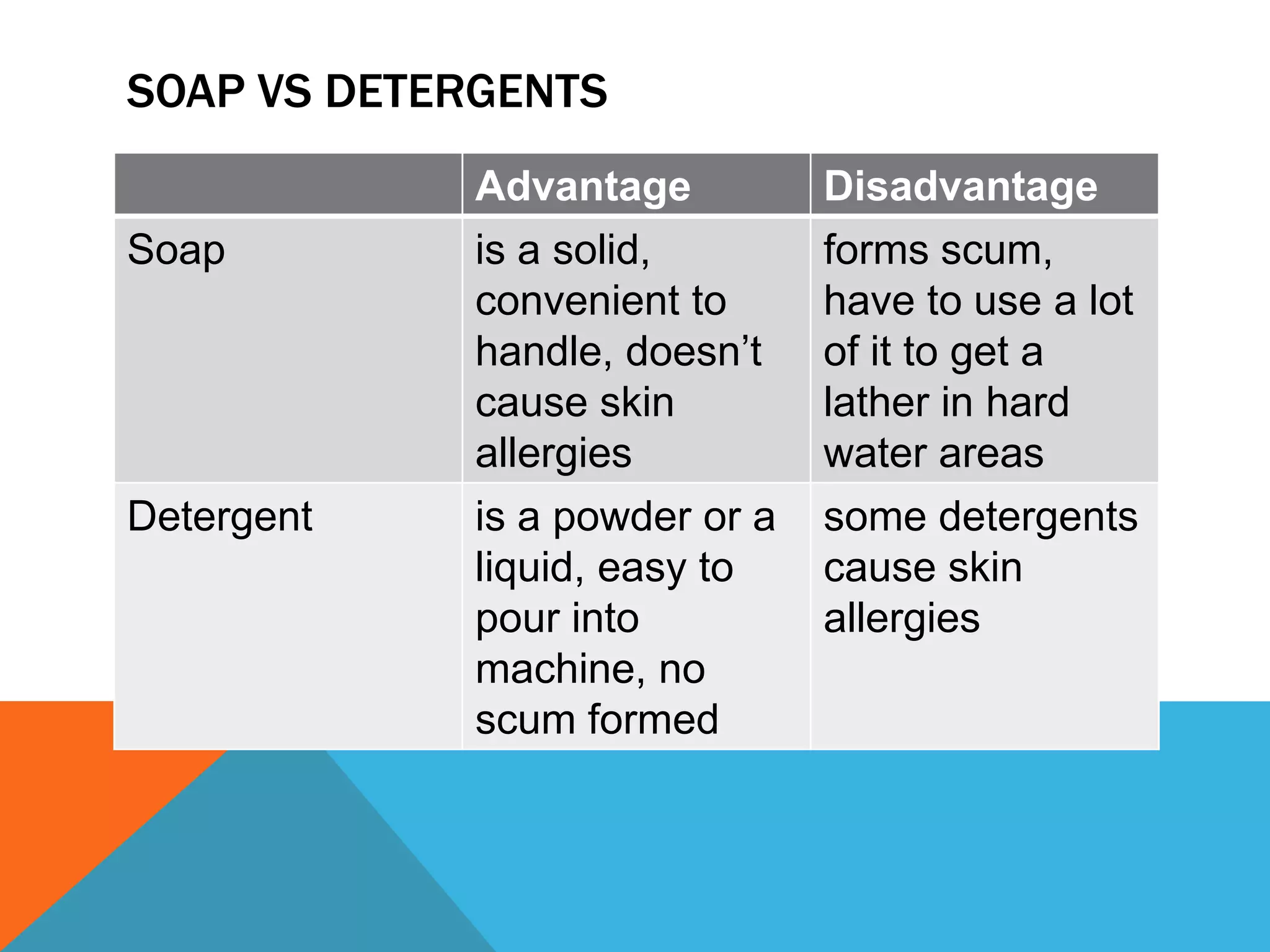
the practical advantages of using detergents instead of soaps in hard water areas.Read the text and answer the questions:C3.4.15bSoaps used to be made using naturally produced materials. Some natural soaps are still available, but many soaps are made from crude oil components. Why might this become an issue in the future?
Making SOAP: 2 methodsSaponification is the neutralisation of fats or oils from animals or plants:
Fats and Oils are esters – fatty acids attached to an alcohol called glycerol
Triglyceride + alkali  soap + water + glycerine (glycerol)
Or neutralisation of a fatty acid from industry: for example
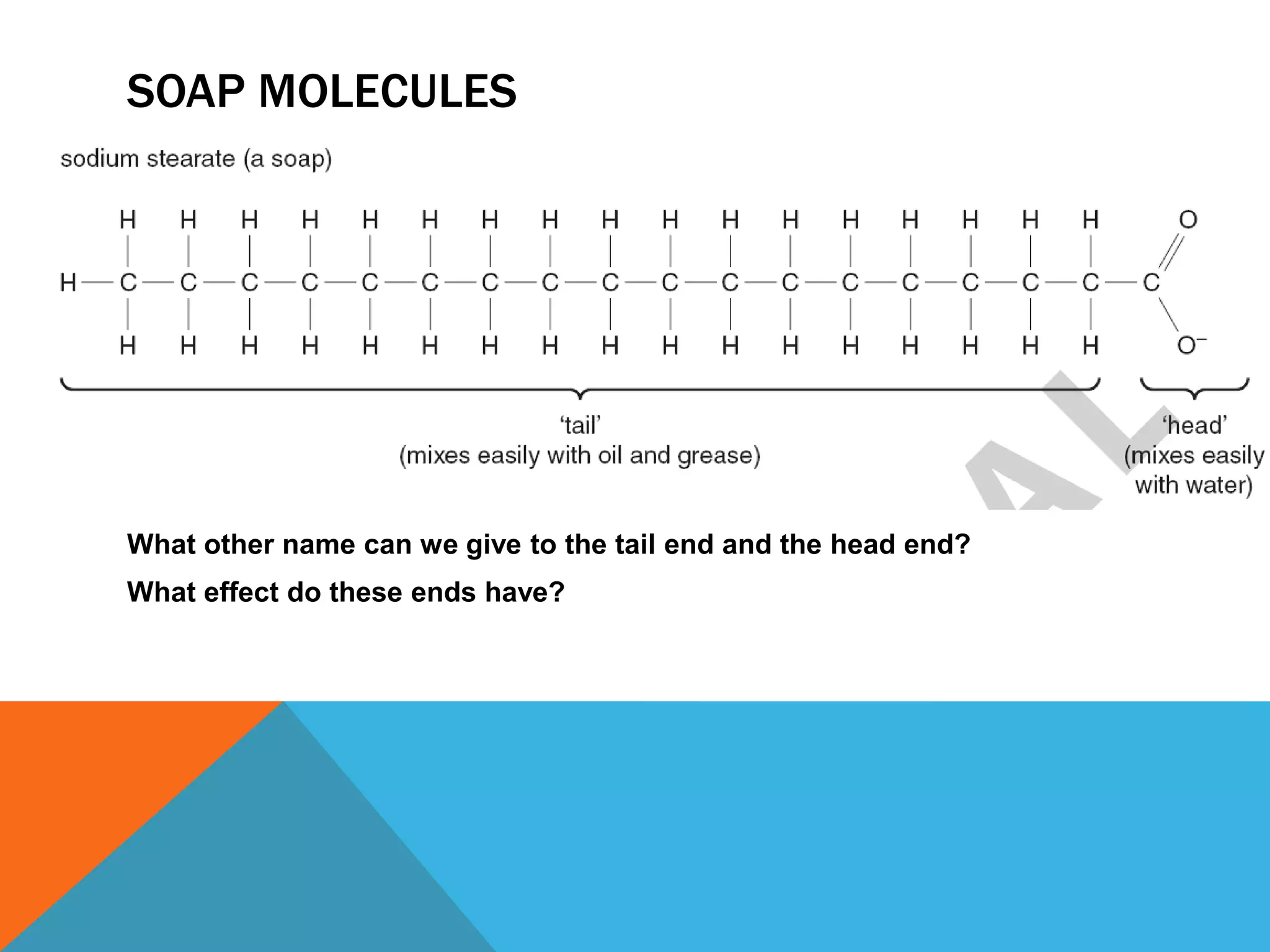
Stearic acid + sodium hydroxide  sodium stearate + waterSoap moleculesWhat other name can we give to the tail end and the head end? What effect do these ends have?
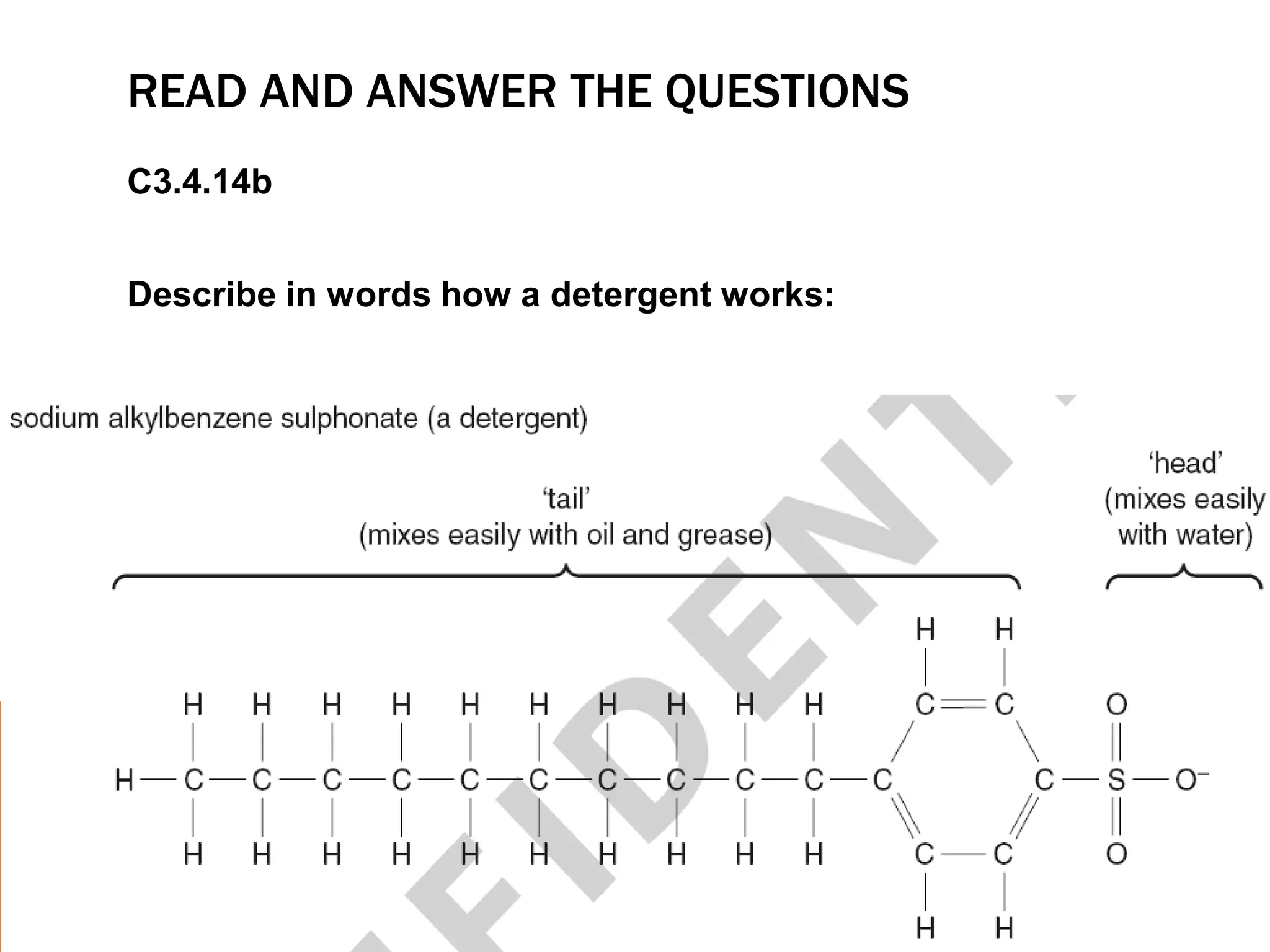
Read and answer the questionsC3.4.14bDescribe in words how a detergent works:

Soaps and detergents

  • 1.
  • 2.
    Exam objectivesthe preparationof soap from carboxylic acids and alkalis C3 4.15
  • 3.
    the detergent actionof surfactants in lowering surface tension to remove dirt and or oil/grease C3 4.16
  • 4.
    the practical differencesbetween ‘biological’ and ‘non-biological’ detergents C3 4.17
  • 5.
    the practical advantagesof using detergents instead of soaps in hard water areas.Read the text and answer the questions:C3.4.15bSoaps used to be made using naturally produced materials. Some natural soaps are still available, but many soaps are made from crude oil components. Why might this become an issue in the future?
  • 6.
    Making SOAP: 2methodsSaponification is the neutralisation of fats or oils from animals or plants:
  • 7.
    Fats and Oilsare esters – fatty acids attached to an alcohol called glycerol
  • 8.
    Triglyceride + alkali soap + water + glycerine (glycerol)
  • 9.
    Or neutralisation ofa fatty acid from industry: for example
  • 10.
    Stearic acid +sodium hydroxide  sodium stearate + waterSoap moleculesWhat other name can we give to the tail end and the head end? What effect do these ends have?
  • 11.
    Read and answerthe questionsC3.4.14bDescribe in words how a detergent works:
  • 12.
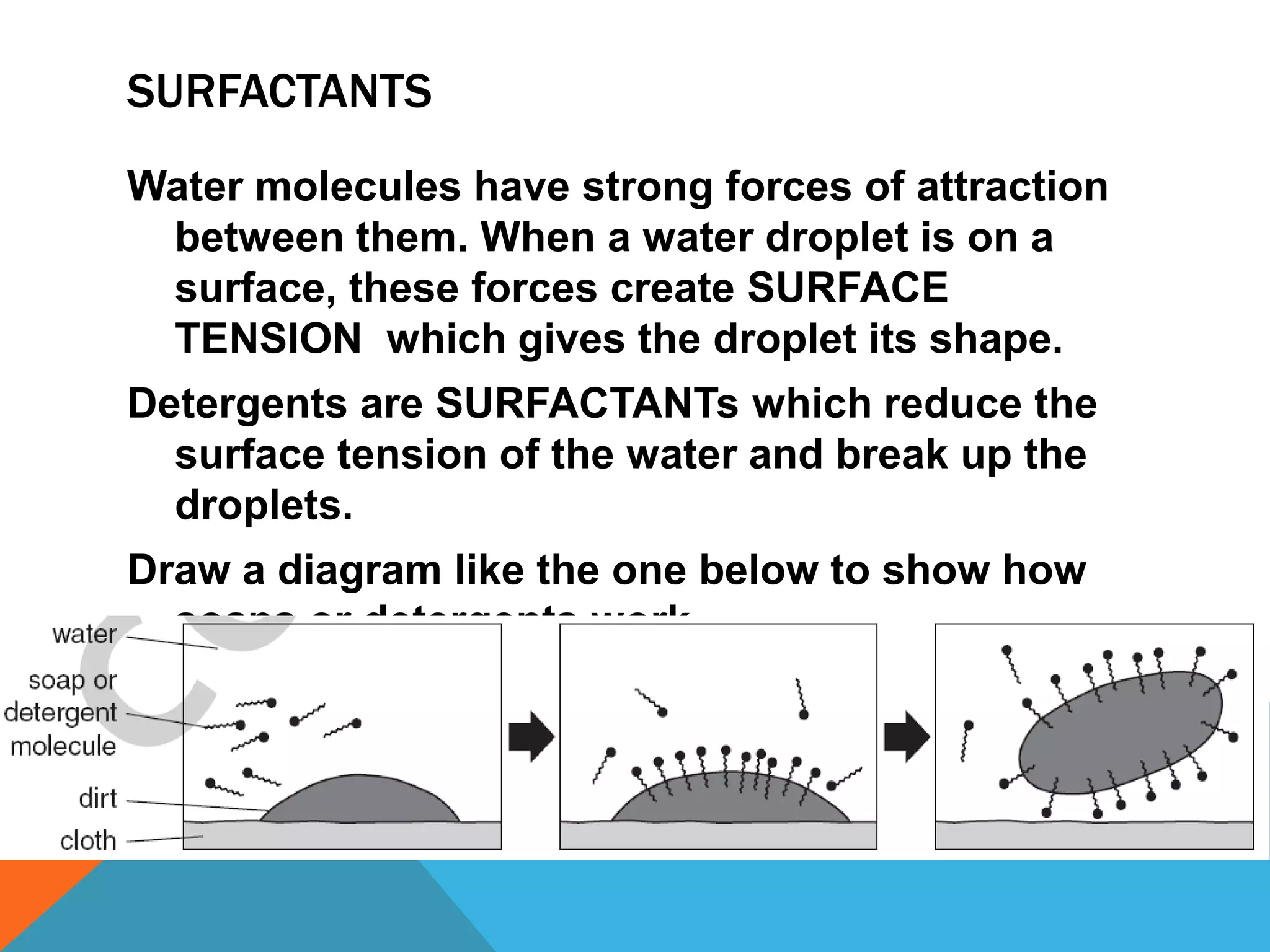
    SurfactantsWater molecules havestrong forces of attraction between them. When a water droplet is on a surface, these forces create SURFACE TENSION which gives the droplet its shape.Detergents are SURFACTANTs which reduce the surface tension of the water and break up the droplets. Draw a diagram like the one below to show how soaps or detergents work.
  • 13.
  • 14.
    Sixty years agodetergents caused problems to the environment:Problems caused by early detergents• unsightly foam discharged into lakes and rivers• not biodegradable (not broken down by bacteria)• had to be used at high temperatures in washing machines• energy inefficient• phosphate residues enter rivers and lakes causing eutrophication
  • 15.
    Advantages of usingmodern detergents:• are biodegradable (can be broken down by bacteria)• no residue foam produced in rivers and lakes• can be used at low temperature so uses less energy• less detergent required in washing• inclusion of enzymes means biological stains can be cleaned• use of crude oil residues instead of natural fats and oils
  • 16.
    Problems of usingmodern detergents:Some people are allergic to the enzymes in biological washing detergents, which causes the skin complaints. The enzymes break down proteins in stains which are hard to remove, e.g. egg and blood stains.Zeolites are catalysts added to powders.